
A Conversation About Acceptance In Dance Studios
When asked what her favorite thing about dance is, Amanda shares that the constant need to be present is something that she appreciates the most. “As a child, dance was really that escape for me, where I knew that I could go to the studio and just forget about everything else,” she shares. The empowerment that she says she felt in her body while being in the studio was something that felt really good to her. She’s also noticed that as she has gotten older that it is very hard to stay present with everything in life going on, but once she walks into the studio, every worry washes away.
Local Studio Owner Amanda Records On Body Positivity
By Nicole Barrett, DWC Blog Editor

From starting dance in the fourth grade to dancing in Rome, Italy Amanda Records is no stranger to how the dance industry operates. Now, the Artistic Director of Spotlight Dance Center in Renton, Washington, she hopes to share her knowledge of the dance world with every student that walks through the studio doors. Read on to learn more about Amanda’s dance journey!
Amanda Records started dancing when she was in the fourth grade at British Dancing Academy in Kent, Washington. The woman that watched her after school took her daughter there and Amanda got to observe the ballet class that she was in. “I was like ‘This is amazing, I want to do this,’” she shares. She was able to get signed up and she danced there until she graduated high school. After graduating, Amanda then went to Hobart and William Smith Colleges in Geneva, New York, and got her BA in Dance and Movement Sciences. After taking a break from school for a year, she returned to school at the University of Oregon to get her MFA in Dance, where she held a Graduate Teaching Fellowship.
Before moving back to Washington and co-founding The Barefoot Collective, (tBFC) a cooperative in Tacoma, Amanda spent six weeks in Austria on scholarship attending ImPulsTanz. There she completed the Danceability teacher training program and performed with Joint Forces Dance Company. Adding to her extensive resume of performance work, she also studied abroad in Rome, Italy, and got to perform amongst the picturesque ruins.
When asked about what sparked her decision to join Spotlight, she shares that the previous studio owner approached her hoping she could take over her position. “This was actually the second studio owner that approached me about taking over their business, so I thought there’s something in the stars because this opportunity keeps being presented to me,” she says. She was just wrapping up her graduate degree when she got the offer and she shares that she was very thankful that these women presented these opportunities to her. Ultimately, she took the job and has been the Artistic Director of Spotlight since 2011.
Every dance studio has its own flair that makes it stand out from the rest, so when asked about what made Spotlight stand out amongst others, Amanda had many things to share. She spoke about Spotlight’s Assistant Teacher Training Program (ATTP), which allows dancers to participate in lessons and mentorship in their teaching journey. She also shares that Spotlight has performing companies that allow dancers of all ages to perform in various events around the community. For middle and high school students in the performing companies, she expresses that Spotlight tries to open opportunities for them to perform at more prestigious events like the Western Washington University Dance Festival, BOOSTmeUP and Olympia Dance Festival. Spotlight is one of only five studios in Washington that has an NHSDA (National Honors Society for Dance Arts) chapter and that is something that Amanda believes is very important in her dancers’ journey. This program recognizes dancers’ work in and out of the studio and comes with many benefits once in the program.
When asked what her favorite thing about dance is, Amanda shares that the constant need to be present is something that she appreciates the most. “As a child, dance was really that escape for me, where I knew that I could go to the studio and just forget about everything else,” she shares. The empowerment that she says she felt in her body while being in the studio was something that felt really good to her. She’s also noticed that as she has gotten older that it is very hard to stay present with everything in life going on, but once she walks into the studio, every worry washes away.
As dancers, we all are used to dancing in front of a mirror and getting the corrections needed in order to make our moves look better. This is something that Amanda says was a struggle for her growing up in the studio. The constant need to compare what she looked like and the perfectionism that comes with that caused some insecurities and worry in her. She would like dancers that are struggling with this issue as well to simply know their own worth.
Moving forward in the dance world, Amanda would like to see much more body inclusivity and for studios to deemphasize the mirror. She shares that teachers can include moments of class oriented away from the mirror, thereby encouraging dancers to not rely solely on the mirror for how something looks, but on how certain moves feel in their bodies. Spotlight engages in Love Your Body Week, a national campaign to encourage body positivity and celebrate all the wonderful things our bodies can do every year, and Amanda would love to see more studios participating in this impactful campaign.

Coming up for Spotlight is the fall dance season! Starting on September 8th, all classes will be held in Spotlight’s new location, making this the first full year in their beautiful new space! Amanda is so excited to welcome new students and families into classes this fall.
Be sure to check out their website here for more information on events and classes that will be at Spotlight this upcoming dance season!
About the Author

Disclaimer
All content found on the Dancewear Center Website, Instagram, Facebook, Pinterest, and all other relevant social media platforms including: text, images, audio, or other formats were created for informational purposes only. Offerings for continuing education credits are clearly identified and the appropriate target audience is identified. The Content is not intended to be a substitute for professional medical advice, diagnosis, or treatment. Always seek the advice of your physician or other qualified health provider with any questions you may have regarding a medical condition. Never disregard professional medical advice or delay in seeking it because of something you have read on this Website.
If you think you may have a medical emergency, call your doctor, go to the emergency department, or call 911 immediately. Dancewear Center does not recommend or endorse any specific tests, physicians, products, procedures, opinions, or other information that may be mentioned on dancewearcenter.net. Reliance on any information provided by dancewearcenter.net, Dancewear Center employees, contracted writers, or medical professionals presenting content for publication to Dancewear Center is solely at your own risk.
Links to educational content not created by Dancewear Center are taken at your own risk. Dancewear Center is not responsible for the claims of external websites and education companies.
A Conversation About More Accessible Information for Dancers
When asked about what her favorite thing about dance is, Mallory shares that the ability to walk into the studio and leave everything at the door is something important to her. Growing up, she knew that she could always go to the studio and get lost in her movement and not have to think about anything else. “I could just be in a place that made me happy,” she shares.
Fulfilling the Legacy of Bremerton Dance Center with Mallory Morrison
By Nicole Barrett, DWC Blog Editor

Photo by Iklil Gregg Photography
The beginning of Mallory Morrison’s dancing journey doesn’t just start with her; she has a long family history of dancers stretching back to her grandmother. After starting dance at the age of 11, her grandmother opened up a studio in her basement that started with just 30 students. She then expanded to another location and that is where Bremerton Dance Center has been since 1969. Read on to learn more about Mallory’s dance journey and her ownership of Bremerton Dance Center!
Mallory’s first appearances on a dance stage were when she was just 18 months old. “I was told that when I went onstage, and then they just couldn’t get me off of the stage,” she shares. She then continued to dance at Bremerton Dance Center and shares that she participated in many dance intensives and has worked with numerous choreographers and guest teachers through her time at the studio. Later in her dance journey, she got asked to perform with the Peninsula Dance Theater, which is a non-profit pre-professional company, all the way until her senior year of high school.
After graduating high school, Mallory decided to steer away from a dance path and went to college for business. She studied at Central Washington University and received her Bachelor’s Degree in Business Administration while still continuing some dance training at school. When she returned from college, she continued on with dance but shares that she stayed more on the business and teaching side of things at the studio. Now, she has fully taken over Bremerton Dance Center and Peninsula Dance Theater and shares that she is teaching classes every day and strives to better the studio as a whole.

Photo by Iklil Gregg Photography
When asked about what her favorite thing about dance is, Mallory shares that the ability to walk into the studio and leave everything at the door is something important to her. Growing up, she knew that she could always go to the studio and get lost in her movement and not have to think about anything else. “I could just be in a place that made me happy,” she shares.
Mallory shares that one of her biggest struggles in the dance world was finding and having access to dance programs outside of her studio. She shares that she struggled with having the right information about different dance programs that she just didn’t know about. Mallory shares that the differences in technology from when she was having these struggles to the present day are very different, but still thinks they can be prevalent. She shares that information overload is something that dancers can struggle with, and the constant need to sift through this information can be draining. For her own students and others struggling with this issue, she shares the need to pick certain schools and programs that speak to them the most and that they enjoy. “It’s about not overwhelming yourself with all that information out there, because it is a lot,” she shares.
Although there are lots of changes being made in the dance world to further equality, Mallory believes that schools should normalize the need for more integrated schools. Her main goal in her own studio is to make sure that she has the same mindset that everybody in the dance world should be accepted. She shares that she wants to make sure that she is holding lessons for dancers that are appropriate for everybody and to continue the efforts of making sure that all bodies can dance. She emphasizes on the matter that she wants to make a space where everybody can dance and feel comfortable.

Bremerton Dance Center started its fall season with classes on August 29th after doing numerous camps during the summer for their dancers. The performing companies have been hard at work rehearsing for their performances coming up in the fall and spring and like many other studios, they are working on rehearsals for the Nutcracker! Along with that, Mallory is getting ready with her junior company to do school tours around the area. The company puts a storybook ballet to a certain book each year and travels to schools around the area and performs them in front of the students and allows them to ask questions and meet the dancers.
Be sure to check out their websitehere for more information on classes and performances!
About the Author
Sources:
Disclaimer
All content found on the Dancewear Center Website, Instagram, Facebook, Pinterest, and all other relevant social media platforms including: text, images, audio, or other formats were created for informational purposes only. Offerings for continuing education credits are clearly identified and the appropriate target audience is identified. The Content is not intended to be a substitute for professional medical advice, diagnosis, or treatment. Always seek the advice of your physician or other qualified health provider with any questions you may have regarding a medical condition. Never disregard professional medical advice or delay in seeking it because of something you have read on this Website.
If you think you may have a medical emergency, call your doctor, go to the emergency department, or call 911 immediately. Dancewear Center does not recommend or endorse any specific tests, physicians, products, procedures, opinions, or other information that may be mentioned on dancewearcenter.net. Reliance on any information provided by dancewearcenter.net, Dancewear Center employees, contracted writers, or medical professionals presenting content for publication to Dancewear Center is solely at your own risk.
Links to educational content not created by Dancewear Center are taken at your own risk. Dancewear Center is not responsible for the claims of external websites and education companies.
Sarah Slipper On Creating Representative Leadership in the Dance World
NW Dance Project’s Artistic Director Sarah Slipper believes that there is a need for women representation in leadership positions in the dance industry. When asked about the true power of a title, she says that, in her opinion, it is less about “power” and more about the opportunity to guide, provide wisdom, and lead individuals. “It is important to see shared equality in leadership roles,” Sarah says. “Representation is very, very important, especially in key roles.” In an industry dominated by women participants, ensuring that leadership reflects that is of the utmost importance.
On the Ballet Gender Pay Gap
By Madison Huizinga and Ava Budish, DWC Blog Contributor and Ambassador

NW Dance Project Artistic Director Sarah Slipper, from https://nwdanceproject.org/directors
Women make up more than 70% of the ballet industry. So why are the seats of power in such a female-dominated industry controlled by men? Of 125 ballet companies surveyed across the globe, Dance Data Project found that, excluding the United States, 66% of the companies have a man as artistic director. In the United States specifically, that number increases to 71%. Beyond acting as a general figure of leadership, artistic directors have a hand in nearly every important decision to be made in any given company. This could include casting, budgeting, handling disputes, overseeing and selecting repertoire, and so much more. With such power and influence, it is crucial that the people in these positions are representative of their employees - that is not currently the case in the ballet industry.
The disproportionate amount of male leadership cannot be chalked up to a lack of female faculty in ballet companies. For example, the Dance Data Project reports that out of 1,600 dance faculty positions at institutions of higher education, women outnumber men approximately 2:1, including in full-time and part-time jobs. However, the position of dean - the highest position within a school - is held by men 66% of the time. While all faculty positions are important and essential to the success of a dance company, more coveted roles are higher paid and are given primarily to men. Those working in higher positions have more power when it comes to important decision-making in the dance industry, hence the need for a more equitable gender representation.
NW Dance Project’s Artistic Director Sarah Slipper believes that there is a need for women representation in leadership positions in the dance industry. When asked about the true power of a title, she says that, in her opinion, it is less about “power” and more about the opportunity to guide, provide wisdom, and lead individuals. “It is important to see shared equality in leadership roles,” Sarah says. “Representation is very, very important, especially in key roles.” In an industry dominated by women participants, ensuring that leadership reflects that is of the utmost importance.
The small percentage of female artistic directors are paid significantly less than their male counterparts. In 2018, they were only making 61 cents for every dollar earned by an equivalent male coworker. In 2019, this number slightly increased to 73 cents; however it is still ten cents below the national average, where women earn 83 cents to every dollar earned by their male counterparts. This pay gap makes little sense, as women artistic directors often have just as much experience in the industry as male artistic directors. Additionally, Dance Data Project reported that female artistic directors were more likely to serve a longer term than men. So not only are these women equally qualified but they also hold their position longer.
The consequences of the larger gender pay gap in the United States are wide-reaching, and often affect women throughout their lives. As a result of their lower lifetime earnings, women receive less in Social Security and pensions and on average have only 70% of the overall retirement income that men have. In addition, it’s important to note that the gender pay gap is compounded by systemic racism. According to the American Association of University Women (AAUW), the gender pay gap widens when race is taken into account. In 2020, AAUW found that on average Black women made about 63% of what a white man earns annually, and Hispanic women make about 58%. For white women, the gap lessens, with them earning about 80% of what a white man earns annually.
Sarah points out that men in the dance industry are a rarity and, as a result, often receive special treatment. Male dancers certainly face challenges of their own and deserve a place in the dance world, nonetheless, the sexism women experience cannot be overlooked. Sarah tells us that not only was it challenging to find work as a freelance choreographer, she has also witnessed men being subsidized more than women on numerous projects. She and her colleagues had to create many of their own opportunities. Perhaps if there were more male dancers in the industry, men wouldn’t receive a disproportionate amount of specialized opportunities. Many companies must tackle the challenge of uplifting and encouraging young men to pursue dance without creating inequality.

Photo from Christ Yang on Unsplash
Sarah tells us that both the problem and solution start with young dancers. She believes that it is essential to empower young girls from the start of their careers in hopes that they grow up and have the courage to pursue a position of influence. This encouragement should undoubtedly be met with dance schools and companies making systemic changes that bring women into positions of power in which they receive the same pay as men in equivalent positions. Such changes could include adjusting recruitment strategies, providing educational workshops to staff on implicit biases, offering fellowships for women choreographers to gain more experience, and much more. Putting change solely on the shoulders of the individual contributor negates the role that larger systems can play in perpetuating inequality. Both are important for creating lasting progress.

Disclaimer
All content found on the Dancewear Center Website, Instagram, Facebook, Pinterest, and all other relevant social media platforms including: text, images, audio, or other formats were created for informational purposes only. Offerings for continuing education credits are clearly identified and the appropriate target audience is identified. The Content is not intended to be a substitute for professional medical advice, diagnosis, or treatment. Always seek the advice of your physician or other qualified health provider with any questions you may have regarding a medical condition. Never disregard professional medical advice or delay in seeking it because of something you have read on this Website.
If you think you may have a medical emergency, call your doctor, go to the emergency department, or call 911 immediately. Dancewear Center does not recommend or endorse any specific tests, physicians, products, procedures, opinions, or other information that may be mentioned on dancewearcenter.net. Reliance on any information provided by dancewearcenter.net, Dancewear Center employees, contracted writers, or medical professionals presenting content for publication to Dancewear Center is solely at your own risk.
Links to educational content not created by Dancewear Center are taken at your own risk. Dancewear Center is not responsible for the claims of external websites and education companies.
Envisioning Intersectional Feminism in the Dance Industry
What do you think of when you heard the word “feminism”? Perhaps you envision women protesting in the streets and outside government buildings. Maybe you picture historic milestones, like women…

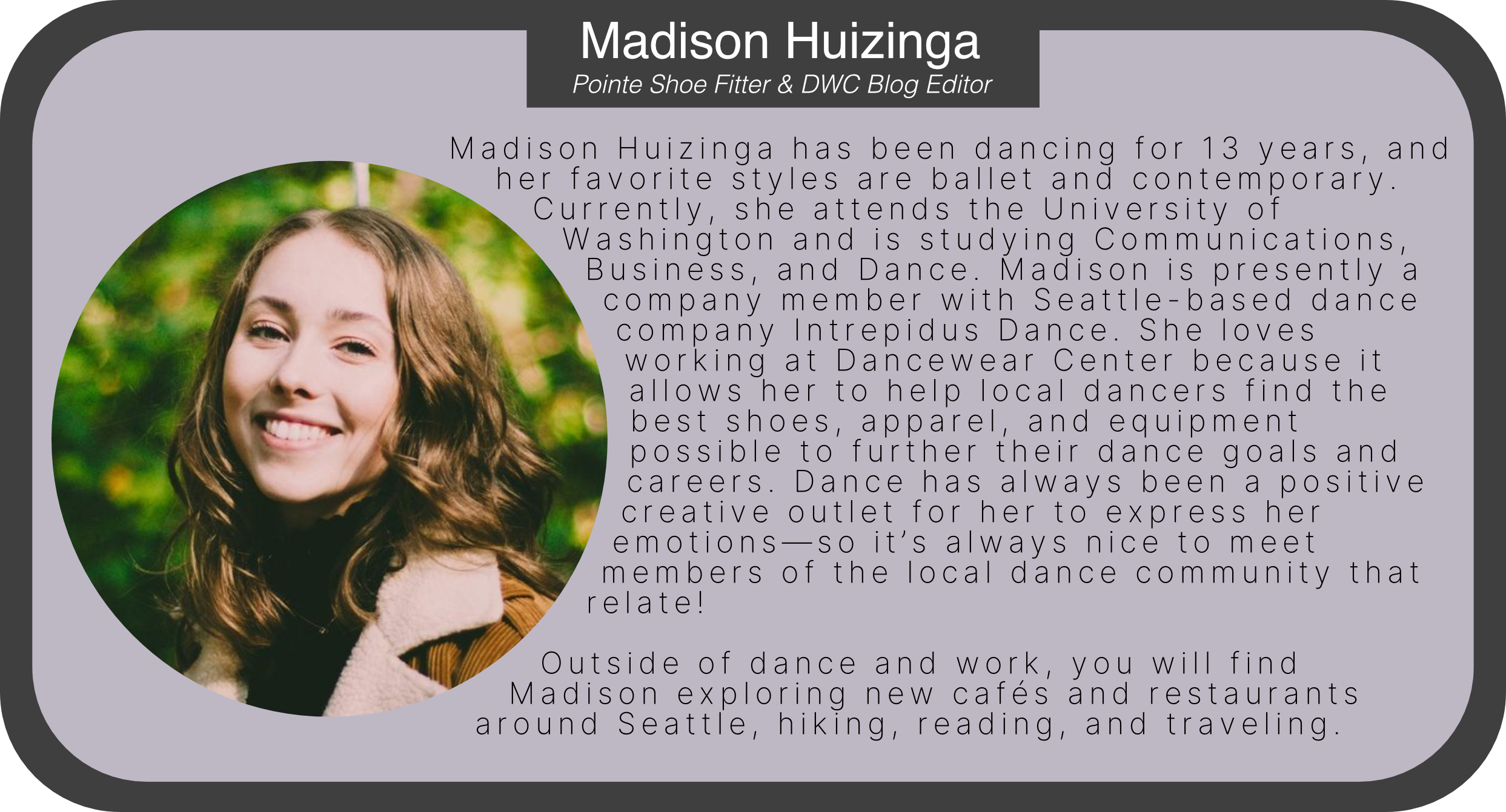
Madison Huizinga has been dancing for 13 years, and her favorite styles are ballet and contemporary. Currently, she attends the University of Washington and is studying Communications, Business, and Dance. Madison is presently a company member with Seattle-based dance company Intrepidus Dance. Dance has always been a positive creative outlet for her to express her emotions—so it’s always nice to meet members of the local dance community that relate!
Outside of dance and work, you will find Madison exploring new cafés and restaurants around Seattle, hiking, reading, and traveling.
By Madison Huizinga
What do you think of when you heard the word “feminism”? Perhaps you envision women protesting in the streets and outside government buildings. Maybe you picture historic milestones, like women receiving the right to vote with the ratification of the 19th amendment or Kamala Harris becoming the first female vice president of the United States. Some of you may even think of all of those promotional products companies produce for Women’s History Month, like form-fitting t-shirts that say “this is what a feminist looks like” in rhinestone letters. These different pictures of feminism proliferate throughout our culture and serve as models for what feminists should look like and stand for.
That being said, our general view of feminism in the U.S. tends to be pretty unitary. Most people assume that “doing feminism” requires breaking the “glass ceiling,” increasing female participation in male-dominated workspaces, and making women feel safer walking home at night. These are all admirable goals that feminists should strive to achieve. But while we work to achieve these aspirations, it’s important to consider whether all women’s lives are being advanced. For example, a major goal of the mainstream Western feminist movement is closing the gender pay gap. As of 2019, senior executive women earn approximately 84.6 cents for every dollar a man earns. However, this gap isn’t the same for all women. While white women earn around 82 cents for every dollar earned by a white man, Black women only earn about 65 cents for every dollar earned by a white man. For Latina women, the gap is even wider, as they on average earn about 58 cents for every dollar earned by a white man. In addition to considering what must be done to bring about gender equality, we should also ask if our efforts are serving all women.
These disparities are not just visible when analyzing the gender pay gap. When looking at nearly every industry, in every sector, there are disparities in discrimination based on women’s race, sexual orientation, ability, and every other facet of their social identities. While it can be useful to view the feminist movement as a completely unified campaign against sexist oppression, it can also cause disillusionment. When embarking on the journey to end patriarchal injustice, not all women are starting at the same place. Assuming that all women experience the same maltreatment is misguided. Rather, we must re-envision how we view and enact feminism in every space in our lives so that all women’s lives are progressed, not just a select, privileged few. To accomplish this, we must adopt intersectional feminism.
Intersectional feminism was coined by lawyer and civil rights advocate Kimberlé Crenshaw in 1989. Crenshaw introduced this term as a way to examine “overlapping, concurrent forms of oppression” to better understand the depths of inequalities in given contexts. Intersectional feminism acknowledges that the impact of various crises or inequities isn’t always the same, as our different marginalized identities interlock with one another to create unique challenges. In this way, “all inequality is not created equal,” according to Crenshaw. The impact of hardships like sexism won’t be the same for women of all ethnicities, ages, sexual orientations, religions, and nationalities.
Using an intersectional lens does not just apply to specific social justice movements. Such a framework can and should be applied to all areas of our lives, especially the dance industry. Many people assume that the dance industry is a female-dominated space, which is fairly accurate. However, while about 65.9% of ballerinas in the U.S. are white females, only about 2.27% of ballerinas are African American females. In professional companies around the world, white females dominate, while women of color hold far fewer spots. When women of color are depicted on stage, they are often presented in roles that are extremely racialized and stereotyped, such as the “Chinese Tea” or “Arabian Coffee” roles in The Nutcracker. Sometimes white women will even pretend to play women of color on stage, such as in the more extreme case of blackface in Bolshoi Ballet’s 2019 production of La Bayadère. Also, when women portray lead roles in ballets like The Sleeping Beauty and Swan Lake, their characters tend to be involved in romantic relationships with heterosexual men. Same-sex pairings are absent in nearly every popular ballet. And when we look at the body types that are presented on stage, they are almost always tall, thin bodies, as those are the only types of bodies that have been historically celebrated in the dance industry.
Sure, large strides have been made for diversity in the dance industry. Misty Copeland becoming the first female African American principal dancer at American Ballet Theatre is a huge milestone, as well as Charlotte Nebres becoming the first Black dancer to be cast as Marie in NYC Ballet’s The Nutcracker. Across the country, choreographers are re-imagining the traditional depictions of women in ballets and creating new works that uplift a wider array of girls and women. But the work can’t stop now. It’s not enough to look at a women-dominated industry and think that it’s somehow “achieved feminism” by simply having female participants. For this Women’s History Month and onwards, consider the ways your studio is depicting women of all races, sexual orientations, ages, and body types and hold your instructors accountable. We won’t truly eradicate sexist oppression until all women are treated with respect.
Here are some ways we can all practice intersectional feminism in the dance world:
Educate yourself and others
Conduct research on the ballets and other dance works you’re participating in. Consider who created the original choreography and how their biases may impact how different groups of women are portrayed on stage. Communicate the information you learn with those around you, whether that be through face-to-face communication or social media posts.
Be a good listener
Listen to the stories of those around you, particularly groups of dancers that possess social identities that are marginalized in American society. Do not dismiss or minimize their experiences and understand that you shouldn’t always do all of the talking.
Make a deliberate effort to not be isolated
Actively seek out the perspectives of dancers who possess different social identities than you and who dance in different communities than you. Find ways to interact and collaborate with them, either through viewing their dance works, co-choreographing a dance, or simply exchanging contact information and discussing your experiences in the dance world.
Be critical of the dances you view
When watching various dances, think critically about what you are watching and how it may be perceived by different individuals. Consider the changes you would make if you were a choreographer and how you will avoid reifying negative representations in your creations.
Provide constructive criticism to people in your dance community
If you are a dancer, talk with your studio owners and dance instructors about changes you would like to see in the curriculum, studio policies, and choreography. Point out the ways in which certain groups of women may be hurt by certain aspects of your studio’s culture and co-create solutions. If you are a studio owner or dance instructor, be open to feedback from your dancers on how to make your studio an equitable environment for all individuals.
Create your own work!
If there are stories out there that aren’t being told, find ways to tell them through dance! This could involve choreographing a new work on your own, revising an older production in a more appropriate way, or collaborating with other members of the dance community to bring important, untold stories to light.

Getting To Know Denail Weyer, DWC's Newest Staff Member
Dancewear Center looks for staff that follows our mission that “every body is a dancing body.” New DWC staff member Denali Weyer fits that description perfectly! Her passion for the ballet world spans inside and outside of the studio and we are so excited to have her on the team. Read on to learn more about Denali’s dancing journey and what sparked her decision to be a part of the team!
By Nicole Barrett, DWC Blog Editor
Dancewear Center looks for staff that follows our mission that “every body is a dancing body.” New DWC staff member Denali Weyer fits that description perfectly! Her passion for the ballet world spans inside and outside of the studio and we are so excited to have her on the team. Read on to learn more about Denali’s dancing journey and what sparked her decision to be a part of the team!
Denali grew up in a small studio in Enumclaw, Washington, and knew that her one true love in dance was ballet. Right before high school, she attended two summer programs at Evergreen City Ballet and eventually transferred there from her small studio. She shares that she liked the push that she got at a more professional-based studio which is why she transferred there. Denali ended up finishing her four years of high school at Evergreen City Ballet and after graduating auditioned for Ballet Arizona. She then did two years in Ballet Arizona’s pre-professional program and unfortunately got injured which resulted in her having to come back home. After returning, Denali went back to Evergreen City Ballet for a couple of months and then transferred to Oregon Ballet Theater and went through some of their pre-professional training there. She ended up stopping dancing after that due to injuries, but still incorporates massage and anatomy in her dance teaching now.

When asked what sparked her decision to be a part of the DWC team, Denali shares that she likes being a part of the ballet world. She thought that she would be the perfect fit for the team and she shares that the more time that she spends working with dancers of any age the more she enjoys it. Denali shares that as a ballet teacher it allows her to communicate with families better and have a greater understanding of what they need.
We are so excited to have Denali on the DWC team! Be sure to check out her interview on our YouTube channel to hear more about Denali’s dancing journey!
About the Author
Disclaimer
All content found on the Dancewear Center Website, Instagram, Facebook, Pinterest, and all other relevant social media platforms including: text, images, audio, or other formats were created for informational purposes only. Offerings for continuing education credits are clearly identified and the appropriate target audience is identified. The Content is not intended to be a substitute for professional medical advice, diagnosis, or treatment. Always seek the advice of your physician or other qualified health provider with any questions you may have regarding a medical condition. Never disregard professional medical advice or delay in seeking it because of something you have read on this Website.
If you think you may have a medical emergency, call your doctor, go to the emergency department, or call 911 immediately. Dancewear Center does not recommend or endorse any specific tests, physicians, products, procedures, opinions, or other information that may be mentioned on dancewearcenter.net. Reliance on any information provided by dancewearcenter.net, Dancewear Center employees, contracted writers, or medical professionals presenting content for publication to Dancewear Center is solely at your own risk.
Links to educational content not created by Dancewear Center are taken at your own risk. Dancewear Center is not responsible for the claims of external websites and education companies.
Dancer To Dancer: Audition Advice
Sometimes the audition process can be daunting. We’ve all felt the butterflies in our stomach, or the pre-audition jitters. Believe us when we say we’ve been there! DWC staff, ambassadors and friends offer their prep routines and advice on getting ready.
Sometimes the audition process can be daunting. We’ve all felt the butterflies in our stomach, or the pre-audition jitters. Believe us when we say we’ve been there! DWC staff, ambassadors and friends offer their prep routines and advice on getting ready.

Robbi
Approach each audition with curiosity. Sometimes we put opportunities on a pedestal without knowing all that a process entails. Just try to be excited for the audition itself the same way you would be excited for a performance you were dancing in or going to see. The pressure is on for everyone, including the person running the audition, and you will see some of the most exhilarating performances of your career in an ordinary studio.

Laurie
I really emphasize preparing well ahead and prioritizing. There’s so much emotional and physical energy involved so be reasonable and realistic with your choices and the extent of what’s involved in auditions. It’s better to have a few good auditions for what you’re really vested in and show up at your best or have well practiced exercises or numbers, rather than spread yourself too thin. It goes without saying to come dressed and feeling your best with everything in your dance bag you could possibly need in shoes, etc etc.! Even invest in a new Leo for instance that makes you feel fresh and really good in it. Stand in front whenever possible and show consistent affirmation and acknowledgment of what the audition director or judges are sharing with good non verbal cues and enthusiasm. Perform with conviction and maximum effort irregardless of whether you like a particular combination or not— Don’t just save it for your “good side!” You may never get that chance! Finally, be extremely diligent and thorough in everything required for paperwork, headshots or online submissions to assure everything is correct and you’re not missing anything, including any important deadlines!

photo by: @janaearlyphotography
Emma
I start my prep as soon as I wake up. I do my makeup and hair as perfectly as I can- I want to present my best self. What you wear matters too! Usually auditions call for a black leotard, and I always wear one that I feel the most confident in.
After I finish getting ready I eat a pretty substantial meal. You need to fuel your body for what you're going to be asking it to do. On the drive over I listen to either some soothing classical music or some pump up jams to get me going! Once I get there and finish checking in, I find a place that's quiet and secluded to do some stretching and warm ups. If the place lets you into the studio before the audition starts, I like to go in and find a good place at the barre- I usually go as far as I can to the front without actually being in the front. Some auditions place you by number so you may not have a choice. Once I'm in there, I do some breathing and meditation exercises to ground myself. I also find that talking to the other dancers helps too! Remember, everyone is probably just as nervous as you are, we're all just trying to hide it.
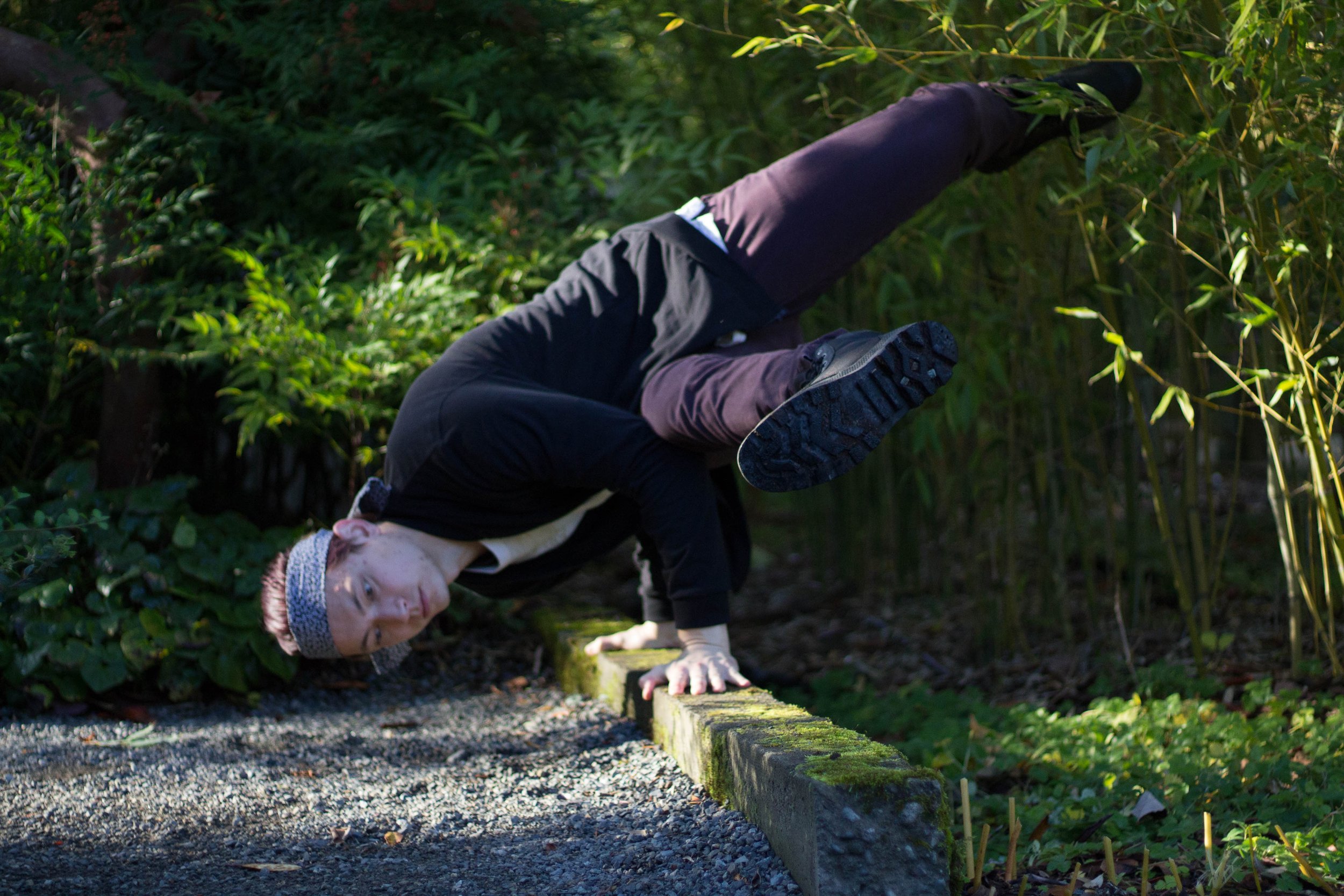
photo by Catlyn Griswell
Ethan
I do my best to stay well-nourished, rested, and calm in the week leading up to the audition. Morning of, I try to eat as big a breakfast as I can without becoming uncomfortable. I make sure to extra warmed-up, some auditions will not provide a warm-up, but most will provide open space for a little bit beforehand. When I warm-up I want to get all of my muscles activated, I want to have gotten my heart rate up, and to get a quick stretch in. Lastly, as I warm-up I listen to some of my favorite music to get amped up and try to get into the flow state. I always feel a little anxious and nervous before an audition but I can mitigate that by taking these steps.
Cherie
Going into an audition used to scare me more than anything. I think when I was younger especially I was constantly comparing myself to everyone else in the room, and I often saw myself as unworthy to be there. I let the nerves get to my head, so fast combinations would confuse me and difficult technique left me very flustered.
During my senior year of high school I was able to identify why I wanted to dance after taking some time off. I want to dance because I love being in a room full of dancers and feeling their energy. I love to dance because I enjoy the challenge. I love finding new movement pathways. So when I go into an audition, I just focus on the present. I don’t like to think about whether or not I’ll be cast or get into a certain program. I put a lot of energy into experiencing the moment, interacting with the other dancers, and getting lost in the movement. When I’m able to get myself in the right mindset, that is when I do my best work.
For some more ideas and products to help get ready see our “Competition & Convention Prep Piece!”
As you all enter into auditions, remember to take deep breaths, put your best foot forward, and dance with all your heart. You got this.
The Next Step: Choosing Dance After High School
I started the process of finding my next step last year as a high school junior. It can be a daunting thought to start looking at your future like that, I know it was for me! As someone who has been dancing since the age of three, once it came time to think about a career, I always came up blank. When we say “dance is my life” we mean it. While I have interests outside of dance, there was never anything that I spent enough time doing to really develop a love matching my love for dance. Eventually I got to the point where I thought; I have spent my entire life training and dancing and improving, I love it more than anything else in my life, so why not keep doing it? After coming to that conclusion, I was able to get on a focused path with where I would like my future to go.
Pronunciation: Aw-brie Zap-in | Pronouns: she/her
By Aubrey Zappen, DWC Ambassador

I started the process of finding my next step last year as a high school junior. It can be a daunting thought to start looking at your future like that, I know it was for me! As someone who has been dancing since the age of three, once it came time to think about a career, I always came up blank. When we say “dance is my life” we mean it. While I have interests outside of dance, there was never anything that I spent enough time doing to really develop a love matching my love for dance. Eventually I got to the point where I thought; I have spent my entire life training and dancing and improving, I love it more than anything else in my life, so why not keep doing it? After coming to that conclusion, I was able to get on a focused path with where I would like my future to go.
Oftentimes people do not view dance as a good way to spend your future. But as long as you make smart decisions, it is entirely within your reach. Even if a college dance program is not what you want, there are still so many options to choose from. It is important to remember that while the dance world may be small, it is also huge! There are so many different paths you can take, so don’t discount a career in dance. It is normal to question whether choosing dance is a reliable choice of a career, so I hope that this information will help you out!
Research College Programs
If you are like me and you know that college is a good option for you, start researching now. College deadlines sneak up on you fast!
The first things that are important when narrowing down your search are: location, school size, and degree programs. For me, I knew right away that I wanted to go to the East Coast. I did not care how far, I just wanted to go somewhere different. School size was also straightforward in my search because I am not a people person, therefore I wanted a small to medium sized school. Of course everyone is different so your experience will be different than mine, but it still applies. Whether you are looking to major in dance or just have it as an option, make sure that the schools you are looking at have it. Many schools don’t have dance as a major/minor or they only have a minor. With that being said, just because a school doesn’t have a dance degree program, that does not mean that they have no dance. There could be dance teams or clubs as well. Do some research and find your fit! It’s okay to not know what you want at first, it’s all a part of the process.
Training Programs & Conservatories

If college isn’t your thing, but you feel like you need more training, a great option to look into are training programs and conservatories. These are often programs dedicated mainly to dance education only and can be shorter than a college program as well. There are several conservatory programs that are technically college programs, but the level of academic classes that you are required to take is dramatically lower than that of a regular college dance degree. By taking the route of a training program or conservatory, you can allow yourself to have more focused training, build connections with current professionals in the industry, and often have audition opportunities after graduating. Some programs may be one year, some may be three or four, either way your time will be spent solely focusing on getting your dance training where it needs to be in order to be successful.
Those are all amazing options and if they work for you, great! But, some people prefer to go straight into auditioning and working. If you choose to move to LA or New York or another city and pursue your dreams that way, go for it! You are much braver than I am! Making it as a dancer is not impossible, just remember to never give up. You never know what opportunities will present themselves to you.
No matter what you decide to do, be smart and safe! Individuality is incredibly important so embrace who you are. Whether you choose college, a conservatory, or just start working in the industry, it does not change the hard work that you will need to put in to be successful. It is not easy, but it is worth it!
Below are links for college and conservatory programs:
Disclaimer
All content found on the Dancewear Center Website, Instagram, Facebook, Pinterest, and all other relevant social media platforms including: text, images, audio, or other formats were created for informational purposes only. Offerings for continuing education credits are clearly identified and the appropriate target audience is identified. The Content is not intended to be a substitute for professional medical advice, diagnosis, or treatment. Always seek the advice of your physician or other qualified health provider with any questions you may have regarding a medical condition. Never disregard professional medical advice or delay in seeking it because of something you have read on this Website.
If you think you may have a medical emergency, call your doctor, go to the emergency department, or call 911 immediately. Dancewear Center does not recommend or endorse any specific tests, physicians, products, procedures, opinions, or other information that may be mentioned on dancewearcenter.net. Reliance on any information provided by dancewearcenter.net, Dancewear Center employees, contracted writers, or medical professionals presenting content for publication to Dancewear Center is solely at your own risk.
Links to educational content not created by Dancewear Center are taken at your own risk. Dancewear Center is not responsible for the claims of external websites and education companies.
Seeing Color in the Dance Industry
It’s safe to say that most of us didn’t anticipate the first half of 2020 to go the way it has. Our lives have changed drastically in the past few months, some more than others. Not only has the COVID-19 pandemic modified nearly all aspects of our daily routines, but a national movement supporting black lives and opposing police brutality has ignited. The heartbreaking murder of George Floyd in Minneapolis has stirred global attention towards police brutality and racial inequity in America. There have been protests in solidarity with George Floyd in all 50 states and at least 40 additional countries on nearly every continent. Anger towards this grueling act of police brutality has transformed into a larger revolution against systemic racism that’s gone on for too long in the United States.
This piece was originally written in 2020 and has been reposted in February 2023.
By Madison Huizinga, DWC Blog Editor
It’s safe to say that most of us didn’t anticipate the first half of 2020 to go the way it has. Our lives have changed drastically in the past few months, some more than others. Not only has the COVID-19 pandemic modified nearly all aspects of our daily routines, but a national movement supporting black lives and opposing police brutality has ignited. The heartbreaking murder of George Floyd in Minneapolis has stirred global attention towards police brutality and racial inequity in America. There have been protests in solidarity with George Floyd in all 50 states and at least 40 additional countries on nearly every continent. Anger towards this grueling act of police brutality has transformed into a larger revolution against systemic racism that’s gone on for too long in the United States.
As we partake in protests, sign petitions, and watch riots unfold on television, many of us are contemplative of our position in this movement and greater society. And in light of social distancing, many of us are in close quarters with family members and roommates who may disagree with the demonstrations developing throughout the country. This can result in some uncomfortable conversations that some people may have never had before, especially among white people.
As a white person who grew up in a white family, race is an aspect of my identity I have never needed to consciously consider. I expect to see people who look like me on my favorite TV shows. I expect to purchase a foundation that matches my skin tone at the mall. I expect to learn how historical figures with my racial identity founded America in history class. I can walk around my community confidently knowing that nothing adverse will happen to me solely because of my race. I feel seen and heard wherever I go because I have learned that being white means being the default. And I have been taught to think that this is valid.
When it comes to discussions about race at my family dinner table and within the walls of my classrooms, I am often told that all people are the same regardless of their skin color. I am told that to push for justice, we must simply view all people equally to achieve equality within social systems and institutions. Throughout my education and upbringing, I have been taught to be “color blind,” which may sound beneficial in theory. But being blind to racial difference means ignoring white privilege and the disadvantages others have because of it. Choosing to be “color blind,” means choosing to ignore the flawed systems that white people benefit from at the expense of people of color’s rights. It means choosing to be blind to systemic oppression, and thus indifferent and complacent to the suffering of black people. It’s time that I, and white people everywhere, open their eyes.

Niyah Pratt, DWC Ambassador
Now is a more important time than ever to listen and learn about the systemic racism that’s embedded in the world we live in. It’s time that we identify how racism not only withholds power from people of color but actively contributes to white people’s success. This does not mean denying the existence of white privilege but utilizing privilege to amplify anti-racist sentiment. This does not just involve taking a stand during a moment of tragedy but constantly analyzing the systems we are a part of and understanding how prejudice is woven into their fabrics. For many of us, this means turning to the dance industry.
As a white woman, I see dancers who look like me strewn throughout the dance community. I constantly see my identity presented through the types of stories told on stage, as well as through the types of dancers telling those stories. In the United States, about 67% of dancers and choreographers are white, while only 16.6% are black. Like all art, dance is meant to express emotions, transport audiences to different worlds, and explore unique narratives. However, when the majority of these narratives are choreographed and performed by white people, it can be difficult for people of color to feel as represented on stage. When white people make up two-thirds of the American dance industry, we cannot expect dance to be a comprehensive art form that communicates widely shared anecdotes. We cannot expect people of color to feel as accepted in the dance community if they aren’t represented across every area of the industry.
Niyah Pratt is a black dancer who has trained in the greater Seattle area since she was six years old. She’s performed at numerous showcases, attended conventions across the west coast, and has even spent a summer dancing at Debbie Allen Dance Academy. Today she studies dance at the University of Nevada, Las Vegas. While dance currently plays a paramount role in Niyah’s life, she hasn’t always felt embraced by the dance community throughout her childhood. Niyah says that “it has always been hard being an African American pursuing dance,” largely because she rarely saw people within her classes and acclaimed companies that looked like her. Niyah recalls that she “didn’t fully know that there were companies other than Alvin Ailey that were started and ran by African Americans until [she] was sixteen.” It wasn’t until she attended a summer intensive at the Debbie Allen Dance Academy that she began learning about the history of African Americans in dance. Before that, her view of the dance world was skewed towards white dancers and their contributions.
Niyah notes that growing up she was “one of four African American dancers” at her studio, and often felt singled out as a result. She has attended ballet auditions in which she is the “only person of color in the whole building.” Niyah “never forgets walking into a room and every girl looking exactly the same except for [her].” She says that from her own experiences “having a darker complexion while dancing is mentally challenging.” Being surrounded by solely white dancers can instill imposter syndrome in many black dancers, otherwise known as a lack of belonging. Not feeling seen, accepted, and represented within the dance industry can easily deter many people of color from pursuing a career in dance, as they may feel that they aren’t talented or qualified enough to belong in the industry because of their race.
According to Niyah, being a black dancer is not only mentally challenging but “it’s physical as well” due to the lack of costuming options for black dancers. Niyah says that “anything skin-toned or with mesh” often makes black dancers “feel uncomfortable” because “they are made for someone ‘fair toned.’” Especially when it comes to shopping for tights, black dancers often struggle to find anything close to matching their skin tone. Niyah recounts a vivid memory of a faculty show in college, in which her ballet teacher requested to speak with her in the hallway and asked “why [she] didn’t have skin-colored tights or pointe shoes.” Niyah was extremely confused because she was wearing tights and shoes that were marketed and labeled as “skin tone,” even though they were much lighter than her complexion. Niyah’s teacher told her that “when you have darker skin, you are supposed to wear your tone of tights and shoes when you perform.” Niyah was surprised that no one had ever told her that. This a conversation that a white dancer would never need to have. As a white dancer myself, I can purchase “skin toned” tights and shoes at any store and expect them to resemble my skin tone. But for black dancers, this simply isn’t the case because “skin tone” is synonymous with “white” across the dance industry and society.
Despite the challenges Niyah has faced in the dance industry, she notes that there “has been significant progress” and she is “ecstatic seeing [the industry] evolve.” She has noticed that in recent years more dancers of color and dancers of different shapes and sizes have gained attention. While it’s certainly inspiring to see individual performers like Misty Copeland gain recognition for their talents, a large-level change is needed so that seeing black dancers in the spotlight becomes a standard and not an anomaly. What Niyah wishes to see across dance communities is “inclusion” and dance that “is taught for anyone and everyone.” This means telling stories through dance that are relevant to people of color. This means seeing black dancers in lead roles that are complex and powerful, rather than vilified, racialized, or minimized. This means creating nude leotards, tights, and pointe shoes that don’t just match a pale skin tone, but compliment dancers of all races. It’s about a complete metamorphosis of the dance industry on every level. In the words of Niyah Pratt, dance “is already so beautiful, diversity is the only thing keeping it from being stunning.”
The past few months have presented challenges that many of us may have never foreseen. But we have the opportunity to move forward with a more compassionate and critical outlook on the world. We have the chance to not let this movement be a moment in time, but a catalyst for change. It is never too late to break the silence to provide support for black lives today and forever. Here are some ways to get started:
Educate yourself:
Learn more about the history of racism in America, and more about how black identity is widely perceived in institutions. This is an essential way to understand the meaning behind the large injustices that take place throughout the United States.
Here are some books to read to learn more about the experiences of black people and how to have productive conversations about racial identity:
The New Jim Crowe: Mass Incarceration in the Age of Colorblindness by Michelle Alexander
We Were Eight Years in Power: An American Tragedy by Ta-Nehisi Coates
Here are some documentaries, films, and series that incapsulate the experiences of black people in the United States:
13th on Netflix and YouTube
When They See Us on Netflix
Moonlight
Dear White People on Netflix
The African Americans: Many Rivers to Cross
Consume and support art from black artists
There is a plethora of beautiful art produced and performed by black artists across the Internet. Here are some that are dance-related:
“SHOT” by Donald Byrd
DTH On Demand Presents: VESSELS by Dance Theatre of Harlem
“ink” by Camille A. Brown and dancers
Alvin Ailey American Dance Theater: Chroma, Grace, Takademe, Revelations (2015)
Sign petitions
On change.org, there are a variety of petitions relating to racial justice for people to sign. Learn about different causes that need support and share them with your friends and family.
Donate
A donation of any size is welcome to nearly every cause. If you are capable of donating, consider doing so. Here are some organizations to consider:
The Khambatta Dance Company Director Shares Desires for Cross-Cultural Connectivity
Cyrus shares that the experience of two cultures coming together is important to him, as his father is Indian and his mother is white, making him a product of cross-cultural connection himself. Throughout their personal lives and careers, Cyrus’ parents have experienced and fought against racial discrimination. From witnessing his parents’ own experiences, as well as navigating the societal challenges of having a biracial identity, Cyrus has been inspired to elevate and celebrate diversity through dance as a means to heal the damages that injustices like racism have caused. “[It] inspires me when I see different cultures coming together,” Cyrus expresses, sharing that his primary desire is to bring unity through understanding in his work at Khambatta Dance Company and beyond.
Cyrus Khambatta On His Vision for a Networked Future
Name pronunciation: Sai-russ Kahm-baht-ta | Pronouns: he/him
By Madison Huizinga, DWC Blog Contributor

When encapsulated in their communities, with their noses to the grindstone, it can be easy for artists to silo themselves off. While bolstering artistry in one’s community is beneficial, many benefits can also be reaped from looking outside oneself and forming cross-cultural connections. This inclusivity- and community-oriented mindset is one that Cyrus Khambatta carries with him in his work as Executive Artistic Director of Khambatta Dance Company and the Seattle International Dance Festival.
Cyrus was introduced to art and movement at a young age, as his mother worked in theatre education. He took classes at Capitol Hill Arts Workshop in Washington, DC, where he trained early on in acrobatics, tap, and creative movement, among other styles. Cyrus developed a deep interest in physical theatre, specifically the intersection of dance and theatre, which he fostered while attending an alternative school. During his time at New York University, he participated in the Experimental Theater Wing, specifically the dance track, which featured a curriculum largely focused on physicality and self-creation.
With fellow students and peers on the dance track at NYU, Cyrus formed Phffft! Dance Theatre Company, which would later become Khambatta Dance Company. Having participated in largely self-directed educational programs throughout his schooling, Cyrus was confident that starting a company right after college was something he wanted to do. After graduating, the company mainly toured and performed around Europe and the east coast of the United States, including Spoleto Festival USA in Charleston, South Carolina. KDC also took part in a long-term residency in Venezuela for about three years.
After KDC moved to Seattle in 2001, Cyrus realized that dance was not being presented in a lot of venues like it was on the east coast and across Europe. “If [KDC] was going to be here, we would have to create our own environment,” he shares. Cyrus felt deeply inspired by the cross-cultural and cross-organizational connections made at the dance and arts festivals he participated in across different regions; this type of connection is ultimately what inspired the creation of the Seattle International Dance Festival.
Seattle International Dance Festival is a program born out of Khambatta Dance Company, aimed at hosting and inviting domestic and international dance companies to Seattle to present work. Cyrus is a board member and the main curator for SIDF but invites curators for various portions of the festival, such as Gonzaga University Dance Director Suzanne Ostersmith for the Spotlight on Seattle program of SIDF in 2022.
“As an artist, artist presenter, administrator, and company that oversees the festival, we have a great interest in seeing that dance is served in our community,” Cyrus says, speaking on the value of providing the geographically isolated Seattle dance community with a view into different dance scenes around the world.
Cyrus shares that the experience of two cultures coming together is important to him, as his father is Asian Indian and his mother is white, making him a product of cross-cultural connection himself. Throughout their personal lives and careers, Cyrus’ parents have experienced and fought against racial discrimination. From witnessing his parents’ own experiences, as well as navigating the societal challenges of having a biracial identity, Cyrus has been inspired to elevate and celebrate diversity through dance as a means to heal the damage racism has caused. “[It] inspires me when I see different cultures coming together,” Cyrus expresses, sharing that his primary desire is to bring unity through understanding in his work at Khambatta Dance Company and beyond.
Cyrus describes the leadership and creation process within Khambatta Dance Company as “collaborative” across the organization, including its artistic and administrative positions. The dancers all work together to create an abundance of material in a short period of time and the administrative staff comes together to identify areas of need to improve KDC and SIDF. This horizontal leadership format falls in tandem with the values the organization was founded on.
In addition, Cyrus takes pride in KDC’s presentation of split bill performances, as the organization finds value in presenting “a pluralistic view of art” as a way for creators and audiences to reflect on their life experiences and see broader worldviews.
Over the summer, Khambatta Dance Company performed at Blois Dance Festival in Blois, France, and did a two-week residency at Newport Dance Festival with Island Moving Company in Newport, Rhode Island. Along with Khambatta performing its own independent pieces, dancers from KDC and Island Moving Company got the opportunity to dance together in a piece choreographed by Cyrus for both companies.
In October 2022, Khambatta Dance Company is headed to Busan and Iksan, South Korea to perform. KDC has a partnership with a dance festival in South Korea and plans on working to bring artists back and forth between South Korea and the United States.

“We are looking at creating an international and national network where Seattle artists could tour some of the places that we have created relationships,” Cyrus says of the future of SIDF. He’s greatly interested in creating mechanisms that encourage the global exchange of dancers to better support Seattle artists’ touring funds, allow artists opportunities to expand their own audiences, as well as see art presented across different cultures. In his work, Cyrus appreciates utilizing a model that doesn’t just consider what will benefit one’s own community, but also neighboring communities.
“I’d like to see that artists become the ambassadors for culture, particularly in the United States,” Cyrus says. In addition, he encourages artists to foster their own community-oriented curiosity and turn their eyes toward art that they may think is pushing the envelope. In addition, he believes dancers should embolden themselves to “think a little bigger,” pushing themselves to stop considering how they must fit a pre-existing mold, in spite of the challenges that come along with that.
“I think dance artists really need to think about changing the mold,” Cyrus says.
Representation and Acceptance in the Dance World
It wasn’t until age 10 that Jamia Ramsey learned that tights are supposed to match the skin tone of the dancer that wears them. After auditioning, Jamia had earned a scholarship to dance at the Dance Theatre of Harlem in New York City. “It was there that I first learned that flesh-toned tights were supposed to match your skin tone,” she shares. Jamia learned about the process of dying tights and using makeup to “pancake” ballet and pointe shoes. Previously, she had only danced in pink and tan-colored tights, which are readily available at any dancewear retailer but don’t match her skin tone. “It was all about uniformity,” Jamia explains. It’s safe to say that this experience planted the seed for Jamia to create her visionary dancewear company Blendz Apparel: a brand that offers high-quality, flesh-toned dance apparel that all dancers can wear.
Blendz Apparel’s Jamia Ramsey
By Madison Huizinga, DWC Blog Editor
It wasn’t until age 10 that Jamia Ramsey learned that tights are supposed to match the skin tone of the dancer that wears them. After auditioning, Jamia had earned a scholarship to dance at the Dance Theatre of Harlem in New York City. “It was there that I first learned that flesh-toned tights were supposed to match your skin tone,” she shares. Jamia learned about the process of dying tights and using makeup to “pancake” ballet and pointe shoes. Previously, she had only danced in pink and tan-colored tights, which are readily available at any dancewear retailer but don’t match her skin tone. “It was all about uniformity,” Jamia explains. It’s safe to say that this experience planted the seed for Jamia to create her visionary dancewear company Blendz Apparel: a brand that offers high-quality, flesh-toned dance apparel that all dancers can wear.
Jamia began dancing at age two when her mom put her in ballet and tap class. The art form had always played a big role in Jamia’s family, as her mother, sisters, and brother all danced. “It was something that was always near and dear to my heart,” Jamia shares. She continued dancing through middle school, high school, and college, participating in her studio’s company, winning various awards, attending summer intensives, and “fully immers[ing] into the dance world.”
After graduating college, Jamia dreamed of moving to New York to perform. However, due to expenses, she ultimately moved home to Atlanta and got a desk job at a logistics company. Jamia had always envisioned herself opening up a dance studio, but not until much later in life. Realizing that she was going to be in Atlanta for a long time, she figured now was a better time than ever to start.
Jamia started DanceMoves, a dance academy at a recreation center in Atlanta that served “underprivileged youth.” As Jamia did throughout her own dance journey, the dancers and their parents at DanceMoves went through “the grueling time and money consuming process of finding, spraying, and dyeing dancewear to match their complexions.” She found herself frustrated by the end products, as the tights and shoes never fully matched the dancers’ skin tones after all of the work they put into them. “It was just a headache,” Jamia says.
After doing some research online, Jamia found that other dancers and dance teachers were struggling with tights and shoes not matching their skin tones as well. Jamia also learned that after being asked to make wider shade ranges in their dance apparel, many large dancewear companies refused, claiming that there wasn’t a market for it.

Jamia realized that she had a “now or never opportunity.” “There was a void in the market...everyone deserves to be represented,” she says. “I just decided that...if no one’s going to do it… I can do it myself.” In 2017, Jamia officially started working on Blendz Apparel full-time.
Blendz Apparel offers stretch canvas and leather ballet shoes, jazz shoes, contemporary half-soles, and convertible tights in different flesh tones, including “Tenacious Tan,” “Maven Mahogany,” “Brazen Brown,” and “Confident Cocoa.” A percentage of each purchase at Blendz Apparel goes towards “The Valerie Grace Scholarship Fund” which assists young dancers with furthering their dance education at summer intensives and attending college. The scholarship is named after Jamia’s mother, as she and Jamia’s aunt helped fund her dance journey and supported her throughout her career. “They had a big love for dance and big hearts and I want to give back as well,” Jamia says. There will be an application process for people to apply for the scholarship.
For those looking to start their own business, Jamia advises them to “go ahead and get started… don’t wait.” “You’re not going to have every piece of the puzzle available and ready, but just put one foot in front of the other and you’ll figure it out along the way.”
Jamia hopes to see more inclusivity in the dance world, especially in ballet. She wants diverse dancers with different backgrounds to be embraced for their cultural differences so they aren’t forced to fit in a certain mold. Jamia wants dancers to be allowed to be unique and own their individualism. “I would like for more dance companies to embrace dancers of all hues and allow them to wear dancewear that matches their skin tone and best reflects them as a person,” she states. By working towards this, more dancers will be seen for their character and talent, rather than their skin color fitting a certain aesthetic.
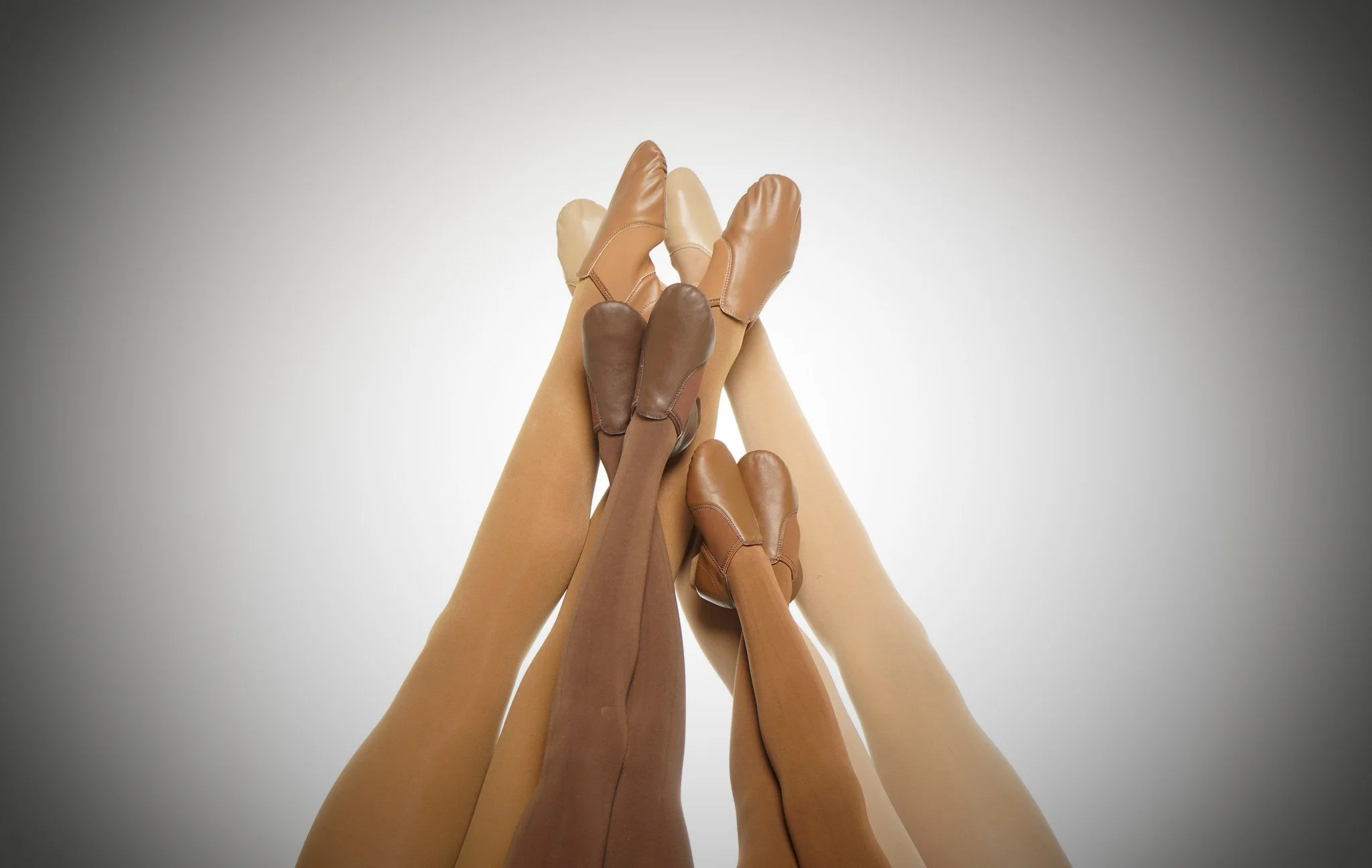
Jamia believes that the “people at the top,” including artistic directors and dance teachers, must create policies that allow dancers to wear apparel that matches their skin tones and embrace their natural hair while dancing. She believes that after these changes are made by powerful decision-makers in the dance world, more and more dancers will begin to accept them. In addition, on an individual level, dancers need to voice to upper-level dance directors and teachers the changes they wish to see in the dance world to make them known.
“Having the [flesh-toned] dancewear already manufactured and pre-made [promotes] the idea that dance is for everyone and not just for a certain subset group,” Jamia shares about Blendz Apparel. “That’s how Blendz is going about trying to make our change in the world: by starting with the shades that are not represented in the market and expanding from there.” In doing so, Blendz strives to create a dance realm that welcomes “inclusion and comfort for every dancer everywhere.”
Interested in writing for the DWC Blog? Click below to fill out the DWC Contributor application!