
Queer History in Dance
LGBTQIA+ communities go underappreciated and unrepresented in spaces where recognition is necessary. Without these communities striving for inclusivity and freedom of expression, the styles that we know and love today would be completely different. In LGBTQIA+ culture, dance is a very important part of expressing joy and expressing themselves anytime they can. Attend any Pride event or gay club and you will see the joy and expression that dance can bring to such a big community. Here are just some of the ways that LGBTQIA+ communities have paved the way for dance!
By Nicole Barrett, DWC Blog Contributor

LGBTQIA+ communities go underappreciated and unrepresented in spaces where recognition is necessary. Without these communities striving for inclusivity and freedom of expression, the styles that we know and love today would be completely different. In LGBTQIA+ culture, dance is a very important part of expressing joy and expressing themselves anytime they can. Attend any Pride event or gay club and you will see the joy and expression that dance can bring to such a big community. Here are just some of the ways that LGBTQIA+ communities have paved the way for dance!
Voguing
The term “voguing” comes from Vogue Magazine as the movements that define this style are inspired by the poses of the models in the magazine. Willi Ninja is called the godfather of voguing who helped create this art form and took inspiration from ballet, martial arts, gymnastics, and pantomimes. Voguing has been used to present gender as a performance and was taken over by drag queens in their performances to pretend to apply makeup or other extravagant movements.
The Ballroom Scene
The Ballroom Scene, also known as ball culture or ballroom culture, was founded by African-American and Latino youth that has a subculture in the LGBTQIA+ originated in New York City. This started in the late 20th century when drag queens would hold their own pageants in opposition to the racism experienced in professional drag queen circuits. The inclusion of gay men and trans women is what made the ballroom scene what it is today. Various categories allow for all LGBTQIA+ members to participate and express themselves as they see fit for cash prizes and trophies.
Stereotypes in Ballet
Ballet has always been a style in which gender stereotypes have played a big role in its production. These notions are seen to be outdated and stuck in the past, but LGBTQIA+ innovation has created a new look for ballet. New ways of performing your favorite variations are pushing the dance industry into a new realm where people of all gender identities can be whichever role they are most comfortable with. Queer ballerinas such as Ashton Edwards,
Chase Johnsey, and many others are helping pave the way for a new ballet industry that accepts all dancers' identities, not just cis presenting individuals.

Waacking
Waacking is a specific element of street dance that was created in gay clubs in the Los Angeles area during the 1970s disco era. This specific style of dance is typically done to disco music and has a very distinctive look to it. Rotational arm movements and emphasis on posing and expressiveness can distinguish this style from others. Like voguing, waacking has some of the same influences like gymnastics, jazz and martial arts. This style of dance is in effect because of the LGBTQIA+ community and has caught the attention in modern day media as well.
The LGBTQIA+ community has helped pave the way for various dance styles and new cultures in dance to enhance inclusivity and acceptance. These queer artists go unrecognized for their hard work and passion to create a form of expression where they make themselves and others feel accepted. By learning the history of some of our favorite dance styles, we can honor and acknowledge the accomplishments and sacrifices these artists made for the dance world we love today.
Sources:
https://en.wikipedia.org/wiki/Ball_culture
https://www.lgbtculturalheritage.com/dance
https://en.wikipedia.org/wiki/Vogue_(dance)
https://www.youtube.com/watch?v=XJ6fqQX_e9U&t=87s
https://www.nytimes.com/2022/04/19/arts/dance/nonbinary-ballet-dancers-swan-lake.html
https://en.wikipedia.org/wiki/Chase_Johnsey
Disclaimer
All content found on the Dancewear Center Website, Instagram, Facebook, Pinterest, and all other relevant social media platforms including: text, images, audio, or other formats were created for informational purposes only. Offerings for continuing education credits are clearly identified and the appropriate target audience is identified. The Content is not intended to be a substitute for professional medical advice, diagnosis, or treatment. Always seek the advice of your physician or other qualified health provider with any questions you may have regarding a medical condition. Never disregard professional medical advice or delay in seeking it because of something you have read on this Website.
If you think you may have a medical emergency, call your doctor, go to the emergency department, or call 911 immediately. Dancewear Center does not recommend or endorse any specific tests, physicians, products, procedures, opinions, or other information that may be mentioned on dancewearcenter.net. Reliance on any information provided by dancewearcenter.net, Dancewear Center employees, contracted writers, or medical professionals presenting content for publication to Dancewear Center is solely at your own risk.
Links to educational content not created by Dancewear Center are taken at your own risk. Dancewear Center is not responsible for the claims of external websites and education companies.

DWC How To's: The Difference Between Demi and Pointe Shoes
While they look very similar, demi-pointe and pointe shoes are actually incredibly different! Demi-pointes are a training shoe to help build your strength and get your toes and feet ready for the real deal. For many they are an important and necessary tool to use before stepping into a pair of pointe shoes.
By Emma Neilson, DWC Social Media Manager
While they look very similar, demi-pointe and pointe shoes are actually incredibly different! Demi-pointes are a training shoe to help build your strength and get your toes and feet ready for the real deal. For many they are an important and necessary tool to use before stepping into a pair of pointe shoes. Some teachers won’t even let students use pointe shoes until they’ve trained in demi-pointes for many months. We are happy to help you find the best fit in either of our locations schedule an appointment to get your demi-pointe shoes fit!
Disclaimer
All content found on the Dancewear Center Website, Instagram, Facebook, Pinterest, and all other relevant social media platforms including: text, images, audio, or other formats were created for informational purposes only. Offerings for continuing education credits are clearly identified and the appropriate target audience is identified. The Content is not intended to be a substitute for professional medical advice, diagnosis, or treatment. Always seek the advice of your physician or other qualified health provider with any questions you may have regarding a medical condition. Never disregard professional medical advice or delay in seeking it because of something you have read on this Website.
If you think you may have a medical emergency, call your doctor, go to the emergency department, or call 911 immediately. Dancewear Center does not recommend or endorse any specific tests, physicians, products, procedures, opinions, or other information that may be mentioned on dancewearcenter.net. Reliance on any information provided by dancewearcenter.net, Dancewear Center employees, contracted writers, or medical professionals presenting content for publication to Dancewear Center is solely at your own risk.
Links to educational content not created by Dancewear Center are taken at your own risk. Dancewear Center is not responsible for the claims of external websites and education companies.

DWC How To's: Tighten the Taps on your Tap Shoes!
Tightening the taps of your tap shoes is an easy but crucial thing to know how to do! DWC Social Media Manager, Emma, will show you what you need, how to do it, and some important tips to remember!
By Emma Neilson, DWC Social Media Manager
Tightening the taps of your tap shoes is an easy but crucial thing to know how to do! DWC Social Media Manager, Emma, will show you what you need, how to do it, and some important tips to remember!
Gather your items, you will need: Your tap shoes, and a screwdriver, most likely a Phillip’s head (the end is a cross)
Place the screwdriver in the screw, while pressing down very firmly, turn clockwise (to the right) to tighten, or counterclockwise (to the left) to loosen.
Be sure only to do a little at a time and test between adjustments!
And as always, check in with your teacher about how tight to make them! We hope this tutorial was helpful, to shop our tap shoe options click here!
Disclaimer
All content found on the Dancewear Center Website, Instagram, Facebook, Pinterest, and all other relevant social media platforms including: text, images, audio, or other formats were created for informational purposes only. Offerings for continuing education credits are clearly identified and the appropriate target audience is identified. The Content is not intended to be a substitute for professional medical advice, diagnosis, or treatment. Always seek the advice of your physician or other qualified health provider with any questions you may have regarding a medical condition. Never disregard professional medical advice or delay in seeking it because of something you have read on this Website.
If you think you may have a medical emergency, call your doctor, go to the emergency department, or call 911 immediately. Dancewear Center does not recommend or endorse any specific tests, physicians, products, procedures, opinions, or other information that may be mentioned on dancewearcenter.net. Reliance on any information provided by dancewearcenter.net, Dancewear Center employees, contracted writers, or medical professionals presenting content for publication to Dancewear Center is solely at your own risk.
Links to educational content not created by Dancewear Center are taken at your own risk. Dancewear Center is not responsible for the claims of external websites and education companies.

How to do a Ballet Bun with Wavy/Curly Hair
Getting ready for Nutcracker or another ballet show? Or maybe it’s your first ballet class and you need a little guidance on the hair? We’ve got you covered with this ballet bun walkthrough!
By Emma Neilson, DWC Social Media Manager
Dancers come in all different shapes and sizes, and hair is no exception. All different types of hair from textured to straight are thrown into ballet buns every single day, but sometimes it can be a struggle to find the right way to put up your hair. DWC Social Media Manager, Emma, will show you how she does her hair class and performances!
Wet down hair and pull into a pony tail
Pull pony tail into two sections
Wrap and pin the first section
Wrap and pin the second section
Cover with a hair net and pin it in
Double check for loose hairs!
We hope that this quick how-to helped you learn to do a ballet bun with braids! Be sure to check out the video below for a more in-depth description!
Disclaimer
All content found on the Dancewear Center Website, Instagram, Facebook, Pinterest, and all other relevant social media platforms including: text, images, audio, or other formats were created for informational purposes only. Offerings for continuing education credits are clearly identified and the appropriate target audience is identified. The Content is not intended to be a substitute for professional medical advice, diagnosis, or treatment. Always seek the advice of your physician or other qualified health provider with any questions you may have regarding a medical condition. Never disregard professional medical advice or delay in seeking it because of something you have read on this Website.
If you think you may have a medical emergency, call your doctor, go to the emergency department, or call 911 immediately. Dancewear Center does not recommend or endorse any specific tests, physicians, products, procedures, opinions, or other information that may be mentioned on dancewearcenter.net. Reliance on any information provided by dancewearcenter.net, Dancewear Center employees, contracted writers, or medical professionals presenting content for publication to Dancewear Center is solely at your own risk.
Links to educational content not created by Dancewear Center are taken at your own risk. Dancewear Center is not responsible for the claims of external websites and education companies.

How to do a Ballet Bun with Braids
Dancers come in all different shapes and sizes, and hair is no exception. All different types of hair from textured to straight are thrown into ballet buns every single day, but sometimes it can be a struggle to find the right way to put up your hair. Former DWC Ambassador Niyah Pratt is here to show you just how you can do it! Here is how to do a ballet bun with braids:
By Niyah Pratt, Former DWC Ambassador
Dancers come in all different shapes and sizes, and hair is no exception. All different types of hair from textured to straight are thrown into ballet buns every single day, but sometimes it can be a struggle to find the right way to put up your hair. Former DWC Ambassador Niyah Pratt is here to show you just how you can do it! Here is how to do a ballet bun with braids:
First, flip your head over and gather all of your hair to the top of your head.
Secure it up into a ponytail with a hair tie.
After you have the ponytail in, you are going to start a twisting motion to gather all of the hair and begin to wrap the hair around the top of the ponytail.
Once all of the hair is gently wrapped around the top of the ponytail, use another hair tie to wrap it all into place.
Lastly, secure any loose pieces with bobby pins and then you have a gorgeous ballet bun!
We hope that this quick how-to helped you learn to do a ballet bun with braids! Be sure to check out the video below for a more in-depth description!
About the author:

by niyah pratt
Niyah Pratt was born in raised in Renton, Washington. She began dancing at age six, at the British Dancing Academy where she trained in ballet, jazz, tap, and modern. She is currently attending the University of Nevada Las Vegas where she is double majoring in Dance Performance and Urban Affairs. She hopes to continue her dance career for as long as she possibly can, and make an impact not only in the dance community, but on the youth as well. She wants to be the role model she never had when she started dancing for someone else, and “thinks it is important to start implementing this in dance.”
click to shop the look: Holly Leo with Mod Dot by Ainsley Wear
Disclaimer
All content found on the Dancewear Center Website, Instagram, Facebook, Pinterest, and all other relevant social media platforms including: text, images, audio, or other formats were created for informational purposes only. Offerings for continuing education credits are clearly identified and the appropriate target audience is identified. The Content is not intended to be a substitute for professional medical advice, diagnosis, or treatment. Always seek the advice of your physician or other qualified health provider with any questions you may have regarding a medical condition. Never disregard professional medical advice or delay in seeking it because of something you have read on this Website.
If you think you may have a medical emergency, call your doctor, go to the emergency department, or call 911 immediately. Dancewear Center does not recommend or endorse any specific tests, physicians, products, procedures, opinions, or other information that may be mentioned on dancewearcenter.net. Reliance on any information provided by dancewearcenter.net, Dancewear Center employees, contracted writers, or medical professionals presenting content for publication to Dancewear Center is solely at your own risk.
Links to educational content not created by Dancewear Center are taken at your own risk. Dancewear Center is not responsible for the claims of external websites and education companies.
Celebrating Indigenous Dancers Past & Present
Many people in western culture generally feel comfortable with a binary kind of thinking because it's a way of processing information that we’ve grown up with. Things are either black or white, day or night, right or wrong. But when we make binary statements about people and art, we can create a rather limiting perspective for ourselves. I’ve found that such generalizations are often made about certain genres of dance or dance unique to specific cultural communities or regions.
A Look at the Contributions of Indigenous Performers Nationwide
By Madison Huizinga, DWC Blog Editor
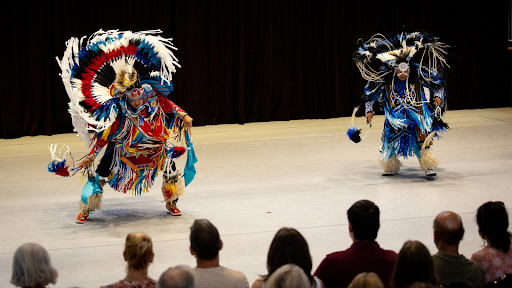
Photo of Indigenous Enterprise performers Kenneth Shirley and Dominic Pablo at Jacob’s Pillow in August 2022. Photo by Danica Paulos.
Many people in western culture generally feel comfortable with a binary kind of thinking because it's a way of processing information that we’ve grown up with. Things are either black or white, day or night, right or wrong. But when we make binary statements about people and art, we can create a rather limiting perspective for ourselves. I’ve found that such generalizations are often made about certain genres of dance or dance unique to specific cultural communities or regions.
For example, many are quick to assume that indigenous dancers and dance within indigenous communities must look a certain way. However, within indigenous communities across the globe, dance has played a variety of roles, including making cross-cultural connections in the case of “The Five Moons,” as well as telling stories, healing from trauma, and exercising imagination. Let’s take a look at just a few of the many talented former and active indigenous dancers contributing to the rich dance landscape across the country.
“The Five Moons”
Myra Yvonne Chouteau, Rosella Hightower, Moscelyne Larkin, Maria Tallchief, and Marjorie Tallchief, otherwise known as “The Five Moons,” are five Native American ballerinas from the U.S. state of Oklahoma known for achieving international recognition in ballet during the twentieth century.
“Of course, my parents were not about to let ballet take me away from my Indian dancing,” says Chouteau in American Indian Ballerinas. After touring globally with the Ballet Russe de Monte Carlo, Chouteau, a Shawnee-Cherokee, returned to Oklahoma and helped found the dance program at the University of Oklahoma in the early 1960s and the Oklahoma City Civic Ballet. On the other hand, Hightower, of the Choctaw Nation, found great success abroad, particularly in France where she earned the Chevalier de la Légion d’Honneur, a high marker of civil distinction in France, in 1975. Nonetheless, some jokingly argue that Hightower’s greatest accomplishment was famously learning the lead for Giselle in less than five hours!
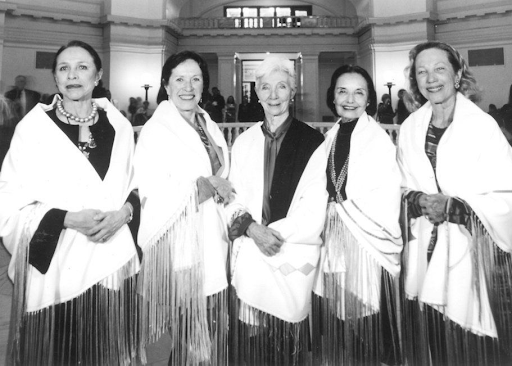
The Five Moons. From left: Maria Tallchief, Marjorie Tallchief, Rosella Hightower, Moscelyne Larkin and Yvonne Chouteau. Photo courtesy the University of Oklahoma School of Dance.
Among Larkin’s accomplishments, one particularly notable is helping found the renowned Tulsa Ballet. Larkin, an Eastern Shawnee-Peoria, was inducted into the Oklahoma Hall of Fame in 1979. A descendant of a Russian mother and a Native American father, Larkin famously said that ballet gave her the freedom to express all parts of her identity.
Marjorie Tallchief, of the Osage Nation, performed with the Paris Opéra Ballet from 1957 to 1962, as well as the Chicago Opera Ballet, Grand Ballet du Marquis de Cuevas, and many other large-scale companies. Her older sister Maria Tallchief was the first American dancer to achieve the title of “prima ballerina.” When George Balanchine co-founded what would become New York City Ballet in 1946, she was the company’s first major star. Tallchief showcased her talents across the globe, becoming the first American to perform in Moscow, Russia’s Bolshoi Theater.
“These are American Indian people that have made this impact on ballet,” says Russ Tall Chief, a relative of Marjorie and Maria, and a co-planner of the 2021 Five Moons Dance Festival at the University of Oklahoma. “And that they consider themselves American Indian before they consider themselves ballerinas, I think that’s important. That is part of their vocabulary as dancers. They bring that history of American Indian culture to their dance, and to their interpretation of the way that they see ballet.”
“The Five Moons” overcame preconceived, limiting notions of what a ballerina should look like, particularly during a time when American ballet was viewed as inferior to European ballet. Writer Meryl Cates points out that these women not only grappled with finding their place in the culture of their companies as Oklahomans but as Native women in a white-dominated field. These women have come to represent much of what people think of when they envision successful indigenous dancers of the twentieth century. But the story has certainly not stopped with them. Today, and for thousands of years before today, indigenous dancers have been using movement as a way to tell stories, heal, connect with their own culture and the world around them, and much more.
Dancing Earth
Dancing Earth is a company striving to create contemporary dance and related arts through global-Indigenous and intercultural relationships. The company is based in Ogaa Po Ogeh and Ohlone occupied territory, otherwise known as Santa Fe, New Mexico, and San Francisco, California. It specifically centers its mission on ecological and cultural diversity for creativity, health, and wellness. Founding Artistic Director Rulan Tangen descends, in part, from the Kampampangan people of Luzon in the Philippines. A cancer survivor and recipient of Kennedy Center’s 2018-19 Citizen Artist fellowship, her work interprets dance as a functional ritual for transformation and healing, using movement to foster a connection with all life forms on Earth.

Elise Beers of Earth Works Dance
Earth Works Dance
Formerly based in occupied Duwamish territory, otherwise known as Seattle, WA, Earth Works Dance is a nomadic dance company focused on earth healing and land acknowledgment. Using dance as a means to help heal the “body, spirit, emotion, and mind” is a driver of the company’s mission. “[Art] is a spiritual and emotional provider that other people need to see the value in and then support…so their communities can grow and thrive, and in a sense, heal, mourn, and celebrate,” says Earth Works Dance founder and artist Elise Beers. Click here to read more about Elise’s work with the company.
Indigenous Enterprise
Indigenous Enterprise centers its art on what it refers to as “the three Ps”: Preservation, Performance, and Progression. Through its teaching efforts, the company strives to help preserve a strong Native American identity while welcoming many different kinds of performances and continuing to “progress” amid cultural and global changes. The dance group has been featured at Lincoln Center’s Summer For the City, Jacob’s Pillow, and lauded in Dance Magazine for their imaginative fusion of hip hop and Native American dance on season four of World of Dance.
The Jingle Dress Project
The idea of the Jingle Dress Project came to Navajo photographer Eugene Tapahe in a dream. Amid one of the heights of the COVID-19 pandemic, Eugene dreamt of jingle dress dancers appearing as he sat, watching bison graze. Seeing the dancers perform the traditional Ojibwe healing dance gave Tapahe a sense of peace, a feeling he knew the world was craving during such a grave global crisis. Jingle dresses are traditionally adorned with beadwork, ribbon work, as well as triangular metal cones around the skirt that shake and create a distinctive sound with each movement. The Jingle Dress Project has traveled across the United States during the COVID-19 pandemic as a way to help uplift communities. “The jingle dress is really important for Native people, and the purposes of healing,” says Eugene, illustrating yet another way that dance can be used to heal in and out of indigenous communities.
While this article is certainly not exhaustive of all the Native American dancers creating art across the United States, it provides a peak into some of the exciting, multifaceted artists contributing to a long-standing, vibrant dance landscape. To explore some of these artists in greater depth, click the links below!
Resources:
American Indian Ballerinas (1997) by Lili Cockerille Livingston - https://www.goodreads.com/en/book/show/1654202.American_Indian_Ballerinas
“How Five American Indian Dancers Transformed Ballet in the 20th Century” by Allison Meier - https://hyperallergic.com/271205/how-five-american-indian-dancers-transformed-ballet-in-the-20th-century/
An entry on Rosella Hightower in The Encyclopedia of Oklahoma History and Culture - https://www.okhistory.org/publications/enc/entry.php?entry=HI003
“Moscelyne Larkin, a Founder of Tulsa Ballet, Is Dead at 87” by Jack Anderson - https://www.nytimes.com/2012/04/30/arts/dance/moscelyne-larkin-a-founder-of-tulsa-ballet-dies-at-87.html
An entry on Moscelyne Larkin in the Oklahoma Hall of Fame - https://oklahomahof.com/member-archives/j/jasinski-moscelyne-larkin-1979
“Marjorie Tallchief, Trailblazing Native American Ballerina, Dies at 95” by April Deocariza - https://www.dancemagazine.com/marjorie-tallchief/
An entry on Maria Tallchief in the National Women’s Hall of Fame - https://www.womenofthehall.org/inductee/maria-tallchief/#:~:text=At%20the%20ballet%2C%20Tallchief%20became,Swan%20Lake%20and%20The%20Nutcracker.
“Oklahoma’s Gift to Ballet: The Five Moons Ballerinas” by Meryl Cates - https://www.nytimes.com/2021/08/19/arts/dance/native-american-ballerinas-oklahoma.html
Dancing Earth - https://dancingearth.org/home/
Dancing Earth Founding Artistic Director and Choreographer Rulan Tangen - https://dancingearth.org/rulan
“Meet the Artists: Dancing Earth Indigenous Contemporary Dance Creations” from Kennedy Center Education Digital Learning - https://www.youtube.com/watch?v=Dv5cfgu49sQ
Earth Works Dance on Instagram - https://www.instagram.com/earthworksdance/
“Elise Beers on Healing Community and Acknowledging Land Through Dance” by Madison Huizinga - https://www.dancewearcenter.net/blog/2021/12/1/elise-beers
Indigenous Enterprise at Lincoln Center - https://www.lincolncenter.org/series/summer-for-the-city/indigenous-enterprise-564
Indigenous Enterprise at Jacobs Pillow - https://www.jacobspillow.org/events/indigenous-enterprise-2022/
“Evolving Tradition With the Fusion of Hip Hop and Native American Dance” by Bridgit Lujan - https://www.dancemagazine.com/hip-hop-and-native-american-dance/
Indigenous Enterprise on World of Dance - https://www.youtube.com/watch?v=uYa0tSXGIRs
The Jingle Dress Project on Instagram - https://www.instagram.com/jingledressproject/?hl=en
“How Jingle Dresses Are Being Used to Heal Communities” by Christian Allaire - https://www.vogue.com/article/jingle-dress-project-indigenous-design
How to Create a Dancer Warm Up and Why it is Important
As a young dancer I never really considered the importance of warming up. If you looked across the room before a ballet class I remember seeing dancers sitting in their middle splits, legs on the barre stretching forward and chatting about their weekend plans. When I got to college level dance I discovered my schools recreation center and weight room. It was not until my Anatomy and Physiology class in college that I learned how to strength train and why it is so beneficial in activities like jumping and leaping that was necessary in dance.
By Caroline Schmidt, ACE CPT, DWC Ambassador
pronouns: she/her | pronunciation: kay-row-line sh-midt
As a young dancer I never really considered the importance of warming up. If you looked across the room before a ballet class I remember seeing dancers sitting in their middle splits, legs on the barre stretching forward and chatting about their weekend plans. When I got to college level dance I discovered my schools recreation center and weight room. It was not until my Anatomy and Physiology class in college that I learned how to strength train and why it is so beneficial in activities like jumping and leaping that was necessary in dance. In undergrad I started personal training and discovered a warm up routine that worked for my body. The first most important thing when creating a warm up is to ask yourself what is required of me? In running you need strong legs and core, for rock climbing you need mobility and upper body strength, in swimming you need length and power. My warm up routine is a combination of yoga, running and strength training that I have found over the years!
You might ask: why do I need to warm up? I am a young dancer I can just jump right in to my dancing right? Well, there are many benefits to a good warm up. The most important thing is that it is a gentle way to start preparing your body for what is to come. If you were to do a heavy squat you wouldn’t just jump in to lifting the heaviest weight right? You start with a gentle activation of the muscles to tell them it’s time to work. It is also good for your muscles and your heart to gradually build up to movements. A warm up is also really important to decrease the likelihood of injury. If you go too hard too fast you might tear a muscle or hurt yourself.
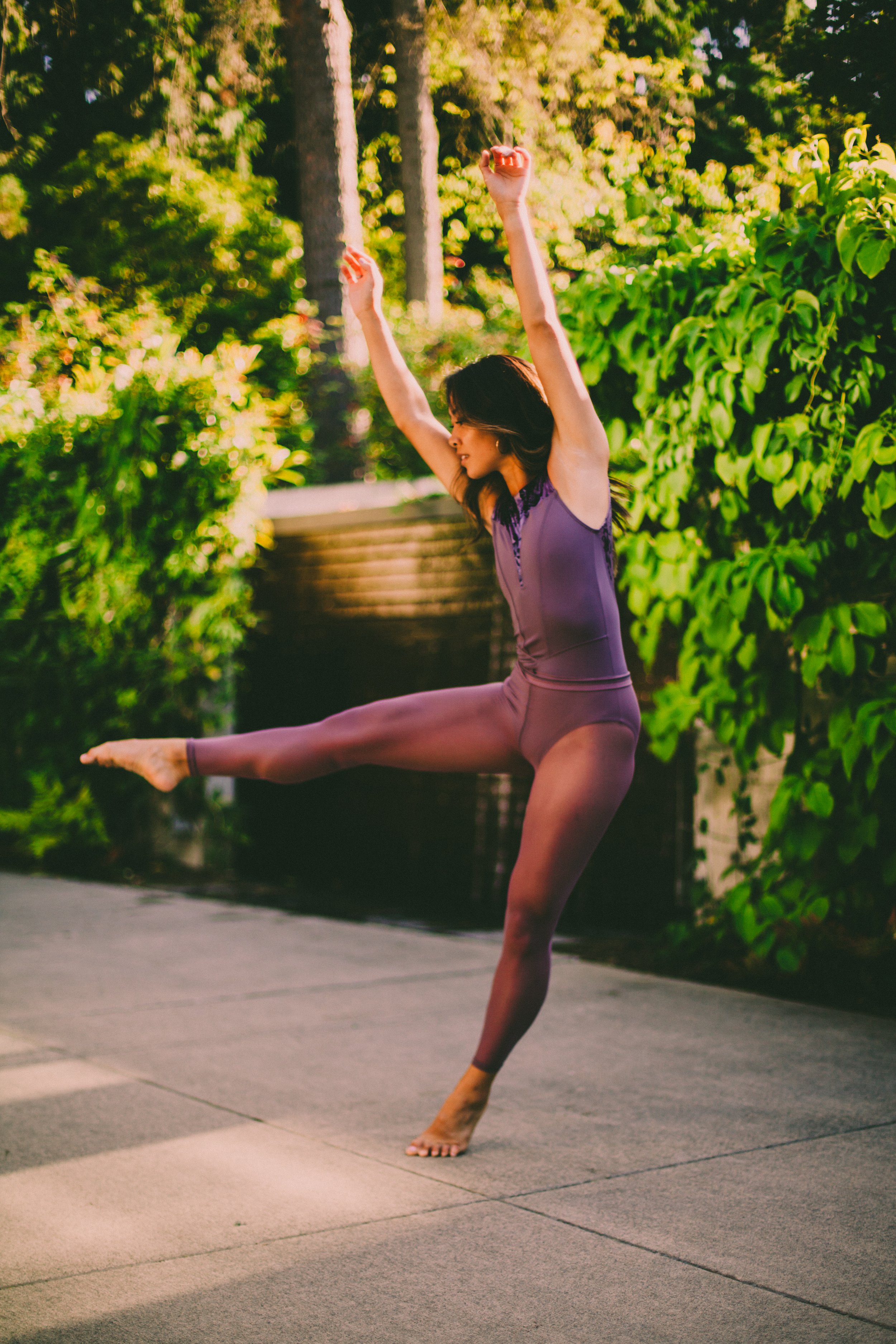
Studies have shown the importance of a good warm up and how it can increase your performance in 79% of all aspects being analyzed. This analysis has shown that performance improvements can be seen after completion of adequate warm-up activities, and there is little evidence to suggest that warming-up is detrimental to sports participants. (Fradkin et al, 2010). There has been a large debate regarding if static stretching before activity decreases physical athletic performance. I prefer a dynamic stretching approach which you can see is built into my example warmup program. Dynamic stretching is where you are stretching throughout a range of motion however you aren't just sitting in a position for prolonged period of time. You are active and using your muscles to move through the range. I like this because it is more functional in dance! There are also some detrimental effects to just static stretching especially before you are warm enough including decreasing your ability to produce a strong muscle contraction for powerful movements like jumping and thus decreasing performance (McMillan, 2006).
I like to take a very analytical approach to my warm up. You have your major joints and its a good idea to warm up each major muscle group. Major muscle groups include: glutes/hamstrings, quads/ hip flexors, shins and calves, abdominals, chest pushers and pullers. An exercise for each with a gentle activation will start to remind these muscles it's time to work! I like to start with a whole body connection to get the blood flowing and end with a full body connection moment putting everything together. I also like to do exercises where I am not only stretching but strengthening to start to build the neural connections. This is an example warm up routine that I have found works for my body but may not necessarily for everyone!

My Warm Up Routine:
Step 1: whole body connection movement
- Sun Salutation from standing into plank and hip stretch with worlds greatest stretch
Step 2: chest pushers
- Plank shoulder taps
Step 3: back pullers
- Superman and lat pulls
Step 5: quads/ hip flexors - Bird dogs
Step 4: glutes/hamstrings - Bridges
Step 6: abdominals
- Dead bugs
Step 7: shins and calves
- Squat into a calf raise
Step 8: full body connection moment puting everything together
- Single leg RDL with arm movements (balance incorporated into the movement)
Resources
Fradkin AJ, Zazryn TR, Smoliga JM. Effects of Warming-up on Physical Performance: A Systematic Review With Meta-analysis. Journal of Strength and Conditioning Research. 2010;24(1):140-148. doi:https://doi.org/10.1519/jsc.0b013e3181c643a0
Kozai A, Surgenor B, Ma. The Importance of a Good Warm-Up: Are You Warm Enough to Start Dancing?; 2017. https://iadms.org/media/3598/iadms-resource-paper-the-importance-of-a-good-warm-up.pdf
McMillian DJ, Moore JH, Hatler BS, Taylor DC. Dynamic vs. Static-Stretching Warm Up: The Effect on Power and Agility Performance. The Journal of Strength and Conditioning Research. 2006;20(3):492. doi:https://doi.org/10.1519/18205.1
NYSMI | The Importance of Stretching and Warm Up Exercises Before Physical Activity. Accessed August 24, 2023. https://nysportsmedicineinstitute.com/the-importance-of-stretching-and-warm-up-exercises-before- physical-activity/#:~:text=Warming%20up%20exercises%20increase%20blood
Disclaimer
All content found on the Dancewear Center Website, Instagram, Facebook, Pinterest, and all other relevant social media platforms including: text, images, audio, or other formats were created for informational purposes only. Offerings for continuing education credits are clearly identified and the appropriate target audience is identified. The Content is not intended to be a substitute for professional medical advice, diagnosis, or treatment. Always seek the advice of your physician or other qualified health provider with any questions you may have regarding a medical condition. Never disregard professional medical advice or delay in seeking it because of something you have read on this Website.
If you think you may have a medical emergency, call your doctor, go to the emergency department, or call 911 immediately. Dancewear Center does not recommend or endorse any specific tests, physicians, products, procedures, opinions, or other information that may be mentioned on dancewearcenter.net. Reliance on any information provided by dancewearcenter.net, Dancewear Center employees, contracted writers, or medical professionals presenting content for publication to Dancewear Center is solely at your own risk.
Links to educational content not created by Dancewear Center are taken at your own risk. Dancewear Center is not responsible for the claims of external websites and education companies.

How To Flexistretch Your Hamstrings
The Flexistretcher is a great tool that is used for the recovery and strengthening that dancers around the country find themselves using. Luckily, we have a certified Flexistretcher instructor on our DWC team that has a great tutorial on how to use this product. Read on to learn more about the FLX Hamstring Stretch with DWC Staff member Emma Neilson!
By Nicole Barrett & Emma Neilson
The Flexistretcher is a great tool that is used for the recovery and strengthening that dancers around the country find themselves using. Luckily, we have a certified Flexistretcher instructor on our DWC team that has a great tutorial on how to use this product. Read on to learn more about the FLX Hamstring Stretch with DWC Staff member Emma Neilson!
Grab your Flexistretcher and lay on your back with your knees facing up.
Bring your leg to your chest and place the ball of your foot on the elastic pad.
Hold the loops on either side of the elastic pad and carefully extend your leg.
Once your leg is all the way straightened, gently pull down on the loops to activate the stretch.
Hold this stretch for 30 seconds.
Repeat on the other side.
We hope that this tutorial helped you perfect your hamstring stretch with the Flexistretcher! Be sure to watch the full video below for a visual of this stretch!
Disclaimer
All content found on the Dancewear Center Website, Instagram, Facebook, Pinterest, and all other relevant social media platforms including: text, images, audio, or other formats were created for informational purposes only. Offerings for continuing education credits are clearly identified and the appropriate target audience is identified. The Content is not intended to be a substitute for professional medical advice, diagnosis, or treatment. Always seek the advice of your physician or other qualified health provider with any questions you may have regarding a medical condition. Never disregard professional medical advice or delay in seeking it because of something you have read on this Website.
If you think you may have a medical emergency, call your doctor, go to the emergency department, or call 911 immediately. Dancewear Center does not recommend or endorse any specific tests, physicians, products, procedures, opinions, or other information that may be mentioned on dancewearcenter.net. Reliance on any information provided by dancewearcenter.net, Dancewear Center employees, contracted writers, or medical professionals presenting content for publication to Dancewear Center is solely at your own risk.
Links to educational content not created by Dancewear Center are taken at your own risk. Dancewear Center is not responsible for the claims of external websites and education companies.
Seattle Dance and Performing Arts Medicine
Seattle Dance and Performing Arts Medicine, also known as SeaPam, is a fantastic resource for dancers who are in need of medical treatment from an injury! This community is filled with committed professionals in the industry that strive to promote healthy performance, education, training and help maintain a beneficial lifestyle for dancers in the Seattle area. They hope that they can enable all performing artists to pursue long, healthy performing careers!
By Nicole Barrett, DWC Blog Editor

Seattle Dance and Performing Arts Medicine, also known as SeaPam, is a fantastic resource for dancers who are in need of medical treatment from an injury! This community is filled with committed professionals in the industry that strive to promote healthy performance, education, training and help maintain a beneficial lifestyle for dancers in the Seattle area. They hope that they can enable all performing artists to pursue long, healthy performing careers!
One of the things that sets SeaPam apart is their free clinic for performing artists. This clinic welcomes all dancers and performing artists of all abilities and genres. The free clinic is designed to assist with diagnosing the injuries of performing artists that are uninsured, but everyone is welcome! SeaPam takes a team-based approach at taking care of the local artist community to address all health-related needs.
These appointments run about 30-60 minutes depending on the severity of the injury. The beginning will be with a physician that will speak with you for about 15-20 minutes about your physical problem and perform a physical examination. Then for the last 20-40 minutes you will see a physical therapist that will help you develop an effective home exercise program to help address your specific issue.
If you would like to find out when the next clinic will be, you can bookmark their homepage on their website and check the calendar regularly. You can also sign up for email updates when new clinic appointments are available or check their facebook page here for more updates!

image courtesy of seapam.com
Disclaimer
All content found on the Dancewear Center Website, Instagram, Facebook, Pinterest, and all other relevant social media platforms including: text, images, audio, or other formats were created for informational purposes only. Offerings for continuing education credits are clearly identified and the appropriate target audience is identified. The Content is not intended to be a substitute for professional medical advice, diagnosis, or treatment. Always seek the advice of your physician or other qualified health provider with any questions you may have regarding a medical condition. Never disregard professional medical advice or delay in seeking it because of something you have read on this Website.
If you think you may have a medical emergency, call your doctor, go to the emergency department, or call 911 immediately. Dancewear Center does not recommend or endorse any specific tests, physicians, products, procedures, opinions, or other information that may be mentioned on dancewearcenter.net. Reliance on any information provided by dancewearcenter.net, Dancewear Center employees, contracted writers, or medical professionals presenting content for publication to Dancewear Center is solely at your own risk.
Links to educational content not created by Dancewear Center are taken at your own risk. Dancewear Center is not responsible for the claims of external websites and education companies.
Don’t Do It Yourself Virtual Assistant Services
Here at Dancewear Center, we host a lunch and learn on the last Wednesday of every month where we bring in local experts in our community to give a presentation about their expertise in that field. Fortunately we get the opportunity to have Santina Rigano-Lesch be one of our presenters this month! She will be presenting on her business Don’t Do It Yourself Virtual Assistant Services (DDIYVAS). Read on to learn more about her dancing journey and more information on her business!
By Nicole Barrett, DWC Blog Writer
Here at Dancewear Center, we host a lunch and learn on the last Wednesday of every month where we bring in local experts in our community to give a presentation about their expertise in that field. Fortunately we get the opportunity to have Santina Rigano-Lesch be one of our presenters this month! She will be presenting on her business Don’t Do It Yourself Virtual Assistant Services (DDIYVAS). Read on to learn more about her dancing journey and more information on her business!
Santina was born and raised in Adelaide, South Australia. She shares that she came to America when she was 21 to become an au pair. Santina has been dancing her whole life since she was 4 years old and shares that her mother was the one that put her into dance classes. Because of this, Santina fell in love with dance and that became her passion. While in Australia, she shares that she studied various different dance styles, managed a performing arts company and coached national hip hop champions. When she moved to the states, she says that even as an au pair she was trying to insert herself into the dance scene to see what it was like here.

She later moved here to Seattle where she met her wife. After meeting her wife, Santina started a dance studio in West Seattle that allowed her to teach over 400 kids aged 2 to 12 and build a community atmosphere through her dance studio. The pandemic hit which unfortunately forced her to close the studio doors. This then lead her to start her two businesses she has today. Don’t Do It Yourself Virtual Assistant Services Santina says was built from the pandemic. She knew that as a studio owner herself, she struggled with the social media and virtual assistance aspect of the business. Her main goal with the business is to support studio owners in the area that feel they are struggling in these areas and give them as much support as they need.
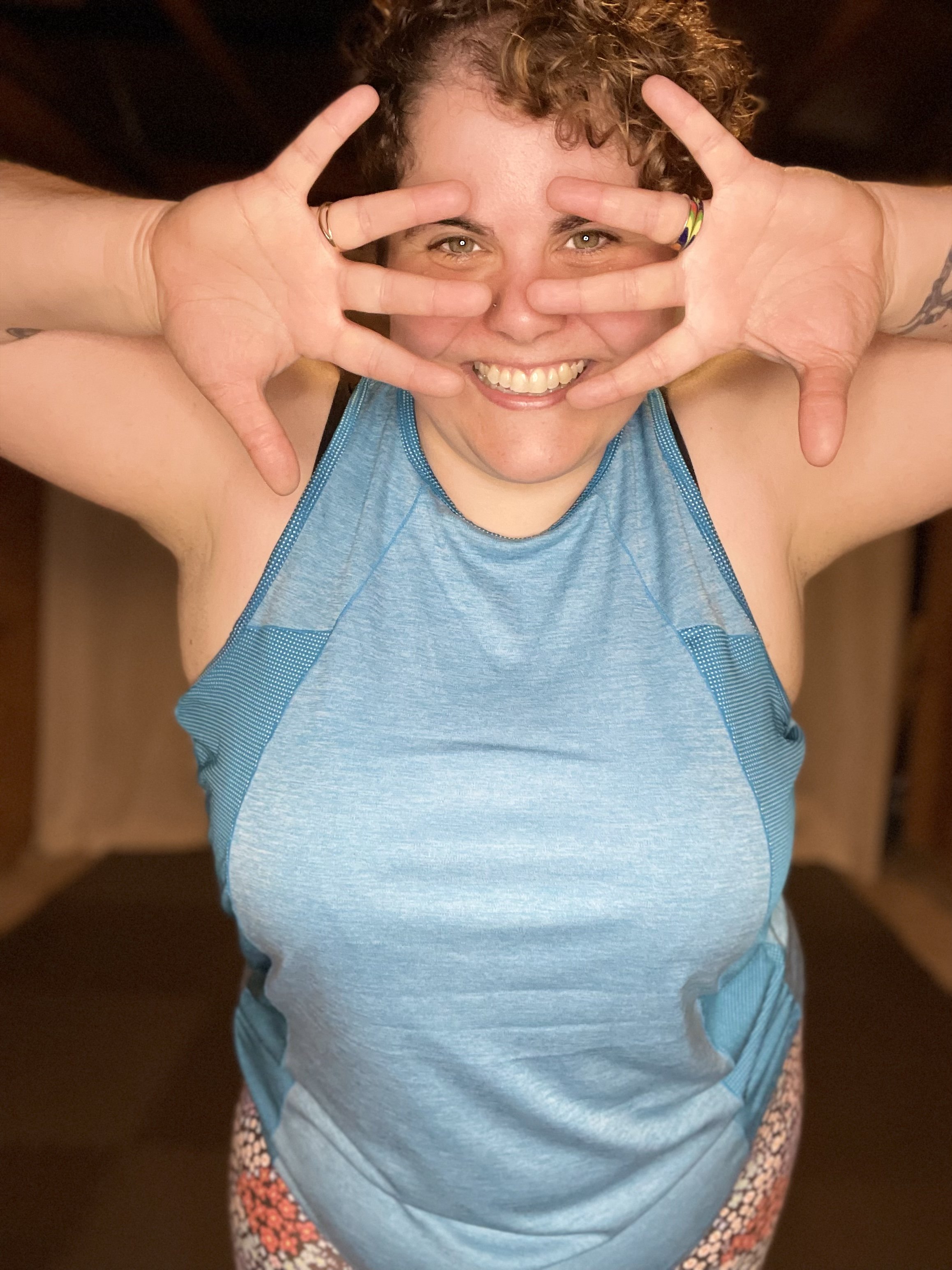
Don’t Do It Yourself Virtual Assistance Services (DDIYVAS) is an organization that is built for dance studios/schools, fitness brands, child-related businesses and various other types of businesses with virtual assistance needs. Some of the services include various administrative tasks like website management, inputting class data into enrollment software, and getting emails out to clients. They also help with social media management which can include crafting and creating content, strategizing content, and engagement and online presence. Lastly, DDIYVAS also helps with podcast management which can include information on creating a podcast, managing editing the podcast and making sure it gets onto various channels.
Santina will be presenting about culture and creating content with ease through that cultural lens at the lunch and learn. This will focus on the core values that want to be showcased through this content and how to achieve that. Be sure to come and watch Santina’s presentation on June 28th from 12:30-1:30 at our Renton location! We hope to see you there!
Disclaimer
All content found on the Dancewear Center Website, Instagram, Facebook, Pinterest, and all other relevant social media platforms including: text, images, audio, or other formats were created for informational purposes only. Offerings for continuing education credits are clearly identified and the appropriate target audience is identified. The Content is not intended to be a substitute for professional medical advice, diagnosis, or treatment. Always seek the advice of your physician or other qualified health provider with any questions you may have regarding a medical condition. Never disregard professional medical advice or delay in seeking it because of something you have read on this Website.
If you think you may have a medical emergency, call your doctor, go to the emergency department, or call 911 immediately. Dancewear Center does not recommend or endorse any specific tests, physicians, products, procedures, opinions, or other information that may be mentioned on dancewearcenter.net. Reliance on any information provided by dancewearcenter.net, Dancewear Center employees, contracted writers, or medical professionals presenting content for publication to Dancewear Center is solely at your own risk.
Links to educational content not created by Dancewear Center are taken at your own risk. Dancewear Center is not responsible for the claims of external websites and education companies.
Interested in writing for the DWC Blog? Click below to fill out the DWC Contributor application!