
The Story of a Studio Born Out of the Pandemic
It’s no secret that many small businesses suffered throughout the COVID-19 pandemic and dance studios were no exception. Amid growing dance studio closures, those eager to move were left without a space to practice and without instructors to learn from. In the face of these challenges, local dance instructor and artistic director Mija Bishop founded Flight Feathers, a dance studio aimed at helping each individual dancer sore. Stay tuned to Flight Feathers’ Instagram for details about its June production of A Midsummer Night’s Dream.
Mija Bishop on Helping Dancers Soar at Flight Feathers
By Madison Huizinga, Former DWC Blog Editor

Photo by Truman Buffett
It’s no secret that many small businesses suffered throughout the COVID-19 pandemic and dance studios were no exception. Amid growing dance studio closures, those eager to move were left without a space to practice and without instructors to learn from. In the face of these challenges, local dance instructor and artistic director Mija Bishop founded Flight Feathers, a dance studio aimed at helping each individual dancer sore. Stay tuned to Flight Feathers’ Instagram for details about its June production of A Midsummer Night’s Dream.
Influenced heavily by her family, Mija began dancing around age six. Her father was a ballet teacher as well as the owner of a ballet studio. “I was a little goof-off when I was little!” Mija laughs, sharing that she often got kicked out of class for being disruptive. It wasn’t until around age 13 that Mija began focusing on her dance training a bit more seriously. Throughout middle school and high school, she tried to get involved with as many ballet-related workshops, programs, and performances as she could.
Nonetheless, Mija shares that she eventually got burnt out and quit dance after high school for three years. “I kind of had this all-or-nothing mentality,” she says of how she viewed her involvement with dance. After three years, Mija found herself missing the dance scene. When she found an opportunity to get back involved, she jumped on it. “I’m really grateful for that chain of events that brought me back to dancing again,” she says. Today, she’s going on her tenth year of teaching dance, which has been a big part of what she’s loved about her dance journey.
“I've always enjoyed the movement,” Mija says, sharing her love for dancing to beautiful music. She appreciates the artistry behind dance and being able to feel so present with herself and her body. “There’s something really freeing about just being able to completely immerse yourself,” she says. Mija also appreciates her dance community, as well as the discipline and structure of ballet, particularly the ability to assess herself.

Photo by Thomas Hopkins
Mija shares that in her personal life, a challenge she’s faced in dance is grappling with the “perfect ballet body.” She never felt like she fit the ideal image of a ballerina, pointing out that she is shorter in stature and has shorter limbs. “People of Asian descent might relate,” she shares of people who share the same racial identity as herself. Mija says that growing up as a dancer she felt pressure and received comments about staying within a certain weight and not gaining “extra” muscle, as it would corrupt her lines. It wasn’t until after high school that she realized that cross-training and weight training were key to helping her gain strength as a dancer. “That’s something that I have been enjoying for myself and also been able to share with my students,” Mija says of cross-training, sharing that it can help dancers gain a better sense of ownership over their bodies and physical capabilities. Learning to train one’s body to gain strength rather than training to look a certain way is a healthier and more sustainable practice.
Flight Feathers was established in May of 2021 so that Mija could safely continue working with dancers during the COVID pandemic. “I was just really devastated having to say ‘good-bye’ to so many dance families,” she says of the studio she had taught at closing. She decided to take a “big leap of faith” to provide community members with access to dance classes amid COVID. Flight Feathers has mainly focused on ballet this year, but Mija is eager to expand the studio to offer jazz, hip hop, and contemporary.
“The intention behind both the name and the program is to create an environment where each student can grow and explore their own unique needs through ballet,” Mija says of the mission behind Flight Feathers. “I feel like there are just so many different ways to shine and soar,” Mija says, connecting the notion to a flock of birds. “I really hope to provide each student with [a] unique experience that will make them grow.”
Dance accessibility is something important to Mija. She shares that going into the second year of her program, she would love the chance to connect with people and find ways to make dance more accessible to people, particularly in the financial sense. Mija's vision is starting to take shape, as she has recently been connected with The Cobb Foundation Northwest Founder and President Margaret Cobb. The foundation currently funds and creates opportunities for underserved children, including music and tennis lessons, LEGO robotics workshops, and a book giveaway program. Margaret and Mija are in the process of adding ballet to one of the Foundation's offerings. She is excited about the opportunity to team up with Margaret and provide a positive dance experience to a wider range of kids through the organization.

Photo by Andrew Lucio
Excitingly, Mija has recently moved operations to a new studio space in Woodinville, Washington. “It’s still a little bit unreal!” she says, sharing that she’s incredibly grateful for the support she’s received from her husband and dance families
Follow Flight Feathers’ Instagram to stay up-to-date on all their upcoming shows and more!
Let's Talk About Dancers and Depression #mentalhealthawarenessmonth
May is Mental Health Awareness Month! In this series, we are giving the staff here at DWC a platform to talk about their personal mental health journeys. We believe in supporting the wellbeing of the whole dancer; both body and mind. We want you to know that you are not alone. We believe in the importance of talking about mental health openly, especially within the dance world. So let’s talk about it!
In this article, Cherie, Social Media Director here at DWC is sharing her experience with depression.
May is Mental Health Awareness Month! In this series, we are giving the staff here at DWC a platform to talk about their personal mental health journeys. We believe in supporting the wellbeing of the whole dancer; both body and mind. We want you to know that you are not alone. We believe in the importance of talking about mental health openly, especially within the dance world. So let’s talk about it!
Trigger Warning: Depression.

By En Avant Photography
Medical Disclosure: Dancewear Center does not claim to have any professional medical experience on the subjects discussed. This is Cherie’s personal experience and opinions. If you need help or are in a medical emergency, see the resources listed at the bottom of this post or call 911 for immediate medical attention.
Over the years, I have become very well acquainted with this feeling; my limbs are heavy and it feels like someone is sitting on my chest. I oversleep and lose my appetite. I get headaches, and the world around me feels dull and colorless. Sometimes it lasts a day, sometimes months. This is what depression looks like for me.
Talk to someone you trust. No one's meant to go through life alone.
For a long time I struggled with holding myself to an unrealistic standard. I had an ideal version of myself that I was constantly striving for. I was adamant about “fixing” myself; so I would isolate and try to fix all of the things I didn’t like, emerging on the other side as who I thought I should be. Not wanting to burden anyone else with my personal struggles, I drew further and further away from the people who cared about me. The first person I opened up to about what was going on was my Mom. That was the first step I took out of the little cave I dug myself. When I started going to therapy in high school, the very first exercise my therapist had me do was write out all of the people I had in my support system. These were the people I knew I could reach out to. When I first wrote this list, I think there were only two people I felt like I could talk to. If I were to write out that list now, there are at least a dozen people that come to mind. In reality, those people were ALWAYS THERE, the only thing that’s changed is my ability to ask for help when I need it. Look at the people you have in your life that you love and trust. Asking for help can be scary, and can be hard on our ego sometimes, but no one is meant to go through life alone. Whether it be a parent, a friend, a teacher, or mentor, find someone to talk to.
It’s important to take each moment as it comes and allow our body and mind to process these feelings. I often rely on the list below to help guide my actions when I feel stuck or in a particularly bad place.
Go for a walk. Something as simple as fresh air and movement help lift our spirits.
Take a shower. It’s the little things that count. Focusing on small tasks like taking a shower or brushing your teeth can help your brain kick into motion.
Practice circular breathing: inhale for 4 counts, hold for 4 counts, exhale for 4, hold for 4. This is helps get more oxygen to your brain and body, as well as grounding your brain in the present moment
Talk about it. I know it can be uncomfortable, but talking about how you are feeling to someone you trust can lift a huge weight off your shoulders.
Write a gratitude list. It’s easy to get caught up in a sense of lack or hopelessness. Take 3 minutes to write down the things in your life that bring you joy.
Here is an example of what I might write:
I’m grateful for my morning coffee
I’m grateful for my walk outside; the sun felt warm on my skin
I’m grateful for the time I get to spend on the phone with my mom
I’m grateful for lighting candles in the evening that make my home feel cozy.
I think especially as dancers, we place an unrealistic expectation on ourselves to be perfect. We must learn to enjoy the process, not the outcome. I think a lot of times we use our training to be overly critical of ourselves and our bodies. While we are constantly striving to push our limits, it’s important we take time to appreciate and thank our body for all it does for us in the moment. Dancing for me has always been the one aspect of my life where I could escape my brain. Even on the days I felt I couldn’t get out of bed, if I made it to dance class in the evening I would begin to feel better. As I write this, we are currently over two months into a stay-at-home order put in place due to COVID-19. Myself and countless others are having to grieve the loss of many aspects of our normal lives. Not being able to gather and dance with my peers has been the hardest to grieve. Rehearsals and classes have been such a vital aspect of my self care because they give me the space to reconnect with my body and quiet my brain from the outside world. I knew going into quarantine would trigger depressive responses. I experienced oversleeping and lack of appetite in the beginning. I have had to reintroduce movement back into my daily routine to help me cope with this difficult time. Wherever you are in your mental health journey, remember it’s a process.
Even writing this now brings up uncomfortable emotions and memories of the hard times in my life. If you are reading this and are in a similar situation, I want you to know that it’s okay not to be okay. You are worth living for, you are worthy of love, and it does get better. These things take time and it’s not easy, but it’s worth it. I promise you it’s worth it.
RESOURCES:
Mental health resources for Washington State :
https://www.rtor.org/directory/mental-health-washington/
If you are a parent who is wanting to help their children with COVID-19 related depression and anxiety, read this:
http://www.schoolmentalhealth.org/COVID-19-Resources/
If you have suicidal thoughts, click the link below:
https://www.helpguide.org/articles/suicide-prevention/are-you-feeling-suicidal.htm
Or call 1-800-273-TALK in the US, or visit suicide.org to find a helpline in your country
Bunions: Are They Preventable?
Bunion: word likely originated from the early 18th century from ‘bunny’ or ‘boni’ to describe a swelling or from the Greek word for turnip
There is still a lot of research that needs to be done to understand this complex condition. We know that dancers are prone to bunions. But we also know this condition has a strong genetic component.
By Colleen Bickel, PT, DPT, COMT
Colleen will be leading our Lunch & Learn this Wednesday at DWC Renton at 12:30PM, click here to register!

Hallux valgus (commonly known as bunions) are a frequent site in a dance class.
Hallux: big toe
Valgus: oblique displacement away from centerline
Bunion: word likely originated from the early 18th century from ‘bunny’ or ‘boni’ to describe a swelling or from the Greek word for turnip
There is still a lot of research that needs to be done to understand this complex condition. We know that dancers are prone to bunions. But we also know this condition has a strong genetic component.
How common are bunions?
Age 18-65: about one-third of the population
Twice as common in females
Dancers: a recent study showed 89% of professional ballet dancers have bunions
Things that likely DO NOT contribute:
Number of hours dancing per week
Hours of pointe work each week
Total years of pointe work
Age of starting pointe
Intensity (professional versus recreational)
Things that likely DO contribute:
Genetics
Faulty technique patterns
Plantarflexion hypermobility (pointed foot position): the average person has 50 degrees while the average female professional ballet dancer has 113 degrees
Muscle imbalances around the great toe
Things WE DON’T KNOW if they contribute:
Tight shoes (flats, pointe shoes or street shoes)
The main faulty technique patterns:
Forcing turnout out, end-range exaggerated turnout with hyper-pronation compensations, increased turnout from the leg rather than the hip
Winging while en pointe
Why should we care:
It’s a progressive condition: while a younger dancer may not have any issues now, it’s best to learn ways to limit the progression so their older body will thank them
Can lead to arthritis and pain in the big toe with walking, relevés, pointing and jumping
Can contribute to poor balance and proprioception

What dance-specific manual physical therapists do:
Check for muscle imbalances between extrinsics/intrinsics (muscles that start in the calf and travel to the foot versus muscles just in the foot)
Check for muscle imbalances between medial/lateral calf (inner and outer calf)
Improve joint mechanics in foot (make sure all the bones/joints are moving well)
Release tight muscles pulling on the great toe & teach dancer how to do that
Teach individual strengthening exercises based on dancer’s weaknesses
Help dancer find toe stretchers and spacers (there are a lot of options out there)
Help dancer identify optimal street shoes
Help dancer identify poor mechanics: walking, pointing, turnout, relevés, jumping
So, are bunions preventable? If you do not have the genetic propensity, then potentially yes. If you have the genetic propensity, then maybe not. Either way, we can make a lot of changes to reduce the risk factors and the progression. Happy Dancing!
Colleen will be leading our Lunch & Learn this Wednesday at DWC Renton at 12:30PM, click below to learn more!


By Colleen Bickel
Colleen Bickel was born and raised in Albuquerque, NM. After obtaining a BFA in Modern Dance from the University of Utah, she was able to tour as a professional dancer for many years. Colleen traveled all over the United States before settling in the concrete jungle of NYC. Living the artist’s life in NYC was a dream come true, but after a while she realized she was longing to reconnect with mountains and nature. Colleen graduated with my Doctorate in Physical Therapy from the University of Washington and has called the gorgeous PNW home ever since.
Colleen's passion has always been to understand the inner mechanics of the body, whether for the everyday functions of life or for the more intense activities of the professional athlete or weekend warrior. She worked as a bookkeeper for many years (which helped pay the rent for her artistic life), and feels passionate about proper ergonomics and fitting physical activity into daily life. Colleen loves learning and is a certified Level 5 Romana’s Pilates Instructor and a MELT (Myofascial Energetic Lengthening Technique) Level 1 practitioner. She has taken classes in Ideokinesis, the Franklin method, Bartenieff Fundamentals, and other myofascial release systems. Additionally, Colleen is currently working towards her Certificate in Manual Physical Therapy and Certificate of Achievement in Pelvic Health. Colleen believes in looking at the body as an entire system rather than piecemeal parts in order to treat the whole person.
Analyzing and Improving Movement: The Benefits of Working with a Dance Physical Therapist
I grew up as a ballet dancer, majored in modern dance in college, danced professionally with 5 different dance companies in Utah and NYC… and I never saw a PT unless I was injured. Why is…
By Colleen Bickel
Colleen Bickel was born and raised in Albuquerque, NM. After obtaining a BFA in Modern Dance from the University of Utah, she was able to tour as a professional dancer for many years. Colleen traveled all over the United States before settling in the concrete jungle of NYC. Living the artist’s life in NYC was a dream come true, but after a while she realized she was longing to reconnect with mountains and nature. Colleen graduated with my Doctorate in Physical Therapy from the University of Washington and has called the gorgeous PNW home ever since.
Colleen's passion has always been to understand the inner mechanics of the body, whether for the everyday functions of life or for the more intense activities of the professional athlete or weekend warrior. She worked as a bookkeeper for many years (which helped pay the rent for her artistic life), and feels passionate about proper ergonomics and fitting physical activity into daily life. Colleen loves learning and is a certified Level 5 Romana’s Pilates Instructor and a MELT (Myofascial Energetic Lengthening Technique) Level 1 practitioner. She has taken classes in Ideokinesis, the Franklin method, Bartenieff Fundamentals, and other myofascial release systems. Additionally, Colleen is currently working towards her Certificate in Manual Physical Therapy and Certificate of Achievement in Pelvic Health. Colleen believes in looking at the body as an entire system rather than piecemeal parts in order to treat the whole person.
By Colleen Bickel
Dancers, I have a question for you.
Do you go see your doctor every year for a check-up?
Yes?
Why do you do that?
Is it to check to make sure that your heart, lungs, throat, lymph nodes, sinuses, abdominal organs, skin, etc. are healthy? Do you also bring any health concerns you are currently having to ask them?
Ok, here’s another question:
Do you go to your physical therapist (PT) for a yearly check in? Do you bring any muscle, tendon, and/or bone concerns you are currently having to ask them?
No? Hmmm. Neither did I. Until lately.
I grew up as a ballet dancer, majored in modern dance in college, danced professionally with 5 different dance companies in Utah and NYC… and I never saw a PT unless I was injured. Why is that? Well, part of it is because insurance company payments for physical therapy are structured around injuries, instead of prevention. Doctors are allowed to bill for “wellness or prevention visits,” but that principle has not been expanded to physical therapy yet. The APTA (American Physical Therapy Association) is trying to change that, so that injuries can be prevented. But, for now, if you wanted to see a PT without having a particular injury/pain/problem/discomfort, you would have to pay cash instead of using insurance (which a lot of dancers cannot afford), or find a PT who does pro bono work or has a sliding scale.
The other reason we do not seek out physical therapists is that it simply isn’t a habit. We don’t think to do it. We will seek out massage therapists, chiropractors, acupuncturists, trainers, Pilates & yoga classes and pay cash for those. So, why not PT?
After I retired from dancing, I knew I wanted to know even more about the body. I wanted answers to all the movement questions that had cropped up throughout my dance career. I knew how movement felt. I knew how to warm up, how to cross train and condition, how to rest and prevent catastrophic injuries, etc. But what if I was having issues with little cricks, little tweaks, or differences in my flexibility? What about my ability to balance on one leg versus the other? All I knew to do was stretch more, strengthen more, and focus on my form in the gym and in class. I never thought to ask my PT if she could help me figure out how to lift my left leg as high as my right. Or help me perform double pirouettes to the left, as they were so much harder for me than turning to the right.
So, here I was in my mid-30s, a dancer who had decided to retire. I was teaching Pilates while doing a variety of other odds and ends jobs, because that’s how you make ends meet in NYC. I thought about becoming a doctor or an orthopedic surgeon; but I still wanted to move and to watch movement. Who was I going to become after being a dancer?
One day, I asked a PT how they would describe what a PT did to someone who had never heard of a PT before. How would they define themselves? This PT told me, “I’m a musculoskeletal expert who analyzes movement and makes movement better.” At no point did they say they dealt only with injuries. Instantly I thought, “Well shoot! I’ve been analyzing movement all my life and I want to become a musculoskeletal expert!” The rest, as they say, is history.
A few years later, I find myself working with dancers daily as a part of my job at Innova Physical Therapy, and I love every minute of it.
So, here are my final questions for you:
Why, as a dancer, are you not working with a physical therapist who specializes in the performing arts to help you become an even better dancer? What things (beyond injuries) would you consider seeing your performing arts physical therapist for? Here are just a few:
Yearly Health Screenings for Joints, Muscles, Tendons, and Bones
Injury Prevention, Conditioning, and Home Programs
Pre-Pointe and Pointe Assessments
Body Asymmetries:
Do you have something that “looks different” between sides: like an ankle that wings more, or one side of your rib cage that sticks out more, or shoulders that are uneven?
Muscular Imbalances:
Do you feel stronger on one side rather than the other?
Do you feel crooked?
Is one calf or thigh bigger than the other?
Muscle or Joint Tightness:
Is one side tighter than the other?
Do you find you are standing on one leg more than the other?
Do you have a spot in your body that you stretch constantly but it always seems to be tight?
Do you have differences in turn out between legs (i.e. one side turns out much further than the other)?
Muscle Control:
Do you feel able to control all your movement?
Are you hypermobile?
I’m hopeful one day, every person in the United States will go to their PT for a yearly check in. For now, anyone can see a PT paying cash until we make changes to our medical system in order to use insurance. Now, keep in mind, you’ll probably want a specialist, and it may take some searching to find your perfect fit, but we are out there! I think dancers, who are so smart, in-touch, and thoughtful about their bodies, can start paving the way for others to follow. I’ve seen so many dancers (including myself) who have been able to increase their understanding of their bodies, and improve their strength, stamina, and technique by collaborating with a PT. Working strategically with a PT, may be a great way to improve your dancing, your health, and your longevity in the field for years to come.
If your studio is interested in a free workshop with one of our dance specialists please feel free to contact me. If you are uncertain if you should see a PT and whether it would be covered under insurance, feel free to send me an email as well!
Check out the links below to learn more about or contact Colleen, and check out DWC’s Local Dance Specialists page to find a dance specialist near you!
Sarah Slipper On Creating Representative Leadership in the Dance World
NW Dance Project’s Artistic Director Sarah Slipper believes that there is a need for women representation in leadership positions in the dance industry. When asked about the true power of a title, she says that, in her opinion, it is less about “power” and more about the opportunity to guide, provide wisdom, and lead individuals. “It is important to see shared equality in leadership roles,” Sarah says. “Representation is very, very important, especially in key roles.” In an industry dominated by women participants, ensuring that leadership reflects that is of the utmost importance.
On the Ballet Gender Pay Gap
By Madison Huizinga and Ava Budish, DWC Blog Contributor and Ambassador

NW Dance Project Artistic Director Sarah Slipper, from https://nwdanceproject.org/directors
Women make up more than 70% of the ballet industry. So why are the seats of power in such a female-dominated industry controlled by men? Of 125 ballet companies surveyed across the globe, Dance Data Project found that, excluding the United States, 66% of the companies have a man as artistic director. In the United States specifically, that number increases to 71%. Beyond acting as a general figure of leadership, artistic directors have a hand in nearly every important decision to be made in any given company. This could include casting, budgeting, handling disputes, overseeing and selecting repertoire, and so much more. With such power and influence, it is crucial that the people in these positions are representative of their employees - that is not currently the case in the ballet industry.
The disproportionate amount of male leadership cannot be chalked up to a lack of female faculty in ballet companies. For example, the Dance Data Project reports that out of 1,600 dance faculty positions at institutions of higher education, women outnumber men approximately 2:1, including in full-time and part-time jobs. However, the position of dean - the highest position within a school - is held by men 66% of the time. While all faculty positions are important and essential to the success of a dance company, more coveted roles are higher paid and are given primarily to men. Those working in higher positions have more power when it comes to important decision-making in the dance industry, hence the need for a more equitable gender representation.
NW Dance Project’s Artistic Director Sarah Slipper believes that there is a need for women representation in leadership positions in the dance industry. When asked about the true power of a title, she says that, in her opinion, it is less about “power” and more about the opportunity to guide, provide wisdom, and lead individuals. “It is important to see shared equality in leadership roles,” Sarah says. “Representation is very, very important, especially in key roles.” In an industry dominated by women participants, ensuring that leadership reflects that is of the utmost importance.
The small percentage of female artistic directors are paid significantly less than their male counterparts. In 2018, they were only making 61 cents for every dollar earned by an equivalent male coworker. In 2019, this number slightly increased to 73 cents; however it is still ten cents below the national average, where women earn 83 cents to every dollar earned by their male counterparts. This pay gap makes little sense, as women artistic directors often have just as much experience in the industry as male artistic directors. Additionally, Dance Data Project reported that female artistic directors were more likely to serve a longer term than men. So not only are these women equally qualified but they also hold their position longer.
The consequences of the larger gender pay gap in the United States are wide-reaching, and often affect women throughout their lives. As a result of their lower lifetime earnings, women receive less in Social Security and pensions and on average have only 70% of the overall retirement income that men have. In addition, it’s important to note that the gender pay gap is compounded by systemic racism. According to the American Association of University Women (AAUW), the gender pay gap widens when race is taken into account. In 2020, AAUW found that on average Black women made about 63% of what a white man earns annually, and Hispanic women make about 58%. For white women, the gap lessens, with them earning about 80% of what a white man earns annually.
Sarah points out that men in the dance industry are a rarity and, as a result, often receive special treatment. Male dancers certainly face challenges of their own and deserve a place in the dance world, nonetheless, the sexism women experience cannot be overlooked. Sarah tells us that not only was it challenging to find work as a freelance choreographer, she has also witnessed men being subsidized more than women on numerous projects. She and her colleagues had to create many of their own opportunities. Perhaps if there were more male dancers in the industry, men wouldn’t receive a disproportionate amount of specialized opportunities. Many companies must tackle the challenge of uplifting and encouraging young men to pursue dance without creating inequality.

Photo from Christ Yang on Unsplash
Sarah tells us that both the problem and solution start with young dancers. She believes that it is essential to empower young girls from the start of their careers in hopes that they grow up and have the courage to pursue a position of influence. This encouragement should undoubtedly be met with dance schools and companies making systemic changes that bring women into positions of power in which they receive the same pay as men in equivalent positions. Such changes could include adjusting recruitment strategies, providing educational workshops to staff on implicit biases, offering fellowships for women choreographers to gain more experience, and much more. Putting change solely on the shoulders of the individual contributor negates the role that larger systems can play in perpetuating inequality. Both are important for creating lasting progress.

Disclaimer
All content found on the Dancewear Center Website, Instagram, Facebook, Pinterest, and all other relevant social media platforms including: text, images, audio, or other formats were created for informational purposes only. Offerings for continuing education credits are clearly identified and the appropriate target audience is identified. The Content is not intended to be a substitute for professional medical advice, diagnosis, or treatment. Always seek the advice of your physician or other qualified health provider with any questions you may have regarding a medical condition. Never disregard professional medical advice or delay in seeking it because of something you have read on this Website.
If you think you may have a medical emergency, call your doctor, go to the emergency department, or call 911 immediately. Dancewear Center does not recommend or endorse any specific tests, physicians, products, procedures, opinions, or other information that may be mentioned on dancewearcenter.net. Reliance on any information provided by dancewearcenter.net, Dancewear Center employees, contracted writers, or medical professionals presenting content for publication to Dancewear Center is solely at your own risk.
Links to educational content not created by Dancewear Center are taken at your own risk. Dancewear Center is not responsible for the claims of external websites and education companies.
Dancer To Dancer: Audition Advice
Sometimes the audition process can be daunting. We’ve all felt the butterflies in our stomach, or the pre-audition jitters. Believe us when we say we’ve been there! DWC staff, ambassadors and friends offer their prep routines and advice on getting ready.
Sometimes the audition process can be daunting. We’ve all felt the butterflies in our stomach, or the pre-audition jitters. Believe us when we say we’ve been there! DWC staff, ambassadors and friends offer their prep routines and advice on getting ready.

Robbi
Approach each audition with curiosity. Sometimes we put opportunities on a pedestal without knowing all that a process entails. Just try to be excited for the audition itself the same way you would be excited for a performance you were dancing in or going to see. The pressure is on for everyone, including the person running the audition, and you will see some of the most exhilarating performances of your career in an ordinary studio.

Laurie
I really emphasize preparing well ahead and prioritizing. There’s so much emotional and physical energy involved so be reasonable and realistic with your choices and the extent of what’s involved in auditions. It’s better to have a few good auditions for what you’re really vested in and show up at your best or have well practiced exercises or numbers, rather than spread yourself too thin. It goes without saying to come dressed and feeling your best with everything in your dance bag you could possibly need in shoes, etc etc.! Even invest in a new Leo for instance that makes you feel fresh and really good in it. Stand in front whenever possible and show consistent affirmation and acknowledgment of what the audition director or judges are sharing with good non verbal cues and enthusiasm. Perform with conviction and maximum effort irregardless of whether you like a particular combination or not— Don’t just save it for your “good side!” You may never get that chance! Finally, be extremely diligent and thorough in everything required for paperwork, headshots or online submissions to assure everything is correct and you’re not missing anything, including any important deadlines!

photo by: @janaearlyphotography
Emma
I start my prep as soon as I wake up. I do my makeup and hair as perfectly as I can- I want to present my best self. What you wear matters too! Usually auditions call for a black leotard, and I always wear one that I feel the most confident in.
After I finish getting ready I eat a pretty substantial meal. You need to fuel your body for what you're going to be asking it to do. On the drive over I listen to either some soothing classical music or some pump up jams to get me going! Once I get there and finish checking in, I find a place that's quiet and secluded to do some stretching and warm ups. If the place lets you into the studio before the audition starts, I like to go in and find a good place at the barre- I usually go as far as I can to the front without actually being in the front. Some auditions place you by number so you may not have a choice. Once I'm in there, I do some breathing and meditation exercises to ground myself. I also find that talking to the other dancers helps too! Remember, everyone is probably just as nervous as you are, we're all just trying to hide it.
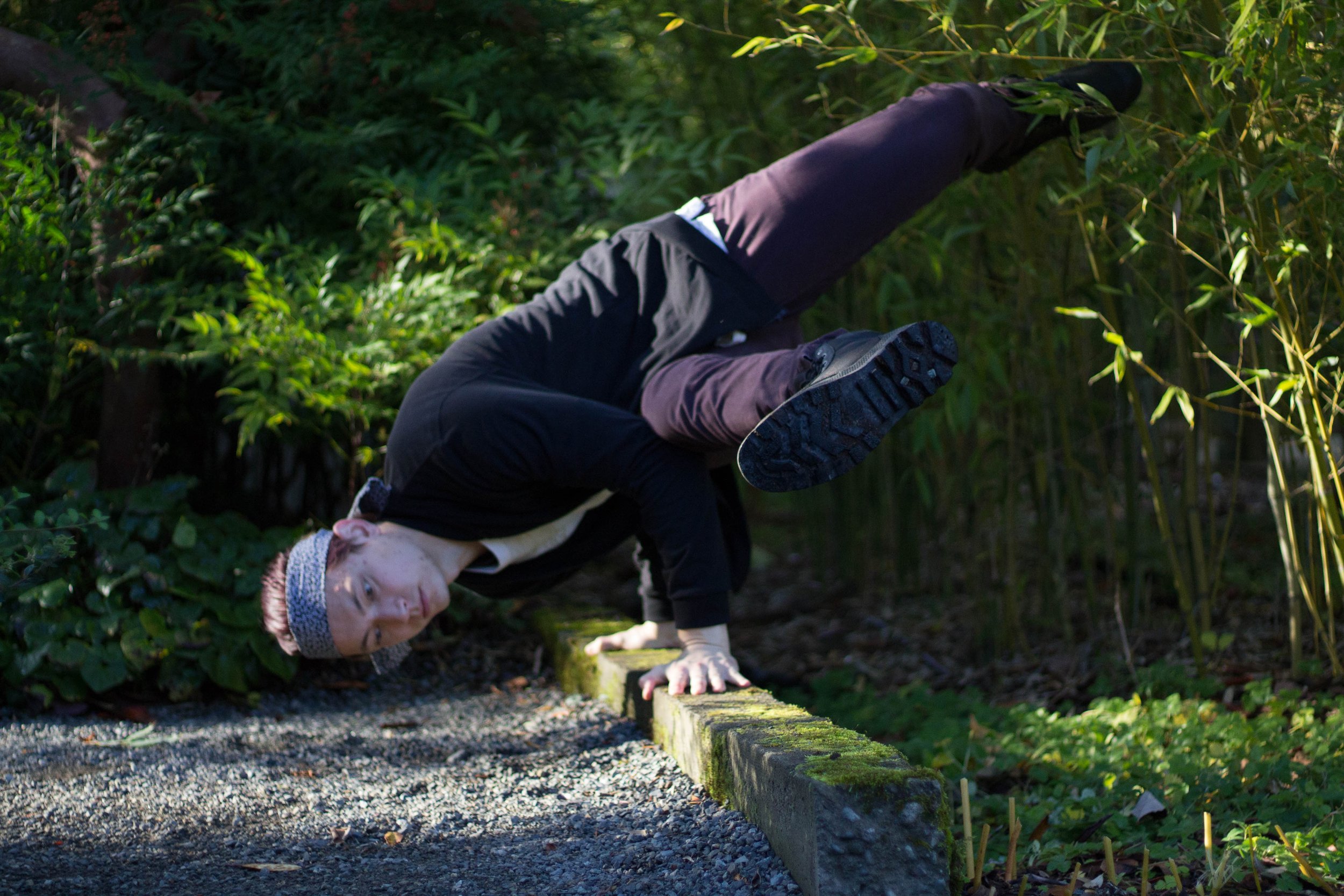
photo by Catlyn Griswell
Ethan
I do my best to stay well-nourished, rested, and calm in the week leading up to the audition. Morning of, I try to eat as big a breakfast as I can without becoming uncomfortable. I make sure to extra warmed-up, some auditions will not provide a warm-up, but most will provide open space for a little bit beforehand. When I warm-up I want to get all of my muscles activated, I want to have gotten my heart rate up, and to get a quick stretch in. Lastly, as I warm-up I listen to some of my favorite music to get amped up and try to get into the flow state. I always feel a little anxious and nervous before an audition but I can mitigate that by taking these steps.
Cherie
Going into an audition used to scare me more than anything. I think when I was younger especially I was constantly comparing myself to everyone else in the room, and I often saw myself as unworthy to be there. I let the nerves get to my head, so fast combinations would confuse me and difficult technique left me very flustered.
During my senior year of high school I was able to identify why I wanted to dance after taking some time off. I want to dance because I love being in a room full of dancers and feeling their energy. I love to dance because I enjoy the challenge. I love finding new movement pathways. So when I go into an audition, I just focus on the present. I don’t like to think about whether or not I’ll be cast or get into a certain program. I put a lot of energy into experiencing the moment, interacting with the other dancers, and getting lost in the movement. When I’m able to get myself in the right mindset, that is when I do my best work.
For some more ideas and products to help get ready see our “Competition & Convention Prep Piece!”
As you all enter into auditions, remember to take deep breaths, put your best foot forward, and dance with all your heart. You got this.
The Next Step: Choosing Dance After High School
I started the process of finding my next step last year as a high school junior. It can be a daunting thought to start looking at your future like that, I know it was for me! As someone who has been dancing since the age of three, once it came time to think about a career, I always came up blank. When we say “dance is my life” we mean it. While I have interests outside of dance, there was never anything that I spent enough time doing to really develop a love matching my love for dance. Eventually I got to the point where I thought; I have spent my entire life training and dancing and improving, I love it more than anything else in my life, so why not keep doing it? After coming to that conclusion, I was able to get on a focused path with where I would like my future to go.
Pronunciation: Aw-brie Zap-in | Pronouns: she/her
By Aubrey Zappen, DWC Ambassador

I started the process of finding my next step last year as a high school junior. It can be a daunting thought to start looking at your future like that, I know it was for me! As someone who has been dancing since the age of three, once it came time to think about a career, I always came up blank. When we say “dance is my life” we mean it. While I have interests outside of dance, there was never anything that I spent enough time doing to really develop a love matching my love for dance. Eventually I got to the point where I thought; I have spent my entire life training and dancing and improving, I love it more than anything else in my life, so why not keep doing it? After coming to that conclusion, I was able to get on a focused path with where I would like my future to go.
Oftentimes people do not view dance as a good way to spend your future. But as long as you make smart decisions, it is entirely within your reach. Even if a college dance program is not what you want, there are still so many options to choose from. It is important to remember that while the dance world may be small, it is also huge! There are so many different paths you can take, so don’t discount a career in dance. It is normal to question whether choosing dance is a reliable choice of a career, so I hope that this information will help you out!
Research College Programs
If you are like me and you know that college is a good option for you, start researching now. College deadlines sneak up on you fast!
The first things that are important when narrowing down your search are: location, school size, and degree programs. For me, I knew right away that I wanted to go to the East Coast. I did not care how far, I just wanted to go somewhere different. School size was also straightforward in my search because I am not a people person, therefore I wanted a small to medium sized school. Of course everyone is different so your experience will be different than mine, but it still applies. Whether you are looking to major in dance or just have it as an option, make sure that the schools you are looking at have it. Many schools don’t have dance as a major/minor or they only have a minor. With that being said, just because a school doesn’t have a dance degree program, that does not mean that they have no dance. There could be dance teams or clubs as well. Do some research and find your fit! It’s okay to not know what you want at first, it’s all a part of the process.
Training Programs & Conservatories

If college isn’t your thing, but you feel like you need more training, a great option to look into are training programs and conservatories. These are often programs dedicated mainly to dance education only and can be shorter than a college program as well. There are several conservatory programs that are technically college programs, but the level of academic classes that you are required to take is dramatically lower than that of a regular college dance degree. By taking the route of a training program or conservatory, you can allow yourself to have more focused training, build connections with current professionals in the industry, and often have audition opportunities after graduating. Some programs may be one year, some may be three or four, either way your time will be spent solely focusing on getting your dance training where it needs to be in order to be successful.
Those are all amazing options and if they work for you, great! But, some people prefer to go straight into auditioning and working. If you choose to move to LA or New York or another city and pursue your dreams that way, go for it! You are much braver than I am! Making it as a dancer is not impossible, just remember to never give up. You never know what opportunities will present themselves to you.
No matter what you decide to do, be smart and safe! Individuality is incredibly important so embrace who you are. Whether you choose college, a conservatory, or just start working in the industry, it does not change the hard work that you will need to put in to be successful. It is not easy, but it is worth it!
Below are links for college and conservatory programs:
Disclaimer
All content found on the Dancewear Center Website, Instagram, Facebook, Pinterest, and all other relevant social media platforms including: text, images, audio, or other formats were created for informational purposes only. Offerings for continuing education credits are clearly identified and the appropriate target audience is identified. The Content is not intended to be a substitute for professional medical advice, diagnosis, or treatment. Always seek the advice of your physician or other qualified health provider with any questions you may have regarding a medical condition. Never disregard professional medical advice or delay in seeking it because of something you have read on this Website.
If you think you may have a medical emergency, call your doctor, go to the emergency department, or call 911 immediately. Dancewear Center does not recommend or endorse any specific tests, physicians, products, procedures, opinions, or other information that may be mentioned on dancewearcenter.net. Reliance on any information provided by dancewearcenter.net, Dancewear Center employees, contracted writers, or medical professionals presenting content for publication to Dancewear Center is solely at your own risk.
Links to educational content not created by Dancewear Center are taken at your own risk. Dancewear Center is not responsible for the claims of external websites and education companies.
Preparing Mentally, Emotionally & Physically for Aging in Dance and Transitioning Stages
As a young company dancer at Olympic Ballet Theater in the 1980’s, one of my favorite pieces I performed was “Fall” as a part of the Ballet Seasons. Now in my 50’s, I’m in a very different season of my life as a dancer. I’ve always loved fall–the season that teaches us that change can be beautiful.
What I’ve Learned from 50+ Years of Dance!
Pronunciation: La-Ree Ba-Lees | Pronouns: she/her
By Laurie Balise, DWC Ambassador

click to shop the look: girlfriend | GF Biketard
As a young company dancer at Olympic Ballet Theater in the 1980’s, one of my favorite pieces I performed was “Fall” as a part of the Ballet Seasons. Now in my 50’s, I’m in a very different season of my life as a dancer. I’ve always loved fall–the season that teaches us that change can be beautiful.
My life story thus far includes many different seasons, in both dance and otherwise, all of which I’ve tried to embrace. Each season has taught me something different that at now 53 has created wisdom. While there have been many successes and much happiness, I’ve also learned to deal with mistakes and disappointment, handling regrets, and practicing forgiveness. Often the greatest shifts and growth have come from re-addressing previous truths that came after life tragedies. My wisdom has taught me that everything in life, whether positive or negative, or significant or seemingly not, has value. Personal reflection is so important, and implementing new ideas or goals, yet still allowing yourself to dream. I likewise believe in teaching my dancers to be adaptable, disciplined, hard working, resilient and tenacious in all they do. Dance teaches us SO much more on our life path at times than just dance, and I’m grateful for all the lessons along the way.
Something I’ve also considered as I’ve aged is wanting to assure I’ve created a positive impact on the world. Whereas in my youth I was primarily a performer, transitioning to teaching gave me even greater purpose. Before teaching I incorporated the arts and dance into my academics in college with an internship at Pacific NW Ballet in their Public Relations Department and later was the Publicist for the Seattle Symphony. I have more avenues to explore, but I’ve also found peace and felt pride and satisfaction with what I’ve accomplished thus far. I think positive self validation is really important always, but especially as we get older-we don’t have to continually prove ourselves as dancers, or otherwise. What I hope to have passed along as a teacher and be remembered for is that I truly cared; that I challenged myself and others both creatively and in physical abilities and technique; that I showed my students how to have fun even when working hard; and that believing in themselves is always most important. I love connecting with others in our shared humanity which has been a big part of my purpose. I think it’s important to identify the why? as well and once we have, better align ourselves with our purpose. Progress and growth is always important, but sometimes it also includes rest or reinvention. There’s no particular ‘standard’ we have to meet to be dancers either- no right or wrong. Nor do we have to be doing certain things like performing or even teaching to still be viable in our art form and make a contribution. There are so many options for how we can incorporate dance into our lives that are meaningful and joyous. I love just dancing around the world or taking classes whenever I’m traveling. For many years I’ve also helped in volunteer positions judging the dance category in art competitions, assisting with high school dance team tryouts, producing and choreographing school musicals, and representing the arts at student career fairs.

click to shop the look:
Jule meshie crop top | CD World grey/black sports bra | SoDanca Black Shorts
Sometimes rest or change is something we resist though until life throws us a prominent “stoplight!’ There are always indicators around us if we are present enough to pay attention, and sometimes an opportunity we hadn’t considered becomes a wonderful transition to a new chapter. The Universe sent me a message recently to listen to my gut, literally. It led me to health tests that revealed a gut disorder most likely brought on from years of cumulative stressors and past traumas. As dancers and artists, we of course are quite empathic and feel everything deeply. Additionally, we hold ourselves to high standards and push ourselves in all ways. And after so many years of being in front of people, no matter what level of confidence or mastery we have, we can still get anxiety and butterflies in our stomach. Practicing greater self care and managing stress including both physical and mental health has been a big priority for me especially in this latest season of my life. The gift in awareness was that I was able to bring its importance into my professional life as well by offering mindfulness and meditation classes for my dancers, as well as teaching yoga to both kids and adults.
In more recent years, I’ve really tried to start leaning more into my wisdom and intuition, giving myself more permission to say “no” when necessary to find greater balance in my life. I think this is such a great practice for dancers or anyone. Sometimes things are just too much at times, and when we ease off and take a few steps back we can actually proceed forward with greater care. We don’t always have to be “on'' and available to everyone either. We’re already so exposed as performers and teachers, and it’s okay to not have to always be front and center. Using this skill, I try to step back when I teach for instance so my dancers can let themselves be their own focus.
I may be getting older- everyone is! But I’ve found acceptance in that and all the undeniable things my body has gone through as a mother and otherwise. In this way I practice non-resistance to the things I can’t change. That said, I still don’t need to be limited by or defined by my body or age in my strengths or abilities throughout any of the seasons of my life either. In many ways I know my body has been stronger the older I’ve gotten. When we truly love ourselves, our body responds positively in a homeostasis in our mind, body, and soul. As a dancer and most importantly a human being, I am always viable in what I have to offer and in any capacity that I may find myself in. This is what keeps me going and growing, always, and staying positive and allows the freedom and ease of transformation to occur, in dance or otherwise.
If we think of ourselves as being in constant creation then we are in a revolutionary process of reinventing ourselves throughout life. Growth is a choice we can make over stagnation. The more we move in all ways,, the more we find opportunities to stimulate our brains and bodies in new exploratory ways. This can help us defy the aging process just by the natural occurrence of our choices and actions. You are confined only by the walls you build yourself; the opposite of courage is not cowardice, it’s conformity.
Just like there are several positions in dance that we flow through from first to fifth, we move through different points in our relationship with dance in each new season. Each is beautifully unique for what it offers us in experiences and memories and grows us in different ways. When holding a pose in dance, we still remain alive and breathing before transitioning into the next step, just like through the stages of our lives. So may we all Temps lié, Chassé or Pas de Bourrée into our next position in life and embrace whatever it may be! Ultimately as we know, life itself is truly a dance!

“You can have as much ballet or dance as you want in your life. You can have a lot or a little bit, or somewhere in-between,” said Miko Fogarty, the star of the 2012 dance documentary First Position who herself has found different directions in life beyond dance.
About the Author

Disclaimer
All content found on the Dancewear Center Website, Instagram, Facebook, Pinterest, and all other relevant social media platforms including: text, images, audio, or other formats were created for informational purposes only. Offerings for continuing education credits are clearly identified and the appropriate target audience is identified. The Content is not intended to be a substitute for professional medical advice, diagnosis, or treatment. Always seek the advice of your physician or other qualified health provider with any questions you may have regarding a medical condition. Never disregard professional medical advice or delay in seeking it because of something you have read on this Website.
If you think you may have a medical emergency, call your doctor, go to the emergency department, or call 911 immediately. Dancewear Center does not recommend or endorse any specific tests, physicians, products, procedures, opinions, or other information that may be mentioned on dancewearcenter.net. Reliance on any information provided by dancewearcenter.net, Dancewear Center employees, contracted writers, or medical professionals presenting content for publication to Dancewear Center is solely at your own risk.
Links to educational content not created by Dancewear Center are taken at your own risk. Dancewear Center is not responsible for the claims of external websites and education companies.
Staying Active During Dance Breaks or Off-Seasons
It is easy to spend dance breaks curled up on the couch or binging Netflix shows; these activities are definitely needed when you have a little more free time but it is also important to keep your training going. Flexibility, strength and endurance decline quickly when you have time off from a rigorous dance routine, so here are a few tips for “staying in shape” during dance breaks or off-seasons!
Pronouns: she/her
By Emily Borders, DWC Ambassador

It is easy to spend dance breaks curled up on the couch or binging Netflix shows; these activities are definitely needed when you have a little more free time but it is also important to keep your training going. Flexibility, strength and endurance decline quickly when you have time off from a rigorous dance routine, so here are a few tips for “staying in shape” during dance breaks or off-seasons!
Training during break will allow you to maintain your current level of strength, endurance and flexibility. It is also a great opportunity to focus on areas of your training that you don’t have time for when rehearsing for a recital or getting ready for competition. Strength training is a great thing to focus on during the off seasons. Since dance is mostly an endurance sport;, it is important to strength train when you can to build up your muscle fibers that provide strength and power as well. Strength training increases your power, meaning that you will be able to do things like jump higher. It also helps increase bone and connective tissue density, meaning that your ligaments, muscles, tendons and bones will be stronger and more resistant to injury. So grab some dumbbells, barbells, kettlebells or anything you can find and start working those muscles!
For dancers, it is really important to have strong calves, glutes and core muscles. Off-seasons and breaks can be the time where you focus on exercises specific to these muscles, other than typical dance drills. While also spending time strengthening muscles that are not worked as much with dance, like back, arms, hamstrings, etc. Ultimately, take advantage of this extra time to focus on the parts of your body that are weaker and build those areas up to develop yourself into a more well-rounded artist.
Strength training should be done at least 2-3x/week with a rest day between each day. You want to strive for 8-10 repetitions of an exercise before muscular fatigue in order to build strength. If you can do more than 8-10 repetitions then the weight is too light. In that case, you are working endurance muscle fibers. Another thing to note is that strengthening your muscles without stretching them will decrease your flexibility, so make sure you are stretching after strength training and on rest days.
I personally enjoy group fitness classes or workout videos. I feel like I am more motivated to get a good workout when I have someone guiding me and workout buddies to encourage me. I know group fitness isn’t for everyone so it’s important to try a few different exercise strategies and find what works for you. Furthermore, many people find that lack of equipment can be a barrier to strength training for them. Remember that you can use any sort of heavy object around your house to use as weights. You do not need a gym membership or all the “proper” equipment to build up strength. I hear gallon jugs work great.
I do want to emphasize the importance of rest as well during breaks or off-season. It is important to stay active but it is also important to incorporate rest when you can. Rest does not mean lying on the couch all day; resting should involve low impact/intensity activities. You want to do what I like to call “active rest.” Some examples include going on a nice walk, doing gentle yoga, doing some nice, easy “feel-good” improv in your living room; anything that moves your body in a way that doesn’t feel strenuous.

All in all, use your breaks effectively! You do not have to do as much physical activity as you do during the dance season. But staying active during breaks will lead you to be more prepared, reduce your risk of injury and you will probably realize that you don’t have to work as hard to get back into shape when the season starts. Our muscles were designed to do many different functions. Since you already spend plenty of time training your muscular endurance, take the time while you have it to train your muscular strength. You will likely see the results of your strength training in your dancing! Don’t lose everything you worked so hard for during your training. You got this!

Emily Borders
Emily currently attends the University of Washington as a Doctor of Physical Therapy student. She began dancing at a young age and trained in all sorts of styles. She attended Western Washington University majoring in Kinesiology and Minoring in Dance.
Disclaimer
All content found on the Dancewear Center Website, Instagram, Facebook, Pinterest, and all other relevant social media platforms including: text, images, audio, or other formats were created for informational purposes only. Offerings for continuing education credits are clearly identified and the appropriate target audience is identified. The Content is not intended to be a substitute for professional medical advice, diagnosis, or treatment. Always seek the advice of your physician or other qualified health provider with any questions you may have regarding a medical condition. Never disregard professional medical advice or delay in seeking it because of something you have read on this Website.
If you think you may have a medical emergency, call your doctor, go to the emergency department, or call 911 immediately. Dancewear Center does not recommend or endorse any specific tests, physicians, products, procedures, opinions, or other information that may be mentioned on dancewearcenter.net. Reliance on any information provided by dancewearcenter.net, Dancewear Center employees, contracted writers, or medical professionals presenting content for publication to Dancewear Center is solely at your own risk.
Links to educational content not created by Dancewear Center are taken at your own risk. Dancewear Center is not responsible for the claims of external websites and education companies.
Teaching Artist Kirsten Cooper On Tackling Technical Dance Challenges
Kirsten’s favorite thing about dance, she shares, is the connections people make through this art form are something that she finds to be the best thing about the dance world. “Through my teaching, I’ve seen people from different economical lives come and dance together and I think that that is just amazing,” she shares. She also shares that the connection through an emotional basis and a common love of dance is something that is very important to keep going. The relationships that she has made through people that she has taught are something that is very important to her and sets an example for the connection that dance can make through people.
A Conversation About Opening Dance for All Ages
Phonetic pronunciation: Kir-sten Coo-per | Pronouns: she/her
By Nicole Barrett, DWC Blog Editor
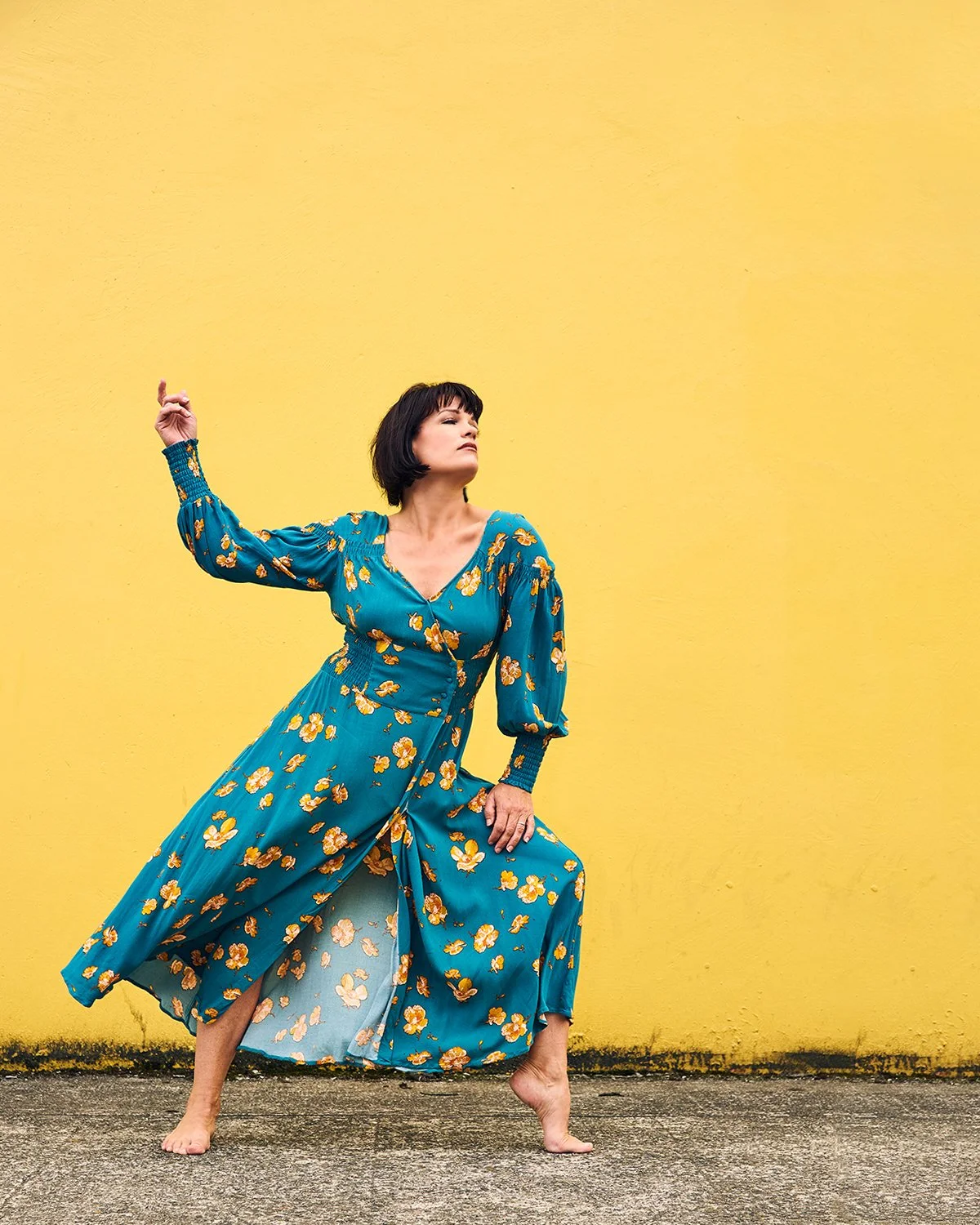
Photo by Nigel Cooper Photography
Freelance teacher Kirsten Cooper is no stranger to the dance world. From dancing in her hometown in Spokane, Washington to dancing professionally in Los Angeles, California, there is no doubt about the amount of experience that she holds. Read on to learn more about Kirsten’s dance journey and her work with Westlake Dance Center!
Kirsten Cooper has always been a freelance teacher. She has been teaching in the Pacific Northwest for many years now after moving to Seattle following being a professional in Los Angeles. She shares that she mostly teaches jazz, contemporary, lyrical, and theater dance. Kirsten has taught at numerous different suburban studios, but she does the majority of her teaching at Westlake Dance Center where she runs the pre-professional program. She also teaches at the summer intensive at Pacific Northwest Ballet focusing on jazz, and she expresses how much she loves teaching ballerinas. She also shares that she loves to travel as much as she can, sharing that she’s journeyed to Texas, Montana, California, and Bulgaria to teach dance. Kirsten also just finished her Barre Eclipse License where she can now teach barre during her conditioning classes.
When asked about what sparked her passion for teaching, Kirsten shares that growing up in Spokane, she always loved dance. She expresses that she never got serious about it until she reached high school when her dance teacher opened her own studio. “She opened her own studio when I was a senior in high school, so then I was just there all the time” Kirsten shares. When she was at her studio, there was a variety of mixed-age groups that were in her classes. She shares that that is something that made her feel comfortable in the suburban environment and showed her that classes with different age groups were possible.
Going into college, Kirsten attended Pacific Lutheran University for about a year and a half and realized that she wanted to dance in Los Angeles. Once she arrived, she started taking dance classes for about a year and finally landed an agent. She began assisting Rhonda Miller with teaching, helping out in different jobs, and teaching at L.A. DanceForce. She shares that this experience taught her how to teach and run effective rehearsals and sparked her passion for teaching. Assisting also allowed her to create more art in the dance world which is something that she loves.
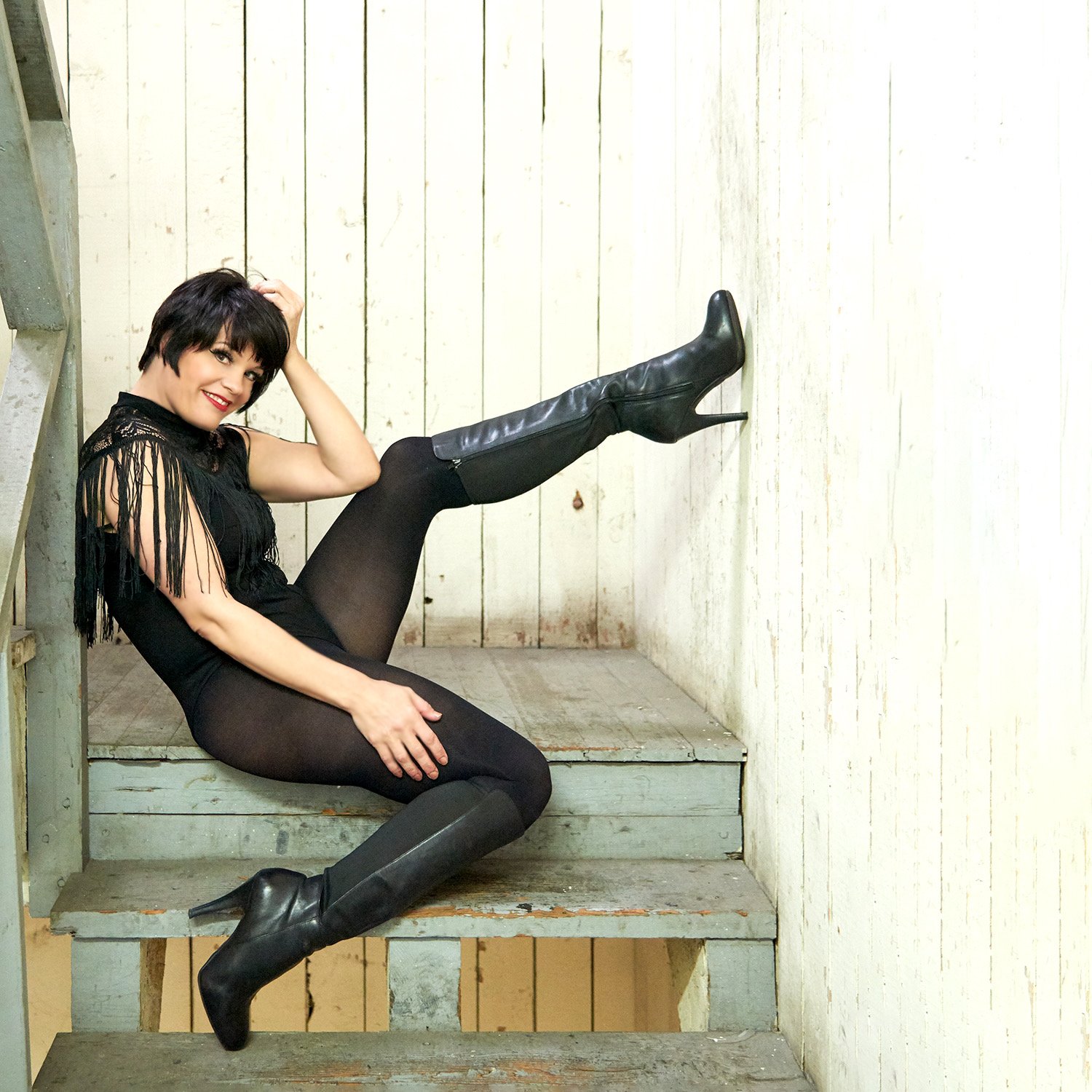
Photo by Nigel Cooper Photography
Moving on to Kirsten’s favorite thing about dance, she shares that the connections people make through this art form are something that she finds to be the best thing about the dance world. “Through my teaching, I’ve seen people from different social-economic backgrounds come and dance together and I think that that is just amazing,” she shares. She also shares that the connection through an emotional basis and a common love of dance is something that is very important to capitalize on in the dance community. The relationships that she has made through people that she has taught are something that is very important to her and sets an example for the connection that dance can make through people.
“My former dancers are some of my closest friends,” Kirsten shares.
One of the biggest struggles that Kirsten experienced when starting to dance is that she simply started training later. While Kirsten excelled at performing onstage, she struggled with more technical elements of dance, such as lacking turnout in her hips. She expresses that getting over the hump of needing to look and be a certain way was a big struggle for her. She conveys that some advice she would give dancers is simply to ensure that they are taking care of themselves. Physical therapy and nourishment are something that she believes are very important in the dance world. Kirsten also says that the aspect of social media in dance can be harmful to dancers but also have some good impacts too. Therefore, she thinks that recognizing the technical challenges of dancing and using social media can put dancers in the right direction to dance safely.
When asked about what she wants to see change in the dance world, Kirsten shares that talking about dance competitions in a healthy way is something that could potentially make a positive impact. There are many unhealthy ways that competitions and conventions are thrown onto dancers at younger ages, and Kirsten acknowledges that aspect. She believes that introducing conventions and competitions in healthy ways is something that needs to happen so dancers can reap their benefits. A way that she thinks the industry could move towards this change is emphasizing improvement instead of constant recognition. “It is nice to be recognized but [that] cannot be the only focus,” Kirsten says of class feedback, sharing that she likes asking her students how they feel about a skill they’ve learned before any kind of outcome from her, as the teacher, is revealed.
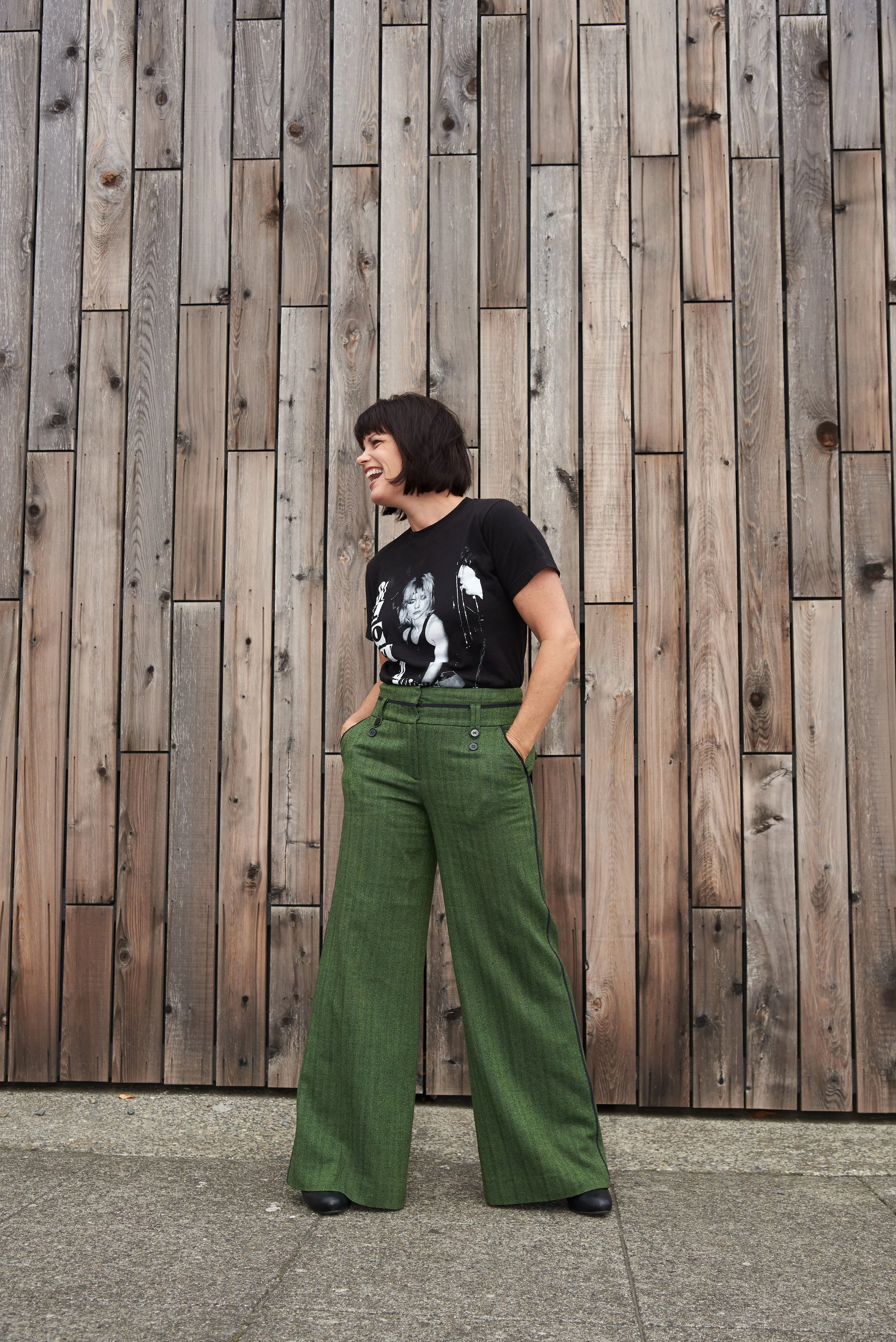
Photo by Nigel Cooper Photography
Coming up this summer, Kirsten is still teaching open classes at Westlake Dance Center and she will be doing all five weeks of the summer intensive program at Pacific Northwest Ballet. For Kirsten’s pre-professional program, she is taking auditions this summer for slots in classes and more information will be up with posters soon. She is also doing a workshop with Broadway dancer Mary Ann Lamb at the end of summer/early fall and typically in the fall, she has workshops with Jaci Royal as well. She shares that anyone that wants to come to these workshops is more than welcome and that they are open to everyone!
For more information about upcoming events with Kirsten, be sure to check out her socials!
About the Author
Sources:
Disclaimer
All content found on the Dancewear Center Website, Instagram, Facebook, Pinterest, and all other relevant social media platforms including: text, images, audio, or other formats were created for informational purposes only. Offerings for continuing education credits are clearly identified and the appropriate target audience is identified. The Content is not intended to be a substitute for professional medical advice, diagnosis, or treatment. Always seek the advice of your physician or other qualified health provider with any questions you may have regarding a medical condition. Never disregard professional medical advice or delay in seeking it because of something you have read on this Website.
If you think you may have a medical emergency, call your doctor, go to the emergency department, or call 911 immediately. Dancewear Center does not recommend or endorse any specific tests, physicians, products, procedures, opinions, or other information that may be mentioned on dancewearcenter.net. Reliance on any information provided by dancewearcenter.net, Dancewear Center employees, contracted writers, or medical professionals presenting content for publication to Dancewear Center is solely at your own risk.
Links to educational content not created by Dancewear Center are taken at your own risk. Dancewear Center is not responsible for the claims of external websites and education companies.
Interested in writing for the DWC Blog? Click below to fill out the DWC Contributor application!
Commodo cursus magna, vel scelerisque nisl consectetur et. Donec id elit non mi porta gravida at eget metus.