
How Do You Cope?
During the month of May, mental health is brought to the entire country’s attention. Mental Health Awareness Month was put into effect in 1949 to reduce the stigma of mental health issues and to provide support for those going through those issues. We here at Dancewear Center believe that mental health is something that is very important to talk about and it is important to know that you are not alone in what you are feeling. Many people can feel stuck when they are experiencing bad mental health days and it is important to find ways to alleviate that. We got to speak with some of our staff and ambassadors about what they do to cope with their mental and physical health through hard times. Read on to learn more about how they take care of themselves during rough times.
DWC Staff and friends speak to their personal methods for coping with anxiety and stress
By Nicole Barrett, DWC Blog Editor
Trigger Warning: eating disorders, mental health issues
During the month of May, mental health is brought to the entire country’s attention. Mental Health Awareness Month was put into effect in 1949 to reduce the stigma of mental health issues and to provide support for those going through those issues. We here at Dancewear Center believe that mental health is something that is very important to talk about and it is important to know that you are not alone in what you are feeling. Many people can feel stuck when they are experiencing bad mental health days and it is important to find ways to alleviate that. We got to speak with some of our staff and ambassadors about what they do to cope with their mental and physical health through hard times. Read on to learn more about how they take care of themselves during rough times.
Emma

When I'm going through a season of life where I'm dancing a lot, I find I have to prioritize my health above all else in order to perform at the highest level possible. For me personally, I find that my physical and mental health affect one another, and if one starts to suffer, the other soon follows suit. It's taken me a long time to find routines that I feel good about and that work for me, and a lot of it is trial and error. What works for one dancer won't necessarily work for another.
I have in the past struggled with several injuries. The thing that I have found to be one of the most helpful things in my routine is cross-training and weightlifting. I also try to implement yoga (I love hot yoga too!) and pilates regularly into my schedule as well. When I have performances coming up, I try to schedule physical therapy, chiropractor, acupuncture, and massage sessions around those.
To take care of myself after dance and working out, my favorite things are using my muscle gun, gua sha, and also ice baths for my feet and ankles after a lot of pointe work. I also try to roll out or stretch when I can- but some nights I'm just too tired too and that's okay! I'm also a big fan of different topicals and creams if I am struggling with pain. You can get my favorite Tiger Balm at DWC. ;)
Some daily habits that keep me on track include eating regularly throughout my days, even when I'm super busy and making sure I'm getting my vitamins, supplements, and water in. A big factor in my mental health is also sleep! I notice I start to feel worse when I'm not getting enough sleep, so I try to have good sleep hygiene and a night routine. This is definitely always a struggle for me, but the rest we get can have a huge impact, especially since as athletes we have to give our muscles enough time to rest and repair themselves. Now, you might be confused at this next one, but I notice a significant difference in my state of mind when I make my bed each morning and keep my space clean. A clean space is a happy space, and I can tell my mental health is declining if my space starts to get cluttered and dirty.
I also think as dancers we are notoriously awful at knowing when to say "no" or "I need a break". If you need a rest day- take it! If you need a mental health day, carve time out of your regular schedule to spend time with friends, family, or just yourself, or to do whatever you may need. You will ultimately be a better performer when you feel rested and whole as a person who has a life outside of the studio.
And as always, never be scared to reach out for help. I am a huge advocate for seeing therapists, dietitians, psychiatrists, and other health professionals. I think a common misconception is that something must be "wrong" when we seek out mental health services, but really, it can be useful when you are just needing someone to talk to, or need help building routines or gaining new coping skills.

Ethan
Routine! I have built an evening recovery routine for myself that I do every single day. It is comprised of stretching, foam rolling, and using a lacrosse ball. I have noticed that if I do this only one evening (or even occasionally) there is only a minimal amount of gain in terms of how loose and relaxed I can move the next day. But having done this every day I regularly feel closer to my best. Routine is also calming to me, it helps me unwind and focusing on a singular task is almost like meditation.
Nicole

Take breaks! Whether the specific issue you are dealing with is mental or physical, everybody needs a break. Knowing when you need to take a break or take a step back is key to making sure you are prioritizing yourself. I have been through some major injuries and mental health situations in my dance journey that have forced me to take a step back from the thing that I love. Although I hated this break at the time, I look back on it now and I am so grateful that it happened to me. This break not only let me heal my body, but I also regained my love and passion for dance that was being overshadowed by my injury and self doubt.
Just be sure to remember as you are dealing with these issues that you are not alone and it is okay to not be okay. Never be scared to reach out to somebody if you think you need help. Throughout my break in dance, I was consistently talking with a professional to help me navigate through my emotions. Remember that you got this and whatever you are going through does not define the dancer you are.

Kendall
As a dancer, my mental health is just as important as my physical health. I find I struggle with bring my anxieties into the studio. I like to journal my thoughts down before going into class, that way I can focus on enjoying the movement and making corrections. I also try to avoid imposter syndrome and comparison by looking at old videos and pictures so I can see how far I’ve come. I also look for my safe people and friends within the studio who I can go to with my struggles. It’s important to remember you aren’t alone in your struggles, a lot of dancers deal with the same issues.
Robbi
Some basic things that I do to take care of myself are going on walks, when I can, and listening to music that I really enjoy. I can get drained from a lot of social interaction, and as a freelance dance artist, it is important to rest my body and mind when I can. It is okay to not be everywhere all of the time. Doing things for myself that help me feel like I am not missing out on anything is very important in a culture that is designed to make people think they are not doing enough, when our minds are trying to keep track of more things than ever before. Use your dancer brain to realize that it is all a performance, and that there are always things behind the scenes of everyone's lives that are not being advertised.
I love to touch grass, smell flowers, and see other people in real life and not just online. It is a reminder that the body I dance in is not separate from the body that I experience the rest of my life in. Saving up energy so that I can show up for the things that really matter to me has been so helpful this year. It gives me more to say as a person and as an artist when the time comes. It is okay to let people miss you. It is in the missing that you remember not to take each other for granted. This can apply to your relationship with dance as well.
Lastly, remember that the party does not start until YOU walk in.
We hope that some of these tips can help you during hard times. Know that you are never alone and there is always someone to talk to when things get low. If you ever need any further help, please call the crisis hotline at 988.
About the Author

Sources:
Disclaimer
All content found on the Dancewear Center Website, Instagram, Facebook, Pinterest, and all other relevant social media platforms including: text, images, audio, or other formats were created for informational purposes only. Offerings for continuing education credits are clearly identified and the appropriate target audience is identified. The Content is not intended to be a substitute for professional medical advice, diagnosis, or treatment. Always seek the advice of your physician or other qualified health provider with any questions you may have regarding a medical condition. Never disregard professional medical advice or delay in seeking it because of something you have read on this Website.
If you think you may have a medical emergency, call your doctor, go to the emergency department, or call 911 immediately. Dancewear Center does not recommend or endorse any specific tests, physicians, products, procedures, opinions, or other information that may be mentioned on dancewearcenter.net. Reliance on any information provided by dancewearcenter.net, Dancewear Center employees, contracted writers, or medical professionals presenting content for publication to Dancewear Center is solely at your own risk.
Links to educational content not created by Dancewear Center are taken at your own risk. Dancewear Center is not responsible for the claims of external websites and education companies.
Encouragement for Dancers with Anxiety Disorders
One of the most common misconceptions about anxiety is that all people experience it in the same way. For those who do not have an anxiety disorder or do not believe anxiety disorders are legitimate health concerns, the assumption reigns that anxiety is a temporary and fixable cluster of symptoms brought on by isolated circumstances.
Trigger Warning: Anxiety, Mental Health
By Hannah Emory, DWC Blog Contributor
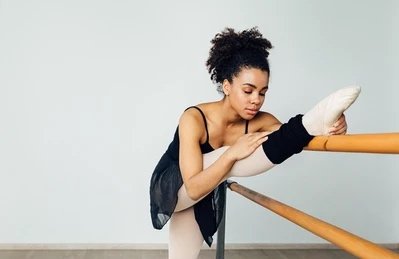
Photo from Shutterstock
My story with anxiety.
One of the most common misconceptions about anxiety is that all people experience it in the same way. For those who do not have an anxiety disorder or do not believe anxiety disorders are legitimate health concerns, the assumption reigns that anxiety is a temporary and fixable cluster of symptoms brought on by isolated circumstances.
I’m a dancer who copes with a chronically disordered form of anxiety called Generalized Anxiety Disorder, or GAD. It means that I have anxiety at all times and can experience severe symptoms, even without an immediately evident or conventionally logical cause. I am grateful that I was diagnosed about five years ago and continue to learn about how my anxiety affects my everyday life.
My symptoms can vary from being deeply emotional to viscerally physical - from a background sense of coming doom or imminent failure to shaking, shortness of breath, digestive troubles, and mental fog. The severity and frequency of my anxiety symptoms can be reduced by self-care and the input of my support network, but the disorder itself never completely goes away.
Having an anxious body as a dancer provides an interesting challenge when it comes to performance time. There is this feeling of excited anticipation that works up once you’ve committed your blood, sweat, and tears to a creative endeavor and you’re about to present it to the world. Yet, an anxious body sometimes can’t tell the difference between joyful energy and anxiety-inducing stimuli, and the two can become muddled together or transform into each other.
When I was a child and teenager, I would experience these muddied waters all the time at performances. The number of people around me, rigorous schedules, interrupted self-care, and the anticipation of putting my heart and soul in front of audience members created an environment where I could thrive off the intensity, but sometimes struggled to stay grounded. That could put a damper on the joy of performing because I didn’t know how to deal with the stressors I was encountering effectively.
Throughout my university dance career, I’ve had many opportunities to learn about what helps me be successful amid my anxiety. Below are the top three things that have proven essential for me on a holistic level - these tips are important for any person, but can be easily forgotten in an athletic field like dancing. We need to intentionally make space in our lives for the internal and personal. As dancers, we use our minds, bodies, and hearts, and all three parts of ourselves require care so we can bring the best of ourselves to the studio and the stage.
Even in the off-season, have a routine.
After experiencing a year-long off-season in 2020, I realized that having a routine is key to avoiding anxiety flare-ups in the day-to-day as well as during performances. As an artistic person, routines can seem like the anchor weighing me down, but they can ultimately make or break navigating mental health struggles and a dancing career. I know that if I don’t stick to a routine, I quickly feel unmoored in my everyday life and have a greater sense of unpreparedness for performances.
Routines are best when they are individualized, realistic, holistic, and consistent. Your routine is the framework for having joy and maintaining movement forward in life - from nutrition to mundane tasks, from what barre exercises you need to do to what makes you feel ready for a performance night. Establishing a meaningful and effective routine will take troubleshooting and will shift over time as your needs change, but it’s a process that will be invaluable to your growth as a dancer.
A few warnings from my personal experience: don’t overload your off-days and don’t feel the need to run your life the way others do. Anxiety disorders can come with a robust perfectionism streak, but this is no competition and you are doing this for yourself and your craft. Your routine is about setting yourself up for success so that you are consistently improving as a dancer and avoiding anxiety spirals. Productivity and perfection are not the goals, consistency and stability are.
Find your own mindfulness practice.
Living life with GAD for me means that I don’t enjoy traditional silent meditation. I think many folks believe that to have a “real” mindfulness practice you must be skilled at silent meditation or try to be. I was in that boat and went on a journey to find a mindfulness practice that works for me consistently. I would say that if you are an anxious-bodied dancer, a mindfulness practice can be helpful, especially to ward off performance stress.
My mindfulness routine includes…
Using a set of meditation beads I made to center my mind on a power phrase or two
Journaling consistently to process my emotions and visualize my future
Improv dancing to a playlist of empowering tunes so I can connect my body, mind, and heart
Taking a walk outside where there is some green space and I can hear the birds singing
I like having a list of different activities that I know will center me and focus my attention, so that no matter where I am, I will be able to do some form of self-soothing when I’m having a flare-up or when the pressure is on. Some other forms of mindfulness and self-relaxation can include guided whole-body relaxation, scripted bodily tension-and-release exercises, utilizing your barre warm-up as meditation, and listening to some ASMR. While there is some trial and error to this suggestion, the time invested in being able to routinely quiet your mind and center your energy will pay back dividends your whole life long.
Seek out community.
Even though anxiety is a deeply personal experience, it does not mean that we have to go through it alone. According to the Anxiety and Depression Association of America, about 20% of adults in the United States are affected by anxiety disorders. Sadly, most of those suffering do not receive the support they need, either from professional resources or from interpersonal support systems.
From my personal experience, anxiety results in a vicious cycle of convincing myself that I have to do it all on my own. I fear appearing annoying and needy and that if I reach out for help, others won’t understand how much GAD affects my life.
Yet, we are coming into a time where mental health is being destigmatized. Though there is still a lot of work to be done in normalizing and integrating mental health struggles into our societal conversations, there are a lot more doors open than there used to be. More people acknowledge mental health struggles as legitimate compared to a few decades ago. So the fear I feel is assuaged by the fact that people are struggling around me and would also like to have space held for them. Reaching out is easier when I remember that I am not the only one.
Lastly, some encouragement.
Ironically, it is anxiety-inducing to think of being vulnerable with others and doing the challenging personal work to grow when anxiety can feel like a constant uphill climb. As dancers, our bread and butter is using our whole selves to tell honest, moving, and human stories. There is little that’s more honest, life-changing, and human than learning how to live with intention in our mental health realities. There is a place to carve out in the dance world for telling the truth about mental health, demystifying it, and loving each other in the midst of it.
Ultimately, you have permission to start breaking the vicious cycles of loneliness and perfectionism that can come with having an anxiety disorder. I hope you know it is a sign of your power and strength to reach out to a mutually supportive community. I hope you know that you can move mountains with baby steps; that you are not alone. I hope you know your strength is shown through your struggle; your heart and your art are always worth the time of being loved, acknowledged, and cared for.
Much love to you, dear dancer.

Let's Talk About Dancers and Depression #mentalhealthawarenessmonth
May is Mental Health Awareness Month! In this series, we are giving the staff here at DWC a platform to talk about their personal mental health journeys. We believe in supporting the wellbeing of the whole dancer; both body and mind. We want you to know that you are not alone. We believe in the importance of talking about mental health openly, especially within the dance world. So let’s talk about it!
In this article, Cherie, Social Media Director here at DWC is sharing her experience with depression.
May is Mental Health Awareness Month! In this series, we are giving the staff here at DWC a platform to talk about their personal mental health journeys. We believe in supporting the wellbeing of the whole dancer; both body and mind. We want you to know that you are not alone. We believe in the importance of talking about mental health openly, especially within the dance world. So let’s talk about it!
Trigger Warning: Depression.

By En Avant Photography
Medical Disclosure: Dancewear Center does not claim to have any professional medical experience on the subjects discussed. This is Cherie’s personal experience and opinions. If you need help or are in a medical emergency, see the resources listed at the bottom of this post or call 911 for immediate medical attention.
Over the years, I have become very well acquainted with this feeling; my limbs are heavy and it feels like someone is sitting on my chest. I oversleep and lose my appetite. I get headaches, and the world around me feels dull and colorless. Sometimes it lasts a day, sometimes months. This is what depression looks like for me.
Talk to someone you trust. No one's meant to go through life alone.
For a long time I struggled with holding myself to an unrealistic standard. I had an ideal version of myself that I was constantly striving for. I was adamant about “fixing” myself; so I would isolate and try to fix all of the things I didn’t like, emerging on the other side as who I thought I should be. Not wanting to burden anyone else with my personal struggles, I drew further and further away from the people who cared about me. The first person I opened up to about what was going on was my Mom. That was the first step I took out of the little cave I dug myself. When I started going to therapy in high school, the very first exercise my therapist had me do was write out all of the people I had in my support system. These were the people I knew I could reach out to. When I first wrote this list, I think there were only two people I felt like I could talk to. If I were to write out that list now, there are at least a dozen people that come to mind. In reality, those people were ALWAYS THERE, the only thing that’s changed is my ability to ask for help when I need it. Look at the people you have in your life that you love and trust. Asking for help can be scary, and can be hard on our ego sometimes, but no one is meant to go through life alone. Whether it be a parent, a friend, a teacher, or mentor, find someone to talk to.
It’s important to take each moment as it comes and allow our body and mind to process these feelings. I often rely on the list below to help guide my actions when I feel stuck or in a particularly bad place.
Go for a walk. Something as simple as fresh air and movement help lift our spirits.
Take a shower. It’s the little things that count. Focusing on small tasks like taking a shower or brushing your teeth can help your brain kick into motion.
Practice circular breathing: inhale for 4 counts, hold for 4 counts, exhale for 4, hold for 4. This is helps get more oxygen to your brain and body, as well as grounding your brain in the present moment
Talk about it. I know it can be uncomfortable, but talking about how you are feeling to someone you trust can lift a huge weight off your shoulders.
Write a gratitude list. It’s easy to get caught up in a sense of lack or hopelessness. Take 3 minutes to write down the things in your life that bring you joy.
Here is an example of what I might write:
I’m grateful for my morning coffee
I’m grateful for my walk outside; the sun felt warm on my skin
I’m grateful for the time I get to spend on the phone with my mom
I’m grateful for lighting candles in the evening that make my home feel cozy.
I think especially as dancers, we place an unrealistic expectation on ourselves to be perfect. We must learn to enjoy the process, not the outcome. I think a lot of times we use our training to be overly critical of ourselves and our bodies. While we are constantly striving to push our limits, it’s important we take time to appreciate and thank our body for all it does for us in the moment. Dancing for me has always been the one aspect of my life where I could escape my brain. Even on the days I felt I couldn’t get out of bed, if I made it to dance class in the evening I would begin to feel better. As I write this, we are currently over two months into a stay-at-home order put in place due to COVID-19. Myself and countless others are having to grieve the loss of many aspects of our normal lives. Not being able to gather and dance with my peers has been the hardest to grieve. Rehearsals and classes have been such a vital aspect of my self care because they give me the space to reconnect with my body and quiet my brain from the outside world. I knew going into quarantine would trigger depressive responses. I experienced oversleeping and lack of appetite in the beginning. I have had to reintroduce movement back into my daily routine to help me cope with this difficult time. Wherever you are in your mental health journey, remember it’s a process.
Even writing this now brings up uncomfortable emotions and memories of the hard times in my life. If you are reading this and are in a similar situation, I want you to know that it’s okay not to be okay. You are worth living for, you are worthy of love, and it does get better. These things take time and it’s not easy, but it’s worth it. I promise you it’s worth it.
RESOURCES:
Mental health resources for Washington State :
https://www.rtor.org/directory/mental-health-washington/
If you are a parent who is wanting to help their children with COVID-19 related depression and anxiety, read this:
http://www.schoolmentalhealth.org/COVID-19-Resources/
If you have suicidal thoughts, click the link below:
https://www.helpguide.org/articles/suicide-prevention/are-you-feeling-suicidal.htm
Or call 1-800-273-TALK in the US, or visit suicide.org to find a helpline in your country
How to Cultivate Inclusivity in Food and Dance Work
Perfectionism is a challenge that Mindy has experienced in the dance world as well. Her biggest challenge as a dancer has been countering those perfectionist ideals by accepting herself as she is each day. As a “recovering perfectionist,” Mindy shares that it’s a journey: some days it’s a lot harder, some days a lot easier, and other days it’s somewhere in between. She encourages others struggling with perfectionism to practice self-compassion, directing the kindness they offer to others towards themselves.
Certified Nutritionist Mindy Lu on Challenging Fatphobia in Dance Classrooms
By Madison Huizinga, Former DWC Blog Editor

Photo by AJ Ragasa
Similar to many mainstream dance spaces, the world of nutrition and eating disorder care has not been entirely welcoming to people from marginalized communities. This exclusivity, rooted in ideals of white supremacy and colonialism, can put up many barriers for people trying to receive eating disorder treatment and educate themselves on nutrition. At Sunrise Nutrition, nutritionists and therapists are cultivating a space that invites all people into food and body work, fostering a “nonjudgmental approach that celebrates the diversity of each individual.” Read on to learn more about Clinical Director, Therapist, & Certified Nutritionist Mindy Lu’s dance journey and the philosophy behind her work at Sunrise. And stay tuned to Sunrise Nutrition’s social media, as workshops will be coming up this summer, specifically for dancers.
Growing up, Mindy gravitated toward art, learning to play various instruments, but performance art always felt out of reach for her. After high school, a close friend of Mindy’s pushed her to take a drop-in dance class and she fell in love with it. “It’s never too late to start something that you’ve always wanted to do,” Mindy says to adults who want to try dance for the first time. She shares that she enjoys being able to perform and share the stage with others, as well as be a part of a choreographer’s vision. “One of my favorite things about performing is the energy,” Mindy gushes. She shares that she participated in a lot of local dance projects before getting more involved with teaching. Mindy loves being able to see the “sparkle” in students’ eyes when they feel engaged and proud of what they’re learning.
Mindy shares that teaching dance requires instructors to “give” so much of themselves to their students. After a while, feeling the need to focus on her own relationship with dance, she stepped away from teaching. This led to Mindy taking an extended break from dancing entirely. This year, she’s recently returned to dancing as a student and has been enjoying it immensely.
Mindy has always been interested in nutrition as well, specifically how to fuel and take care of her body. She points out that there is often a hyper fixation on the size and shape of dancers’ bodies in the dance world. “I really struggled with that for a lot of my 20s,” Mindy says. She decided that if she learned more about the science behind food, she could learn how to eat in a way that made her feel her best.

Mindy earned her MS in Nutrition & Clinical Health Psychology from Bastyr University. The more that Mindy learned about food, the more she learned that food is much more than something people eat. “It’s about the culture that we live in, the messages that we receive about food…and our bodies,” Mindy shares. “The reality of it is that we live in a really unkind culture that benefits off other peoples’ oppression.”
Following graduation, Mindy started working in eating disorder treatment. She voices that standard eating disorder care is “really rooted in white supremacy and colonialism,” sharing that the field is predominantly white-centered and heavily gendered and can promote harmful ideas regarding binaries and ultimatums. There’s an assumption, perpetuated by mainstream media, that white, thin, cisgender women are the only ones experiencing eating disorders. In reality, people of all races, genders, body sizes, religions, nationalities, and more experience eating disorders.
“I want to practice in a way that invites marginalized communities into this work,” Mindy shares of the idea behind Sunrise Nutrition. “Eating disorders don’t discriminate.”
Being a second-generation Taiwanese American in a white-dominated field, Mindy shares that she’s experienced a lot of racism in the realm of nutrition and eating disorders. She says that she’s had to do a lot of self-advocacy and advocate for her clients.
In addition, being a child of immigrants, Mindy shares that she feels a high drive to achieve, which can fester into perfectionism. This extreme level of perfectionism is something she’s constantly trying to challenge for herself and for her clients. She strives to promote autonomy and agency within those she works with, as those are attributes she values herself.
Perfectionism is a challenge that Mindy has experienced in the dance world as well. Her biggest challenge as a dancer has been countering those perfectionist ideals by accepting herself as she is each day. As a “recovering perfectionist,” Mindy shares that it’s a journey: some days it’s a lot harder, some days a lot easier, and other days it’s somewhere in between. She encourages others struggling with perfectionism to practice self-compassion, directing the kindness they offer to others towards themselves.

Something that Mindy hopes to see challenged in the dance world is weight stigma and fatphobia. “I think there needs to be more education around how we’ve constructed these messages about our bodies and how harmful it is when we internalize this idea that there are certain bodies that are more valuable than other bodies,” Mindy says. Creating more size-inclusive spaces in the dance world is an important part of bringing this change to fruition. This can start with building awareness and education about what fatphobia in the dance community looks like and acknowledging thin privilege, identifying what accountability may look like, and figuring out actionable steps community members can take to create size-inclusive spaces.
This summer, Sunrise Nutrition will be offering workshops specifically for dancers, including one dedicated to “creating a body positive dance classroom.” Dancers can check out Sunrise Nutrition’s social media, including Instagram and Facebook for updates.
Disclaimer
All content found on the Dancewear Center Website, Instagram, Facebook, Pinterest, and all other relevant social media platforms including: text, images, audio, or other formats were created for informational purposes only. Offerings for continuing education credits are clearly identified and the appropriate target audience is identified. The Content is not intended to be a substitute for professional medical advice, diagnosis, or treatment. Always seek the advice of your physician or other qualified health provider with any questions you may have regarding a medical condition. Never disregard professional medical advice or delay in seeking it because of something you have read on this Website.
If you think you may have a medical emergency, call your doctor, go to the emergency department, or call 911 immediately. Dancewear Center does not recommend or endorse any specific tests, physicians, products, procedures, opinions, or other information that may be mentioned on dancewearcenter.net. Reliance on any information provided by dancewearcenter.net, Dancewear Center employees, contracted writers, or medical professionals presenting content for publication to Dancewear Center is solely at your own risk.
Links to educational content not created by Dancewear Center are taken at your own risk. Dancewear Center is not responsible for the claims of external websites and education companies.
Bunions: Are They Preventable?
Bunion: word likely originated from the early 18th century from ‘bunny’ or ‘boni’ to describe a swelling or from the Greek word for turnip
There is still a lot of research that needs to be done to understand this complex condition. We know that dancers are prone to bunions. But we also know this condition has a strong genetic component.
By Colleen Bickel, PT, DPT, COMT
Colleen will be leading our Lunch & Learn this Wednesday at DWC Renton at 12:30PM, click here to register!

Hallux valgus (commonly known as bunions) are a frequent site in a dance class.
Hallux: big toe
Valgus: oblique displacement away from centerline
Bunion: word likely originated from the early 18th century from ‘bunny’ or ‘boni’ to describe a swelling or from the Greek word for turnip
There is still a lot of research that needs to be done to understand this complex condition. We know that dancers are prone to bunions. But we also know this condition has a strong genetic component.
How common are bunions?
Age 18-65: about one-third of the population
Twice as common in females
Dancers: a recent study showed 89% of professional ballet dancers have bunions
Things that likely DO NOT contribute:
Number of hours dancing per week
Hours of pointe work each week
Total years of pointe work
Age of starting pointe
Intensity (professional versus recreational)
Things that likely DO contribute:
Genetics
Faulty technique patterns
Plantarflexion hypermobility (pointed foot position): the average person has 50 degrees while the average female professional ballet dancer has 113 degrees
Muscle imbalances around the great toe
Things WE DON’T KNOW if they contribute:
Tight shoes (flats, pointe shoes or street shoes)
The main faulty technique patterns:
Forcing turnout out, end-range exaggerated turnout with hyper-pronation compensations, increased turnout from the leg rather than the hip
Winging while en pointe
Why should we care:
It’s a progressive condition: while a younger dancer may not have any issues now, it’s best to learn ways to limit the progression so their older body will thank them
Can lead to arthritis and pain in the big toe with walking, relevés, pointing and jumping
Can contribute to poor balance and proprioception

What dance-specific manual physical therapists do:
Check for muscle imbalances between extrinsics/intrinsics (muscles that start in the calf and travel to the foot versus muscles just in the foot)
Check for muscle imbalances between medial/lateral calf (inner and outer calf)
Improve joint mechanics in foot (make sure all the bones/joints are moving well)
Release tight muscles pulling on the great toe & teach dancer how to do that
Teach individual strengthening exercises based on dancer’s weaknesses
Help dancer find toe stretchers and spacers (there are a lot of options out there)
Help dancer identify optimal street shoes
Help dancer identify poor mechanics: walking, pointing, turnout, relevés, jumping
So, are bunions preventable? If you do not have the genetic propensity, then potentially yes. If you have the genetic propensity, then maybe not. Either way, we can make a lot of changes to reduce the risk factors and the progression. Happy Dancing!
Colleen will be leading our Lunch & Learn this Wednesday at DWC Renton at 12:30PM, click below to learn more!


By Colleen Bickel
Colleen Bickel was born and raised in Albuquerque, NM. After obtaining a BFA in Modern Dance from the University of Utah, she was able to tour as a professional dancer for many years. Colleen traveled all over the United States before settling in the concrete jungle of NYC. Living the artist’s life in NYC was a dream come true, but after a while she realized she was longing to reconnect with mountains and nature. Colleen graduated with my Doctorate in Physical Therapy from the University of Washington and has called the gorgeous PNW home ever since.
Colleen's passion has always been to understand the inner mechanics of the body, whether for the everyday functions of life or for the more intense activities of the professional athlete or weekend warrior. She worked as a bookkeeper for many years (which helped pay the rent for her artistic life), and feels passionate about proper ergonomics and fitting physical activity into daily life. Colleen loves learning and is a certified Level 5 Romana’s Pilates Instructor and a MELT (Myofascial Energetic Lengthening Technique) Level 1 practitioner. She has taken classes in Ideokinesis, the Franklin method, Bartenieff Fundamentals, and other myofascial release systems. Additionally, Colleen is currently working towards her Certificate in Manual Physical Therapy and Certificate of Achievement in Pelvic Health. Colleen believes in looking at the body as an entire system rather than piecemeal parts in order to treat the whole person.

How To Adjust Your Flexistretcher
Flexistretchers have been one of the top strength and flexibility training tool for dancers around the world. Using elastic resistance, this tool safely improves your flexibility while strengthening muscles at the same time! Here is the easiest way to adjust the straps to your flexistretcher!
By Nicole Barrett & Emma Neilson
Flexistretchers have been one of the top strength and flexibility training tool for dancers around the world. Using elastic resistance, this tool safely improves your flexibility while strengthening muscles at the same time! Here is the easiest way to adjust the straps to your flexistretcher!
Take the flexistretcher out of the mesh bag.
Fold the stretcher in half and lay it down on the floor.
Hold the loop of the strap and pull the slider towards the middle to your desired length.
Repeat on the other side.
Make sure to line everything up evenly and you have your adjusted flexistretcher!
This product can be found at Dancewear Center in store or online! Be sure to check out the video below for the full how-to!
Disclaimer
All content found on the Dancewear Center Website, Instagram, Facebook, Pinterest, and all other relevant social media platforms including: text, images, audio, or other formats were created for informational purposes only. Offerings for continuing education credits are clearly identified and the appropriate target audience is identified. The Content is not intended to be a substitute for professional medical advice, diagnosis, or treatment. Always seek the advice of your physician or other qualified health provider with any questions you may have regarding a medical condition. Never disregard professional medical advice or delay in seeking it because of something you have read on this Website.
If you think you may have a medical emergency, call your doctor, go to the emergency department, or call 911 immediately. Dancewear Center does not recommend or endorse any specific tests, physicians, products, procedures, opinions, or other information that may be mentioned on dancewearcenter.net. Reliance on any information provided by dancewearcenter.net, Dancewear Center employees, contracted writers, or medical professionals presenting content for publication to Dancewear Center is solely at your own risk.
Links to educational content not created by Dancewear Center are taken at your own risk. Dancewear Center is not responsible for the claims of external websites and education companies.
Analyzing and Improving Movement: The Benefits of Working with a Dance Physical Therapist
I grew up as a ballet dancer, majored in modern dance in college, danced professionally with 5 different dance companies in Utah and NYC… and I never saw a PT unless I was injured. Why is…
By Colleen Bickel
Colleen Bickel was born and raised in Albuquerque, NM. After obtaining a BFA in Modern Dance from the University of Utah, she was able to tour as a professional dancer for many years. Colleen traveled all over the United States before settling in the concrete jungle of NYC. Living the artist’s life in NYC was a dream come true, but after a while she realized she was longing to reconnect with mountains and nature. Colleen graduated with my Doctorate in Physical Therapy from the University of Washington and has called the gorgeous PNW home ever since.
Colleen's passion has always been to understand the inner mechanics of the body, whether for the everyday functions of life or for the more intense activities of the professional athlete or weekend warrior. She worked as a bookkeeper for many years (which helped pay the rent for her artistic life), and feels passionate about proper ergonomics and fitting physical activity into daily life. Colleen loves learning and is a certified Level 5 Romana’s Pilates Instructor and a MELT (Myofascial Energetic Lengthening Technique) Level 1 practitioner. She has taken classes in Ideokinesis, the Franklin method, Bartenieff Fundamentals, and other myofascial release systems. Additionally, Colleen is currently working towards her Certificate in Manual Physical Therapy and Certificate of Achievement in Pelvic Health. Colleen believes in looking at the body as an entire system rather than piecemeal parts in order to treat the whole person.
By Colleen Bickel
Dancers, I have a question for you.
Do you go see your doctor every year for a check-up?
Yes?
Why do you do that?
Is it to check to make sure that your heart, lungs, throat, lymph nodes, sinuses, abdominal organs, skin, etc. are healthy? Do you also bring any health concerns you are currently having to ask them?
Ok, here’s another question:
Do you go to your physical therapist (PT) for a yearly check in? Do you bring any muscle, tendon, and/or bone concerns you are currently having to ask them?
No? Hmmm. Neither did I. Until lately.
I grew up as a ballet dancer, majored in modern dance in college, danced professionally with 5 different dance companies in Utah and NYC… and I never saw a PT unless I was injured. Why is that? Well, part of it is because insurance company payments for physical therapy are structured around injuries, instead of prevention. Doctors are allowed to bill for “wellness or prevention visits,” but that principle has not been expanded to physical therapy yet. The APTA (American Physical Therapy Association) is trying to change that, so that injuries can be prevented. But, for now, if you wanted to see a PT without having a particular injury/pain/problem/discomfort, you would have to pay cash instead of using insurance (which a lot of dancers cannot afford), or find a PT who does pro bono work or has a sliding scale.
The other reason we do not seek out physical therapists is that it simply isn’t a habit. We don’t think to do it. We will seek out massage therapists, chiropractors, acupuncturists, trainers, Pilates & yoga classes and pay cash for those. So, why not PT?
After I retired from dancing, I knew I wanted to know even more about the body. I wanted answers to all the movement questions that had cropped up throughout my dance career. I knew how movement felt. I knew how to warm up, how to cross train and condition, how to rest and prevent catastrophic injuries, etc. But what if I was having issues with little cricks, little tweaks, or differences in my flexibility? What about my ability to balance on one leg versus the other? All I knew to do was stretch more, strengthen more, and focus on my form in the gym and in class. I never thought to ask my PT if she could help me figure out how to lift my left leg as high as my right. Or help me perform double pirouettes to the left, as they were so much harder for me than turning to the right.
So, here I was in my mid-30s, a dancer who had decided to retire. I was teaching Pilates while doing a variety of other odds and ends jobs, because that’s how you make ends meet in NYC. I thought about becoming a doctor or an orthopedic surgeon; but I still wanted to move and to watch movement. Who was I going to become after being a dancer?
One day, I asked a PT how they would describe what a PT did to someone who had never heard of a PT before. How would they define themselves? This PT told me, “I’m a musculoskeletal expert who analyzes movement and makes movement better.” At no point did they say they dealt only with injuries. Instantly I thought, “Well shoot! I’ve been analyzing movement all my life and I want to become a musculoskeletal expert!” The rest, as they say, is history.
A few years later, I find myself working with dancers daily as a part of my job at Innova Physical Therapy, and I love every minute of it.
So, here are my final questions for you:
Why, as a dancer, are you not working with a physical therapist who specializes in the performing arts to help you become an even better dancer? What things (beyond injuries) would you consider seeing your performing arts physical therapist for? Here are just a few:
Yearly Health Screenings for Joints, Muscles, Tendons, and Bones
Injury Prevention, Conditioning, and Home Programs
Pre-Pointe and Pointe Assessments
Body Asymmetries:
Do you have something that “looks different” between sides: like an ankle that wings more, or one side of your rib cage that sticks out more, or shoulders that are uneven?
Muscular Imbalances:
Do you feel stronger on one side rather than the other?
Do you feel crooked?
Is one calf or thigh bigger than the other?
Muscle or Joint Tightness:
Is one side tighter than the other?
Do you find you are standing on one leg more than the other?
Do you have a spot in your body that you stretch constantly but it always seems to be tight?
Do you have differences in turn out between legs (i.e. one side turns out much further than the other)?
Muscle Control:
Do you feel able to control all your movement?
Are you hypermobile?
I’m hopeful one day, every person in the United States will go to their PT for a yearly check in. For now, anyone can see a PT paying cash until we make changes to our medical system in order to use insurance. Now, keep in mind, you’ll probably want a specialist, and it may take some searching to find your perfect fit, but we are out there! I think dancers, who are so smart, in-touch, and thoughtful about their bodies, can start paving the way for others to follow. I’ve seen so many dancers (including myself) who have been able to increase their understanding of their bodies, and improve their strength, stamina, and technique by collaborating with a PT. Working strategically with a PT, may be a great way to improve your dancing, your health, and your longevity in the field for years to come.
If your studio is interested in a free workshop with one of our dance specialists please feel free to contact me. If you are uncertain if you should see a PT and whether it would be covered under insurance, feel free to send me an email as well!
Check out the links below to learn more about or contact Colleen, and check out DWC’s Local Dance Specialists page to find a dance specialist near you!
Sarah Slipper On Creating Representative Leadership in the Dance World
NW Dance Project’s Artistic Director Sarah Slipper believes that there is a need for women representation in leadership positions in the dance industry. When asked about the true power of a title, she says that, in her opinion, it is less about “power” and more about the opportunity to guide, provide wisdom, and lead individuals. “It is important to see shared equality in leadership roles,” Sarah says. “Representation is very, very important, especially in key roles.” In an industry dominated by women participants, ensuring that leadership reflects that is of the utmost importance.
On the Ballet Gender Pay Gap
By Madison Huizinga and Ava Budish, DWC Blog Contributor and Ambassador

NW Dance Project Artistic Director Sarah Slipper, from https://nwdanceproject.org/directors
Women make up more than 70% of the ballet industry. So why are the seats of power in such a female-dominated industry controlled by men? Of 125 ballet companies surveyed across the globe, Dance Data Project found that, excluding the United States, 66% of the companies have a man as artistic director. In the United States specifically, that number increases to 71%. Beyond acting as a general figure of leadership, artistic directors have a hand in nearly every important decision to be made in any given company. This could include casting, budgeting, handling disputes, overseeing and selecting repertoire, and so much more. With such power and influence, it is crucial that the people in these positions are representative of their employees - that is not currently the case in the ballet industry.
The disproportionate amount of male leadership cannot be chalked up to a lack of female faculty in ballet companies. For example, the Dance Data Project reports that out of 1,600 dance faculty positions at institutions of higher education, women outnumber men approximately 2:1, including in full-time and part-time jobs. However, the position of dean - the highest position within a school - is held by men 66% of the time. While all faculty positions are important and essential to the success of a dance company, more coveted roles are higher paid and are given primarily to men. Those working in higher positions have more power when it comes to important decision-making in the dance industry, hence the need for a more equitable gender representation.
NW Dance Project’s Artistic Director Sarah Slipper believes that there is a need for women representation in leadership positions in the dance industry. When asked about the true power of a title, she says that, in her opinion, it is less about “power” and more about the opportunity to guide, provide wisdom, and lead individuals. “It is important to see shared equality in leadership roles,” Sarah says. “Representation is very, very important, especially in key roles.” In an industry dominated by women participants, ensuring that leadership reflects that is of the utmost importance.
The small percentage of female artistic directors are paid significantly less than their male counterparts. In 2018, they were only making 61 cents for every dollar earned by an equivalent male coworker. In 2019, this number slightly increased to 73 cents; however it is still ten cents below the national average, where women earn 83 cents to every dollar earned by their male counterparts. This pay gap makes little sense, as women artistic directors often have just as much experience in the industry as male artistic directors. Additionally, Dance Data Project reported that female artistic directors were more likely to serve a longer term than men. So not only are these women equally qualified but they also hold their position longer.
The consequences of the larger gender pay gap in the United States are wide-reaching, and often affect women throughout their lives. As a result of their lower lifetime earnings, women receive less in Social Security and pensions and on average have only 70% of the overall retirement income that men have. In addition, it’s important to note that the gender pay gap is compounded by systemic racism. According to the American Association of University Women (AAUW), the gender pay gap widens when race is taken into account. In 2020, AAUW found that on average Black women made about 63% of what a white man earns annually, and Hispanic women make about 58%. For white women, the gap lessens, with them earning about 80% of what a white man earns annually.
Sarah points out that men in the dance industry are a rarity and, as a result, often receive special treatment. Male dancers certainly face challenges of their own and deserve a place in the dance world, nonetheless, the sexism women experience cannot be overlooked. Sarah tells us that not only was it challenging to find work as a freelance choreographer, she has also witnessed men being subsidized more than women on numerous projects. She and her colleagues had to create many of their own opportunities. Perhaps if there were more male dancers in the industry, men wouldn’t receive a disproportionate amount of specialized opportunities. Many companies must tackle the challenge of uplifting and encouraging young men to pursue dance without creating inequality.

Photo from Christ Yang on Unsplash
Sarah tells us that both the problem and solution start with young dancers. She believes that it is essential to empower young girls from the start of their careers in hopes that they grow up and have the courage to pursue a position of influence. This encouragement should undoubtedly be met with dance schools and companies making systemic changes that bring women into positions of power in which they receive the same pay as men in equivalent positions. Such changes could include adjusting recruitment strategies, providing educational workshops to staff on implicit biases, offering fellowships for women choreographers to gain more experience, and much more. Putting change solely on the shoulders of the individual contributor negates the role that larger systems can play in perpetuating inequality. Both are important for creating lasting progress.

Disclaimer
All content found on the Dancewear Center Website, Instagram, Facebook, Pinterest, and all other relevant social media platforms including: text, images, audio, or other formats were created for informational purposes only. Offerings for continuing education credits are clearly identified and the appropriate target audience is identified. The Content is not intended to be a substitute for professional medical advice, diagnosis, or treatment. Always seek the advice of your physician or other qualified health provider with any questions you may have regarding a medical condition. Never disregard professional medical advice or delay in seeking it because of something you have read on this Website.
If you think you may have a medical emergency, call your doctor, go to the emergency department, or call 911 immediately. Dancewear Center does not recommend or endorse any specific tests, physicians, products, procedures, opinions, or other information that may be mentioned on dancewearcenter.net. Reliance on any information provided by dancewearcenter.net, Dancewear Center employees, contracted writers, or medical professionals presenting content for publication to Dancewear Center is solely at your own risk.
Links to educational content not created by Dancewear Center are taken at your own risk. Dancewear Center is not responsible for the claims of external websites and education companies.
Preparing Mentally, Emotionally & Physically for Aging in Dance and Transitioning Stages
As a young company dancer at Olympic Ballet Theater in the 1980’s, one of my favorite pieces I performed was “Fall” as a part of the Ballet Seasons. Now in my 50’s, I’m in a very different season of my life as a dancer. I’ve always loved fall–the season that teaches us that change can be beautiful.
What I’ve Learned from 50+ Years of Dance!
Pronunciation: La-Ree Ba-Lees | Pronouns: she/her
By Laurie Balise, DWC Ambassador

click to shop the look: girlfriend | GF Biketard
As a young company dancer at Olympic Ballet Theater in the 1980’s, one of my favorite pieces I performed was “Fall” as a part of the Ballet Seasons. Now in my 50’s, I’m in a very different season of my life as a dancer. I’ve always loved fall–the season that teaches us that change can be beautiful.
My life story thus far includes many different seasons, in both dance and otherwise, all of which I’ve tried to embrace. Each season has taught me something different that at now 53 has created wisdom. While there have been many successes and much happiness, I’ve also learned to deal with mistakes and disappointment, handling regrets, and practicing forgiveness. Often the greatest shifts and growth have come from re-addressing previous truths that came after life tragedies. My wisdom has taught me that everything in life, whether positive or negative, or significant or seemingly not, has value. Personal reflection is so important, and implementing new ideas or goals, yet still allowing yourself to dream. I likewise believe in teaching my dancers to be adaptable, disciplined, hard working, resilient and tenacious in all they do. Dance teaches us SO much more on our life path at times than just dance, and I’m grateful for all the lessons along the way.
Something I’ve also considered as I’ve aged is wanting to assure I’ve created a positive impact on the world. Whereas in my youth I was primarily a performer, transitioning to teaching gave me even greater purpose. Before teaching I incorporated the arts and dance into my academics in college with an internship at Pacific NW Ballet in their Public Relations Department and later was the Publicist for the Seattle Symphony. I have more avenues to explore, but I’ve also found peace and felt pride and satisfaction with what I’ve accomplished thus far. I think positive self validation is really important always, but especially as we get older-we don’t have to continually prove ourselves as dancers, or otherwise. What I hope to have passed along as a teacher and be remembered for is that I truly cared; that I challenged myself and others both creatively and in physical abilities and technique; that I showed my students how to have fun even when working hard; and that believing in themselves is always most important. I love connecting with others in our shared humanity which has been a big part of my purpose. I think it’s important to identify the why? as well and once we have, better align ourselves with our purpose. Progress and growth is always important, but sometimes it also includes rest or reinvention. There’s no particular ‘standard’ we have to meet to be dancers either- no right or wrong. Nor do we have to be doing certain things like performing or even teaching to still be viable in our art form and make a contribution. There are so many options for how we can incorporate dance into our lives that are meaningful and joyous. I love just dancing around the world or taking classes whenever I’m traveling. For many years I’ve also helped in volunteer positions judging the dance category in art competitions, assisting with high school dance team tryouts, producing and choreographing school musicals, and representing the arts at student career fairs.

click to shop the look:
Jule meshie crop top | CD World grey/black sports bra | SoDanca Black Shorts
Sometimes rest or change is something we resist though until life throws us a prominent “stoplight!’ There are always indicators around us if we are present enough to pay attention, and sometimes an opportunity we hadn’t considered becomes a wonderful transition to a new chapter. The Universe sent me a message recently to listen to my gut, literally. It led me to health tests that revealed a gut disorder most likely brought on from years of cumulative stressors and past traumas. As dancers and artists, we of course are quite empathic and feel everything deeply. Additionally, we hold ourselves to high standards and push ourselves in all ways. And after so many years of being in front of people, no matter what level of confidence or mastery we have, we can still get anxiety and butterflies in our stomach. Practicing greater self care and managing stress including both physical and mental health has been a big priority for me especially in this latest season of my life. The gift in awareness was that I was able to bring its importance into my professional life as well by offering mindfulness and meditation classes for my dancers, as well as teaching yoga to both kids and adults.
In more recent years, I’ve really tried to start leaning more into my wisdom and intuition, giving myself more permission to say “no” when necessary to find greater balance in my life. I think this is such a great practice for dancers or anyone. Sometimes things are just too much at times, and when we ease off and take a few steps back we can actually proceed forward with greater care. We don’t always have to be “on'' and available to everyone either. We’re already so exposed as performers and teachers, and it’s okay to not have to always be front and center. Using this skill, I try to step back when I teach for instance so my dancers can let themselves be their own focus.
I may be getting older- everyone is! But I’ve found acceptance in that and all the undeniable things my body has gone through as a mother and otherwise. In this way I practice non-resistance to the things I can’t change. That said, I still don’t need to be limited by or defined by my body or age in my strengths or abilities throughout any of the seasons of my life either. In many ways I know my body has been stronger the older I’ve gotten. When we truly love ourselves, our body responds positively in a homeostasis in our mind, body, and soul. As a dancer and most importantly a human being, I am always viable in what I have to offer and in any capacity that I may find myself in. This is what keeps me going and growing, always, and staying positive and allows the freedom and ease of transformation to occur, in dance or otherwise.
If we think of ourselves as being in constant creation then we are in a revolutionary process of reinventing ourselves throughout life. Growth is a choice we can make over stagnation. The more we move in all ways,, the more we find opportunities to stimulate our brains and bodies in new exploratory ways. This can help us defy the aging process just by the natural occurrence of our choices and actions. You are confined only by the walls you build yourself; the opposite of courage is not cowardice, it’s conformity.
Just like there are several positions in dance that we flow through from first to fifth, we move through different points in our relationship with dance in each new season. Each is beautifully unique for what it offers us in experiences and memories and grows us in different ways. When holding a pose in dance, we still remain alive and breathing before transitioning into the next step, just like through the stages of our lives. So may we all Temps lié, Chassé or Pas de Bourrée into our next position in life and embrace whatever it may be! Ultimately as we know, life itself is truly a dance!

“You can have as much ballet or dance as you want in your life. You can have a lot or a little bit, or somewhere in-between,” said Miko Fogarty, the star of the 2012 dance documentary First Position who herself has found different directions in life beyond dance.
About the Author
Disclaimer
All content found on the Dancewear Center Website, Instagram, Facebook, Pinterest, and all other relevant social media platforms including: text, images, audio, or other formats were created for informational purposes only. Offerings for continuing education credits are clearly identified and the appropriate target audience is identified. The Content is not intended to be a substitute for professional medical advice, diagnosis, or treatment. Always seek the advice of your physician or other qualified health provider with any questions you may have regarding a medical condition. Never disregard professional medical advice or delay in seeking it because of something you have read on this Website.
If you think you may have a medical emergency, call your doctor, go to the emergency department, or call 911 immediately. Dancewear Center does not recommend or endorse any specific tests, physicians, products, procedures, opinions, or other information that may be mentioned on dancewearcenter.net. Reliance on any information provided by dancewearcenter.net, Dancewear Center employees, contracted writers, or medical professionals presenting content for publication to Dancewear Center is solely at your own risk.
Links to educational content not created by Dancewear Center are taken at your own risk. Dancewear Center is not responsible for the claims of external websites and education companies.
Staying Active During Dance Breaks or Off-Seasons
It is easy to spend dance breaks curled up on the couch or binging Netflix shows; these activities are definitely needed when you have a little more free time but it is also important to keep your training going. Flexibility, strength and endurance decline quickly when you have time off from a rigorous dance routine, so here are a few tips for “staying in shape” during dance breaks or off-seasons!
Pronouns: she/her
By Emily Borders, DWC Ambassador

It is easy to spend dance breaks curled up on the couch or binging Netflix shows; these activities are definitely needed when you have a little more free time but it is also important to keep your training going. Flexibility, strength and endurance decline quickly when you have time off from a rigorous dance routine, so here are a few tips for “staying in shape” during dance breaks or off-seasons!
Training during break will allow you to maintain your current level of strength, endurance and flexibility. It is also a great opportunity to focus on areas of your training that you don’t have time for when rehearsing for a recital or getting ready for competition. Strength training is a great thing to focus on during the off seasons. Since dance is mostly an endurance sport;, it is important to strength train when you can to build up your muscle fibers that provide strength and power as well. Strength training increases your power, meaning that you will be able to do things like jump higher. It also helps increase bone and connective tissue density, meaning that your ligaments, muscles, tendons and bones will be stronger and more resistant to injury. So grab some dumbbells, barbells, kettlebells or anything you can find and start working those muscles!
For dancers, it is really important to have strong calves, glutes and core muscles. Off-seasons and breaks can be the time where you focus on exercises specific to these muscles, other than typical dance drills. While also spending time strengthening muscles that are not worked as much with dance, like back, arms, hamstrings, etc. Ultimately, take advantage of this extra time to focus on the parts of your body that are weaker and build those areas up to develop yourself into a more well-rounded artist.
Strength training should be done at least 2-3x/week with a rest day between each day. You want to strive for 8-10 repetitions of an exercise before muscular fatigue in order to build strength. If you can do more than 8-10 repetitions then the weight is too light. In that case, you are working endurance muscle fibers. Another thing to note is that strengthening your muscles without stretching them will decrease your flexibility, so make sure you are stretching after strength training and on rest days.
I personally enjoy group fitness classes or workout videos. I feel like I am more motivated to get a good workout when I have someone guiding me and workout buddies to encourage me. I know group fitness isn’t for everyone so it’s important to try a few different exercise strategies and find what works for you. Furthermore, many people find that lack of equipment can be a barrier to strength training for them. Remember that you can use any sort of heavy object around your house to use as weights. You do not need a gym membership or all the “proper” equipment to build up strength. I hear gallon jugs work great.
I do want to emphasize the importance of rest as well during breaks or off-season. It is important to stay active but it is also important to incorporate rest when you can. Rest does not mean lying on the couch all day; resting should involve low impact/intensity activities. You want to do what I like to call “active rest.” Some examples include going on a nice walk, doing gentle yoga, doing some nice, easy “feel-good” improv in your living room; anything that moves your body in a way that doesn’t feel strenuous.

All in all, use your breaks effectively! You do not have to do as much physical activity as you do during the dance season. But staying active during breaks will lead you to be more prepared, reduce your risk of injury and you will probably realize that you don’t have to work as hard to get back into shape when the season starts. Our muscles were designed to do many different functions. Since you already spend plenty of time training your muscular endurance, take the time while you have it to train your muscular strength. You will likely see the results of your strength training in your dancing! Don’t lose everything you worked so hard for during your training. You got this!

Emily Borders
Emily currently attends the University of Washington as a Doctor of Physical Therapy student. She began dancing at a young age and trained in all sorts of styles. She attended Western Washington University majoring in Kinesiology and Minoring in Dance.
Disclaimer
All content found on the Dancewear Center Website, Instagram, Facebook, Pinterest, and all other relevant social media platforms including: text, images, audio, or other formats were created for informational purposes only. Offerings for continuing education credits are clearly identified and the appropriate target audience is identified. The Content is not intended to be a substitute for professional medical advice, diagnosis, or treatment. Always seek the advice of your physician or other qualified health provider with any questions you may have regarding a medical condition. Never disregard professional medical advice or delay in seeking it because of something you have read on this Website.
If you think you may have a medical emergency, call your doctor, go to the emergency department, or call 911 immediately. Dancewear Center does not recommend or endorse any specific tests, physicians, products, procedures, opinions, or other information that may be mentioned on dancewearcenter.net. Reliance on any information provided by dancewearcenter.net, Dancewear Center employees, contracted writers, or medical professionals presenting content for publication to Dancewear Center is solely at your own risk.
Links to educational content not created by Dancewear Center are taken at your own risk. Dancewear Center is not responsible for the claims of external websites and education companies.
Interested in writing for the DWC Blog? Click below to fill out the DWC Contributor application!
Commodo cursus magna, vel scelerisque nisl consectetur et. Donec id elit non mi porta gravida at eget metus.