
Tips For Preparing Your Pointe Shoes for Summer Ballet Intensives
An exciting summer of dancing is in store for many dancers this year with summer ballet intensives right around the corner. Intensives are a great way to challenge oneself, try new skills, meet new people, and experience different ballet styles. They are also called “intensives” for a reason, as dancers are typically dancing hours a day for weeks on end, sometimes in different states. At Dancewear Center, we want to make sure our customers are prepared for an exciting summer of dancing by providing them with the tips and supplies they need to be successful.
By Madison Huizinga, DWC Blog Editor
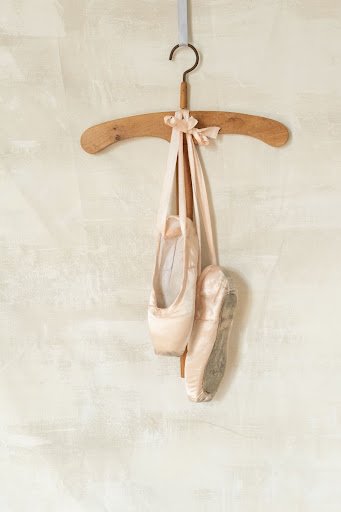
Photo by Elena Kloppenburg from Unsplash
An exciting summer of dancing is in store for many dancers this year with summer ballet intensives right around the corner. Intensives are a great way to challenge oneself, try new skills, meet new people, and experience different ballet styles. They are also called “intensives” for a reason, as dancers are typically dancing hours a day for weeks on end, sometimes in different states. At Dancewear Center, we want to make sure our customers are prepared for an exciting summer of dancing by providing them with the tips and supplies they need to be successful.
An important part of preparing for summer ballet intensives is making sure your pointe shoes are prepared for long hours of dancing. Pointe shoes only last about 10-20 dancing hours on average. It’s helpful for dancers to take steps to prolong the life of their shoes, as dancing in dead shoes can have adverse effects on foot and ankle health. For instance, dancing in dead pointe shoes with little support overloads dancers’ joints and can change their center of gravity, which can make force unevenly distributed and excessively load the front of dancers’ feet. This can put dancers’ feet and ankles at risk for stress fractures, bunions, and more harmful injuries in the long run. See: “The Dangers of Dancing on Dead Pointe Shoes” by Dance Magazine
So, how can dancers prolong the life of their pointe shoes to prepare for upcoming summer ballet intensives?
Rotate Multiple Pairs of Shoes
Firstly, dancers can rotate their pointe shoes to keep them lasting longer. To do this, dancers can purchase multiple pairs of their pointe shoes, sew them, and alternate the ones they wear each day. It’s helpful to take into account the average lifespan of a pointe shoe (10-20 dancing hours) when determining how many pointe shoes one should bring to a summer ballet intensive.
Prepare for the Environment
Secondly, take into account the location where your summer ballet intensive will be held. In more humid environments, pointe shoes tend to die at faster rates. Considering pointe shoes are essentially made of layers of paper/cardboard and paste, exposing them to hot environments with high levels of moisture in the air will cause them to deteriorate quicker. So, if your summer intensive is located in some of the hotter and more humid areas of the United States, like Florida, Louisiana, or Hawaii, you may want to consider bringing along more pairs of pointe shoes to rotate throughout the intensive.
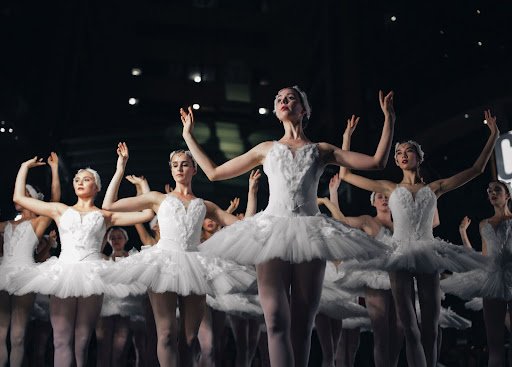
Photo by Michael Afonso from Unsplash
Dry Out Your Shoes
In addition, it’s helpful to dry out your pointe shoes when you’re not dancing in them to help slow their deterioration. One of the best ways to do this is not to leave your worn pointe shoes in your dance bag after class when you’re not wearing them. This creates a “sauna effect,” exposing your shoes to a stuffy, humid environment that can cause them to break down faster. When you’re not wearing your pointe shoes, take them out of your dance bag, don’t fold them inside one another, and lay them out to dry (it can take pointe shoes 48-72 hours to fully dry out!). When transporting pointe shoes to the studio, putting them in a mesh bag can help them aerate and keep them out of direct sunlight to prevent further deterioration. It’s also important to not leave pointe shoes in a car or any other environment that isn’t climate controlled.
Strategically Use Reinforcing Agents
There are some products you can purchase alongside your pointe shoes that will help extend their shelf life: one of which is Jet Glue. Where to apply Jet Glue varies slightly among dancers; however, the most common placement is on the outside and inside of the shoe’s shank, covering 1.5-2 inches where the arch breaks. Some dancers also put it on either side of the shank and in the box of their shoes. Before applying Jet Glue to your pointe shoes, we recommend consulting with a DWC fitter to see how you can best apply it to maximize the shoe’s support and integrity for your unique needs.
Schedule a Pointe Shoe Fitting
It’s especially important for dancers to touch base with a fitter before and/or during their summer intensives to ensure that they’re taking the best possible pointe shoes and products with them to help them feel supported. To prep for intensives, DWC fitters will ask dancers where their intensives are taking place, how their current shoes are breaking down, whether the intensive is requiring certain pointe shoes, how many pairs of shoes the dancer should bring, and more. DWC fitters can also help evaluate how dancers’ shoes are breaking down, recommend where to apply reinforcement agents like Jet Glue, and make sewing suggestions to help maximize the pointe shoe’s performance. Dancers can also discuss what their intensive workload will look like so fitters can potentially recommend different shoes for different activities, as some loads might require shoes with a harder or softer shank, for example.
Importantly, due to unfavorable supply chain circumstances, stock in some pointe shoe styles is limited. That’s why we recommend that dancers have backup options to assure they have shoes to take with them to the intensives.

Photo by Bruno Horwath from Unsplash
Schedule an Injury Risk Prevention Appointment with a Dance Medicine Specialist
Finally, it’s important that dancers are aware of any potential injury flare-ups that could come up when dancing long hours. For example, master pointe shoe fitter Josephine Lee of ThePointeShop says that issues like tendonitis can flare up during summer intensives because of the added workload on the feet. We recommend visiting a dance medicine specialist before heading to your summer intensive, as specialists can conduct body assessments, analyze what physical challenges you’ve been experiencing, which problems may potentially flare up, and give a specific plan to follow to help mitigate the risk of injury. Check out our dance medical specialists page on our website to find specialists in your area!
Summer intensives can be enriching experiences for dancers of all ages and technique levels. What makes them even more successful for dancers is ensuring that their pointe shoes are in the best condition they can be to support dancers’ feet. Be sure to book your pointe shoe fitting appointments at DWC today. Happy intensive season!
Disclaimer
All content found on the Dancewear Center Website, Instagram, Facebook, Pinterest, and all other relevant social media platforms including: text, images, audio, or other formats were created for informational purposes only. Offerings for continuing education credits are clearly identified and the appropriate target audience is identified. The Content is not intended to be a substitute for professional medical advice, diagnosis, or treatment. Always seek the advice of your physician or other qualified health provider with any questions you may have regarding a medical condition. Never disregard professional medical advice or delay in seeking it because of something you have read on this Website.
If you think you may have a medical emergency, call your doctor, go to the emergency department, or call 911 immediately. Dancewear Center does not recommend or endorse any specific tests, physicians, products, procedures, opinions, or other information that may be mentioned on dancewearcenter.net. Reliance on any information provided by dancewearcenter.net, Dancewear Center employees, contracted writers, or medical professionals presenting content for publication to Dancewear Center is solely at your own risk.
Links to educational content not created by Dancewear Center are taken at your own risk. Dancewear Center is not responsible for the claims of external websites and education companies.

Self Discovery in Life & Dance
When Birgitte was 6 years old, she started taking a ballet class. She shares that she took the classes, had the recital and she shares that that experience woke the little ballerina in her. After that class she kept begging with her parents to take more classes, but they didn’t allow her to. She ended up taking some ballet classes for her P.E. credit in college and she shares that she loved it but it was absolutely terrifying. At 53 years old was when Birgitte finally fulfilled her dream to become a ballerina. Birgitte started with one to two classes per week and within 6 months she was taking fourteen classes and was en pointe. Since then, she hasn’t stopped dancing and loves what she does.
An Interview with Dancer & Teacher Birgitte Necessary
Pronunciation: Bi-gee-ta Ne-ses-aerie | Pronouns: she/they
By Samantha Weissbach, DWC Owner & General Manager and Nicole Barrett, DWC Blog Editor
Here at Dancewear Center, we love to highlight local dancers and teachers that relate to our message. We got the opportunity to speak with one of them, Birgitte Necessary who is a local dancer! Read on to learn more about Birgitte’s dancing journey and how her identity affects them in the dance world!
When Birgitte was 6 years old, she started taking a ballet class. She shares that she took the classes, had the recital and she shares that that experience woke the little ballerina in her. After that class she kept begging with her parents to take more classes, but they didn’t allow her to. She ended up taking some ballet classes for her P.E. credit in college and she shares that she loved it but it was absolutely terrifying. At 53 years old was when Birgitte finally fulfilled her dream to become a ballerina. Birgitte started with one to two classes per week and within 6 months she was taking fourteen classes and was en pointe. Since then, she hasn’t stopped dancing and loves what she does.
Birgitte came out as non-binary during the pandemic and shares that all she really thought about was training and dancing and didn’t associate her new identity with dance yet. She shares that she was just doing what she was taught before which was existing in the binary of dance. Coming out as non-binary made her feel a little rough around the edges and made her think of how she was going to represent and be herself in this world that she loves. Now thinking about it more, she worries about how much she is represented in the studio and struggles with how much she should really worry about this.
We loved getting a chance to speak with Birgitte! Be sure to check out the rest of their interview down below!

Disclaimer
All content found on the Dancewear Center Website, Instagram, Facebook, Pinterest, and all other relevant social media platforms including: text, images, audio, or other formats were created for informational purposes only. Offerings for continuing education credits are clearly identified and the appropriate target audience is identified. The Content is not intended to be a substitute for professional medical advice, diagnosis, or treatment. Always seek the advice of your physician or other qualified health provider with any questions you may have regarding a medical condition. Never disregard professional medical advice or delay in seeking it because of something you have read on this Website.
If you think you may have a medical emergency, call your doctor, go to the emergency department, or call 911 immediately. Dancewear Center does not recommend or endorse any specific tests, physicians, products, procedures, opinions, or other information that may be mentioned on dancewearcenter.net. Reliance on any information provided by dancewearcenter.net, Dancewear Center employees, contracted writers, or medical professionals presenting content for publication to Dancewear Center is solely at your own risk.
Links to educational content not created by Dancewear Center are taken at your own risk. Dancewear Center is not responsible for the claims of external websites and education companies.

Journey & Identity Through Dance
Pride month is upon us and what better way to celebrate pride than to highlight queer dancers in the Seattle community! We got the opportunity to speak with local teacher and dancer Annie St. Marie about their experience with the dance and LGBTQIA+ community. Read on to learn more about Annie’s dancing journey and their identity in the dance world!
An Interview with Dancer & Teacher Annie St. Marie
By Samantha Weissbach, DWC Owner & General Manager and Nicole Barrett, DWC Blog Editor
Pride month is upon us and what better way to celebrate pride than to highlight queer dancers in the Seattle community! We got the opportunity to speak with local teacher and dancer Annie St. Marie about their experience with the dance and LGBTQIA+ community. Read on to learn more about Annie’s dancing journey and their identity in the dance world!
Annie started dancing when they were 4 years old. Their first experience with dance was at a local community center in Seattle and then moved to the American Dance Institute in Greenwood. They share that their neighbor across the street also danced there and went on to audition for Pacific Northwest Ballet. Annie says that they thought to themself “If they can, why can’t I!” and auditioned there as well. They initially got into PNB and danced there from ages 8 to 17. Annie trained very extensively in various different styles of ballet and Horton technique and shares that it was a great experience.
After consideration from their family, they decided to stop training at PNB when they were 17 and continued doing musical theater that they had done all throughout high school. Then when Annie was a senior they decided that they wanted to keep dancing and applied to Cornish College of the Arts. After not attending initially after their senior year, they did Cornish’s three year program and graduated in 2018. Since graduating, Annie has been teaching at various studios, performing and taking classes as much as they can.
Annie uses he/she/they pronouns and shares that they identify as non-binary which can affect the way they are seen in the dance world. They share that people can assume their gender or pronouns being she/her or that they present feminine which they share isn’t great. Now that they have found places where they are accepted they share that it is better, but growing up in the ballet world, there are lots of specific gender roles. Females are supposed to curtsey and males are supposed to bow and Annie tries in their classes to eliminate those gender roles as much as they can.
Annie shares that they have lots of things coming up for them in the next few months! Annie currently teaches a ballet/contemporary class at Westlake Dance Center in Shoreline every Saturday. They will also be teaching some master classes throughout the summer and just performed at the Seattle International Dance festival with Coalescence Dance Company. In September they are performing in a show called A Night In Paris which is taking place in Leavenworth. Lastly, in the fall they will be teaching some adult intermediate ballet classes and modern classes at eXit Space.
We are so happy that we had the opportunity to speak with Annie! Be sure to follow them on Instagram here and check out the rest of their interview on YouTube!
Sources:
Disclaimer
All content found on the Dancewear Center Website, Instagram, Facebook, Pinterest, and all other relevant social media platforms including: text, images, audio, or other formats were created for informational purposes only. Offerings for continuing education credits are clearly identified and the appropriate target audience is identified. The Content is not intended to be a substitute for professional medical advice, diagnosis, or treatment. Always seek the advice of your physician or other qualified health provider with any questions you may have regarding a medical condition. Never disregard professional medical advice or delay in seeking it because of something you have read on this Website.
If you think you may have a medical emergency, call your doctor, go to the emergency department, or call 911 immediately. Dancewear Center does not recommend or endorse any specific tests, physicians, products, procedures, opinions, or other information that may be mentioned on dancewearcenter.net. Reliance on any information provided by dancewearcenter.net, Dancewear Center employees, contracted writers, or medical professionals presenting content for publication to Dancewear Center is solely at your own risk.
Links to educational content not created by Dancewear Center are taken at your own risk. Dancewear Center is not responsible for the claims of external websites and education companies.
Don’t Do It Yourself Virtual Assistant Services
Here at Dancewear Center, we host a lunch and learn on the last Wednesday of every month where we bring in local experts in our community to give a presentation about their expertise in that field. Fortunately we get the opportunity to have Santina Rigano-Lesch be one of our presenters this month! She will be presenting on her business Don’t Do It Yourself Virtual Assistant Services (DDIYVAS). Read on to learn more about her dancing journey and more information on her business!
By Nicole Barrett, DWC Blog Writer
Here at Dancewear Center, we host a lunch and learn on the last Wednesday of every month where we bring in local experts in our community to give a presentation about their expertise in that field. Fortunately we get the opportunity to have Santina Rigano-Lesch be one of our presenters this month! She will be presenting on her business Don’t Do It Yourself Virtual Assistant Services (DDIYVAS). Read on to learn more about her dancing journey and more information on her business!
Santina was born and raised in Adelaide, South Australia. She shares that she came to America when she was 21 to become an au pair. Santina has been dancing her whole life since she was 4 years old and shares that her mother was the one that put her into dance classes. Because of this, Santina fell in love with dance and that became her passion. While in Australia, she shares that she studied various different dance styles, managed a performing arts company and coached national hip hop champions. When she moved to the states, she says that even as an au pair she was trying to insert herself into the dance scene to see what it was like here.

She later moved here to Seattle where she met her wife. After meeting her wife, Santina started a dance studio in West Seattle that allowed her to teach over 400 kids aged 2 to 12 and build a community atmosphere through her dance studio. The pandemic hit which unfortunately forced her to close the studio doors. This then lead her to start her two businesses she has today. Don’t Do It Yourself Virtual Assistant Services Santina says was built from the pandemic. She knew that as a studio owner herself, she struggled with the social media and virtual assistance aspect of the business. Her main goal with the business is to support studio owners in the area that feel they are struggling in these areas and give them as much support as they need.
Don’t Do It Yourself Virtual Assistance Services (DDIYVAS) is an organization that is built for dance studios/schools, fitness brands, child-related businesses and various other types of businesses with virtual assistance needs. Some of the services include various administrative tasks like website management, inputting class data into enrollment software, and getting emails out to clients. They also help with social media management which can include crafting and creating content, strategizing content, and engagement and online presence. Lastly, DDIYVAS also helps with podcast management which can include information on creating a podcast, managing editing the podcast and making sure it gets onto various channels.
Santina will be presenting about culture and creating content with ease through that cultural lens at the lunch and learn. This will focus on the core values that want to be showcased through this content and how to achieve that. Be sure to come and watch Santina’s presentation on June 28th from 12:30-1:30 at our Renton location! We hope to see you there!
Disclaimer
All content found on the Dancewear Center Website, Instagram, Facebook, Pinterest, and all other relevant social media platforms including: text, images, audio, or other formats were created for informational purposes only. Offerings for continuing education credits are clearly identified and the appropriate target audience is identified. The Content is not intended to be a substitute for professional medical advice, diagnosis, or treatment. Always seek the advice of your physician or other qualified health provider with any questions you may have regarding a medical condition. Never disregard professional medical advice or delay in seeking it because of something you have read on this Website.
If you think you may have a medical emergency, call your doctor, go to the emergency department, or call 911 immediately. Dancewear Center does not recommend or endorse any specific tests, physicians, products, procedures, opinions, or other information that may be mentioned on dancewearcenter.net. Reliance on any information provided by dancewearcenter.net, Dancewear Center employees, contracted writers, or medical professionals presenting content for publication to Dancewear Center is solely at your own risk.
Links to educational content not created by Dancewear Center are taken at your own risk. Dancewear Center is not responsible for the claims of external websites and education companies.
Get To Know DPT Era Terry
All dancers have struggled with the issue of trying to find a physical therapist or doctor that understands how a dancer’s body moves. There are various doctors out there who just don’t understand how dancers move which can be frustrating in the recovery process. Luckily we got the chance to speak with Dr. Era Terry to learn more about the dance medicine field in Seattle. Read on to learn more about Era’s dancing journey and what got her into doing physical therapy on dancers!
By Samantha Weissbach DWC Owner & Nicole Barrett, DWC Blog Editor
Pronunciation: Air-ah Tear-ee | Pronouns: she/her

All dancers have struggled with the issue of trying to find a physical therapist or doctor that understands how a dancer’s body moves. There are various doctors out there who just don’t understand how dancers move which can be frustrating in the recovery process. Luckily we got the chance to speak with Dr. Era Terry to learn more about the dance medicine field in Seattle. Read on to learn more about Era’s dancing journey and what got her into doing physical therapy on dancers!
Era grew up dancing and primarily did ballet while exploring competition dance in high school. While getting her undergrad degree after high school, she danced with Chattanooga Ballet in Tennessee where she was a contracted ballet dancer and taught various ballet classes. Once she graduated from undergraduate school, she suffered an ankle injury that took her out of the professional dance world, which allowed her to transition to physical therapy school. She obtained her degree from Columbia University in 2017 and moved to Seattle to pursue her physical therapy career upon graduation. Era still dances around the Seattle area and her mission was to work with dancers specifically to give back to that community.
Era shares that what sparked her decision to start working at her current practice was to work one-on-one with patients for longer periods of time to build that connection with her patients. She started working right after graduating from physical therapy school at a larger clinic where she was meeting with patients every 30 minutes and she realized that this wasn’t the scene for her. She then met the owner of her current practice Kinetic Physical Therapy through a mutual friend and has been a great fit for Era.
Era shares that Seattle is a great place for dance medicine and shares that there are some great resources to help dancers who have injuries.Seattle Dance and Performing Arts Medicine is a great resource for information on clinics and doctors in the area. Era also works in West Seattle at Kinetic Physical Therapy so be sure to come by and see her for all your dancer needs!

Disclaimer
All content found on the Dancewear Center Website, Instagram, Facebook, Pinterest, and all other relevant social media platforms including: text, images, audio, or other formats were created for informational purposes only. Offerings for continuing education credits are clearly identified and the appropriate target audience is identified. The Content is not intended to be a substitute for professional medical advice, diagnosis, or treatment. Always seek the advice of your physician or other qualified health provider with any questions you may have regarding a medical condition. Never disregard professional medical advice or delay in seeking it because of something you have read on this Website.
If you think you may have a medical emergency, call your doctor, go to the emergency department, or call 911 immediately. Dancewear Center does not recommend or endorse any specific tests, physicians, products, procedures, opinions, or other information that may be mentioned on dancewearcenter.net. Reliance on any information provided by dancewearcenter.net, Dancewear Center employees, contracted writers, or medical professionals presenting content for publication to Dancewear Center is solely at your own risk.
Links to educational content not created by Dancewear Center are taken at your own risk. Dancewear Center is not responsible for the claims of external websites and education companies.

DWC How To's: Sewing Your Pointe Shoes
Sewing pointe shoes can be one of the most complicated processes for dancers, but it doesn’t need to be!. There are various ways that teachers want their students to sew them and many ways that dancers prefer their own pointe shoes to be sewn. While there isn’t a correct way to sew your shoes, there are many tips and tricks that can be helpful to know in order to sew your shoes efficiently and effectively. Read on to learn some tricks from DWC Staff Member Emma Neilson!
By Emma Neilson DWC Social Media Manager, & Nicole Barrett DWC Blog Editor
Sewing pointe shoes can be one of the most complicated processes for dancers, but it doesn’t need to be! There are various ways that teachers want their students to sew them and many ways that dancers prefer their own pointe shoes to be sewn. While there isn’t a correct way to sew your shoes, there are many tips and tricks that can be helpful to know in order to sew your shoes efficiently and effectively. Read on to learn some tricks from DWC Staff Member Emma Neilson!
Materials needed to sew pointe shoes:
Stitch kit (needle and thread)
Sharpie or pen (to label the left and right shoe)
A lighter
Scissors
Pointe shoes
Ribbon
Elastic
Optional: Thimble
Here are the beginning steps on how to sew your pointe shoes!:
Take about a wingspan worth of thread to make sure you don’t run out and cut it off the spool.
Take your needle and put the thread through the eye of the needle. Pull the thread taut and make sure that both ends of the thread are the same length and knot the end.
Take your ribbons first and cut them into four even pieces to put on your shoes. Be sure to burn the edges with your lighter so that the ends don’t fray. Repeat the same with your elastics.
Line up your ribbons and elastics together on the side seam of the shoe. A general guideline is to place them at the highest point of the arch of your foot. (This is personal preference, so be sure to find where you like your ribbons and elastics on your shoes best!)
Take your needle and thread and start sewing them down. Some dancers prefer sewing the canvas or inner lining of the shoe only, but you can sew all the way through the fabric if you would prefer. You can also sew the ribbons and elastics down by sewing a box around the end or whichever way would be most effective for you. This is all personal preference!
Once you are finished with your stitching, create a knot at the end so that the stitching doesn’t come undone. Cut off the access thread with scissors.
Next you are going to take the other end of your elastic that you just sewed down and cross the end to the other side of the shoe. When both of them are sewn they should make an x-shape. *This can also be done with one elastic along the back edge of the shoe to make a strap which is dancer or teacher preference!*
Cross the elastic to the back of the shoe and be sure that it is at an angle to line up with the curve of your ankle. (This can be done on the inside or outside of your shoe just be sure to check with your teacher to see which they would prefer).
Use the same method that you chose for the front part of the elastic and ribbons and sew the back elastics down.
Tie a knot at the end of your thread and repeat with the other set of ribbons and elastics.
Repeat on the other pointe shoe and you have a new set of sewn pointe shoes!
We hope that these tips and tricks helped you sew your pointe shoes! All of these products can be found at Dancewear Center in store or online!
Disclaimer
All content found on the Dancewear Center Website, Instagram, Facebook, Pinterest, and all other relevant social media platforms including: text, images, audio, or other formats were created for informational purposes only. Offerings for continuing education credits are clearly identified and the appropriate target audience is identified. The Content is not intended to be a substitute for professional medical advice, diagnosis, or treatment. Always seek the advice of your physician or other qualified health provider with any questions you may have regarding a medical condition. Never disregard professional medical advice or delay in seeking it because of something you have read on this Website.
If you think you may have a medical emergency, call your doctor, go to the emergency department, or call 911 immediately. Dancewear Center does not recommend or endorse any specific tests, physicians, products, procedures, opinions, or other information that may be mentioned on dancewearcenter.net. Reliance on any information provided by dancewearcenter.net, Dancewear Center employees, contracted writers, or medical professionals presenting content for publication to Dancewear Center is solely at your own risk.
Links to educational content not created by Dancewear Center are taken at your own risk. Dancewear Center is not responsible for the claims of external websites and education companies.
How Do You Cope?
During the month of May, mental health is brought to the entire country’s attention. Mental Health Awareness Month was put into effect in 1949 to reduce the stigma of mental health issues and to provide support for those going through those issues. We here at Dancewear Center believe that mental health is something that is very important to talk about and it is important to know that you are not alone in what you are feeling. Many people can feel stuck when they are experiencing bad mental health days and it is important to find ways to alleviate that. We got to speak with some of our staff and ambassadors about what they do to cope with their mental and physical health through hard times. Read on to learn more about how they take care of themselves during rough times.
DWC Staff and friends speak to their personal methods for coping with anxiety and stress
By Nicole Barrett, DWC Blog Editor
Trigger Warning: eating disorders, mental health issues
During the month of May, mental health is brought to the entire country’s attention. Mental Health Awareness Month was put into effect in 1949 to reduce the stigma of mental health issues and to provide support for those going through those issues. We here at Dancewear Center believe that mental health is something that is very important to talk about and it is important to know that you are not alone in what you are feeling. Many people can feel stuck when they are experiencing bad mental health days and it is important to find ways to alleviate that. We got to speak with some of our staff and ambassadors about what they do to cope with their mental and physical health through hard times. Read on to learn more about how they take care of themselves during rough times.
Emma

When I'm going through a season of life where I'm dancing a lot, I find I have to prioritize my health above all else in order to perform at the highest level possible. For me personally, I find that my physical and mental health affect one another, and if one starts to suffer, the other soon follows suit. It's taken me a long time to find routines that I feel good about and that work for me, and a lot of it is trial and error. What works for one dancer won't necessarily work for another.
I have in the past struggled with several injuries. The thing that I have found to be one of the most helpful things in my routine is cross-training and weightlifting. I also try to implement yoga (I love hot yoga too!) and pilates regularly into my schedule as well. When I have performances coming up, I try to schedule physical therapy, chiropractor, acupuncture, and massage sessions around those.
To take care of myself after dance and working out, my favorite things are using my muscle gun, gua sha, and also ice baths for my feet and ankles after a lot of pointe work. I also try to roll out or stretch when I can- but some nights I'm just too tired too and that's okay! I'm also a big fan of different topicals and creams if I am struggling with pain. You can get my favorite Tiger Balm at DWC. ;)
Some daily habits that keep me on track include eating regularly throughout my days, even when I'm super busy and making sure I'm getting my vitamins, supplements, and water in. A big factor in my mental health is also sleep! I notice I start to feel worse when I'm not getting enough sleep, so I try to have good sleep hygiene and a night routine. This is definitely always a struggle for me, but the rest we get can have a huge impact, especially since as athletes we have to give our muscles enough time to rest and repair themselves. Now, you might be confused at this next one, but I notice a significant difference in my state of mind when I make my bed each morning and keep my space clean. A clean space is a happy space, and I can tell my mental health is declining if my space starts to get cluttered and dirty.
I also think as dancers we are notoriously awful at knowing when to say "no" or "I need a break". If you need a rest day- take it! If you need a mental health day, carve time out of your regular schedule to spend time with friends, family, or just yourself, or to do whatever you may need. You will ultimately be a better performer when you feel rested and whole as a person who has a life outside of the studio.
And as always, never be scared to reach out for help. I am a huge advocate for seeing therapists, dietitians, psychiatrists, and other health professionals. I think a common misconception is that something must be "wrong" when we seek out mental health services, but really, it can be useful when you are just needing someone to talk to, or need help building routines or gaining new coping skills.

Ethan
Routine! I have built an evening recovery routine for myself that I do every single day. It is comprised of stretching, foam rolling, and using a lacrosse ball. I have noticed that if I do this only one evening (or even occasionally) there is only a minimal amount of gain in terms of how loose and relaxed I can move the next day. But having done this every day I regularly feel closer to my best. Routine is also calming to me, it helps me unwind and focusing on a singular task is almost like meditation.
Nicole

Take breaks! Whether the specific issue you are dealing with is mental or physical, everybody needs a break. Knowing when you need to take a break or take a step back is key to making sure you are prioritizing yourself. I have been through some major injuries and mental health situations in my dance journey that have forced me to take a step back from the thing that I love. Although I hated this break at the time, I look back on it now and I am so grateful that it happened to me. This break not only let me heal my body, but I also regained my love and passion for dance that was being overshadowed by my injury and self doubt.
Just be sure to remember as you are dealing with these issues that you are not alone and it is okay to not be okay. Never be scared to reach out to somebody if you think you need help. Throughout my break in dance, I was consistently talking with a professional to help me navigate through my emotions. Remember that you got this and whatever you are going through does not define the dancer you are.

Kendall
As a dancer, my mental health is just as important as my physical health. I find I struggle with bring my anxieties into the studio. I like to journal my thoughts down before going into class, that way I can focus on enjoying the movement and making corrections. I also try to avoid imposter syndrome and comparison by looking at old videos and pictures so I can see how far I’ve come. I also look for my safe people and friends within the studio who I can go to with my struggles. It’s important to remember you aren’t alone in your struggles, a lot of dancers deal with the same issues.
Robbi
Some basic things that I do to take care of myself are going on walks, when I can, and listening to music that I really enjoy. I can get drained from a lot of social interaction, and as a freelance dance artist, it is important to rest my body and mind when I can. It is okay to not be everywhere all of the time. Doing things for myself that help me feel like I am not missing out on anything is very important in a culture that is designed to make people think they are not doing enough, when our minds are trying to keep track of more things than ever before. Use your dancer brain to realize that it is all a performance, and that there are always things behind the scenes of everyone's lives that are not being advertised.
I love to touch grass, smell flowers, and see other people in real life and not just online. It is a reminder that the body I dance in is not separate from the body that I experience the rest of my life in. Saving up energy so that I can show up for the things that really matter to me has been so helpful this year. It gives me more to say as a person and as an artist when the time comes. It is okay to let people miss you. It is in the missing that you remember not to take each other for granted. This can apply to your relationship with dance as well.
Lastly, remember that the party does not start until YOU walk in.
We hope that some of these tips can help you during hard times. Know that you are never alone and there is always someone to talk to when things get low. If you ever need any further help, please call the crisis hotline at 988.
About the Author
Sources:
Disclaimer
All content found on the Dancewear Center Website, Instagram, Facebook, Pinterest, and all other relevant social media platforms including: text, images, audio, or other formats were created for informational purposes only. Offerings for continuing education credits are clearly identified and the appropriate target audience is identified. The Content is not intended to be a substitute for professional medical advice, diagnosis, or treatment. Always seek the advice of your physician or other qualified health provider with any questions you may have regarding a medical condition. Never disregard professional medical advice or delay in seeking it because of something you have read on this Website.
If you think you may have a medical emergency, call your doctor, go to the emergency department, or call 911 immediately. Dancewear Center does not recommend or endorse any specific tests, physicians, products, procedures, opinions, or other information that may be mentioned on dancewearcenter.net. Reliance on any information provided by dancewearcenter.net, Dancewear Center employees, contracted writers, or medical professionals presenting content for publication to Dancewear Center is solely at your own risk.
Links to educational content not created by Dancewear Center are taken at your own risk. Dancewear Center is not responsible for the claims of external websites and education companies.
Korean Folktales in Contemporary Dance
Asian American and Pacific Islander Heritage month is in full swing. This month is here to celebrate and recognize the contributions and influence that Asian Americans and Pacific Islander Americans have on the culture in our society. We got the chance to have blog contributor MiYoung Margolis share a story about a Korean folktale that influenced her choreography for her dance company. Read on to learn more about MiYoung’s piece and to learn more about Korean culture!
By Nicole Barrett, DWC Blog Editor & MiYoung Margolis
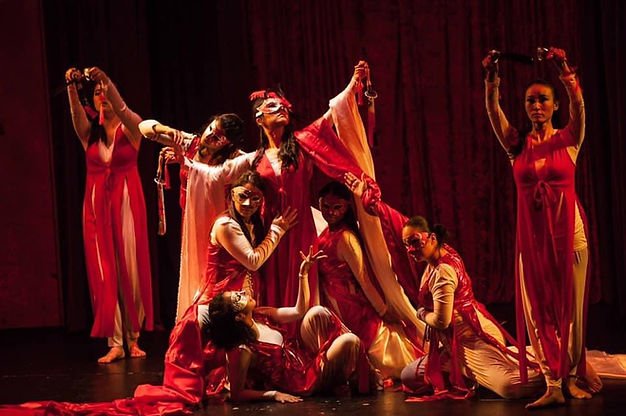
Asian American and Pacific Islander Heritage month is in full swing. This month is here to celebrate and recognize the contributions and influence that Asian Americans and Pacific Islander Americans have on the culture in our society. We got the chance to have blog contributor MiYoung Margolis share a story about a Korean folktale that influenced her choreography for her dance company. Read on to learn more about MiYoung’s piece and to learn more about Korean culture!
MiYoung Margolis: “I have presented the original Contemporary Korean Fusion pieces inspired by Korean folktales.
Once again, I would love to talk about “One World” through the Korean Contemporary fusion dance piece since I deeply feel that is what we all need especially after the pandemic.
To me, living in this one world together means ‘Love’. And as we all know, love is all you need.
Embracing our unique heritage, while celebrating our common life journey. Though we all come from different backgrounds, We can come together to create a beautiful performance.
In my choreography, I enjoy blending Eastern to Western and Western to Eastern. To create a fusion of cultures and a performance we can all connect to.I am proud to present an original Contemporary Korean Fusion piece that once again draws from my Korean Heritage
and borrows from another Korean folktale:

Photo courtesy of www.miyoungmargolis.com
The tragic love story of So-Hwa, A Court Lady, who’s unreturned love for the king, left her waiting forever and dying alone. Her remains transformed into the imaginary flower, the “Trumpet Creeper” which to this day, still waits for the king’s return. This story is told by a diverse cast of extremely talented dancers for the screen dance film version. Kang-He and Christie are professional Korean dancers. Parmida is a professional dancer from Iran, with incredible upper-body movement and control. And the amazing Tatiana with her legendary High Kick and professional ballet and contemporary dance background.
I am so glad to be able to bring these dancers together to tell So-Hwa’s story.”
MiYoung performed this piece on May 21st at ACES: Artists of Color Expo & Symposium. We are so happy to have MiYoung share the wonderful story behind her amazing performance! Keep an eye out for more information on future performances on her instagram here! MMDC performs again May 28th at PRIDEASIA.
Sources:
Encouragement for Dancers with Anxiety Disorders
One of the most common misconceptions about anxiety is that all people experience it in the same way. For those who do not have an anxiety disorder or do not believe anxiety disorders are legitimate health concerns, the assumption reigns that anxiety is a temporary and fixable cluster of symptoms brought on by isolated circumstances.
Trigger Warning: Anxiety, Mental Health
By Hannah Emory, DWC Blog Contributor
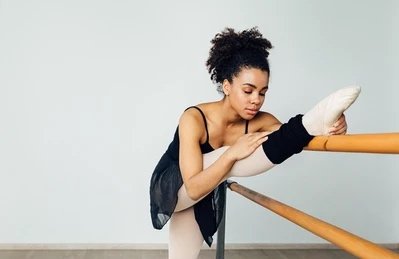
Photo from Shutterstock
My story with anxiety.
One of the most common misconceptions about anxiety is that all people experience it in the same way. For those who do not have an anxiety disorder or do not believe anxiety disorders are legitimate health concerns, the assumption reigns that anxiety is a temporary and fixable cluster of symptoms brought on by isolated circumstances.
I’m a dancer who copes with a chronically disordered form of anxiety called Generalized Anxiety Disorder, or GAD. It means that I have anxiety at all times and can experience severe symptoms, even without an immediately evident or conventionally logical cause. I am grateful that I was diagnosed about five years ago and continue to learn about how my anxiety affects my everyday life.
My symptoms can vary from being deeply emotional to viscerally physical - from a background sense of coming doom or imminent failure to shaking, shortness of breath, digestive troubles, and mental fog. The severity and frequency of my anxiety symptoms can be reduced by self-care and the input of my support network, but the disorder itself never completely goes away.
Having an anxious body as a dancer provides an interesting challenge when it comes to performance time. There is this feeling of excited anticipation that works up once you’ve committed your blood, sweat, and tears to a creative endeavor and you’re about to present it to the world. Yet, an anxious body sometimes can’t tell the difference between joyful energy and anxiety-inducing stimuli, and the two can become muddled together or transform into each other.
When I was a child and teenager, I would experience these muddied waters all the time at performances. The number of people around me, rigorous schedules, interrupted self-care, and the anticipation of putting my heart and soul in front of audience members created an environment where I could thrive off the intensity, but sometimes struggled to stay grounded. That could put a damper on the joy of performing because I didn’t know how to deal with the stressors I was encountering effectively.
Throughout my university dance career, I’ve had many opportunities to learn about what helps me be successful amid my anxiety. Below are the top three things that have proven essential for me on a holistic level - these tips are important for any person, but can be easily forgotten in an athletic field like dancing. We need to intentionally make space in our lives for the internal and personal. As dancers, we use our minds, bodies, and hearts, and all three parts of ourselves require care so we can bring the best of ourselves to the studio and the stage.
Even in the off-season, have a routine.
After experiencing a year-long off-season in 2020, I realized that having a routine is key to avoiding anxiety flare-ups in the day-to-day as well as during performances. As an artistic person, routines can seem like the anchor weighing me down, but they can ultimately make or break navigating mental health struggles and a dancing career. I know that if I don’t stick to a routine, I quickly feel unmoored in my everyday life and have a greater sense of unpreparedness for performances.
Routines are best when they are individualized, realistic, holistic, and consistent. Your routine is the framework for having joy and maintaining movement forward in life - from nutrition to mundane tasks, from what barre exercises you need to do to what makes you feel ready for a performance night. Establishing a meaningful and effective routine will take troubleshooting and will shift over time as your needs change, but it’s a process that will be invaluable to your growth as a dancer.
A few warnings from my personal experience: don’t overload your off-days and don’t feel the need to run your life the way others do. Anxiety disorders can come with a robust perfectionism streak, but this is no competition and you are doing this for yourself and your craft. Your routine is about setting yourself up for success so that you are consistently improving as a dancer and avoiding anxiety spirals. Productivity and perfection are not the goals, consistency and stability are.
Find your own mindfulness practice.
Living life with GAD for me means that I don’t enjoy traditional silent meditation. I think many folks believe that to have a “real” mindfulness practice you must be skilled at silent meditation or try to be. I was in that boat and went on a journey to find a mindfulness practice that works for me consistently. I would say that if you are an anxious-bodied dancer, a mindfulness practice can be helpful, especially to ward off performance stress.
My mindfulness routine includes…
Using a set of meditation beads I made to center my mind on a power phrase or two
Journaling consistently to process my emotions and visualize my future
Improv dancing to a playlist of empowering tunes so I can connect my body, mind, and heart
Taking a walk outside where there is some green space and I can hear the birds singing
I like having a list of different activities that I know will center me and focus my attention, so that no matter where I am, I will be able to do some form of self-soothing when I’m having a flare-up or when the pressure is on. Some other forms of mindfulness and self-relaxation can include guided whole-body relaxation, scripted bodily tension-and-release exercises, utilizing your barre warm-up as meditation, and listening to some ASMR. While there is some trial and error to this suggestion, the time invested in being able to routinely quiet your mind and center your energy will pay back dividends your whole life long.
Seek out community.
Even though anxiety is a deeply personal experience, it does not mean that we have to go through it alone. According to the Anxiety and Depression Association of America, about 20% of adults in the United States are affected by anxiety disorders. Sadly, most of those suffering do not receive the support they need, either from professional resources or from interpersonal support systems.
From my personal experience, anxiety results in a vicious cycle of convincing myself that I have to do it all on my own. I fear appearing annoying and needy and that if I reach out for help, others won’t understand how much GAD affects my life.
Yet, we are coming into a time where mental health is being destigmatized. Though there is still a lot of work to be done in normalizing and integrating mental health struggles into our societal conversations, there are a lot more doors open than there used to be. More people acknowledge mental health struggles as legitimate compared to a few decades ago. So the fear I feel is assuaged by the fact that people are struggling around me and would also like to have space held for them. Reaching out is easier when I remember that I am not the only one.
Lastly, some encouragement.
Ironically, it is anxiety-inducing to think of being vulnerable with others and doing the challenging personal work to grow when anxiety can feel like a constant uphill climb. As dancers, our bread and butter is using our whole selves to tell honest, moving, and human stories. There is little that’s more honest, life-changing, and human than learning how to live with intention in our mental health realities. There is a place to carve out in the dance world for telling the truth about mental health, demystifying it, and loving each other in the midst of it.
Ultimately, you have permission to start breaking the vicious cycles of loneliness and perfectionism that can come with having an anxiety disorder. I hope you know it is a sign of your power and strength to reach out to a mutually supportive community. I hope you know that you can move mountains with baby steps; that you are not alone. I hope you know your strength is shown through your struggle; your heart and your art are always worth the time of being loved, acknowledged, and cared for.
Much love to you, dear dancer.

The Story of a Studio Born Out of the Pandemic
It’s no secret that many small businesses suffered throughout the COVID-19 pandemic and dance studios were no exception. Amid growing dance studio closures, those eager to move were left without a space to practice and without instructors to learn from. In the face of these challenges, local dance instructor and artistic director Mija Bishop founded Flight Feathers, a dance studio aimed at helping each individual dancer sore. Stay tuned to Flight Feathers’ Instagram for details about its June production of A Midsummer Night’s Dream.
Mija Bishop on Helping Dancers Soar at Flight Feathers
By Madison Huizinga, Former DWC Blog Editor

Photo by Truman Buffett
It’s no secret that many small businesses suffered throughout the COVID-19 pandemic and dance studios were no exception. Amid growing dance studio closures, those eager to move were left without a space to practice and without instructors to learn from. In the face of these challenges, local dance instructor and artistic director Mija Bishop founded Flight Feathers, a dance studio aimed at helping each individual dancer sore. Stay tuned to Flight Feathers’ Instagram for details about its June production of A Midsummer Night’s Dream.
Influenced heavily by her family, Mija began dancing around age six. Her father was a ballet teacher as well as the owner of a ballet studio. “I was a little goof-off when I was little!” Mija laughs, sharing that she often got kicked out of class for being disruptive. It wasn’t until around age 13 that Mija began focusing on her dance training a bit more seriously. Throughout middle school and high school, she tried to get involved with as many ballet-related workshops, programs, and performances as she could.
Nonetheless, Mija shares that she eventually got burnt out and quit dance after high school for three years. “I kind of had this all-or-nothing mentality,” she says of how she viewed her involvement with dance. After three years, Mija found herself missing the dance scene. When she found an opportunity to get back involved, she jumped on it. “I’m really grateful for that chain of events that brought me back to dancing again,” she says. Today, she’s going on her tenth year of teaching dance, which has been a big part of what she’s loved about her dance journey.
“I've always enjoyed the movement,” Mija says, sharing her love for dancing to beautiful music. She appreciates the artistry behind dance and being able to feel so present with herself and her body. “There’s something really freeing about just being able to completely immerse yourself,” she says. Mija also appreciates her dance community, as well as the discipline and structure of ballet, particularly the ability to assess herself.

Photo by Thomas Hopkins
Mija shares that in her personal life, a challenge she’s faced in dance is grappling with the “perfect ballet body.” She never felt like she fit the ideal image of a ballerina, pointing out that she is shorter in stature and has shorter limbs. “People of Asian descent might relate,” she shares of people who share the same racial identity as herself. Mija says that growing up as a dancer she felt pressure and received comments about staying within a certain weight and not gaining “extra” muscle, as it would corrupt her lines. It wasn’t until after high school that she realized that cross-training and weight training were key to helping her gain strength as a dancer. “That’s something that I have been enjoying for myself and also been able to share with my students,” Mija says of cross-training, sharing that it can help dancers gain a better sense of ownership over their bodies and physical capabilities. Learning to train one’s body to gain strength rather than training to look a certain way is a healthier and more sustainable practice.
Flight Feathers was established in May of 2021 so that Mija could safely continue working with dancers during the COVID pandemic. “I was just really devastated having to say ‘good-bye’ to so many dance families,” she says of the studio she had taught at closing. She decided to take a “big leap of faith” to provide community members with access to dance classes amid COVID. Flight Feathers has mainly focused on ballet this year, but Mija is eager to expand the studio to offer jazz, hip hop, and contemporary.
“The intention behind both the name and the program is to create an environment where each student can grow and explore their own unique needs through ballet,” Mija says of the mission behind Flight Feathers. “I feel like there are just so many different ways to shine and soar,” Mija says, connecting the notion to a flock of birds. “I really hope to provide each student with [a] unique experience that will make them grow.”
Dance accessibility is something important to Mija. She shares that going into the second year of her program, she would love the chance to connect with people and find ways to make dance more accessible to people, particularly in the financial sense. Mija's vision is starting to take shape, as she has recently been connected with The Cobb Foundation Northwest Founder and President Margaret Cobb. The foundation currently funds and creates opportunities for underserved children, including music and tennis lessons, LEGO robotics workshops, and a book giveaway program. Margaret and Mija are in the process of adding ballet to one of the Foundation's offerings. She is excited about the opportunity to team up with Margaret and provide a positive dance experience to a wider range of kids through the organization.

Photo by Andrew Lucio
Excitingly, Mija has recently moved operations to a new studio space in Woodinville, Washington. “It’s still a little bit unreal!” she says, sharing that she’s incredibly grateful for the support she’s received from her husband and dance families
Follow Flight Feathers’ Instagram to stay up-to-date on all their upcoming shows and more!
Interested in writing for the DWC Blog? Click below to fill out the DWC Contributor application!