
An Inside Look at Dancewear Center Mobile
Dancewear Center Mobile provides private pointe shoe fittings that individualize and streamline the fitting process for dancers, allowing them to receive professional, one on one attention in the comfort of their home studio. At private pointe shoe fittings, fitters appreciate getting the knowledge and input of dance teachers and providing ease and convenience for community members. Our mobile service also arranges pop-up shops that help alleviate back-to-school dance shopping stress and allow studios to build their brand and bring their community together in a fun way. Dancewear Center Mobile will bring dress code apparel, shoes, and the latest seasonal items for dancers in the form of a private shopping experience.
A Glance At DWC’s Mobile Service
By Madison Huizinga, DWC Blog Editor

Dancewear Center is known for offering high-quality pointe shoe fittings and products via its brick and mortar in Renton, Washington. Dancers have traveled to DWC from all over the Pacific Northwest to receive fittings and explore our large pointe shoe inventory, but through Dancewear Center Mobile, we bring our fitters and merchandise to the dancers themselves!
Dancewear Center Mobile provides private pointe shoe fittings that individualize and streamline the fitting process for dancers, allowing them to receive professional, one on one attention in the comfort of their home studio. At private pointe shoe fittings, fitters appreciate getting the knowledge and input of dance teachers and providing ease and convenience for community members. Our mobile service also arranges pop-up shops that help alleviate back-to-school dance shopping stress and allow studios to build their brand and bring their community together in a fun way. Dancewear Center Mobile will bring dress code apparel, shoes, and the latest seasonal items for dancers in the form of a private shopping experience.
Maluhia Vander Griend is the artistic director and co-owner of Dancing For Joy in Bellingham and Lynden, Washington. Dancing For Joy had two Dancewear Center Mobile visits, both of which occurred in early 2022. “I was there the whole time and it was lovely,” Maluhia shares. She says that due to the expertise and convenience of the service she would love to have four to six mobile fittings a year to keep dancers dancing in pointe shoes that safely fit them. Maluhia also shares that she was adamant about having other community members take part in the mobile fitting service, so she invited other studios in the area to join at their last event.
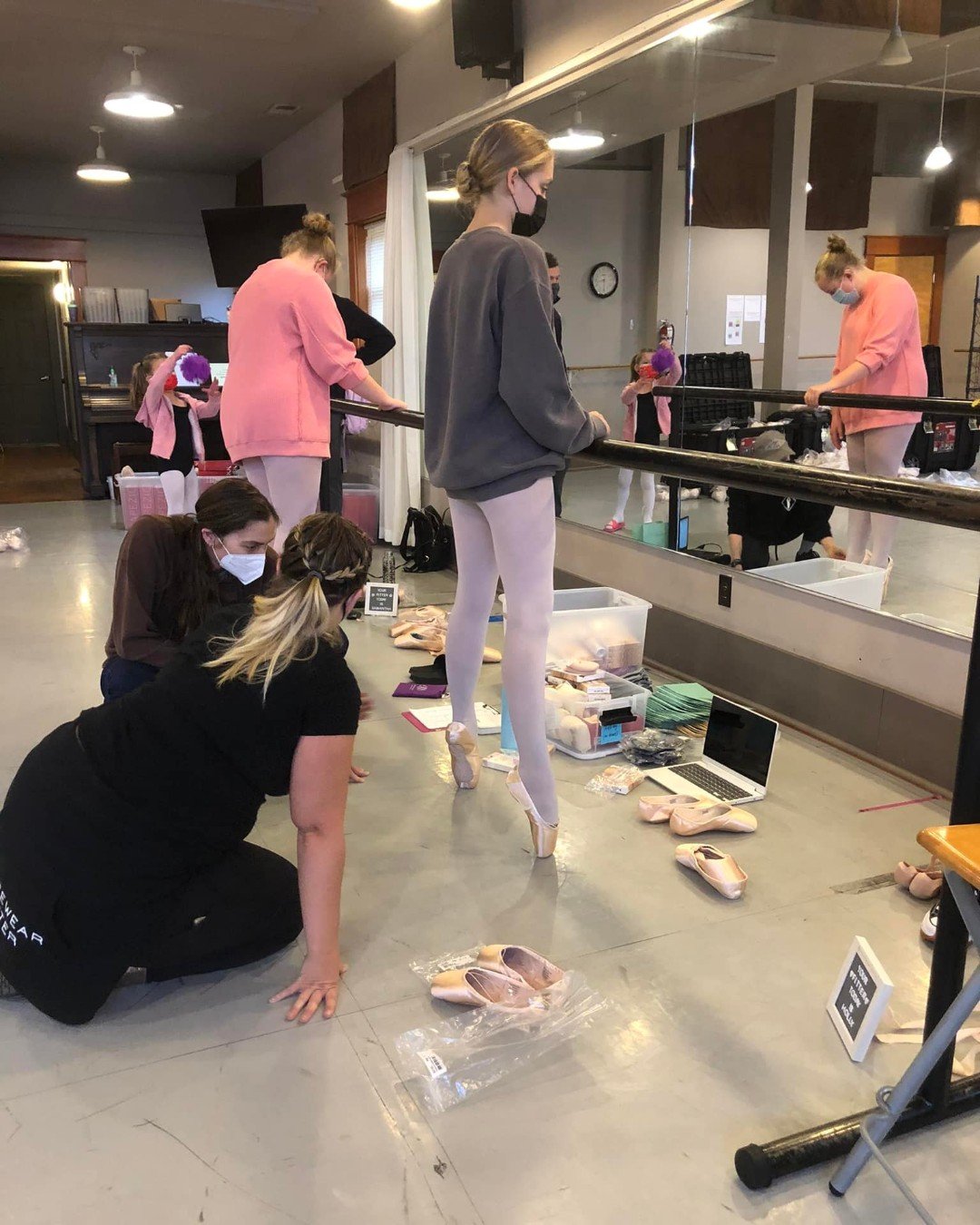
“What you can expect is amazing, one-on-one service customized to each individual dancer,” Maluhia says of the Dancewear Center Mobile private pointe shoe fittings. She shares that there was nothing hurried about the fitting process and that the staff took the time and care needed to evaluate each dancer. At fittings, dancers are asked questions about their previous injuries, what their current pointe shoes are like, what their dancing load is like, how their pointe shoes typically break-in, and more. DWC Owner & General Manager Samantha Weissbach often provides advice and informed strategies for students experiencing different issues dancing en pointe.
“As a studio owner, I was like ‘this is awesome!’” Maluhia says, of the individualized care DWC fitters offer during mobile fittings. She also appreciates how the DWC fitters take detailed notes about the dancers’ conditions and pointe shoe history for future fittings, commenting that the customer service is “outstanding.” Maluhia also says that Samantha made the experience fun and entertaining for all involved, sharing that the last session was full of laughter. The DWC fitters make an effort to make the pointe shoe fitting experience a memorable one, particularly for dancers receiving their first pairs, as it can be a huge milestone in a dancer’s career.
“The mobile unit comes in, they take over one of your studios and they turn it into a retail shop,” says Linda Johnston, school director and dance instructor at Fidalgo DanceWorks. Linda shares that the mobile fitting process was incredibly convenient for her studio based in Anacortes, Washington. “We’re kind of remote up here in Anacortes, so it’s fabulous that [Dancewear Center] came to bring all of their shoes,” Linda says. At Fidalgo DanceWorks’ second mobile fitting with DWC in November 2021, about fourteen dancers received fittings and Linda shares that the experience was an excellent time for bonding among students.
“What you can expect is amazing, one-on-one service customized to each individual dancer.”
“For us, just having the convenience of having someone bring all their stock and know what they’re talking about…[is] just a huge blessing,” Linda says, also pointing to the value of having students try on pointe shoes in the comfort of their own studio. Linda says that rehearsals could continue running at the studio during the mobile fitting session, causing little interruption in the flow of the usual work day.

Linda recommends the Dancewear Center Mobile service to other studios, particularly those that are located in more remote areas. “I’ve just been really grateful for the service, it’s amazing. I would absolutely recommend it to anybody,” she says.
Karlenn Smith owns and teaches at High Desert Dance in Prineville, Oregon, located far from many dancewear stores. When she learned about Dancewear Center Mobile, her interest was immediately piqued, as it meant her students could save time and money on traveling to get fitted for pointe shoes. Like Maluhia, Karlenn also invited other dance studios in the community to join their mobile fitting session in March 2022 and has discussed having quarterly mobile fittings. She shares that Samantha traveled down to the studio the night before the mobile fitting and set up the fitting room. Karlenn also shares that scheduling the fitting appointments was extremely easy, as Samantha simply passed along her digital calendar and allowed dancers to sign up for slots that worked for them.
“I was so impressed with her knowledge,” Karlenn says, also pointing out how effective it was to have an outside voice share pointe shoe care information with her students. She says that Samantha even sent along websites and videos after the fitting for students to get more information about foot exercises and injury prevention. Samantha even conducted a virtual fitting with one of Karlenn’s students a couple of months after the mobile fitting and mailed pointe shoes down to High Desert Dance. “She got it right on without even being here!” Karlenn exclaims about the virtual fitting.
Be sure to book your Dancewear Center Mobile visit for an unforgettable pointe shoe fitting and shopping experience! Click here to get more information and book today.
Interviewee name pronunciations and pronouns:
Maluhia Vander Griend (Mah-loo-hee-ah Van-der Gree-end), she/her, Artistic Director and Co-Owner of Dancing For Joy in Bellingham and Lynden, WA
Linda Johnston (Linn-da Jons-ton), she/her, School Director and Dance Instructor at Fidalgo DanceWorks in Anacortes, WA
Karlenn Smith (Car-len Smith), she/her, Owner and Teacher at High Desert Dance in Prineville, OR
Sources:
Disclaimer
All content found on the Dancewear Center Website, Instagram, Facebook, Pinterest, and all other relevant social media platforms including: text, images, audio, or other formats were created for informational purposes only. Offerings for continuing education credits are clearly identified and the appropriate target audience is identified. The Content is not intended to be a substitute for professional medical advice, diagnosis, or treatment. Always seek the advice of your physician or other qualified health provider with any questions you may have regarding a medical condition. Never disregard professional medical advice or delay in seeking it because of something you have read on this Website.
If you think you may have a medical emergency, call your doctor, go to the emergency department, or call 911 immediately. Dancewear Center does not recommend or endorse any specific tests, physicians, products, procedures, opinions, or other information that may be mentioned on dancewearcenter.net. Reliance on any information provided by dancewearcenter.net, Dancewear Center employees, contracted writers, or medical professionals presenting content for publication to Dancewear Center is solely at your own risk.
Links to educational content not created by Dancewear Center are taken at your own risk. Dancewear Center is not responsible for the claims of external websites and education companies.
Inside Dancewear Center’s Continuing Education
“One of our core values is integrity and I feel like that shines through in the fitting process,” Samantha says. “We’re here to make sure that the dancer goes home in something that is as safe and comfortable as possible. We always prioritize the dancer over the sale, every single time.” She’s excited to be a part of a pointe shoe fitter community that works to empower dancers with informed knowledge about their pointe shoes, as well as help build out a larger fitter knowledge base.
A Look Into DWC Pointe Shoe Fitters’ Processes
By Madison Huizinga, DWC Blog Editor
Since Samantha Weissbach took over ownership of Dancewear Center in 2018, she and the rest of the DWC team have tasked themselves with offering dancers high-quality products and pointe shoe fittings. A big part of providing community members with knowledgeable pointe shoe fittings is staying up to date on the latest product knowledge and progressing the staff’s knowledge base with continuing education training sessions and programs. Read on to learn more about Dancewear Center’s continuing education processes from the staff members themselves.
Owner & General Manager Samantha Weissbach says that new pointe shoe fitters go through an initial training that involves shadowing another fitter. “When somebody is in training, [I try] to get them with as many senior fitters as possible,” she shares. Pointe Shoe Fitter Tija Dupont recalls sitting in on fittings, in which she would take notes and ask questions. Once onboarded and fitting on their own, fitters meet weekly with Samantha for one-on-one check-ins, in which case studies are reviewed and questions are answered. “We go over notes from their past week,” Samantha says, sharing that they also go over notes for the upcoming fittings for the week.
Samantha shares that the fitters also undergo in-depth quarterly training sessions and monthly fitters educational meetings, where case studies are discussed, new products are introduced, and more. Assistant Store Manager Anna Peters says that the quarterly sessions are useful, as the team discusses product knowledge, customer interactions, and more. Tija recalls her first training seminar with Dancewear Center, in which she was introduced to every single shoe the store carries. She shares that the initial seminar was extremely helpful, as she was able to take detailed notes which she still references from time to time. Tija also shares that in later training sessions, fitters were given extensive training on customer service, including role-playing sessions in which different scenarios were acted out with the staff. Anna says that Samantha makes an effort to intermix more written, textbook-style learning with hands-on learning so there’s something for many types of learning styles.
Outside of the internal training, DWC fitters and staff also undergo training sessions with different pointe shoe manufacturers, such as Russian Pointe, So Danca, and Bloch. Anna recalls undergoing virtual fitting training sessions with all brands. Samantha shares that fitters even observed Freed fitters fit pointe shoes at Pacific Northwest Ballet.
Senior pointe shoe fitters also undergo external certification processes, including the Progressive Pointe Method, a pointe shoe fitting curriculum offered by ThePointeShop. Dancewear Center is also closely connected with ThePointeShop and Master Pointe Shoe Fitter Josephine Lee through ThePointeShop Retail Partnership, making DWC a recommended store by experts like Josephine.
Anna says that just the basic training was eleven weeks long and was focused on the basics of fitting, sizing, troubleshooting, product knowledge, and much more. Samantha also views continuing education as a collaborative effort, creating dialogues with other dancewear store owners and pointe shoe fitters across the country including Beam & Barre in Greenwich, Connecticut.
Samantha is also a member of DanseMedica and participates in monthly “mastermind” calls in which she connects with specialists in the dance medicine world. She is also currently enrolled in the Pointe Safe Certification course, where she’s learned more about anatomy, strength, and how to progress young students en pointe safely. This course informs her teaching efforts outside DWC as well as her fittings. Samantha is also a part of Seattle Performing Arts Medicine (SeaPAM), which features Seattle-based medical professionals. She attends SeaPAM journal club meetings every other month in which members meet together to review case studies, look at medical journals, discuss work they’re doing in realms relating to dancers’ physical and mental health, and more.
“I try to stay up to date with dance medicine and bring anything that’s relevant up with the team,” Samantha shares.
Tija says that Samantha makes an effort to be hands-on with fitters during the training process and allows them to be hands-on when learning. She shares that there are a lot of opportunities for fitters to explore fitting in non-judgmental environments before they work with customers so that they can learn by doing. “I feel super confident,” Tija says of her fitting abilities following the training sessions she’s experienced. After much practice, she feels comfortable finding dancers the best shoe for them in a reasonable amount of time.
Anna also expresses the confidence she’s gained from training, sharing that the knowledge she’s gathered is much more intuitive, allowing her to have much more efficient fittings. “I think we’ve managed to streamline the whole process. We’re a lot more organized,” Anna says, referencing the notes that DWC has on hand on customers’ pointe shoe preferences. She also says the DWC community as a whole has gotten much more friendly, happy, and confident as they’ve gained more fitting knowledge and experience.
“We try to help each individual develop their own fitting style because it is going to be different for everyone,” Samantha says of the different ways individuals can approach pointe shoe fitting.
Samantha shares that the extensive training and resources available to DWC fitters today have allowed for the establishment of a more helpful guiding framework for employees to use when fitting pointe shoes. “People are progressing a lot faster and part of that is [due to] having a solid knowledge base,” Samantha says.
Being able to pair the newer fitters with more experienced pointe shoe fitters has also greatly facilitated the fitter onboarding and education process. Samantha says that being able to split the fitting process into different categories and sub-categories, has allowed fitters to understand both the mechanics and empathy required of the process. In general, Samantha says that the more detailed training process has allowed new fitters to feel more confident when they fit on their own for the first time.
click below to shop the look
Tija shares that the learning process never stops as a fitter. “Every time I go into watch a fitting or do a group fitting, [it’s] still very educational,” she vocalizes. Tija also expresses her appreciation for the relationships she’s developed with customers, sharing that she’s grateful for the mutual understanding and transparent communication that’s developed between fitters and dancers.
Anna appreciates how available and accessible Samantha makes continuing education. “She’s very supportive of any continuing education that [we] want to take part in,” Anna says.
“One of our core values is integrity and I feel like that shines through in the fitting process,” Samantha says. “We’re here to make sure that the dancer goes home in something that is as safe and comfortable as possible. We always prioritize the dancer over the sale, every single time.” She’s excited to be a part of a pointe shoe fitter community that works to empower dancers with informed knowledge about their pointe shoes, as well as help build out a larger fitter knowledge base.
Sources:
Disclaimer
All content found on the Dancewear Center Website, Instagram, Facebook, Pinterest, and all other relevant social media platforms including: text, images, audio, or other formats were created for informational purposes only. Offerings for continuing education credits are clearly identified and the appropriate target audience is identified. The Content is not intended to be a substitute for professional medical advice, diagnosis, or treatment. Always seek the advice of your physician or other qualified health provider with any questions you may have regarding a medical condition. Never disregard professional medical advice or delay in seeking it because of something you have read on this Website.
If you think you may have a medical emergency, call your doctor, go to the emergency department, or call 911 immediately. Dancewear Center does not recommend or endorse any specific tests, physicians, products, procedures, opinions, or other information that may be mentioned on dancewearcenter.net. Reliance on any information provided by dancewearcenter.net, Dancewear Center employees, contracted writers, or medical professionals presenting content for publication to Dancewear Center is solely at your own risk.
Links to educational content not created by Dancewear Center are taken at your own risk. Dancewear Center is not responsible for the claims of external websites and education companies.
Advice For Students From a Local Dance Teacher
Be empathetic and respectful to your teacher. We also have bad days, we also experience pain, and we have a non-work life that affects our jobs.
My Dos and Dont’s for Studio Life
By Alberto Gaspar, DWC Ambassador

Photo by Staria Belle | click below to shop the look:
When it comes to professions that I respect the most in this world, nurses, volunteers, and teachers are some of the first that come to mind. Those working in these helping professions and more deserve awards and appreciation from everyone. As a dance teacher myself, I never knew that working in this profession would be such a complex task. Being a dance teacher not only requires extensive dance knowledge, but also multitasking, leadership, room management, communication, adaptability, creativity, patience, a sense of humor, confidence, commitment, “approachableness,” time management, and discipline - yes, all of that!
Teachers are also constantly trying to come up with solutions to common problems they face in the studio, always with their students in mind. And sometimes, we mess up! Teachers and students alike are imperfect beings who are bound to make mistakes and have their feelings hurt. If teachers and students work together to be considerate to one another, the studio dynamic can shift significantly in a positive direction.
From my perspective as a teacher, here is some advice that I have for dance students:
When the teacher is speaking, please give them your attention. For example, if the teacher is speaking, please look at them, as looking elsewhere, hanging on the barre, marking your choreography, or speaking to others may indicate that you aren’t listening. For a teacher, being able to tell that your students are understanding the information given is important for delivering information about dance skills.
Communicate. I understand that some dancers feel shy and uncomfortable expressing themselves verbally. Nonetheless, if you are late to class, struggling to understand class material, or just generally not feeling good, it’s important to communicate this to your teacher so they know how to help you. Allowing the teacher the opportunity to practice empathy comes a long way and can help you solve your problems more effectively.
Speak up for yourself. In the vein of practicing good communication, if you have a problem, suggestion, or don’t feel comfortable with a comment or an action from your teacher or peer, speak up about it. If something in class occurs that makes you uncomfortable, don’t be afraid to communicate it to your teacher, as a misunderstanding may have occurred that can be sorted out.
Try to be on time with all the materials you need for class. This includes having clean, proper dance attire and shoes and wearing your hair appropriately for class. I also encourage students to practice good hygiene by coming to class with deodorant on.
If a teacher gives you a personal correction, pay extra attention to that. I always tell this to my students. Most of my students receive over 40 corrections, but if I have been mentioning two or three specific ones constantly, this means that those corrections are the ones that need the most attention.
Be empathetic and respectful to your teacher. We also have bad days, we also experience pain, and we have a non-work life that affects our jobs. Always be respectful to your teachers, which includes addressing them in a more formal tone if that’s what they prefer. Understand that we, as teachers, are here to help you improve your skills, support you in difficult times, and celebrate your wins.
Respect your bodies. This is particularly important when you’re experiencing an injury. I know it can be hard to stop dancing, but if you are injured, you don’t want to push yourself. There are ways to stay engaged with dance when you’re injured, like observing class, listening to corrections, receiving physical therapy, or simply taking a mental and physical break for yourself. On the other hand, being sore or tired should not stop you from approaching class at your maximum capacity that day. Find that middle point where you can challenge yourself without injuring yourself, always respecting your body.
Reach out to staff for support and advice. For example, ask faculty members for a second or third opinion when it comes to taking on responsibilities. Staff members may be able to provide perspectives you haven’t considered.
Find your happy place and enjoy rehearsals and classes. Remember that your time in the studio is finite, so enjoy your time there while listening to your dance teachers and parents. And don’t be afraid to follow your heart and your intuition in dance, your inner self will always be right.
These are just a few tips that I have for students. I hope you all found this list helpful, feel free to contact me through social media if you have any questions!

Photo by Staria Belle | click below to shop the look:
Hidalgo Black Tights | Wear Moi
About the author:

Disclaimer
All content found on the Dancewear Center Website, Instagram, Facebook, Pinterest, and all other relevant social media platforms including: text, images, audio, or other formats were created for informational purposes only. Offerings for continuing education credits are clearly identified and the appropriate target audience is identified. The Content is not intended to be a substitute for professional medical advice, diagnosis, or treatment. Always seek the advice of your physician or other qualified health provider with any questions you may have regarding a medical condition. Never disregard professional medical advice or delay in seeking it because of something you have read on this Website.
If you think you may have a medical emergency, call your doctor, go to the emergency department, or call 911 immediately. Dancewear Center does not recommend or endorse any specific tests, physicians, products, procedures, opinions, or other information that may be mentioned on dancewearcenter.net. Reliance on any information provided by dancewearcenter.net, Dancewear Center employees, contracted writers, or medical professionals presenting content for publication to Dancewear Center is solely at your own risk.
Links to educational content not created by Dancewear Center are taken at your own risk. Dancewear Center is not responsible for the claims of external websites and education companies.
DWC Summer Intensive Checklist
Struggling to find the right things to bring to your summer intensive coming up? Here at Dancewear Center, we are making sure that you have the ultimate checklist for all of the things necessary to survive classes in the hot summer months. We want to make sure that dancers are feeling confident, supported, strong, and ready to perform their very best for whatever summer intensives throw at them. Read on to learn more about items that can help any dancer feel their very best for classes.
By Nicole Barret, DWC Blog Writer
Struggling to find the right things to bring to your summer intensive coming up? Here at Dancewear Center, we are making sure that you have the ultimate checklist for all of the things necessary to survive classes in the hot summer months. We want to make sure that dancers are feeling confident, supported, strong, and ready to perform their very best for whatever summer intensives throw at them. Read on to learn more about items that can help any dancer feel their very best for classes.

click below to shop the look:
Apolla Performance
Apolla Performance products are known to be top-notch for dancers around the country for recovery and performance use. Recently featured on Shark Tank, Apolla’s compression socks and legwarmers leave dancers’ feet and legs feeling and looking great. Apolla Performance products use shock absorption technology to help comfort the balls of the feet and squeeze the arch of the foot for maximum comfort and support in any style of dance. The Amp Shock, Performance Shock, Infinite Shock and the K-Warmer are perfect to get your feet ready for whatever summer classes may bring.
Hair Products
Every dancer knows the struggle of reaching into their dance bag, looking for the right materials to make the perfect bun and finding…nothing. All of the hair ties, bobby pins and hair nets fall deep into the abyss that is the dance bag. So, in order to be prepared for the inevitable, extra hair ties, hair nets and bobby pins are a must to get through those rough summer classes. DWC has all of your needs covered with different styles and brands to choose from in store or online!
Tights
Tights are always a necessity in a dancer’s world. But, one of the most important things is making sure that you have enough. Many things can happen to tights like catching on a car door creating a run, or spilled coffee before an early morning class. So, to make sure that no runny tights are worn in class, extra pairs are always great to have. From Capezio to Russian Pointe, DWC has many options for dancers of all shapes and sizes to choose from!

click below to shop the look:
Dance Bags
Summer intensives often require dancers to bring a lot of gear with them to classes. From pointe shoes to skirts, dancers need a place to carry all these things. That’s where dance bags come in! Stylish and operational, there are many dance bags that Dancewear Center has in stock to choose from. The RP Duffle Bag and the Capezio Everyday Duffle Bag are some of our favorites that have plenty of space for all of the dancer's needs.

click below to shop the look:
Sports Bra by Claudia Dean World | High Waisted Leggings by Claudia Dean World
Claudia Dean Sets
Feeling confident is something that is very important in the dance community. Everyone knows that when you feel confident, you are more likely to perform at your best. That’s where Claudia Dean sets come in. From the Claudia Dean World Sports Bra to Biker Shorts, this collection will allow you to cool off during those hot summer days and feel cute as well. Not to mention, the vibrant colors of these sets are perfect to match any mood for the day.
Tiger Balm
Tiger balm is a topical ointment that is aimed to help relieve sore muscles for dancers and hurt areas on the dancer’s body. This product is perfect for use after a rough class or rehearsal where the body needs a little love. You can keep this product in your dance bag for easy access after summer classes that leave muscles feeling sore. Shop for this product online or in store at either Dancewear Center location!

click below to shop the look:
Bullet Pointe Skirts
Bullet Pointe skirts seem to be in every dancer’s dance bag nowadays! This circular skirt is perfect to spice up any dancer's look during class. They come in a wide array of colors that can fit any mood and are flattering on every dancer's body. Lightweight and durable, these skirts are perfect for the hot summer months.

click below to shop:
Water Bottles
Every dancer has experienced the feeling when they get done with a combo and realize that they have left their water bottle at home. It is the worst feeling ever, so here at DWC we’re making sure that you come into those summer classes hydrated and with something cute. We have a wide variety of styles and colors to choose from online or in store like the signature DWC “This Body Dances” Water Bottle, the Capezio Ballerina Girl Water Bottle, or the Covet Dance “Coffee Before Choreo” Thermal Tumbler.
We hope that this Summer Intensive Checklist helps make classes a little easier!

Disclaimer
All content found on the Dancewear Center Website, Instagram, Facebook, Pinterest, and all other relevant social media platforms including: text, images, audio, or other formats were created for informational purposes only. Offerings for continuing education credits are clearly identified and the appropriate target audience is identified. The Content is not intended to be a substitute for professional medical advice, diagnosis, or treatment. Always seek the advice of your physician or other qualified health provider with any questions you may have regarding a medical condition. Never disregard professional medical advice or delay in seeking it because of something you have read on this Website.
If you think you may have a medical emergency, call your doctor, go to the emergency department, or call 911 immediately. Dancewear Center does not recommend or endorse any specific tests, physicians, products, procedures, opinions, or other information that may be mentioned on dancewearcenter.net. Reliance on any information provided by dancewearcenter.net, Dancewear Center employees, contracted writers, or medical professionals presenting content for publication to Dancewear Center is solely at your own risk.
Links to educational content not created by Dancewear Center are taken at your own risk. Dancewear Center is not responsible for the claims of external websites and education companies.
A Local Dancer on Utilizing a Home Studio Space
During the COVID-19 lockdown of 2020, many dancers lost the space and opportunity to do what they loved. Confined in their homes, dancers no longer had the capacity to move their bodies in the way they once could. It’s safe to say that for most of us, it felt like a return to “normal” would never come. This was one of the fears of dancer Erin Nichole Boyt, as she had just started getting acclimated to the Portland dance scene after relocating from Seattle. Now with the help of her new home studio space, Erin has been excited about reconnecting with dance in a more seamless way. Donate to Erin’s fundraising campaign for her live/work studio, known as Pottershop Studio, so it can be well-supplied and ready for dancers.
Erin Nichole Boyt on Blending Dance & Home
By Madison Huizinga, DWC Blog Editor

Photo by Mary Turcott
During the COVID-19 lockdown of 2020, many dancers lost the space and opportunity to do what they loved. Confined in their homes, dancers no longer had the capacity to move their bodies in the way they once could. It’s safe to say that for most of us, it felt like a return to “normal” would never come. This was one of the fears of dancer Erin Nichole Boyt, as she had just started getting acclimated to the Portland dance scene after relocating from Seattle. Now with the help of her new home studio space, Erin has been excited about reconnecting with dance in a more seamless way. Donate to Erin’s fundraising campaign for her live/work studio, known as Pottershop Studio, so it can be well-supplied and ready for dancers.
Erin began dancing around five years old at the only dance studio in her small town. She fell in love with movement early on in her life, explaining that she is a “kinesthetic learner” and takes in information best when it involves movement and tactile experiences. Erin explains that she deeply resonated with modern, tap, and African styles of dance, forms of movement that felt rhythmic and grounded. While she studied dance in college, Erin explains that she struggled within her school’s dance department, as it valued students with a strong ballet background which is something Erin lacked. She pivoted her focus to theatre, cultivating her love for dance in another arena.
After graduating college, Erin moved to Seattle and started her dance company “with no previous experience choreographing.” She explains that her practice started small, and eventually lead to her choreographing more and producing bigger shows, working with the Seattle International Dance Festival for nearly a decade. “I built my company around the idea of collaboration,” Erin explains. She moved to Portland, Oregon in 2018 and had just started rehearsing her first show in the city when the pandemic hit.
“I nosedived emotionally and mentally into this pretty deep depression,” Erin says of her mental health amid the COVID-19 pandemic. “There were days where I truly believed that I would never dance again and this [was] just my life now.” These emotions of sadness, grief, and longing are ones many dancers can relate to in the past couple of years.
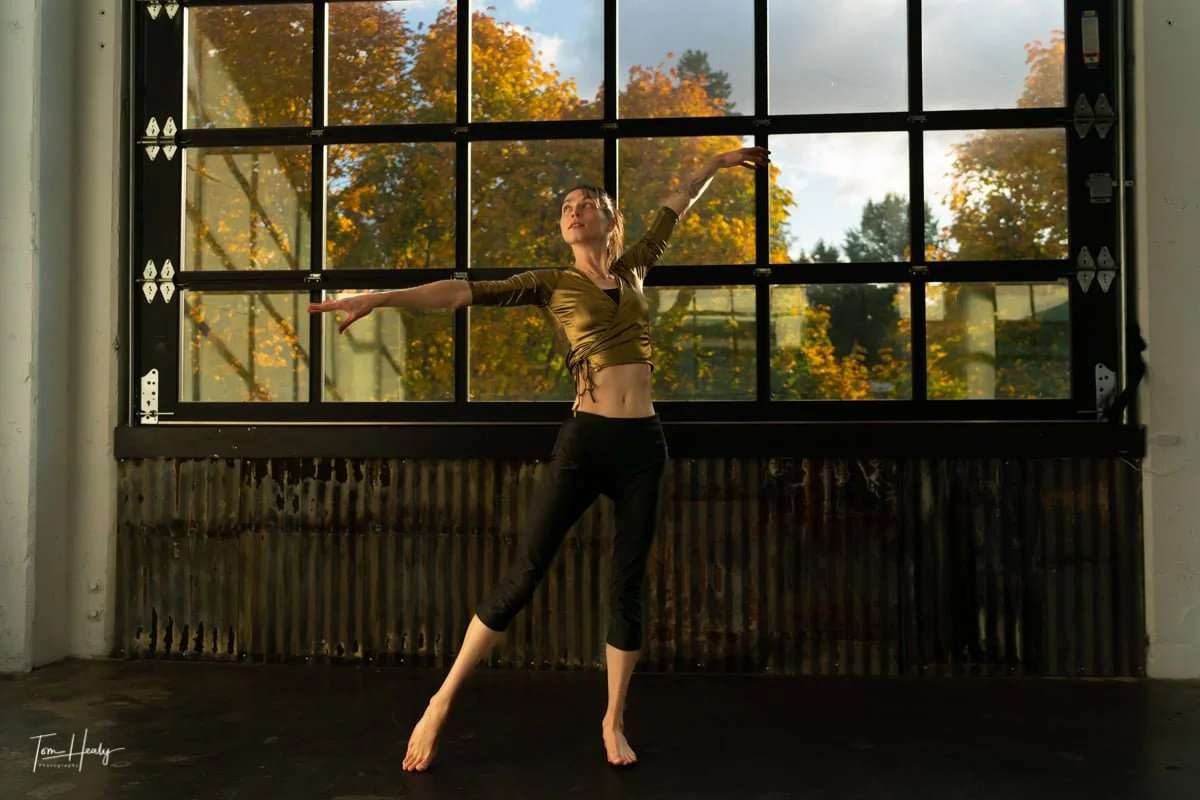
Photo by Tom Healy
Nonetheless, as Erin mentions, dance has a way of sticking with people in ways they may not expect. “There’s something in a creative drive that just doesn’t ever really die,” she emphasizes.
Erin had dreamed about having a live-work space in the future, but wasn’t looking for one when she stumbled upon her current dwelling. Prior to moving into the live-work studio space, Erin had been renting a studio once a week, but the thought of having studio space available to her all hours of the day was simply too good to be true. In addition to choreographing and teaching out of the space, she’s planning on working with clients on strength training, injury prevention, and exercises to aid with different forms of movement dysfunction.
Erin has enjoyed being able to decorate and furnish her studio space in a way that inspires her creatively. Down the line, getting back into choreographing and producing shows is a goal of hers and her new space will enable her to do that with greater ease.
Erin says that one of the things she loves most about dance is the fact that she never gets bored of it, there is seemingly always something new to learn through movement. She is fascinated by the ways sensory inputs from the environment influence the way people move and the shared understanding of movement that all humans possess. “It’s something that just connects all of us universally,” she says. Now that dance is more integrated into her life by way of her live-work studio space, Erin is able to feel even more deeply connected to this practice that means so much to her.
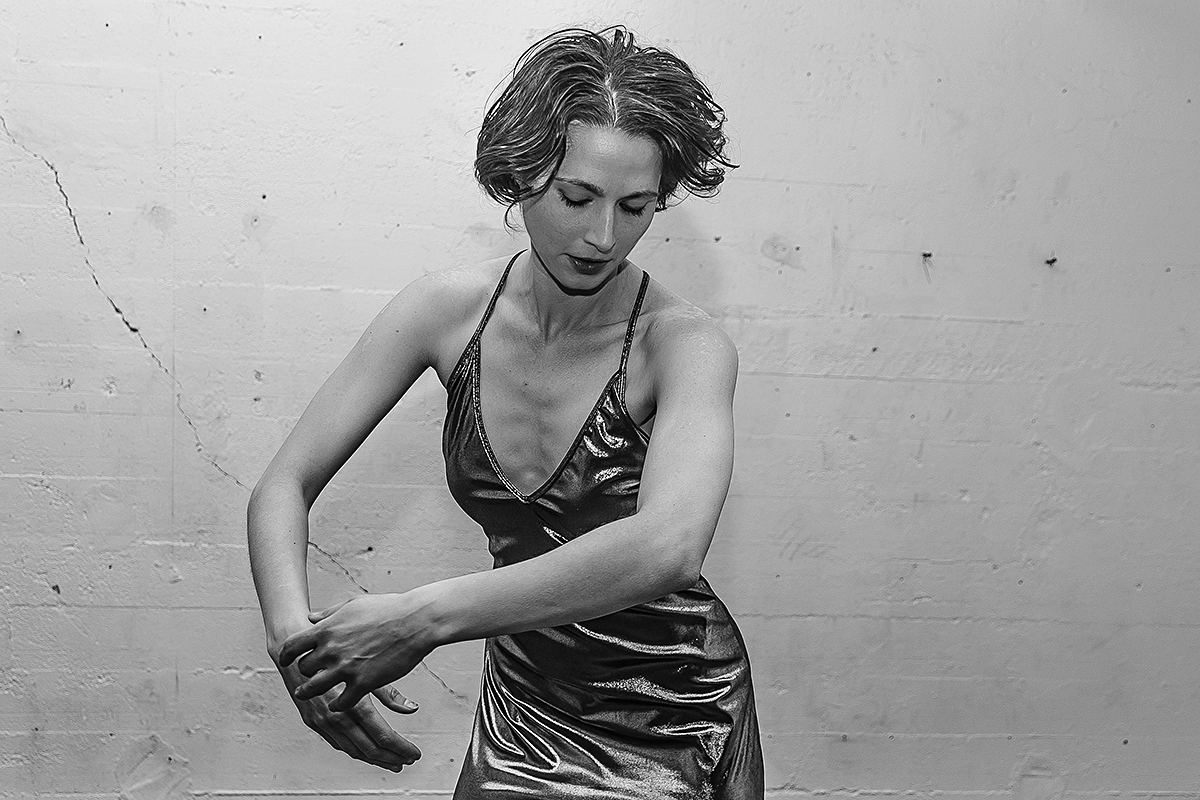
Photo by Brett Love
A change that Erin hopes to see occur in the dance industry is a greater interrogation of the so-called “ideal” body a dancer should have. She shares that many dance genres value a specific, restrictive aesthetic that can be harmful for dancers. Being told that there is a certain way to look can create a disconnection between dancers and their bodies. Dancers’ bodies should be used to help realize their artistic visions, not be scrutinized. Rather than focusing on how dancers’ bodies should look, Erin hopes for dance to be viewed more as an expression and mode to communicate with one another. “I think we just really need to broaden our view of what dance is,” Erin shares.
“If you have a body you’re a dancer!” Erin declares. Click here to donate to Pottershop Studio!
Decoding Cues & Restorative Conditioning
There are many unspoken assumptions in the dance world, one of which is that dancers don’t need to put in work outside of the studio. However, conditioning and engaging in other complementary activities can make a world of difference when it comes to dancing with resilience and avoiding injuries. Zoe Geiger, PT, DPT, CSCS chats about her dance experience, the importance of restorative conditioning, and her upcoming appearance at Tea & Tendus at DWC Renton on April 10, 2022.
Zoe Geiger, PT, DPT, CSCS On Her Experience with Dance and Physical Therapy
By Madison Huizinga, DWC Blog Editor
Photo by Alexandrian Photography
There are many unspoken assumptions in the dance world, one of which is that dancers don’t need to put in work outside of the studio. However, conditioning and engaging in other complementary activities can make a world of difference when it comes to dancing with resilience and avoiding injuries. Zoe Geiger, PT, DPT, CSCS chats about her dance experience, the importance of restorative conditioning, and her upcoming appearance at Tea & Tendus at DWC Renton on April 10, 2022.
Zoe began dancing around three years old in a classic ballet/tap class in the Seattle area. She also experimented with other sports including gymnastics, ice skating, and soccer. While playing soccer, she found herself gravitating to the position of sweeper because she could practice leaps and cartwheels while the ball was on the other side of the field. It became clear to Zoe that her heart was largely in dance, and she found her place at a local studio.
Zoe continued dancing throughout high school and college. After somewhat of a hiatus during graduate school, Zoe has been taking classes more frequently and feels like she’s “rediscovering [her] place in the dance community.”
“Dance has always given me a place to just escape the world around me and submerge myself in the joy of movement,” Zoe says of what she loves about dancing. Dance helps her feel grounded and connected with her body. “I don’t have to have a studio, I don’t have to have shoes. I can just dance around my living room and feel better,” Zoe smiles.

Photo by Best Sister Photography MJR
When Zoe started visiting a physical therapist for a knee injury in middle school, she says it changed her relationship with her body and with dance. She quickly became fascinated and interested in pursuing a career in PT. At first, she was unsure whether she wanted to treat dancers because dance had always brought her joy as an escape. But as she started working with Henry Lu at Velocity Physiotherapy, the joy from the studio was alive in the clinic. Today, she’s been working with dancers and others as a physical therapist for about a year and a half, alongside in the Seattle Public Schools.
Zoe recognizes that she’s been privileged to have a supportive dance community for most of her life. However, something she felt was missing was access and emphasis on strength training and other injury prevention strategies. Growing up, Zoe didn’t think exercise outside dance was necessary. But as she has learned more and started strength training on her own, she found herself feeling more grounded when dancing, seeing the benefits of putting in work outside the studio. She is happy to see more educators advocate for strength training outside the studio today and hopes to see more of it in the future.
Zoe encourages dancers to ask people in the dance community for recommendations for conditioning and injury prevention resources. Velocity Physiotherapy is also working on creating restorative conditioning programs designed for dancers. Zoe also shares that personal training or even finding another sport to play alongside dancing, such as swimming or soccer, can help supplement a dancer’s training.
Moving forward, Zoe hopes to see dance become more accessible. “I would love to see more classes that offer experiences for kids with disabilities,” Zoe voices. In addition, making dance classes available to families of all incomes and those living in rural and urban areas alike is an extremely important part of increasing dance accessibility. Zoe shares that part of the solution could be offering dance in public schools, where children could experience dance in a setting they already frequent without financial burden. Even amending the dress codes that dance classes require could open up the door for more children and adults to feel comfortable and excited about dance.
Zoe is enjoying rediscovering dance in her personal life and is drawing from her own experiences to provide better treatment for others. She’s looking forward to dancing en pointe again, in part to help her many clients who dance in pointe shoes. She’s looking forward to diving more into continuing education and professional development this summer to learn more about dance accessibility and public school education.
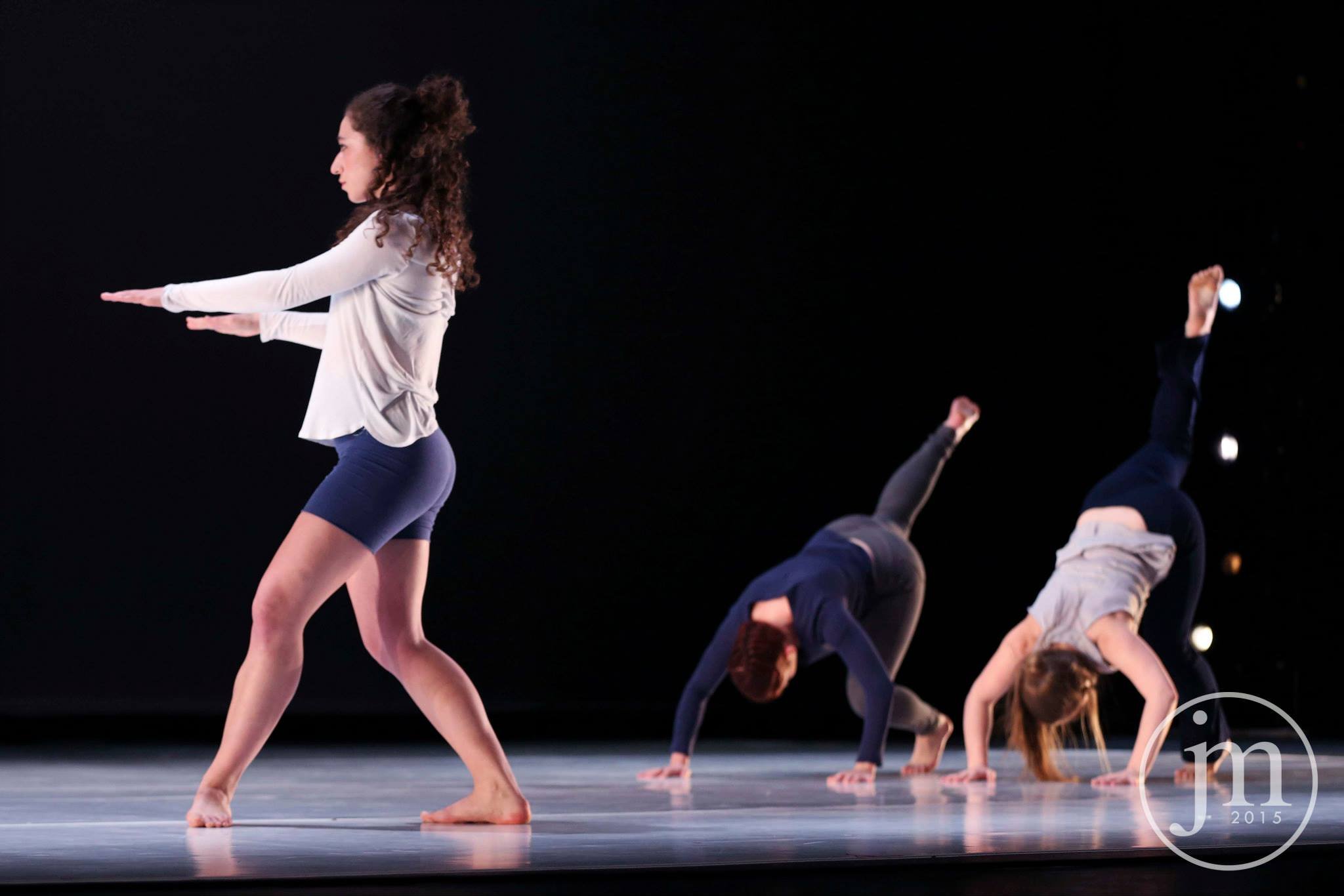
Photo by JMWorks
Zoe is also thrilled to be a guest at Dancewear Center’s next Tea & Tendus on April 10, where she will be discussing “decoding cues and restorative conditioning.” Specifically, Zoe will be talking about how to make the “cues” dance instructors provide more helpful for more dancers. It’s important to find new ways to share the same information, as the same cue isn’t helpful to all dancers.
Maintaining Body Positivity and Self-Discovery in Dance
During the last year, I’ve been on an intentional fitness journey, spurred along by the privilege of getting back into a dance studio to train consistently, even amid the ongoing pandemic. All through lockdown, I was in remote university courses for dance, yet I saw a significant decrease in my desire to maintain my fitness and nutrition goals. This was because I did not have a dancing community physically around me and had very little space at home to maintain a usual training rhythm. I feel excited and so thankful to be once again moving toward my goals in a way that feels challenging and freeing.
By Hannah Emory, DWC Blog Contributor

Photo by Nikola Evora Zonenberg
During the last year, I’ve been on an intentional fitness journey, spurred along by the privilege of getting back into a dance studio to train consistently, even amid the ongoing pandemic. All through lockdown, I was in remote university courses for dance, yet I saw a significant decrease in my desire to maintain my fitness and nutrition goals. This was because I did not have a dancing community physically around me and had very little space at home to maintain a usual training rhythm. I feel excited and so thankful to be once again moving toward my goals in a way that feels challenging and freeing.
Yet, the time I spent away from the studio, and quite far away from my personal fitness goals, caused me to think a lot about how I can maintain my sense of body positivity and self-love in the midst of changing life circumstances. I would not trade what I learned during this time, because life will always throw unexpected circumstances at us, but our need for self-love and self-respect is unchanging and requires maintaining.
In any case, during a pandemic or not, when dance spaces are made into goal-driven environments that focus overmuch on what the body looks like, a high level of self-criticism can develop and turn into a lifelong struggle if not kept in check. For example, I have struggled with issues of body dysmorphia and disordered eating, and have watched my dancer friends go through some of the same struggles. One can start to feel like they are not a true dancer if the goal post of self-acceptance is constantly moving and, unfortunately, there are aspects of the dance world that can make self-acceptance very difficult to achieve. Add on a global pandemic and the consequent stagnation/interruption in training goals, and that feeling of illegitimacy, at least for me, definitely increased. For this year, I know it has taken a lot of mindfulness and having the right people around me to heal, refocus, and keep my perspective on myself and my body positive.
Self-acceptance, self-celebration even, is not easily fought for and won. In our dance journeys, there will be a lot of maintaining, unlearning, relearning, and self-connection that needs to happen if we have negative messaging from our past or have experienced a discouraging setback in our progress. Community is a huge piece of that relearning and healing, and I hope everyone reading this can connect with others through dance in some form. An uplifting dance community is invaluable and makes the load lighter while we’re moving toward a stronger relationship with the self.
I cannot bang the drum about community enough. But, in addition to that, here are a couple of personal practices that have helped me so much this year and can be done with and without others:

Gratitude-based movement. Often dancing requires a lot of mental concentration on learning form and content. Though being in class and learning new material is exhilarating, it’s akin to reading a textbook or working away at a craft until it’s honed. In my experience, the work of learning dance is very mentally taxing and requires the body to function more like a tool. This can cause a bit of a feeling of disconnection between the body and mind/heart. So, I believe that every dancer would benefit from some sort of moving mindfulness/gratitude practice outside rehearsal spaces that focuses on thanking the body and self for all the work being achieved. For me, I have been taking tai chi classes as part of my degree program and it has been so helpful in guiding me into feeling empowered, connected to myself, and grateful for the body I have right now. One of the focus phrases we use frequently is to always have an inner smile if something feels difficult or if the mind wanders; and at the end of every class, we think of something to be grateful for and bow in thanksgiving for the goodness in our lives. It’s a beautiful way to start the dance day and one that reminds me of how capable my body is and how grateful I am to exist as myself. Some other examples of moving gratitude practices that come to mind would be walking, meditation, yoga, pilates, and Feldenkrais. There are so many options available and anything that brings you into a state of gratitude for yourself and your life is well worth the time!
Studying my body + personalizing nutrition. I find myself having a lot more respect and love for my body when I know how it functions and when I’m intentional about getting it the fuel it needs. Our bodies are unique, and there isn’t a one-size-fits-all approach to dancing our best. The most empowering thing I’ve done for my dancing journey is paying attention to the specific questions and feelings that come up for me during my training days and then pursuing answers for those questions. This personal focus was new to me until just recently and paying attention to my way of being a dancer revolutionized my practice. I have learned a lot about myself; some personal examples of discoveries I made would be…
I’ve always struggled with joint pain/fatigue while turning out at the barre, and my teacher let me know when I asked her about it that activating my core muscles will help create a feeling of more space in my body and make turning out much easier on my joints.
Stomach cramps and chronic physical fatigue are pretty big issues for me. Yet, I started paying attention to my diet and noticed over time that eating lighter, protein-focused meals eased my digestive issues and helped with endurance throughout the day.
I find a lot of choreographic inspiration and bodily relaxation through improv work. If I’m feeling mentally fatigued during a long dance day, there’s nothing like going to an empty space and moving without goals or expectations. Integrating active stretching and meditative breathing into my improv movements adds extra benefits to the practice.
These are just some of the personal discoveries that have helped me take more ownership over my dancing and my health, and have led me to feel more connected to and positive about my body. Problem-solving discoveries are a beautiful way to quickly move one from feeling discouraged and incapable to feeling proud and excited about our unique dance expression. If you have questions about yourself, take the leap and pursue those inquiries with teachers and your dance community. Study your body and find out what works for your personal journey. You’ll be so amazed at what you find out! (A bonus suggestion would be to keep track of your questions and discoveries in a notebook or voice memos so you can look back on your progress.)
I wish you the best on continuing toward self-celebration, radical body positivity, and joy-filled
Competition and Convention Prep
You may know the simultaneously exciting and stressful feeling of walking into a convention ballroom room bright and early on a Saturday morning. You immediately feel the rush of energy and nerves surrounding you. If you are anything like me, you can't wait to spend the weekend learning from amazing instructors and meeting new people. But what can you do to ensure that you make the most of your time? The right preparation can make a world of difference when it comes to long weekends of conventions or competitions.
Ava’s Tips for Long Days of Dancing
By Ava Budish, DWC Ambassador

click below to shop the look:
Seamless Rib Racerback Leotard by Capezio | Bullet Pointe Skirt by Bullet Pointe
You may know the simultaneously exciting and stressful feeling of walking into a convention ballroom room bright and early on a Saturday morning. You immediately feel the rush of energy and nerves surrounding you. If you are anything like me, you can't wait to spend the weekend learning from amazing instructors and meeting new people. But what can you do to ensure that you make the most of your time? The right preparation can make a world of difference when it comes to long weekends of conventions or competitions.
Physical Preparations:
Everyone’s body is different and has distinct needs but some general things that help me feel ready for a long weekend of dance include rest, stretching, and fueling my body. I like to be extra mindful to not push my body too hard in the days leading up to a convention weekend. I often still have classes throughout the week even up until the day or night before the convention, so making sure I’m not overworking myself is helpful and keeps me energized throughout the whole event!
Additionally, keeping my body warm and stretched can make a long weekend of classes easier and more enjoyable. Some light warm-ups before class like prances, relevés, or even a short yoga flow all warm me up without tiring me out. One of the things that I find most beneficial is to make sure I am fueling my body! Keeping myself fed with food that energizes me is the key to my happiness and success over long days of dance.
Mental Preparations:
Beyond just the physical aspects of preparing for a competition or convention, an important piece to consider is the mental side. Convention and competition weekends can be just as exhausting mentally as they are physically. I don’t dance my best if I am frustrated, insecure, overwhelmed, or even just flustered. Conventions are often in new surroundings filled with loads of new instructors, styles of dance, and choreography. All of these things can be overwhelming. The same goes for competitions. Many times, there are lots of nerves and anticipation. Sometimes you may be rushing to change costumes and then run right back on stage. To clear my brain, I meditate or follow guided breathing exercises. Sometimes just putting in headphones and listening to my favorite music while I warm-up or stretch can help calm my nerves too. Everyone has different rituals or ways to calm themselves, but going into the day with a clear head is the most important part. Both of these things help me to center my thoughts and feel more prepared to learn, create, and dance my best!

click below to shop the look:
A large aspect of competitions and conventions that can cause nerves is thinking that everyone around is judging me. It’s important to remind myself that everyone is more worried about themselves. Everyone in the room is in the same position as you and they are too preoccupied with their own dancing to judge you.
The final thing that makes me feel prepared going into a long weekend of dancing or even an audition is picking out an outfit that makes me feel confident! If my leggings keep falling down or my leo is uncomfortable it can be distracting. However, if I am wearing an outfit that makes me feel amazing I automatically walk in more confident and I can focus on my dancing!
I hope that you find these tips helpful when preparing for competitions and conventions this season!

Starting Ballet in Adulthood
Starting ballet as an adult can be a terrifying and nerve-racking experience. But it should not limit you from giving ballet a chance because when you look back, it will be worth it.
Coco’s Tips and Tricks for Your First Class!
By Coco Liu, DWC Ambassador

click below to shop the look:
Carmen Wrap Sweater Wear Moi | Hanami Stretch Canvas Ballet Shoe Capezio
Starting ballet as an adult can be a terrifying and nerve-racking experience. But it should not limit you from giving ballet a chance because when you look back, it will be worth it.
My Very First Ballet Class
At a young age, I was able to see quite a few well-known ballets, such as Swan Lake and The Nutcracker. I was just mesmerized by the dance form itself, I never truly understood how difficult and technical ballet was. It took several months of taking ballet classes that I truly grasped the difficulty. To this day, I still remember stepping into my very first ballet class. It was winter of 2018, I found a beginner ballet class at The Ballet Studio in University District. The moment I stepped into the classroom, I felt like I didn’t belong. The studio was wooden-floored, the barre and mirrors were a bit outdated, a pianist was sitting in the corner of the studio, and several students were already stretching by the barre. The teacher, Renzo, came up to me and introduced himself: “Is it your first-time doing ballet? Just follow along!” Renzo asked me to stand in between some experienced students so I had someone to refer to on both sides. We then started the class. Throughout the class, Renzo used ballet terminology in French and my brain just went, “sorry Tendu what?” I tried to copy whatever Renzo was demonstrating, but was not able to focus on my form. I didn’t know what I was doing. At the end of the class, I honestly felt a little bored and did not think ballet was physically challenging, simply due to my lack of knowledge in ballet technique and lack of preparation for my first class. Since I was determined to dance ballet in the center, I wanted to give ballet a shot for at least a month. After gaining more understanding of the technical aspects of ballet a month later, I realized how difficult it is.

click below to shop the look:
V-Back Pink Tank Leotard by Capezio | Bullet Pointe Skirt by Bullet Pointe | Hanami Stretch Canvas Ballet Shoe by Capezio
How to Prep and What to Expect For Your First Class
Here are some tips I wish I would have known before attending my first ballet class.
Learn basic terminology, for example:
Turnout: feet are pointed more to the sides of the body than the front and legs are rotated outwards
Tendu: working leg is extended along the floor until only the tip of the toe remains touching the floor
Plie: knee bending; used in jumps and turns to absorb shock
Eleve: lifted up; rise to stand on the balls of your feet
Watch some Youtube videos from the comfort of your home
Be patient!
I went back home and reflected on my first class then decided to do some research on my own about basic ballet techniques. I watched hours and hours of YouTube videos on basic techniques like tendus, plies, arm positions, etc. I wish I had some of these basic terms in my back pocket before going into my first class. Ever since then, I would watch a couple of new technique videos before attending ballet classes.
Here are three Youtubers I watched:

click below to shop the look:
I started truly loving ballet after learning the basic vocabulary and having some understanding of how to use my muscles correctly. Then, when I attended classes, all the basic movements became so much more interesting and challenging because I was able to focus more on muscle movement.
Introduction to ballet can also be quite boring because all the movements are slower and smaller. But these basic movements are crucial for building the correct muscle for all the big jumps, turns, and fancy movements you will get to do down the line. So being patient at the beginning is key!
How to Make Progress
One of the main practices that helped me was to set a weekly or biweekly goal. For example, I wanted to have a better second position arm placement at the barre and in center. Then, for the next week or two, I would constantly make mental checks on my arms at the barre and in center to make sure I was engaging the correct muscles and training my body to remember this position. By repeating this, my body would eventually build the correct muscle memory so it can hold the position without me giving it too much thought. Then, I would focus on something else. I have been using this technique for the past 3 years and have been very happy with the progress.
Set Your Expectations and Goals
Imposter syndrome in the dance community hits me quite hard. Whenever I browse Instagram or watch a professional ballet performance, I always wish I could be more like the professional ballerinas. But realistically speaking, I was not able to train at a young age, I am not able to dance every single day due to my full-time job, and the list goes on and on. As someone who began dancing as an adult, it would be very difficult for me to have super-high extensions, out-of-this-world flexibility, or do thirty fouetté turns, so it is important to set our own goals and create our own challenges. Ballet has become an important aspect of my life and a passion I would never give up. Dance can still bring us so many benefits in our life, such as providing us with a safe space to express ourselves, becoming healthier, stronger, and more confident, and building a supportive community that shares the same passion as us.
If you are reading this blog post and have some desire to try ballet, please don’t hesitate to try a class! I would strongly encourage anyone to step out of their comfort zone and give dance/ballet a chance. I currently dance at Dance Underground with 2ndActDance and also teach a beginner class that focuses on fundamental movements and muscle usage so dancers can move to the next level with a strong foundation. Feel free to reach out to me on Instagram @x.co.x.co.x or visit our website at https://www.2ndactdance.com/

Panelists from DWC Adult Ballet Q&A Give Advice for Adults Starting Dance
Being able to try new things and explore new hobbies is part of what makes life exciting. Nevertheless, it can be difficult to know where to begin. Lacking viable assistance with starting a new endeavor can deter people from beginning altogether. That’s why on October 31, 2021, Dancewear Center hosted its first-ever Adult Ballet Q&A. Sierra Keith of The Dance Conservatory, former DWC Ambassador Cynthia Randriamanohisoa, local adult dancer with Northwest Dance Cooperative Kim Lucy, and current DWC Ambassador and teacher with Second Act Dance Coco Liu answered questions all about starting ballet as an adult and the things they wish they had known.
By Madison Huizinga, DWC Blog Editor
click below to shop the look:
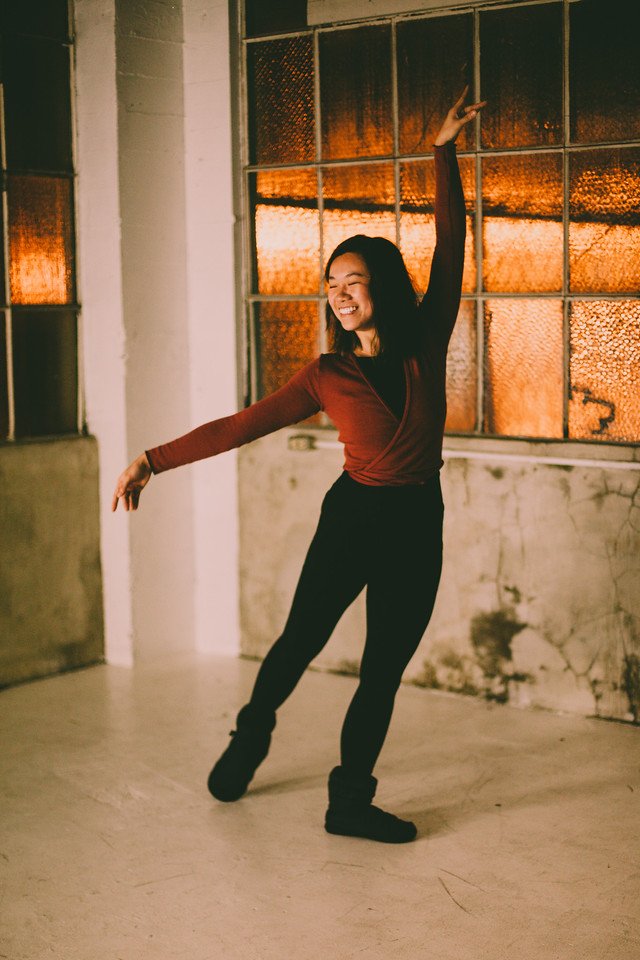
Carmen Wrap Sweater Wear Moi | Hanami Stretch Canvas Ballet Shoe Capezio | Quilted Warmup Booties in Black Russian Pointe
Being able to try new things and explore new hobbies is part of what makes life exciting. Nevertheless, it can be difficult to know where to begin. Lacking viable assistance with starting a new endeavor can deter people from beginning altogether. That’s why on October 31, 2021, Dancewear Center hosted its first-ever Adult Ballet Q&A. Sierra Keith of Dance Conservatory Seattle, former DWC Ambassador Cynthia Randriamanohisoa, local adult dancer with Northwest Dance Cooperative Kim Lucy, and current DWC Ambassador and teacher with Second Act Dance Coco Liu answered questions all about starting ballet as an adult and the things they wish they had known.
All of these dancers have had different levels of exposure to dance throughout their lives and have it in different capacities within their lives. Additionally, they all have different reasons why they decided to start ballet as adults. “I have always wanted to do ballet, ever since I was a child” Cynthia shares. “[But] I didn’t get the opportunity until I went to college.” She began ballet at a school club, later attending open classes after moving to the United States.
Similarly, Kim loved to play dress-up and dance as a child, eventually joining a dance drill team in high school. “I’ve just always loved ballet as an art form,” Kim says, beginning her ballet practice in college. She shares that there are many supportive options for adults within the Seattle area, more than many may realize. Adults do not have to resort to being in classes with people years younger than them. “You can wear what you’re comfortable in, there are all sizes of bodies,” she says of the ballet classes she’s taken. Kim also points out that most dancers are so focused on their own training that they don’t pay attention to others in the class, there is little judgment. As opposed to other forms of exercise, Kim says that ballet allows her to engage her mind too, making it both physically and mentally engaging.

click below to shop the look:
Coco was exposed to dance at a young age, but truly fell in love with the art form when she watched her friend perform in Utah. After returning to Seattle, Coco began taking ballet classes and found herself deeply enjoying how her body and mind felt after class, describing it as a meditative experience.
Sierra says that growing up she was a mover, she loved to dance freely around her house. However, growing up in a family with a low income and in a small town lacking a dance studio, she had little opportunity to join a dance community and take classes. In college, she saw a professional ballet dancer perform and “fell in love” with the art form. After several years of working, Sierra injured her arm and lacked sufficient help from her doctors. She decided she would try to work through the problem on her own, taking ballet classes and gradually integrating movement back into her body. After a couple of months, she was able to move her arm again. “I was hooked at that point,” Sierra says. “I found that through the movement I was able to rehabilitate myself...ballet turned into something important for me.”
There were many surprises for the dancers as they began ballet. Sierra describes feeling surprised that she even liked dance, as she never imagined enjoying physical activity. Kim was surprised at how much she’s progressed in the practice, explaining how excited her five-year-old self would be to learn that her 41-year-old self would be dancing in pointe shoes. “I didn’t realize how much detail there was to ballet,” Coco says. Cynthia shares this thought, she was surprised with how complex the practice is and how there is always room for improvement.
The panelists cleared up some misconceptions and answered some common questions adults have about starting ballet. For example, they shared that it’s acceptable to wear whatever you feel comfortable in, not just tights and a leotard. “You should definitely pick an outfit that you feel comfortable in,” Sierra says. “A lot of adult ballet dancers find their own unique style and I always think that’s cool... it’s always a combination of a little bit of dance clothes and a little bit of street clothes.” Leotards, skirts, pants, T-shirts, socks, ballet slippers, and more are all welcome! Kim recommends going to a dancewear store to get fitted for ballet slippers, as they often have weird sizing, but that’s all that is specialized. Nonetheless, Cynthia recommends double-checking with the studio to ensure there is no dress code; however, most open classes do not require them.

click below to shop the look:
Seamless Rib Racerback Leotard by Capezio | Bullet Pointe Skirt by Bullet Pointe | Infinite Shock by Apolla Performance
Many adult dancers take ballet for the training, others take it for the performance opportunities or both. Cynthia says that many performance opportunities at studios are optional and have varying degrees of formality. For instance, not all performances take place in an auditorium or theatre setting, others are smaller with solely family and friends in the audience. She recommends researching and reaching out to different studios to see what opportunities they have. Sierra points out that ARC Dance, eXit Space, and Westlake Dance Center all have adult performance opportunities, also sharing that adult dancers should feel empowered to create their own performance opportunities.
Coco shares that dance has changed her life, she hasn’t had a passion that’s persisted this long. Kim says that dance has been a form of therapy for her. As a wife, mother, and full-time employee, dance has served as something that’s solely for her, making it even more special. Cynthia has been impressed with how she’s been able to make her dreams come true through dance, achieving things she didn’t imagine possible 20 years ago. Sierra shares that it’s the best part of each of her days.
Sierra points out that many people in her life tell her that they want to try dance, but have something holding them back, whether that be their age, current activity level, or any other factor. Sierra encourages them to not wait and give it a try!
Interested in writing for the DWC Blog? Click below to fill out the DWC Contributor application!