
Get To Know Ambassador Robbi Moore
DWC Ambassador Robbi Moore has always loved the dance community. Their extensive resume of works spans traveling all around the world with various companies and sharing stories to people in any way they can. We got the chance to speak with one of our DWC Ambassadors about what dance means to them and what inspired them to become an Ambassador! Read on to learn more about Robbi’s dancing journey and what they are looking forward to most about becoming an Ambassador!
By Nicole Barrett, DWC Blog Editor
Pronunciation: Rob-bee More| Pronouns: they/them
DWC Ambassador Robbi Moore has always loved the dance community. Their extensive resume of works spans traveling all around the world with various companies and sharing stories to people in any way they can. We got the chance to speak with one of our DWC Ambassadors about what dance means to them and what inspired them to become an Ambassador! Read on to learn more about Robbi’s dancing journey and what they are looking forward to most about becoming an Ambassador!
Robbi started dancing when they were five years old and was inspired to start dance by their older brother who was an actor. Robbi just wanted to be onstage, so their mom signed them up for ballet classes at New England Ballet because they were looking for dancers for their Nutcracker. When Robbi was seven, they moved onto Dee Dee’s Dance Center where they remained until they graduated high school. After graduation, Robbi participated in some summer intensives where they say they made lots of connections that they would later dance with in New York City. Before auditioning for the Alvin Ailey Fordham BFA Program, Robbi attended New Haven Ballet to further expand their ballet training.
After graduating the BFA program in 2015, Robbie danced in New York City with the STEPS Repertory Ensemble and during their senior year of college, they were involved with the Amanda Selwyn Dance Theater. They also danced with a bollywood company called AATMA Performing Arts and traveled with some of their shows. Robbi auditioned for Spectrum Dance Theater back in New York City and then moved to Seattle in 2016. Since then, Robbi has created an extensive resume with artists in Seattle from Khambatta Dance Company to Tacoma Urban Performing Arts.

click below to shop the look:
One thing that Robbi is looking forward to most about being an Ambassador is the Instagram takeovers. Robbi also is looking forward to the blog posts that they will be writing. They share that they really admire the people that are really good at writing about dance and hope that they can dive into that to become a responsible reporter.
We are so happy to have Robbi as one of our DWC Ambassadors! Be sure to check out the full interview on our YouTube channel to hear more about Robbi’s dancing journey!
Disclaimer
All content found on the Dancewear Center Website, Instagram, Facebook, Pinterest, and all other relevant social media platforms including: text, images, audio, or other formats were created for informational purposes only. Offerings for continuing education credits are clearly identified and the appropriate target audience is identified. The Content is not intended to be a substitute for professional medical advice, diagnosis, or treatment. Always seek the advice of your physician or other qualified health provider with any questions you may have regarding a medical condition. Never disregard professional medical advice or delay in seeking it because of something you have read on this Website.
If you think you may have a medical emergency, call your doctor, go to the emergency department, or call 911 immediately. Dancewear Center does not recommend or endorse any specific tests, physicians, products, procedures, opinions, or other information that may be mentioned on dancewearcenter.net. Reliance on any information provided by dancewearcenter.net, Dancewear Center employees, contracted writers, or medical professionals presenting content for publication to Dancewear Center is solely at your own risk.
Links to educational content not created by Dancewear Center are taken at your own risk. Dancewear Center is not responsible for the claims of external websites and education companies.
The New Kid, Again
I arrived in Seattle, WA on September 2, 2016. I was supposed to get here on the 1st, but that is a story for another day. There were a lot of firsts that year. It was my first, and so far only, major full time dance company. My first time ever being on the West Coast at all. My first time living in a state where access to immediate family was physically inaccessible without a plane ticket. I was truly on my own.
Part 1
By Robbi Moore, DWC Ambassador
Pronunciation: Rob-bee More| Pronouns: they/them

I arrived in Seattle, WA on September 2, 2016. I was supposed to get here on the 1st, but that is a story for another day. There were a lot of firsts that year. It was my first, and so far only, major full time dance company. My first time ever being on the West Coast at all. My first time living in a state where access to immediate family was physically inaccessible without a plane ticket. I was truly on my own.
During my two years with Spectrum Dance Theater, most of the other dancers were like me in the sense that they had moved to Seattle for that specific job. Only a couple of people were from Washington. It was not until I left the company in 2018 and started freelancing that I began to interact with a wider range of local choreographers and dancers, many of whom were born and raised in Washington, and others like me who had moved from other places. There were artists who were more seasoned who were not from Seattle, but had been here so long that they had earned the right to say they were from here. In 2018, with most of my experiences in the first two years of living in Seattle being with one company, I felt like “The New Kid” all over again while navigating the freelance scene and the newfound interests of people who were meeting me for the first time.
I had auditioned for 3 other companies on the West Coast in Seattle, San Francisco, and L.A. respectively, as well as West Side Story at the 5th Avenue Theatre, after leaving Spectrum Dance Theater, and did not make it into any of them. I decided to stay in Seattle, with only one teaching position still at Spectrum Dance Theater and a plan to audition as a dancer for the Tint Festival. I had a day job working at the front desk at a fitness center, and I did not think there would be much else to my life outside of that going forward.
Luckily, I would be wrong.
The two pieces that I got into for the Tint Festival would turn into three after being invited to join PRICEarts as a guest artist. Whidbey Island Dance Theatre would reach out to me to play two demanding roles in their Nutcracker. It would be the first of a total of five times. Tacoma Urban Performing Arts Center would reach out to me to play The Nutcracker in their first ever production of The Urban Nutcracker. This would be the first of four times. Cyrus Khambatta would reach out to me via email asking me to come to a rehearsal for an audition and the rest was history. I ended up dancing with Khambatta Dance Company for nearly four years, traveling to Germany, India, France, and Rhode Island, as well as working with International Artists.
In early 2019, Alex Ung, director of The Guild Dance Company would reach out to me to perform in “Immigration Stories'', a show I would do a second time that Fall, and choreograph on fellow dancers in the company, as well as a couple of essential pandemic dance videos. Four years later, I can call Alex a friend, and I am a supporter of The Guild. I auditioned for Karin Steven’s “Sea Change Within Us,” which would lead to four other dances with her company. I attended the Coriolis audition for their full-length version of “Danses des Cygnes” out of curiosity for the work, not thinking I would get into the piece. Not only would I be cast in the work, but I would go on to do a couple more performances with the company and as of recently, become a curator for one of their shows featuring Seattle based artists, Wielding Forms.

click below to shop the look:
I would attend a workshop for The Gray, not knowing if I would be selected for any projects. I would later be asked to perform twice that year. I filled an emergency role in International Ballet Theatre’s excerpt of “Sleeping Beauty” as Puss in Boots. I would be recommended to perform with Kinesis Project Dance Theatre, a New York based company that had recently become bi-coastal, a format that helped the company do very well during the pandemic when we were on Zoom. I would perform with Kinesis several times throughout the next 2 years.
This still does not sum up everything I have done as a freelance artist. Working for all of these companies created a game of Tetris that freelancers know all too well. It is a good problem to have, but that does not mean it did not come with some sacrifices and heartache. In January of 2019, I quit my job at the fitness center after it was highly suggested that I find other work after having to miss so much work to do two Nutcrackers during the holiday season at the end of 2018. In March of 2019, I was offered a regular dance teaching job that I thought would last through June, but I was abruptly let go after just one month. I invested in applying to two other teaching jobs, not knowing if I would get either. Those two schools were Exit Space School of Dance and Rainier Dance Center. I still teach at Rainier, four years later, and while my teaching position at Exit Space was cut short by the pandemic, I have maintained a relationship with the studio as a substitute, open class student, supporter, and performer in festivals curated and hosted there. Pacific Northwest Ballet’s Discover Dance program had also reached out to me, offering me a position as a Teaching Artist Apprentice. Add in another studio that I had substituted at who desperately needed a teacher that year, and I found myself in the Fall of 2019 teaching at four different studios, in two pieces for the Men in Dance Festival, rehearsing for two Nutcrackers, teaching for Discover Dance, and preparing for my second tour with Khambatta Dance Company to India.
It was the busiest I had ever been. I must admit that I really did not know how to take care of my mental health at the time. I had a lot of anxiety about not letting people down, and it did not help that I still had to prove myself to a whole bunch of new people who did not know me as an artist or as a person. My appeal relied on me adapting to what everyone wanted from me while seeming cool, calm, and collected, which is the complete opposite of what I was actually feeling. I was grateful for all these opportunities, but it was hard to keep imposter syndrome from creeping in. I had moved to Seattle in 2016 for Spectrum Dance Theater, and in 2019 I found myself doing work that I never planned on doing and had no clue where these new relationships would take me. I was truly winging it and had no plan whatsoever.
I am grateful for everything I was offered, but at that time, I was experiencing a lot of personal grief. The first was leaving Spectrum Dance Theater, and thus leaving a community of people that I had gotten to know and had seen every day for two years. I had invested so much in that job and it was the reason why I moved out here in the first place. It ended sooner than I had initially intended, but looking back, I cannot imagine it going any other way. A fresh twenty-three-year-old making the decision to move across the country for a famous dance company with no backup plan seems like an accurately young-minded thing to do.
I was also grieving the recent loss of my Nana after her long, difficult battle with dementia, and with it, the security and connection to the part of my childhood that included her, a part of my life that none of my new colleagues had ever witnessed. Those that knew were definitely supportive and sympathetic, but because no one out here really knows my family, my personal struggles with the fact that the entire structure of my personal life had shifted drastically in the background of my dance career were not factored into how people saw me. I knew so many people, but I did not know anyone well enough to feel comfortable confiding such personal feelings in people who I had just met professionally. I put a lot of pressure on myself to act like I was fine when I really was not. I was in high demand as a dancer and there were a lot of eyes on me. It made sense. I was and still am one of the few black male dancers in the concert dance scene in Seattle. I know I am a commodity in this community and I vow to never lose sight of that awareness.
Disclaimer
All content found on the Dancewear Center Website, Instagram, Facebook, Pinterest, and all other relevant social media platforms including: text, images, audio, or other formats were created for informational purposes only. Offerings for continuing education credits are clearly identified and the appropriate target audience is identified. The Content is not intended to be a substitute for professional medical advice, diagnosis, or treatment. Always seek the advice of your physician or other qualified health provider with any questions you may have regarding a medical condition. Never disregard professional medical advice or delay in seeking it because of something you have read on this Website.
If you think you may have a medical emergency, call your doctor, go to the emergency department, or call 911 immediately. Dancewear Center does not recommend or endorse any specific tests, physicians, products, procedures, opinions, or other information that may be mentioned on dancewearcenter.net. Reliance on any information provided by dancewearcenter.net, Dancewear Center employees, contracted writers, or medical professionals presenting content for publication to Dancewear Center is solely at your own risk.
Links to educational content not created by Dancewear Center are taken at your own risk. Dancewear Center is not responsible for the claims of external websites and education companies.
Dancer To Dancer: Audition Advice
Sometimes the audition process can be daunting. We’ve all felt the butterflies in our stomach, or the pre-audition jitters. Believe us when we say we’ve been there! DWC staff, ambassadors and friends offer their prep routines and advice on getting ready.
Sometimes the audition process can be daunting. We’ve all felt the butterflies in our stomach, or the pre-audition jitters. Believe us when we say we’ve been there! DWC staff, ambassadors and friends offer their prep routines and advice on getting ready.

Robbi
Approach each audition with curiosity. Sometimes we put opportunities on a pedestal without knowing all that a process entails. Just try to be excited for the audition itself the same way you would be excited for a performance you were dancing in or going to see. The pressure is on for everyone, including the person running the audition, and you will see some of the most exhilarating performances of your career in an ordinary studio.

Laurie
I really emphasize preparing well ahead and prioritizing. There’s so much emotional and physical energy involved so be reasonable and realistic with your choices and the extent of what’s involved in auditions. It’s better to have a few good auditions for what you’re really vested in and show up at your best or have well practiced exercises or numbers, rather than spread yourself too thin. It goes without saying to come dressed and feeling your best with everything in your dance bag you could possibly need in shoes, etc etc.! Even invest in a new Leo for instance that makes you feel fresh and really good in it. Stand in front whenever possible and show consistent affirmation and acknowledgment of what the audition director or judges are sharing with good non verbal cues and enthusiasm. Perform with conviction and maximum effort irregardless of whether you like a particular combination or not— Don’t just save it for your “good side!” You may never get that chance! Finally, be extremely diligent and thorough in everything required for paperwork, headshots or online submissions to assure everything is correct and you’re not missing anything, including any important deadlines!

photo by: @janaearlyphotography
Emma
I start my prep as soon as I wake up. I do my makeup and hair as perfectly as I can- I want to present my best self. What you wear matters too! Usually auditions call for a black leotard, and I always wear one that I feel the most confident in.
After I finish getting ready I eat a pretty substantial meal. You need to fuel your body for what you're going to be asking it to do. On the drive over I listen to either some soothing classical music or some pump up jams to get me going! Once I get there and finish checking in, I find a place that's quiet and secluded to do some stretching and warm ups. If the place lets you into the studio before the audition starts, I like to go in and find a good place at the barre- I usually go as far as I can to the front without actually being in the front. Some auditions place you by number so you may not have a choice. Once I'm in there, I do some breathing and meditation exercises to ground myself. I also find that talking to the other dancers helps too! Remember, everyone is probably just as nervous as you are, we're all just trying to hide it.
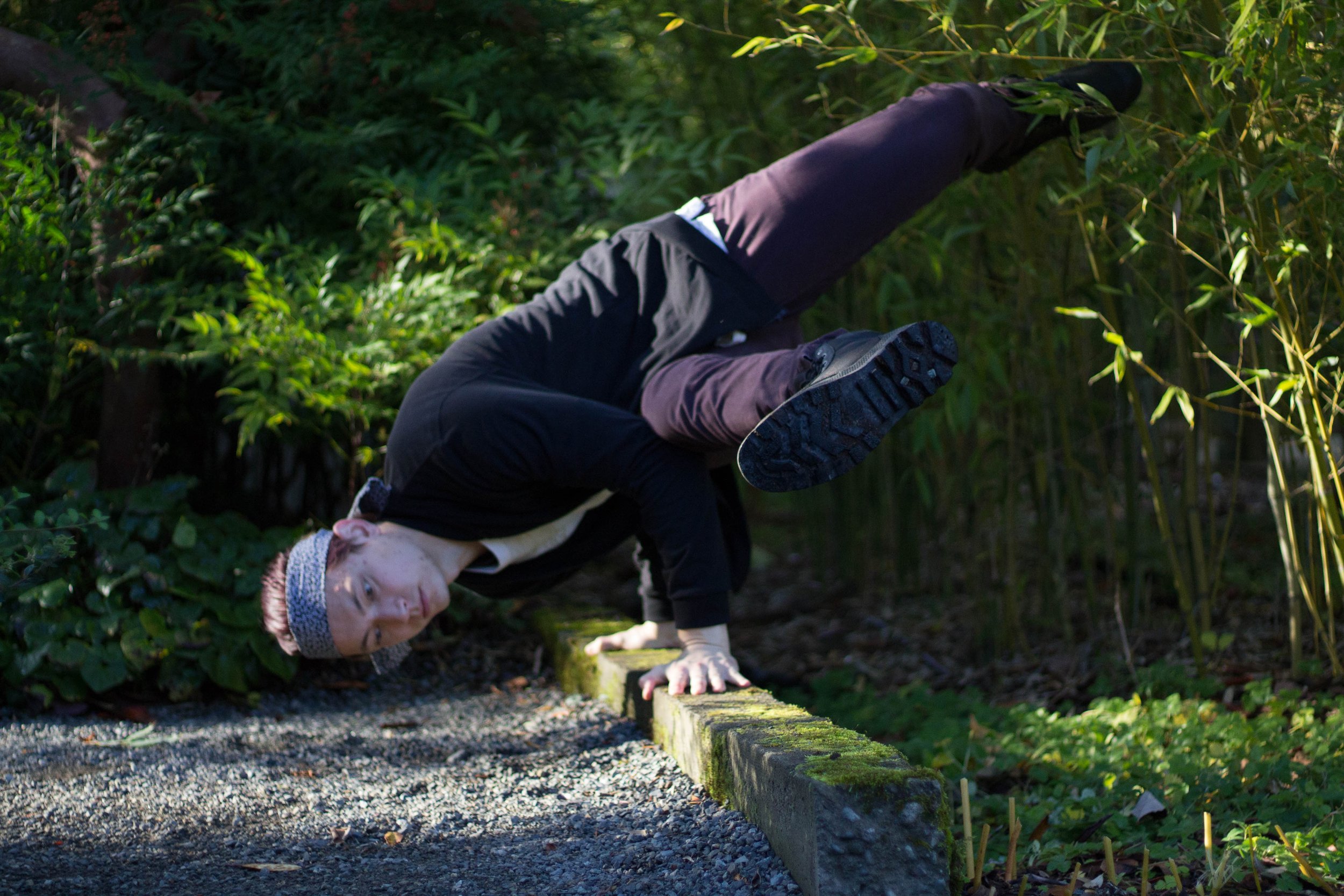
photo by Catlyn Griswell
Ethan
I do my best to stay well-nourished, rested, and calm in the week leading up to the audition. Morning of, I try to eat as big a breakfast as I can without becoming uncomfortable. I make sure to extra warmed-up, some auditions will not provide a warm-up, but most will provide open space for a little bit beforehand. When I warm-up I want to get all of my muscles activated, I want to have gotten my heart rate up, and to get a quick stretch in. Lastly, as I warm-up I listen to some of my favorite music to get amped up and try to get into the flow state. I always feel a little anxious and nervous before an audition but I can mitigate that by taking these steps.
Cherie
Going into an audition used to scare me more than anything. I think when I was younger especially I was constantly comparing myself to everyone else in the room, and I often saw myself as unworthy to be there. I let the nerves get to my head, so fast combinations would confuse me and difficult technique left me very flustered.
During my senior year of high school I was able to identify why I wanted to dance after taking some time off. I want to dance because I love being in a room full of dancers and feeling their energy. I love to dance because I enjoy the challenge. I love finding new movement pathways. So when I go into an audition, I just focus on the present. I don’t like to think about whether or not I’ll be cast or get into a certain program. I put a lot of energy into experiencing the moment, interacting with the other dancers, and getting lost in the movement. When I’m able to get myself in the right mindset, that is when I do my best work.
For some more ideas and products to help get ready see our “Competition & Convention Prep Piece!”
As you all enter into auditions, remember to take deep breaths, put your best foot forward, and dance with all your heart. You got this.
The Khambatta Dance Company Director Shares Desires for Cross-Cultural Connectivity
Cyrus shares that the experience of two cultures coming together is important to him, as his father is Indian and his mother is white, making him a product of cross-cultural connection himself. Throughout their personal lives and careers, Cyrus’ parents have experienced and fought against racial discrimination. From witnessing his parents’ own experiences, as well as navigating the societal challenges of having a biracial identity, Cyrus has been inspired to elevate and celebrate diversity through dance as a means to heal the damages that injustices like racism have caused. “[It] inspires me when I see different cultures coming together,” Cyrus expresses, sharing that his primary desire is to bring unity through understanding in his work at Khambatta Dance Company and beyond.
Cyrus Khambatta On His Vision for a Networked Future
Name pronunciation: Sai-russ Kahm-baht-ta | Pronouns: he/him
By Madison Huizinga, DWC Blog Contributor

When encapsulated in their communities, with their noses to the grindstone, it can be easy for artists to silo themselves off. While bolstering artistry in one’s community is beneficial, many benefits can also be reaped from looking outside oneself and forming cross-cultural connections. This inclusivity- and community-oriented mindset is one that Cyrus Khambatta carries with him in his work as Executive Artistic Director of Khambatta Dance Company and the Seattle International Dance Festival.
Cyrus was introduced to art and movement at a young age, as his mother worked in theatre education. He took classes at Capitol Hill Arts Workshop in Washington, DC, where he trained early on in acrobatics, tap, and creative movement, among other styles. Cyrus developed a deep interest in physical theatre, specifically the intersection of dance and theatre, which he fostered while attending an alternative school. During his time at New York University, he participated in the Experimental Theater Wing, specifically the dance track, which featured a curriculum largely focused on physicality and self-creation.
With fellow students and peers on the dance track at NYU, Cyrus formed Phffft! Dance Theatre Company, which would later become Khambatta Dance Company. Having participated in largely self-directed educational programs throughout his schooling, Cyrus was confident that starting a company right after college was something he wanted to do. After graduating, the company mainly toured and performed around Europe and the east coast of the United States, including Spoleto Festival USA in Charleston, South Carolina. KDC also took part in a long-term residency in Venezuela for about three years.
After KDC moved to Seattle in 2001, Cyrus realized that dance was not being presented in a lot of venues like it was on the east coast and across Europe. “If [KDC] was going to be here, we would have to create our own environment,” he shares. Cyrus felt deeply inspired by the cross-cultural and cross-organizational connections made at the dance and arts festivals he participated in across different regions; this type of connection is ultimately what inspired the creation of the Seattle International Dance Festival.
Seattle International Dance Festival is a program born out of Khambatta Dance Company, aimed at hosting and inviting domestic and international dance companies to Seattle to present work. Cyrus is a board member and the main curator for SIDF but invites curators for various portions of the festival, such as Gonzaga University Dance Director Suzanne Ostersmith for the Spotlight on Seattle program of SIDF in 2022.
“As an artist, artist presenter, administrator, and company that oversees the festival, we have a great interest in seeing that dance is served in our community,” Cyrus says, speaking on the value of providing the geographically isolated Seattle dance community with a view into different dance scenes around the world.
Cyrus shares that the experience of two cultures coming together is important to him, as his father is Asian Indian and his mother is white, making him a product of cross-cultural connection himself. Throughout their personal lives and careers, Cyrus’ parents have experienced and fought against racial discrimination. From witnessing his parents’ own experiences, as well as navigating the societal challenges of having a biracial identity, Cyrus has been inspired to elevate and celebrate diversity through dance as a means to heal the damage racism has caused. “[It] inspires me when I see different cultures coming together,” Cyrus expresses, sharing that his primary desire is to bring unity through understanding in his work at Khambatta Dance Company and beyond.
Cyrus describes the leadership and creation process within Khambatta Dance Company as “collaborative” across the organization, including its artistic and administrative positions. The dancers all work together to create an abundance of material in a short period of time and the administrative staff comes together to identify areas of need to improve KDC and SIDF. This horizontal leadership format falls in tandem with the values the organization was founded on.
In addition, Cyrus takes pride in KDC’s presentation of split bill performances, as the organization finds value in presenting “a pluralistic view of art” as a way for creators and audiences to reflect on their life experiences and see broader worldviews.
Over the summer, Khambatta Dance Company performed at Blois Dance Festival in Blois, France, and did a two-week residency at Newport Dance Festival with Island Moving Company in Newport, Rhode Island. Along with Khambatta performing its own independent pieces, dancers from KDC and Island Moving Company got the opportunity to dance together in a piece choreographed by Cyrus for both companies.
In October 2022, Khambatta Dance Company is headed to Busan and Iksan, South Korea to perform. KDC has a partnership with a dance festival in South Korea and plans on working to bring artists back and forth between South Korea and the United States.

“We are looking at creating an international and national network where Seattle artists could tour some of the places that we have created relationships,” Cyrus says of the future of SIDF. He’s greatly interested in creating mechanisms that encourage the global exchange of dancers to better support Seattle artists’ touring funds, allow artists opportunities to expand their own audiences, as well as see art presented across different cultures. In his work, Cyrus appreciates utilizing a model that doesn’t just consider what will benefit one’s own community, but also neighboring communities.
“I’d like to see that artists become the ambassadors for culture, particularly in the United States,” Cyrus says. In addition, he encourages artists to foster their own community-oriented curiosity and turn their eyes toward art that they may think is pushing the envelope. In addition, he believes dancers should embolden themselves to “think a little bigger,” pushing themselves to stop considering how they must fit a pre-existing mold, in spite of the challenges that come along with that.
“I think dance artists really need to think about changing the mold,” Cyrus says.

Scary Dance Pieces to Get You in the Halloween Spirit
Whether it’s curling up to watch your favorite horror movie or tip-toeing through an eerie haunted house, Halloween is one of the only times of the year when people choose to get scared! There’s something about the rain clouds rolling in and the chill that falls in the air that makes people enthusiastic about spooks. For dancers that are passionate about the spooky season, we’ve curated a list of the most chilling dance pieces to get you into the holiday spirit.
By Madison Huizinga, DWC Blog Editor
Whether it’s curling up to watch your favorite horror movie or tip-toeing through an eerie haunted house, Halloween is one of the only times of the year when people choose to get scared! There’s something about the rain clouds rolling in and the chill that falls in the air that makes people enthusiastic about spooks. For dancers that are passionate about the spooky season, we’ve curated a list of the most chilling dance pieces to get you into the holiday spirit.
“Dark Matters,” Kidd Pivot, choreography by Crystal Pite
In “Dark Matters,” the incomparable Crystal Pite showcases chilling choreography on her company Kidd Pivot. The work features a dancer being attacked by a puppet controlled by several shadow figures. The piece turns quite meta, as the person’s body is dragged away and his home is dismantled, with the words “THIS IS FAKE” projected across the stage. Lights flash, shadows are cast, and bodies move with creepy contours.
“Double Murder - Clowns,” choreography by Hofesh Schecter
CONTENT WARNING: IMAGES OF GUNS
“Clowns” is a part of the double bill, Double Murder, choreographed by the renowned Hofesh Schecter. Images of clowns are certainly evoked, from the billowy costumes, the bouncing motions, and the circus-esque atmosphere. Yet, there is something on edge about the movements, with shaking and flailing adding an eeriness to it all. It feels as though you’re peeping in on the inner workings of a cult of ex-clowns.
“The Hospital,” Quest Crew
Quest Crew’s “The Hospital” fittingly takes place in an eerie hospital, full of scares and creeps around every corner. Piercing music plays as a brooding nurse storms through decrepit halls. The patients swing axes and ramble nonsensically as the camera pans into each room of the hospital. The crew of doctors at the end showcases remarkable, gravity-defying breaking moves. With a surprise twist ending, this dance piece is undoubtedly not worth missing.
“The Rite of Spring,” choreography by Pina Bausch
Pina Bausch’s “The Rite of Spring” is a thriller through and through. Expertly blending frantic gestures with smooth lines, all kinds of energy flows through the piece to draw viewers in. Dancers flail about, throw harsh stares, and engage in jerking gestures, often in large clusters and circles, alluding to cult-like motifs. The chilling nature of the dancers’ movements and facial expressions, paired with the heart-pounding orchestral music makes the whole piece rather unnerving, perfect to watch during this time of the year. Click the link above to view behind-the-scenes rehearsal footage of “The Rite of Spring,” or this link to see an excerpt.
“Creature” (Because of What You Have Done) by Akram Khan
Finally, “Creature” by Akram Kahn conveys thriller-like qualities as well, but in a rather different form than “The Rite of Spring.” Stumbling around to a warped recording of Richard Nixon’s 1969 speech to the Apollo 11 astronauts, performer Jeffrey Cirio’s character appears in a sort of psychological prison. Timed with Nixon’s words, Cirio moves in slow motion and then snaps into jittery upright motions, mouthing the words and pulling at his jaw. The whole piece contains unsettling and evocative qualities fit for the scary season.
Who said dance can’t be spooky? Take a break from your trick-or-treating, horror movie binging, and candy-eating to check out these scary dance pieces. They’re sure to get you in the Halloween spirit!
Working With What You Have
There is a saying that always rang true for me in my early career: “there will always be someone better than you.” When I moved on to professional training schools, I found out that I was not always going to be the most flexible. I wasn’t always going to have the best extensions. In fact, I found that depending on where I was, my extensions were just average. Once I began to place an emphasis on the other qualities a dancer possesses, ballet became so much more enjoyable to me. Musicality, port de bras, and dynamics of movement are all things that anyone can make beautiful and exciting regardless of ability, age, or gender. This is what makes ballet a beautiful art form. If you're struggling with technical perfectionism in dance, I encourage you to focus on these other attributes of dance that can help elevate your artistry without pushing your body to extreme limits.
Embracing Your Technical Abilities Where They Are
By Anna Nelson, DWC Ambassador
click below to shop the look:
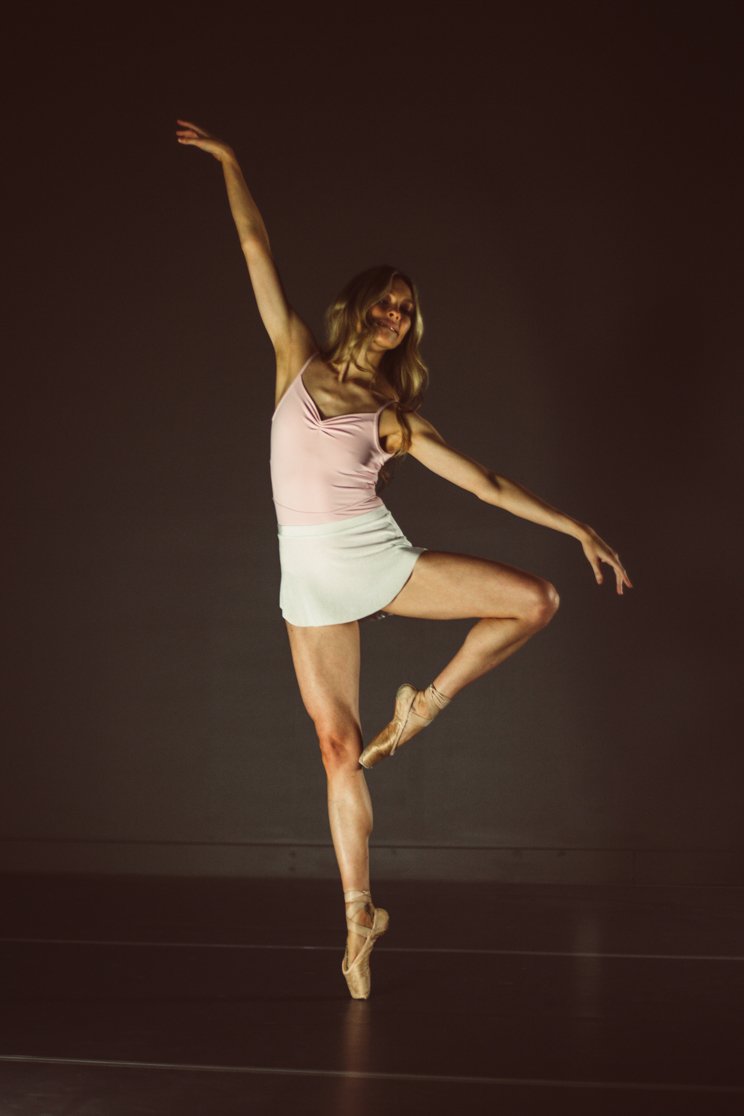
Odette Leotard by Claudia Dean World | Bullet Pointe Skirt in White
I’m sure many of us have experienced some form of body shaming in the ballet world. As a student, my first ballet teacher placed a large emphasis on “perfect” ballet bodies. Students who occupied slender bodies with long legs and arms were given great roles in productions regardless of talent. She often praised those with beautifully arched feet, high extensions, and students who possessed good turnout. I was one of the students with “perfect” turnout and high extensions. In my naivety, these attributes are what lead me to believe that someday I was going to be a great ballet dancer.
In my early training days, I would spend ample time everyday stretching and improving my extensions to ensure that I always had the highest legs in the class. I started ballet at the age of 13, which for a long time was considered to be late. When I started taking ballet classes, I was unable to do the splits. As a child, I remember being hyper flexible, but at 13 my legs were already starting to stiffen. Because my teacher put such a large emphasis on flexibility, she had a star chart on the wall. The classes always began with static stretching. We moved through foot in hand stretches while sitting down in a circle, progressing to front and middle splits and the frog stretch. Students who were able to get their chests down to the floor in the middle splits were awarded a star sticker to place next to their name on the star chart. For many years I was not able to get my chest down, which made me feel inadequate to other students. Instead of getting to put a star sticker next to my name I had to go find my spot at the barre and wait for others to put their stickers on the chart.
My first experience with Vaganova training was when I watched the 2006 documentary Ballerina. I was amazed at how flexible the students in the movie were. Everyone had amazing extensions and their backs seemed to fold in half. All of the dancers stood in perfectly turned out positions at every moment. I was mesmerized by all the dancers I saw in this movie. This movie ignited in me a passion for ballet. I wanted to become as flexible and make lines as beautiful as the ballerinas in the documentary. I began extreme stretching every night after ballet class. The ways in which I tried to attain flexibility fast were dangerous and even caused me to pull my hamstring, which made dancing painful for a few months.
Even though my methods of attaining flexibility fast were not healthy, I started to gain the attention of my ballet teacher. She would often point out how high my arabesque was and how high my legs would go in developpes. This made me feel amazing. However, it wasn’t until many years later that I realized these praises I received were at the cost of others. I remember a moment when my teacher had me stand next to another student at the barre with all the other students gathered around us. She had us both do a grande plie. “See how Anna’s knees go directly out to the side?” She pointed to the other student. “See how her’s don’t go to the side as much at all?” At that moment, I felt great. I felt like the teacher was showing how I was better than the other student in the demonstration. Looking back, this was an abusive and toxic way to explain turnout to young dancers. Teachers should never compare other students to each other when it comes to physical attributes a dancer may or may not possess.
Years later, I found out that my “perfect” turnout was the culprit behind my intense hip pain that I was experiencing. I underwent a painful surgery that resulted in me losing all flexibility in my hips. The limited coverage that my acetabular was offering my femur gave me great mobility, but also made tears almost inevitable. These tears in my labrum made me unable to dance. After my hip surgery and rehab, I was able to work on recovering flexibility. It was disheartening at first. In my early dancing years, I had put so much emphasis on how high my legs could go, and how flexible I was. After 1.5 years, I was able to do all my splits again, but I had lost a bit of the turnout I was previously used to having and I wasn’t able to get my legs as high as I was used to. I knew that I still wanted to dance at a high calibur, and it took a ton of soul searching to hone into the other parts of dance that I had put on the backburner at the expense of high extensions and wacking my legs as high as they could go. I began to focus more on musicality and my port de bras. Funnily enough, when I stopped putting emphasis on how high my legs were going or how turned out I was at the barre, my dancing improved tremendously. I actually began to enjoy dancing for the sake of dancing, not on making the most “perfect” lines at all times. In a way, I learned how to let go and just dance. This is something that I had not been doing for the near entirety of my early ballet career.
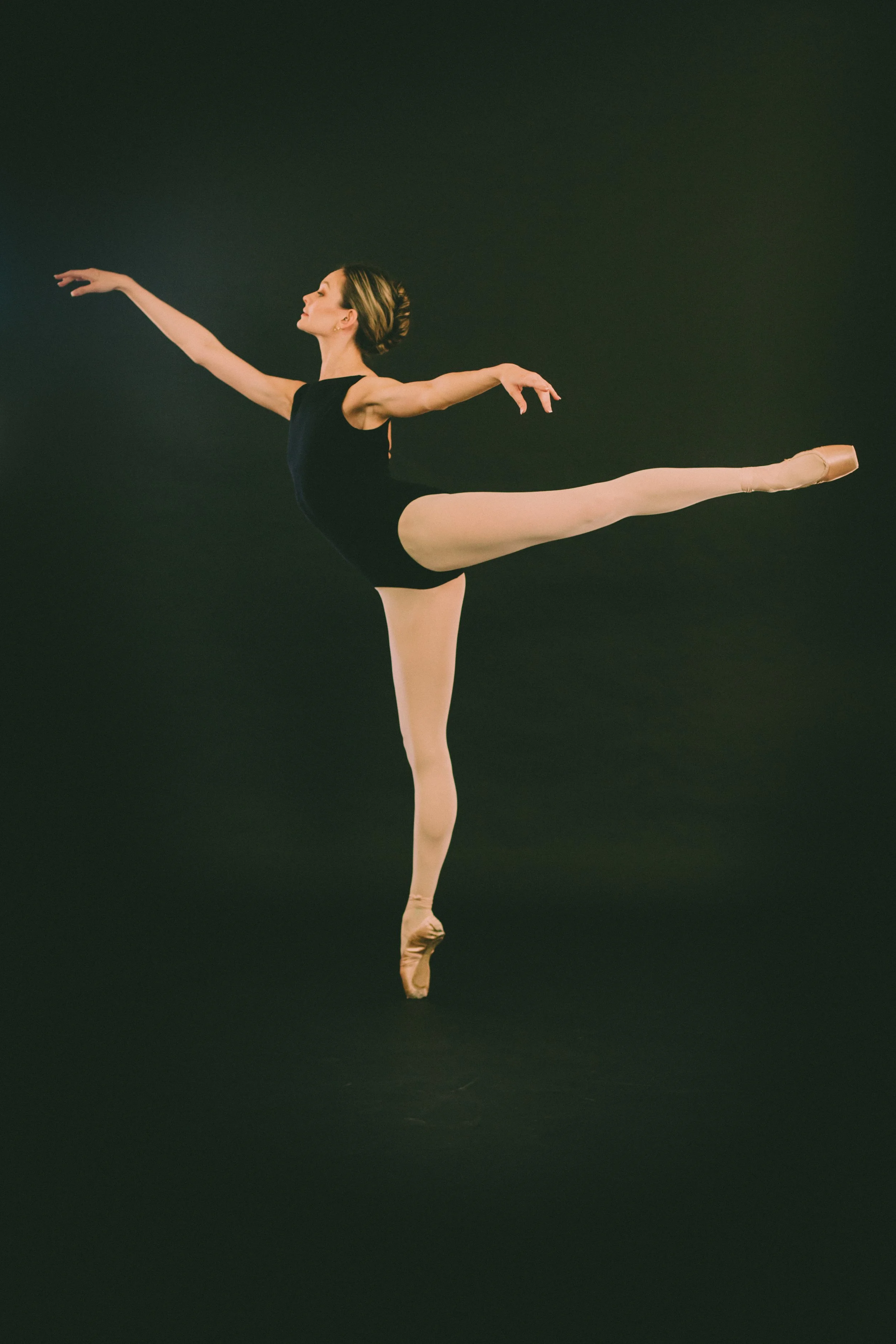
In retrospect, my childhood self was impressed by the beautiful lines the ballerinas created in the documentary, but these dancers also possessed beautiful quality of movement and musicality. These qualities are just as impressive, if not more impressive than just how high your legs can go. It takes years to develop artistry and musicality. These attributes are what makes ballet an art and not a sport. There is no right or wrong way to move to a certain phrase of music. These are all things I had been told in my years of training, but were not something that I fully understood until after my surgery.
There is a saying that always rang true for me in my early career: “there will always be someone better than you.” When I moved on to professional training schools, I found out that I was not always going to be the most flexible. I wasn’t always going to have the best extensions. In fact, I found that depending on where I was, my extensions were just average. Once I began to place an emphasis on the other qualities a dancer possesses, ballet became so much more enjoyable to me. Musicality, port de bras, and dynamics of movement are all things that anyone can make beautiful and exciting regardless of ability, age, or gender. This is what makes ballet a beautiful art form. If you're struggling with technical perfectionism in dance, I encourage you to focus on these other attributes of dance that can help elevate your artistry without pushing your body to extreme limits.
Disclaimer
All content found on the Dancewear Center Website, Instagram, Facebook, Pinterest, and all other relevant social media platforms including: text, images, audio, or other formats were created for informational purposes only. Offerings for continuing education credits are clearly identified and the appropriate target audience is identified. The Content is not intended to be a substitute for professional medical advice, diagnosis, or treatment. Always seek the advice of your physician or other qualified health provider with any questions you may have regarding a medical condition. Never disregard professional medical advice or delay in seeking it because of something you have read on this Website.
If you think you may have a medical emergency, call your doctor, go to the emergency department, or call 911 immediately. Dancewear Center does not recommend or endorse any specific tests, physicians, products, procedures, opinions, or other information that may be mentioned on dancewearcenter.net. Reliance on any information provided by dancewearcenter.net, Dancewear Center employees, contracted writers, or medical professionals presenting content for publication to Dancewear Center is solely at your own risk.
Links to educational content not created by Dancewear Center are taken at your own risk. Dancewear Center is not responsible for the claims of external websites and education companies.
Whim W’Him’s Olivier Wevers on Equitable Treatment in Dance
One of Whim W’Him’s most important values is putting “people first always,” something that is not always upheld in the dance world. That’s why Olivier shares that ensuring his dancers are well-paid has always been a priority of his. “They are artists…They are highly skilled professionals and they should be paid for that,” he stresses. He started Whim W’Him with the intention of “changing the landscape of how dancers are often abused and exploited,” particularly when it comes to being under-compensated for their work.
A Seattle-Based Director on Eliminating Exploitation in the Dance Scene
Name pronunciation: Ol-i-vee-eh W-eh-vers | Pronouns: he/him
By Madison Huizinga, DWC Blog Editor

Photo by Stefano Altamura
Artists are often left out of larger conversations about equitable treatment and fair pay for workers. Even so, artists are skilled professionals as other laborers are, deserving of comprehensive treatment from companies that are able to secure the funds they need to operate effectively. Whim W’Him Founder and Artistic Director Olivier Wevers is a strong advocate for eliminating exploitative practices in the dance scene, principles he is practicing at the Seattle-based dance company itself. Read on to learn more about Olivier’s dance journey and about Whim W’Him’s mission and plans for its 2022-2023 season. And when purchasing tickets for one of Whim W’Him’s 22-23 shows, use code DWC20 for 20% off your ticket purchase!
Olivier expressed interest in dancing around age six. He can recall arriving at his first dance class wearing thick red wool tights, and immediately feeling out of place. “I actually cried and sat on the piano,” Olivier recalls, laughing. His parents told him that if he cried again, he wouldn’t be coming back to dance class. “I guess I didn’t,” Olivier says.
Around age fourteen, Olivier transferred from a recreational studio to a more professionally-focused one in his hometown of Brussels, Belgium. When he reached about nineteen years old, he began looking for work, moving to the United States for a summer program in Pittsburgh, Pennsylvania. Olivier landed his first job dancing with Columbia City Ballet in South Carolina for a year. He later danced at Royal Winnipeg Ballet for five years, touring around the world for six months out of the year. Olivier finished his dancing career at Pacific Northwest Ballet, where he worked for fourteen years.

Photo by Stefano Altamura
It took a while for Olivier to realize that starting a dance company is what he wanted to do. He had been gaining more choreography opportunities, diving deeper into the creation side of dance. He knew that running a dance company required a lot of hustle - administrative work, fundraising, and more - and he also realized the life of touring and traveling so often became lonely. Olivier desired to not only work with his own dancers but begin developing a vocabulary of dance that was unique. After mulling it over and having some encouragement from friends, Olivier incorporated Whim W’Him in 2009.
Today, Olivier says that Whim W’Him is all about the “creation process,” sharing that the company doesn’t like to place limits on itself by fixating on one topic or genre of focus. “There are so many types of choreographies and ways of working with bodies and I think that’s what we want to embrace,” Olivier says. “It’s really about exploring our human condition.”
One of Whim W’Him’s most important values is putting “people first always,” something that is not always upheld in the dance world. That’s why Olivier shares that ensuring his dancers are well-paid has always been a priority of his. “They are artists…They are highly skilled professionals and they should be paid for that,” he stresses. He started Whim W’Him with the intention of “changing the landscape of how dancers are abused and exploited,” particularly when it comes to being under-compensated for their work.
“The idea behind the company is to re-create a culture that is fighting the [outdated system] that is now widely adopted in this country for contemporary dancers and re-build an environment that is safe, welcoming, and supportive for everyone,” Olivier says.
Fittingly, Whim W’Him dancers are also offered opportunities to exercise creative control when it comes to the work they perform. For example, choreographers featured in Whim W’Him’s upcoming fall program were selected by dancers of the company itself, as a part of the 8th Choreographic Shindig. In a longstanding tradition, after reviewing applications, the dancers themselves have the opportunity to curate the evening performance, exercising their own creative opinions as artists.
In its 2022-2023 season, Whim W’Him is excited to showcase about ten original works across its three live programs in fall, winter, and spring. In addition, in February 2023, Whim W’Him will be collaborating with Early Music Seattle to create a brand new piece.

Photo by Stefano Altamura
In the fall, audiences can expect new creations from Keerati Jinakunwiphat, Dolly Sfeir, and Nicole von Arx on September 9-17, 2022 at Erikson Theater and on September 14, 2022 at Vashon Center for the Arts. In the winter, Whim W’Him will show work by Mike Esperanza, Annabelle Lopez Ochoa, and Olivier Wevers from January 20-31, 2023 at the Cornish Playhouse, January 25, 2023 at Vashon Center for the Arts, and January 31, 2022 at Whidbey Island Center for the Arts. Finally, in the spring, audiences will see work by Emilie Leriche, Olivier Wevers, and Rauf Yasit on May 12-20, 2023 at the Cornish Playhouse, May 17, 2023 at Vashon Center for the Arts, and May 24, 2023 at Whidbey Island Center for the Arts.
All in all, in the next year, Olivier looks forward to seeing Whim W’Him continue to grow as a company and help create an environment for dancers that is “safe, diverse, [and] welcoming.” “We have a lot of change that needs to happen,” Olivier insists, citing more accessible dance education, greater support for BIPOC artists, comprehensive dance media and journalism, and of course, fair pay and eradicated exploitation as changes the dance industry needs to see. He also hopes to see more arts funding on a governmental level, particularly for smaller dance companies, where he believes much of the innovation in dance is occurring.
Become a member with Whim W’Him today or use code DWC20 for 20% off your tickets for one of Whim W’Him’s Season 22-23 shows.

Sources:
Disclaimer
All content found on the Dancewear Center Website, Instagram, Facebook, Pinterest, and all other relevant social media platforms including: text, images, audio, or other formats were created for informational purposes only. Offerings for continuing education credits are clearly identified and the appropriate target audience is identified. The Content is not intended to be a substitute for professional medical advice, diagnosis, or treatment. Always seek the advice of your physician or other qualified health provider with any questions you may have regarding a medical condition. Never disregard professional medical advice or delay in seeking it because of something you have read on this Website.
If you think you may have a medical emergency, call your doctor, go to the emergency department, or call 911 immediately. Dancewear Center does not recommend or endorse any specific tests, physicians, products, procedures, opinions, or other information that may be mentioned on dancewearcenter.net. Reliance on any information provided by dancewearcenter.net, Dancewear Center employees, contracted writers, or medical professionals presenting content for publication to Dancewear Center is solely at your own risk.
Links to educational content not created by Dancewear Center are taken at your own risk. Dancewear Center is not responsible for the claims of external websites and education companies.
Happenings at the Yaw and New Pitch & Roll Studios
Aside from the Yaw, Stella has recently opened several new rehearsal spaces called Pitch and Roll. These spaces are there as rehearsal studios that choreographers and artists can book and use without excess hassle. Stella wanted to put on more programming for the artists and choreographers in the area, so she created these rehearsal spaces for people to use that have the proper resources. “I don’t think there can be too much performance art,” Stella said about getting more space for dancers around the area.
Stella Kutz on Providing Spaces for Artistry
Name pronunciation: Stella Kuh-Ts | Pronouns: she/her
By Nicole Barrett, DWC Blog Editor

Having a space where dancers can come together and create something beautiful is something that Stella Kutz strives for in the Seattle area. From starting dance early on in her life to creating the Yaw Theater, Stella has much experience navigating the tough dance world and striving for creativity. Read on to learn more about Stella’s hopes for the dance community and new events happening at the Yaw and new Pitch & Roll Studios!
Stella started dancing when she was five when her grandmother bought her classes. “I wanted to jump high and I always wanted to be pretty,” Stella shares about wanting to join dance classes. Stella started dancing at Spectrum Dance Theater under the direction of Dale Merrill. “It was perfect for me because Spectrum at the time was just there, if you want to dance you are going to dance and that is how I got through,” she says. Stella danced at Spectrum for 13 years and took every opportunity that she could to volunteer and help out as much as she could.
After many years of dance, Stella went off to the University of Nevada, Las Vegas to receive a BFA in Performance Choreography. Once her degree was completed, she moved back to Seattle, but was faced with the difficulty of figuring out what to do after college. “Once you graduate college, they don’t tell you what to do at all. They’re like, `Well, just go audition,’” Stella shares. She began to dance for numerous companies around the city and eventually as she got more involved in the dance world in Seattle, noticed that there were no places nearby to dance.
One day she got to meet the owner of Equinox Studios, where Yaw Theater is now located, and expressed to him that she wanted a dance space and he agreed. Ideas kept sprouting and more opportunities arose for this new space and the Yaw Theater was eventually born. “Everything kind of fell into place,” Stella says.
When asked what her favorite thing about dance is, she shares this: “it’s the only art form where you can be ‘not good at it’ but be captivating.” Stella also expressed the energy of being in a dance class and the joy felt when you know you did a good job as a large part of dance’s appeal to her.
Moving forward in the dance world, Stella would like to see more community and an increase in inclusivity with everyone no matter who they are. “I want people to be more supportive of everyone else in general and in dance,” Stella shares. She would also like to see more intimate performances that allow the audience to be up close to the dancers and feel their emotions rather than being far away and feeling detached from the art.
When it comes to the production of the Yaw Theater, Stella wanted a place that was easy and affordable for anyone that wanted to use it. “I really enjoy watching people achieve their goals,” Stella shares. “Just a place where people can try things and it’s not a huge financial risk.” She also mentioned that she wants a place where it is easier to make art and that working with artists of different mediums is very important to her, so the location of the Yaw Theater, in Equinox Studios among other artists, was perfect.
Aside from the Yaw, Stella has recently opened several new rehearsal spaces called Pitch and Roll. These spaces are rehearsal studios that choreographers and artists can book and use without excess hassle. Stella wanted to put on more programming for the artists and choreographers in the area, so she created these rehearsal spaces for people to use that have the proper resources. “I don’t think there can be too much performance art,” Stella said about getting more space for dancers around the area.

Stella plans to create more festivals and events for artists and dancers around the area to come create and watch art. In terms of what is in the works right now, Stella is planning on bringing together a group of like-minded individuals from different artistic backgrounds to showcase their works in “Launchpoint,” a “conglomeration” of art. Stella plans to work with Sophia Wheelright, a Seattle-based artist who specializes in aluminum mesh installations, to create a sculpture for groups of dance artists to perform with in the space. Each group of dancers will be given the same performance parameters in terms of time and space, allowing audiences to help see and appreciate the diversity of artists’ creative processes. The tactile art itself is also something that Stella is interested in when it comes to making sure that every dancing body is given the same source to inspire their creations. This can allow the audience to interpret the creativity in their own way and find the message in the story. “That will help people understand or at least appreciate the diversity of our thoughts and our creative process,” Stella shared.
Keep a lookout at yawtheater.com for more information about “Launchpoint” and book your space at the Yaw and Pitch & Roll today!

Sources:
Disclaimer
All content found on the Dancewear Center Website, Instagram, Facebook, Pinterest, and all other relevant social media platforms including: text, images, audio, or other formats were created for informational purposes only. Offerings for continuing education credits are clearly identified and the appropriate target audience is identified. The Content is not intended to be a substitute for professional medical advice, diagnosis, or treatment. Always seek the advice of your physician or other qualified health provider with any questions you may have regarding a medical condition. Never disregard professional medical advice or delay in seeking it because of something you have read on this Website.
If you think you may have a medical emergency, call your doctor, go to the emergency department, or call 911 immediately. Dancewear Center does not recommend or endorse any specific tests, physicians, products, procedures, opinions, or other information that may be mentioned on dancewearcenter.net. Reliance on any information provided by dancewearcenter.net, Dancewear Center employees, contracted writers, or medical professionals presenting content for publication to Dancewear Center is solely at your own risk.
Links to educational content not created by Dancewear Center are taken at your own risk. Dancewear Center is not responsible for the claims of external websites and education companies.
Providing Nutritional Education for Dancers
Ensuring that you can dance at your best for the longest amount of time possible involves much more than what happens in the studio. Making sure dancers take care of their bodies and fuel themselves in a sustainable and accessible fashion is crucial. However, myths and toxic misconceptions about nutrition abound within the dance world. People like Registered Dietitian Nutritionist Kristin Koskinen of Eat Well, Live Well are helping make the dance world a better place by providing nutrition and educational services to the dance community.
Kristin Koskinen on Promoting Balanced Nutrition and Debunking Myths in the Dance World
By Madison Huizinga, DWC Blog Editor

Photo by Brittney Kluse Photography
Ensuring that you can dance at your best for the longest amount of time possible involves much more than what happens in the studio. Making sure dancers take care of their bodies and fuel themselves in a sustainable and accessible fashion is crucial. However, myths and toxic misconceptions about nutrition abound within the dance world. People like Registered Dietitian Nutritionist Kristin Koskinen of Eat Well, Live Well are helping make the dance world a better place by providing nutrition and educational services to the dance community.
Like many, Kristin began dancing around age three or four, growing up training in tap, jazz, ballet, and musical theater. Eventually, she realized that ballet was where her heart was and she got wholeheartedly involved with a pre-professional company. Kristin ended up dancing with Mid-Columbia Ballet in Richland, WA. When she went to college, she took some dance classes here and there but dedicated most of her time to being a part of the cheer staff at her university. Admittedly, it was a big transition for her to make, as the dance style was more hip-hop-oriented.
Kristin had plans of attending medical school because she “wanted to learn more about the human body and nutrition.” In one of her pre-med courses, her professor suggested that she shift her focus towards getting a master’s degree in nutrition, as it was clear that her interests lay more in that realm.
Being heavily involved in the dance industry at a young age, Kristin had come face to face with diet culture early in her life. She grew up training in a supportive environment where comments about her body or shape were never made and where her artistic director made fairly sound nutrition recommendations. Nevertheless, the more toxic aspects of dance and diet culture managed to permeate through her wall of support. “It has a really big impact on me,” she says.
Kristin says that there can be specific aspects of the dance world that can trigger disordered eating, sharing that it’s often the “elephant in the room” when it comes to dancing. When Kristin’s daughters began taking dance classes, it became clear to her that few things had changed in the dance world since her time as a student, particularly in regard to nutrition. She realized that this space is where her nutrition expertise could be put to its best use. “This is where I was needed to bring [my] body of knowledge and understanding to dancers and their parents and teachers…whoever was really interested in the health and well-being and longevity of dancers,” Kristin says.

Kristin says that a major part of her mission is being the person she needed when she was a young dancer. “I see these kids who struggle and I get it,” she says, sharing the challenges that come with navigating “diet talk.” “There are adults who are perpetuating this stuff and continue to project it when frankly there’s no excuse for it,” she says, insisting that using “tradition” as an explanation for promoting disordered eating is unacceptable. “It’s time to come in with some sledgehammers and knock those walls down,” Kristin says.
Kristin shares that a major misconception about dancers is that they are all supposed to be skinny. She recognizes that some genres of dance are slowly becoming more inclusive and accepting of different types of bodies, but there is still an underlying assumption that dancers are supposed to be thin and on a restrictive diet to maintain a particular body size. And contrary to predominant beliefs in the past, there is also a growing assumption that dancers ought to be “ripped, cut, [and] shredded” to be the best performers. Kristin says that these standards are “frankly unnecessary.”
“Form should follow function,” Kristin says. She strives to help make these assumptions about what a dancer should look like and what they should eat go away. The concept that dancers must be at a “healthy weight” to perform at a certain level is also a myth. Aiming for dancers to fit a certain aesthetics as opposed to cultivating their craft is an adverse practice.
Eat Well, Live Well is Kristin’s private practice where she works with dancers and other artistic athletes. Kristin had been working in clinical settings prior to beginning her private practice and recognized a distinct need to bring another voice and resource to dancers to help them meet their specific needs and enhance their careers and longevity within the dance field. She works with private clients and also guest lectures at universities and with professional companies and studios.
Kristin shares that her work at Eat Well, Live Well is all individualized. Some people have medical needs that require a specialized nutrition plan, such as dancers who are hyper-mobile or have digestive issues. Some are recovering from eating disorders and injuries and are in need of additional nutritional support and guidance on their journey. And some dancers learn to debunk myths about nutrition that they learn within the mainstream industry to move towards a more balanced nutrition plan. “Dancers have unique needs,” Kristin acknowledges, sharing that she helps address dancers’ needs on a personal level, taking their individual schedules into account.

Kristin also runs a blog that covers topics like performance nutrition, recipes, and more. In addition, she collaborates with dance organizations like The Bridge Dance Project, DanseMedica, Bendy Bodies, and Apolla Performance, and has contributed to more mainstream media outlets, including Healthline, NBC News, The Today Show, and The Oprah Magazine. She’s a regular contributor to Dance Magazine, Pointe, Dance Teacher, and Dance Spirit. She speaks internationally about dance nutrition and is frequently asked to lecture at universities across the US. She recently spoke to the Washington State Dance Studio Owners Coalition over Zoom, sharing that it was great to chat with studio owners about how they can create a positive influence on their dancers and help create waves of change. Kristin and the studio owners discussed how to bolster mental health and stay in their lane of expertise when it comes to nutrition. “Studio owners can have a phenomenally positive impact on a dancer’s life. It can be outstanding,” Kristin emphasizes, adding that she also works closely with the Dance Educators Association of Washington from time to time.
Kristin believes that one of the biggest mentalities that needs to be changed in the dance world is the idea that everyone is replaceable. The idea that dancers are interchangeable and that positions can easily be refilled when injuries pop up promotes the idea that dancers are mere bodies, rather than human beings with unique life experiences and offerings to bring to the stage. “If we would look at the dancers as human beings first as opposed to commodities, I think that would be a phenomenal change,” Kristin says.
Sources:
A PNB Soloist on Mentorship and Being a Ballet Life Coach
When asked about what steps can be done to help alleviate these often harmful expectations, she shares that normalizing the concept of an everyday person dancing is something that needs to be more globally understood. She expresses that it can be hard for trained dancers to look at others’ dancing and not critique them in certain ways. Therefore, Santina believes that the mindset of seeing everyone as a dancer is something that needs to be adopted by dancers all around the world.
Cecilia Iliesiu on Tackling Tough Conversations in the Dance World
By Nicole Barrett, DWC Blog Co-Editor


Diving into the tough conversations about mental health and preparing for jobs that are engulfed in the dance world is something that Pacific Northwest Ballet Soloist Cecilia Iliesiu is very passionate about. Having danced professionally for thirteen years, she knows that the ups and downs in a dancer’s career can be very tough. By creating and running the Mentorship Program at PNB School (PNBS), she is tackling those issues head-on and providing pre-professional dancers with career support through Ballet Life Coach. Read on to learn more about Cecilia’s dance journey and the steps she’s taking to create a more open and supportive space for dancers.
Cecilia was born and raised in New York City, New York, and trained at the School of American Ballet from the ages of eight to eighteen. After her training, she landed a company job at the Carolina Ballet. She danced there for six seasons and became a soloist, but after dancing there for years she knew that she wanted to be on another path. Cecilia auditioned internationally and domestically for numerous ballet companies and Pacific Northwest Ballet offered her a job. She has now been dancing with the company for seven seasons and became a soloist in 2020. “I plan on dancing until I stop learning or my body tells me not to,” Cecilia shares.
Outside of dance, Cecilia loves to go swimming, kayaking, do yoga, and make pottery. She bikes to work every day and has many other hobbies that give her a perspective outside of dance. Cecilia also graduated from Fordham University with a Bachelor’s degree in Communications and Media Studies while dancing full time at Carolina Ballet and PNB.
Cecilia runs PNBS’s Mentorship Program with fellow PNB dancer Amanda Morgan. Starting in March 2020, this program was founded by Morgan and aimed to help with the mental health challenges dancers were facing during the pandemic. This program has evolved to work with dancers in the highest six levels of the PNBS and includes PNB company dancers as the student’s mentors. Cecilia and the mentors work very closely with PNBS consulting therapist Josh Spell to ensure that all the sessions meet the needs of the students. Each level of the Mentorship Program has two sessions per month, one with a company mentor and one with a therapist. The meetings discuss topics like body image, goal setting, work ethic, grappling with self-doubt, and much more. "I can see the students' confidence blossoming in each mentorship chat. The student's vulnerability to talk about their struggles in dance is incredible. The safe space allows them to verbilize, process, and connect with their classmates in a really meaningful way.” Cecilia says about the mentorship program.
During the pandemic in particular, Cecilia noticed a plethora of needs expressed by the pre-professional dancers she worked with in the PNBS Mentorship Program. In particular, dancers needed assistance with company auditions, including help with resumes and cover letters, which led her to give advice and create resources. Helping dancers with a business-side baseline to start their careers was something that motivated her to create Ballet Life Coach, an online resource to help dancers achieve their professional goals and guide them towards a successful career.
Ballet Life Coach currently offers a free 8-Step Audition Checklist with suggested timelines and to-do lists, a resume template, and audition template package that covers the important audition materials. Dancers can also now book one-on-one coaching sessions with Cecilia herself to review and fine-tune audition materials. Click here for more information! In the future, she hopes to see this kind of administrative and holistic support integrated into dance school education
Coming up, Cecilia is offering workshops for year-round schools and summer courses on pre-audition preparations. She was involved in workshops for the summer course at PNB in 2021 and is planning to expand to more schools this summer. One of her big goals is to not only do these workshops for PNB but include other companies in different areas and create more in-depth audition preparation programs.

One of Cecilia’s favorite things about dance is performing. She shares that when the pandemic started, it was very hard for her to switch over from a real audience to a screen. “I just love expressing myself on stage and creating different storylines and characters,” Cecilia shares about performing live. She also shares her love of seeing her coworkers dance along with her and just enjoying the presence of everyone onstage.
When asked about her biggest struggle in the dance world, Cecilia expresses that the mental blocks that dancers face can pose huge challenges. She shares that throughout a dancer’s training process, the physical aspects of learning how to do certain movements often come before the mental challenges that are endured when attempting such things. Cecilia ties this topic back to her work with the Mentorship Program, sharing that she wants to make these conversations about mental health more accessible for dancers. “To me, ballet is physically demanding, but the mental part of it isn’t talked about, and honestly is often the hardest part of dancing,” Cecilia shares.
Cecilia wants dancers that are struggling with similar mental health issues to know that they are not alone, and that they should not be afraid to ask for guidance. She expresses the importance of talking to your peers about any issues. Everyone is going through something, so having these open discussions, and not suppressing your feelings is something that is very important.
Moving forward into the dance world, Cecilia would like to see more normalization of tough conversations within the dance community. She shares that the transitions between what ballet is now versus what it has always been can be very hard for companies and dancers to grasp, so making that transition is something that Cecilia finds very important. “The next generation of dancers need to be the change that they want to see in the ballet world,” she shares.
Disclaimer
All content found on the Dancewear Center Website, Instagram, Facebook, Pinterest, and all other relevant social media platforms including: text, images, audio, or other formats were created for informational purposes only. Offerings for continuing education credits are clearly identified and the appropriate target audience is identified. The Content is not intended to be a substitute for professional medical advice, diagnosis, or treatment. Always seek the advice of your physician or other qualified health provider with any questions you may have regarding a medical condition. Never disregard professional medical advice or delay in seeking it because of something you have read on this Website.
If you think you may have a medical emergency, call your doctor, go to the emergency department, or call 911 immediately. Dancewear Center does not recommend or endorse any specific tests, physicians, products, procedures, opinions, or other information that may be mentioned on dancewearcenter.net. Reliance on any information provided by dancewearcenter.net, Dancewear Center employees, contracted writers, or medical professionals presenting content for publication to Dancewear Center is solely at your own risk.
Links to educational content not created by Dancewear Center are taken at your own risk. Dancewear Center is not responsible for the claims of external websites and education companies.
Interested in writing for the DWC Blog? Click below to fill out the DWC Contributor application!