
Have you heard of Relative Energy Deficiency Syndrome AKA Female Athlete Triad?
Over 80% of athletes, including dancers and figure skaters are unaware of a highly prevalent condition known as Female Athlete Triad or sometimes, more recently termed Relative Energy Deficiency Syndrome (RED-S)(Tosi & Dodson, 2019). You may find that you are in this category. It was many years until I got a first-hand experience of the manifestations of RED-S. Three weeks before my dance company’s spring recital I broke my arm in multiple places while mat tumbling in acro class. Since then, I have learned a lot about RED-S from my physical therapy education and my own desire to learn about and spread awareness of this condition.
Pronouns: she/her
By Emily Borders, DWC Ambassador

click below to shop the look:
Over 80% of athletes, including dancers and figure skaters are unaware of a highly prevalent condition known as Female Athlete Triad or sometimes, more recently termed Relative Energy Deficiency Syndrome (RED-S)(Tosi & Dodson, 2019). You may find that you are in this category. It was many years until I got a first-hand experience of the manifestations of RED-S. Three weeks before my dance company’s spring recital I broke my arm in multiple places while mat tumbling in acro class. Since then, I have learned a lot about RED-S from my physical therapy education and my own desire to learn about and spread awareness of this condition. This injury likely could have been prevented if I had been taking care of my body the way I should. RED-S is a form of energy deficiency that occurs due to excessive energy output or inadequate energy input. Basically, this occurs if someone is not putting enough fuel (energy) into their body to support their daily physical activity or they are doing so much rigorous physical activity that they are using up all their stored energy; both of these situations lead to an energy deficit and sometimes this can result as a combination of both. As you can imagine, these situations are common in dance training. Many hours of high-intensity dance training, a desire to maintain a certain body aesthetic and lack of proper nutrition, all contribute to RED-S being highly prevalent amongst dancers.
For me, proper nutrition and taking rest days was not strongly emphasized in my dance training. I developed a strong work ethic in dance, which I am grateful for and has shaped me into the person I am today. Due to this work ethic, I found myself extremely dedicated to my dance training. I would train for many hours a day 5-6 days a week, which would often turn into 7 days a week on a competition or convention weekend. I would sometimes even go to the gym after dance or on my day-off to get an extra workout in. If this sounds like you, or even if it doesn’t but you are still involved in dance or another form of physical activity at a high volume, I encourage you to read further and look at the following components to RED-S.

click below to shop the look:
GF Collective Paloma Racerback Bra | GF Collective Compressive Pocket Leggings
RED-S or Female Athlete Triad includes a triad of symptoms. These symptoms include low energy availability, menstrual disturbances including lack of menstrual cycle or irregular menstrual cycle and decreased bone mineral density. Low energy availability can cause increased fatigue, weakness, mood changes, and increased risk of injuries. Decreased bone mineral density increases one’s risk for fracture, which is what happened to me. Injuries and chronic fatigue can be detrimental to a dance career, but these things can often be prevented by fueling one’s body with a proper diet to support high-intensity dance training and incorporating rest days. Endurance athletes including dancers need about 1.4 g/kg of body weight of protein per day, which I can guarantee is a lot more protein than most young dancers are getting. Another way to decrease your risk of this condition is making sure to add rest days and strength training into your routine. Rest days are vital to restoring energy that has been depleted during physical activity and allowing bones and muscles to recover and adapt. Rest days don’t have to look like sitting on your couch. Going on a walk or doing another form of light activity can be a great way to “rest” but still move your body. Furthermore, bones become stronger through weight bearing activities; lifting weights can be a great way to increase bone mineral density and decrease injury risk. Keep in mind that if you are already dancing many hours, nearly every day of the week, I am not encouraging you to add a day of weight training, but having your instructors add some weight training into class or replacing some dance time with cross-training will be beneficial to dance and overall health. If this doesn’t seem possible, making sure to get some weight training in during dance breaks or off-season is another great idea!
Factors that may increase one’s risk for developing this condition include endurance athletes, female gender, having an eating disorder, ages 12-24, and people who feel pressured to maintain a certain body aesthetic for their sport. If any of these seem to apply to you or you think you may be experiencing some of the symptoms described above, I hope you look further into this condition and take steps to prevent it. Don’t wait until a major injury occurs to make a change for your health. Feel free to email emily.stadt@outlook.com if you have any questions or check out the resources below!
Sources:
https://dancenutrition.com/relative-energy-deficiency-in-sport-dancers/
Reference:
Tosi M, Maslyanskaya S, Dodson NA, Coupey SM. The Female Athlete Triad: A Comparison of Knowledge and Risk in Adolescent and Young Adult Figure Skaters, Dancers, and Runners. J Pediatr Adolesc Gynecol. 2019;32(2):165-169. doi:10.1016/j.jpag.2018.10.007
Disclaimer
All content found on the Dancewear Center Website, Instagram, Facebook, Pinterest, and all other relevant social media platforms including: text, images, audio, or other formats were created for informational purposes only. Offerings for continuing education credits are clearly identified and the appropriate target audience is identified. The Content is not intended to be a substitute for professional medical advice, diagnosis, or treatment. Always seek the advice of your physician or other qualified health provider with any questions you may have regarding a medical condition. Never disregard professional medical advice or delay in seeking it because of something you have read on this Website.
If you think you may have a medical emergency, call your doctor, go to the emergency department, or call 911 immediately. Dancewear Center does not recommend or endorse any specific tests, physicians, products, procedures, opinions, or other information that may be mentioned on dancewearcenter.net. Reliance on any information provided by dancewearcenter.net, Dancewear Center employees, contracted writers, or medical professionals presenting content for publication to Dancewear Center is solely at your own risk.
Links to educational content not created by Dancewear Center are taken at your own risk. Dancewear Center is not responsible for the claims of external websites and education companies.
Tips for Exploring Dance in a New City
Whether you’re planning on making a cross-country move like me, or are graduating school and moving on from your familiar dance studio, life is full of transitions - some of which we’re prepared for and others we aren’t. One thing that can help make these transitions feel a bit more easeful is continuing to do what we’re passionate about. And fortunately, one of my favorite things about dance is its universality: no matter what country you’re in, what age you are, or what physical or mental state you’re experiencing, dance can be there for you in one capacity or another. In the short time I’ve spent living in a new city so far, here are some of the tips I have for exploring dance in a new place.
Advice for Dancing Amid Transition
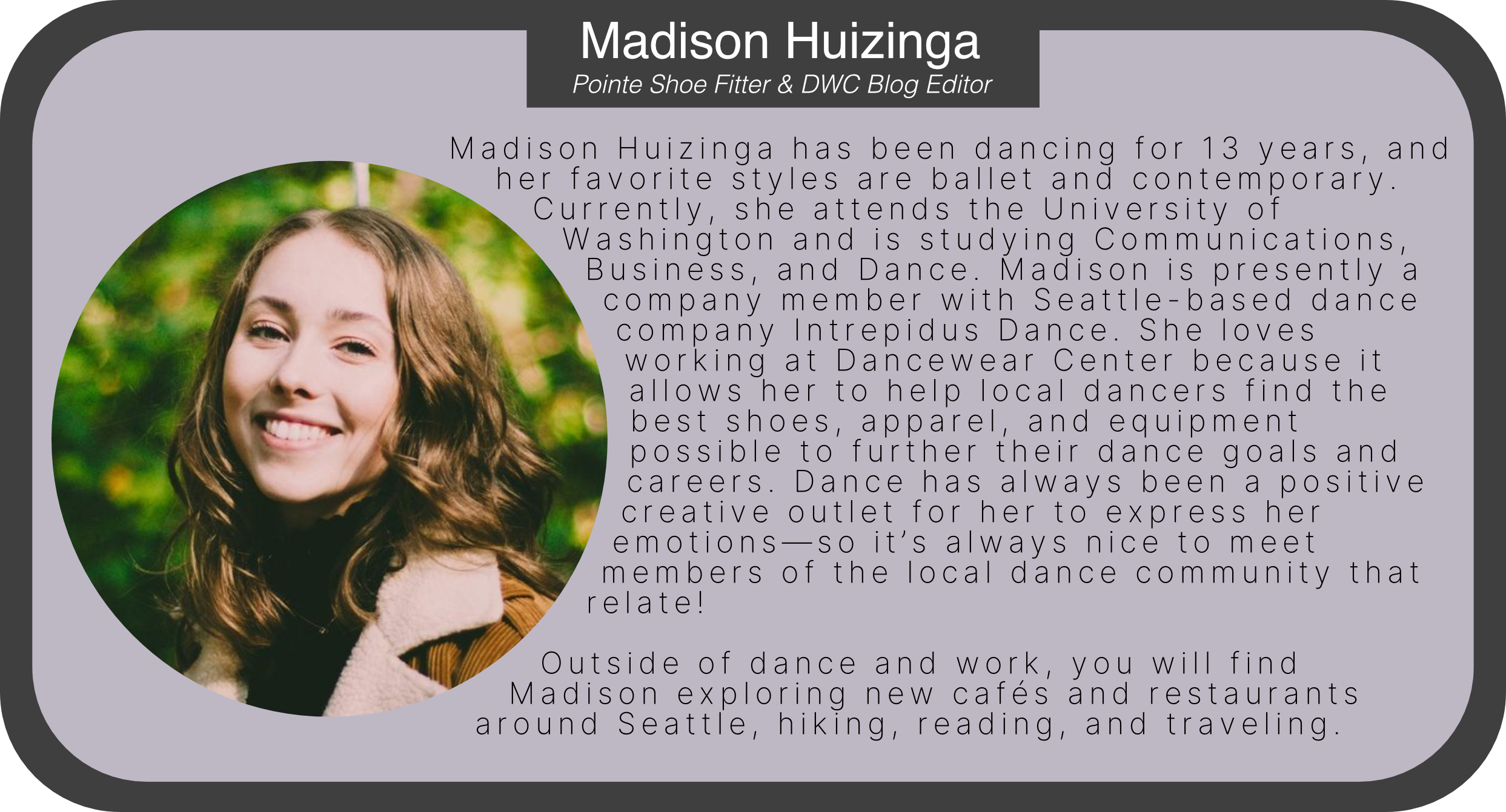
By Madison Huizinga, DWC Blog Contributor

I have recently relocated to a new city for the first time ever. For nearly 22 years, I’ve lived and largely operated within the same 20-mile radius. Understandably, this transition has been a bit of a physical and emotional challenge. I’m miles and miles away from the community that helped raise me, both my family and my beloved dance network. If there was one thing I was certain about when it came to making this life change, it was that I wanted to continue dancing as much as possible. While I’ve yet to establish a solid routine in this new place, attending dance classes has provided a level of comfort and normalcy amidst the whirlwind of change.
Whether you’re planning on making a cross-country move like me, or are graduating school and moving on from your familiar dance studio, life is full of transitions - some of which we’re prepared for and others we aren’t. One thing that can help make these transitions feel a bit more easeful is continuing to do what we’re passionate about. And fortunately, one of my favorite things about dance is its universality: no matter what country you’re in, what age you are, or what physical or mental state you’re experiencing, dance can be there for you in one capacity or another. In the short time I’ve spent living in a new city so far, here are some of the tips I have for exploring dance in a new place.
Do your research

Photo by Glenn-Carstens-Peters on Unsplash
When I began considering making this move, the first thing I began doing was researching dance studios in the city. As a 21-year-old with a full-time job, I wanted to make sure that I could find accessible dance studios that offered classes for adults at times that worked with my schedule. To my delight, I was able to find a plethora of options in this large city, many of which were “drop-in” classes, meaning I could sign up for them individually, often on the day they were being held. For those with a similarly busy schedule like me, I suggest searching for “drop-in” or “open” classes in your area for maximum flexibility. In the Seattle area, dance studios I highly suggest checking out for drop-in classes are Dance Conservatory Seattle, Dance Fremont, Pacific Northwest Ballet, eXit Space, and more.
After doing some Google searches to find dance studios near me, I also explored the website and social media pages of studios to learn more about their faculty and facility. Read the staff bios to learn more about the background and teaching methods of the instructors - do they align with the attributes you look for in a dance teacher? See if there are any videos on Instagram or YouTube to get a sense of what the class is like in terms of technical difficulty. And of course, don’t be afraid to call the studio itself to get more information you cannot find online.
Pack your bag with all you might need
Before I left for my first class, I was admittedly nervous! What if I forgot something important? What if I wasn’t dressed properly? Many questions circled around my frazzled brain. To ease my stress a bit, I picked out some clothes the night before my class to ensure I wasn’t in a rush to get out the door. I also stocked my dance bag with anything extra I might need, including extra types of dance shoes, a water bottle to fill up in the morning, a theraband, a massage ball, and several different types of warm-ups to throw on over my leotard and tights, including shorts and pants.
Arrive early
Since I’m notoriously directionally challenged, I decided to leave for my first class a bit early to leave extra time for re-routing in case I got lost. After mapping the route to the dance studio on my phone, I decided to leave with five to ten minutes to spare. I arrived at the studio several minutes early, which allowed me to take time to familiarize myself with the space, put on my dance shoes, find a space at the ballet barre, take a few deep breaths, and even introduce myself to the instructor. Having these extra moments for me before the class began helped set me up for success.
Remember: it’s okay to make mistakes!
Whenever I start taking dance classes from a new instructor, it can take me a handful of classes to get comfortable with the pacing of the class and the typical combinations. In open ballet classes, it’s often not clear whether the instructor has been trained in Vaganova, Balanchine, Cecchetti technique, or more. Offer yourself some grace as you get acquainted with the rhythm of the classes and, if it makes you feel more comfortable, find a spot at the back of the room so you can follow others in the class for the time being.
When I make mistakes in a new dance environment, where I’m not close with any of my peers, it can feel a lot more serious than it actually is. Back home, if I fall out of a pirouette, I know that I can turn to my friends and laugh about it; but in this new city, there’s no one to turn to yet. Remember that everyone in that class is dancing for themselves - they are not here to watch you mess up. Likewise, whether you’re looking to drastically improve your technique, simply move your body for the sake of it, or somewhere in between: you are attending this class for yourself. To further cement this idea in my brain, it can be helpful to imagine that the dance class is one big mindfulness exercise, focusing on the sensations in my body as I dance and not on who may be looking at me.

Photo by Chris Yang on Unsplash
If you’re anything like me, you might find change a bit scary, especially after getting comfortable with a reliable routine for so many years. But change can also be incredibly exciting. Getting reasonably out of your comfort zone can teach you so much about yourself, the world, and the life that you want to have. When you find yourself in a transitional phase like I currently am, know that dance can still be a part of your life if you have the tenacity to figure it out: which you do.
What We Can Learn From Other Perspectives in Dance
As a teacher, I learned to meet students where they were at and help them comfortably reach the next level of technique or a skill. I didn’t expect them to be able to immediately perform perfectly or get something correct every time, like I do with my own dancing. Teachers don’t expect perfection out of their students, after all they are students, and more than that, humans. Teaching students helped me overcome some of my perfectionism when it comes to dancing.
A Local Dancer on Having Empathy For Industry Professionals and Students
By Laura Eberle, DWC Blog Contributor

Photo by John Roque
I got a new job this year as a dance teacher for a small middle school team. I had never experienced this side of dance before, I had always been a student, so it really gave me a new perspective on dance classes and how teachers (re)act. I think that we’re often so focused on our own situations that we never notice how our actions may look to others. But if we take a step back, there are a lot of things we as dancers can learn from perspectives other than our own.
What are some things that only a teacher would see?
As a teacher, I learned to meet students where they were at and help them comfortably reach the next level of technique or a skill. I didn’t expect them to be able to immediately perform perfectly or get something correct every time, like I do with my own dancing. Teachers don’t expect perfection out of their students, after all they are students, and more than that, humans. Teaching students helped me overcome some of my perfectionism when it comes to dancing.
Similarly, teachers don’t usually focus on how far you are, but rather, on how far you’ve come. Yes, it is impressive to be able to do a triple pirouette, or a perfect split leap, but if a student starts the year without even a single pirouette, it is unlikely that they would be able to reach a triple by the end of the year. Students start at different levels and progress at different speeds; it is unreasonable to expect everyone to reach the same milestones at the same time. At the very core, teachers just want to see you grow, so the fact that you’ve made progress is often the most important part.
Teachers/choreographers have a vision when creating a dance – this includes the music, the costumes, the choreography, and even the tiny details of style. No matter how much you try to explain it, some dancers won’t be able to understand the ‘vision’, which can become really frustrating. Sometimes the ‘vision’ isn’t visible until every piece is complete and put together, so we should try to hold our judgements until we can see the whole vision. Even then, everyone has a different brain and a different imagination, so we can’t expect every dancer to understand every vision, and as dancers we have to accept that not every dance or ‘vision’ we’re in will click with us.
I really did get frustrated when students were gone so often, especially when they wouldn’t explain why they were gone. As a teacher who only sees students once a week, it becomes difficult to teach properly/well when a student is gone often. That’s not to say that there aren’t good reasons to miss class, there certainly are, but the more often a student gives excuses for missing class, the less valid those reasons start to feel. And to the teacher who receives little to no excuses or warning for a student being gone, it may seem like the student is disinterested in their own classes or not committed to the craft.
Something a little more concrete I understood from being a teacher is the significance of going back to the basics. Sometimes as you become a more advanced dancer you unintentionally sacrifice basic technique in order to get those fancy moves down. But when you’re teaching new dancers, you have to start with the basics, and keep practicing them, you can’t just go over them once and expect them to stick. I found that reviewing the ‘simple’ elements that we often forget to maintain helped me to reapply those elements to my dancing.
Now what might a fellow student dancer see that we may not?
Being in front of a mirror so often can make it really easy to compare ourselves to others, especially in a community where that has been encouraged for so long. It’s easy to think that other dancers judge us the same way we judge ourselves. But our fellow dancers and friends don’t see what we see in the mirror. They see us just as we are. I know I certainly don’t judge my friends based on how high their développé is, or how many turns they can do. So why should we base our own self-worth as dancers on those things?

Photo by John Roque
Instead of comparing ourselves to our peers, we can learn how to have better attitudes from our friends. Sometimes if I can’t seem to find the motivation to dance I can look to my hard-working, passionate friends and get the motivation to take my training seriously from them. On the other hand, if you can’t have fun in your dancing, friends are a great way to take dance a little less seriously. That’s not to say that you shouldn’t take dance seriously, but just that you should be able to enjoy dancing.
What are some things that we can learn from a parent or an admin perspective?
Now these ones I don’t have any first person experience with, and I won’t pretend to know what it’s like. However, I have talked with my mom – the head administrator at a dance school – a lot, so I thought I might pass on some of the things she has talked about.
Admin and teachers work very hard to create a safe, supportive environment for students to come in and dance because they care about the students. They get to see the many different personalities in dance and watch them grow – both as people and as dancers – and truly want them to succeed. There are so many different jobs that go into making dancers look good in a performance, it really does take an amazing, caring team to make us look so good on stage. We as dancers can’t forget this when we are performing or when we see the people who help us look good, we have to remember that they are also people who put in a lot of time and effort and deserve our respect.
The business side of dance is something that I think most dancers never really see or pay attention to, but it really does take a lot of work to keep a dance school/company running, to order and organize costumes, to book venues, to create programs, and to coordinate between all the different people involved. These people work behind the scenes and don’t often receive much recognition outside of mentions at the back of programs, but without them our dance world would be very different. We should be grateful when we can show up and just dance without having to worry about any of that stuff.
Something my mom has talked about is that for many dancers dance isn’t just a way to spend time–it serves as much more. Along with creating a safe environment for people to express themselves, dance also teaches many life skills that will be very helpful throughout all of life. There are a myriad of skills that can be taken from dance: you learn diligence from the commitment and the hard work that it takes, you learn how to work in a team when collaborating with other dancers and choreographers, and you learn how to listen to a teacher and how to take constructive criticism, among many other skills. These skills can be helpful in nearly every field that exists, as well as daily life.
My mom also pointed out that having dance helped me, and probably many others, cope with the pandemic and the lockdown. If you were lucky enough to have dance online (as different as it was), you could keep some semblance of your regular routine while everyone was stuck at home, and continue to have a creative outlet during one of the craziest times of our lives. Having this form of expression can be uber important for sharing feelings that we may not want to talk about, as it allows us to tell our story without having to put it into words and open up to someone about our insecurities.

Photo by Melinda Eberle
These are just some of the things that I’ve learned from exploring other perspectives of dance, but there are certainly hundreds of additional things we can learn from others in our environment, or even those in different environments. I have only experienced a small slice of the pie that is the dance world; there are so many other perspectives to be considered. I highly encourage everyone to take a step back and try looking at something from someone else’s point of view when you have the opportunity.
Disclaimer
All content found on the Dancewear Center Website, Instagram, Facebook, Pinterest, and all other relevant social media platforms including: text, images, audio, or other formats were created for informational purposes only. Offerings for continuing education credits are clearly identified and the appropriate target audience is identified. The Content is not intended to be a substitute for professional medical advice, diagnosis, or treatment. Always seek the advice of your physician or other qualified health provider with any questions you may have regarding a medical condition. Never disregard professional medical advice or delay in seeking it because of something you have read on this Website.
If you think you may have a medical emergency, call your doctor, go to the emergency department, or call 911 immediately. Dancewear Center does not recommend or endorse any specific tests, physicians, products, procedures, opinions, or other information that may be mentioned on dancewearcenter.net. Reliance on any information provided by dancewearcenter.net, Dancewear Center employees, contracted writers, or medical professionals presenting content for publication to Dancewear Center is solely at your own risk.
Links to educational content not created by Dancewear Center are taken at your own risk. Dancewear Center is not responsible for the claims of external websites and education companies.
Exploring Dance in Academia as a Parent
“It’s my personal way of processing and understanding the world,” CarliAnn says of why she loves dancing. She describes herself as a kinesthetic person, using physicality as a way to connect with others and share experiences. CarliAnn also appreciates what a great medium dance is for storytelling, as communicating stories through the body can utilize a richness that simple text cannot, making it an accessible storytelling tool.
CarliAnn Bruner Recounts Her Dance Journey
Name pronunciation: Carlee-Ann B-run-er | Pronouns: she/her
By by Madison Huizinga, DWC Blog Contributor

Photo by 127th St.
The role dance plays in a person’s life can vary immensely, from taking community classes, to professionally performing, to becoming a trained educator in the practice. Dance artist and educator CarliAnn Bruner has experienced this wide range of dance roles throughout her journey and currently works as an adjunct professor of dance at Gonzaga University in Spokane, Washington. Read on to learn more about CarliAnn’s dance journey and experiences exploring dance in academia and as a parent.
Some of CarliAnn’s earliest movement memories are in gymnastics lessons, which her parents enrolled her in at age two. She loved gymnastics but felt especially drawn to the dance and style aspects of the balance beam and floor routines. After participating in competitive gymnastics until she was thirteen, CarliAnn dove head first into dancing and fell in love with it.
“At fifteen, I was like ‘Mom, I’m going to be a dancer when I grow up!’” CarliAnn recollects. At sixteen, she began regularly driving herself two hours from her hometown of Yakima, Washington to Seattle to take dance classes at Velocity Dance Center, Spectrum Dance Theater, and Westlake Dance Center. “My parents were so trusting,” she laughs about her younger self driving so far for dance.
CarliAnn attended Simon Fraser University in British Columbia, Canada, where she received her BFA, majoring in dance and minoring in kinesiology. While in the Vancouver area, a standout moment for her was getting to perform in the closing ceremonies at the 2010 Winter Olympics.
After college, CarliAnn auditioned for some dance companies in other cities, eventually landing a job with 127th St. Dance Company in Seattle. “That was my jumping-off point, my entry into the Seattle [dance] scene,” CarliAnn says of the job. “I met a lot of people who I’m still good friends with.”
CarliAnn later danced with Khambatta Dance Company, where she performed at venues around the world, including India, Brazil, Mexico, and Lithuania. She also danced in the inaugural season of Intrepidus Dance, with DWC Owner and General Manager Samantha Weissbach and former DWC staff member Holly Logan Livingston.
Through Khambatta Dance Company, CarliAnn was introduced to fellow dancer and DWC Director of Marketing Ethan Rome. The two artists were drawn to the art of choreography and desired to create their own dance company. So, they started Forthun + Rome Dance Theater in 2016, which created and showed work around Washington for about three years.
In 2018, CarliAnn and her husband found themselves itching to live in a new city. After some searching, they landed in Spokane. CarliAnn got connected with Gonzaga University Dance Director Suzanne Ostersmith and became a guest artist at the university, choreographing work for a production of theirs.

Photo by Audrey Parks
Teaching at Gonzaga prompted CarliAnn to think about getting her master’s degree. In 2021, she earned her MFA in dance at the University of Wisconsin, Milwaukee. Her thesis focused on indigenous contemporary dance, a subject personal to CarliAnn as a descendant of the Colville Tribe in Washington. “It was a nice way to use my art to reconnect to my heritage and my ancestry,” she says. Due to COVID-19, much of CarliAnn’s master’s program took place over Zoom in Washington, while she was pregnant with her second child. While this virtual format posed many challenges, she appreciated having the opportunity to interview family members for her thesis research, an opportunity she may not have had if she was living in a different state.
“It’s my personal way of processing and understanding the world,” CarliAnn says of why she loves dancing. She describes herself as a kinesthetic person, using physicality as a way to connect with others and share experiences. CarliAnn also appreciates what a great medium dance is for storytelling, as communicating stories through the body can utilize a richness that simple text cannot, making it an accessible storytelling tool.
Currently, CarliAnn is working as an adjunct professor of dance at Gonzaga University. She’s in the process of creating a curriculum for a course on arts leadership and administration with a specific focus on art management in the nonprofit sector. She’s passionate about making sure organizations are conscious of the voices that they are uplifting and hopes to bring attention to that through her teaching. CarliAnn also recently launched a course on dance improvisation, something that many of her students had been seeking more education about. She’s also planning on being the rehearsal director for the Gonzaga University Repertory Dance Company. This season, dance artist Ashley Menestrina will be setting work on the Gonzaga dancers, which CarliAnn is greatly excited to see.
In addition to her academic work, CarliAnn has been making a greater effort to slowly come back into the studio for herself for the first time in a while. She’s created a couple of pieces largely inspired by her thesis and personal research. She shares that being able to travel and tour her art around the world again is a long-time goal of hers.

Photo by Tabor Cote
“It’s interesting being an artist and a parent,” CarliAnn says. Not only has she had to re-acquaint herself with her body after having children, but she also says she’s learning where her place in the dance community is again. She says that in many ways, due to COVID-19, dance opportunities have been made more accessible to her as a parent due to the abundance of online options. At the same time, there are also many opportunities that aren’t as accessible due to time and distance limitations interfering with her important role as a parent. She shares that she sometimes feels like she has to hide her children away as an artist when in reality, they are an important part of her art-making. CarliAnn is excited to see discussions about being an artist and a parent beginning to happen more and hopes to see more holistic acceptance of artists and dancers as whole beings.
Disclaimer
All content found on the Dancewear Center Website, Instagram, Facebook, Pinterest, and all other relevant social media platforms including: text, images, audio, or other formats were created for informational purposes only. Offerings for continuing education credits are clearly identified and the appropriate target audience is identified. The Content is not intended to be a substitute for professional medical advice, diagnosis, or treatment. Always seek the advice of your physician or other qualified health provider with any questions you may have regarding a medical condition. Never disregard professional medical advice or delay in seeking it because of something you have read on this Website.
If you think you may have a medical emergency, call your doctor, go to the emergency department, or call 911 immediately. Dancewear Center does not recommend or endorse any specific tests, physicians, products, procedures, opinions, or other information that may be mentioned on dancewearcenter.net. Reliance on any information provided by dancewearcenter.net, Dancewear Center employees, contracted writers, or medical professionals presenting content for publication to Dancewear Center is solely at your own risk.
Links to educational content not created by Dancewear Center are taken at your own risk. Dancewear Center is not responsible for the claims of external websites and education companies.
Beyond the Artist: Exploring Identity Outside Dance
Dance is just one part of our identity, one culture that we belong to. It’s important for dancers to understand this, and it is important for them to feel affinity with other parts of their identity so that they understand they have other identities and other communities where they belong. It’s about finding balance. So, invite both your or your child’s dance and school friends to birthday parties, take a night off dance to spend time with your family, spend the summer trying a new sport or movement style— it is okay to take time off, it is okay to try out different interests, and it is important to make sure dancers understand this because the only constant in life is change and we need to prepare our young dancers to be flexible when change occurs so they can process it with strength and grace.
By Brittni Bryan, DWC Ambassador Alum

Click below to shop the look:
I was scrolling through TikTok today when I swept up to a video about finding your identity outside of dance. TikTok user gabimorando responded to the question “Do you ever miss ballet?”. Her answer brought me back to my senior year of high school when I too was trying to figure out who I was if I wasn’t going to continue dancing.
As I’ve written about in the past, dance and I have had a precarious journey, but what I want to talk about today is the familiar struggle I think all dancers have as they move through different phases of their lives and their relationships with dance change. In her video, gabimorando describes how she struggled with injuries for most of her career as a dancer, and when her injuries became chronic, it was clear that her body needed a break from dance. She said that while she doesn’t miss ballet physically, she does miss dance emotionally, explaining: “… I do miss the security and the identity dance gave me…”. When I tell you I felt that— WHOA. During my late teens and early twenties, I experienced an identity crisis. I wasn’t certain what my sexuality was, my mental health was turbulent at best, I was at war with my body, and I had no idea who I was or who I wanted to be. The one solid thing I had was dance. So, when it stopped bringing me the same joy it once had and I wasn’t sure if I wanted to keep dancing anymore, I was left facing the question: who was I if I wasn’t a dancer?
In her video, gabimorando explained that when she left dance to care for her body she had an identity crisis, and I understood perfectly what she felt. She described her journey saying, “… dance was my entire life for over a decade, and when that was gone, I had no idea how to define myself anymore”. Neither did I, which, I think, brings up an important but not often discussed mental health issue in dance: identity. Dancers usually start their careers early in life. At the studio where I teach, dancers can start class at the age of three. I started dancing when I was four years old. By the time a dancer is six or seven, they will often decide if they want to pursue dance more seriously or remain a recreational dancer. Whether at a ballet-focused studio or a commercial/competitive studio, choosing to pursue dance seriously requires taking class multiple days a week, performing seasonally, and training during the summer. It becomes your life. I started competing when I was seven years old. Between January and April, I spent most weekends competing at dance competitions or taking classes at conventions, in addition to my weekday classes. I trained Monday through Thursday for four or five hours a night. School ended at 3:25pm when I was in elementary school, and I would start class at 4:30pm. My mom would pick me up at 8:30 or 9:30pm. I trained like this from kindergarten through tenth grade. I had school friends and I had dance friends, but I always felt closer to my dance friends because I undeniably spent more time with them than I did with my friends from school. Birthday parties were always a social disaster because I had to decide if I wanted to invite school friends, dance friends, or both; what if they didn’t get along?

Click below to shop the look:
I was always introduced as a dancer. Tell us something about yourself. Well, I’m a dancer. What is your favorite sport? Dance. Dance conflicted with opportunities to spend time with friends from school. I can’t come to your birthday, I have a dance performance. I can’t go to softball camp with you, I have dance class. I wasn’t upset about this, I loved being a dancer. In fifth grade, we went on a cruise to Mexico because my studio performed on the ship. I went to Las Vegas annually in the summer to attend national dance competitions. I was constantly traveling for dance conventions and competitions, and what 9-12 year old doesn’t love swimming in hotel pools, eating room service, and playing in the sauna? I loved it. But… it became such a big part of my life that I didn’t know who I was without it. So, when I started struggling with depression in middle school and high school, an existential identity crisis took hold, and I know I am not alone in this experience.

Click below to shop the look:
Be it mental health, injury, age, location, lifestyle, etc. there comes a time in every dancer’s life when our relationship with the art changes. There is a grieving process we must move through when this occurs. I think a lot of dancers navigate this grief alone, but what if we didn’t have to? We live in a society that sees humans as what they do: she’s a lawyer, he’s a teacher, they’re an athlete. It’s understandable that our children adopt that same identification process. However, we are more than what we do. Our identity is made up of our biology, beliefs, abilities, language, national origin, culture, and personality. Dance is just one part of our identity, one culture that we belong to. It’s important for dancers to understand this, and it is important for them to feel affinity with other parts of their identity so that they understand they have other identities and other communities where they belong. It’s about finding balance. So, invite both your or your child’s dance and school friends to birthday parties, take a night off dance to spend time with your family, spend the summer trying a new sport or movement style— it is okay to take time off, it is okay to try out different interests, and it is important to make sure dancers understand this because the only constant in life is change and we need to prepare our young dancers to be flexible when change occurs so they can process it with strength and grace.

Teaching Body Liberation in Dance
I think there are ways that dance teachers can focus on molding confident students who are gentle with themselves and love their bodies, over and above seeking technical excellence. I think studios can welcome in and effectively serve each dancer that walks in their doors. Punishing and accusing our bodies can be seen as an outmoded means to success. Exclusivity and unreachable standards don’t have to be what defines the dance world. Instead, body liberation can be the guiding force and joyful expression can be the ultimate goal of dance education.
Trigger Warning: Eating disorders, Mental Health Concerns
By Hannah Emory, DWC Blog Contributor

From my experience dancing at the collegiate level in the 2020s and beginning to develop my own pedagogical style, I see a lot of exciting room for growth in how dance teachers talk about, interact with, and allow space for the bodies in their studios. A huge wave of creative boundary-breaking has already begun as a result of more types of bodies having space in the dance world. This wave can only get bigger and have more impact as our teaching styles shift toward body liberation.
Cliona Byrne, body confidence coach and author of the Body Blog, writes:
“Body Liberation is freedom from all outside expectations of how your body should be/look, even your own [expectations]… Liberation is not being consumed with thoughts about your body. Liberation is not asking permission to be included in society’s ideal of beauty. Liberation is letting go of the concept that beauty = worth. Liberation is giving ourselves permission to live our lives in our bodies.”
I assume most of us were raised in dance spaces that were the opposite of body liberating. The majority of us probably experienced a rigid aesthetic being honored, dance movement having a narrow definition, and dancers being pigeon-holed into being a certain way of personal presentation. This certainly was the truth for me at many times throughout my formative dance years.
There are folks I watched walk away from dancing because the psychological pressure of ableist and sizeist standards created a toxicity in the studio that even sincere love for dance could not overcome. I was almost one of those people, until I realized that now more than ever we need dancers who know what it feels like to be on the margins and that seek to teach in ways that bring everybody in.
Body liberation has to begin with breaking our own negative thought patterns about the self. It starts with fundamentally believing that every body, including our own, is a dancing body. A succinct lens on body liberation comes from the University of Vermont’s (UVM) Center for Health and Wellbeing:

“the freedom from social and political systems of oppression that designate certain bodies as more worthy, healthy, and desirable than others. We do not believe that bodies that are white, able-bodied, cisgender, thin, or fit are superior, worthier, or inherently healthier than any other bodies.”
According to UVM, impacts of body discrimination extend to many areas of life, including social life, healthcare, mental wellbeing, and relationships with food and weight. Discrimination based on someone’s physical ability, body composition, and presentation of health can lead to a pervasive lack of self-value that stunts personal growth long-term. Arguably, the popular understanding of dance is still a largely discriminatory one.
In an aesthetic- and athletic-focused environment, like the dance industry, that largely thrives on opinions of the populace, it is a difficult thing to not view its participants through a dominant societal lens that promotes harmful messaging about bodies. In an environment where technique is often seen as king, it is not easy to let go of judgments and to not be consumed by body-centered critiques.
So, how do we take a genre like ballet, with specific stylistic hallmarks, and remove judgment from it? How do we make joy and authentic learning the focus instead of primarily focusing on objective outcomes that were handed down to us? These are questions that are not easily answered and it must be acknowledged that teaching always requires a form of constructive evaluation.
But, I think there are ways that dance teachers can focus on molding confident students who are gentle with themselves and love their bodies, over and above seeking technical excellence. I think studios can welcome in and effectively serve each dancer that walks in their doors. Punishing and accusing our bodies can be seen as an outmoded means to success. Exclusivity and unreachable standards don’t have to be what defines the dance world. Instead, body liberation can be the guiding force and joyful expression can be the ultimate goal of dance education.
Body liberation is a powerful mindset, but it can sometimes be difficult to know how to translate something from our headspace out into the real world. Yet, there are many intentional ways to apply a liberating mindset in the studio. A few pieces of constructive advice for teachers on this subject I’ve come across include:

“The cardinal rule of a body-positive teaching style: Correct your students’ dancing, not their bodies.” Comments about the bodies of dancers, especially young ones, should focus on highlighting their strengths and teaching injury prevention, rather than categorizing or critiquing their body composition. (Helen Rolfe, DanceTeacher.com)
Work towards a culture in the studio that “[views] the concepts and practices of wellness and wellbeing as a mindset and a way of life, not as specific behaviors deemed healthy or unhealthy by a dominant culture. Wellness and wellbeing look different to everyone.” (UVM)
Present your students with dance media and auxiliary instruction from creators of multiple backgrounds and physical presentations. Seek to show them concretely that dance is for every body and that discrimination doesn’t belong in dance spaces.
Through self-education, have your teaching honor the subjective nature of dance, respect dancers’ space, and bodily autonomy, and maintain a dialogue with students about positive approaches to movement and dance culture. (ausdance.)
It is not an easy thing to liberate our teaching from models that have been ingrained over generations, but I have seen that there is great momentum for change. Each time we walk into the studio as teachers, there is an opportunity to make dance a life-giving space for all who want to move.

Resources for further reading:
Disclaimer
All content found on the Dancewear Center Website, Instagram, Facebook, Pinterest, and all other relevant social media platforms including: text, images, audio, or other formats were created for informational purposes only. Offerings for continuing education credits are clearly identified and the appropriate target audience is identified. The Content is not intended to be a substitute for professional medical advice, diagnosis, or treatment. Always seek the advice of your physician or other qualified health provider with any questions you may have regarding a medical condition. Never disregard professional medical advice or delay in seeking it because of something you have read on this Website.
If you think you may have a medical emergency, call your doctor, go to the emergency department, or call 911 immediately. Dancewear Center does not recommend or endorse any specific tests, physicians, products, procedures, opinions, or other information that may be mentioned on dancewearcenter.net. Reliance on any information provided by dancewearcenter.net, Dancewear Center employees, contracted writers, or medical professionals presenting content for publication to Dancewear Center is solely at your own risk.
Links to educational content not created by Dancewear Center are taken at your own risk. Dancewear Center is not responsible for the claims of external websites and education companies.
What It’s Like Being a DWC Ambassador
At Dancewear Center, the fundamental mission that underpins all of our work is “to support and empower our dance community through quality, integrity, and education.” A large part of how Dancewear Center strives to support local dancers is by finding unique ways to connect dance artists and forge community. The DWC Ambassador program is one of the ways we’re creating those connections and conceiving that community. As ambassadors, individuals get the chance to create original content for the DWC Blog, take over the DWC Instagram, receive free products, get professional photos taken, and much more.
By Madison Huizinga, DWC Blog Editor

Click below to shop the look:
At Dancewear Center, the fundamental mission that underpins all of our work is “to support and empower our dance community through quality, integrity, and education.” A large part of how Dancewear Center strives to support local dancers is by finding unique ways to connect dance artists and forge community. The DWC Ambassador program is one of the ways we’re creating those connections and conceiving that community. As ambassadors, individuals get the chance to create original content for the DWC Blog, take over the DWC Instagram, receive free products, get professional photos taken, and much more.
The program offers dancers opportunities to share their messages with the local dance community through a variety of modes. “I think my favorite part has been the blogs we do. Not only reading everyone else’s blogs and seeing how dance is affecting them… but also bringing your own voice and awareness to the project,” says former DWC Ambassador Heather Smith.
DWC Ambassador Emma Spencer appreciates getting to share information about topics that are important to her in the dance world, like mental health and epilepsy awareness in the studio. “Writing for the blog has been really awesome because I always wanted to do something like that,” she says. “It’s been a good experience to have something I care about be posted very publicly.”

Click below to shop the look:
Former DWC Ambassador Niyah Pratt points out that there is value in getting to share your ideas through Dancewear Center’s platform. “You get to speak on things that you love and what you’re passionate about...It’s such a huge platform that you can use your voice and get anything across that you want.”
Along with the chance to speak your mind on the DWC Blog and social media, being an ambassador comes with numerous perks, like complimentary photoshoots and free products. “There are some really fun things you get to do as an ambassador, like photoshoots. You’re hung up on the wall!” Emma says of the ambassador photos being displayed in the store.
“You get a gift every single month with amazing things inside,” gushes Heather. The ambassadors get a chance to own some of the highest quality products the store has to offer. DWC Ambassador Kelsey Wickman shares that many of the gifts she’s received are products she wouldn’t have purchased for herself but have thoroughly changed her dancing experience, such as the Apolla Shocks.
“I now own more leotards than I do pants!” adds former DWC Ambassador Isabel Reck.
A particularly fun part about being an ambassador is getting to do an “Instagram takeover,” in which the ambassador runs the DWC Instagram account for a day. “I’m not a very social person, I’m actually really introverted. But I think that was a really fun way to interact with Dancewear Center’s audience and their customers,” Emma says of the Instagram takeovers. She also says that it’s been enjoyable to post sponsored Instagram posts and feel like she’s playing a role in spreading the word about Dancewear Center’s products.
“You get to speak on things that you love and what you’re passionate about...It’s such a huge platform that you can use your voice and get anything across that you want”

Click below to shop the look:
Mirella Leo by BLO | Delia Skirt by WM | Always There For You Necklace by Covet Dance | Pointe Paint by Pointe People
The DWC Ambassador role offers dancers opportunities to overcome challenges and learn new things about themselves, whether that be nudging them to be more social, improving upon their writing skills, and more. For example, Emma says that being a DWC Ambassador has encouraged her to “get out of [her] shell socially.” She describes feeling nervous when she learned she had to do an Instagram takeover, but that it ultimately helped her gain confidence and connect with others in the DWC community.
Kelsey shares that it’s been empowering to realize she has a “unique perspective” to bring to Dancewear Center. Being able to reflect on her dance experiences, particularly through writing blog posts, has enabled her to explore new areas of her life. She also appreciates how her experiences are respected within the DWC community. “Being able to have a more personal connection with everyone at Dancewear Center has been really awesome,” Kelsey says. “Because they just know their stuff and it’s so cool to see how much emphasis Sam puts on continuing education.”
Emma says that part of the reason she signed up to be an ambassador was that Dancewear Center often discusses serious subjects in the dance world, like body image, race, sexual orientation, gender, and more. Emma appreciates how solution-oriented the staff at Dancewear Center is, especially in the way it discusses issues relating to these topics.

Click below to shop the look:
In a similar vein, Kelsey shares how helpful it is to collaborate with a small business that cares about creating positive change on micro and macro levels. “[Dancewear Center] is so aware of those pockets of room for improvement,” she says.
And the DWC Ambassadors get a chance to be a part of filling those pockets for improvement with the changes they want to see made. Whether it’s through providing representation for underrepresented groups of dancers, sharing unique perspectives through writing, and more, the DWC Ambassadors are true change-makers that are invaluable to the DWC team. “You have the chance to make some real change in your community,” Isabel Reck says proudly.
To become a DWC Ambassador for 2022-2023 click here!

The Importance of Effective Communication Between Teachers and Students
If you are hurting in any way, be candid! Your health and safety are the number one priority in every situation, though sometimes it may be nerve-wracking to speak up. Be conscious of your value and take care of your body, both on and off of the dance floor. Being sensitive to students' needs and concerns is very important for teachers. Effective communication can be used to communicate the needs of students and teachers alike so that everyone can feel more comfortable and safe at the end of the day!
Advice On Being Candid About Your Health
By Claire Kaskel, DWC Ambassador

click below to shop the look!
My name is Claire Kaskel and I am one of Dancewear Center’s ambassadors. I have been a competitive dancer for about 9 out of my 17 years. Along with competitive dance comes long hours of rehearsals, classes, competitions, and conventions. And as a young dancer, I have been taught to push through all feelings of tiredness and even physical pain in order to stay training. There have certainly been times when I was not feeling well enough to continue pushing through a long day, but I did not feel safe enough to communicate to my teachers that I was in pain. I was afraid that I would be in trouble for taking a break. However, recently I learned an important lesson on the importance of communication when it comes to injuries.
I was at a competition/convention in March, and my knee injury was really beginning to hurt me. I have a reoccurring injury in my left knee that I initially hurt about two years back. I felt responsible to dance through the pain. I did not feel comfortable telling my teacher that I needed a break from the long hours of dancing to rest and ice my injury. I was afraid of letting her down by not taking a class that I was expected to take. But the more I pushed through classes and continued to dance, the more I realized how much my knee truly needed a break. My teammates agreed that I needed to sit down and ice, as they all noticed my confliction and pain. Eventually, with the support of my friends, I worked up the courage and convinced myself to let my teacher know about my injury and ask her advice on what to do. Her response made me feel so much better. She encouraged me to do whatever was best for myself, including resting, icing, and taping my knee. She even helped me tape it and sat with me to make me feel better. I was so stressed about communicating with my teacher out of fear of getting in trouble, but after I spoke with her, I realized that that was all I needed to do. Having support from my teacher to do what was best for myself truly took all my guilt and fear away. I was no longer afraid, which allowed me to focus on healing and improving my physical health.
This experience taught me the importance of speaking up for yourself and communicating with teachers. For me, this conversation established feelings of safety and care between me and my teacher. From the students’ perspective, it can be nerve-wracking to talk to your teacher about your needs out of fear of letting them down. But this interaction taught me a lot about doing what is best for yourself and how to communicate your needs in an effective and respectful manner. My advice to any other students who have felt the same way and struggled with the same guilt would be as follows:

Practice Honesty
Being consistently honest and candid about your feelings and health is highly important in establishing healthy communication between your teacher and yourself. When everyone is aware of a situation, it helps prevent it from worsening. For example, in my case, keeping my teacher updated about my torn knee helped prevent me from possibly injuring it more. Finding a private space before or after class to educate your teacher on your situation in a calm manner will help display seriousness and overall care for yourself and your training. Teachers will appreciate your honesty and respect and will be more likely to treat you with that same care and respect in return.
Prioritize Your Own Needs
If you are hurting in any way, be candid! Your health and safety are the number one priority in every situation, though sometimes it may be nerve-wracking to speak up. Be conscious of your value and take care of your body, both on and off of the dance floor.
Being sensitive to students' needs and concerns is very important for teachers. Effective communication can be used to communicate the needs of students and teachers alike so that everyone can feel more comfortable and safe at the end of the day!

Disclaimer
All content found on the Dancewear Center Website, Instagram, Facebook, Pinterest, and all other relevant social media platforms including: text, images, audio, or other formats were created for informational purposes only. Offerings for continuing education credits are clearly identified and the appropriate target audience is identified. The Content is not intended to be a substitute for professional medical advice, diagnosis, or treatment. Always seek the advice of your physician or other qualified health provider with any questions you may have regarding a medical condition. Never disregard professional medical advice or delay in seeking it because of something you have read on this Website.
If you think you may have a medical emergency, call your doctor, go to the emergency department, or call 911 immediately. Dancewear Center does not recommend or endorse any specific tests, physicians, products, procedures, opinions, or other information that may be mentioned on dancewearcenter.net. Reliance on any information provided by dancewearcenter.net, Dancewear Center employees, contracted writers, or medical professionals presenting content for publication to Dancewear Center is solely at your own risk.
Links to educational content not created by Dancewear Center are taken at your own risk. Dancewear Center is not responsible for the claims of external websites and education companies.
Working With What You Have
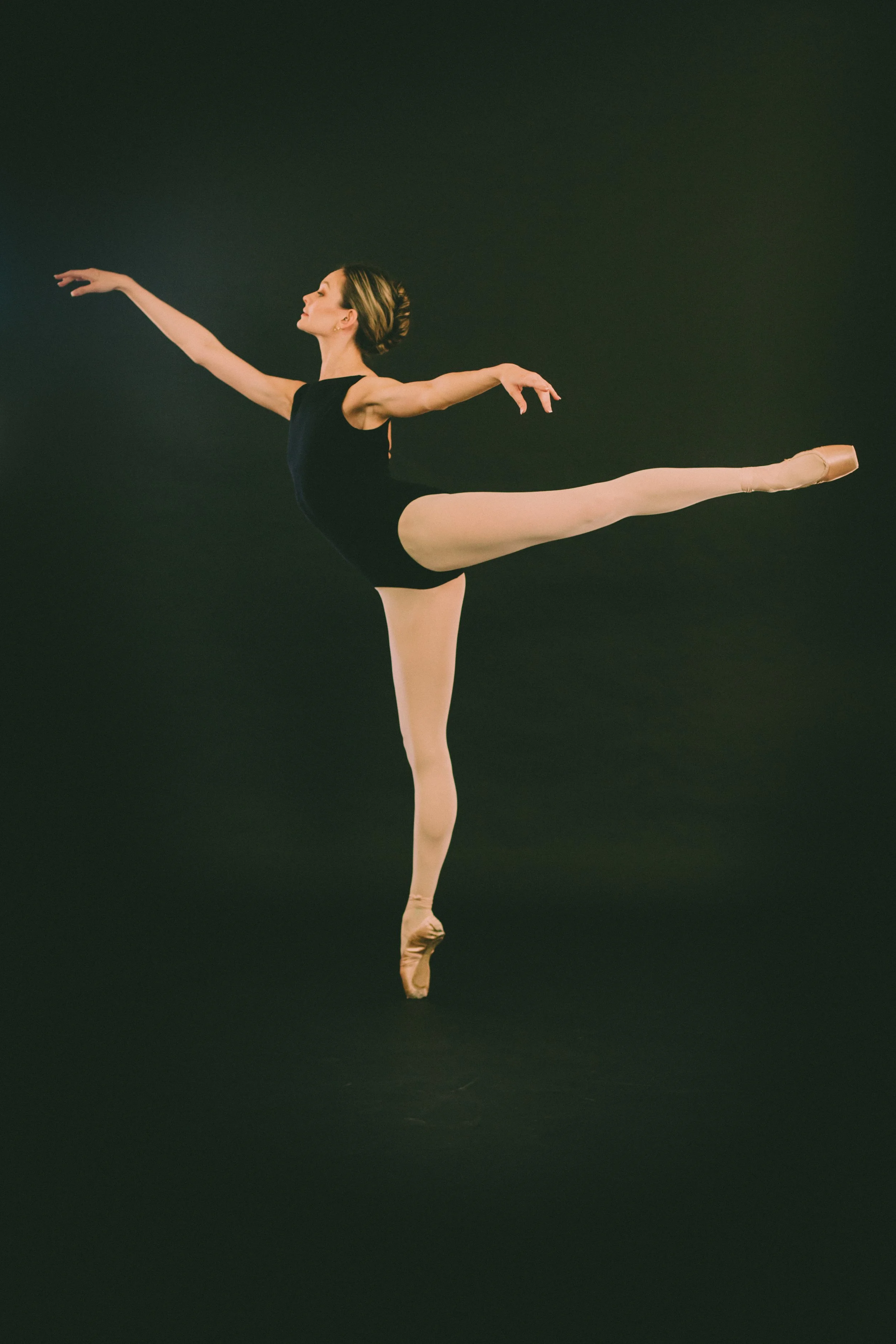
There is a saying that always rang true for me in my early career: “there will always be someone better than you.” When I moved on to professional training schools, I found out that I was not always going to be the most flexible. I wasn’t always going to have the best extensions. In fact, I found that depending on where I was, my extensions were just average. Once I began to place an emphasis on the other qualities a dancer possesses, ballet became so much more enjoyable to me. Musicality, port de bras, and dynamics of movement are all things that anyone can make beautiful and exciting regardless of ability, age, or gender. This is what makes ballet a beautiful art form. If you're struggling with technical perfectionism in dance, I encourage you to focus on these other attributes of dance that can help elevate your artistry without pushing your body to extreme limits.
Embracing Your Technical Abilities Where They Are
By Anna Nelson, DWC Ambassador
click below to shop the look:
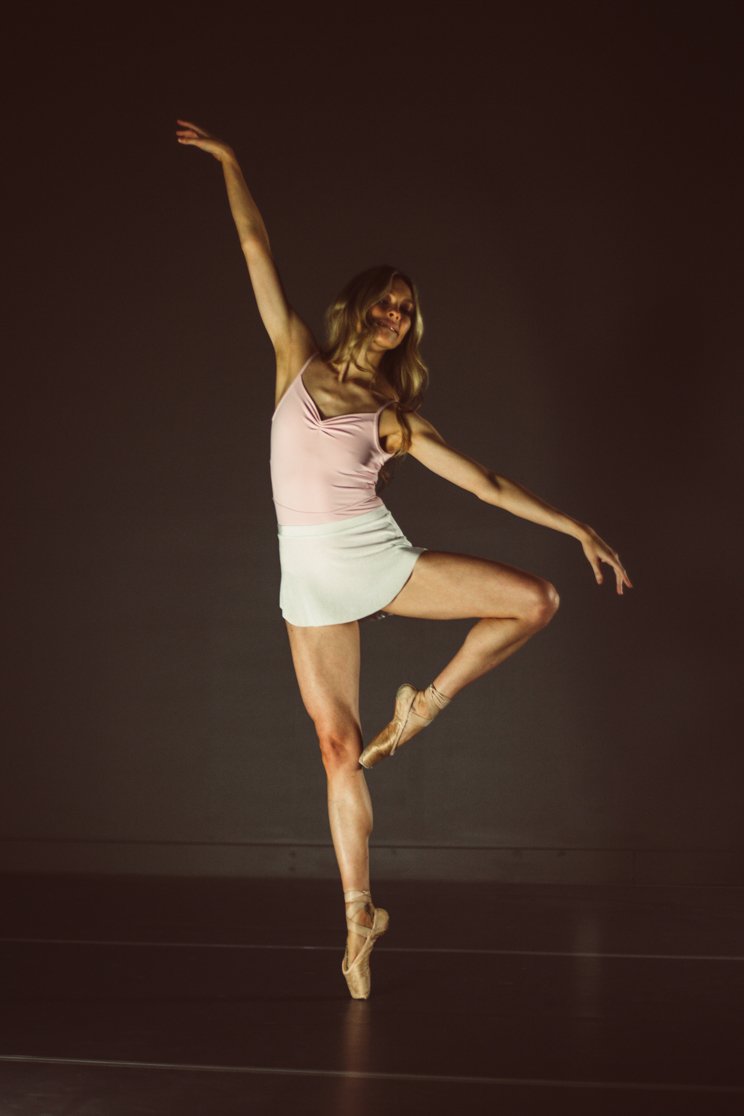
Odette Leotard by Claudia Dean World | Bullet Pointe Skirt in White
I’m sure many of us have experienced some form of body shaming in the ballet world. As a student, my first ballet teacher placed a large emphasis on “perfect” ballet bodies. Students who occupied slender bodies with long legs and arms were given great roles in productions regardless of talent. She often praised those with beautifully arched feet, high extensions, and students who possessed good turnout. I was one of the students with “perfect” turnout and high extensions. In my naivety, these attributes are what lead me to believe that someday I was going to be a great ballet dancer.
In my early training days, I would spend ample time everyday stretching and improving my extensions to ensure that I always had the highest legs in the class. I started ballet at the age of 13, which for a long time was considered to be late. When I started taking ballet classes, I was unable to do the splits. As a child, I remember being hyper flexible, but at 13 my legs were already starting to stiffen. Because my teacher put such a large emphasis on flexibility, she had a star chart on the wall. The classes always began with static stretching. We moved through foot in hand stretches while sitting down in a circle, progressing to front and middle splits and the frog stretch. Students who were able to get their chests down to the floor in the middle splits were awarded a star sticker to place next to their name on the star chart. For many years I was not able to get my chest down, which made me feel inadequate to other students. Instead of getting to put a star sticker next to my name I had to go find my spot at the barre and wait for others to put their stickers on the chart.
My first experience with Vaganova training was when I watched the 2006 documentary Ballerina. I was amazed at how flexible the students in the movie were. Everyone had amazing extensions and their backs seemed to fold in half. All of the dancers stood in perfectly turned out positions at every moment. I was mesmerized by all the dancers I saw in this movie. This movie ignited in me a passion for ballet. I wanted to become as flexible and make lines as beautiful as the ballerinas in the documentary. I began extreme stretching every night after ballet class. The ways in which I tried to attain flexibility fast were dangerous and even caused me to pull my hamstring, which made dancing painful for a few months.
Even though my methods of attaining flexibility fast were not healthy, I started to gain the attention of my ballet teacher. She would often point out how high my arabesque was and how high my legs would go in developpes. This made me feel amazing. However, it wasn’t until many years later that I realized these praises I received were at the cost of others. I remember a moment when my teacher had me stand next to another student at the barre with all the other students gathered around us. She had us both do a grande plie. “See how Anna’s knees go directly out to the side?” She pointed to the other student. “See how her’s don’t go to the side as much at all?” At that moment, I felt great. I felt like the teacher was showing how I was better than the other student in the demonstration. Looking back, this was an abusive and toxic way to explain turnout to young dancers. Teachers should never compare other students to each other when it comes to physical attributes a dancer may or may not possess.
Years later, I found out that my “perfect” turnout was the culprit behind my intense hip pain that I was experiencing. I underwent a painful surgery that resulted in me losing all flexibility in my hips. The limited coverage that my acetabular was offering my femur gave me great mobility, but also made tears almost inevitable. These tears in my labrum made me unable to dance. After my hip surgery and rehab, I was able to work on recovering flexibility. It was disheartening at first. In my early dancing years, I had put so much emphasis on how high my legs could go, and how flexible I was. After 1.5 years, I was able to do all my splits again, but I had lost a bit of the turnout I was previously used to having and I wasn’t able to get my legs as high as I was used to. I knew that I still wanted to dance at a high calibur, and it took a ton of soul searching to hone into the other parts of dance that I had put on the backburner at the expense of high extensions and wacking my legs as high as they could go. I began to focus more on musicality and my port de bras. Funnily enough, when I stopped putting emphasis on how high my legs were going or how turned out I was at the barre, my dancing improved tremendously. I actually began to enjoy dancing for the sake of dancing, not on making the most “perfect” lines at all times. In a way, I learned how to let go and just dance. This is something that I had not been doing for the near entirety of my early ballet career.
In retrospect, my childhood self was impressed by the beautiful lines the ballerinas created in the documentary, but these dancers also possessed beautiful quality of movement and musicality. These qualities are just as impressive, if not more impressive than just how high your legs can go. It takes years to develop artistry and musicality. These attributes are what makes ballet an art and not a sport. There is no right or wrong way to move to a certain phrase of music. These are all things I had been told in my years of training, but were not something that I fully understood until after my surgery.
There is a saying that always rang true for me in my early career: “there will always be someone better than you.” When I moved on to professional training schools, I found out that I was not always going to be the most flexible. I wasn’t always going to have the best extensions. In fact, I found that depending on where I was, my extensions were just average. Once I began to place an emphasis on the other qualities a dancer possesses, ballet became so much more enjoyable to me. Musicality, port de bras, and dynamics of movement are all things that anyone can make beautiful and exciting regardless of ability, age, or gender. This is what makes ballet a beautiful art form. If you're struggling with technical perfectionism in dance, I encourage you to focus on these other attributes of dance that can help elevate your artistry without pushing your body to extreme limits.
Disclaimer
All content found on the Dancewear Center Website, Instagram, Facebook, Pinterest, and all other relevant social media platforms including: text, images, audio, or other formats were created for informational purposes only. Offerings for continuing education credits are clearly identified and the appropriate target audience is identified. The Content is not intended to be a substitute for professional medical advice, diagnosis, or treatment. Always seek the advice of your physician or other qualified health provider with any questions you may have regarding a medical condition. Never disregard professional medical advice or delay in seeking it because of something you have read on this Website.
If you think you may have a medical emergency, call your doctor, go to the emergency department, or call 911 immediately. Dancewear Center does not recommend or endorse any specific tests, physicians, products, procedures, opinions, or other information that may be mentioned on dancewearcenter.net. Reliance on any information provided by dancewearcenter.net, Dancewear Center employees, contracted writers, or medical professionals presenting content for publication to Dancewear Center is solely at your own risk.
Links to educational content not created by Dancewear Center are taken at your own risk. Dancewear Center is not responsible for the claims of external websites and education companies.
How to Make a Ballet Bun
As dancers, we tirelessly strive to improve our technique and artistry in each class. A big part of putting in this work is focusing on the task at hand without distractions. And as any dancer with long locks knows, hair can often be a big distraction! We’ve all been there - constantly tucking falling strands behind our ears, jamming bobby pins into our scalp, trying to re-do our ballet bun in between combinations, the list goes on. Knowing how to do a proper ballet bun can significantly benefit a dancer, as it can keep them focused on their training and performance and not on whether their updo will stay put. Read on to learn DWC’s tips for achieving the perfect ballet bun.
A Guide to the Essential Ballerina Updo
By Madison Huizinga, DWC Blog Editor

Ballet bun at the crown of the head. Photo by Colin Hutton from danceadvantage.net
As dancers, we tirelessly strive to improve our technique and artistry in each class. A big part of putting in this work is focusing on the task at hand without distractions. And as any dancer with long locks knows, hair can often be a big distraction! We’ve all been there - constantly tucking falling strands behind our ears, jamming bobby pins into our scalp, trying to re-do our ballet bun in between combinations, the list goes on. Knowing how to do a proper ballet bun can significantly benefit a dancer, as it can keep them focused on their training and performance and not on whether their updo will stay put.
Let’s run through the basic steps.
Brush or comb your hair free of tangles
Run a hairbrush or comb through your hair several times until it is free of any tangles. Eliminating any knots or tangles in your hair will ensure that your hair looks smooth in the final ballet bun without any large “bumps.” Many dancers choose to use a spray bottle filled with water to achieve an extra smooth look.
Secure your hair in a ponytail at the crown of your head
Gather your hair into a ponytail that sits at the crown of your head (see photo). It’s worth noting that some dancers prefer to part their hair and secure it into a low ponytail at the nape of their neck. This creates what’s referred to as a “low bun.” For those with finer hair, using a hairbrush or comb to help gather your hair into a ponytail can help smooth out any bumps. Secure the ponytail with a hair tie, preferably one that’s a similar color to your hair. Dancers, specifically ones with finer hair, can optionally smooth their hair back with hair gel before this step to help smooth away bumps and flyaways. Many dancers also choose to use a bristle or “smoothing brush” during this step to help with any bumps or flyaways. Using mousse, “hair mascara,” or gel applied with a toothbrush can further enhance this smoothed back ponytail.
Twist the ponytail into a coil and wrap it around the hair tie

Photo of a ponytail at the crown of the head. Photo by Pius Martin from Unsplash.
Twist the hair in your ponytail until it starts coiling in on itself. Wrap it around your hair tie so it forms a spiral-like shape, pinning it with hair pins as you go. The tighter you coil your hair, the better! For dancers with thicker hair, it can be useful to divide the ponytail into two separate sections, twist each section, and coil each one in opposing directions around the hair tie. Twisting your hair into a firm coil will help ensure that the bun stays tightly secure and in place.
Fasten the bun with hair pins and a hairnet
Secure the ballet bun by sticking hair pins into its center, along the bottom base of the bun on the scalp. Angle the pin towards your scalp before shifting the angle upwards into the center of the bun. The more hair you gather in the pin before angling it upwards, into the bun, the flatter the bun will be. At Dancewear Center, we offer two-inch, two-and-a-half-inch, and three-inch hair pins for buns of varying sizes. The hair pin size that a dancer should use depends on the thickness and length of their hair. Also, wrapping a hairnet around the bun helps keep fine, flyaway hair at bay. Before securing the bun with hair pins, simply wrap the hairnet around the bun, making sure that its elasticized edge is tucked towards the bottom of the bun out of view. The hairnet may be wrapped around the dancer’s bun once, twice, or three times depending on the texture of the dancer’s hair and the size of their bun.
Pin back and hairspray any stray hairs
For those with layered and/or fine hair, use bobby pins or snap clips to secure any stray hairs or bangs. As a finishing touch, spray the bun and your scalp with a light coating of hairspray to ensure that the updo is smooth with a clean, finished look.
Bonus tips!
Use a “Bun Builder”
For those struggling to achieve a tall, rounded bun look, use the Bun “Donut” Builder by Bloch. Simply gather your hair into a ponytail, pull the ponytail through the center of the builder, slide the builder to the base of the ponytail, arrange your hair around it, and secure it with a hairnet and hair pins. The Bloch Bun Builder creates a taller, more spherical bun than the classic method, so we suggest using it if you are hoping to achieve that style in particular.
Keep a “hair kit” in your dance bag
It’s always helpful to have extra hair supplies on hand in the case of a hair tie snapping, a hair net snagging, or a bobby pin disappearing out of thin air (it’s crazy how they seem to do that!). The Bloch Hair Kit contains all of a dancer’s hair essentials including two hair nets, fifteen three-inch hair pins, ten two-inch hair pins, six bobby pins, four hair elastics, and a “how-to” guide for the best bun. Plus, it comes in an elegantly packaged pink tin that will be sure to stand out in your dance bag when you’re doing your hair in a hurry. The “Holding It Together” Bun Box from Covet Dance similarly contains hair pins and hair ties, as well as bobby pins, corkscrew spin pins, a bun-making “flower,” and a cute decorative wool bow to offer dancers more hair options.

Photo by Iiona Virgin on Unsplash
Accessorize!
When given permission from your dance instructor, let your personality shine with some fun hair accessories. The dreamy Cloud Scrunchie from Cloud & Victory wraps your bun in a colorful, luminous garment that looks great on your hair and on your wrist. Handmade by local Seattle artist Hayley Maddox, the scrunchies from Lasso Leos come with intricately detailed lace patterns and stitching, sure to stand out in any class. The Fluffy BUNnies Scrunchies from Covet Dance are as fuzzy and adorable as can be, particularly cute on younger dancers. Or adorn your ballerina updo with a classic crochet bun cover from American Dance Supply, offered in a variety of soft colors and with rhinestones.
By following these tips along with a little practice, your ballet bun will be fit for the studio and stage in no time!
Disclaimer
All content found on the Dancewear Center Website, Instagram, Facebook, Pinterest, and all other relevant social media platforms including: text, images, audio, or other formats were created for informational purposes only. Offerings for continuing education credits are clearly identified and the appropriate target audience is identified. The Content is not intended to be a substitute for professional medical advice, diagnosis, or treatment. Always seek the advice of your physician or other qualified health provider with any questions you may have regarding a medical condition. Never disregard professional medical advice or delay in seeking it because of something you have read on this Website.
If you think you may have a medical emergency, call your doctor, go to the emergency department, or call 911 immediately. Dancewear Center does not recommend or endorse any specific tests, physicians, products, procedures, opinions, or other information that may be mentioned on dancewearcenter.net. Reliance on any information provided by dancewearcenter.net, Dancewear Center employees, contracted writers, or medical professionals presenting content for publication to Dancewear Center is solely at your own risk.
Links to educational content not created by Dancewear Center are taken at your own risk. Dancewear Center is not responsible for the claims of external websites and education companies.
Interested in writing for the DWC Blog? Click below to fill out the DWC Contributor application!