
Everything You Need for Recital This Year!
It may seem a long way off but the end of the school year is approaching! Many of us dancers are getting ready for our end of year recitals and shows! With so many things on our plate, it is easy to forget things, so we here at DWC made a little list so you are sure to have all your necessities for tech, dress, and shows!
By Emma Neilson, DWC Social Media Manager
It may seem a long way off but the end of the school year is approaching! Many of us dancers are getting ready for our end of year recitals and shows! With so many things on our plate, it is easy to forget things, so we here at DWC made a little list so you are sure to have all your necessities for tech, dress, and shows!

Pointe Shoes
If you haven’t already done so, now is the time to start thinking about your pointe shoe situation for shows! Some shoes take longer than others to arrive, so to make sure that you have what you need, we recommend coming in and getting a fitting or placing an order with us now! Don’t forget, we offer discounts on bulk orders!
3 pairs of pointe shoes is 10% off
4-5 pairs of pointe shoes is 15% off
6+ pairs of pointe shoes is 20% off!

Pointe Shoe Shellac and Jet Glue
To make sure your shoes will support you through all the extra dancing you’re doing during this season, we highly recommend checking out our new product- Pointe Shoe Shellac!


Costume/Tutu Bag/Bag in general
Need help transporting all your items? We have you covered! With little time to no time to run home and grab anything they may need dancers need to bring a bag large enough to carry all the items you'll need for the day so you can be prepared. At Dancewear Center, we have a wide selection of dance bags to choose from including this AK Backpack! And some of our favorites include the RP Duffle Bag, Capezio Everyday Dance Duffel, and RP Origami Bag. And don’t forget a tutu bag!

Leotards/Undergarments
You’ll also need to make sure you have all the necessary undergarments for whatever costumes you’re wearing. We have a wide variety from brands like Capezio and Eurotard, and have multiple shades to make sure it makes your skintone seamlessly!

Tights
Make sure you have your tights, and extras in case of emergencies! We offer tights in a wide variety of skin tones and styles!
And don’t forget the tights bulk discount: buy 2 pairs get the 3rd for 50% off!

Body Glue
Are you wearing costumes that like to slip and slide as you’re dancing? We have a solution!
Hair accessories
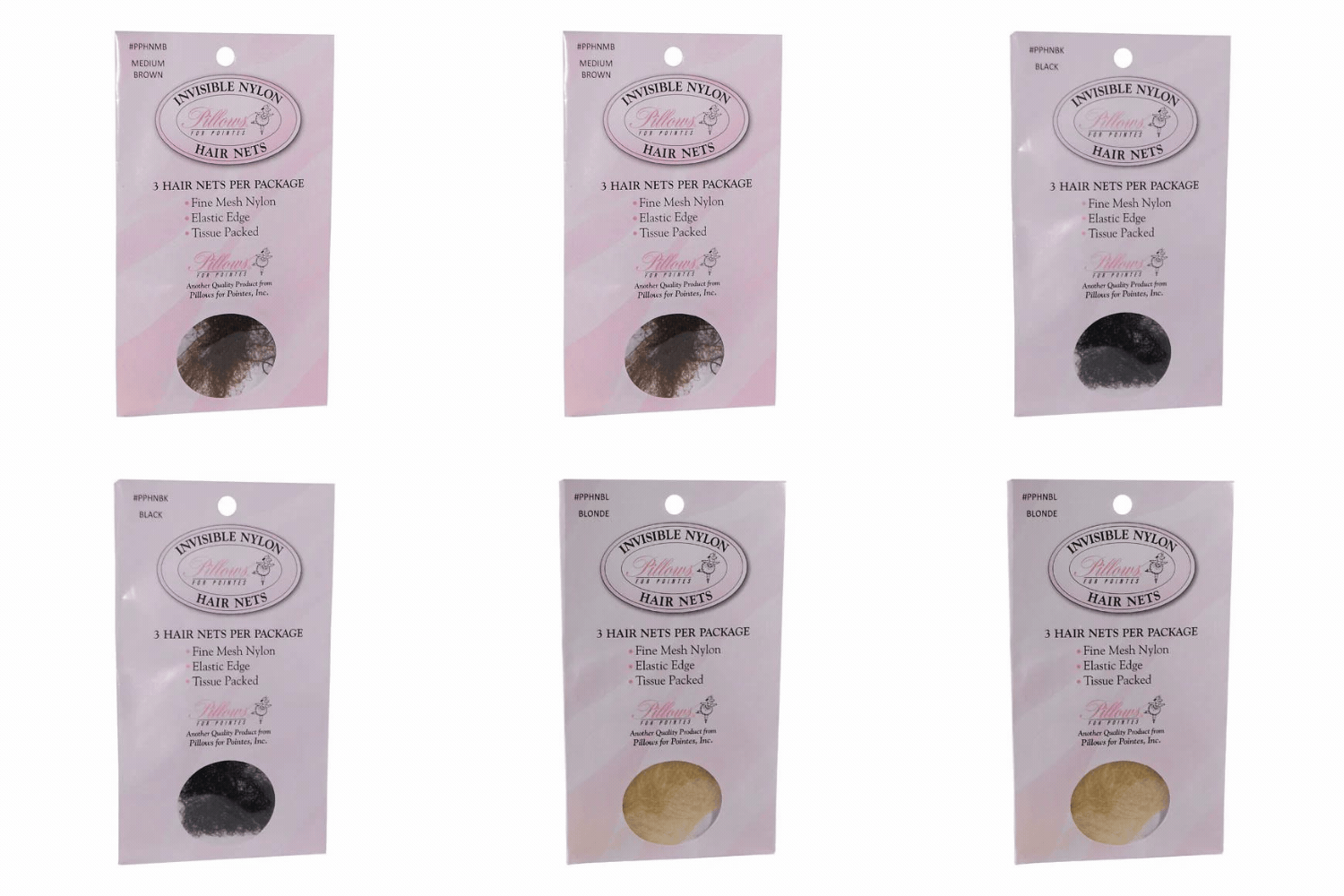
Make sure you have all the tools you need to make your hair look flawless for photos and the stage. Have you seen the new hair nets we have yet? Or this wonderful hair kit that packs everything you need?

Pointe Paint
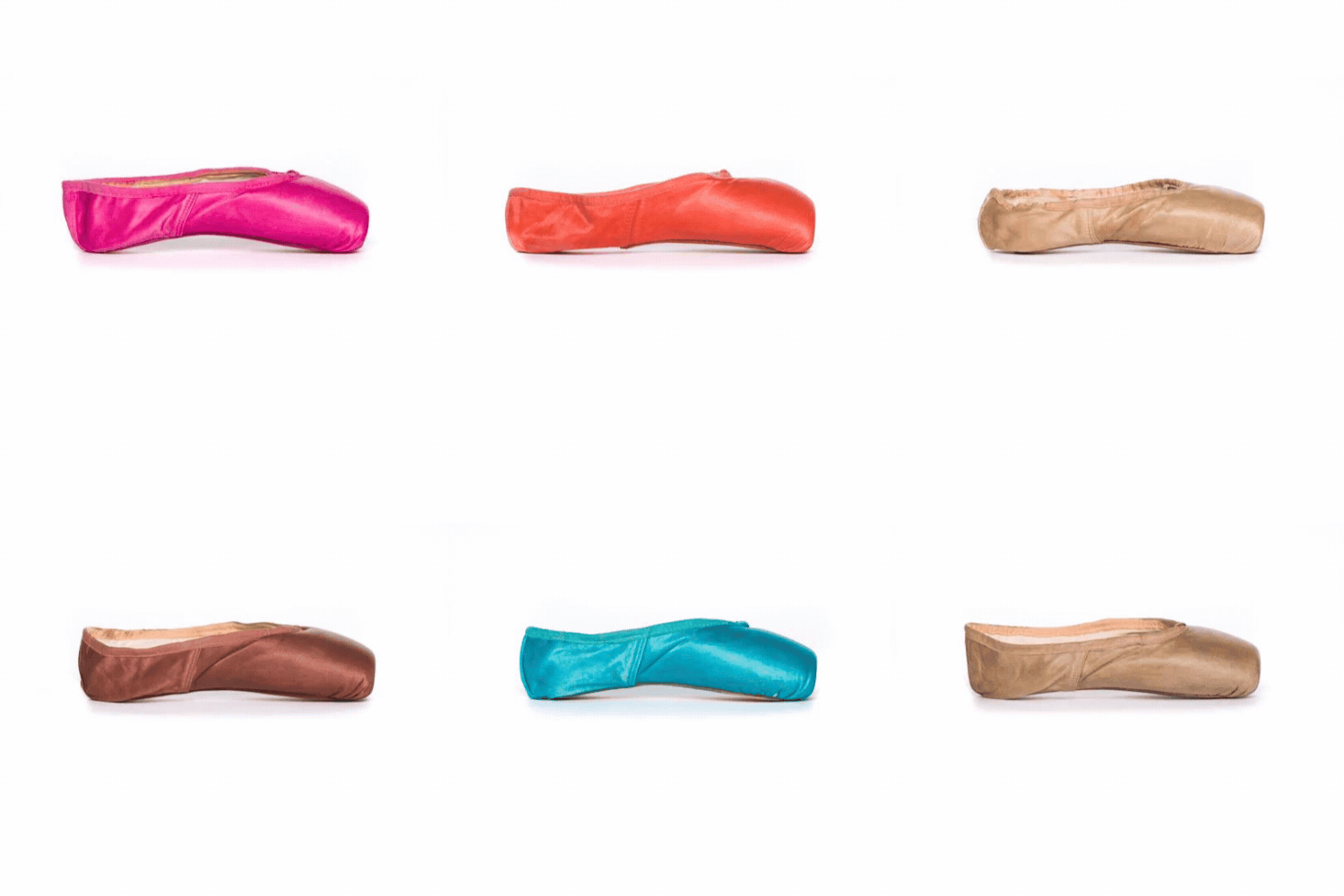
Are you required to have your pointe shoes be a certain color? We have a hassle-free and mess-free solution! Pointe Paint by Pointe People!
Get To Know DWC Ambassador Faith Potter
Get to know DWC’s newest ambassador, Faith Potter!
pronunciation: Fay-th Pot-ter | pronouns: she/her
By Samantha Weissbach, DWC Owner & General Manager

Faith Potter is one of our newest ambassadors, joining us from the Academy of Dance, she has been dancing since she was three years old. Faith has had the pleasure of experiencing a wide range of styles including ballet, lyrical, high school dance teams and recently tap! Faith was inspired by friends that have been DWC Ambassadors in the past. Having heard about the program and seen their excitement she was excited to apply and join. Faith is passionate about breaking the stereotype of the ideal dancer body. As a taller dancer she has felt this issue personally and wants to help disrupt that mold. Faith is excited to be performing as the Stepmother in her studio’s production of Cinderella this Spring!
Disclaimer
All content found on the Dancewear Center Website, Instagram, Facebook, Pinterest, and all other relevant social media platforms including: text, images, audio, or other formats were created for informational purposes only. Offerings for continuing education credits are clearly identified and the appropriate target audience is identified. The Content is not intended to be a substitute for professional medical advice, diagnosis, or treatment. Always seek the advice of your physician or other qualified health provider with any questions you may have regarding a medical condition. Never disregard professional medical advice or delay in seeking it because of something you have read on this Website.
If you think you may have a medical emergency, call your doctor, go to the emergency department, or call 911 immediately. Dancewear Center does not recommend or endorse any specific tests, physicians, products, procedures, opinions, or other information that may be mentioned on dancewearcenter.net. Reliance on any information provided by dancewearcenter.net, Dancewear Center employees, contracted writers, or medical professionals presenting content for publication to Dancewear Center is solely at your own risk.
Links to educational content not created by Dancewear Center are taken at your own risk. Dancewear Center is not responsible for the claims of external websites and education companies.
Get To Know DWC Ambassador Brittany Parker
Get to know DWC’s newest ambassador, Brittany Parker!
pronunciation: Britt-knee Park-er | pronouns: she/her
By Samantha Weissbach, DWC Owner & General Manager

Brittany Parker (she/her) is a Seattle based Choreographer, Performer, and Instructor of movement and one of DWC’s newest ambassadors! She is currently a contemporary and lyrical dance instructor at Westlake Dance Center, as well as serving as the Artistic Director of Coalescence Dance Company. Brittany has performed and had her work featured across the West Coast, most recently at MixMatch Dance Festival in Santa Monica California. With the upcoming dance film title "Other Side" in post-production, Brittany is in the process of creating new works for season five of Coalescence launching in 2024.
Disclaimer
All content found on the Dancewear Center Website, Instagram, Facebook, Pinterest, and all other relevant social media platforms including: text, images, audio, or other formats were created for informational purposes only. Offerings for continuing education credits are clearly identified and the appropriate target audience is identified. The Content is not intended to be a substitute for professional medical advice, diagnosis, or treatment. Always seek the advice of your physician or other qualified health provider with any questions you may have regarding a medical condition. Never disregard professional medical advice or delay in seeking it because of something you have read on this Website.
If you think you may have a medical emergency, call your doctor, go to the emergency department, or call 911 immediately. Dancewear Center does not recommend or endorse any specific tests, physicians, products, procedures, opinions, or other information that may be mentioned on dancewearcenter.net. Reliance on any information provided by dancewearcenter.net, Dancewear Center employees, contracted writers, or medical professionals presenting content for publication to Dancewear Center is solely at your own risk.
Links to educational content not created by Dancewear Center are taken at your own risk. Dancewear Center is not responsible for the claims of external websites and education companies.
Women Pioneers in Ballet
It’s officially March! Women’s History Month is upon us which calls for highlighting some amazing women in the dance community. The ballet world has come a long way through the years, but none of those achievements would be possible without the accomplishments of these amazing women. From Françoise Prévost to Misty Copeland, women have paved the way for the ballet industry for centuries. Here are a few women that influenced the ballet world to make it what it is today:
By Nicole Barrett, DWC Blog Editor

It’s officially March! Women’s History Month is upon us which calls for highlighting some amazing women in the dance community. The ballet world has come a long way through the years, but none of those achievements would be possible without the accomplishments of these amazing women. From Françoise Prévost to Misty Copeland, women have paved the way for the ballet industry for centuries. Here are a few women that influenced the ballet world to make it what it is today:
Françoise Prevost (1680-1741)
Francoise Prevost was a French ballerina that helped establish dramatic dance in the classical ballet era. She was known for her expressive, light, and dramatic way of dancing onstage, allowing her to grow in the dance world. Francoise debuted at the Academie d’Opera in 1699 replacing Marie-Therese de Subligny which gave her her start in the dance world. She performed with Jean Balon in Les Horaces in 1708 which caused the audience to weep. Francoise taught some of her famous solos to her dancers and she helped train two of her most successful students Marie Camargo and Marie Salle. In 1730 she retired from dancing as premiere danseuse to be replaced by her students.
Marie Taglioni (1804-1888)
Marie Taglioni was a Swedish ballerina of the romantic ballet era who was a central figure in the history of European dance. Marie grew to fame while she was dancing at the Paris Opera, but also when she was dancing at the Saint Petersburg's Mariinsky Ballet. She is credited through her dance years to be the first ballerina to be truly en pointe. While introducing the phenomena of dancing en pointe, she also introduced new fashion trends and hairstyles throughout her years in the dance world that became very popular in Europe. In 1847 she retired from performing and was known as a guiding spirit for the Paris Opera.
Anna Pavlova (1881-1931)
Anna Pavlova was a Russian prima ballerina in the late 19th and early 20th centuries. Through her early stages of ballet she trained with the Imperial Ballet School where she performed many principal roles with the company and graduated at 18. Anna then made her debut at the Mariinsky Ballet and with her first performance grew great praise from critics. Later in her career, she became a part of the Imperial Russian Ballet and was most recognized for her role The Dying Swan. With her own company she became the first ballerina to tour around the world. In 1931 on her way to a performance, she was diagnosed with pneumonia and later died from pleurisy. In traditional ballet fashion they honored her with a single spotlight on the stage where she would’ve danced next.

Maria Tallchief in a 1955 promotion for the Ballet Russe de Monte Carlo
Maria Tallchief (1925-2013)
Maria Tallchief was an American ballerina who was considered the first major prima ballerina in America. She is well-known for her roles as Sugar Plum Fairy in George Balanchine’s Nutcracker and the lead role in The Firebird. Her role in the Nutcracker transformed the ballet itself from obscure to one of America’s most famous, and her role in The Firebird made Maria become one of the world’s most famous ballet dancers. She was the first star of The New York City Ballet and became the first American to perform in Moscow’s Bolshoi Theater. In 1966, she retired from dance and began promoting ballet in Chicago where she debuted the Chicago City Ballet.
Misty Copeland (1982 - )
Misty Copeland is an American ballet dancer for the American Ballet Theater. She made history in 2015 by becoming the first African American woman to be promoted to principal dancer in the company's 75-year history, and for paving the way for minority dancers all around the country. Misty is considered to be a ballet prodigy after not starting ballet until she was 13 years old. She has written books, starred in documentaries, won spotlight awards for her dancing and charity works and was on Time magazine's 100 most influential people in the world in 2015. Misty still dances today and strives for more inclusivity in the dance community.
Learning about the women pioneers in the ballet world should not just be for Women’s History Month, it should be celebrated all year round. Without the breakthroughs that these women have been through, the ballet world would be very different than it is today. By learning the history of some of our favorite ballerinas, we can honor and acknowledge the accomplishments that these women have made for this beloved dance genre.
About the Author

Sources:
http://marietaglioni.orchesis-portal.org/index.php/texts/detailed-biography
https://www.womenshistory.org/education-resources/biographies/maria-tallchief
https://simple.wikipedia.org/wiki/Dance_of_the_Sugar_Plum_Fairy
https://www.nycballet.com/discover/our-history/george-balanchine/
https://www.nycballet.com/discover/ballet-repertory/george-balanchines-the-nutcracker/
Disclaimer
All content found on the Dancewear Center Website, Instagram, Facebook, Pinterest, and all other relevant social media platforms including: text, images, audio, or other formats were created for informational purposes only. Offerings for continuing education credits are clearly identified and the appropriate target audience is identified. The Content is not intended to be a substitute for professional medical advice, diagnosis, or treatment. Always seek the advice of your physician or other qualified health provider with any questions you may have regarding a medical condition. Never disregard professional medical advice or delay in seeking it because of something you have read on this Website.
If you think you may have a medical emergency, call your doctor, go to the emergency department, or call 911 immediately. Dancewear Center does not recommend or endorse any specific tests, physicians, products, procedures, opinions, or other information that may be mentioned on dancewearcenter.net. Reliance on any information provided by dancewearcenter.net, Dancewear Center employees, contracted writers, or medical professionals presenting content for publication to Dancewear Center is solely at your own risk.
Links to educational content not created by Dancewear Center are taken at your own risk. Dancewear Center is not responsible for the claims of external websites and education companies.

DWC How To's: Tighten the Taps on your Tap Shoes!
Tightening the taps of your tap shoes is an easy but crucial thing to know how to do! DWC Social Media Manager, Emma, will show you what you need, how to do it, and some important tips to remember!
By Emma Neilson, DWC Social Media Manager
Tightening the taps of your tap shoes is an easy but crucial thing to know how to do! DWC Social Media Manager, Emma, will show you what you need, how to do it, and some important tips to remember!
Gather your items, you will need: Your tap shoes, and a screwdriver, most likely a Phillip’s head (the end is a cross)
Place the screwdriver in the screw, while pressing down very firmly, turn clockwise (to the right) to tighten, or counterclockwise (to the left) to loosen.
Be sure only to do a little at a time and test between adjustments!
And as always, check in with your teacher about how tight to make them! We hope this tutorial was helpful, to shop our tap shoe options click here!
Disclaimer
All content found on the Dancewear Center Website, Instagram, Facebook, Pinterest, and all other relevant social media platforms including: text, images, audio, or other formats were created for informational purposes only. Offerings for continuing education credits are clearly identified and the appropriate target audience is identified. The Content is not intended to be a substitute for professional medical advice, diagnosis, or treatment. Always seek the advice of your physician or other qualified health provider with any questions you may have regarding a medical condition. Never disregard professional medical advice or delay in seeking it because of something you have read on this Website.
If you think you may have a medical emergency, call your doctor, go to the emergency department, or call 911 immediately. Dancewear Center does not recommend or endorse any specific tests, physicians, products, procedures, opinions, or other information that may be mentioned on dancewearcenter.net. Reliance on any information provided by dancewearcenter.net, Dancewear Center employees, contracted writers, or medical professionals presenting content for publication to Dancewear Center is solely at your own risk.
Links to educational content not created by Dancewear Center are taken at your own risk. Dancewear Center is not responsible for the claims of external websites and education companies.
Tracing the Origins of Hip Hop
From small house parties in New York City to loudspeakers across the world, hip hop has become a global sensation over the last handful of decades. Emerging from a prolific Black community in The Bronx, hip hop culture continues to develop and expand in unique ways, from musical innovations to developments in the B-boy and B-girl landscape. But where exactly did it all begin?
A Chronicle of Hip Hop Through the Years
By Madison Huizinga, DWC Blog Editor
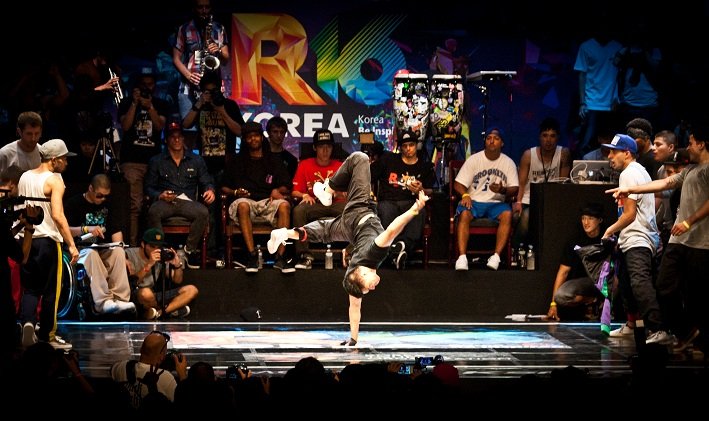
From small house parties in New York City to loudspeakers across the world, hip hop has become a global sensation over the last handful of decades. Emerging from a prolific Black community in The Bronx, hip hop culture continues to develop and expand in unique ways, from musical innovations to developments in the B-boy and B-girl landscape. But where exactly did it all begin?
According to "The Birth of Hip Hop" by Black History in Two Minutes or so, hip hop emerged from house party culture within The Bronx neighborhood in New York City in the 1970s. Easing out of the disco era, hip hop offered an electrifying and enticing new sound.
Hip hop pioneer Grandmaster Caz shares that there are four foundational pillars to hip hop culture: DJing, MCing or rapping, graffiti, and breakdancing. A turntable was at the center of the hip hop movement, which was comprised of a circular rotating platform on a phonograph. Those without access to instruments could use a turntable to play and mix sound recordings that they had on hand. For example, using two copies of a record, if there was a portion of a song a DJ liked, such as a drum break, the DJ could play that portion on loop, remixing the song into their own creation. Seattle-based professor, writer, and historian Dr. Daudi Abe points out that in this way, hip hop was one of the first genres of music to create music out of already existing music.
At house parties in the 70s, during "breaks" in a DJ set, MCs would hop on the mic and start rhyming and singing to keep the energy of the party alive. Similarly, B-boys and B-girls would dance on the breaks, thus the label "break dancing" or "breaking" was coined.
The hip hop movement in The Bronx began as an underground one with a homemade music distribution system. Since hip hop albums to be sold in stores weren't being produced yet, creators would distribute their music via cassette tapes, which would circulate throughout NYC. Eventually, this underground movement was brought more mainstream, with the advent of classic records like The Sugar Hill Gang's 1979 hit "Rapper's Delight.

Photo by Joel Muniz from Unsplash
According to Dr. Daudi Abe, hip hop was born out of the African American experience. Marcyliena Morgan, professor of African & African American Studies at Harvard University concurs, shares that hip hop emerged out of The Bronx because it contained a thriving African American community and an abundance of immigrants, who would all bump into each other as they walked on the street, exposing themselves to each other's unique ideas and experiences. Importantly, the lyrics of many hip hop songs reflected the social and economic conditions of inner cities according to folks that lived in those communities. Dr. Morgan stresses the importance of authenticity in representation within the genre, as hip hop artists looked at the history of their community, schools, city, and world to represent their culture in accurate and creative ways. Songs like "The Message" by Grandmaster Flash & The Furious Five and "Fight the Power" by Public Enemy in the 1980s reflect this idea well.
Dr. Daudi Abe has dedicated much of his work to educating others on the hip hop landscape of Seattle. The Garfield High School and University of Washington alum grew up in the Central District of Seattle and recalls falling in love with hip hop when he set foot in a record store with his father. Growing up, Abe listened to much of what his parents listened to, an eclectic mix of artists from the United States, Africa, and more. When he and his father stepped into a record store on the corner of 22nd and Union St, Abe was told that he could select any record he wanted. He was quickly drawn to a vinyl record with a multi-colored, swirly design, and selected that as his pick. Little did Daudi Abe know that the record was “Rapper’s Delight” by The Sugar Hill Gang. Drawn in by the familiar bassline and the unique lyrics, Abe was immediately hooked. “I consider myself and people of my generation so fortunate to have been born when we were,” he shares. “I really feel like I grew up into adolescence as hip hop was doing the same.”
“The [breaking] community has been so strong around here because the best and the brightest have always made it their business to turn around and offer mentoring”
Dr. Abe “fell into teaching in the early 1990s” and managed to include many popular hip-hop cultural references into his lessons to better connect with his students. After eight years of teaching kindergarten through eighth grade, Abe earned his Ph.D. in education at the University of Washington, later teaching at Seattle Central College where he felt he possessed more intellectual freedom in terms of creating his own curriculums.
In his work, Abe shares that hip hop is the “ultimate do-it-yourself culture.” He says that hip hop managed to become a “phenomenon that has broken down barriers, both geographic and social” and created a lasting impact arguably greater than any other cultural movement post-Civil Rights era.
His book Emerald Street: A History of Hip Hop in Seattle, featuring a foreword by Sir Mix-A-Lot, chronicles how hip hop has shaped urban life and the music scene in Seattle, a city he considers the cultural capital of the Pacific Northwest. Considering that Seattle is relatively geographically isolated from other major American cities, it had the chance to create a distinct hip-hop culture and not conform to dominant trends. The emergence of the song and music video for “Posse on Broadway” by Sir Mix-a-Lot is a great example of Seattle cementing its unique voice in the national hip hop landscape.

Seattle hip hop culture largely emerged out the Central District, where artists like Sir Mix-a-Lot frequented house parties to perform. Abe stresses that beyond rapping, DJing, breaking, and graffiti, the Seattle hip hop culture has influenced politics, relationships between communities of people of color and law enforcement, youth outreach and educational programs, and more.
In regards to B-boy culture, the theme of youth empowerment carries through. Fever One of the iconic Rock Steady Crew has dedicated much of his career to mentoring young people in the Seattle area, specifically at Jefferson Community Center, a space that became a mecca for breaking in Seattle. Crews who were formerly rivals were able to converge on common ground, including Massive and Untouchable Style Monkees, who eventually morphed into the crew Massive Monkees. Founding members of the crew, like Jerome “Skee” Aparis, have carried on Fever One’s tradition of community outreach, continuing to provide breaking opportunities and education to subsequent generations, specifically with the Massive Monkees Studio: The Beacon.
“The [breaking] community has been so strong around here because the best and the brightest have always made it their business to turn around and offer mentoring,” Dr. Abe stresses.
He stresses that although the view of hip hop culture in Seattle hasn't always been flattering, many hip hop cultural touchstones have been born out of this region. This includes FreshTracks, the first rap radio show west of the Mississippi, and The Emerald Street Boys who were known for combining rap music and dance and became the first Seattle artist to record a rap record in the 1980s. Contemporary artists like Macklemore and Laura "Piece" Kelly continue to add vibrancy and dynamism to the Seattle hip hop legacy.
Over 50 years after its conception, hip hop is still one of the most popular music genres out there, connecting people across the globe. With the rise of the Internet and the emergence of unique rap personalities adding their own spin on the genre, hip hop continues to remix and expand into more nuanced interpretations. It’ll be exciting to see where hip hop goes in the years to come.
A Brief History of Jazz
In June 2021, the hashtag #BlackTikTokStrike went viral on TikTok. Many Black creators decided to refrain from creating new TikTok dances until they received credit where it's due. Since TikTok’s conception, Black creators have been paving the way for the popular dance trends that become instantaneously viral online. For example, the viral “Savage” dance to the popular Megan Thee Stallion song was created by then-teenager Keara Wilson and has received tens of millions of views and even a recreation by Megan Thee Stallion herself. One of the most popular dances of all time on the app is the “Renagade” dance, performed to K Camp’s “Lottery.” This dance was created by 14-year-old Jalaiah Harmon and made popular by TikTok superstar Charli D’Amelio. However, as Natachi Onwuamaegbu of The Washington Post points out, D’Amelio, a white creator, “gained millions of followers before she acknowledged the dance’s Black creator.” Similarly, white TikTok star Addison Rae Easterling was invited on The Tonight Show to perform eight viral TikTok dances, none of which she choreographed. Credit to the original creators was not given.
“The foundation of the jazz technique we practice today comes from traditional African dances. ”
By Madison Huizinga, DWC Blog Editor

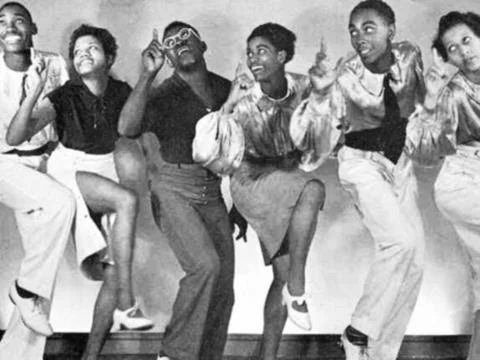
White’s Lindy Hoppers (Left to Right) Frankie Manning, Naomi Waller, Jerome Williams, Lucille Middleton, Billie Williams, Mildred Cruse, photo from Pointe People
In June 2021, the hashtag #BlackTikTokStrike went viral on TikTok. Many Black creators decided to refrain from creating new TikTok dances until they received credit where it's due. Since TikTok’s conception, Black creators have been paving the way for the popular dance trends that become instantaneously viral online. For example, the viral “Savage” dance to the popular Megan Thee Stallion song was created by then-teenager Keara Wilson and has received tens of millions of views and even a recreation by Megan Thee Stallion herself. One of the most popular dances of all time on the app is the “Renagade” dance, performed to K Camp’s “Lottery.” This dance was created by 14-year-old Jalaiah Harmon and made popular by TikTok superstar Charli D’Amelio. However, as Natachi Onwuamaegbu of The Washington Post points out, D’Amelio, a white creator, “gained millions of followers before she acknowledged the dance’s Black creator.” Similarly, white TikTok star Addison Rae Easterling was invited on The Tonight Show to perform eight viral TikTok dances, none of which she choreographed. Credit to the original creators was not given.
While the #BlackTikTokStrike may seem like a contemporary issue, there is a long history of white people stealing, appropriating, and making viral the art of Black artists without giving credit in America. Jazz dance, one of the cornerstone genres of dance in America, has deep roots in African and African American culture. However, throughout the 20th century, white dancers and choreographers claimed jazz dance as their own without acknowledging its salient history.

Frankie Manning, photo from Harlem World Magazine
The foundation of the jazz technique we practice today comes from traditional African dances. When enslaved Africans were kidnapped and forcefully moved to the American colonies in the 16th and 17th centuries, they brought with them traditional African styles of dance. Journalist Benna Crawford writes that “African dance was woven through religious ceremon[ies] and social assemblies and served to preserve the sense of identity and personal history [among enslaved people].” In Steppin’ on the Blues: The Visible Rhythms of African American Dance, Jacqui Malone writes that “music and dance gave African Americans a sense of power and control - it had a direct impact on their psychic and emotional states and allowed them to drop their masks and articulate their inner feelings.”
Enslaved Africans created new, unique dances, such as the “cakewalk,” which served as mimicry of ballroom-style dances often performed by white elites and plantation owners at the time, as well as continued styles of dance from their native countries. The “Juba” was a form of dance many enslaved people performed during the 18th century, involving the slapping of hands, legs, and body to make music. This act of making music to accompany their dancing often came about out of necessity, as enslaved people were denied rhythmic instruments.
The hallmarks of African dance involve “accentuat[ing] the rhythm of the music into isolations and movements of the body,” which can be seen in jazz dance today. Professor N. Cayou of Laney College shares that “there are some main characteristics of jazz dance that can be seen in traditional African dance” including “the use of bent knees, keeping the body close to the earth...the isolation of body parts in movement….the use of syncopated movements….carrying as many as two or three rhythms in the body at once, combining music and dance as a single expression…[and] individualism of style within a group style.” According to Malone, while most Europeans would traditionally separate music and dance as art genres, traditional African conceptions “couple music with one or more other art forms, including dance.”
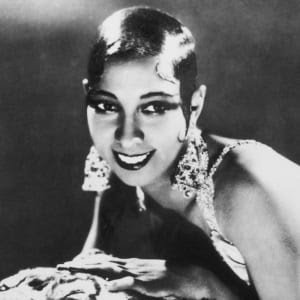
Josephine Baker, photo by Hulton Archive/Getty Images
Eventually, white minstrels began copying the choreography they witnessed enslaved Africans performing and appropriated it in their shows, using blackface to create offensive parodies. African American minstrel companies were eventually established and found success but not until after the Civil War. The choreography performed at these shows eventually traveled to the stages of vaudeville and Broadway. Malone shares that by 1910, “5,606 black musicians and 1,279 black actors and actresses” resided in the United States, revolutionizing the entertainment industry as we know it.
During the end of the 19th and beginning of the 20th century, traditionally African styles of movement inspired dance trends like the Charleston and the Lindy Hop. After the Juba dance acquired musical accompaniment, it greatly influenced the Charleston, which peaked in popularity in the 1920s. The dance begins with the dancers’ feet flat on the ground with their palms facing down. The dancer moves their left foot forward, then their right, before giving the left foot a tap with the heel of their right foot. The sequence is then reversed, with the right foot moving back, then the left, before the heel of the right foot is tapped with the left foot.
The Lindy Hop originated in the 1920s and 30s in Harlem, New York, during the Black cultural revolution known as the Harlem Renaissance. It’s a partner dance consisting of 8 count and 6 count steps with some footwork reminiscent of tap dance and the Charleston. The dance can be incredibly fast, with energetic kicks and lifts. Swing dance legend Frankie Manning is credited for transforming the Lindy Hop with moves like the “Lindy air step and synchronized ensemble Lindy routine.”

Katherine Dunham, photo by Dennis Stock/Magnum Photos
During the 1930s, jazz pioneer Jack Cole also began adding elements of East Indian and African dance to his jazz choreography. This created a great influence on the jazz masters of the 20th century, including Bob Fosse. From the 1920s and onwards, a collective of prolific Black jazz innovators came onto the scene, including Josephine Baker and Katherine Dunham.
However, in my dance education, I haven’t learned much about these Black jazz masters or the history of dance in African and African American culture. My jazz history knowledge has largely been limited to Bob Fosse’s contributions to Broadway, as well as the contemporary commercial jazz dance scene we see on competition stages today. As is the case with an abundance of art, Black creators’ contributions have been glossed over, ignored, or downright censored. Similar to the dance crazes circulating on TikTok at the moment, we would not have jazz dance if it weren’t for Black artists.
We’re doing students a disservice by not fully disclosing the rich history of jazz dance. Not only is it preventing students from fully immersing themselves in the style to help master it, but it’s wrongly denying credit to the major creators and innovators of the art form. By learning the full history of jazz dance in America, dancers can have a more nuanced understanding of its technicalities and more appropriately honor the Black creators who created the beloved genre.
For more information, check out Jazz Dance Direct created by the Jazz Is...Dance Project.
Resources:
https://www.tiktok.com/@keke.janajah/video/6802722722389576965?is_from_webapp=v1&is_copy_url=1
https://www.instagram.com/p/B22za3xD1Fh/?utm_source=ig_web_copy_link
https://www.washingtonpost.com/lifestyle/2021/06/25/black-tiktok-strike/
https://www.goodreads.com/book/show/1060169.Steppin_on_the_Blues
http://www.yehoodi.com/blog/2020/6/14/the-cakewalk-a-dance-of-black-resistance-and-celebration
https://www.slso.org/globalassets/education/learning-lab/learnlab-juba-dance_students.pdf
https://secretsofsolo.com/2020/08/the-history-of-the-charleston-dance/
https://www.history.com/topics/roaring-twenties/harlem-renaissance
https://www.womenshistory.org/education-resources/biographies/josephine-baker
Teaching Class vs. Taking Class: What I’ve Learned
As someone who has been dancing now for over 20 years, I never considered the challenges and differences that would happen standing at the front of the room rather than at the barre. I started out with just substituting classes here and there, but at the beginning of the 2023 school year, I joined the amazing staff at Body Language Studios (BLS), and was on a rotation of substitute teachers at Evergreen City Ballet (ECB). There is still a sense of feeling like the new kid on the first day of school; I had only taken one class previously at BLS, so it was an atmosphere I was very unfamiliar with. Now with some time teaching under my belt, and a more familiarity with different technique levels, here are a few things I have learned:
By Andrea Hines, DWC Ambassador
pronunciation: And-rea High-ns | pronouns: she/they
As someone who has been dancing now for over 20 years, I never considered the challenges and differences that would happen standing at the front of the room rather than at the barre. I started out with just substituting classes here and there, but at the beginning of the 2023 school year, I joined the amazing staff at Body Language Studios (BLS), and was on a rotation of substitute teachers at Evergreen City Ballet (ECB). There is still a sense of feeling like the new kid on the first day of school; I had only taken one class previously at BLS, so it was an atmosphere I was very unfamiliar with. Now with some time teaching under my belt, and a more familiarity with different technique levels, here are a few things I have learned:
The corrections you give in class are the ones your younger self got
I remember one of the BIGGEST and most frequent corrections I got as a student was the use of my head and my alonge. Now as a teacher, it’s one of the things I harp on the most with my students. When I am taking class, I give my self a body scan checklist. Before the combination starts, I’m thinking “Where are my back muscles?” “Am I engaging my core and glutes already?” “What muscles do I need to engage for this first tendu?” The amount of significant body awareness I now have I feel has made me a better dancer as an adult than I ever did as a student, and I love that I now get to pass along how to be aware of your body to my students.
Stamina
I know this seems like a weird one, but hear me out! When I am showing a combination, I show it as full out as I would if I was taking class. Reason being I want my students to see more than just what my arms and legs are doing. I want them to see the accent of where in the music I want things. I show them know what muscles I am being aware of during certain parts, all the while, I am projecting my voice to everyone in the studio can hear me. I find my stamina while taking class has improved, just from using my voice while teaching and dancing simultaneously. And oh boy, don’t even get me started on pointe work! (Sorry to my dancers who hear me wheeze through pointe class)
Body Awareness
Until now, I have never been more aware of the little things. Are my fingers too stiff? Am I actively turning out my tendu a la seconde? Like I mentioned in #1, that body scan checklist I mentioned is now almost like a mantra. When I was younger, I felt as though I was just able to do the combination- but now, not only my mind but also my body are exhausted just from the shear amount of mental energy this takes! When I’m teaching, since I am also verbally telling these things to my students it is almost impossibly to NOT think about your body!
Time Management
Funny enough- as a mom, and someone who also works in Corporate America, I didn’t think time management was something I ever had to consider as a ballet teacher! Making sure that I’m not overfixating on corrections, taking up 5-7 minutes of class on that one thing, and to ensure the flow of the class is stable so we are not skipping any pivotal combinations! Even when I go to take open class, I am always so impressed with teachers who are able to give corrections, but not skip frappes or adagio at barre, and also end class on time!

click below to shop the look:
Learning how to be a dancer is one thing, but learning how to teach effectively is a whole other world! I am so grateful for the teachers I had growing up, but also teachers and colleagues I can take note from and apply to my own classes! At the end of the day, we all want to see our students succeed, and nothing feels better than seeing tangible success from your classes. Being a little over a year back into dancing again, I feel as though this past year has shown more result in my technique than ever! These are just a few of the things that I have learned, and I can’t wait to see what else I learn! Happy teaching, but most importantly, happy dancing!
Disclaimer
All content found on the Dancewear Center Website, Instagram, Facebook, Pinterest, and all other relevant social media platforms including: text, images, audio, or other formats were created for informational purposes only. Offerings for continuing education credits are clearly identified and the appropriate target audience is identified. The Content is not intended to be a substitute for professional medical advice, diagnosis, or treatment. Always seek the advice of your physician or other qualified health provider with any questions you may have regarding a medical condition. Never disregard professional medical advice or delay in seeking it because of something you have read on this Website.
If you think you may have a medical emergency, call your doctor, go to the emergency department, or call 911 immediately. Dancewear Center does not recommend or endorse any specific tests, physicians, products, procedures, opinions, or other information that may be mentioned on dancewearcenter.net. Reliance on any information provided by dancewearcenter.net, Dancewear Center employees, contracted writers, or medical professionals presenting content for publication to Dancewear Center is solely at your own risk.
Links to educational content not created by Dancewear Center are taken at your own risk. Dancewear Center is not responsible for the claims of external websites and education companies.
DWC Competition and Convention Product Guide
At last, the gift-giving season is upon us! When it comes to shopping for holiday gifts, an unnecessary amount of stress can easily accrue. What do I get for them? What’s on-trend? Will they like it? Countless questions circle through our brains, making an activity that’s supposed to be festive feel a bit overwhelming. That’s why here at Dancewear Center, we’re making your life a bit easier by giving you our ultimate guide to holiday shopping for your favorite dancers! From stocking stuffers to affordable activewear to luxury leotards, DWC is your one-stop shop for holiday gifts this season. Read on to learn about our top picks that you can get for 30% off at our Small Business Saturday Sale, starting with the more affordable finds and leading into more upscale items.
By Madison Huizinga, DWC Blog Editor
Competition and convention season starting means that many dancers are going to be moving a lot more and getting the opportunity to train and compete in front of the most talented dancers and choreographers in the nation. How exciting! As with performances, feeling prepared for dance competitions and conventions can make the season feel a lot more sensational and a lot less stressful. Making sure you have your competition and convention schedule planned out, keeping warm in convention classes, staying organized, and wearing an outfit that makes you feel confident are all things dancers can do to feel a bit more secure during competitions and conventions. At Dancewear Center, we have the tools to set dancers up for success. Read on to learn about our competition and convention must-have items.

Claudia Dean World Sports Bra and Biker Shorts
As most all dancers know, when you're feeling confident, you're more likely to perform your best. One way to feel more confident while dancing is wearing dancewear that's appealing to your eye. And what's more appealing than this Claudia Dean World Sports Bra and Biker Shorts combo? Not to mention, wearing a monochromatic, matching ensemble like this one makes getting dressed for convention classes in the morning a breeze.
Zarely Ida Cross Back Top
A big part of feeling confident as a dancer is wearing dancewear that makes you feel comfortable and secure. The Zarely Ida Cross Back Top does just that! Providing a soft, comfortable fit with a highly stretchable fabric, the Ida Cross Back Top ensures that dancers feel supported so they can put all their focus on their dancing. The mesh detailing along the bottom of the top allows for breathability, even during heavy perspiration. This top is the perfect item to wear to convention classes!

click the image to shop!
Bloch Warm-Up Booties
While competition and convention season is an extremely active time for dancers, there are also many moments when dancers are waiting in between their competition performances and convention classes. During these times, it's critical that dancers keep their muscles warm in any way they can. Warm-up Booties are an excellent way to stay warm in between activities. They are thick and cushiony, providing great shock absorption for practicing jumps on hard surfaces. And they're often big enough for dancers to fit their pointe shoes in! The booties come in a variety of solid colors and printed designs at Dancewear Center.
click the image to shop!
Eurotard Ripstop Warm-Up Pants
In the similar vein of keeping warm, the Eurotard Rip Stop Pants are another excellent product for keeping your legs warm in between competition/convention activities. Also known as "trash bag pants," these ripstop pants are made from a fabric that effectively helps heat stay insulated to keep dancers warm and fashionable. The innovative pants contain an embossed design and deep pockets, making them multi-functional.
Garment Bag
Another invaluable item dancers must transport during competition season is costumes. There are few things more stressful than forgetting a piece of your costume at home. That's why carrying your costumes around in a garment bag is a must. Garment bags help keep costumes clean and the little zipper pockets in this Capezio one enables dancers to keep their hair pieces organized.
Dance Bags

click the image to shop!
During dance competitions and conventions, dancers are typically dancing and competing all day, with little time to no time to run home and grab anything they may need. That's why it's important to bring a bag large enough to bring all the items you'll need for the day so you can be prepared. At Dancewear Center, we have a wide selection of dance bags to choose from, some of our favorites include the RP Duffle Bag, Claudia Dean World Pro Bag, Capezio Everyday Dance Duffel, and RP Origami Bag.
Hair Products
It seems as though you can never have enough bobby pins on the day of a competition! Making sure your hair feels secure on competition and convention day can help you operate at your peak. DWC's got all of your hair needs covered, including hair elastics, hair ties, bun builders, and more.

click the image to shop!
Covet Dance's Dancer Problems Kit
The Dancer Problems Kit by Covet Dance is the perfect item to throw into your dance bag before a weekend of dancing and competing. This neatly sized pouch is filled with "solutions for everyday emergencies dancers face." In the event of a costume malfunction, the pouch has a "Mend It Sewing Kit," replete with needles, thread, buttons, snaps, tiny scissors, a safety pin, and more. The "Boo Boo Beads" is a heart-shaped hot/cold pack that molds itself to help sooth injuries. The "Nailed It" file and buffer can help smooth out toenails to prevent snags on tights. The "Blister RX" case is filled with bandages for blisters and cuts. "Lip Service" is vanilla lip balm, perfect to wear under lipstick. The "Hair Spray/Run Remedy" stops snags in tights and fixes hairdos. And finally, each kit comes with one hair coil and two hair ties because you never know when you may need them!

click the image to shop!
Water Bottle
What's more important than staying hydrated during a long weekend of training and competing? Dancewear Center has a wide range of water bottles for people to choose from, including the signature DWC "This Body Dances" Water Bottle, the adorable Capezio Ballerina Girl Water Bottle, the sporty Claudia Dean World Power Bottle, and more! And if you're the type of person who needs coffee before a long day of dancing, check out the Covet Dance "Coffee Before Choreo" Thermal Tumbler and the Covet Dance "The Body Says What Words Cannot" Thermal Tumbler.

Pointe Shoes
And of course, you can’t forget your pointe shoes! Be sure to get fit ahead of time and stock up on multiple pairs so you aren’t left with a dead pair of shoes in your most dire hour!
Staying prepared and organized is a key to success during competition and convention season. At Dancewear Center, we’ve got the products to help you perform at your top-level!
The Dance-Pilates Fusion: Unveiling the Artistry of Movement and Core Harmony
In the enchanting world of dance, where precision and strength weave the tapestry of excellence, I find myself on a transformative journey exploring the profound connection between dance and Pilates. I am currently an apprentice in Romana's Pilates International Teacher training at Kinesia Pilates Seattle. Join me as we unravel the synergy between these two disciplines, understanding why Pilates is not just a companion but an indispensable ally for dancers. Moreover, we’ll delve into the exciting prospects for those of us who dream of becoming Pilates instructors, forging a unique path where passion for dance intertwines seamlessly with a burgeoning profession.
pronunciation: Me-young Mar-go-lis | pronouns: she/her
By MiYoung Margolis, DWC Ambassador
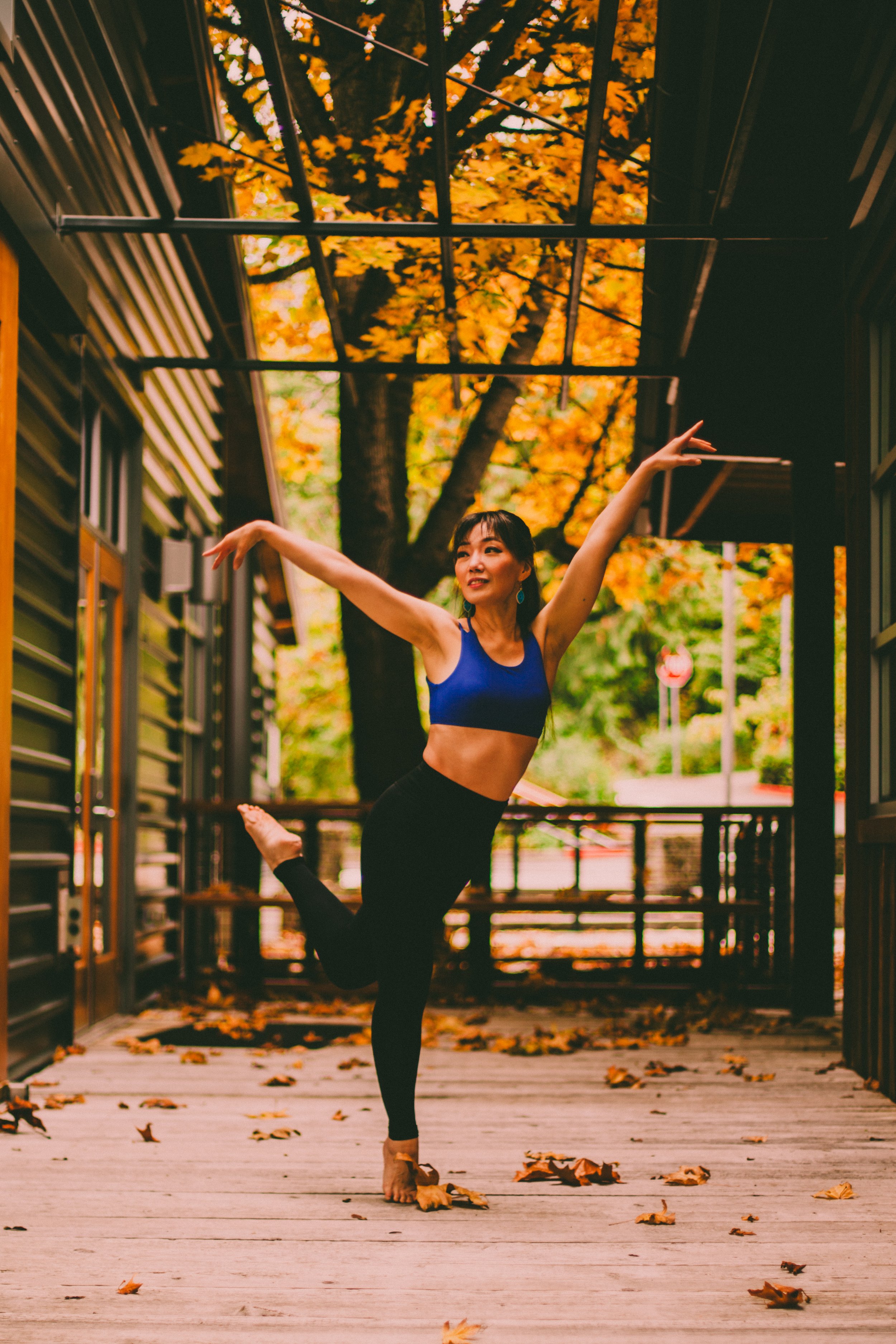
In the enchanting world of dance, where precision and strength weave the tapestry of excellence, I find myself on a transformative journey exploring the profound connection between dance and Pilates. I am currently an apprentice in Romana's Pilates International Teacher training at Kinesia Pilates Seattle. Join me as we unravel the synergy between these two disciplines, understanding why Pilates is not just a companion but an indispensable ally for dancers. Moreover, we’ll delve into the exciting prospects for those of us who dream of becoming Pilates instructors, forging a unique path where passion for dance intertwines seamlessly with a burgeoning profession.
The Dance-Pilates Bond:
I believe dance and Pilates share a beautiful symbiosis, intricately woven with a shared focus on core strength, flexibility, and mindful movement. Joseph Pilates’ creation aligns effortlessly with the physical demands and artistic nuances of dance.
1. Core Harmony: Nestled at the heart of both dance and Pilates is the significance of core strength. Pilates exercises become the compass guiding dancers to a stable foundation, enhancing precision and control in every graceful movement.
2. Flexibility Unleashed: Flexibility, the soul of dance, allows us to express ourselves with fluid grace. Pilates joins the dance journey by introducing controlled stretches that expand our range of motion, enabling us to achieve those beautifully elongated lines and execute intricate choreography effortlessly.
3. Mindful Movements: In the dance and Pilates realm, we celebrate the mind-body connection. Pilates nurtures mindfulness, urging dancers like us to be present in every gesture. This heightened awareness transforms our performances, letting us convey emotions through movement with captivating authenticity.
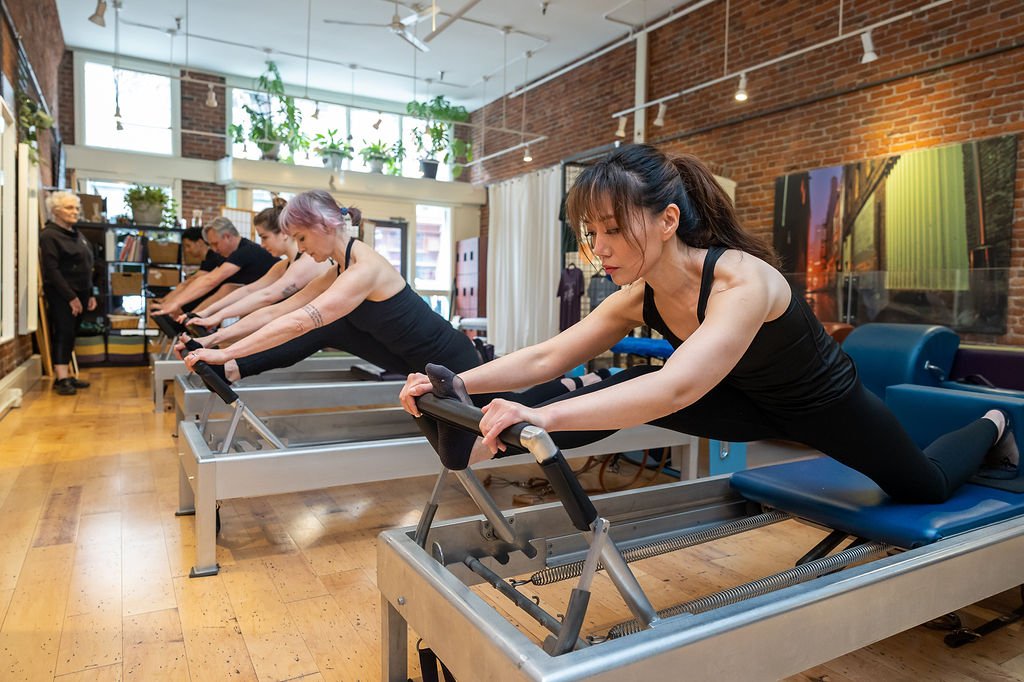
Why Pilates Holds the Key for Dancers:
1. Injury Prevention and Healing: Dance, a world of physical demands, comes with the risk of injuries. Pilates, with its emphasis on controlled and low-impact movements, becomes our trusted ally for injury prevention and rehabilitation, helping us maintain peak physical condition.
2. Cross-Training Magic: Pilates becomes our secret weapon for cross-training, addressing muscle imbalances and providing a well-rounded workout. This holistic approach safeguards against burnout, keeping us in peak performance shape.
3. Sustaining Dance Careers: Those of us who weave Pilates into our training experience an extended dance career. The strength, flexibility, and body awareness nurtured through Pilates become our fountain of youth, ensuring sustained performance quality over time.
Dreaming of Pilates Instructorship:
Embarking on the path of becoming a Pilates instructor is a thrilling journey, tailor-made for passionate dancers like us:
1. Crafting Dance-Centric Sessions: Imagine tailoring Pilates sessions specifically for dancers, addressing our unique needs and enhancing our performance with every guided move.
2. Collaboration with Dance Studios: Pilates instructors can be the heartbeat of collaboration with dance studios, offering on-site or virtual classes to support fellow dancers in their training and conditioning.
3. Wellness Maestros: Picture being a sought-after expert in dance wellness and rehabilitation, working hand-in-hand with dance professionals to optimize their physical health.
4. Educators in Dance Academies: Seasoned Pilates instructors can gracefully transition into educational roles, imparting wisdom to the next generation of dancers on the incredible benefits of Pilates for both performance and injury prevention.
For dancers like me, Pilates is not just a practice; it’s an integral part of our journey, enhancing our performance, shielding us from injuries, and ensuring longevity in our careers. As we step into the realm of Pilates instruction, our passion for dance becomes a transformative force, opening doors to diverse opportunities. The symbiotic dance-Pilates relationship lets us contribute significantly to the well-being and success of dancers worldwide, making our journey incredibly fulfilling.
Disclaimer
All content found on the Dancewear Center Website, Instagram, Facebook, Pinterest, and all other relevant social media platforms including: text, images, audio, or other formats were created for informational purposes only. Offerings for continuing education credits are clearly identified and the appropriate target audience is identified. The Content is not intended to be a substitute for professional medical advice, diagnosis, or treatment. Always seek the advice of your physician or other qualified health provider with any questions you may have regarding a medical condition. Never disregard professional medical advice or delay in seeking it because of something you have read on this Website.
If you think you may have a medical emergency, call your doctor, go to the emergency department, or call 911 immediately. Dancewear Center does not recommend or endorse any specific tests, physicians, products, procedures, opinions, or other information that may be mentioned on dancewearcenter.net. Reliance on any information provided by dancewearcenter.net, Dancewear Center employees, contracted writers, or medical professionals presenting content for publication to Dancewear Center is solely at your own risk.
Links to educational content not created by Dancewear Center are taken at your own risk. Dancewear Center is not responsible for the claims of external websites and education companies.
Interested in writing for the DWC Blog? Click below to fill out the DWC Contributor application!