
The Importance of Effective Communication Between Teachers and Students
If you are hurting in any way, be candid! Your health and safety are the number one priority in every situation, though sometimes it may be nerve-wracking to speak up. Be conscious of your value and take care of your body, both on and off of the dance floor. Being sensitive to students' needs and concerns is very important for teachers. Effective communication can be used to communicate the needs of students and teachers alike so that everyone can feel more comfortable and safe at the end of the day!
Advice On Being Candid About Your Health
By Claire Kaskel, DWC Ambassador

click below to shop the look!
My name is Claire Kaskel and I am one of Dancewear Center’s ambassadors. I have been a competitive dancer for about 9 out of my 17 years. Along with competitive dance comes long hours of rehearsals, classes, competitions, and conventions. And as a young dancer, I have been taught to push through all feelings of tiredness and even physical pain in order to stay training. There have certainly been times when I was not feeling well enough to continue pushing through a long day, but I did not feel safe enough to communicate to my teachers that I was in pain. I was afraid that I would be in trouble for taking a break. However, recently I learned an important lesson on the importance of communication when it comes to injuries.
I was at a competition/convention in March, and my knee injury was really beginning to hurt me. I have a reoccurring injury in my left knee that I initially hurt about two years back. I felt responsible to dance through the pain. I did not feel comfortable telling my teacher that I needed a break from the long hours of dancing to rest and ice my injury. I was afraid of letting her down by not taking a class that I was expected to take. But the more I pushed through classes and continued to dance, the more I realized how much my knee truly needed a break. My teammates agreed that I needed to sit down and ice, as they all noticed my confliction and pain. Eventually, with the support of my friends, I worked up the courage and convinced myself to let my teacher know about my injury and ask her advice on what to do. Her response made me feel so much better. She encouraged me to do whatever was best for myself, including resting, icing, and taping my knee. She even helped me tape it and sat with me to make me feel better. I was so stressed about communicating with my teacher out of fear of getting in trouble, but after I spoke with her, I realized that that was all I needed to do. Having support from my teacher to do what was best for myself truly took all my guilt and fear away. I was no longer afraid, which allowed me to focus on healing and improving my physical health.
This experience taught me the importance of speaking up for yourself and communicating with teachers. For me, this conversation established feelings of safety and care between me and my teacher. From the students’ perspective, it can be nerve-wracking to talk to your teacher about your needs out of fear of letting them down. But this interaction taught me a lot about doing what is best for yourself and how to communicate your needs in an effective and respectful manner. My advice to any other students who have felt the same way and struggled with the same guilt would be as follows:

Practice Honesty
Being consistently honest and candid about your feelings and health is highly important in establishing healthy communication between your teacher and yourself. When everyone is aware of a situation, it helps prevent it from worsening. For example, in my case, keeping my teacher updated about my torn knee helped prevent me from possibly injuring it more. Finding a private space before or after class to educate your teacher on your situation in a calm manner will help display seriousness and overall care for yourself and your training. Teachers will appreciate your honesty and respect and will be more likely to treat you with that same care and respect in return.
Prioritize Your Own Needs
If you are hurting in any way, be candid! Your health and safety are the number one priority in every situation, though sometimes it may be nerve-wracking to speak up. Be conscious of your value and take care of your body, both on and off of the dance floor.
Being sensitive to students' needs and concerns is very important for teachers. Effective communication can be used to communicate the needs of students and teachers alike so that everyone can feel more comfortable and safe at the end of the day!

Disclaimer
All content found on the Dancewear Center Website, Instagram, Facebook, Pinterest, and all other relevant social media platforms including: text, images, audio, or other formats were created for informational purposes only. Offerings for continuing education credits are clearly identified and the appropriate target audience is identified. The Content is not intended to be a substitute for professional medical advice, diagnosis, or treatment. Always seek the advice of your physician or other qualified health provider with any questions you may have regarding a medical condition. Never disregard professional medical advice or delay in seeking it because of something you have read on this Website.
If you think you may have a medical emergency, call your doctor, go to the emergency department, or call 911 immediately. Dancewear Center does not recommend or endorse any specific tests, physicians, products, procedures, opinions, or other information that may be mentioned on dancewearcenter.net. Reliance on any information provided by dancewearcenter.net, Dancewear Center employees, contracted writers, or medical professionals presenting content for publication to Dancewear Center is solely at your own risk.
Links to educational content not created by Dancewear Center are taken at your own risk. Dancewear Center is not responsible for the claims of external websites and education companies.
Working With What You Have
There is a saying that always rang true for me in my early career: “there will always be someone better than you.” When I moved on to professional training schools, I found out that I was not always going to be the most flexible. I wasn’t always going to have the best extensions. In fact, I found that depending on where I was, my extensions were just average. Once I began to place an emphasis on the other qualities a dancer possesses, ballet became so much more enjoyable to me. Musicality, port de bras, and dynamics of movement are all things that anyone can make beautiful and exciting regardless of ability, age, or gender. This is what makes ballet a beautiful art form. If you're struggling with technical perfectionism in dance, I encourage you to focus on these other attributes of dance that can help elevate your artistry without pushing your body to extreme limits.
Embracing Your Technical Abilities Where They Are
By Anna Nelson, DWC Ambassador
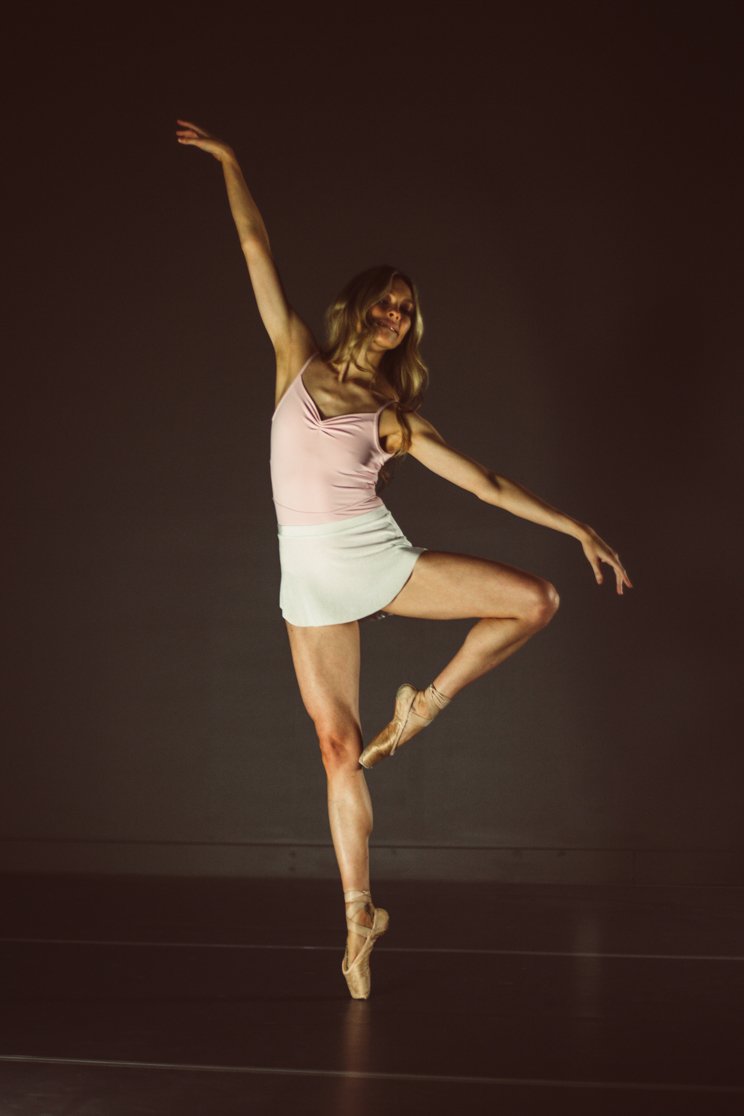
click below to shop the look:
Odette Leotard by Claudia Dean World | Bullet Pointe Skirt in White
I’m sure many of us have experienced some form of body shaming in the ballet world. As a student, my first ballet teacher placed a large emphasis on “perfect” ballet bodies. Students who occupied slender bodies with long legs and arms were given great roles in productions regardless of talent. She often praised those with beautifully arched feet, high extensions, and students who possessed good turnout. I was one of the students with “perfect” turnout and high extensions. In my naivety, these attributes are what lead me to believe that someday I was going to be a great ballet dancer.
In my early training days, I would spend ample time everyday stretching and improving my extensions to ensure that I always had the highest legs in the class. I started ballet at the age of 13, which for a long time was considered to be late. When I started taking ballet classes, I was unable to do the splits. As a child, I remember being hyper flexible, but at 13 my legs were already starting to stiffen. Because my teacher put such a large emphasis on flexibility, she had a star chart on the wall. The classes always began with static stretching. We moved through foot in hand stretches while sitting down in a circle, progressing to front and middle splits and the frog stretch. Students who were able to get their chests down to the floor in the middle splits were awarded a star sticker to place next to their name on the star chart. For many years I was not able to get my chest down, which made me feel inadequate to other students. Instead of getting to put a star sticker next to my name I had to go find my spot at the barre and wait for others to put their stickers on the chart.
My first experience with Vaganova training was when I watched the 2006 documentary Ballerina. I was amazed at how flexible the students in the movie were. Everyone had amazing extensions and their backs seemed to fold in half. All of the dancers stood in perfectly turned out positions at every moment. I was mesmerized by all the dancers I saw in this movie. This movie ignited in me a passion for ballet. I wanted to become as flexible and make lines as beautiful as the ballerinas in the documentary. I began extreme stretching every night after ballet class. The ways in which I tried to attain flexibility fast were dangerous and even caused me to pull my hamstring, which made dancing painful for a few months.
Even though my methods of attaining flexibility fast were not healthy, I started to gain the attention of my ballet teacher. She would often point out how high my arabesque was and how high my legs would go in developpes. This made me feel amazing. However, it wasn’t until many years later that I realized these praises I received were at the cost of others. I remember a moment when my teacher had me stand next to another student at the barre with all the other students gathered around us. She had us both do a grande plie. “See how Anna’s knees go directly out to the side?” She pointed to the other student. “See how her’s don’t go to the side as much at all?” At that moment, I felt great. I felt like the teacher was showing how I was better than the other student in the demonstration. Looking back, this was an abusive and toxic way to explain turnout to young dancers. Teachers should never compare other students to each other when it comes to physical attributes a dancer may or may not possess.
Years later, I found out that my “perfect” turnout was the culprit behind my intense hip pain that I was experiencing. I underwent a painful surgery that resulted in me losing all flexibility in my hips. The limited coverage that my acetabular was offering my femur gave me great mobility, but also made tears almost inevitable. These tears in my labrum made me unable to dance. After my hip surgery and rehab, I was able to work on recovering flexibility. It was disheartening at first. In my early dancing years, I had put so much emphasis on how high my legs could go, and how flexible I was. After 1.5 years, I was able to do all my splits again, but I had lost a bit of the turnout I was previously used to having and I wasn’t able to get my legs as high as I was used to. I knew that I still wanted to dance at a high calibur, and it took a ton of soul searching to hone into the other parts of dance that I had put on the backburner at the expense of high extensions and wacking my legs as high as they could go. I began to focus more on musicality and my port de bras. Funnily enough, when I stopped putting emphasis on how high my legs were going or how turned out I was at the barre, my dancing improved tremendously. I actually began to enjoy dancing for the sake of dancing, not on making the most “perfect” lines at all times. In a way, I learned how to let go and just dance. This is something that I had not been doing for the near entirety of my early ballet career.
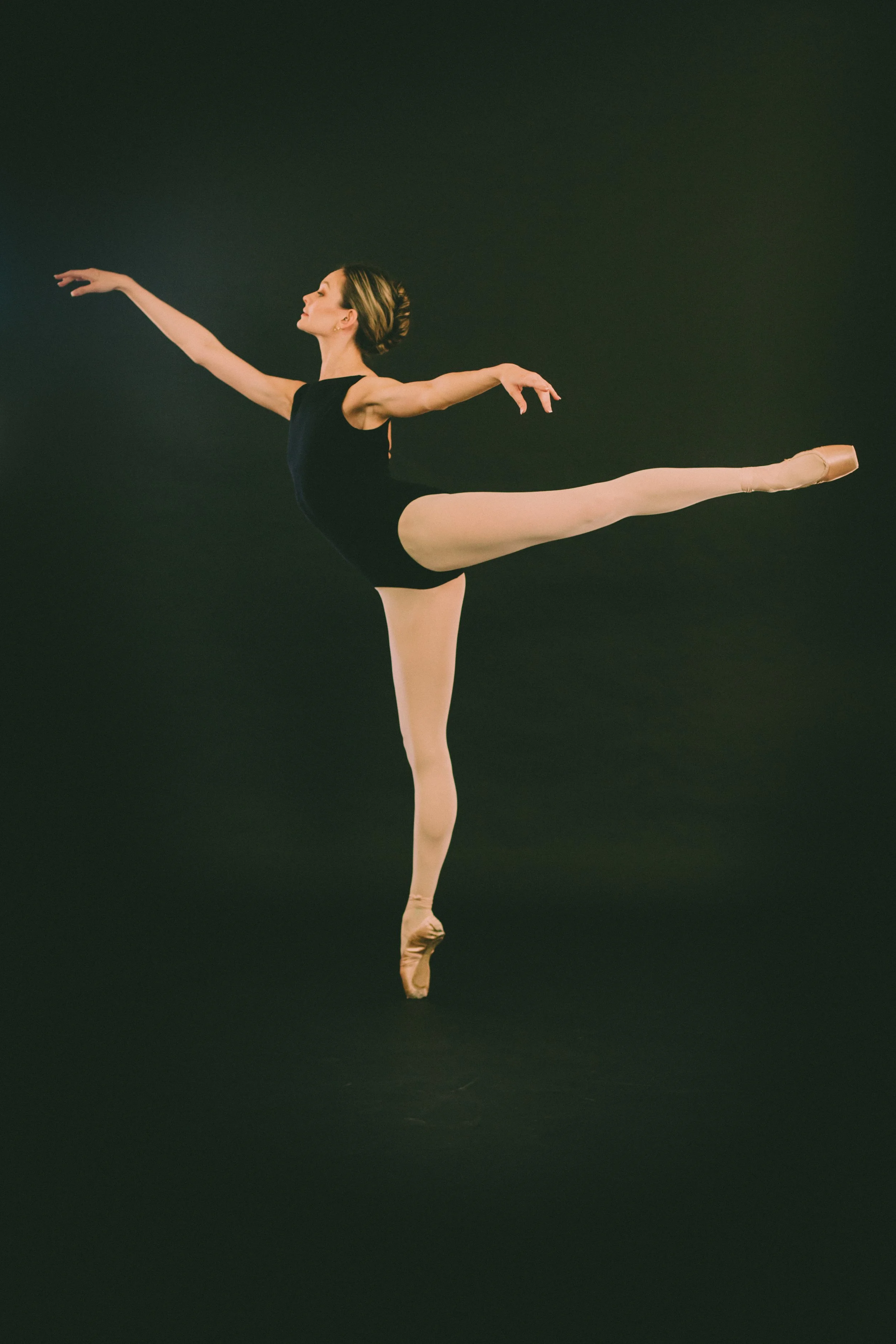
In retrospect, my childhood self was impressed by the beautiful lines the ballerinas created in the documentary, but these dancers also possessed beautiful quality of movement and musicality. These qualities are just as impressive, if not more impressive than just how high your legs can go. It takes years to develop artistry and musicality. These attributes are what makes ballet an art and not a sport. There is no right or wrong way to move to a certain phrase of music. These are all things I had been told in my years of training, but were not something that I fully understood until after my surgery.
There is a saying that always rang true for me in my early career: “there will always be someone better than you.” When I moved on to professional training schools, I found out that I was not always going to be the most flexible. I wasn’t always going to have the best extensions. In fact, I found that depending on where I was, my extensions were just average. Once I began to place an emphasis on the other qualities a dancer possesses, ballet became so much more enjoyable to me. Musicality, port de bras, and dynamics of movement are all things that anyone can make beautiful and exciting regardless of ability, age, or gender. This is what makes ballet a beautiful art form. If you're struggling with technical perfectionism in dance, I encourage you to focus on these other attributes of dance that can help elevate your artistry without pushing your body to extreme limits.
Disclaimer
All content found on the Dancewear Center Website, Instagram, Facebook, Pinterest, and all other relevant social media platforms including: text, images, audio, or other formats were created for informational purposes only. Offerings for continuing education credits are clearly identified and the appropriate target audience is identified. The Content is not intended to be a substitute for professional medical advice, diagnosis, or treatment. Always seek the advice of your physician or other qualified health provider with any questions you may have regarding a medical condition. Never disregard professional medical advice or delay in seeking it because of something you have read on this Website.
If you think you may have a medical emergency, call your doctor, go to the emergency department, or call 911 immediately. Dancewear Center does not recommend or endorse any specific tests, physicians, products, procedures, opinions, or other information that may be mentioned on dancewearcenter.net. Reliance on any information provided by dancewearcenter.net, Dancewear Center employees, contracted writers, or medical professionals presenting content for publication to Dancewear Center is solely at your own risk.
Links to educational content not created by Dancewear Center are taken at your own risk. Dancewear Center is not responsible for the claims of external websites and education companies.
Getting to Know DWC Ambassador Emmy Fansler
Today, Emmy has carved spaces for herself and others that have been long overdue in the dance industry, specifically through the creation of the Best of My Abilities (BOMA) program. The BOMA program, offered at Issaquah Dance Theater and The Dance School, introduces students with disabilities to dance and provides a space for dancers of all abilities to learn and build relationships. “I know that there are lots of people who are afraid to step into a dance studio because they feel like you have to be a certain way...My entire dance life has been [dedicated to] figuring out ways to use dance to show people how loved they are,” she shares.
On the Difference Between Accepting and Embracing
Name pronunciation: Em-me Fan-s-ler | Pronouns: she/her
**Trigger Warning: Trauma, Sexual Assault
By Madison Huizinga, DWC Blog Editor

Emmy largely fell in love with dance because of its healing qualities. “I had quite a bit of trauma in my middle school and high school life,” Emmy says. Due to these experiences, she went from being “somebody that cared about everything” to being “somebody that really didn’t care.” “I just didn’t care about myself anymore [and] didn’t feel like I was worthy of love or praise or attention,” Emmy says. When someone invited her to audition to be a ball guest for Midwest Regional Ballet’s Cinderella, these feelings of unworthiness began to shift.
“I just fell in love with the sense of community,” Emmy says of being a part of Cinderella. She shares that it wasn’t that she was particularly interested in dancing ballet choreography—rather, she was touched that somebody wanted her to be a part of something. In addition, after experiencing sexual trauma, dance helped show Emmy that physical touch could be anticipated, safe, and choreographed. “That was really healing to me,” she says. Since that first day of rehearsal, Emmy says that she hasn’t gone less than dancing twenty hours a week.
She ended up getting a scholarship to study dance at the University of Central Oklahoma after dancing for just three years. Nonetheless, over time, it became clear to Emmy that becoming a professional dancer wasn’t in her future, particularly after experiencing a hip injury and being diagnosed with a thyroid disorder.
“It felt natural that I would be a teacher and choreographer because I didn’t start dance with the idea of wanting to be a professional ballerina necessarily. I started dance because somebody invited me,” Emmy says, and she continued because of the way it made her feel. Today, she’s carved spaces for herself and others that have been long overdue in the dance industry, specifically through the creation of the Best of My Abilities (BOMA) program. The BOMA program, offered at Issaquah Dance Theater and The Dance School, introduces students with disabilities to dance and provides a space for dancers of all abilities to learn and build relationships. “I know that there are lots of people who are afraid to step into a dance studio because they feel like you have to be a certain way...My entire dance life has been [dedicated to] figuring out ways to use dance to show people how loved they are,” she shares.
Emmy loves that dance allows her to take huge feelings she experiences and stories that are challenging to tell and express them on a stage where people can witness her experiences as beautiful. Dancing reminds Emmy that her body is capable of amazing things. And after undergoing a procedure that left her without the ability to conceive children, having a life passion that allows her to connect with children is one of the most important things to her.

While she acknowledges the many challenges she’s experienced in the dance industry, Emmy says that a big one is “imposter syndrome,” or feeling like she doesn’t belong. She points out that there are so many dancers, and people in general, in the Seattle area who have extensive accolades to justify their qualifications. “I don’t have that,” she admits. “Part of me has felt like I have to jump into every situation and prove that I’m capable.” For those who have similarly felt like they don’t belong in certain dance spaces, Emmy says that they undoubtedly do. “Your experience is different than anybody else’s in the world. And there are things that you can contribute that other people cannot. And it’s also okay if they contribute things that you cannot,” she says.
Emmy was inspired to become a DWC ambassador because she strongly aligns with the values of the business. “I feel like this is a space and a platform that’s very authentic,” she says, sharing that she appreciates that DWC strives to help make all dancers feel welcomed and safe in the industry. As an Ambassador, Emmy looks forward to helping affirm this message to dancers and sharing her multiplicity of experiences as a teacher. In addition to her BOMA classes, Emmy teaches classes of all levels and works with the competition team at Issaquah Dance Theater. At The Dance School, Emmy also teaches classes relating to storytelling, partnering, embodied ballet, and more. And she’s the program director for the dance program at Si View Metro Parks. Emmy is excited to show people what it’s like to participate in all of these different spheres of dance.
In the future, Emmy strives to find ways to integrate more student-driven storytelling and choreography classes into her schedule. At Si View Metro Parks, she’s planning on hosting an expressive movement workshop once a month open to dancers of all experience levels. The workshop will be centered on a theme, featuring a discussion portion, a creation workshop, and a small performance that is open to the community. “I have a vision for it. I feel very excited about the possibilit[ies] for it,” Emmy shares of the workshop.
Emmy strongly believes that dance creates a platform for building relationships and in the larger dance industry, she hopes to see more people embracing the differences dancers have and the contributions they can make. “There’s a difference between accepting and embracing,” she points out, sharing her wish for all dancers to not only feel tolerated but cared for and even invited.

“It doesn’t have to be an exclusive space. It can be radically inclusive,” Emmy says of the dance world.
Stay tuned for more from Emmy Fansler in the coming weeks!
If you or someone you know has been sexually assaulted, help is available. The National Sexual Assault Hotline is available 24/7 and is completely confidential: 800-656-4673
Disclaimer
All content found on the Dancewear Center Website, Instagram, Facebook, Pinterest, and all other relevant social media platforms including: text, images, audio, or other formats were created for informational purposes only. Offerings for continuing education credits are clearly identified and the appropriate target audience is identified. The Content is not intended to be a substitute for professional medical advice, diagnosis, or treatment. Always seek the advice of your physician or other qualified health provider with any questions you may have regarding a medical condition. Never disregard professional medical advice or delay in seeking it because of something you have read on this Website.
If you think you may have a medical emergency, call your doctor, go to the emergency department, or call 911 immediately. Dancewear Center does not recommend or endorse any specific tests, physicians, products, procedures, opinions, or other information that may be mentioned on dancewearcenter.net. Reliance on any information provided by dancewearcenter.net, Dancewear Center employees, contracted writers, or medical professionals presenting content for publication to Dancewear Center is solely at your own risk.
Links to educational content not created by Dancewear Center are taken at your own risk. Dancewear Center is not responsible for the claims of external websites and education companies.
Getting to Know DWC Ambassador Grace Pilo
While there is still so much social progress that needs to be made in the dance world, it’s exciting to see studios and companies taking steps to celebrate inclusivity and diversity in ways that didn’t exist years ago. Celebrating inclusivity in the dance world involves inviting dancers with all kinds of backgrounds and identities into the industry, and making them feel welcomed as they are. This also includes celebrating dancers with autoimmune diseases. DWC Ambassador Grace Pilo is passionate about advocating for dancers with autoimmune diseases, particularly those with type 1 diabetes, like herself. Read on to learn more about Grace’s dance journey and advocation efforts!
A Local Dancer on Dancing with Type 1 Diabetes
Name pronunciation: Grace Pie-lo | Pronouns: she/her
By Madison Huizinga, DWC Blog Editor

While there is still so much social progress that needs to be made in the dance world, it’s exciting to see studios and companies taking steps to celebrate inclusivity and diversity in ways that didn’t exist years ago. Celebrating inclusivity in the dance world involves inviting dancers with all kinds of backgrounds and identities into the industry, and making them feel welcomed as they are. This also includes celebrating dancers with autoimmune diseases. DWC Ambassador Grace Pilo is passionate about advocating for dancers with autoimmune diseases, particularly those with type 1 diabetes, like herself. Read on to learn more about Grace’s dance journey and advocation efforts!
“I’ve always been such a wiggly kid,” Grace says, sharing that as a youngster, her mom sought to involve her in an activity where she could release some of her restless energy. She says her mom signed her up for dance and she instantly fell in love with it. Today, Grace dances with Momentum Dance Academy & Ensemble in Burien, Washington.
“In 2015, I was diagnosed with a life-threatening autoimmune disease: type 1 diabetes,” Grace shares. “When I was in the hospital, all I wanted to do was go back to dance.” Before her diagnosis, Grace’s involvement with dance was largely recreational. But after she learned she had diabetes, she shares that her passion for the art form deepened. “I realized why I love to dance,” Grace says. Dance is an opportunity for Grace to be herself and not think about anything else, particularly when she’s performing on stage.
According to the organization JDRF, type 1 diabetes is an autoimmune disease that results from the pancreas ceasing to produce insulin. Insulin is a hormone that the human body needs to get energy from food. Type 1 diabetes strikes both children and adults differently and has nothing to do with diet or lifestyle. To help manage her own diabetes, Grace wears an insulin pump, which delivers constant doses of insulin on a pre-programmed schedule, and allows her to input carbohydrate information for everything she eats or drinks into the pump to calculate and dose insulin. She also wears a continuous glucose monitor or CGM, which measures her body’s glucose levels every five minutes. This information is sent via Bluetooth to her pump and phone and is also shared with her mom to help monitor. She wears both of these devices constantly and they are often visible, including to audience members when she performs on stage.
A challenge that Grace has faced as a dancer with diabetes is dancing with her medical gear, due to the way it’s perceived by others in the industry. “I feel like some doors have been closed for me since my diagnosis,” she says. “I think that people worry about it too much or think I am limited by my medical needs.” Grace says that her medical gear doesn’t stop her from being a talented dancer. “I’m still doing what I love, I just have to work harder than some at times to help manage my condition, but in the end, I’m no different than any of the other [dancers] in my class. I can still be me,” she says.
For other dancers facing similar challenges in the dance world, Grace says to not let anything stop them from doing what they love. For her, communicating transparently with her dance teacher allowed her to realize that there is nothing holding her back from being successful in the studio and on stage. “There’s always people to talk to,” Grace says. “And if you’re feeling like there’s something not right or maybe you’re not having the same opportunities [as others], just bring it up. Talk to someone, let them know how you’re feeling.”
Grace applied to be a DWC Ambassador because of the opportunity the position allows for her to advocate for type 1 diabetics and other dancers like her. She also says that Dancewear Center’s message “every body is a dancing body” greatly resonates with her, which also inspired her to apply for the program. Grace looks forward to being able to utilize Dancewear Center’s platform to reach large groups of people with her messages, particularly through Instagram takeovers.
Outside of the DWC Ambassadorship, Grace advocates for type 1 diabetics on her personal Instagram and with the Pacific Northwest chapter of JDRF, a global organization funding type 1 diabetes research. As a youth ambassador for JDRF, Grace has been a part of public outreach programs, including speaking in front of crowds at events to share her own story.
In the larger dance world, Grace hopes to see a larger cultural shift towards inclusivity and celebrating diversity, especially when it comes to dancers with medical devices or gear. She also hopes to share her story of dancing with type 1 diabetes with others to show that people with medical needs can dance proudly. “I have to wear these medical devices. I’m still a dancer and I still love to dance,” Grace declares.
Sources:
https://www.cdc.gov/diabetes/basics/what-is-type-1-diabetes.html
https://my.clevelandclinic.org/health/articles/9811-insulin-pumps
https://my.clevelandclinic.org/health/drugs/11444-glucose-continuous-glucose-monitoring
Disclaimer
All content found on the Dancewear Center Website, Instagram, Facebook, Pinterest, and all other relevant social media platforms including: text, images, audio, or other formats were created for informational purposes only. Offerings for continuing education credits are clearly identified and the appropriate target audience is identified. The Content is not intended to be a substitute for professional medical advice, diagnosis, or treatment. Always seek the advice of your physician or other qualified health provider with any questions you may have regarding a medical condition. Never disregard professional medical advice or delay in seeking it because of something you have read on this Website.
If you think you may have a medical emergency, call your doctor, go to the emergency department, or call 911 immediately. Dancewear Center does not recommend or endorse any specific tests, physicians, products, procedures, opinions, or other information that may be mentioned on dancewearcenter.net. Reliance on any information provided by dancewearcenter.net, Dancewear Center employees, contracted writers, or medical professionals presenting content for publication to Dancewear Center is solely at your own risk.
Links to educational content not created by Dancewear Center are taken at your own risk. Dancewear Center is not responsible for the claims of external websites and education companies.
Getting to Know DWC Ambassador Emily Borders
There are more ways to be involved in the dance industry than just being a professional dancer. Community members like DWC Ambassador Emily Borders are proving this to be the case by partaking in community classes and studying physical therapy in hopes of making dance more accessible to a wider array of individuals. Read on to learn more about Emily’s personal dance journey, hopes for the larger dance community, and plans as a DWC ambassador!
A Local Dancer and PT Student on Increasing Dance Accessibility
Name pronunciation: Em-ill-ee Borders | Pronouns: she/her
By Madison Huizinga, DWC Blog Editor

There are more ways to be involved in the dance industry than just being a professional dancer. Community members like DWC Ambassador Emily Borders are proving this to be the case by partaking in community classes and studying physical therapy in hopes of making dance more accessible to a wider array of individuals. Read on to learn more about Emily’s personal dance journey, hopes for the larger dance community, and plans as a DWC ambassador!
Emily says that she was an active kid growing up, but it took her a while to realize that dance was her favorite activity. She laughs sharing that it took getting cut from her middle school volleyball team for her to pursue dance wholeheartedly. She danced and competed across many genres throughout high school and majored in kinesiology and minored in dance at Western Washington University. After graduating from college in 2018, Emily has been enjoying taking community classes, dancing around her living room, and trying out aerial silks. She is also in her second year of physical therapy school and plans to graduate in June 2023. Following graduation, Emily looks forward to helping make dance more accessible and affordable to all bodies, particularly to neurodivergent people.
In the larger dance world, Emily sees a great need to make dance teacher education more accessible and affordable as well. She also hopes to see more helpful and accurate information disseminated on how to be a healthy dancer, specifically information on how to nourish oneself, build strength, and cross-train in a sustainable way. For example, she thinks more dance teachers should be educated on how to provide screenings for the female athlete triad, as malnutrition, disordered eating, and a generally increased risk of injury are all common among dancers. Emily shares that when she was 19 she broke her arm by doing a simple cartwheel on a mat, an injury that may have been prevented if she and more dance professionals in the larger industry knew about phenomena like the female athlete triad.
When asked what her favorite thing about dance is, the first thing that comes to Emily’s mind is community. “I feel like my dance friends are probably my closest group of friends,” she says, sharing that they’ve spent so many long hours rehearsing together that it’s hard not to form a tight bond. To this day, the friends she’s made through dance are incredibly supportive of one another.
Emily also appreciates the creativity and artistry that dancers get to hone when practicing their craft. Particularly as an adult dancer, Emily has enjoyed shifting her focus in dance away from improving her technical facility and more on sharpening her artistic skills. “I love that there’s freedom just to move,” she says. Emily also loves that dance is a form of healing. “It’s just really helpful physically, emotionally, [and] mentally,” Emily says of the holistic nature of dancing.

Photo by Robert Borders
Emily says that growing up, she was extremely hard on herself when dancing. She says that being a perfectionist feels inherent in her personality, and can be exacerbated by principles widely disseminated in the dance industry. Dancers are taught that their work is never done - they can always get their legs higher, make their combinations cleaner, and generally improve their technique. But attaining perfection is impossible. For those struggling with this perfectionist mentality, Emily encourages them to acknowledge that this type of thinking comes naturally to them. She points out that having a lot of ambition and drive is helpful, but it’s important to also have balance. For Emily, acknowledging what she’s done well in addition to what she can improve upon is also useful for counteracting perfectionism.
Emily shares that she had been considering applying for the DWC ambassador program for a while. She had been following Dancewear Center on Instagram for some time and was impressed by the fact that the business strives to do much more than sell products. She loved seeing dancers from across the community use Dancewear Center’s platform to amplify their own messages as DWC ambassadors. Emily was hesitant about applying for the program because she hadn’t been dancing for a while and thought she may not be the best candidate. Nevertheless, she reminded herself that she’s a part of this community and has a lot of knowledge to contribute, which led her to fill out the application. As a DWC ambassador, Emily is looking forward to writing blog posts on topics she’s passionate about, especially sharing the physical therapy knowledge she’s gathered in PT school.
“I’ve learned a lot that I felt was lacking in my own life and dance experience growing up,” Emily says, sharing she hopes to give the physical therapy knowledge she’s learned today to others.
Keep an eye out for more from Emily Borders in the coming months!
Sources:
Disclaimer
All content found on the Dancewear Center Website, Instagram, Facebook, Pinterest, and all other relevant social media platforms including: text, images, audio, or other formats were created for informational purposes only. Offerings for continuing education credits are clearly identified and the appropriate target audience is identified. The Content is not intended to be a substitute for professional medical advice, diagnosis, or treatment. Always seek the advice of your physician or other qualified health provider with any questions you may have regarding a medical condition. Never disregard professional medical advice or delay in seeking it because of something you have read on this Website.
If you think you may have a medical emergency, call your doctor, go to the emergency department, or call 911 immediately. Dancewear Center does not recommend or endorse any specific tests, physicians, products, procedures, opinions, or other information that may be mentioned on dancewearcenter.net. Reliance on any information provided by dancewearcenter.net, Dancewear Center employees, contracted writers, or medical professionals presenting content for publication to Dancewear Center is solely at your own risk.
Links to educational content not created by Dancewear Center are taken at your own risk. Dancewear Center is not responsible for the claims of external websites and education companies.
Advice For Students From a Local Dance Teacher
Be empathetic and respectful to your teacher. We also have bad days, we also experience pain, and we have a non-work life that affects our jobs.
My Dos and Dont’s for Studio Life
By Alberto Gaspar, DWC Ambassador

Photo by Staria Belle | click below to shop the look:
When it comes to professions that I respect the most in this world, nurses, volunteers, and teachers are some of the first that come to mind. Those working in these helping professions and more deserve awards and appreciation from everyone. As a dance teacher myself, I never knew that working in this profession would be such a complex task. Being a dance teacher not only requires extensive dance knowledge, but also multitasking, leadership, room management, communication, adaptability, creativity, patience, a sense of humor, confidence, commitment, “approachableness,” time management, and discipline - yes, all of that!
Teachers are also constantly trying to come up with solutions to common problems they face in the studio, always with their students in mind. And sometimes, we mess up! Teachers and students alike are imperfect beings who are bound to make mistakes and have their feelings hurt. If teachers and students work together to be considerate to one another, the studio dynamic can shift significantly in a positive direction.
From my perspective as a teacher, here is some advice that I have for dance students:
When the teacher is speaking, please give them your attention. For example, if the teacher is speaking, please look at them, as looking elsewhere, hanging on the barre, marking your choreography, or speaking to others may indicate that you aren’t listening. For a teacher, being able to tell that your students are understanding the information given is important for delivering information about dance skills.
Communicate. I understand that some dancers feel shy and uncomfortable expressing themselves verbally. Nonetheless, if you are late to class, struggling to understand class material, or just generally not feeling good, it’s important to communicate this to your teacher so they know how to help you. Allowing the teacher the opportunity to practice empathy comes a long way and can help you solve your problems more effectively.
Speak up for yourself. In the vein of practicing good communication, if you have a problem, suggestion, or don’t feel comfortable with a comment or an action from your teacher or peer, speak up about it. If something in class occurs that makes you uncomfortable, don’t be afraid to communicate it to your teacher, as a misunderstanding may have occurred that can be sorted out.
Try to be on time with all the materials you need for class. This includes having clean, proper dance attire and shoes and wearing your hair appropriately for class. I also encourage students to practice good hygiene by coming to class with deodorant on.
If a teacher gives you a personal correction, pay extra attention to that. I always tell this to my students. Most of my students receive over 40 corrections, but if I have been mentioning two or three specific ones constantly, this means that those corrections are the ones that need the most attention.
Be empathetic and respectful to your teacher. We also have bad days, we also experience pain, and we have a non-work life that affects our jobs. Always be respectful to your teachers, which includes addressing them in a more formal tone if that’s what they prefer. Understand that we, as teachers, are here to help you improve your skills, support you in difficult times, and celebrate your wins.
Respect your bodies. This is particularly important when you’re experiencing an injury. I know it can be hard to stop dancing, but if you are injured, you don’t want to push yourself. There are ways to stay engaged with dance when you’re injured, like observing class, listening to corrections, receiving physical therapy, or simply taking a mental and physical break for yourself. On the other hand, being sore or tired should not stop you from approaching class at your maximum capacity that day. Find that middle point where you can challenge yourself without injuring yourself, always respecting your body.
Reach out to staff for support and advice. For example, ask faculty members for a second or third opinion when it comes to taking on responsibilities. Staff members may be able to provide perspectives you haven’t considered.
Find your happy place and enjoy rehearsals and classes. Remember that your time in the studio is finite, so enjoy your time there while listening to your dance teachers and parents. And don’t be afraid to follow your heart and your intuition in dance, your inner self will always be right.
These are just a few tips that I have for students. I hope you all found this list helpful, feel free to contact me through social media if you have any questions!

Photo by Staria Belle | click below to shop the look:
Hidalgo Black Tights | Wear Moi
About the author:

Disclaimer
All content found on the Dancewear Center Website, Instagram, Facebook, Pinterest, and all other relevant social media platforms including: text, images, audio, or other formats were created for informational purposes only. Offerings for continuing education credits are clearly identified and the appropriate target audience is identified. The Content is not intended to be a substitute for professional medical advice, diagnosis, or treatment. Always seek the advice of your physician or other qualified health provider with any questions you may have regarding a medical condition. Never disregard professional medical advice or delay in seeking it because of something you have read on this Website.
If you think you may have a medical emergency, call your doctor, go to the emergency department, or call 911 immediately. Dancewear Center does not recommend or endorse any specific tests, physicians, products, procedures, opinions, or other information that may be mentioned on dancewearcenter.net. Reliance on any information provided by dancewearcenter.net, Dancewear Center employees, contracted writers, or medical professionals presenting content for publication to Dancewear Center is solely at your own risk.
Links to educational content not created by Dancewear Center are taken at your own risk. Dancewear Center is not responsible for the claims of external websites and education companies.
What “Love Your Body Week” Means to Me
In talking with the older dancers, they all say that LYBW has really shaped their perspective of themselves and dance. It’s also found its way into their life outside dance. They’ve been quick to point out when a friend at school was being unkind to their body, and look at social media with less self-judgment. I’m so excited and proud that I’m able to work at a studio that holds this week with high regard. And we continue the ideas of LYBW throughout the year. It’s become so embedded in ATD’s culture, there’s a different feeling just walking into the building.
Promoting Self-Love in the Studio
By Dominique See DWC Ambassador

click below to shop the look:
Summit Track Pant | Dylan Tank Bra | by Girlfriend Collective
We use our bodies for our art. Our bodies are our medium. We strive to make the most interesting/beautiful/unique art with our bodies, sometimes forcing them into harmful situations. However, most of the time, we don’t take a moment to appreciate our bodies for what they are and can do. At All That Dance, there is a week dedicated to loving our bodies. It’s now become a national event, and the National Honor Society for Dance Arts has brought it to many studios around the country.
Love Your Body Week (LYBW) started in 2005, with Rachel Stewart. Rachel was teaching at All That Dance (ATD) and was concerned with the negative body image talk she would overhear students saying. The main idea is to take time out of each class during this week, and have discussions with the students about dance and self-love.
This program has grown over the years, and now makes use of student leadership to facilitate some class activities, overseen by Mary Pisegna Gorder. There is now a curriculum that Mary and Rachel develop each year, with different topics of discussion and activities for different classes. Each of these prompts culminates with each dancer writing or drawing a positive statement about their body. All the dancers then tape their artwork and words of love on the mirrors in the studios till the mirrors are completely covered with heartwarming messages.
As a new teacher at ATD, I experienced my first in-person LYBW in 2021. It was my first full year of teaching a full teaching track load. I was over the moon ecstatic to be a part of this incredible program and week long event. When I grew up, there wasn’t any such thing as LYBW. Looking back, I often ask myself if I could have avoided many nights of tears and frustration that my body wasn’t the perfect “ballet body” if I would have had this program. I struggled with my identity as a dancer since it was a dream to do ballet professionally. I didn’t know what else to do and I felt betrayed by my body. This was all when I was just 12 years old. It was horrible. The pressure I put on myself and the disappointment that I kept feeling left me so uncomfortable in my skin.
I started getting into modern more, and that is where I found my stride. I believed that in modern, it would be ok that I have a much more muscular frame, and shorter legs with a long torso. I believed that I could potentially be a professional modern dancer because of these physical traits.
Thinking about how I leaned into modern dance because I thought it would be more forgiving to different body shapes makes me sad. Don’t get me wrong, I do love modern dance. I love rolling around on the floor, and minimalistic hand gestures (not that that is all that modern dance is). But the fact that I fell in love with modern dance because I was “let down” by my non-ballet body, is not the healthy love story I’d like for my students to hear.

click below to shop the look:
Long story short, I still never got over how my body wasn’t “perfect” for dance. This led to me developing an eating disorder in my early 20’s out of anxiety and fear. This was a dark time for me, and it was during what was supposed to be a highlight of my dance career as well.
I met with Mary pre-LYBW to discuss what I would have to do as their teacher. The National Honor Society for Dance Arts runs LYBW, but the teachers are in the room still for support. I was concerned that my state of mental health and my eating disorder issues were going to get in the way of me holding space for my students. We looked over the curriculum and I felt pretty safe about all the topics besides one. Compliments. The students were going to discuss compliments and how giving compliments to others is easy, but giving a compliment to yourself is much more challenging, if not impossible. The thought of trying to give myself a compliment turned my stomach inside out. I was very concerned that I wouldn’t be able to keep steady in the room with this discussion. We came up with a game plan for me to keep my mental health safe during this day, and I’m so thankful that Mary was understanding.
LYBW kicked off with my Teen Ballet dancers. It was so much fun seeing them excited for LYBW since they’ve been a part of ATD and have experienced it for many years already. They were stoked. The mirrors started filling up with sweet messages. Lots of spelling errors from the little dancers, and big hearts from the older dancers. One said “Taylor Swift loves you just the way you are!” Another said “I love my tummy because it helps me eat.” It was heartwarming reading these messages and then watching my students read them as well. Some dancers had some trouble thinking about what they loved about their bodies. It made me sad for a second, but once I started pointing out the amazing things our bodies do for us, they were able to pick up one of those and run with it.
In talking with the older dancers, they all say that LYBW has really shaped their perspective of themselves and dance. It’s also found its way into their life outside dance. They’ve been quick to point out when a friend at school was being unkind to their body, and look at social media with less self-judgment. I’m so excited and proud that I’m able to work at a studio that holds this week with high regard. And we continue the ideas of LYBW throughout the year. It’s become so embedded in ATD’s culture, there’s a different feeling just walking into the building.

click below to shop the look:
By the end of the week, I was mentally exhausted. My brain was on overdrive trying to protect itself while also holding space and being a supportive teacher to my students. I took all the discussions to my personal therapy sessions and have been slowly picking away at the iceberg that is my mental health and body image. It’s a bummer that I didn’t grow up with LYBW to potentially save some of these issues from existing, but as a dance educator I’m so excited to see what LYBW does to the future of dance. It’s a promising future, and an idea that should never be overlooked. Dancers need the support and reminders that our bodies are amazing. No matter what shape, size, color, or ability. Our bodies are our medium for our art. And if we don’t treat our medium with love and respect, our mediums won’t be there to support us for long.

Disclaimer
All content found on the Dancewear Center Website, Instagram, Facebook, Pinterest, and all other relevant social media platforms including: text, images, audio, or other formats were created for informational purposes only. Offerings for continuing education credits are clearly identified and the appropriate target audience is identified. The Content is not intended to be a substitute for professional medical advice, diagnosis, or treatment. Always seek the advice of your physician or other qualified health provider with any questions you may have regarding a medical condition. Never disregard professional medical advice or delay in seeking it because of something you have read on this Website.
If you think you may have a medical emergency, call your doctor, go to the emergency department, or call 911 immediately. Dancewear Center does not recommend or endorse any specific tests, physicians, products, procedures, opinions, or other information that may be mentioned on dancewearcenter.net. Reliance on any information provided by dancewearcenter.net, Dancewear Center employees, contracted writers, or medical professionals presenting content for publication to Dancewear Center is solely at your own risk.
Links to educational content not created by Dancewear Center are taken at your own risk. Dancewear Center is not responsible for the claims of external websites and education companies.
The Benefits of Nurturing Passions Besides Dance
In ballet, I have struggled with confidence. I always felt unworthy and inferior to everyone. Being considered a late starter, I always had the feeling that I was constantly playing “catch-up” when it came to my peers. I spent too many years at my first ballet studio, receiving bad training and abuse from my teacher who always made me feel like I would never amount to anything as a dancer. These feelings of inadequacy negatively impacted my attitude towards dance and also contributed to my low self-esteem. I always felt something was holding me back from dancing my best. It wasn’t until I underwent a major surgery that I came back to professional ballet with a newfound confidence and a greater passion for the art form.
A Story of a Dancer’s Road to Recover
By Anna Nelson, DWC Ambassador

click below to shop the look:
In ballet, I have struggled with confidence. I always felt unworthy and inferior to everyone. Being considered a late starter, I always had the feeling that I was constantly playing “catch-up” when it came to my peers. I spent too many years at my first ballet studio, receiving bad training and abuse from my teacher who always made me feel like I would never amount to anything as a dancer. These feelings of inadequacy negatively impacted my attitude towards dance and also contributed to my low self-esteem. I always felt something was holding me back from dancing my best. It wasn’t until I underwent a major surgery that I came back to professional ballet with a newfound confidence and a greater passion for the art form.
In 2018, during a guest performance of the Sugar Plum Fairy in The Nutcracker. I felt a sharp pain in my hip while doing a developpe a la seconde into a fouette arabesque on stage. Thanks to that fateful moment on stage, I realized I needed to go to the doctor. Years prior, I had brought up that I had some hip pain and constant clicking in my hip to my doctor, but was told that it was arthritis, and the only thing that could be done was to make sure I keep my hip warm before dancing. I accepted that diagnosis and made sure to wear extra warm-ups while taking class for years, until my hip pain progressed to the point of me not being able to walk after waking up in the morning.
Fast forward to the fall of 2020. I had been diagnosed with bilateral hip dysplasia by a hip specialist and was told the only surgery that would help my pain long-term, as well as prevent me from having to get a hip replacement by the age of 35 would be to undergo a procedure known as a Periacetabular Osteotomy, or PAO for short. This would be a major surgery that would require five days in the hospital and six to eight months of physical therapy. I was told that I would most likely be able to dance again, but at a “modified” level. This horrified me, but the amount of pain I was in daily and the fear of having an artificial hip joint so young in life, led me to my decision to undergo the operation.
The recovery process was definitely the hardest physical struggle I have endured in my life. I was on crutches for 2 months, which led me to be completely dependent on my husband who, at the time, was working 14 hour days as an infantry reconnaissance platoon leader in the Army. I remember feeling frustrated many times because I was unable to do simple tasks, like washing the dishes, because putting all my weight on one leg for more than a few minutes was unbearable. The most difficult aspect of recovery for me, was that I was completely banned from doing any physical activities to allow my hip bone to heal without bending the screws. Even though during this time I had put professional dancing on the back burner and was focused on completing my degree, I would try to make it to as many ballet and fitness classes that my busy academic schedule would allow. Moving my body and exercising made me feel great and relieved a lot of the daily stressors in life. That was all taken away from me and I needed to divert my energy into something else that would allow me to feel fulfilled. It was during this time I was grateful that I was currently in school and had grown so many interests outside of dance. I had to remind myself of the difficult things I had already accomplished in my life, and I also needed to accept the reality that I may not ever be able to dance at the level I was dancing at before again. I placed all my passion and energy into studying at my final year of University, I rediscovered my love of reading, I grew my faith in God and I also learned how to give myself grace and be patient with my healing journey.

I remembered when I was a pre-professional ballet student, my entire identity was rooted in the fact that I was a ballet dancer. I had put all my energy into dance. I never took the time to develop friendships, I never attended homecoming or prom, I switched to online high school my junior year, all so that I could focus on my ballet training. If I had this surgery back then, I don’t think I could have handled it.
After six months of physical therapy, I began taking a ballet class for my last elective credits over zoom at the University of Washington. As the months progressed, I began taking ballet classes at local studios and gaining my physical strength back. Upon graduation from UW, I increased my ballet training significantly. I began to feel like I had control of my body again. The confidence I gained from receiving my degree in a difficult, competitive major at a top university gave me the confidence to “test out” my new hip in a professional ballet setting. I took a company class at Olympic Ballet Theatre and was offered a position. Immediately, I began rehearsals for the Nutcracker and went on to perform 13 shows about one month later. Although a major injury or surgery seems like a negative setback, I challenge you to reconsider. Perhaps just what you need to improve your dancing is to step away completely and nurture other passions or interests. The confidence you may gain from excelling in other areas in life or learning a new skill could be just what you need to improve and increase your confidence in dance.
Sources:
https://www.hss.edu/conditions_Periacetabular-Osteotomy-PAO.asp
Disclaimer
All content found on the Dancewear Center Website, Instagram, Facebook, Pinterest, and all other relevant social media platforms including: text, images, audio, or other formats were created for informational purposes only. Offerings for continuing education credits are clearly identified and the appropriate target audience is identified. The Content is not intended to be a substitute for professional medical advice, diagnosis, or treatment. Always seek the advice of your physician or other qualified health provider with any questions you may have regarding a medical condition. Never disregard professional medical advice or delay in seeking it because of something you have read on this Website.
If you think you may have a medical emergency, call your doctor, go to the emergency department, or call 911 immediately. Dancewear Center does not recommend or endorse any specific tests, physicians, products, procedures, opinions, or other information that may be mentioned on dancewearcenter.net. Reliance on any information provided by dancewearcenter.net, Dancewear Center employees, contracted writers, or medical professionals presenting content for publication to Dancewear Center is solely at your own risk.
Links to educational content not created by Dancewear Center are taken at your own risk. Dancewear Center is not responsible for the claims of external websites and education companies.
How to Recover From a Tough Class: A Guide for Students and Teachers
We have all been there as dancers. We’ve all had that class where nothing seems to be going our way. We mess up every combination, we can’t balance longer than a couple of seconds, we fall out of every turn, or completely botch a petite allegro. It’s so easy to let self doubt and negativity completely destroy us. It’s easy to let those feelings of failure take over. Sometimes it feels like every combination gets worse and worse to the point you want to give up and run out crying. As teachers, we’ve also been there when we can see students starting to struggle and then it causes us to doubt ourselves as valuable educators.
By Austin Sexton, DWC Ambassador
Medical Disclosure: Dancewear Center does not claim to have any medical expertise on any circumstances or diseases discussed. This is Austin’s personal experience and opinions. If you need help see the resources listed at the bottom of this post. If you or someone you know needs immediate medical attention, call 911.

click below to shop the look:
We have all been there as dancers. We’ve all had that class where nothing seems to be going our way. We mess up every combination, we can’t balance longer than a couple of seconds, we fall out of every turn, or completely botch a petite allegro. It’s so easy to let self doubt and negativity completely destroy us. It’s easy to let those feelings of failure take over. Sometimes it feels like every combination gets worse and worse to the point you want to give up and run out crying. As teachers, we’ve also been there when we can see students starting to struggle and then it causes us to doubt ourselves as valuable educators.
Most of the time, the reasons for having a hard class have nothing to do with our technical ability or worthiness as educators and everything to do with outside factors. Maybe you had a tough day at school, maybe your body is processing some trauma, maybe your body needed more nourishment that day, and you didn’t realize it until you were halfway through a tendu combination. But sometimes, maybe the class is harder than you expected and you weren’t prepared for the challenge because of those outside factors.
As a teacher, I have also had classes where I go into it with good intentions, but I’ve let my outside factors take over and things start to spiral. I can see that I’m not connecting with the students in the way I intended, and I can see their self doubt kicking in, which then in turn, causes my own self doubt to kick in. I start to question if I’m a good teacher, if they trust me, and imposter syndrome tries to take hold of the truth.
It’s important to not let one rough class define your worth as a dancer or teacher and more importantly your worth as a human.

click below to shop the look:
Officially En Pointe Tee by DWC | This body dances beanie by DWC
Here are some ways to recover when you’ve had a class that makes you want to quit:
CRY. I mean it. It is okay to cry. Crying releases so much tension and emotion out of the body, that I promise you will feel better afterwards. Crying is not weak (this is something I’ve really had to work on for myself). Crying is the body's natural way of releasing negative emotions so that it doesn’t hold it in and manifest in the body through pain or injury. As a teacher, sometimes it can be very scary to see a student crying, because it feels like a personal attack on our teaching ability, or our worth as a teacher. But I have been trying to understand that maybe sometimes the student can’t control it and that it's genuinely the body doing what it’s supposed to do. However, if it is a result of my inability to meet a student’s needs, I try to hold accountability and take action to reconcile through communication and redirection. I recommend finding a safe space and/or a safe person and crying as much as you need to.
Take a break. If you’re in the middle of class and you feel tension rising in your body and self-doubt kicking in. Attempt to communicate to your teacher that you need a moment. As a teacher, I try to be in tune with my students and notice if they’re struggling, but not every teacher does. So, try to find an appropriate moment to say something like, “I need a moment to collect myself” or “I’m having some anxiety, may I please be excused for a moment?” The most obvious moment is between barre and center or warm up and progressions, but we can’t control when we reach our limit, so in extreme cases, if you just need to step out without saying anything, that’s okay too. Your mental health is more important than five minutes of class. As long as there is communication with your teacher either before or afterwards, then it is okay to take a break.
Do some grounding exercises after class. It’s easy to let yourself spiral into all of the negative moments in class and to fixate on every missed tendu or stumbled glissade. Breathing helps so much. Take some deep breaths and try to de-center your thoughts of negativity and tell yourself that you are safe and that you are worthy. As you’re breathing, try to recall three positive moments in the class and let those be the light that carries you through. Choosing to recall the good moments over the bad can help you realize that the class was not completely terrible and that although sometimes class is hard, you are still strong and powerful. Pick a color and identify items in the room of that color. This activity helps to bring your consciousness out of your head and into the room so you can begin to think logically about the class and identify what went well and what didn’t. For more grounding techniques visit: https://www.healthline.com/health/grounding-techniques#physical-techniques
Self-affirm. Remind yourself that you matter and that you are worthy of having access to the joy of dance. Remind yourself that you are doing your best with the tools that you have in your box that day, and that the goal is not to be perfect. The goal is to do your best and give 100% of what you have to offer that day. That might change from day to day, depending on your stress levels and outside factors and that’s okay. Tell yourself that you did your best. But also, have a conversation with yourself about what you could have done differently. It’s good to hold yourself accountable, while also reminding yourself that it’s okay to make mistakes, because mistakes are where you learn the valuable lessons in life.
Lastly, as teachers, we hold the power and therefore, we are responsible for taking accountability for the outcome of the class. After a tough class, talk to your students. Have a moment with them to not only take accountability for how you could have improved in the moment and also tell them what your intentions were. Show students that they deserve respect and that you are capable of apologizing and reconciling after tough moments. Assure them that you want to see them doing their best and that you are also doing your best. Tell them you don’t ever expect perfection from them, but you expect intention and for them to simply try, even if they make mistakes. Showing students your own vulnerability can create a safe space for them to be able to take risks and not give up on themselves, because you won’t give up on them.

click below to shop the look:
Not every dance class you take is going to be perfect. Not every pirouette you do is going to be flawless. Sometimes, class is going to be hard-and that’s okay. Sometimes, you’re going to completely screw up a combo-and that’s okay. It is 100% okay to have a “bad class.” But when you let that one pirouette, or missed pas de bourre completely ruin the rest of class for you, that’s when you’re letting yourself down. Don’t let one tough moment in time define your worth as a dancer. You are still worthy, you are still strong, and most importantly the work that you’re doing matters. When you give up on yourself, you give up on the possibility of a successful moment and give the one flaw too much power. No one is perfect, but what you can do is decide to do your best, every day. Even if that looks different from day-to-day. Your best is best.
RESOURCES
https://www.healthline.com/health/grounding-techniques#physical-techniques
Students, please talk to your parents or an adult you trust if you need help. They can connect you with a doctor. If you need immediate help, here are some resources:
Getting to Know DWC Ambassador Claire Kaskel
Many dancers experience common challenges that aren’t often brought into conversation in class settings, including feelings of physical and technical insecurity. DWC Ambassador Claire Kaskel is an advocate for fostering open communication across dancers, instructors, and studio owners to ensure dancers know they are valued for their uniqueness. Read on to learn more about Claire’s dance journey, the changes she wants to see made in the dance industry, and her plans as an ambassador.
A Conversation About Embracing Uniqueness
By Madison Huizinga, DWC Blog Editor
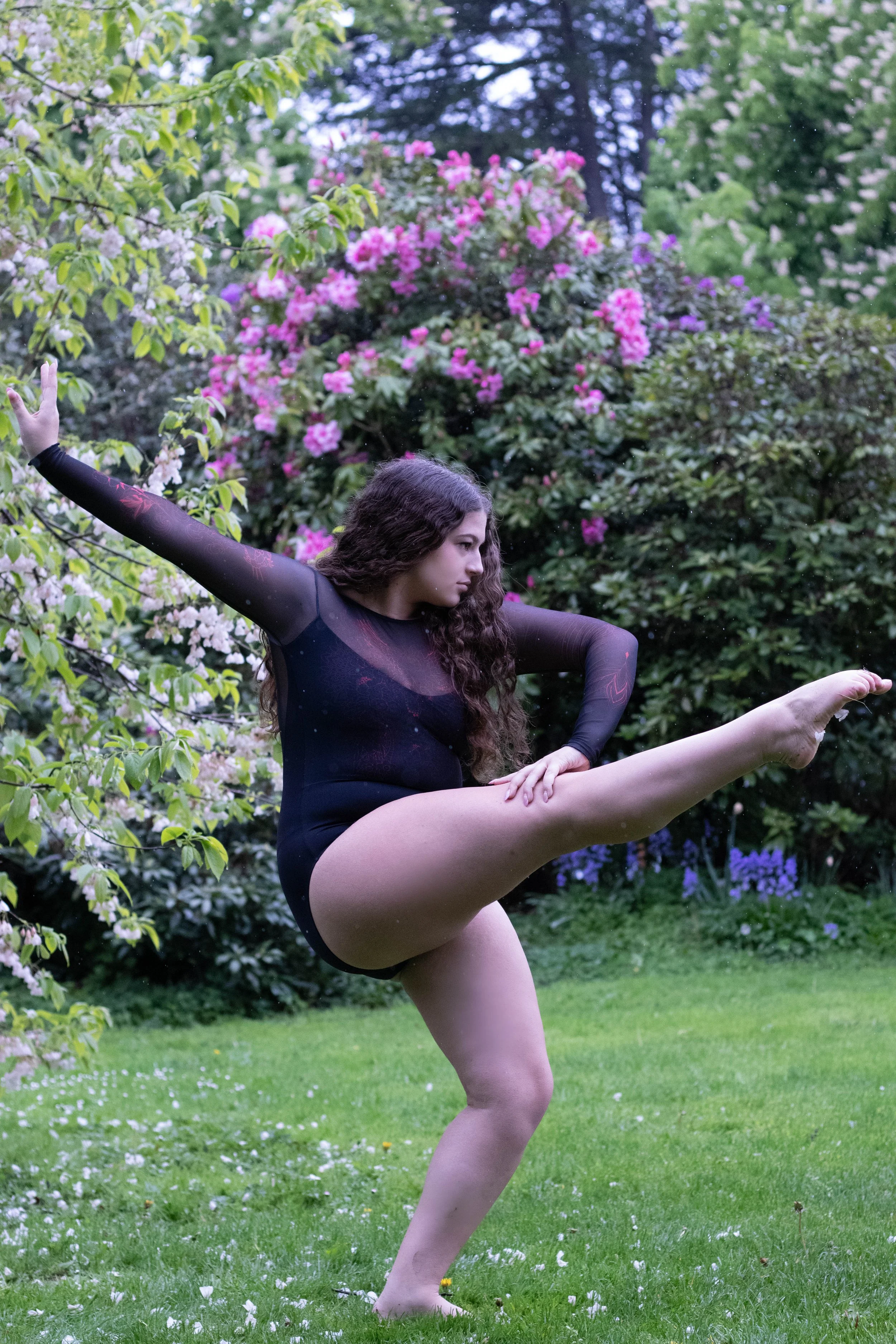
Photo by Catlyn Griswell | click below to shop the look!
Many dancers experience common challenges that aren’t often brought into conversation in class settings, including feelings of physical and technical insecurity. DWC Ambassador Claire Kaskel is an advocate for fostering open communication across dancers, instructors, and studio owners to ensure dancers know they are valued for their uniqueness. Read on to learn more about Claire’s dance journey, the changes she wants to see made in the dance industry, and her plans as an ambassador.
Like many dancers, Claire began in a ballet class around age three. As she got older, she began exploring other styles, including jazz and lyrical. When she was eight years old, Claire began competing mainly in jazz and lyrical genres, later dabbling in salsa, Paso Doble, hip hop, tap, and contemporary.
“I really love competing and I really love being a part of a studio. For me, that’s one of the best parts [of dance],” Claire says. She shares that she’s also gotten the opportunity to teach dance to younger students, which has been a great source of joy. Claire loves that teaching allows her the chance to help children cultivate what might be their own lifelong passion for dance. Claire also loves the therapeutic qualities of dancing, sharing that attending dance class allows her to release stress and feel grounded.
“Something that I’ve struggled with a little bit throughout my time as a dancer [is] feelings, here and there, of not being enough,” Claire shares. She says that whether it’s feeling like her dance technique is subpar or feeling like her body isn’t the “right” look to be attempting a certain style, dance can bring out some uncomfortable emotions from time to time. “It makes you second guess yourself and it makes you feel super insecure and confused,” Claire speaks on these feelings. She points out that settings like competitions and conventions can sometimes foster an environment of comparison that encourages this unfavorable self-evaluation.
To help manage these unpleasant feelings, Claire advises dancers to rethink and reassess their thoughts and remember that who they are as a dancer is valuable. “[Each] different dancer is going to bring something unique and special to the table,” she says. Claire, herself, is always enamored by dancers who put their own special spins on their movements, making them their own. “You should always be working to continue improving, but you also need to be appreciative of what you have and the body that allows you to dance and the mind that allows you to learn,” Claire says.
One change Claire hopes to see made in the dance world is more diversity across every facet of the industry, in terms of racial backgrounds, body sizes, and more. She hopes that all types of people can be welcomed and embraced in the dance industry, by actors on all levels helping foster a more inclusive environment. She also hopes to see the dance industry make more efforts to keep dancers safe, particularly in the competition world, and listen to young dancers when they voice the challenges they’re experiencing.
Claire says that she’s been shopping at Dancewear Center for years, but learned about the ambassador program recently through DWC Ambassador Kristina Koumaeva, as she is a teacher of hers at Premiere Dance Center in Redmond, Washington. After seeing Kristina’s social media posts about the ambassador program, Claire felt inspired to apply herself. “I’m really excited that I get to be here and I get this opportunity!” Claire says.
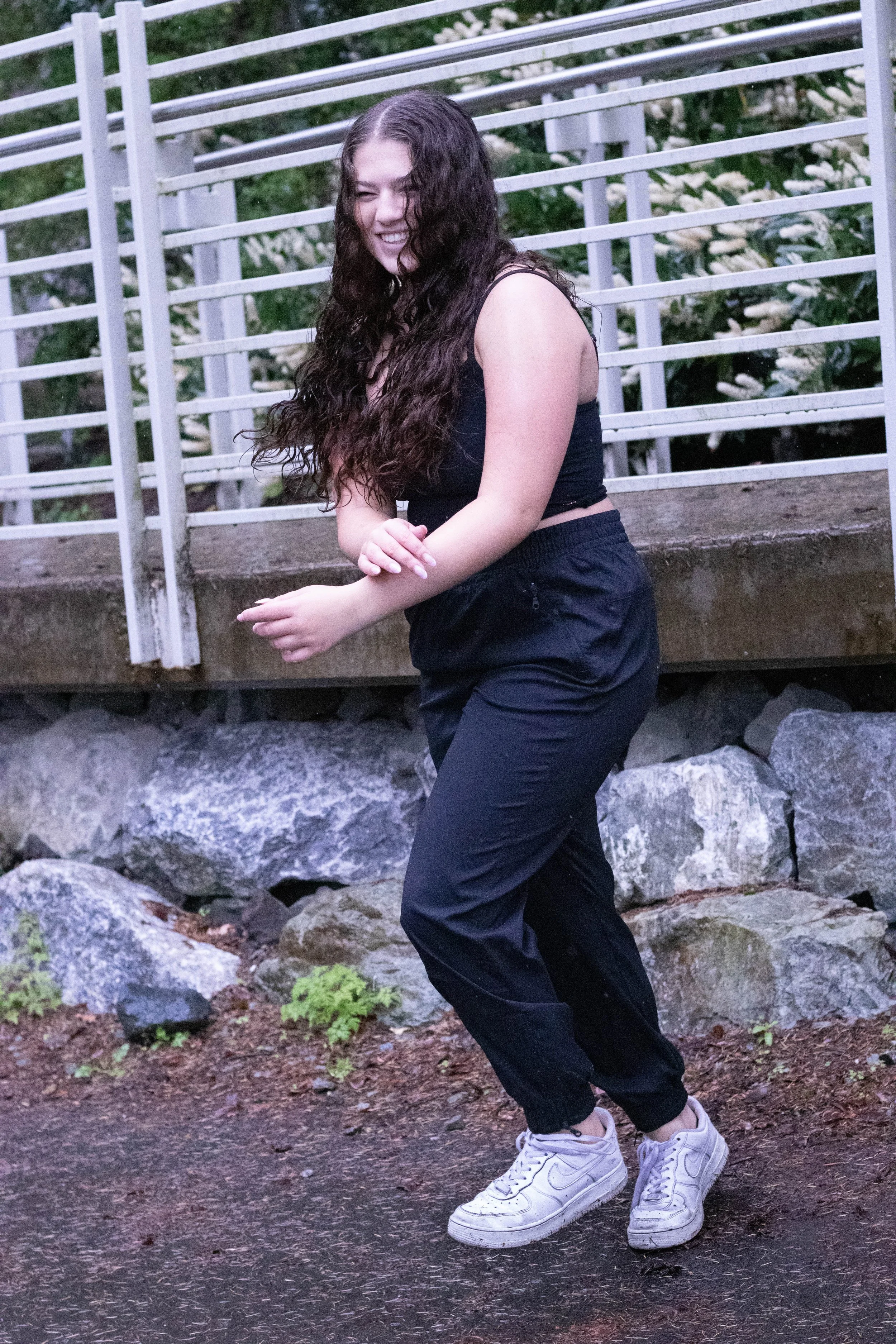
Photo by Catlyn Griswell | click below to shop the look!
In general, as an ambassador, Claire looks forward to being able to help support a local business and have a platform of her own to share her love for dance. She loves the idea of potentially inspiring others through the messages she puts out.
In addition to the DWC ambassadorship, in the coming weeks, Claire is looking forward to performing in her studio’s end of the year recital with Premiere Co., a pre-professional dance company at Premiere Dance Center. She is also preparing for the company’s auditions for the 2022-2023 season and getting ready to attend a national dance competition this summer.
We’re thrilled to have Claire as a DWC ambassador! Stay tuned for more from her in the coming months!
Disclaimer
All content found on the Dancewear Center Website, Instagram, Facebook, Pinterest, and all other relevant social media platforms including: text, images, audio, or other formats were created for informational purposes only. Offerings for continuing education credits are clearly identified and the appropriate target audience is identified. The Content is not intended to be a substitute for professional medical advice, diagnosis, or treatment. Always seek the advice of your physician or other qualified health provider with any questions you may have regarding a medical condition. Never disregard professional medical advice or delay in seeking it because of something you have read on this Website.
If you think you may have a medical emergency, call your doctor, go to the emergency department, or call 911 immediately. Dancewear Center does not recommend or endorse any specific tests, physicians, products, procedures, opinions, or other information that may be mentioned on dancewearcenter.net. Reliance on any information provided by dancewearcenter.net, Dancewear Center employees, contracted writers, or medical professionals presenting content for publication to Dancewear Center is solely at your own risk.
Links to educational content not created by Dancewear Center are taken at your own risk. Dancewear Center is not responsible for the claims of external websites and education companies.
Interested in writing for the DWC Blog? Click below to fill out the DWC Contributor application!