
Thriving in Dance College
Becoming a good artist requires a lot of time and is a highly individual process. True art, in its various forms, comes from observing the world, coming to know yourself, and the synthesis between the two. There is no substitute for the hours of training, studying, and absorbing that need to be done in order to hone your craft and distinguish your voice as an individual.
By Hannah Emory, DWC Blog Contributor

The one thing that you have that nobody else has is you. Your voice, your mind, your story, your vision. So write and draw and build and play and dance and live as only you can.
- Make Good Art, Neil Gaiman -
Why dance college?
Becoming a good artist requires a lot of time and is a highly individual process. True art, in its various forms, comes from observing the world, coming to know yourself, and the synthesis between the two. There is no substitute for the hours of training, studying, and absorbing that need to be done in order to hone your craft and distinguish your voice as an individual.
This can be done in an independent way, seeking opportunities as they come along and pursuing your individual goals outside of any formal education. However, dance college can be an environment that is conducive to incubating the artistic process and providing a higher concentration of resources, learning opportunities, and collaborative relationships than one might find independently.
Given, academic institutions have their own challenges in addition to their benefits; not one of them is perfect or will guarantee you the career you envision. Dance college requires a lot of hard work, and not all of it will necessarily be in-line with your individual goals. But it can all lead you places you never would have imagined otherwise.
So, if you want to attend dance college, or have already been accepted into a program, there are certain things that I and my peers propose will help you make the experience richer and more self-explorational. College is a significant commitment of financial resources and, even more precious, a great investment of time and energy. It’s crucial to make the most of it! I hope you find this advice helpful in either starting or continuing your education. It’s a long journey, but it’s worth every step!
Advice for thriving in dance college:
Hannah Emory (@hannah.emory):
Remember, just because you’re different, it doesn’t make you a bad dancer technically or a bad artist aesthetically. You will encounter all kinds of stylistic and training differences while in college, but I encourage you to think of it all as tools in your toolbox, not a statement about what you should be. Especially in contemporary dance, teachers are those who have forged their own path in a discipline full of variety. Think of dance as a language where each mover has their own dialect - there is no right or wrong, just difference, and that’s what makes this artform so wonderful. There are structures you can learn and styles you can emulate, but you have your own unique way of dancing that should be celebrated. Explore it, express it, enjoy it and don’t allow anyone to tell you you’re not legitimate - not even yourself!
Controversially, I encourage you to prioritize your bodily wellbeing and training time over academics. In college, there’s always going to be tests to study for, papers to research, and rubrics to fulfill. But what can never be replaced is your bodily health, mental wellbeing, and this chance to absorb as much as you can about how to actually dance. Everything you will encounter as an academic subject in your course is important fuel for your dance journey, but it’s my opinion that pursuing academics should not take over your ability to dance well and feel great while doing it. If you’re struggling with the academic side of your program, please speak to your course directors and advisors, but don’t lose the joy of dancing in the midst of academic expectations. Grades are for the academy and for now; dancing is for you and for your whole life.
Spend your extra time in the studio to create your own work.
If you are able to book studios out as a student, that’s an invaluable resource! This is your opportunity to begin experimenting and making your own work. You can develop a regular improv practice, make solos, and collaborate with your friends to get well-versed in your choreographic process.
**Bonus points for filming and posting what you make on social media, especially if your goal is to be a performer or choreographer. An easily accessible catalog of your work on Instagram or Youtube gets your name out there to people you may have never met otherwise.**
Educate yourself on and take advantage of the resources your college has on offer beyond the studio space - everything from cameras to sound equipment to students in other courses who may want to work with you on projects. There’s so many opportunities for collaboration, exploration, and experimentation during this time in your life, with the tools you need and people to create with, all in one place.
Alice Gavigan (@alice_gavigan): What’s great about full time training and college is that you get to be truly immersed in dance and you get to study and practice what you love. In this environment, naturally, you want to do your best and go above and beyond what you’ve been asked to do. But, in my experience, this can lead to burnout and unnecessary stress. What helped me was establishing a routine for the week and having time separate from training and assignments. For example, I set aside one evening a week to do some fun self-care and fully relax. Balancing my personal life with my dance training has really helped me to preserve my mental health.
Marcela Pridavkova (@marcela_marar + @ulyogasoc):
During college, stay yourself. You will meet lots of new people with different skill sets and training. You might start comparing yourself to these people, but remember everybody has different strengths and there is something in you that other people will look up to.
Explore and adapt your own style, get to know your best skills and make the most of them, and be aware of your weaknesses and try to work on them.
Do not try to fix everything at once. Instead, set small goals for yourself and do not punish yourself if you don’t achieve the exact result you expected.
Work the best you can but be kind to yourself and others. Treat others the way you wish to be treated.
There will be challenging moments when you will feel like giving up. But stay strong, we have all been there, and it’s hard to be a dancer!
Don’t forget to enjoy it! College years are great, even with all struggles along the way, and you will make some great memories.
Sources:

Disclaimer
All content found on the Dancewear Center Website, Instagram, Facebook, Pinterest, and all other relevant social media platforms including: text, images, audio, or other formats were created for informational purposes only. Offerings for continuing education credits are clearly identified and the appropriate target audience is identified. The Content is not intended to be a substitute for professional medical advice, diagnosis, or treatment. Always seek the advice of your physician or other qualified health provider with any questions you may have regarding a medical condition. Never disregard professional medical advice or delay in seeking it because of something you have read on this Website.
If you think you may have a medical emergency, call your doctor, go to the emergency department, or call 911 immediately. Dancewear Center does not recommend or endorse any specific tests, physicians, products, procedures, opinions, or other information that may be mentioned on dancewearcenter.net. Reliance on any information provided by dancewearcenter.net, Dancewear Center employees, contracted writers, or medical professionals presenting content for publication to Dancewear Center is solely at your own risk.
Links to educational content not created by Dancewear Center are taken at your own risk. Dancewear Center is not responsible for the claims of external websites and education companies.
Get To Know DPT Era Terry
All dancers have struggled with the issue of trying to find a physical therapist or doctor that understands how a dancer’s body moves. There are various doctors out there who just don’t understand how dancers move which can be frustrating in the recovery process. Luckily we got the chance to speak with Dr. Era Terry to learn more about the dance medicine field in Seattle. Read on to learn more about Era’s dancing journey and what got her into doing physical therapy on dancers!
By Samantha Weissbach DWC Owner & Nicole Barrett, DWC Blog Editor
Pronunciation: Air-ah Tear-ee | Pronouns: she/her

All dancers have struggled with the issue of trying to find a physical therapist or doctor that understands how a dancer’s body moves. There are various doctors out there who just don’t understand how dancers move which can be frustrating in the recovery process. Luckily we got the chance to speak with Dr. Era Terry to learn more about the dance medicine field in Seattle. Read on to learn more about Era’s dancing journey and what got her into doing physical therapy on dancers!
Era grew up dancing and primarily did ballet while exploring competition dance in high school. While getting her undergrad degree after high school, she danced with Chattanooga Ballet in Tennessee where she was a contracted ballet dancer and taught various ballet classes. Once she graduated from undergraduate school, she suffered an ankle injury that took her out of the professional dance world, which allowed her to transition to physical therapy school. She obtained her degree from Columbia University in 2017 and moved to Seattle to pursue her physical therapy career upon graduation. Era still dances around the Seattle area and her mission was to work with dancers specifically to give back to that community.
Era shares that what sparked her decision to start working at her current practice was to work one-on-one with patients for longer periods of time to build that connection with her patients. She started working right after graduating from physical therapy school at a larger clinic where she was meeting with patients every 30 minutes and she realized that this wasn’t the scene for her. She then met the owner of her current practice Kinetic Physical Therapy through a mutual friend and has been a great fit for Era.
Era shares that Seattle is a great place for dance medicine and shares that there are some great resources to help dancers who have injuries.Seattle Dance and Performing Arts Medicine is a great resource for information on clinics and doctors in the area. Era also works in West Seattle at Kinetic Physical Therapy so be sure to come by and see her for all your dancer needs!

Disclaimer
All content found on the Dancewear Center Website, Instagram, Facebook, Pinterest, and all other relevant social media platforms including: text, images, audio, or other formats were created for informational purposes only. Offerings for continuing education credits are clearly identified and the appropriate target audience is identified. The Content is not intended to be a substitute for professional medical advice, diagnosis, or treatment. Always seek the advice of your physician or other qualified health provider with any questions you may have regarding a medical condition. Never disregard professional medical advice or delay in seeking it because of something you have read on this Website.
If you think you may have a medical emergency, call your doctor, go to the emergency department, or call 911 immediately. Dancewear Center does not recommend or endorse any specific tests, physicians, products, procedures, opinions, or other information that may be mentioned on dancewearcenter.net. Reliance on any information provided by dancewearcenter.net, Dancewear Center employees, contracted writers, or medical professionals presenting content for publication to Dancewear Center is solely at your own risk.
Links to educational content not created by Dancewear Center are taken at your own risk. Dancewear Center is not responsible for the claims of external websites and education companies.

DWC How To's: Sewing Your Pointe Shoes
Sewing pointe shoes can be one of the most complicated processes for dancers, but it doesn’t need to be!. There are various ways that teachers want their students to sew them and many ways that dancers prefer their own pointe shoes to be sewn. While there isn’t a correct way to sew your shoes, there are many tips and tricks that can be helpful to know in order to sew your shoes efficiently and effectively. Read on to learn some tricks from DWC Staff Member Emma Neilson!
By Emma Neilson DWC Social Media Manager, & Nicole Barrett DWC Blog Editor
Sewing pointe shoes can be one of the most complicated processes for dancers, but it doesn’t need to be! There are various ways that teachers want their students to sew them and many ways that dancers prefer their own pointe shoes to be sewn. While there isn’t a correct way to sew your shoes, there are many tips and tricks that can be helpful to know in order to sew your shoes efficiently and effectively. Read on to learn some tricks from DWC Staff Member Emma Neilson!
Materials needed to sew pointe shoes:
Stitch kit (needle and thread)
Sharpie or pen (to label the left and right shoe)
A lighter
Scissors
Pointe shoes
Ribbon
Elastic
Optional: Thimble
Here are the beginning steps on how to sew your pointe shoes!:
Take about a wingspan worth of thread to make sure you don’t run out and cut it off the spool.
Take your needle and put the thread through the eye of the needle. Pull the thread taut and make sure that both ends of the thread are the same length and knot the end.
Take your ribbons first and cut them into four even pieces to put on your shoes. Be sure to burn the edges with your lighter so that the ends don’t fray. Repeat the same with your elastics.
Line up your ribbons and elastics together on the side seam of the shoe. A general guideline is to place them at the highest point of the arch of your foot. (This is personal preference, so be sure to find where you like your ribbons and elastics on your shoes best!)
Take your needle and thread and start sewing them down. Some dancers prefer sewing the canvas or inner lining of the shoe only, but you can sew all the way through the fabric if you would prefer. You can also sew the ribbons and elastics down by sewing a box around the end or whichever way would be most effective for you. This is all personal preference!
Once you are finished with your stitching, create a knot at the end so that the stitching doesn’t come undone. Cut off the access thread with scissors.
Next you are going to take the other end of your elastic that you just sewed down and cross the end to the other side of the shoe. When both of them are sewn they should make an x-shape. *This can also be done with one elastic along the back edge of the shoe to make a strap which is dancer or teacher preference!*
Cross the elastic to the back of the shoe and be sure that it is at an angle to line up with the curve of your ankle. (This can be done on the inside or outside of your shoe just be sure to check with your teacher to see which they would prefer).
Use the same method that you chose for the front part of the elastic and ribbons and sew the back elastics down.
Tie a knot at the end of your thread and repeat with the other set of ribbons and elastics.
Repeat on the other pointe shoe and you have a new set of sewn pointe shoes!
We hope that these tips and tricks helped you sew your pointe shoes! All of these products can be found at Dancewear Center in store or online!
Disclaimer
All content found on the Dancewear Center Website, Instagram, Facebook, Pinterest, and all other relevant social media platforms including: text, images, audio, or other formats were created for informational purposes only. Offerings for continuing education credits are clearly identified and the appropriate target audience is identified. The Content is not intended to be a substitute for professional medical advice, diagnosis, or treatment. Always seek the advice of your physician or other qualified health provider with any questions you may have regarding a medical condition. Never disregard professional medical advice or delay in seeking it because of something you have read on this Website.
If you think you may have a medical emergency, call your doctor, go to the emergency department, or call 911 immediately. Dancewear Center does not recommend or endorse any specific tests, physicians, products, procedures, opinions, or other information that may be mentioned on dancewearcenter.net. Reliance on any information provided by dancewearcenter.net, Dancewear Center employees, contracted writers, or medical professionals presenting content for publication to Dancewear Center is solely at your own risk.
Links to educational content not created by Dancewear Center are taken at your own risk. Dancewear Center is not responsible for the claims of external websites and education companies.

How To Adjust Your Flexistretcher
Flexistretchers have been one of the top strength and flexibility training tool for dancers around the world. Using elastic resistance, this tool safely improves your flexibility while strengthening muscles at the same time! Here is the easiest way to adjust the straps to your flexistretcher!
By Nicole Barrett & Emma Neilson
Flexistretchers have been one of the top strength and flexibility training tool for dancers around the world. Using elastic resistance, this tool safely improves your flexibility while strengthening muscles at the same time! Here is the easiest way to adjust the straps to your flexistretcher!
Take the flexistretcher out of the mesh bag.
Fold the stretcher in half and lay it down on the floor.
Hold the loop of the strap and pull the slider towards the middle to your desired length.
Repeat on the other side.
Make sure to line everything up evenly and you have your adjusted flexistretcher!
This product can be found at Dancewear Center in store or online! Be sure to check out the video below for the full how-to!
Disclaimer
All content found on the Dancewear Center Website, Instagram, Facebook, Pinterest, and all other relevant social media platforms including: text, images, audio, or other formats were created for informational purposes only. Offerings for continuing education credits are clearly identified and the appropriate target audience is identified. The Content is not intended to be a substitute for professional medical advice, diagnosis, or treatment. Always seek the advice of your physician or other qualified health provider with any questions you may have regarding a medical condition. Never disregard professional medical advice or delay in seeking it because of something you have read on this Website.
If you think you may have a medical emergency, call your doctor, go to the emergency department, or call 911 immediately. Dancewear Center does not recommend or endorse any specific tests, physicians, products, procedures, opinions, or other information that may be mentioned on dancewearcenter.net. Reliance on any information provided by dancewearcenter.net, Dancewear Center employees, contracted writers, or medical professionals presenting content for publication to Dancewear Center is solely at your own risk.
Links to educational content not created by Dancewear Center are taken at your own risk. Dancewear Center is not responsible for the claims of external websites and education companies.
The Next Step: Choosing Dance After High School
I started the process of finding my next step last year as a high school junior. It can be a daunting thought to start looking at your future like that, I know it was for me! As someone who has been dancing since the age of three, once it came time to think about a career, I always came up blank. When we say “dance is my life” we mean it. While I have interests outside of dance, there was never anything that I spent enough time doing to really develop a love matching my love for dance. Eventually I got to the point where I thought; I have spent my entire life training and dancing and improving, I love it more than anything else in my life, so why not keep doing it? After coming to that conclusion, I was able to get on a focused path with where I would like my future to go.
Pronunciation: Aw-brie Zap-in | Pronouns: she/her
By Aubrey Zappen, DWC Ambassador

I started the process of finding my next step last year as a high school junior. It can be a daunting thought to start looking at your future like that, I know it was for me! As someone who has been dancing since the age of three, once it came time to think about a career, I always came up blank. When we say “dance is my life” we mean it. While I have interests outside of dance, there was never anything that I spent enough time doing to really develop a love matching my love for dance. Eventually I got to the point where I thought; I have spent my entire life training and dancing and improving, I love it more than anything else in my life, so why not keep doing it? After coming to that conclusion, I was able to get on a focused path with where I would like my future to go.
Oftentimes people do not view dance as a good way to spend your future. But as long as you make smart decisions, it is entirely within your reach. Even if a college dance program is not what you want, there are still so many options to choose from. It is important to remember that while the dance world may be small, it is also huge! There are so many different paths you can take, so don’t discount a career in dance. It is normal to question whether choosing dance is a reliable choice of a career, so I hope that this information will help you out!
Research College Programs
If you are like me and you know that college is a good option for you, start researching now. College deadlines sneak up on you fast!
The first things that are important when narrowing down your search are: location, school size, and degree programs. For me, I knew right away that I wanted to go to the East Coast. I did not care how far, I just wanted to go somewhere different. School size was also straightforward in my search because I am not a people person, therefore I wanted a small to medium sized school. Of course everyone is different so your experience will be different than mine, but it still applies. Whether you are looking to major in dance or just have it as an option, make sure that the schools you are looking at have it. Many schools don’t have dance as a major/minor or they only have a minor. With that being said, just because a school doesn’t have a dance degree program, that does not mean that they have no dance. There could be dance teams or clubs as well. Do some research and find your fit! It’s okay to not know what you want at first, it’s all a part of the process.
Training Programs & Conservatories

If college isn’t your thing, but you feel like you need more training, a great option to look into are training programs and conservatories. These are often programs dedicated mainly to dance education only and can be shorter than a college program as well. There are several conservatory programs that are technically college programs, but the level of academic classes that you are required to take is dramatically lower than that of a regular college dance degree. By taking the route of a training program or conservatory, you can allow yourself to have more focused training, build connections with current professionals in the industry, and often have audition opportunities after graduating. Some programs may be one year, some may be three or four, either way your time will be spent solely focusing on getting your dance training where it needs to be in order to be successful.
Those are all amazing options and if they work for you, great! But, some people prefer to go straight into auditioning and working. If you choose to move to LA or New York or another city and pursue your dreams that way, go for it! You are much braver than I am! Making it as a dancer is not impossible, just remember to never give up. You never know what opportunities will present themselves to you.
No matter what you decide to do, be smart and safe! Individuality is incredibly important so embrace who you are. Whether you choose college, a conservatory, or just start working in the industry, it does not change the hard work that you will need to put in to be successful. It is not easy, but it is worth it!
Below are links for college and conservatory programs:
Disclaimer
All content found on the Dancewear Center Website, Instagram, Facebook, Pinterest, and all other relevant social media platforms including: text, images, audio, or other formats were created for informational purposes only. Offerings for continuing education credits are clearly identified and the appropriate target audience is identified. The Content is not intended to be a substitute for professional medical advice, diagnosis, or treatment. Always seek the advice of your physician or other qualified health provider with any questions you may have regarding a medical condition. Never disregard professional medical advice or delay in seeking it because of something you have read on this Website.
If you think you may have a medical emergency, call your doctor, go to the emergency department, or call 911 immediately. Dancewear Center does not recommend or endorse any specific tests, physicians, products, procedures, opinions, or other information that may be mentioned on dancewearcenter.net. Reliance on any information provided by dancewearcenter.net, Dancewear Center employees, contracted writers, or medical professionals presenting content for publication to Dancewear Center is solely at your own risk.
Links to educational content not created by Dancewear Center are taken at your own risk. Dancewear Center is not responsible for the claims of external websites and education companies.
Responsive Teaching
On the first day of a theater camp for homeless and abused teens, I walked down the line of 40 campers and tried to teach what I had naively considered a “basic” ripple of movement. I stood next to a kid I would later learn was named Bruno, demonstrating and loudly explaining to the room how they should reach and hold each other and told the camper behind him, “now put your hand up on her shoulder like this.”
Bruno flinched at the sudden touch, and then his head snapped around, big brown eyes flitting from straight at me to the ground and back again.
Part 1: Bruno
Name pronunciation: Em-me Fan-s-ler | Pronouns: she/her
By Emmy Fansler, DWC Ambassador
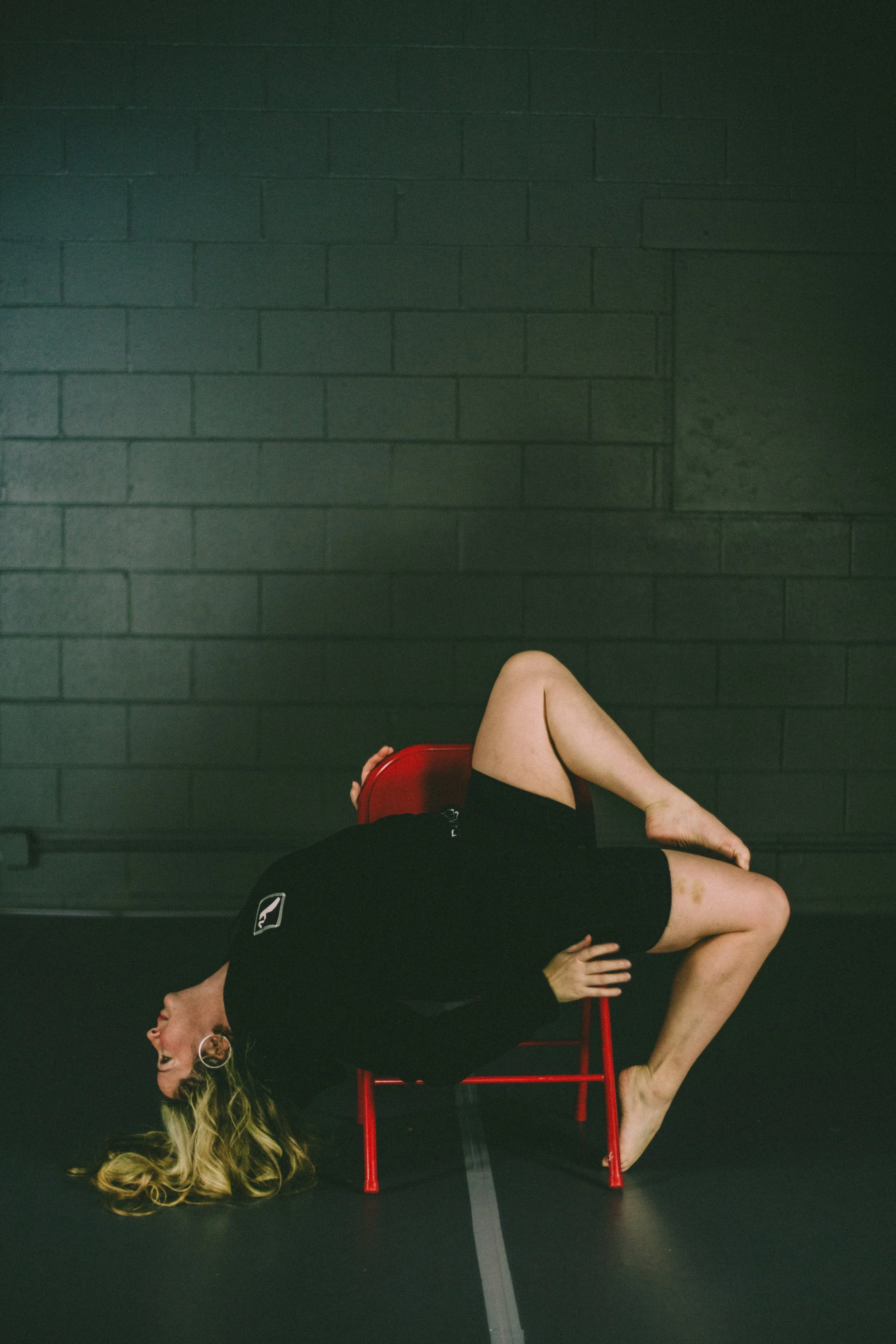
On the first day of a theater camp for homeless and abused teens, I walked down the line of 40 campers and tried to teach what I had naively considered a “basic” ripple of movement. I stood next to a kid I would later learn was named Bruno, demonstrating and loudly explaining to the room how they should reach and hold each other and told the camper behind him, “now put your hand up on her shoulder like this.”
Bruno flinched at the sudden touch, and then his head snapped around, big brown eyes flitting from straight at me to the ground and back again.
“I’m a boy.”
Dead quiet. But soon after, a snicker came from across the room. And then a, “Say what?!” from somewhere down the line.
After that, the whole room laughed, aside from the 10-12 counselors and volunteers who tried to calm everyone down, a demoralized and humiliated Bruno, and me. The horror struck teaching artist that just publicly misgendered this kid whose trauma had already made it difficult to trust anyone or feel like he belonged anywhere. The activity was over and no one was willing to pick it back up, even before I’d finished teaching the entire ripple.
Talk about a humbling moment. This was not the place for the choreography I had dreamed up. I hadn’t even met these kids or considered their stories. I just assumed they’d be excited to learn what I had to teach them.
From this large group activity, the campers were split into groups and brought through my dance and movement class in 45-minute rotations. I don’t remember how many groups I worked with before Bruno’s, but I remember feeling the palpable anxiety when he came into the room— some of it (or perhaps most of it) being my own.
The goal for that day was to get to know the campers and start generating ideas for the piece they would perform at the end of two weeks. The morning had proven to me that throwing them into my preconceived routines and patterns was not going to work, so I had them stand in a circle and tell me some random things— maybe their name, pronouns, something they wanted me to know about them, something they were good at, a time they felt brave… something like that— so I could determine my next move.
Truth be told, I don’t remember any of their answers— at all. What I remember is the way Bruno nervously moved as he answered the questions— shuffling forward a few steps, then backward, over and over. His eyes everywhere but at me, hands fidgeting first in his pockets, then in his long hair, then with each other. And then when his turn was over, he stopped. I had been mesmerized, and his abrupt stop disarmed me and the “cool” I’d been trying to keep.
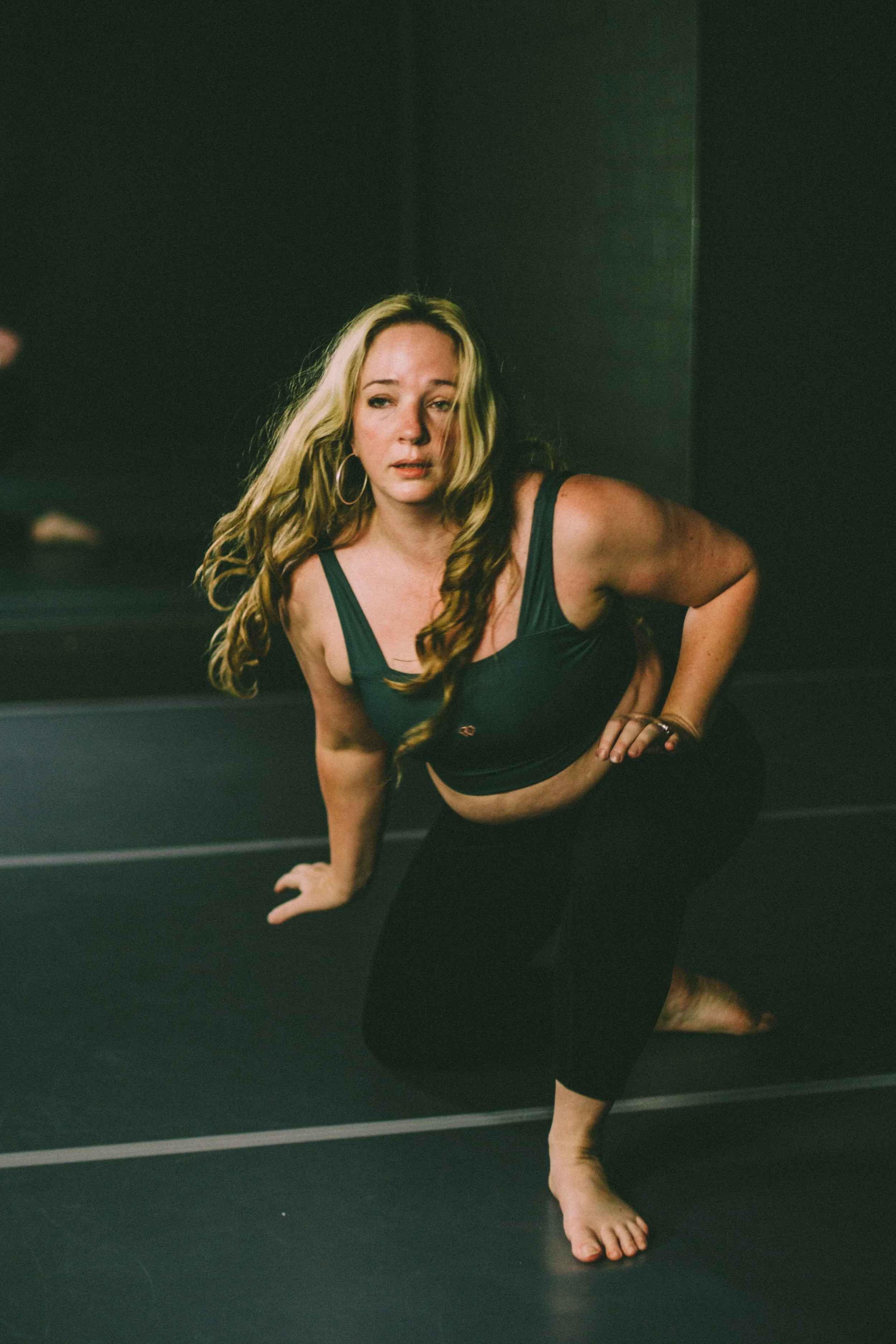
He noticed my staring, and I blurted out that the way he moved had sort of hypnotized me. He blushed and people stood around awkwardly, but I was inspired and his nervous movement had given me an inkling of an idea I wanted to play with. I asked him if he realized that he’d been moving, and then showed him with my body what he’d been doing. I asked the entire circle to try the forward and backward steps with me, and reluctantly they did. I added a look over the shoulder when they stepped backward, and then after a few more sets added a sigh and a single fidgeting gesture. They fell into a rhythm and suddenly I realized they were doing it without needing my continuous prompting. They listened to each other’s footfalls and coordinated their breaths organically. Watching it all come together in my head, I asked them to face the same direction instead of into the circle. The whole group trudged forward two steps, stumbled back one, brushed their hands on their pant legs, looked back, and sighed. Starting the process over and over and over.
With Bruno at the front of the formation, I asked him to make it travel, and lead it all the way across the floor. I asked a couple of them if they’d be comfortable trying it while carrying someone on their backs. I asked two more if they’d be willing to be carried. This, it seemed, was the moment they knew there was magic in the making.
The teens were engaged, excited, and enthusiastic at the way the sequence progressed from Bruno’s organic movement into the soul-stirring piece they performed for a packed house the following Friday. They partnered. They rippled. They rolled and reached and leapt and lifted Bruno up to the sky with a blue cyc and remnants of broken furniture hanging from the flies. They started with diagonal trudging and ended with eyes up, chests open, backs arched, hands on shoulders, showing support and care for each other in front of hundreds of strangers. Not one of them having taken a dance class before camp, but all of them KNOWING they had just moved the hearts of every single person witnessing them. There were no pirouettes, no high kicks, no tricks of any kind… maybe four pointed feet, total. Just a bunch of beautiful teens with a story to tell— one that began unfolding out of the anxious movement and emotional responses of one brave and vulnerable student named Bruno.
This was a formative experience, not only for the kids who found a platform to share their stories of resilience, but for me as a teacher and choreographer. It forever shifted the way I choreograph and opened my eyes to the beauty of teaching the non-traditional dancer. You don’t need years of training, the perfect body, or endless financial resources to be a dancer and tell your story through movement. You need a body and space. And… you don’t need dancers with a life of devoted ballet technique, marley floor, and perfectly performed etiquette to choreograph and create a life-changing piece— you need the willingness to see the humans in front of you, an openness to what they’re sharing with you just by existing, curiosity, creativity, and love for the incredible work you get to do.

Disclaimer
All content found on the Dancewear Center Website, Instagram, Facebook, Pinterest, and all other relevant social media platforms including: text, images, audio, or other formats were created for informational purposes only. Offerings for continuing education credits are clearly identified and the appropriate target audience is identified. The Content is not intended to be a substitute for professional medical advice, diagnosis, or treatment. Always seek the advice of your physician or other qualified health provider with any questions you may have regarding a medical condition. Never disregard professional medical advice or delay in seeking it because of something you have read on this Website.
If you think you may have a medical emergency, call your doctor, go to the emergency department, or call 911 immediately. Dancewear Center does not recommend or endorse any specific tests, physicians, products, procedures, opinions, or other information that may be mentioned on dancewearcenter.net. Reliance on any information provided by dancewearcenter.net, Dancewear Center employees, contracted writers, or medical professionals presenting content for publication to Dancewear Center is solely at your own risk.
Links to educational content not created by Dancewear Center are taken at your own risk. Dancewear Center is not responsible for the claims of external websites and education companies.
Tips for Exploring Dance in a New City
Whether you’re planning on making a cross-country move like me, or are graduating school and moving on from your familiar dance studio, life is full of transitions - some of which we’re prepared for and others we aren’t. One thing that can help make these transitions feel a bit more easeful is continuing to do what we’re passionate about. And fortunately, one of my favorite things about dance is its universality: no matter what country you’re in, what age you are, or what physical or mental state you’re experiencing, dance can be there for you in one capacity or another. In the short time I’ve spent living in a new city so far, here are some of the tips I have for exploring dance in a new place.
Advice for Dancing Amid Transition
By Madison Huizinga, DWC Blog Contributor

I have recently relocated to a new city for the first time ever. For nearly 22 years, I’ve lived and largely operated within the same 20-mile radius. Understandably, this transition has been a bit of a physical and emotional challenge. I’m miles and miles away from the community that helped raise me, both my family and my beloved dance network. If there was one thing I was certain about when it came to making this life change, it was that I wanted to continue dancing as much as possible. While I’ve yet to establish a solid routine in this new place, attending dance classes has provided a level of comfort and normalcy amidst the whirlwind of change.
Whether you’re planning on making a cross-country move like me, or are graduating school and moving on from your familiar dance studio, life is full of transitions - some of which we’re prepared for and others we aren’t. One thing that can help make these transitions feel a bit more easeful is continuing to do what we’re passionate about. And fortunately, one of my favorite things about dance is its universality: no matter what country you’re in, what age you are, or what physical or mental state you’re experiencing, dance can be there for you in one capacity or another. In the short time I’ve spent living in a new city so far, here are some of the tips I have for exploring dance in a new place.
Do your research

Photo by Glenn-Carstens-Peters on Unsplash
When I began considering making this move, the first thing I began doing was researching dance studios in the city. As a 21-year-old with a full-time job, I wanted to make sure that I could find accessible dance studios that offered classes for adults at times that worked with my schedule. To my delight, I was able to find a plethora of options in this large city, many of which were “drop-in” classes, meaning I could sign up for them individually, often on the day they were being held. For those with a similarly busy schedule like me, I suggest searching for “drop-in” or “open” classes in your area for maximum flexibility. In the Seattle area, dance studios I highly suggest checking out for drop-in classes are Dance Conservatory Seattle, Dance Fremont, Pacific Northwest Ballet, eXit Space, and more.
After doing some Google searches to find dance studios near me, I also explored the website and social media pages of studios to learn more about their faculty and facility. Read the staff bios to learn more about the background and teaching methods of the instructors - do they align with the attributes you look for in a dance teacher? See if there are any videos on Instagram or YouTube to get a sense of what the class is like in terms of technical difficulty. And of course, don’t be afraid to call the studio itself to get more information you cannot find online.
Pack your bag with all you might need
Before I left for my first class, I was admittedly nervous! What if I forgot something important? What if I wasn’t dressed properly? Many questions circled around my frazzled brain. To ease my stress a bit, I picked out some clothes the night before my class to ensure I wasn’t in a rush to get out the door. I also stocked my dance bag with anything extra I might need, including extra types of dance shoes, a water bottle to fill up in the morning, a theraband, a massage ball, and several different types of warm-ups to throw on over my leotard and tights, including shorts and pants.
Arrive early
Since I’m notoriously directionally challenged, I decided to leave for my first class a bit early to leave extra time for re-routing in case I got lost. After mapping the route to the dance studio on my phone, I decided to leave with five to ten minutes to spare. I arrived at the studio several minutes early, which allowed me to take time to familiarize myself with the space, put on my dance shoes, find a space at the ballet barre, take a few deep breaths, and even introduce myself to the instructor. Having these extra moments for me before the class began helped set me up for success.
Remember: it’s okay to make mistakes!
Whenever I start taking dance classes from a new instructor, it can take me a handful of classes to get comfortable with the pacing of the class and the typical combinations. In open ballet classes, it’s often not clear whether the instructor has been trained in Vaganova, Balanchine, Cecchetti technique, or more. Offer yourself some grace as you get acquainted with the rhythm of the classes and, if it makes you feel more comfortable, find a spot at the back of the room so you can follow others in the class for the time being.
When I make mistakes in a new dance environment, where I’m not close with any of my peers, it can feel a lot more serious than it actually is. Back home, if I fall out of a pirouette, I know that I can turn to my friends and laugh about it; but in this new city, there’s no one to turn to yet. Remember that everyone in that class is dancing for themselves - they are not here to watch you mess up. Likewise, whether you’re looking to drastically improve your technique, simply move your body for the sake of it, or somewhere in between: you are attending this class for yourself. To further cement this idea in my brain, it can be helpful to imagine that the dance class is one big mindfulness exercise, focusing on the sensations in my body as I dance and not on who may be looking at me.

Photo by Chris Yang on Unsplash
If you’re anything like me, you might find change a bit scary, especially after getting comfortable with a reliable routine for so many years. But change can also be incredibly exciting. Getting reasonably out of your comfort zone can teach you so much about yourself, the world, and the life that you want to have. When you find yourself in a transitional phase like I currently am, know that dance can still be a part of your life if you have the tenacity to figure it out: which you do.
What We Can Learn From Other Perspectives in Dance
As a teacher, I learned to meet students where they were at and help them comfortably reach the next level of technique or a skill. I didn’t expect them to be able to immediately perform perfectly or get something correct every time, like I do with my own dancing. Teachers don’t expect perfection out of their students, after all they are students, and more than that, humans. Teaching students helped me overcome some of my perfectionism when it comes to dancing.
A Local Dancer on Having Empathy For Industry Professionals and Students
By Laura Eberle, DWC Blog Contributor

Photo by John Roque
I got a new job this year as a dance teacher for a small middle school team. I had never experienced this side of dance before, I had always been a student, so it really gave me a new perspective on dance classes and how teachers (re)act. I think that we’re often so focused on our own situations that we never notice how our actions may look to others. But if we take a step back, there are a lot of things we as dancers can learn from perspectives other than our own.
What are some things that only a teacher would see?
As a teacher, I learned to meet students where they were at and help them comfortably reach the next level of technique or a skill. I didn’t expect them to be able to immediately perform perfectly or get something correct every time, like I do with my own dancing. Teachers don’t expect perfection out of their students, after all they are students, and more than that, humans. Teaching students helped me overcome some of my perfectionism when it comes to dancing.
Similarly, teachers don’t usually focus on how far you are, but rather, on how far you’ve come. Yes, it is impressive to be able to do a triple pirouette, or a perfect split leap, but if a student starts the year without even a single pirouette, it is unlikely that they would be able to reach a triple by the end of the year. Students start at different levels and progress at different speeds; it is unreasonable to expect everyone to reach the same milestones at the same time. At the very core, teachers just want to see you grow, so the fact that you’ve made progress is often the most important part.
Teachers/choreographers have a vision when creating a dance – this includes the music, the costumes, the choreography, and even the tiny details of style. No matter how much you try to explain it, some dancers won’t be able to understand the ‘vision’, which can become really frustrating. Sometimes the ‘vision’ isn’t visible until every piece is complete and put together, so we should try to hold our judgements until we can see the whole vision. Even then, everyone has a different brain and a different imagination, so we can’t expect every dancer to understand every vision, and as dancers we have to accept that not every dance or ‘vision’ we’re in will click with us.
I really did get frustrated when students were gone so often, especially when they wouldn’t explain why they were gone. As a teacher who only sees students once a week, it becomes difficult to teach properly/well when a student is gone often. That’s not to say that there aren’t good reasons to miss class, there certainly are, but the more often a student gives excuses for missing class, the less valid those reasons start to feel. And to the teacher who receives little to no excuses or warning for a student being gone, it may seem like the student is disinterested in their own classes or not committed to the craft.
Something a little more concrete I understood from being a teacher is the significance of going back to the basics. Sometimes as you become a more advanced dancer you unintentionally sacrifice basic technique in order to get those fancy moves down. But when you’re teaching new dancers, you have to start with the basics, and keep practicing them, you can’t just go over them once and expect them to stick. I found that reviewing the ‘simple’ elements that we often forget to maintain helped me to reapply those elements to my dancing.
Now what might a fellow student dancer see that we may not?
Being in front of a mirror so often can make it really easy to compare ourselves to others, especially in a community where that has been encouraged for so long. It’s easy to think that other dancers judge us the same way we judge ourselves. But our fellow dancers and friends don’t see what we see in the mirror. They see us just as we are. I know I certainly don’t judge my friends based on how high their développé is, or how many turns they can do. So why should we base our own self-worth as dancers on those things?

Photo by John Roque
Instead of comparing ourselves to our peers, we can learn how to have better attitudes from our friends. Sometimes if I can’t seem to find the motivation to dance I can look to my hard-working, passionate friends and get the motivation to take my training seriously from them. On the other hand, if you can’t have fun in your dancing, friends are a great way to take dance a little less seriously. That’s not to say that you shouldn’t take dance seriously, but just that you should be able to enjoy dancing.
What are some things that we can learn from a parent or an admin perspective?
Now these ones I don’t have any first person experience with, and I won’t pretend to know what it’s like. However, I have talked with my mom – the head administrator at a dance school – a lot, so I thought I might pass on some of the things she has talked about.
Admin and teachers work very hard to create a safe, supportive environment for students to come in and dance because they care about the students. They get to see the many different personalities in dance and watch them grow – both as people and as dancers – and truly want them to succeed. There are so many different jobs that go into making dancers look good in a performance, it really does take an amazing, caring team to make us look so good on stage. We as dancers can’t forget this when we are performing or when we see the people who help us look good, we have to remember that they are also people who put in a lot of time and effort and deserve our respect.
The business side of dance is something that I think most dancers never really see or pay attention to, but it really does take a lot of work to keep a dance school/company running, to order and organize costumes, to book venues, to create programs, and to coordinate between all the different people involved. These people work behind the scenes and don’t often receive much recognition outside of mentions at the back of programs, but without them our dance world would be very different. We should be grateful when we can show up and just dance without having to worry about any of that stuff.
Something my mom has talked about is that for many dancers dance isn’t just a way to spend time–it serves as much more. Along with creating a safe environment for people to express themselves, dance also teaches many life skills that will be very helpful throughout all of life. There are a myriad of skills that can be taken from dance: you learn diligence from the commitment and the hard work that it takes, you learn how to work in a team when collaborating with other dancers and choreographers, and you learn how to listen to a teacher and how to take constructive criticism, among many other skills. These skills can be helpful in nearly every field that exists, as well as daily life.
My mom also pointed out that having dance helped me, and probably many others, cope with the pandemic and the lockdown. If you were lucky enough to have dance online (as different as it was), you could keep some semblance of your regular routine while everyone was stuck at home, and continue to have a creative outlet during one of the craziest times of our lives. Having this form of expression can be uber important for sharing feelings that we may not want to talk about, as it allows us to tell our story without having to put it into words and open up to someone about our insecurities.

Photo by Melinda Eberle
These are just some of the things that I’ve learned from exploring other perspectives of dance, but there are certainly hundreds of additional things we can learn from others in our environment, or even those in different environments. I have only experienced a small slice of the pie that is the dance world; there are so many other perspectives to be considered. I highly encourage everyone to take a step back and try looking at something from someone else’s point of view when you have the opportunity.
Disclaimer
All content found on the Dancewear Center Website, Instagram, Facebook, Pinterest, and all other relevant social media platforms including: text, images, audio, or other formats were created for informational purposes only. Offerings for continuing education credits are clearly identified and the appropriate target audience is identified. The Content is not intended to be a substitute for professional medical advice, diagnosis, or treatment. Always seek the advice of your physician or other qualified health provider with any questions you may have regarding a medical condition. Never disregard professional medical advice or delay in seeking it because of something you have read on this Website.
If you think you may have a medical emergency, call your doctor, go to the emergency department, or call 911 immediately. Dancewear Center does not recommend or endorse any specific tests, physicians, products, procedures, opinions, or other information that may be mentioned on dancewearcenter.net. Reliance on any information provided by dancewearcenter.net, Dancewear Center employees, contracted writers, or medical professionals presenting content for publication to Dancewear Center is solely at your own risk.
Links to educational content not created by Dancewear Center are taken at your own risk. Dancewear Center is not responsible for the claims of external websites and education companies.
Local Dance Non-Profit on Prioritizing Dance Education for Adults
This new upcoming show will be held on November 18th and 19th at Broadway Performance Hall in Seattle at 8 pm. Dare to Dance’s shows started in 2010 with the first show simply called Dare to Dance. These shows aim to get people who don’t have a lot of dance training but want to start dancing on stage and perform. To include people who are dance enthusiasts and just want to dance. These dance pieces specifically are meant to showcase different dance styles and the utter joy that the people onstage have when performing.
A Conversation with the Directors of Dare to Dance Seattle
By Nicole Barrett, DWC Blog Editor
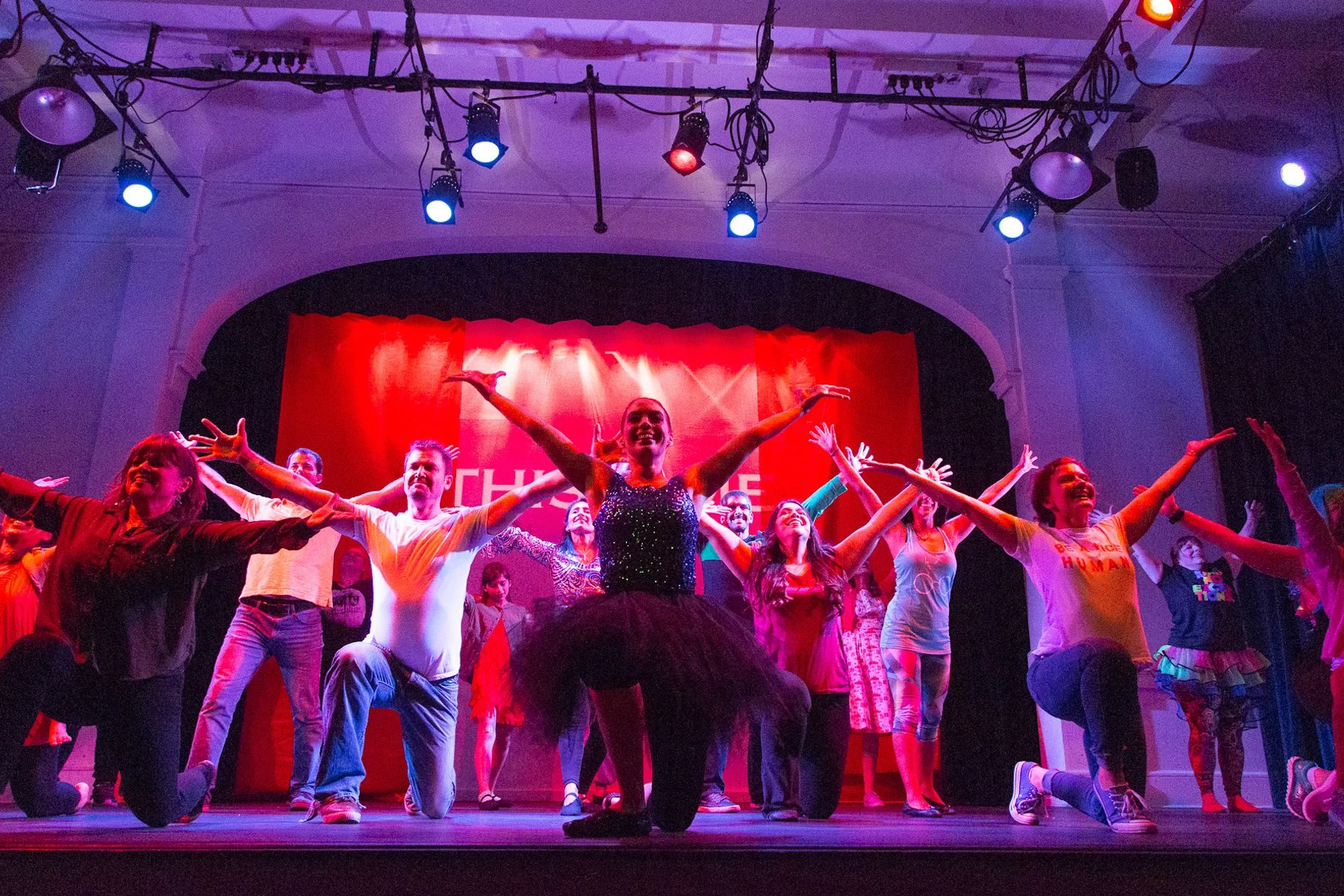
Photo by Zheng Wang
The dance world has come a long way in recent years for the acceptance of everyone. Gender norms are being broken and traditional ways of training are being pushed aside. One gap that is still working its way through the realm of dance is the gap for adults starting to dance at an older age. This is something that Dare to Dance Seattle is trying to tackle with their yearly performances. We got the opportunity to speak with Administrative Director Cindy Jacobs and Artistic Director Zheng Wang about their upcoming performance on November 18th and 19th! Read on to learn more about the mission of Dare to Dance and details for their upcoming show!
Zheng shares that he was not a dancer when he was growing up. He says that he never considered himself a dancer until he found a group that participated in flash mobs in 2010. The flash mob was performing at Westlake Center in Seattle and he says that he went with a friend and was a part of the big crowd dancing together. “That was just really fun, really exciting, so I just kept going back,” he recalls.
While participating in the flash mobs, he met a group of people that were very passionate about dance, but they weren’t “professionals.” He credits meeting this group of people as the true beginning of starting Dare to Dance and his reason for creating a show with the flash mob community.
Cindy started taking dance classes when she was five years old and shares that back when she was training, there were no performances or recitals. There were just strictly classes for technique. Her father was in the military so she says that she moved around a lot and learned different dance styles such as tap and hula. She continued to dance throughout high school and shares that she took a little break after graduating.
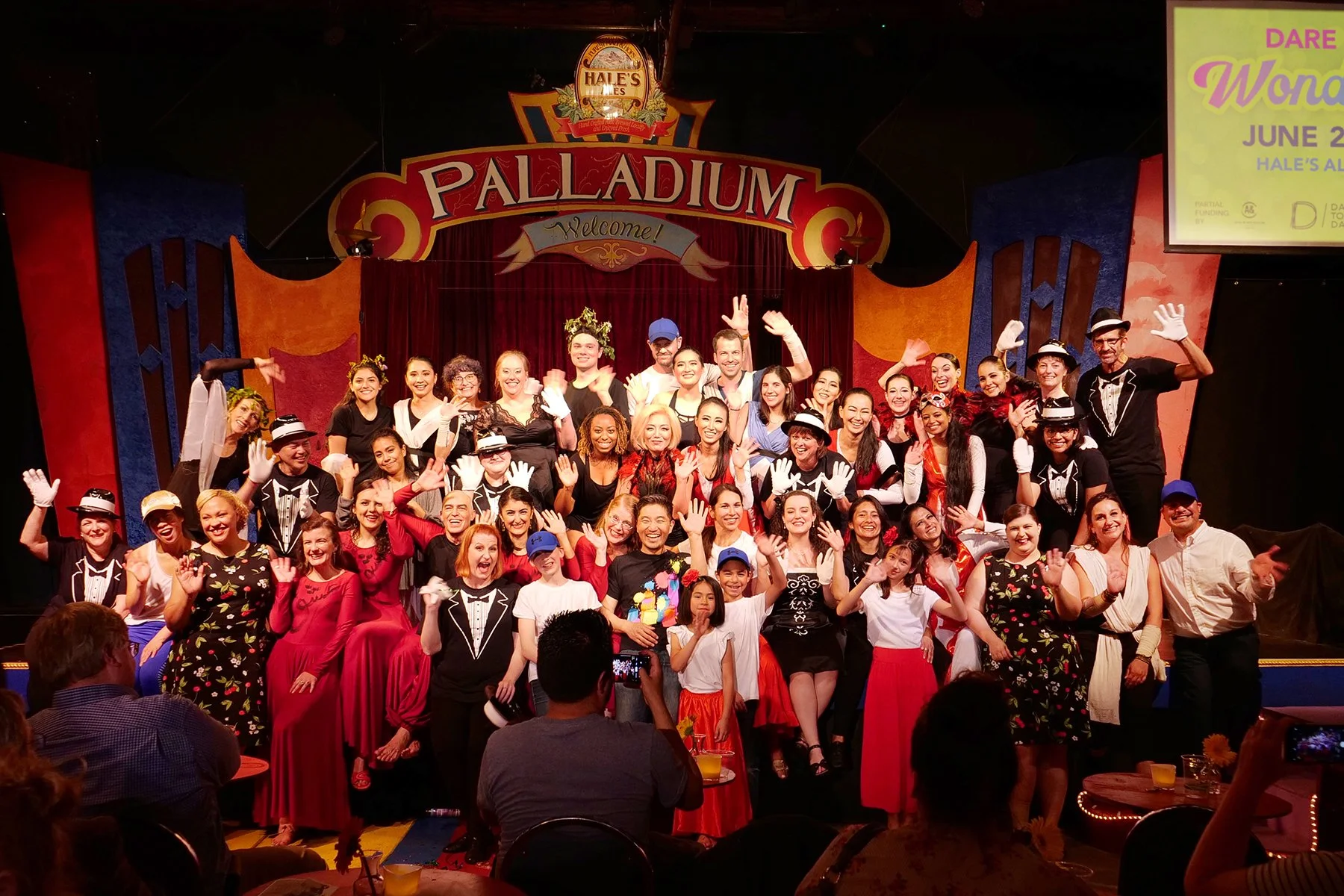
Photo by Zheng Wang
Later on, in her adult years, she started dancing again in some community-based performances and stage musicals. She then started dancing with a community show choir and later on choreographed for them. Cindy and her choreography partner Sue have worked together for many years and have choreographed numerous pieces in various locations. “I just love to dance,” she shares, smiling.
This new upcoming show will be held on November 18th and 19th at Broadway Performance Hall in Seattle at 8 pm. Dare to Dance’s shows started in 2010 with the first show simply called Dare to Dance. These shows aim to get people who don’t have a lot of dance training but want to start dancing on stage and perform. To include people who are dance enthusiasts and just want to dance. These dance pieces specifically are meant to showcase different dance styles and the utter joy that the people onstage have when performing.
Dare to Dance encourages group performances to share the joy of dancing together. Each specific piece showcases a dance style and choreographers from various locations bring these pieces for the dancers to perform. This organization just wants to share dance with everybody.
Cindy shares that when she joined the team in 2018 she was very impressed with the organization of the company and loved the mission. “It was extremely welcoming,” she shares. She says that something that surprised her was the amount of diversity between the dances and the dancers. “It’s really a fun show!” Cindy says.
The goal of Dare to Dance as a non-profit organization is to provide professional-quality opportunities for dance enthusiasts of all ages and skill levels to create, perform, connect and grow. “It’s really about providing that opportunity to people that don’t get it otherwise,” Zheng shares. He emphasizes the fact that “non-dancers” don’t get the opportunities to perform onstage like dancers that train at a studio do. Zheng believes that the audience can see themselves onstage when they are watching these performances that they might not with other shows.
When coming up with this idea, Zheng shares that he thought that this was a very out-of-the-box concept to create. He says that he disguised the first show as a big birthday celebration for his 35th birthday to ensure that people would turn out and want to celebrate. “I figured that if it was a total disaster, we could just write it off as having fun for my birthday!” Zheng shares, laughing. What surprised him the most was how successful it was and it allowed him to continue doing these shows from then on.
Something that makes Dare to Dance stand out amongst other organizations is the fact that every idea is open for discussion. “‘Hey, you have a good idea? Sure! Can you get some dancers?’” Cindy shares, smiling. She elaborates that there aren’t the boundaries that typical dance organizations have and they focus their time on allowing adult amateurs to have the opportunity to dance onstage. Cindy states that the most important thing about Dare to Dance is that there are no pre-existing rules for what kind of dance or dancers they need. “We are willing to look at everything,” she shares.
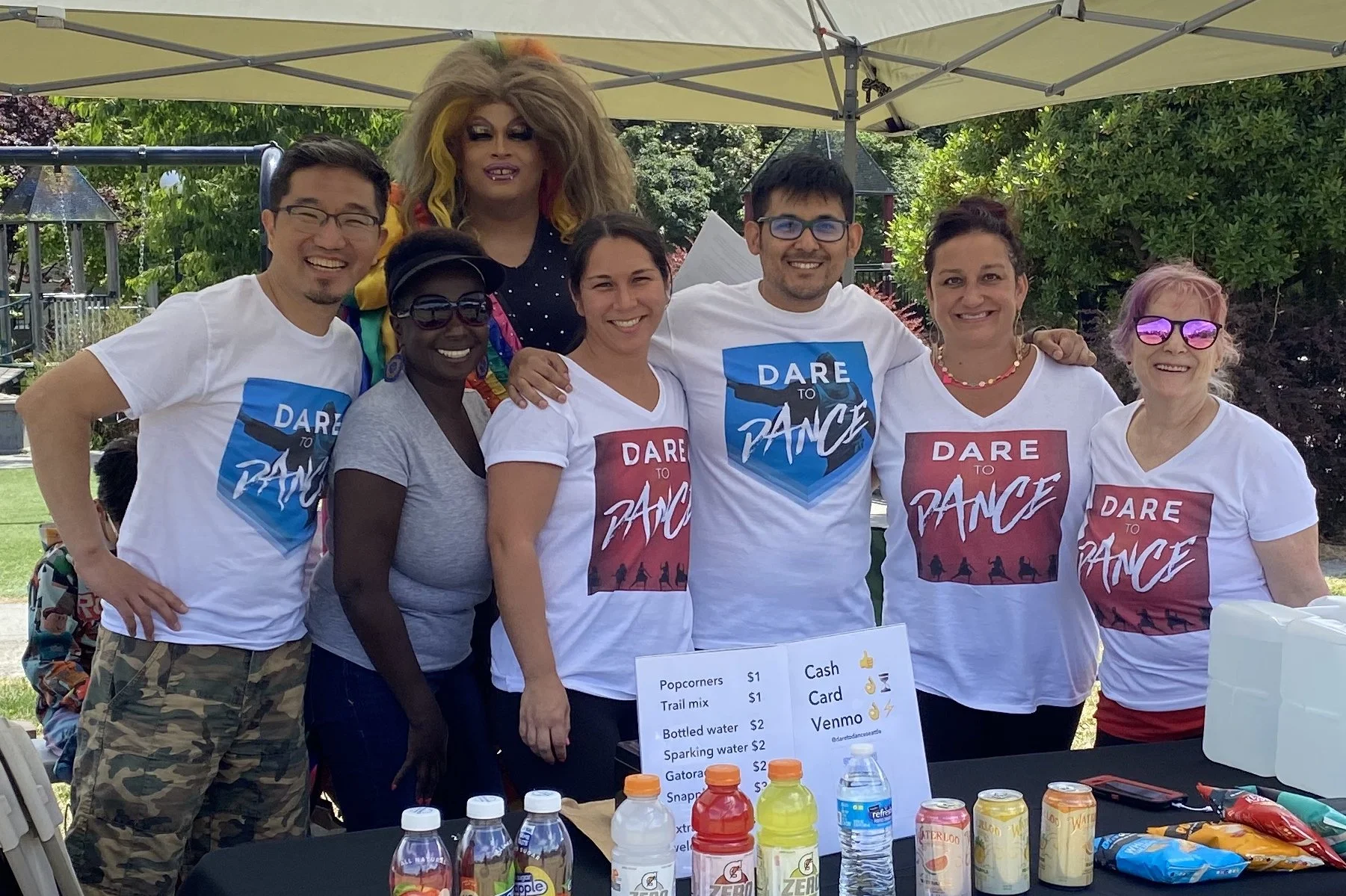
Photo by Zheng Wang
About the Author

Disclaimer
All content found on the Dancewear Center Website, Instagram, Facebook, Pinterest, and all other relevant social media platforms including: text, images, audio, or other formats were created for informational purposes only. Offerings for continuing education credits are clearly identified and the appropriate target audience is identified. The Content is not intended to be a substitute for professional medical advice, diagnosis, or treatment. Always seek the advice of your physician or other qualified health provider with any questions you may have regarding a medical condition. Never disregard professional medical advice or delay in seeking it because of something you have read on this Website.
If you think you may have a medical emergency, call your doctor, go to the emergency department, or call 911 immediately. Dancewear Center does not recommend or endorse any specific tests, physicians, products, procedures, opinions, or other information that may be mentioned on dancewearcenter.net. Reliance on any information provided by dancewearcenter.net, Dancewear Center employees, contracted writers, or medical professionals presenting content for publication to Dancewear Center is solely at your own risk.
Links to educational content not created by Dancewear Center are taken at your own risk. Dancewear Center is not responsible for the claims of external websites and education companies.
How to Make a Ballet Bun
As dancers, we tirelessly strive to improve our technique and artistry in each class. A big part of putting in this work is focusing on the task at hand without distractions. And as any dancer with long locks knows, hair can often be a big distraction! We’ve all been there - constantly tucking falling strands behind our ears, jamming bobby pins into our scalp, trying to re-do our ballet bun in between combinations, the list goes on. Knowing how to do a proper ballet bun can significantly benefit a dancer, as it can keep them focused on their training and performance and not on whether their updo will stay put. Read on to learn DWC’s tips for achieving the perfect ballet bun.
A Guide to the Essential Ballerina Updo
By Madison Huizinga, DWC Blog Editor

Ballet bun at the crown of the head. Photo by Colin Hutton from danceadvantage.net
As dancers, we tirelessly strive to improve our technique and artistry in each class. A big part of putting in this work is focusing on the task at hand without distractions. And as any dancer with long locks knows, hair can often be a big distraction! We’ve all been there - constantly tucking falling strands behind our ears, jamming bobby pins into our scalp, trying to re-do our ballet bun in between combinations, the list goes on. Knowing how to do a proper ballet bun can significantly benefit a dancer, as it can keep them focused on their training and performance and not on whether their updo will stay put.
Let’s run through the basic steps.
Brush or comb your hair free of tangles
Run a hairbrush or comb through your hair several times until it is free of any tangles. Eliminating any knots or tangles in your hair will ensure that your hair looks smooth in the final ballet bun without any large “bumps.” Many dancers choose to use a spray bottle filled with water to achieve an extra smooth look.
Secure your hair in a ponytail at the crown of your head
Gather your hair into a ponytail that sits at the crown of your head (see photo). It’s worth noting that some dancers prefer to part their hair and secure it into a low ponytail at the nape of their neck. This creates what’s referred to as a “low bun.” For those with finer hair, using a hairbrush or comb to help gather your hair into a ponytail can help smooth out any bumps. Secure the ponytail with a hair tie, preferably one that’s a similar color to your hair. Dancers, specifically ones with finer hair, can optionally smooth their hair back with hair gel before this step to help smooth away bumps and flyaways. Many dancers also choose to use a bristle or “smoothing brush” during this step to help with any bumps or flyaways. Using mousse, “hair mascara,” or gel applied with a toothbrush can further enhance this smoothed back ponytail.
Twist the ponytail into a coil and wrap it around the hair tie

Photo of a ponytail at the crown of the head. Photo by Pius Martin from Unsplash.
Twist the hair in your ponytail until it starts coiling in on itself. Wrap it around your hair tie so it forms a spiral-like shape, pinning it with hair pins as you go. The tighter you coil your hair, the better! For dancers with thicker hair, it can be useful to divide the ponytail into two separate sections, twist each section, and coil each one in opposing directions around the hair tie. Twisting your hair into a firm coil will help ensure that the bun stays tightly secure and in place.
Fasten the bun with hair pins and a hairnet
Secure the ballet bun by sticking hair pins into its center, along the bottom base of the bun on the scalp. Angle the pin towards your scalp before shifting the angle upwards into the center of the bun. The more hair you gather in the pin before angling it upwards, into the bun, the flatter the bun will be. At Dancewear Center, we offer two-inch, two-and-a-half-inch, and three-inch hair pins for buns of varying sizes. The hair pin size that a dancer should use depends on the thickness and length of their hair. Also, wrapping a hairnet around the bun helps keep fine, flyaway hair at bay. Before securing the bun with hair pins, simply wrap the hairnet around the bun, making sure that its elasticized edge is tucked towards the bottom of the bun out of view. The hairnet may be wrapped around the dancer’s bun once, twice, or three times depending on the texture of the dancer’s hair and the size of their bun.
Pin back and hairspray any stray hairs
For those with layered and/or fine hair, use bobby pins or snap clips to secure any stray hairs or bangs. As a finishing touch, spray the bun and your scalp with a light coating of hairspray to ensure that the updo is smooth with a clean, finished look.
Bonus tips!
Use a “Bun Builder”
For those struggling to achieve a tall, rounded bun look, use the Bun “Donut” Builder by Bloch. Simply gather your hair into a ponytail, pull the ponytail through the center of the builder, slide the builder to the base of the ponytail, arrange your hair around it, and secure it with a hairnet and hair pins. The Bloch Bun Builder creates a taller, more spherical bun than the classic method, so we suggest using it if you are hoping to achieve that style in particular.
Keep a “hair kit” in your dance bag
It’s always helpful to have extra hair supplies on hand in the case of a hair tie snapping, a hair net snagging, or a bobby pin disappearing out of thin air (it’s crazy how they seem to do that!). The Bloch Hair Kit contains all of a dancer’s hair essentials including two hair nets, fifteen three-inch hair pins, ten two-inch hair pins, six bobby pins, four hair elastics, and a “how-to” guide for the best bun. Plus, it comes in an elegantly packaged pink tin that will be sure to stand out in your dance bag when you’re doing your hair in a hurry. The “Holding It Together” Bun Box from Covet Dance similarly contains hair pins and hair ties, as well as bobby pins, corkscrew spin pins, a bun-making “flower,” and a cute decorative wool bow to offer dancers more hair options.

Photo by Iiona Virgin on Unsplash
Accessorize!
When given permission from your dance instructor, let your personality shine with some fun hair accessories. The dreamy Cloud Scrunchie from Cloud & Victory wraps your bun in a colorful, luminous garment that looks great on your hair and on your wrist. Handmade by local Seattle artist Hayley Maddox, the scrunchies from Lasso Leos come with intricately detailed lace patterns and stitching, sure to stand out in any class. The Fluffy BUNnies Scrunchies from Covet Dance are as fuzzy and adorable as can be, particularly cute on younger dancers. Or adorn your ballerina updo with a classic crochet bun cover from American Dance Supply, offered in a variety of soft colors and with rhinestones.
By following these tips along with a little practice, your ballet bun will be fit for the studio and stage in no time!

Disclaimer
All content found on the Dancewear Center Website, Instagram, Facebook, Pinterest, and all other relevant social media platforms including: text, images, audio, or other formats were created for informational purposes only. Offerings for continuing education credits are clearly identified and the appropriate target audience is identified. The Content is not intended to be a substitute for professional medical advice, diagnosis, or treatment. Always seek the advice of your physician or other qualified health provider with any questions you may have regarding a medical condition. Never disregard professional medical advice or delay in seeking it because of something you have read on this Website.
If you think you may have a medical emergency, call your doctor, go to the emergency department, or call 911 immediately. Dancewear Center does not recommend or endorse any specific tests, physicians, products, procedures, opinions, or other information that may be mentioned on dancewearcenter.net. Reliance on any information provided by dancewearcenter.net, Dancewear Center employees, contracted writers, or medical professionals presenting content for publication to Dancewear Center is solely at your own risk.
Links to educational content not created by Dancewear Center are taken at your own risk. Dancewear Center is not responsible for the claims of external websites and education companies.
Interested in writing for the DWC Blog? Click below to fill out the DWC Contributor application!