
Encouragement for Dancers with Anxiety Disorders
One of the most common misconceptions about anxiety is that all people experience it in the same way. For those who do not have an anxiety disorder or do not believe anxiety disorders are legitimate health concerns, the assumption reigns that anxiety is a temporary and fixable cluster of symptoms brought on by isolated circumstances.
Trigger Warning: Anxiety, Mental Health
By Hannah Emory, DWC Blog Contributor
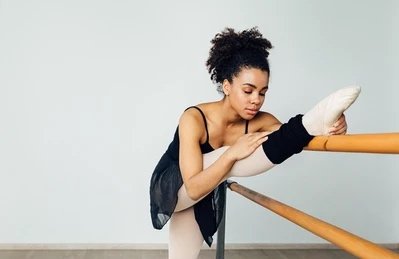
Photo from Shutterstock
My story with anxiety.
One of the most common misconceptions about anxiety is that all people experience it in the same way. For those who do not have an anxiety disorder or do not believe anxiety disorders are legitimate health concerns, the assumption reigns that anxiety is a temporary and fixable cluster of symptoms brought on by isolated circumstances.
I’m a dancer who copes with a chronically disordered form of anxiety called Generalized Anxiety Disorder, or GAD. It means that I have anxiety at all times and can experience severe symptoms, even without an immediately evident or conventionally logical cause. I am grateful that I was diagnosed about five years ago and continue to learn about how my anxiety affects my everyday life.
My symptoms can vary from being deeply emotional to viscerally physical - from a background sense of coming doom or imminent failure to shaking, shortness of breath, digestive troubles, and mental fog. The severity and frequency of my anxiety symptoms can be reduced by self-care and the input of my support network, but the disorder itself never completely goes away.
Having an anxious body as a dancer provides an interesting challenge when it comes to performance time. There is this feeling of excited anticipation that works up once you’ve committed your blood, sweat, and tears to a creative endeavor and you’re about to present it to the world. Yet, an anxious body sometimes can’t tell the difference between joyful energy and anxiety-inducing stimuli, and the two can become muddled together or transform into each other.
When I was a child and teenager, I would experience these muddied waters all the time at performances. The number of people around me, rigorous schedules, interrupted self-care, and the anticipation of putting my heart and soul in front of audience members created an environment where I could thrive off the intensity, but sometimes struggled to stay grounded. That could put a damper on the joy of performing because I didn’t know how to deal with the stressors I was encountering effectively.
Throughout my university dance career, I’ve had many opportunities to learn about what helps me be successful amid my anxiety. Below are the top three things that have proven essential for me on a holistic level - these tips are important for any person, but can be easily forgotten in an athletic field like dancing. We need to intentionally make space in our lives for the internal and personal. As dancers, we use our minds, bodies, and hearts, and all three parts of ourselves require care so we can bring the best of ourselves to the studio and the stage.
Even in the off-season, have a routine.
After experiencing a year-long off-season in 2020, I realized that having a routine is key to avoiding anxiety flare-ups in the day-to-day as well as during performances. As an artistic person, routines can seem like the anchor weighing me down, but they can ultimately make or break navigating mental health struggles and a dancing career. I know that if I don’t stick to a routine, I quickly feel unmoored in my everyday life and have a greater sense of unpreparedness for performances.
Routines are best when they are individualized, realistic, holistic, and consistent. Your routine is the framework for having joy and maintaining movement forward in life - from nutrition to mundane tasks, from what barre exercises you need to do to what makes you feel ready for a performance night. Establishing a meaningful and effective routine will take troubleshooting and will shift over time as your needs change, but it’s a process that will be invaluable to your growth as a dancer.
A few warnings from my personal experience: don’t overload your off-days and don’t feel the need to run your life the way others do. Anxiety disorders can come with a robust perfectionism streak, but this is no competition and you are doing this for yourself and your craft. Your routine is about setting yourself up for success so that you are consistently improving as a dancer and avoiding anxiety spirals. Productivity and perfection are not the goals, consistency and stability are.
Find your own mindfulness practice.
Living life with GAD for me means that I don’t enjoy traditional silent meditation. I think many folks believe that to have a “real” mindfulness practice you must be skilled at silent meditation or try to be. I was in that boat and went on a journey to find a mindfulness practice that works for me consistently. I would say that if you are an anxious-bodied dancer, a mindfulness practice can be helpful, especially to ward off performance stress.
My mindfulness routine includes…
Using a set of meditation beads I made to center my mind on a power phrase or two
Journaling consistently to process my emotions and visualize my future
Improv dancing to a playlist of empowering tunes so I can connect my body, mind, and heart
Taking a walk outside where there is some green space and I can hear the birds singing
I like having a list of different activities that I know will center me and focus my attention, so that no matter where I am, I will be able to do some form of self-soothing when I’m having a flare-up or when the pressure is on. Some other forms of mindfulness and self-relaxation can include guided whole-body relaxation, scripted bodily tension-and-release exercises, utilizing your barre warm-up as meditation, and listening to some ASMR. While there is some trial and error to this suggestion, the time invested in being able to routinely quiet your mind and center your energy will pay back dividends your whole life long.
Seek out community.
Even though anxiety is a deeply personal experience, it does not mean that we have to go through it alone. According to the Anxiety and Depression Association of America, about 20% of adults in the United States are affected by anxiety disorders. Sadly, most of those suffering do not receive the support they need, either from professional resources or from interpersonal support systems.
From my personal experience, anxiety results in a vicious cycle of convincing myself that I have to do it all on my own. I fear appearing annoying and needy and that if I reach out for help, others won’t understand how much GAD affects my life.
Yet, we are coming into a time where mental health is being destigmatized. Though there is still a lot of work to be done in normalizing and integrating mental health struggles into our societal conversations, there are a lot more doors open than there used to be. More people acknowledge mental health struggles as legitimate compared to a few decades ago. So the fear I feel is assuaged by the fact that people are struggling around me and would also like to have space held for them. Reaching out is easier when I remember that I am not the only one.
Lastly, some encouragement.
Ironically, it is anxiety-inducing to think of being vulnerable with others and doing the challenging personal work to grow when anxiety can feel like a constant uphill climb. As dancers, our bread and butter is using our whole selves to tell honest, moving, and human stories. There is little that’s more honest, life-changing, and human than learning how to live with intention in our mental health realities. There is a place to carve out in the dance world for telling the truth about mental health, demystifying it, and loving each other in the midst of it.
Ultimately, you have permission to start breaking the vicious cycles of loneliness and perfectionism that can come with having an anxiety disorder. I hope you know it is a sign of your power and strength to reach out to a mutually supportive community. I hope you know that you can move mountains with baby steps; that you are not alone. I hope you know your strength is shown through your struggle; your heart and your art are always worth the time of being loved, acknowledged, and cared for.
Much love to you, dear dancer.

The Story of a Studio Born Out of the Pandemic
It’s no secret that many small businesses suffered throughout the COVID-19 pandemic and dance studios were no exception. Amid growing dance studio closures, those eager to move were left without a space to practice and without instructors to learn from. In the face of these challenges, local dance instructor and artistic director Mija Bishop founded Flight Feathers, a dance studio aimed at helping each individual dancer sore. Stay tuned to Flight Feathers’ Instagram for details about its June production of A Midsummer Night’s Dream.
Mija Bishop on Helping Dancers Soar at Flight Feathers
By Madison Huizinga, Former DWC Blog Editor

Photo by Truman Buffett
It’s no secret that many small businesses suffered throughout the COVID-19 pandemic and dance studios were no exception. Amid growing dance studio closures, those eager to move were left without a space to practice and without instructors to learn from. In the face of these challenges, local dance instructor and artistic director Mija Bishop founded Flight Feathers, a dance studio aimed at helping each individual dancer sore. Stay tuned to Flight Feathers’ Instagram for details about its June production of A Midsummer Night’s Dream.
Influenced heavily by her family, Mija began dancing around age six. Her father was a ballet teacher as well as the owner of a ballet studio. “I was a little goof-off when I was little!” Mija laughs, sharing that she often got kicked out of class for being disruptive. It wasn’t until around age 13 that Mija began focusing on her dance training a bit more seriously. Throughout middle school and high school, she tried to get involved with as many ballet-related workshops, programs, and performances as she could.
Nonetheless, Mija shares that she eventually got burnt out and quit dance after high school for three years. “I kind of had this all-or-nothing mentality,” she says of how she viewed her involvement with dance. After three years, Mija found herself missing the dance scene. When she found an opportunity to get back involved, she jumped on it. “I’m really grateful for that chain of events that brought me back to dancing again,” she says. Today, she’s going on her tenth year of teaching dance, which has been a big part of what she’s loved about her dance journey.
“I've always enjoyed the movement,” Mija says, sharing her love for dancing to beautiful music. She appreciates the artistry behind dance and being able to feel so present with herself and her body. “There’s something really freeing about just being able to completely immerse yourself,” she says. Mija also appreciates her dance community, as well as the discipline and structure of ballet, particularly the ability to assess herself.

Photo by Thomas Hopkins
Mija shares that in her personal life, a challenge she’s faced in dance is grappling with the “perfect ballet body.” She never felt like she fit the ideal image of a ballerina, pointing out that she is shorter in stature and has shorter limbs. “People of Asian descent might relate,” she shares of people who share the same racial identity as herself. Mija says that growing up as a dancer she felt pressure and received comments about staying within a certain weight and not gaining “extra” muscle, as it would corrupt her lines. It wasn’t until after high school that she realized that cross-training and weight training were key to helping her gain strength as a dancer. “That’s something that I have been enjoying for myself and also been able to share with my students,” Mija says of cross-training, sharing that it can help dancers gain a better sense of ownership over their bodies and physical capabilities. Learning to train one’s body to gain strength rather than training to look a certain way is a healthier and more sustainable practice.
Flight Feathers was established in May of 2021 so that Mija could safely continue working with dancers during the COVID pandemic. “I was just really devastated having to say ‘good-bye’ to so many dance families,” she says of the studio she had taught at closing. She decided to take a “big leap of faith” to provide community members with access to dance classes amid COVID. Flight Feathers has mainly focused on ballet this year, but Mija is eager to expand the studio to offer jazz, hip hop, and contemporary.
“The intention behind both the name and the program is to create an environment where each student can grow and explore their own unique needs through ballet,” Mija says of the mission behind Flight Feathers. “I feel like there are just so many different ways to shine and soar,” Mija says, connecting the notion to a flock of birds. “I really hope to provide each student with [a] unique experience that will make them grow.”
Dance accessibility is something important to Mija. She shares that going into the second year of her program, she would love the chance to connect with people and find ways to make dance more accessible to people, particularly in the financial sense. Mija's vision is starting to take shape, as she has recently been connected with The Cobb Foundation Northwest Founder and President Margaret Cobb. The foundation currently funds and creates opportunities for underserved children, including music and tennis lessons, LEGO robotics workshops, and a book giveaway program. Margaret and Mija are in the process of adding ballet to one of the Foundation's offerings. She is excited about the opportunity to team up with Margaret and provide a positive dance experience to a wider range of kids through the organization.

Photo by Andrew Lucio
Excitingly, Mija has recently moved operations to a new studio space in Woodinville, Washington. “It’s still a little bit unreal!” she says, sharing that she’s incredibly grateful for the support she’s received from her husband and dance families
Follow Flight Feathers’ Instagram to stay up-to-date on all their upcoming shows and more!
How to Cultivate Inclusivity in Food and Dance Work
Perfectionism is a challenge that Mindy has experienced in the dance world as well. Her biggest challenge as a dancer has been countering those perfectionist ideals by accepting herself as she is each day. As a “recovering perfectionist,” Mindy shares that it’s a journey: some days it’s a lot harder, some days a lot easier, and other days it’s somewhere in between. She encourages others struggling with perfectionism to practice self-compassion, directing the kindness they offer to others towards themselves.
Certified Nutritionist Mindy Lu on Challenging Fatphobia in Dance Classrooms
By Madison Huizinga, Former DWC Blog Editor

Photo by AJ Ragasa
Similar to many mainstream dance spaces, the world of nutrition and eating disorder care has not been entirely welcoming to people from marginalized communities. This exclusivity, rooted in ideals of white supremacy and colonialism, can put up many barriers for people trying to receive eating disorder treatment and educate themselves on nutrition. At Sunrise Nutrition, nutritionists and therapists are cultivating a space that invites all people into food and body work, fostering a “nonjudgmental approach that celebrates the diversity of each individual.” Read on to learn more about Clinical Director, Therapist, & Certified Nutritionist Mindy Lu’s dance journey and the philosophy behind her work at Sunrise. And stay tuned to Sunrise Nutrition’s social media, as workshops will be coming up this summer, specifically for dancers.
Growing up, Mindy gravitated toward art, learning to play various instruments, but performance art always felt out of reach for her. After high school, a close friend of Mindy’s pushed her to take a drop-in dance class and she fell in love with it. “It’s never too late to start something that you’ve always wanted to do,” Mindy says to adults who want to try dance for the first time. She shares that she enjoys being able to perform and share the stage with others, as well as be a part of a choreographer’s vision. “One of my favorite things about performing is the energy,” Mindy gushes. She shares that she participated in a lot of local dance projects before getting more involved with teaching. Mindy loves being able to see the “sparkle” in students’ eyes when they feel engaged and proud of what they’re learning.
Mindy shares that teaching dance requires instructors to “give” so much of themselves to their students. After a while, feeling the need to focus on her own relationship with dance, she stepped away from teaching. This led to Mindy taking an extended break from dancing entirely. This year, she’s recently returned to dancing as a student and has been enjoying it immensely.
Mindy has always been interested in nutrition as well, specifically how to fuel and take care of her body. She points out that there is often a hyper fixation on the size and shape of dancers’ bodies in the dance world. “I really struggled with that for a lot of my 20s,” Mindy says. She decided that if she learned more about the science behind food, she could learn how to eat in a way that made her feel her best.

Mindy earned her MS in Nutrition & Clinical Health Psychology from Bastyr University. The more that Mindy learned about food, the more she learned that food is much more than something people eat. “It’s about the culture that we live in, the messages that we receive about food…and our bodies,” Mindy shares. “The reality of it is that we live in a really unkind culture that benefits off other peoples’ oppression.”
Following graduation, Mindy started working in eating disorder treatment. She voices that standard eating disorder care is “really rooted in white supremacy and colonialism,” sharing that the field is predominantly white-centered and heavily gendered and can promote harmful ideas regarding binaries and ultimatums. There’s an assumption, perpetuated by mainstream media, that white, thin, cisgender women are the only ones experiencing eating disorders. In reality, people of all races, genders, body sizes, religions, nationalities, and more experience eating disorders.
“I want to practice in a way that invites marginalized communities into this work,” Mindy shares of the idea behind Sunrise Nutrition. “Eating disorders don’t discriminate.”
Being a second-generation Taiwanese American in a white-dominated field, Mindy shares that she’s experienced a lot of racism in the realm of nutrition and eating disorders. She says that she’s had to do a lot of self-advocacy and advocate for her clients.
In addition, being a child of immigrants, Mindy shares that she feels a high drive to achieve, which can fester into perfectionism. This extreme level of perfectionism is something she’s constantly trying to challenge for herself and for her clients. She strives to promote autonomy and agency within those she works with, as those are attributes she values herself.
Perfectionism is a challenge that Mindy has experienced in the dance world as well. Her biggest challenge as a dancer has been countering those perfectionist ideals by accepting herself as she is each day. As a “recovering perfectionist,” Mindy shares that it’s a journey: some days it’s a lot harder, some days a lot easier, and other days it’s somewhere in between. She encourages others struggling with perfectionism to practice self-compassion, directing the kindness they offer to others towards themselves.

Something that Mindy hopes to see challenged in the dance world is weight stigma and fatphobia. “I think there needs to be more education around how we’ve constructed these messages about our bodies and how harmful it is when we internalize this idea that there are certain bodies that are more valuable than other bodies,” Mindy says. Creating more size-inclusive spaces in the dance world is an important part of bringing this change to fruition. This can start with building awareness and education about what fatphobia in the dance community looks like and acknowledging thin privilege, identifying what accountability may look like, and figuring out actionable steps community members can take to create size-inclusive spaces.
This summer, Sunrise Nutrition will be offering workshops specifically for dancers, including one dedicated to “creating a body positive dance classroom.” Dancers can check out Sunrise Nutrition’s social media, including Instagram and Facebook for updates.
Disclaimer
All content found on the Dancewear Center Website, Instagram, Facebook, Pinterest, and all other relevant social media platforms including: text, images, audio, or other formats were created for informational purposes only. Offerings for continuing education credits are clearly identified and the appropriate target audience is identified. The Content is not intended to be a substitute for professional medical advice, diagnosis, or treatment. Always seek the advice of your physician or other qualified health provider with any questions you may have regarding a medical condition. Never disregard professional medical advice or delay in seeking it because of something you have read on this Website.
If you think you may have a medical emergency, call your doctor, go to the emergency department, or call 911 immediately. Dancewear Center does not recommend or endorse any specific tests, physicians, products, procedures, opinions, or other information that may be mentioned on dancewearcenter.net. Reliance on any information provided by dancewearcenter.net, Dancewear Center employees, contracted writers, or medical professionals presenting content for publication to Dancewear Center is solely at your own risk.
Links to educational content not created by Dancewear Center are taken at your own risk. Dancewear Center is not responsible for the claims of external websites and education companies.

Getting To Know DWC Ambassador Kendall Hadley
Being a part of the dance community has been something that DWC Ambassador Kendall Hadley has loved with her ambassadorship. Earlier in her dance career she made this realization and knew that she wanted to apply to become an ambassador at DWC. We got a chance to speak with Kendall about what inspired her to become an ambassador and what dance means to her. Read on to learn more about Kendall’s dancing journey and what she’s looking forward to most about becoming a DWC Ambassador!
Pronunciation: Can-doll Had-lee | Pronouns: she/her
By Nicole Barrett, DWC Blog Editor

Being a part of the dance community has been something that DWC Ambassador Kendall Hadley has loved with her ambassadorship. Earlier in her dance career she made this realization and knew that she wanted to apply to become an ambassador at DWC. We got a chance to speak with Kendall about what inspired her to become an ambassador and what dance means to her. Read on to learn more about Kendall’s dancing journey and what she’s looking forward to most about becoming a DWC Ambassador!
Kendall started dancing when she was about five years old. She is currently a senior in high school and has been dancing at Fidalgo DanceWorks. Kendall also shares that she is hoping to dance in college as well.
When Kendall went into her first photoshoot as an ambassador, she was so excited to be around the community of dancers. She is also looking forward to expanding her knowledge of the dance community and talking about some of the hard topics that dancers go through. Kendall also shares that of course she is excited to open her PR boxes and see the results from the photoshoots with the other ambassadors.
We are so happy to have Kendall as one of our DWC Ambassadors! Watch the full interview below to hear more about Kendall’s dancing journey!
About the Author

Disclaimer
All content found on the Dancewear Center Website, Instagram, Facebook, Pinterest, and all other relevant social media platforms including: text, images, audio, or other formats were created for informational purposes only. Offerings for continuing education credits are clearly identified and the appropriate target audience is identified. The Content is not intended to be a substitute for professional medical advice, diagnosis, or treatment. Always seek the advice of your physician or other qualified health provider with any questions you may have regarding a medical condition. Never disregard professional medical advice or delay in seeking it because of something you have read on this Website.
If you think you may have a medical emergency, call your doctor, go to the emergency department, or call 911 immediately. Dancewear Center does not recommend or endorse any specific tests, physicians, products, procedures, opinions, or other information that may be mentioned on dancewearcenter.net. Reliance on any information provided by dancewearcenter.net, Dancewear Center employees, contracted writers, or medical professionals presenting content for publication to Dancewear Center is solely at your own risk.
Links to educational content not created by Dancewear Center are taken at your own risk. Dancewear Center is not responsible for the claims of external websites and education companies.
A Conversation About Acceptance In Dance Studios
When asked what her favorite thing about dance is, Amanda shares that the constant need to be present is something that she appreciates the most. “As a child, dance was really that escape for me, where I knew that I could go to the studio and just forget about everything else,” she shares. The empowerment that she says she felt in her body while being in the studio was something that felt really good to her. She’s also noticed that as she has gotten older that it is very hard to stay present with everything in life going on, but once she walks into the studio, every worry washes away.
Local Studio Owner Amanda Records On Body Positivity
By Nicole Barrett, DWC Blog Editor

From starting dance in the fourth grade to dancing in Rome, Italy Amanda Records is no stranger to how the dance industry operates. Now, the Artistic Director of Spotlight Dance Center in Renton, Washington, she hopes to share her knowledge of the dance world with every student that walks through the studio doors. Read on to learn more about Amanda’s dance journey!
Amanda Records started dancing when she was in the fourth grade at British Dancing Academy in Kent, Washington. The woman that watched her after school took her daughter there and Amanda got to observe the ballet class that she was in. “I was like ‘This is amazing, I want to do this,’” she shares. She was able to get signed up and she danced there until she graduated high school. After graduating, Amanda then went to Hobart and William Smith Colleges in Geneva, New York, and got her BA in Dance and Movement Sciences. After taking a break from school for a year, she returned to school at the University of Oregon to get her MFA in Dance, where she held a Graduate Teaching Fellowship.
Before moving back to Washington and co-founding The Barefoot Collective, (tBFC) a cooperative in Tacoma, Amanda spent six weeks in Austria on scholarship attending ImPulsTanz. There she completed the Danceability teacher training program and performed with Joint Forces Dance Company. Adding to her extensive resume of performance work, she also studied abroad in Rome, Italy, and got to perform amongst the picturesque ruins.
When asked about what sparked her decision to join Spotlight, she shares that the previous studio owner approached her hoping she could take over her position. “This was actually the second studio owner that approached me about taking over their business, so I thought there’s something in the stars because this opportunity keeps being presented to me,” she says. She was just wrapping up her graduate degree when she got the offer and she shares that she was very thankful that these women presented these opportunities to her. Ultimately, she took the job and has been the Artistic Director of Spotlight since 2011.
Every dance studio has its own flair that makes it stand out from the rest, so when asked about what made Spotlight stand out amongst others, Amanda had many things to share. She spoke about Spotlight’s Assistant Teacher Training Program (ATTP), which allows dancers to participate in lessons and mentorship in their teaching journey. She also shares that Spotlight has performing companies that allow dancers of all ages to perform in various events around the community. For middle and high school students in the performing companies, she expresses that Spotlight tries to open opportunities for them to perform at more prestigious events like the Western Washington University Dance Festival, BOOSTmeUP and Olympia Dance Festival. Spotlight is one of only five studios in Washington that has an NHSDA (National Honors Society for Dance Arts) chapter and that is something that Amanda believes is very important in her dancers’ journey. This program recognizes dancers’ work in and out of the studio and comes with many benefits once in the program.
When asked what her favorite thing about dance is, Amanda shares that the constant need to be present is something that she appreciates the most. “As a child, dance was really that escape for me, where I knew that I could go to the studio and just forget about everything else,” she shares. The empowerment that she says she felt in her body while being in the studio was something that felt really good to her. She’s also noticed that as she has gotten older that it is very hard to stay present with everything in life going on, but once she walks into the studio, every worry washes away.
As dancers, we all are used to dancing in front of a mirror and getting the corrections needed in order to make our moves look better. This is something that Amanda says was a struggle for her growing up in the studio. The constant need to compare what she looked like and the perfectionism that comes with that caused some insecurities and worry in her. She would like dancers that are struggling with this issue as well to simply know their own worth.
Moving forward in the dance world, Amanda would like to see much more body inclusivity and for studios to deemphasize the mirror. She shares that teachers can include moments of class oriented away from the mirror, thereby encouraging dancers to not rely solely on the mirror for how something looks, but on how certain moves feel in their bodies. Spotlight engages in Love Your Body Week, a national campaign to encourage body positivity and celebrate all the wonderful things our bodies can do every year, and Amanda would love to see more studios participating in this impactful campaign.

Coming up for Spotlight is the fall dance season! Starting on September 8th, all classes will be held in Spotlight’s new location, making this the first full year in their beautiful new space! Amanda is so excited to welcome new students and families into classes this fall.
Be sure to check out their website here for more information on events and classes that will be at Spotlight this upcoming dance season!
About the Author
Disclaimer
All content found on the Dancewear Center Website, Instagram, Facebook, Pinterest, and all other relevant social media platforms including: text, images, audio, or other formats were created for informational purposes only. Offerings for continuing education credits are clearly identified and the appropriate target audience is identified. The Content is not intended to be a substitute for professional medical advice, diagnosis, or treatment. Always seek the advice of your physician or other qualified health provider with any questions you may have regarding a medical condition. Never disregard professional medical advice or delay in seeking it because of something you have read on this Website.
If you think you may have a medical emergency, call your doctor, go to the emergency department, or call 911 immediately. Dancewear Center does not recommend or endorse any specific tests, physicians, products, procedures, opinions, or other information that may be mentioned on dancewearcenter.net. Reliance on any information provided by dancewearcenter.net, Dancewear Center employees, contracted writers, or medical professionals presenting content for publication to Dancewear Center is solely at your own risk.
Links to educational content not created by Dancewear Center are taken at your own risk. Dancewear Center is not responsible for the claims of external websites and education companies.
A Conversation About More Accessible Information for Dancers
When asked about what her favorite thing about dance is, Mallory shares that the ability to walk into the studio and leave everything at the door is something important to her. Growing up, she knew that she could always go to the studio and get lost in her movement and not have to think about anything else. “I could just be in a place that made me happy,” she shares.
Fulfilling the Legacy of Bremerton Dance Center with Mallory Morrison
By Nicole Barrett, DWC Blog Editor

Photo by Iklil Gregg Photography
The beginning of Mallory Morrison’s dancing journey doesn’t just start with her; she has a long family history of dancers stretching back to her grandmother. After starting dance at the age of 11, her grandmother opened up a studio in her basement that started with just 30 students. She then expanded to another location and that is where Bremerton Dance Center has been since 1969. Read on to learn more about Mallory’s dance journey and her ownership of Bremerton Dance Center!
Mallory’s first appearances on a dance stage were when she was just 18 months old. “I was told that when I went onstage, and then they just couldn’t get me off of the stage,” she shares. She then continued to dance at Bremerton Dance Center and shares that she participated in many dance intensives and has worked with numerous choreographers and guest teachers through her time at the studio. Later in her dance journey, she got asked to perform with the Peninsula Dance Theater, which is a non-profit pre-professional company, all the way until her senior year of high school.
After graduating high school, Mallory decided to steer away from a dance path and went to college for business. She studied at Central Washington University and received her Bachelor’s Degree in Business Administration while still continuing some dance training at school. When she returned from college, she continued on with dance but shares that she stayed more on the business and teaching side of things at the studio. Now, she has fully taken over Bremerton Dance Center and Peninsula Dance Theater and shares that she is teaching classes every day and strives to better the studio as a whole.

Photo by Iklil Gregg Photography
When asked about what her favorite thing about dance is, Mallory shares that the ability to walk into the studio and leave everything at the door is something important to her. Growing up, she knew that she could always go to the studio and get lost in her movement and not have to think about anything else. “I could just be in a place that made me happy,” she shares.
Mallory shares that one of her biggest struggles in the dance world was finding and having access to dance programs outside of her studio. She shares that she struggled with having the right information about different dance programs that she just didn’t know about. Mallory shares that the differences in technology from when she was having these struggles to the present day are very different, but still thinks they can be prevalent. She shares that information overload is something that dancers can struggle with, and the constant need to sift through this information can be draining. For her own students and others struggling with this issue, she shares the need to pick certain schools and programs that speak to them the most and that they enjoy. “It’s about not overwhelming yourself with all that information out there, because it is a lot,” she shares.
Although there are lots of changes being made in the dance world to further equality, Mallory believes that schools should normalize the need for more integrated schools. Her main goal in her own studio is to make sure that she has the same mindset that everybody in the dance world should be accepted. She shares that she wants to make sure that she is holding lessons for dancers that are appropriate for everybody and to continue the efforts of making sure that all bodies can dance. She emphasizes on the matter that she wants to make a space where everybody can dance and feel comfortable.

Bremerton Dance Center started its fall season with classes on August 29th after doing numerous camps during the summer for their dancers. The performing companies have been hard at work rehearsing for their performances coming up in the fall and spring and like many other studios, they are working on rehearsals for the Nutcracker! Along with that, Mallory is getting ready with her junior company to do school tours around the area. The company puts a storybook ballet to a certain book each year and travels to schools around the area and performs them in front of the students and allows them to ask questions and meet the dancers.
Be sure to check out their websitehere for more information on classes and performances!
About the Author
Sources:
Disclaimer
All content found on the Dancewear Center Website, Instagram, Facebook, Pinterest, and all other relevant social media platforms including: text, images, audio, or other formats were created for informational purposes only. Offerings for continuing education credits are clearly identified and the appropriate target audience is identified. The Content is not intended to be a substitute for professional medical advice, diagnosis, or treatment. Always seek the advice of your physician or other qualified health provider with any questions you may have regarding a medical condition. Never disregard professional medical advice or delay in seeking it because of something you have read on this Website.
If you think you may have a medical emergency, call your doctor, go to the emergency department, or call 911 immediately. Dancewear Center does not recommend or endorse any specific tests, physicians, products, procedures, opinions, or other information that may be mentioned on dancewearcenter.net. Reliance on any information provided by dancewearcenter.net, Dancewear Center employees, contracted writers, or medical professionals presenting content for publication to Dancewear Center is solely at your own risk.
Links to educational content not created by Dancewear Center are taken at your own risk. Dancewear Center is not responsible for the claims of external websites and education companies.

Getting To Know Denail Weyer, DWC's Newest Staff Member
Dancewear Center looks for staff that follows our mission that “every body is a dancing body.” New DWC staff member Denali Weyer fits that description perfectly! Her passion for the ballet world spans inside and outside of the studio and we are so excited to have her on the team. Read on to learn more about Denali’s dancing journey and what sparked her decision to be a part of the team!
By Nicole Barrett, DWC Blog Editor
Dancewear Center looks for staff that follows our mission that “every body is a dancing body.” New DWC staff member Denali Weyer fits that description perfectly! Her passion for the ballet world spans inside and outside of the studio and we are so excited to have her on the team. Read on to learn more about Denali’s dancing journey and what sparked her decision to be a part of the team!
Denali grew up in a small studio in Enumclaw, Washington, and knew that her one true love in dance was ballet. Right before high school, she attended two summer programs at Evergreen City Ballet and eventually transferred there from her small studio. She shares that she liked the push that she got at a more professional-based studio which is why she transferred there. Denali ended up finishing her four years of high school at Evergreen City Ballet and after graduating auditioned for Ballet Arizona. She then did two years in Ballet Arizona’s pre-professional program and unfortunately got injured which resulted in her having to come back home. After returning, Denali went back to Evergreen City Ballet for a couple of months and then transferred to Oregon Ballet Theater and went through some of their pre-professional training there. She ended up stopping dancing after that due to injuries, but still incorporates massage and anatomy in her dance teaching now.

When asked what sparked her decision to be a part of the DWC team, Denali shares that she likes being a part of the ballet world. She thought that she would be the perfect fit for the team and she shares that the more time that she spends working with dancers of any age the more she enjoys it. Denali shares that as a ballet teacher it allows her to communicate with families better and have a greater understanding of what they need.
We are so excited to have Denali on the DWC team! Be sure to check out her interview on our YouTube channel to hear more about Denali’s dancing journey!
About the Author
Disclaimer
All content found on the Dancewear Center Website, Instagram, Facebook, Pinterest, and all other relevant social media platforms including: text, images, audio, or other formats were created for informational purposes only. Offerings for continuing education credits are clearly identified and the appropriate target audience is identified. The Content is not intended to be a substitute for professional medical advice, diagnosis, or treatment. Always seek the advice of your physician or other qualified health provider with any questions you may have regarding a medical condition. Never disregard professional medical advice or delay in seeking it because of something you have read on this Website.
If you think you may have a medical emergency, call your doctor, go to the emergency department, or call 911 immediately. Dancewear Center does not recommend or endorse any specific tests, physicians, products, procedures, opinions, or other information that may be mentioned on dancewearcenter.net. Reliance on any information provided by dancewearcenter.net, Dancewear Center employees, contracted writers, or medical professionals presenting content for publication to Dancewear Center is solely at your own risk.
Links to educational content not created by Dancewear Center are taken at your own risk. Dancewear Center is not responsible for the claims of external websites and education companies.
The Next Step: Choosing Dance After High School
I started the process of finding my next step last year as a high school junior. It can be a daunting thought to start looking at your future like that, I know it was for me! As someone who has been dancing since the age of three, once it came time to think about a career, I always came up blank. When we say “dance is my life” we mean it. While I have interests outside of dance, there was never anything that I spent enough time doing to really develop a love matching my love for dance. Eventually I got to the point where I thought; I have spent my entire life training and dancing and improving, I love it more than anything else in my life, so why not keep doing it? After coming to that conclusion, I was able to get on a focused path with where I would like my future to go.
Pronunciation: Aw-brie Zap-in | Pronouns: she/her
By Aubrey Zappen, DWC Ambassador

I started the process of finding my next step last year as a high school junior. It can be a daunting thought to start looking at your future like that, I know it was for me! As someone who has been dancing since the age of three, once it came time to think about a career, I always came up blank. When we say “dance is my life” we mean it. While I have interests outside of dance, there was never anything that I spent enough time doing to really develop a love matching my love for dance. Eventually I got to the point where I thought; I have spent my entire life training and dancing and improving, I love it more than anything else in my life, so why not keep doing it? After coming to that conclusion, I was able to get on a focused path with where I would like my future to go.
Oftentimes people do not view dance as a good way to spend your future. But as long as you make smart decisions, it is entirely within your reach. Even if a college dance program is not what you want, there are still so many options to choose from. It is important to remember that while the dance world may be small, it is also huge! There are so many different paths you can take, so don’t discount a career in dance. It is normal to question whether choosing dance is a reliable choice of a career, so I hope that this information will help you out!
Research College Programs
If you are like me and you know that college is a good option for you, start researching now. College deadlines sneak up on you fast!
The first things that are important when narrowing down your search are: location, school size, and degree programs. For me, I knew right away that I wanted to go to the East Coast. I did not care how far, I just wanted to go somewhere different. School size was also straightforward in my search because I am not a people person, therefore I wanted a small to medium sized school. Of course everyone is different so your experience will be different than mine, but it still applies. Whether you are looking to major in dance or just have it as an option, make sure that the schools you are looking at have it. Many schools don’t have dance as a major/minor or they only have a minor. With that being said, just because a school doesn’t have a dance degree program, that does not mean that they have no dance. There could be dance teams or clubs as well. Do some research and find your fit! It’s okay to not know what you want at first, it’s all a part of the process.
Training Programs & Conservatories

If college isn’t your thing, but you feel like you need more training, a great option to look into are training programs and conservatories. These are often programs dedicated mainly to dance education only and can be shorter than a college program as well. There are several conservatory programs that are technically college programs, but the level of academic classes that you are required to take is dramatically lower than that of a regular college dance degree. By taking the route of a training program or conservatory, you can allow yourself to have more focused training, build connections with current professionals in the industry, and often have audition opportunities after graduating. Some programs may be one year, some may be three or four, either way your time will be spent solely focusing on getting your dance training where it needs to be in order to be successful.
Those are all amazing options and if they work for you, great! But, some people prefer to go straight into auditioning and working. If you choose to move to LA or New York or another city and pursue your dreams that way, go for it! You are much braver than I am! Making it as a dancer is not impossible, just remember to never give up. You never know what opportunities will present themselves to you.
No matter what you decide to do, be smart and safe! Individuality is incredibly important so embrace who you are. Whether you choose college, a conservatory, or just start working in the industry, it does not change the hard work that you will need to put in to be successful. It is not easy, but it is worth it!
Below are links for college and conservatory programs:
Disclaimer
All content found on the Dancewear Center Website, Instagram, Facebook, Pinterest, and all other relevant social media platforms including: text, images, audio, or other formats were created for informational purposes only. Offerings for continuing education credits are clearly identified and the appropriate target audience is identified. The Content is not intended to be a substitute for professional medical advice, diagnosis, or treatment. Always seek the advice of your physician or other qualified health provider with any questions you may have regarding a medical condition. Never disregard professional medical advice or delay in seeking it because of something you have read on this Website.
If you think you may have a medical emergency, call your doctor, go to the emergency department, or call 911 immediately. Dancewear Center does not recommend or endorse any specific tests, physicians, products, procedures, opinions, or other information that may be mentioned on dancewearcenter.net. Reliance on any information provided by dancewearcenter.net, Dancewear Center employees, contracted writers, or medical professionals presenting content for publication to Dancewear Center is solely at your own risk.
Links to educational content not created by Dancewear Center are taken at your own risk. Dancewear Center is not responsible for the claims of external websites and education companies.
The Khambatta Dance Company Director Shares Desires for Cross-Cultural Connectivity
Cyrus shares that the experience of two cultures coming together is important to him, as his father is Indian and his mother is white, making him a product of cross-cultural connection himself. Throughout their personal lives and careers, Cyrus’ parents have experienced and fought against racial discrimination. From witnessing his parents’ own experiences, as well as navigating the societal challenges of having a biracial identity, Cyrus has been inspired to elevate and celebrate diversity through dance as a means to heal the damages that injustices like racism have caused. “[It] inspires me when I see different cultures coming together,” Cyrus expresses, sharing that his primary desire is to bring unity through understanding in his work at Khambatta Dance Company and beyond.
Cyrus Khambatta On His Vision for a Networked Future
Name pronunciation: Sai-russ Kahm-baht-ta | Pronouns: he/him
By Madison Huizinga, DWC Blog Contributor

When encapsulated in their communities, with their noses to the grindstone, it can be easy for artists to silo themselves off. While bolstering artistry in one’s community is beneficial, many benefits can also be reaped from looking outside oneself and forming cross-cultural connections. This inclusivity- and community-oriented mindset is one that Cyrus Khambatta carries with him in his work as Executive Artistic Director of Khambatta Dance Company and the Seattle International Dance Festival.
Cyrus was introduced to art and movement at a young age, as his mother worked in theatre education. He took classes at Capitol Hill Arts Workshop in Washington, DC, where he trained early on in acrobatics, tap, and creative movement, among other styles. Cyrus developed a deep interest in physical theatre, specifically the intersection of dance and theatre, which he fostered while attending an alternative school. During his time at New York University, he participated in the Experimental Theater Wing, specifically the dance track, which featured a curriculum largely focused on physicality and self-creation.
With fellow students and peers on the dance track at NYU, Cyrus formed Phffft! Dance Theatre Company, which would later become Khambatta Dance Company. Having participated in largely self-directed educational programs throughout his schooling, Cyrus was confident that starting a company right after college was something he wanted to do. After graduating, the company mainly toured and performed around Europe and the east coast of the United States, including Spoleto Festival USA in Charleston, South Carolina. KDC also took part in a long-term residency in Venezuela for about three years.
After KDC moved to Seattle in 2001, Cyrus realized that dance was not being presented in a lot of venues like it was on the east coast and across Europe. “If [KDC] was going to be here, we would have to create our own environment,” he shares. Cyrus felt deeply inspired by the cross-cultural and cross-organizational connections made at the dance and arts festivals he participated in across different regions; this type of connection is ultimately what inspired the creation of the Seattle International Dance Festival.
Seattle International Dance Festival is a program born out of Khambatta Dance Company, aimed at hosting and inviting domestic and international dance companies to Seattle to present work. Cyrus is a board member and the main curator for SIDF but invites curators for various portions of the festival, such as Gonzaga University Dance Director Suzanne Ostersmith for the Spotlight on Seattle program of SIDF in 2022.
“As an artist, artist presenter, administrator, and company that oversees the festival, we have a great interest in seeing that dance is served in our community,” Cyrus says, speaking on the value of providing the geographically isolated Seattle dance community with a view into different dance scenes around the world.
Cyrus shares that the experience of two cultures coming together is important to him, as his father is Asian Indian and his mother is white, making him a product of cross-cultural connection himself. Throughout their personal lives and careers, Cyrus’ parents have experienced and fought against racial discrimination. From witnessing his parents’ own experiences, as well as navigating the societal challenges of having a biracial identity, Cyrus has been inspired to elevate and celebrate diversity through dance as a means to heal the damage racism has caused. “[It] inspires me when I see different cultures coming together,” Cyrus expresses, sharing that his primary desire is to bring unity through understanding in his work at Khambatta Dance Company and beyond.
Cyrus describes the leadership and creation process within Khambatta Dance Company as “collaborative” across the organization, including its artistic and administrative positions. The dancers all work together to create an abundance of material in a short period of time and the administrative staff comes together to identify areas of need to improve KDC and SIDF. This horizontal leadership format falls in tandem with the values the organization was founded on.
In addition, Cyrus takes pride in KDC’s presentation of split bill performances, as the organization finds value in presenting “a pluralistic view of art” as a way for creators and audiences to reflect on their life experiences and see broader worldviews.
Over the summer, Khambatta Dance Company performed at Blois Dance Festival in Blois, France, and did a two-week residency at Newport Dance Festival with Island Moving Company in Newport, Rhode Island. Along with Khambatta performing its own independent pieces, dancers from KDC and Island Moving Company got the opportunity to dance together in a piece choreographed by Cyrus for both companies.
In October 2022, Khambatta Dance Company is headed to Busan and Iksan, South Korea to perform. KDC has a partnership with a dance festival in South Korea and plans on working to bring artists back and forth between South Korea and the United States.

“We are looking at creating an international and national network where Seattle artists could tour some of the places that we have created relationships,” Cyrus says of the future of SIDF. He’s greatly interested in creating mechanisms that encourage the global exchange of dancers to better support Seattle artists’ touring funds, allow artists opportunities to expand their own audiences, as well as see art presented across different cultures. In his work, Cyrus appreciates utilizing a model that doesn’t just consider what will benefit one’s own community, but also neighboring communities.
“I’d like to see that artists become the ambassadors for culture, particularly in the United States,” Cyrus says. In addition, he encourages artists to foster their own community-oriented curiosity and turn their eyes toward art that they may think is pushing the envelope. In addition, he believes dancers should embolden themselves to “think a little bigger,” pushing themselves to stop considering how they must fit a pre-existing mold, in spite of the challenges that come along with that.
“I think dance artists really need to think about changing the mold,” Cyrus says.
Representation and Acceptance in the Dance World
It wasn’t until age 10 that Jamia Ramsey learned that tights are supposed to match the skin tone of the dancer that wears them. After auditioning, Jamia had earned a scholarship to dance at the Dance Theatre of Harlem in New York City. “It was there that I first learned that flesh-toned tights were supposed to match your skin tone,” she shares. Jamia learned about the process of dying tights and using makeup to “pancake” ballet and pointe shoes. Previously, she had only danced in pink and tan-colored tights, which are readily available at any dancewear retailer but don’t match her skin tone. “It was all about uniformity,” Jamia explains. It’s safe to say that this experience planted the seed for Jamia to create her visionary dancewear company Blendz Apparel: a brand that offers high-quality, flesh-toned dance apparel that all dancers can wear.
Blendz Apparel’s Jamia Ramsey
By Madison Huizinga, DWC Blog Editor
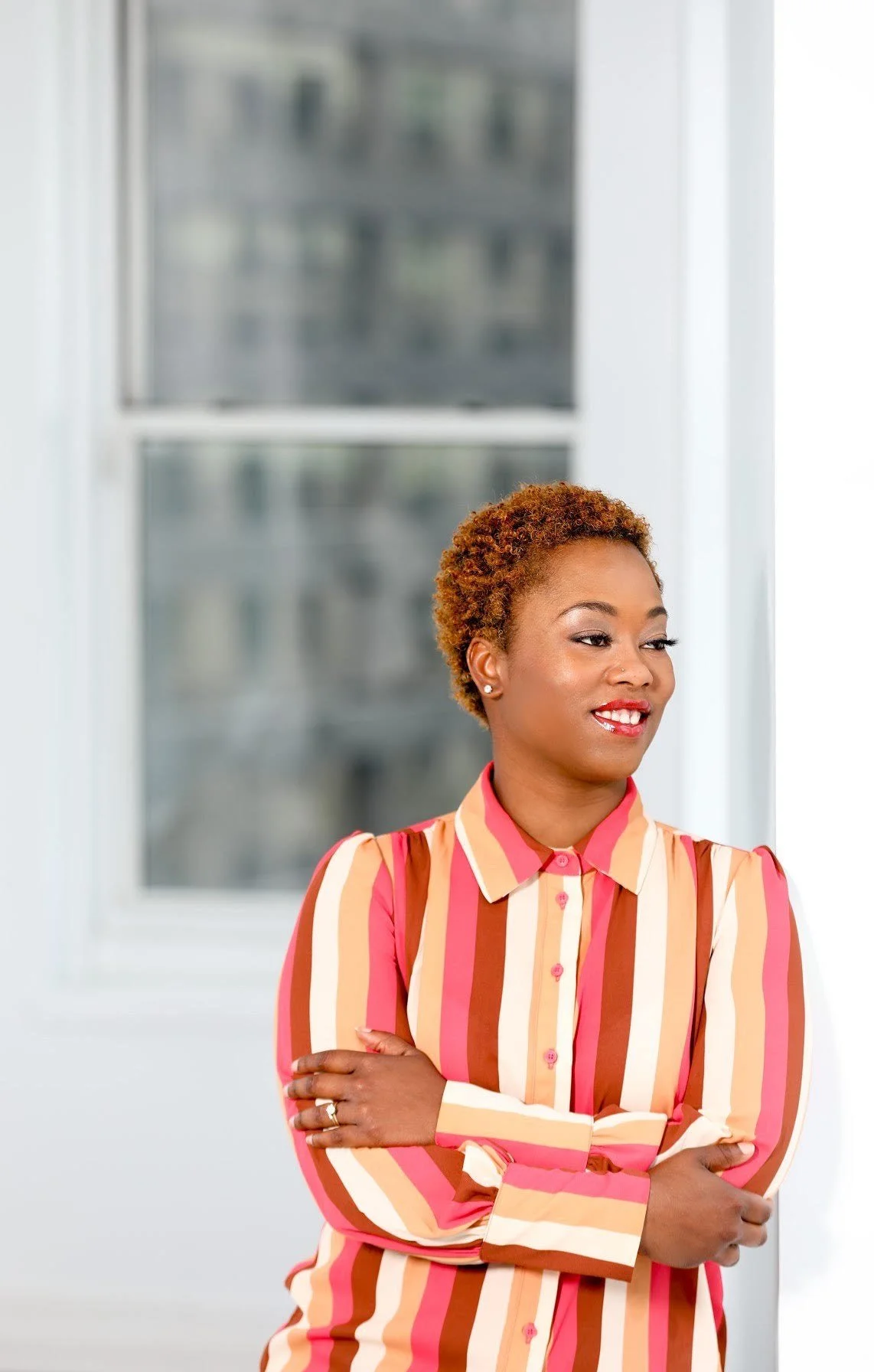
It wasn’t until age 10 that Jamia Ramsey learned that tights are supposed to match the skin tone of the dancer that wears them. After auditioning, Jamia had earned a scholarship to dance at the Dance Theatre of Harlem in New York City. “It was there that I first learned that flesh-toned tights were supposed to match your skin tone,” she shares. Jamia learned about the process of dying tights and using makeup to “pancake” ballet and pointe shoes. Previously, she had only danced in pink and tan-colored tights, which are readily available at any dancewear retailer but don’t match her skin tone. “It was all about uniformity,” Jamia explains. It’s safe to say that this experience planted the seed for Jamia to create her visionary dancewear company Blendz Apparel: a brand that offers high-quality, flesh-toned dance apparel that all dancers can wear.
Jamia began dancing at age two when her mom put her in ballet and tap class. The art form had always played a big role in Jamia’s family, as her mother, sisters, and brother all danced. “It was something that was always near and dear to my heart,” Jamia shares. She continued dancing through middle school, high school, and college, participating in her studio’s company, winning various awards, attending summer intensives, and “fully immers[ing] into the dance world.”
After graduating college, Jamia dreamed of moving to New York to perform. However, due to expenses, she ultimately moved home to Atlanta and got a desk job at a logistics company. Jamia had always envisioned herself opening up a dance studio, but not until much later in life. Realizing that she was going to be in Atlanta for a long time, she figured now was a better time than ever to start.
Jamia started DanceMoves, a dance academy at a recreation center in Atlanta that served “underprivileged youth.” As Jamia did throughout her own dance journey, the dancers and their parents at DanceMoves went through “the grueling time and money consuming process of finding, spraying, and dyeing dancewear to match their complexions.” She found herself frustrated by the end products, as the tights and shoes never fully matched the dancers’ skin tones after all of the work they put into them. “It was just a headache,” Jamia says.
After doing some research online, Jamia found that other dancers and dance teachers were struggling with tights and shoes not matching their skin tones as well. Jamia also learned that after being asked to make wider shade ranges in their dance apparel, many large dancewear companies refused, claiming that there wasn’t a market for it.

Jamia realized that she had a “now or never opportunity.” “There was a void in the market...everyone deserves to be represented,” she says. “I just decided that...if no one’s going to do it… I can do it myself.” In 2017, Jamia officially started working on Blendz Apparel full-time.
Blendz Apparel offers stretch canvas and leather ballet shoes, jazz shoes, contemporary half-soles, and convertible tights in different flesh tones, including “Tenacious Tan,” “Maven Mahogany,” “Brazen Brown,” and “Confident Cocoa.” A percentage of each purchase at Blendz Apparel goes towards “The Valerie Grace Scholarship Fund” which assists young dancers with furthering their dance education at summer intensives and attending college. The scholarship is named after Jamia’s mother, as she and Jamia’s aunt helped fund her dance journey and supported her throughout her career. “They had a big love for dance and big hearts and I want to give back as well,” Jamia says. There will be an application process for people to apply for the scholarship.
For those looking to start their own business, Jamia advises them to “go ahead and get started… don’t wait.” “You’re not going to have every piece of the puzzle available and ready, but just put one foot in front of the other and you’ll figure it out along the way.”
Jamia hopes to see more inclusivity in the dance world, especially in ballet. She wants diverse dancers with different backgrounds to be embraced for their cultural differences so they aren’t forced to fit in a certain mold. Jamia wants dancers to be allowed to be unique and own their individualism. “I would like for more dance companies to embrace dancers of all hues and allow them to wear dancewear that matches their skin tone and best reflects them as a person,” she states. By working towards this, more dancers will be seen for their character and talent, rather than their skin color fitting a certain aesthetic.

Jamia believes that the “people at the top,” including artistic directors and dance teachers, must create policies that allow dancers to wear apparel that matches their skin tones and embrace their natural hair while dancing. She believes that after these changes are made by powerful decision-makers in the dance world, more and more dancers will begin to accept them. In addition, on an individual level, dancers need to voice to upper-level dance directors and teachers the changes they wish to see in the dance world to make them known.
“Having the [flesh-toned] dancewear already manufactured and pre-made [promotes] the idea that dance is for everyone and not just for a certain subset group,” Jamia shares about Blendz Apparel. “That’s how Blendz is going about trying to make our change in the world: by starting with the shades that are not represented in the market and expanding from there.” In doing so, Blendz strives to create a dance realm that welcomes “inclusion and comfort for every dancer everywhere.”
Interested in writing for the DWC Blog? Click below to fill out the DWC Contributor application!