

DWC Ambassador Kendall Hadley On The Mental Challenges Of Injury
Overcoming the physical and mental challenges of my injury was one of the hardest things I have gone through as a dancer.
In both 7th grade and my sophomore year of high school, I dislocated my knee during dance class. The first time I came out of a jump and landed poorly and sat out for four months. The second time my pointe shoe slid out from under me and I sat out for six months.
By Kendall Hadley, DWC Ambassador
Pronunciation: Can-doll Had-lee | Pronouns: she/her

Overcoming the physical and mental challenges of my injury was one of the hardest things I have gone through as a dancer.
In both 7th grade and my sophomore year of high school, I dislocated my knee during dance class. The first time I came out of a jump and landed poorly and sat out for four months. The second time my pointe shoe slid out from under me and I sat out for six months.
As a dancer I’ve become accustomed to relying on my body to perform as it needs to as long as I take care of it. My injuries were both sudden, unpredictable, and devastating. I could no longer count on my body the way I used to. I had to rely on crutches to walk, and others to be kind enough to help me with simple tasks such as opening the door. During this time I had to repair the physical and mental relationship of my body during the time of my injury, and long after my recovery.
While tedious, my physical recovery is essential to my healing, and it still benefits me today. Having back-to-back doctors and physical therapy appointments was time consuming, but I also learned more about my body in that time than I ever had before. Finding a physical therapist that was supportive as well as knowledgeable of my recovery process was extremely helpful in my recovery. It’s important that your physical therapist knows you are returning to dance, not just to recreational activity. Dance is a physically demanding sport that requires strength and endurance. I had to advocate for myself and explain the physical demands that were required for my sport were not simple. My physical therapist and I both worked to develop a routine that would help me return to my regular dance activity.
After months of hard work, rest, and truly listening to my body I was able to slowly return to taking class. After my second injury I encountered many more mental obstacles than physical. I no longer trusted my body. I was always psyching myself out from trying new movements, compared myself to others, and encountered anxiety within the classroom.
Anytime I was introduced to new movements I encountered anxiety. Fearing re-injury, I found I was holding myself back in dance and wasn’t pushing myself. This stunted my growth as a dancer. I had to learn to overcome these physical and mental obstacles overtime.
The things that really aided me on me journey to mental recovery:
-Go to your dance classes and take notes

I know it can be hard to watch your friends get to dance and not be able to join them, but this will help you learn by watching and remembering your terminology. It also shows that you genuinely want to be there and your instructors will see that.
-Know the difference between pain and discomfort
This requires an elevated awareness of your body that not many people possess. There is a difference between doing something your body isn’t used to and dancing through pain. Learn what is your body entering new territory and what is your body’s way of saying it needs a break.
-Take care of your body
Beyond the doctors appointments and dance classes, there is so much you can do to take care of your body. The little things like cold showers or warm baths make all the difference. Take time to ice your feet, warmup, roll out, stretch, meditate, and do everything your body needs to before hitting the dance floor.
-Be patient with yourself
Being a dancer you require a lot from your body. Understanding that your body needs the time to work up to what it once was is difficult. I have found that in some ways my injury has made me stronger as a dancer and I go into dance with an appreciation for my body and what it is allowing me to do. It may take some time before your body is dancing at the level it used to, but you may be a better dancer because of it.
Disclaimer
All content found on the Dancewear Center Website, Instagram, Facebook, Pinterest, and all other relevant social media platforms including: text, images, audio, or other formats were created for informational purposes only. Offerings for continuing education credits are clearly identified and the appropriate target audience is identified. The Content is not intended to be a substitute for professional medical advice, diagnosis, or treatment. Always seek the advice of your physician or other qualified health provider with any questions you may have regarding a medical condition. Never disregard professional medical advice or delay in seeking it because of something you have read on this Website.
If you think you may have a medical emergency, call your doctor, go to the emergency department, or call 911 immediately. Dancewear Center does not recommend or endorse any specific tests, physicians, products, procedures, opinions, or other information that may be mentioned on dancewearcenter.net. Reliance on any information provided by dancewearcenter.net, Dancewear Center employees, contracted writers, or medical professionals presenting content for publication to Dancewear Center is solely at your own risk.
Links to educational content not created by Dancewear Center are taken at your own risk. Dancewear Center is not responsible for the claims of external websites and education companies.
Get To Know DPT Era Terry
All dancers have struggled with the issue of trying to find a physical therapist or doctor that understands how a dancer’s body moves. There are various doctors out there who just don’t understand how dancers move which can be frustrating in the recovery process. Luckily we got the chance to speak with Dr. Era Terry to learn more about the dance medicine field in Seattle. Read on to learn more about Era’s dancing journey and what got her into doing physical therapy on dancers!
By Samantha Weissbach DWC Owner & Nicole Barrett, DWC Blog Editor
Pronunciation: Air-ah Tear-ee | Pronouns: she/her

All dancers have struggled with the issue of trying to find a physical therapist or doctor that understands how a dancer’s body moves. There are various doctors out there who just don’t understand how dancers move which can be frustrating in the recovery process. Luckily we got the chance to speak with Dr. Era Terry to learn more about the dance medicine field in Seattle. Read on to learn more about Era’s dancing journey and what got her into doing physical therapy on dancers!
Era grew up dancing and primarily did ballet while exploring competition dance in high school. While getting her undergrad degree after high school, she danced with Chattanooga Ballet in Tennessee where she was a contracted ballet dancer and taught various ballet classes. Once she graduated from undergraduate school, she suffered an ankle injury that took her out of the professional dance world, which allowed her to transition to physical therapy school. She obtained her degree from Columbia University in 2017 and moved to Seattle to pursue her physical therapy career upon graduation. Era still dances around the Seattle area and her mission was to work with dancers specifically to give back to that community.
Era shares that what sparked her decision to start working at her current practice was to work one-on-one with patients for longer periods of time to build that connection with her patients. She started working right after graduating from physical therapy school at a larger clinic where she was meeting with patients every 30 minutes and she realized that this wasn’t the scene for her. She then met the owner of her current practice Kinetic Physical Therapy through a mutual friend and has been a great fit for Era.
Era shares that Seattle is a great place for dance medicine and shares that there are some great resources to help dancers who have injuries.Seattle Dance and Performing Arts Medicine is a great resource for information on clinics and doctors in the area. Era also works in West Seattle at Kinetic Physical Therapy so be sure to come by and see her for all your dancer needs!

Disclaimer
All content found on the Dancewear Center Website, Instagram, Facebook, Pinterest, and all other relevant social media platforms including: text, images, audio, or other formats were created for informational purposes only. Offerings for continuing education credits are clearly identified and the appropriate target audience is identified. The Content is not intended to be a substitute for professional medical advice, diagnosis, or treatment. Always seek the advice of your physician or other qualified health provider with any questions you may have regarding a medical condition. Never disregard professional medical advice or delay in seeking it because of something you have read on this Website.
If you think you may have a medical emergency, call your doctor, go to the emergency department, or call 911 immediately. Dancewear Center does not recommend or endorse any specific tests, physicians, products, procedures, opinions, or other information that may be mentioned on dancewearcenter.net. Reliance on any information provided by dancewearcenter.net, Dancewear Center employees, contracted writers, or medical professionals presenting content for publication to Dancewear Center is solely at your own risk.
Links to educational content not created by Dancewear Center are taken at your own risk. Dancewear Center is not responsible for the claims of external websites and education companies.
Bunions: Are They Preventable?
Bunion: word likely originated from the early 18th century from ‘bunny’ or ‘boni’ to describe a swelling or from the Greek word for turnip
There is still a lot of research that needs to be done to understand this complex condition. We know that dancers are prone to bunions. But we also know this condition has a strong genetic component.
By Colleen Bickel, PT, DPT, COMT
Colleen will be leading our Lunch & Learn this Wednesday at DWC Renton at 12:30PM, click here to register!

Hallux valgus (commonly known as bunions) are a frequent site in a dance class.
Hallux: big toe
Valgus: oblique displacement away from centerline
Bunion: word likely originated from the early 18th century from ‘bunny’ or ‘boni’ to describe a swelling or from the Greek word for turnip
There is still a lot of research that needs to be done to understand this complex condition. We know that dancers are prone to bunions. But we also know this condition has a strong genetic component.
How common are bunions?
Age 18-65: about one-third of the population
Twice as common in females
Dancers: a recent study showed 89% of professional ballet dancers have bunions
Things that likely DO NOT contribute:
Number of hours dancing per week
Hours of pointe work each week
Total years of pointe work
Age of starting pointe
Intensity (professional versus recreational)
Things that likely DO contribute:
Genetics
Faulty technique patterns
Plantarflexion hypermobility (pointed foot position): the average person has 50 degrees while the average female professional ballet dancer has 113 degrees
Muscle imbalances around the great toe
Things WE DON’T KNOW if they contribute:
Tight shoes (flats, pointe shoes or street shoes)
The main faulty technique patterns:
Forcing turnout out, end-range exaggerated turnout with hyper-pronation compensations, increased turnout from the leg rather than the hip
Winging while en pointe
Why should we care:
It’s a progressive condition: while a younger dancer may not have any issues now, it’s best to learn ways to limit the progression so their older body will thank them
Can lead to arthritis and pain in the big toe with walking, relevés, pointing and jumping
Can contribute to poor balance and proprioception

What dance-specific manual physical therapists do:
Check for muscle imbalances between extrinsics/intrinsics (muscles that start in the calf and travel to the foot versus muscles just in the foot)
Check for muscle imbalances between medial/lateral calf (inner and outer calf)
Improve joint mechanics in foot (make sure all the bones/joints are moving well)
Release tight muscles pulling on the great toe & teach dancer how to do that
Teach individual strengthening exercises based on dancer’s weaknesses
Help dancer find toe stretchers and spacers (there are a lot of options out there)
Help dancer identify optimal street shoes
Help dancer identify poor mechanics: walking, pointing, turnout, relevés, jumping
So, are bunions preventable? If you do not have the genetic propensity, then potentially yes. If you have the genetic propensity, then maybe not. Either way, we can make a lot of changes to reduce the risk factors and the progression. Happy Dancing!
Colleen will be leading our Lunch & Learn this Wednesday at DWC Renton at 12:30PM, click below to learn more!


By Colleen Bickel
Colleen Bickel was born and raised in Albuquerque, NM. After obtaining a BFA in Modern Dance from the University of Utah, she was able to tour as a professional dancer for many years. Colleen traveled all over the United States before settling in the concrete jungle of NYC. Living the artist’s life in NYC was a dream come true, but after a while she realized she was longing to reconnect with mountains and nature. Colleen graduated with my Doctorate in Physical Therapy from the University of Washington and has called the gorgeous PNW home ever since.
Colleen's passion has always been to understand the inner mechanics of the body, whether for the everyday functions of life or for the more intense activities of the professional athlete or weekend warrior. She worked as a bookkeeper for many years (which helped pay the rent for her artistic life), and feels passionate about proper ergonomics and fitting physical activity into daily life. Colleen loves learning and is a certified Level 5 Romana’s Pilates Instructor and a MELT (Myofascial Energetic Lengthening Technique) Level 1 practitioner. She has taken classes in Ideokinesis, the Franklin method, Bartenieff Fundamentals, and other myofascial release systems. Additionally, Colleen is currently working towards her Certificate in Manual Physical Therapy and Certificate of Achievement in Pelvic Health. Colleen believes in looking at the body as an entire system rather than piecemeal parts in order to treat the whole person.
Analyzing and Improving Movement: The Benefits of Working with a Dance Physical Therapist
I grew up as a ballet dancer, majored in modern dance in college, danced professionally with 5 different dance companies in Utah and NYC… and I never saw a PT unless I was injured. Why is…
By Colleen Bickel
Colleen Bickel was born and raised in Albuquerque, NM. After obtaining a BFA in Modern Dance from the University of Utah, she was able to tour as a professional dancer for many years. Colleen traveled all over the United States before settling in the concrete jungle of NYC. Living the artist’s life in NYC was a dream come true, but after a while she realized she was longing to reconnect with mountains and nature. Colleen graduated with my Doctorate in Physical Therapy from the University of Washington and has called the gorgeous PNW home ever since.
Colleen's passion has always been to understand the inner mechanics of the body, whether for the everyday functions of life or for the more intense activities of the professional athlete or weekend warrior. She worked as a bookkeeper for many years (which helped pay the rent for her artistic life), and feels passionate about proper ergonomics and fitting physical activity into daily life. Colleen loves learning and is a certified Level 5 Romana’s Pilates Instructor and a MELT (Myofascial Energetic Lengthening Technique) Level 1 practitioner. She has taken classes in Ideokinesis, the Franklin method, Bartenieff Fundamentals, and other myofascial release systems. Additionally, Colleen is currently working towards her Certificate in Manual Physical Therapy and Certificate of Achievement in Pelvic Health. Colleen believes in looking at the body as an entire system rather than piecemeal parts in order to treat the whole person.
By Colleen Bickel
Dancers, I have a question for you.
Do you go see your doctor every year for a check-up?
Yes?
Why do you do that?
Is it to check to make sure that your heart, lungs, throat, lymph nodes, sinuses, abdominal organs, skin, etc. are healthy? Do you also bring any health concerns you are currently having to ask them?
Ok, here’s another question:
Do you go to your physical therapist (PT) for a yearly check in? Do you bring any muscle, tendon, and/or bone concerns you are currently having to ask them?
No? Hmmm. Neither did I. Until lately.
I grew up as a ballet dancer, majored in modern dance in college, danced professionally with 5 different dance companies in Utah and NYC… and I never saw a PT unless I was injured. Why is that? Well, part of it is because insurance company payments for physical therapy are structured around injuries, instead of prevention. Doctors are allowed to bill for “wellness or prevention visits,” but that principle has not been expanded to physical therapy yet. The APTA (American Physical Therapy Association) is trying to change that, so that injuries can be prevented. But, for now, if you wanted to see a PT without having a particular injury/pain/problem/discomfort, you would have to pay cash instead of using insurance (which a lot of dancers cannot afford), or find a PT who does pro bono work or has a sliding scale.
The other reason we do not seek out physical therapists is that it simply isn’t a habit. We don’t think to do it. We will seek out massage therapists, chiropractors, acupuncturists, trainers, Pilates & yoga classes and pay cash for those. So, why not PT?
After I retired from dancing, I knew I wanted to know even more about the body. I wanted answers to all the movement questions that had cropped up throughout my dance career. I knew how movement felt. I knew how to warm up, how to cross train and condition, how to rest and prevent catastrophic injuries, etc. But what if I was having issues with little cricks, little tweaks, or differences in my flexibility? What about my ability to balance on one leg versus the other? All I knew to do was stretch more, strengthen more, and focus on my form in the gym and in class. I never thought to ask my PT if she could help me figure out how to lift my left leg as high as my right. Or help me perform double pirouettes to the left, as they were so much harder for me than turning to the right.
So, here I was in my mid-30s, a dancer who had decided to retire. I was teaching Pilates while doing a variety of other odds and ends jobs, because that’s how you make ends meet in NYC. I thought about becoming a doctor or an orthopedic surgeon; but I still wanted to move and to watch movement. Who was I going to become after being a dancer?
One day, I asked a PT how they would describe what a PT did to someone who had never heard of a PT before. How would they define themselves? This PT told me, “I’m a musculoskeletal expert who analyzes movement and makes movement better.” At no point did they say they dealt only with injuries. Instantly I thought, “Well shoot! I’ve been analyzing movement all my life and I want to become a musculoskeletal expert!” The rest, as they say, is history.
A few years later, I find myself working with dancers daily as a part of my job at Innova Physical Therapy, and I love every minute of it.
So, here are my final questions for you:
Why, as a dancer, are you not working with a physical therapist who specializes in the performing arts to help you become an even better dancer? What things (beyond injuries) would you consider seeing your performing arts physical therapist for? Here are just a few:
Yearly Health Screenings for Joints, Muscles, Tendons, and Bones
Injury Prevention, Conditioning, and Home Programs
Pre-Pointe and Pointe Assessments
Body Asymmetries:
Do you have something that “looks different” between sides: like an ankle that wings more, or one side of your rib cage that sticks out more, or shoulders that are uneven?
Muscular Imbalances:
Do you feel stronger on one side rather than the other?
Do you feel crooked?
Is one calf or thigh bigger than the other?
Muscle or Joint Tightness:
Is one side tighter than the other?
Do you find you are standing on one leg more than the other?
Do you have a spot in your body that you stretch constantly but it always seems to be tight?
Do you have differences in turn out between legs (i.e. one side turns out much further than the other)?
Muscle Control:
Do you feel able to control all your movement?
Are you hypermobile?
I’m hopeful one day, every person in the United States will go to their PT for a yearly check in. For now, anyone can see a PT paying cash until we make changes to our medical system in order to use insurance. Now, keep in mind, you’ll probably want a specialist, and it may take some searching to find your perfect fit, but we are out there! I think dancers, who are so smart, in-touch, and thoughtful about their bodies, can start paving the way for others to follow. I’ve seen so many dancers (including myself) who have been able to increase their understanding of their bodies, and improve their strength, stamina, and technique by collaborating with a PT. Working strategically with a PT, may be a great way to improve your dancing, your health, and your longevity in the field for years to come.
If your studio is interested in a free workshop with one of our dance specialists please feel free to contact me. If you are uncertain if you should see a PT and whether it would be covered under insurance, feel free to send me an email as well!
Check out the links below to learn more about or contact Colleen, and check out DWC’s Local Dance Specialists page to find a dance specialist near you!
Dr. Amanda Rixey on Collaboration in Dance Medicine
Taking on a lot of dancing, whether in a pre-professional or professional capacity, takes grit. Dancers are encouraged to push their mental and physical boundaries to create art that moves people. Nonetheless, this boundary-pushing can place strain on dancers’ minds and bodies. Without proper care, pushing oneself too far for too long simply isn’t sustainable. That’s why local physical therapist Amanda Rixey is passionate about fostering communication and collaboration among dancers, instructors, and dance medicine specialists. Read on to learn about Amanda’s own dance journey, as well as her practice, Newfound Physical Therapy PLLC.
A Discussion With a Local PT
Pronouns: she/her | Pronunciation: Rix-ee
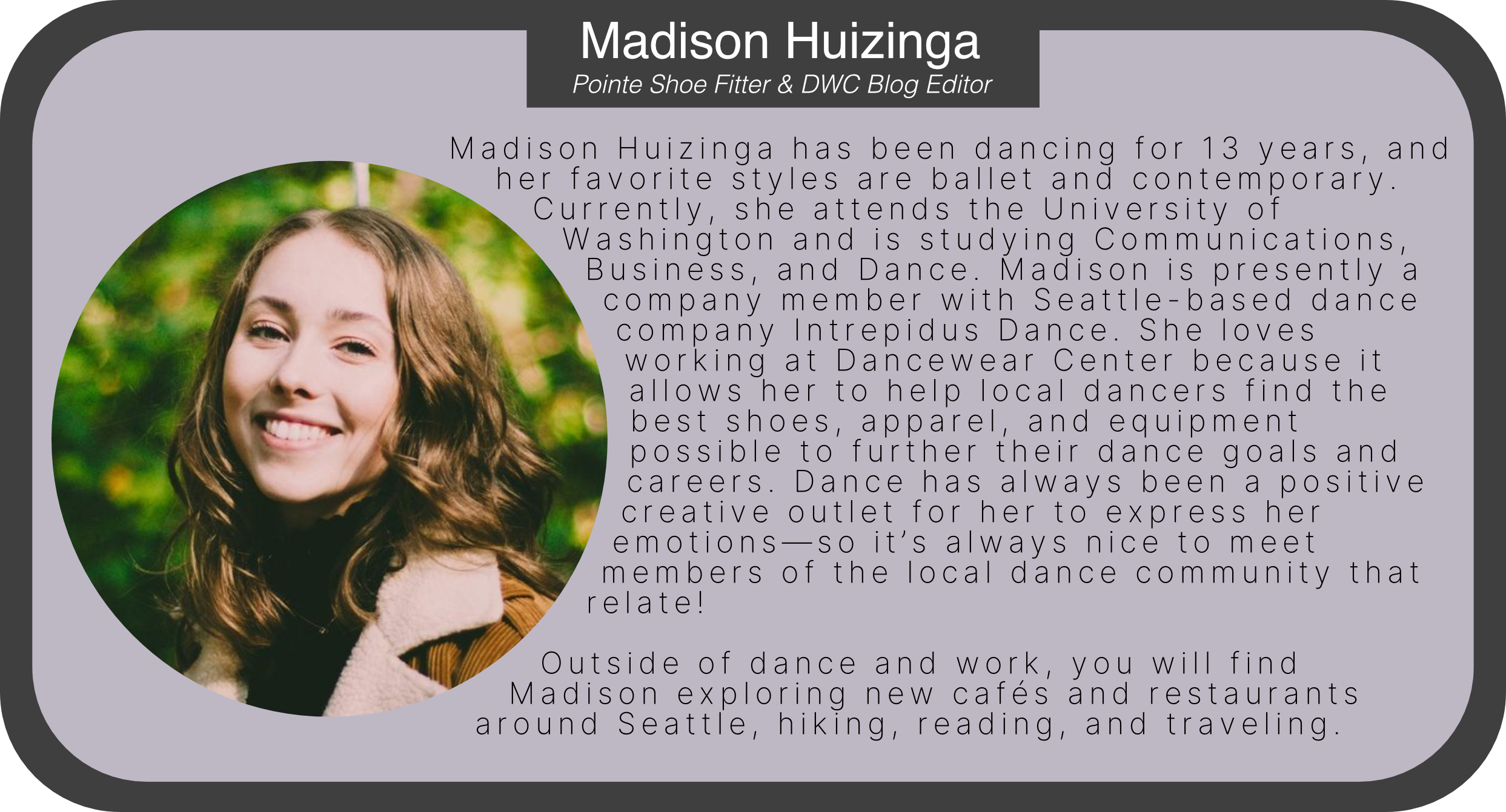
By Madison Huizinga, DWC Blog Editor

Photo by Mackenzie Eveland Smith
Taking on a lot of dancing, whether in a pre-professional or professional capacity, takes grit. Dancers are encouraged to push their mental and physical boundaries to create art that moves people. Nonetheless, this boundary-pushing can place strain on dancers’ minds and bodies. Without proper care, pushing oneself too far for too long simply isn’t sustainable. That’s why local physical therapist Amanda Rixey is passionate about fostering communication and collaboration among dancers, instructors, and dance medicine specialists. Read on to learn about Amanda’s own dance journey, as well as her practice, Newfound Physical Therapy PLLC.
Amanda shares that she was inspired to start dancing after watching her older sisters dance growing up. She started out at a studio geared toward dance competitions in the Kansas City area. Enduring several arm injuries as a child, Amanda was also exposed to the world of physical therapy early in her life and was quickly fascinated by it. As early as elementary school she bookmarked “PT” in her brain as a potential career option.
As Amanda entered middle school and high school, she focused more seriously on her ballet training. She continued to experience injuries, sharing that she is particularly injury-prone due to her joint laxity and hypermobility. This put her in more frequent contact with physical therapists, few of which had a deep understanding of dancers and the specialized PT needs they require.
She attended the University of Kansas on a dance scholarship, participating in a small department with four other dancers in her graduating class. While her major was dance, she also fulfilled the prerequisites for physical therapy school and worked as a physiology teaching assistant. Following her college graduation, Amanda got her Pilates certification and worked as a rehab aide before starting PT school at Regis University. She later worked with Kansas City Ballet, conducting weekly backstage screenings with dancers and local studios, and provided services for numerous touring theatre shows like Love Never Dies, Beautiful, and Dear Evan Hansen.

Photo by Mackenzie Eveland Smith
In May 2020, Amanda relocated to Seattle and since then, she’s been working on building out her own practice, Newfound Physical Therapy PLLC, in the Seattle area, in which she provides specialized treatment in dance medicine, and Pilates-based rehabilitation, and helps treat chronic pain conditions. Amanda also offers fitness-related services like individual and group classes for body conditioning and Pilates, as well as pointe readiness assessments. She stresses that her services are geared towards anything and anyone across the board, whether it’s dancers seeking preventative services, performers trying to figure out what is biomechanically off in their bodies, or those seeking recovery after facing a major injury. It’s important that dancers know that they don’t just have to be injured to visit a PT, in fact undergoing physical therapy before an injury occurs can reap major benefits.
Part of what inspired Amanda to start her own practice and go into PT altogether was the fact that offering treatment for dance medicine is an incredibly individualized and specific service. It can be challenging for dancers to find physical therapists that have a deep understanding of the activities they engage with on a day-to-day basis and to find specialists that will be covered by their insurance. Amanda is hoping to be that resource that dancers need in the community. “If you’ve never done it yourself…you’re not going to be able to relate to the patient,” Amanda says of providing PT services to dancers. “I want to share my knowledge with this community.”

Photo by Mackenzie Eveland Smith
Amanda shares that a big misconception she’s witnessed in the dance world regarding physical therapy is that people should just push through the pain they’re experiencing. While she’s grateful to see many dance companies working to change this school of thought, there are deep-rooted systems in genres like ballet that often encourage dancers to hide injuries while performing or simply not come to class. “That is tough to work around,” Amanda admits. “How do you work with that as a PT?” She emphasizes the importance of communication between physical therapists and dance instructors to ensure all involved are on the same page and not making assumptions about each other. Amanda describes her efforts as largely collaborative, with dancers, instructors, and herself all working to see each other eye-to-eye.
Ultimately, a change that Amanda hopes to see made in the dance world is more communication among individuals in different industry positions and an intentional effort made to learn from one another. “We can all learn from each other. We don’t need to keep secrets from each other,” Amanda says of the competitive nature of the dance industry. “It’s all about the dancer in the end.”
Disclaimer
All content found on the Dancewear Center Website, Instagram, Facebook, Pinterest, and all other relevant social media platforms including: text, images, audio, or other formats were created for informational purposes only. Offerings for continuing education credits are clearly identified and the appropriate target audience is identified. The Content is not intended to be a substitute for professional medical advice, diagnosis, or treatment. Always seek the advice of your physician or other qualified health provider with any questions you may have regarding a medical condition. Never disregard professional medical advice or delay in seeking it because of something you have read on this Website.
If you think you may have a medical emergency, call your doctor, go to the emergency department, or call 911 immediately. Dancewear Center does not recommend or endorse any specific tests, physicians, products, procedures, opinions, or other information that may be mentioned on dancewearcenter.net. Reliance on any information provided by dancewearcenter.net, Dancewear Center employees, contracted writers, or medical professionals presenting content for publication to Dancewear Center is solely at your own risk.
Links to educational content not created by Dancewear Center are taken at your own risk. Dancewear Center is not responsible for the claims of external websites and education companies.
Dr. Miguel Almario on Holistic Teaching and PT Care
“I would like to see a lot more empathy towards the culture and the people that created the dance,” Miguel says of a change he hopes to see made in the larger dance industry. He shares that many of the people who created dance genres like hip hop and breaking are still alive and accessible to dancers, yet their contributions can get drowned out. More focused on physicality, Miguel also hopes to see more dancers treating and training their bodies like the athletes that they are so that they can keep dancing for as long as they can. “You’ve got to put that work in so that you can keep going,” he shares.
On Offering Cultural Competency and Wellness Services
By Madison Huizinga, DWC Blog Editor
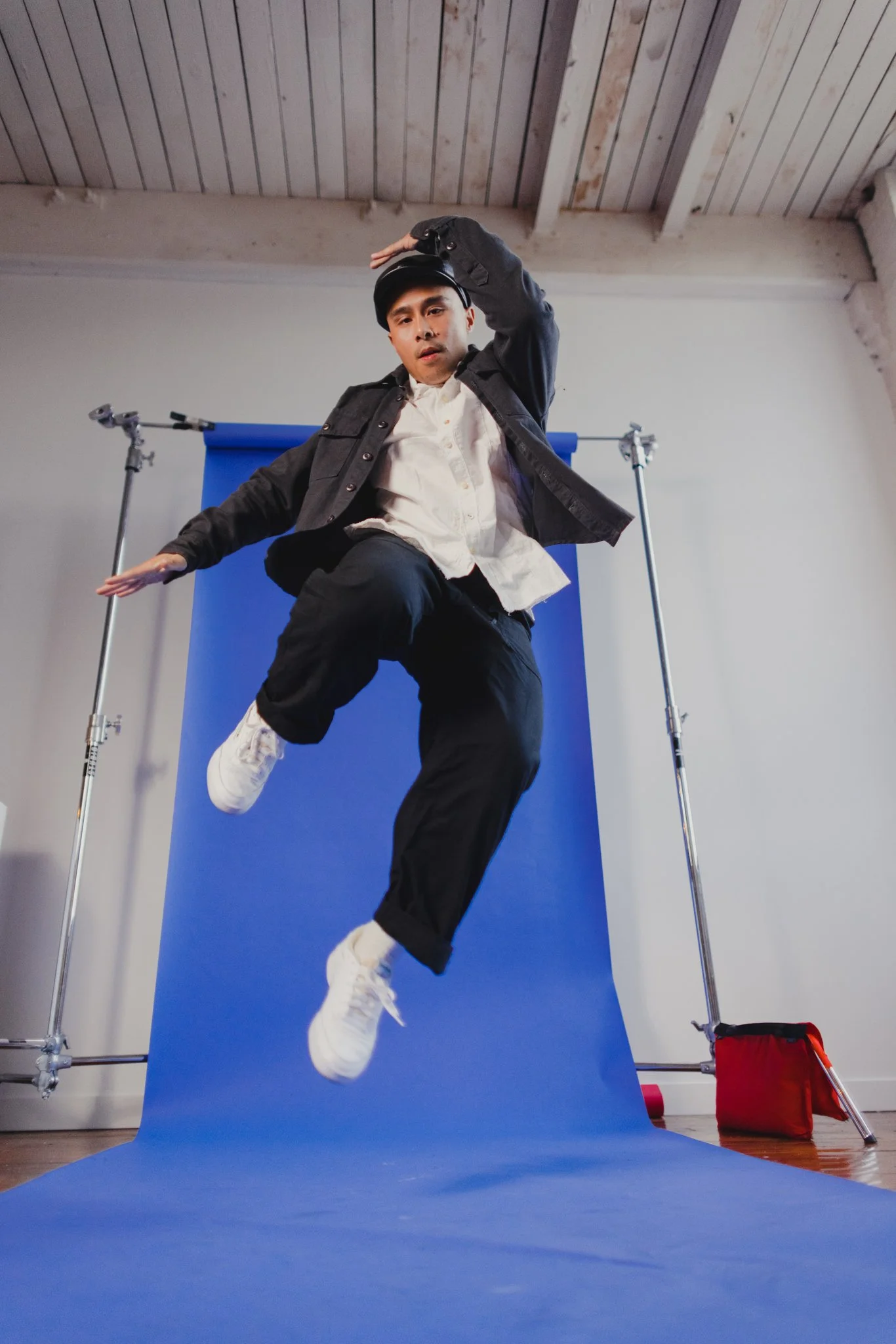
Photo by Adam Gatdula
Having a full appreciation and understanding of the history and mechanics of dance requires more than just time in the studio. Dancers like Dr. Miguel Almario are providing community members with the cultural context behind their movements and access to compassionate and individualized physical therapy services. Read on to learn more about Miguel’s dance journey in the freestyle and commercial space, teaching programs at The Arete Project, and PT services at MovementX.
Miguel started exploring breaking his junior year of high school when his younger brother encouraged him to give it a try. He joined a local dance troupe called Culture Shock DC, a non-profit dance organization in the Washington DC area aimed at community outreach. Miguel’s passion for dance grew immensely. He says that one of the things he loves most about dance is that one person’s artistic expression can differ so much from another’s. “I have the freedom to find my voice and my style of movement,” Miguel shares.
He later ended up competing on the TV show America’s Best Dance Crew on MTV in Los Angeles, California. “That was a time where I was like ‘I can make something of this,’” Miguel says of the turning point in his career. After competing on TV, Miguel shares he started focusing on dance in a more professional capacity, as prior to the show, he hadn’t experienced any “formal” training. Growing up, outside of Culture Shock DC, Miguel practiced dance in his friends’ basement and in his school’s cafeteria, often ordering VHS tapes of competitions to study and draw inspiration from.
After some time, Miguel decided to take a break from dance and returned home to DC from LA. He shares that this was a time in his life when he deeply pondered what kind of life he was going to lead. “I always knew I wanted to be working with people,” Miguel says. Eventually, he landed on pursuing physical therapy, sharing that both of his parents were physicians which greatly influenced him. He thought PT could provide him with the opportunity to bridge the worlds of dance and physical medicine.
While in PT school, Miguel danced with a dance team in Boston, Massachusetts, where he underwent rigorous training. After graduating from PT school, he moved back to Los Angeles to work as a physical therapist and dancer.
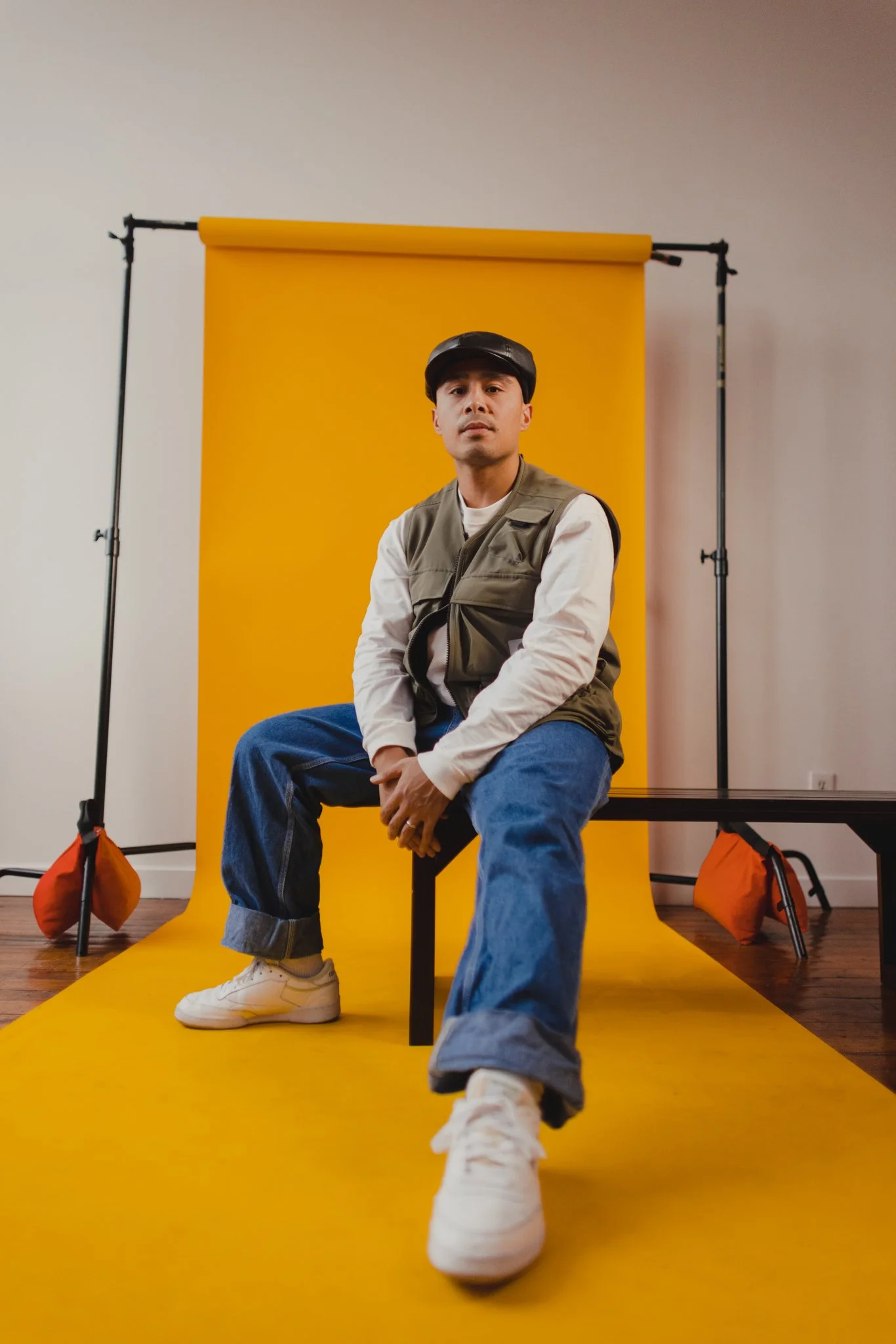
Photo by Adam Gatdula
Following his experience in the traditional physical therapy clinic setting, Miguel realized he was interested in working in a role that allowed him to make stronger, more intimate connections with his clients. That’s when he got connected with MovementX, a physical therapy provider that offers in-person and virtual treatment that is adaptable to clients’ varied lifestyles.
“I work with a lot of dancers,” Miguel says of his PT work at MovementX, sharing that he serves all kinds of clients, including those recovering from minor or major injuries, those looking to improve their ability to move or perform, or those who feel generally physically limited in one way or another.
Miguel shares that his dance experience has been unique, as he has trained in more community-oriented, freestyle, breaking spaces, and has had heavy exposure to the more commercial world as well. Miguel’s wife Niecey Almario is also a dancer, teacher, and choreographer. Today, Niecey and Miguel Almario teach a variety of courses together in Seattle through The Arete Project. Miguel shares that he and his wife collectively offer a holistic dance experience, informing people of the cultural context behind movements and how certain techniques can apply to different professional settings, like on a dance team or in a music video.
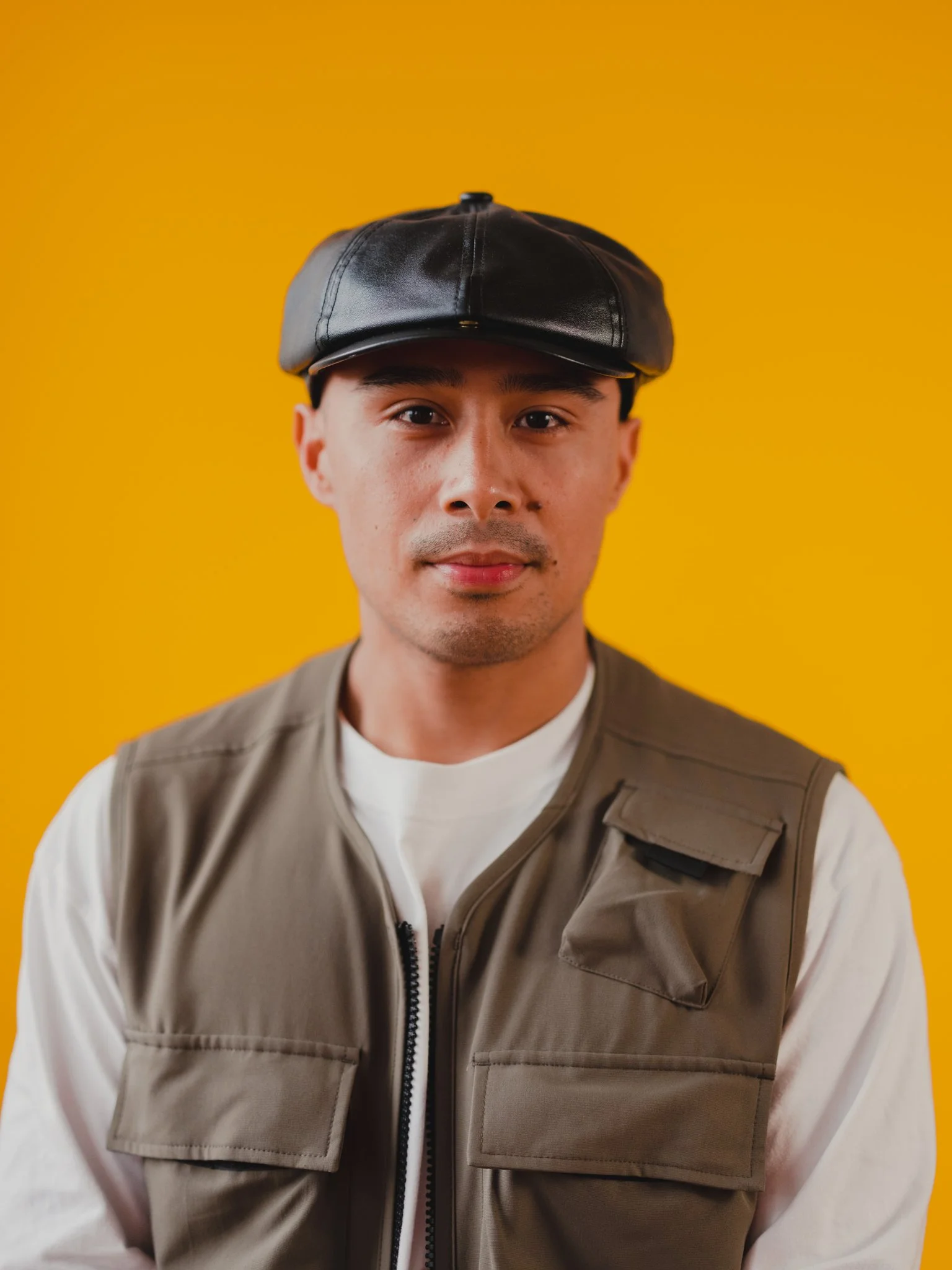
Photo by Adam Gatdula
Honoring the cultural roots of different styles of movement is of the utmost importance to Miguel. For example, he shares that hip hop and street dance have roots in Black American communities and that it’s important for people to know this to understand and appreciate the art form more fully. Miguel shares that learning the history behind dance styles like hip hop has made him realize that this art form he partakes in is much bigger than him as an individual.
“I would like to see a lot more empathy towards the culture and the people that created the dance,” Miguel says of a change he hopes to see made in the larger dance industry. He shares that many of the people who created dance genres like hip hop and breaking are still alive and accessible to dancers, yet their contributions can get drowned out. More focused on physicality, Miguel also hopes to see more dancers treating and training their bodies like the athletes that they are so that they can keep dancing for as long as they can. “You’ve got to put that work in so that you can keep going,” he shares.
Disclaimer
All content found on the Dancewear Center Website, Instagram, Facebook, Pinterest, and all other relevant social media platforms including: text, images, audio, or other formats were created for informational purposes only. Offerings for continuing education credits are clearly identified and the appropriate target audience is identified. The Content is not intended to be a substitute for professional medical advice, diagnosis, or treatment. Always seek the advice of your physician or other qualified health provider with any questions you may have regarding a medical condition. Never disregard professional medical advice or delay in seeking it because of something you have read on this Website.
If you think you may have a medical emergency, call your doctor, go to the emergency department, or call 911 immediately. Dancewear Center does not recommend or endorse any specific tests, physicians, products, procedures, opinions, or other information that may be mentioned on dancewearcenter.net. Reliance on any information provided by dancewearcenter.net, Dancewear Center employees, contracted writers, or medical professionals presenting content for publication to Dancewear Center is solely at your own risk.
Links to educational content not created by Dancewear Center are taken at your own risk. Dancewear Center is not responsible for the claims of external websites and education companies.
Interested in writing for the DWC Blog? Click below to fill out the DWC Contributor application!
Commodo cursus magna, vel scelerisque nisl consectetur et. Donec id elit non mi porta gravida at eget metus.