
Finding Your “Why”: Jerome Aparis on How Breaking Feeds His Soul
At the end of AAPI month, Jerome Aparis shared his journey to becoming a co-founder and current member of the world-renowned breaking crew, Massive Monkees. From studying VHS tapes of breakers in sixth grade to creating an internationally acclaimed crew and achieving global accolades, Jerome recounts how the values of hard work and creativity from his cultural heritage have fueled his drive for success and purpose.
Trigger Warning: Trauma, Sexual Assault
By Isabel Reck & Madison Huizinga. DWC Blog Contributors
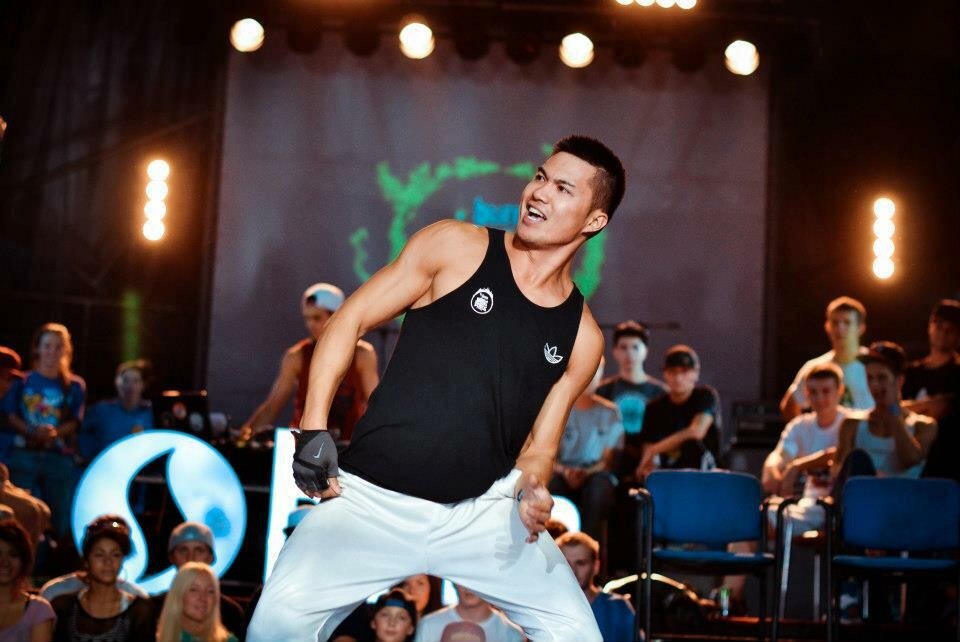
At the end of AAPI month, Jerome Aparis shared his journey on becoming a co-founder and current member of the world-renowned breaking crew, Massive Monkees. From studying VHS tapes of breakers in sixth grade to creating an internationally acclaimed crew and achieving global accolades, Jerome recounts how the values of hard work and creativity from his cultural heritage have fueled his drive for success and purpose.
Jerome began his dance journey around age 12 by watching videos of breakdancing crews from Seattle. At the time, this art form was predominantly underground and information about it traveled almost exclusively through word of mouth. A movie that was particularly influential for him growing up was Beat Street, a film showcasing the NYC hip hop culture of breaking, MCing, DJing, and graffiti art in the early 1980s. Jerome had never seen dancing like what he witnessed in Beat Street and various other videos. He was immediately pulled in.
When Jerome was a kid, most people his age learned breaking at local community centers, which were relatively informal and open to the public. The community centers were usually packed to the brim, and Jerome recalls sometimes only getting a couple of minutes of one-on-one time with his instructor. Despite this challenge, the attitude he adopted was about “maximizing what [he] learned.” Jerome recalls often not understanding certain steps the first couple of times he practiced them at the center. He would go home and rehearse in his kitchen for hours so he could go back to the community center and show off his improvement. Being able to advance through practice and showcase his progress made him confident that he was worthy of his instructor’s time and worthy of being a student.
This attitude and commitment to breaking led Jerome to make an impressive and successful career for himself. He co-founded the world-famous breaking crew, Massive Monkees in 1996. This group and its members have shared the stage with the likes of Macklemore, Missy Elliot, Jay-Z, and Alicia Keys. Massive Monkees also finished third overall in MTV’s America’s Best Dance Crew in 2009 and won the 2004 B-Boy World Championship in London and 2012 R-16 World Championship in Seoul, Korea. Jerome later won ten national titles with the crew Massive Monkees. Today, Jerome coaches students at the Massive Monkees Studio: The Beacon, and at Cornerstone Studio with his wife, Lea Aparis, who’s also the studio’s owner.
“When you don’t have much, creativity is huge.”
Jerome shares that his Filipino heritage has largely shaped the individual and performer he is today. Jerome was born in the Philippines and moved to the United States at age three. When he returned to the Philippines at age 15, he remembers seeing how hard the people from his hometown worked, including his own family. He recalls kids in his hometown, outside of the city, walking miles just to get water and attend school. Community members who were lacking the resources that urban-dwellers possessed needed to act creatively to work around the challenges they faced. These values—hard work and creativity—Jerome recognized in the Philippines, pushed him to achieve the accomplishments he has today. “Mak[ing] something out of nothing” is a theme that he has carried with him throughout his journey. “When you don’t have much, creativity is huge,” he explains.
One instance in the Philippines that was particularly inspiring to Jerome occurred when he visited his sister at work. Jerome’s sister performs government work in the Philippines, working at a safe house for young girls who have been victimized by sex trafficking. The leads at the safe house asked Jerome if he was interested in speaking with the girls and perhaps teaching a workshop. They told him these girls were scared and felt like they didn't have a voice. Knowing that these young girls had developed significant fears, particularly of outsider men, Jerome knew “it [was] time to step up to the plate.” What occurred at the safe house was the “most life-changing 60 minutes of [his] life.”
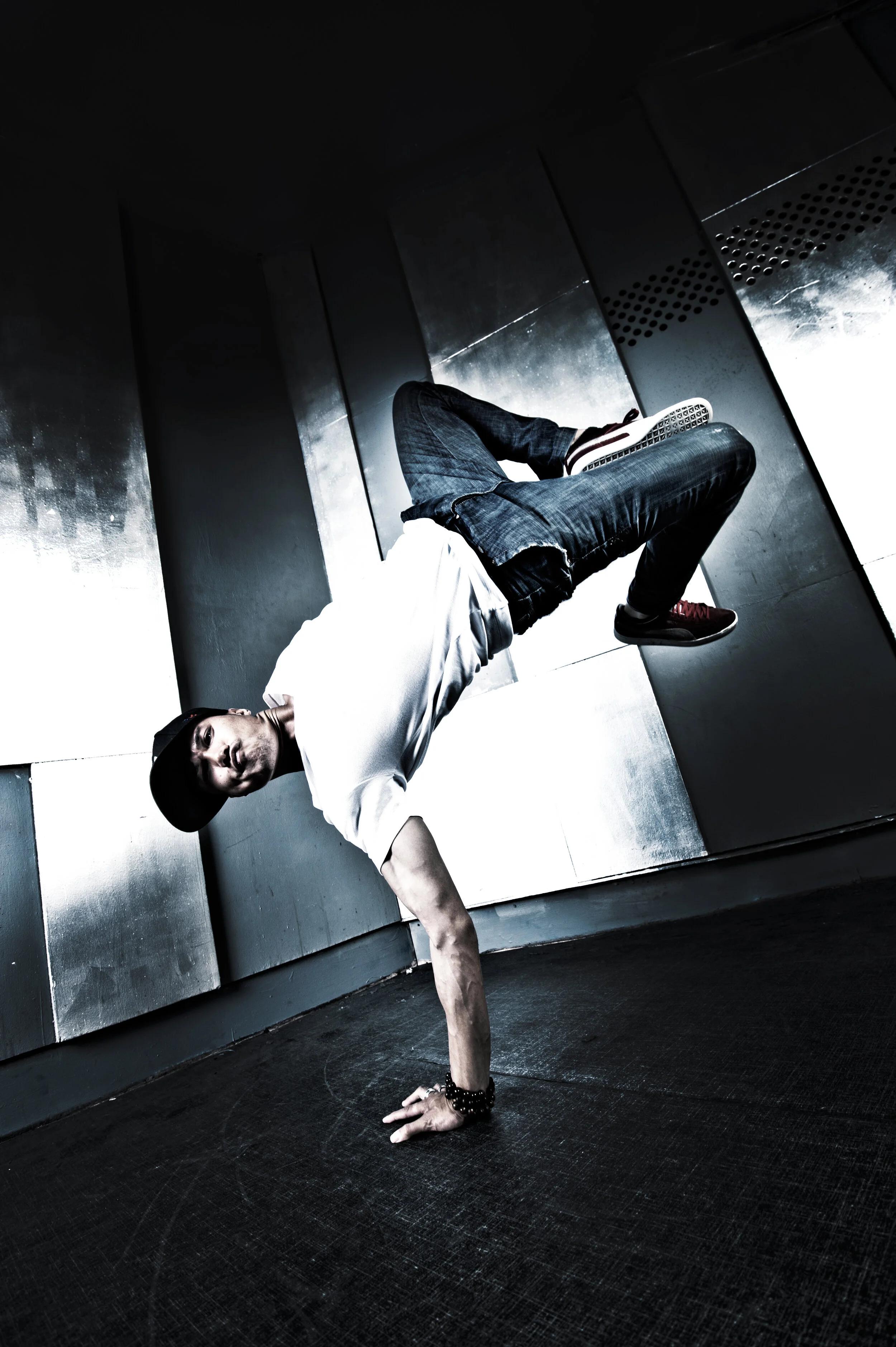
At the beginning of the workshop, these girls, ages 5-17, were incredibly quiet. At first, the session centered on talking and why using their voices is important. Then, Jerome transitioned into teaching them choreography that communicated their strength and power. By the end of the workshop, he describes how the girls were “just going for it” and how their energy had completely changed. Later, they all sat in a circle and each girl opened up about her story. Jerome carries these stories with him today. “It’s way bigger than just winning a trophy,” he shares.
To be a successful professional dancer, Jerome makes it clear that a performer must know their “why.” Why do you do what you do? Jerome explains that in dance it’s easy to be driven to succeed to simply fuel your ego. You merely dance for the winning, the fame, and the glory. But beyond expanding your ego, your “why” must be fueled by the need to make yourself feel genuinely confident and feed your soul. Jerome’s experience teaching in the Philippines did just this. Helping kids “understand that there is so much greatness in them” is what coaching has become to him and is “one of his biggest passions.”
Jerome’s biggest takeaway from his career is simple: “find your why.” Once you know this everything else will follow.

“Find your why, once you know this everything else will follow.”

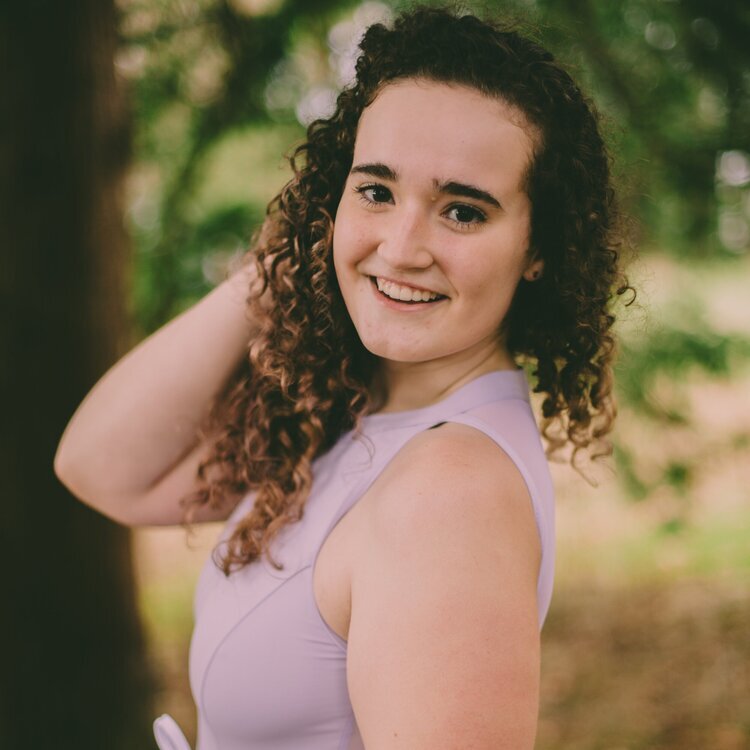
Madison Huizinga has been dancing for 13 years, and her favorite styles are ballet and contemporary. Currently, she attends the University of Washington and is studying Communications, Business, and Dance. Madison is presently a company member with Seattle-based dance company Intrepidus Dance. She loves working at Dancewear Center because it allows her to help local dancers find the best shoes, apparel, and equipment possible to further their dance goals and careers. Dance has always been a positive creative outlet for her to express her emotions—so it’s always nice to meet members of the local dance community that relate!
Outside of dance and work, you will find Madison exploring new cafés and restaurants around Seattle, hiking, reading, and traveling.
Isabel Reck has been dancing since she was 12; the majority of her training being at Cornerstone Studio. She has trained in ballet, contemporary, lyrical, jazz, hip-hop, tap, breakdancing, and aerial silks, although contemporary has always been her go-to. Her favorite thing about working with DWC is being able to explore a new side of dance she never thought she would be a part of.
New Beginnings in the Midst of COVID-19
The past year and a half has been undoubtedly replete with hurdles, as much of the local dance community was left jobless due to COVID-19. Yet, through the hardships that unfolded throughout the pandemic, many were able to find unique ways to fill the gaps they were witnessing in the dance world. Dwelling in isolation served as a time for reflection and deep contemplation about how to emerge back into the dance realm. From private coaching to cross-training, from rebranding to expanding, and bridging the divide between dance and theatre, these organizations and individuals have created new beginnings for themselves amid adversity, leaving the local dance community better than they found it. Read on to learn more about these local artists and their latest endeavors.
By Madison Huizinga, DWC Blog Editor
The past year and a half has been undoubtedly replete with hurdles, as much of the local dance community was left jobless due to COVID-19. Yet, through the hardships that unfolded throughout the pandemic, many were able to find unique ways to fill the gaps they were witnessing in the dance world. Dwelling in isolation served as a time for reflection and deep contemplation about how to emerge back into the dance realm. From private coaching to cross-training, from rebranding to expanding, and bridging the divide between dance and theatre, these organizations and individuals have created new beginnings for themselves amid adversity, leaving the local dance community better than they found it. Read on to learn more about these local artists and their latest endeavors. We will feature three more next week!
Adage Ballet Studio

Adage Ballet Studio offers private ballet coaching to students of all ages and abilities. ABS’s offerings are designed to supplement the training that students receive at their studios. Rather than dividing its lessons into age-defined levels, Adage Ballet Studio divides its classes into three tiers based on “technical achievement and the nature of individual needs observed.” The Preparatory tier is for pre-pointe dancers with at least two years of ballet training. The Primary tier, split into three sub-tiers, trains dancers in pointe shoes and educates them on “ballet theory and injury prevention.” Finally, the Adagio tier is designed for dancers with at least five years of ballet training who are working towards mastering the “highest levels of classical ballet.” Students may sign up for solo, duo, or trio sessions with coaches Abby Jayne DeAngelo and Guillaume Basso.
Abby Jayne, both a coach and owner of ABS, began dancing at a young age under the esteemed Marcia Dale Weary at Central Pennsylvania Youth Ballet (CPYB) in Carlisle, PA. She trained at CPYB throughout her childhood, attending numerous summer programs and performing frequently. Around age 16, she attended a program at the School of American Ballet. Upon returning home, she suffered a major injury: three stress fractures in her left metatarsals. She was out for almost a year and left to reflect on the rigorous dance training she had experienced leading up to that point. Eager to continue dancing, she ended up joining Pacific Northwest Ballet as a Professional Division student in 2016 and was promoted to an apprentice position and the corps de ballet in 2019.

What led Abby Jayne to create ABS was witnessing the “many gaps in the dance world and how people’s bodies are treated...mentally and physically.” In particular, she stresses the importance of providing dancers with education on how to prevent and treat injuries so they can dance in a sustainable manner. She had begun working privately with a few students who desired extra assistance outside of their routine classes. She would teach classes out of her apartment or in the students’ homes. When the pandemic hit Seattle, more and more students began asking for private lessons virtually and in person. During this time of teaching, Abby Jayne thought about how many students had been turned away from ballet because they were told they didn’t have the “right body” or didn’t “learn fast enough.” She realized that “everyone is on their own timeline” when it comes to training in ballet.
Adage Ballet Studio is designed to “foster each individual” and help people get to “the highest level of ballet technique for themselves.” Abby Jayne hopes to create a ballet environment that encourages “compassion” and is “nurturing” of its dancers holistically. Her mission is to “instill joy and love and inspire growth” in her students, not just as dancers, but as human beings.
Aspire Kinetic Arts

Aspire Kinetic Arts offers unique programming in both dance and theatre. In the fall, the studio will offer semester classes for “littles” (ages 3-6), pre-teens (ages 7-12), and teens (ages 13-19). The genres Aspire Kinetic Arts will focus on include creative movement, pre-ballet, ballet, pointe, jazz, and tap of varying levels. Aspire also plans to have drop-in classes in ballet, jazz, tap, and fitness, as well as master classes that are open to the public. Aspire Kinetic Arts will also feature workshops on dance and theatre, as well as additional art-related realms, such as costuming, lighting, and self-care as an artist. This summer, Aspire Kinetic Arts will also have a variety of summer programs, including “littles camp,” “performing camp,” a ballet intensive, and a “musical theatre intensive.” The facility itself will consist of three studios which can be easily reconfigured to create a black box performance space.
Director and Co-Founder Erin Crall Scott began dancing at age five, focusing more seriously on ballet around age 11. She has experience training around the country and globe, dancing at the Pacific Northwest Ballet School, Colorado Ballet, and the Hungarian National Dance Academy’s summer intensive. Erin has performed professionally with Cincinnati Ballet, ARC Dance, as a guest artist, and at the Hungarian National Ballet. She has trained in a variety of ballet styles, including Cecchetti, Balanchine, and Vaganova, and has abundant experience with jazz and tap styles as well.
Theatre Program Director and Co-Founder John Crall Scott began dancing around age eight, inspired to tap after watching Gregory Hines perform. He was encouraged to take up ballet training around the age of nine or ten. In high school, John’s love for theatre blossomed and has continued on throughout his life. Being able to learn while working in theatre with various choreographers and directors was the “best education” for him. He has experience performing with a variety of local organizations, such as Village Theatre, Seattle Repertory Theatre, Seattle Opera, and more.

Erin and John have a love for teaching, so opening up a studio had always been a shared dream. They believe that having a place where people can receive excellent training in both dance and theatre will be incredibly useful for performers, as the two art forms overlap quite a bit. Their vision is to provide comprehensive arts education that covers the wide range of roles that go into dance and theatre production, whether it’s being a performer, a costume designer, or a stage manager. Erin and John want Aspire Kinetic Arts to become a community hub for artists, envisioning their black box theater being a space for local artists to put on performances and events.
Aspire Kinetic Arts strives to provide an equitable education to all students, in part by hiring a diverse staff and being respectful to students of all social identities and backgrounds. Erin stresses the significance of educating students on the histories of art forms like ballet, so we can all “appreciate [their] beauty” while understanding their “troublesome legacies.” The pair also plans to launch a nonprofit that will go hand-in-hand with Aspire Kinetic Arts. They will conduct outreach and host performances that will donate portions of proceeds to communities that have less access to live performances. “We’re committed to building an environment that is healthy and supportive,” Erin says.
Body Language Studio
Formerly known as Cornerstone Studio, Body Language Studio has recently opened in the Renton Highlands and offering an abundance of programs. In addition to weekly technique classes for children in ballet, pointe, contemporary/lyrical, hip hop, breaking, and more, the new BLS Select Team and Breaking Crew will compete at local competitions and partake in community performances. BLS is also thrilled to offer teen/adult classes for dancers of all skill levels in a variety of styles, including ballet, hip hop foundations & funk styles, social dancing, and hula.
A unique aspect of Body Language Studio’s offerings will be its breaking program. BLS will host breaking “battles” and frequent dance cyphers, where people can dance freely, socialize, and enjoy music played by a DJ. Body Language is also looking forward to implementing skill-based assessments to provide structure for students as they move up in dance levels and to encourage students to “work towards short-term goals on a regular basis.”
In terms of performances, an annual production of The Nutcracker, a spring recital, and a winter showcase of the BLS Select Team will be staples at Body Language Studio.
Executive Director Lea Aparis has danced since age 3 and has competed nationally in ballet, jazz, tap, hip hop, lyrical, musical theatre, and more. She danced for the Seattle Supersonics Dance Team for three seasons and graduated from the University of Washington with a major in Economics and a minor in Dance. She also has experience judging for local dance competitions and guest performing in local productions. Lea has been teaching for over two decades and has been running Cornerstone Studio for 11 years.

Co-Director Jerome Aparis is a member and co-founder of the renowned breaking crew Massive Monkees. The Massive Monkees have won the 2004 B-Boy World Championship in London, England, and the 2012 R-16 World Championship in Seoul, Korea. The group also finished third overall in MTV’s America’s Best Dance Crew in 2009. Jerome has judged and won awards at numerous b-boy events around the world. He has also performed on the Seattle Supersonics Boom Squad, which is where he and Lea first met.
When Lea took ownership of Cornerstone Studio 11 years ago, she aimed to diversify the studio’s offerings to reach more students, offer representation across the staff, and provide well-rounded training. This desire led her to reach out to Jerome to teach breaking over the summer and it was a hit with the students. Since then, breaking has been a huge part of Cornerstone’s business.
From the moment Jerome and Lea connected, they envisioned how they would merge their passions and “take what they both do so well to the next level.” Having their own studio together is something the couple had always talked about, but the timing had never been completely right. It wasn’t until COVID-19 hit that Lea and Jerome began doing some deep reflection about Cornerstone Studio and analyzing their options moving forward through the challenges of the pandemic. When a space in the Renton Highlands became available, it was as though the stars had finally aligned. Lea and Jerome decided to take a leap to rebrand their business and relocate to a new and improved location.
Body Language Studio looks forward to continuing offering programs that promote diversity, inclusion, and safety in a fresh environment. “We know that the new space will give us the energy, the momentum, the inspiration, the creative spark, and the joy that... everybody else needs,” Lea says. “It’s something that’s even bigger for everyone to look forward to.”

Interested in writing for the DWC Blog? Click below to fill out the DWC Contributor application!