
Self-Image: Maintaining a Healthy Relationship with Yourself and Dance
Mental health and self-image have been a struggle for nearly every dancer I have met. The dance industry, along with many others, wasn’t built with the health of the dancers in mind. I have witnessed dancers battle with body dysmorphia, negative self-talk, and especially maintaining a healthy amount of self-care. I have been dancing for the last fifteen years of my life. I have watched so much talent and passion washed out of my peers simply because they burnt out. Kids who could have had a professional dance career, or at the very least maintained a love for the art, didn’t because it came down to choosing between their health and well-being, or dance.
By Brea Rittel, DWC Blog Contributor

Mental health and self-image have been a struggle for nearly every dancer I have met. The dance industry, along with many others, wasn’t built with the health of the dancers in mind. I have witnessed dancers battle with body dysmorphia, negative self-talk, and especially maintaining a healthy amount of self-care. I have been dancing for the last fifteen years of my life. I have watched so much talent and passion washed out of my peers simply because they burnt out. Kids who could have had a professional dance career, or at the very least maintained a love for the art, didn’t because it came down to choosing between their health and well-being, or dance. Most styles of dance actively encourage a perfectionist mindset, but especially ballet. Ballet is such a beautiful style, but it can be so stifling, and stuck in outdated traditions. Ballerinas were one skin color, one body type, and forced into a mold almost no one realistically fit inside. While there has been some improvement, there is still so much to address. Even now, as a dancer studying in the modern world, these pressures still have a profound impact on me and my health. When I was younger I was told “Don’t show your lunch,” and “Your legs are too big to be a dancer”, at one point I was even told that I would never be able to make it as a dancer because I just wasn’t “made for the ballet”, so I should just give up on any professional aspirations. Now, I find myself constantly unsatisfied with, not just my dancing, but everything I do in a day. My grades are never high enough, I am never happy with my sketches, and even my relationships suffer from my micromanaging tendencies, all of which stem from dance deeply implementing a belief that I will never be good enough into my brain from a young age. I want to pursue dance after high school, but I constantly battle with myself in deciding if it is even possible for me, since I don’t fit the standard. And I’m not alone in this battle, so many struggle with negative self-image as a result of growing up in dance.
Growing up in the age of the internet added a whole new element to this problem that is rarely addressed. I recently had a conversation with a dance teacher only 10 years older than me, and she pointed out that even when she was a kid there wasn’t the same widespread use of technology as there was when I was growing up. And it is only increasing for younger generations. My teacher believes that, for instructors, this changes what the students need from them in a class. I know as a student currently, I find it much easier to work with teachers who still treat me like a person beyond being their student. This can be as simple as not making derogatory comments about my intelligence when giving a correction, or asking before giving any tactile feedback. We now have constant access to other dancers on the internet, she pointed out. From professionals to child prodigies, all we see are these filtered versions of amazing dancers. Seemingly perfect in every way. While this can be a wonderful tool, it is impossible not to compare yourself. Social media algorithms make a profit off of our comparisons. The more time spent on the app, spiraling, the more engagement they're getting. So, they shove as much content in our faces as possible at all times. Because dancers tend to see the worst in themselves, and the best in others, we see them at their best and instinctually compare it to ourselves at our worst. It can be incredibly discouraging to constantly feel like you aren’t measuring up to that level of perfection. It is helpful to remember that dance, like almost everything else on the internet, isn’t always real. What we see posted is likely not the first time they attempted that video or picture, in the same way that we don’t always nail our turns or leaps immediately. It can be incredibly hard to pull yourself out of the mindset that you are worth less as a dancer than the people you see on social media, but it is important to remember that they are real people too. They have bad days too. They fall out of single pirouettes, miss a step in a dance, or catch themselves sickling their feet too. No matter how much social media gives us a false idea of perfection in the world, it will never be the case for anyone, including dancers.
The struggle with self-talk is so much more complex than most people give it credit for. Striking a balance between self-correcting and still maintaining a generally confident mindset. Having the ability to recognize your own mistakes without the thoughts becoming unproductively negative is a learned skill. For years I was told to just be positive as if it is that simple. I would express my frustrations with my dancing only to be greeted with comments like “We only do self-positivity here” from my peers, which never actually helped me not be negative, it just furthered my frustration because being positive about myself seemed impossible in the moment, and harmed my relationships with the people around me. It constantly made me feel like there was something wrong with me for not being able to be content with myself, the result being the worsening of my already poor self-talk. One of the best bits of advice I have ever received was to live in a neutral state of self-talk. For the longest time, I almost always lived in a state of self-resentment because I could never be as good of a dancer as I wanted, and the idea of trying to completely shut that down and move to a place of constant self-love was too overwhelming for me to even make an effort towards improvement at all. To me, it was a losing battle, so what was the point? When a teacher suggested shifting to a neutral place it seemed much like a more manageable leap (pun intended). This means instead of saying I am a terrible dancer every time I have a bad day, acknowledging that it was just that, a bad day. Instead of saying things like “I will never be a good enough dancer”, make goals about it. The key is recognizing the improvement. This has helped me get to a place where, while I still see my flaws and want them to go away, I can address them in a much healthier way more frequently.

click below to shop the look:
One last thing many dancers, including myself, have struggled with, is taking care of ourselves. I have spent the last 6 years of my life nursing an achilles injury that wouldn’t be nearly as much of a problem as it is if I had just taken care of it initially… or the second time… or this time… or any of the times in between. The reason I haven’t is something I’m sure many people relate to, I just don’t want to “waste my time” taking a break. I don’t want to fall behind my peers. Most people I know say things along the lines of “Oh well, I’ll just suck it up, it’ll go away eventually”, which hardly ever happens. Problems need to be addressed, whether mental or physical. The topic of mental health days is often a subject of debate for people, but taking care of your mental state can’t be ignored. Not just for the dancer's state, but their peers, coworkers, instructors, and choreographers are all impacted as well. Don’t get me wrong, dance classroom attendance is NOT optional. If you are simply not having the best day, or something is a little off, showing up and not being one hundred percent for one day is absolutely fine. Nobody is completely on it all the time. Showing up in a state that is so negative that it is detrimental to yourself and others is not, though. If you need a rest day because you are too overwhelmed, burnt out, anxious, or a host of other reasons it is okay to take a day off. What matters most is how you spend it. You could spend it eating chips and binge-watching random shows (though an occasional lazy day won't kill you, that can be saved for weekends and days off, it wouldn’t be effective for a mental health day), or you could spend it refueling your body. Spending time in nature, drinking lots of water, eating foods with nutritional value, sleeping, and of course doing things you enjoy, whatever you find works for you will leave you feeling more prepared for the next day than the first option. It won't make the feelings go away, but you will find yourself more refreshed and capable. The key to this is a healthy, honest relationship with your peers and coworkers in which you can communicate your needs without judgment or ridicule.

Along with that, generally eating enough, sleeping enough, and drinking enough water are so important to being a healthy dancer. It only hurts you more to not meet your body’s needs. You won't dance at your best, you won't be in your best mental state, and you won't feel good at all. Also, finding time for you to maintain relationships inside and outside of dance is not optional. Humans biologically need communication, so healthy relationships are a necessity to continue moving your health in a positive direction. It is so hard to maintain positive relationships with yourself and dance at the same time, but having a healthier mindset will help so drastically. Your dancing will improve and you will just feel so much better generally. I know taking baby steps towards everything I have talked about has helped me so much in the last year alone. Now, I am going into a summer of intensives, my senior year next year, and then adulthood feeling better about my dancing, healthier, and more self-aware than I ever have before. I encourage you to take a small step towards self-care, nothing major, just having snacks in your car or being intentional about spending time outdoors more. Even if the change isn’t major it opens the door for growth.
Disclaimer
All content found on the Dancewear Center Website, Instagram, Facebook, Pinterest, and all other relevant social media platforms including: text, images, audio, or other formats were created for informational purposes only. Offerings for continuing education credits are clearly identified and the appropriate target audience is identified. The Content is not intended to be a substitute for professional medical advice, diagnosis, or treatment. Always seek the advice of your physician or other qualified health provider with any questions you may have regarding a medical condition. Never disregard professional medical advice or delay in seeking it because of something you have read on this Website.
If you think you may have a medical emergency, call your doctor, go to the emergency department, or call 911 immediately. Dancewear Center does not recommend or endorse any specific tests, physicians, products, procedures, opinions, or other information that may be mentioned on dancewearcenter.net. Reliance on any information provided by dancewearcenter.net, Dancewear Center employees, contracted writers, or medical professionals presenting content for publication to Dancewear Center is solely at your own risk.
Links to educational content not created by Dancewear Center are taken at your own risk. Dancewear Center is not responsible for the claims of external websites and education companies.
How To Tie Ballet Flats
Ballet shoes come in many different shapes and sizes. Some can be black, pink, or white and have strings or no strings, but for shoes with strings, it is important to know how to tie them for classes. DWC Staff Member Emma Neilson is here to help give you some tips and tricks on how to tie your strings properly! Read on to learn more!
By Emma Neilson, DWC Social Media Manager & Pointe Fitter

Ballet shoes come in many different shapes and sizes. Some can be black, pink, or white and have strings or no strings, but for shoes with strings, it is important to know how to tie them for classes. DWC Staff Member Emma Neilson is here to help give you some tips and tricks on how to tie your strings properly! Read on to learn more!
Materials needed:
Ballet flats with strings
Tape
To start, put the shoe onto your foot and pull the drawstring so the extra fabric around the shoe is flat against your skin.
Once the drawstring is pulled, tie the two elastic pieces into a bow.
Take off the shoe and get a small piece of tape.
Grab the ends of the bow, pull them together, and put the tape around the strings.
Tuck the strings into the front of the shoe and push the tape down on the front inside of the shoe.
Try on the shoe and make sure that the tape doesn’t fall off. If needed, use more tape!
We hope that these steps can help you if you need to tie your ballet flats. Each teacher is different so be sure that you find out what they would like first before cutting or tying your shoes! Be sure to watch the full video for a visual step-by-step on how to tie your shoes!
Disclaimer
All content found on the Dancewear Center Website, Instagram, Facebook, Pinterest, and all other relevant social media platforms including: text, images, audio, or other formats were created for informational purposes only. Offerings for continuing education credits are clearly identified and the appropriate target audience is identified. The Content is not intended to be a substitute for professional medical advice, diagnosis, or treatment. Always seek the advice of your physician or other qualified health provider with any questions you may have regarding a medical condition. Never disregard professional medical advice or delay in seeking it because of something you have read on this Website.
If you think you may have a medical emergency, call your doctor, go to the emergency department, or call 911 immediately. Dancewear Center does not recommend or endorse any specific tests, physicians, products, procedures, opinions, or other information that may be mentioned on dancewearcenter.net. Reliance on any information provided by dancewearcenter.net, Dancewear Center employees, contracted writers, or medical professionals presenting content for publication to Dancewear Center is solely at your own risk.
Links to educational content not created by Dancewear Center are taken at your own risk. Dancewear Center is not responsible for the claims of external websites and education companies.
What's In Your Dance Bag?
Everyone knows as dancers that our dance bag is a sacred place. It holds all of our stinky shoes after dancing for hours on end and seems to be an abyss for endless amounts of bobby pins. With each new dance season, new goodies are needed to last the dance season which can add up quickly. We asked some of our DWC Ambassadors what was in their dance bag to give a special look into their go-tos and their necessities they need for classes! Read on to learn more about what is in their dance bags!
By The DWC Ambassadors
Everyone knows as dancers that our dance bag is a sacred place. It holds all of our stinky shoes after dancing for hours on end and seems to be an abyss for endless amounts of bobby pins. With each new dance season, new goodies are needed to last the dance season which can add up quickly. We asked some of our DWC Ambassadors what was in their dance bag to give a special look into their go-tos and their necessities they need for classes! Read on to learn more about what is in their dance bags!

Caroline
Hair bands or claw clip
Water bottle
Snacks (fired mango or granola bar bc I am always hungry!)
Sweatshirt or long sleeve to wear for warmups
Kindle and computer if I have some downtime
Native deodorant
Apple Watch
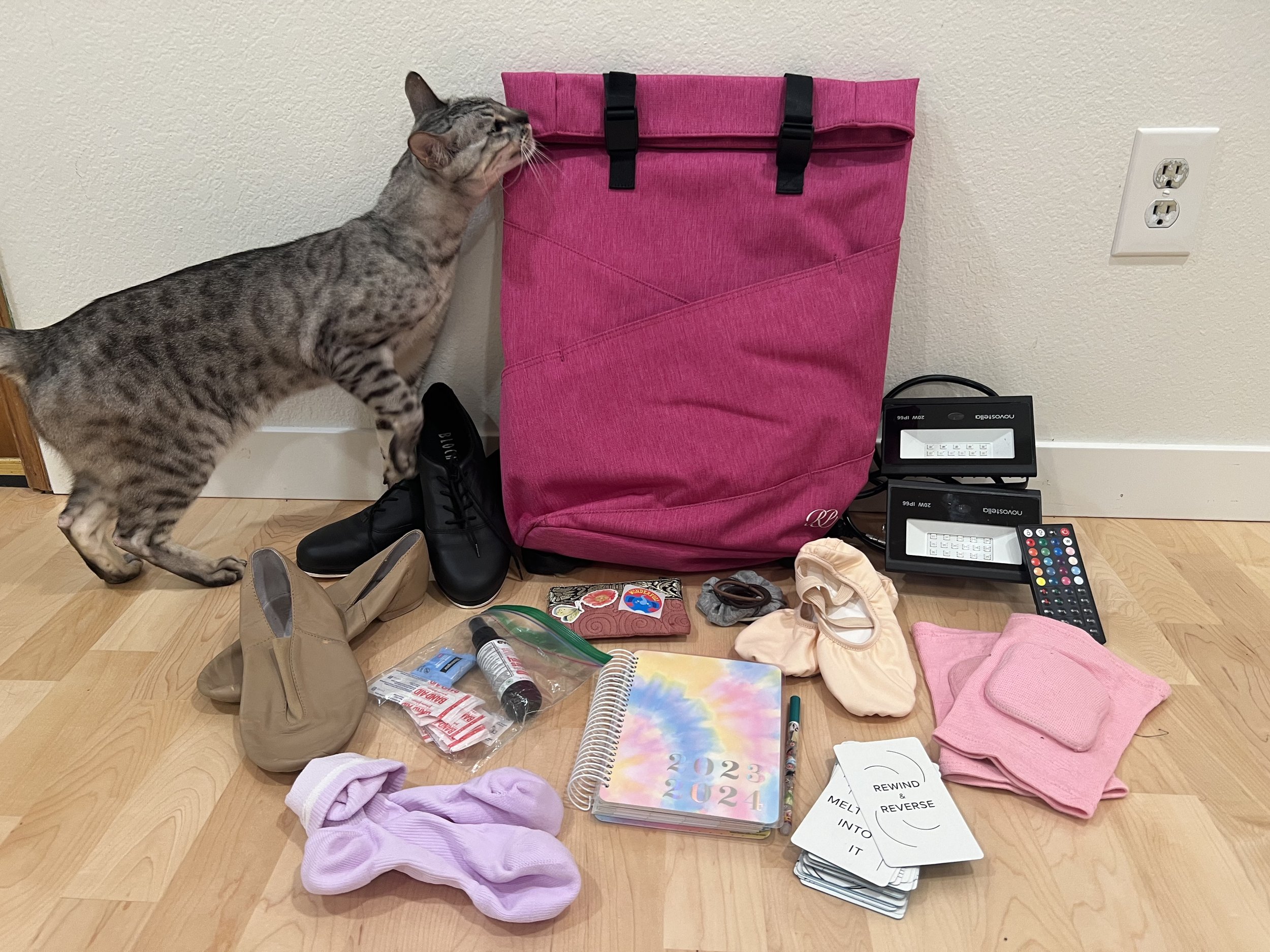
Marika
Band aids, hand sanitizer, makeup wipes
Sticker pouch
Hair ties
Planner
Movement cards
Knee pads
Colored room lights
I always carry a snack :) (Not shown)
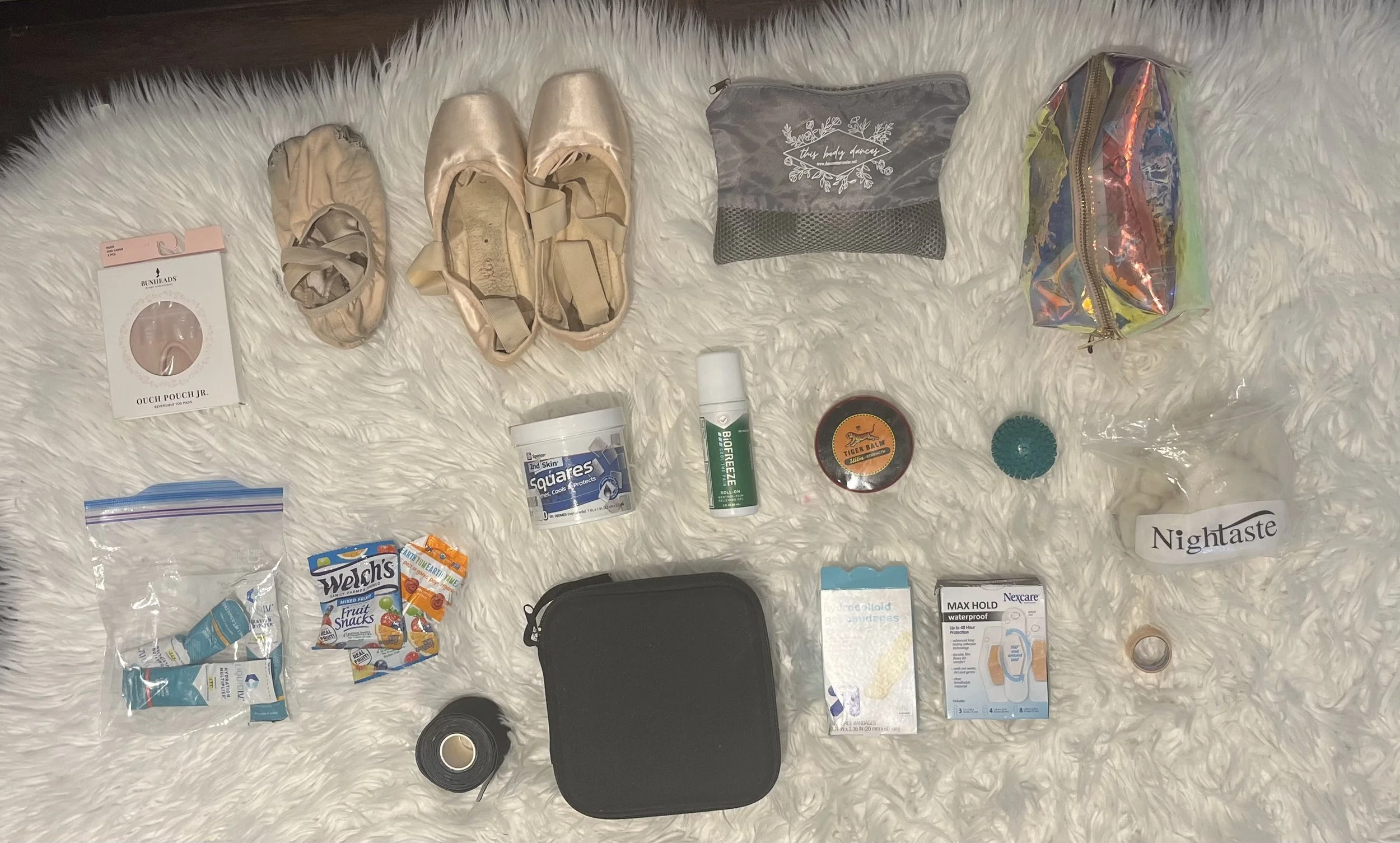
Alaina
In my dance bag I try to keep only the essentials, so I can have a clean and organized bag. I also keep my pointe shoes and flat ballet shoes with me. I currently love the SoDanca ballet flat shoes, and the Mirella whisper pointe shoes. I keep all of my pointe essentials in my Dancewear Center mini zip bag. My favorite toe pads are from Bunheads. 2nd Skin Squares are my favorite for blisters so I always keep them on hand. I also keep blister bandaids and other types of tape with me for injuries and injury prevention. Biofreeze and Tiger Balm are two of my absolute essential items. There is also a mini Thera gun I keep in my bag for post class muscle recovery. Finally I like to keep a few snacks that are high in sugar and easy to digest for quick in between class energy boosts.
Vania
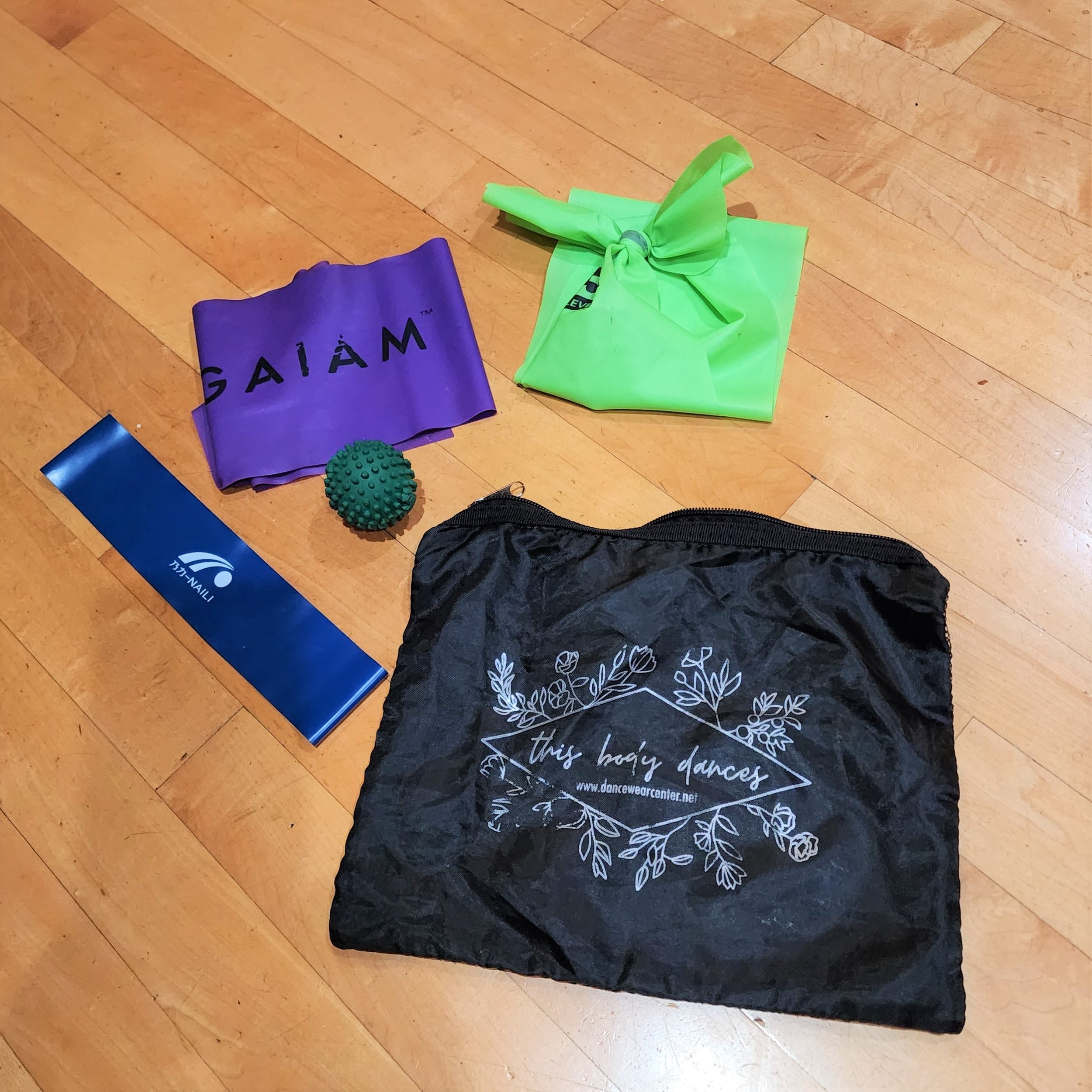
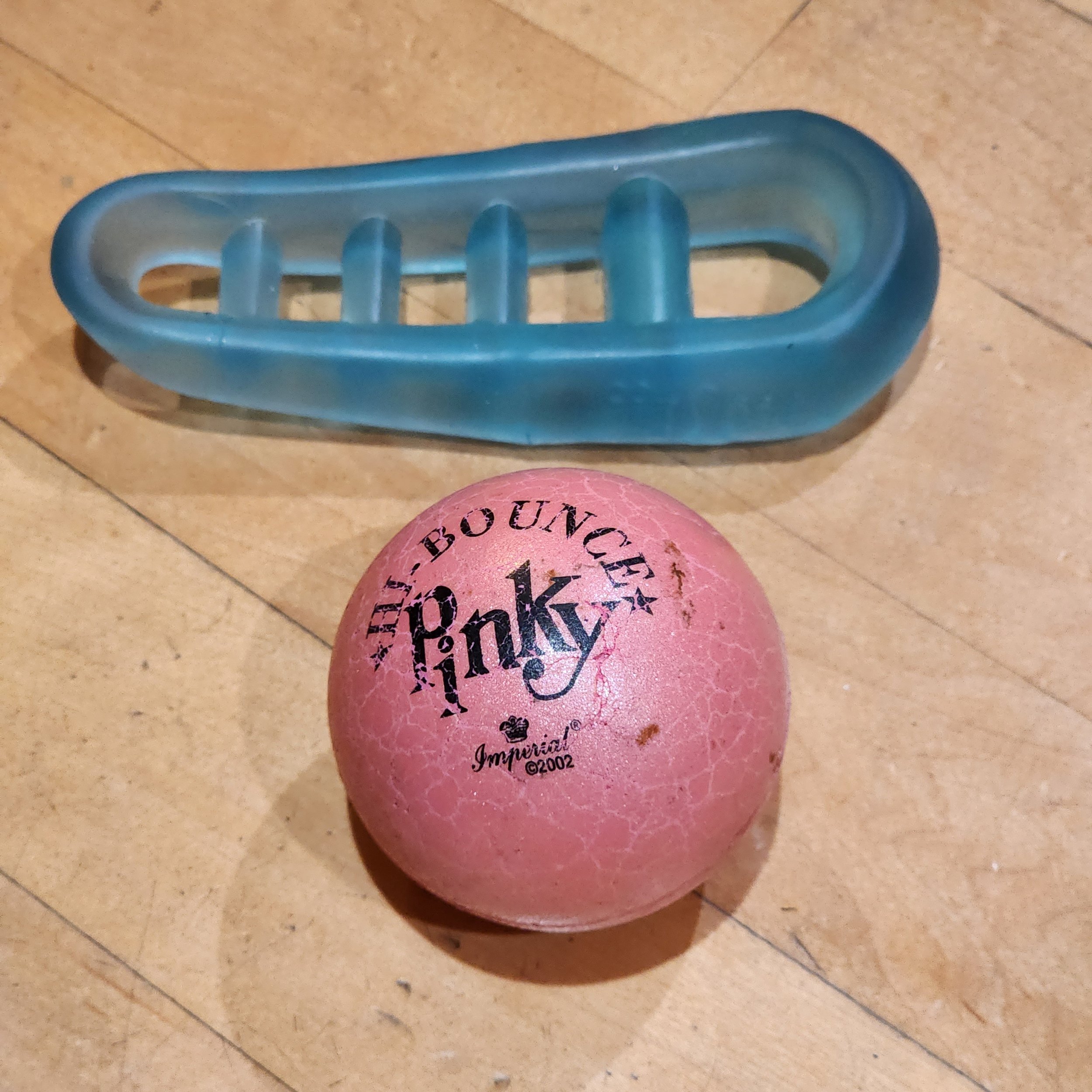
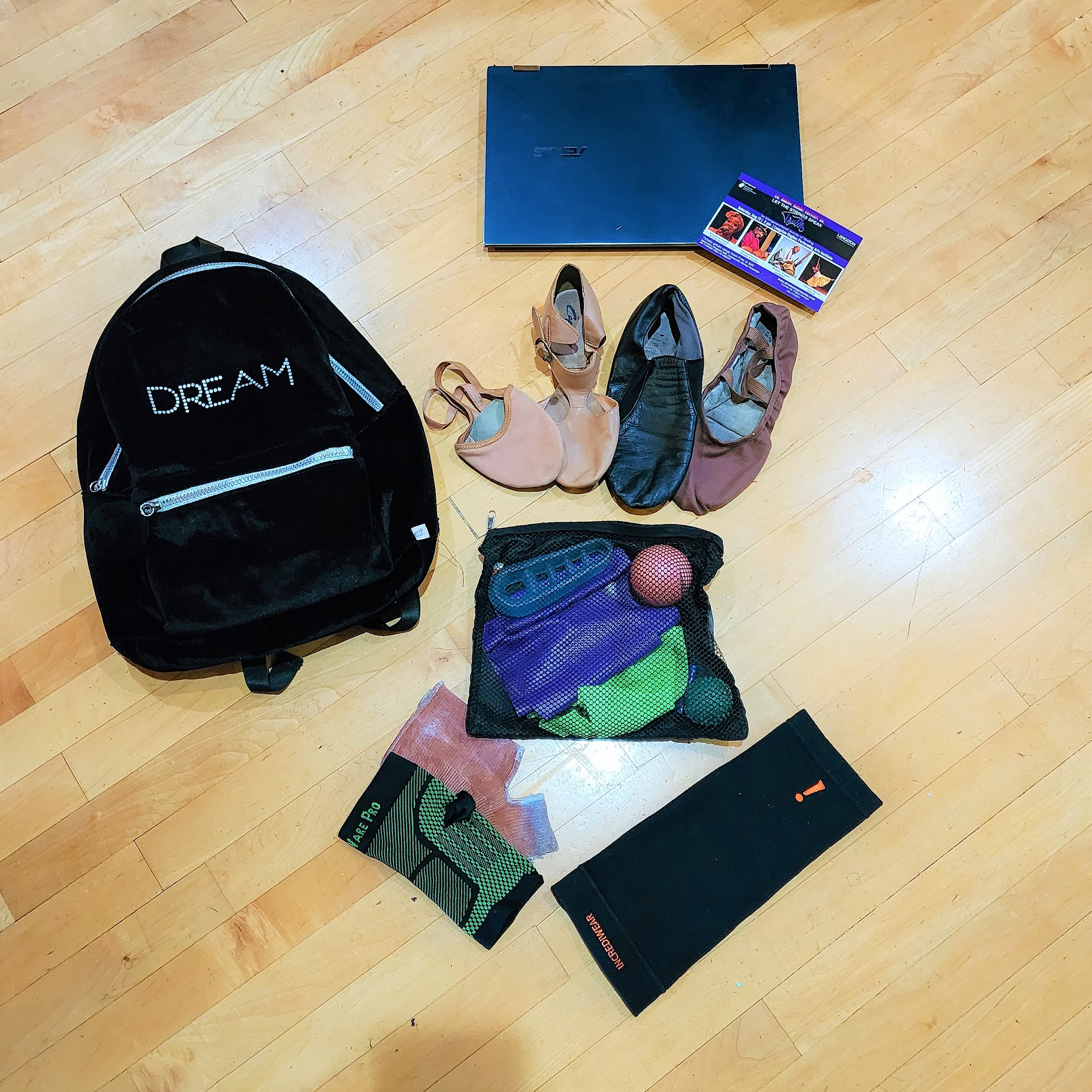
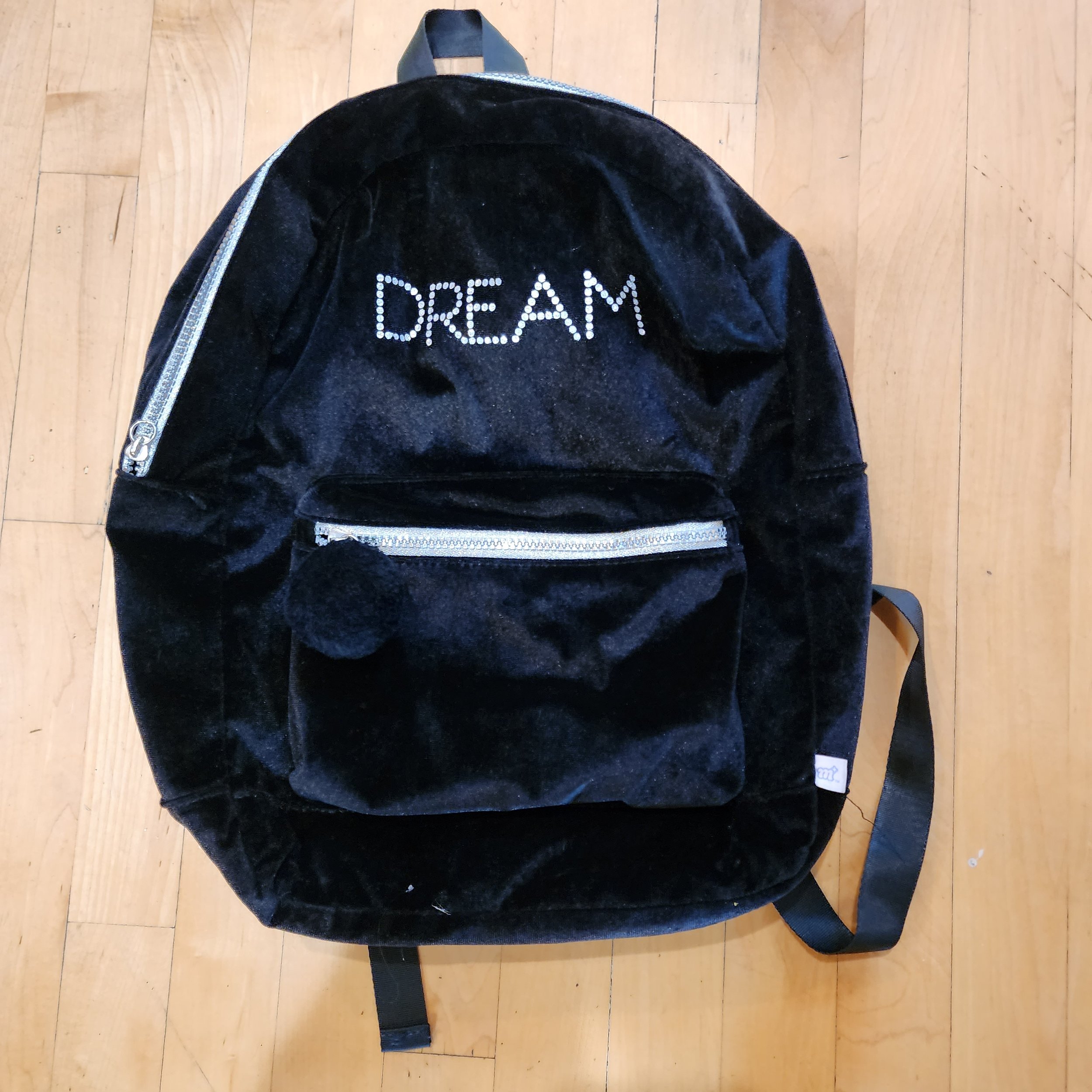
My dance bag (BACKPACK) varies based on whether I am taking class, teaching, choreographing, or working on a show. But in general, I like to make sure that I have jazz and ballet options. In addition, it is important to have a few things that help stretch, strengthen and release my body. When I looked in my dance bag, the first thing I saw was my black Dancewear Center pouch with TheraBands inside. :-) I also like to keep my Foot Rubz or Pinkie ball close by to help release my feet. And my ankle supports are a must have for heavy rehearsal times. When I travel, I like to take at least one of my yoga toes to increase circulation to my extra tight feet. :-) Last but not least, these days I need my computer for business and music editing. So, I carry it along with a portable speaker and a notebook/pencil.
Dancewear Center pouch - TheraBands, therapy balls for my feet and legs
Jazz shoes (regular and with a little heel sometimes for teaching)
Ankle braces/Knee brace
Yoga toes
My computer
The latest flyer for any events I am working on
Portable speaker and notebook - not shown
We hope you enjoyed finding out what is in our DWC Ambassadors dance bags! Shop for these necessities in store or online!
Disclaimer
All content found on the Dancewear Center Website, Instagram, Facebook, Pinterest, and all other relevant social media platforms including: text, images, audio, or other formats were created for informational purposes only. Offerings for continuing education credits are clearly identified and the appropriate target audience is identified. The Content is not intended to be a substitute for professional medical advice, diagnosis, or treatment. Always seek the advice of your physician or other qualified health provider with any questions you may have regarding a medical condition. Never disregard professional medical advice or delay in seeking it because of something you have read on this Website.
If you think you may have a medical emergency, call your doctor, go to the emergency department, or call 911 immediately. Dancewear Center does not recommend or endorse any specific tests, physicians, products, procedures, opinions, or other information that may be mentioned on dancewearcenter.net. Reliance on any information provided by dancewearcenter.net, Dancewear Center employees, contracted writers, or medical professionals presenting content for publication to Dancewear Center is solely at your own risk.
Links to educational content not created by Dancewear Center are taken at your own risk. Dancewear Center is not responsible for the claims of external websites and education companies.
Everything You Need For Your First Ballet Class!
Are you or your little one getting ready for their very first ballet class? Follow along with DWC Fitter, Emma, as she guides you through everything you need to be ready for a ballet class!
By Emma Neilson, DWC Social Media Manager & Pointe Fitter
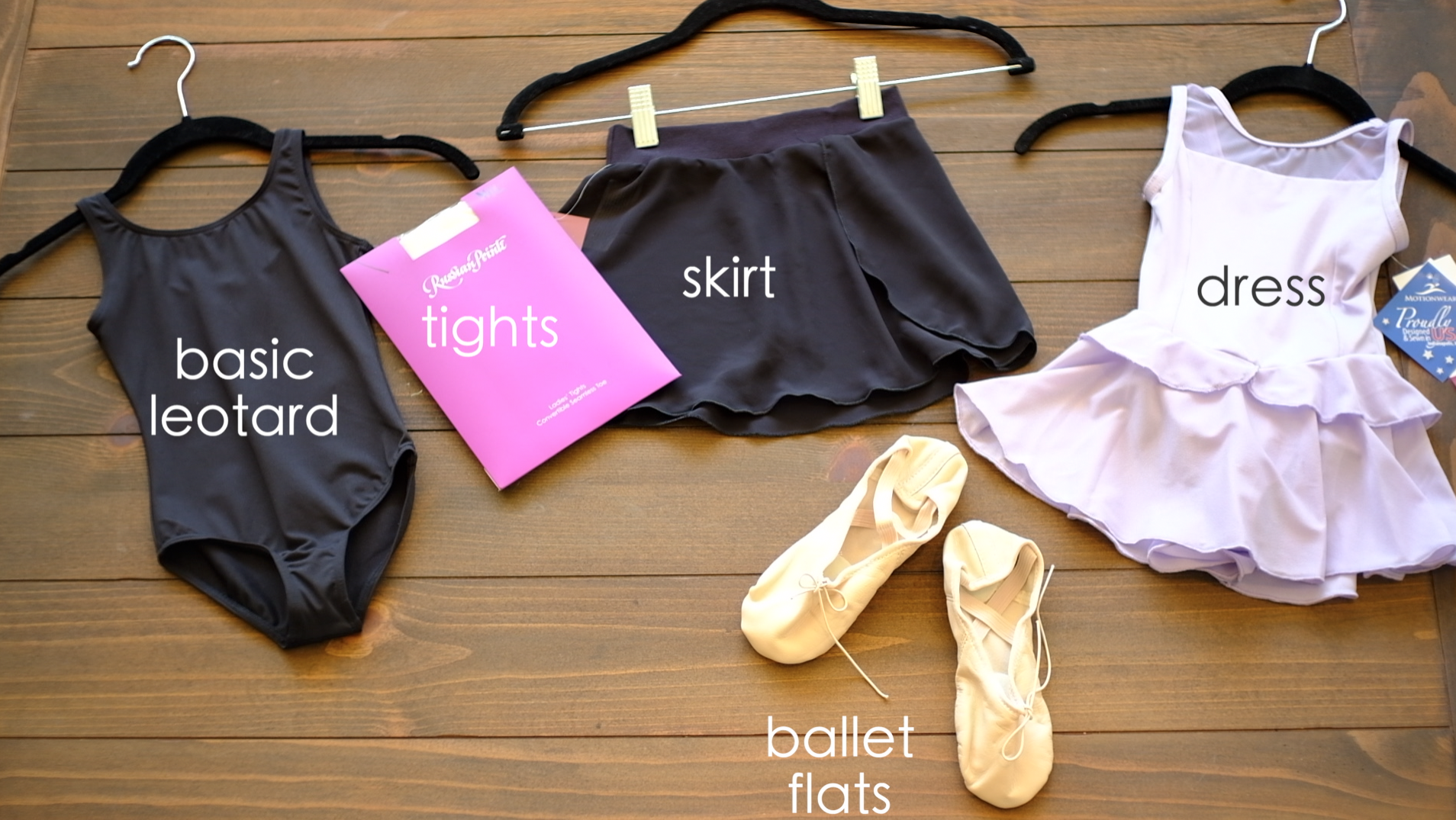
Are you or your little one getting ready for their very first ballet class? Follow along with DWC Fitter, Emma, as she guides you through everything you need to be ready for a ballet class!
Ballet Flats
Ballet shoes come in many varieties! There are leather and canvas, with or without drawstrings. Some people prefer the feel of leather, while others like that canvas can stretch. Often your studio will specify which they prefer so be sure to check what is required and then come in to Dancewear Center to try some on!
Transition Tights
Tights also have many varieties, often the go-to tights are transition or convertible tights, which allow you to roll them up off of your feet for before and after class. Check with your studio for color and style guidelines!
Leotards
Leotards are essential in ballet. They allow dancers to move freely and securely. And they are the best thing to wear so teachers can give adequate corrections to students. Colors vary by studio guidelines, feel free to try some on in one of our stores!
Skirts
Skirts are a classic ballet accessory that goes over your leotard. Be sure to check on styles and colors from your studio!
Dresses
Some studios require that younger dancers wear dresses instead of leotards to prevent fiddling with skirts. We have a variety of options and colors to try on!
Disclaimer
All content found on the Dancewear Center Website, Instagram, Facebook, Pinterest, and all other relevant social media platforms including: text, images, audio, or other formats were created for informational purposes only. Offerings for continuing education credits are clearly identified and the appropriate target audience is identified. The Content is not intended to be a substitute for professional medical advice, diagnosis, or treatment. Always seek the advice of your physician or other qualified health provider with any questions you may have regarding a medical condition. Never disregard professional medical advice or delay in seeking it because of something you have read on this Website.
If you think you may have a medical emergency, call your doctor, go to the emergency department, or call 911 immediately. Dancewear Center does not recommend or endorse any specific tests, physicians, products, procedures, opinions, or other information that may be mentioned on dancewearcenter.net. Reliance on any information provided by dancewearcenter.net, Dancewear Center employees, contracted writers, or medical professionals presenting content for publication to Dancewear Center is solely at your own risk.
Links to educational content not created by Dancewear Center are taken at your own risk. Dancewear Center is not responsible for the claims of external websites and education companies.

DWC How To's: Sewing Your Pointe Shoes
Sewing pointe shoes can be one of the most complicated processes for dancers, but it doesn’t need to be!. There are various ways that teachers want their students to sew them and many ways that dancers prefer their own pointe shoes to be sewn. While there isn’t a correct way to sew your shoes, there are many tips and tricks that can be helpful to know in order to sew your shoes efficiently and effectively. Read on to learn some tricks from DWC Staff Member Emma Neilson!
By Emma Neilson DWC Social Media Manager, & Nicole Barrett DWC Blog Editor
Sewing pointe shoes can be one of the most complicated processes for dancers, but it doesn’t need to be! There are various ways that teachers want their students to sew them and many ways that dancers prefer their own pointe shoes to be sewn. While there isn’t a correct way to sew your shoes, there are many tips and tricks that can be helpful to know in order to sew your shoes efficiently and effectively. Read on to learn some tricks from DWC Staff Member Emma Neilson!
Materials needed to sew pointe shoes:
Stitch kit (needle and thread)
Sharpie or pen (to label the left and right shoe)
A lighter
Scissors
Pointe shoes
Ribbon
Elastic
Optional: Thimble
Here are the beginning steps on how to sew your pointe shoes!:
Take about a wingspan worth of thread to make sure you don’t run out and cut it off the spool.
Take your needle and put the thread through the eye of the needle. Pull the thread taut and make sure that both ends of the thread are the same length and knot the end.
Take your ribbons first and cut them into four even pieces to put on your shoes. Be sure to burn the edges with your lighter so that the ends don’t fray. Repeat the same with your elastics.
Line up your ribbons and elastics together on the side seam of the shoe. A general guideline is to place them at the highest point of the arch of your foot. (This is personal preference, so be sure to find where you like your ribbons and elastics on your shoes best!)
Take your needle and thread and start sewing them down. Some dancers prefer sewing the canvas or inner lining of the shoe only, but you can sew all the way through the fabric if you would prefer. You can also sew the ribbons and elastics down by sewing a box around the end or whichever way would be most effective for you. This is all personal preference!
Once you are finished with your stitching, create a knot at the end so that the stitching doesn’t come undone. Cut off the access thread with scissors.
Next you are going to take the other end of your elastic that you just sewed down and cross the end to the other side of the shoe. When both of them are sewn they should make an x-shape. *This can also be done with one elastic along the back edge of the shoe to make a strap which is dancer or teacher preference!*
Cross the elastic to the back of the shoe and be sure that it is at an angle to line up with the curve of your ankle. (This can be done on the inside or outside of your shoe just be sure to check with your teacher to see which they would prefer).
Use the same method that you chose for the front part of the elastic and ribbons and sew the back elastics down.
Tie a knot at the end of your thread and repeat with the other set of ribbons and elastics.
Repeat on the other pointe shoe and you have a new set of sewn pointe shoes!
We hope that these tips and tricks helped you sew your pointe shoes! All of these products can be found at Dancewear Center in store or online!
Disclaimer
All content found on the Dancewear Center Website, Instagram, Facebook, Pinterest, and all other relevant social media platforms including: text, images, audio, or other formats were created for informational purposes only. Offerings for continuing education credits are clearly identified and the appropriate target audience is identified. The Content is not intended to be a substitute for professional medical advice, diagnosis, or treatment. Always seek the advice of your physician or other qualified health provider with any questions you may have regarding a medical condition. Never disregard professional medical advice or delay in seeking it because of something you have read on this Website.
If you think you may have a medical emergency, call your doctor, go to the emergency department, or call 911 immediately. Dancewear Center does not recommend or endorse any specific tests, physicians, products, procedures, opinions, or other information that may be mentioned on dancewearcenter.net. Reliance on any information provided by dancewearcenter.net, Dancewear Center employees, contracted writers, or medical professionals presenting content for publication to Dancewear Center is solely at your own risk.
Links to educational content not created by Dancewear Center are taken at your own risk. Dancewear Center is not responsible for the claims of external websites and education companies.
Whim W’Him’s Olivier Wevers on Equitable Treatment in Dance
One of Whim W’Him’s most important values is putting “people first always,” something that is not always upheld in the dance world. That’s why Olivier shares that ensuring his dancers are well-paid has always been a priority of his. “They are artists…They are highly skilled professionals and they should be paid for that,” he stresses. He started Whim W’Him with the intention of “changing the landscape of how dancers are often abused and exploited,” particularly when it comes to being under-compensated for their work.
A Seattle-Based Director on Eliminating Exploitation in the Dance Scene
Name pronunciation: Ol-i-vee-eh W-eh-vers | Pronouns: he/him
By Madison Huizinga, DWC Blog Editor

Photo by Stefano Altamura
Artists are often left out of larger conversations about equitable treatment and fair pay for workers. Even so, artists are skilled professionals as other laborers are, deserving of comprehensive treatment from companies that are able to secure the funds they need to operate effectively. Whim W’Him Founder and Artistic Director Olivier Wevers is a strong advocate for eliminating exploitative practices in the dance scene, principles he is practicing at the Seattle-based dance company itself. Read on to learn more about Olivier’s dance journey and about Whim W’Him’s mission and plans for its 2022-2023 season. And when purchasing tickets for one of Whim W’Him’s 22-23 shows, use code DWC20 for 20% off your ticket purchase!
Olivier expressed interest in dancing around age six. He can recall arriving at his first dance class wearing thick red wool tights, and immediately feeling out of place. “I actually cried and sat on the piano,” Olivier recalls, laughing. His parents told him that if he cried again, he wouldn’t be coming back to dance class. “I guess I didn’t,” Olivier says.
Around age fourteen, Olivier transferred from a recreational studio to a more professionally-focused one in his hometown of Brussels, Belgium. When he reached about nineteen years old, he began looking for work, moving to the United States for a summer program in Pittsburgh, Pennsylvania. Olivier landed his first job dancing with Columbia City Ballet in South Carolina for a year. He later danced at Royal Winnipeg Ballet for five years, touring around the world for six months out of the year. Olivier finished his dancing career at Pacific Northwest Ballet, where he worked for fourteen years.

Photo by Stefano Altamura
It took a while for Olivier to realize that starting a dance company is what he wanted to do. He had been gaining more choreography opportunities, diving deeper into the creation side of dance. He knew that running a dance company required a lot of hustle - administrative work, fundraising, and more - and he also realized the life of touring and traveling so often became lonely. Olivier desired to not only work with his own dancers but begin developing a vocabulary of dance that was unique. After mulling it over and having some encouragement from friends, Olivier incorporated Whim W’Him in 2009.
Today, Olivier says that Whim W’Him is all about the “creation process,” sharing that the company doesn’t like to place limits on itself by fixating on one topic or genre of focus. “There are so many types of choreographies and ways of working with bodies and I think that’s what we want to embrace,” Olivier says. “It’s really about exploring our human condition.”
One of Whim W’Him’s most important values is putting “people first always,” something that is not always upheld in the dance world. That’s why Olivier shares that ensuring his dancers are well-paid has always been a priority of his. “They are artists…They are highly skilled professionals and they should be paid for that,” he stresses. He started Whim W’Him with the intention of “changing the landscape of how dancers are abused and exploited,” particularly when it comes to being under-compensated for their work.
“The idea behind the company is to re-create a culture that is fighting the [outdated system] that is now widely adopted in this country for contemporary dancers and re-build an environment that is safe, welcoming, and supportive for everyone,” Olivier says.
Fittingly, Whim W’Him dancers are also offered opportunities to exercise creative control when it comes to the work they perform. For example, choreographers featured in Whim W’Him’s upcoming fall program were selected by dancers of the company itself, as a part of the 8th Choreographic Shindig. In a longstanding tradition, after reviewing applications, the dancers themselves have the opportunity to curate the evening performance, exercising their own creative opinions as artists.
In its 2022-2023 season, Whim W’Him is excited to showcase about ten original works across its three live programs in fall, winter, and spring. In addition, in February 2023, Whim W’Him will be collaborating with Early Music Seattle to create a brand new piece.

Photo by Stefano Altamura
In the fall, audiences can expect new creations from Keerati Jinakunwiphat, Dolly Sfeir, and Nicole von Arx on September 9-17, 2022 at Erikson Theater and on September 14, 2022 at Vashon Center for the Arts. In the winter, Whim W’Him will show work by Mike Esperanza, Annabelle Lopez Ochoa, and Olivier Wevers from January 20-31, 2023 at the Cornish Playhouse, January 25, 2023 at Vashon Center for the Arts, and January 31, 2022 at Whidbey Island Center for the Arts. Finally, in the spring, audiences will see work by Emilie Leriche, Olivier Wevers, and Rauf Yasit on May 12-20, 2023 at the Cornish Playhouse, May 17, 2023 at Vashon Center for the Arts, and May 24, 2023 at Whidbey Island Center for the Arts.
All in all, in the next year, Olivier looks forward to seeing Whim W’Him continue to grow as a company and help create an environment for dancers that is “safe, diverse, [and] welcoming.” “We have a lot of change that needs to happen,” Olivier insists, citing more accessible dance education, greater support for BIPOC artists, comprehensive dance media and journalism, and of course, fair pay and eradicated exploitation as changes the dance industry needs to see. He also hopes to see more arts funding on a governmental level, particularly for smaller dance companies, where he believes much of the innovation in dance is occurring.
Become a member with Whim W’Him today or use code DWC20 for 20% off your tickets for one of Whim W’Him’s Season 22-23 shows.

Sources:
Disclaimer
All content found on the Dancewear Center Website, Instagram, Facebook, Pinterest, and all other relevant social media platforms including: text, images, audio, or other formats were created for informational purposes only. Offerings for continuing education credits are clearly identified and the appropriate target audience is identified. The Content is not intended to be a substitute for professional medical advice, diagnosis, or treatment. Always seek the advice of your physician or other qualified health provider with any questions you may have regarding a medical condition. Never disregard professional medical advice or delay in seeking it because of something you have read on this Website.
If you think you may have a medical emergency, call your doctor, go to the emergency department, or call 911 immediately. Dancewear Center does not recommend or endorse any specific tests, physicians, products, procedures, opinions, or other information that may be mentioned on dancewearcenter.net. Reliance on any information provided by dancewearcenter.net, Dancewear Center employees, contracted writers, or medical professionals presenting content for publication to Dancewear Center is solely at your own risk.
Links to educational content not created by Dancewear Center are taken at your own risk. Dancewear Center is not responsible for the claims of external websites and education companies.
A Conversation About Mental Health and Non-Judgment in the Dance Sphere
While some folks have taken steps to destigmatize mental health discussions in the dance industry, there is still an overwhelming pressure to compete against your peers within the studio environment, which can lead to adverse mental health issues. DWC staff member and pointe shoe fitter Tija Dupont opens up about her dance journey, goals for the future, and destigmatizing mental health in the dance industry.
Getting to Know DWC Staff Member Tija Dupont
By Madison Huizinga, DWC Blog Editor

Photo by Rex Tiffany Gunderson
While some folks have taken steps to destigmatize mental health discussions in the dance industry, there is still an overwhelming pressure to compete against your peers within the studio environment, which can lead to adverse mental health issues. DWC staff member and pointe shoe fitter Tija Dupont opens up about her dance journey, goals for the future, and destigmatizing mental health in the dance industry.
Tija began dancing around age two in a ballet/tap/jazz combo class in her small hometown in Montana. She danced at the same performing arts academy until she was about ten years old. During that time, Tija took a break from dance for about a year and a half because she was dealing with “horrible anxiety.” Even during her break, she was still drawn to movement in her daily life, so it became clear to her parents that she would benefit from getting back into it. She auditioned for her studio’s company, which traveled a lot for performances and competitions. After being a part of the team for about three months, Tija’s parents told her they were moving to Seattle.
After moving to Seattle, Tija got more into ballet after seeing the Pacific Northwest Ballet’s production of Swan Lake. She tried out a handful of studios, searching for an environment that wasn’t hyper-competitive and that offered a welcoming community. Tija also attended a summer intensive at The Joffrey Ballet in Chicago, Illinois. “Going to Chicago is probably the best thing that’s ever happened to me,” Tija says of her experience dancing at Joffrey. She shares that her instructors and roommates were incredible, and the environment allowed her to learn and soar as a dancer. Today, she dances with Ensemble Ballet Theatre in the Maple Valley area.
Before she began working with Dancewear Center, Tija had been working at a larger retail corporation in the area. Feeling a bit discouraged in her position, her mom encouraged her to apply for Dancewear Center, as it’s an area where she could offer some expertise. Soon after interviewing with Owner & General Manager Samantha Weissbach, she landed the job!
Tija started as a retail associate and later a shift lead at DWC, but recently she’s become a pointe shoe fitter. Tija didn’t see herself learning anything about pointe shoes when she started her job but soon became fascinated with pointe shoes through the fitting training sessions at DWC. She shares that she loves fitting pointe shoes, especially because she learns something new every time she does a fitting. She looks forward to now having the freedom to run fittings solo.
Tija loves working at a local business that is so well-received by the local community. She also enjoys the uplifting store environment. “The second I walk into the store, I’m instantly greeted. I just feel such a good energy,” she says. Tija appreciates how positive and reassuring the whole DWC team is.
One of her favorite parts of the job is being able to provide people with the products they need to be successful in dance. She finds satisfaction from seeing customers’ faces light up when she’s able to give them something they’ve been looking for. Tija also loves being able to fill the role of a “personal shopper” for some customers who are unsure about what they want to purchase. Being able to point them in the right direction brings her so much joy.
Outside of work, Tija enjoys hiking, sharing that her family members are big “outdoors people” and love to do activities that connect them with the beauty of the Pacific Northwest. She also loves coffee religiously. “Personally, I call that a hobby,” she laughs, sharing that she always has a coffee on her. She also enjoys doing yoga and conditioning in her home studio, a make-shift dance studio she made in her garage. Tija enjoys traveling as well and looks forward to getting back into it with her family following the major COVID-19 lockdowns.

Photo by Ken Fox
Tija recently finished high school and is considering taking some classes at a local community college before hopefully transferring to the University of Idaho.
In the larger dance world, Tija hopes to see people in the dance industry talk more about mental health and foster a less competitive environment so dancers can feel less judged. “I think studios need to encourage a non-judgmental community,” she says. This paired with studio owners discussing mental health with their students will help the industry move towards being more welcoming to all.
Keep an eye out for Tija in DWC, particularly if you’re getting a pointe shoe fitting anytime soon!
New Beginnings in the Midst of COVID-19
The past year and a half has been undoubtedly replete with hurdles, as much of the local dance community was left jobless due to COVID-19. Yet, through the hardships that unfolded throughout the pandemic, many were able to find unique ways to fill the gaps they were witnessing in the dance world. Dwelling in isolation served as a time for reflection and deep contemplation about how to emerge back into the dance realm. From private coaching to cross-training, from rebranding to expanding, and bridging the divide between dance and theatre, these organizations and individuals have created new beginnings for themselves amid adversity, leaving the local dance community better than they found it. Read on to learn more about these local artists and their latest endeavors.
By Madison Huizinga, DWC Blog Editor
The past year and a half has been undoubtedly replete with hurdles, as much of the local dance community was left jobless due to COVID-19. Yet, through the hardships that unfolded throughout the pandemic, many were able to find unique ways to fill the gaps they were witnessing in the dance world. Dwelling in isolation served as a time for reflection and deep contemplation about how to emerge back into the dance realm. From private coaching to cross-training, from rebranding to expanding, and bridging the divide between dance and theatre, these organizations and individuals have created new beginnings for themselves amid adversity, leaving the local dance community better than they found it. Read on to learn more about these local artists and their latest endeavors. We will feature three more next week!
Adage Ballet Studio

Adage Ballet Studio offers private ballet coaching to students of all ages and abilities. ABS’s offerings are designed to supplement the training that students receive at their studios. Rather than dividing its lessons into age-defined levels, Adage Ballet Studio divides its classes into three tiers based on “technical achievement and the nature of individual needs observed.” The Preparatory tier is for pre-pointe dancers with at least two years of ballet training. The Primary tier, split into three sub-tiers, trains dancers in pointe shoes and educates them on “ballet theory and injury prevention.” Finally, the Adagio tier is designed for dancers with at least five years of ballet training who are working towards mastering the “highest levels of classical ballet.” Students may sign up for solo, duo, or trio sessions with coaches Abby Jayne DeAngelo and Guillaume Basso.
Abby Jayne, both a coach and owner of ABS, began dancing at a young age under the esteemed Marcia Dale Weary at Central Pennsylvania Youth Ballet (CPYB) in Carlisle, PA. She trained at CPYB throughout her childhood, attending numerous summer programs and performing frequently. Around age 16, she attended a program at the School of American Ballet. Upon returning home, she suffered a major injury: three stress fractures in her left metatarsals. She was out for almost a year and left to reflect on the rigorous dance training she had experienced leading up to that point. Eager to continue dancing, she ended up joining Pacific Northwest Ballet as a Professional Division student in 2016 and was promoted to an apprentice position and the corps de ballet in 2019.

What led Abby Jayne to create ABS was witnessing the “many gaps in the dance world and how people’s bodies are treated...mentally and physically.” In particular, she stresses the importance of providing dancers with education on how to prevent and treat injuries so they can dance in a sustainable manner. She had begun working privately with a few students who desired extra assistance outside of their routine classes. She would teach classes out of her apartment or in the students’ homes. When the pandemic hit Seattle, more and more students began asking for private lessons virtually and in person. During this time of teaching, Abby Jayne thought about how many students had been turned away from ballet because they were told they didn’t have the “right body” or didn’t “learn fast enough.” She realized that “everyone is on their own timeline” when it comes to training in ballet.
Adage Ballet Studio is designed to “foster each individual” and help people get to “the highest level of ballet technique for themselves.” Abby Jayne hopes to create a ballet environment that encourages “compassion” and is “nurturing” of its dancers holistically. Her mission is to “instill joy and love and inspire growth” in her students, not just as dancers, but as human beings.
Aspire Kinetic Arts

Aspire Kinetic Arts offers unique programming in both dance and theatre. In the fall, the studio will offer semester classes for “littles” (ages 3-6), pre-teens (ages 7-12), and teens (ages 13-19). The genres Aspire Kinetic Arts will focus on include creative movement, pre-ballet, ballet, pointe, jazz, and tap of varying levels. Aspire also plans to have drop-in classes in ballet, jazz, tap, and fitness, as well as master classes that are open to the public. Aspire Kinetic Arts will also feature workshops on dance and theatre, as well as additional art-related realms, such as costuming, lighting, and self-care as an artist. This summer, Aspire Kinetic Arts will also have a variety of summer programs, including “littles camp,” “performing camp,” a ballet intensive, and a “musical theatre intensive.” The facility itself will consist of three studios which can be easily reconfigured to create a black box performance space.
Director and Co-Founder Erin Crall Scott began dancing at age five, focusing more seriously on ballet around age 11. She has experience training around the country and globe, dancing at the Pacific Northwest Ballet School, Colorado Ballet, and the Hungarian National Dance Academy’s summer intensive. Erin has performed professionally with Cincinnati Ballet, ARC Dance, as a guest artist, and at the Hungarian National Ballet. She has trained in a variety of ballet styles, including Cecchetti, Balanchine, and Vaganova, and has abundant experience with jazz and tap styles as well.
Theatre Program Director and Co-Founder John Crall Scott began dancing around age eight, inspired to tap after watching Gregory Hines perform. He was encouraged to take up ballet training around the age of nine or ten. In high school, John’s love for theatre blossomed and has continued on throughout his life. Being able to learn while working in theatre with various choreographers and directors was the “best education” for him. He has experience performing with a variety of local organizations, such as Village Theatre, Seattle Repertory Theatre, Seattle Opera, and more.

Erin and John have a love for teaching, so opening up a studio had always been a shared dream. They believe that having a place where people can receive excellent training in both dance and theatre will be incredibly useful for performers, as the two art forms overlap quite a bit. Their vision is to provide comprehensive arts education that covers the wide range of roles that go into dance and theatre production, whether it’s being a performer, a costume designer, or a stage manager. Erin and John want Aspire Kinetic Arts to become a community hub for artists, envisioning their black box theater being a space for local artists to put on performances and events.
Aspire Kinetic Arts strives to provide an equitable education to all students, in part by hiring a diverse staff and being respectful to students of all social identities and backgrounds. Erin stresses the significance of educating students on the histories of art forms like ballet, so we can all “appreciate [their] beauty” while understanding their “troublesome legacies.” The pair also plans to launch a nonprofit that will go hand-in-hand with Aspire Kinetic Arts. They will conduct outreach and host performances that will donate portions of proceeds to communities that have less access to live performances. “We’re committed to building an environment that is healthy and supportive,” Erin says.
Body Language Studio

Formerly known as Cornerstone Studio, Body Language Studio has recently opened in the Renton Highlands and offering an abundance of programs. In addition to weekly technique classes for children in ballet, pointe, contemporary/lyrical, hip hop, breaking, and more, the new BLS Select Team and Breaking Crew will compete at local competitions and partake in community performances. BLS is also thrilled to offer teen/adult classes for dancers of all skill levels in a variety of styles, including ballet, hip hop foundations & funk styles, social dancing, and hula.
A unique aspect of Body Language Studio’s offerings will be its breaking program. BLS will host breaking “battles” and frequent dance cyphers, where people can dance freely, socialize, and enjoy music played by a DJ. Body Language is also looking forward to implementing skill-based assessments to provide structure for students as they move up in dance levels and to encourage students to “work towards short-term goals on a regular basis.”
In terms of performances, an annual production of The Nutcracker, a spring recital, and a winter showcase of the BLS Select Team will be staples at Body Language Studio.
Executive Director Lea Aparis has danced since age 3 and has competed nationally in ballet, jazz, tap, hip hop, lyrical, musical theatre, and more. She danced for the Seattle Supersonics Dance Team for three seasons and graduated from the University of Washington with a major in Economics and a minor in Dance. She also has experience judging for local dance competitions and guest performing in local productions. Lea has been teaching for over two decades and has been running Cornerstone Studio for 11 years.
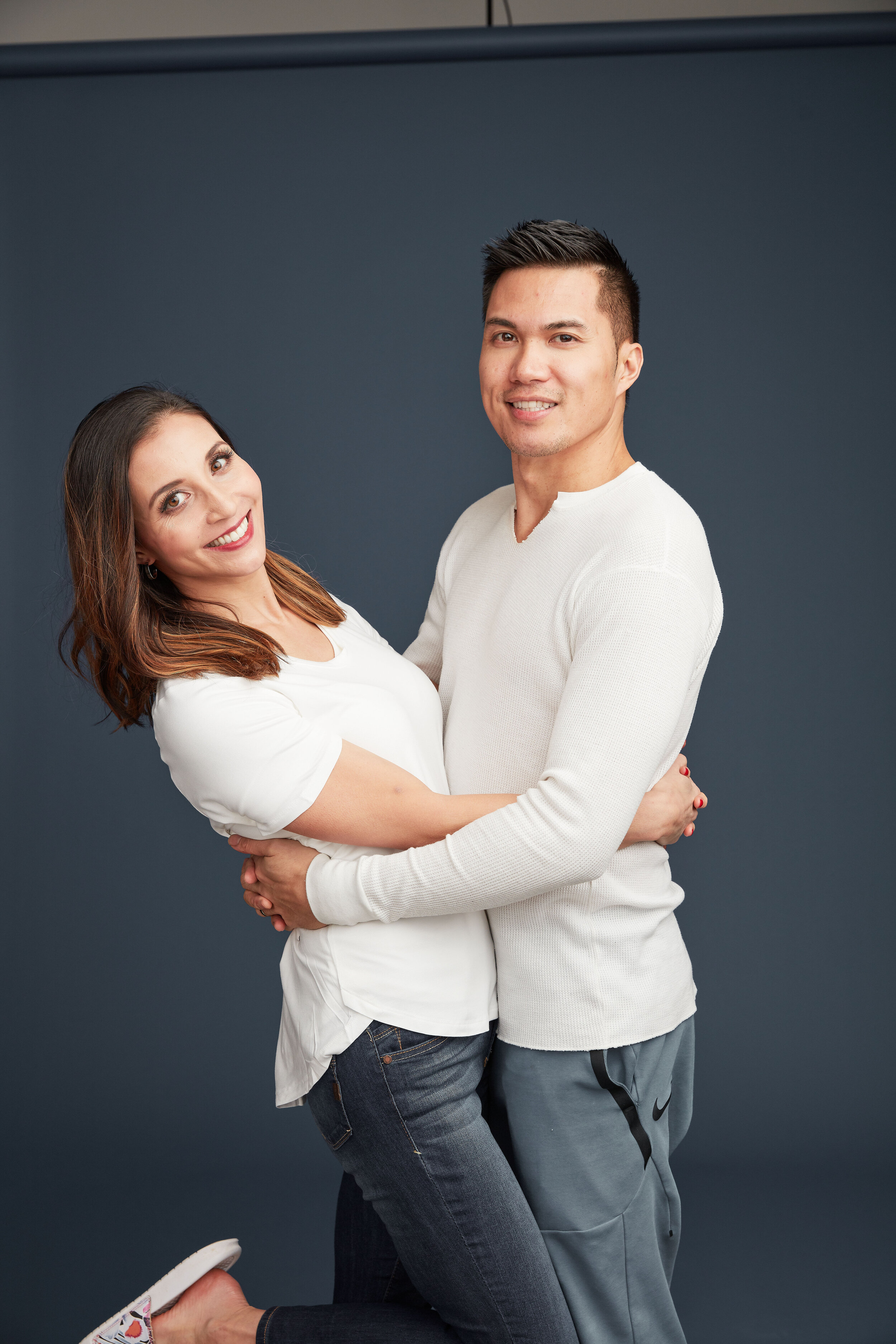
Co-Director Jerome Aparis is a member and co-founder of the renowned breaking crew Massive Monkees. The Massive Monkees have won the 2004 B-Boy World Championship in London, England, and the 2012 R-16 World Championship in Seoul, Korea. The group also finished third overall in MTV’s America’s Best Dance Crew in 2009. Jerome has judged and won awards at numerous b-boy events around the world. He has also performed on the Seattle Supersonics Boom Squad, which is where he and Lea first met.
When Lea took ownership of Cornerstone Studio 11 years ago, she aimed to diversify the studio’s offerings to reach more students, offer representation across the staff, and provide well-rounded training. This desire led her to reach out to Jerome to teach breaking over the summer and it was a hit with the students. Since then, breaking has been a huge part of Cornerstone’s business.
From the moment Jerome and Lea connected, they envisioned how they would merge their passions and “take what they both do so well to the next level.” Having their own studio together is something the couple had always talked about, but the timing had never been completely right. It wasn’t until COVID-19 hit that Lea and Jerome began doing some deep reflection about Cornerstone Studio and analyzing their options moving forward through the challenges of the pandemic. When a space in the Renton Highlands became available, it was as though the stars had finally aligned. Lea and Jerome decided to take a leap to rebrand their business and relocate to a new and improved location.
Body Language Studio looks forward to continuing offering programs that promote diversity, inclusion, and safety in a fresh environment. “We know that the new space will give us the energy, the momentum, the inspiration, the creative spark, and the joy that... everybody else needs,” Lea says. “It’s something that’s even bigger for everyone to look forward to.”

Interested in writing for the DWC Blog? Click below to fill out the DWC Contributor application!