

How to do a Ballet Bun with Braids
Dancers come in all different shapes and sizes, and hair is no exception. All different types of hair from textured to straight are thrown into ballet buns every single day, but sometimes it can be a struggle to find the right way to put up your hair. Former DWC Ambassador Niyah Pratt is here to show you just how you can do it! Here is how to do a ballet bun with braids:
By Niyah Pratt, Former DWC Ambassador
Dancers come in all different shapes and sizes, and hair is no exception. All different types of hair from textured to straight are thrown into ballet buns every single day, but sometimes it can be a struggle to find the right way to put up your hair. Former DWC Ambassador Niyah Pratt is here to show you just how you can do it! Here is how to do a ballet bun with braids:
First, flip your head over and gather all of your hair to the top of your head.
Secure it up into a ponytail with a hair tie.
After you have the ponytail in, you are going to start a twisting motion to gather all of the hair and begin to wrap the hair around the top of the ponytail.
Once all of the hair is gently wrapped around the top of the ponytail, use another hair tie to wrap it all into place.
Lastly, secure any loose pieces with bobby pins and then you have a gorgeous ballet bun!
We hope that this quick how-to helped you learn to do a ballet bun with braids! Be sure to check out the video below for a more in-depth description!
About the author:

by niyah pratt
Niyah Pratt was born in raised in Renton, Washington. She began dancing at age six, at the British Dancing Academy where she trained in ballet, jazz, tap, and modern. She is currently attending the University of Nevada Las Vegas where she is double majoring in Dance Performance and Urban Affairs. She hopes to continue her dance career for as long as she possibly can, and make an impact not only in the dance community, but on the youth as well. She wants to be the role model she never had when she started dancing for someone else, and “thinks it is important to start implementing this in dance.”
click to shop the look: Holly Leo with Mod Dot by Ainsley Wear
Disclaimer
All content found on the Dancewear Center Website, Instagram, Facebook, Pinterest, and all other relevant social media platforms including: text, images, audio, or other formats were created for informational purposes only. Offerings for continuing education credits are clearly identified and the appropriate target audience is identified. The Content is not intended to be a substitute for professional medical advice, diagnosis, or treatment. Always seek the advice of your physician or other qualified health provider with any questions you may have regarding a medical condition. Never disregard professional medical advice or delay in seeking it because of something you have read on this Website.
If you think you may have a medical emergency, call your doctor, go to the emergency department, or call 911 immediately. Dancewear Center does not recommend or endorse any specific tests, physicians, products, procedures, opinions, or other information that may be mentioned on dancewearcenter.net. Reliance on any information provided by dancewearcenter.net, Dancewear Center employees, contracted writers, or medical professionals presenting content for publication to Dancewear Center is solely at your own risk.
Links to educational content not created by Dancewear Center are taken at your own risk. Dancewear Center is not responsible for the claims of external websites and education companies.
The Inclusive Eye: The Importance of Representation, Mentorship, and Comprehensive Education
For the longest time at the beginning of my dance career, I didn’t see many dancers that looked like me. I did ballet, jazz, tap, and modern growing up in my little Kent, Washington studio--and I thought this was normal. My dance classes didn’t look any different from my school classes, I was one of the only people of color in my classes there too. For years and years I went without knowing anything about the success of dancers like me in the dance industry and simply thought they didn’t exist.
by niyah pratt
Niyah Pratt was born in raised in Renton, Washington. She began dancing at age six, at the British Dancing Academy where she trained in ballet, jazz, tap, and modern. She is currently attending the University of Nevada Las Vegas where she is double majoring in Dance Performance and Urban Affairs. She hopes to continue her dance career for as long as she possibly can, and make an impact not only in the dance community, but on the youth as well. She wants to be the role model she never had when she started dancing for someone else, and “thinks it is important to start implementing this in dance.”
click to shop the look: Holly Leo with Mod Dot by Ainsley Wear
By Niyah Pratt
For the longest time at the beginning of my dance career, I didn’t see many dancers that looked like me. I did ballet, jazz, tap, and modern growing up in my little Kent, Washington studio--and I thought this was normal. My dance classes didn’t look any different from my school classes, I was one of the only people of color in my classes there too. For years and years I went without knowing anything about the success of dancers like me in the dance industry and simply thought they didn’t exist.
When I was very little, there was one dancer older than me at my studio who looked like just me and I absolutely loved watching her dance. When I saw her I was mesmerized! I thought she was the most beautiful dancer in the world because I saw myself in her. Just seeing her made me feel like I could do it; and I know there are a lot of young dancers of color who have felt this way before in the dance world. Because of this, I want to reach as many young people as I can by teaching technique and giving them someone to look up to.
When I was 16 years old, I was accepted into the Debbie Allen Dance Academy summer intensive. Before this, I honestly did not know there were dance establishments built by African Americans. That summer, I experienced a profound transformation. I was surrounded by dancers and teachers that shared the same passion as I did--and looked just like me. I had never experienced this before. This not only changed how I danced but also expanded my view of the dance world.

click below to shop the look:
Debbie Allen started her own school to give her daughter a higher caliber of dance that she needed in order to succeed. Places like Debbie Allen Dance Academy and The Ailey School aren’t just dance institutions for black dancers. This was a large misconception held by the general populace--especially in the early years of their establishment. These institutions are sanctuaries for dancers of color where we can finally dance somewhere we feel acknowledged and celebrated.
My experience at Debbie Allen Dance Academy then led me to attend the Ailey Experience in New York the summer after where I had the greatest week of dancing in my life. I have never felt so seen and accepted dancing somewhere in such a short amount of time. Each teacher was beyond thrilled to teach us and share their knowledge of the dance world. Many of them were previous and current company members while others came from different parts of the dance world. It was exhilarating dancing with the staff and not having our strong technique be met with shock and surprise.
I say this because I feel like in certain situations when a dancer of color has good technique it's met by the community with shock. There is this preconceived notion of what a ballerina looks like and I think many don't expect us to be interested in ballet. It’s definitely not been viewed within my family as typical, and when I was super young my cousins and extended family were surprised when I started ballet. They were always very excited for me, but I wasn't playing basketball or running track like all the rest of my family members and that was surprising to them.
One summer, I auditioned for Joffrey Chicago just for exposure. Ballet is not my strong suit, and it has definitely been a journey to get my technique where it is today, but I wanted to try. Every girl who auditioned with me looked exactly the same, and I found myself the sole person of color in the building that day auditioning. This made me question at the beginning of the audition what I was doing there, but I also remember looking in the mirror by the end and getting choked up at just how proud of myself I was for choosing to be there and for fighting through being so uncomfortable.
I am forever grateful for the experiences I’ve had; I know that I am blessed to have parents that support me and to have had access to these opportunities. However, without being able to travel and fund these experiences, I don’t know that I would have become the dancer I am today.
So how can we make an impact on young people of color who want to become dancers but don’t have the resources and mentorship to fulfill their dreams? The answer: prioritizing our young dancers of color and their dance education.
Teaching dance from a more inclusive eye and making sure young dancers of color are well supported and seen makes all the difference in their training. If you are teaching students of color, guide them in learning about proper attire, their history of dance, finding a supportive community, and seeking out mentors.

click below to shop the look:
Educate dancers of color on proper attire for their complexion: this helps set dancers up for success. Personally, I didn’t know that ballerinas of color should (or could) wear skin color tights for ballet until I was 18. I was performing in a ballet piece in my first faculty show at UNLV (University of Nevada, Las Vegas) and the teacher pulled me aside baffled that I didn’t know I was technically wearing improper tights for the performance. It was an experience that left me feeling embarrassed and a little sad that I had never been taught this.
Encourage dancers and support them in the application and audition process for institutions such as Alvin Ailey, Debbie Allen Dance Academy, and Alonzo King LINES Ballet: where they will feel seen in a business that often does not.
Teach dancers of color their history. Dancers like Lauren Anderson, Syncopated Ladies, Katherine Dunham, and Robert Battle (to name a few) have all made large impacts on the dance world and students should know early on about these pioneers so that they can look up to successful dancers that look just like them.
We all know that having representation and someone to look up to reinforces the idea that you can do it too! It's motivating to see people like us in a profession that historically has not catered to our skin tone. If dancers don’t have a role model in dance, help support them in finding one.
We must set dancers of color up for success and teach them to their individual needs. I feel the largest job I can do to support my community is share how I've overcome these challenges and guide as many as I can to achieving their goals. I want all young dancers of color to feel inspired and prepared to conquer and succeed in the dance world!
RESOURCES
Brown Girls Do Ballet: Scholarships
LINES Vermont: Diversity in Dance Scholarship Fund
The Ballet Clinic’s Scholarship Fund
Memoirs of Blacks in Ballet (MoBBallet): An Ever Expanding and Historic Timeline of Blacks in Ballet
Insights From Luis Guimaraes and Filipa Cunha
In a market where consumers can be overwhelmed with options: details matter. Paying attention to who is making the products, who the products are designed for, and who is presenting them are key elements to center on for a dancewear brand to carry out an impactful vision. Ballet Rosa Co-Founder Luis Guimaraes and Marketing Communications Specialist Filipa Cunha go through their efforts with a fine-tooth comb, striving to provide customers with quality, artistic dancewear made with care.
Ballet Rosa’s Eye Towards Sustainability and Inclusivity
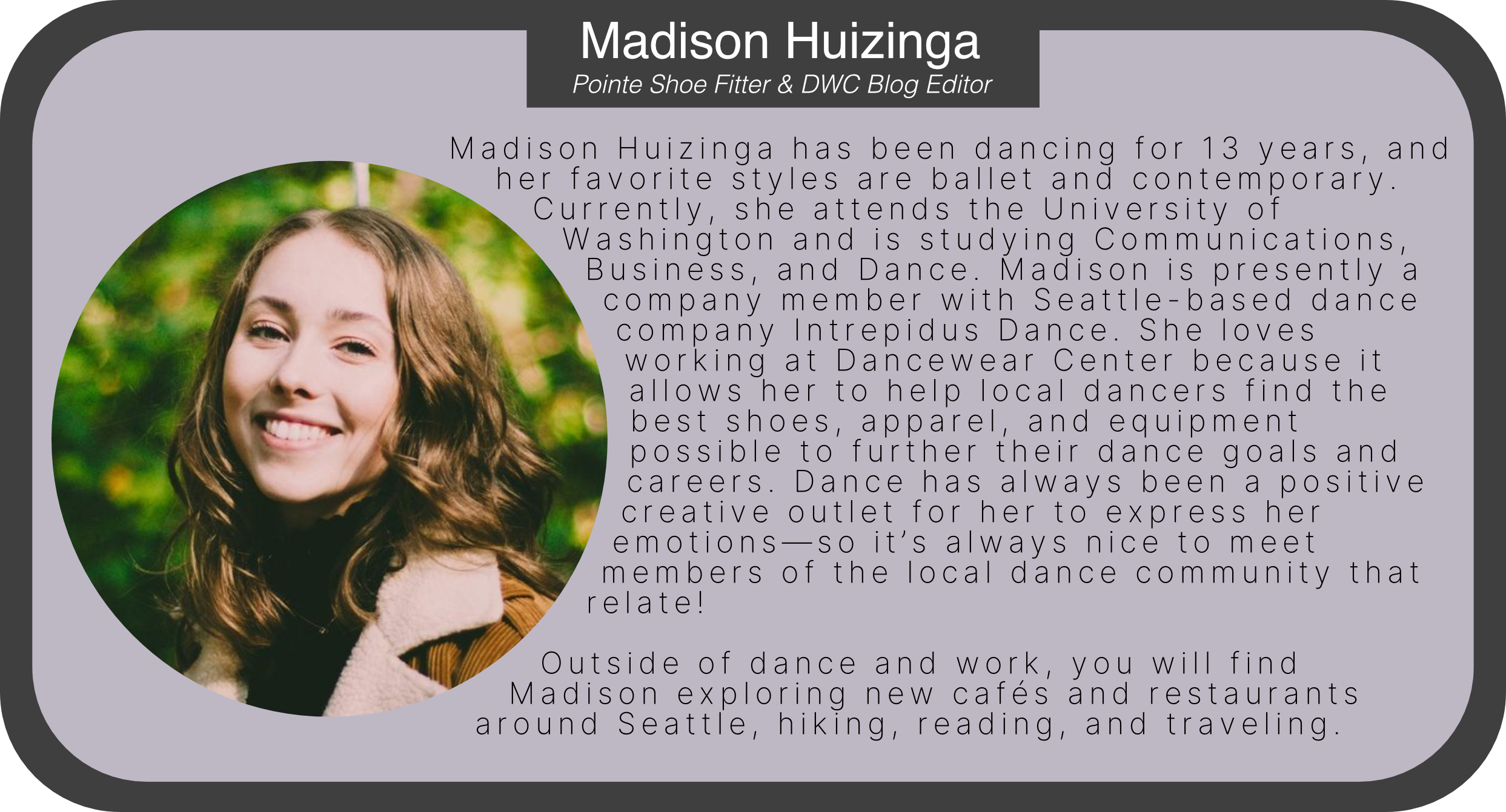
By Madison Huizinga, DWC Blog Editor

Photo courtesy of balletrosa.com
In a market where consumers can be overwhelmed with options: details matter. Paying attention to who is making the products, who the products are designed for, and who is presenting them are key elements to center on for a dancewear brand to carry out an impactful vision. Ballet Rosa Co-Founder Luis Guimaraes and Marketing Communications Specialist Filipa Cunha go through their efforts with a fine-tooth comb, striving to provide customers with quality, artistic dancewear made with care.
The true backbone of Ballet Rosa is a team with an infatuation with dance. For example, Filipa danced from ages 6 to 18 before attending college to study Communication. “I always knew I wanted to do something later with dance,” she shares about her career aspirations. After earning her master’s degree in fashion and communication, Filipa got the chance to work with Ballet Rosa. Thrilled to combine her interests of dance, communication, and fashion, Filipa jumped on the opportunity.
Luis was born and raised in Portugal, where the company is based. His wife is a dancer, which is part of how he got exposed to dance, to begin with. “I started dancing socially,” he shares. Given his exposure to dance and background as a material technician, Luis saw an opportunity to tap into the dancewear market, beginning with producing private labels for some dancewear companies. While working for private labels, Luis started designing products in addition to utilizing his understanding of the materials.
After some time, in 2010, Luis and his partner chose to venture into making their own collection. “For that purpose, we decided to bring aboard certain personalities,” Luis shares, including Isabelle Ciaravola of the Paris Opera Ballet. “We take a lot of pride in having her with us,” Luis says.
Ballet Rosa’s first fashion collection was largely inspired by the artistry of the fashion world and the rigor of the dance world combined. The creators sought to produce products that satisfied dancers’ needs, thus they took care to take dancers’ views into consideration. Luis explains how the team created a close dialogue with dancers. “I found that I could translate that [dance] language into materials,” Luis proudly shares.
After the 2010 launch, Luis describes feeling slightly fearful, as the brand wasn’t gaining many customers at first. What later helped Ballet Rosa take off was attending trade shows and allowing customers to get to know the team. However, Luis explains that when Ballet Rosa had its first interviews for a TV channel around 2013, the team really thought “oh, we’re doing something here.” Up until then, Luis and the rest of the Ballet Rosa team were driven by a desire to create new things, it wasn’t as clear what kind of impact the company could have.
Filipa believes that part of what sets Ballet Rosa apart as a dancewear company is the feedback that it considers from dancers, as well as the authentic artistry the brand possesses. “Everything is very carefully made by our seamstresses and the production team at our factory,” she shares of Ballet Rosa’s handmade dancewear.
Filipa says that it comes across that the products are made with love, as the seamstresses on the team have a clear and communicated passion for what they do. From his prior experience in the textile industry, Luis has grown to dislike the model of an assembly line. He shares that at Ballet Rosa, the team “cuts each garment by hand.”
In addition, under the leadership of Luis, Filipa says that Ballet Rosa is always looking for ways to innovate and break barriers as a company with its products. “I think that’s what makes our brand and our products unique,” she shares.
“The team that we have is incredible,” Luis stresses. “The people are at the core of how unique the product[s] [are].” One of the first team-bonding activities the Ballet Rosa staff did as a group was to dance together to cultivate a deeper understanding of and connection to the products they were creating. “We worked with a group of choreographers,” Luis says, stressing how large-scale the event was. “I think this was a huge moment for the company,” Luis says proudly. “The people who were a part of that are still working with us.”
Luis explains that extensive research often goes into creating Ballet Rosa’s lines. He draws much of his inspiration from classic art pieces in museums, holding an appreciation for art made during the Renaissance period in particular. When collaborating with designers, Luis incorporates these, and other inspirations, into the leotard designs.
“I try to incorporate the modern features of fashion [with] those classic values [of art],” Luis shares, particularly because “romanticism is something which you find throughout dance.”

click below to shop the look!
Nature has also played a big role in the conception of Ballet Rosa, as the word “rosa” means “rose” in Portuguese. Luis appreciates incorporating that “national touch” into the brand, a recognizable reminder of where home is for him and the company.
Ballet Rosa’s latest 2022 collection was released in January. Luis says that the hallmarks of the collection are fluidity in design and durability in wear. The company is excited to share that it’s introducing a sustainable material to its line, made from recycled fibers. Luis shares that Ballet Rosa plans to add even more sustainable practices to its repertoire moving forward.
A change that Luis hopes to see and help make in the dance industry is more diversity and inclusivity showcased across dancewear brands. He shares that Ballet Rosa is proud to have dancers of many different backgrounds, nationalities, races, and ethnicities showcased across its dancewear catalogs. Luis also shares that it’s important that dancewear brands make an effort to cater to men, sharing that Ballet Rosa is proud to have a whole catalog dedicated exclusively to male dancers. “I put a lot of trust in this new generation that speaks out and communicates about things that are happening. Before we were more silent,” Filipa says of how forward young dancers are about pushing for change in the industry.
“Everybody belongs,” Luis stresses.
Interested in writing for the DWC Blog? Click below to fill out the DWC Contributor application!