
Physically Returning to Dance: Tips on Handling Load Tolerance and DOMS
It’s an exciting time of the year: the leaves are just starting to change colors, there is a crispness to the morning air, and most importantly, we are returning to the studio to dance!
While dancers usually stay very active in the summer, it’s not usually the same intensity or type of training as during the school year. You might have been swimming, hiking, biking, playing beach volleyball, etc. You might have been dancing but the daily dance classes and training were probably less intense or more intermittent. And the classes might have been virtual.
By Colleen Bickel, Local Physical Therapist and Dancer

It’s an exciting time of the year: the leaves are just starting to change colors, there is a crispness to the morning air, and most importantly, we are returning to the studio to dance!
While dancers usually stay very active in the summer, it’s not usually the same intensity or type of training as during the school year. You might have been swimming, hiking, biking, playing beach volleyball, etc. You might have been dancing but the daily dance classes and training were probably less intense or more intermittent. And the classes might have been virtual.
So, picture this. Imagine that you are a marathon runner. And in the training season, you run up to 50 miles a week. In the off-season, you run maybe 6 miles per week just to “stay in shape.” Do you think the first week back in your training season you should go directly to 50 miles?
It’s easy to say in that scenario, “absolutely not.” But, as dancers, we usually go from not dancing to a full schedule, giving 100% to every class. We do it because we are excited to return to the studio and we love to dance. We do it because we don’t want to appear lazy or disappoint our teachers. But this mentality does sometimes lead to injury.
In the world of Physical Therapy, we talk about “load tolerance of tissue” (tissue, in this case, includes muscle, bone, and connective tissue like tendons and ligaments). Basically, what kind of “loads” can your body handle and how quickly can you progress those loads. If you load too fast and don’t allow your body adequate time to rest and repair, then we end up with things like tendonitis, stress fractures, shin splints, or other “over-use” injuries. “Over-use” is pretty much “over-loaded” without adequate chance to rest and repair.
A less worrisome (but often not enjoyable) bodily experience after returning to dance is DOMS (delayed-onset muscle soreness). DOMS is intense muscle soreness that occurs 12-72 hours after an activity. If you are dancing every day, sometimes it’s hard to know what you are feeling sore from; is it today’s ballet class or hip hop 2 days ago?
So, what things should dancers do to mitigate DOMS and possible over-use injuries when returning to dance?

The two big categories for injuries and over-use are jumps and relevés. These are movements that our bodies need to slowly build up a tolerance for and we are likely not performing the same amount of them in our off-season. Ultimately, be thoughtful about the amount of repetitive loading that is occurring each day. How many relevés and how many jumps are you performing each day? You might need to limit this amount and then slowly increase it while also allowing enough time for recovery in between sessions.
When returning from a break, recommendations include:
Make sure you are adequately warmed up.
Be careful about overstretching before class. Focus on improving flexibility after class and perform a dynamic warm-up before class.
Don’t try to perform challenging movements when you are fatigued.
Limit the amount of relevés you are performing daily. Maybe you perform some relevés at barre during ballet but not every combination in the center. Maybe you perform relevés during pointe class but limit them in your ballet class prior. Remember it’s about the total number per day and your body’s ability to have time to recover before performing that activity again.
Limit the number of jumps you are performing daily. Possibly limit the height of your jumps as you slowly return to dance. Focus on building up your tolerance for jumping with smaller jumps and working on good alignment and mechanics.
“Be careful about overstretching before class. Focus on improving flexibility after class and perform a dynamic warm-up before class.”

The two big categories for DOMS are pliés/grandpliés and planks/push-ups. These movements utilize large muscles that will get sore! With DOMS, you should feel the soreness with movement or stretching but not with rest. The soreness should be in the muscle belly and not in a tendon, ligament, or joint.
If dealing with DOMS, recommendations include:
Perform light gentle movement. This could be walking, a light elliptical or bike cardio workout, or going through a dynamic warm-up. This maintains blood flow which nourishes the muscle to heal quickly and does not allow lactic acid to build up.
Research has shown that stretching and releases (ball rolling, foam roller, massage gun, massage session, etc) won’t affect it either way. Won’t make it better, won’t make it worse.
Avoid NSAIDs like ibuprofen. These interfere in the natural process of soreness, recovery, and adaptation.
Overall, make sure you are getting enough sleep and good nutrition. The body recovers while you are sleeping, so if you are not getting enough sleep, you are not recovering to the best of your abilities. If you are not getting adequate nutrition, your body does not have the basic building blocks it needs to recover.
DOMS should resolve with time. If the pain persists for weeks, if you are markedly worse AFTER class, or if the pain is sharp/burning/tingling/searing then you may be dealing with an injury and these factors should be respected. At this point, seeing a physical therapist may be a good idea.
Ultimately, you know your body better than anyone else! Let your teacher know if you need to limit movements and self-advocate for what you need! And just know that after a few weeks of slowly increasing your tolerance, you will be back in great shape and able to go 110%.

How has your identity affected you in the dance world?
I am Anna Ricketts, a sixteen-year-old dancer at Fidalgo Dance Works. I currently identify as a cisgender, omnisexual woman. If you don’t know what that means, it means that I am attracted to people of all genders and orientations. Fortunately, my dance studio is very accepting of people in the LGBTQ+ community. Overall, I feel very loved and accepted there. Although I feel accepted at my studio, the journey to feeling careless about what others think about my orientation took a long time.
By Anna Ricketts (she/they), DWC Blog Contributor

I am Anna Ricketts, a sixteen-year-old dancer at Fidalgo Dance Works. I currently identify as a cisgender, omnisexual woman. If you don’t know what that means, it means that I am attracted to people of all genders and orientations. Fortunately, my dance studio is very accepting of people in the LGBTQ+ community. Overall, I feel very loved and accepted there. Although I feel accepted at my studio, the journey to feeling careless about what others think about my orientation took a long time.
I never knew a lot about the LGBTQ+ community until middle school. I started attending GSA meetings and thinking to myself “Who am I?”. Figuring out my sexuality was not an easy task and it was extremely challenging mentally. I felt scared, alone, worthless, confused, and stressed. These mental challenges with exploring my identity and the troubles with everything else in life critically affected my dance life. This affected my dance life especially since I never really saw professional dancers on social media who were a part of the community. I felt that I was never going to be able to dance professionally in the future, which had been my only dream in life since I was very young. The mental turmoil made me want to quit dancing. It made me want to quit trying in life. However, as I grew older, figured out my sexuality, and found a place of peace in my mind, those thoughts and feelings went away. I stopped caring what other people thought about me and started thinking more about how I can start loving myself and giving back to myself.
Seeing more and more queer dancers on social media has also helped me gain confidence in my dancing. These dancers inspire me to continue growing and learning the art of dance. One important dancer to mention is Ashton Edwards. Ever since I read that they started dancing with PNB, I have been inspired. Seeing them dance onstage a few times has also been extremely inspiring. Another inspiration is Merce Cunningham. Merce Cunningham was a dancer and choreographer who helped shape modern dance into what it is today. He was a part of the LGBTQ+ community and was very inspiring to hundreds of people around the world. Having these inspirational dancers to look up to and having friends and family to support me helped with my journey extraordinarily. Growing up not knowing about many LGBTQ+ dancers made me feel alone. I want to change this for the future generations of dancers to come. I want to show them that it is okay to identify with the LGBTQ+ community. You can become a professional dancer and be a part of the community. You are worthy of acceptance and happiness.

If you are struggling with your identity just understand that you are not alone. There are so many other people around the world who struggle with figuring out their orientations. Having people who inspire you and help support you will make your journey less stressful and challenging. It is normal to feel confused, sad, and scared. Growing up not knowing about many LGBTQ+ dancers made me feel alone and frightened. I wanted to give up on everything including dance. Now that I have gotten through that really long path, I want to help change the future generations of queer dancers to come. I want to show them that it is okay to identify with the LGBTQ+ community. You can work in the dance/performing arts industry and be a part of the community. You are worthy of acceptance and happiness. The journey may be difficult, but I believe in you. There are people around you that believe in you and love you.
Disclaimer
All content found on the Dancewear Center Website, Instagram, Facebook, Pinterest, and all other relevant social media platforms including: text, images, audio, or other formats were created for informational purposes only. Offerings for continuing education credits are clearly identified and the appropriate target audience is identified. The Content is not intended to be a substitute for professional medical advice, diagnosis, or treatment. Always seek the advice of your physician or other qualified health provider with any questions you may have regarding a medical condition. Never disregard professional medical advice or delay in seeking it because of something you have read on this Website.
If you think you may have a medical emergency, call your doctor, go to the emergency department, or call 911 immediately. Dancewear Center does not recommend or endorse any specific tests, physicians, products, procedures, opinions, or other information that may be mentioned on dancewearcenter.net. Reliance on any information provided by dancewearcenter.net, Dancewear Center employees, contracted writers, or medical professionals presenting content for publication to Dancewear Center is solely at your own risk.
Links to educational content not created by Dancewear Center are taken at your own risk. Dancewear Center is not responsible for the claims of external websites and education companies.
Thriving in Dance College
Becoming a good artist requires a lot of time and is a highly individual process. True art, in its various forms, comes from observing the world, coming to know yourself, and the synthesis between the two. There is no substitute for the hours of training, studying, and absorbing that need to be done in order to hone your craft and distinguish your voice as an individual.
By Hannah Emory, DWC Blog Contributor

The one thing that you have that nobody else has is you. Your voice, your mind, your story, your vision. So write and draw and build and play and dance and live as only you can.
- Make Good Art, Neil Gaiman -
Why dance college?
Becoming a good artist requires a lot of time and is a highly individual process. True art, in its various forms, comes from observing the world, coming to know yourself, and the synthesis between the two. There is no substitute for the hours of training, studying, and absorbing that need to be done in order to hone your craft and distinguish your voice as an individual.
This can be done in an independent way, seeking opportunities as they come along and pursuing your individual goals outside of any formal education. However, dance college can be an environment that is conducive to incubating the artistic process and providing a higher concentration of resources, learning opportunities, and collaborative relationships than one might find independently.
Given, academic institutions have their own challenges in addition to their benefits; not one of them is perfect or will guarantee you the career you envision. Dance college requires a lot of hard work, and not all of it will necessarily be in-line with your individual goals. But it can all lead you places you never would have imagined otherwise.
So, if you want to attend dance college, or have already been accepted into a program, there are certain things that I and my peers propose will help you make the experience richer and more self-explorational. College is a significant commitment of financial resources and, even more precious, a great investment of time and energy. It’s crucial to make the most of it! I hope you find this advice helpful in either starting or continuing your education. It’s a long journey, but it’s worth every step!
Advice for thriving in dance college:
Hannah Emory (@hannah.emory):
Remember, just because you’re different, it doesn’t make you a bad dancer technically or a bad artist aesthetically. You will encounter all kinds of stylistic and training differences while in college, but I encourage you to think of it all as tools in your toolbox, not a statement about what you should be. Especially in contemporary dance, teachers are those who have forged their own path in a discipline full of variety. Think of dance as a language where each mover has their own dialect - there is no right or wrong, just difference, and that’s what makes this artform so wonderful. There are structures you can learn and styles you can emulate, but you have your own unique way of dancing that should be celebrated. Explore it, express it, enjoy it and don’t allow anyone to tell you you’re not legitimate - not even yourself!
Controversially, I encourage you to prioritize your bodily wellbeing and training time over academics. In college, there’s always going to be tests to study for, papers to research, and rubrics to fulfill. But what can never be replaced is your bodily health, mental wellbeing, and this chance to absorb as much as you can about how to actually dance. Everything you will encounter as an academic subject in your course is important fuel for your dance journey, but it’s my opinion that pursuing academics should not take over your ability to dance well and feel great while doing it. If you’re struggling with the academic side of your program, please speak to your course directors and advisors, but don’t lose the joy of dancing in the midst of academic expectations. Grades are for the academy and for now; dancing is for you and for your whole life.
Spend your extra time in the studio to create your own work.
If you are able to book studios out as a student, that’s an invaluable resource! This is your opportunity to begin experimenting and making your own work. You can develop a regular improv practice, make solos, and collaborate with your friends to get well-versed in your choreographic process.
**Bonus points for filming and posting what you make on social media, especially if your goal is to be a performer or choreographer. An easily accessible catalog of your work on Instagram or Youtube gets your name out there to people you may have never met otherwise.**
Educate yourself on and take advantage of the resources your college has on offer beyond the studio space - everything from cameras to sound equipment to students in other courses who may want to work with you on projects. There’s so many opportunities for collaboration, exploration, and experimentation during this time in your life, with the tools you need and people to create with, all in one place.
Alice Gavigan (@alice_gavigan): What’s great about full time training and college is that you get to be truly immersed in dance and you get to study and practice what you love. In this environment, naturally, you want to do your best and go above and beyond what you’ve been asked to do. But, in my experience, this can lead to burnout and unnecessary stress. What helped me was establishing a routine for the week and having time separate from training and assignments. For example, I set aside one evening a week to do some fun self-care and fully relax. Balancing my personal life with my dance training has really helped me to preserve my mental health.
Marcela Pridavkova (@marcela_marar + @ulyogasoc):
During college, stay yourself. You will meet lots of new people with different skill sets and training. You might start comparing yourself to these people, but remember everybody has different strengths and there is something in you that other people will look up to.
Explore and adapt your own style, get to know your best skills and make the most of them, and be aware of your weaknesses and try to work on them.
Do not try to fix everything at once. Instead, set small goals for yourself and do not punish yourself if you don’t achieve the exact result you expected.
Work the best you can but be kind to yourself and others. Treat others the way you wish to be treated.
There will be challenging moments when you will feel like giving up. But stay strong, we have all been there, and it’s hard to be a dancer!
Don’t forget to enjoy it! College years are great, even with all struggles along the way, and you will make some great memories.
Sources:

Disclaimer
All content found on the Dancewear Center Website, Instagram, Facebook, Pinterest, and all other relevant social media platforms including: text, images, audio, or other formats were created for informational purposes only. Offerings for continuing education credits are clearly identified and the appropriate target audience is identified. The Content is not intended to be a substitute for professional medical advice, diagnosis, or treatment. Always seek the advice of your physician or other qualified health provider with any questions you may have regarding a medical condition. Never disregard professional medical advice or delay in seeking it because of something you have read on this Website.
If you think you may have a medical emergency, call your doctor, go to the emergency department, or call 911 immediately. Dancewear Center does not recommend or endorse any specific tests, physicians, products, procedures, opinions, or other information that may be mentioned on dancewearcenter.net. Reliance on any information provided by dancewearcenter.net, Dancewear Center employees, contracted writers, or medical professionals presenting content for publication to Dancewear Center is solely at your own risk.
Links to educational content not created by Dancewear Center are taken at your own risk. Dancewear Center is not responsible for the claims of external websites and education companies.
Encouragement for Dancers with Anxiety Disorders
One of the most common misconceptions about anxiety is that all people experience it in the same way. For those who do not have an anxiety disorder or do not believe anxiety disorders are legitimate health concerns, the assumption reigns that anxiety is a temporary and fixable cluster of symptoms brought on by isolated circumstances.
Trigger Warning: Anxiety, Mental Health
By Hannah Emory, DWC Blog Contributor
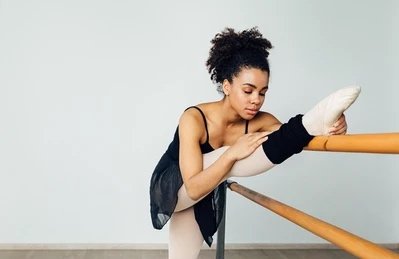
Photo from Shutterstock
My story with anxiety.
One of the most common misconceptions about anxiety is that all people experience it in the same way. For those who do not have an anxiety disorder or do not believe anxiety disorders are legitimate health concerns, the assumption reigns that anxiety is a temporary and fixable cluster of symptoms brought on by isolated circumstances.
I’m a dancer who copes with a chronically disordered form of anxiety called Generalized Anxiety Disorder, or GAD. It means that I have anxiety at all times and can experience severe symptoms, even without an immediately evident or conventionally logical cause. I am grateful that I was diagnosed about five years ago and continue to learn about how my anxiety affects my everyday life.
My symptoms can vary from being deeply emotional to viscerally physical - from a background sense of coming doom or imminent failure to shaking, shortness of breath, digestive troubles, and mental fog. The severity and frequency of my anxiety symptoms can be reduced by self-care and the input of my support network, but the disorder itself never completely goes away.
Having an anxious body as a dancer provides an interesting challenge when it comes to performance time. There is this feeling of excited anticipation that works up once you’ve committed your blood, sweat, and tears to a creative endeavor and you’re about to present it to the world. Yet, an anxious body sometimes can’t tell the difference between joyful energy and anxiety-inducing stimuli, and the two can become muddled together or transform into each other.
When I was a child and teenager, I would experience these muddied waters all the time at performances. The number of people around me, rigorous schedules, interrupted self-care, and the anticipation of putting my heart and soul in front of audience members created an environment where I could thrive off the intensity, but sometimes struggled to stay grounded. That could put a damper on the joy of performing because I didn’t know how to deal with the stressors I was encountering effectively.
Throughout my university dance career, I’ve had many opportunities to learn about what helps me be successful amid my anxiety. Below are the top three things that have proven essential for me on a holistic level - these tips are important for any person, but can be easily forgotten in an athletic field like dancing. We need to intentionally make space in our lives for the internal and personal. As dancers, we use our minds, bodies, and hearts, and all three parts of ourselves require care so we can bring the best of ourselves to the studio and the stage.
Even in the off-season, have a routine.
After experiencing a year-long off-season in 2020, I realized that having a routine is key to avoiding anxiety flare-ups in the day-to-day as well as during performances. As an artistic person, routines can seem like the anchor weighing me down, but they can ultimately make or break navigating mental health struggles and a dancing career. I know that if I don’t stick to a routine, I quickly feel unmoored in my everyday life and have a greater sense of unpreparedness for performances.
Routines are best when they are individualized, realistic, holistic, and consistent. Your routine is the framework for having joy and maintaining movement forward in life - from nutrition to mundane tasks, from what barre exercises you need to do to what makes you feel ready for a performance night. Establishing a meaningful and effective routine will take troubleshooting and will shift over time as your needs change, but it’s a process that will be invaluable to your growth as a dancer.
A few warnings from my personal experience: don’t overload your off-days and don’t feel the need to run your life the way others do. Anxiety disorders can come with a robust perfectionism streak, but this is no competition and you are doing this for yourself and your craft. Your routine is about setting yourself up for success so that you are consistently improving as a dancer and avoiding anxiety spirals. Productivity and perfection are not the goals, consistency and stability are.
Find your own mindfulness practice.
Living life with GAD for me means that I don’t enjoy traditional silent meditation. I think many folks believe that to have a “real” mindfulness practice you must be skilled at silent meditation or try to be. I was in that boat and went on a journey to find a mindfulness practice that works for me consistently. I would say that if you are an anxious-bodied dancer, a mindfulness practice can be helpful, especially to ward off performance stress.
My mindfulness routine includes…
Using a set of meditation beads I made to center my mind on a power phrase or two
Journaling consistently to process my emotions and visualize my future
Improv dancing to a playlist of empowering tunes so I can connect my body, mind, and heart
Taking a walk outside where there is some green space and I can hear the birds singing
I like having a list of different activities that I know will center me and focus my attention, so that no matter where I am, I will be able to do some form of self-soothing when I’m having a flare-up or when the pressure is on. Some other forms of mindfulness and self-relaxation can include guided whole-body relaxation, scripted bodily tension-and-release exercises, utilizing your barre warm-up as meditation, and listening to some ASMR. While there is some trial and error to this suggestion, the time invested in being able to routinely quiet your mind and center your energy will pay back dividends your whole life long.
Seek out community.
Even though anxiety is a deeply personal experience, it does not mean that we have to go through it alone. According to the Anxiety and Depression Association of America, about 20% of adults in the United States are affected by anxiety disorders. Sadly, most of those suffering do not receive the support they need, either from professional resources or from interpersonal support systems.
From my personal experience, anxiety results in a vicious cycle of convincing myself that I have to do it all on my own. I fear appearing annoying and needy and that if I reach out for help, others won’t understand how much GAD affects my life.
Yet, we are coming into a time where mental health is being destigmatized. Though there is still a lot of work to be done in normalizing and integrating mental health struggles into our societal conversations, there are a lot more doors open than there used to be. More people acknowledge mental health struggles as legitimate compared to a few decades ago. So the fear I feel is assuaged by the fact that people are struggling around me and would also like to have space held for them. Reaching out is easier when I remember that I am not the only one.
Lastly, some encouragement.
Ironically, it is anxiety-inducing to think of being vulnerable with others and doing the challenging personal work to grow when anxiety can feel like a constant uphill climb. As dancers, our bread and butter is using our whole selves to tell honest, moving, and human stories. There is little that’s more honest, life-changing, and human than learning how to live with intention in our mental health realities. There is a place to carve out in the dance world for telling the truth about mental health, demystifying it, and loving each other in the midst of it.
Ultimately, you have permission to start breaking the vicious cycles of loneliness and perfectionism that can come with having an anxiety disorder. I hope you know it is a sign of your power and strength to reach out to a mutually supportive community. I hope you know that you can move mountains with baby steps; that you are not alone. I hope you know your strength is shown through your struggle; your heart and your art are always worth the time of being loved, acknowledged, and cared for.
Much love to you, dear dancer.
What It’s Like Being a DWC Ambassador
At Dancewear Center, the fundamental mission that underpins all of our work is “to support and empower our dance community through quality, integrity, and education.” A large part of how Dancewear Center strives to support local dancers is by finding unique ways to connect dance artists and forge community. The DWC Ambassador program is one of the ways we’re creating those connections and conceiving that community. As ambassadors, individuals get the chance to create original content for the DWC Blog, take over the DWC Instagram, receive free products, get professional photos taken, and much more.
By Madison Huizinga, DWC Blog Editor

Click below to shop the look:
At Dancewear Center, the fundamental mission that underpins all of our work is “to support and empower our dance community through quality, integrity, and education.” A large part of how Dancewear Center strives to support local dancers is by finding unique ways to connect dance artists and forge community. The DWC Ambassador program is one of the ways we’re creating those connections and conceiving that community. As ambassadors, individuals get the chance to create original content for the DWC Blog, take over the DWC Instagram, receive free products, get professional photos taken, and much more.
The program offers dancers opportunities to share their messages with the local dance community through a variety of modes. “I think my favorite part has been the blogs we do. Not only reading everyone else’s blogs and seeing how dance is affecting them… but also bringing your own voice and awareness to the project,” says former DWC Ambassador Heather Smith.
DWC Ambassador Emma Spencer appreciates getting to share information about topics that are important to her in the dance world, like mental health and epilepsy awareness in the studio. “Writing for the blog has been really awesome because I always wanted to do something like that,” she says. “It’s been a good experience to have something I care about be posted very publicly.”

Click below to shop the look:
Former DWC Ambassador Niyah Pratt points out that there is value in getting to share your ideas through Dancewear Center’s platform. “You get to speak on things that you love and what you’re passionate about...It’s such a huge platform that you can use your voice and get anything across that you want.”
Along with the chance to speak your mind on the DWC Blog and social media, being an ambassador comes with numerous perks, like complimentary photoshoots and free products. “There are some really fun things you get to do as an ambassador, like photoshoots. You’re hung up on the wall!” Emma says of the ambassador photos being displayed in the store.
“You get a gift every single month with amazing things inside,” gushes Heather. The ambassadors get a chance to own some of the highest quality products the store has to offer. DWC Ambassador Kelsey Wickman shares that many of the gifts she’s received are products she wouldn’t have purchased for herself but have thoroughly changed her dancing experience, such as the Apolla Shocks.
“I now own more leotards than I do pants!” adds former DWC Ambassador Isabel Reck.
A particularly fun part about being an ambassador is getting to do an “Instagram takeover,” in which the ambassador runs the DWC Instagram account for a day. “I’m not a very social person, I’m actually really introverted. But I think that was a really fun way to interact with Dancewear Center’s audience and their customers,” Emma says of the Instagram takeovers. She also says that it’s been enjoyable to post sponsored Instagram posts and feel like she’s playing a role in spreading the word about Dancewear Center’s products.
“You get to speak on things that you love and what you’re passionate about...It’s such a huge platform that you can use your voice and get anything across that you want”

Click below to shop the look:
Mirella Leo by BLO | Delia Skirt by WM | Always There For You Necklace by Covet Dance | Pointe Paint by Pointe People
The DWC Ambassador role offers dancers opportunities to overcome challenges and learn new things about themselves, whether that be nudging them to be more social, improving upon their writing skills, and more. For example, Emma says that being a DWC Ambassador has encouraged her to “get out of [her] shell socially.” She describes feeling nervous when she learned she had to do an Instagram takeover, but that it ultimately helped her gain confidence and connect with others in the DWC community.
Kelsey shares that it’s been empowering to realize she has a “unique perspective” to bring to Dancewear Center. Being able to reflect on her dance experiences, particularly through writing blog posts, has enabled her to explore new areas of her life. She also appreciates how her experiences are respected within the DWC community. “Being able to have a more personal connection with everyone at Dancewear Center has been really awesome,” Kelsey says. “Because they just know their stuff and it’s so cool to see how much emphasis Sam puts on continuing education.”
Emma says that part of the reason she signed up to be an ambassador was that Dancewear Center often discusses serious subjects in the dance world, like body image, race, sexual orientation, gender, and more. Emma appreciates how solution-oriented the staff at Dancewear Center is, especially in the way it discusses issues relating to these topics.

Click below to shop the look:
In a similar vein, Kelsey shares how helpful it is to collaborate with a small business that cares about creating positive change on micro and macro levels. “[Dancewear Center] is so aware of those pockets of room for improvement,” she says.
And the DWC Ambassadors get a chance to be a part of filling those pockets for improvement with the changes they want to see made. Whether it’s through providing representation for underrepresented groups of dancers, sharing unique perspectives through writing, and more, the DWC Ambassadors are true change-makers that are invaluable to the DWC team. “You have the chance to make some real change in your community,” Isabel Reck says proudly.
To become a DWC Ambassador for 2022-2023 click here!

Interested in writing for the DWC Blog? Click below to fill out the DWC Contributor application!