
Responsive Teaching
On the first day of a theater camp for homeless and abused teens, I walked down the line of 40 campers and tried to teach what I had naively considered a “basic” ripple of movement. I stood next to a kid I would later learn was named Bruno, demonstrating and loudly explaining to the room how they should reach and hold each other and told the camper behind him, “now put your hand up on her shoulder like this.”
Bruno flinched at the sudden touch, and then his head snapped around, big brown eyes flitting from straight at me to the ground and back again.
Part 1: Bruno
Name pronunciation: Em-me Fan-s-ler | Pronouns: she/her
By Emmy Fansler, DWC Ambassador

On the first day of a theater camp for homeless and abused teens, I walked down the line of 40 campers and tried to teach what I had naively considered a “basic” ripple of movement. I stood next to a kid I would later learn was named Bruno, demonstrating and loudly explaining to the room how they should reach and hold each other and told the camper behind him, “now put your hand up on her shoulder like this.”
Bruno flinched at the sudden touch, and then his head snapped around, big brown eyes flitting from straight at me to the ground and back again.
“I’m a boy.”
Dead quiet. But soon after, a snicker came from across the room. And then a, “Say what?!” from somewhere down the line.
After that, the whole room laughed, aside from the 10-12 counselors and volunteers who tried to calm everyone down, a demoralized and humiliated Bruno, and me. The horror struck teaching artist that just publicly misgendered this kid whose trauma had already made it difficult to trust anyone or feel like he belonged anywhere. The activity was over and no one was willing to pick it back up, even before I’d finished teaching the entire ripple.
Talk about a humbling moment. This was not the place for the choreography I had dreamed up. I hadn’t even met these kids or considered their stories. I just assumed they’d be excited to learn what I had to teach them.
From this large group activity, the campers were split into groups and brought through my dance and movement class in 45-minute rotations. I don’t remember how many groups I worked with before Bruno’s, but I remember feeling the palpable anxiety when he came into the room— some of it (or perhaps most of it) being my own.
The goal for that day was to get to know the campers and start generating ideas for the piece they would perform at the end of two weeks. The morning had proven to me that throwing them into my preconceived routines and patterns was not going to work, so I had them stand in a circle and tell me some random things— maybe their name, pronouns, something they wanted me to know about them, something they were good at, a time they felt brave… something like that— so I could determine my next move.
Truth be told, I don’t remember any of their answers— at all. What I remember is the way Bruno nervously moved as he answered the questions— shuffling forward a few steps, then backward, over and over. His eyes everywhere but at me, hands fidgeting first in his pockets, then in his long hair, then with each other. And then when his turn was over, he stopped. I had been mesmerized, and his abrupt stop disarmed me and the “cool” I’d been trying to keep.
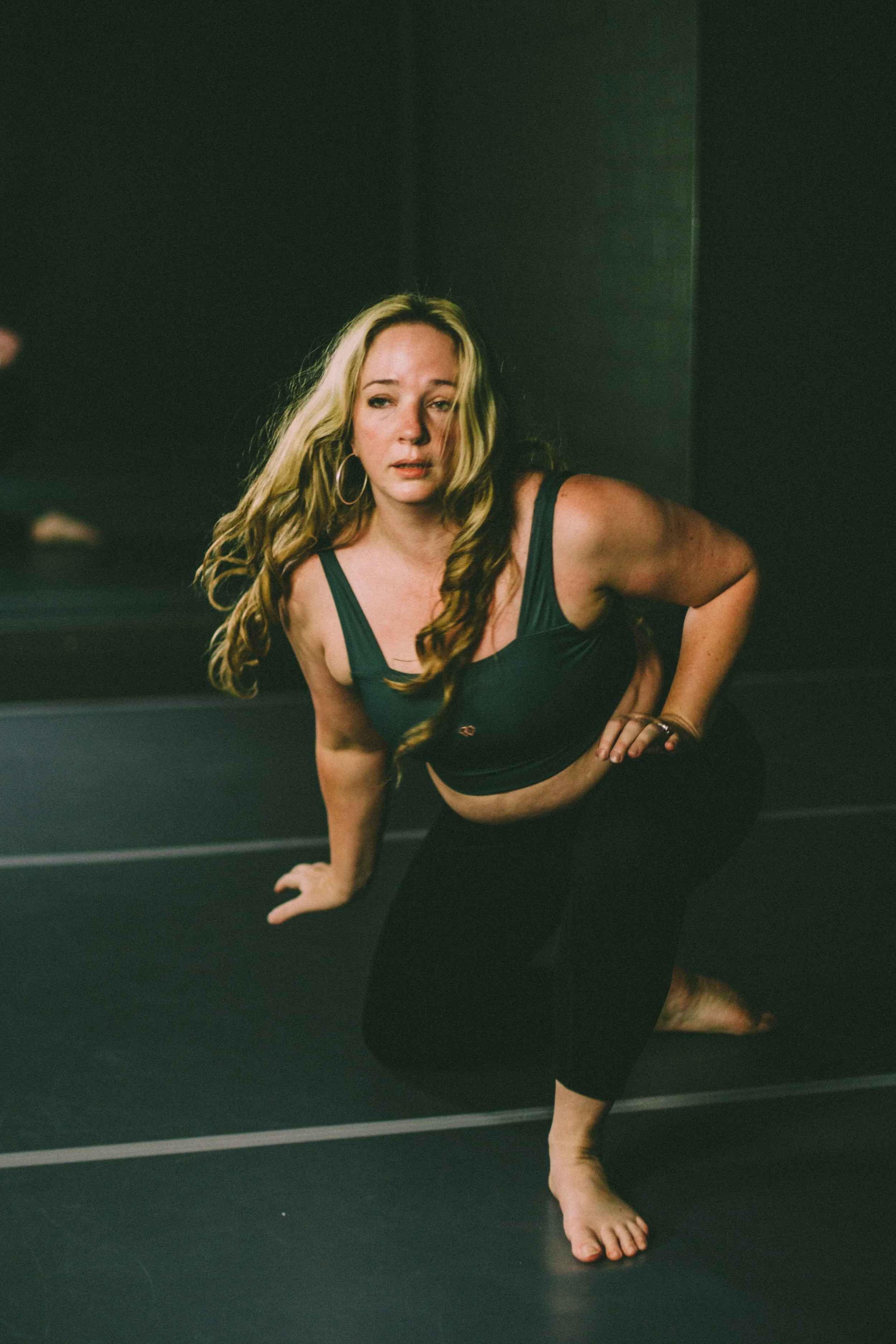
He noticed my staring, and I blurted out that the way he moved had sort of hypnotized me. He blushed and people stood around awkwardly, but I was inspired and his nervous movement had given me an inkling of an idea I wanted to play with. I asked him if he realized that he’d been moving, and then showed him with my body what he’d been doing. I asked the entire circle to try the forward and backward steps with me, and reluctantly they did. I added a look over the shoulder when they stepped backward, and then after a few more sets added a sigh and a single fidgeting gesture. They fell into a rhythm and suddenly I realized they were doing it without needing my continuous prompting. They listened to each other’s footfalls and coordinated their breaths organically. Watching it all come together in my head, I asked them to face the same direction instead of into the circle. The whole group trudged forward two steps, stumbled back one, brushed their hands on their pant legs, looked back, and sighed. Starting the process over and over and over.
With Bruno at the front of the formation, I asked him to make it travel, and lead it all the way across the floor. I asked a couple of them if they’d be comfortable trying it while carrying someone on their backs. I asked two more if they’d be willing to be carried. This, it seemed, was the moment they knew there was magic in the making.
The teens were engaged, excited, and enthusiastic at the way the sequence progressed from Bruno’s organic movement into the soul-stirring piece they performed for a packed house the following Friday. They partnered. They rippled. They rolled and reached and leapt and lifted Bruno up to the sky with a blue cyc and remnants of broken furniture hanging from the flies. They started with diagonal trudging and ended with eyes up, chests open, backs arched, hands on shoulders, showing support and care for each other in front of hundreds of strangers. Not one of them having taken a dance class before camp, but all of them KNOWING they had just moved the hearts of every single person witnessing them. There were no pirouettes, no high kicks, no tricks of any kind… maybe four pointed feet, total. Just a bunch of beautiful teens with a story to tell— one that began unfolding out of the anxious movement and emotional responses of one brave and vulnerable student named Bruno.
This was a formative experience, not only for the kids who found a platform to share their stories of resilience, but for me as a teacher and choreographer. It forever shifted the way I choreograph and opened my eyes to the beauty of teaching the non-traditional dancer. You don’t need years of training, the perfect body, or endless financial resources to be a dancer and tell your story through movement. You need a body and space. And… you don’t need dancers with a life of devoted ballet technique, marley floor, and perfectly performed etiquette to choreograph and create a life-changing piece— you need the willingness to see the humans in front of you, an openness to what they’re sharing with you just by existing, curiosity, creativity, and love for the incredible work you get to do.

Disclaimer
All content found on the Dancewear Center Website, Instagram, Facebook, Pinterest, and all other relevant social media platforms including: text, images, audio, or other formats were created for informational purposes only. Offerings for continuing education credits are clearly identified and the appropriate target audience is identified. The Content is not intended to be a substitute for professional medical advice, diagnosis, or treatment. Always seek the advice of your physician or other qualified health provider with any questions you may have regarding a medical condition. Never disregard professional medical advice or delay in seeking it because of something you have read on this Website.
If you think you may have a medical emergency, call your doctor, go to the emergency department, or call 911 immediately. Dancewear Center does not recommend or endorse any specific tests, physicians, products, procedures, opinions, or other information that may be mentioned on dancewearcenter.net. Reliance on any information provided by dancewearcenter.net, Dancewear Center employees, contracted writers, or medical professionals presenting content for publication to Dancewear Center is solely at your own risk.
Links to educational content not created by Dancewear Center are taken at your own risk. Dancewear Center is not responsible for the claims of external websites and education companies.
Getting to Know DWC Ambassador Emmy Fansler
Today, Emmy has carved spaces for herself and others that have been long overdue in the dance industry, specifically through the creation of the Best of My Abilities (BOMA) program. The BOMA program, offered at Issaquah Dance Theater and The Dance School, introduces students with disabilities to dance and provides a space for dancers of all abilities to learn and build relationships. “I know that there are lots of people who are afraid to step into a dance studio because they feel like you have to be a certain way...My entire dance life has been [dedicated to] figuring out ways to use dance to show people how loved they are,” she shares.
On the Difference Between Accepting and Embracing
Name pronunciation: Em-me Fan-s-ler | Pronouns: she/her
**Trigger Warning: Trauma, Sexual Assault
By Madison Huizinga, DWC Blog Editor
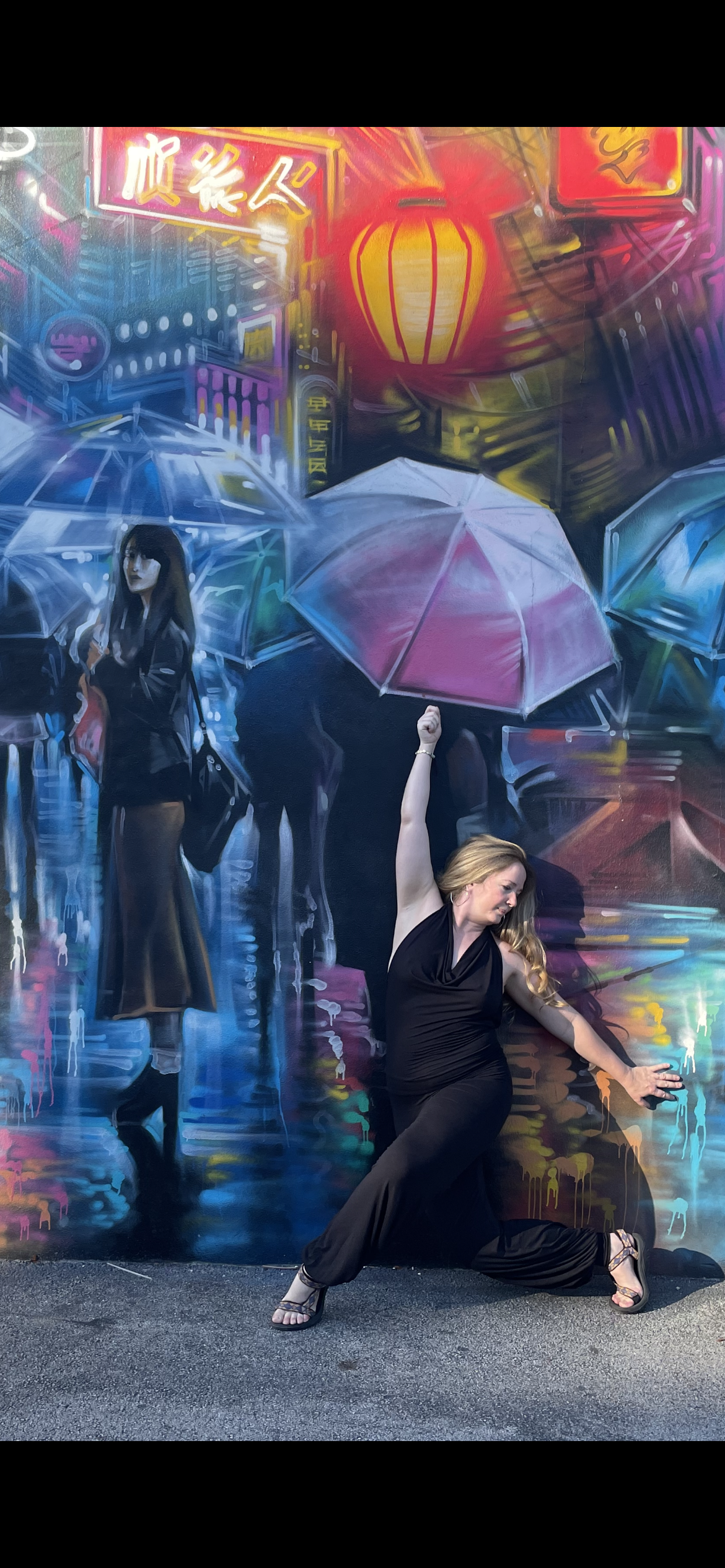
Emmy largely fell in love with dance because of its healing qualities. “I had quite a bit of trauma in my middle school and high school life,” Emmy says. Due to these experiences, she went from being “somebody that cared about everything” to being “somebody that really didn’t care.” “I just didn’t care about myself anymore [and] didn’t feel like I was worthy of love or praise or attention,” Emmy says. When someone invited her to audition to be a ball guest for Midwest Regional Ballet’s Cinderella, these feelings of unworthiness began to shift.
“I just fell in love with the sense of community,” Emmy says of being a part of Cinderella. She shares that it wasn’t that she was particularly interested in dancing ballet choreography—rather, she was touched that somebody wanted her to be a part of something. In addition, after experiencing sexual trauma, dance helped show Emmy that physical touch could be anticipated, safe, and choreographed. “That was really healing to me,” she says. Since that first day of rehearsal, Emmy says that she hasn’t gone less than dancing twenty hours a week.
She ended up getting a scholarship to study dance at the University of Central Oklahoma after dancing for just three years. Nonetheless, over time, it became clear to Emmy that becoming a professional dancer wasn’t in her future, particularly after experiencing a hip injury and being diagnosed with a thyroid disorder.
“It felt natural that I would be a teacher and choreographer because I didn’t start dance with the idea of wanting to be a professional ballerina necessarily. I started dance because somebody invited me,” Emmy says, and she continued because of the way it made her feel. Today, she’s carved spaces for herself and others that have been long overdue in the dance industry, specifically through the creation of the Best of My Abilities (BOMA) program. The BOMA program, offered at Issaquah Dance Theater and The Dance School, introduces students with disabilities to dance and provides a space for dancers of all abilities to learn and build relationships. “I know that there are lots of people who are afraid to step into a dance studio because they feel like you have to be a certain way...My entire dance life has been [dedicated to] figuring out ways to use dance to show people how loved they are,” she shares.
Emmy loves that dance allows her to take huge feelings she experiences and stories that are challenging to tell and express them on a stage where people can witness her experiences as beautiful. Dancing reminds Emmy that her body is capable of amazing things. And after undergoing a procedure that left her without the ability to conceive children, having a life passion that allows her to connect with children is one of the most important things to her.

While she acknowledges the many challenges she’s experienced in the dance industry, Emmy says that a big one is “imposter syndrome,” or feeling like she doesn’t belong. She points out that there are so many dancers, and people in general, in the Seattle area who have extensive accolades to justify their qualifications. “I don’t have that,” she admits. “Part of me has felt like I have to jump into every situation and prove that I’m capable.” For those who have similarly felt like they don’t belong in certain dance spaces, Emmy says that they undoubtedly do. “Your experience is different than anybody else’s in the world. And there are things that you can contribute that other people cannot. And it’s also okay if they contribute things that you cannot,” she says.
Emmy was inspired to become a DWC ambassador because she strongly aligns with the values of the business. “I feel like this is a space and a platform that’s very authentic,” she says, sharing that she appreciates that DWC strives to help make all dancers feel welcomed and safe in the industry. As an Ambassador, Emmy looks forward to helping affirm this message to dancers and sharing her multiplicity of experiences as a teacher. In addition to her BOMA classes, Emmy teaches classes of all levels and works with the competition team at Issaquah Dance Theater. At The Dance School, Emmy also teaches classes relating to storytelling, partnering, embodied ballet, and more. And she’s the program director for the dance program at Si View Metro Parks. Emmy is excited to show people what it’s like to participate in all of these different spheres of dance.
In the future, Emmy strives to find ways to integrate more student-driven storytelling and choreography classes into her schedule. At Si View Metro Parks, she’s planning on hosting an expressive movement workshop once a month open to dancers of all experience levels. The workshop will be centered on a theme, featuring a discussion portion, a creation workshop, and a small performance that is open to the community. “I have a vision for it. I feel very excited about the possibilit[ies] for it,” Emmy shares of the workshop.
Emmy strongly believes that dance creates a platform for building relationships and in the larger dance industry, she hopes to see more people embracing the differences dancers have and the contributions they can make. “There’s a difference between accepting and embracing,” she points out, sharing her wish for all dancers to not only feel tolerated but cared for and even invited.

“It doesn’t have to be an exclusive space. It can be radically inclusive,” Emmy says of the dance world.
Stay tuned for more from Emmy Fansler in the coming weeks!
If you or someone you know has been sexually assaulted, help is available. The National Sexual Assault Hotline is available 24/7 and is completely confidential: 800-656-4673
Disclaimer
All content found on the Dancewear Center Website, Instagram, Facebook, Pinterest, and all other relevant social media platforms including: text, images, audio, or other formats were created for informational purposes only. Offerings for continuing education credits are clearly identified and the appropriate target audience is identified. The Content is not intended to be a substitute for professional medical advice, diagnosis, or treatment. Always seek the advice of your physician or other qualified health provider with any questions you may have regarding a medical condition. Never disregard professional medical advice or delay in seeking it because of something you have read on this Website.
If you think you may have a medical emergency, call your doctor, go to the emergency department, or call 911 immediately. Dancewear Center does not recommend or endorse any specific tests, physicians, products, procedures, opinions, or other information that may be mentioned on dancewearcenter.net. Reliance on any information provided by dancewearcenter.net, Dancewear Center employees, contracted writers, or medical professionals presenting content for publication to Dancewear Center is solely at your own risk.
Links to educational content not created by Dancewear Center are taken at your own risk. Dancewear Center is not responsible for the claims of external websites and education companies.
Dance for All Abilities
For an artform with a long history of exclusivity, accessibility can be a difficult topic for many dance studios. Counter to traditions of gatekeeping, elitist training, and a hyper fixation on perfection, local studio Issaquah Dance Theater (IDT) offers a dance class tailored for neurodivergent and physically disabled students. The Best of My Abilities (BOMA) is an inclusive dance program founded by dancer and paraeducator, Emmy Fansler.
By Ella Kim, DWC Blog Contributor
For an artform with a long history of exclusivity, accessibility can be a difficult topic for many dance studios. Counter to traditions of gatekeeping, elitist training, and a hyper fixation on perfection, local studio Issaquah Dance Theater (IDT) offers a dance class tailored for neurodivergent and physically disabled students. The Best of My Abilities (BOMA) is an inclusive dance program founded by dancer and paraeducator, Emmy Fansler.
IDT has provided these dance classes since 2016. Fansler describes the class as being open to any and every one regardless of their mobility. When discussing over FaceTime who can be a BOMA dancer, she warmly recalled working with students in wheelchairs and explained, “if I can’t figure out a way to make it work for everybody, that’s on me.”

Photo by Hailey Waters
BOMA introduces students to a variety of dance styles, focusing primarily on encouraging movement and relationship building. Dance becomes a setting from which students can learn to help each other, trust each other, and trust themselves. By making the joy of dance accessible, the class also spreads the life skills dance teaches to students. Movements become obstacles the dancers learn to approach together.
The classes normally have a very flexible structure, often tailored to the particular group of dancers in each class. Building relationships between dancers is a large focus of the program. Fansler often pairs dancers who can physically support another person with dancers who need support. They move across the studio holding hands or helping guide each other around in turns.
The COVID-19 virus created huge challenges for dance studios, and IDT is no exception. On March 13th, Washington state governor, Jay Inslee, closed all schools, prompting the studio to move classes to a virtual format. Washington has continued to have strict restrictions surrounding COVID-19 safety. The state is currently working towards reopening, allowing for heavily regulated gatherings, so IDT hosts some of its classes in a hybrid in person and online format. BOMA classes have remained completely virtual since March 2020 for the safety of its participants.
For BOMA, this means a more consistent structure for each class. They begin with a guided warm up based within dance movements, move into a stretch sequence, and finish with putting together a dance routine. Instead of using touch to support each other through movements, dancers are modifying movements individually (for example changing a choreographed turn into a sway of the body and arms). The dancers are currently exploring salsa, using salsa footwork to inspire the warm up and listening to salsa music throughout the class.
“A lot of times dance is seen as this ridiculously exclusive world, really what you need is a body and a space.”
The benefits of BOMA are closely related to the successes seen in Dance Movement Therapy (DMT), and recent research points to dance having a positive impact on people with Autism. A study led by Malin Hildebrandt (professor at the University of Heidelberg in Germany), published in 2016, explains how dance can support the embodiment approach to managing negative symptoms caused by Autism.
The embodiment approach is a new thought process guiding some research on Autism. It breaks from the traditional focus on the mind’s impact on the body. Hildebrandt explains embodiment as the belief that “our perception of the world, and thus also our interaction with it, is entirely mediated by our bodies”. This approach assumes the mind and body have a fundamentally reciprocal relationship. Dance is rooted in the cooperation of body and mind, making it a great activity to strengthen that relationship.

Emmy Fansler, BOMA Program Founder
Hildebrandt’s study recorded a reduction of negative symptoms in people with Autism after ten weekly sessions of manualized DMT. The sessions consisted of encouraging individuals to manipulate the quality of their movements, mirroring exercises (copying each other’s dancing) in pairs and groups, and verbal processing about how the dancing made participants feel. IDT’s BOMA classes are not certified DMT sessions; however, they contain many of the same elements, focusing on encouraging dancers to expand or manipulate their natural movements and facilitating dancing together in pairs and groups.
Hildebrandt found that the 2 symptoms most alleviated by dance therapy were anhedonia (inability to feel pleasure) and blunted affect (difficulty expressing emotions). This fits with the embodiment theory, “because the subtypes most affected by the intervention… are more closely related to diminished self-perception as the connection of bodily states to emotions.”
BOMA began as an independent project of Fansler when she lived in Kansas. She worked as an adaptive PE paraeducator, where she would invite her students from PE to her after school dance classes. When asked about the origin of BOMA, Fansler remarked with a laugh that she created an accidental dance studio.
Eventually, Fansler moved to Washington, bringing BOMA with her. “I keep the name wherever I’ve gone because it makes sense for your abilities in all ways”.
IDT’s Artistic Director and owner, Kevin Kaiser, also works to make dance education more accessible. When asked how the program came to IDT, Kaiser stated in an email that he had been seeking to create a program like BOMA, so “when I learned that Emmy has a passion and a very clear vision for this type of program it was an easy decision for me”.
BOMA welcomes other IDT students to volunteer in its classes. Current student at IDT, Hannah Jacobson, helped with some classes two years ago. When interviewed over FaceTime, Jacobson described her experience, “it wasn’t like I was giving directions… I would do the combo with them and it was like I was a part of the class”. In the couple of classes she assisted, Jacobson noticed, “a very family environment”.
One thing that really stuck with Jacobson from her time with BOMA is how the class worked on challenges together. Instead of pulling a dancer aside if a problem arises, Fansler brings the class together in a circle and they help the dancer through it. Jacobson remembered one class when a dancer’s vocal ticks were winding up another dancer. Jacobson recalled that, “we worked together to help them calm down. It was as a group. We collectively came back to a circle and talked for a couple minutes”. Her lasting impression of BOMA is that, “everyone works through everything together”.
A foundational goal of this program is to build relationships between students. By assisting each other to learn more challenging movements, the dancers learn to trust each other. Fansler works to facilitate a safe atmosphere where the dancers can trust, experiment, and grow. Fansler warmly recounted a former student who had an aversion to authority figures but was receptive to help from peers. The student would not let Fansler touch her but would hold hands with other dancers as she moved across the floor. Proud of the dancer’s growth throughout the program, Fansler shared that the dancer was even comfortable being lifted by other students by the end of the year.
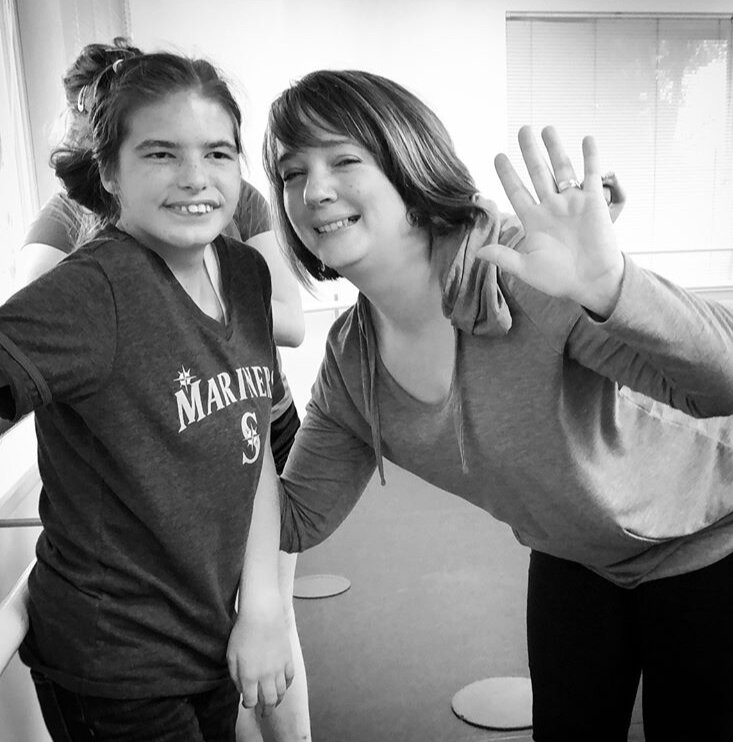
Photo by Hailey Waters
Fansler’s accepting and creative approach to each dancer's challenges is a hallmark of the program. BOMA focuses on what the students are able to do, not their limitations. Fansler’s voice was full of care as she responded to being asked what the goal of BOMA was for the participants. “I want them to feel safe and like they belong, and I want them to celebrate the things they can do instead of [being] boxed in by what they are told they cannot”.
The BOMA class is included in the IDT’s annual recitals. The dancers work on their own piece throughout the year and perform it on stage in the spring.
This month, BOMA’s current class of six dancers will perform in IDT’s recital. Changing COVID-19 restrictions make the exact format of the show uncertain, but the class is already working on creating their piece.
By offering a dance class tailored to students with disabilities, IDT is opening the gate to dance education and breaking down the traditional barriers of who is considered a dancer. Fansler notes, “a lot of times dance is seen as this ridiculously exclusive world, really what you need is a body and a space.”

Ella Kim began dancing at 4 years old. She focused primarily in ballet until finding a love of modern and contemporary dance in high school. She is currently pursuing a BFA in Dance at George Mason University. On breaks from school, she's had the opportunity to dance as a guest artist for Trillium Dance Collective. Ella enjoys investigating different aspects of the dance world and is thankful to DWC for giving her a platform.
Interested in writing for the DWC Blog? Click below to fill out the DWC Contributor application!