
A Conversation About Starting Dance at Any Age
There is an unspoken assumption in society that once you reach adulthood, your time has passed to try something new. However, DWC Pointe Shoe Fitter and DWC Blog Contributor Emma Neilson shares that it’s never too late to try dance. Read on to learn about her dance journey, goals for the future, and desire for more professional development support for young adult dancers.
Getting to Know Pointe Shoe Fitter Emma Neilson
By Madison Huizinga, DWC Blog Editor

Photo by Robb Webb Photography
There is an unspoken assumption in society that once you reach adulthood, your time has passed to try something new. However, DWC Pointe Shoe Fitter and DWC Blog Contributor Emma Neilson shares that it’s never too late to try dance. Read on to learn about her dance journey, goals for the future, and desire for more professional development support for young adult dancers.
Emma’s first experience with dance was Scottish Highland dancing around ages four to eight, as it was an activity that ran in her family. In her childhood, she also took up equestrian horseback riding for a while. But her whole life changed when she watched figure skating in the Winter Olympics for the first time. Emma declared to her mom that she would be an Olympic figure skater, and after two years of begging, her mom signed her up for public group lessons. Eventually, Emma began training with a private coach and becoming more advanced in her technique. She began taking ballet classes as well to improve her ice skating abilities. Her ballet technique also began improving with practice and around age 13 Emma’s teacher suggested her class begin dancing in demi-pointe shoes.
When Emma started high school, her parents encouraged her to choose one activity to focus on. After landing her axel jump, a long-time figure skating goal of hers, Emma decided to devote her extracurricular time fully to ballet. After continuing ballet through high school, Emma took a gap year following her graduation. She applied to some colleges but recalls her heart not being fully in the process. She remembers having a conversation with the artistic director of her dance studio at the time to help her weigh her options. Emma’s artistic director advised her to audition for some summer intensives and pointed her in the direction of International Ballet Academy in Bellevue, WA. After auditioning, Emma was accepted at IBA, where she’s been dancing ever since. She’s currently a part of IBA’s Professional Program.
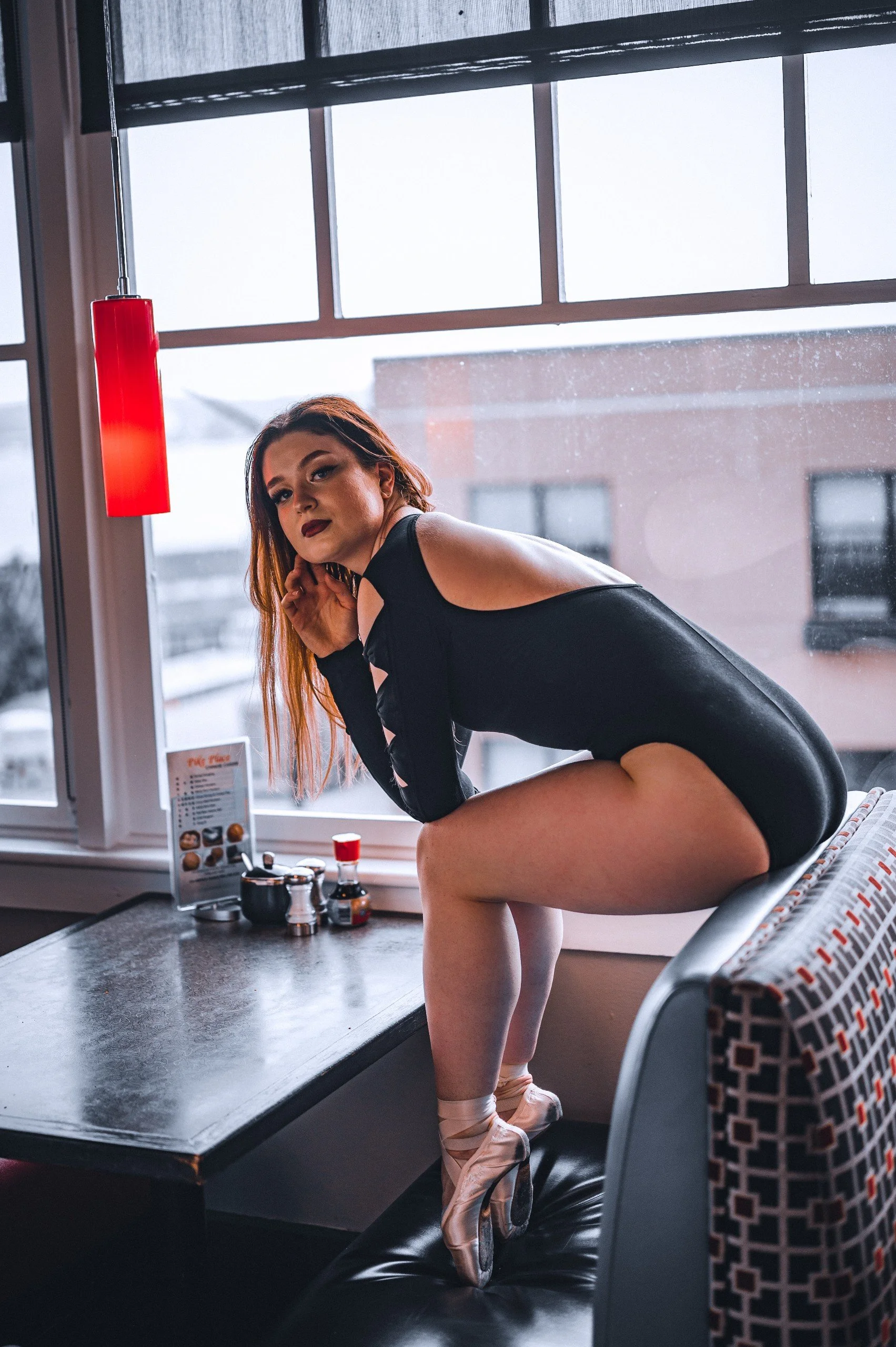
Photo by Rex Tranter Photography
In addition to training at IBA and working at DWC, Emma is a Certified American Barre Technique Instructor, a Certified Flexistretcher Instructor, and a Pal Program Coordinator for the organization Dancer for Dancer. She’s also currently in the midst of audition season and is auditioning for dance companies to be a part of.
Emma is currently a retail associate and pointe shoe fitter at Dancewear Center’s Kirkland location. In addition to working as a retail associate and pointe shoe fitter, Emma has copious experience working inventory at DWC, ensuring that products are labeled correctly and organized. She is also excited to be a part of The Pointe Shop Progressive Pointe Method training program to help build upon her pointe shoe fitting knowledge. Emma began working at DWC in 2019, as she had begun training with IBA and was in search of a job to help supplement her time outside of the studio. She reached out to Owner and General Manager Samantha Weissbach through the contact form on DWC’s website. After being interviewed by Samantha and another staff member, she was offered a job!
Emma loves that Dancewear Center strives to be much more than just a business, but also foster a community by connecting with other artists and businesses across the region. She is also such a big fan of Samantha, sharing that she considers her a “forever mentor.” She says that it’s been amazing, as a young woman, to be brought under another woman’s wing to assist with professional development.
Pointe shoe fitting is one of Emma’s favorite things to do at Dancewear Center, sharing that she knows what it’s like to be in physical pain and struggle to find a functional pair of shoes. “I really enjoy being able to bond with basically anybody who walks through the door,” Emma says, speaking to the common bond she can share with customers through a love of dance.
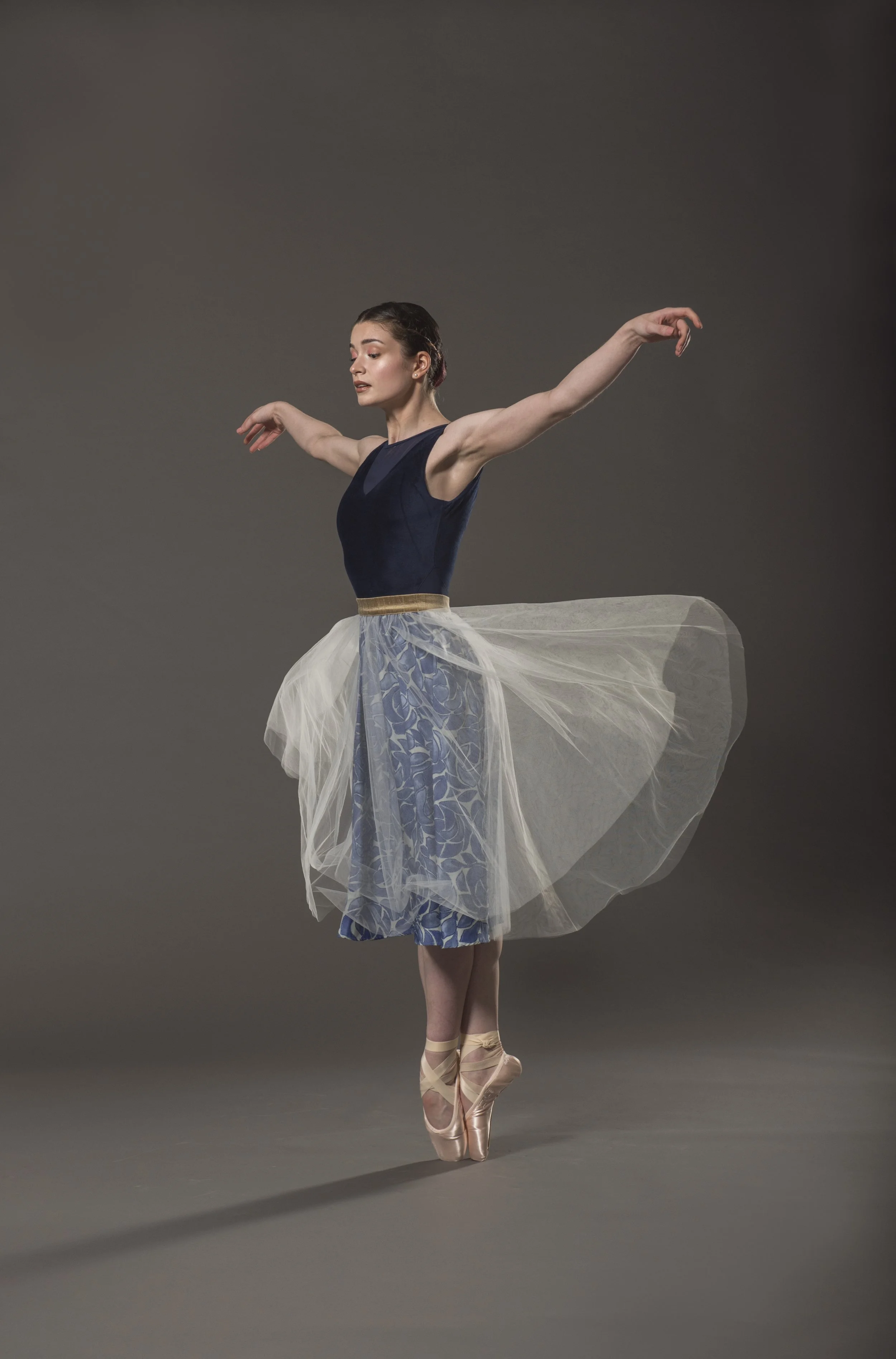
Photo by Rex Tranter Photography
Outside of dancing and working, Emma enjoys spending her free time outside with her family. “I really love going on walks and hikes,” she says. She also enjoys baking, cooking, writing, reading, and going to the movies. “I also love a good self-care session,” Emma shares, sharing that she likes to take care of her body and mind by taking a bath and using a muscle gun on sore muscles.
In the future, Emma hopes to be able to dance with a company and have the opportunity to continue taking classes, performing, and growing as a dancer. She would also love the opportunity to work on some choreography and continue educating herself on pointe shoe fitting.
A change that Emma wishes to see made in the dance industry is studios and academies become more welcoming to beginner dancers of all ages. “Not everybody starts at age three,” she points out. She would also like more professional development opportunities to become available to young adult dancers, pointing out that many dancers do not have their life trajectory figured out at age 18. She shares that she has many conversations with friends who aren’t dancers who express their desire to dance, but fear their time has passed. “You can do it!” Emma says to those who want to try dance at any age.
Be sure to say hi to Emma if you see her at DWC Kirkland!
A Local Dancer on Utilizing a Home Studio Space
During the COVID-19 lockdown of 2020, many dancers lost the space and opportunity to do what they loved. Confined in their homes, dancers no longer had the capacity to move their bodies in the way they once could. It’s safe to say that for most of us, it felt like a return to “normal” would never come. This was one of the fears of dancer Erin Nichole Boyt, as she had just started getting acclimated to the Portland dance scene after relocating from Seattle. Now with the help of her new home studio space, Erin has been excited about reconnecting with dance in a more seamless way. Donate to Erin’s fundraising campaign for her live/work studio, known as Pottershop Studio, so it can be well-supplied and ready for dancers.
Erin Nichole Boyt on Blending Dance & Home
By Madison Huizinga, DWC Blog Editor

Photo by Mary Turcott
During the COVID-19 lockdown of 2020, many dancers lost the space and opportunity to do what they loved. Confined in their homes, dancers no longer had the capacity to move their bodies in the way they once could. It’s safe to say that for most of us, it felt like a return to “normal” would never come. This was one of the fears of dancer Erin Nichole Boyt, as she had just started getting acclimated to the Portland dance scene after relocating from Seattle. Now with the help of her new home studio space, Erin has been excited about reconnecting with dance in a more seamless way. Donate to Erin’s fundraising campaign for her live/work studio, known as Pottershop Studio, so it can be well-supplied and ready for dancers.
Erin began dancing around five years old at the only dance studio in her small town. She fell in love with movement early on in her life, explaining that she is a “kinesthetic learner” and takes in information best when it involves movement and tactile experiences. Erin explains that she deeply resonated with modern, tap, and African styles of dance, forms of movement that felt rhythmic and grounded. While she studied dance in college, Erin explains that she struggled within her school’s dance department, as it valued students with a strong ballet background which is something Erin lacked. She pivoted her focus to theatre, cultivating her love for dance in another arena.
After graduating college, Erin moved to Seattle and started her dance company “with no previous experience choreographing.” She explains that her practice started small, and eventually lead to her choreographing more and producing bigger shows, working with the Seattle International Dance Festival for nearly a decade. “I built my company around the idea of collaboration,” Erin explains. She moved to Portland, Oregon in 2018 and had just started rehearsing her first show in the city when the pandemic hit.
“I nosedived emotionally and mentally into this pretty deep depression,” Erin says of her mental health amid the COVID-19 pandemic. “There were days where I truly believed that I would never dance again and this [was] just my life now.” These emotions of sadness, grief, and longing are ones many dancers can relate to in the past couple of years.
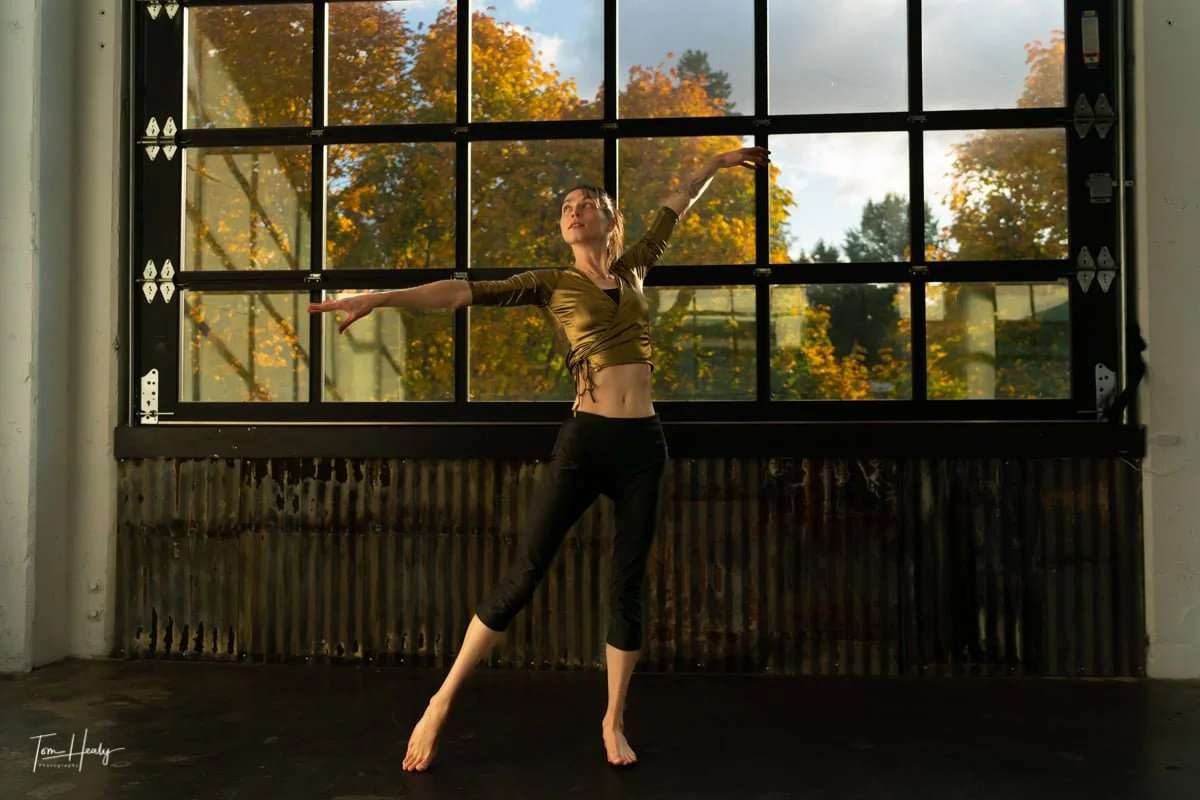
Photo by Tom Healy
Nonetheless, as Erin mentions, dance has a way of sticking with people in ways they may not expect. “There’s something in a creative drive that just doesn’t ever really die,” she emphasizes.
Erin had dreamed about having a live-work space in the future, but wasn’t looking for one when she stumbled upon her current dwelling. Prior to moving into the live-work studio space, Erin had been renting a studio once a week, but the thought of having studio space available to her all hours of the day was simply too good to be true. In addition to choreographing and teaching out of the space, she’s planning on working with clients on strength training, injury prevention, and exercises to aid with different forms of movement dysfunction.
Erin has enjoyed being able to decorate and furnish her studio space in a way that inspires her creatively. Down the line, getting back into choreographing and producing shows is a goal of hers and her new space will enable her to do that with greater ease.
Erin says that one of the things she loves most about dance is the fact that she never gets bored of it, there is seemingly always something new to learn through movement. She is fascinated by the ways sensory inputs from the environment influence the way people move and the shared understanding of movement that all humans possess. “It’s something that just connects all of us universally,” she says. Now that dance is more integrated into her life by way of her live-work studio space, Erin is able to feel even more deeply connected to this practice that means so much to her.
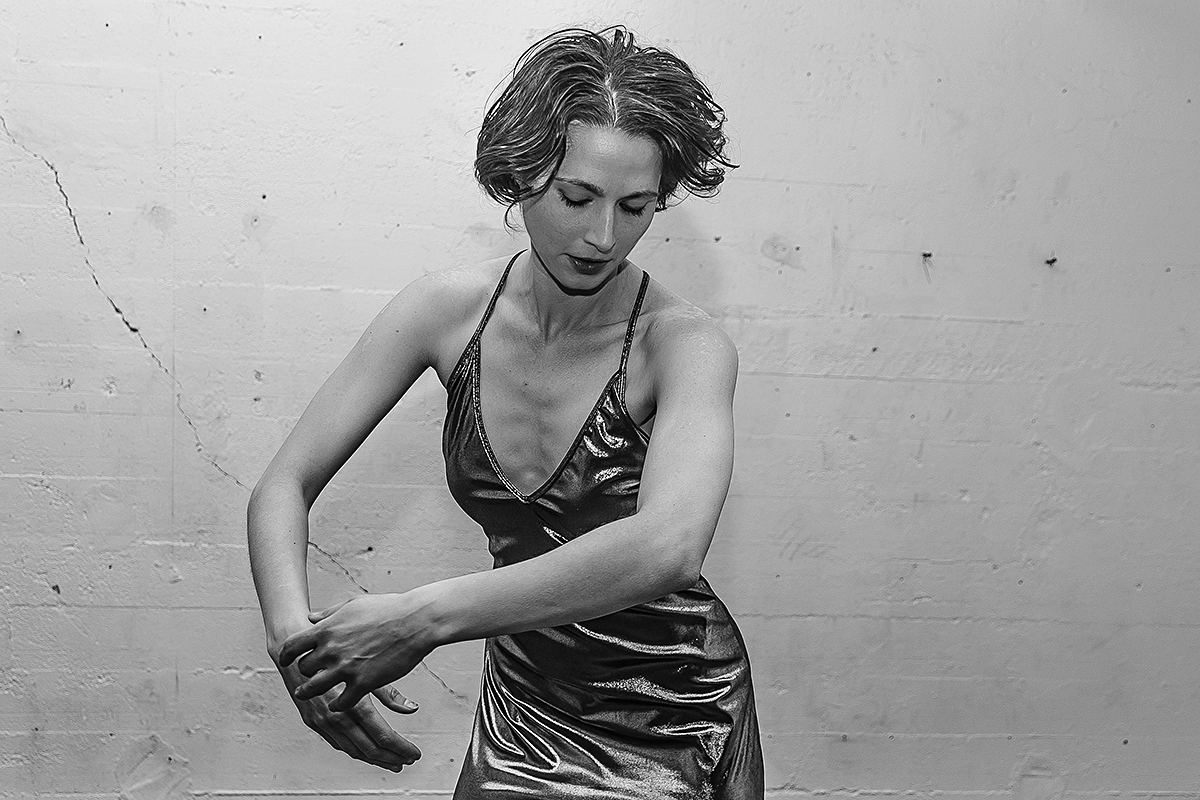
Photo by Brett Love
A change that Erin hopes to see occur in the dance industry is a greater interrogation of the so-called “ideal” body a dancer should have. She shares that many dance genres value a specific, restrictive aesthetic that can be harmful for dancers. Being told that there is a certain way to look can create a disconnection between dancers and their bodies. Dancers’ bodies should be used to help realize their artistic visions, not be scrutinized. Rather than focusing on how dancers’ bodies should look, Erin hopes for dance to be viewed more as an expression and mode to communicate with one another. “I think we just really need to broaden our view of what dance is,” Erin shares.
“If you have a body you’re a dancer!” Erin declares. Click here to donate to Pottershop Studio!
Getting to Know DWC Assistant Store Manager Naquoia Bautista
From training in Alaska to Hawaii to Washington, Naquoia Bautista has rich experience dancing in various genres across an array of settings. Today, she is an assistant store manager at Dancewear Center and a pointe shoe fitter in training. Read on to learn more about Naquoia’s dance journey and goals at the store.
By Madison Huizinga, DWC Blog Editor

Photo by Mary Turcott
From training in Alaska to Hawaii to Washington, Naquoia Bautista has rich experience dancing in various genres across an array of settings. Today, she is an assistant store manager at Dancewear Center and a pointe shoe fitter in training. Read on to learn more about Naquoia’s dance journey and goals at the store.
Naquoia was largely inspired to dance by her aunt, who she saw explore dance for the first time in her middle school and high school years. Their family home was replete with different videotapes and versions of The Nutcracker. “I just loved the production of it, the story. I thought it was beautiful, I thought the dancers were incredible and it was just so aesthetically wondrous,” Naquoia says of being exposed to The Nutcracker. “I was just enthralled. I’d watch it all the time.” She recalls dancing around her kitchen and pretending that her doll was the Nutcracker Prince.
Naquoia enrolled in a creative movement class at age five in her hometown of Sitka, Alaska. “From there, the rest is kind of history,” she says. Naquoia says that ballet was her first love, as it was the genre she spent most of her time training in growing up. She and her family moved to Hawaii for a year, where she was first introduced to tap. When she moved to Washington, she trained at the Metropolitan Ballet of Tacoma for a while, before returning to Sitka and graduating high school. Naquoia later attended Western Washington University in Bellingham, Washington where she earned her BFA in dance.
Naquoia learned about Dancewear Center Owner and General Manager Samantha Weissbach through a mutual friend. Naquoia had been interested in moving back to Seattle and had learned that the DWC Renton location would be opening and needing employees. Considering her experience with dance and desire to move to the Seattle area, a position at DWC seemed like a great fit for her. She began work in early January 2022, kicking things off with a training and pointe shoe fitting workshop.

Photo by James Clinton
In addition to her role as assistant store manager, Naquoia is also training to be a pointe shoe fitter, planning to be an observer before she tackles fittings hands-on. She shares that she already feels like she has so much information at her fingertips, having gone through the fitting training and continually learning from the other DWC employees.
So far, Naquoia has enjoyed being able to help provide people with the tools they need to be successful on their dance journey. She has particularly enjoyed being able to fit ballet slippers and tap shoes on children just beginning dance and problem-solving with them to find the best possible fit. Aside from working with customers, she’s enjoyed the small projects she gets to work on throughout the store, like assisting with decor, dressing the store mannequin, and more.
As of now, Naquoia’s primary goals at Dancewear Center are to buckle down and learn as much as she can. She looks forward to getting more accustomed to working with customers and familiarizing herself with inventory so she can assist people to the best of her abilities.
Outside of work, dancing takes up much of Naquoia’s time. She takes ballet and contemporary classes but is also planning on venturing into ballroom styles, including salsa. Having just moved back to Seattle, Naquoia is excited to get re-acquainted with the Seattle dance landscape. She’s also hoping to have some opportunities to choreograph for herself and her friends, perhaps even putting together a small production or dance film in the future.
Naquoia also adores hiking. In summer 2021, she and a friend went on an overnight backpacking trip in Oregon, hiking down the Timberline Trail around Mount Hood. She also enjoys swimming, sharing that she participated on a swim team growing up for a little bit. “It hasn’t been a consistent part of my life, but whenever I have the time to get back into swimming, I really like to hop in the pool,” Naquoia says. She also likes to read on occasion, watch movies, and snuggle her roommate’s cat, Spoons.

Photo by Juliette Machado
Moving forward in the dance world, Naquoia hopes to see an increase in inclusivity across the industry. In college, she enjoyed attending festivals with the American College Dance Association and being able to take classes in styles she doesn’t usually train in. For instance, she would often attend classes aimed at teaching dance techniques for men. Naquoia says that it was interesting to enter that type of space and be a minority, as dance is a largely women-dominated industry. She believes the dance industry will benefit from making more spaces welcoming and open to people who are interested in partaking.
We’re thrilled to welcome Naquoia as the latest member of the DWC family!
Decoding Cues & Restorative Conditioning
There are many unspoken assumptions in the dance world, one of which is that dancers don’t need to put in work outside of the studio. However, conditioning and engaging in other complementary activities can make a world of difference when it comes to dancing with resilience and avoiding injuries. Zoe Geiger, PT, DPT, CSCS chats about her dance experience, the importance of restorative conditioning, and her upcoming appearance at Tea & Tendus at DWC Renton on April 10, 2022.
Zoe Geiger, PT, DPT, CSCS On Her Experience with Dance and Physical Therapy
By Madison Huizinga, DWC Blog Editor
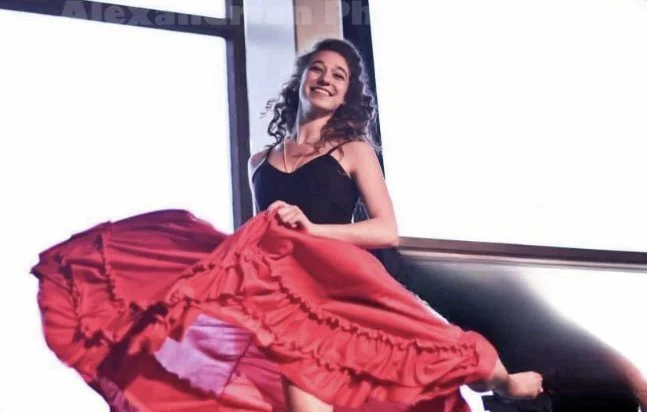
Photo by Alexandrian Photography
There are many unspoken assumptions in the dance world, one of which is that dancers don’t need to put in work outside of the studio. However, conditioning and engaging in other complementary activities can make a world of difference when it comes to dancing with resilience and avoiding injuries. Zoe Geiger, PT, DPT, CSCS chats about her dance experience, the importance of restorative conditioning, and her upcoming appearance at Tea & Tendus at DWC Renton on April 10, 2022.
Zoe began dancing around three years old in a classic ballet/tap class in the Seattle area. She also experimented with other sports including gymnastics, ice skating, and soccer. While playing soccer, she found herself gravitating to the position of sweeper because she could practice leaps and cartwheels while the ball was on the other side of the field. It became clear to Zoe that her heart was largely in dance, and she found her place at a local studio.
Zoe continued dancing throughout high school and college. After somewhat of a hiatus during graduate school, Zoe has been taking classes more frequently and feels like she’s “rediscovering [her] place in the dance community.”
“Dance has always given me a place to just escape the world around me and submerge myself in the joy of movement,” Zoe says of what she loves about dancing. Dance helps her feel grounded and connected with her body. “I don’t have to have a studio, I don’t have to have shoes. I can just dance around my living room and feel better,” Zoe smiles.

Photo by Best Sister Photography MJR
When Zoe started visiting a physical therapist for a knee injury in middle school, she says it changed her relationship with her body and with dance. She quickly became fascinated and interested in pursuing a career in PT. At first, she was unsure whether she wanted to treat dancers because dance had always brought her joy as an escape. But as she started working with Henry Lu at Velocity Physiotherapy, the joy from the studio was alive in the clinic. Today, she’s been working with dancers and others as a physical therapist for about a year and a half, alongside in the Seattle Public Schools.
Zoe recognizes that she’s been privileged to have a supportive dance community for most of her life. However, something she felt was missing was access and emphasis on strength training and other injury prevention strategies. Growing up, Zoe didn’t think exercise outside dance was necessary. But as she has learned more and started strength training on her own, she found herself feeling more grounded when dancing, seeing the benefits of putting in work outside the studio. She is happy to see more educators advocate for strength training outside the studio today and hopes to see more of it in the future.
Zoe encourages dancers to ask people in the dance community for recommendations for conditioning and injury prevention resources. Velocity Physiotherapy is also working on creating restorative conditioning programs designed for dancers. Zoe also shares that personal training or even finding another sport to play alongside dancing, such as swimming or soccer, can help supplement a dancer’s training.
Moving forward, Zoe hopes to see dance become more accessible. “I would love to see more classes that offer experiences for kids with disabilities,” Zoe voices. In addition, making dance classes available to families of all incomes and those living in rural and urban areas alike is an extremely important part of increasing dance accessibility. Zoe shares that part of the solution could be offering dance in public schools, where children could experience dance in a setting they already frequent without financial burden. Even amending the dress codes that dance classes require could open up the door for more children and adults to feel comfortable and excited about dance.
Zoe is enjoying rediscovering dance in her personal life and is drawing from her own experiences to provide better treatment for others. She’s looking forward to dancing en pointe again, in part to help her many clients who dance in pointe shoes. She’s looking forward to diving more into continuing education and professional development this summer to learn more about dance accessibility and public school education.
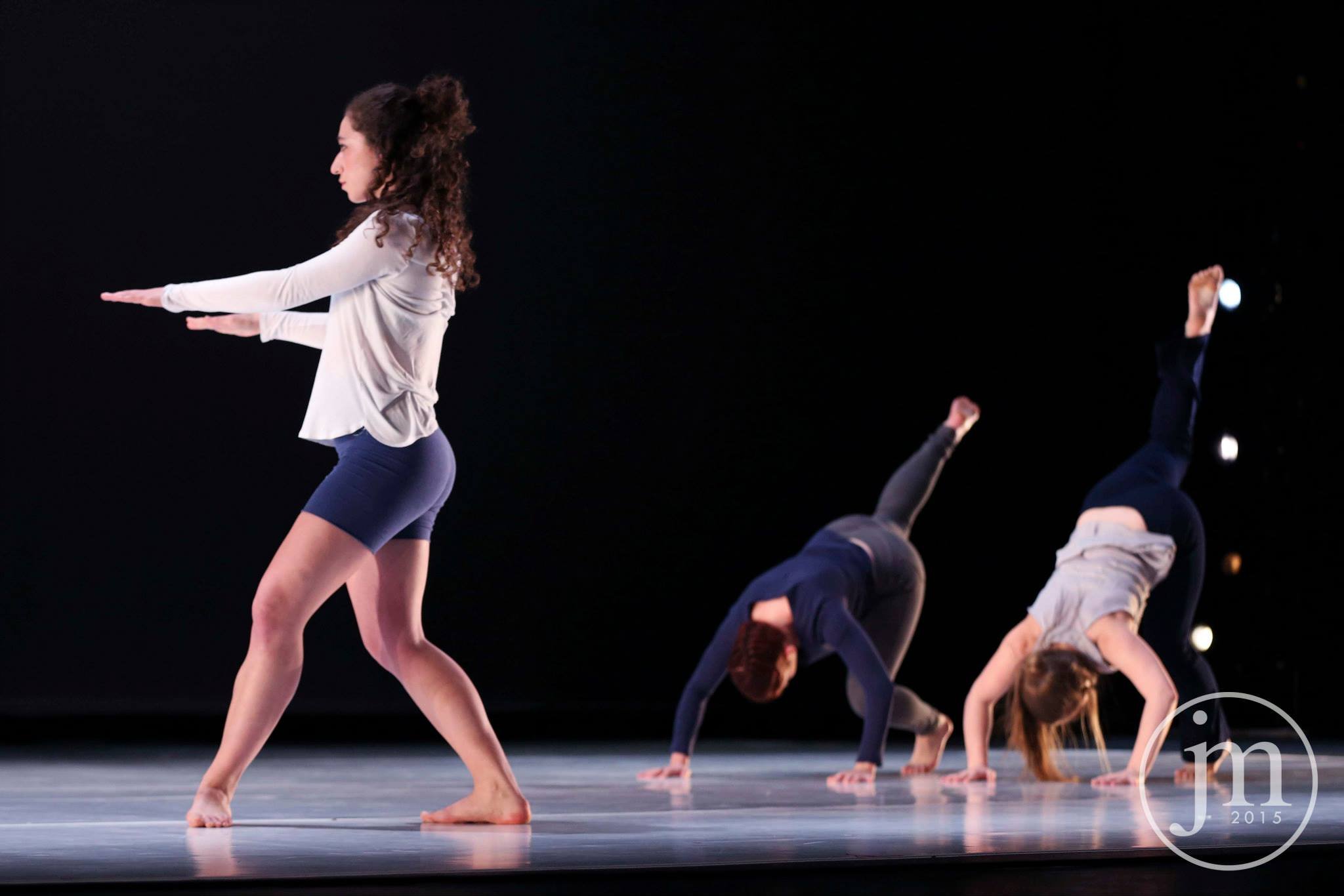
Photo by JMWorks
Zoe is also thrilled to be a guest at Dancewear Center’s next Tea & Tendus on April 10, where she will be discussing “decoding cues and restorative conditioning.” Specifically, Zoe will be talking about how to make the “cues” dance instructors provide more helpful for more dancers. It’s important to find new ways to share the same information, as the same cue isn’t helpful to all dancers.
How Apolla Performance Helps Dancers Do What They Love For Longer
For many dancers, facing moderate to severe injuries has been an unfortunate part of their dance journeys. Having to sit out of classes, performances, and competitions, for weeks and months at a time is never what dancers are hoping to get out of their dance experiences. Fortunately, Brianne Zborowski and Kaycee Jones have created Apolla Performance, a company that creates revolutionary compression socks that can help dancers and other movers do what they love for longer. Read on to learn more about Co-Founder and CEO Bri Zborowski’s background and mission and tune in to Shark Tank on ABC on April 1, 2022, at 8/7 EST (or check local listings for times) to witness her and Kaycee pitch their business!
A Conversation With Co-Founder & CEO Bri Zborowski
By Madison Huizinga, DWC Blog Editor
click below to shop the look!
For many dancers, facing moderate to severe injuries has been an unfortunate part of their dance journeys. Having to sit out of classes, performances, and competitions, for weeks and months at a time is never what dancers are hoping to get out of their dance experiences. Fortunately, Brianne Zborowski and Kaycee Jones have created Apolla Performance, a company that creates revolutionary compression socks that can help dancers and other movers do what they love for longer. Read on to learn more about Co-Founder and CEO Bri Zborowski’s background and mission and tune in to Shark Tank on ABC on April 1, 2022, at 8/7 EST (or check local listings for times) to witness her and Kaycee pitch their business!
Bri began dancing around age five at a local studio in her hometown in Michigan. After some time, Bri fell in love with dance, declaring as early as age seven that she would one day own her own studio and dance for the rest of her life. “That’s all I wanted to do!” Bri laughs. Throughout high school, dance was Bri’s main focus, as she got more involved as a teaching assistant and attended conventions to further her education and development as a dancer.
In addition to the performance side of her life, Bri was also heavily involved with her family’s business, a first-generation produce company in Detroit, Michigan. Growing up, she became quickly exposed to the inner workings of a business and the sacrifices and skills required to run a company. On the weekends, Bri could be found hauling pallets and boxes and selling fruits and vegetables in the open market, eventually moving into the administrative side of things.
Bri attended college and earned her degree in business while teaching, choreographing, and assisting at her childhood studio. At the time, Bri had also built out a competition program in Michigan with her and her partner at the time. On one occasion, following a teacher’s class Bri took at a convention, the instructor came up to her and raved about how talented she was. He said that she should consider dancing professionally. At the time, Bri was working in corporate real estate, teaching dance, and working at her family business. She had imagined her teaching and directing at the studio she was at for the rest of her life, but meeting this instructor changed her direction.

Bri quit her corporate job and headed to Los Angeles, where she took dance classes, auditioned, taught, and booked small gigs here and there. She met back up with the instructor that inspired her to move there. The two ended up getting married about six years later. “It just changed my whole life,” Bri says of the move. “My whole world opened up.” After Bri and her husband got married, they relocated to Texas, where they helped run a big system of studios and a competition program called Movz.
Apolla Performance Co-Founder & COO Kaycee Jones and Bri had met in LA and instantly clicked. While they both moved to different regions of the U.S., Kaycee decided to pitch Bri the idea of Apolla, a line of dance socks that could drastically improve the dance industry.
Kaycee is a life-long dancer as well and has her M.S. in Kinesiology and experience as a certified strength and conditioning coach. Her mom was also a dance studio owner for 41 years and Bri has her degree in business and an extensive background working at her family’s company. It was clear the two would be ideal business partners for the endeavor with their combined, complementary experiences. While working in studio spaces, Bri witnessed many students suffer severe injuries at ages as young as 11, explaining there were times when some dancers had to sit out for an entire season. She could see the real need for this idea Kaycee was presenting. At a time when the two had stable incomes and were just starting their families, starting this enterprise was a risk. But they chose to take the jump and Apolla Performance was born.
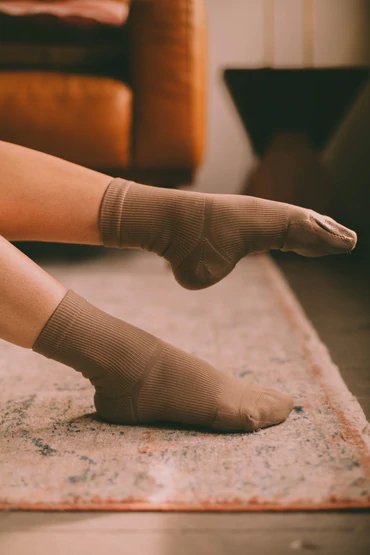
“We set out to create really high-quality products that change people’s lives,” Bri says of Apolla Performance’s mission. The company was founded by dancers with the intention of helping dancers and other movers alike do what they love for longer. Apolla offers compression socks in six different styles that are “ultra-cozy and crazy effective at reducing pain and fatigue.” Offered in a range of colors, the socks provide patented 20-30mmHg targeted compression that supports joints and reduces swelling, as well as added padding in the heel and ball of the foot that’s been shown to reduce force. Significantly, each style of sock offered by Apolla Performance is certified by the American Podiatric Medical Association to promote good foot health and independent studies have shown that Apolla’s socks reduce ground force impact on the body. “We’ve invested in the scientific research and we still have more coming,” Bri says. “We’ve put the time, energy, and resources into making a product that will change your life.”
click below to shop the look!
In addition, all of the socks are anti-microbial and are made from moisture-wicking and sustainably certified fabric in the U.S., making them an eco-friendly option for consumers. Apolla is also proud to share that in 2021 it switched its packaging over to a more sustainable option and the socks can be recycled at your local Goodwill
Another unique aspect of Apolla’s compression socks is the fact that they come with a patented refreshable grip along the bottom. “There’s really nothing like it,” Bri points out. Determining the perfect level of traction was a challenging aspect of Apolla’s design process, but the seamless, refreshable grip and traction or non-traction options allow for dancers to choose the level of traction that works best for them.
“We also want to provide equally excellent customer service,” Bri says, sharing that customers are welcome to call, text, email, direct message on social media, and live chat the staff on Apolla's website. In addition to providing high-quality products and attentive customer service, Apolla strives to create a community of holistic health and wellness. On social media, Apolla shares free live content on topics pertaining to dance, yoga, and holistic wellness. On Fridays, at 11 AM PST, Apolla holds a livestream on Facebook & Instagram, in which experts discuss topics like racism in the dance industry, sex abuse & prevention, psychology, nutrition, dance medicine, and more. The company also has a blog called The Muse, where its team of writers covers topics relating to fostering a healthy body, mind, and soul.
Ultimately, Bri hopes to see more people in the dance industry question traditional myths that can harm dancers. For example, why must dancers wear a certain kind of footwear for a genre of dance if there are more supportive options out there? Starting to question the traditional ways dance is taught and practiced can be a helpful first step towards dismantling harmful habits.
Be sure to tune in to Shark Tank on ABC on April 1, 2022, at 8/7 CT to see Apolla Performance pitch its business!
Getting to Know DWC Shift Lead Natalie Smith
Natalie Smith is a dancer, local to the greater Seattle area and one of the newest shift leads at Dancewear Center. From her experience dancing in a variety of genres to her aspirations of dancing en pointe, Natalie is a dynamic and seasoned employee that we’re grateful to have on the team.
By Madison Huizinga, DWC Blog Editor

Natalie Smith is a dancer, local to the greater Seattle area and one of the newest shift leads at Dancewear Center. From her experience dancing in a variety of genres to her aspirations of dancing en pointe, Natalie is a dynamic and seasoned employee that we’re grateful to have on the team.
Natalie started dancing at The British Dancing Academy around age three, focusing on ballet, jazz, and modern. She later transitioned from dancing in a studio atmosphere to participating in her high school’s dance team, where the focus was mostly on drill and hip hop styles. Recently, Natalie has returned to taking adult ballet classes with a goal of eventually dancing en pointe. While she enjoys dancing hip hop, Natalie shares that “ballet was always [her] special, precious thing that [she’s] loved.”
Natalie first learned about Dancewear Center a little over a year ago, when she stumbled upon it online. She explains being enticed by all the beautiful dance photography the store contained. Since dance is such an important part of Natalie’s life, she thought it would be great to have a job where she gets to support the dance community. “I thought ‘what would be more fun than having a job that deals with dance,’” Natalie says. She shares how much she admires Samantha’s leadership, saying that she’s “wonderful and amazing” and is careful about carrying out tasks properly, particularly with pointe shoe fittings. Natalie appreciates the care Samantha puts into making sure customers receive safe and informative pointe shoe fittings.
Natalie’s favorite part of working at Dancewear Center so far has been the people. “I’m such a people person,” she says. She loves getting to know new customers and helping them find exactly what they’re looking for. As a shift lead, she gets the chance to make some great relationships with members of the local dance community and provide them with the tools they need to be successful. “The [other] retail associates are all amazing and so sweet and wonderful. Meeting all of them and getting to know all of them has been so fun,” Natalie shares. She says that it’s also been a fun challenge to learn tasks hands-on at Dancewear Center and even surprise herself by picking things up quicker than she often expects. It’s quite a rewarding experience!
Outside of work, Natalie enjoys spending time with her friends and family. In the future, she looks forward to dancing en pointe and eventually starting a family of her own down the line. However, as excited as she is about the future, Natalie shares that she’s enjoying appreciating the present and living in the moment.
A change that Natalie hopes to see happen in the future is dancewear brands creating a more inclusive size range of leotards. She shares that she’s struggled finding leotards that fit her body the way that she wants them to, so brands offering a wider array of size options would be ideal for herself and others.
Natalie is a positive and spirited addition to our Dancewear Center family. Be sure to say hi the next time you stop through the store!
Educating Others to Foster an All-Encompassing Environment
Within any industry, narrow definitions and expectations are often formed regarding what the “typical” individual should look like. Such definitions and expectations can not only breed bland conformity but also lead to the creation of exclusive communities that leave certain people feeling like they do not belong. The dance industry is no exception. Through using her platform as a DWC ambassador, local dancer Jade Fraser strives to debunk myths about disabled dancers and share her unique experiences as a way to help make the community a better place.
DWC Ambassador Jade Fraser on Advocation for Disabled Dancers
By Madison Huizinga, DWC Blog Editor

Click below to shop the look!
Aurora in Diane Lace in Aqua | AK Dancewear
Within any industry, narrow definitions and expectations are often formed regarding what the “typical” individual should look like. Such definitions and expectations can not only breed bland conformity but also lead to the creation of exclusive communities that leave certain people feeling like they do not belong. The dance industry is no exception. Through using her platform as a DWC ambassador, local dancer Jade Fraser strives to debunk myths about disabled dancers and share her unique experiences as a way to help make the community a better place.
Jade’s first exposure to dance was taking “pre-level” classes, including pre-ballet, tap, and jazz at various studios around the greater Seattle area. She took a break from dance to explore other activities, but eventually returned to it in the sixth grade at Body Language Studio (formerly known as Cornerstone Studio), where she has been training ever since. At Body Langauge Studio, Jade has mainly taken classes in contemporary and hip hop styles, as well as conditioning classes. She’s also a member of BLS Select, a performing arts and competition team at Body Language Studio.
Jade explains that she loved dancing so much as a child that she would often find herself randomly dancing in the hallway at school, not caring about what anyone else thought but herself. “Being autistic, sometimes I have trouble expressing in words what I’m thinking and feeling. Sometimes I don’t even understand what I’m thinking and feeling” Jade says. She shares that one of the reasons why she loves to dance is because it helps her express and understand things in ways that words cannot.
Click below to shop the look!
In addition, Jade says that the gratification she experiences from performing on stage is unlike anything else. She feels powerful when she’s able to command the attention of an audience, being able to make them feel a range of emotions using her movement. Having that kind of agency as a performer is a validating feeling.
There are certain genres of dance that have come more naturally to Jade than others. For example, she says that it’s taken her a while to figure out how to dance hip hop, sharing that she’s worked hard on improving her technique to advance.
Another dance-related challenge that Jade has faced is the stereotypes that people place on dancers. She explains that many people in her life have underestimated the strength and discipline required of dancers. “People don’t understand that dance is more than just something that looks pretty,” Jade stresses.
Jade is looking forward to participating in her first dance competition this year, planning to compete in a contemporary solo. “I’m nervous but also I’m really excited to start competing,” she shares. Jade also hopes to be able to attend a dance convention at some point this year.

Click below to shop the look!
As a DWC ambassador, Jade is looking forward to being able to speak to a wider audience about topics she’s passionate about. Specifically, Jade plans to discuss and write about the discrimination that disabled dancers experience. She’s interested in pushing the definition of what it means to offer “disabled dance,” asking who is included within this definition and whether or not there is a place for people with disabilities that are less visible. “I just want to break stereotypes and advocate and educate as much as I can,” Jade says.
“One of the changes that we need to see in dance [relates to] how disability is seen and how it is thought of,” Jade says. For example, she points out that some people assume there is some kind of “look” a person must have to be considered disabled; however, those kinds of definitions can be harmful and limiting to the larger community of disabled dancers. “That kind of thinking can be really damaging,” Jade shares.
“We need to know what disability is and what the disabled community wants and needs from the non-disabled community,” Jade shares. “Those little things can make dance a whole lot more accessible.” Through using her platform as a DWC ambassador, Jade strives to help make the dance community a better place, specifically for disabled community members.
A Conversation on Navigating Challenges in the Dance Realm
No two dancers’ journeys are completely the same or even linear for that matter. When physical, mental, and societal obstacles are thrown in their way, dancers often take paths that they don’t expect. This was certainly the case for DWC Ambassador Anna Nelson. Read on to hear about her choosing to pause professional dance to pursue a college education, come back from an injury, and learn how to cope with anxiety throughout her dance career.
DWC Ambassador Anna Nelson on Bouncing Back Physically and Mentally
By Madison Huizinga, DWC Blog Editor

Click below to shop the look!
No two dancers’ journeys are completely the same or even linear for that matter. When physical, mental, and societal obstacles are thrown in their way, dancers often take paths that they don’t expect. This was certainly the case for DWC Ambassador Anna Nelson. Read on to hear about her choosing to pause professional dance to pursue a college education, come back from an injury, and learn how to cope with anxiety throughout her dance career.
Anna began dancing around age 13 at a small studio in her hometown of Oak Harbor on Whidbey Island, Washington. After training there for years, she decided to attend Cornish Preparatory Dance to up the intensity of her ballet training. She later attended Kirov Academy of Washington D.C., continuing to pursue rigorous ballet training. Following her graduation, Anna decided to take a break from professional dancing. She had a professional job lined up in California but ultimately decided to pass on it to follow another passion. “I decided I wanted to pursue education,” Anna shares. While attending a community college, Anna continued dancing recreationally to keep her passion alive. She later earned her BS in microbiology from the University of Washington, Seattle, with the intention of later attending PA school.
In 2020, Anna underwent a major hip surgery. “I couldn’t dance for six months,” she says, during recovery she had to learn how to walk and dance again. She took her first dance class following the surgery over Zoom at UW, sharing that it was nice to be able to get back to moving in her own space, free from the perceived judgment of others. Today, she’s dancing with Olympic Ballet Threatre in Edmonds, Washington.
Anna has performances on the horizon with Olympic Ballet Theatre for its 2021-2022 performance season. She danced in The Nutcracker in December 2021. In February 2022, Olympic Ballet showcased “Debuts,” a more contemporary-focused show, and plans to put on Don Quixote in May at Edmonds Center for the Arts.

Click below to shop the look!
Anna has been a patron of Dancewear Center for about a decade. Following Samantha Weissbach taking over ownership of the store in 2018, Anna followed DWC on Instagram and realized that it was no longer “just a store,” but rather “a community.” This realization is what inspired her to become a DWC Ambassador. “I am really excited to get back into the dance world and just connect with all these local dancers and talented people,” she says. At age 26, having pivoted away from professional dance to pursue a college education and later came back following a major injury, Anna believes that her experiences will help her provide unique insights in her role as a DWC Ambassador.
“Growing up I only had Pointe magazine,” Anna laughs, reflecting on how few opportunities there were for community and connection outside the studio when she was younger. She points out how useful it is for dancers of all backgrounds to be able to share different perspectives on social media platforms today.
What’s kept Anna returning to dance is the physicality of the practice. She recalls studying for hours on end in college and longing to dance and move her body. “As long as my body can still do it, I still would like to dance,” Anna says about continuing the practice into the future.
Anna shares that the majority of the challenges she’s experienced in the sphere of dance have related to mental health. “I struggled with a lot of anxiety throughout my life, especially performance anxiety,” she says. “It’s been a lifelong journey trying to learn ways to cope with it.” Anna says that feeling grounded in her religious faith is part of what’s helped her persevere through moments of anxiety when she feels overwhelmed. Additionally, reminding herself that dance doesn’t comprise her entire identity is a helpful strategy when coping with dance challenges like performance anxiety. “I am where I should be,” she affirms.

Click below to shop the look!
Anna shares that therapy has been extremely helpful for her with coping with anxiety and recommends dancers seek it out, if possible, to help them handle their own mental health challenges in dance. Speaking with a therapist has helped Anna identify the roots of her anxiety and learn specific coping mechanisms to challenge anxious thoughts.
Moving forward in the dance world, Anna hopes to see teachers and directors have more awareness and training on how to be more nurturing and understanding of students’ nuanced needs and challenges, particularly in terms of mental health. She reflects on what the dance industry was like when she was a young student, pointing out that many authority figures exacerbated problems related to mental health and body image. With a greater eye towards how to communicate to children and be supportive of obstacles they’re facing, teachers and directors can create an even more positive impact on the dancers in their lives.
Stay tuned for more from Anna Nelson in the coming weeks!
Insight on Creating an Inclusive Dance Community
Within a culture and industry that often promotes conformity, being the one to stand out can be an uncomfortable, and sometimes even traumatizing experience. DWC Ambassador Austin Sexton knows what it’s like to experience discomfort for straying from the norm. But through adopting inclusive teaching practices, community members like Austin are helping make our local dance community more welcoming one step at a time.
DWC Ambassador Austin Sexton on Promoting Body Positivity
By Madison Huizinga, DWC Blog Editor

Click below to shop the look!
Within a culture and industry that often promotes conformity, being the one to stand out can be an uncomfortable, and sometimes even traumatizing experience. DWC Ambassador Austin Sexton knows what it’s like to experience discomfort for straying from the norm. But through adopting inclusive teaching practices, community members like Austin are helping make our local dance community more welcoming one step at a time.
Austin was born and raised in the Seattle area by parents who are dancers themselves. Her father is a dancer and her mother is one of the founding members of Spectrum Dance Theater. Austin jokes that dance, in a way, is “in her blood.” Growing up, she trained at Spectrum and later Dance Fremont throughout high school. At Dance Fremont, she was introduced to modern techniques that she fell in love with.
Following high school, Austin quit dance for a while, as having a body that doesn’t fit the “traditional” dancer mold was a source of trauma for her. She dedicated her time to pursuing vocal performance, as that was another passion of hers. During her break from dancing and training herself, she also took up teaching.
“I wanted to change the training,” Austin says of her desire to begin teaching. She desired to help change common rhetoric in the dance industry that promotes body image issues like body dysmorphia, as well as disordered eating. “I wanted to break that cycle,” Austin says.
In addition to teaching all around the Seattle area, Austin eventually co-founded a local dance company called Relay Dance Collective. The company performed seven seasons, collaborating with other local dance companies like Intrepidus Dance. After Austin got pregnant, Relay Dance Collective disbanded. Today, she works full-time at Momentum Dance Academy in Burien, Washington, where she wears various hats as a teacher, production manager, costume manager, rehearsal director, and more.

Austin has been drawn to dance time and time again because it’s a creative and emotional outlet like no other. Due to her traumatic experiences with dance early on, pursuing it as an adult and as a teacher feels as if she is “healing her inner child.” She enjoys being able to help the next generation of dancers not suffer from the same challenges she did. Austin hopes that the students she impacts through her teaching can carry on the lessons they learn throughout their life and to subsequent generations, creating waves of impact to improve the industry as a whole.
Austin's biggest challenge in dance has been comparing herself to other people. She explains that it was difficult navigating training as a dancer with a body that doesn't fit the "norm." "I had a dance teacher who refused to train me en pointe because she said I was too large," she shares. "At 12 years old, to hear something like that was super damaging."
Today, Austin makes it clear to her students that one's size does not determine one's worth or ability. "You can be a strong dancer at any size," Austin says. "You can be as strong and healthy and powerful as you want to be." There's no point comparing oneself to others when the way humans look is largely a pre-determined formula, engrained in their genetics.
"I loved seeing that there was a place for dancers that was promoting health and strength in every size because that is so foreign in the dance world," Austin says of Dancewear Center. She appreciates the efforts DWC makes to create an inclusive culture that bolsters body positivity and mental health awareness. She was inspired to become a DWC ambassador after having numerous conversations with Owner and Director of Operations Samantha Weissbach about what limited dancewear options there are for larger-bodied dancers. Feeling inspired by the work DWC was doing, Austin knew she wanted to be a part of it in some way.

Click below to shop the look!
In addition to being a DWC ambassador, in the coming year, Austin is looking forward to channeling her "heart, time, and energy" into teaching students at Momentum Dance Academy. The various performing groups at Momentum are planning on performing at several festivals, including the Olympic Dance Festival, BOOSTmeUP, All 4 1 Dancepalooza, and Dance Festival Northwest. Momentum will also host its own festival this spring called Merge NW, featuring members of the Momentum Dance Ensemble Company and youth dance companies across the Pacific Northwest. The dance academy has also begun rehearsals for its production of Coppelia this spring.
Overall, what Austin hopes to see change in the larger dance industry is a greater celebration of body positivity and a dismantling of systems of oppression, with an eye towards promoting equity. She hopes to see more teachers and directors show students and dancers that size doesn’t determine health and strength. Austin also wishes to see more opportunities become available for dancers who don’t “necessarily fit the mold.” Her desire is for these principles of body inclusivity to ripple out to other identity facets, causing instructors to teach with a greater eye towards gender inclusivity as well. Austin points out that a big part of making this change will be instructors being more intentional about the language they use in class, including not making comments about dancers’ weights and utilizing gender-inclusive words and phrases. With individuals like Austin helping train the next generation of dancers, there is ample hope for change.

Maintaining Body Positivity and Self-Discovery in Dance
During the last year, I’ve been on an intentional fitness journey, spurred along by the privilege of getting back into a dance studio to train consistently, even amid the ongoing pandemic. All through lockdown, I was in remote university courses for dance, yet I saw a significant decrease in my desire to maintain my fitness and nutrition goals. This was because I did not have a dancing community physically around me and had very little space at home to maintain a usual training rhythm. I feel excited and so thankful to be once again moving toward my goals in a way that feels challenging and freeing.
By Hannah Emory, DWC Blog Contributor

Photo by Nikola Evora Zonenberg
During the last year, I’ve been on an intentional fitness journey, spurred along by the privilege of getting back into a dance studio to train consistently, even amid the ongoing pandemic. All through lockdown, I was in remote university courses for dance, yet I saw a significant decrease in my desire to maintain my fitness and nutrition goals. This was because I did not have a dancing community physically around me and had very little space at home to maintain a usual training rhythm. I feel excited and so thankful to be once again moving toward my goals in a way that feels challenging and freeing.
Yet, the time I spent away from the studio, and quite far away from my personal fitness goals, caused me to think a lot about how I can maintain my sense of body positivity and self-love in the midst of changing life circumstances. I would not trade what I learned during this time, because life will always throw unexpected circumstances at us, but our need for self-love and self-respect is unchanging and requires maintaining.
In any case, during a pandemic or not, when dance spaces are made into goal-driven environments that focus overmuch on what the body looks like, a high level of self-criticism can develop and turn into a lifelong struggle if not kept in check. For example, I have struggled with issues of body dysmorphia and disordered eating, and have watched my dancer friends go through some of the same struggles. One can start to feel like they are not a true dancer if the goal post of self-acceptance is constantly moving and, unfortunately, there are aspects of the dance world that can make self-acceptance very difficult to achieve. Add on a global pandemic and the consequent stagnation/interruption in training goals, and that feeling of illegitimacy, at least for me, definitely increased. For this year, I know it has taken a lot of mindfulness and having the right people around me to heal, refocus, and keep my perspective on myself and my body positive.
Self-acceptance, self-celebration even, is not easily fought for and won. In our dance journeys, there will be a lot of maintaining, unlearning, relearning, and self-connection that needs to happen if we have negative messaging from our past or have experienced a discouraging setback in our progress. Community is a huge piece of that relearning and healing, and I hope everyone reading this can connect with others through dance in some form. An uplifting dance community is invaluable and makes the load lighter while we’re moving toward a stronger relationship with the self.
I cannot bang the drum about community enough. But, in addition to that, here are a couple of personal practices that have helped me so much this year and can be done with and without others:

Gratitude-based movement. Often dancing requires a lot of mental concentration on learning form and content. Though being in class and learning new material is exhilarating, it’s akin to reading a textbook or working away at a craft until it’s honed. In my experience, the work of learning dance is very mentally taxing and requires the body to function more like a tool. This can cause a bit of a feeling of disconnection between the body and mind/heart. So, I believe that every dancer would benefit from some sort of moving mindfulness/gratitude practice outside rehearsal spaces that focuses on thanking the body and self for all the work being achieved. For me, I have been taking tai chi classes as part of my degree program and it has been so helpful in guiding me into feeling empowered, connected to myself, and grateful for the body I have right now. One of the focus phrases we use frequently is to always have an inner smile if something feels difficult or if the mind wanders; and at the end of every class, we think of something to be grateful for and bow in thanksgiving for the goodness in our lives. It’s a beautiful way to start the dance day and one that reminds me of how capable my body is and how grateful I am to exist as myself. Some other examples of moving gratitude practices that come to mind would be walking, meditation, yoga, pilates, and Feldenkrais. There are so many options available and anything that brings you into a state of gratitude for yourself and your life is well worth the time!
Studying my body + personalizing nutrition. I find myself having a lot more respect and love for my body when I know how it functions and when I’m intentional about getting it the fuel it needs. Our bodies are unique, and there isn’t a one-size-fits-all approach to dancing our best. The most empowering thing I’ve done for my dancing journey is paying attention to the specific questions and feelings that come up for me during my training days and then pursuing answers for those questions. This personal focus was new to me until just recently and paying attention to my way of being a dancer revolutionized my practice. I have learned a lot about myself; some personal examples of discoveries I made would be…
I’ve always struggled with joint pain/fatigue while turning out at the barre, and my teacher let me know when I asked her about it that activating my core muscles will help create a feeling of more space in my body and make turning out much easier on my joints.
Stomach cramps and chronic physical fatigue are pretty big issues for me. Yet, I started paying attention to my diet and noticed over time that eating lighter, protein-focused meals eased my digestive issues and helped with endurance throughout the day.
I find a lot of choreographic inspiration and bodily relaxation through improv work. If I’m feeling mentally fatigued during a long dance day, there’s nothing like going to an empty space and moving without goals or expectations. Integrating active stretching and meditative breathing into my improv movements adds extra benefits to the practice.
These are just some of the personal discoveries that have helped me take more ownership over my dancing and my health, and have led me to feel more connected to and positive about my body. Problem-solving discoveries are a beautiful way to quickly move one from feeling discouraged and incapable to feeling proud and excited about our unique dance expression. If you have questions about yourself, take the leap and pursue those inquiries with teachers and your dance community. Study your body and find out what works for your personal journey. You’ll be so amazed at what you find out! (A bonus suggestion would be to keep track of your questions and discoveries in a notebook or voice memos so you can look back on your progress.)
I wish you the best on continuing toward self-celebration, radical body positivity, and joy-filled
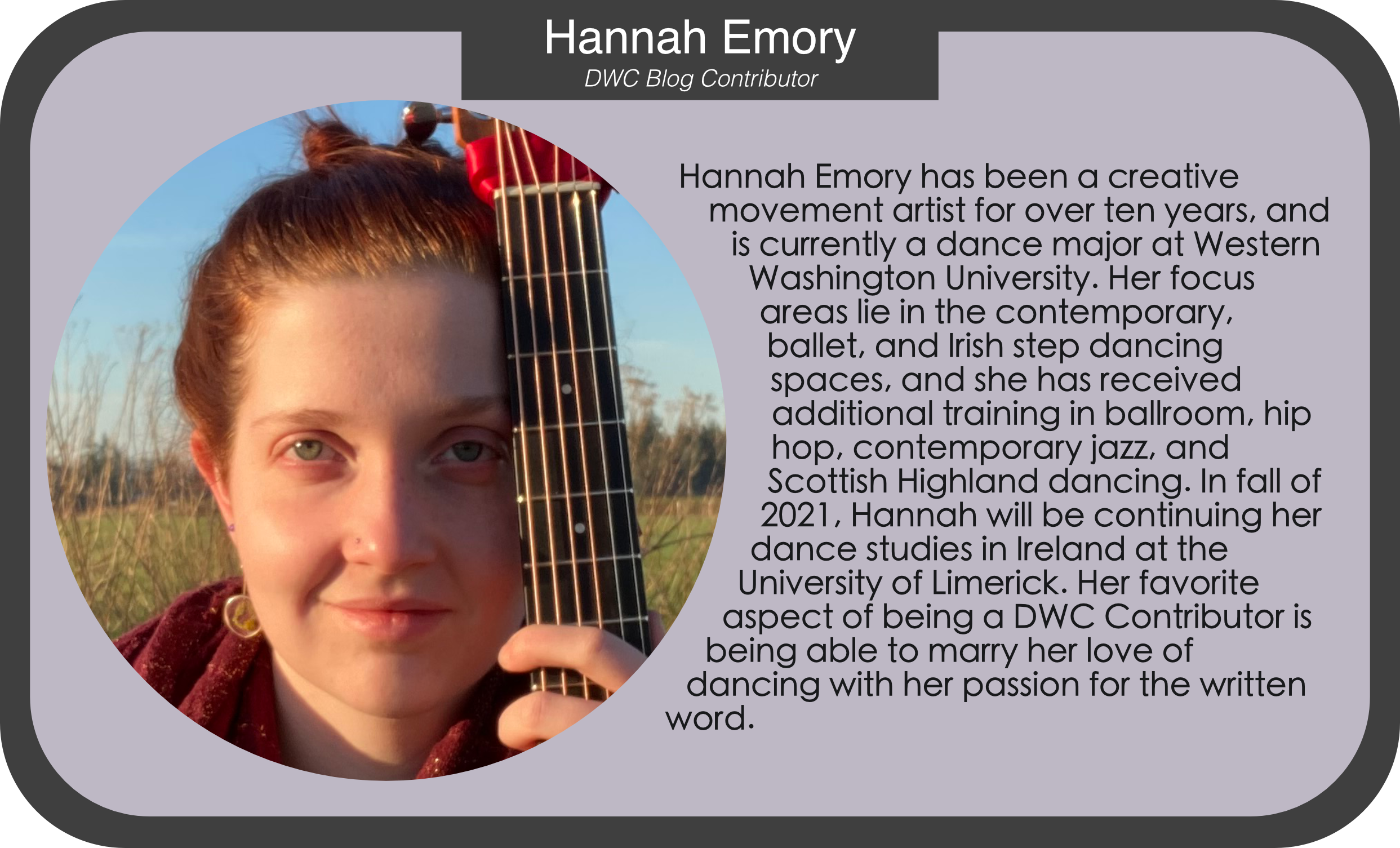

Interested in writing for the DWC Blog? Click below to fill out the DWC Contributor application!