
Evergreen City Ballet’s Bennyroyce Royon on Promoting Diverse and Comprehensive Training
For over 25 years, Evergreen City Ballet has provided high-quality dance education to the South King County community. Following “innovation, collaboration, and community building” as the pre-professional ballet school’s pillars, Artistic Director Bennyroyce Royon strives to redefine dance education in the PNW by centering a variety of cultural histories and promoting holistic training.
By Madison Huizinga, DWC Blog Editor

Photo Credit: Kuo-Heng Huang
For over 25 years, Evergreen City Ballet has provided high-quality dance education to the South King County community. Following “innovation, collaboration, and community building” as the pre-professional ballet school’s pillars, Artistic Director Bennyroyce Royon strives to redefine dance education in the PNW by centering a variety of cultural histories and promoting holistic training.
Bennyroyce’s true connection to movement began with learning folk dances as a young boy in the Philippines. “For a while, I was saying that I started with ballet, but I didn't,” Bennyroyce states. Moving to the United States at 12 years old, Bennyroyce describes the process of being “Americanized” and exposed to Western styles of dance. “I forgot about my actual beginning connection and… root in terms of movement,” he explains. Having this recognition of the true origins of his connection to dance is “informing the way he’s moving forward right now,” as an artist and teacher.
Growing up, Bennyroyce always had a knack for expressing himself through music and couldn’t find himself connecting to American sports. Around 16 years old, he stumbled across a piece in the Auburn Reporter saying that Evergreen City Ballet was auditioning teenage boys and offering scholarships. His interest was piqued. Bennyroyce remembers calling ECB to introduce himself and mildly exaggerating his dance experience and technique level. Upon being asked if he was flexible, Bennyroyce laughs, recalling placing his leg on the kitchen counter and thinking “yeah, I’m pretty flexible.”
After his audition, Bennyroyce was offered a scholarship from Evergreen City Ballet. His teachers, including Founding Artistic Director Wade Walthall, “instilled the love of ballet [in him].” His training became more rigorous as he dove deeper into the practice and attended summer programs. On one occasion, during a field trip in New York, Bennyroyce recalls standing in front of The Juilliard School and telling his friend “I’m going to go there next year.”
“I had a lot of work to do, it was very tough,” Bennyroyce emphasizes.
And he certainly put in the work. Bennyroyce was accepted at Juilliard, where he worked with major choreographers like Mark Morris with Paul Taylor, Ronald K. Brown, Elliot Feld, Jessica Lang, and many more. He danced with teachers who worked under some of the masters of American dance, such as Martha Graham and José Limón.
After graduating, Bennyroyce’s first job was at The Metropolitan Opera, and he later danced with companies such as Rasta Thomas’ Bad Boys of Dance, Carolyn Dorfman Dance, and Sidra Bell Dance New York. He danced in Montreal with Cas Public, and later with Armitage Gone! Dance Company, before beginning his choreographic journey. He began the project-based dance company Bennyroyce Dance in 2010 and has received choreographic commissions from Atlanta Ballet and Ballet Hispánico.
Following his time dancing on Broadway in the original cast of The King and I, Bennyroyce began “meditating on [his] impact and…[his] legacy as an artist.” An opportunity opened up at Evergreen City Ballet to become the artistic director. After advising and consulting for the ballet school, he applied and got the role.
“My goal is to bring the world of dance here [to ECB and the City of Renton] and really serve the South King County region because that’s where my heart is,” Bennyroyce says. Being able to provide “access to dance of the highest caliber is really important and transformative,” he stresses.
Bennyroyce shares the obstacles he has faced in the dance world, including anxiety, depression, and body dysmorphia. He describes himself as an “atypical” artistic director, in the traditional sense, pointing out that he has a “booty like J-Lo” and feet that aren’t as flexible as others. An encouraging message he strives to share through his work is that “whatever body type, color, size, or expression you [have], you can do it.”
A large part of Bennyroyce’s vision in dance is “provid[ing] opportunities to a diverse group of individuals.” He shares how much the American dance industry favors European aesthetics, which is why he decided to stay in the United States to “contribute to the American landscape of dance in [his] own little corner.”
Since its conception, Evergreen City Ballet has offered “rigorous, well-rounded, and holistic” dance education for toddlers at 20 months old, all the way up to adults. Live accompaniment and an expanded modern program are aspects of ECB that Bennyroyce particularly takes pride in. In the coming year at ECB, Bennyroyce hopes to expand the definition of a “pre-professional ballet school,” to show the community that “ballet is just one of the foundations of dance.”

Next year, Bennyroyce is excited to announce that Afro dance will be a part of Evergreen City Ballet’s curriculum. “The African diaspora has been a source of inspiration and foundation for some of the movement styles we have now,” Bennyroyce stresses. “I think it’s important for my students to access that.”
Evergreen City Ballet also plans to offer programming on wellness, including classes on nutrition, meditation, and cross-training. Bennyroyce believes it’s important for ECB students to harness a holistic approach when understanding self-development in dance.
The ballet school is also looking forward to continuing putting on its annual student-choreographed show, “Elevate.” Evergreen City Ballet also offers an annual production of The Nutcracker that tours locally to Bellevue, Renton, and Auburn, as well as a spring production and showcase.
It’s important to Bennyroyce that his students leave ECB being “intelligent, articulate, empathic, and compassionate” individuals, whether they become professional dancers or not. What he hopes to see in the local dance community is a “more connected network of artistic directors, educators, and artists.” He is “brimming with ideas” about how to provide more opportunities to Seattle artists, and is excited to reveal them in the future.

Dancing Into Adulthood
As children, partaking in extracurricular activities outside of school isn’t just an option, it’s downright encouraged. Our parents sign us up for anything they can to keep our bodies active and our minds engaged: soccer teams, chess clubs, dance classes, you name it. When we transition into high school, we’re encouraged to volunteer, join sports teams, and get involved in our community to bolster our college applications. We channel our time, energy, blood, sweat, and tears into these activities. In many cases, they transform from being mere hobbies to intense passions that help us persevere through our awkward adolescent years.
By Madison Huizinga, DWC Blog Editor

Photo Credit: En Avant Photography
As children, partaking in extracurricular activities outside of school isn’t just an option, it’s downright encouraged. For many of us, our parents register us for anything they can to keep our bodies active and our minds engaged: soccer teams, chess clubs, dance classes, you name it. When we transition into high school, we’re encouraged to volunteer, join sports teams, and get involved in our community to bolster our college applications. We channel our time, energy, blood, sweat, and tears into these activities. In many cases, they transform from being mere hobbies to intense passions that help us persevere through our awkward adolescent years. But then, when we graduate high school, something changes. Suddenly, we’re attending our last ballet class, performing in our last recital, and taking our last bow on stage. We’re given our diplomas and then clumsily thrust into college and careers to take on the “real world.” For most of us, our priorities shift to finding a job and taking care of our families. Our competition medals and pointe shoes are shoved to the back of our closets.
The transition from high school to college was incredibly challenging for me. I had been dancing at the same dance studio for 13 years, from when I was a kindergartener to an 18-year-old. The instructors and students had become a second family to me. Dancing and performing were the main parts of my life that brought me joy. And then, quickly, it was all over. My final curtain closed and before I knew it, I was in a dorm room isolated from the community that made me feel my best.
The idea that we must abandon our passions as we transition into adulthood is a harmful norm. There’s an unspoken expectation that people should just discard their hobbies and passions and channel all their energy into their “careers.” But life doesn’t have to be that way. Not all of us have the ability or capacity to pursue dance full-time and professionally, but that doesn’t mean we need to shut dance off from our lives for good.
One way that I began integrating dance into my life post-high school was taking open classes in my community. I started attending open ballet classes at PNB and Dance Fremont and was surprised at how much they challenged me. Many studios offer open classes every day of the week, allowing people to pick and choose the dates that work best for them. Also, most of these classes don’t have an age limit, so they’re open to everyone to attend for as long as they desire.
However, when the COVID-19 pandemic hit, the open classes I was taking were canceled and I was left feeling a bit hopeless about how I would keep up my technique. I was already dancing far fewer hours than I was in high school, and now I was studio-less and confined to dance in my small basement. How could I possibly practice and improve upon my technique? I pondered. But to my surprise, a variety of free online classes began popping up. I began taking Tiler Peck’s ballet classes on Instagram Live and they quickly became a part of my everyday routine. Many of her classes are still available online today.
On days when I couldn’t find any virtual classes to take, I took myself through my own ballet routine. I came up with a ballet barre routine and exercises to do in the center and executed them as if I was the teacher and the student. Doing this not only allowed me to act creatively, but I had control over how much I challenged myself.
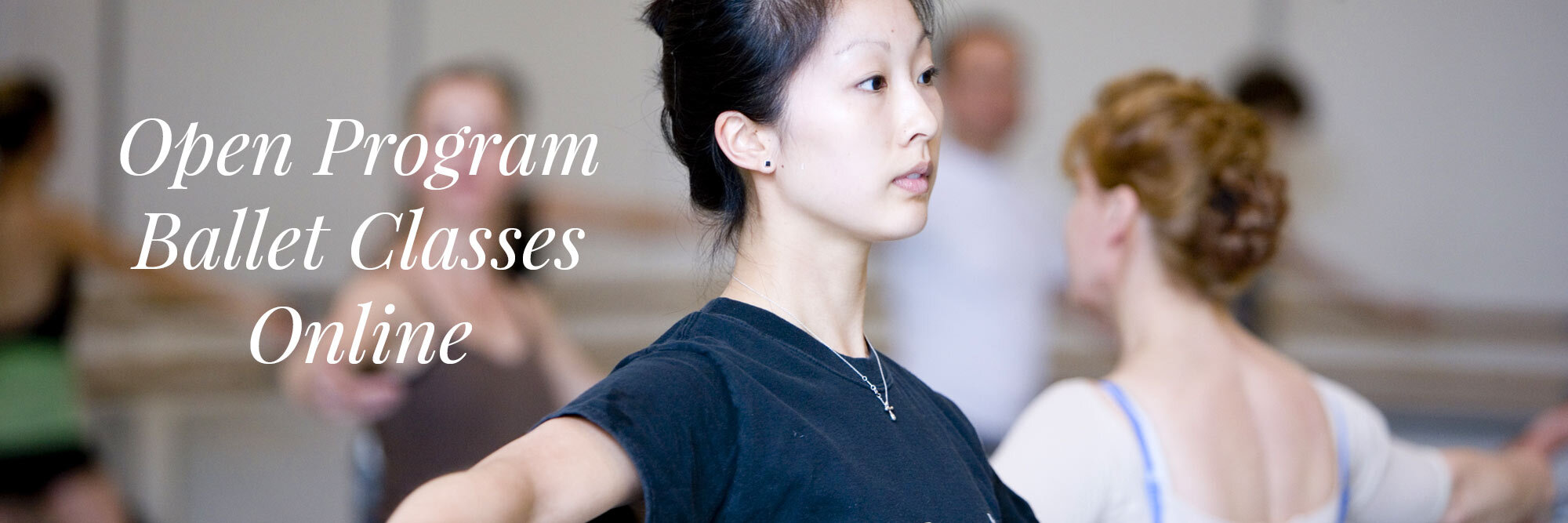
Photo Credit: Pacific Northwest Ballet
Also, since I didn’t have a lot of space to dance at home, I shifted my focus to forms of exercise that could supplement my dance training but didn’t take up much space, such as yoga and pilates. Focusing more of my attention on cross-training and strengthening important dance muscles improved my technique in ways I never imagined possible. In high school, cross-training was something I had trouble fitting into my busy schedule. However, as an adult with more control over my schedule, I was able to carve out time to cross-train and witness my technique improve in ways that were once unfathomable.
It’s safe to say that there are ways to help maintain our strength and technique when dancing as adults, due to open classes, online resources, and cross-training, but what about performing? Performing on stage was one of the parts of dancing that was most enjoyable to me. The sheer adrenaline rush, thrill, and pride that comes with dancing in front of a live audience is simply unmatched. Eager to keep this aspect of dancing in my life, I auditioned for a small, local dance company and was fortunate enough to get in! Auditioning for a professional company is understandably daunting to many folks; however, there is a plethora of dance in Seattle, and many artists who are looking for bodies to choreograph on. There is no harm in putting yourself out there and seeing what you get in return, it might surprise you.
Aside from performing on stage, there are also many peripheral ways to get involved with the dance community. Whether it’s graphic design, costuming, artist management, or music production, the possibilities are endless.
This myth that we must abandon our passions when we turn 18 is invasive and toxic. We are the architects of our own lives, so there’s no reason why we shouldn’t continue doing the things that bring us happiness into adulthood. Being joyful and having fun shouldn’t just be relegated to our youth. As adults, we have so much to contribute to our dance community and so much we can learn. Whether it’s pursuing a full-time position in a dance-related career or simply taking on a weekly open class, why not take the leap and see what’s possible.
The Power Behind Breath in Dance
'Suck in' 'Engage your core'. Two phrases that seemed synonymous to me in dance. I remember learning proper ballet technique with the image of a corset. During barre, my instructor would inhale sharply, shrinking her waist while pointing at me to do the same. A silent reminder that good posture included a sucked-in stomach.
By Ella Kim, DWC Blog Contributor
“‘Suck in’ ‘Engage your core’”

Photo Credit: National Institute of Health
Two phrases that seemed synonymous to me in dance. I remember learning proper ballet technique with the image of a corset. During barre, my instructor would inhale sharply, shrinking her waist while pointing at me to do the same. A silent reminder that good posture included a sucked-in stomach.
As the focus of my dancing shifted from learning specific body placements to developing dynamic movement qualities, restricted breathing held me back. I’ve recognized a pattern in my dancing of breathing shallowly in my chest instead of taking fuller breaths from my diaphragm. This shallow breathing lifts my shoulders and tightens my neck, stiffening my dancing. I get corrections for high shoulders, but I feel like I cannot drop them.
What if we taught a more complete understanding of the mechanism of “engaging your core”? A technique I learned through aesthetic indicators could be equally, if not more successfully, taught with breath and motion in mind.
To bring a sense of ease to my dancing, I’ve been trying to re-train myself to breathe from my diaphragm. Sometimes referred to as belly breathing, this shift frees up my upper body and gives me back control of my shoulders. When dancing, I focus on the space below my rib cage, making sure to expand into my sides and back with each inhale.
This shift to belly breathing has helped more than my port de bra. Sports medicine research has shown that intra-abdominal pressure (IAP) coordination is key to accurately using core strength.
In 2013, a research team published “Dynamic Neuromuscular Stabilization & Sports Rehabilitation,” a report investigating IAP’s role in stabilizing the spine. They found that belly breathing plays an essential role in core stability, which “is not achieved purely by adequate strength of abdominals, spinal extensors, gluteals or any other musculature; rather, core stabilization is accomplished through precise coordination of these muscles and intra‐abdominal pressure regulation by the central nervous system.”
What does all that mean for dancers? Don’t hold your breath at the barre! It is important to have good coordination of stabilizing muscles (not just strength), and good coordination comes from deep breaths. IAP regulation comes from the central nervous system. This system consists of the diaphragm, pelvic floor, and transverse abdominis, which work together to create internal pressure. Increasing IAP helps unload the spine in specific postures.

Photo Credit: National Institute of Health
As I break my shallow breathing habit, I have found it helpful to time my inhales and exhales with my dancing. Knowing that my IAP is what helps me stabilize, I try to exhale through tough movements. Before, my instinct was to inhale and hold my breath in these moments, but by releasing the breath I can engage more of my core stability.
In a challenging move like an Italian fouetté, core stability and IAP are very important in helping me balance on my supporting leg while my working leg moves to initiate the rotation of my body. To avoid injury (like rolling an ankle or tweaking my back) and provide maximum stability in the move, I’ve found it helpful to exhale as my working leg brushes upwards and my body flips from fouetté to back attitude. That is when I need the most stability and neural control.
By being more intentional with my breathing while dancing, I have begun to use breath as a strengthening tool. Harnessing the body’s natural rhythms is freeing up my movement quality and making me a steadier dancer.

By Ella Kim
Ella Kim began dancing at 4 years old. She focused primarily in ballet until finding a love of modern and contemporary dance in high school. She is currently pursuing a BFA in Dance at George Mason University. On breaks from school, she's had the opportunity to dance as a guest artist for Trillium Dance Collective. Ella enjoys investigating different aspects of the dance world and is thankful to DWC for giving her a platform.
Envisioning Representation: Julius Juju Flores Shares His Vision for Artistry in Motion
Artistry in Motion (AIMco.) is an up-and-coming local dance company, founded in 2020 during the COVID-19 pandemic by Julius Juju Flores. AIMco. features mostly commercial dance, focusing on athletics and a showcase feel. As Julius likes to say: “it's a dance company but we're so much more than that.” On July 25th, AIMco. is having its live show “Artistry in Motion Collective: FROM THE TOP!” which will be a celebration of many dances and art forms, including wacking, voguing, and drag. Tickets are available here.
By Emma Neilson DWC Blog Contributor

Photo Credit: Sean E. Nyberg
Artistry in Motion (AIMco.) is an up-and-coming local dance company, founded in 2020 during the COVID-19 pandemic by Julius Juju Flores. AIMco. features mostly commercial dance, focusing on athletics and a showcase feel. As Julius likes to say: “it's a dance company but we're so much more than that.” On July 25th, AIMco. is having its live show “Artistry in Motion Collective: FROM THE TOP!” which will be a celebration of many dances and art forms, including wacking, voguing, and drag. Tickets are available here.
Julius began dancing at the age of 15 at an after-school program. Julius had a hard childhood, and dance served as a coping mechanism and an escape from reality. He mentions that his early dance path was made easier because he was exposed to many male dancers his age and color.
After a while, Julius joined the Honolulu Dance Performing Company that offered him a full-ride scholarship whilst in high school. The following year he traveled to Los Angeles, California where he participated in an intensive and competition. In 2008, Julius was accepted to and began attending California Pacific College of Performing Arts. It was here that Julius received his BFA after training for two years and touring for two more. When speaking about the touring aspect of the program, Julius says “we would travel all over the world and do outreach programs to youth… It was a [really] great experience. We got to work with unfortunate kids who didn't have much, we got to work with kids in juvie… we were just trying to change perspective[s] for all these kids through dance and music…”
“I think I found myself. That’s my biggest gain. You know, we all go through that path of just not knowing who [we] are, and I think I definitely found myself and found who I am and what I can really do. ”
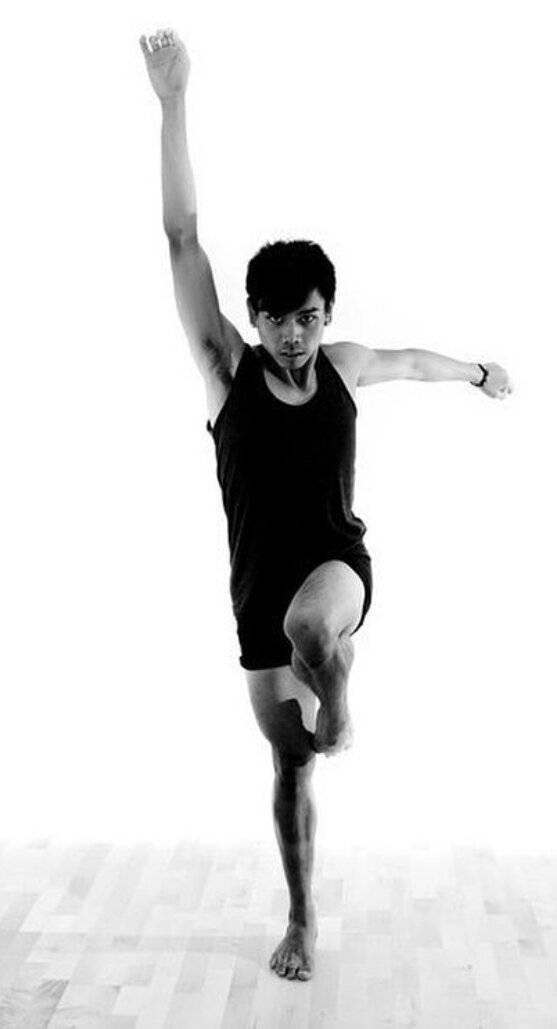
Photo credit: Sean E. Nyberg
Julius later moved back to Hawaii to work as a co-director at his old dance studio, where he also took on the competition team. He eventually moved to San Francisco, where he participated in Alonzo King LINE’s professional training program for a year. After this “pretty amazing” experience, Julius relocated to Seattle, WA, where he has been based ever since.
When asked what he has gained and what the biggest takeaways from his extensive years of training are, Julius replies “I think I found myself. That's my biggest gain. You know, we all go through that path of just not knowing who [we] are, and I think I definitely found myself and found who I am and what I can really do.”
Julius says that he found his passion for choreography while he was based in California. He mentions that he often had the opportunity to assist instructors. When talking about his tour experience, Julius says “I think that's when I fell in love with just creating and teaching… and then [that] eventually evolved [in]to doing workshops and traveling and doing competition pieces.”
Upon being asked about the origins of Artistry in Motion, Julius says “I've always honestly wanted something for my own… I was always ambitious and I always wanted to be my own boss.” He continued on saying, “…quarantine definitely was eye-opening for me because I had a lot of time for myself and it made me really realize what I wanted to do with the rest of my life and what I know I could accomplish.”
Julius describes starting Artistry in Motion as “the biggest obstacle [he’s] ever had to [take on].” Starting and operating the company was and is a huge challenge for Julius, especially because of the time he decided to start it. The arts world was going through a crisis because of the pandemic, with many companies shutting down, arts funding being cut or non-existent, performances being canceled, and more. However, Julius lists many reasons why starting a company has been worth it. From giving him a purpose to giving the underrepresented a voice, Julius wants to reach out to the community.
In addition, Julius spoke about another challenge he’s had: “finding the right support, especially during this time.” “I know everyone has their own obstacles and challenges that they all have to go through, but just finding the right community [has been difficult],” he shares. While finding support can be a challenge, especially in realms like the dance world where not everyone is accepting of all genders, sexual orientations, races, and more, Julius speaks on how open Seattle is and how supportive the arts community here is.
Towards the end of our conversation, I asked Julius to give our readers advice on starting their own company and taking creative risks. He gave a true gem of advice: “there's never [going to] be a perfect time. So you just really have to go for it.”
When asked what he wants to see change in the larger dance industry, Julius says he “want[s] the BIPOC and the LGBTQ+ [communities] to be... more highlighted… I want to highlight the individuals and the underserved communit[ies].” He shares that the hardest part of his dance training was hiding his sexuality. In the dance world, there typically isn’t male-to-male partnering and Julius wants to change that, in part by having an all-male company.
AIMco. has an upcoming show on July 25th that will heavily feature the LGBTQ+ and BIPOC communities. There will be wacking, voguing, drag queens, and a viola player, just to name a few acts. Julius is so excited to bring all forms of art to the stage, not just dance. “Dance is a universal language,” and Julius is looking forward to giving a voice to marginalized communities.

“There’s never [going to] be a perfect time. So you just really have to go for it.”
AIMco.’s Mission and Vision Statement-
WE TRAIN WITH PASSION, DANCE WITH HEART AND AIM FOR SUCCESS.

By Emma Neilson
Emma Neilson is a pre-professional dancer from Seattle, WA. She started dancing at the “late” age of 13, and decided to pursue a possible professional career at age 19. She is currently a Professional Division student at International Ballet Academy in Bellevue, WA. She is a registered Barre fitness and Flexistretcher instructor, as well as a current ambassador for To The Pointe Nutrition.
Disability and Ableism: What Are They?
In this article, I will dive deeper into the topics of disability and ableism. I understand that these topics can be sensitive and triggering to some folks. However, I think that these subjects need to be brought to more people’s attention because I don’t hear nearly enough said about them. I also hear a lot of incorrect information around these issues, so my goal is to advocate and educate.
Trigger Warning: Mental disability and anxiety
By Jade Fraser DWC Blog Contributor
Disclaimer: In this article, I chose to use the word “people” before “disability” because some people prefer “person with disability” rather than “disabled person” to show that they are a person before their disability. I generally don’t do this when writing or speaking because, being disabled, I am a person before my disability. That should be obvious, regardless of what language I use. Many people with disabilities use “disabled” before “person” for those reasons, and also for grammar issues. However, individuals may have their own preferences for how they wish to be referred to, and those should be respected. I chose to use “person” before “disability” here only because I want to avoid feedback and questions about my word choice.
In this article, I will dive deeper into the topics of disability and ableism. I understand that these topics can be sensitive and triggering to some folks. However, I think that these subjects need to be brought to more people’s attention because I don’t hear nearly enough said about them. I also hear a lot of incorrect information around these issues, so my goal is to advocate and educate.
I’ll start by explaining what the words disability and ableism mean, and then dive deeper into the complex realm of ability versus disability. I want to share my perspective as a person who spends their life trying to navigate their way through this seemingly endless maze. Additionally, I will discuss ableism and why it is damaging to society, as well as what people without disabilities can do to help break the cycle of misinformation, frustration, embarrassment, fear, and hurt. Finally, I will show how this information relates to the dance world.
You may be wondering, “what is a disability?” That’s a good question. Often, the word “disability” makes someone think of a person in a wheelchair or missing a limb. Others may think of anxiety disorders or developmental conditions. Chronic conditions like diabetes, POTS, or epilepsy might also come to mind. All of these thoughts and views are valid; however, it pays to seek perspectives from other people.
Humans define things differently depending on their distinct life experiences. For example, if you ask ten different people what the definition of education is, you’ll get ten different answers. “Education is when you go to school to learn things.” “Education is when you sit on the couch with a bowl of popcorn and binge-watch The Bachelor for the tenth time this week.” “Education is ‘Hell on Earth.’” I could go on and on.

I personally can see some amount of truth in any of those definitions. If you go to school, you are bound to learn something, whether it be how to solve algebraic equations or what the best (or worst) lunch option is. Binge-watching reality television could make you realize that you like plain butter better than butter and salt on your popcorn. Maybe you’re dreading your next educational opportunity. You could look at any of these explanations and find them valid, in a way. However, you can always gain new insight from listening to the perspectives that differ from your own. (This nugget of wisdom is adapted from the ingeniously hysterical book by Hilary Smith, Welcome to the Jungle: Facing Bipolar Without Freaking Out.)
It’s the same with disability: every person you ask will give a different answer. Nevertheless, the definition of disability outlined by the Americans with Disabilities Act of 1990 (ADA) is “a physical or mental impairment that substantially limits one or more major life activities, a person who has a history or record of such an impairment, or a person who is perceived by others as having such an impairment.”
The ADA’s definition of disability appears complete and thorough, but it can also be confusing to think about what it means to be impaired in a way that fits the definition of the law. What does that mean, exactly? Do I fit that definition? If I do, what do I do now?
I have asked myself all of these questions and have always been confused about them! There are many long and fancy words in these definitions and explanations, which can make them daunting to look at. That’s why I like to describe “disability” more simply, as it can make it easier to understand, not only for myself but, hopefully, for other people as well.
I think of disability as a difference with somebody’s brain or physical body that makes it harder to live their life. This description puts it into simple terms so that it doesn’t sound as daunting and clinical. When I think about the ADA’s definition of disability, I feel separated and tainted with the feeling that I’m “abnormal” or “wrong.” It might make someone appear more limited than they actually are. When I think of it as just a difference that makes life harder, I know that my brain and body function differently, but I don’t feel like I am completely different from those around me.
“Disability” is a frustratingly broad term, which makes it challenging to think about more specifically. Disability is also a spectrum, meaning that a person living with one condition will experience it completely differently than another person living with the same condition. This occurs due to differences in severity, symptoms, etc. An example is an easily manageable OCD that isn’t disruptive, versus OCD that needs to be mitigated with medication.
Further, some disabilities affect the brain’s functioning rather than the physical body. Often called mental disorders or mental illnesses, these impairments can be more common and extensive than many may think.
Take anxiety, for example. I experience multiple anxiety disorders, but mainly Generalized Anxiety Disorder (GAD). For me, experiencing this chronic condition means enduring frequent anxiety episodes, usually without a reasonable or known cause. I might have an episode when watching a funny animal video, or even when I’m just relaxing on the couch. Anxiety is considered a disability when it disrupts a person’s daily life. My anxiety disorders are debilitating every single day – it’s not just situational anxiety – which is why I am considered a person with a disability.
Now that we’ve tackled the definition of a disability, what is ableism?
To me, ableism involves having certain beliefs or doing certain actions that deprive people with disabilities of opportunities. A viewpoint that could be considered ableist is believing that people with disabilities aren’t intelligent people and aren’t capable of living successful, independent lives. Actions that could be considered ableist are talking to a person with a mental illness like you’d talk to a five-year-old or pushing someone’s wheelchair when they don’t need or want you to push it. Judging a person by their disability alone is an ableist thing to do, no matter what. There is so much more to a person than their disability, and you certainly do not know their whole story and therefore are not in any place to judge them.
For example, I have a friend who has Down’s syndrome. She is in her twenties but hasn’t developed as quickly as others her age in certain areas of her life. She goes to a school for people with similar conditions to her’s and has a habit of giving her Barbie dolls extremely short pixie cuts. I will never know the full extent of what it’s like to live with her condition, but, as her friend, I know that I don’t need to treat her differently than I would anybody else just because of her Down’s syndrome. I treat her the way I would treat any of my other friends, meaning I don’t talk to her differently and I don’t treat her like a baby, because she isn’t one. Her condition does not define who she is. I see her just as I would see any of my other friends. She is not “my friend with Down’s syndrome;” she is “my friend.”
Many things can be considered ableist by people with disabilities, and we might be hurt by something a person says or does even if they mean well. You might not think completing a simple task for us or trying to make life easier for us in some way could be hurtful. But, we might get confused as to why you’re doing something for us that isn’t difficult to do ourselves. You might think you’re helping us, but often what you’re doing is frustrating and confusing at best, and communicating that we can’t be independent and must always rely on others at worst. It would be a different story if we actually needed help with something when we’re unable to complete a task without support.
Due to ableism, people with disabilities can experience discrimination from educators, potential employers, and others judging them based on their disabilities and not their skills. People who would be fantastic in a certain position could get overlooked or fired based on them having a disability. Additionally, people with disabilities have historically been paid less than others that don’t possess disabilities.
Further, there are many misconceptions about disabilities out there. For example, some misconceptions include that everybody who uses a wheelchair is unable to walk or everybody who uses a service animal is blind. People with mental illnesses may be considered unintelligent and incapable of being independent or successful.
If these misconceptions are spread widely, then they will be widely believed. If they are widely believed, an entire society can become misinformed. These false beliefs then become the foundation of how our society thinks and operates, and it will become much more difficult to re-educate people.
“One misconception that bothers me a lot is the belief that people with mental illnesses are not intelligent and capable people. That is about as far from the truth as you can get.”
One misconception that bothers me a lot is the belief that people with mental illnesses are not intelligent and capable people. That is about as far from the truth as you can get. I have multiple mental illnesses, and I am capable of excelling in a difficult and high-powered career if I chose to go that route. It's no wonder that many people with mental conditions become talented visual artists, musicians, dancers, actors, and more. Here are just a few examples of celebrities with mental illnesses:
Park Jimin (Jimin of BTS) has struggled with disordered eating and has become a crucial part of the Korean pop band BTS with his vocals, dance skills, and his ability to show empathy and love.
Min Yoongi (SUGA of BTS) has dealt with debilitating anxiety disorders and depression, and he uses his personal experiences and extreme pain in his work as a beatmaker and songwriter, aside from being a phenomenal pianist.
Carrie Fisher struggled with addiction, which is hereditary in her mother’s family. She became one of the most celebrated actresses out there with her work as Princess Leia in the Star Wars movies.
Ludwig van Beethoven is thought to have had a mood disorder, likely bipolar depression. This caused him to create much of his music to reflect his mood, which is one of the reasons his music speaks to so many people.
It’s not only intelligence and success though. People with mental illnesses are not the unstable, crazy people that much of society sees us as, and how we are often portrayed by the media. Some of the most sensitive and in-tune people I know have mental disorders. Some people with mental illnesses may be so in touch with the emotions of others that they seem psychic, or extremely sensitive to nature. Others might be loved so much by animals that they will bypass everyone else just to approach them. For me specifically, I have always had a gift with horses. I can bond and communicate with them in a way that’s different from everybody else.
These unique parts of myself and others are true strengths and gifts. However, they pose potential challenges. For example, somebody attuned to nature might feel most at peace in natural settings, but could be driven to depression – or even suicide – by the fact that the earth is being harmed by humans, potentially beyond repair. As someone who is attuned to horses, I didn’t know what to do with myself when the horse I learned to ride on and who taught me so much was put to sleep. Her loss was devastating for me. (That’s another nugget of wisdom adapted from Welcome to the Jungle: Facing Bipolar Without Freaking Out by Hilary Smith.)
Part of why debunking misconceptions is so important to me is that youth with disabilities are at a “high risk” for self-harming and suicide. When I was in 8th grade, I was almost driven to suicide because of what was happening in my life. What saved me was the knowledge that I have people around me that need me, love me, and care so much for me that losing me would destroy their lives. Through all my self-hatred, I still knew that people cared. And they cared for me. If I died, so many people would die too, emotionally if not physically. That is what kept me going in the darkest point of my life.
I choose to publicly share personal details of my struggles so that I can raise awareness of the reality that I was living. There was so much more going on beneath the surface than you ever would have known by just talking to me on a daily basis. I laughed, I socialized, and I went away from home, but I was truly suffering. I am living proof of why it is hurtful to judge and make assumptions about people with disabilities when you don’t have all the information. People not believing my struggles and gaslighting me almost caused me to end my life.
At this point, you may be wondering “how does this all relate to the dance world?” Earlier, I mentioned how people with disabilities are affected by discrimination in education and employment. The same issues happen in the dance world - people with disabilities can miss out on dance-related education and employment opportunities. We also need to re-consider the accessibility of dance programs and facilities. If a person with a disability is denied an opportunity to participate in a program because of an accessibility issue, there are problems on multiple levels. For example, if a dance convention is being held at a location that is inaccessible to a wheelchair user, the facility is liable for being inaccessible, but the convention is responsible for not choosing an accessible location. If a dance camp or intensive program refuses to admit a dancer based on their disability rather than their dancing, that’s also ableist.
Situations like these can be classified as legal issues, ethical issues, or both. In a school setting, a student might be denied based on accommodation issues on campus, which is mainly a legal issue and can be fixed with structural modifications. But if the student is denied based on the staff’s unwillingness to support a student with a disability, that’s mainly an ethical issue. In the case of a dance convention, intensive, or even just a class, it’s both a legal and ethical issue. Therefore, in the dance world, there’s a need to solve all of these issues by implementing both structural changes in facilities that need them, as well as shifting attitudes with re-education.
I really hope everyone enjoyed reading this article and learned something new. The world might become a little less biased with people becoming more aware of the realities people with disabilities live with every day.
What It’s Like Being a Part of the DWC Team
Since Samantha Weissbach took ownership of Dancewear Center in 2018, our vision as a staff has been geared towards empowering local dancers through “continuous support and product education.” Whether it’s through knowledgeable pointe shoe fittings or spotlighting artists on the DWC Blog, the DWC team utilizes integrity, laughter, and grit to serve our local dance community. Being a member of the DWC staff involves much more than conducting simple retail tasks. Our staff of dancers and dance educators gains invaluable product knowledge, fundamental life skills, and joins a warm community, all while advancing the local dance realm that we know and love.
By Madison Huizinga, DWC Blog Contributor

Samantha Weissbach, Owner & Director of Operations
Since Samantha Weissbach took ownership of Dancewear Center in 2018, our vision as a staff has been geared towards empowering local dancers through “continuous support and product education.” Whether it’s through knowledgeable pointe shoe fittings or spotlighting artists on the DWC Blog, the DWC team utilizes integrity, laughter, and grit to serve our local dance community. Being a member of the DWC staff involves much more than conducting simple retail tasks. Our staff of dancers and dance educators gains invaluable product knowledge, fundamental life skills, and joins a warm community, all while advancing the local dance realm that we know and love.
Store Manager and Pointe Shoe Fitter Melissa Koh Krienke shares that what drew her to Dancewear Center was the fact that the employees all share a “common goal” to “support the dance community in this area.” She shares that through spotlighting “social justice and [physical] and mental health,” particularly on the blog and social media, Dancewear Center aims to “cultivate a dance world that is always getting better and looking forward.”
Pointe Shoe Fitter and DWC Blog Contributor Anna Peters points out that a unique aspect of the DWC staff is that we all have “pre-made connections and ties to the dance world,” which allows us to have a “connection with our customers.”
“There is a common language among the employees here, as it’s a store run by dancers, for dancers, making work a personable experience”
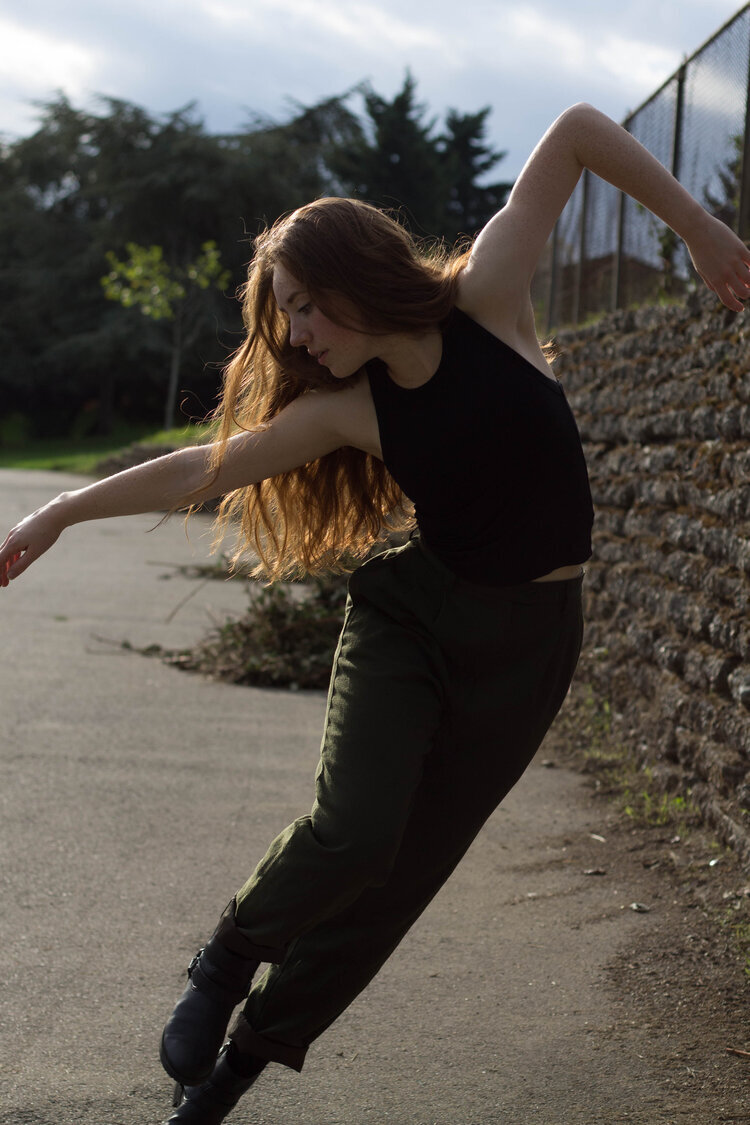
Melissa Krienke, Store Manager
Melissa stresses that Dancewear Center is a place where employees can learn to work through their mistakes, in part due to the support of Owner and Director of Operations Samantha Weissbach. Samantha explains that open and honest communication, grace, and empathy are values that she holds important when managing and collaborating with the DWC staff. “I am nothing without my team and vice versa, that’s how we work best,” Samantha shares.
“Sam is really supportive and helps people learn,” Melissa says. “She helps cultivate the best qualities [in you].” Staff members can hold themselves to a high standard of professionalism, yet not take themselves too seriously.
“I love Samantha,” Store Manager and Pointe Shoe Fitter Riley Hendrickson says. She appreciates how her “mental health” and “well-being” are always at the forefront of Samantha’s mind. “She’s always there for us… she’s a listening ear, even if it’s not work-related… she really just wants to help us grow,” Riley adds.
“We have the freedom to do [things] the best ways for us,” Operations Manager and Pointe Shoe Fitter Olivia Floyd says about working under Samantha. She shares that Samantha is “very fun” and “very appreciative all of the time,” and often allows the staff to “pick what [they’re] most interested in” to do.
“We’re all a family, all the staff and a lot of the customers,” Olivia says about the dynamic among DWC employees. She explains that at Dancewear Center “the work still gets done and it gets done well, but we can also...listen to a song and have a dance party in the store.” There is a great deal of comfortability among the team, like a “warm embrace.”
“We have a good balance where we can hold each other accountable in our work but still know we’re not being harsh on each other,” Riley says. “We still have lots of fun and laughter with each other.”
“There is still a lot of room to explore different interests that arise”

Anna Peters, Pointe Shoe Fitter & DWC Blog Contributor
The list of tools employees learn while working at Dancewear Center is countless. Melissa shares that getting advanced product education, particularly about pointe shoes, as a dance teacher is incredibly helpful.
“As a team, we’ve had to learn communication, which has gotten really good. We’re like a machine now,” Olivia points out. She cites time management, managing expectations, and asking for help as skills she’s developed during her time at Dancewear Center.
Riley shares that she has learned how to be a part of a team which has gotten her out of her comfort zone. In terms of technical skills, learning to work with customers, manage inventory, and utilize retail software has been incredibly useful.
Anna shares that pointe shoe fitting is “her favorite part of working at Dancewear Center.” Since she’s studying to become a physical therapist that specializes in dancers, learning how to
“properly fit pointe shoes, so that a dancer’s body stays healthy and can dance without pain for as long as possible” has been useful. She’s also grateful that she’s learned how to balance accommodation with assertiveness when interacting with customers. “Being kind and courteous and always making customers feel welcome...that’s going to be a skill I will absolutely take with me...anywhere in life,” she shares.

Riley Hendrickson, Store Manager
“Everyone has had their unique wins and growth,” Samantha says. She notes how the staff has “grown exponentially in confidence and is more comfortable making mistakes and being honest... because of the way [DWC] operates.” Samantha argues that “you don’t grow and you don’t take risks if you’re afraid of making mistakes,” so she seeks to give employees agency and compassion when it comes to decision-making. Employees become creative and curious because of the freedom they’re given to try new things and falter along the way. “People are...thinking much more outside of the box within [our] environment,” Samantha says.
All in all, Samantha strives for DWC employees to obtain skill sets that they can take anywhere with them in life. “I’m here to support every individual person’s growth,” Samantha states. She doesn’t just direct her energy on workplace goals, but assists employees in achieving their personal goals. “It’s important to me that each individual team member gets what they need out of the job,” she emphasizes.
When you join the team at DWC, you’re not just taking on a job, but becoming a part of a supportive community that can last a lifetime. “The family will stay forever,” Olivia says. “Not everything has to be serious, you can come to work and laugh. You should go to work and laugh.”
“Not everything has to be serious, you can come to work and laugh. You should go to work and laugh.”

Olivia Floyd, Operations Manager

Madison Huizinga has been dancing for 13 years, and her favorite styles are ballet and contemporary. Currently, she attends the University of Washington and is studying Communications, Business, and Dance. Madison is presently a company member with Seattle-based dance company Intrepidus Dance. She loves working at Dancewear Center because it allows her to help local dancers find the best shoes, apparel, and equipment possible to further their dance goals and careers. Dance has always been a positive creative outlet for her to express her emotions—so it’s always nice to meet members of the local dance community that relate!
Outside of dance and work, you will find Madison exploring new cafés and restaurants around Seattle, hiking, reading, and traveling.
Dance for All Abilities
For an artform with a long history of exclusivity, accessibility can be a difficult topic for many dance studios. Counter to traditions of gatekeeping, elitist training, and a hyper fixation on perfection, local studio Issaquah Dance Theater (IDT) offers a dance class tailored for neurodivergent and physically disabled students. The Best of My Abilities (BOMA) is an inclusive dance program founded by dancer and paraeducator, Emmy Fansler.
By Ella Kim, DWC Blog Contributor
For an artform with a long history of exclusivity, accessibility can be a difficult topic for many dance studios. Counter to traditions of gatekeeping, elitist training, and a hyper fixation on perfection, local studio Issaquah Dance Theater (IDT) offers a dance class tailored for neurodivergent and physically disabled students. The Best of My Abilities (BOMA) is an inclusive dance program founded by dancer and paraeducator, Emmy Fansler.
IDT has provided these dance classes since 2016. Fansler describes the class as being open to any and every one regardless of their mobility. When discussing over FaceTime who can be a BOMA dancer, she warmly recalled working with students in wheelchairs and explained, “if I can’t figure out a way to make it work for everybody, that’s on me.”

Photo by Hailey Waters
BOMA introduces students to a variety of dance styles, focusing primarily on encouraging movement and relationship building. Dance becomes a setting from which students can learn to help each other, trust each other, and trust themselves. By making the joy of dance accessible, the class also spreads the life skills dance teaches to students. Movements become obstacles the dancers learn to approach together.
The classes normally have a very flexible structure, often tailored to the particular group of dancers in each class. Building relationships between dancers is a large focus of the program. Fansler often pairs dancers who can physically support another person with dancers who need support. They move across the studio holding hands or helping guide each other around in turns.
The COVID-19 virus created huge challenges for dance studios, and IDT is no exception. On March 13th, Washington state governor, Jay Inslee, closed all schools, prompting the studio to move classes to a virtual format. Washington has continued to have strict restrictions surrounding COVID-19 safety. The state is currently working towards reopening, allowing for heavily regulated gatherings, so IDT hosts some of its classes in a hybrid in person and online format. BOMA classes have remained completely virtual since March 2020 for the safety of its participants.
For BOMA, this means a more consistent structure for each class. They begin with a guided warm up based within dance movements, move into a stretch sequence, and finish with putting together a dance routine. Instead of using touch to support each other through movements, dancers are modifying movements individually (for example changing a choreographed turn into a sway of the body and arms). The dancers are currently exploring salsa, using salsa footwork to inspire the warm up and listening to salsa music throughout the class.
“A lot of times dance is seen as this ridiculously exclusive world, really what you need is a body and a space.”
The benefits of BOMA are closely related to the successes seen in Dance Movement Therapy (DMT), and recent research points to dance having a positive impact on people with Autism. A study led by Malin Hildebrandt (professor at the University of Heidelberg in Germany), published in 2016, explains how dance can support the embodiment approach to managing negative symptoms caused by Autism.
The embodiment approach is a new thought process guiding some research on Autism. It breaks from the traditional focus on the mind’s impact on the body. Hildebrandt explains embodiment as the belief that “our perception of the world, and thus also our interaction with it, is entirely mediated by our bodies”. This approach assumes the mind and body have a fundamentally reciprocal relationship. Dance is rooted in the cooperation of body and mind, making it a great activity to strengthen that relationship.

Emmy Fansler, BOMA Program Founder
Hildebrandt’s study recorded a reduction of negative symptoms in people with Autism after ten weekly sessions of manualized DMT. The sessions consisted of encouraging individuals to manipulate the quality of their movements, mirroring exercises (copying each other’s dancing) in pairs and groups, and verbal processing about how the dancing made participants feel. IDT’s BOMA classes are not certified DMT sessions; however, they contain many of the same elements, focusing on encouraging dancers to expand or manipulate their natural movements and facilitating dancing together in pairs and groups.
Hildebrandt found that the 2 symptoms most alleviated by dance therapy were anhedonia (inability to feel pleasure) and blunted affect (difficulty expressing emotions). This fits with the embodiment theory, “because the subtypes most affected by the intervention… are more closely related to diminished self-perception as the connection of bodily states to emotions.”
BOMA began as an independent project of Fansler when she lived in Kansas. She worked as an adaptive PE paraeducator, where she would invite her students from PE to her after school dance classes. When asked about the origin of BOMA, Fansler remarked with a laugh that she created an accidental dance studio.
Eventually, Fansler moved to Washington, bringing BOMA with her. “I keep the name wherever I’ve gone because it makes sense for your abilities in all ways”.
IDT’s Artistic Director and owner, Kevin Kaiser, also works to make dance education more accessible. When asked how the program came to IDT, Kaiser stated in an email that he had been seeking to create a program like BOMA, so “when I learned that Emmy has a passion and a very clear vision for this type of program it was an easy decision for me”.
BOMA welcomes other IDT students to volunteer in its classes. Current student at IDT, Hannah Jacobson, helped with some classes two years ago. When interviewed over FaceTime, Jacobson described her experience, “it wasn’t like I was giving directions… I would do the combo with them and it was like I was a part of the class”. In the couple of classes she assisted, Jacobson noticed, “a very family environment”.
One thing that really stuck with Jacobson from her time with BOMA is how the class worked on challenges together. Instead of pulling a dancer aside if a problem arises, Fansler brings the class together in a circle and they help the dancer through it. Jacobson remembered one class when a dancer’s vocal ticks were winding up another dancer. Jacobson recalled that, “we worked together to help them calm down. It was as a group. We collectively came back to a circle and talked for a couple minutes”. Her lasting impression of BOMA is that, “everyone works through everything together”.
A foundational goal of this program is to build relationships between students. By assisting each other to learn more challenging movements, the dancers learn to trust each other. Fansler works to facilitate a safe atmosphere where the dancers can trust, experiment, and grow. Fansler warmly recounted a former student who had an aversion to authority figures but was receptive to help from peers. The student would not let Fansler touch her but would hold hands with other dancers as she moved across the floor. Proud of the dancer’s growth throughout the program, Fansler shared that the dancer was even comfortable being lifted by other students by the end of the year.
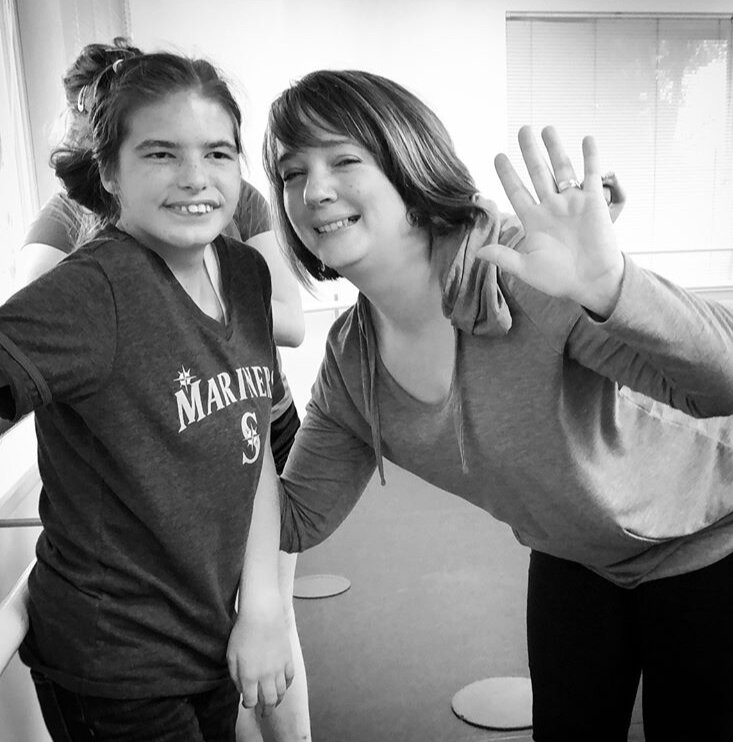
Photo by Hailey Waters
Fansler’s accepting and creative approach to each dancer's challenges is a hallmark of the program. BOMA focuses on what the students are able to do, not their limitations. Fansler’s voice was full of care as she responded to being asked what the goal of BOMA was for the participants. “I want them to feel safe and like they belong, and I want them to celebrate the things they can do instead of [being] boxed in by what they are told they cannot”.
The BOMA class is included in the IDT’s annual recitals. The dancers work on their own piece throughout the year and perform it on stage in the spring.
This month, BOMA’s current class of six dancers will perform in IDT’s recital. Changing COVID-19 restrictions make the exact format of the show uncertain, but the class is already working on creating their piece.
By offering a dance class tailored to students with disabilities, IDT is opening the gate to dance education and breaking down the traditional barriers of who is considered a dancer. Fansler notes, “a lot of times dance is seen as this ridiculously exclusive world, really what you need is a body and a space.”

Ella Kim began dancing at 4 years old. She focused primarily in ballet until finding a love of modern and contemporary dance in high school. She is currently pursuing a BFA in Dance at George Mason University. On breaks from school, she's had the opportunity to dance as a guest artist for Trillium Dance Collective. Ella enjoys investigating different aspects of the dance world and is thankful to DWC for giving her a platform.
Body Positivity In Dance
For all of my life, my body has been what most people would think is not a conventional “dancer body.” While there is no shade intended to be thrown to those who are of a different physique, I was never a naturally thin person and yet constantly felt like my life would be easier if I were, that the thin dancers at my childhood studio got the most attention and respect paid to their work. I knew there were certain roles I would not likely be considered for because of the aesthetic desired versus the one I represented. In another space, I was told that I am “the nerdy, girl-next-door type,” but “not the leading lady type,” and I felt that held true for how I was perceived in the dance space as well.
Trigger Warning: Eating disorders, Mental Health Concerns
By Hannah Emory. DWC Blog Contributor

Photo by: Kelsey Michelle Photography
Childhood body-negative studio experiences:
For all of my life, my body has been what most people would think is not a conventional “dancer body.” While there is no shade intended to be thrown to those who are of a different physique, I was never a naturally thin person and yet constantly felt like my life would be easier if I were, that the thin dancers at my childhood studio got the most attention and respect paid to their work. I knew there were certain roles I would not likely be considered for because of the aesthetic desired versus the one I represented. In another space, I was told that I am “the nerdy, girl-next-door type,” but “not the leading lady type,” and I felt that held true for how I was perceived in the dance space as well.
Growing up in what I felt to be a body-negative/body-shaming dance space for me was almost like the old analogy of a frog being slowly boiled. You’re in the midst of the heat, yet being slowly desensitized to it until it’s too late to save yourself. From my personal experience, body negativity can be so ingrained in dance education spaces that it’s hard to even recognize it happening. Especially when body-negative messaging and practices are covert rather than overt. I became so used to feeling poorly about myself and receiving nonchalant messages about how my body was not quite acceptable, that I thought it was normal, even deserved.
Throughout my young dancing years, I took hiatuses from dancing many times when the pressure and pain of not living up to expectations became too much. Then upon my return, I would see folks I was dancing with a couple years before were now a few levels ahead of me and being cast in principal roles in the dance company. So the vicious cycle would continue when I realized I was nowhere near as conditioned, technical, or artistically expressive as them, because time had gone by.
My confidence would waiver again, the body image issues from my wee years would rise to the surface, and I would either severely cut back my class schedule or leave dancing for a season altogether. Yet, there was little time made for investing in the emotional wellbeing of dancers either in technique classes or in the member-exclusive company, and so there was no one there to notice that I and other dancers were slipping through the cracks.
These turbulent years certainly contributed to the zeal I have for diversity in the dance world now, because I became exhausted with the old hat expectations of the dance world yester-years. For years, I dreamed of a more just and body-inclusive dance world… then I realized that it was up to me to make that world a reality, in whatever way I can.
Choosing body positivity:
Through mental health counseling, I have had an opportunity to explore how deeply negative thoughts about myself and my dancing have burrowed into my self-image as a result of the conditioning I’ve received since I was young. I’ve begun unpacking how those thought patterns have affected my life and thoughts, have led me to treat myself and my work with disrespect, and to self-harm through intense exercising and disordered eating. Yet, all the while, I know I just wanted to live in the simplicity of loving my art and self-expression. That is the evil at the root of body negativity; it robs everyone of self-love.
I realized that the difference between body positivity and body negativity can be subtle yet pervasive. The difference between wanting to be strong or wanting to be a small leotard size. The difference between genuine happiness for someone else and toxic comparison. The difference between loving dance for itself and wanting to be admired. A subtle shift is enough to make what should be a joy into an obligation, or a mental prison.
“That is the evil at the root of body negativity; it robs everyone of self-love.”
These patterns of pervasive self-harming thoughts and habits started shifting for me ever so slightly once I got to university. I could certainly feel myself holding onto the desire to meet superficial aesthetic standards for a while, even though I had hoped that at the university level such expectations would be a thing of the past. As I grew in confidence as a young adult navigating the world, I got tired of being evaluated on aesthetic standards alone. Since day one, I have worked hard in my university program and wanted to be evaluated primarily on my work ethic and attention to detail. For me, realizing that body positivity was the key to unlocking the rest of my dancing career came because of a breaking point. It came because I was exhausted with being counted out time and again, and seeing others struggle to stand out in the midst of a popularity contest. It came with growing up and realizing that dance can be (and has to be) many things to many people or it loses its joy. It came with a desire to help people of all body modalities to find the indescribable joy in dance that I found. It came with heartbreak but also hope: to be a cycle breaker, so that no other dancers will be made to feel less-than because of their body.
Most of all, it came with solidifying my own philosophy. The way you show up on earth in your physical form is the most deeply personal and powerful thing we have available to us. I believe that we are spiritual beings having a physical experience, that our experience of being human is one and the same with our bodily experience. So, to me, devaluation of the body is devaluation of the spirit, a disregard for the core of humanness. Not everyone approaches it with that set of beliefs, but from a pragmatic standpoint, our identities are intrinsically tied to our physical bodies, while at the same time transcending the physical. We perceive each other physically, as well as emotionally and intellectually, simultaneously. There are levels to being human, and each one of them counts. I believe for that reason, there should be awe when encountering a human with a body; there should be respect and love. There should be joy and acceptance. This is especially critical in dance spaces.
When I realized that some part of my dance career would include being a teacher, I recognized that I had to unpick my own body-negative thought patterns. I had to heal myself from my internalized self-reproach, I had to get healthy, or any teaching I do would be heavy with judgement toward myself, and most likely toward others as well. My aesthetic judgments toward myself and toward other dancers had been taken over by the body-negative language and practices I received as a child and young adult. The next generation of teachers need tools for making body positivity an inherent part of their curricula, and unteaching body negativity in the dance world has to be intentional for us to make any progress.
Body positivity in the studio:
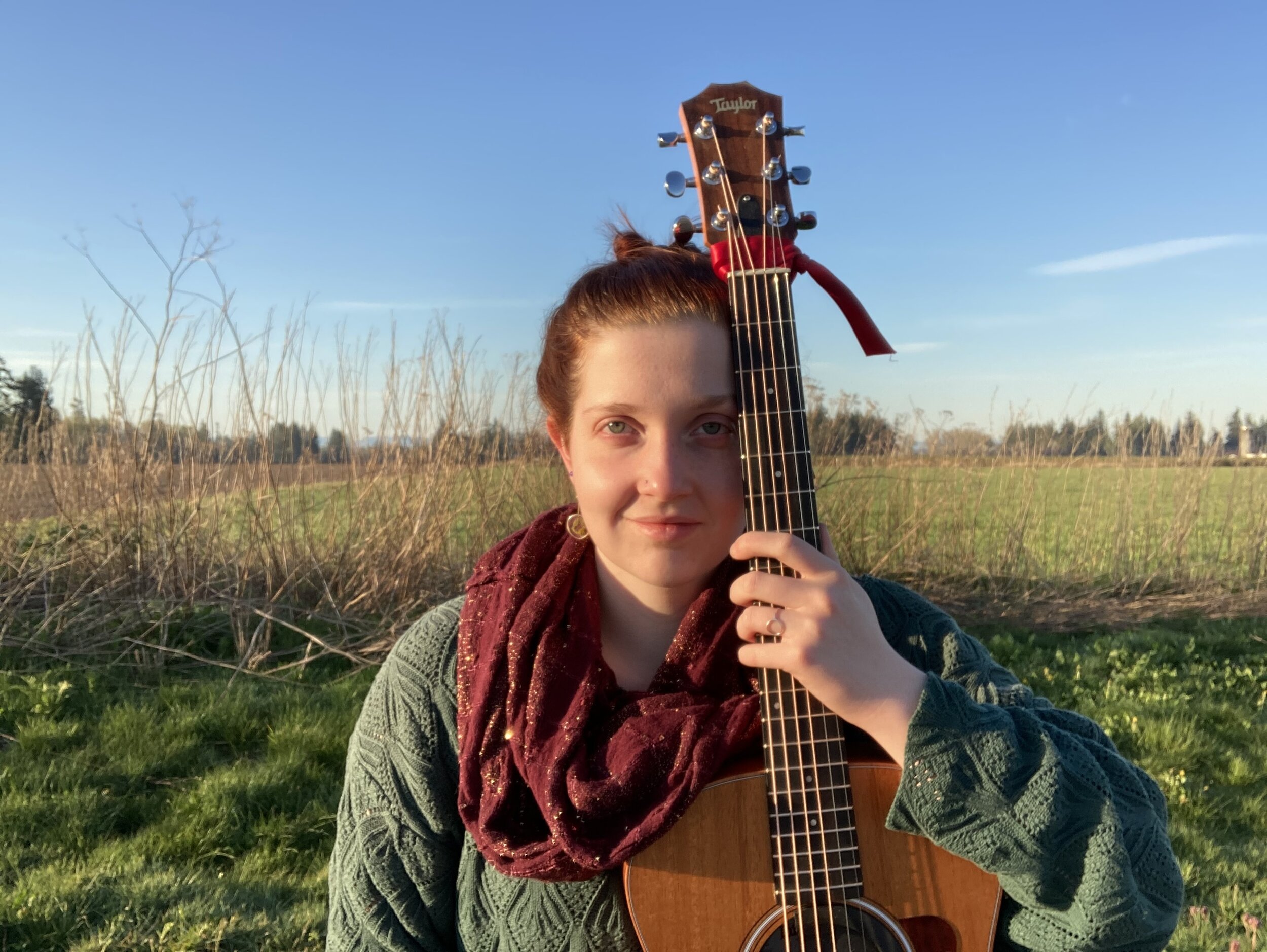
On my journey of deconstructing my own body-negativity, I have had to employ curiosity and become very uncomfortable, and ask questions to form new patterns of thought. Some key questions I ask myself regularly are:
Do I still cling to negative thoughts and expectations of myself? Why?
How do I practically deconstruct my body-negative thought patterns today?
What amount of ownership am I letting others have over my narrative?
Does another dancer’s physical appearance alter my opinion of their dance work, and why?
To what extent do I automatically judge other dancers before I’ve really taken in and paid respect to their work?
How can I lovingly participate in my own wellness and healing?
How can I encourage the wellness and healing of others today?
Asking myself these questions has already led to really positive results. I have found freedom in working with my body on a daily basis, wherever I find her at and without judgement. I find that I see the beauty in other dancers more readily because I am working to shut off voices of judgement about their work and mine, because I believe that setting yourself free also sets others free. I have found work by other dancers that is truly comforting, inspiring, and refreshing because it breaks down barriers and creates new possibilities.
If I were to give a short list of suggestions to studios and universities about how to train with body-positive frameworks, it would be:
Meet your dancers where they are at, then give them tools to become more of themselves. Give them lots of opportunities to discover their creative voices and movement languages in a non-judgemental space. Please, don’t apply limiting labels. (hard-and-fast categorizations of dancers about technique or performance qualities that limit the dancer’s sense of possibility and growth for the future, like “you’re good at turns but bad at barre” or “you’re a comedic performer, but not lead/principal material,” the implication of those comments being that there is no possibility for those dancers to develop those things, or that their body type makes them suited to some kinds of movement/performance, but not all kinds of movement/performance)
Seek out diverse educational imagery and performance footage, and invite in guest teachers and artists from many different backgrounds, including those who know how to artistically and technically work with a lot of different bodies.
Educate yourselves and your dancers in embodiment/grounding practices, accessible nutrition, and injury prevention, with the acknowledgement that every body is unique and deserves personalized wellness attention. A well dancer is an excellent dancer.
Keep interrogating your own body image practices and assumptions, for your teaching and yourself. Continually seek out media and information that opens your perspective. Know that body positivity and self-love in the dance world have to be intentionally exemplified, not merely assumed to be a reality.
I offer these suggestions as one who has not yet been a dance educator, but has been a student for many years. I acknowledge that there are unique challenges to educators within different dance spaces, but since dance is a physical art, I believe it to be imperative that we work to get the body positivity issue right. I offer these suggestions as a student who knows what it feels like to have had a few very encouraging and life-giving teachers, and unfortunately, a few teachers who added to my pain in this area. I offer these suggestions with the hope that more dancers will receive from their teachers what I ultimately had to learn for myself.
Self-love and body positivity in dance spaces must be intentional, and educators are the first line of offering dancers a healthier way to see themselves and a brighter way of looking at the world. So that dancers everywhere will know their body (and every body) is a dancing body.

By Hannah Emory
Hannah Emory has been a creative movement artist for over ten years, and is currently a dance major at Western Washington University. Her focus areas lie in the contemporary, ballet, and Irish step dancing spaces, and she has received additional training in ballroom, hip hop, contemporary jazz, and Scottish Highland dancing. In fall of 2021, Hannah will be continuing her dance studies in Ireland at the University of Limerick. Her favorite aspect of being a DWC Contributor is being able to marry her love of dancing with her passion for the written word.
Neurodiversity in Dance
I sat down with every intent to write this piece about neurodiversity in dance. However, the topic quickly became too academic and theoretical. You see, neurodiversity and dance are two topics not often heard in conjunction. Neurodiversity is, simply put, brain differences. Human brains vary. This is natural. This term is often used to describe conditions like Autism or ADHD, which are variations…
By Brittni Bryan. DWC Blog Contributor

I sat down with every intent to write this piece about neurodiversity in dance. However, the topic quickly became too academic and theoretical. You see, neurodiversity and dance are two topics not often heard in conjunction. Neurodiversity is, simply put, brain differences. Human brains vary. This is natural. This term is often used to describe conditions like Autism or ADHD, which are variations in the neurocognitive functioning of the human brain. ‘Neurodiversity’ covers a range of variations in the human brain as they relate to sociability, mood, learning, and attention (Griffen, n.d., para 1).
In my work as a Special Education teacher and case manager, I work with neurodiverse brains on a daily basis. I love this work. I love finding tools and strategies to help students maximize their potential. The educational opportunities for students with disabilities today is vastly different than it was even when I was in school. More and more students are identified year after year as students who need specially designed instruction in order to be appropriately served in public schools. This is a great thing! I, personally, would love an education system that is able to reach every student with an individualized plan— those with and without disabilities. Yet, while an understanding of neurodiversity is growing in schools and workplaces, neurodiversity is not well explored in the dance community because of a pervasive culture of exclusivity within professional dance spaces, and, potentially, dance educators’ lack of experience working with neurodiverse individuals.
Historically, European professional or technical dance (aka Ballet) was for the upper class. Ballet started as court entertainment in Italy and France during the Renaissance (Kant, n.d., paras 1-10). There is still a class divide in dance today. Elitism in ballet is not new news. However, we don’t often talk about the ability divide in dance. While physical disabilities have become more prominently accepted than in the past (see dancers like Alice Sheppard, Jeron Herman, and Evan Guinet), there isn’t currently a space for neurodivergent dancers in local studios or in the broader dance community. Case in point: I searched for neurodiversity on dancemagazine.com and received the following message, “Ooops! No results found!”

Studios continue to focus on scouting natural talent, instilling dedication and self-discipline, teaching proper etiquette, fostering professionalism, and infusing their dancers with technical skills, flexibility, and artistry— all good things! To be clear, these are not inherently bad missions. Where we go wrong is in implementation. I think back on my dance training: I remember dance being a place where I was held to strict standards, where people were always watching and assessing me, where my effort and behavior were constantly on trial. Every year we auditioned for our competition castings. I remember being singled out in an audition for kicking on the wrong counts as I completed across the floor progressions during the audition. I remember being told to go to the dressing room with two of my friends to stretch our splits until we got all the way down in them— only then could we return to the audition. I remember being so scared of doing a back handspring but doing it anyway so I would get cast in the upper level group. I remember speaking up for myself once, telling the teacher that she was being mean, which resulted in my “special partnering part” being given to a quieter girl. I didn’t speak my mind again. The first time I loved dance was not until I was thirteen or fourteen. I took a lyrical class at Westlake Dance Center with Kirsten Cooper, and I fell in love. Kirsten made the class more about intention and emotion rather than about technical skill or effort (though her dancers are also beautifully skilled technical artists). For the first time, I felt like I was dancing for me, like I was getting to explore parts of myself that I hadn’t had the opportunity to explore before. My mental health felt seen in Kirsten’s classes, and this was so important for me.
All of this is to say, maybe inclusivity in dance is more about how we teach than about who is in our classes. There is this idea in academic teaching that the strategies used to teach students in Special Education programs are just good teaching strategies period. The structure and accommodations we create for our neurodiverse students are helpful for all our students. Maybe it is the same with dance? The knowledge and teaching pedagogy I have developed as a special education teacher helps me as a dance teacher. Tiny brains love repetition whether it is academic concepts or movement. Teaching younger dancers to connect movement to song lyrics is another helpful memorization strategy because it taps into our brain’s natural desire to find patterns and predict sequences; it’s like a matching game. If you can connect the lyric “heart” to a movement that also suggests the idea of “heart”, the brain is more apt to remember that movement sequence because it becomes a pattern. An executive functioning skill called “chunking” is applicable in dance as well. Breaking things down into small, manageable pieces is an effective strategy whether you are guiding students through a project or teaching a dance routine.

As neurodivergence continues to be acknowledged in schools, I see more neurodivergence in my dance students. Admittedly, this can make teaching challenging; but, I’ve learned to adapt my practices. For instance, I have a student who thrives when given lists. So, every solo practice, we make a list of the parts of her routine we need to work on. Another student needs frequent breaks, so we do lots of short water breaks so that she can reset every 10-15 minutes. These are small strategies that make huge differences for the health and well-being of my dancers. As we continue to educate this next generation of dancers, let us focus on seeing our dancers as humans, educating the “whole” dancer, actively listening to our dancers and engaging them in dialogues, and supporting and encouraging dancers to grow to their full potential without pressuring them to perform past their comfort.
If dance educators can make this shift, there can be a place for neurodiverse students in dance studios, and there should be. With teachers who are actively aware of the neurodiversity paradigm, studios can become more inclusive of dancers whose operating systems are different from the ‘norm’. Dance should be about bringing people together in a space where they can share the joy of movement and performance. Performing movement is powerful and neurodivergent dancers can (and should) get to feel that too!
References:
Griffen, Mark J, Understood Team. (n.d.). Neurodiversity: What You Need to Know. understood.org. https://www.google.com/amp/s/www.understood.org/en/friends-feelings/empowering-your-child/building-on-strengths/neurodiversity-what-you-need-to-know

By Brittni Bryan
Brittni Bryan grew up dancing in the Pacific Northwest, training in jazz, lyrical, tap, ballet, and acrobatics. Professionally, Brittni has performed as a member of 3rd Shift Dance company, Le Faux at Julia’s on Broadway, and currently is a member of Intrepidus Dance Company.
Brittni graduated from Seattle University in 2013 with her Bachelor's of Arts in English Literature, and in 2018 she graduated from Seattle Pacific University with her Master of Arts in Teaching and endorsements in Special Education and English Language Arts. By day, Brittni teaches high schoolers for Seattle Public Schools, and by night, she works with dancers at Glass House Dance!
In her free time, Brittni enjoys binging Netflix shows with her wife, cuddling with her cats, writing (she submitted her first poetry collection to be considered for publication in early 2021!), and reading. She is really excited to join the 2021 DWC Ambassador Cohort to connect with other dancers and contribute to the growth of the PNW dance community.
Entering the “Conversation Lab”: Karyn Tobin and Ian Howe Share Their Dance Company Apropos Motus
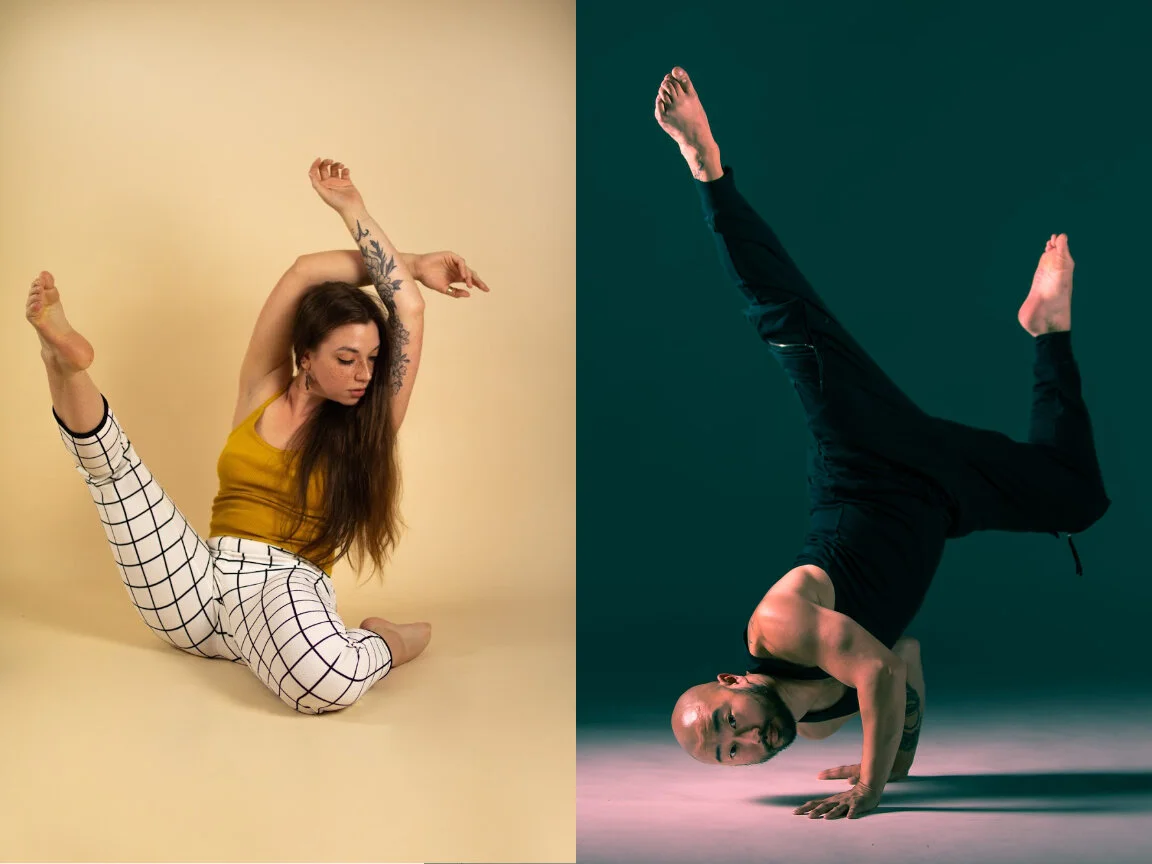
Amid the COVID-19 pandemic, dancers, choreographers, and dance viewers were all separated from one another, isolated to the confines of their homes, and stripped of the opportunity to perform and do what they love. Thus, in 2021, Karyn Tobin and Ian Howe decided to launch Apropos Motus
By Madison Huizinga
Madison Huizinga has been dancing for 13 years, and her favorite styles are ballet and contemporary. Currently, she attends the University of Washington and is studying Communications, Business, and Dance. Madison is presently a company member with Seattle-based dance company Intrepidus Dance. She loves working at Dancewear Center because it allows her to help local dancers find the best shoes, apparel, and equipment possible to further their dance goals and careers. Dance has always been a positive creative outlet for her to express her emotions—so it’s always nice to meet members of the local dance community that relate!
Outside of dance and work, you will find Madison exploring new cafés and restaurants around Seattle, hiking, reading, and traveling.
Photo credit: Devin Marie Muñoz | @munozmotions (left) HMMM Productions (right)
Photo Credit: Lars Myren
Amid the COVID-19 pandemic, dancers, choreographers, and dance viewers were all separated from one another, isolated to the confines of their homes, and stripped of the opportunity to perform and do what they love. Thus, in 2021, Karyn Tobin and Ian Howe decided to launch Apropos Motus, a dance company in the Seattle area aimed at creating work that fosters fluid, open-ended conversations among dancers and audience members. While the idea for Apropos Motus has been in the works for a couple of years, Karyn and Ian thought that the unfolding aftermath of the pandemic would be the perfect time to start a company that works to bridge gaps between individuals.
Karyn began dancing at age four with a primary focus on classical ballet training at Johansen Olympia Dance Center in Olympia, WA. She later joined the studio’s pre-professional company Ballet Northwest at around age 12, where she performed many classical and contemporary works. Following high school, she attended Cornish College of the Arts where she earned her BFA in dance. Since she’s graduated, Karyn has danced professionally with a variety of artists and companies, including 3rd Shift Dance, Hypernova Contemporary Dance Company, and The Guild Dance Company.

Photo credit: Devin Marie Muñoz | @munozmotions
Ian recalls his love for dance beginning at age five when he saw Savion Glover tap dance on Sesame Street. He began dancing at a small studio in Woodinville, WA, and later moved to Backstage Dance Studio where he was heavily involved with competition dance. While he began his training in tap, he soon began training in every style Backstage had to offer. After he graduated from high school, Ian worked as a dancer and singer on the cruise line Holland America Line for about eight years. In 2011, Ian moved back to Washington and began teaching, choreographing, and performing. In 2018, he became the owner and artistic director of Pacific West Performing Arts, a dance studio located in Snohomish and Lake Stevens.
Both dancers felt a strong pull to the art of dance as young adolescents. Karyn explains being drawn to dance due to its potential to express and “communicate deeper things that [she] wouldn’t in just a verbal conversation.”

Photo credit: Brett Love | @eruditorum.co.uk | https://www.eruditorum.co.uk/
The pair met around 2017 when they were both working with the same dance company. The two soon became familiar with the other’s movement style, got used to performing with one another, and a friendship blossomed. About two years ago, the duo met for dinner and began throwing around the idea of putting together some sort of dance project. Karyn and Ian went back and forth about what a dance company would like for them, how they would organize it, and more. Since then, their brainstormed ideas have evolved into a concrete company: Apropos Motus.

Photo Credit: HMMM Productions
The name of the company itself holds a particular significance to Karyn and Ian. The duo didn’t want their company’s name to just function as a label, but rather carry meaning itself. “Apropos” refers to being “both relevant and opportune,” while “motus” derives from the Latin movere meaning “to move” or “set in motion.” Fittingly, Karyn and Ian saw 2021 as an “apropos” time to create a company that disseminates the art they want to see in the world, specifically in the aftermath of COVID-19.
Apropos Motus is currently working on solos, and perhaps duets and trios, as well as simply workshopping choreography on one another. With various COVID-19 restrictions lifted, the company plans to eventually shift to producing large-scale live shows. However, in the meantime, Apropos Motus will film their dance works.
Apropos Motus’ focus will be “ever-evolving”; Karyn and Ian reject the idea of fitting the company into a rigid, predefined box, as that can feel limiting. During the pandemic, Karyn points out how conversations among artists were largely limited. She identifies how we’ve all understandably “retreated into ourselves more than ever.” Through Apropos Motus, Karyn and Ian hope to bring people back together and stimulate conversations that have been limited. They wish for their company to function as a “conversation lab” to “bridge the gap between people right now.”
Ian shares that Apropos Motus wants to be “fluid with what [they] present, how [they] present it, and who [they] present it to.” The pair wants the themes people take away from their works to be varied, open-ended, and largely up to the viewers’ perceptions. Removing control of what the audience takes away from its art will allow Apropos Motus to function as an “open-ended experiment” that rejects singularity and embraces complexity.
Interested in writing for the DWC Blog? Click below to fill out the DWC Contributor application!