
Dancing With Anxiety
I was diagnosed with anxiety in 4th grade but, honestly, I know I experienced it before then. All my life I have tried to control situations and be very prepared so last-minute situations wouldn’t rattle me. It was hard for me to be spontaneous, and I worried about not living up to other people's expectations.

By Emily Los
Emily Los has been dancing for 7 years, primarily at Cornerstone Studio in Bellevue. She has studied Jazz, Contemporary/Lyrical and Ballet/Pointe. She has participated in Cornerstone Company (captain 2018-19), compete team and the pre-professional program. In her free time she enjoys cooking, painting and spending time with her dog, Bailey.
Medical Disclosure: Dancewear Center does not claim to have any medical expertise on any circumstances or diseases discussed. This is Emily’s personal experience and opinions. If you need help see the resources listed at the bottom of this post. If you or someone you know needs immediate medical attention, call 911.
Trigger Warning: Anxiety

Dancing with Anxiety
I was diagnosed with anxiety in 4th grade but, honestly, I know I experienced it before then. All my life I have tried to control situations and be very prepared so last-minute situations wouldn’t rattle me. It was hard for me to be spontaneous, and I worried about not living up to other people's expectations. Before I was diagnosed, I did not have the words to communicate my feelings, but now, I am learning to identify situations that cause my anxiety, and I have been given “tools” to be able to manage them. All that being said, I am still a work in progress.
At 10 years old, I signed up for a dance class at Cornerstone Studio in Bellevue. I didn’t know much about dance at the time, but I wanted a new experience. Fast forward a year, being at the studio with friends and teachers felt like a safe place. This was the start of my passion for dance. I joined the performing company, which helped me learn how to dance in front of different audiences, work in a group setting, and build relationships and life skills. It is a commitment that requires responsibility, collaboration, and accountability. This team makes me feel supported and not alone with my anxiety.
This was also my first year of Nutcracker. We started rehearsing in September and my mom and I were doing our best to manage the rehearsal calendar along with the regular class schedule. Any parent would understand, whether it is sports, school, or dancing, managing schedules can be hard and unintentional mistakes happen. Picture this: we had a performance earlier that day then a Nutcracker rehearsal that evening. It was the “in-studio dress rehearsal'' but my mom forgot to make a note on our calendar to remind us it was a dress rehearsal. We arrived 10 minutes before rehearsal started and as we pulled up to the studio, everyone was in costume with hair done up. I turned to my mom and immediately started tearing up, “Mom, it’s dress rehearsal and they are going to be so mad at me.” I felt my stomach drop and I started getting anxious and agitated. I had to go into that studio, as the only one not in costume. I was so embarrassed and stressed out because I was the only one who messed up. When I walked in the door, everyone knew how horrible I felt and they were very understanding and comforted me and told me it was okay. It took a while to get over that moment, but I will never forget the feeling I had when I knew I messed up and felt the fear and anxiety. I vowed that I would never let that happen again, so I started being over-prepared for everything. I have discovered this has its pros and cons, and I am still learning how to manage my way through situations.
Dealing with Criticism & Comparison
Like any learning environment, in dance there will be corrections, observations, and criticism directed at the dancer. This can be hard to manage, and some days are harder than others. For me, every day is different, depending on what happens before I step into the studio. Even though I tell myself to “leave it at the door”, sometimes the criticisms pile up in my head alongside thoughts about outside situations and become overwhelming. When stress and tension build up, I tend to get very quiet and try to recover from the panic and anxiety without showing any expression. It can be hard to get through class, but I don’t want to be rude and interrupt or draw attention to myself. Even though I know my teachers and classmates would understand, in the moment I feel alone and paralyzed. When I feel overwhelmed, I tend to compare myself to other dancers, thinking, “I am not good enough and I will never figure out this skill”. When there is a buildup of emotions like this, sometimes I can continue on with the class and overcome the negative thoughts, but other times my only goal is to just get through the class.
So how do I cope? I practice some of the techniques that my therapist and I work on. We discuss potential scenarios, real and/or anticipated. We walk through “worst case scenarios” and tools to handle stressful situations. Here are some examples:
Positive Intent - Imagine your dance class going well, and remember feedback comes from a place of improvement rather than criticism. I visualize myself changing the movement and executing it well, this helps me remove the feeling of judgement from the feedback.
Lock it Away - After a stressful day at school, I need a way to step into the studio with a clear and positive mindset. One of the tools I use is to imagine a container with a lock (mine is a dark wooden chest). The container can be any size, shape or color, and only you can open the lock. I put things inside when I don't want to think or worry about them for a while. I can then deal with the contents of the container when I am ready (for instance, after dance class).
“I always feel as if a weight is off my shoulders when I communicate to see if there might be a problem or miscommunication.”
Triggers within Collaboration
Being part of the Company, Compete Team, and P3 (our pre-professional program) has been an amazing life experience. The mix of responsibility, community, friendship, dependability, and fun gives me a sense of belonging and acceptance for who I am. My anxiety usually lowers when our team collaborates while rehearsing and performing. On the flip side, it can heighten when rehearsals get out of control or go in the wrong direction. It can be frustrating and nerve wracking when there’s a deadline for completing dances and cleaning up choreography. At times like this, I have to remind myself it is not my responsibility to manage the entire team, just to do my very best to manage myself and keep my anxious feelings at a lower level.
As an example, when our team is making a dance that we choreograph ourselves, it can be exciting to share our visions and bounce ideas off each other; however, it can also be difficult not to talk over one another or shoot down another person's idea. Normally, I like to help resolve misunderstandings; but my anxiety heightens when I feel I am not heard or I don't want to be rude and talk over someone else. After rehearsals like this, I tend to feel frustrated and second guess myself. Should I have taken a step back and let other people take control? Did I come off as controlling or irritating? I am still working on developing the skills to be a better teammate and collaborate productively; however, here are some examples of what I currently practice:
Practicing Self-Awareness - Being able to have a sense of where you stand in the group, how you can participate while allowing room for suggestions from others. After some rehearsals (depending on how they go) I will reflect on how I engaged with the group and if I made a negative impact towards someone specific or the whole group. I usually reach out to see if I came off in a certain way from a comment or question to clear the air and allow an open conversation. I always feel as if a weight is off my shoulders when I communicate to see if there might be a problem or miscommunication.
Encouraging Conversation & Open Communication - To bring others into the conversation and including everyone is a critical piece to open communication and collaboration. One technique I like to use to bring others into the conversation is asking, “what was your idea?” or “were you going to add something?”. This encourages more than one person to talk and keep the environment collaborative.

The Benefits of Dance in the Context of My Anxiety
Every day, I try to be intentional in my thoughts and actions. The majority of the time I am balanced and in control, but my anxiety can return quickly. I refuse to let it get in the way of something I love and want to continue throughout my life.
As I progress through my dance journey, I continue to remind myself that I am learning. I can now identify (most of) my anxiety triggers and I can use movement to cope with my anxious feelings. My dance teachers, mom, friends and the dance community give me space to be creative without judgement, which fills me up with positivity and encouragement.
Resources
Therapy has been very beneficial for me. Seeking help from a trained professional is not something to be ashamed of, and you don’t have to be diagnosed with any mental health struggles to go to therapy. I also encourage you to reach out to teachers, friends and family for help with any situations.
Mental health resources for Washington State :
Mental Health in Dance
Mental health in dance is a phrase I never heard growing up. I grew up in a time where there was a huge stigma on mental health. If you needed counseling or help, there was “something wrong with you”. So, every time I was struggling, I pushed it down. I could build a mountain with all the struggle stones I’ve shoved deep down inside.

By Austin Sexton
A singer, dancer and actress, Austin has been honing her triple-threat ability since childhood. She grew up among the Lake Washington studios of Spectrum Dance Theater, the company her mother, Jenny Hillock, co-founded. And, with two parents as dancers, Austin developed a passion for the performing arts at a young age. After training at Spectrum for many years, as well as Seattle Children's Theater, Austin studied at Dance Fremont! during her teen years.
Throughout her stage career, she has performed leading roles in "The Wiz," (Glinda),"Cabaret," (Sally Bowles) and "Anything Goes" (Reno Sweeney) with Summit Youth Theater Company. As a concert performer, she has danced the works of Eva Stone, Kabby Mitchell III, Jenny Hillock, Jason Olhberg and Dance Fremont! co-founders Mary Reardon and Vivian Little and many more.
After graduating from high school, the mezzo soprano went on to pursue her degree in music, where she studied music theory, piano, choir and vocal performance, During her college years, she pursued an opera workshop, performing scenes from "Falstaff" and Gloria Swisher's one-act opera, "Poker Alice."
As a co-founder of Relay Dance Collective, a formerly well known dance company in Seattle, she was inspired by the vision that allowed her mother, and other great dance artists such as Dale Merrell, to create a company based on inclusiveness and recognition that talent comes in many colors, shapes, forms, and sometimes, from unexpected sources.
Today, Austin remains active in music and dance, and enjoys teaching at Momentum Dance Academy, where she is the Rehearsal Director for their Performance Division. She has choreographed and set works for The Nutcracker, Sleeping Beauty, Alice In Wonderland, Cinderella and Swan Lake. At Momentum, she promotes inclusivity, body positivity, and mental health awareness in addition to the high quality training she gives dancers. She remains a positive impact on the youth of her community by creating a healthy safe environment for students to thrive in.
Medical Disclosure: Dancewear Center does not claim to have any medical expertise on any circumstances or diseases discussed. This is Austin’s personal experience and opinions. If you need help see the resources listed at the bottom of this post. If you or someone you know needs immediate medical attention, call 911.
Mental health in dance is a phrase I never heard growing up. I grew up in a time where there was a huge stigma on mental health. If you needed counseling or help, there was “something wrong with you”. So, every time I was struggling, I pushed it down. I could build a mountain with all the struggle stones I’ve shoved deep down inside.

Growing up as a larger bodied dancer came with so many extra hurdles and it deeply affected my mental health. I have been ignored, looked at with dissatisfaction, and even been refused training because of the way my body was just naturally built. In addition to that, my mother, who is built in a petite and thin frame, was one of my teachers and I compared myself to her every day. (Despite this, she was so incredibly supportive of my training).
I was struggling with body dysmorphia, depression, and anxiety and despite all the dance training, I was never taught how to ask for help. So instead, I built stones and pushed them down. I suffered. I self harmed, I developed an eating disorder, I was resentful and destructive. I needed help, but I didn’t know how to ask how.
Now, as a dance educator, I have made it a mission of mine to teach dancers how important it is to know how to ask for help. I think mental health awareness should be part of dancers training. The dance world puts so much pressure on dancers to be technically perfect, thin, and fit, but it can take a toll on our mental health. Long term, it can cause dancers to either be destructive or burn out and quit.
One of the ways I try to train mental health awareness and body positivity In my classes is by discussing strength and anatomy: but never size or weight. I advocate for all my dancers--no matter their shape--to have equal access to roles and opportunities. If I see one of my students struggling, I immediately reach out to them. Because I was experiencing my own series of mental health crises during my youth, I now recognize the signs. I talk to their families and help them access the tools and resources to get help.

Most importantly, I make my students feel seen. I wish that just one of my teachers would have taken the time to make me feel seen. How much that would have changed my life. I make sure that in every class, every student gets not only a correction, but also praise for something they’re doing well. Building their self confidence in each class motivates them from within to feel that they are safe to make mistakes with me. I preach to them that they are never wrong for making a mistake, because that is where they can learn and grow.
About once a month, I take 5 minutes at the beginning of class (no matter the genre) as a mental health check in/affirmation and goal setting time. We close our eyes and breathe together, and set goals to achieve in the month. We identify where we’re struggling and what we think we can do to improve together. We acknowledge where we’re thriving and honor that together. If I had had a teacher doing this with me as a young dancer, I absolutely believe I would have not resorted to destructive behavior to feel seen. It would have completely changed my life.
Lastly, I take accountability if I have unintentionally hurt their feelings. I show them that I am not perfect and that even adults can make mistakes. I never had an adult apologize to me in my youth for hurting me. If I ever expressed that I was hurt, it was always spun around to what I did to make them do or say whatever it was that hurt me. In taking responsibility for my actions, even if I know that I wasn’t intentionally trying to hurt them, I teach them that their feelings are valid, that they are visible to me and that they are safe.
Now, instead of struggle stones, I am working on building stones of strength and compassion, in hopes of building a generation of healthy, strong and happy dancers. Will there always be struggle stones? Yes, but I’m hoping that there will be enough supportive ones to hold up the struggle ones when they need it.
RESOURCES
Students, please talk to your parents or an adult you trust if you need help. They can connect you with a doctor. If you need immediate help, here are some resources:
The Importance of Recognizing Burnout in Dance
It’s that time of the year when many studios are starting or well into their preparations for competition and performance season. Especially with the major setbacks the pandemic has put us in when it comes to being on stage, it makes it all the more exciting to be back on stage and dancing again. However, with the pandemic comes another crisis many dancers have overlooked.

By Emma Spencer
Emma Spencer trains and teaches at Academy of Dance in Port Orchard, Washington, and has been dancing for 12 years. She studies multiple styles such as ballet, contemporary/lyrical, jazz, and musical theatre, as well as gets involved in her competition team and Pre-Professional curriculum.
Emma teaches primarily between the ages of 5 and 10, and is very involved with her competition team, Synergy Dance Company, competing at local competitions and performing at local venues such as nursing homes and festivals. Emma has also been featured in her studio’s rendition of “The Nutcracker” as many lead roles such as, but not limited to: the Sugar Plum Fairy, Clara, and the Snow Queen.
When not dancing, Emma enjoys playing video games, digital art, advocating for epilepsy and mental health, collecting rocks, drinking coffee, and photography. Emma is honored to have been accepted as a Dancewear Center Ambassador and is excited to share her passions with the dance community.
Medical Disclosure: Dancewear Center does not claim to have any medical expertise on any circumstances or diseases discussed. This is Emma’s personal experience and opinions. If you need help see the resources listed at the bottom of this post. If you or someone you know needs immediate medical attention, call 911.
It’s that time of the year when many studios are starting or well into their preparations for competition and performance season. Especially with the major setbacks the pandemic has put us in when it comes to being on stage, it makes it all the more exciting to be back on stage and dancing again. However, with the pandemic comes another crisis many dancers have overlooked. Teenagers have been the most affected by the pandemic in terms of mental health, stress, and burnout. Between this last year and our current year, we have witnessed and participated in a plethora of historical events that took away opportunities that we took for granted, such as school, prom, hanging out with our friends, and those of us who are dancers: performing in person in front of a large audience. With the pandemic starting to (hopefully) fade out and scientists grasp more of an understanding of COVID-19, I’m not sure we’re ready for our next world-wide crisis: mental health and burnout.
Being a dancer, you see a lot of stigma against mental health and burnout in general within the community. As someone who deals with mental health related issues myself and spreads information about it more than I regularly complete my homework assignments, it’s disappointing to see that the dance community hasn’t quite caught up with the rest of the world in that regard. You see comments like “you just aren’t trying hard enough” or “you probably shouldn’t be dancing if you aren’t taking this seriously.” It’s comments like these that invalidate the struggles of dancers and make them feel unheard. Because the truth of the matter is that dancers are pushing themselves so far that they're getting burnt out and fatigued, and the pandemic and daily struggles of life are doing nothing to help them either.
What is Burnout and What Causes It?
Burnout is, simply put, your mind and body telling you to take a break (bet you haven’t heard that from your parents 100 times). It’s the consequence of doing too much and is often seen in dancers who’s schedules don’t give them an adequate amount of time to rest and recover after training, although dancers aren’t normally in control of their own schedules. Burnout can also be caused by poor nutrition and physical and emotional stress. Dancers affected by burnout are also more susceptible to injuries.
Burnout Warning Signs
Just like physical illnesses, your body begins to show signs that you need to slow down and that what you’re doing is too much before you experience burnout. Those precursor burnout signs should be a signal for you to take a break and recalibrate your mind and body. Those signs include but aren’t limited to:
Poor concentration
Fatigue
Loss of appetite
Decrease in enthusiasm or desire to dance
Increase in irritability, anxiety, and depression-like symptoms
Inability to “bounce back” completely after intense training
Prevention
The biggest thing you can do to prevent burnout is to educate yourself as to what burnout is. It’s important for teachers, students, and parents to recognize the risks and warning signs of burnout to stop it ahead of time. Burnout isn’t completely avoidable due to its complexity, and the signs and effects of burnout are going to be different for every dancer. However, there are steps you can take to prevent the worst of it.
Adequate Rest
After a long day at dance, it’s important that you give your mind and body the time it needs to relax. Whether that’s active stretching, yoga, or even taking a nap. Resting is important so you feel energized for your next day of classes. Making sure you get a good night’s sleep is also important. You want to wake up well rested and ready for the day.
Eat Well
Note: In this section I briefly talk about eating disorders. It isn’t in depth, but if the topic makes you uncomfortable, please read at your own comfort. I’ll also be leaving resources at the end.
It’s no secret that dancers struggle when it comes to eating well, or at all at times. Eating disorders are common within the dance community unfortunately. As I stated earlier, poor nutrition is a major cause of burnout, so it is all the more important to eat well before and after your classes. I’m not necessarily saying to make yourself a large meal, just a fueling snack before and after classes at least. Your body needs that fuel to create the energy you need to dance all day. If you aren’t eating, your body doesn’t get the fuel it needs to give you energy, and you’ll be left tired and nauseous all day. Give yourself permission to eat.
Know Your Limits
Don’t push yourself harder than is necessary. Set realistic goals for yourself. Being a perfectionist myself, I understand the struggles of feeling that I’m not doing good enough and need to keep pushing myself towards unrealistic goals to the point of causing unnecessary stress.

Click Below to Shop the Look
Find Other Hobbies
Find things to do at home that aren’t related to dance. Being dedicated to dance is great and highly encouraged, but if that’s all you’re doing at home, that’s going to speed up the process of burnout. Take up some different activities such as painting, or music. Not only will it give your brain a break from thinking about dance, but picking up multiple hobbies makes you a more well-rounded person. Finding other things to do doesn’t make you any less interested or dedicated to dance. Make sure there is a life outside of the studio.
Acknowledge Your Students’ Struggles
This section pertains more towards teachers and parents. Give your dancers a chance to recover. Don’t make them push through it, that will only worsen burnout and will take longer to recover. Be there for your students, listen to their concerns, and help them through their struggles. They look up to you as a mentor.
Stigma
The dance world is definitely growing in terms of inclusivity, progressivism, and removing stigmas and stereotypes, but there is still work to be done, especially in the mental health department. “Stigma is a powerful social force that has the potential to prevent treatment seeking and exacerbate the stigmatized challenges” according to a study on burnout written by the World Health Organization that you can read here.
Within that same study, the participants, all of which were either undergraduate students or workers, were asked to rate the degree of which most people would agree with statements stigmatizing burnout. The leading statements were the ones that describe people with burnout as lazy, weak, and undeserving of achievement and praise. It was interesting to see the parallels between the stigmas for the dance world and the work/school environments.
Conclusion
Dance is a sport where you’re constantly on your toes (pun somewhat intended) and you’re constantly grinding to the next goal. It takes a lot of mental and physical energy to be a dancer, and it’s important to take care of yourselves if you’re going to participate in such a demanding art. You’re not lazy or weak for taking a break. You recognized your burnout and decided to do something about it, which is one of the strongest things you can do.
Parents and teachers, please check in with your dancers. Allow them to take breaks when needed. Offer them love and support and listen to them when they are struggling. Your dancers rely on you the most, so it’s up to you to give them the support they need.

Click Below to Shop the Look:
Garden of Snapdragons Leo - Chameleon Activewear|Bullet Pointe Skirt
Refilling the Creative Well and Excavating Creativity: How to Hold on to Inspiration and the Motivation to Dance
I have two terms for you: Refilling the creative well and excavating creativity. Two concepts in the ever-frustrating realm of inspiration, motivation, and creativity…

ANNA PETERS HAS BEEN DANCING FOR 10 YEARS, AND IS CURRENTLY A STUDENT AT THE UNIVERSITY OF WASHINGTON WHERE SHE IS STUDYING BIOLOGY AND DANCE. IN ADDITION TO GOING TO SCHOOL, ANNA PLANS TO CONTINUE TEACHING BALLET IN THE GREATER SEATTLE AREA. IN HER SPARE TIME, ANNA ENJOYS RE-READING HARRY POTTER (FOR THE BILLIONTH TIME), BINGE-WATCHING ALL OF THE SPIDERMAN MOVES, SINGING LOUDLY TO HAMILTON, AND PAINTING AND PHOTOGRAPHING DANCERS.
By Anna Peters
I have two terms for you: Refilling the creative well and excavating creativity. Two concepts in the ever-frustrating realm of inspiration, motivation, and creativity.
Refilling the Creative Well: This is a term that is used a lot in writing, especially for fiction, but it works in all realms of creativity. This is the act of finding inspiration. Of going outside of yourself and drawing in new ideas. Of filling that corner of your mind that is dedicated to nurturing these ideas.
Excavating Creativity: This is a term that I picked up from one of my dance professors. Excavate. To unearth. To dig out. To reveal. Excavation implies force. It is something you have to work for. In terms of excavating creativity, it is forcefully pulling it out of the recesses of your mind, digging for it until you find it, and then bringing it to the surface so that it can be used.
I would argue that one cannot exist without the other. What use is excavating if there is nothing to be found? You can sit and think all you want, but if you are suffering from a creative block, I find that looking elsewhere for creativity tends to have faster results. You must first refill your creative well with a multitude of ideas, feelings, and concepts. Vague implications of creativity. A raw diamond. From there, you excavate. You uncover. You take your raw diamond, and you polish and cut it until it is the glittering jewel you desire.
But what happens when the creative well runs dry? When there seems to be nothing left for you to draw out of its depths? This is when you have to start refilling, which can sometimes be exhausting; because guess what? That also requires creativity.
Especially now, with perceived limits placed around our creativity due to COVID-19, refilling this creative well and excavating creativity can be difficult tasks. I’m sure I speak for all of us when I say that we are tired of being at home. We are sick of taking classes over zoom. With the vaccine slowly rolling out, there is an end on the horizon, but for now, we must do our part to keep ourselves and others safe. For many dancers, that means staying at home. We simply cannot do all that we want to do when we’re dancing in our living rooms over zoom, and this puts a huge damper on creativity and inspiration.
For me especially, I have been struggling with holding on to my inspiration and motivation to dance. My creative well feels empty. I’m not sure if there is anything for me to excavate. Yes, that is incredibly depressing, but worry not! There are things that we can do as dancers to rekindle our inspiration and find the motivation to move.
It can be hard to think of ways to find inspiration, so I have compiled a list of different activities and ideas to help refill creative wells. Some are things that I do regularly. Some are things I picked up from my dance instructors in high school and some are what I have been learning in my dance major. All are meant to be fun and freeing! So, take a look, see what calls to you. Try a few out. Replenish your motivation to dance! Refill your creative wells!
First some tips and tricks:
Watch dance:
A lot. We live in an age where we can watch dance for free on platforms like Instagram and YouTube. Take advantage of that! Watch all sorts of dance in all sorts of styles. Let yourself be inspired by them! Watch them for enjoyment, but also for learning. When writing, we talk about how if you want to get better at writing, you have to read. A lot. I think that can be applied to dancing as well. Consume exorbitant amounts of dance media. Learn by osmosis. What did you like about that last dance you watched? Is there a way to incorporate that into your own dancing? Let it motivate you to become a better dancer! And above all, let it be enjoyable!
Dance to a different type of music:
I have been having a lot of fun with this one lately. Of course, this wouldn’t really work in a class you are taking, but if you are dancing on your own it’s a fun way to shake things up. Who says you have to do a ballet class to classical music? I did the most epic waltz ever to Total Eclipse of the Heart, and not to toot my own horn, but it was glorious. Throw some rap into your contemporary improv. Try something more lyrical sounding for hip hop or breaking. Does the music still work? Is it causing you to move in different ways? All dance styles are intricately connected to a corresponding music style, but sometimes changing the music is a good way to rekindle some passion. Anything you can do that will make your typical routine different might just be the thing that helps you remember why you love to dance. Don’t allow yourself to stagnate in your dancing. Routine is important, but so is being dynamic. So is being spontaneous.
Try a new style:
This one can be tricky, especially for people who take a lot of different styles of dance. I challenge you though to look for a dance form that you know very little about and use YouTube to check out a few tutorials. You might find that you enjoy it, and you can incorporate it into your individual style for whatever your primary dance form is. For example, these past few months I have been watching a lot of lindy hop videos and learning a few moves that I can dance on my own without a partner (think Charleston/swing sort of moves). It has been a lot of fun!
Look outside of dance:
Maybe dancing isn’t doing it for you right now. That is alright. As is the case with any art, there will be times when it feels like the easiest thing in the world and times when it is a struggle to get yourself to practice. Sometimes, looking outside the field of dance can help you be inspired to dance more. Paint a mini watercolor. Do some coloring pages or a sketch. Read a book. Listen to music. Allow yourself to rest and recuperate. Give yourself time. While there is a lot we can do to surpass a creative block, sometimes, all you need is some self-care. Sometimes the best thing you can do for yourself is take a break, knowing that when you come back, you will be inspired and healthy again.
Alright, now that we have looked outside ourselves for our raw, uncut diamonds of inspiration, it’s time to excavate them. Here are some fun activities you can channel your inspiration into. I have broken down the activities into two categories: Improvisation and Choreography. Sometimes, taking a break from technique and doing some other fun dance prompts is just the thing to get you back into your creative groove and fill that well!
Improv prompts and ideas:
Prompts can range anywhere from quality of movement to giving yourself confines to work in. Here are a few that I enjoy:
Have someone else pick your music. Sometimes, you can get bogged down by your own tastes and interests. Have a friend send you a song. Ask a family member for a suggestion. And stick with it, even if it isn’t your cup of tea. This will pull you out of your comfort zone and generate new movement, thus refilling your creative well.
Pick a part of your body. Any part. You are not allowed to move that part. Now improv.
Pick another part of your body. That body part is now the initiation point behind all your movement. Feel free to try with several different body parts!
Randomly pick an animal and an adjective. You must embody this animal and adjective in your improv.
Pick four textures. Switch between embodying these textures while you improv.
Look around your dancing space. What does it look like? What objects are in your space? What is the shape of your space? Are there any windows? Doors? Kitchen appliances? As you improv, keep an eye on the space around you and try to embody what you are seeing. Also, feel free to use the space for more than just inspiration. If there is a couch, lie on it! If there is an open wall, lean against it! There are so many ways we can use our at home spaces to dance. I challenge you to think about it less as a confinement and more as an opportunity for new types of movement.
Choose an area or object in your space. It could be a couch, a corner, a water bottle, anything! While you improv, make your way to this object or area. All you want in the world is to get to that object/area, but things keep getting in the way. Try to resolve this problem by the end of your improv.
Choreography prompts and activities:
A lot of these are prompts and activities that I picked up from classes that I have taken for my dance major that I had a lot of fun doing. They are great ways to generate movement ideas, so hopefully they inspire you to do some more dancing.
Playing with space:
What is something that you can do in your at home dance space that you can’t do at the studio? What movements, if you were to take them out of your at-home space, would no longer work or no longer make sense? I think we can get stagnant when we dance in one small space for too long, so try something new in it. Do you have a porch or a backyard? Patio? Stairs? What kinds of movement can you do there that you cannot do in your at home dance space or your studio? Shake things up a bit. Find a new space to dance and see if it sparks your creativity.
Love Solos:
This was one of my favorite projects I did for my choreography class. It requires the use of a partner, so find a dance friend and meet up (socially distanced or over zoom of course). Each partner picks three to four songs that all sound very different. The goal is to generate a variety of movement qualities. Then, watch your partner improv to these songs and get a feeling for the way they like to move. After that, take a few minutes to create a short piece of choreography for your partner, a solo tailored specifically for them. Teach each other the solos you both created and have fun watching each other dance!
Playing with Music:
There are so many different ways to play with music while you dance. So. Many. Ways. Here is one that can be fun to work with. Once again, this activity works best if you have a friend to do it with. Start by listening to a random piece of music, preferably one that you have never heard before. Listen to it once, then set it aside. You will not need it again. Think about this music. What did it make you see in your mind’s eye? How did it make you feel? How did it make you want to move? Sometimes, it can help to generate a short narrative to go with it. For example, I did this exercise once and the song I listened to made me think of driving at night after it had rained, the pavement glistening in the glow of the streetlights. After you have figured something out, make a short phrase of choreography to go with the mood/feeling/narrative you picked up from the music, but without listening to the original music. It doesn’t have to be more than a couple eight counts. Perform your dance for your partner, without any music. Then, your partner will meticulously dig through their own music and find something that they think matches the choreography. Then dance your choreography one more time with the music your partner picked out. Switch roles.
These activities aren’t meant to add stress to your life. They aren’t meant to be one more assignment you have to complete or one more job you have to finish or one more exercise you have to do. They’re purely meant to be fun, because that is one of the reasons we dance, right? We dance because we love it. Otherwise, why would we put ourselves through the grueling process of creating art?
So, try some of these tricks and activities out, not because you need them, not because you cannot become a better dancer without them, but because they are fun! Because you love to dance.
Fun and enjoyment are at the heart of inspiration. You are inspired because you like something, or because you want to make something better. You are inspired because you are passionate. So next time you have a creative block, or you can’t summon the resolve to go to dance class, or you can’t seem to motivate yourself to dance on your own, think about what you love about dance. Think about why you are passionate about it. Then do what you love and what you are passionate about. Maybe that’s improv. Maybe that choreography. Maybe that’s working on a specific technical move. Whatever it is, do it because you love it. Refill the creative well because you intend to excavate.
The Power of Movement in Healing Trauma
As a part of my recovery process, I continuously turned to dance improvisation, which has always been movement I find incredibly healing. Many times, my body has felt weak, dirty, used, and not my own. The only thing I have found to mend this damage is the power of proving these feelings wrong. Feeling the strength and control I have over my frame during times when I feel that this body is not my own. When I am able to hold myself in a mind-space of healing and patience, dance is able to release and teach myself what an infinite amount of words simply cannot.
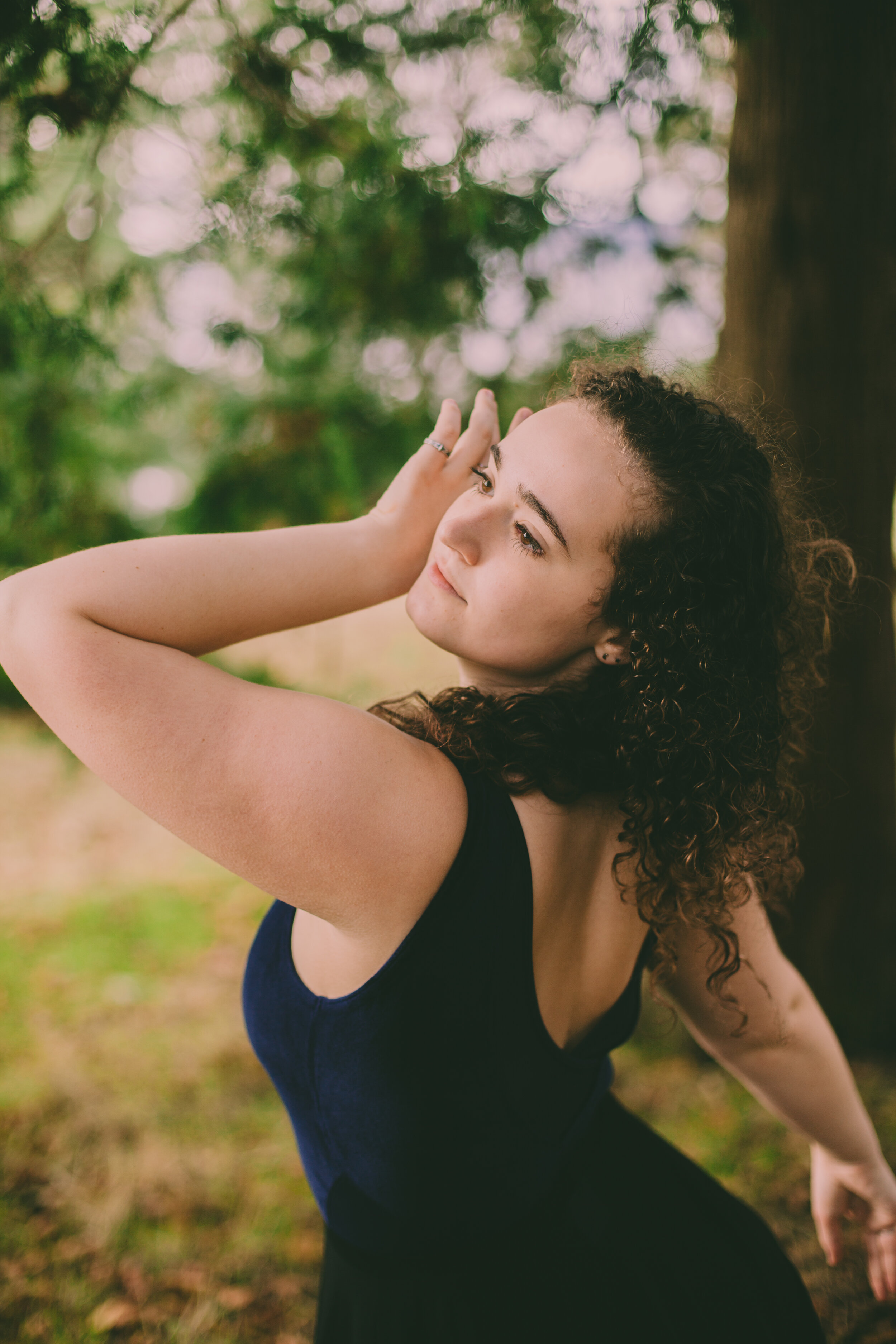
Isabel Reck
has been dancing for 5 years; the majority of her training being at Cornerstone Studio. She has trained in ballet, contemporary, lyrical, jazz, hip-hop, tap, break dancing, and aerial silks, although contemporary has always been her go-to. Her favorite thing about being a Dancewear Center Ambassador is being able to explore a side of being a dancer she never thought she would be a part of.
By Isabel Reck
Medical Disclosure: Dancewear Center does not claim to have any medical expertise on any circumstances or illnesses discussed. This writing speaks to Isabel’s personal experience and opinions. If you or someone you know needs help please refer to the resources listed at the bottom of this post. If you or someone you know needs immediate medical attention, call 911.
Trigger Warning: Trauma, Sexual Assault, Rape, Suicide, Depression, and Anxiety.
Many of us have been through trauma. I have read so many inspiring articles from amazing women saying “#metoo,” “TimesUp,” or “I am not a victim, I am a survivor.” They all have something to say, some good to come from this betrayal of humanity. It is gruesomely common and, at times, the trauma sustained can feel irreparable and impossibly taxing. I would know. At 17, I became a victim of statutory rape.
The Rape, Abuse, & Incest National Network (RAINN) states that 1 in 6 women have been raped--and that’s just the bare minimum; because how can we get accurate statistics when this is an issue that goes mostly unreported? This heinous crime has seeped into every industry, every neighborhood, every community.
Only five months later, I feel more like a victim than a survivor. No matter how hard I try--and I have been trying really hard--I haven’t been able to find that empowering spin other people have about being sexually assaulted and raped. I am someone who has always been a hard-core optimist. Maybe that's why my inability to find the silver lining is so crushing? I feel this drive to share my story in the hopes it will empower others—but what do I have to say that those before me haven’t already said? Some close to me are scared of me sharing this story because they worry about the consequences; but my gut tells me it’s something I need to do - and I’m done not listening to my gut.
Over my life, and especially recently, I have experienced some considerable lows. I have been in therapy since I was 12, when I landed myself in the ER for suicidal ideations. Since the night I was raped I have developed PTSD (Post Traumatic Stress Disorder) in addition to my pre-existing anxiety and depression. As my lovely therapist can tell you, I have talked a lot. I have talked about my feelings, dredged up my past, and attempted to heal my soul for 5 years in talk therapy. Despite this, there has always been a need for more than words to heal.
As a part of my recovery process, I continuously turned to dance improvisation, which has always been movement I find incredibly healing. Many times, my body has felt weak, dirty, used, and not my own. The only thing I have found to mend this damage is the power of proving these feelings wrong. Feeling the strength and control I have over my frame during times when I feel that this body is not my own. When I am able to hold myself in a mind-space of healing and patience, dance is able to release and teach myself what an infinite amount of words simply cannot.
I won't sit here and lie, saying that even on my worst days, dance is my cure-all. That said, I truly believe that my body is, and always has been, trying to look out for me. Dance taught me this, and it is knowledge I wish I could pass along to everyone hurting. Every time I dance, I feel like I am taking back one more piece of myself that I lost that summer night.
In my mission to help others through their own trauma, I am hosting a series of online (for now) movement workshops facilitated by Heather Smith of ObnoxiouslyFit. These workshops are for anybody who has experienced trauma, but will be specifically tailored towards those recovering from rape and/or sexual assault. All are welcome: our first few workshops will be “pay-what-you-can,” and no formal dance training is required. Click here for more information and to register!
In closing, I leave you with this:
Lift up your foot and look at the calloused sole. Think of the thousands of steps, both pedestrian and in dance, your feet have taken with you. Now hold your thighs. Remember every time they have helped you rise up off the floor again. Feel your heart, still beating even when you thought you were going to collapse, puke, and die.
I challenge you to do one simple thing. Next time you dance, be it in a crowded master class or alone in your bedroom, dance for you. Find that gut feeling within you, and go where it leads you. Witness the power of your biology. Know it's ok to feel sad, and anxious, and angry, and grief: but never forget the beauty of you.
RESOURCES
If you or someone you know is struggling with a sexual assault: (RAINN) Call 800.656.HOPE (4673) to be connected with a trained staff member from a sexual assault service provider in your area.
If you have suicidal thoughts, click HERE.
Call 1-800-273-TALK in the US, or visit suicide.org to find a helpline in your country.
Text “HOME” to 741741 Crisis Text Line serves anyone, in any type of crisis, providing access to free, 24/7 support via a medium people already use and trust.
If you are a parent who is wanting to help their children with COVID-19 related depression and anxiety, read this.
Click HERE for Mental health resources for Washington State.
READ: The Body Keeps the Score by Bessel van der Kolk, M.D.
Click HERE for resources from the American Psychological Association (APA) on trauma in children and youth.
Heather’s Top 5 Exercises for Dancers!

I get these questions often –
“What should I do if I want a higher extension? What exercises will help me reduce my chance for injury? How can I gain more control over the flexibility I’ve worked so hard for?”
Well my dearest dancer friends – here they are.
My top 5 most prescribed exercises for dancers!
*Click the video links for each exercise for a demonstration!
Stand next to a wall with a band around your thighs. Begin with your feet hip width apart and in parallel. Hinge your hips back and come into a shallow squat. Lift your inside leg and press the side of your shin into the wall while keeping your pelvis level. Hold for 30 seconds on each side. Repeat 2 more times.
This move is perfect for dancers wanting to train proper hip, knee ankle alignment and strengthen their standing leg…. which is all of us. A stronger standing leg equals a higher working leg, ability to pump out more pirouettes, and less chance of injury when landing from jumps.
Begin by kneeling on one knee and extending the other leg in front of you. Using socks or sliders, glide the front leg away from you towards your splits and then back again. Move slowly and with control while making sure your body stays upright. Repeat 5-10 on each side.
I like this move for all dancers as a replacement of the passive static splits. When we sit in a stretch there is no muscle activity needed. While in the eccentric sliding splits you’ll quickly come to realize what your muscles have control over. This makes a huge difference in your passive vs. active range of motion. A great example of this is how your battement height relates to your developpe height and how your splits transfer into your leap.
Tri Plane Lunges with Passe Balance:
Front lunge balance, back lunge balance. Repeat 3 times. Side lunge balance, curtsy balance. Repeat 3 times. Lunge to front corner, lunge to back corner. Repeat 3 times.
Dancers need to be able to keep their equilibrium while moving in all directions. This lunge series trains strong legs while practicing the skill of finding balance when entering from multiple angles.
Tabletop Press into Ipsilateral Dead Bug:
Lie on your back and come into tabletop. Start by keeping your low back actively touching the ground (as you advance you will be training this move in a neutral spine). Press the heels of your hands into your knees and tighten the core by actively pressing your knees back into your hands. Release your right hand and reach it over head while extending the right leg in opposition. Alternate Sides for 10 repetitions.
When I was training at the University of Illinois our motto was “find your core and go from there.” In essence they were drilling into us - all movement is in response to how strong or weak your core is. So train a strong center and see your balance, control, and power expand and grow!
Pushups: I start all clients on their knees. Align the wrists under the shoulders, tighten the core and find the neck in a neutral position. Shoulder blades are sliding down into your back pockets as you bend your elbows at a 45 degree angle away from your body. Only go as low as you can while continuing to maintain control over the entire shoulder girdle and core. Perform 10 repetitions, rest and repeat 2 more times.
We’re seeing it everywhere. Ballerinas aren’t just ballerinas anymore. They’re doing contemporary and modern as well--to name a few! We need to be able to not only support ourselves safely during floor work, but also be able to be a safe and confident partner during lifts to our fellow dancers.
Dealing With Injuries: How to Make the Most of Recovery Time and Come Back Stronger
Many dancers face injuries at some point in their training or careers, and they are never easy to deal with.
Although an injury can be frustrating in the moment, it can be helpful to use the downtime to reflect as a dancer, and learn a few things along the way.

by
Cynthia
Randriamanohisoa
Many dancers face injuries at some point in their training or careers, and they are never easy to deal with.
Although an injury can be frustrating in the moment, it can be helpful to use the downtime to reflect as a dancer, and learn a few things along the way.
//
Shop the look!
Staying motivated
When an injury occurs, it can be dreadful to think about what will happen next and what the impact on your training or career will be. However, if you’re really committed to dancing, you can get back to your previous level, even if you have to stop dancing for several months.
In my first few years of training in ballet, I dislocated my kneecap, which put me out of dancing for three months. During the first few weeks after the injury, I was wondering if I would continue to do ballet. It was a pretty serious injury and I would not be able to dance for a while, so I thought maybe it’d be easiest for me just to give up.
One thing that helped me was the support from my physicians. Instead of telling me to stay away from dancing, they told me the goal for me was not just to heal, but also to get back to my previous level of dancing. They said I would need to do more conditioning, to prevent the injury from happening again, but they were really supportive in helping me get back to dancing like before.
This helped me stay motivated through the healing process and trust that I would be able to dance as much as I used to. In fact, I strengthened other areas in my body while going through physical therapy and when I came back to ballet classes, some exercises felt easier than before the injury!
Staying productive while recovering
When you’re used to taking a lot of dance classes every week and you suddenly have to take a long break, you may not know what to do with all the extra time. You can use the time to focus on non-dance-related things, like trying a new hobby, but you can also do quite a few things that will help with your dancing, even while being injured.
For instance, you may be able to do more conditioning for the areas of your body that are not injured, and build strength in those areas. Or you could use this time to watch dance videos, read articles about dance, or catch up on some dance events happening in your local community. These are a great way to stay connected with the dance world and spend more time on the non-“technical” aspect, which can be neglected when you have a busy dance schedule.
If you’re training at a dance school, you can ask your teachers what things you can do and they should be able to help and guide you. Sometimes, you may even be able to continue going to class and start with working on some exercises on the side, then do part of the class until you can do the entire class again.
Learning about your body
Injuries usually teach us (the hard way!) what our limits are, and how our bodies are working. I began having issues with my ankles when I started taking up to five classes a week and doing more pointe work. I went through physical therapy for both this and my knee injury. Both times were great opportunities for me to learn about how my muscles, joints, etc. were connected and how I needed to strengthen them.
One thing I learned was how much I needed to strengthen some specific parts of my body, to prevent overuse in other areas. For instance, a lot of my physical therapy exercises were designed to strengthen my core and upper leg muscles to prevent overuse in my ankles when doing pointe work. Going through this process also helped me become more aware of my own limits and weak spots. I now know more which of my muscles need extra warm-up before a class or which ones need more conditioning in general, and I have adapted my training based on that.
Being patient
Last but not least, don’t rush the process and make sure to take the time you need to recover. It’s hard to stay patient while being injured and it can be really frustrating to see your peers continue dancing, while you have to rest. However, trying to go back to dancing too early will only hinder your progress in the long run, as it will either slow down your recovery or worse, get you injured again.
Something that helped me stay patient through my injuries was to focus on the things I could still do. As I mentioned before, there are probably other areas that you can work on to improve your dancing, such as conditioning. After some time, I started getting back to dancing progressively, doing just barre in ballet classes initially, then adding a bit of center work, and finally going back to pointe work. It was a long process, but it was actually motivating to gradually do more and more things and see my progress.
All these things have helped me handle injuries better and stay motivated through the recovery. Injuries are never fun, but when they happen, it’s important to make the most of the recovery time and use the learnings along the way to become a better dancer over time.
Choosing Joy: 2020 in Review
At the end of this tunnel, when the arts are able to return in full force, and we are able to gather together in packed theatres, travel for intensives, dance packed together with other sweaty, passionate beings in a hotel ballroom for the latest convention in town, and laugh, cry, dance, and sing, together once again… we will be here for you.

Choosing Joy: 2020 in Review
by Samantha Weissbach, DWC Director of Operations
“Dad is probably rolling over in his grave right now.”
These were the words I nervously chuckled to my mother Carla in late November 2018, while we sat together outside Dancewear Center awaiting one final call from the landlord to ensure we would be able to assume the current lease on the space at 8425 122nd Ave NE.
Earlier that November, when I learned that Marv & Patrice (the former owners of Dancewear Center) had decided to close their doors and enter into retirement, I was deeply saddened. It was heartbreaking to think that the first place I was ever expertly fit for a pair of pointe shoes would simply cease to exist in our dancing community.
Over the next few days, I shared the sad news with my ballet students. “Dancewear Center is closing at the end of the month!” That was when Madison, one of my students at the time, floated this wild idea: “Miss Samantha, you should buy the store!”
I laughed. “No way. Absolutely not. I have a full-time sales job that requires me to travel frequently, a husband and two step-kids, am dancing and serving as Executive Director for Intrepidus Dance, and am teaching three days a week… to name a few things! There’s no way.”
But it was too late. The seed had been planted… and over the next few days that wild idea took flight. Fast forward to late November, as my mom and I sat in the parking lot, ready to walk in and sign the final sale documents to assume ownership of Dancewear Center.
So why would my father be rolling in his grave at the thought of my mother and me partnering to take over an established, specialty dance retail store that hosts one of the largest inventories of pointe shoes in the PNW (not to mention one run by owners with decades of fitting knowledge that they were joyfully passing on to us?)
“Sam, I’d be dead before I’d start a retail business. Think about all those dollars tied up in inventory. What a huge liability!” This was the sentiment of my father, a very successful businessman with decades of experience. Read: lots of failure + key successes = experience. This man knew what he was talking about.
Technically, when listing inventory in your books it isn’t listed as a liability… since a liability in accounting terms is considered something you owe (i.e. a business loan, outstanding invoices owed to you, etc.) However, tied up capital is simply this: money that isn’t available for other expenditures. The more inventory you have that you can’t sell, the higher the chance that you will find yourself short on cash for more immediate needs such as rent, payroll, utilities, etc.
Enter 2020: “The New Normal”
Between studio closures, classes moving virtual, summer programs and live performances cancelled, and studio enrollment for ages 11 and below in the toilet, etc… the dance industry as a whole is absolutely not okay. Revenue loss for NYC dance organizations, groups, and projects alone was estimated at nearly $24 million in August 2020--and has since grown. 63% of professional dancers have reported cash flow issues, only 8% of responding dance organizations have insurance coverage to help offset the effects of the pandemic, and the median hourly wage for dancers is $19.96--so things really weren’t looking all too great to begin with (read more here).
Again, In the accounting sense, inventory is technically not listed as a liability. But many times as we’ve counted said inventory that was intended to carry us and our dancing families through competition, summer program, and Nutcracker seasons, I have found myself lamenting, “I beg to differ!” However, one could argue that this is simply a matter of perspective.
Here at Dancewear Center, our core values are Integrity, Laughter, and Grit.
Integrity - Because I believe in doing what is right, not easy--especially when times are hard.
Laughter - Because there is truly no greater inspiration or balm for the soul.
Grit - Because I believe that any meaningful change we wish to affect requires us to persevere and be passionate--even especially in the face of great difficulty or failure. (Thank you Angela Duckworth!)
At the end of this tunnel, when the arts are able to return in full force, and we are able to gather together in packed theatres, travel for intensives, dance packed together with other sweaty, passionate beings in a hotel ballroom for the latest convention in town, and laugh, cry, dance, and sing, together once again… we will be here for you.
Despite my father’s warnings, I still have no regrets. When I look back at the incredible relationships we’ve built in 2020 within our dance community here in the PNW, I can’t put a dollar amount on this feeling in my gut… the feeling that we are a part of something so much bigger.
“As we collectively enter into 2021 amid great uncertainty, I invite you all to join me as I choose these certain things: I choose joy. I choose love. I choose to smile in the face of great adversity. “
To our customers, our local dance teachers and studio owners, and to my cherished DWC team (I could not have endured this year without these incredible women by my side!): thank you for inspiring me to keep on going, do better, and hold steady through some very dark and difficult times. As we collectively enter into 2021 amid great uncertainty, I invite you all to join me as I choose these certain things: I choose joy. I choose love. I choose to smile in the face of great adversity. I choose to honor our core values at every turn: integrity, laughter, and grit.

Corpus Callosum: Embracing Artistry and Logic as a Dancer
Ballet class expanded from watching someone perform a proper plie and trying to mirror it, to understanding the muscles involved, the physics, the balance and strength. It built depth to seemingly simple movements, transforming them from mere exercises to art. When a dancer becomes an artist, they learn to not only use the vocabulary that has been ingrained in their mind for years, but also use the emotions, experience, and grace they have developed from life. The process of building technique in any dance form requires a methodical logic, but without the creativity and intuition of an artist, dance becomes just a form of exercise.

Isabel Reck
has been dancing for 5 years; the majority of her training being at Cornerstone Studio. She has trained in ballet, contemporary, lyrical, jazz, hip-hop, tap, break dancing, and aerial silks, although contemporary has always been her go-to. Her favorite thing about being a Dancewear Center Ambassador is being able to explore a side of being a dancer she never thought she would be a part of.
By Isabel Reck
In AP Psychology, we learned about this small section of tissue in the brain called the corpus callosum; the only neurons that integrate our two hemispheres. This place of convergence and connection is where I live.
Growing up, I remember seeing an image of the brain said to represent how people who are dominant in each hemisphere think. The left was always black and white, filled with graphs and charts, cogs and circuits, and numbers upon numbers; all comforting me in their predictability. The right, on the other hand, always seemed to be splattered with vibrant colors, curving and twisting, forming the gyri and sulci of the brain. Branching out into musical notes, brushstrokes, landscapes, and thought bubbles, dizzying but energizing in all their stimulation. Many of us, confronted by this image, feel the pressure to categorize ourselves into one of the two sides.
In elementary school, I saw myself in the colors of the right hemisphere. Music flowed through my veins and it couldn’t help but come out. My off-key belting was heard so often that my parents were driven to sign me up for voice lessons, so my constant need to vocalize would, at least, be nice to listen to. Constantly playing what my friends and I would call imagination games, we pretended to be anything or anyone. My abuela, a painter, nurtured my artist’s mind, reinforcing that my right hemisphere defined my capabilities. When adults would ask me “What do you want to be when you grow up?” grinning, I would reply, “a pop star!”
In middle school, academics started to get hard. Suddenly, my ability to thrive in math and science made me stand out against my peers. I won awards in math competitions. In love with microscopes and learning about genetics, I was part of a select few to get invited to the National Junior Honor Society. I stood out, not because of my flair, but because of my brains. Instead of coming home to tell my family all about music class, I would gush over my latest discovery in science class. The answer to “What do you want to be when you grow up?” shifted to “a biochemist,” or “a neurologist,” both professions appearing to be grounded in science and reason.
I remember these two seemingly different phases of my life with great love. I was able to fit myself perfectly in society’s expectations to be one of two distinct types of thinkers, and that was easy. In high school, I grew into an advanced thinker, and I felt confined by these two separate hemispheres. In anatomy and biology, I wanted to learn every detail on how bodies function. Because of this, the next time my dance teacher explained the proper placement of my leg in a “devéloppé”, I understood that it was so my femur head wouldn’t get blocked by the iliac crest of my pelvic girdle. Having this knowledge, allowed me to learn and understand concepts in dance more effectively. It opened my eyes to how dance is also deeply mathematical.
“When a dancer becomes an artist, they learn to not only use the vocabulary that has been ingrained in their mind for years, but also use the emotions, experience, and grace they have developed from life. ”
Ballet class expanded from watching someone perform a proper plie and trying to mirror it, to understanding the muscles involved, the physics, the balance and strength. It built depth to seemingly simple movements, transforming them from mere exercises to art. When a dancer becomes an artist, they learn to not only use the vocabulary that has been ingrained in their mind for years, but also use the emotions, experience, and grace they have developed from life. The process of building technique in any dance form requires a methodical logic, but without the creativity and intuition of an artist, dance becomes just a form of exercise.
I now realize the limits of the earlier image. There is art in science and logic in creativity, so I no longer need to choose one or the other hemisphere. Now when I’m asked, “What do you want to be when you grow up?” I explain that I want to explore a space guided by intuition and reason. I want to delve into the vast network of neurons that emit signals for both logic and creativity. I choose the corpus callosum.
Adaptability in the Dance World: Getting Out of Your Head and Onto the Dance Floor
As dancers, we encounter many different dancing environments. Some are adaptable and favored and others are not. In these unfavored environments, it can be easy to fall into a rut and create mental challenges that can slow your progress. Each person has their own reasoning as to why they are preventing themselves from growing. Our environments and the people we surround ourselves with play a part in this, but sometimes we are simply just overthinking. Dancers are infamous for adapting at a rapid rate and those changes come with high expectations. This change overload often requires dancers to uproot their entire lives to pursue our passion. This is what we sign up for, but sometimes our adjustment to these changes do not happen as rapidly as we like.

by niyah pratt
Niyah Pratt was born in raised in Renton, Washington. She began dancing at age six, at the British Dancing Academy where she trained in ballet, jazz, tap, and modern. She is currently attending the University of Nevada Las Vegas where she is double majoring in Dance Performance and Urban Affairs. She hopes to continue her dance career for as long as she possibly can, and make an impact not only in the dance community, but on the youth as well. She wants to be the role model she never had when she started dancing for someone else, and “thinks it is important to start implementing this in dance.”
As dancers, we encounter many different dancing environments. Some are adaptable and favored and others are not. In these unfavored environments, it can be easy to fall into a rut and create mental challenges that can slow your progress. Each person has their own reasoning as to why they are preventing themselves from growing. Our environments and the people we surround ourselves with play a part in this, but sometimes we are simply just overthinking. Dancers are infamous for adapting at a rapid rate and those changes come with high expectations. This change overload often requires dancers to uproot their entire lives to pursue our passion. This is what we sign up for, but sometimes our adjustment to these changes do not happen as rapidly as we like.
The dance industry is constantly changing and so are we. We switch jobs, cities, and companies and these changes can take a toll that we may not immediately acknowledge. It is normal for us dancers to not always feel comfortable in a new dancing environment, as this is not always easy to do. Moreover, our minds can hold us back when we are already uncomfortable. Dancers are known for being adaptable, because you have to be to work in this industry, but there are times when you just need to return to your home studio until you are ready to take on a new stage. These feelings are valid as well.
My first year as an undergrad studying dance at the University of Nevada, Las Vegas was a prime example of this. I was so excited to attend, and felt like it was a dream come true to study and dance all day. However, as time went on, I simply could not get acclimated in Vegas. Growing up in Seattle, I had a much different life than I had there, and it was indeed a bit of a culture shock. I felt like the only dancer that had something holding them back, I felt invisible in the department, and that everyone was just dancing past me.
I was physically there, but my mind was not. This disconnect took me mentally out of the department, my classes, and countless rehearsals. My brain was blocked by my insecurities and the comparisons I was making between myself and other people. No matter what I did, I could not get myself to feel comfortable dancing there. Now why was I feeling this? I have danced since I was six years old, this was not new to me! I have danced in many different states and scenarios--so why suddenly could I not find myself here? I felt so lost as a dancer, I did not feel like an artist at all.
It was not until my second semester that I realized something very important: where I stood in the dance department and what I was going to change. I came back from the holidays feeling refreshed from being home, and despite the rough first semester, I found that I had missed dancing much more than I thought I would. Somehow, leaving and coming back had allowed me to finally feel comfortable. I knew what to expect (for the most part) and returned with a completely new outlook on how I wanted to dance. I found myself pushing my boundaries in classes, building better connections with my teachers, and overall taking the plunge and throwing myself in. I was still holding back in some areas, but it was definitely a step forward.
In February 2020, I had the opportunity to dance in a beautiful modern piece from a wonderful professorI have at UNLV, Cathy Allen. The piece brought something out of me that I did not know I had. I had never thought of myself as being a modern dancer, and yet here I was surrounded by other modern dancers--including me! It was scary in the beginning because I had never performed a piece like that--but so exhilarating at the same time. I loved the way I was able to move in that dance.
I learned a lot from what was initially a very uncomfortable environment. I was certainly pushed to adapt and at times--thought I had ended up in the wrong place. With time, I eventually was able to step back and see everything positive that the change was bringing into my life. Not only was I able to get through the challenges that were thrown at me, I learned to handle them in a way that fit within my own mental capacity. My progress, although tough, brought me to a better position than I had started in.
Am I ashamed of the struggles I experienced in my first year? Not at all, because it has helped build me into who I am today. Without the struggle, I would not work or act the way I do now. Mental challenges can seem impossible to overcome, but I find that looking back on the choices you have made, and just how far you have come is clear proof of your growth. It is okay to feel uncomfortable in new environments, despite the expectation for us dancers to adapt! Allow those mental challenges to be recognized and think about how you want to overcome them. Remember, your mind is just as important as the body--take care of it too.
Interested in writing for the DWC Blog? Click below to fill out the DWC Contributor application!