
Everything You Need For Your First Ballet Class!
Are you or your little one getting ready for their very first ballet class? Follow along with DWC Fitter, Emma, as she guides you through everything you need to be ready for a ballet class!
By Emma Neilson, DWC Social Media Manager & Pointe Fitter
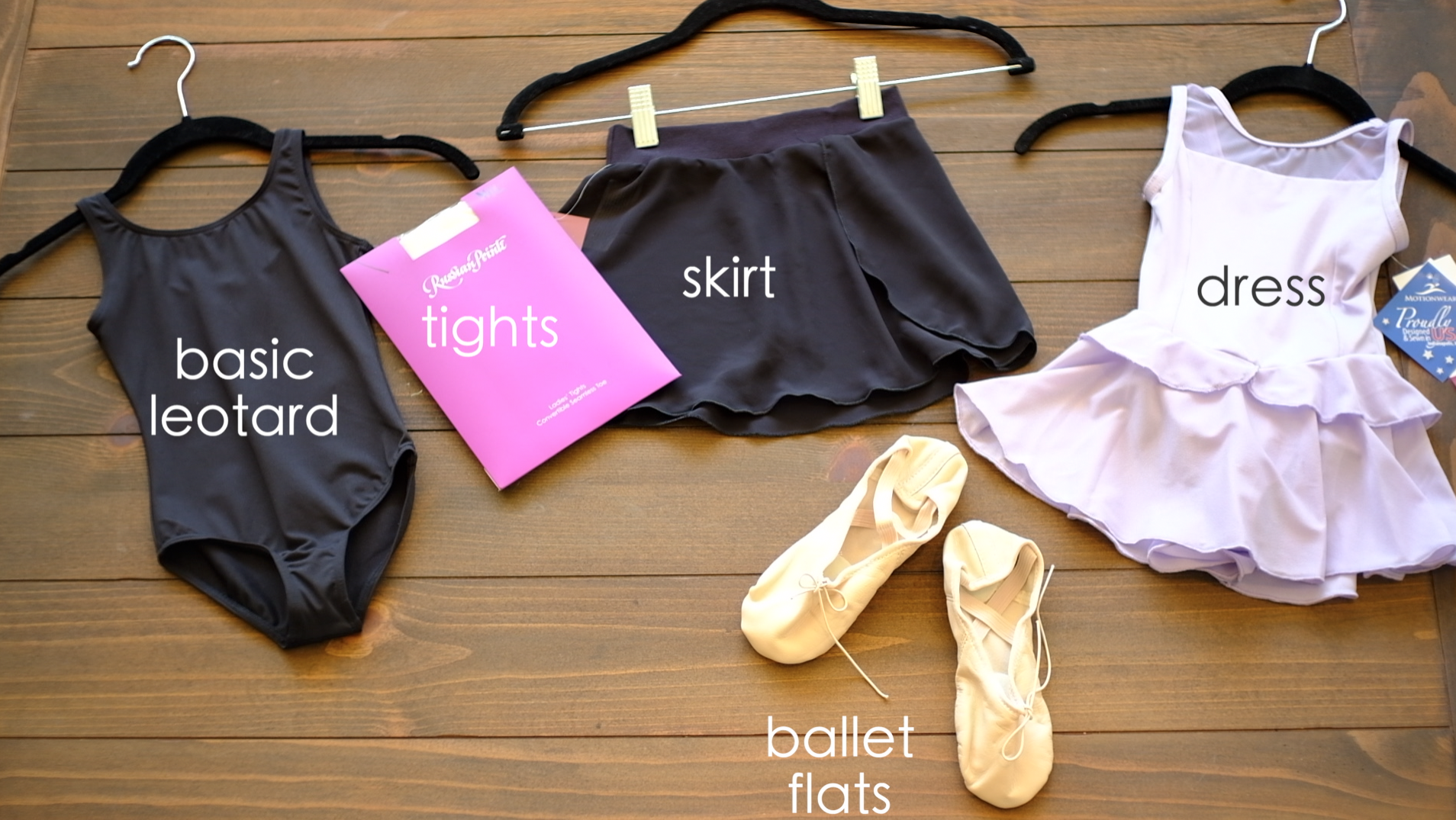
Are you or your little one getting ready for their very first ballet class? Follow along with DWC Fitter, Emma, as she guides you through everything you need to be ready for a ballet class!
Ballet Flats
Ballet shoes come in many varieties! There are leather and canvas, with or without drawstrings. Some people prefer the feel of leather, while others like that canvas can stretch. Often your studio will specify which they prefer so be sure to check what is required and then come in to Dancewear Center to try some on!
Transition Tights
Tights also have many varieties, often the go-to tights are transition or convertible tights, which allow you to roll them up off of your feet for before and after class. Check with your studio for color and style guidelines!
Leotards
Leotards are essential in ballet. They allow dancers to move freely and securely. And they are the best thing to wear so teachers can give adequate corrections to students. Colors vary by studio guidelines, feel free to try some on in one of our stores!
Skirts
Skirts are a classic ballet accessory that goes over your leotard. Be sure to check on styles and colors from your studio!
Dresses
Some studios require that younger dancers wear dresses instead of leotards to prevent fiddling with skirts. We have a variety of options and colors to try on!
Disclaimer
All content found on the Dancewear Center Website, Instagram, Facebook, Pinterest, and all other relevant social media platforms including: text, images, audio, or other formats were created for informational purposes only. Offerings for continuing education credits are clearly identified and the appropriate target audience is identified. The Content is not intended to be a substitute for professional medical advice, diagnosis, or treatment. Always seek the advice of your physician or other qualified health provider with any questions you may have regarding a medical condition. Never disregard professional medical advice or delay in seeking it because of something you have read on this Website.
If you think you may have a medical emergency, call your doctor, go to the emergency department, or call 911 immediately. Dancewear Center does not recommend or endorse any specific tests, physicians, products, procedures, opinions, or other information that may be mentioned on dancewearcenter.net. Reliance on any information provided by dancewearcenter.net, Dancewear Center employees, contracted writers, or medical professionals presenting content for publication to Dancewear Center is solely at your own risk.
Links to educational content not created by Dancewear Center are taken at your own risk. Dancewear Center is not responsible for the claims of external websites and education companies.
DWC Recovery Product Guide
After getting back into dance following a break, it’s typical for your body to need a little extra TLC (see Physical Therapist Colleen Bickel’s article on tips for physically returning to dance). Not to mention, many dancers are also gearing up for competition and convention season, which is always physically demanding. Taking time to rest and recover is often just as important as the dance training itself. This means rolling out and resting your sore muscles but also setting aside time to pamper yourself to feel mentally refreshed. Check out this list of our favorite recovery products at Dancewear Center to help provide yourself with some needed restoration in the coming dance year.
By Madison Huizinga, DWC Blog Editor
As dancers are coming back from summer intensives/vacation and preparing for the new dance year, it is vital that we as dancers take care of our bodies properly. After getting back into dance following a break, it’s typical for your body to need a little extra TLC (see Physical Therapist Colleen Bickel’s article on tips for physically returning to dance). Taking time to rest and recover is often just as important as the dance training itself. This means rolling out and resting your sore muscles but also setting aside time to pamper yourself to feel mentally refreshed. Check out this list of our favorite recovery products at Dancewear Center to help provide yourself with some needed restoration in the coming dance year.

Bloch Resistance Bands
Using latex material, this resistance band is perfect for dancers recovering from an injury or for young dancers preparing for their pointe shoes. This product comes in three different colors that indicate different weights, mint green is light, teal blue is medium and royal blue is heavy. The weights can determine which band is best for your recovery process and can target specific areas that are in need of strengthening. Shop for this product in-store or online here!

Flexistretcher
The Flexistretcher is leading the dance world as one of the top training tools for strength and flexibility. Using elastic resistance technology, this product effectively and safely improves flexibility and strength by strengthening the muscles as you stretch. The loops are fully adjustable to fit all bodies and have rubber stoppers that allow the loop to always stay in place without falling off. Be sure to find this product in-store or online! Be sure to check out our How To Videos on the Flexistretcher as well!

Footsie Roller
Do you have tension in your feet that just won’t go away? The Footsie Roller is just the product for you! This roller is designed to relieve tension in the arches of the feet from long rehearsals or sudden injury. Being made of wood and silicone allow for the roller to alleviate knots and tiredness in the feet instantly. Lightweight and durable, this product is easy to throw in your dance bag and carry around wherever you need it!
Apolla Performance
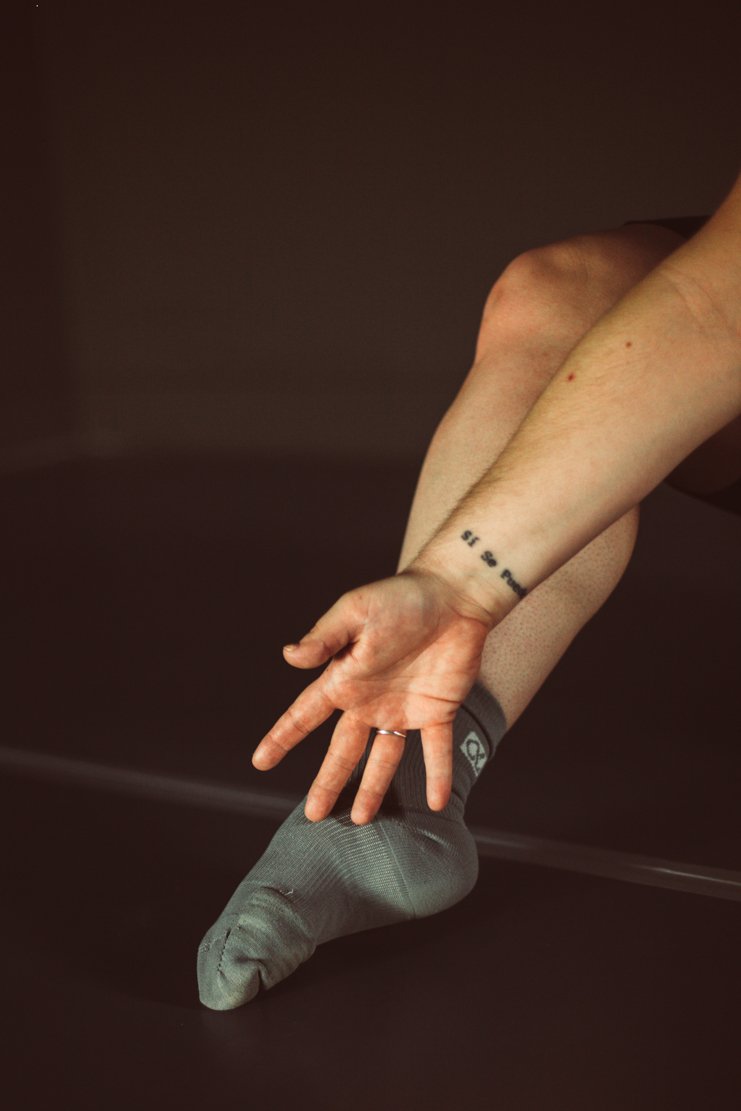
Apolla Performance products are known to be top-notch for dancers around the country for recovery and performance use. Recently featured on Shark Tank, Apolla’s compression socks and legwarmers leave dancers’ feet and legs feeling and looking great. Apolla Performance products use shock absorption technology to help comfort the balls of the feet and squeeze the arch of the foot for maximum comfort and support in any style of dance. The Amp Shock, Performance Shock, Infinite Shock, and the K-Warmer are perfect to help dancers’ feet recover and get prepped for the new dance season! Be sure to check out our How To Video on using traction spray with Apollas!

FLX Infinity Ball
Unlike your regular tennis ball, the FLX Infinity Ball is strategically designed for dancers that need to roll out their sore muscles. While this product is small, it packs a lot of power and is built to handle intense pressure to ensure that knots and soreness in muscles are alleviated. The contoured shape is perfect to get a targeted deep-tissue massage to diminish pain and restore mobility. DWC carries this product in two different colors so be sure to get one in-store or online!

Tiger Balm
Tiger balm is a topical ointment that is aimed to help relieve sore muscles for dancers and hurt areas on the dancer’s body. This product is perfect for use after a rough class or rehearsal where the body needs a little love. You can keep this product in your dance bag for easy access after classes that leave muscles feeling sore. Shop for this product in-store at either Dancewear Center location!
We hope this Recovery Guide can help make the recovery process a little easier!
Disclaimer
All content found on the Dancewear Center Website, Instagram, Facebook, Pinterest, and all other relevant social media platforms including: text, images, audio, or other formats were created for informational purposes only. Offerings for continuing education credits are clearly identified and the appropriate target audience is identified. The Content is not intended to be a substitute for professional medical advice, diagnosis, or treatment. Always seek the advice of your physician or other qualified health provider with any questions you may have regarding a medical condition. Never disregard professional medical advice or delay in seeking it because of something you have read on this Website.
If you think you may have a medical emergency, call your doctor, go to the emergency department, or call 911 immediately. Dancewear Center does not recommend or endorse any specific tests, physicians, products, procedures, opinions, or other information that may be mentioned on dancewearcenter.net. Reliance on any information provided by dancewearcenter.net, Dancewear Center employees, contracted writers, or medical professionals presenting content for publication to Dancewear Center is solely at your own risk.
Links to educational content not created by Dancewear Center are taken at your own risk. Dancewear Center is not responsible for the claims of external websites and education companies.

The Return of Seattle Dances
Seattle Dances is one of Seattle’s top dance journalism pages that features upcoming performances and various interviews with local dancers in the area. We got the chance to speak with Kaitlin McCarthy who is the current editor and director of operations of Seattle Dances! Read on the learn more about what Seattle Dances is all about and their mission for the Seattle Dances on the dance community!
A Conversation with Kaitlin McCarthy
By Samantha Weissbach, DWC Owner & General Manager and Nicole Barrett, DWC Blog Editor
Seattle Dances is one of Seattle’s top dance journalism pages that features upcoming performances and various interviews with local dancers in the area. We got the chance to speak with Kaitlin McCarthy who is the current editor and director of operations of Seattle Dances! Read on the learn more about what Seattle Dances is all about and their mission for the Seattle Dances on the dance community!
Seattle Dances was established in 2009 as a blog for Pacific Northwest Ballet. Later on, the organization expanded its converage and focused on including a wider range of dance performances in the area. Seattle Dances was passed around throughout the years to numerous different mangements and eventually landed on two local dancers Anna Waller and Mariko Nagashima from 2011-2016. Kaitlin became a writer for the organization in 2016 and then took over the managment position in 2016 with local dancer Megan Stevenson. At this stage, the orgianization was more of a formal jouranalistic entity with a staff of writers and more frequent posts on local shows in the area.
During the pandemic, many shows were cancelled so Seattle Dances decided to keep their site and staff to low capacity to adhere to the lack of movement from the Seattle dance community. The organization just had a large relaunch in January of this year that included a new look for their webpage and tried to continue focusing on local dance performances and supplying resources.
Kaitlin shares that what Seattle Dances wants most for the community to know is that everyone is open to submit anything dance related to the site! The organization was built to spread the word about local performances in the area and allow a common space for artists to share their work. There can be many misconceptions about journalism websites that only take a specifc range of content, but Seattle Dances is non-discriminating to the types of performances that they produce content about. Please use this resource to support local artists and spread the word about your upcoming performances!
We are so happy to be able to speak with Kaitlin abot Seattle Dances! This amazing webpage and resource is open for all dancers to use here! Be sure to check out the full interview with Kaitlin down below!

Disclaimer
All content found on the Dancewear Center Website, Instagram, Facebook, Pinterest, and all other relevant social media platforms including: text, images, audio, or other formats were created for informational purposes only. Offerings for continuing education credits are clearly identified and the appropriate target audience is identified. The Content is not intended to be a substitute for professional medical advice, diagnosis, or treatment. Always seek the advice of your physician or other qualified health provider with any questions you may have regarding a medical condition. Never disregard professional medical advice or delay in seeking it because of something you have read on this Website.
If you think you may have a medical emergency, call your doctor, go to the emergency department, or call 911 immediately. Dancewear Center does not recommend or endorse any specific tests, physicians, products, procedures, opinions, or other information that may be mentioned on dancewearcenter.net. Reliance on any information provided by dancewearcenter.net, Dancewear Center employees, contracted writers, or medical professionals presenting content for publication to Dancewear Center is solely at your own risk.
Links to educational content not created by Dancewear Center are taken at your own risk. Dancewear Center is not responsible for the claims of external websites and education companies.

How To Flexistretch Your Hamstrings
The Flexistretcher is a great tool that is used for the recovery and strengthening that dancers around the country find themselves using. Luckily, we have a certified Flexistretcher instructor on our DWC team that has a great tutorial on how to use this product. Read on to learn more about the FLX Hamstring Stretch with DWC Staff member Emma Neilson!
By Nicole Barrett & Emma Neilson
The Flexistretcher is a great tool that is used for the recovery and strengthening that dancers around the country find themselves using. Luckily, we have a certified Flexistretcher instructor on our DWC team that has a great tutorial on how to use this product. Read on to learn more about the FLX Hamstring Stretch with DWC Staff member Emma Neilson!
Grab your Flexistretcher and lay on your back with your knees facing up.
Bring your leg to your chest and place the ball of your foot on the elastic pad.
Hold the loops on either side of the elastic pad and carefully extend your leg.
Once your leg is all the way straightened, gently pull down on the loops to activate the stretch.
Hold this stretch for 30 seconds.
Repeat on the other side.
We hope that this tutorial helped you perfect your hamstring stretch with the Flexistretcher! Be sure to watch the full video below for a visual of this stretch!
Disclaimer
All content found on the Dancewear Center Website, Instagram, Facebook, Pinterest, and all other relevant social media platforms including: text, images, audio, or other formats were created for informational purposes only. Offerings for continuing education credits are clearly identified and the appropriate target audience is identified. The Content is not intended to be a substitute for professional medical advice, diagnosis, or treatment. Always seek the advice of your physician or other qualified health provider with any questions you may have regarding a medical condition. Never disregard professional medical advice or delay in seeking it because of something you have read on this Website.
If you think you may have a medical emergency, call your doctor, go to the emergency department, or call 911 immediately. Dancewear Center does not recommend or endorse any specific tests, physicians, products, procedures, opinions, or other information that may be mentioned on dancewearcenter.net. Reliance on any information provided by dancewearcenter.net, Dancewear Center employees, contracted writers, or medical professionals presenting content for publication to Dancewear Center is solely at your own risk.
Links to educational content not created by Dancewear Center are taken at your own risk. Dancewear Center is not responsible for the claims of external websites and education companies.
Get To Know DPT Era Terry
All dancers have struggled with the issue of trying to find a physical therapist or doctor that understands how a dancer’s body moves. There are various doctors out there who just don’t understand how dancers move which can be frustrating in the recovery process. Luckily we got the chance to speak with Dr. Era Terry to learn more about the dance medicine field in Seattle. Read on to learn more about Era’s dancing journey and what got her into doing physical therapy on dancers!
By Samantha Weissbach DWC Owner & Nicole Barrett, DWC Blog Editor
Pronunciation: Air-ah Tear-ee | Pronouns: she/her

All dancers have struggled with the issue of trying to find a physical therapist or doctor that understands how a dancer’s body moves. There are various doctors out there who just don’t understand how dancers move which can be frustrating in the recovery process. Luckily we got the chance to speak with Dr. Era Terry to learn more about the dance medicine field in Seattle. Read on to learn more about Era’s dancing journey and what got her into doing physical therapy on dancers!
Era grew up dancing and primarily did ballet while exploring competition dance in high school. While getting her undergrad degree after high school, she danced with Chattanooga Ballet in Tennessee where she was a contracted ballet dancer and taught various ballet classes. Once she graduated from undergraduate school, she suffered an ankle injury that took her out of the professional dance world, which allowed her to transition to physical therapy school. She obtained her degree from Columbia University in 2017 and moved to Seattle to pursue her physical therapy career upon graduation. Era still dances around the Seattle area and her mission was to work with dancers specifically to give back to that community.
Era shares that what sparked her decision to start working at her current practice was to work one-on-one with patients for longer periods of time to build that connection with her patients. She started working right after graduating from physical therapy school at a larger clinic where she was meeting with patients every 30 minutes and she realized that this wasn’t the scene for her. She then met the owner of her current practice Kinetic Physical Therapy through a mutual friend and has been a great fit for Era.
Era shares that Seattle is a great place for dance medicine and shares that there are some great resources to help dancers who have injuries.Seattle Dance and Performing Arts Medicine is a great resource for information on clinics and doctors in the area. Era also works in West Seattle at Kinetic Physical Therapy so be sure to come by and see her for all your dancer needs!

Disclaimer
All content found on the Dancewear Center Website, Instagram, Facebook, Pinterest, and all other relevant social media platforms including: text, images, audio, or other formats were created for informational purposes only. Offerings for continuing education credits are clearly identified and the appropriate target audience is identified. The Content is not intended to be a substitute for professional medical advice, diagnosis, or treatment. Always seek the advice of your physician or other qualified health provider with any questions you may have regarding a medical condition. Never disregard professional medical advice or delay in seeking it because of something you have read on this Website.
If you think you may have a medical emergency, call your doctor, go to the emergency department, or call 911 immediately. Dancewear Center does not recommend or endorse any specific tests, physicians, products, procedures, opinions, or other information that may be mentioned on dancewearcenter.net. Reliance on any information provided by dancewearcenter.net, Dancewear Center employees, contracted writers, or medical professionals presenting content for publication to Dancewear Center is solely at your own risk.
Links to educational content not created by Dancewear Center are taken at your own risk. Dancewear Center is not responsible for the claims of external websites and education companies.

DWC How To's: Sewing Your Pointe Shoes
Sewing pointe shoes can be one of the most complicated processes for dancers, but it doesn’t need to be!. There are various ways that teachers want their students to sew them and many ways that dancers prefer their own pointe shoes to be sewn. While there isn’t a correct way to sew your shoes, there are many tips and tricks that can be helpful to know in order to sew your shoes efficiently and effectively. Read on to learn some tricks from DWC Staff Member Emma Neilson!
By Emma Neilson DWC Social Media Manager, & Nicole Barrett DWC Blog Editor
Sewing pointe shoes can be one of the most complicated processes for dancers, but it doesn’t need to be! There are various ways that teachers want their students to sew them and many ways that dancers prefer their own pointe shoes to be sewn. While there isn’t a correct way to sew your shoes, there are many tips and tricks that can be helpful to know in order to sew your shoes efficiently and effectively. Read on to learn some tricks from DWC Staff Member Emma Neilson!
Materials needed to sew pointe shoes:
Stitch kit (needle and thread)
Sharpie or pen (to label the left and right shoe)
A lighter
Scissors
Pointe shoes
Ribbon
Elastic
Optional: Thimble
Here are the beginning steps on how to sew your pointe shoes!:
Take about a wingspan worth of thread to make sure you don’t run out and cut it off the spool.
Take your needle and put the thread through the eye of the needle. Pull the thread taut and make sure that both ends of the thread are the same length and knot the end.
Take your ribbons first and cut them into four even pieces to put on your shoes. Be sure to burn the edges with your lighter so that the ends don’t fray. Repeat the same with your elastics.
Line up your ribbons and elastics together on the side seam of the shoe. A general guideline is to place them at the highest point of the arch of your foot. (This is personal preference, so be sure to find where you like your ribbons and elastics on your shoes best!)
Take your needle and thread and start sewing them down. Some dancers prefer sewing the canvas or inner lining of the shoe only, but you can sew all the way through the fabric if you would prefer. You can also sew the ribbons and elastics down by sewing a box around the end or whichever way would be most effective for you. This is all personal preference!
Once you are finished with your stitching, create a knot at the end so that the stitching doesn’t come undone. Cut off the access thread with scissors.
Next you are going to take the other end of your elastic that you just sewed down and cross the end to the other side of the shoe. When both of them are sewn they should make an x-shape. *This can also be done with one elastic along the back edge of the shoe to make a strap which is dancer or teacher preference!*
Cross the elastic to the back of the shoe and be sure that it is at an angle to line up with the curve of your ankle. (This can be done on the inside or outside of your shoe just be sure to check with your teacher to see which they would prefer).
Use the same method that you chose for the front part of the elastic and ribbons and sew the back elastics down.
Tie a knot at the end of your thread and repeat with the other set of ribbons and elastics.
Repeat on the other pointe shoe and you have a new set of sewn pointe shoes!
We hope that these tips and tricks helped you sew your pointe shoes! All of these products can be found at Dancewear Center in store or online!
Disclaimer
All content found on the Dancewear Center Website, Instagram, Facebook, Pinterest, and all other relevant social media platforms including: text, images, audio, or other formats were created for informational purposes only. Offerings for continuing education credits are clearly identified and the appropriate target audience is identified. The Content is not intended to be a substitute for professional medical advice, diagnosis, or treatment. Always seek the advice of your physician or other qualified health provider with any questions you may have regarding a medical condition. Never disregard professional medical advice or delay in seeking it because of something you have read on this Website.
If you think you may have a medical emergency, call your doctor, go to the emergency department, or call 911 immediately. Dancewear Center does not recommend or endorse any specific tests, physicians, products, procedures, opinions, or other information that may be mentioned on dancewearcenter.net. Reliance on any information provided by dancewearcenter.net, Dancewear Center employees, contracted writers, or medical professionals presenting content for publication to Dancewear Center is solely at your own risk.
Links to educational content not created by Dancewear Center are taken at your own risk. Dancewear Center is not responsible for the claims of external websites and education companies.

How To Adjust Your Flexistretcher
Flexistretchers have been one of the top strength and flexibility training tool for dancers around the world. Using elastic resistance, this tool safely improves your flexibility while strengthening muscles at the same time! Here is the easiest way to adjust the straps to your flexistretcher!
By Nicole Barrett & Emma Neilson
Flexistretchers have been one of the top strength and flexibility training tool for dancers around the world. Using elastic resistance, this tool safely improves your flexibility while strengthening muscles at the same time! Here is the easiest way to adjust the straps to your flexistretcher!
Take the flexistretcher out of the mesh bag.
Fold the stretcher in half and lay it down on the floor.
Hold the loop of the strap and pull the slider towards the middle to your desired length.
Repeat on the other side.
Make sure to line everything up evenly and you have your adjusted flexistretcher!
This product can be found at Dancewear Center in store or online! Be sure to check out the video below for the full how-to!
Disclaimer
All content found on the Dancewear Center Website, Instagram, Facebook, Pinterest, and all other relevant social media platforms including: text, images, audio, or other formats were created for informational purposes only. Offerings for continuing education credits are clearly identified and the appropriate target audience is identified. The Content is not intended to be a substitute for professional medical advice, diagnosis, or treatment. Always seek the advice of your physician or other qualified health provider with any questions you may have regarding a medical condition. Never disregard professional medical advice or delay in seeking it because of something you have read on this Website.
If you think you may have a medical emergency, call your doctor, go to the emergency department, or call 911 immediately. Dancewear Center does not recommend or endorse any specific tests, physicians, products, procedures, opinions, or other information that may be mentioned on dancewearcenter.net. Reliance on any information provided by dancewearcenter.net, Dancewear Center employees, contracted writers, or medical professionals presenting content for publication to Dancewear Center is solely at your own risk.
Links to educational content not created by Dancewear Center are taken at your own risk. Dancewear Center is not responsible for the claims of external websites and education companies.

Easiest Way to Put on Apollas
Grab your Apolla shocks and make sure that you have the correct sock for your foot. (The inside of the shock should have a R or an L that indicates which one goes on which foot)
Roll up the top of the shock as if you are putting on tights and slip in onto your foot.
By the DWC Team
Apolla Performance products are known to be top-notch for dancers around the country for recovery and performance use. Apolla Performance products use shock absorption technology to help comfort the balls of the feet and squeeze the arch of the foot for maximum comfort and support in any style of dance. Here is the easiest way to put on your Apollas to ensure that your feet are comfortable!
Grab your Apolla shocks and make sure that you have the correct sock for your foot. (The inside of the shock should have a R or an L that indicates which one goes on which foot)
Roll up the top of the shock as if you are putting on tights and slip in onto your foot.
Be sure that the ball of the foot and heel is aligned with the pads at the bottom of the shock.
Finish putting on the shock and tug until it is a snug fit.
These products can be found at Dancewear Center in store or online! Be sure to check out the video below to see the full how-to!
Disclaimer
All content found on the Dancewear Center Website, Instagram, Facebook, Pinterest, and all other relevant social media platforms including: text, images, audio, or other formats were created for informational purposes only. Offerings for continuing education credits are clearly identified and the appropriate target audience is identified. The Content is not intended to be a substitute for professional medical advice, diagnosis, or treatment. Always seek the advice of your physician or other qualified health provider with any questions you may have regarding a medical condition. Never disregard professional medical advice or delay in seeking it because of something you have read on this Website.
If you think you may have a medical emergency, call your doctor, go to the emergency department, or call 911 immediately. Dancewear Center does not recommend or endorse any specific tests, physicians, products, procedures, opinions, or other information that may be mentioned on dancewearcenter.net. Reliance on any information provided by dancewearcenter.net, Dancewear Center employees, contracted writers, or medical professionals presenting content for publication to Dancewear Center is solely at your own risk.
Links to educational content not created by Dancewear Center are taken at your own risk. Dancewear Center is not responsible for the claims of external websites and education companies.
How to Use Traction Spray with Apollas
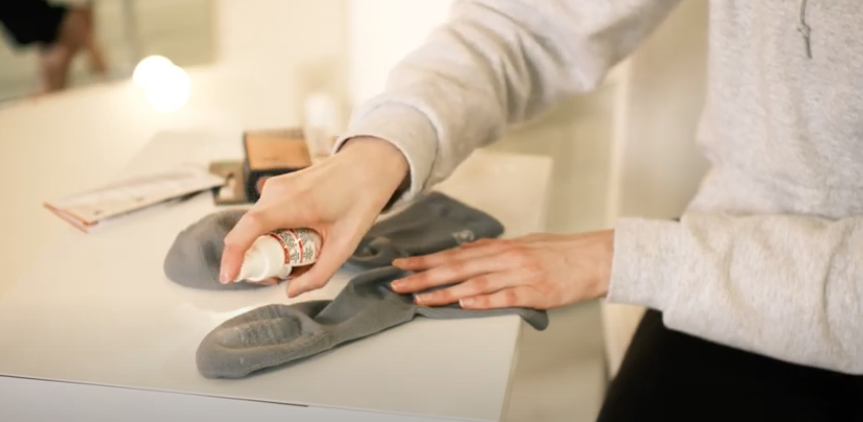
Apolla Performance products are known to be top-notch for dancers all around the country. Certain Apolla products are specially made to have traction, or they are made to be smooth on the bottom like a regular sock. But, when using the Apolla Performance Traction Shock, the traction on the bottom of the sock can wear down over time. This means that it is time to add it back with the E6000 Adhesive Spray! Here is how in just a few easy steps:
By the DWC Team
Apolla Performance products are known to be top-notch for dancers all around the country. Certain Apolla products are specially made to have traction, or they are made to be smooth on the bottom like a regular sock. But, when using the Apolla Performance Traction Shock, the traction on the bottom of the sock can wear down over time. This means that it is time to add it back with the E6000 Adhesive Spray! Here is how in just a few easy steps:
Make sure that you have shaken the spray before you apply it to the sock!
Take off the cap and evenly spray 5-10 times on the bottom of the sock.
To ensure the even distribution of the adhesive, you can rub the bottoms of the sock together.
Be sure to let the socks dry before you go onto the floors. (This can leave a sticky residue on the floors)
Lastly, enjoy your traction socks!
All these products can be found at Dancewear Center in-store or online! Be sure to check out the video below to see the complete how-to!
Disclaimer
All content found on the Dancewear Center Website, Instagram, Facebook, Pinterest, and all other relevant social media platforms including: text, images, audio, or other formats were created for informational purposes only. Offerings for continuing education credits are clearly identified and the appropriate target audience is identified. The Content is not intended to be a substitute for professional medical advice, diagnosis, or treatment. Always seek the advice of your physician or other qualified health provider with any questions you may have regarding a medical condition. Never disregard professional medical advice or delay in seeking it because of something you have read on this Website.
If you think you may have a medical emergency, call your doctor, go to the emergency department, or call 911 immediately. Dancewear Center does not recommend or endorse any specific tests, physicians, products, procedures, opinions, or other information that may be mentioned on dancewearcenter.net. Reliance on any information provided by dancewearcenter.net, Dancewear Center employees, contracted writers, or medical professionals presenting content for publication to Dancewear Center is solely at your own risk.
Links to educational content not created by Dancewear Center are taken at your own risk. Dancewear Center is not responsible for the claims of external websites and education companies.
Interested in writing for the DWC Blog? Click below to fill out the DWC Contributor application!