
A Non-Profit’s Vision For Equitable Dance Access
From her numerous years of experience in the industry, Kari Hovde knows that finding and securing opportunities for talented young dancers can be challenging. Due to numerous circumstances, opportunities for personal and professional development in the industry can be out of reach for even the most technically proficient young dancers. That’s why Kari founded The Backstage Foundation, a non-profit organization that funds opportunities for young dancers to build their talent and character via scholarships. Read on to learn more about Kari’s background, the story behind The Backstage Foundation, and the upcoming "In the Spotlight” benefit show on May 20, 2022, at 7:00 PM at the Kirkland Performance Center.
Kari Hovde on Offering Opportunities Through The Backstage Foundation
By Madison Huizinga, DWC Blog Editor

Photo by TrueONE Group
From her numerous years of experience in the industry, Kari Hovde knows that finding and securing opportunities for talented young dancers can be challenging. Due to numerous circumstances, opportunities for personal and professional development in the industry can be out of reach for even the most technically proficient young dancers. That’s why Kari founded The Backstage Foundation, a non-profit organization that funds opportunities for young dancers to build their talent and character via scholarships. Read on to learn more about Kari’s background, the story behind The Backstage Foundation, and the upcoming "In the Spotlight” benefit show on May 20, 2022, at 7:00 PM at the Kirkland Performance Center.
Kari has been a part of the dance world her whole life and what she’s loved most about it is the community. “Dance is family,” Kari says, sharing that the bond people make with those at their studio is incredibly valuable. The positive energy, excitement, encouragement, and support that comes from dancing is irreplaceable, and for many dancers, their dance family may be their only support system.
Over the course of her journey, Kari has witnessed the high expenses of dance and the inequitable opportunities available to children from families of different socioeconomic statuses. “I have always wanted to be able to provide talented young dancers with [opportunities],” she says, sharing that she brainstormed ideas about how to make experiences like traveling to intensives and conventions more accessible. Kari ultimately landed on a needs-based scholarship, consisting of a written application, a talent video, and a story video, in which applicants explain their background, their desire for the scholarship, and their passion for dance.
“Dance brings so much more to their lives than just the talent and the technique,” Kari explains the value of dance in a young person’s life. “It brings values that [dancers can] carry with them through the rest of life to apply towards all the things that they do, from career to relationships.” Kari and the rest of the team at The Backstage Foundation believe that dance brings forth community, dedication, great work ethic, problem-solving, and numerous other skills that are instrumental for personal and professional development.

Photo by Leslie Cheng
The core values of The Backstage Foundation are experience, community, and opportunity, and that certainly comes through in what the organization offers to dancers. Kari says she drew inspiration for the project after coaching a talented high school hip hop team and realizing the dancers in the group had few opportunities outside of school to showcase their skills. She wanted the team to be able to take professional-level classes, travel to showcase their skills and have the opportunities dancers in studios often have.
In general, Kari would love to see more opportunities for dancers on a local level, including access to spaces like dance conventions, which can help facilitate transitions from small dance studios to more professional work. She would love community members to start thinking about ways to bridge the gap between that safe studio space to the new, adventurous, professional terrain, in a way that keeps dancers secure and successful. Kari thinks mentorship programs and workshops could assist dancers with that transition and allow them to see if the professional world is for them.
On a more global level, Kari hopes to see a bit more safety and security in the dance industry. She believes it’s important that young dancers have people in their lives that they can trust, including agents and talent managers, that can guide them with the professional decisions they choose to make. The last thing Kari wants is for young dancers to be taken advantage of in any capacity. Professionals in the dance industry have the power to gather the right kind of leadership and guidance for young people, and Kari is looking forward to seeing what that can look like.

Photo by TrueONE Group
The Backstage Foundation is thrilled to be having its annual benefit show “In the Spotlight” on May 20, 2022, at 7:00 PM at the Kirkland Performance Center. Attendees can expect to watch 75 performers dance in over 35 routines, featuring Amity Addrisi from King 5’s New Day Northwest as the emcee and choreographer Tina Landon as the guest speaker of the event. “We’re quite excited for that event!” Kari shares. “It’s going to be very fun with lots of inspiration, entertainment, and heartfelt stories.” Tickets are selling quickly, so be sure to get yours as soon as possible! You can secure your ticket here.
The Backstage Foundation’s first round of scholarship opportunities will open in June, so dancers are encouraged to keep an eye out for that on the organization’s website. “The selection committee will be very excited to see everyone’s submissions!” Kari shares.
Finding Your “Why”: Jerome Aparis on How Breaking Feeds His Soul
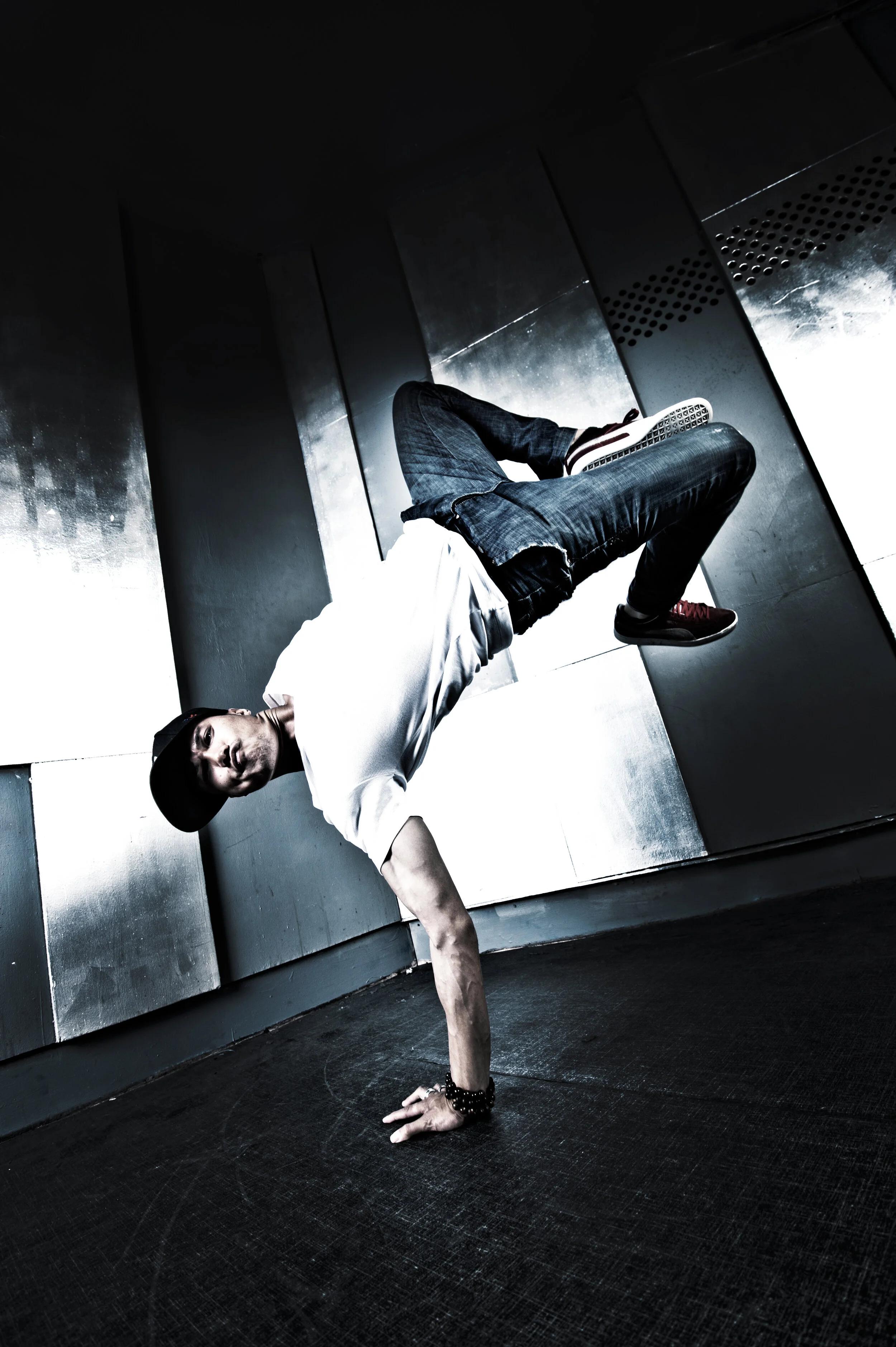
At the end of AAPI month, Jerome Aparis shared his journey to becoming a co-founder and current member of the world-renowned breaking crew, Massive Monkees. From studying VHS tapes of breakers in sixth grade to creating an internationally acclaimed crew and achieving global accolades, Jerome recounts how the values of hard work and creativity from his cultural heritage have fueled his drive for success and purpose.
Trigger Warning: Trauma, Sexual Assault
By Isabel Reck & Madison Huizinga. DWC Blog Contributors
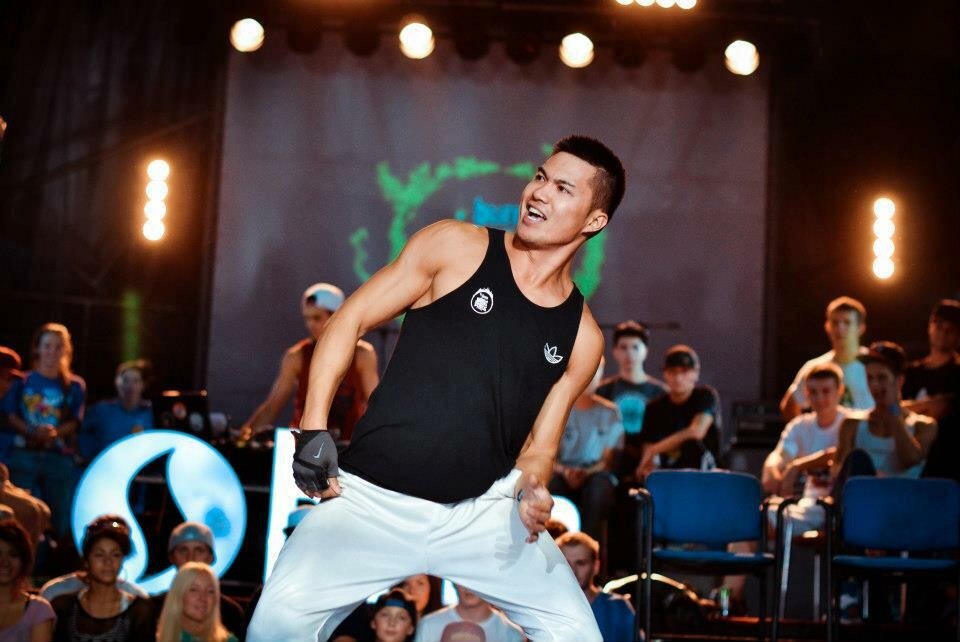
At the end of AAPI month, Jerome Aparis shared his journey on becoming a co-founder and current member of the world-renowned breaking crew, Massive Monkees. From studying VHS tapes of breakers in sixth grade to creating an internationally acclaimed crew and achieving global accolades, Jerome recounts how the values of hard work and creativity from his cultural heritage have fueled his drive for success and purpose.
Jerome began his dance journey around age 12 by watching videos of breakdancing crews from Seattle. At the time, this art form was predominantly underground and information about it traveled almost exclusively through word of mouth. A movie that was particularly influential for him growing up was Beat Street, a film showcasing the NYC hip hop culture of breaking, MCing, DJing, and graffiti art in the early 1980s. Jerome had never seen dancing like what he witnessed in Beat Street and various other videos. He was immediately pulled in.
When Jerome was a kid, most people his age learned breaking at local community centers, which were relatively informal and open to the public. The community centers were usually packed to the brim, and Jerome recalls sometimes only getting a couple of minutes of one-on-one time with his instructor. Despite this challenge, the attitude he adopted was about “maximizing what [he] learned.” Jerome recalls often not understanding certain steps the first couple of times he practiced them at the center. He would go home and rehearse in his kitchen for hours so he could go back to the community center and show off his improvement. Being able to advance through practice and showcase his progress made him confident that he was worthy of his instructor’s time and worthy of being a student.
This attitude and commitment to breaking led Jerome to make an impressive and successful career for himself. He co-founded the world-famous breaking crew, Massive Monkees in 1996. This group and its members have shared the stage with the likes of Macklemore, Missy Elliot, Jay-Z, and Alicia Keys. Massive Monkees also finished third overall in MTV’s America’s Best Dance Crew in 2009 and won the 2004 B-Boy World Championship in London and 2012 R-16 World Championship in Seoul, Korea. Jerome later won ten national titles with the crew Massive Monkees. Today, Jerome coaches students at the Massive Monkees Studio: The Beacon, and at Cornerstone Studio with his wife, Lea Aparis, who’s also the studio’s owner.
“When you don’t have much, creativity is huge.”
Jerome shares that his Filipino heritage has largely shaped the individual and performer he is today. Jerome was born in the Philippines and moved to the United States at age three. When he returned to the Philippines at age 15, he remembers seeing how hard the people from his hometown worked, including his own family. He recalls kids in his hometown, outside of the city, walking miles just to get water and attend school. Community members who were lacking the resources that urban-dwellers possessed needed to act creatively to work around the challenges they faced. These values—hard work and creativity—Jerome recognized in the Philippines, pushed him to achieve the accomplishments he has today. “Mak[ing] something out of nothing” is a theme that he has carried with him throughout his journey. “When you don’t have much, creativity is huge,” he explains.
One instance in the Philippines that was particularly inspiring to Jerome occurred when he visited his sister at work. Jerome’s sister performs government work in the Philippines, working at a safe house for young girls who have been victimized by sex trafficking. The leads at the safe house asked Jerome if he was interested in speaking with the girls and perhaps teaching a workshop. They told him these girls were scared and felt like they didn't have a voice. Knowing that these young girls had developed significant fears, particularly of outsider men, Jerome knew “it [was] time to step up to the plate.” What occurred at the safe house was the “most life-changing 60 minutes of [his] life.”
At the beginning of the workshop, these girls, ages 5-17, were incredibly quiet. At first, the session centered on talking and why using their voices is important. Then, Jerome transitioned into teaching them choreography that communicated their strength and power. By the end of the workshop, he describes how the girls were “just going for it” and how their energy had completely changed. Later, they all sat in a circle and each girl opened up about her story. Jerome carries these stories with him today. “It’s way bigger than just winning a trophy,” he shares.
To be a successful professional dancer, Jerome makes it clear that a performer must know their “why.” Why do you do what you do? Jerome explains that in dance it’s easy to be driven to succeed to simply fuel your ego. You merely dance for the winning, the fame, and the glory. But beyond expanding your ego, your “why” must be fueled by the need to make yourself feel genuinely confident and feed your soul. Jerome’s experience teaching in the Philippines did just this. Helping kids “understand that there is so much greatness in them” is what coaching has become to him and is “one of his biggest passions.”
Jerome’s biggest takeaway from his career is simple: “find your why.” Once you know this everything else will follow.

“Find your why, once you know this everything else will follow.”


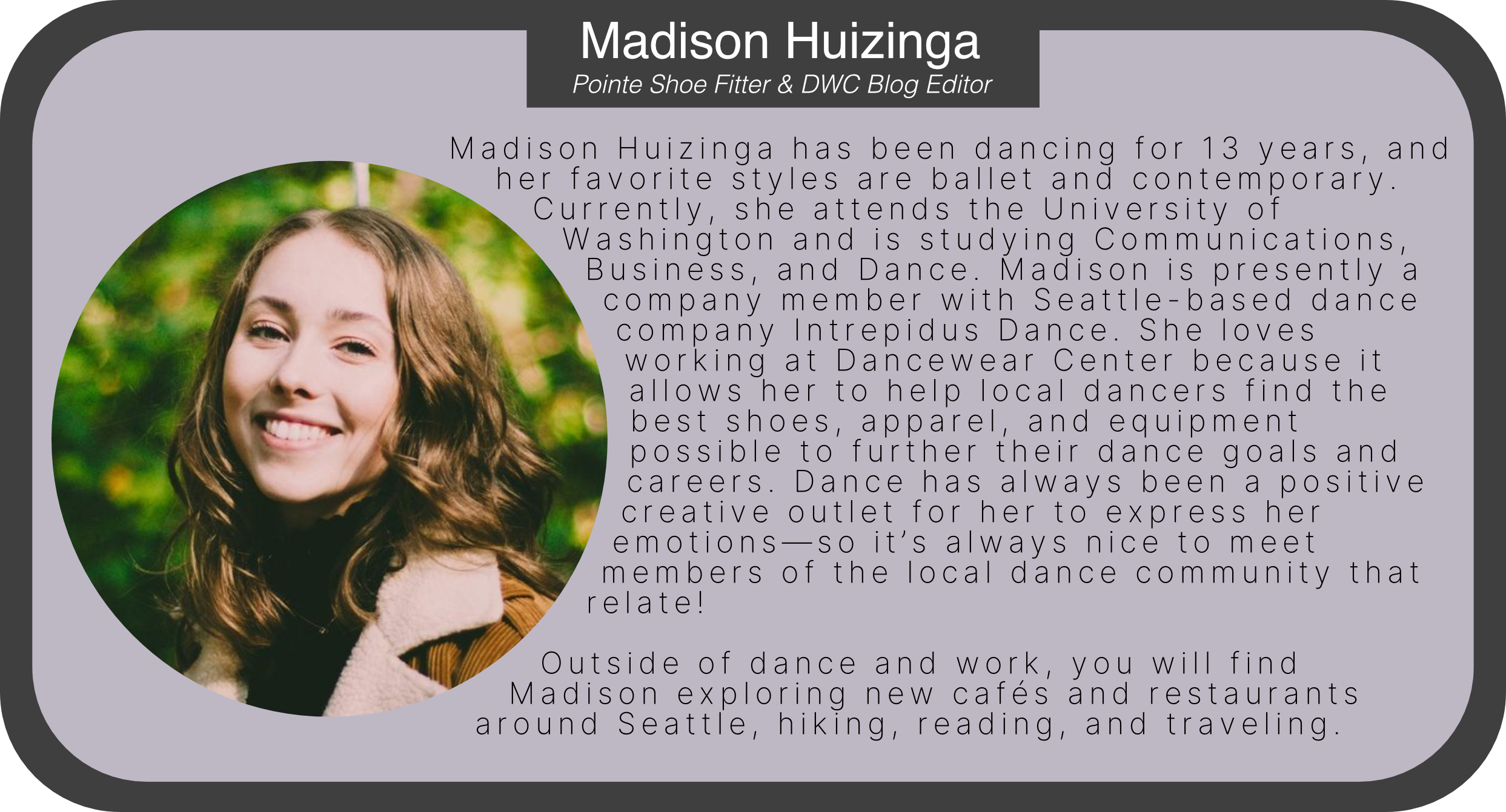
Madison Huizinga has been dancing for 13 years, and her favorite styles are ballet and contemporary. Currently, she attends the University of Washington and is studying Communications, Business, and Dance. Madison is presently a company member with Seattle-based dance company Intrepidus Dance. She loves working at Dancewear Center because it allows her to help local dancers find the best shoes, apparel, and equipment possible to further their dance goals and careers. Dance has always been a positive creative outlet for her to express her emotions—so it’s always nice to meet members of the local dance community that relate!
Outside of dance and work, you will find Madison exploring new cafés and restaurants around Seattle, hiking, reading, and traveling.
Isabel Reck has been dancing since she was 12; the majority of her training being at Cornerstone Studio. She has trained in ballet, contemporary, lyrical, jazz, hip-hop, tap, breakdancing, and aerial silks, although contemporary has always been her go-to. Her favorite thing about working with DWC is being able to explore a new side of dance she never thought she would be a part of.
The Division of Self, the Division of Identity
How we are defined is important. It helps tell the world our values, our morals, and our interests. But who makes that definition? Do we set the parameters ourselves by means that we dictate? Or is it determined by our background, heritage, and childhood?
As with most things in life, I suspect it’s a little of everything. There are factors we cannot control that play insurmountably in how we are viewed, including skin color, eye shape, and our parent’s socio-economic status. But there are other things that ebb and flow with our own desires like our morals, our interests, and the places we go. And then there are things that just happen, random events that you may not even realize are significant until ten years later when you look back at your life and realize that one seemingly meaningless decision, event, or person, changes the trajectory of your whole life.
Trigger Warning: Racial Slurs Used in Context, Mental Health
By Ethan Rome, DWC Director of Marketing

How we are defined is important. It helps tell the world our values, our morals, and our interests. But who makes that definition? Do we set the parameters ourselves by means that we dictate? Or is it determined by our background, heritage, and childhood?
As with most things in life, I suspect it’s a little of everything. There are factors we cannot control that play insurmountably in how we are viewed, including skin color, eye shape, and our parent’s socio-economic status. But there are other things that ebb and flow with our own desires like our morals, our interests, and the places we go. And then there are things that just happen, random events that you may not even realize are significant until ten years later when you look back at your life and realize that one seemingly meaningless decision, event, or person, changes the trajectory of your whole life.
Looking back at these things in my own life, it’s easy to point out why I made certain decisions. However, in those moments, there is no way I could have known why. As most people do, I make decisions in the present based on factors that I think I have set. But ten years from now, I’m certain I will realize that it could not have been any other way. We could go on for days dissecting every detail, but today I want to focus on a particular one. In light of Asian American and Pacific Islander Heritage Month, I want to speak about one of the most prominent factors that has created a division in my own self.
I am half Korean and half Scandinavian. Which in my life has meant I am not enough of anything to anyone. Everyone sees me as an “other.” I cannot count the number of times a White person has asked me, “so are you Chinese or something?” Or the number of times an Asian person simply won’t speak to me until I’m able to gently assert my own Asian-ness (by somehow slipping it into the dead conversation, or saying “thank you” in Korean). Or the number of times someone of any race has said “so what are you?” I have been called both “chink-eyes” and “the white boy.” Growing up, I can only remember having one mixed-race friend and recall often wishing I could “just be normal.” There was a period of my life when I tried to pass (as singularly White). People would ask me, “So what are you?” I would reply “I’m normal, you know White.” I can confidently say now that White does not equal “normal.” There is nothing wrong with being White, but we can’t allow it to be the standard to which all other races must be compared. You are not irregular or weird because of your skin tone, culture, or ethnicity.
Everywhere I go, I feel left out or pushed aside by the people that I feel look like me or think like me. Feelings of dismissal and ostracization can lead to serious disorders. Studies have shown that people of mixed race “were the most likely to screen positive or at-risk for alcohol/substance use disorders, anxiety, depression, eating disorders, and psychosis” (Imposter Syndrome in Multiracial Individuals). Because of this, I have always longed for a community that I felt I belonged to, but that also one that wanted me.

Due to this longing for community I have always tried new clubs, sports and activities. When I went to college, I was still searching for that sense of belonging. Therefore, I searched through the college club directory and decided to try breaking (or breakdancing). The intensity and uniqueness of breaking was reminiscent of watching Bruce Lee, one of the few male Asian icons in American culture. I saw something of myself in those bboys. Thus began my dance journey.
The breakers, and breaking in general, were very welcoming. They themselves came from all kinds of backgrounds, some grew up breaking, some only started a year ago, most were self-taught, all of them were glad to teach what they knew and have a conversation. This was likely aided by the fact that they were all so different from each other, dancers were Asian, Pacific Islander, Middle Eastern, White, Black, and Hispanic. It was possibly the most diverse group on campus in terms of race/ethnicity. During this time, my feelings of unease or dismissal subsided, it does not matter what you look like when everyone looks different from the person standing next to them. However, being mixed raced is a unique beast that may slumber, but never dies.
During my time as a bboy, I also started to take classes in the Dance Department, ballet and modern specifically. Entering into the Dance Department came with the shock of the technical details of classical dance, as well as the fact that I was pretty much the only Asian person in the department, and one of the few people of color. I was suddenly back to being an “other.” Dancers are largely open-minded and accepting people. But even well-intentioned people might not notice their microaggressions, or don’t understand why calling me a “ninja” is maybe not the compliment they think it is (ninja are Japanese, I’m Korean, ninja were also often viewed as individuals without honor, assassins sent to do the dirty work and were shunned for completing the tasks given to them). My newfound passion in modern created the next division of my identity. Was I a breaker, or was I a modern dancer? For many reasons I chose to finish my degree in dance, and attempt a career as a “modern dancer.”
Moving to Seattle was a significant change in many ways, and it too was just a random event that happened to happen. Living in Seattle opened the door of contemporary dance. Contemporary has its own confusing and mixed background. Did it come from the lyrical/contemporary world? Did it come from the contemporary ballet world? Is it neither? Is it both? Perhaps it's because of this ambiguity that I became so enamored with it. It is almost a blank canvas, to be determined and designed by me. It is a place where I can express myself fully. I can utilize my classical training, I can incorporate my breaking origin. There is no one to tell me what I am or can do as a contemporary artist. I can use my art to express any idea I want such as my Korean heritage.
This piece was created in response to the recent outbreak of anti-Asian hatred
After moving here I also started to feel that I wasn’t quite as much of an outsider. They are still relatively few, but I have met more Hapa (a Hawaiian word meaning “half,” it has been co-opted by the half/mixed-Asian community and has its own controversy behind it) here than in the rest of my life combined. It has been wonderful to connect with others like me and to learn that I was not alone. I do not think the answer to solving this problem is simply to have more mixed raced babies, in fact, that too can be problematic; “We could have such beautiful babies'' is a terrible thing to say, reduces someone to their race, a singular part of their identity, and tokenizes certain races. It’s another example of a micro-aggression and how people often don’t understand that their “compliment” is actually quite demeaning.
So what can we do?
You can help by taking a moment to put yourself in someone else’s shoes. Your compliment may be an insult to someone else (one man’s trash…). Do they understand that you meant to compliment them? Do you understand the cultural context you might be implying? Allow others to be themselves, accept them for who they are and let them demonstrate to you how they wish to be treated. Authentic representation also tells people they matter and shows them they are not alone. If you are multi-racial, then be yourself! If it is a part of you, don’t try to hide it, it very likely won’t work anyway.
If you feel you are an “other” I encourage you to take a deep breath, you are not alone. It may take time, it may be painful, but you can find ways to connect if you keep pushing yourself. Remove yourself from your ego, from notions of who you or other people think you need to be or should accomplish. Do not be afraid to enjoy something simply because other people look down on you for it, they probably just don’t understand it well enough. Your community might not look the way you envision it now, in fact, it is very likely to look entirely different, but it is out there. Alan Watts once said, “So don't worry too much, somebody's interested in everything. And anything you can be interested in, you'll find others will.”

Looking back at it now I see that there was really no other way, I was never going to fully be a bboy, I was never going to fully be a modern dancer; I will never be fully Asian nor fully White, I always have and always will be split. But that is not necessarily a bad thing. I am more empathic, more understanding, and more accepting because of it. And I am a significantly more unique artist because of it. I learned to see the strengths of my divisions. My only regret was how long I tried to hide and failed to see how my uniqueness can define my positive attributes as well as the negatives.
Looking back at it now I am grateful for my own confusing and mixed background.
Designing Leotards With an Eye Towards Comfort
At one time or another, most dancers have worn an uncomfortable, ill-fitting leotard. Donning awkwardly fitting dancewear can be so distressing that it can feel like it has real impacts on one’s dancing. If you’re not feeling confident, how can you expect to move confidently? That’s why Alina Khoo has created AK Dancewear with the motivation to produce flattering and comfortable dancewear that helps dancers feel their best in the studio.
Alina Khoo on AK Dancewear’s Mission
By Madison Huizinga, DWC Blog Editor

Photo by Marlen Alimanov Photography
At one time or another, most dancers have worn an uncomfortable, ill-fitting leotard. Donning awkwardly fitting dancewear can be so distressing that it can feel like it has real impacts on one’s dancing. If you’re not feeling confident, how can you expect to move confidently? That’s why Alina Khoo has created AK Dancewear with the motivation to produce flattering and comfortable dancewear that helps dancers feel their best in the studio.
Alina grew up in Penang, a Malaysian state located on the northwest coast of Peninsular Malaysia. She began taking ballet classes around age nine to help correct a posture problem she was facing. Alina trained under the Royal Academy of Dance syllabus as a child, continuing until her posture was eventually corrected. She stopped dancing when she went to college. “It was very difficult,” Alina says of quitting dance, as her family desired her to focus her attention on pursuing a conventionally “stable” or “secure” career. She ended up traveling to the United States to pursue an engineering degree and eventually secured a technical information job.
“All along, I enjoyed being in the audience,” Alina says, sharing that she loved viewing as many dance performances as she could. At one point, she began especially missing dancing herself. Alina chose to take some dance classes at a local college and was encouraged by her instructor to pursue it further. So, she decided to earn a teaching certification and get involved with the dance scene little by little, beginning with teaching freelance and as a substitute for friends. After having her second child, Alina decided to leave her corporate job, directing more of her attention towards raising her children and dancing. She’s been dancing and teaching with a local company ever since, getting involved with its shows throughout the season.
“It’s always good to find that inner connection,” Alina says of rediscovering dance. She shares that the moment she returned to dancing, the technical knowledge felt like it came back quickly. “Just walking into a studio, I find that connection, and that security is like a sanctuary for me.”
Alina has always felt like she doesn’t have a “typical” ballerina body, as most of the dancewear products she purchases off the shelf don’t fit comfortably for her. “I do a lot of mending,” she says of the dancewear she purchases. Fortunately, sewing is second nature to Alina, as her grandmother sewed everything growing up. Alina began buying clothing items, including leotards she liked and altering them to fit her body. Eventually, people in her life began asking her where she was purchasing her clothes.
She began selling her custom creations, mainly to friends and parents from her dance studio and later on Etsy. After attending a dance workshop in New York City and receiving inquiries about her leotards from even more dancers, Alina got even more into creating dancewear. She and her husband decided to look more into the process of creating a brand.

click below to shop the look:
AK Dancewear launched in 2018 with a mission to never compromise on product quality. “We strive to make non-revealing, high quality and comfortable to wear garments,” the brand’s website reads. “Whatever I do, I will never compromise how comfortable the leotard [is],” Alina says. “Dancewear is for people,” she says, implying that dancers should feel secure in their leotards, and not like they are being “worn” by the garment. This is a philosophy Alina carries throughout her brand.
In addition to focusing on comfort, Alina is greatly inspired by nature when it comes to selecting colors and design concepts for her various leotard lines. For example, the “Caribbean” line of leotards contains various shades of blue and green tones, inspired by the vivid colors of the Caribbean skyline. The “Rose Garden” line of leotards, skirts, scrunchies, and face masks was inspired by the Tyler Rose Garden, in Tyler, Texas, the largest public collection of roses in the United States. Alina recalls taking her parents to the garden and them being enamored by the masses of blooming flowers. “It just inspired me a lot…I always remember [that] trip,” Alina shares. “The new things that I’m going to come out with were inspired by an experience, somewhere that I go, [or] something that I feel a connection to.” She points out that design is largely subjective, so she feels drawn to create what connects to her as an individual.
Alina identifies parallels between choreographing dances and designing leotards. Both artistic endeavors involve the need to learn foundational skills, like basic dance techniques and sewing. After you get a hang of the core semantics, you’re free to create whatever you want.

click below to shop the look:
Alina is uninterested in putting the majority of her energy into producing copious amounts of new products, rather she seeks to lean into what works for the dancer and expand from there. If she notices a leotard cut that most dancers like, she’s interested in seeing how she can improve upon it and create new iterations.
In 2022, AK Dancewear plans on releasing new collections and introducing a new fabric that provides a lot of support to dancers, in addition to its signature AKxtra™ design technique. Within the existing leotard collections at AK Dancewear, Alina loves creating variety in terms of color, design, and theme, so customers can also look forward to that in the coming year as well. Alina is also looking more into producing dancewear for men, as she has two sons who dance and struggle to find attire that works for them. “It’s heartbreaking that we don’t have enough for them,” she shares. She looks forward to being able to help bridge the gap in men’s dancewear in the future and look more into producing unisex dancewear that provides support to all dancers.
In the larger dance world, Alina is pushing for dancers to receive greater compensation for their work. “We should definitely value dancers more as artists,” she says. Alina points out that she makes an effort to involve local dancers in her business, specifically with photoshoots, as a way to move towards this change on the local level. “As a community, we should move forward with that - first, by paying our dancer friends,” she says. “This is an expertise that you’re tapping into, and you should pay [for the] expertise.”
Fostering Creative Collaboration Across Genres
The COVID-19 pandemic has posed more challenges than benefits for most peoples’ lives. However, in unique and unexpected ways, this time of isolation and solace has allowed people to re-connect with creative parts of themselves and explore ventures they’ve always wanted to. For MiYoung Margolis, MiYoung Margolis Dance Collective or MMDC was born out of the rubbles of the COVID-19 pandemic as a way to foster creativity and collaboration across genres.
MiYoung Margolis on the Origins of MMDC
By Madison Huizinga, DWC Blog Editor

Photo courtesy of www.miyoungmargolis.com
The COVID-19 pandemic has posed more challenges than benefits for most peoples’ lives. However, in unique and unexpected ways, this time of isolation and solace has allowed people to re-connect with creative parts of themselves and explore ventures they’ve always wanted to. For MiYoung Margolis, MiYoung Margolis Dance Collective or MMDC was born out of the rubbles of the COVID-19 pandemic as a way to foster creativity and collaboration across genres.
MiYoung shares that for her entire life, dance has been a core part of who she is. She has experience mostly training in ballet and Martha Graham’s modern technique. She also trained in traditional Korean dance styles when studying for her undergraduate degree from Korea National Sport University in Seoul, South Korea. As a student, MiYoung got the opportunity to travel abroad and perform internationally. Dance also had a big influence on her outside of the classroom, as she sought out other styles like salsa. Education is another one of MiYoung’s passions, as she has a master’s degree in the subject.
In 2005, MiYoung relocated to Seattle where she worked with local cultural organizations, organizing festivals and events. She threw herself into her work and greatly enjoyed it, confessing that she became a bit of a “workoholic.” “It was an awesome experience,” she says. MiYoung also taught ballet and salsa in the community. Her husband, Jeffrey Margolis, introduced her to tango, which the two danced at their wedding.
After 12 years of living, working, and teaching in Seattle, MiYoung realized that she missed dancing on stage in group pieces. “I missed that type of group dance [where you] breathe together, practice together, and torture each other,” MiYoung laughs.
Recently, MiYoung and her husband have opened up a Seattle art gallery known as B612 that also holds a dance studio space, as well as a Korean language and culture learning center. The gallery also contains a photo studio and an event space that is available to rent. MiYoung says she feels “extremely fortunate” to be able to open up this space with her husband and have it as a space for her company to rehearse. The rehearsal space itself was a jumping off point for MiYoung to begin MMDC.
MMDC was born out of a desire to create during the pandemic. MiYoung says that in addition to the challenges 2020 presented, the difficult year also allowed her the chance to re-awaken a creative side of herself that had been dormant. In addition, MiYoung’s gallery granted her the space to “gather and organize a team of strong, willing dancers who were open-minded enough to take a chance on her choreography and unique style.” She feels grateful to have a “large collection of extremely talented dancers, each with their own unique capabilities” within MMDC. In her choreography, MiYoung seeks to express her creative vision, but also collaborate with performers based on their strengths.
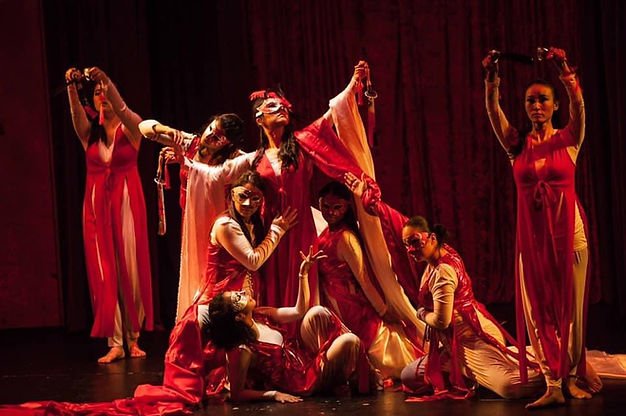
Within the company, there are about 12 dancers and counting. The dancers within the collective come from different backgrounds and regions of the country and globe, making it a dynamic group that is constantly learning from one another.
Rather than channeling all of her energy into one dance piece, MiYoung desires to create various dance projects containing different stories. So far, the dance collective has created nine dance works. “My dance style is not usual, because I try to [include] a fusion [of styles],” MiYoung shares. She also expresses her infatuation with choreographing specific storylines, similar to operas. MiYoung greatly connects to song lyrics throughout her choreography and particularly enjoys choreographing love stories.
During the pandemic, MMDC has filmed its dance works outside in light of social distancing protocol. MiYoung commends her dancers for persevering during the filming sessions, sharing that many had to endure cold winter conditions and “pouring down rain.” MiYoung laughs that the less favorable Seattle weather simply added to the drama of the dances.
MiYoung shares that MMDC has turned its attention back towards choreographing for the stage. Last summer, the company had a chance to perform on an outdoor stage at the Asia Pacific Cultural Center in Tacoma, WA. “It was a celebration of the Korean harvest festival, so it was well-connected to my background,” MiYoung shares.
In 2022, MMDC has a full schedule of live performances scheduled, in secure venues that will check for COVID vaccinations and/or negative COVID tests. On January 9, 2022, MMDC kicked off its first performance of the year at the Federal Way Performing Arts and Events Center that is a celebration of Korean American culture. The performance documented a timeline of Korean music trends through the decades in collaboration with other dance artists, from showcasing disco styles in the 70s to honoring the popular Korean girl group Wonder Girls in the 2000s.
On February 19th, MMDC celebrated the Lunar New Year through dance with a community celebration. In May, MMDC is planning to dance in the Seattle Center Armory alongside various Asian American and Pacific Islander organizations. In June, MiYoung plans to showcase a piece at the Seattle International Dance Festival. She was planning to show her work at the SIDF in 2020; however, it was postponed due to the COVID-19 pandemic. Needless to say, MiYoung is eager to share her dance creations with the public after a long wait. Througout the summer, MMDC will likely participate in other festivals, so keep an eye out for those announcements.
In November 2022, MMDC will put on its own company show at Broadway Performance Hall in Capitol Hill, Seattle. In addition to showcasing MMDC’s work, MiYoung is also interested in involving child dancers in the showcase. “I love to give some of our young dancers in Seattle some opportunities,” she says. She is currently looking for studios that are interested in participating.
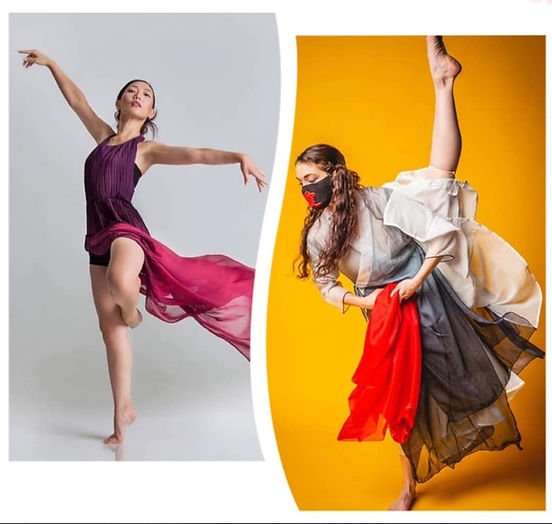
Moving forward, MiYoung looks forward to bringing in different instructors to teach different dance genres to MMDC. In the local dance community, she hopes to see more collaboration across dance genres and among dance artists. She believes that there are more similarities than people often recognize throughout different dance genres. “I just don’t want [us] to be against each other,” MiYoung says. Dancers learning to step out of their comfort zones and learn more about each other have the potential to create waves of creative impact.
Check out MMDC in action at the 2021 Duo Dance Festival in Seoul here.
Living Your Best Life at Dance Conservatory Seattle
Whether its codified technique, body expectations, or gendered stereotypes, the dance industry has disseminated rigid values for many years. Such expectations can limit and harm talented dancers who don’t fit such cookie-cutter molds. Joshua Grant and Christopher E. Montoya are striving to knock down these barriers and foster a supportive and all-inclusive dance environment at Dance Conservatory Seattle. Under the tutelage of local talent, DCS is teaching Seattle dancers how to “live [their] best li[ves].”
A Conversation About Inclusivity with Co-Artistic Director Joshua Grant
By Madison Huizinga, DWC Blog Editor

Photo by Marcia Davis and Angela Sterling
Whether its codified technique, body expectations, or gendered stereotypes, the dance industry has disseminated rigid values for many years. Such expectations can limit and harm talented dancers who don’t fit such cookie-cutter molds. Joshua Grant and Christopher E. Montoya are striving to knock down these barriers and foster a supportive and all-inclusive dance environment at Dance Conservatory Seattle. Under the tutelage of local talent, DCS is teaching Seattle dancers how to “live [their] best li[ves].”
Growing up in a military family, Josh spent much of his childhood moving to different states. His dance journey first began at age three in Alabama and he later trained in South Carolina and California. Eventually, Josh’s family landed in the panhandle of Florida where he received the bulk of his dance training at Northwest Florida Ballet. He also trained at The HARID Conservatory in Boca Raton, Florida before graduating high school and moving to Seattle to train at the Pacific Northwest Ballet School. After one year in the Professional Division, Josh was offered a job with PNB, dancing professionally with the company for about four years. He later decided to spend some time traveling, relocating to Toronto to dance with the National Ballet of Canada for a while.
Desiring to explore a different form of dance, Josh joined Les Ballets Trockadero de Monte Carlo, an all-male comic ballet company that tours globally performing parodies of classical ballets. Josh toured the world with the company, traveling to Japan, Russia, Greece, France, Australia, and more, performing in male and female roles and dancing en pointe. He later returned to PNB where he dances today as a soloist.
Chris’ dance journey took a much different form than Josh’s. Chris studied at the University of Arizona before entering the professional world, dancing with companies like David Taylor Dance Theatre, Scorpius Dance Theatre, and Center Dance Ensemble, before joining Les Ballets Trockadero de Monte Carlo where he and Josh met. Josh points out how amazing it was that he and Chris were both able to find a home at Trockadero given they’re quite different dancers, both physically and emotionally.
When Josh and Chris relocated to Seattle together, Chris completed his undergraduate degree at Cornish College of the Arts and got his MFA at the University of Washington. He worked as the ballet division head and later the school director of Spectrum Dance Theater and has taught open classes and worked as the managing director for Dance Fremont. Aside from teaching, Chris has also danced with local companies like Seattle Dance Project, Men in Dance, and Jeroba Dance.
At the start of the pandemic, when the dance scene across Seattle shut down, Josh describes feeling quickly depressed and bored. Like most all people across the city, Josh recalls spending many days walking around his house wondering what to do. After some time, Sierra Keith reached out to Chris, sharing that she was considering renting a studio space and wanted to know if he was interested in teaching private lessons to some adults she knew. While Chris was busy with other work at the time, he and Sierra passed the message along to Josh who agreed to teach, holding a class of about ten people that eventually became a class of one to two as the pandemic worsened.
Eventually, the classes cultivated some buzz, as local dancers began to compete to get one of the few spots available. Having dreamt about opening their own dance school for a long time, Josh and Chris thought that this might be the opportunity to bring their dream to fruition.
Josh and Chris have both experienced struggles in the dance world throughout their careers, particularly with ballet. “We understand nobody fits into that perfect mold,” Josh points out. “And so we try to approach education and dance from that lens…perfection is unattainable.”
Chris specifically grappled with the challenges of fulfilling a rigid traditionally “masculine” role in the ballet world, as well standing out as a 5’2” Hispanic man in a predominantly white, Eurocentric realm. He also struggled with eating disorders as a way to combat weight loss to fit the mold he thought he needed to.
Growing up, Josh not only faced challenges as a gay person living in the South, but recalls training under toxic teachers who would often make hurtful remarks, and even throw things at him when he would make a mistake. “I was told I wouldn’t have a career. I was told I was a terrible dancer,” Josh remembers. “I was told that I was ‘too flowery.’ I was told that I needed to be more masculine.” For a while, he carried strict teaching traditions into the classes he taught, before Chris later pointed out that it wasn’t exactly helpful. Josh looks back on his training and wishes that his teachers could have helped him become the dancer and person he was supposed to be, instead of trying to make him become something he wasn’t.
Drawing from Chris’ graduate school research and he and Josh’s experience dancing with Trockadero, the two had also become interested in why the pointe shoe was genderized in ballet. Why is it that every time a pointe shoe is put on a man, it’s for slapstick or comedy? Such thoughts are what helped spur the creation of Dance Conservatory Seattle.
Dance Conservatory Seattle strives to knock down societal barriers by working to “encourage and empower” students “to explore their individual bodies and find their unique expressive voices.” A large emphasis is placed on welcoming dancers of all backgrounds and identities to present and perform how they desire to, particularly when it comes to defying gender stereotypes. Local performers like non-binary PNB Apprentice Ashton Edwards has credited DCS, and Josh specifically, for helping them grow more and more into themself as a performer.
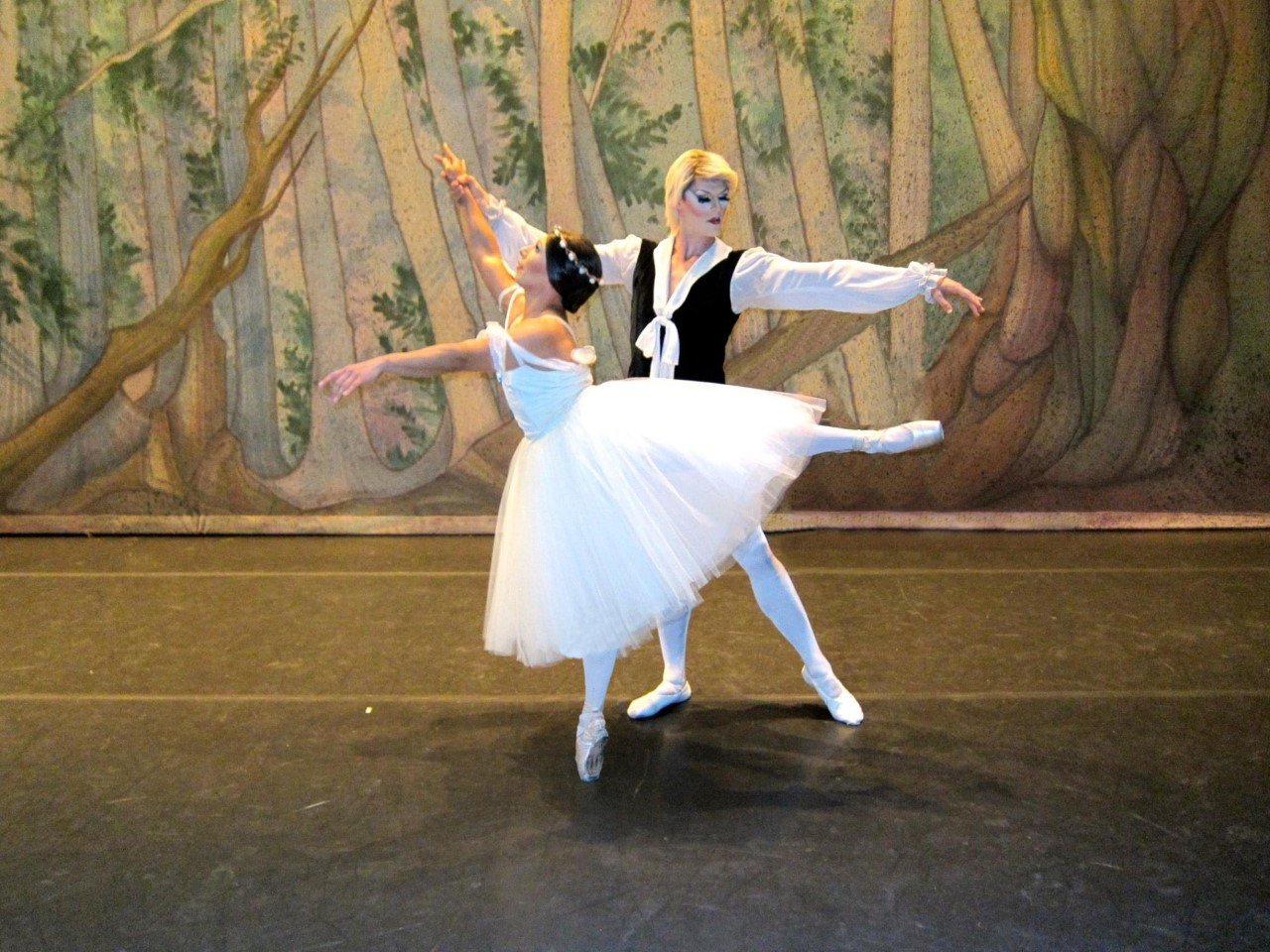
Photo by Marcia Davis and Angela Sterling
Josh says that DCS aims to teach people based on who they are and not who anyone else thinks they should be. While dance nearly always has a fairly rigid means of measuring technique, DCS approaches technical skills with a more open-minded outlook. Josh shares that there’s a way to provide dancers with corrections and feedback in a way that isn’t aggressive and hurtful, but that allows a person to grow. “I think that’s where we’re going to get the best dancers of the next generation,” Josh shares of this approach to teaching.
At the moment, Dance Conservatory Seattle is chiefly concerned with getting more attendees in its classes, particularly its intermediate and advanced classes for middle and high school-aged students. DCS is also holding summer camps for ages 5 through 18. Eventually, Josh hopes for Dance Conservatory Seattle to have its own unique production of The Nutcracker, featuring a balanced representation of Seattle artists and featuring roles that defy traditional gender stereotypes. “Everything that DCS represents would be in our Nutcracker,” Josh shares. DCS’ 2700 square foot studio space is also available to rent and can transform into a performance space, where its future productions will likely be held.
Moving forward, Dance Conservatory Seattle strives to continue encouraging local dancers to live their best lives by acting fearlessly and being the kind of representation dancers across the region need. “Dance is an art form and the best way to get the truest and most successful art out of somebody is to allow them to be themself,” Josh says.
Insights From Luis Guimaraes and Filipa Cunha
In a market where consumers can be overwhelmed with options: details matter. Paying attention to who is making the products, who the products are designed for, and who is presenting them are key elements to center on for a dancewear brand to carry out an impactful vision. Ballet Rosa Co-Founder Luis Guimaraes and Marketing Communications Specialist Filipa Cunha go through their efforts with a fine-tooth comb, striving to provide customers with quality, artistic dancewear made with care.
Ballet Rosa’s Eye Towards Sustainability and Inclusivity
By Madison Huizinga, DWC Blog Editor

Photo courtesy of balletrosa.com
In a market where consumers can be overwhelmed with options: details matter. Paying attention to who is making the products, who the products are designed for, and who is presenting them are key elements to center on for a dancewear brand to carry out an impactful vision. Ballet Rosa Co-Founder Luis Guimaraes and Marketing Communications Specialist Filipa Cunha go through their efforts with a fine-tooth comb, striving to provide customers with quality, artistic dancewear made with care.
The true backbone of Ballet Rosa is a team with an infatuation with dance. For example, Filipa danced from ages 6 to 18 before attending college to study Communication. “I always knew I wanted to do something later with dance,” she shares about her career aspirations. After earning her master’s degree in fashion and communication, Filipa got the chance to work with Ballet Rosa. Thrilled to combine her interests of dance, communication, and fashion, Filipa jumped on the opportunity.
Luis was born and raised in Portugal, where the company is based. His wife is a dancer, which is part of how he got exposed to dance, to begin with. “I started dancing socially,” he shares. Given his exposure to dance and background as a material technician, Luis saw an opportunity to tap into the dancewear market, beginning with producing private labels for some dancewear companies. While working for private labels, Luis started designing products in addition to utilizing his understanding of the materials.
After some time, in 2010, Luis and his partner chose to venture into making their own collection. “For that purpose, we decided to bring aboard certain personalities,” Luis shares, including Isabelle Ciaravola of the Paris Opera Ballet. “We take a lot of pride in having her with us,” Luis says.
Ballet Rosa’s first fashion collection was largely inspired by the artistry of the fashion world and the rigor of the dance world combined. The creators sought to produce products that satisfied dancers’ needs, thus they took care to take dancers’ views into consideration. Luis explains how the team created a close dialogue with dancers. “I found that I could translate that [dance] language into materials,” Luis proudly shares.
After the 2010 launch, Luis describes feeling slightly fearful, as the brand wasn’t gaining many customers at first. What later helped Ballet Rosa take off was attending trade shows and allowing customers to get to know the team. However, Luis explains that when Ballet Rosa had its first interviews for a TV channel around 2013, the team really thought “oh, we’re doing something here.” Up until then, Luis and the rest of the Ballet Rosa team were driven by a desire to create new things, it wasn’t as clear what kind of impact the company could have.
Filipa believes that part of what sets Ballet Rosa apart as a dancewear company is the feedback that it considers from dancers, as well as the authentic artistry the brand possesses. “Everything is very carefully made by our seamstresses and the production team at our factory,” she shares of Ballet Rosa’s handmade dancewear.
Filipa says that it comes across that the products are made with love, as the seamstresses on the team have a clear and communicated passion for what they do. From his prior experience in the textile industry, Luis has grown to dislike the model of an assembly line. He shares that at Ballet Rosa, the team “cuts each garment by hand.”
In addition, under the leadership of Luis, Filipa says that Ballet Rosa is always looking for ways to innovate and break barriers as a company with its products. “I think that’s what makes our brand and our products unique,” she shares.
“The team that we have is incredible,” Luis stresses. “The people are at the core of how unique the product[s] [are].” One of the first team-bonding activities the Ballet Rosa staff did as a group was to dance together to cultivate a deeper understanding of and connection to the products they were creating. “We worked with a group of choreographers,” Luis says, stressing how large-scale the event was. “I think this was a huge moment for the company,” Luis says proudly. “The people who were a part of that are still working with us.”
Luis explains that extensive research often goes into creating Ballet Rosa’s lines. He draws much of his inspiration from classic art pieces in museums, holding an appreciation for art made during the Renaissance period in particular. When collaborating with designers, Luis incorporates these, and other inspirations, into the leotard designs.
“I try to incorporate the modern features of fashion [with] those classic values [of art],” Luis shares, particularly because “romanticism is something which you find throughout dance.”

click below to shop the look!
Nature has also played a big role in the conception of Ballet Rosa, as the word “rosa” means “rose” in Portuguese. Luis appreciates incorporating that “national touch” into the brand, a recognizable reminder of where home is for him and the company.
Ballet Rosa’s latest 2022 collection was released in January. Luis says that the hallmarks of the collection are fluidity in design and durability in wear. The company is excited to share that it’s introducing a sustainable material to its line, made from recycled fibers. Luis shares that Ballet Rosa plans to add even more sustainable practices to its repertoire moving forward.
A change that Luis hopes to see and help make in the dance industry is more diversity and inclusivity showcased across dancewear brands. He shares that Ballet Rosa is proud to have dancers of many different backgrounds, nationalities, races, and ethnicities showcased across its dancewear catalogs. Luis also shares that it’s important that dancewear brands make an effort to cater to men, sharing that Ballet Rosa is proud to have a whole catalog dedicated exclusively to male dancers. “I put a lot of trust in this new generation that speaks out and communicates about things that are happening. Before we were more silent,” Filipa says of how forward young dancers are about pushing for change in the industry.
“Everybody belongs,” Luis stresses.
A Conversation About Mental Health and Non-Judgment in the Dance Sphere
While some folks have taken steps to destigmatize mental health discussions in the dance industry, there is still an overwhelming pressure to compete against your peers within the studio environment, which can lead to adverse mental health issues. DWC staff member and pointe shoe fitter Tija Dupont opens up about her dance journey, goals for the future, and destigmatizing mental health in the dance industry.
Getting to Know DWC Staff Member Tija Dupont
By Madison Huizinga, DWC Blog Editor

Photo by Rex Tiffany Gunderson
While some folks have taken steps to destigmatize mental health discussions in the dance industry, there is still an overwhelming pressure to compete against your peers within the studio environment, which can lead to adverse mental health issues. DWC staff member and pointe shoe fitter Tija Dupont opens up about her dance journey, goals for the future, and destigmatizing mental health in the dance industry.
Tija began dancing around age two in a ballet/tap/jazz combo class in her small hometown in Montana. She danced at the same performing arts academy until she was about ten years old. During that time, Tija took a break from dance for about a year and a half because she was dealing with “horrible anxiety.” Even during her break, she was still drawn to movement in her daily life, so it became clear to her parents that she would benefit from getting back into it. She auditioned for her studio’s company, which traveled a lot for performances and competitions. After being a part of the team for about three months, Tija’s parents told her they were moving to Seattle.
After moving to Seattle, Tija got more into ballet after seeing the Pacific Northwest Ballet’s production of Swan Lake. She tried out a handful of studios, searching for an environment that wasn’t hyper-competitive and that offered a welcoming community. Tija also attended a summer intensive at The Joffrey Ballet in Chicago, Illinois. “Going to Chicago is probably the best thing that’s ever happened to me,” Tija says of her experience dancing at Joffrey. She shares that her instructors and roommates were incredible, and the environment allowed her to learn and soar as a dancer. Today, she dances with Ensemble Ballet Theatre in the Maple Valley area.
Before she began working with Dancewear Center, Tija had been working at a larger retail corporation in the area. Feeling a bit discouraged in her position, her mom encouraged her to apply for Dancewear Center, as it’s an area where she could offer some expertise. Soon after interviewing with Owner & General Manager Samantha Weissbach, she landed the job!
Tija started as a retail associate and later a shift lead at DWC, but recently she’s become a pointe shoe fitter. Tija didn’t see herself learning anything about pointe shoes when she started her job but soon became fascinated with pointe shoes through the fitting training sessions at DWC. She shares that she loves fitting pointe shoes, especially because she learns something new every time she does a fitting. She looks forward to now having the freedom to run fittings solo.
Tija loves working at a local business that is so well-received by the local community. She also enjoys the uplifting store environment. “The second I walk into the store, I’m instantly greeted. I just feel such a good energy,” she says. Tija appreciates how positive and reassuring the whole DWC team is.
One of her favorite parts of the job is being able to provide people with the products they need to be successful in dance. She finds satisfaction from seeing customers’ faces light up when she’s able to give them something they’ve been looking for. Tija also loves being able to fill the role of a “personal shopper” for some customers who are unsure about what they want to purchase. Being able to point them in the right direction brings her so much joy.
Outside of work, Tija enjoys hiking, sharing that her family members are big “outdoors people” and love to do activities that connect them with the beauty of the Pacific Northwest. She also loves coffee religiously. “Personally, I call that a hobby,” she laughs, sharing that she always has a coffee on her. She also enjoys doing yoga and conditioning in her home studio, a make-shift dance studio she made in her garage. Tija enjoys traveling as well and looks forward to getting back into it with her family following the major COVID-19 lockdowns.

Photo by Ken Fox
Tija recently finished high school and is considering taking some classes at a local community college before hopefully transferring to the University of Idaho.
In the larger dance world, Tija hopes to see people in the dance industry talk more about mental health and foster a less competitive environment so dancers can feel less judged. “I think studios need to encourage a non-judgmental community,” she says. This paired with studio owners discussing mental health with their students will help the industry move towards being more welcoming to all.
Keep an eye out for Tija in DWC, particularly if you’re getting a pointe shoe fitting anytime soon!
A Conversation About Starting Dance at Any Age
There is an unspoken assumption in society that once you reach adulthood, your time has passed to try something new. However, DWC Pointe Shoe Fitter and DWC Blog Contributor Emma Neilson shares that it’s never too late to try dance. Read on to learn about her dance journey, goals for the future, and desire for more professional development support for young adult dancers.
Getting to Know Pointe Shoe Fitter Emma Neilson
By Madison Huizinga, DWC Blog Editor

Photo by Robb Webb Photography
There is an unspoken assumption in society that once you reach adulthood, your time has passed to try something new. However, DWC Pointe Shoe Fitter and DWC Blog Contributor Emma Neilson shares that it’s never too late to try dance. Read on to learn about her dance journey, goals for the future, and desire for more professional development support for young adult dancers.
Emma’s first experience with dance was Scottish Highland dancing around ages four to eight, as it was an activity that ran in her family. In her childhood, she also took up equestrian horseback riding for a while. But her whole life changed when she watched figure skating in the Winter Olympics for the first time. Emma declared to her mom that she would be an Olympic figure skater, and after two years of begging, her mom signed her up for public group lessons. Eventually, Emma began training with a private coach and becoming more advanced in her technique. She began taking ballet classes as well to improve her ice skating abilities. Her ballet technique also began improving with practice and around age 13 Emma’s teacher suggested her class begin dancing in demi-pointe shoes.
When Emma started high school, her parents encouraged her to choose one activity to focus on. After landing her axel jump, a long-time figure skating goal of hers, Emma decided to devote her extracurricular time fully to ballet. After continuing ballet through high school, Emma took a gap year following her graduation. She applied to some colleges but recalls her heart not being fully in the process. She remembers having a conversation with the artistic director of her dance studio at the time to help her weigh her options. Emma’s artistic director advised her to audition for some summer intensives and pointed her in the direction of International Ballet Academy in Bellevue, WA. After auditioning, Emma was accepted at IBA, where she’s been dancing ever since. She’s currently a part of IBA’s Professional Program.
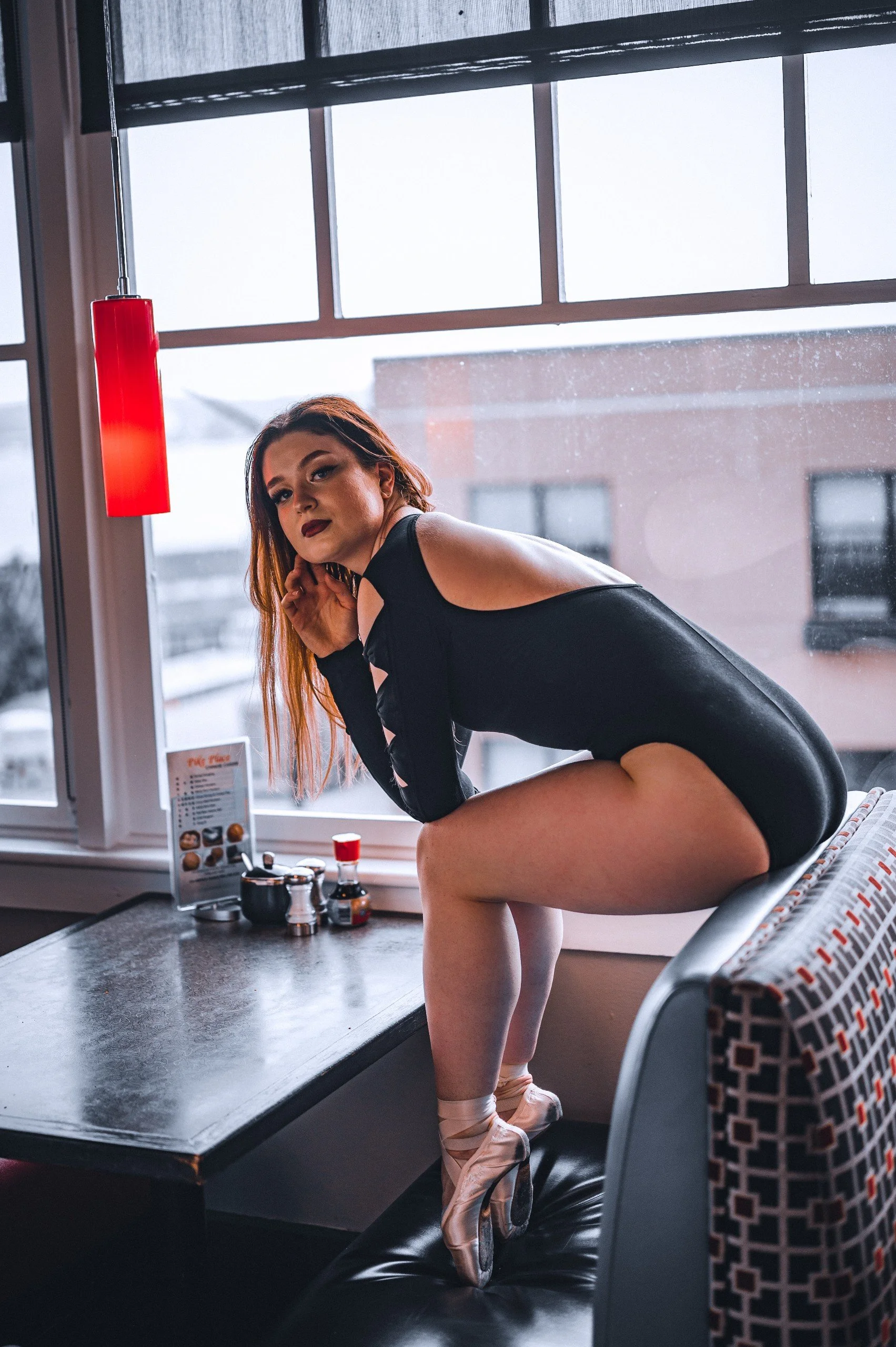
Photo by Rex Tranter Photography
In addition to training at IBA and working at DWC, Emma is a Certified American Barre Technique Instructor, a Certified Flexistretcher Instructor, and a Pal Program Coordinator for the organization Dancer for Dancer. She’s also currently in the midst of audition season and is auditioning for dance companies to be a part of.
Emma is currently a retail associate and pointe shoe fitter at Dancewear Center’s Kirkland location. In addition to working as a retail associate and pointe shoe fitter, Emma has copious experience working inventory at DWC, ensuring that products are labeled correctly and organized. She is also excited to be a part of The Pointe Shop Progressive Pointe Method training program to help build upon her pointe shoe fitting knowledge. Emma began working at DWC in 2019, as she had begun training with IBA and was in search of a job to help supplement her time outside of the studio. She reached out to Owner and General Manager Samantha Weissbach through the contact form on DWC’s website. After being interviewed by Samantha and another staff member, she was offered a job!
Emma loves that Dancewear Center strives to be much more than just a business, but also foster a community by connecting with other artists and businesses across the region. She is also such a big fan of Samantha, sharing that she considers her a “forever mentor.” She says that it’s been amazing, as a young woman, to be brought under another woman’s wing to assist with professional development.
Pointe shoe fitting is one of Emma’s favorite things to do at Dancewear Center, sharing that she knows what it’s like to be in physical pain and struggle to find a functional pair of shoes. “I really enjoy being able to bond with basically anybody who walks through the door,” Emma says, speaking to the common bond she can share with customers through a love of dance.
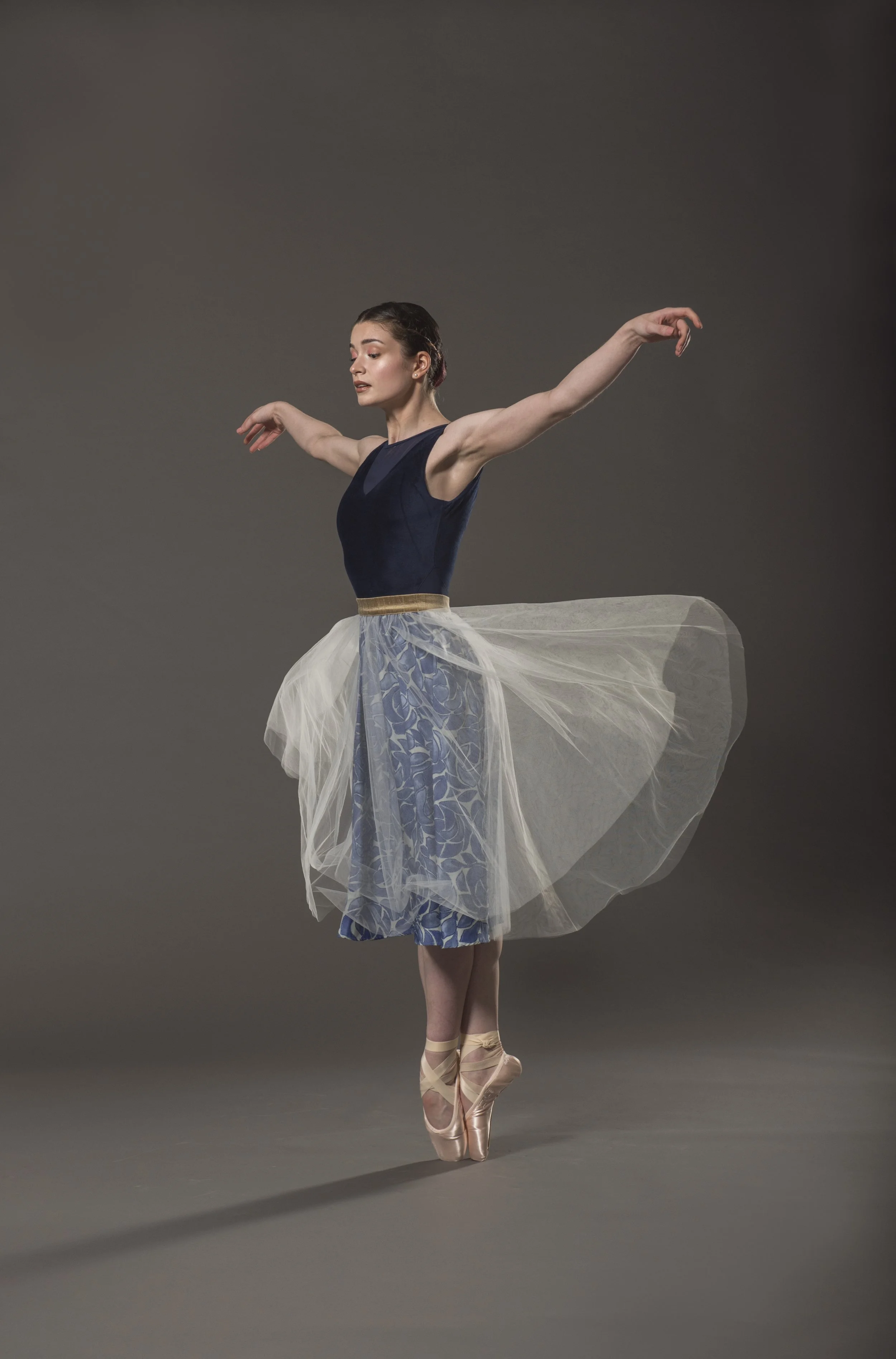
Photo by Rex Tranter Photography
Outside of dancing and working, Emma enjoys spending her free time outside with her family. “I really love going on walks and hikes,” she says. She also enjoys baking, cooking, writing, reading, and going to the movies. “I also love a good self-care session,” Emma shares, sharing that she likes to take care of her body and mind by taking a bath and using a muscle gun on sore muscles.
In the future, Emma hopes to be able to dance with a company and have the opportunity to continue taking classes, performing, and growing as a dancer. She would also love the opportunity to work on some choreography and continue educating herself on pointe shoe fitting.
A change that Emma wishes to see made in the dance industry is studios and academies become more welcoming to beginner dancers of all ages. “Not everybody starts at age three,” she points out. She would also like more professional development opportunities to become available to young adult dancers, pointing out that many dancers do not have their life trajectory figured out at age 18. She shares that she has many conversations with friends who aren’t dancers who express their desire to dance, but fear their time has passed. “You can do it!” Emma says to those who want to try dance at any age.
Be sure to say hi to Emma if you see her at DWC Kirkland!
A Local Dancer on Utilizing a Home Studio Space
During the COVID-19 lockdown of 2020, many dancers lost the space and opportunity to do what they loved. Confined in their homes, dancers no longer had the capacity to move their bodies in the way they once could. It’s safe to say that for most of us, it felt like a return to “normal” would never come. This was one of the fears of dancer Erin Nichole Boyt, as she had just started getting acclimated to the Portland dance scene after relocating from Seattle. Now with the help of her new home studio space, Erin has been excited about reconnecting with dance in a more seamless way. Donate to Erin’s fundraising campaign for her live/work studio, known as Pottershop Studio, so it can be well-supplied and ready for dancers.
Erin Nichole Boyt on Blending Dance & Home
By Madison Huizinga, DWC Blog Editor

Photo by Mary Turcott
During the COVID-19 lockdown of 2020, many dancers lost the space and opportunity to do what they loved. Confined in their homes, dancers no longer had the capacity to move their bodies in the way they once could. It’s safe to say that for most of us, it felt like a return to “normal” would never come. This was one of the fears of dancer Erin Nichole Boyt, as she had just started getting acclimated to the Portland dance scene after relocating from Seattle. Now with the help of her new home studio space, Erin has been excited about reconnecting with dance in a more seamless way. Donate to Erin’s fundraising campaign for her live/work studio, known as Pottershop Studio, so it can be well-supplied and ready for dancers.
Erin began dancing around five years old at the only dance studio in her small town. She fell in love with movement early on in her life, explaining that she is a “kinesthetic learner” and takes in information best when it involves movement and tactile experiences. Erin explains that she deeply resonated with modern, tap, and African styles of dance, forms of movement that felt rhythmic and grounded. While she studied dance in college, Erin explains that she struggled within her school’s dance department, as it valued students with a strong ballet background which is something Erin lacked. She pivoted her focus to theatre, cultivating her love for dance in another arena.
After graduating college, Erin moved to Seattle and started her dance company “with no previous experience choreographing.” She explains that her practice started small, and eventually lead to her choreographing more and producing bigger shows, working with the Seattle International Dance Festival for nearly a decade. “I built my company around the idea of collaboration,” Erin explains. She moved to Portland, Oregon in 2018 and had just started rehearsing her first show in the city when the pandemic hit.
“I nosedived emotionally and mentally into this pretty deep depression,” Erin says of her mental health amid the COVID-19 pandemic. “There were days where I truly believed that I would never dance again and this [was] just my life now.” These emotions of sadness, grief, and longing are ones many dancers can relate to in the past couple of years.
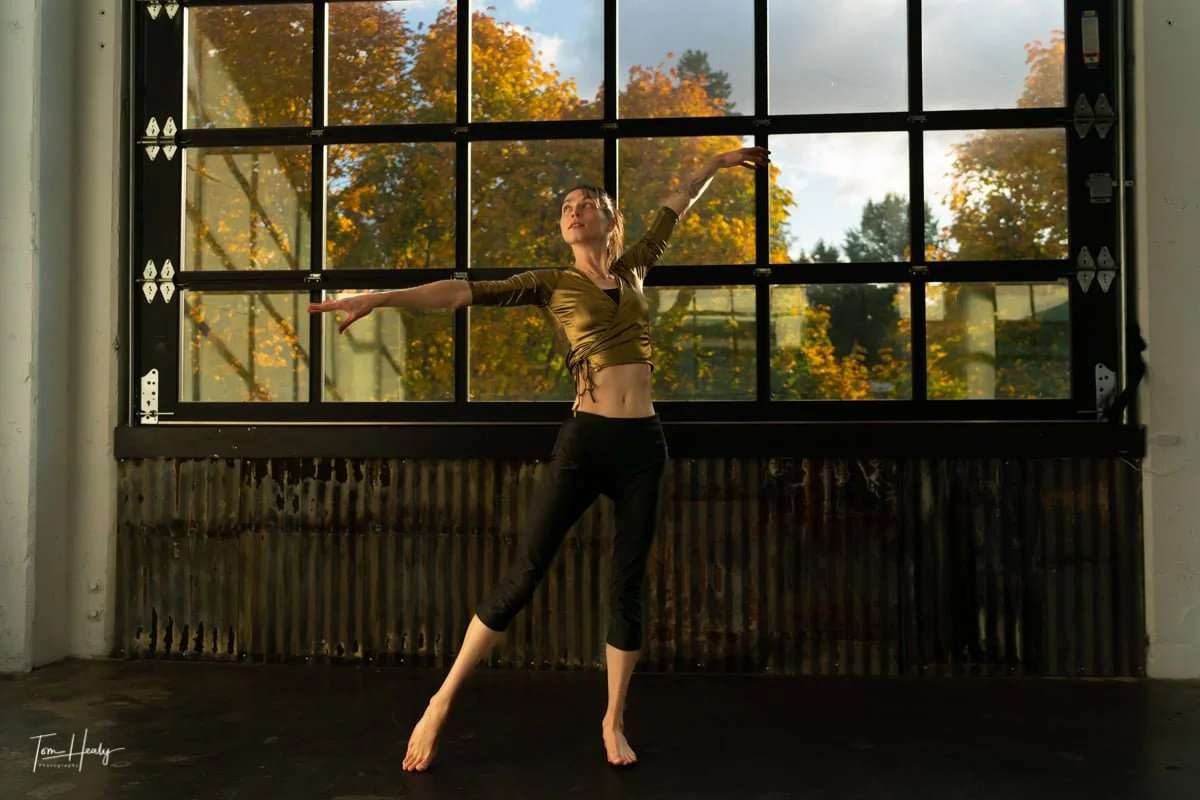
Photo by Tom Healy
Nonetheless, as Erin mentions, dance has a way of sticking with people in ways they may not expect. “There’s something in a creative drive that just doesn’t ever really die,” she emphasizes.
Erin had dreamed about having a live-work space in the future, but wasn’t looking for one when she stumbled upon her current dwelling. Prior to moving into the live-work studio space, Erin had been renting a studio once a week, but the thought of having studio space available to her all hours of the day was simply too good to be true. In addition to choreographing and teaching out of the space, she’s planning on working with clients on strength training, injury prevention, and exercises to aid with different forms of movement dysfunction.
Erin has enjoyed being able to decorate and furnish her studio space in a way that inspires her creatively. Down the line, getting back into choreographing and producing shows is a goal of hers and her new space will enable her to do that with greater ease.
Erin says that one of the things she loves most about dance is the fact that she never gets bored of it, there is seemingly always something new to learn through movement. She is fascinated by the ways sensory inputs from the environment influence the way people move and the shared understanding of movement that all humans possess. “It’s something that just connects all of us universally,” she says. Now that dance is more integrated into her life by way of her live-work studio space, Erin is able to feel even more deeply connected to this practice that means so much to her.
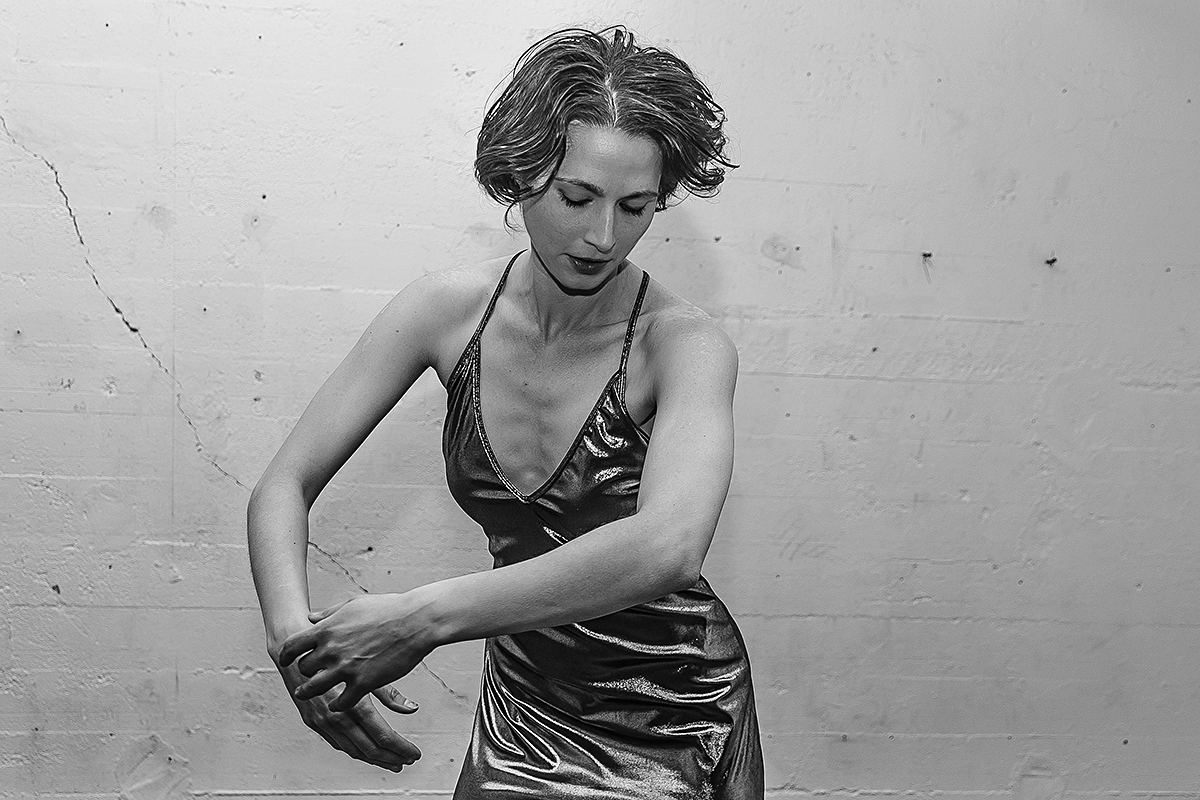
Photo by Brett Love
A change that Erin hopes to see occur in the dance industry is a greater interrogation of the so-called “ideal” body a dancer should have. She shares that many dance genres value a specific, restrictive aesthetic that can be harmful for dancers. Being told that there is a certain way to look can create a disconnection between dancers and their bodies. Dancers’ bodies should be used to help realize their artistic visions, not be scrutinized. Rather than focusing on how dancers’ bodies should look, Erin hopes for dance to be viewed more as an expression and mode to communicate with one another. “I think we just really need to broaden our view of what dance is,” Erin shares.
“If you have a body you’re a dancer!” Erin declares. Click here to donate to Pottershop Studio!
Interested in writing for the DWC Blog? Click below to fill out the DWC Contributor application!