
Lessons from the Emerald Isle: What I’ve Learned as a Contemporary Dancer in Ireland
On September 12, 2021, I hopped on a plane and moved from Seattle to Ireland to study contemporary dance at the University of Limerick. It was a move five-years in the making, fueled by my lifelong love of Ireland itself and my growing career as a movement artist. I can say without reservation that this move was the best personal, professional, and artistic decision I’ve made to date. Living in a country that feels like home while advancing myself as a dancer has been transformative on a cellular level. I would love to share with you a bit of what I’ve learned on my Irish journey so far.
By Hannah Emory, DWC Blog Contributor
hannuh EM-or-ee), She/They

On September 12, 2021, I hopped on a plane and moved from Seattle to Ireland to study contemporary dance at the University of Limerick. It was a move five-years in the making, fueled by my lifelong love of Ireland itself and my growing career as a movement artist. I can say without reservation that this move was the best personal, professional, and artistic decision I’ve made to date. Living in a country that feels like home while advancing myself as a dancer has been transformative on a cellular level. I would love to share with you a bit of what I’ve learned on my Irish journey so far.
I traveled to Ireland twice in 2018, first as a tourist and again as a volunteer hostel worker, to sort of test-run my dream to live in the country. The pull I felt toward Ireland was intense well before I set foot in the country. I immediately fell in love with the spirit of the place and during my travels, I became convinced that Ireland would be my future home. Of course, visiting a place is totally different from starting a new life there, but even after returning to America, I yearned to get back to the Emerald Isle and give my new life a go.
Meeting my course director over Zoom in the weeks leading up to my immigration gave me a sense that the University of Limerick would provide me exposure to artists from around the world, students and teachers alike who would open my eyes to new facets of the dance world. Additionally, I would be able to tap more into my passion for fiddling, interest in Irish paganism and mythology, and growing skills in Irish dance. The weeks flew by as my anticipation, and a little bit of natural nerves, grew. And before I knew it, I had packed a massive suitcase, said goodbye to my family, and was marching through SeaTac with my heart pounding. As my Aer Lingus flight soared toward my new home a few hours later, I knew I was embarking on an incredible adventure.
It is wild to think that two years have passed since that fateful day. Sometimes it feels like I have been a student in UL for ages, other times it feels like I’ve snapped my fingers and found myself here: stronger after two years of rigorous training, with so much creative fire in my belly for what the future holds.
In that time, I have made dear friends, learned from some of the world’s best contemporary dance teachers, and been involved in some absolute dream projects. I’ve learned a tremendous amount from the last two years, and am anticipating so much growth in my final year of study. If I were to condense this time of my life into three crucial lessons, it would be the following:

Photo by Nikola Evora Zonenberg
Find your own creative path and follow it: When you’re in university, there will be many new sources of information and training that cross your path. I encourage you to soak it all in and seize the opportunity to make what you learn a part of your own unique creative signature. I did this by spending as much independent time in the studio as I could. I reviewed what I was learning from my teachers, improvised and experimented, and recorded my movement research. I also took improvisation classes, worked with my fellow students, and watched performances that gave me a vision for what I want my own choreography to look like. Finding your creative voice takes a mixture of relentless pursuit, joyful creation, and curious learning. It will be your most important tool as a movement artist and will give you endless material for creating work in the future.
Collaborate as much as possible: Collaborative projects are a bit like creative pressure cookers. They bring you into contact with artists who have ideas different to your own and are an amazing way to give and take creative inspiration. As an example, my class cohort came together for our first independent project in the summer of 2022. We learned so much about filming, rehearsing, choreographing, and we got a lot closer to each other. At the end of it, we had a work in progress that we are extremely proud of that served as a springboard for projects we’re doing now. You never know what will come from working with other dancers (especially when it’s with folks you’ve never worked with before); it’s one of the best learning tools available.
Don’t be afraid to forge a new path: Until about a year ago, I was convinced that I would follow a relatively traditional contemporary dancer’s path once I completed my degree. I supposed I would find work with a dance company and follow a standard performing dancer to choreographer/company director pipeline. But, through my education in UL, I discovered circus arts and fire performance, and my whole vision for the future changed and I unlocked a part of myself that was waiting to speak and move. I say all this to encourage you to not be afraid to reinvent yourself throughout your career. Wherever you started your training does not have to dictate the path of your future, and having a wide range of movement experiences under your belt is a commodity in the dance world. As another example, one of the girls in my year started as a popping street dancer, came to UL where she started contemporary dancing for the first time, and is now an incredible aerial dancer. Because of her willingness to go down new paths and explore, she has a range of movement available to her that makes her a dynamic and sought-after performer. So, if there is an avenue of movement arts you haven’t explored yet but want to, I encourage you to allow your path to shift from what you thought it would be. Answer the call to reinvent yourself and it will take you to amazing places.
In my experience, these invaluable lessons were heightened by training in another country where my comfort zone has been expanded by default time and again. Yet, these principles apply in any educational context and you don’t have to make a huge life change to implement them for yourself. Wherever you find yourself in your training or work as a dancer, you can stay in relentless pursuit of your own artistry, chase the collaborative opportunities that come your way, and stay open to reinventing yourself. I’ve found these elements to be highly adaptive tools in any movement context, and believe they are the spice of being a dancer. The possibilities are truly endless when you keep yourself open to what’s around you. Go forth and dance, my friend.

Empowering Dancers in the Studio and On Stage - Local Choreographer Alicia Mullikin On Creating An Inclusive Space for all Marginalized Communities
Empowering dancers is something that is very important to local dance teacher and choreographer Alicia Mullikin. Being able to be your true self in the studio and on stage is one of the main goals she tries to pursue with her dance company El Sueño. We got the chance to speak with Alicia about her mission statement, her dance company, and her personal dance journey. Read on to learn more!
Pronunciation: Ah-lee-see-ah Mull-ih-kin | Pronouns: she/her
By Nicole Barrett, DWC Blog Editor
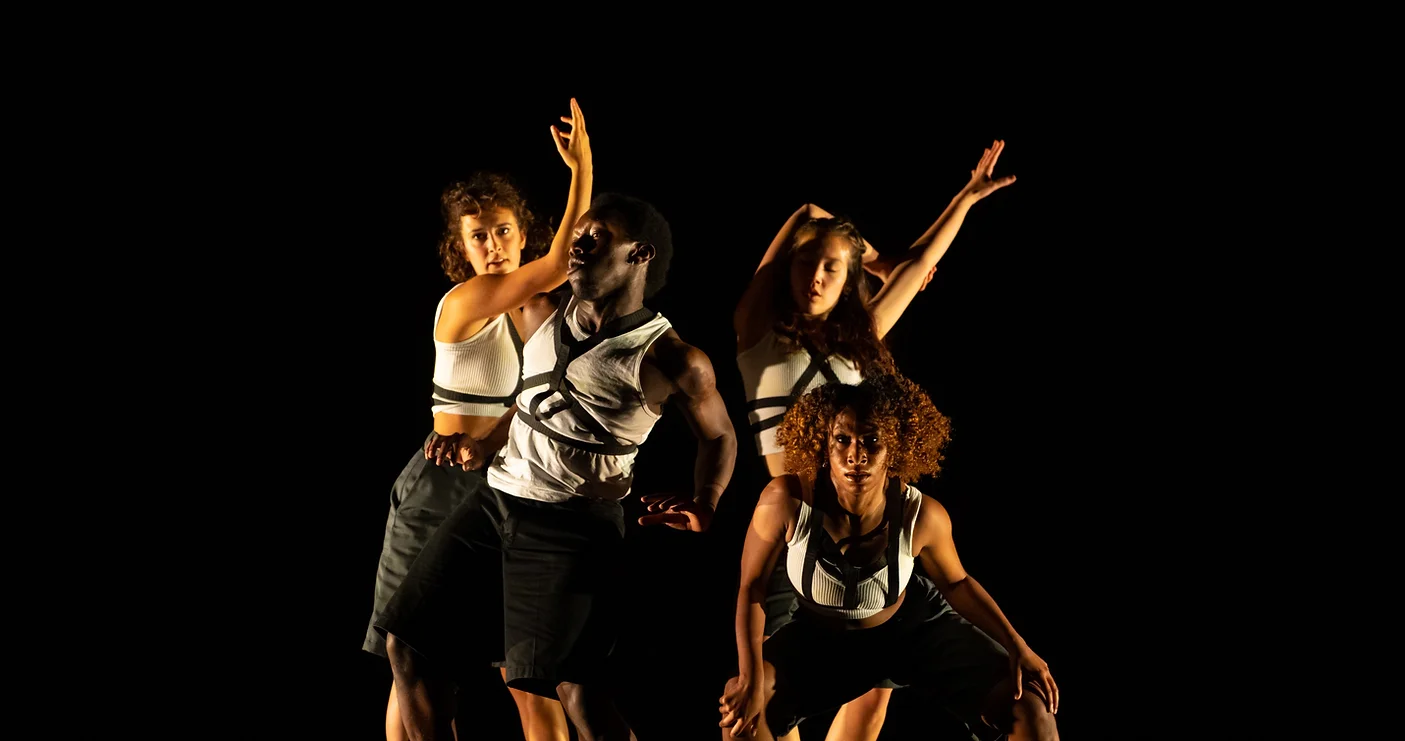
photo courtesy of https://www.aliciamullikin.com/works
Empowering dancers is something that is very important to local dance teacher and choreographer Alicia Mullikin. Being able to be your true self in the studio and on stage is one of the main goals she tries to pursue with her dance company El Sueño. We got the chance to speak with Alicia about her mission statement, her dance company, and her personal dance journey. Read on to learn more!
Alicia started dancing in the middle school show choir. While she was in the show choir, the choreographer quit which left the group without choreography. Alicia decided she wanted to help choreograph without taking any dance classes and fell in love with the creative process. She asked her parents to put her into dance classes at the local YMCA, where her love of dance and choreography bloomed.
After high school, Alicia went to Riverside City College where she continued to train in dance before transferring to Cornish College of the Arts. It was here that she encountered some struggle and came up against some rigid viewpoints about body shape and traditional expectations around size. However, it is also where she met some incredible teachers and lifelong friends. Alicia later went on to get her Masters in Dance from Cal State University of Long Beach and she was recently selected as an Arts Advocacy Leadership fellow by the National Association of Latino Arts and Cultures.
When asked about Alicia’s favorite thing about dance, she says, “Dance allowed a space for me to express myself in ways that I am unable to verbally. It allows me to be the person I want to be.” Folks often describe Alicia’s movement as expressive and powerful. She strives to bring this out of her students as well as guide them to stand in their full power and own their own story.

photo courtesy of https://www.aliciamullikin.com/works
El Sueño is an organization founded by Alicia. They use dance as a platform for community engagement, empowerment, and healing of marginalized communities. The phrase el sueño means “the dream” which is important to her as a first-generation American. Seeing her parents sacrifice and strive for the American dream has inspired her to continue pressing forward. Alicia’s family is descendant from the Indigenous people’s of North America and the genocide and struggle that they went through inspires her to be resilient. She shares, “I am the recipient of the American Dream, that is generations in the making.”
Alicia is currently working on a new work MESTIZO. It is an evening of collected stories of the Mexican-American experience. The description states As Mexican people, our histories are painfully entwined with both our Indigenous ancestors and our Spanish colonizers. So much of our Indigenous history was stripped from us through centuries of cultural erasure and genocide. What we have been able to hold onto has been strategically hidden within Catholic images and appropriated spiritual practices. Assimilation was the way we survived extinction, but defiance and resilience was threaded in the ways we stealthily passed our cultural practices through the colonial lens. MESTIZO bravely claims the pain and power of this history with each artist documenting their experiences. The event will include visual arts, film, music, dance, and ceremony that powerfully weave together our collective experiences.
You can find out more about Alicia and her new work at https://www.aliciamullikin.com/mestizo
And follow the El Sueño Instagram here!
If you’d like to support Alicia’s upcoming production of MESTIZO you can donate to their project fundraiser at https://www.gofundme.com/f/mestizo

Disclaimer
All content found on the Dancewear Center Website, Instagram, Facebook, Pinterest, and all other relevant social media platforms including: text, images, audio, or other formats were created for informational purposes only. Offerings for continuing education credits are clearly identified and the appropriate target audience is identified. The Content is not intended to be a substitute for professional medical advice, diagnosis, or treatment. Always seek the advice of your physician or other qualified health provider with any questions you may have regarding a medical condition. Never disregard professional medical advice or delay in seeking it because of something you have read on this Website.
If you think you may have a medical emergency, call your doctor, go to the emergency department, or call 911 immediately. Dancewear Center does not recommend or endorse any specific tests, physicians, products, procedures, opinions, or other information that may be mentioned on dancewearcenter.net. Reliance on any information provided by dancewearcenter.net, Dancewear Center employees, contracted writers, or medical professionals presenting content for publication to Dancewear Center is solely at your own risk.
Links to educational content not created by Dancewear Center are taken at your own risk. Dancewear Center is not responsible for the claims of external websites and education companies.
Thriving in Dance College
Becoming a good artist requires a lot of time and is a highly individual process. True art, in its various forms, comes from observing the world, coming to know yourself, and the synthesis between the two. There is no substitute for the hours of training, studying, and absorbing that need to be done in order to hone your craft and distinguish your voice as an individual.
By Hannah Emory, DWC Blog Contributor

The one thing that you have that nobody else has is you. Your voice, your mind, your story, your vision. So write and draw and build and play and dance and live as only you can.
- Make Good Art, Neil Gaiman -
Why dance college?
Becoming a good artist requires a lot of time and is a highly individual process. True art, in its various forms, comes from observing the world, coming to know yourself, and the synthesis between the two. There is no substitute for the hours of training, studying, and absorbing that need to be done in order to hone your craft and distinguish your voice as an individual.
This can be done in an independent way, seeking opportunities as they come along and pursuing your individual goals outside of any formal education. However, dance college can be an environment that is conducive to incubating the artistic process and providing a higher concentration of resources, learning opportunities, and collaborative relationships than one might find independently.
Given, academic institutions have their own challenges in addition to their benefits; not one of them is perfect or will guarantee you the career you envision. Dance college requires a lot of hard work, and not all of it will necessarily be in-line with your individual goals. But it can all lead you places you never would have imagined otherwise.
So, if you want to attend dance college, or have already been accepted into a program, there are certain things that I and my peers propose will help you make the experience richer and more self-explorational. College is a significant commitment of financial resources and, even more precious, a great investment of time and energy. It’s crucial to make the most of it! I hope you find this advice helpful in either starting or continuing your education. It’s a long journey, but it’s worth every step!
Advice for thriving in dance college:
Hannah Emory (@hannah.emory):
Remember, just because you’re different, it doesn’t make you a bad dancer technically or a bad artist aesthetically. You will encounter all kinds of stylistic and training differences while in college, but I encourage you to think of it all as tools in your toolbox, not a statement about what you should be. Especially in contemporary dance, teachers are those who have forged their own path in a discipline full of variety. Think of dance as a language where each mover has their own dialect - there is no right or wrong, just difference, and that’s what makes this artform so wonderful. There are structures you can learn and styles you can emulate, but you have your own unique way of dancing that should be celebrated. Explore it, express it, enjoy it and don’t allow anyone to tell you you’re not legitimate - not even yourself!
Controversially, I encourage you to prioritize your bodily wellbeing and training time over academics. In college, there’s always going to be tests to study for, papers to research, and rubrics to fulfill. But what can never be replaced is your bodily health, mental wellbeing, and this chance to absorb as much as you can about how to actually dance. Everything you will encounter as an academic subject in your course is important fuel for your dance journey, but it’s my opinion that pursuing academics should not take over your ability to dance well and feel great while doing it. If you’re struggling with the academic side of your program, please speak to your course directors and advisors, but don’t lose the joy of dancing in the midst of academic expectations. Grades are for the academy and for now; dancing is for you and for your whole life.
Spend your extra time in the studio to create your own work.
If you are able to book studios out as a student, that’s an invaluable resource! This is your opportunity to begin experimenting and making your own work. You can develop a regular improv practice, make solos, and collaborate with your friends to get well-versed in your choreographic process.
**Bonus points for filming and posting what you make on social media, especially if your goal is to be a performer or choreographer. An easily accessible catalog of your work on Instagram or Youtube gets your name out there to people you may have never met otherwise.**
Educate yourself on and take advantage of the resources your college has on offer beyond the studio space - everything from cameras to sound equipment to students in other courses who may want to work with you on projects. There’s so many opportunities for collaboration, exploration, and experimentation during this time in your life, with the tools you need and people to create with, all in one place.
Alice Gavigan (@alice_gavigan): What’s great about full time training and college is that you get to be truly immersed in dance and you get to study and practice what you love. In this environment, naturally, you want to do your best and go above and beyond what you’ve been asked to do. But, in my experience, this can lead to burnout and unnecessary stress. What helped me was establishing a routine for the week and having time separate from training and assignments. For example, I set aside one evening a week to do some fun self-care and fully relax. Balancing my personal life with my dance training has really helped me to preserve my mental health.
Marcela Pridavkova (@marcela_marar + @ulyogasoc):
During college, stay yourself. You will meet lots of new people with different skill sets and training. You might start comparing yourself to these people, but remember everybody has different strengths and there is something in you that other people will look up to.
Explore and adapt your own style, get to know your best skills and make the most of them, and be aware of your weaknesses and try to work on them.
Do not try to fix everything at once. Instead, set small goals for yourself and do not punish yourself if you don’t achieve the exact result you expected.
Work the best you can but be kind to yourself and others. Treat others the way you wish to be treated.
There will be challenging moments when you will feel like giving up. But stay strong, we have all been there, and it’s hard to be a dancer!
Don’t forget to enjoy it! College years are great, even with all struggles along the way, and you will make some great memories.
Sources:
Disclaimer
All content found on the Dancewear Center Website, Instagram, Facebook, Pinterest, and all other relevant social media platforms including: text, images, audio, or other formats were created for informational purposes only. Offerings for continuing education credits are clearly identified and the appropriate target audience is identified. The Content is not intended to be a substitute for professional medical advice, diagnosis, or treatment. Always seek the advice of your physician or other qualified health provider with any questions you may have regarding a medical condition. Never disregard professional medical advice or delay in seeking it because of something you have read on this Website.
If you think you may have a medical emergency, call your doctor, go to the emergency department, or call 911 immediately. Dancewear Center does not recommend or endorse any specific tests, physicians, products, procedures, opinions, or other information that may be mentioned on dancewearcenter.net. Reliance on any information provided by dancewearcenter.net, Dancewear Center employees, contracted writers, or medical professionals presenting content for publication to Dancewear Center is solely at your own risk.
Links to educational content not created by Dancewear Center are taken at your own risk. Dancewear Center is not responsible for the claims of external websites and education companies.
Sarah Slipper On Creating Representative Leadership in the Dance World
NW Dance Project’s Artistic Director Sarah Slipper believes that there is a need for women representation in leadership positions in the dance industry. When asked about the true power of a title, she says that, in her opinion, it is less about “power” and more about the opportunity to guide, provide wisdom, and lead individuals. “It is important to see shared equality in leadership roles,” Sarah says. “Representation is very, very important, especially in key roles.” In an industry dominated by women participants, ensuring that leadership reflects that is of the utmost importance.
On the Ballet Gender Pay Gap
By Madison Huizinga and Ava Budish, DWC Blog Contributor and Ambassador

NW Dance Project Artistic Director Sarah Slipper, from https://nwdanceproject.org/directors
Women make up more than 70% of the ballet industry. So why are the seats of power in such a female-dominated industry controlled by men? Of 125 ballet companies surveyed across the globe, Dance Data Project found that, excluding the United States, 66% of the companies have a man as artistic director. In the United States specifically, that number increases to 71%. Beyond acting as a general figure of leadership, artistic directors have a hand in nearly every important decision to be made in any given company. This could include casting, budgeting, handling disputes, overseeing and selecting repertoire, and so much more. With such power and influence, it is crucial that the people in these positions are representative of their employees - that is not currently the case in the ballet industry.
The disproportionate amount of male leadership cannot be chalked up to a lack of female faculty in ballet companies. For example, the Dance Data Project reports that out of 1,600 dance faculty positions at institutions of higher education, women outnumber men approximately 2:1, including in full-time and part-time jobs. However, the position of dean - the highest position within a school - is held by men 66% of the time. While all faculty positions are important and essential to the success of a dance company, more coveted roles are higher paid and are given primarily to men. Those working in higher positions have more power when it comes to important decision-making in the dance industry, hence the need for a more equitable gender representation.
NW Dance Project’s Artistic Director Sarah Slipper believes that there is a need for women representation in leadership positions in the dance industry. When asked about the true power of a title, she says that, in her opinion, it is less about “power” and more about the opportunity to guide, provide wisdom, and lead individuals. “It is important to see shared equality in leadership roles,” Sarah says. “Representation is very, very important, especially in key roles.” In an industry dominated by women participants, ensuring that leadership reflects that is of the utmost importance.
The small percentage of female artistic directors are paid significantly less than their male counterparts. In 2018, they were only making 61 cents for every dollar earned by an equivalent male coworker. In 2019, this number slightly increased to 73 cents; however it is still ten cents below the national average, where women earn 83 cents to every dollar earned by their male counterparts. This pay gap makes little sense, as women artistic directors often have just as much experience in the industry as male artistic directors. Additionally, Dance Data Project reported that female artistic directors were more likely to serve a longer term than men. So not only are these women equally qualified but they also hold their position longer.
The consequences of the larger gender pay gap in the United States are wide-reaching, and often affect women throughout their lives. As a result of their lower lifetime earnings, women receive less in Social Security and pensions and on average have only 70% of the overall retirement income that men have. In addition, it’s important to note that the gender pay gap is compounded by systemic racism. According to the American Association of University Women (AAUW), the gender pay gap widens when race is taken into account. In 2020, AAUW found that on average Black women made about 63% of what a white man earns annually, and Hispanic women make about 58%. For white women, the gap lessens, with them earning about 80% of what a white man earns annually.
Sarah points out that men in the dance industry are a rarity and, as a result, often receive special treatment. Male dancers certainly face challenges of their own and deserve a place in the dance world, nonetheless, the sexism women experience cannot be overlooked. Sarah tells us that not only was it challenging to find work as a freelance choreographer, she has also witnessed men being subsidized more than women on numerous projects. She and her colleagues had to create many of their own opportunities. Perhaps if there were more male dancers in the industry, men wouldn’t receive a disproportionate amount of specialized opportunities. Many companies must tackle the challenge of uplifting and encouraging young men to pursue dance without creating inequality.

Photo from Christ Yang on Unsplash
Sarah tells us that both the problem and solution start with young dancers. She believes that it is essential to empower young girls from the start of their careers in hopes that they grow up and have the courage to pursue a position of influence. This encouragement should undoubtedly be met with dance schools and companies making systemic changes that bring women into positions of power in which they receive the same pay as men in equivalent positions. Such changes could include adjusting recruitment strategies, providing educational workshops to staff on implicit biases, offering fellowships for women choreographers to gain more experience, and much more. Putting change solely on the shoulders of the individual contributor negates the role that larger systems can play in perpetuating inequality. Both are important for creating lasting progress.

Disclaimer
All content found on the Dancewear Center Website, Instagram, Facebook, Pinterest, and all other relevant social media platforms including: text, images, audio, or other formats were created for informational purposes only. Offerings for continuing education credits are clearly identified and the appropriate target audience is identified. The Content is not intended to be a substitute for professional medical advice, diagnosis, or treatment. Always seek the advice of your physician or other qualified health provider with any questions you may have regarding a medical condition. Never disregard professional medical advice or delay in seeking it because of something you have read on this Website.
If you think you may have a medical emergency, call your doctor, go to the emergency department, or call 911 immediately. Dancewear Center does not recommend or endorse any specific tests, physicians, products, procedures, opinions, or other information that may be mentioned on dancewearcenter.net. Reliance on any information provided by dancewearcenter.net, Dancewear Center employees, contracted writers, or medical professionals presenting content for publication to Dancewear Center is solely at your own risk.
Links to educational content not created by Dancewear Center are taken at your own risk. Dancewear Center is not responsible for the claims of external websites and education companies.
Teaching Body Liberation in Dance
I think there are ways that dance teachers can focus on molding confident students who are gentle with themselves and love their bodies, over and above seeking technical excellence. I think studios can welcome in and effectively serve each dancer that walks in their doors. Punishing and accusing our bodies can be seen as an outmoded means to success. Exclusivity and unreachable standards don’t have to be what defines the dance world. Instead, body liberation can be the guiding force and joyful expression can be the ultimate goal of dance education.
Trigger Warning: Eating disorders, Mental Health Concerns
By Hannah Emory, DWC Blog Contributor

From my experience dancing at the collegiate level in the 2020s and beginning to develop my own pedagogical style, I see a lot of exciting room for growth in how dance teachers talk about, interact with, and allow space for the bodies in their studios. A huge wave of creative boundary-breaking has already begun as a result of more types of bodies having space in the dance world. This wave can only get bigger and have more impact as our teaching styles shift toward body liberation.
Cliona Byrne, body confidence coach and author of the Body Blog, writes:
“Body Liberation is freedom from all outside expectations of how your body should be/look, even your own [expectations]… Liberation is not being consumed with thoughts about your body. Liberation is not asking permission to be included in society’s ideal of beauty. Liberation is letting go of the concept that beauty = worth. Liberation is giving ourselves permission to live our lives in our bodies.”
I assume most of us were raised in dance spaces that were the opposite of body liberating. The majority of us probably experienced a rigid aesthetic being honored, dance movement having a narrow definition, and dancers being pigeon-holed into being a certain way of personal presentation. This certainly was the truth for me at many times throughout my formative dance years.
There are folks I watched walk away from dancing because the psychological pressure of ableist and sizeist standards created a toxicity in the studio that even sincere love for dance could not overcome. I was almost one of those people, until I realized that now more than ever we need dancers who know what it feels like to be on the margins and that seek to teach in ways that bring everybody in.
Body liberation has to begin with breaking our own negative thought patterns about the self. It starts with fundamentally believing that every body, including our own, is a dancing body. A succinct lens on body liberation comes from the University of Vermont’s (UVM) Center for Health and Wellbeing:

“the freedom from social and political systems of oppression that designate certain bodies as more worthy, healthy, and desirable than others. We do not believe that bodies that are white, able-bodied, cisgender, thin, or fit are superior, worthier, or inherently healthier than any other bodies.”
According to UVM, impacts of body discrimination extend to many areas of life, including social life, healthcare, mental wellbeing, and relationships with food and weight. Discrimination based on someone’s physical ability, body composition, and presentation of health can lead to a pervasive lack of self-value that stunts personal growth long-term. Arguably, the popular understanding of dance is still a largely discriminatory one.
In an aesthetic- and athletic-focused environment, like the dance industry, that largely thrives on opinions of the populace, it is a difficult thing to not view its participants through a dominant societal lens that promotes harmful messaging about bodies. In an environment where technique is often seen as king, it is not easy to let go of judgments and to not be consumed by body-centered critiques.
So, how do we take a genre like ballet, with specific stylistic hallmarks, and remove judgment from it? How do we make joy and authentic learning the focus instead of primarily focusing on objective outcomes that were handed down to us? These are questions that are not easily answered and it must be acknowledged that teaching always requires a form of constructive evaluation.
But, I think there are ways that dance teachers can focus on molding confident students who are gentle with themselves and love their bodies, over and above seeking technical excellence. I think studios can welcome in and effectively serve each dancer that walks in their doors. Punishing and accusing our bodies can be seen as an outmoded means to success. Exclusivity and unreachable standards don’t have to be what defines the dance world. Instead, body liberation can be the guiding force and joyful expression can be the ultimate goal of dance education.
Body liberation is a powerful mindset, but it can sometimes be difficult to know how to translate something from our headspace out into the real world. Yet, there are many intentional ways to apply a liberating mindset in the studio. A few pieces of constructive advice for teachers on this subject I’ve come across include:

“The cardinal rule of a body-positive teaching style: Correct your students’ dancing, not their bodies.” Comments about the bodies of dancers, especially young ones, should focus on highlighting their strengths and teaching injury prevention, rather than categorizing or critiquing their body composition. (Helen Rolfe, DanceTeacher.com)
Work towards a culture in the studio that “[views] the concepts and practices of wellness and wellbeing as a mindset and a way of life, not as specific behaviors deemed healthy or unhealthy by a dominant culture. Wellness and wellbeing look different to everyone.” (UVM)
Present your students with dance media and auxiliary instruction from creators of multiple backgrounds and physical presentations. Seek to show them concretely that dance is for every body and that discrimination doesn’t belong in dance spaces.
Through self-education, have your teaching honor the subjective nature of dance, respect dancers’ space, and bodily autonomy, and maintain a dialogue with students about positive approaches to movement and dance culture. (ausdance.)
It is not an easy thing to liberate our teaching from models that have been ingrained over generations, but I have seen that there is great momentum for change. Each time we walk into the studio as teachers, there is an opportunity to make dance a life-giving space for all who want to move.
Resources for further reading:
Disclaimer
All content found on the Dancewear Center Website, Instagram, Facebook, Pinterest, and all other relevant social media platforms including: text, images, audio, or other formats were created for informational purposes only. Offerings for continuing education credits are clearly identified and the appropriate target audience is identified. The Content is not intended to be a substitute for professional medical advice, diagnosis, or treatment. Always seek the advice of your physician or other qualified health provider with any questions you may have regarding a medical condition. Never disregard professional medical advice or delay in seeking it because of something you have read on this Website.
If you think you may have a medical emergency, call your doctor, go to the emergency department, or call 911 immediately. Dancewear Center does not recommend or endorse any specific tests, physicians, products, procedures, opinions, or other information that may be mentioned on dancewearcenter.net. Reliance on any information provided by dancewearcenter.net, Dancewear Center employees, contracted writers, or medical professionals presenting content for publication to Dancewear Center is solely at your own risk.
Links to educational content not created by Dancewear Center are taken at your own risk. Dancewear Center is not responsible for the claims of external websites and education companies.
Caring for Ourselves as Dancers of Color
As a chunky Asian baby in a leotard, I had no idea yet how precious or valuable I was when I started in ballet. Instead, I only saw that I was clearly not cut from the same cloth as elegant princesses and swans whose dancing I admired. The chance to don yellowface in the Chinese variation during "The Nutcracker," or to be a kowtowing, shuffling child in "The King and I" in the school play felt like places I was welcome to exist—to shine—as a child who dreamed of being onstage.
By Gabrielle Nomura Gainor
Gabrielle Kazuko Nomura Gainor (she/her) is an artist, writer, and Asian American community activist. In addition to working in communications/public engagement at Seattle Opera, she's received grants from Seattle's Office of Arts & Culture and the Washington State Arts Commission. In 2021, Gabrielle has been proud to serve as a mentor and Teaching Artist with TeenTix.
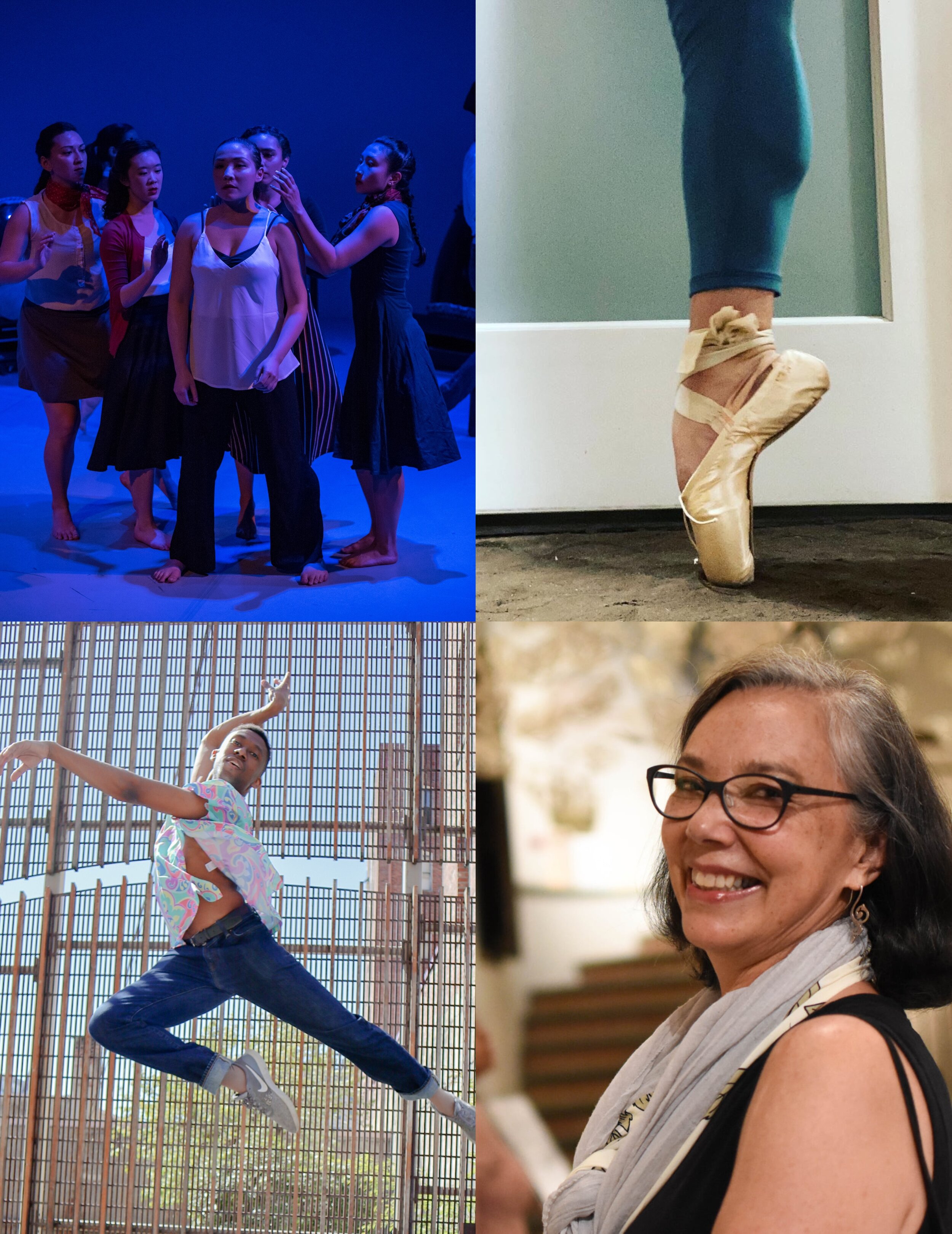
Counterclockwise from top left: Gabrielle Nomura Gainor, surrounded by Dominique See, Alyssa Fung, Siena Dumas, and Hailey Burt in Farewell Shikata ga nai; Joseph Lambert photo. Christopher Montoya en pointe. Vivian Little smiles. Robert Moore jumps; Tracey Wong photo.
May was both Mental Health Awareness Month and Asian Pacific Islander Heritage Month. But as we move into summer, remember that our wellbeing as dancers of color is something to prioritize all year round.
As a chunky Asian baby in a leotard, I had no idea yet how precious or valuable I was when I started in ballet. Instead, I only saw that I was clearly not cut from the same cloth as elegant princesses and swans whose dancing I admired. The chance to don yellowface in the Chinese variation during "The Nutcracker," or to be a kowtowing, shuffling child in "The King and I" in the school play felt like places I was welcome to exist—to shine—as a child who dreamed of being onstage.
Many years later, I see that I deserved so much more than to beg for scraps in the form of sidekicks and ethnic stereotypes. Black, Indigenous, and all People of Color deserve so much more. We need not silence the parts of us that are “too much” for white norms, be it too ethnic, too dark, too curvy, too loud. White people do not own dance—not even ballet. As former Dance Theater of Harlem ballerina Theresa Ruth Howard taught me, these precious art forms belong to all of us, as well.
Now, at the end of Mental Health Awareness Month and Asian Pacific Islander Heritage Month, remember that prioritizing our mental health—our wholeness, joy, and humanity are year-round activities. Every month is for our “history” or our “heritage.” With that in mind, I bring you five personal reflections on what it means to care for ourselves mentally and emotionally as People of Color in dance. Hear from Christopher Montoya (formerly of Ballet Trockadero, Dance Fremont Managing Director), Dr. Sue Ann Huang (co-director of The Tint Dance Festival), Alicia Allen (former dancer with Janet Jackson, Mary J. Blige, and Shakira to name a few), Robert Moore (formerly of Spectrum Dance Theater), and Vivian Little (retired ballerina and Dance Fremont founder).

Photo courtesy of Christopher Montoya
Find an environment where you can thrive
For Christopher Montoya (he/they), not having the right body type was a stressor that only compounded on top of being brown, gay, and working-class. Eventually, Montoya discovered their truth as being gender-non-conforming, and would often feel pressure to pass as straight in order to be hired for dance jobs. Finding an encouraging ballet teacher who embraced Montoya’s authentic self, and then discovering a community in Ballet Trockadero were defining moments.
“Going into Trockadero is really where I found myself,” Montoya said. “The dancers were Australian, Venezuelan, Spanish, Mexican, Black, Asian. We all felt like misfits because we didn’t fit into this binary mold of ballet. Trying to pass as a straight man always felt so fake and defeating. But here, I got to be me.”
From Montoya’s experience, taking time to situate oneself in a supportive dance environment is crucial. (For some, this could mean choosing a Black-led dance school or a class taught by a teacher of color). If the environment is unsupportive, it could be time to leave or look elsewhere.
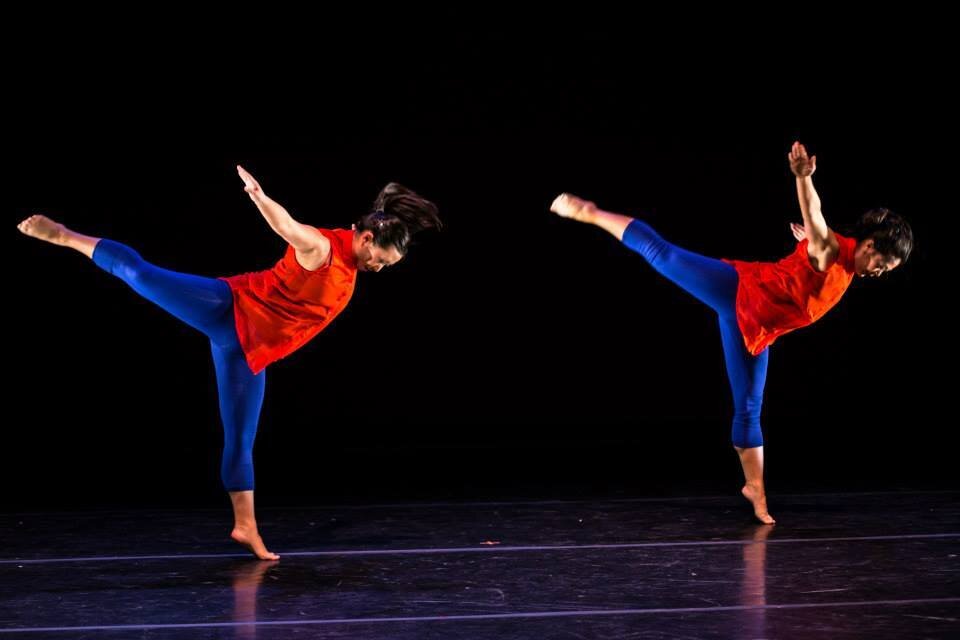
Sue Ann Huang and Arlene Martin. Joseph Lambert photo
Divest from that which does not serve you
Dr. Sue Ann Huang (she/her) not only co-founded an event centering BIPOC, Tint Dance Festival, her dissertation focused on choreographers of color in the Pacific Northwest. Most recently, she’s been thinking deeply about what liberation is possible through concert dance, which still possesses an intimate, even symbiotic relationship, with white supremacy.
While white supremacy once referred to overt hate as seen through groups such as the KKK, white supremacy today refers to an ideology that acts in both overt and subtle or unspoken ways. In western society, for example, white culture, white norms, and white people are valued more highly, and above other cultures. A cursory glance at the majority of ballet and modern dance companies show this favoring of whiteness, as seen through artistic leaders, company rosters, and choreographers whose work is presented.
In Huang’s view, dancers of color must strive to create space between what’s true and what’s cultural default. Today she does this by resisting the pressure to see certain “it” choreographers or companies, and instead asks herself what will bring joy.
“What kind of dance do I visually want to see? What kind of movement do I want to do? I am mostly only seeing shows produced by People of Color I care about, and that’s OK.”

Alicia Allen, photo courtesy of the artist
Hold them accountable
As a Black woman in a predominantly white dance department, Alicia Allen (she/her) felt invisible. From the professor who asked if she was in the right place, to the bathrooms littered with posters of white dancers, and how-to instructions for the perfect ballet bun, the message was subtle, but loud:
“My Blackness and street styles did not ‘make’ the walls.”
It wasn’t until Allen connected with other students who had experienced similar events that she gained the courage to fight. During her senior year, the majority of her efforts were focused on holding her dance department accountable. She served on committees, planned town-hall events, and lobbied to get a racist class canceled. And she’d do it again in a heartbeat.
“Don’t be afraid to speak your truth and share your experiences. You should always hold your teachers and professors accountable for your education. Hold them accountable for respecting dance cultures and communities.”
When Allen teaches hip-hop today, she never skips over the fact that this dance style was birthed from the joy and pain of Black people. Instead, she encourages her students to face their own discomfort as they reckon with history—a necessary part of respecting where the art comes from.
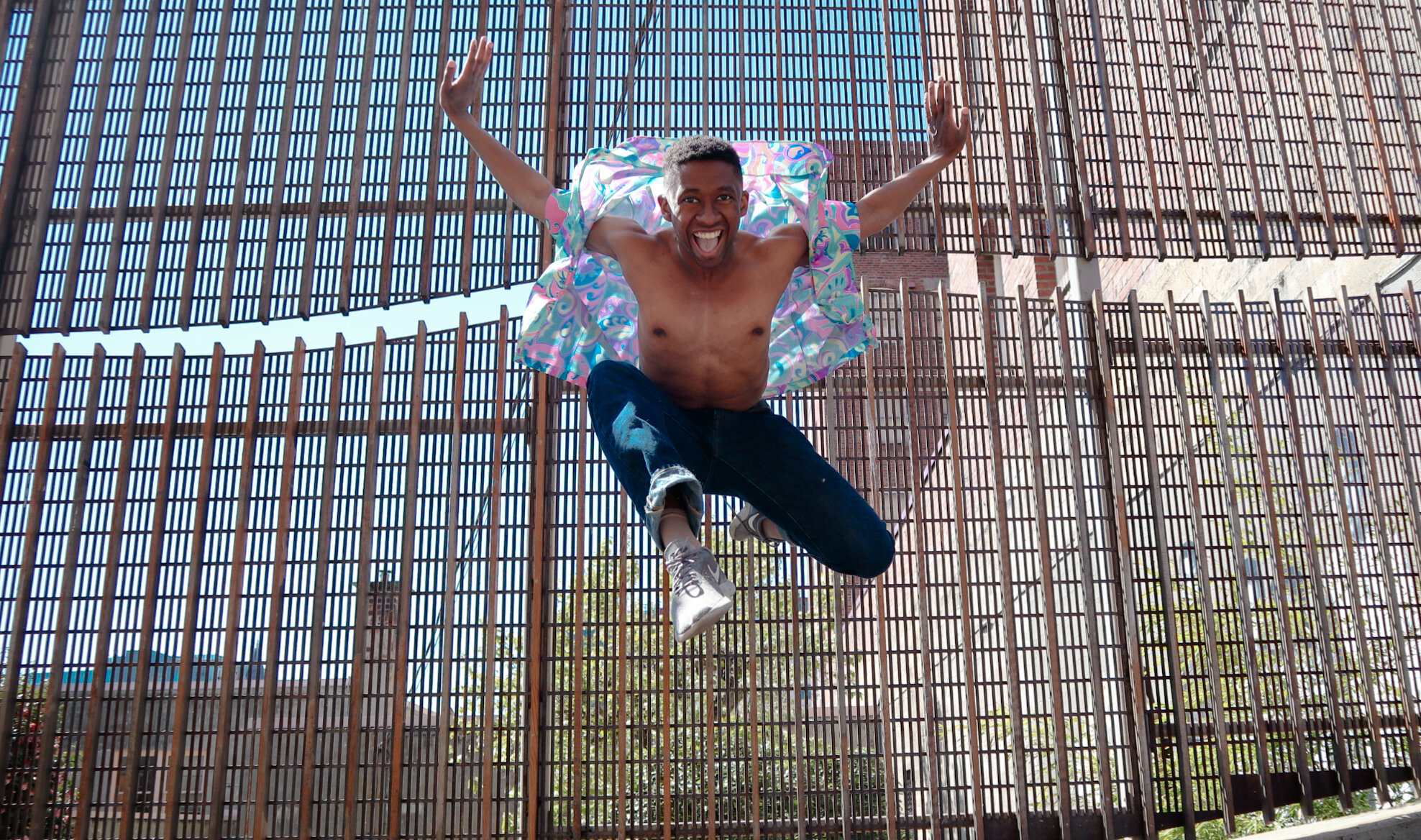
Roberty Moore jumps; Tracey Wong photo
Reorient your organization toward justice
In the past, Robert Moore (he/they) has seen dance organizations think that anti-Blackness, the increase in Asian American attacks, or what it means to live on occupied Coast Salish land, are not relevant to ballet or modern dance. But Moore does not stop being Black when he comes into the studio.
“What puts a nice little grin on my face is seeing organizations step up for the first time, seeing them stumbling over themselves, and actually learn something from pulling some weight, rather than just being passive,” he said.
Moore has found rest this past year by being in community with other Black artists: getting to discuss life—including topics that have nothing to do with race—has brought them joy.
Remember, Moore said, People of Color do not owe anyone a conversation or explanation about race, ever: “Honor the quiet revolution of a dancer of color just going to class, rehearsing, and taking moments to exist freely.”
Re-think ballet and dance education
Vivian Little (she/her) never connected race to body type when she was dancing with Pacific Northwest Ballet and San Francisco Ballet in the 1980s. Years later, she was teaching at a university and her colleagues of color recounted the discrimination that they had faced. Only then was she able to connect the dots between racism and the “defectiveness” of certain bodies. Through this lens, the concerns of her colleagues made sense: a Filipina whose short legs prevented her from earning short-tutu roles, a Columbian danseur with who never had the right “look” for a prince. Being of Irish and Japanese ancestry, Little thought about how she herself was often cast as the sensual or Latina role because of her “exotic look.”
Today, Little pushes back on the uniformity and preferred Eurocentric ballet aesthetics. One way to do this has been learning more about the human body and movement mechanics related to ballet technique. Little sees the potential in every student, whether their first position is a delicious little slice, or a whole half, of pie; whether their leg reaches up toward the heavens in arabesque, or points down toward the earth; whether they look like generations of European ballerinas, or they are helping to illuminate the multifaceted, multicultural beauty alive in ballet.
“Ballet teachers must teach to the person, not to an ideal,” Little said. “It takes much more thought, care and intentionality to be inclusive because of the waters of white supremacy we've been swimming in and the air of racism we've breathed for centuries.”
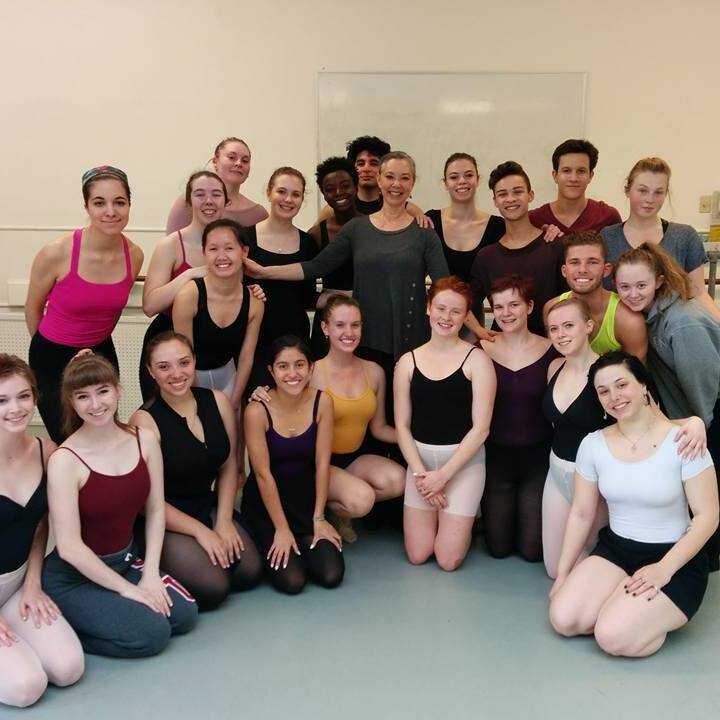
Photo courtesy of Vivian Little
Resources
Additionally, please check out the work of the following Seattle-based artists: Alicia Mulikin, Dani Tirell, Noelle Price, Randy Ford, Imana Gunawan, Cheryl Delostrinos, Amanda Morgan, Sarah-Gabrielle Ryan, Donald Byrd/Spectrum Dance Theater, among many, many others.
Maintaining Body Positivity and Self-Discovery in Dance
During the last year, I’ve been on an intentional fitness journey, spurred along by the privilege of getting back into a dance studio to train consistently, even amid the ongoing pandemic. All through lockdown, I was in remote university courses for dance, yet I saw a significant decrease in my desire to maintain my fitness and nutrition goals. This was because I did not have a dancing community physically around me and had very little space at home to maintain a usual training rhythm. I feel excited and so thankful to be once again moving toward my goals in a way that feels challenging and freeing.
By Hannah Emory, DWC Blog Contributor
Photo by Nikola Evora Zonenberg
During the last year, I’ve been on an intentional fitness journey, spurred along by the privilege of getting back into a dance studio to train consistently, even amid the ongoing pandemic. All through lockdown, I was in remote university courses for dance, yet I saw a significant decrease in my desire to maintain my fitness and nutrition goals. This was because I did not have a dancing community physically around me and had very little space at home to maintain a usual training rhythm. I feel excited and so thankful to be once again moving toward my goals in a way that feels challenging and freeing.
Yet, the time I spent away from the studio, and quite far away from my personal fitness goals, caused me to think a lot about how I can maintain my sense of body positivity and self-love in the midst of changing life circumstances. I would not trade what I learned during this time, because life will always throw unexpected circumstances at us, but our need for self-love and self-respect is unchanging and requires maintaining.
In any case, during a pandemic or not, when dance spaces are made into goal-driven environments that focus overmuch on what the body looks like, a high level of self-criticism can develop and turn into a lifelong struggle if not kept in check. For example, I have struggled with issues of body dysmorphia and disordered eating, and have watched my dancer friends go through some of the same struggles. One can start to feel like they are not a true dancer if the goal post of self-acceptance is constantly moving and, unfortunately, there are aspects of the dance world that can make self-acceptance very difficult to achieve. Add on a global pandemic and the consequent stagnation/interruption in training goals, and that feeling of illegitimacy, at least for me, definitely increased. For this year, I know it has taken a lot of mindfulness and having the right people around me to heal, refocus, and keep my perspective on myself and my body positive.
Self-acceptance, self-celebration even, is not easily fought for and won. In our dance journeys, there will be a lot of maintaining, unlearning, relearning, and self-connection that needs to happen if we have negative messaging from our past or have experienced a discouraging setback in our progress. Community is a huge piece of that relearning and healing, and I hope everyone reading this can connect with others through dance in some form. An uplifting dance community is invaluable and makes the load lighter while we’re moving toward a stronger relationship with the self.
I cannot bang the drum about community enough. But, in addition to that, here are a couple of personal practices that have helped me so much this year and can be done with and without others:

Gratitude-based movement. Often dancing requires a lot of mental concentration on learning form and content. Though being in class and learning new material is exhilarating, it’s akin to reading a textbook or working away at a craft until it’s honed. In my experience, the work of learning dance is very mentally taxing and requires the body to function more like a tool. This can cause a bit of a feeling of disconnection between the body and mind/heart. So, I believe that every dancer would benefit from some sort of moving mindfulness/gratitude practice outside rehearsal spaces that focuses on thanking the body and self for all the work being achieved. For me, I have been taking tai chi classes as part of my degree program and it has been so helpful in guiding me into feeling empowered, connected to myself, and grateful for the body I have right now. One of the focus phrases we use frequently is to always have an inner smile if something feels difficult or if the mind wanders; and at the end of every class, we think of something to be grateful for and bow in thanksgiving for the goodness in our lives. It’s a beautiful way to start the dance day and one that reminds me of how capable my body is and how grateful I am to exist as myself. Some other examples of moving gratitude practices that come to mind would be walking, meditation, yoga, pilates, and Feldenkrais. There are so many options available and anything that brings you into a state of gratitude for yourself and your life is well worth the time!
Studying my body + personalizing nutrition. I find myself having a lot more respect and love for my body when I know how it functions and when I’m intentional about getting it the fuel it needs. Our bodies are unique, and there isn’t a one-size-fits-all approach to dancing our best. The most empowering thing I’ve done for my dancing journey is paying attention to the specific questions and feelings that come up for me during my training days and then pursuing answers for those questions. This personal focus was new to me until just recently and paying attention to my way of being a dancer revolutionized my practice. I have learned a lot about myself; some personal examples of discoveries I made would be…
I’ve always struggled with joint pain/fatigue while turning out at the barre, and my teacher let me know when I asked her about it that activating my core muscles will help create a feeling of more space in my body and make turning out much easier on my joints.
Stomach cramps and chronic physical fatigue are pretty big issues for me. Yet, I started paying attention to my diet and noticed over time that eating lighter, protein-focused meals eased my digestive issues and helped with endurance throughout the day.
I find a lot of choreographic inspiration and bodily relaxation through improv work. If I’m feeling mentally fatigued during a long dance day, there’s nothing like going to an empty space and moving without goals or expectations. Integrating active stretching and meditative breathing into my improv movements adds extra benefits to the practice.
These are just some of the personal discoveries that have helped me take more ownership over my dancing and my health, and have led me to feel more connected to and positive about my body. Problem-solving discoveries are a beautiful way to quickly move one from feeling discouraged and incapable to feeling proud and excited about our unique dance expression. If you have questions about yourself, take the leap and pursue those inquiries with teachers and your dance community. Study your body and find out what works for your personal journey. You’ll be so amazed at what you find out! (A bonus suggestion would be to keep track of your questions and discoveries in a notebook or voice memos so you can look back on your progress.)
I wish you the best on continuing toward self-celebration, radical body positivity, and joy-filled
The Power Behind Breath in Dance
'Suck in' 'Engage your core'. Two phrases that seemed synonymous to me in dance. I remember learning proper ballet technique with the image of a corset. During barre, my instructor would inhale sharply, shrinking her waist while pointing at me to do the same. A silent reminder that good posture included a sucked-in stomach.
By Ella Kim, DWC Blog Contributor
“‘Suck in’ ‘Engage your core’”

Photo Credit: National Institute of Health
Two phrases that seemed synonymous to me in dance. I remember learning proper ballet technique with the image of a corset. During barre, my instructor would inhale sharply, shrinking her waist while pointing at me to do the same. A silent reminder that good posture included a sucked-in stomach.
As the focus of my dancing shifted from learning specific body placements to developing dynamic movement qualities, restricted breathing held me back. I’ve recognized a pattern in my dancing of breathing shallowly in my chest instead of taking fuller breaths from my diaphragm. This shallow breathing lifts my shoulders and tightens my neck, stiffening my dancing. I get corrections for high shoulders, but I feel like I cannot drop them.
What if we taught a more complete understanding of the mechanism of “engaging your core”? A technique I learned through aesthetic indicators could be equally, if not more successfully, taught with breath and motion in mind.
To bring a sense of ease to my dancing, I’ve been trying to re-train myself to breathe from my diaphragm. Sometimes referred to as belly breathing, this shift frees up my upper body and gives me back control of my shoulders. When dancing, I focus on the space below my rib cage, making sure to expand into my sides and back with each inhale.
This shift to belly breathing has helped more than my port de bra. Sports medicine research has shown that intra-abdominal pressure (IAP) coordination is key to accurately using core strength.
In 2013, a research team published “Dynamic Neuromuscular Stabilization & Sports Rehabilitation,” a report investigating IAP’s role in stabilizing the spine. They found that belly breathing plays an essential role in core stability, which “is not achieved purely by adequate strength of abdominals, spinal extensors, gluteals or any other musculature; rather, core stabilization is accomplished through precise coordination of these muscles and intra‐abdominal pressure regulation by the central nervous system.”
What does all that mean for dancers? Don’t hold your breath at the barre! It is important to have good coordination of stabilizing muscles (not just strength), and good coordination comes from deep breaths. IAP regulation comes from the central nervous system. This system consists of the diaphragm, pelvic floor, and transverse abdominis, which work together to create internal pressure. Increasing IAP helps unload the spine in specific postures.

Photo Credit: National Institute of Health
As I break my shallow breathing habit, I have found it helpful to time my inhales and exhales with my dancing. Knowing that my IAP is what helps me stabilize, I try to exhale through tough movements. Before, my instinct was to inhale and hold my breath in these moments, but by releasing the breath I can engage more of my core stability.
In a challenging move like an Italian fouetté, core stability and IAP are very important in helping me balance on my supporting leg while my working leg moves to initiate the rotation of my body. To avoid injury (like rolling an ankle or tweaking my back) and provide maximum stability in the move, I’ve found it helpful to exhale as my working leg brushes upwards and my body flips from fouetté to back attitude. That is when I need the most stability and neural control.
By being more intentional with my breathing while dancing, I have begun to use breath as a strengthening tool. Harnessing the body’s natural rhythms is freeing up my movement quality and making me a steadier dancer.

By Ella Kim
Ella Kim began dancing at 4 years old. She focused primarily in ballet until finding a love of modern and contemporary dance in high school. She is currently pursuing a BFA in Dance at George Mason University. On breaks from school, she's had the opportunity to dance as a guest artist for Trillium Dance Collective. Ella enjoys investigating different aspects of the dance world and is thankful to DWC for giving her a platform.
Dance for All Abilities
For an artform with a long history of exclusivity, accessibility can be a difficult topic for many dance studios. Counter to traditions of gatekeeping, elitist training, and a hyper fixation on perfection, local studio Issaquah Dance Theater (IDT) offers a dance class tailored for neurodivergent and physically disabled students. The Best of My Abilities (BOMA) is an inclusive dance program founded by dancer and paraeducator, Emmy Fansler.
By Ella Kim, DWC Blog Contributor
For an artform with a long history of exclusivity, accessibility can be a difficult topic for many dance studios. Counter to traditions of gatekeeping, elitist training, and a hyper fixation on perfection, local studio Issaquah Dance Theater (IDT) offers a dance class tailored for neurodivergent and physically disabled students. The Best of My Abilities (BOMA) is an inclusive dance program founded by dancer and paraeducator, Emmy Fansler.
IDT has provided these dance classes since 2016. Fansler describes the class as being open to any and every one regardless of their mobility. When discussing over FaceTime who can be a BOMA dancer, she warmly recalled working with students in wheelchairs and explained, “if I can’t figure out a way to make it work for everybody, that’s on me.”

Photo by Hailey Waters
BOMA introduces students to a variety of dance styles, focusing primarily on encouraging movement and relationship building. Dance becomes a setting from which students can learn to help each other, trust each other, and trust themselves. By making the joy of dance accessible, the class also spreads the life skills dance teaches to students. Movements become obstacles the dancers learn to approach together.
The classes normally have a very flexible structure, often tailored to the particular group of dancers in each class. Building relationships between dancers is a large focus of the program. Fansler often pairs dancers who can physically support another person with dancers who need support. They move across the studio holding hands or helping guide each other around in turns.
The COVID-19 virus created huge challenges for dance studios, and IDT is no exception. On March 13th, Washington state governor, Jay Inslee, closed all schools, prompting the studio to move classes to a virtual format. Washington has continued to have strict restrictions surrounding COVID-19 safety. The state is currently working towards reopening, allowing for heavily regulated gatherings, so IDT hosts some of its classes in a hybrid in person and online format. BOMA classes have remained completely virtual since March 2020 for the safety of its participants.
For BOMA, this means a more consistent structure for each class. They begin with a guided warm up based within dance movements, move into a stretch sequence, and finish with putting together a dance routine. Instead of using touch to support each other through movements, dancers are modifying movements individually (for example changing a choreographed turn into a sway of the body and arms). The dancers are currently exploring salsa, using salsa footwork to inspire the warm up and listening to salsa music throughout the class.
“A lot of times dance is seen as this ridiculously exclusive world, really what you need is a body and a space.”
The benefits of BOMA are closely related to the successes seen in Dance Movement Therapy (DMT), and recent research points to dance having a positive impact on people with Autism. A study led by Malin Hildebrandt (professor at the University of Heidelberg in Germany), published in 2016, explains how dance can support the embodiment approach to managing negative symptoms caused by Autism.
The embodiment approach is a new thought process guiding some research on Autism. It breaks from the traditional focus on the mind’s impact on the body. Hildebrandt explains embodiment as the belief that “our perception of the world, and thus also our interaction with it, is entirely mediated by our bodies”. This approach assumes the mind and body have a fundamentally reciprocal relationship. Dance is rooted in the cooperation of body and mind, making it a great activity to strengthen that relationship.

Emmy Fansler, BOMA Program Founder
Hildebrandt’s study recorded a reduction of negative symptoms in people with Autism after ten weekly sessions of manualized DMT. The sessions consisted of encouraging individuals to manipulate the quality of their movements, mirroring exercises (copying each other’s dancing) in pairs and groups, and verbal processing about how the dancing made participants feel. IDT’s BOMA classes are not certified DMT sessions; however, they contain many of the same elements, focusing on encouraging dancers to expand or manipulate their natural movements and facilitating dancing together in pairs and groups.
Hildebrandt found that the 2 symptoms most alleviated by dance therapy were anhedonia (inability to feel pleasure) and blunted affect (difficulty expressing emotions). This fits with the embodiment theory, “because the subtypes most affected by the intervention… are more closely related to diminished self-perception as the connection of bodily states to emotions.”
BOMA began as an independent project of Fansler when she lived in Kansas. She worked as an adaptive PE paraeducator, where she would invite her students from PE to her after school dance classes. When asked about the origin of BOMA, Fansler remarked with a laugh that she created an accidental dance studio.
Eventually, Fansler moved to Washington, bringing BOMA with her. “I keep the name wherever I’ve gone because it makes sense for your abilities in all ways”.
IDT’s Artistic Director and owner, Kevin Kaiser, also works to make dance education more accessible. When asked how the program came to IDT, Kaiser stated in an email that he had been seeking to create a program like BOMA, so “when I learned that Emmy has a passion and a very clear vision for this type of program it was an easy decision for me”.
BOMA welcomes other IDT students to volunteer in its classes. Current student at IDT, Hannah Jacobson, helped with some classes two years ago. When interviewed over FaceTime, Jacobson described her experience, “it wasn’t like I was giving directions… I would do the combo with them and it was like I was a part of the class”. In the couple of classes she assisted, Jacobson noticed, “a very family environment”.
One thing that really stuck with Jacobson from her time with BOMA is how the class worked on challenges together. Instead of pulling a dancer aside if a problem arises, Fansler brings the class together in a circle and they help the dancer through it. Jacobson remembered one class when a dancer’s vocal ticks were winding up another dancer. Jacobson recalled that, “we worked together to help them calm down. It was as a group. We collectively came back to a circle and talked for a couple minutes”. Her lasting impression of BOMA is that, “everyone works through everything together”.
A foundational goal of this program is to build relationships between students. By assisting each other to learn more challenging movements, the dancers learn to trust each other. Fansler works to facilitate a safe atmosphere where the dancers can trust, experiment, and grow. Fansler warmly recounted a former student who had an aversion to authority figures but was receptive to help from peers. The student would not let Fansler touch her but would hold hands with other dancers as she moved across the floor. Proud of the dancer’s growth throughout the program, Fansler shared that the dancer was even comfortable being lifted by other students by the end of the year.
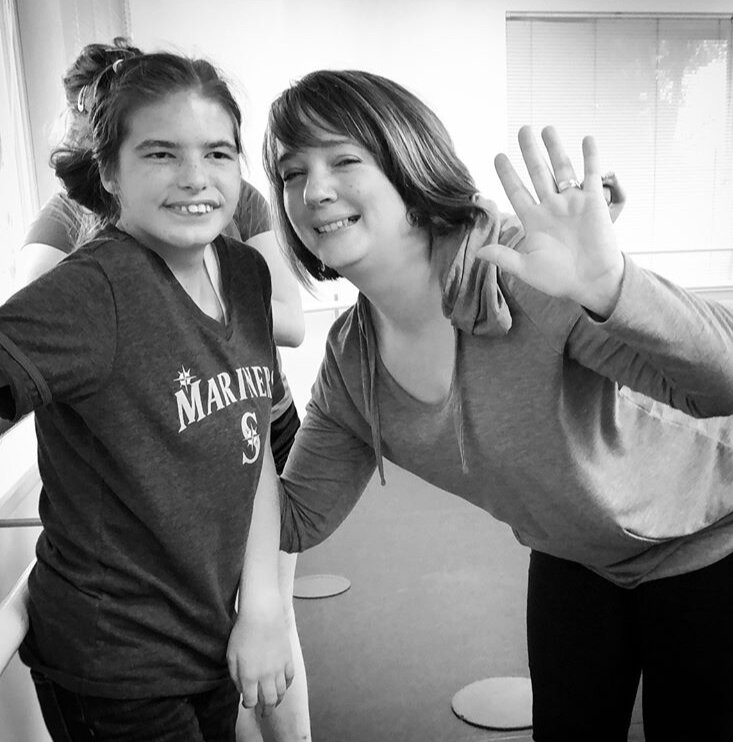
Photo by Hailey Waters
Fansler’s accepting and creative approach to each dancer's challenges is a hallmark of the program. BOMA focuses on what the students are able to do, not their limitations. Fansler’s voice was full of care as she responded to being asked what the goal of BOMA was for the participants. “I want them to feel safe and like they belong, and I want them to celebrate the things they can do instead of [being] boxed in by what they are told they cannot”.
The BOMA class is included in the IDT’s annual recitals. The dancers work on their own piece throughout the year and perform it on stage in the spring.
This month, BOMA’s current class of six dancers will perform in IDT’s recital. Changing COVID-19 restrictions make the exact format of the show uncertain, but the class is already working on creating their piece.
By offering a dance class tailored to students with disabilities, IDT is opening the gate to dance education and breaking down the traditional barriers of who is considered a dancer. Fansler notes, “a lot of times dance is seen as this ridiculously exclusive world, really what you need is a body and a space.”

Ella Kim began dancing at 4 years old. She focused primarily in ballet until finding a love of modern and contemporary dance in high school. She is currently pursuing a BFA in Dance at George Mason University. On breaks from school, she's had the opportunity to dance as a guest artist for Trillium Dance Collective. Ella enjoys investigating different aspects of the dance world and is thankful to DWC for giving her a platform.
Body Positivity In Dance
For all of my life, my body has been what most people would think is not a conventional “dancer body.” While there is no shade intended to be thrown to those who are of a different physique, I was never a naturally thin person and yet constantly felt like my life would be easier if I were, that the thin dancers at my childhood studio got the most attention and respect paid to their work. I knew there were certain roles I would not likely be considered for because of the aesthetic desired versus the one I represented. In another space, I was told that I am “the nerdy, girl-next-door type,” but “not the leading lady type,” and I felt that held true for how I was perceived in the dance space as well.
Trigger Warning: Eating disorders, Mental Health Concerns
By Hannah Emory. DWC Blog Contributor
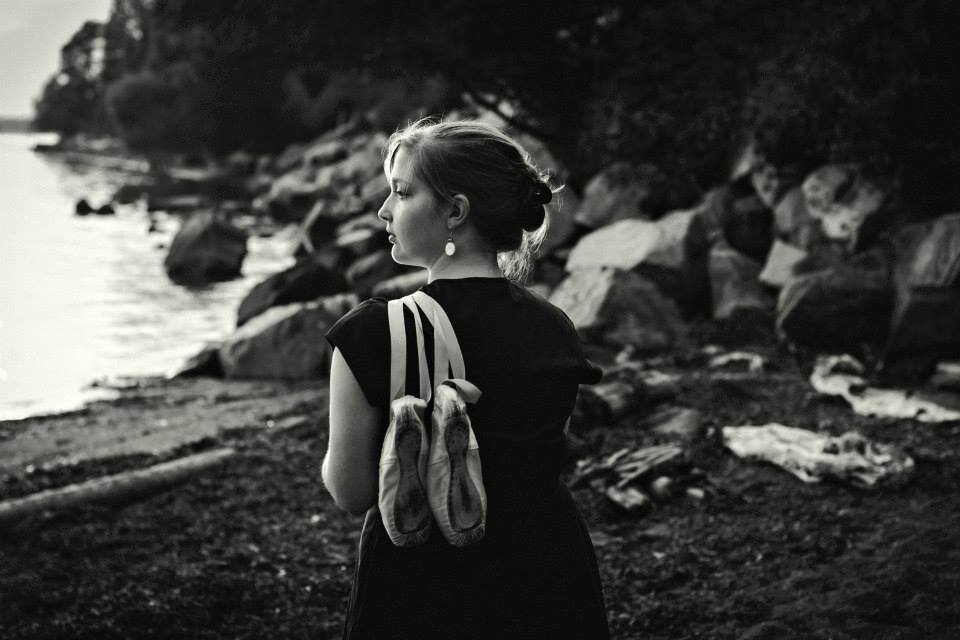
Photo by: Kelsey Michelle Photography
Childhood body-negative studio experiences:
For all of my life, my body has been what most people would think is not a conventional “dancer body.” While there is no shade intended to be thrown to those who are of a different physique, I was never a naturally thin person and yet constantly felt like my life would be easier if I were, that the thin dancers at my childhood studio got the most attention and respect paid to their work. I knew there were certain roles I would not likely be considered for because of the aesthetic desired versus the one I represented. In another space, I was told that I am “the nerdy, girl-next-door type,” but “not the leading lady type,” and I felt that held true for how I was perceived in the dance space as well.
Growing up in what I felt to be a body-negative/body-shaming dance space for me was almost like the old analogy of a frog being slowly boiled. You’re in the midst of the heat, yet being slowly desensitized to it until it’s too late to save yourself. From my personal experience, body negativity can be so ingrained in dance education spaces that it’s hard to even recognize it happening. Especially when body-negative messaging and practices are covert rather than overt. I became so used to feeling poorly about myself and receiving nonchalant messages about how my body was not quite acceptable, that I thought it was normal, even deserved.
Throughout my young dancing years, I took hiatuses from dancing many times when the pressure and pain of not living up to expectations became too much. Then upon my return, I would see folks I was dancing with a couple years before were now a few levels ahead of me and being cast in principal roles in the dance company. So the vicious cycle would continue when I realized I was nowhere near as conditioned, technical, or artistically expressive as them, because time had gone by.
My confidence would waiver again, the body image issues from my wee years would rise to the surface, and I would either severely cut back my class schedule or leave dancing for a season altogether. Yet, there was little time made for investing in the emotional wellbeing of dancers either in technique classes or in the member-exclusive company, and so there was no one there to notice that I and other dancers were slipping through the cracks.
These turbulent years certainly contributed to the zeal I have for diversity in the dance world now, because I became exhausted with the old hat expectations of the dance world yester-years. For years, I dreamed of a more just and body-inclusive dance world… then I realized that it was up to me to make that world a reality, in whatever way I can.
Choosing body positivity:
Through mental health counseling, I have had an opportunity to explore how deeply negative thoughts about myself and my dancing have burrowed into my self-image as a result of the conditioning I’ve received since I was young. I’ve begun unpacking how those thought patterns have affected my life and thoughts, have led me to treat myself and my work with disrespect, and to self-harm through intense exercising and disordered eating. Yet, all the while, I know I just wanted to live in the simplicity of loving my art and self-expression. That is the evil at the root of body negativity; it robs everyone of self-love.
I realized that the difference between body positivity and body negativity can be subtle yet pervasive. The difference between wanting to be strong or wanting to be a small leotard size. The difference between genuine happiness for someone else and toxic comparison. The difference between loving dance for itself and wanting to be admired. A subtle shift is enough to make what should be a joy into an obligation, or a mental prison.
“That is the evil at the root of body negativity; it robs everyone of self-love.”
These patterns of pervasive self-harming thoughts and habits started shifting for me ever so slightly once I got to university. I could certainly feel myself holding onto the desire to meet superficial aesthetic standards for a while, even though I had hoped that at the university level such expectations would be a thing of the past. As I grew in confidence as a young adult navigating the world, I got tired of being evaluated on aesthetic standards alone. Since day one, I have worked hard in my university program and wanted to be evaluated primarily on my work ethic and attention to detail. For me, realizing that body positivity was the key to unlocking the rest of my dancing career came because of a breaking point. It came because I was exhausted with being counted out time and again, and seeing others struggle to stand out in the midst of a popularity contest. It came with growing up and realizing that dance can be (and has to be) many things to many people or it loses its joy. It came with a desire to help people of all body modalities to find the indescribable joy in dance that I found. It came with heartbreak but also hope: to be a cycle breaker, so that no other dancers will be made to feel less-than because of their body.
Most of all, it came with solidifying my own philosophy. The way you show up on earth in your physical form is the most deeply personal and powerful thing we have available to us. I believe that we are spiritual beings having a physical experience, that our experience of being human is one and the same with our bodily experience. So, to me, devaluation of the body is devaluation of the spirit, a disregard for the core of humanness. Not everyone approaches it with that set of beliefs, but from a pragmatic standpoint, our identities are intrinsically tied to our physical bodies, while at the same time transcending the physical. We perceive each other physically, as well as emotionally and intellectually, simultaneously. There are levels to being human, and each one of them counts. I believe for that reason, there should be awe when encountering a human with a body; there should be respect and love. There should be joy and acceptance. This is especially critical in dance spaces.
When I realized that some part of my dance career would include being a teacher, I recognized that I had to unpick my own body-negative thought patterns. I had to heal myself from my internalized self-reproach, I had to get healthy, or any teaching I do would be heavy with judgement toward myself, and most likely toward others as well. My aesthetic judgments toward myself and toward other dancers had been taken over by the body-negative language and practices I received as a child and young adult. The next generation of teachers need tools for making body positivity an inherent part of their curricula, and unteaching body negativity in the dance world has to be intentional for us to make any progress.
Body positivity in the studio:
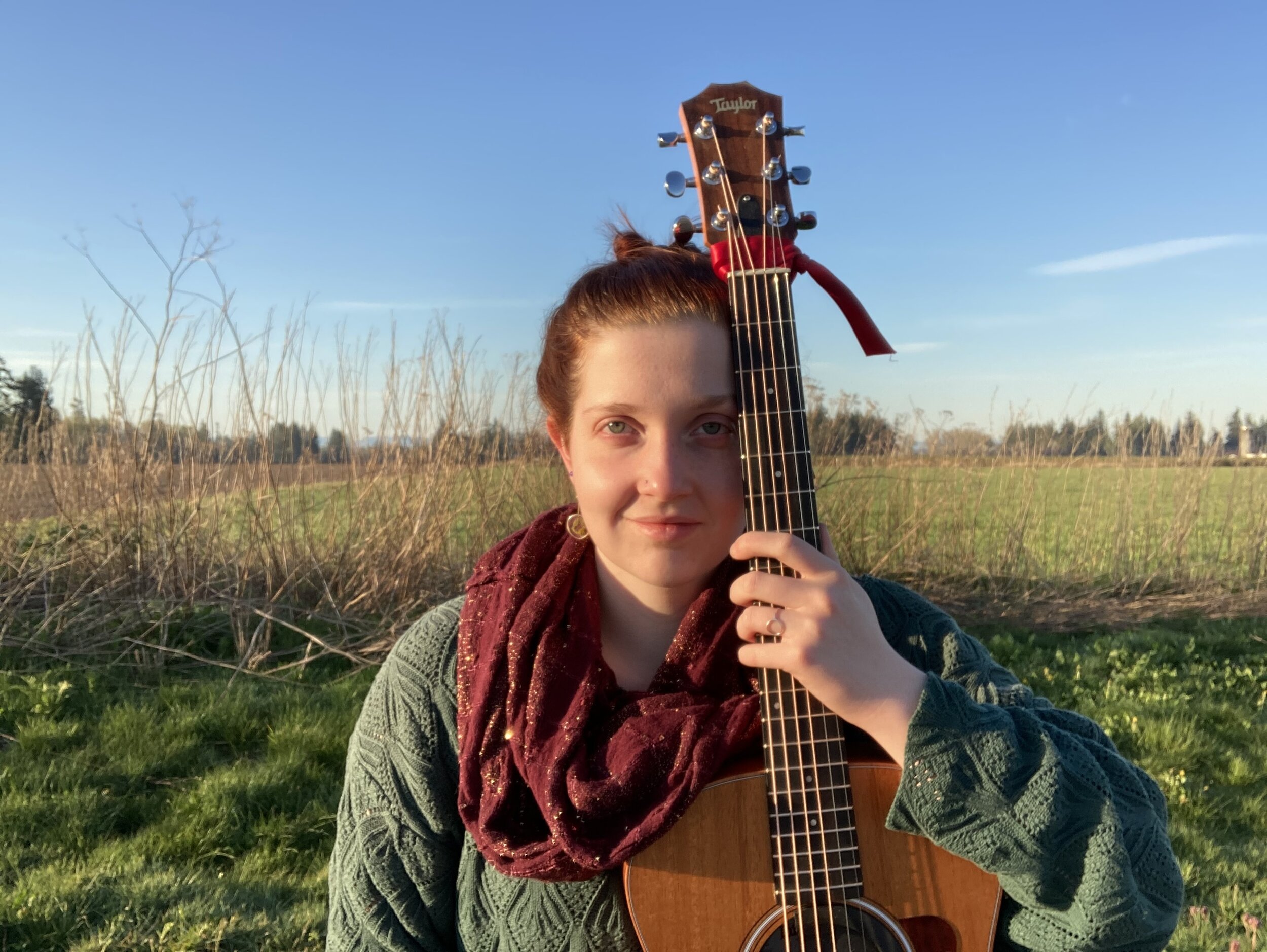
On my journey of deconstructing my own body-negativity, I have had to employ curiosity and become very uncomfortable, and ask questions to form new patterns of thought. Some key questions I ask myself regularly are:
Do I still cling to negative thoughts and expectations of myself? Why?
How do I practically deconstruct my body-negative thought patterns today?
What amount of ownership am I letting others have over my narrative?
Does another dancer’s physical appearance alter my opinion of their dance work, and why?
To what extent do I automatically judge other dancers before I’ve really taken in and paid respect to their work?
How can I lovingly participate in my own wellness and healing?
How can I encourage the wellness and healing of others today?
Asking myself these questions has already led to really positive results. I have found freedom in working with my body on a daily basis, wherever I find her at and without judgement. I find that I see the beauty in other dancers more readily because I am working to shut off voices of judgement about their work and mine, because I believe that setting yourself free also sets others free. I have found work by other dancers that is truly comforting, inspiring, and refreshing because it breaks down barriers and creates new possibilities.
If I were to give a short list of suggestions to studios and universities about how to train with body-positive frameworks, it would be:
Meet your dancers where they are at, then give them tools to become more of themselves. Give them lots of opportunities to discover their creative voices and movement languages in a non-judgemental space. Please, don’t apply limiting labels. (hard-and-fast categorizations of dancers about technique or performance qualities that limit the dancer’s sense of possibility and growth for the future, like “you’re good at turns but bad at barre” or “you’re a comedic performer, but not lead/principal material,” the implication of those comments being that there is no possibility for those dancers to develop those things, or that their body type makes them suited to some kinds of movement/performance, but not all kinds of movement/performance)
Seek out diverse educational imagery and performance footage, and invite in guest teachers and artists from many different backgrounds, including those who know how to artistically and technically work with a lot of different bodies.
Educate yourselves and your dancers in embodiment/grounding practices, accessible nutrition, and injury prevention, with the acknowledgement that every body is unique and deserves personalized wellness attention. A well dancer is an excellent dancer.
Keep interrogating your own body image practices and assumptions, for your teaching and yourself. Continually seek out media and information that opens your perspective. Know that body positivity and self-love in the dance world have to be intentionally exemplified, not merely assumed to be a reality.
I offer these suggestions as one who has not yet been a dance educator, but has been a student for many years. I acknowledge that there are unique challenges to educators within different dance spaces, but since dance is a physical art, I believe it to be imperative that we work to get the body positivity issue right. I offer these suggestions as a student who knows what it feels like to have had a few very encouraging and life-giving teachers, and unfortunately, a few teachers who added to my pain in this area. I offer these suggestions with the hope that more dancers will receive from their teachers what I ultimately had to learn for myself.
Self-love and body positivity in dance spaces must be intentional, and educators are the first line of offering dancers a healthier way to see themselves and a brighter way of looking at the world. So that dancers everywhere will know their body (and every body) is a dancing body.

By Hannah Emory
Hannah Emory has been a creative movement artist for over ten years, and is currently a dance major at Western Washington University. Her focus areas lie in the contemporary, ballet, and Irish step dancing spaces, and she has received additional training in ballroom, hip hop, contemporary jazz, and Scottish Highland dancing. In fall of 2021, Hannah will be continuing her dance studies in Ireland at the University of Limerick. Her favorite aspect of being a DWC Contributor is being able to marry her love of dancing with her passion for the written word.
Interested in writing for the DWC Blog? Click below to fill out the DWC Contributor application!