
Just Graduated High School… Now What?
First of all, congratulations! Graduating high school is no easy feat and I’m proud of you for coming this far. The doors of opportunity have swung wide open, and taking the leap might feel daunting, but you are not alone! I’m here to offer some guidance, describe what may lie behind each door, and let you know that you’ve already done so much that has prepared you for this moment.
So many doors, so many unknowns!
Kristina’s Guide to Dance Careers
By Kristina Koumaeva, DWC Ambassador
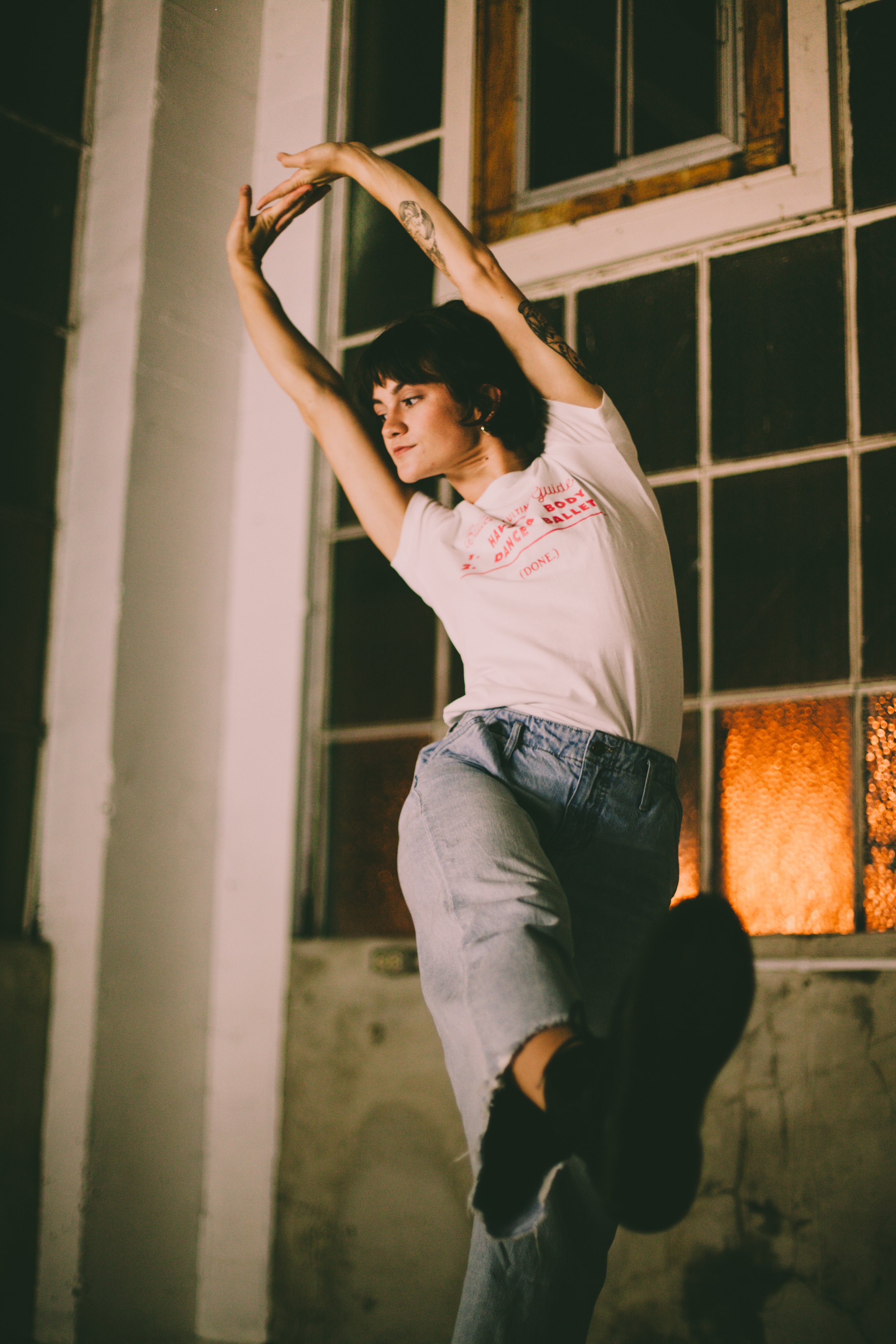
click below to shop the look:

First of all, congratulations! Graduating high school is no easy feat and I’m proud of you for coming this far. The doors of opportunity have swung wide open, and taking the leap might feel daunting, but you are not alone! I’m here to offer some guidance, describe what may lie behind each door, and let you know that you’ve already done so much that has prepared you for this moment.
So many doors, so many unknowns!
Introducing our imaginary dance-options-post-high-school tree. Did you know that you planted it the very first day you fell in love with dance? With each new class, your roots grew stronger; with each new skill learned, a branch of opportunity sprouted. The best part of this tree is that it is three-dimensional. Just as your roots intersect and overlap, so do the branches of dance opportunities. You may follow as few or as many as your heart desires, and recognize that this tree is evolving and growing with you.
For the sake of this blog post, I’ve identified five tree arms: Commercial Dance, Concert Dance, Continuing Education, Teaching/Choreography, and Freelancing. Keep in mind that this is not a comprehensive list nor are the options mutually exclusive, it’s actually more likely that throughout your dance career, you’ll climb many of these branches and new ones will sprout as your experience grows.
We’ll begin with commercial dance. This industry exists throughout the world, with capitals in Los Angeles, New York, Atlanta, and a handful of cities abroad. This realm consists of commercials, music videos, movies, and tv shows often booked by your agent(s). I’ve linked a few of my recent favorites! Camera work is crucial and auditions/castings will be a regular, weekly, if not daily part of your life.
Concert dance focuses on movement performed in front of audiences, whether with ballet/modern companies or performing musical theater shows on Broadway. The line between concert and commercial dance has blurred over the years, with street styles on the Broadway stages and musical theater in tv shows; dancers find themselves swinging between the two realms often. Concert dance can incorporate a range of styles and isn’t limited to a specific city. Dancers perform on stages worldwide--it’s up to you to choose your stage!
If you are someone who loves learning and creating relationships, teaching/choreography may be a part of your dance journey. Building curriculums, choreographing phrase work, and connecting with students are all challenging but rewarding parts of the process which can be at your local studios, or on a bigger scale such as at dance conventions/competitions, or even online. One of my favorite virtual escapes during the pandemic was online Dance Church. My biggest piece of advice if you’re pursuing teaching is to be humble, stay hungry, and have integrity.
The fourth branch on our tree is continuing education. This one may be obvious because most high schools encourage their students to apply to college. To be a dancer is to be a student forever, whether you decide to “officially” continue your education or not. Dancers can go to a university or conservatory and pursue a dance degree, they can complete training programs/internships facilitated by professionals/veterans or studios in the industry, or they can move to a different state or country and dive into the classes and culture that belong to that unique place.
Finally, we arrive at the freelancing branch--this one is as unique as it gets! A build-you-own-adventure type of path. In a way, it encompasses a lot of the other branches, but it’s unique in that you must build out your path and understand the financial responsibility of freelance work. Examples include creating marketing dance campaigns on social media, modeling for a dance brand (careful or you’ll end up on @modelsdoingballet -- one of my favorite Instagram accounts for a good giggle!), acting/dancing for an entertainment company at live events, etc. This is the “gig” life, always exciting but requires a great amount of patience.

click below to shop the look:
When it comes time to branch out and pursue the dance work you find most fulfilling or interesting, don’t be afraid to ask for help. I’ve found so much comfort in knowing that every dance journey is different yet we all face similar tough decisions. We all feel anxious at times, and the path isn’t always obvious. Even the most successful dancers will tell you that their paths weren’t clear cut. Look to your mentors for inspiration, find podcasts that can guide your thoughts or help with decision making, and read blogs (like this one!) to get the perspective of other professionals in our industry.
Dancers are unique individuals; YOU are a unique individual, and the bottom line is, if you truly love dance and want it to be your career or at least a part of your career, it CAN be--there is room for everyone! Give yourself grace and trust the process, then watch your tree blossom.
If you have any questions about my journey so far or want to chat about your dance tree, please get in touch on Instagram. Cheers!

Competition and Convention Prep
You may know the simultaneously exciting and stressful feeling of walking into a convention ballroom room bright and early on a Saturday morning. You immediately feel the rush of energy and nerves surrounding you. If you are anything like me, you can't wait to spend the weekend learning from amazing instructors and meeting new people. But what can you do to ensure that you make the most of your time? The right preparation can make a world of difference when it comes to long weekends of conventions or competitions.
Ava’s Tips for Long Days of Dancing
By Ava Budish, DWC Ambassador

click below to shop the look:
Seamless Rib Racerback Leotard by Capezio | Bullet Pointe Skirt by Bullet Pointe
You may know the simultaneously exciting and stressful feeling of walking into a convention ballroom room bright and early on a Saturday morning. You immediately feel the rush of energy and nerves surrounding you. If you are anything like me, you can't wait to spend the weekend learning from amazing instructors and meeting new people. But what can you do to ensure that you make the most of your time? The right preparation can make a world of difference when it comes to long weekends of conventions or competitions.
Physical Preparations:
Everyone’s body is different and has distinct needs but some general things that help me feel ready for a long weekend of dance include rest, stretching, and fueling my body. I like to be extra mindful to not push my body too hard in the days leading up to a convention weekend. I often still have classes throughout the week even up until the day or night before the convention, so making sure I’m not overworking myself is helpful and keeps me energized throughout the whole event!
Additionally, keeping my body warm and stretched can make a long weekend of classes easier and more enjoyable. Some light warm-ups before class like prances, relevés, or even a short yoga flow all warm me up without tiring me out. One of the things that I find most beneficial is to make sure I am fueling my body! Keeping myself fed with food that energizes me is the key to my happiness and success over long days of dance.
Mental Preparations:
Beyond just the physical aspects of preparing for a competition or convention, an important piece to consider is the mental side. Convention and competition weekends can be just as exhausting mentally as they are physically. I don’t dance my best if I am frustrated, insecure, overwhelmed, or even just flustered. Conventions are often in new surroundings filled with loads of new instructors, styles of dance, and choreography. All of these things can be overwhelming. The same goes for competitions. Many times, there are lots of nerves and anticipation. Sometimes you may be rushing to change costumes and then run right back on stage. To clear my brain, I meditate or follow guided breathing exercises. Sometimes just putting in headphones and listening to my favorite music while I warm-up or stretch can help calm my nerves too. Everyone has different rituals or ways to calm themselves, but going into the day with a clear head is the most important part. Both of these things help me to center my thoughts and feel more prepared to learn, create, and dance my best!

click below to shop the look:
A large aspect of competitions and conventions that can cause nerves is thinking that everyone around is judging me. It’s important to remind myself that everyone is more worried about themselves. Everyone in the room is in the same position as you and they are too preoccupied with their own dancing to judge you.
The final thing that makes me feel prepared going into a long weekend of dancing or even an audition is picking out an outfit that makes me feel confident! If my leggings keep falling down or my leo is uncomfortable it can be distracting. However, if I am wearing an outfit that makes me feel amazing I automatically walk in more confident and I can focus on my dancing!
I hope that you find these tips helpful when preparing for competitions and conventions this season!

Starting Ballet in Adulthood
Starting ballet as an adult can be a terrifying and nerve-racking experience. But it should not limit you from giving ballet a chance because when you look back, it will be worth it.
Coco’s Tips and Tricks for Your First Class!
By Coco Liu, DWC Ambassador

click below to shop the look:
Carmen Wrap Sweater Wear Moi | Hanami Stretch Canvas Ballet Shoe Capezio
Starting ballet as an adult can be a terrifying and nerve-racking experience. But it should not limit you from giving ballet a chance because when you look back, it will be worth it.
My Very First Ballet Class
At a young age, I was able to see quite a few well-known ballets, such as Swan Lake and The Nutcracker. I was just mesmerized by the dance form itself, I never truly understood how difficult and technical ballet was. It took several months of taking ballet classes that I truly grasped the difficulty. To this day, I still remember stepping into my very first ballet class. It was winter of 2018, I found a beginner ballet class at The Ballet Studio in University District. The moment I stepped into the classroom, I felt like I didn’t belong. The studio was wooden-floored, the barre and mirrors were a bit outdated, a pianist was sitting in the corner of the studio, and several students were already stretching by the barre. The teacher, Renzo, came up to me and introduced himself: “Is it your first-time doing ballet? Just follow along!” Renzo asked me to stand in between some experienced students so I had someone to refer to on both sides. We then started the class. Throughout the class, Renzo used ballet terminology in French and my brain just went, “sorry Tendu what?” I tried to copy whatever Renzo was demonstrating, but was not able to focus on my form. I didn’t know what I was doing. At the end of the class, I honestly felt a little bored and did not think ballet was physically challenging, simply due to my lack of knowledge in ballet technique and lack of preparation for my first class. Since I was determined to dance ballet in the center, I wanted to give ballet a shot for at least a month. After gaining more understanding of the technical aspects of ballet a month later, I realized how difficult it is.

click below to shop the look:
V-Back Pink Tank Leotard by Capezio | Bullet Pointe Skirt by Bullet Pointe | Hanami Stretch Canvas Ballet Shoe by Capezio
How to Prep and What to Expect For Your First Class
Here are some tips I wish I would have known before attending my first ballet class.
Learn basic terminology, for example:
Turnout: feet are pointed more to the sides of the body than the front and legs are rotated outwards
Tendu: working leg is extended along the floor until only the tip of the toe remains touching the floor
Plie: knee bending; used in jumps and turns to absorb shock
Eleve: lifted up; rise to stand on the balls of your feet
Watch some Youtube videos from the comfort of your home
Be patient!
I went back home and reflected on my first class then decided to do some research on my own about basic ballet techniques. I watched hours and hours of YouTube videos on basic techniques like tendus, plies, arm positions, etc. I wish I had some of these basic terms in my back pocket before going into my first class. Ever since then, I would watch a couple of new technique videos before attending ballet classes.
Here are three Youtubers I watched:

click below to shop the look:
I started truly loving ballet after learning the basic vocabulary and having some understanding of how to use my muscles correctly. Then, when I attended classes, all the basic movements became so much more interesting and challenging because I was able to focus more on muscle movement.
Introduction to ballet can also be quite boring because all the movements are slower and smaller. But these basic movements are crucial for building the correct muscle for all the big jumps, turns, and fancy movements you will get to do down the line. So being patient at the beginning is key!
How to Make Progress
One of the main practices that helped me was to set a weekly or biweekly goal. For example, I wanted to have a better second position arm placement at the barre and in center. Then, for the next week or two, I would constantly make mental checks on my arms at the barre and in center to make sure I was engaging the correct muscles and training my body to remember this position. By repeating this, my body would eventually build the correct muscle memory so it can hold the position without me giving it too much thought. Then, I would focus on something else. I have been using this technique for the past 3 years and have been very happy with the progress.
Set Your Expectations and Goals
Imposter syndrome in the dance community hits me quite hard. Whenever I browse Instagram or watch a professional ballet performance, I always wish I could be more like the professional ballerinas. But realistically speaking, I was not able to train at a young age, I am not able to dance every single day due to my full-time job, and the list goes on and on. As someone who began dancing as an adult, it would be very difficult for me to have super-high extensions, out-of-this-world flexibility, or do thirty fouetté turns, so it is important to set our own goals and create our own challenges. Ballet has become an important aspect of my life and a passion I would never give up. Dance can still bring us so many benefits in our life, such as providing us with a safe space to express ourselves, becoming healthier, stronger, and more confident, and building a supportive community that shares the same passion as us.
If you are reading this blog post and have some desire to try ballet, please don’t hesitate to try a class! I would strongly encourage anyone to step out of their comfort zone and give dance/ballet a chance. I currently dance at Dance Underground with 2ndActDance and also teach a beginner class that focuses on fundamental movements and muscle usage so dancers can move to the next level with a strong foundation. Feel free to reach out to me on Instagram @x.co.x.co.x or visit our website at https://www.2ndactdance.com/

Mental Recovery in the Dance Realm
For many, dance is a means of mental escape from the day-to-day stressors of life. Having a creative outlet that allows for self-expression, laughter, and challenge can be extremely valuable to live a balanced life. Nevertheless, there are times when dance can go from being a stress reliever to the source of stress itself. Local dancer and DWC Ambassador Niki Kothari speaks on perfectionism, the fear of being judged when going “full out” in dance, and how having social support and stress-relieving activities can help reignite the passion for dance that can sometimes feel lost.
with Niki Kothari, DWC Ambassador
By Madison Huizinga, DWC Blog Editor

click below to shop the look:
For many, dance is a means of mental escape from the day-to-day stressors of life. Having a creative outlet that allows for self-expression, laughter, and challenge can be extremely valuable to live a balanced life. Nevertheless, there are times when dance can go from being a stress reliever to the source of stress itself. Local dancer and DWC Ambassador Niki Kothari speaks on perfectionism, the fear of being judged when going “full out” in dance, and how having social support and stress-relieving activities can help reignite the passion for dance that can sometimes feel lost.
Like many young kids, Niki began dancing early in life around the age of three. She took classes in tap, ballet, and Bollywood styles of dance. Niki stopped dancing for a while in elementary school to try other sports but returned to it around the end of third grade. “I started with just hip hop because I thought it was so cool,” she explains. Eventually, she added back ballet, jazz, and contemporary before joining the competition team at her studio.
While dance can be a great way to connect with yourself and an external audience, there are undoubtedly some elements of the practice that can be mentally taxing. Niki shares how it can be stressful to feel everyone’s eyes on you, particularly the eyes of critical dance instructors. “I always feel like I’m being stared at,” she shares. Niki points out that always feeling like she’s being watched can cause her to put her guard up and not dance “full out.”
Niki recalls feeling this way when she was practicing a competition solo last year. She explains not being eager to show her solo to others at the studio unless she was rehearsing, and even then, “still kind of mark[ing] it” rather than performing full out. At her first competition, she asked her dance teacher to not watch her solo due to her nerves. “I had all my friends backstage with her, making sure she wasn’t out there, watching me,” Niki describes.
Another mental obstacle Niki faces in dance is encouraging her brain to allow her body to heal when recovering from an injury. It can be hard to wrap her brain around the fact that the body often needs rest to heal and can’t constantly push itself. Many dancers grapple with the added challenge of perfectionism and the pressure to push through discomfort, which can compound with this issue to make taking needed rest a tough mental predicament.
Dealing with complex mental sensations and emotions about dance can be difficult. There isn’t a foolproof way to rid yourself of them. However, it’s certainly useful to remind yourself that you aren’t alone in the way you’re feeling. Niki explains that it’s often helpful to talk with her friends about the mental challenges she’s facing in dance, such as her uneasiness about constantly being watched and scrutinized by dance teachers. Even reaching out to your dance teachers or studio director and communicating the emotions you’re feeling can be effective, as they can collaborate with you to find out how to best support you in class.

click below to shop the look:
Marquise Leo by Jule Dancewear | Perfect Fit Shorts by Cloud & Victory
Niki also shares that writing in a journal can help her take care of her mental health. Journaling is a useful tool for many people to work through their challenges and practice mindfulness, all of which are important for the dance realm. Niki says that it often helps her mentally to write “letters” to the people or things that are making her particularly happy or upset, but not sending them. This strategy can be a great way to gain some sense of her emotions.
Further, capitalizing on time outside of the studio can be just as significant as the time you spend in the studio. Taking time to do activities that fill you with confidence and allow you to be mindful of uncomfortable emotions can translate to more assurance and mindfulness in the studio and on stage.
Since physicality is such a crucial aspect of dance, many industry professionals take care to preserve the physical health of performers. However, across the dance industry, taking strides to maintain and improve the mental health of students is just as important. Niki says that teaching students that it’s okay to “laugh at yourself” is useful, as “we’re going to mess up and that’s okay.” As hard as they may try, dancers are infallible people and can’t be expected to do everything perfectly. Cultivating a safe space in the studio where dancers can feel comfortable making mistakes can lead to them feeling confident and dancing more fully out.
In addition, promoting genuine, holistic dance training that covers mental health maintenance can be invaluable for dancers. Niki recognizes that many studios are offering mental health workshops, but that they can often come off as performative, as the principles promoted aren’t translated across the rest of the training experience. Shifting this attitude to valuing mental health comprehensively would be more effective.
It’s possible to love dance and also face mental challenges from time to time when training and performing. These two phenomenons can happen together, not always separately. Through using individual coping tools like talking with trusted loved ones and journaling, and advocating for holistic, mental health-focused training industry wide, there is a way to help lessen the discomfort that can arise in our brains when dancing.
DWC Ambassador Coco Liu on Beginning Dance as an Adult
Have you ever wanted to try something new, but felt like you weren’t welcome to or as though your time to begin had passed? If so, you aren’t alone. There’s an unspoken assumption that as adults, we somehow know exactly what we enjoy doing and have all of our passions clearly defined. However, DWC Ambassador Coco Liu is here to tell you that it’s never too late to try something new, specifically with dance.

click below to shop the look:
Have you ever wanted to try something new, but felt like you weren’t welcome to or as though your time to begin had passed? If so, you aren’t alone. There’s an unspoken assumption that as adults, we somehow know exactly what we enjoy doing and have all of our passions clearly defined. However, DWC Ambassador Coco Liu is here to tell you that it’s never too late to try something new, specifically with dance.
Coco began taking dance classes as an adult, but her admiration for the art form began as a child. Growing up in China, Coco’s mother would take her to see Russian ballet performances. She remembers being thoroughly engaged with the shows and learning to appreciate dance through being an audience member. Coco shares that she was an active kid, but didn’t enroll in dance classes because there weren’t many high-quality studios in her area. At age 15, after moving to the United States, Coco recalls constantly playing the game Just Dance on her host family’s Wii, continuing it into college with friends. “I remember playing for hours on that thing!” she says, as it helped cultivate her love for dance.
After graduating college, Coco was inspired to take her first ballet class after watching her best friend dance. She visited her friend in Utah and watched her perform the “Waltz of the Snowflakes” in The Nutcracker. Coco remembers being amazed by the performance, and immediately thinking she should try to dance herself. She researched studios in the Seattle area and decided to enroll in a class at The Ballet Studio in U District. “Slowly, it just stuck,” Coco says, sharing that she’s been dancing for about three years now. She mainly focuses on ballet training but has also started taking classes in contemporary, modern, and hip hop styles. Dabbling in other styles has made Coco realize how fundamental ballet skills can be for other genres of dance.
Coco says that one of her favorite things about dance is the community. “Some of my very close friends nowadays, I met through dance,” she says. Coco points out that the dance community feels both big and small at the same time, mentioning the connections she can make with all types of people, from different areas of her life, through their shared love of dance.

click below to shop the look:
On a personal level, Coco enjoys seeing the self-improvement that comes with ballet training. “The amount of effort you put in, you get back,” she says. “You see that improvement within yourself. That really kept me going.” Within the dance world, particularly ballet, it always feels like there is more to learn and improve upon, preventing most dancers from feeling stagnant within their practice.
When Coco first began dancing, she struggled with feeling like she was “good enough.” She remembers going on Instagram and seeing dancers post photos and videos of their high extensions, fast turns, and other impressive feats. As a beginner, exposure to these posts made her feel a bit frustrated at first. However, after some more practice, this feeling went away. She recognized that most of these dancers had started training as young as age three, it was unrealistic for her to expect herself to be at the same level as them.
“To get out of that mindset, it was about having a competition with myself,” Coco shares. Each week, she would shift her focus on a specific technical element she could improve upon, whether it was her turnout or engaging specific muscle groups correctly. From there, she could gradually build her muscle memory and advance at her own rate. By channeling her energy into improving her own skills rather than comparing herself to others, she was able to truly appreciate other dancers and herself fully.

click below to shop the look:
Carmen Wrap Sweater by Wear Moi | Quilted Warmup Booties by Russian Pointe
Coco first learned about Dancewear Center when she bought pointe shoes. She learned about the ambassador program through a mutual friend and thought it would be a good opportunity for her to share her story and show people that it’s never too late to start dancing. That is the message she strives to promote as a DWC ambassador.
In addition to being a DWC ambassador, Coco’s dance group has a performance planned for December for friends and family at Dance Underground in Capitol Hill. Coco also began teaching beginning ballet to adults at Second Act Dance, an adult ballet studio. She shares that teaching has been an exciting and challenging new endeavor for her, as the experience is quite different from being a student.
Ultimately, Coco hopes that more opportunities come about for adult dancers, specifically beginners. While researching for her first class, Coco found that most studios in the area solely cater to adults with prior dance experience. She recalls being placed in intermediate classes at some studios, likely due to her age, and feeling intimidated and unconfident. Thus, she hopes more classes can center on teaching beginner adults. “If you love ballet, if you want to try it, you should try it. It’s never too late to do something that you’ve always had a desire to do,” Coco says.

DWC Ambassador Kristina Koumaeva on Putting the Human Before the Dancer
From competitive commercial dance to ballet academies, there has historically been a laser focus on technique in various dance realms, even at the expense of dancers' mental health. DWC Ambassador Kristina Koumaeva speaks on prioritizing the human over the dancer, cultivating self-confidence and self-care, and what she looks forward to doing as a DWC Ambassador.

click below to shop the look:
Luster Leotard with Black Pop Mesh by Jule Dancewear | Seamless Rib Short by Capezio | Performance Shock by Apolla
From competitive commercial dance to ballet academies, there has historically been a laser focus on technique in various dance realms, even at the expense of dancers' mental health. DWC Ambassador Kristina Koumaeva speaks on prioritizing the human over the dancer, cultivating self-confidence and self-care, and what she looks forward to doing as a DWC Ambassador.
Kristina began dancing at age four at Turning Pointe Dance Centre in Washington. From then on, dance became a significant part of Kristina’s world, cementing itself into every part of her life. “I don’t think I have memories without dance in them,” she shares. Throughout her childhood, she danced at studios, attended conventions and intensives, and participated in competitions. A program that stands out to her was called “Camp”, in which she flew out to rural Massachusetts and trained with “beautiful movers and artists” like Jason Parsons and Stacey Tookey. “That was really transformative and gave us a chance to choreograph and work on improvisation,” Kristina recalls.
After graduating high school, Kristina danced with the UW Cheer & Dance Squad, which was a completely different world of dance than what she had been a part of previously. However, she enjoyed the versatility she gained training in pom. She has also worked with Veronica Lee-Baik’s modern dance company, The Three Yells.
Following college, Kristina greatly drew inspiration from her brother to move to Los Angeles and pursue a career in commercial dance. Kristina’s older brother is an “incredibly inspiring professional dancer” who moved to LA when he was 16 to achieve his career goals. Similarly, Kristina spent four years in LA, diving into the commercial world of dance and working with luxury brands and a number of musical artists. Upon returning to Seattle, Kristina took up teaching again, and participated in various performances.
When Kristina thinks about what has kept her connected to dance all these years, music is one of the first things that comes to mind. “I have always been obsessed with music,” she says. “I think that’s just one of the greatest gifts that was given to this world. I’m super inspired by music of all kinds.” For Kristina, being able to dance to live music and feel a connection to real instruments is a fully immersive experience.
In addition, Kristina loves how dance enables her to connect her mind and her body. She shares that more conventional modes of expression, like public speaking, make her nervous. Yet, dance is “the complete opposite.” When dancing, Kristina feels like she can express anything she wants to efficiently.

click below to shop the look:
Throughout her dance career, handling self-confidence and self-care have been the biggest challenges for Kristina. She shares that even after all her years of dancing, she still experiences some nervousness when she performs in front of others. However, she says that building a toolkit of coping strategies and practicing self-care have been the most helpful tips for bolstering her confidence. Kristina emphasizes that self-care wasn’t deeply discussed in the dance realm when she was younger, especially in the competition dance world. Nevertheless, it’s important to understand that dancers need to take care of themselves, as their bodies are their “whole art.” “Having the time to slow down for yourself and prioritize your needs is really important,” Kristina stresses.
Kristina also shares that the pursuit of perfection, particularly in ballet, can serve as another challenge. Recently, Kristina has looked into studying holistic approaches to dance training, drawing inspiration from her beloved ballet teacher Rachel Tudor. Rachel taught Kristina that pursuing perfection often leads to prioritizing the dancer over the human. “I think the person should always come first,” Kristina says. Balancing teaching technical skills with supporting dancers’ needs is a step in the right direction. "Dance wasn't meant to be this intense thing…it's freedom of expression, and I think we lost that at some point when we got really deep into technique," Kristina voices.
This school year, Kristina is teaching at three different studios and choreographing competition pieces for various students. "That's been super exciting!" she shares. Additionally, Kristina has started collaborating with some local dance artists, including Daniel Wilkins from DASSdance. They're aiming to release some work, either in the form of a live performance or virtual experience, sometime in January 2021. The two are seeking inspiration from the various stories of individuals grappling with the COVID-19 pandemic in 2020, and are interested in "telling different perspectives of what people went through during that time." Kristina shares that during the creation process, she got the opportunity to create a work to live jazz music and "it was just magical."
Kristina has also been connecting and creating contemporary videos and phrases with artist Stephanie Golden, and was featured in an Amazon commercial. Next summer, Kristina will perform in a jazz, burlesque show at the Can Can Culinary Cabaret in Seattle. "I love exploring different realms," she says of performing burlesque.

click below to shop the look:
Kristina has always been hesitant about partnering with a company, as she is nervous about promoting products and services she isn't actually proud of. However, Dancewear Center is not only a brand Kristina can strongly stand behind, but she also has a special connection to it. "I got my first pair of pointe shoes here!" she shares. "I grew up going [to Dancewear Center]." She really appreciates what the brand stands for and how it has made advances to connect people and create a more intimate dance community. She is looking forward to sharing her perspectives, particularly as an adult dancer, with others.
Looking ahead, Kristina hopes to help "create a safe, welcoming, and nurturing dance space" for everyone. Even if students don't plan to pursue dance professionally, she hopes they can gain assets from their amazing experiences within dance communities. "I just want to make sure that they have space to be themselves," Kristina says.
DWC Ambassador Ava Budish on Self-Expression and Breaking the Mold
In nearly every industry, expectations are set regarding what a professional individual should look and act like, and dance is no exception. However, these standards are arbitrary. The dance world is a much better place when dancers have the freedom to break the mold and express themselves freely. DWC Ambassador Ava Budish shares her thoughts on expressing herself through dance, creating connections, and breaking the mold.

click below to shop the look:
Carmen Wrap Sweater in Sky by Wear Moi | High Waisted Active Leggings by Capezio | Infinite Shock by Apolla Performance
In nearly every industry, expectations are set regarding what a professional individual should look and act like, and dance is no exception. However, these standards are arbitrary. The dance world is a much better place when dancers have the freedom to break the mold and express themselves freely. DWC Ambassador Ava Budish shares her thoughts on expressing herself through dance, creating connections, and breaking the mold.
Ava began dancing around age three in her hometown in northern California. She focused solely on ballet for around ten years. After moving to Washington and starting high school, she ventured into new styles at Glass House Dance, including lyrical, modern, jazz, and contemporary. Ava also joined a competition team, where she’s been competing for about three years. Recently, Ava has also started teaching dance to little kids, which she greatly enjoys. She loves witnessing children explore dance for the first time, and getting the chance to “help shape their first experiences.”
What’s kept Ava connected to dance for so long is it being an effective source of expression for herself. She shares that for a long time, especially as a child, she danced more for the performance aspects. But, as she’s gotten older, tried new styles, and connected more to herself as a dancer, she feels like she’s gotten more opportunities for self-expression. Rather than solely performing to entertain an audience, dance has become a vessel for Ava to come in closer contact with her inner feelings and share them with others. “This is my outlet in that way,” she shares.

click below to shop the look:
A challenge that Ava faced after moving to Washintgon was trying out new styles of dance and feeling comfortable outside of a hyper-focused, competitive ballet atmosphere. “To me, ballet was what tied me back to California. And for a while, that was the reason I kept dancing,” she says. “I really tied it to my identity.” She felt like if she wasn’t training in a competitive ballet environment as she did before, she wouldn’t be the same person. However, once she got out of that mindset, she found herself enjoying dance even more. Soon after, Ava was able to take some steps in a healthier direction, towards a more balanced lifestyle with more dance genres under her belt.
For others struggling to try new classes, Ava shares that trying out the first class is the hardest step, but it’s also often the most impactful. She suggests that people just try one new class, “give it a shot,” and go from there.
After a long break from dancing on stage due to COVID-19, Ava is thrilled to return to performing and competing this season. “I’m super excited for this company/competition season,” Ava says, sharing that she’ll be competing in a duet with former DWC Ambassador Niki Kothari. She’s also looking forward to attending some dance conventions this year to learn from some of the best professional dancers and choreographers in the industry.
As a DWC Ambassador, Ava is excited to bridge gaps between different dance communities. She points out that there is a lot of separation in the dance world, so she is eager to help cultivate a space that values connection and collaboration. Ava also looks forward to being a voice for those in various dance realms, from those who have trained strictly in ballet to those who dance more recreationally.

click below to shop the look:
Seamless Rib Racerback Leotard by Capezio | Bullet Pointe Skirt by Bullet Pointe | Infinite Shock by Apolla Performance
Looking ahead, Ava hopes that the dance world moves towards being more inclusive, with fewer barriers and expectations regarding what a dancer is supposed to look like. While the dance community, in general, has been moving in a positive direction, she says that more work can be done in amplifying the voices to people who don’t fit the typical “mold” of what a dancer is expected to be like. “You don’t have to fit that mold to do great things in dance and make a difference,” Ava says.
Starting Ballet as an Adult: Things I Wish I Knew
Starting dance as an adult often means that you have to manage your training on your own. You may start taking a few open classes but then be unsure about how to improve or how to make the best out of it.
Over the past few years, I looked back at what I learned in the process. Here are some things I wish I had known when I started.

Click below to shop the look!
Starting dance as an adult often means that you have to manage your training on your own. You may start taking a few open classes but then be unsure about how to improve or how to make the best out of it.
Over the past few years, I looked back at what I learned in the process. Here are some things I wish I had known when I started.
Finding the right classes and teacher
This might sound like an obvious one, but when I started, I mostly stuck to the same studio and classes. It took me some time to build confidence when dancing, so it felt easier to just go back to the same classes and teacher. Only after a while, I tried different studios and saw the variety of teaching methods and the impact it had on my training. Some teachers would provide very little feedback and others would give corrections to every student in the class.
Given the time and investment I was putting into dancing, I realized how important it was to have a teacher that really cares about your progress and gives you good corrections to help you improve. Having a good teacher became one of my top criteria for choosing a school or studio.
Knowing the differences between the teaching methods
I used to think that the differences between the various ballet styles were mostly artistic. But later, I realized that the corresponding teaching approaches are very different, and some might be a better fit for me than others. Some styles will focus on speed and powerful jumps, others will focus on precise footwork or on expressive port de bras.
Good technique can be achieved through any of these methods, but I feel like it’s important to choose one that fits your artistic preferences and the way your body likes to move naturally.
The more dancing I do, the more conditioning I need
I started getting pain from overuse when I went from one class a week to two or three classes per week. Doing more classes helped me improve my technique, but it wasn’t enough to build the required strength to sustain my class load. It was especially true since I was only taking open technique classes, which don’t always include conditioning. I realized that I needed to spend extra time strengthening my core and my ankles. Once implementing more conditioning, not only did I progress faster--it also helped me prevent injuries.
Now that I’m doing four to five classes a week, I need to do even more conditioning and recovery routines to stay in good shape. Some schools will include such training as part of their program but if not, you may need to do it on your own time.
There are more opportunities than I think
This might be the biggest tip for me! I used to think I would only be able to do open classes and stick to that. The dance world has a lot of learning opportunities that are geared towards younger dancers, so I thought those opportunities would not extend to me.
Later, I met other adult dancers who did performances, went on pointe, did summer intensives or even landed dance gigs! That’s when I realized I shouldn’t limit myself and I should try to actively search for these opportunities. They’re not always easy to find, but I can see that more and more schools and studios are offering programs for adult dancers. I realized that one of the reasons I didn’t find these opportunities before was simply because I didn’t look for them in the first place.
These things have really helped me improve over the past few years. Everyone’s dance journey is different, but I think it’s important to find the training that works best for you, and to not limit yourself in your dance practice!


Teaching with Intentional Positivity
As I grow in my role as an instructor and choreographer, I have reflected on my dance journey and the people who influenced me through teaching. Most of my free time growing up was spent in the dance studio under the instruction of Jennifer Picart Branner, or as I know her, Ms. Jen. When I consider the kind of teacher I am today and the teacher I hope to be, I often draw from my experiences as a student. Under the instruction of Ms. Jen, I felt a sense of accountability and support that allowed me to develop self-discipline positively. Through the intentional teaching methods modeled for me growing up, I grew as a dancer and a person. I attempt to inspire my classroom in the same way I felt inspired as a young dancer through modeling the importance of self-worth and resilience while creating a positive learning environment.
By Madison Walker. DWC Ambassador

Click Below to Shop the Look:
As I grow in my role as an instructor and choreographer, I have reflected on my dance journey and the people who influenced me through teaching. Most of my free time growing up was spent in the dance studio under the instruction of Jennifer Picart Branner, or as I know her, Ms. Jen. When I consider the kind of teacher I am today and the teacher I hope to be, I often draw from my experiences as a student. Under the instruction of Ms. Jen, I felt a sense of accountability and support that allowed me to develop self-discipline positively. Through the intentional teaching methods modeled for me growing up, I grew as a dancer and a person. I attempt to inspire my classroom in the same way I felt inspired as a young dancer through modeling the importance of self-worth and resilience while creating a positive learning environment.
Studies show that students who have positive and trusting relationships with their teachers, show more engagement in learning and achieve their learning goals at higher rates (Rimm-Kaufman, S., 2010, April 19). When students are positively engaged in the process of learning, they grow to enjoy learning in general. By positively engaging with my dance class, I am creating an environment in which my students can become more self-directed and resilient in their dance education. While technique is a crucial aspect of growth in a person’s dance journey, dance is also an art that requires vulnerability and creativity. I have great respect for the emotion that goes into a dancer’s execution of choreography. I also have great respect for my students as they grow into their own as artists and begin creating their own work. Since it requires so much vulnerability to improv and perform choreography, it is imperative that students feel comfortable and supported enough to explore the performance aspect of their dancing.
Providing critiques is a crucial part of teaching and something I have always valued. As Ms. Jen would often tell my class, “The day I stop critiquing you is the day I stop caring”. When I was a student, I learned to appreciate the individualized attention and the expectation that I could do better. Knowing that someone else believed I could achieve more, allowed me to have the confidence to push myself there. Teaching in my classroom today, I echo this motto and work diligently to acknowledge each of my students for the work they are putting into my class. I often say that ballet, while an art form, is a strict discipline that teaches us respect in addition to many other life lessons. It is out of respect that I address each of my students and critique them in a way that builds them up rather than tears them down.
“By encouraging my students to compete with themselves rather than comparing themselves to the person next to them, they learn to set and achieve realistic goals while appreciating their skills and ability level. ”

Click Below to Shop the Look:
In dance, there is a constant drive for perfection. Although we as dancers and as humans know that perfection is almost unobtainable, we push our minds and our bodies in the pursuit of being as close to perfection as we can be. As an instructor and choreographer working with young dancers, I strive to foster a love for the process of learning and put an emphasis on resilience. Through dance and specifically ballet, I learned the meaning of work ethic. My students know that when they come into my classroom, there is an expectation that they are working their hardest. I aim to hold my students accountable in a positive way by challenging them to développé higher than the time before, jump higher than the day prior, and push for more rotations in every turn. By encouraging my students to compete with themselves rather than comparing themselves to the person next to them, they learn to set and achieve realistic goals while appreciating their skills and ability level.
Working in mental health with youth by day, I am always engaging in training and with resources that translate to my dance classroom. Although as dance instructors we are responsible for our student’s technical growth, we are also playing a role in our students’ social and emotional development. I believe that all dance instructors should aim to educate themselves on the development of youth and how we as instructors can improve our teaching methods to best serve our students.
Below I have comprised a list of my main teaching tips that have helped me develop a positive dance environment. For more information on how you can create a better learning environment for your students and why it is important, check out the links listed under “Resources/Articles”.

Click Below to Shop the Look:
Claudia Dean World Bike Short | Claudia Dean World Sport Bra
My Tips for Teaching with Intentional Positivity:
My number one rule for myself when teaching is setting expectations. When your students know what is expected of them from day one, it is easier to hold them accountable in a constructive way.
Positively acknowledge each student during class. When students feel like they have been acknowledged in a positive light, they are more receptive to criticism.
Create structure. Having a routine in the classroom assists in keeping your students on task and leaves less room for shenanigans, allowing you to focus on the positives!
Give space for creative exploration. I love to incorporate improv into my classes to allow my students to apply the technique they learn in class while also pushing themselves to grow as artists. When students find a personal connection to their movement, they remain motivated in their dance education.
Give meaningful feedback. When students are given meaningful feedback, they can improve at a faster rate but it also builds a sense of self-worth to be acknowledged. Every dancer goes to class to improve so it is important as an instructor to ensure that each of my students walks away from each class with valuable feedback.
Know your students. There is great importance in knowing your students as people and dancers. I want to be able to help my students set and achieve goals by holding them accountable. When I know where my students are skill-wise, I am better able to recognize progress and regression.

Resources/Articles:
https://www.danceinforma.com/2012/09/03/guiding-students-towards-positive-thinking/
https://us.humankinetics.com/blogs/excerpt/creating-a-positive-learning-atmosphere
http://www.citraining.com/Teaching-the-Dance-Class-Strategies.html
Partnering as a Larger-Bodied Dancer
Partnering in dance is a beautiful thing. The agility, strength, and trust shown between two dancers is a breathtaking connection to watch. The grace of the dancer being lifted blended with the power of the dancer doing the lifting can make a piece mesmerizing. I love watching it, I love choreographing it, and I especially love exploring new ways to create unique, organic movement between two people.
By Austin Sexton, DWC Blog Contributor

Partnering in dance is a beautiful thing. The agility, strength, and trust shown between two dancers is a breathtaking connection to watch. The grace of the dancer being lifted blended with the power of the dancer doing the lifting can make a piece mesmerizing. I love watching it, I love choreographing it, and I especially love exploring new ways to create unique, organic movement between two people.
Partnering takes trust. Dancers need to be able to rely on each other to create a safe and meaningful connection. They need to be vulnerable enough to trust that the other one will catch them as they fly. As a larger-bodied dancer, I was never chosen to do any kind of partnering other than lifting the thin-bodied dancers. I am very good at it. I can lift, throw, catch, and guarantee that the person I’m lifting will look beautiful.
But I have never learned how to have the trust and vulnerability that dancers who get lifted get to have. In my adult life, I have worked with choreographers who have wanted me to be lifted by other dancers and I have never been able to break through the mental block that years of fat-shaming in dance programmed in my brain. I am not comfortable being lifted. I bail. I freeze. I do not have trust because I was never taught how to have it.
After I had a baby, I was cast in a piece with Continuum Dance Collective. The choreographer I was working with, Amber Jackson, asked us to do a partnering exercise where each person took a turn standing in the middle of a circle with dancers around them. The objective was for the person in the middle to fall in multiple directions, and it was the people on the outside's responsibility to catch them. That person was supposed to trust in giving the others their weight. When it was my turn to be in the middle, I could not do it. I would fall, and catch myself, right when it was time for someone to catch me. Every time I’ve tried to be lifted, my brain says “no, they can not catch you.” Even if I know that they are capable of catching me, I do not have the trust in myself to give them my weight.

My brain just freezes and won’t let me give myself to another person when I dance with them unless I am the person doing the lifting. I think that I have conditioned myself to not trust others unless I am the one in control. I was never taught to be vulnerable with another person unless I was the one maintaining the safety of the situation, so I think that I missed out on an integral part of dance training. It’s so important to learn how to trust others, in the dance setting, but also outside of the studio. I think that to an extent, I took some of that lack of trust into my relationships with people. I think that I have built many walls to protect myself because being vulnerable was too difficult to face. I also think that I developed a sort of “do it myself” attitude with things, which can lead to resentment and being overwhelmed.
It’s important to note that I understand that historically, it makes sense to have a larger-bodied person lift a smaller-bodied person. But I think that partnering can be so much more than just impressive tricks and lifts. I think that teaching dancers how to weight share and counter each other’s weight can be a beautiful thing too. I would love to see the dance world start to explore new ways of partnering that don’t further the idea that only small-bodied people can ever be lifted.

Now, as an educator, I teach every dancer that important part of training. Every student in my class gets a chance to learn how to be lifted by another person. I teach trust and the proper way to weight share and counterbalance.
Counterbalance is an incredible way to teach dancers to trust each other because they’re not only responsible for holding the other person's weight, but their own as well. An exercise that I’ve done with my students is to pair them up and have them begin by just looking into each other's eyes. It opens them up to being vulnerable with their partner from the start. I have them start breathing together and try to match breaths. Then, I have them link wrists and begin exploring giving each other their weight. I have them lean away from each other and see how far they can hold each other. We build on that once they’re comfortable, by trying it with only one hand, or different parts of the body, like their backs, thighs, or feet.
At first, many students are skeptical and I see them reacting the same way I’ve seen myself react, with fear, doubt, and embarrassment. But I always reassure them that no matter their size or shape, everyone is capable of being partnered, as long as a foundation of trust is built with their partner. And usually, by the end of the exercise, I see beautiful demonstrations of weight sharing and counterbalance.
Lastly, in my classes and choreography, nobody is chosen to be lifted solely based on size, but rather what works best for the choreography and dancers. I never want to instill the mindset in my students that only the smaller-bodied dancers get to be lifted, and only the larger dancers get to lift. I want to create a space in my class that allows everyone to learn what I deeply feel I missed out on: equal trust and vulnerability.
I hope that the dance community can continue to grow to be more body-positive and allow all dancers to learn all elements of training and partnering.

Interested in writing for the DWC Blog? Click below to fill out the DWC Contributor application!