
Dealing With Injuries: How to Make the Most of Recovery Time and Come Back Stronger
Many dancers face injuries at some point in their training or careers, and they are never easy to deal with.
Although an injury can be frustrating in the moment, it can be helpful to use the downtime to reflect as a dancer, and learn a few things along the way.

by
Cynthia
Randriamanohisoa
Many dancers face injuries at some point in their training or careers, and they are never easy to deal with.
Although an injury can be frustrating in the moment, it can be helpful to use the downtime to reflect as a dancer, and learn a few things along the way.
//
Shop the look!
Staying motivated
When an injury occurs, it can be dreadful to think about what will happen next and what the impact on your training or career will be. However, if you’re really committed to dancing, you can get back to your previous level, even if you have to stop dancing for several months.
In my first few years of training in ballet, I dislocated my kneecap, which put me out of dancing for three months. During the first few weeks after the injury, I was wondering if I would continue to do ballet. It was a pretty serious injury and I would not be able to dance for a while, so I thought maybe it’d be easiest for me just to give up.
One thing that helped me was the support from my physicians. Instead of telling me to stay away from dancing, they told me the goal for me was not just to heal, but also to get back to my previous level of dancing. They said I would need to do more conditioning, to prevent the injury from happening again, but they were really supportive in helping me get back to dancing like before.
This helped me stay motivated through the healing process and trust that I would be able to dance as much as I used to. In fact, I strengthened other areas in my body while going through physical therapy and when I came back to ballet classes, some exercises felt easier than before the injury!
Staying productive while recovering
When you’re used to taking a lot of dance classes every week and you suddenly have to take a long break, you may not know what to do with all the extra time. You can use the time to focus on non-dance-related things, like trying a new hobby, but you can also do quite a few things that will help with your dancing, even while being injured.
For instance, you may be able to do more conditioning for the areas of your body that are not injured, and build strength in those areas. Or you could use this time to watch dance videos, read articles about dance, or catch up on some dance events happening in your local community. These are a great way to stay connected with the dance world and spend more time on the non-“technical” aspect, which can be neglected when you have a busy dance schedule.
If you’re training at a dance school, you can ask your teachers what things you can do and they should be able to help and guide you. Sometimes, you may even be able to continue going to class and start with working on some exercises on the side, then do part of the class until you can do the entire class again.
Learning about your body
Injuries usually teach us (the hard way!) what our limits are, and how our bodies are working. I began having issues with my ankles when I started taking up to five classes a week and doing more pointe work. I went through physical therapy for both this and my knee injury. Both times were great opportunities for me to learn about how my muscles, joints, etc. were connected and how I needed to strengthen them.
One thing I learned was how much I needed to strengthen some specific parts of my body, to prevent overuse in other areas. For instance, a lot of my physical therapy exercises were designed to strengthen my core and upper leg muscles to prevent overuse in my ankles when doing pointe work. Going through this process also helped me become more aware of my own limits and weak spots. I now know more which of my muscles need extra warm-up before a class or which ones need more conditioning in general, and I have adapted my training based on that.
Being patient
Last but not least, don’t rush the process and make sure to take the time you need to recover. It’s hard to stay patient while being injured and it can be really frustrating to see your peers continue dancing, while you have to rest. However, trying to go back to dancing too early will only hinder your progress in the long run, as it will either slow down your recovery or worse, get you injured again.
Something that helped me stay patient through my injuries was to focus on the things I could still do. As I mentioned before, there are probably other areas that you can work on to improve your dancing, such as conditioning. After some time, I started getting back to dancing progressively, doing just barre in ballet classes initially, then adding a bit of center work, and finally going back to pointe work. It was a long process, but it was actually motivating to gradually do more and more things and see my progress.
All these things have helped me handle injuries better and stay motivated through the recovery. Injuries are never fun, but when they happen, it’s important to make the most of the recovery time and use the learnings along the way to become a better dancer over time.
Disability Stereotypes and the Dance World: An Introduction
I was invited to write blog articles for Dancewear Center earlier this year because I wanted to share with the dance community as a whole what the words disability and mental illness really mean, and why they’re important to me. I want to break down stereotypes around disability and mental illness piece by piece and give my perspective about disability in relation to the dance world.

By Jade Fraser
Hello dance community!
My name is Jade, and this is my first article for the Dancewear Center blog! I’ll be writing for Dancewear Center this year, so you should be seeing more of me in the coming months. For now, I’ll explain who I am and what I’m doing here.
I’m sixteen years old and a junior in high school. I’ve been dancing for at least nine years, six of those at Cornerstone Studio. I began at Cornerstone when I was eleven years old and in sixth grade. I did classical ballet that year, then switched to contemporary and hip hop dance the next year. I’ve done those two styles ever since.
I did pre-level dance at several different places when I was very young, and then I stopped so I could focus on other things. I’d wanted to go back for several years before I actually did; that was after trying artistic gymnastics and finding that it wasn’t my thing. I know I’m not the only one who went through an American Girl phase, and their 2014 Girl of the Year, Isabelle, was a dancer. I watched that movie and was reminded of how much I loved to dance, and then and there I decided I wanted to go back.
I started dancing later than most people I dance with, and I’ve also always had trouble picking up certain techniques. I’ve always needed to work harder and longer than a lot of other people to be able to do even the most basic skills. I also have a habit of comparing myself to other people, and this leads to discouragement. I’ve always been far too hard on myself, and when I feel like everybody is better than me, I beat myself up about it. Even so, I continue to dance because I love it and it brings me joy. I have found a community at Cornerstone Studio – it’s a community of people who love to dance as much as I do. These are the people who help me when I’m having trouble with a skill or with choreography, who encourage and support me, and who understand my obsession for dance (and BTS, in some cases).
I was invited to write blog articles for Dancewear Center earlier this year because I wanted to share with the dance community as a whole what the words disability and mental illness really mean, and why they’re important to me. I want to break down stereotypes around disability and mental illness piece by piece and give my perspective about disability in relation to the dance world. As somebody who is legally disabled and mentally ill myself, I want to be a voice for the disabled community, a community often unheard and underrepresented. I want to be an advocate for the people who are disabled and mentally ill that are unable to advocate for themselves. I want to educate the nondisabled community on the reality of disability, as well as shed some light on why somebody like me with “invisible” disabilities is in fact disabled. In addition, I want to help everybody understand what ableism is and why it is hurtful, not only to people who are disabled themselves, but to the nondisabled community as well as the society that we live in.
Finally, I want to show how stereotypes around disability and mental illness are relevant to the dance world, and what needs to be done so that people with disabilities can have the opportunity to show their full potential, not only in the dance world but in every aspect of life. I want to bring focus and discussion to important and uncomfortable topics like these, because I think a lot of the crucial understanding is missing. My ultimate goal is to bring awareness to this topic, as well as promote education on disability.
Now that you’ve read everything I’ve written so far, you have some background information of who I am and what I’m doing here. I’ll be back in the near future elaborating on the last bit, and I look forward to sharing with you all!
Corpus Callosum: Embracing Artistry and Logic as a Dancer
Ballet class expanded from watching someone perform a proper plie and trying to mirror it, to understanding the muscles involved, the physics, the balance and strength. It built depth to seemingly simple movements, transforming them from mere exercises to art. When a dancer becomes an artist, they learn to not only use the vocabulary that has been ingrained in their mind for years, but also use the emotions, experience, and grace they have developed from life. The process of building technique in any dance form requires a methodical logic, but without the creativity and intuition of an artist, dance becomes just a form of exercise.

Isabel Reck
has been dancing for 5 years; the majority of her training being at Cornerstone Studio. She has trained in ballet, contemporary, lyrical, jazz, hip-hop, tap, break dancing, and aerial silks, although contemporary has always been her go-to. Her favorite thing about being a Dancewear Center Ambassador is being able to explore a side of being a dancer she never thought she would be a part of.
By Isabel Reck
In AP Psychology, we learned about this small section of tissue in the brain called the corpus callosum; the only neurons that integrate our two hemispheres. This place of convergence and connection is where I live.
Growing up, I remember seeing an image of the brain said to represent how people who are dominant in each hemisphere think. The left was always black and white, filled with graphs and charts, cogs and circuits, and numbers upon numbers; all comforting me in their predictability. The right, on the other hand, always seemed to be splattered with vibrant colors, curving and twisting, forming the gyri and sulci of the brain. Branching out into musical notes, brushstrokes, landscapes, and thought bubbles, dizzying but energizing in all their stimulation. Many of us, confronted by this image, feel the pressure to categorize ourselves into one of the two sides.
In elementary school, I saw myself in the colors of the right hemisphere. Music flowed through my veins and it couldn’t help but come out. My off-key belting was heard so often that my parents were driven to sign me up for voice lessons, so my constant need to vocalize would, at least, be nice to listen to. Constantly playing what my friends and I would call imagination games, we pretended to be anything or anyone. My abuela, a painter, nurtured my artist’s mind, reinforcing that my right hemisphere defined my capabilities. When adults would ask me “What do you want to be when you grow up?” grinning, I would reply, “a pop star!”
In middle school, academics started to get hard. Suddenly, my ability to thrive in math and science made me stand out against my peers. I won awards in math competitions. In love with microscopes and learning about genetics, I was part of a select few to get invited to the National Junior Honor Society. I stood out, not because of my flair, but because of my brains. Instead of coming home to tell my family all about music class, I would gush over my latest discovery in science class. The answer to “What do you want to be when you grow up?” shifted to “a biochemist,” or “a neurologist,” both professions appearing to be grounded in science and reason.
I remember these two seemingly different phases of my life with great love. I was able to fit myself perfectly in society’s expectations to be one of two distinct types of thinkers, and that was easy. In high school, I grew into an advanced thinker, and I felt confined by these two separate hemispheres. In anatomy and biology, I wanted to learn every detail on how bodies function. Because of this, the next time my dance teacher explained the proper placement of my leg in a “devéloppé”, I understood that it was so my femur head wouldn’t get blocked by the iliac crest of my pelvic girdle. Having this knowledge, allowed me to learn and understand concepts in dance more effectively. It opened my eyes to how dance is also deeply mathematical.
“When a dancer becomes an artist, they learn to not only use the vocabulary that has been ingrained in their mind for years, but also use the emotions, experience, and grace they have developed from life. ”
Ballet class expanded from watching someone perform a proper plie and trying to mirror it, to understanding the muscles involved, the physics, the balance and strength. It built depth to seemingly simple movements, transforming them from mere exercises to art. When a dancer becomes an artist, they learn to not only use the vocabulary that has been ingrained in their mind for years, but also use the emotions, experience, and grace they have developed from life. The process of building technique in any dance form requires a methodical logic, but without the creativity and intuition of an artist, dance becomes just a form of exercise.
I now realize the limits of the earlier image. There is art in science and logic in creativity, so I no longer need to choose one or the other hemisphere. Now when I’m asked, “What do you want to be when you grow up?” I explain that I want to explore a space guided by intuition and reason. I want to delve into the vast network of neurons that emit signals for both logic and creativity. I choose the corpus callosum.
Adaptability in the Dance World: Getting Out of Your Head and Onto the Dance Floor
As dancers, we encounter many different dancing environments. Some are adaptable and favored and others are not. In these unfavored environments, it can be easy to fall into a rut and create mental challenges that can slow your progress. Each person has their own reasoning as to why they are preventing themselves from growing. Our environments and the people we surround ourselves with play a part in this, but sometimes we are simply just overthinking. Dancers are infamous for adapting at a rapid rate and those changes come with high expectations. This change overload often requires dancers to uproot their entire lives to pursue our passion. This is what we sign up for, but sometimes our adjustment to these changes do not happen as rapidly as we like.

by niyah pratt
Niyah Pratt was born in raised in Renton, Washington. She began dancing at age six, at the British Dancing Academy where she trained in ballet, jazz, tap, and modern. She is currently attending the University of Nevada Las Vegas where she is double majoring in Dance Performance and Urban Affairs. She hopes to continue her dance career for as long as she possibly can, and make an impact not only in the dance community, but on the youth as well. She wants to be the role model she never had when she started dancing for someone else, and “thinks it is important to start implementing this in dance.”
As dancers, we encounter many different dancing environments. Some are adaptable and favored and others are not. In these unfavored environments, it can be easy to fall into a rut and create mental challenges that can slow your progress. Each person has their own reasoning as to why they are preventing themselves from growing. Our environments and the people we surround ourselves with play a part in this, but sometimes we are simply just overthinking. Dancers are infamous for adapting at a rapid rate and those changes come with high expectations. This change overload often requires dancers to uproot their entire lives to pursue our passion. This is what we sign up for, but sometimes our adjustment to these changes do not happen as rapidly as we like.
The dance industry is constantly changing and so are we. We switch jobs, cities, and companies and these changes can take a toll that we may not immediately acknowledge. It is normal for us dancers to not always feel comfortable in a new dancing environment, as this is not always easy to do. Moreover, our minds can hold us back when we are already uncomfortable. Dancers are known for being adaptable, because you have to be to work in this industry, but there are times when you just need to return to your home studio until you are ready to take on a new stage. These feelings are valid as well.
My first year as an undergrad studying dance at the University of Nevada, Las Vegas was a prime example of this. I was so excited to attend, and felt like it was a dream come true to study and dance all day. However, as time went on, I simply could not get acclimated in Vegas. Growing up in Seattle, I had a much different life than I had there, and it was indeed a bit of a culture shock. I felt like the only dancer that had something holding them back, I felt invisible in the department, and that everyone was just dancing past me.
I was physically there, but my mind was not. This disconnect took me mentally out of the department, my classes, and countless rehearsals. My brain was blocked by my insecurities and the comparisons I was making between myself and other people. No matter what I did, I could not get myself to feel comfortable dancing there. Now why was I feeling this? I have danced since I was six years old, this was not new to me! I have danced in many different states and scenarios--so why suddenly could I not find myself here? I felt so lost as a dancer, I did not feel like an artist at all.
It was not until my second semester that I realized something very important: where I stood in the dance department and what I was going to change. I came back from the holidays feeling refreshed from being home, and despite the rough first semester, I found that I had missed dancing much more than I thought I would. Somehow, leaving and coming back had allowed me to finally feel comfortable. I knew what to expect (for the most part) and returned with a completely new outlook on how I wanted to dance. I found myself pushing my boundaries in classes, building better connections with my teachers, and overall taking the plunge and throwing myself in. I was still holding back in some areas, but it was definitely a step forward.
In February 2020, I had the opportunity to dance in a beautiful modern piece from a wonderful professorI have at UNLV, Cathy Allen. The piece brought something out of me that I did not know I had. I had never thought of myself as being a modern dancer, and yet here I was surrounded by other modern dancers--including me! It was scary in the beginning because I had never performed a piece like that--but so exhilarating at the same time. I loved the way I was able to move in that dance.
I learned a lot from what was initially a very uncomfortable environment. I was certainly pushed to adapt and at times--thought I had ended up in the wrong place. With time, I eventually was able to step back and see everything positive that the change was bringing into my life. Not only was I able to get through the challenges that were thrown at me, I learned to handle them in a way that fit within my own mental capacity. My progress, although tough, brought me to a better position than I had started in.
Am I ashamed of the struggles I experienced in my first year? Not at all, because it has helped build me into who I am today. Without the struggle, I would not work or act the way I do now. Mental challenges can seem impossible to overcome, but I find that looking back on the choices you have made, and just how far you have come is clear proof of your growth. It is okay to feel uncomfortable in new environments, despite the expectation for us dancers to adapt! Allow those mental challenges to be recognized and think about how you want to overcome them. Remember, your mind is just as important as the body--take care of it too.
The Importance of Cross Training for Dancers
A few facts about dancers:
Dancers are athletes.
Dancers have seasons of overtraining and seasons of no proper dance training at all.
Dancers are extremely susceptible to injury due to hypermobility.
A dancers goal is to be able to perform any physical movement that is asked of them.
Dancers must be able to hear a correction and implement it into their body immediately.
Now after reading those statements consider the fact that very few dancers cross train. *enter jaw dropping emoji here*
No? Still didn’t get you —— read it like this:
I am an athlete. No, I do not cross train.
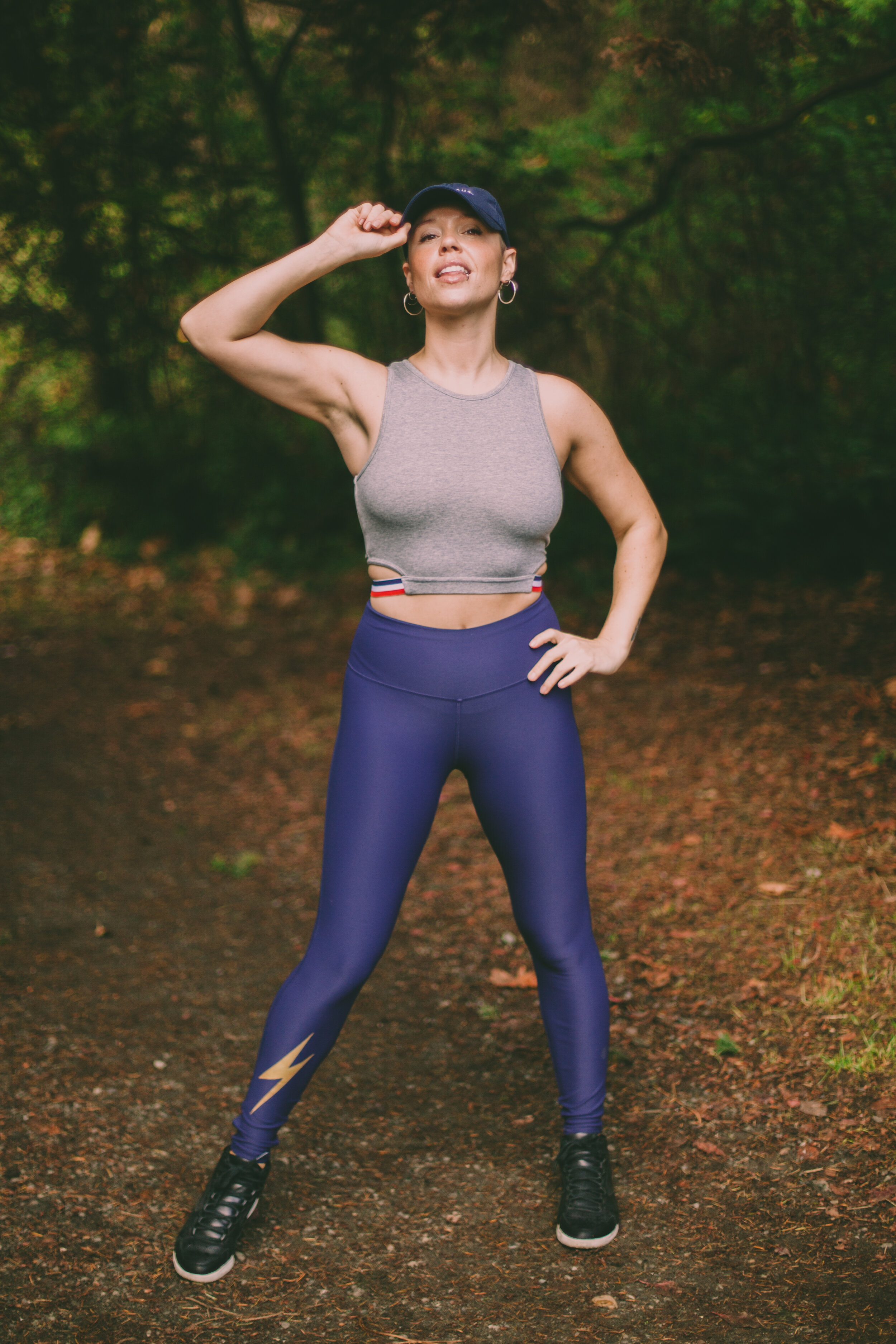
Dancers are athletes.
Heather Smith is a fitness coach, pilates instructor, and professional dancer in the Seattle/Tacoma area.
A few facts about dancers:
Dancers are athletes.
Dancers have seasons of overtraining and seasons of no proper dance training at all.
Dancers are extremely susceptible to injury due to hypermobility.
A dancers goal is to be able to perform any physical movement that is asked of them.
Dancers must be able to hear a correction and implement it into their body immediately.
Now after reading those statements consider the fact that very few dancers cross train. *enter jaw dropping emoji here*
No? Still didn’t get you —— read it like this:
I am an athlete. No, I do not cross train.
- Are there any other athletes you can think of that DON’T CROSS TRAIN? No – right? Cross Training is imperative for bodies that perform repetitive movements. Repetitive movements cause wear and tear through overuse. This wear and tear causes inflammation and injury. To support the endless hours of pliés and jumps we need to strengthen the muscles around the joints that are vulnerable to excessive overload. For dancers, this means feet, ankles, knees and hips. “Oh, well I’ll just take more ballet,” is not always the answer because once again we’re playing with the balance of increasing strength vs. over use and injury. It can be a very fine line to walk. Therefore, we need to spread the cumulative level of orthopedic stress over additional muscles and joints by training them in a different manner. Doing the leg extension or leg press machines at the gym will help you get higher jumps without having to constantly put your body through the stress of landing the jump!
I don’t train during my off season, I just get REALLY sore when I head back in for training.
- We all know what it’s like to head back into your first week of classes and be huffing and puffing so loud you can’t even hear what the teacher is saying. This is a rookie athlete mistake. This puts you in danger of a pre-season injury. One that could knock you out of the running for that piece you wanted to audition for, or that solo you were hoping to land. Dancers MUST cross train in their off-season! Don’t let your cardiovascular system take the summer off! Get outside, go hiking, bike that trail, your body will thank you!
I never have an off-season!
- The body needs downtime to recover and heal. But if you’re a dancer hustling from gig to gig and tour to tour, downtime just isn’t an option. Cross training is the answer! You need to make sure your body is strong and trained to recover quickly. I recommend including “active recovery” in your fitness regime. That means – after a strenuous dance class or workout don’t just plop yourself in a café or jump in your car if you have a long drive home. Make sure you participate in some low-intensity activity. This could be a walk, yoga, swimming, etc. This will reduce the lactic acid buildup, reduce soreness, increase blood flow and keep your muscles flexible!
I am hypermobile
- Research has shown that proprioception is not always as good in hypermobile individuals. This perhaps explains why they are sometimes more clumsy and at increased risk of injury. This lack of awareness and increased joint laxity and flexibility increases the likelihood of a ligament or joint sprain. Dancers need cross training to strengthen the muscles around the joints so they can become more aware of how to control their flexibility. Yoga is the perfect tool to strengthen the body in lengthened positions while increasing body awareness.
Yesterday I had ballet, tap and jazz, today my choreographer asked if I could do a front walk over.
- Dancers need to have the capacity to perform any task asked of them. One day you need controlled external rotation during Fouettés and shoulder stability for handstands the next. We are all so eager to please and will jump in to any choreography asked of us, so we need to be ready! Don’t neglect your upper body strength! Take some weight training classes, use bands, do pushups! You’ll get stronger for the floor work in modern class and have a bit of flex to show for your hard work!
I keep getting the same correction about my rib cage, I don’t feel it happening!
- Body awareness is of utmost importance for dancers. Teachers praise us for implementing the correction the first time and Choreographers trust us to perform their art with precision. WE NEED TO STUDY AND SPEND TIME WITH OUR BODIES! We need to take the time to slowly explore what it feels like to be in and out of alignment. Being in the classroom isn’t always the best place for a dancer to feel open with experimenting and exploring because we are being asked to already know our corrections. Go take Pilates! The instructors are keen on alignment and the movements are slow and controlled. This allows you to create deeper connections to your sensory and motor neurons and have deeper awareness of your body and the way it moves!
So there - you’re convinced – you need to cross train! Now where to start? If you don’t feel comfortable walking into your nearest Yoga or Pilates studio, start at home! I have a whole library of home workouts on my YouTube channel @TheObnoxiousOyster
Feel free to reach out to me online if you have any specific questions or are interested in further guidance by clicking the links below.


Interested in writing for the DWC Blog? Click below to fill out the DWC Contributor application!