
How Apolla Performance Helps Dancers Do What They Love For Longer
For many dancers, facing moderate to severe injuries has been an unfortunate part of their dance journeys. Having to sit out of classes, performances, and competitions, for weeks and months at a time is never what dancers are hoping to get out of their dance experiences. Fortunately, Brianne Zborowski and Kaycee Jones have created Apolla Performance, a company that creates revolutionary compression socks that can help dancers and other movers do what they love for longer. Read on to learn more about Co-Founder and CEO Bri Zborowski’s background and mission and tune in to Shark Tank on ABC on April 1, 2022, at 8/7 EST (or check local listings for times) to witness her and Kaycee pitch their business!
A Conversation With Co-Founder & CEO Bri Zborowski
By Madison Huizinga, DWC Blog Editor

click below to shop the look!
For many dancers, facing moderate to severe injuries has been an unfortunate part of their dance journeys. Having to sit out of classes, performances, and competitions, for weeks and months at a time is never what dancers are hoping to get out of their dance experiences. Fortunately, Brianne Zborowski and Kaycee Jones have created Apolla Performance, a company that creates revolutionary compression socks that can help dancers and other movers do what they love for longer. Read on to learn more about Co-Founder and CEO Bri Zborowski’s background and mission and tune in to Shark Tank on ABC on April 1, 2022, at 8/7 EST (or check local listings for times) to witness her and Kaycee pitch their business!
Bri began dancing around age five at a local studio in her hometown in Michigan. After some time, Bri fell in love with dance, declaring as early as age seven that she would one day own her own studio and dance for the rest of her life. “That’s all I wanted to do!” Bri laughs. Throughout high school, dance was Bri’s main focus, as she got more involved as a teaching assistant and attended conventions to further her education and development as a dancer.
In addition to the performance side of her life, Bri was also heavily involved with her family’s business, a first-generation produce company in Detroit, Michigan. Growing up, she became quickly exposed to the inner workings of a business and the sacrifices and skills required to run a company. On the weekends, Bri could be found hauling pallets and boxes and selling fruits and vegetables in the open market, eventually moving into the administrative side of things.
Bri attended college and earned her degree in business while teaching, choreographing, and assisting at her childhood studio. At the time, Bri had also built out a competition program in Michigan with her and her partner at the time. On one occasion, following a teacher’s class Bri took at a convention, the instructor came up to her and raved about how talented she was. He said that she should consider dancing professionally. At the time, Bri was working in corporate real estate, teaching dance, and working at her family business. She had imagined her teaching and directing at the studio she was at for the rest of her life, but meeting this instructor changed her direction.


Bri quit her corporate job and headed to Los Angeles, where she took dance classes, auditioned, taught, and booked small gigs here and there. She met back up with the instructor that inspired her to move there. The two ended up getting married about six years later. “It just changed my whole life,” Bri says of the move. “My whole world opened up.” After Bri and her husband got married, they relocated to Texas, where they helped run a big system of studios and a competition program called Movz.
Apolla Performance Co-Founder & COO Kaycee Jones and Bri had met in LA and instantly clicked. While they both moved to different regions of the U.S., Kaycee decided to pitch Bri the idea of Apolla, a line of dance socks that could drastically improve the dance industry.
Kaycee is a life-long dancer as well and has her M.S. in Kinesiology and experience as a certified strength and conditioning coach. Her mom was also a dance studio owner for 41 years and Bri has her degree in business and an extensive background working at her family’s company. It was clear the two would be ideal business partners for the endeavor with their combined, complementary experiences. While working in studio spaces, Bri witnessed many students suffer severe injuries at ages as young as 11, explaining there were times when some dancers had to sit out for an entire season. She could see the real need for this idea Kaycee was presenting. At a time when the two had stable incomes and were just starting their families, starting this enterprise was a risk. But they chose to take the jump and Apolla Performance was born.
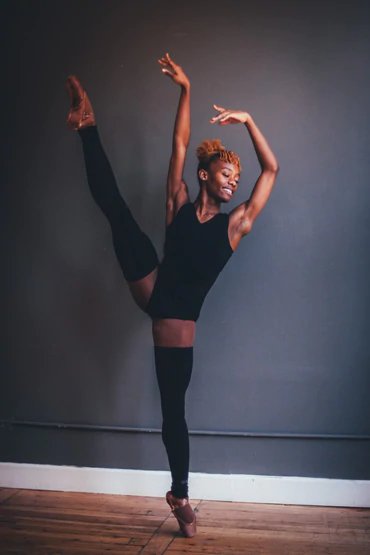
“We set out to create really high-quality products that change people’s lives,” Bri says of Apolla Performance’s mission. The company was founded by dancers with the intention of helping dancers and other movers alike do what they love for longer. Apolla offers compression socks in six different styles that are “ultra-cozy and crazy effective at reducing pain and fatigue.” Offered in a range of colors, the socks provide patented 20-30mmHg targeted compression that supports joints and reduces swelling, as well as added padding in the heel and ball of the foot that’s been shown to reduce force. Significantly, each style of sock offered by Apolla Performance is certified by the American Podiatric Medical Association to promote good foot health and independent studies have shown that Apolla’s socks reduce ground force impact on the body. “We’ve invested in the scientific research and we still have more coming,” Bri says. “We’ve put the time, energy, and resources into making a product that will change your life.”
click below to shop the look!
In addition, all of the socks are anti-microbial and are made from moisture-wicking and sustainably certified fabric in the U.S., making them an eco-friendly option for consumers. Apolla is also proud to share that in 2021 it switched its packaging over to a more sustainable option and the socks can be recycled at your local Goodwill
Another unique aspect of Apolla’s compression socks is the fact that they come with a patented refreshable grip along the bottom. “There’s really nothing like it,” Bri points out. Determining the perfect level of traction was a challenging aspect of Apolla’s design process, but the seamless, refreshable grip and traction or non-traction options allow for dancers to choose the level of traction that works best for them.
“We also want to provide equally excellent customer service,” Bri says, sharing that customers are welcome to call, text, email, direct message on social media, and live chat the staff on Apolla's website. In addition to providing high-quality products and attentive customer service, Apolla strives to create a community of holistic health and wellness. On social media, Apolla shares free live content on topics pertaining to dance, yoga, and holistic wellness. On Fridays, at 11 AM PST, Apolla holds a livestream on Facebook & Instagram, in which experts discuss topics like racism in the dance industry, sex abuse & prevention, psychology, nutrition, dance medicine, and more. The company also has a blog called The Muse, where its team of writers covers topics relating to fostering a healthy body, mind, and soul.
Ultimately, Bri hopes to see more people in the dance industry question traditional myths that can harm dancers. For example, why must dancers wear a certain kind of footwear for a genre of dance if there are more supportive options out there? Starting to question the traditional ways dance is taught and practiced can be a helpful first step towards dismantling harmful habits.
Be sure to tune in to Shark Tank on ABC on April 1, 2022, at 8/7 CT to see Apolla Performance pitch its business!
Getting to Know DWC Shift Lead Natalie Smith
Natalie Smith is a dancer, local to the greater Seattle area and one of the newest shift leads at Dancewear Center. From her experience dancing in a variety of genres to her aspirations of dancing en pointe, Natalie is a dynamic and seasoned employee that we’re grateful to have on the team.
By Madison Huizinga, DWC Blog Editor

Natalie Smith is a dancer, local to the greater Seattle area and one of the newest shift leads at Dancewear Center. From her experience dancing in a variety of genres to her aspirations of dancing en pointe, Natalie is a dynamic and seasoned employee that we’re grateful to have on the team.
Natalie started dancing at The British Dancing Academy around age three, focusing on ballet, jazz, and modern. She later transitioned from dancing in a studio atmosphere to participating in her high school’s dance team, where the focus was mostly on drill and hip hop styles. Recently, Natalie has returned to taking adult ballet classes with a goal of eventually dancing en pointe. While she enjoys dancing hip hop, Natalie shares that “ballet was always [her] special, precious thing that [she’s] loved.”
Natalie first learned about Dancewear Center a little over a year ago, when she stumbled upon it online. She explains being enticed by all the beautiful dance photography the store contained. Since dance is such an important part of Natalie’s life, she thought it would be great to have a job where she gets to support the dance community. “I thought ‘what would be more fun than having a job that deals with dance,’” Natalie says. She shares how much she admires Samantha’s leadership, saying that she’s “wonderful and amazing” and is careful about carrying out tasks properly, particularly with pointe shoe fittings. Natalie appreciates the care Samantha puts into making sure customers receive safe and informative pointe shoe fittings.
Natalie’s favorite part of working at Dancewear Center so far has been the people. “I’m such a people person,” she says. She loves getting to know new customers and helping them find exactly what they’re looking for. As a shift lead, she gets the chance to make some great relationships with members of the local dance community and provide them with the tools they need to be successful. “The [other] retail associates are all amazing and so sweet and wonderful. Meeting all of them and getting to know all of them has been so fun,” Natalie shares. She says that it’s also been a fun challenge to learn tasks hands-on at Dancewear Center and even surprise herself by picking things up quicker than she often expects. It’s quite a rewarding experience!
Outside of work, Natalie enjoys spending time with her friends and family. In the future, she looks forward to dancing en pointe and eventually starting a family of her own down the line. However, as excited as she is about the future, Natalie shares that she’s enjoying appreciating the present and living in the moment.
A change that Natalie hopes to see happen in the future is dancewear brands creating a more inclusive size range of leotards. She shares that she’s struggled finding leotards that fit her body the way that she wants them to, so brands offering a wider array of size options would be ideal for herself and others.
Natalie is a positive and spirited addition to our Dancewear Center family. Be sure to say hi the next time you stop through the store!
Educating Others to Foster an All-Encompassing Environment
Within any industry, narrow definitions and expectations are often formed regarding what the “typical” individual should look like. Such definitions and expectations can not only breed bland conformity but also lead to the creation of exclusive communities that leave certain people feeling like they do not belong. The dance industry is no exception. Through using her platform as a DWC ambassador, local dancer Jade Fraser strives to debunk myths about disabled dancers and share her unique experiences as a way to help make the community a better place.
DWC Ambassador Jade Fraser on Advocation for Disabled Dancers
By Madison Huizinga, DWC Blog Editor

Click below to shop the look!
Aurora in Diane Lace in Aqua | AK Dancewear
Within any industry, narrow definitions and expectations are often formed regarding what the “typical” individual should look like. Such definitions and expectations can not only breed bland conformity but also lead to the creation of exclusive communities that leave certain people feeling like they do not belong. The dance industry is no exception. Through using her platform as a DWC ambassador, local dancer Jade Fraser strives to debunk myths about disabled dancers and share her unique experiences as a way to help make the community a better place.
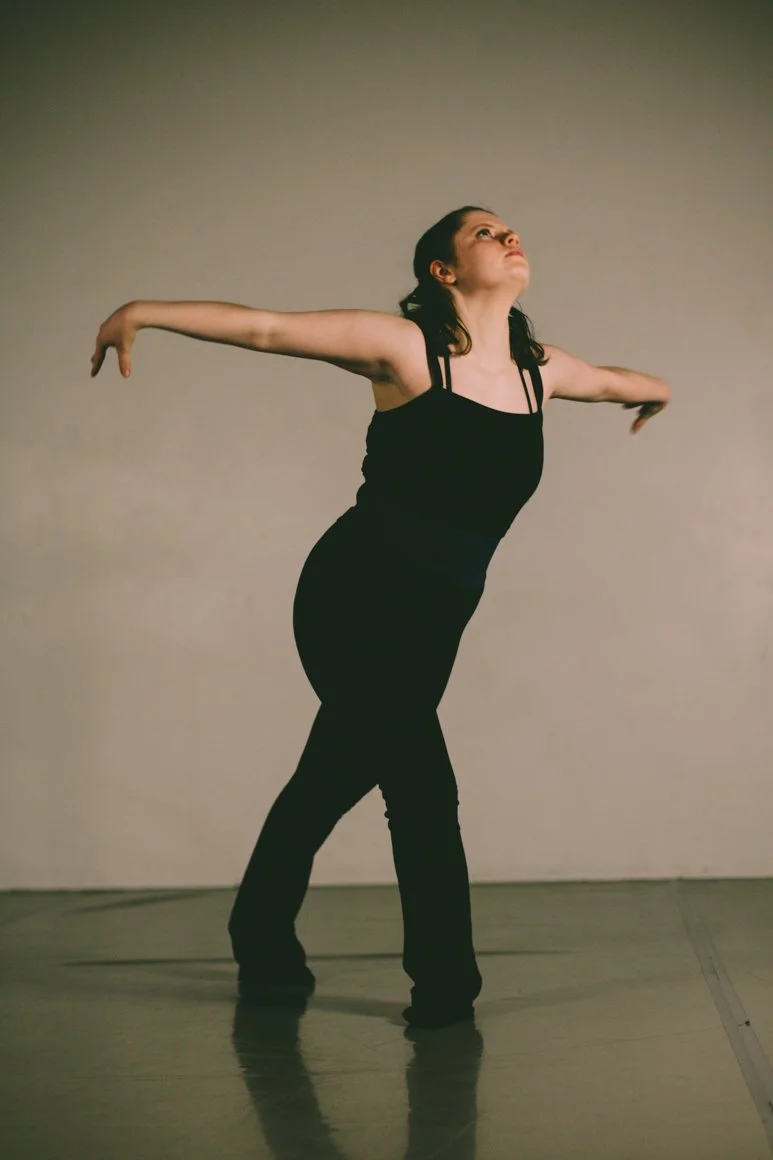
Jade’s first exposure to dance was taking “pre-level” classes, including pre-ballet, tap, and jazz at various studios around the greater Seattle area. She took a break from dance to explore other activities, but eventually returned to it in the sixth grade at Body Language Studio (formerly known as Cornerstone Studio), where she has been training ever since. At Body Langauge Studio, Jade has mainly taken classes in contemporary and hip hop styles, as well as conditioning classes. She’s also a member of BLS Select, a performing arts and competition team at Body Language Studio.
Jade explains that she loved dancing so much as a child that she would often find herself randomly dancing in the hallway at school, not caring about what anyone else thought but herself. “Being autistic, sometimes I have trouble expressing in words what I’m thinking and feeling. Sometimes I don’t even understand what I’m thinking and feeling” Jade says. She shares that one of the reasons why she loves to dance is because it helps her express and understand things in ways that words cannot.
Click below to shop the look!
In addition, Jade says that the gratification she experiences from performing on stage is unlike anything else. She feels powerful when she’s able to command the attention of an audience, being able to make them feel a range of emotions using her movement. Having that kind of agency as a performer is a validating feeling.
There are certain genres of dance that have come more naturally to Jade than others. For example, she says that it’s taken her a while to figure out how to dance hip hop, sharing that she’s worked hard on improving her technique to advance.
Another dance-related challenge that Jade has faced is the stereotypes that people place on dancers. She explains that many people in her life have underestimated the strength and discipline required of dancers. “People don’t understand that dance is more than just something that looks pretty,” Jade stresses.
Jade is looking forward to participating in her first dance competition this year, planning to compete in a contemporary solo. “I’m nervous but also I’m really excited to start competing,” she shares. Jade also hopes to be able to attend a dance convention at some point this year.

Click below to shop the look!
As a DWC ambassador, Jade is looking forward to being able to speak to a wider audience about topics she’s passionate about. Specifically, Jade plans to discuss and write about the discrimination that disabled dancers experience. She’s interested in pushing the definition of what it means to offer “disabled dance,” asking who is included within this definition and whether or not there is a place for people with disabilities that are less visible. “I just want to break stereotypes and advocate and educate as much as I can,” Jade says.
“One of the changes that we need to see in dance [relates to] how disability is seen and how it is thought of,” Jade says. For example, she points out that some people assume there is some kind of “look” a person must have to be considered disabled; however, those kinds of definitions can be harmful and limiting to the larger community of disabled dancers. “That kind of thinking can be really damaging,” Jade shares.
“We need to know what disability is and what the disabled community wants and needs from the non-disabled community,” Jade shares. “Those little things can make dance a whole lot more accessible.” Through using her platform as a DWC ambassador, Jade strives to help make the dance community a better place, specifically for disabled community members.
A Conversation on Navigating Challenges in the Dance Realm
No two dancers’ journeys are completely the same or even linear for that matter. When physical, mental, and societal obstacles are thrown in their way, dancers often take paths that they don’t expect. This was certainly the case for DWC Ambassador Anna Nelson. Read on to hear about her choosing to pause professional dance to pursue a college education, come back from an injury, and learn how to cope with anxiety throughout her dance career.
DWC Ambassador Anna Nelson on Bouncing Back Physically and Mentally
By Madison Huizinga, DWC Blog Editor

Click below to shop the look!
No two dancers’ journeys are completely the same or even linear for that matter. When physical, mental, and societal obstacles are thrown in their way, dancers often take paths that they don’t expect. This was certainly the case for DWC Ambassador Anna Nelson. Read on to hear about her choosing to pause professional dance to pursue a college education, come back from an injury, and learn how to cope with anxiety throughout her dance career.
Anna began dancing around age 13 at a small studio in her hometown of Oak Harbor on Whidbey Island, Washington. After training there for years, she decided to attend Cornish Preparatory Dance to up the intensity of her ballet training. She later attended Kirov Academy of Washington D.C., continuing to pursue rigorous ballet training. Following her graduation, Anna decided to take a break from professional dancing. She had a professional job lined up in California but ultimately decided to pass on it to follow another passion. “I decided I wanted to pursue education,” Anna shares. While attending a community college, Anna continued dancing recreationally to keep her passion alive. She later earned her BS in microbiology from the University of Washington, Seattle, with the intention of later attending PA school.
In 2020, Anna underwent a major hip surgery. “I couldn’t dance for six months,” she says, during recovery she had to learn how to walk and dance again. She took her first dance class following the surgery over Zoom at UW, sharing that it was nice to be able to get back to moving in her own space, free from the perceived judgment of others. Today, she’s dancing with Olympic Ballet Threatre in Edmonds, Washington.
Anna has performances on the horizon with Olympic Ballet Theatre for its 2021-2022 performance season. She danced in The Nutcracker in December 2021. In February 2022, Olympic Ballet showcased “Debuts,” a more contemporary-focused show, and plans to put on Don Quixote in May at Edmonds Center for the Arts.

Click below to shop the look!
Anna has been a patron of Dancewear Center for about a decade. Following Samantha Weissbach taking over ownership of the store in 2018, Anna followed DWC on Instagram and realized that it was no longer “just a store,” but rather “a community.” This realization is what inspired her to become a DWC Ambassador. “I am really excited to get back into the dance world and just connect with all these local dancers and talented people,” she says. At age 26, having pivoted away from professional dance to pursue a college education and later came back following a major injury, Anna believes that her experiences will help her provide unique insights in her role as a DWC Ambassador.
“Growing up I only had Pointe magazine,” Anna laughs, reflecting on how few opportunities there were for community and connection outside the studio when she was younger. She points out how useful it is for dancers of all backgrounds to be able to share different perspectives on social media platforms today.
What’s kept Anna returning to dance is the physicality of the practice. She recalls studying for hours on end in college and longing to dance and move her body. “As long as my body can still do it, I still would like to dance,” Anna says about continuing the practice into the future.
Anna shares that the majority of the challenges she’s experienced in the sphere of dance have related to mental health. “I struggled with a lot of anxiety throughout my life, especially performance anxiety,” she says. “It’s been a lifelong journey trying to learn ways to cope with it.” Anna says that feeling grounded in her religious faith is part of what’s helped her persevere through moments of anxiety when she feels overwhelmed. Additionally, reminding herself that dance doesn’t comprise her entire identity is a helpful strategy when coping with dance challenges like performance anxiety. “I am where I should be,” she affirms.

Click below to shop the look!
Anna shares that therapy has been extremely helpful for her with coping with anxiety and recommends dancers seek it out, if possible, to help them handle their own mental health challenges in dance. Speaking with a therapist has helped Anna identify the roots of her anxiety and learn specific coping mechanisms to challenge anxious thoughts.
Moving forward in the dance world, Anna hopes to see teachers and directors have more awareness and training on how to be more nurturing and understanding of students’ nuanced needs and challenges, particularly in terms of mental health. She reflects on what the dance industry was like when she was a young student, pointing out that many authority figures exacerbated problems related to mental health and body image. With a greater eye towards how to communicate to children and be supportive of obstacles they’re facing, teachers and directors can create an even more positive impact on the dancers in their lives.
Stay tuned for more from Anna Nelson in the coming weeks!
Insight on Creating an Inclusive Dance Community
Within a culture and industry that often promotes conformity, being the one to stand out can be an uncomfortable, and sometimes even traumatizing experience. DWC Ambassador Austin Sexton knows what it’s like to experience discomfort for straying from the norm. But through adopting inclusive teaching practices, community members like Austin are helping make our local dance community more welcoming one step at a time.
DWC Ambassador Austin Sexton on Promoting Body Positivity
By Madison Huizinga, DWC Blog Editor

Click below to shop the look!
Within a culture and industry that often promotes conformity, being the one to stand out can be an uncomfortable, and sometimes even traumatizing experience. DWC Ambassador Austin Sexton knows what it’s like to experience discomfort for straying from the norm. But through adopting inclusive teaching practices, community members like Austin are helping make our local dance community more welcoming one step at a time.
Austin was born and raised in the Seattle area by parents who are dancers themselves. Her father is a dancer and her mother is one of the founding members of Spectrum Dance Theater. Austin jokes that dance, in a way, is “in her blood.” Growing up, she trained at Spectrum and later Dance Fremont throughout high school. At Dance Fremont, she was introduced to modern techniques that she fell in love with.
Following high school, Austin quit dance for a while, as having a body that doesn’t fit the “traditional” dancer mold was a source of trauma for her. She dedicated her time to pursuing vocal performance, as that was another passion of hers. During her break from dancing and training herself, she also took up teaching.
“I wanted to change the training,” Austin says of her desire to begin teaching. She desired to help change common rhetoric in the dance industry that promotes body image issues like body dysmorphia, as well as disordered eating. “I wanted to break that cycle,” Austin says.
In addition to teaching all around the Seattle area, Austin eventually co-founded a local dance company called Relay Dance Collective. The company performed seven seasons, collaborating with other local dance companies like Intrepidus Dance. After Austin got pregnant, Relay Dance Collective disbanded. Today, she works full-time at Momentum Dance Academy in Burien, Washington, where she wears various hats as a teacher, production manager, costume manager, rehearsal director, and more.

Austin has been drawn to dance time and time again because it’s a creative and emotional outlet like no other. Due to her traumatic experiences with dance early on, pursuing it as an adult and as a teacher feels as if she is “healing her inner child.” She enjoys being able to help the next generation of dancers not suffer from the same challenges she did. Austin hopes that the students she impacts through her teaching can carry on the lessons they learn throughout their life and to subsequent generations, creating waves of impact to improve the industry as a whole.
Austin's biggest challenge in dance has been comparing herself to other people. She explains that it was difficult navigating training as a dancer with a body that doesn't fit the "norm." "I had a dance teacher who refused to train me en pointe because she said I was too large," she shares. "At 12 years old, to hear something like that was super damaging."
Today, Austin makes it clear to her students that one's size does not determine one's worth or ability. "You can be a strong dancer at any size," Austin says. "You can be as strong and healthy and powerful as you want to be." There's no point comparing oneself to others when the way humans look is largely a pre-determined formula, engrained in their genetics.
"I loved seeing that there was a place for dancers that was promoting health and strength in every size because that is so foreign in the dance world," Austin says of Dancewear Center. She appreciates the efforts DWC makes to create an inclusive culture that bolsters body positivity and mental health awareness. She was inspired to become a DWC ambassador after having numerous conversations with Owner and Director of Operations Samantha Weissbach about what limited dancewear options there are for larger-bodied dancers. Feeling inspired by the work DWC was doing, Austin knew she wanted to be a part of it in some way.

Click below to shop the look!
In addition to being a DWC ambassador, in the coming year, Austin is looking forward to channeling her "heart, time, and energy" into teaching students at Momentum Dance Academy. The various performing groups at Momentum are planning on performing at several festivals, including the Olympic Dance Festival, BOOSTmeUP, All 4 1 Dancepalooza, and Dance Festival Northwest. Momentum will also host its own festival this spring called Merge NW, featuring members of the Momentum Dance Ensemble Company and youth dance companies across the Pacific Northwest. The dance academy has also begun rehearsals for its production of Coppelia this spring.
Overall, what Austin hopes to see change in the larger dance industry is a greater celebration of body positivity and a dismantling of systems of oppression, with an eye towards promoting equity. She hopes to see more teachers and directors show students and dancers that size doesn’t determine health and strength. Austin also wishes to see more opportunities become available for dancers who don’t “necessarily fit the mold.” Her desire is for these principles of body inclusivity to ripple out to other identity facets, causing instructors to teach with a greater eye towards gender inclusivity as well. Austin points out that a big part of making this change will be instructors being more intentional about the language they use in class, including not making comments about dancers’ weights and utilizing gender-inclusive words and phrases. With individuals like Austin helping train the next generation of dancers, there is ample hope for change.

Uplifting a Community Through Inclusivity and Collaboration
People feel comfortable within their comfort zones. Here in the Seattle dance scene, it’s natural to flock to micro-communities of people who have similar interests as you. Nonetheless, such divisions can foster a competitive atmosphere in a world where dancers increasingly need the support of each other. Marlo Martin, artistic director of eXit SPACE, is interested in disrupting this dominant script, uplifting dancers, and fostering cross-community collaboration through her work at eXit SPACE.
A Conversation With eXit SPACE’s Marlo Martin
By Madison Huizinga, DWC Blog Editor

Photo by Jospeh Lambert - Jazzy Photo
People feel comfortable within their comfort zones. Here in the Seattle dance scene, it’s natural to flock to micro-communities of people who have similar interests as you. Nonetheless, such divisions can foster a competitive atmosphere in a world where dancers increasingly need the support of each other. Marlo Martin, artistic director of eXit SPACE, is interested in disrupting this dominant script, uplifting dancers, and fostering cross-community collaboration through her work at eXit SPACE.
Marlo’s dance journey began around age five in a ballet/tap class at Diane’s School of Dance in her hometown of Fruitport, Michigan. She fell in love with dance, continuing training throughout elementary school and high school. Following high school, she attended a community college for two years before transferring to a university, which allowed her some wiggle room to figure out what career path she wanted to pursue. “I never thought about dance in college because I just didn’t think I had the talent to do it,” she admits. Coming from a smaller, recreational-focused studio, she thought that a dance major wasn’t aimed at a person like her. While it took some convincing, Marlo’s best friend Kim persuaded her to audition for some college dance programs with her.
“I auditioned for Western Michigan University,” Marlo shares, which had an incredibly robust dance and theater department. Unfortunately, after high school, Marlo got extremely sick and was hospitalized for a long period. After she recovered and became healthier, she attended Western Michigan University. “That’s really what changed everything for me,” Marlo says of her college experience influencing her career path. “It was such a strong program.”
She went through the process of applying for a BFA at Western Michigan, undergoing a rigorous series of interviews in addition to her studies. Marlo wasn’t accepted into the BFA program at first, being told that her technical skills were not advanced enough. So, she begrudgingly added more ballet classes to her repertoire to help supplement her technique. Marlo ended up getting accepted into the BFA program the following semester. “The program was amazing,” she says. “They set me up for success in a really fundamental way.” Within her department, emphasis was placed on cultivating community and raising peers up, rather than viewing them as competition, philosophies that Marlo carries into her work today. She’s honored to be receiving a Distinguished Alumni recognition at Western Michigan University this year.
“Marlo Martin, artistic director of eXit SPACE, is interested in disrupting this dominant script, uplifting dancers, and fostering cross-community collaboration through her work at eXit SPACE.”
Following college, Marlo quickly got engaged, married, and moved across the country to Seattle for her ex-husband’s job. She assumed that she would be able to find work in Seattle, as it’s a large city. However, as Marlo points out, “Seattle 18 years ago was not Seattle today.” “I got here and I freaked out a little bit,” she shares, as there were fewer dance opportunities than New York and Chicago, cities she had danced in before. She especially noticed a lack of jazz classes, a genre she had specialized in growing up. “Dance in Seattle and what defined it was limiting,” Marlo says.

Photo by Jospeh Lambert - Jazzy Photo
She managed to take some classes here and there, mainly at Spectrum Dance Theater and Velocity Dance Center. She also taught all over the Seattle area, eventually meeting Veronica Lee, a Cornish graduate, and talented choreographer. The two grew close, spending time together in and out of the studio. Eventually, Veronica proposed that she and Marlo open up a studio together. Six weeks later, after deliberating and reading the book Six Week Start-Up by Rhonda Abrams, eXit SPACE was born.
The dance school began with one room in Green Lake 17 years ago, with a dozen kids and 40 adults across its various programs. “I remember every time we’d sell a class card, I would celebrate,” Marlo recalls. “Over the years, we collected more teachers and our community started to grow.” She shares that eXit SPACE possessed “authentic momentum.”
“In a nutshell, eXit SPACE is a place or a space to discover or rediscover the art of dance for anybody of any background, at any moment,” Marlo says of eXit SPACE’s mission. “Everybody who enters the space is committed to being supportive…it’s a non-competitive environment, in the fact that we believe there can be inspiration found in one another.” The dance school’s faculty and student base are dedicated to lifting each other up, without holding others down. Marlo envisions a culture in which dance is open to anybody to try at any stage of their life, rather than a more exclusive institution.
In terms of programming, eXit SPACE has a young dancer program, featuring classes in modern, jazz, ballet, tap, and hip hop. “I love educating young dancers and helping them become artists or just [foster] an appreciation for their own body, whatever their pathway is,” Marlo says of the program. The dance school also features an adult dance program, including classes held in-studio and through Zoom for dancers with all levels of experience. eXit SPACE’s pre-professional program, otherwise known as thePROGRAM, is a specialized program for students between 8 and 18 years old committed to seriously focusing on their dance training and future.
Marlo enjoys being involved with multiple facets of dance, including teaching, choreographing, running festivals, producing work, and more. “I would get frustrated if I only did one facet of dance, so I really enjoy being able to change roles often,” she voices. NOD Theater, a performance space in Capitol Hill, is where eXit SPACE will be holding a full season of performances, workshops, festivals, and events. Marlo plans on producing eXit SPACE’s annual TakePause festivals in January and May 2022, as an open call for dancers of all levels and ages to perform. She’s also holding the annual Boost Dance Festival and BoostMeUp Youth Dance Festival in March 2022, as well as various artist-in-residence programs and student showcases. NOD Theater is also available for rent.

Photo by Jospeh Lambert - Jazzy Photo
“Whatever energy you give out will come back to you,” Marlo says. “If you create this intentional community, [the] people who align with [its] beliefs will come…and that’s what happened over and over.” Since its conception, eXit SPACE has expanded to three studios and created theNEST, which functions as a “home base of classes.”
Moving forward, Marlo hopes for dance creators to make more effort to collaborate across communities, to diversify their perspectives and offerings. “I would love to see more communities work together more often. I would love to see more businesses and directors work together more often,” Marlo says. “This culture hasn’t changed from my perspective in the 18 years I’ve lived here.” She longs for dancers from various micro-communities to put more effort towards integrating and sharing ideas, to diversify their offerings. “If you only involve yourself with the choreographers, teachers, and students in your own community, even if it’s a diverse pool, you’ve decided to limit that experience…I just think there’s so much to be gained by community outreach to one another,” she shares.
Behind the Scenes with Elizabeth Bonar
Putting together a dance production can be a stressful experience for a choreographer and director. When putting the final touches on choreography, managing dancers, and carrying out other tasks, lighting design and stage management can slip to the back of choreographers’ and directors’ brains. Nonetheless, lighting design, stage, and house management are important parts of a production to consider, as they can greatly benefit the experience of a production for audience members and dancers alike when considered in detail. Elizabeth Bonar wears many hats as a local dancer, choreographer, teacher, lighting designer, and stage manager. Tune into Tea & Tendus at DWC Renton on March 13 at 5:30 PM to hear more about Elizabeth’s expertise and ask questions about all things “behind the scenes.”
A Conversation with Local Lighting Director and Stage Manager
By Madison Huizinga, DWC Blog Editor

Photo by Evan Bonar
Putting together a dance production can be a stressful experience for a choreographer and director. When putting the final touches on choreography, managing dancers, and carrying out other tasks, lighting design and stage management can slip to the back of choreographers’ and directors’ brains. Nonetheless, lighting design, stage, and house management are important parts of a production to consider, as they can greatly benefit the experience of a production for audience members and dancers alike when considered in detail. Elizabeth Bonar wears many hats as a local dancer, choreographer, teacher, lighting designer, and stage manager. Tune into Tea & Tendus at DWC Renton on March 13 at 5:30 PM to hear more about Elizabeth’s expertise and ask questions about all things “behind the scenes.”
Elizabeth started dancing at age four. Her parents put her in classes because she couldn’t stop dancing around the house, an experience many dancers are familiar with. She stuck with it throughout high school and college, ending up getting her Bachelor of Science degree in dance at the University of Idaho in 2017.
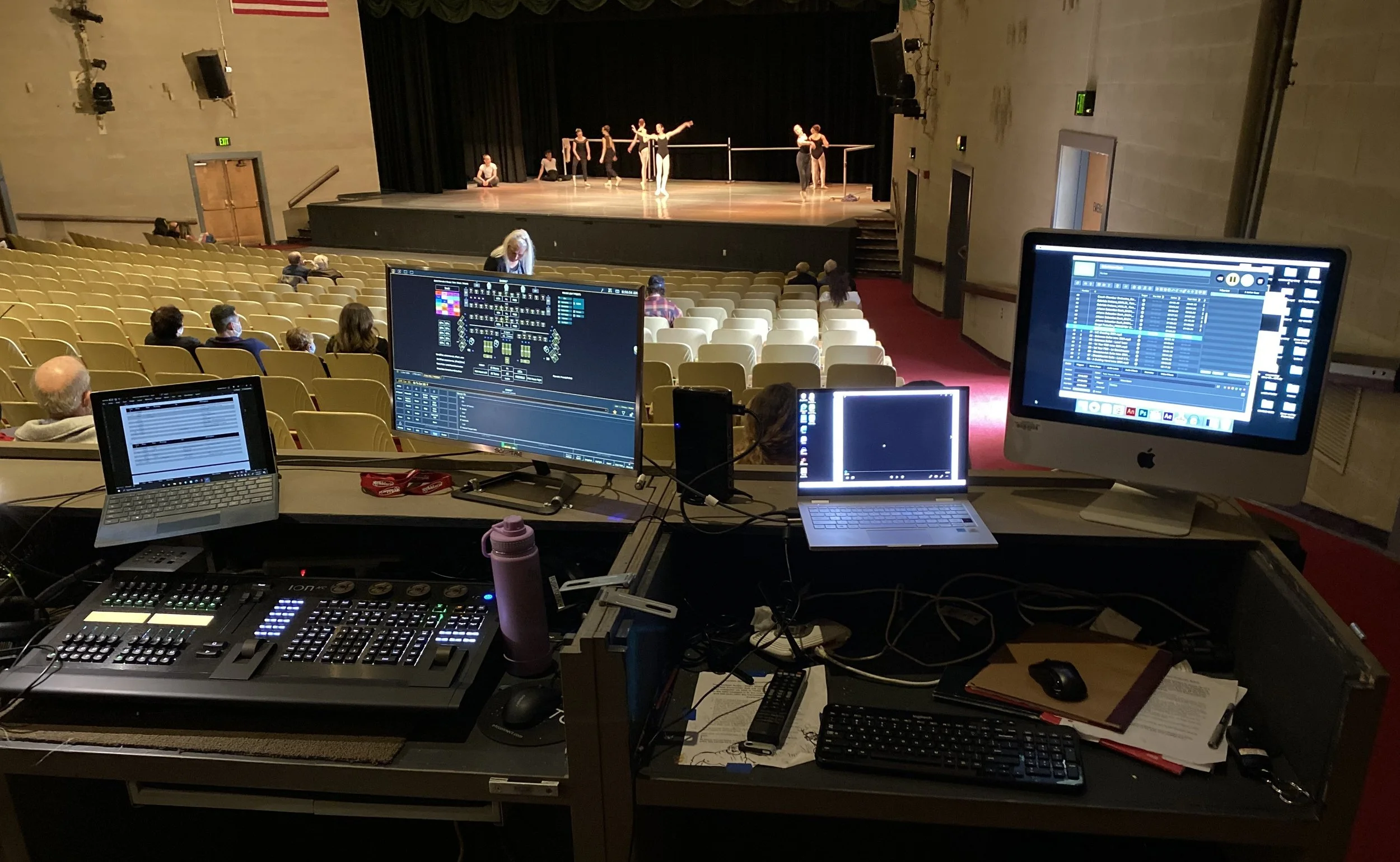
Growing up, Elizabeth was also frequently exposed to the stage management side of performing, as her mother worked as a stage manager at many of her shows. In high school, Elizabeth’s leadership class was putting on a talent show and needed someone to run the light board. She decided to volunteer. Over the next few years of high school, Elizabeth helped work behind the scenes of other productions here and there. In college, Elizabeth got much more involved with working the light board, taking it upon herself to pull out the manuel and educate herself more on the technicalities of it. She even dedicated her senior year project to lighting design in dance. Following graduation, Elizabeth’s professors asked her to come back to campus and stage manage their pre-professional faculty-choreographed show in the fall, which she has been doing ever since.
“I love helping the dance productions shine the best that they can,” Elizabeth says of lighting design and stage management. She believes that her background as a dancer and choreographer gives her some helpful insight when helping design the lighting of a show and help manage a production. She’s able to better put herself in the shoes of a dancer and choreographer than a manager who may not have experience with performing and choreographing.
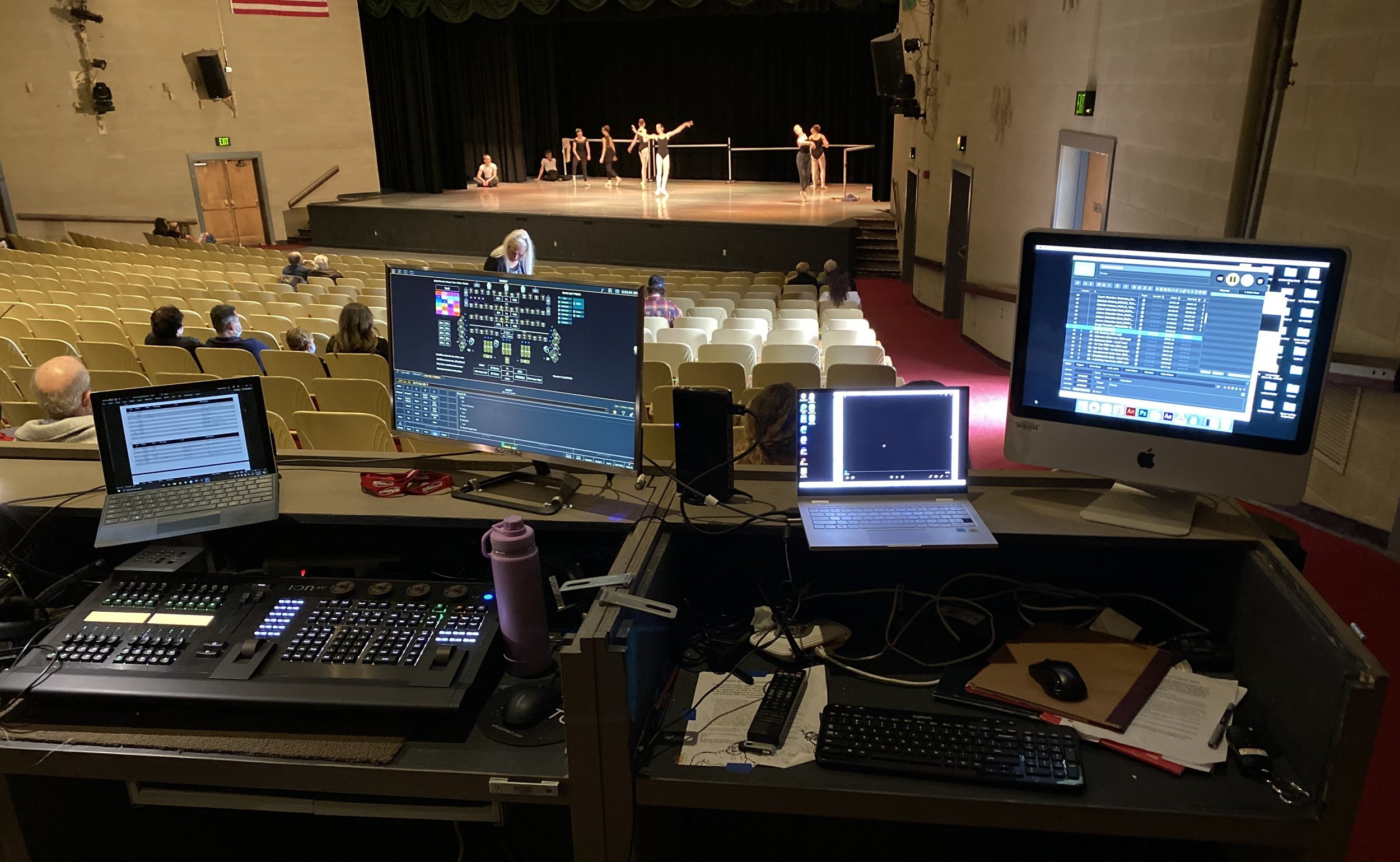
The biggest challenge that Elizabeth has seen in her line of work is a lack of communication between dancers and stage managers. For example, a stage manager may not understand what it means when a choreographer points out the way the lighting changes when dancers do “pirouettes.” It can be easy for team members to lose sight of the fact that they’re all working towards the same goal, despite any communication barriers. She also points out that many choreographers and directors put off considering production elements like lighting design until the last minute, without considering how they can help or harm their show. Being able to communicate with stage managers early on about such elements can save choreographers and directors a lot of last-minute stress.
Elizabeth says that it’s helpful for directors and choreographers to find lighting designers and stage managers that they work well with. It’s important for both parties to be open to the suggestions that the other may have because they can offer a unique perspective that may not have been considered before. She also points out that when the choreographer trusts the stage manager to do their part without micro-management, it frees up much more time and energy for them to focus on their choreography and other tasks. Everyone benefits from mutual trust.
Overall, Elizabeth believes that the dance and stage management worlds will benefit from learning more about what the other side does. Dancers working tech on shows, no matter how small, and having an appreciation for what technical workers do and how hard they work is important. “Until you’ve done it, you don’t really understand what [the other side] is doing,” Elizabeth points out. Getting more stage managers with dance backgrounds involved will also benefit the industry, as they already have an understanding of what that other side does.
Elizabeth is stage managing the University of Idaho’s spring production of DancersDrummersDreamers, which runs March 24-26, 2022. She’s thrilled to be working on this production, as it’s the first time it will be on stage in two years. She’s also doing lighting design and technical direction for Ballet Workshop’s production of The Sleeping Beauty, which runs April 23-24, 2022 at the Port Angeles Performing Arts Center. She will also be doing lighting designs for some of Ballet Workshop’s video pieces for the Juan de Fuca Festival of the Arts.

Photo by Melanie Meenan
Elizabeth will also be a special guest at the March Tea & Tendus event at Dancewear Center Renton on March 13th at 5:30 PM. Elizabeth will guide attendees through the basics of lighting, stage, and house management, as well as the best ways for tech crew and choreographers, and directors to collaborate. You can register for the free event here, we hope to see you all there!
Bringing People Together at All-4-1 Dancepalooza
It’s no secret that the dance world today is riddled with competition. Whether it’s the stages of dance competitions or within the crowded studio of an audition, dancers are often encouraged to pull out their best skills to win over the hearts and minds of judges, casting directors, and audiences across the globe. Within a competitive world, it’s easy to lose sight of the supportive communities that dance can foster. Daniel Wilkins of DASSdance strives to promote an inclusive and celebratory environment at All-4-1 Dancepalooza, a dance festival showcasing over a hundred young artists in the greater Seattle dance community March 12-13, 2022.
A Conversation With Festival Producer Daniel Wilkins
By Madison Huizinga, DWC Blog Editor
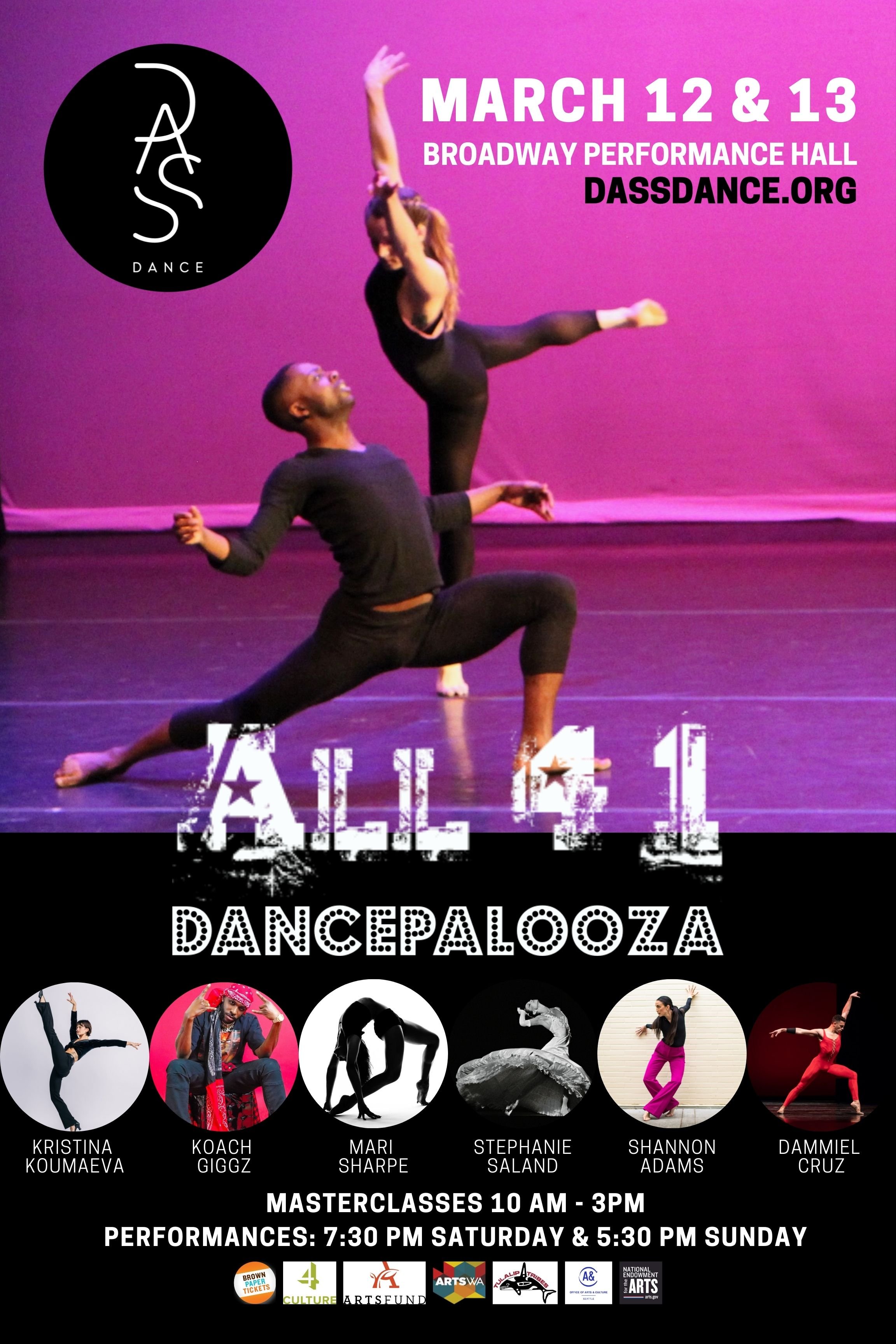
It’s no secret that the dance world today is riddled with competition. Whether it’s the stages of dance competitions or within the crowded studio of an audition, dancers are often encouraged to pull out their best skills to win over the hearts and minds of judges, casting directors, and audiences across the globe. Within a competitive world, it’s easy to lose sight of the supportive communities that dance can foster. Daniel Wilkins of DASSdance strives to promote an inclusive and celebratory environment at All-4-1 Dancepalooza, a dance festival showcasing over a hundred young artists in the greater Seattle dance community March 12-13, 2022.
Daniel describes his upbringing as “atypical,” as his parents held roles as dance teachers, choreographers, and directors at various dance schools and companies. While Daniel found success with baseball as a child, his father encouraged him to give dance a try. In high school, Daniel dove into the arts, taking up acting and modeling. With the support of his family, he began training in dance as well, ending up earning a scholarship at the San Francisco Ballet and later attending the School of American Ballet after several tries of auditioning. At the School of American Ballet, Daniel was fortunate enough to train under the likes of iconic instructors like Richard Rapp and Stanley Williams.
“I would love to see more mechanisms in place that give opportunities to young artists and young companies”
After graduating, Daniel danced with Pittsburgh Ballet Theatre under his first company contract. Upon his returns to New York and Seattle, Daniel drew inspiration from the emerging grunge music scenes at the time, asking himself how tradition-dense dance genres like ballet could be made more current. After leaving Pittsburgh Ballet Theatre, Daniel returned to New York and worked with companies like Daniel Byrd - The Group, Complexions Contemporary Ballet, and Suzanne Farrell Ballet, before moving on to choreographing himself. He later founded DASSdance in New York and Seattle “after seeing a need for daring and innovative movement in the dance community.”
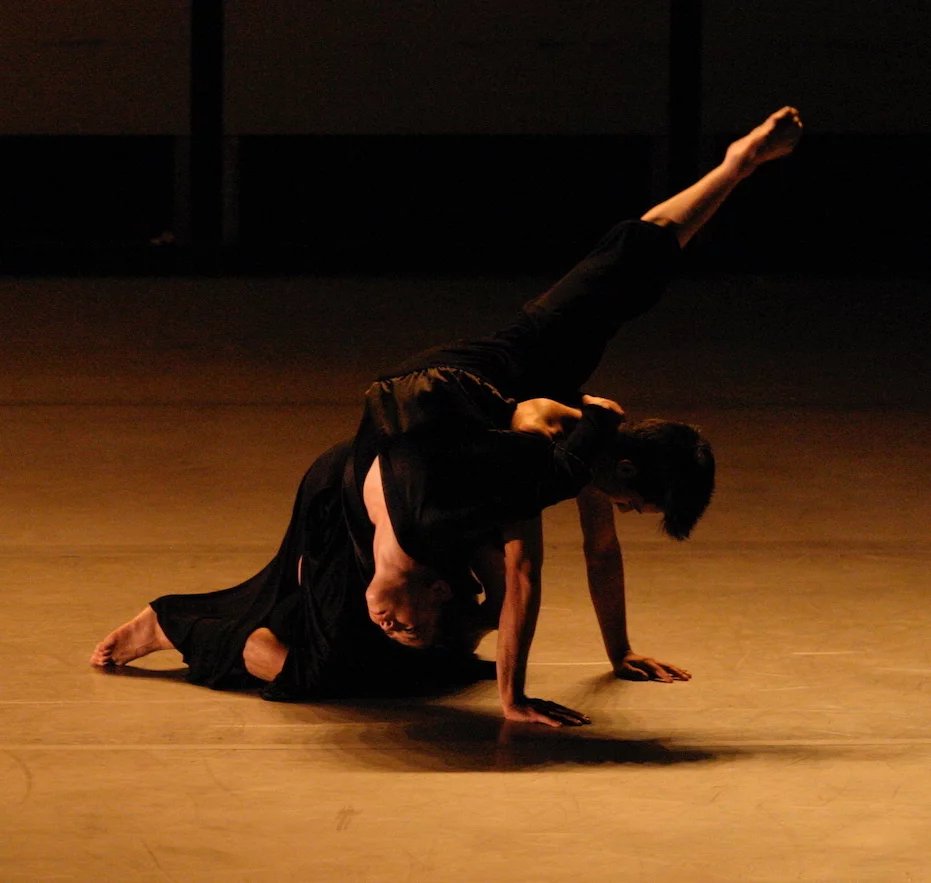
Photo curtesy of dassdance.org
Daniel says he was inspired to create the All-4-1 Dancepalooza after moving to Seattle and witnessing a lack of diversity in the local dance scene. “I wanted to do something that brought communities together somehow,” Daniel shares, desiring to break apart silos of dancers and foster a greater sense of inclusivity and community. He also points out the significance of bringing dancers in conversation with one another to create nuanced styles and progress techniques. When dancers of different backgrounds are exposed to one another, opportunities for cross-cultural understanding and creativity can emerge.
Daniel says that one of the pivoting factors for All-4-1 Dancepalooza was meeting Tyrone Crosby of N the Kutt Dance Studio in the greater Seattle area. The two came in conversation with one another and thought of different dance companies and studios to invite to the festival. All-4-1 Dancepalooza was able to draw in dance makers from all across Washington State year after year.
All-4-1 Dancepalooza offers dance classes and performance opportunities aimed towards young dancers ages nine years old and older. Attendees are exposed to experienced master class teachers in an array of genres, including ballet, hip hop, contemporary, jazz, and acro partnering. In addition, professional dance companies are invited to perform, including the DASSdance professional company.
“I really enjoy seeing the kids enjoying themselves and having all these great master teachers excite them with their amazing abilities,” Daniel says of All-4-1 Dancepalooza. He thinks it’s important for dancers to be able to feel confident in the classes they take but also challenged.

Photo curtesy of dassdance.org
In Daniel’s eyes, what sets All-4-1 Dancepalooza apart as a festival is its initial mission to open dancers’ arms and eyes and have conversations with different performers across the region. Daniel feels strongly about All-4-1 Dancepalooza being a non-competitive environment, and rather a place for people to come together, showcase their work, and meet new friends. While participating in other sports growing up, Daniel felt a strong competitive drive, but not as much when dancing. “It’s an art form, that’s what it is first and foremost,” Daniel says of dance. “I don’t want that to be lost.”
Daniel doesn’t subscribe to the idea that a dancer must fit a certain mold to be talented, as trying to force dancers into a pre-determined form can be incredibly limiting, especially for young aspiring artists. “I would love to see more mechanisms in place that give opportunities to young artists and young companies,” he says.
All in all, Daniel appreciates the diversity of artists that are showcased at the festival, particularly amid the youth companies, which are the core of the festival. Ballet companies, hip hop companies, contemporary companies, tap groups, and more can be expected to grace the stages of Broadway Performance Hall on March 12 and 13, 2022. “We have a great group of amazing dancers, master teachers, and choreographers. It’s going to be an exciting lineup,” Daniel shares.
Laying the Groundwork for Legacy
I’m sure I’m not alone when I say that since 2020 hit, my construct of time has been distorted into a brand new reality… one where each day, week, month, and year seems to blend together. Every year, I look forward to carving out time to reflect on the past year and write my review of our accomplishments; however, this year I’ve been dragging my feet, mostly because 2021 has felt more like the third book in a long series than a stand-alone novel.
2021 in Review
By Samantha Weissbach, DWC Owner & General Manager

I’m sure I’m not alone when I say that since 2020 hit, my construct of time has been distorted into a brand new reality… one where each day, week, month, and year seems to blend together. Every year, I look forward to carving out time to reflect on the past year and write my review of our accomplishments; however, this year I’ve been dragging my feet, mostly because 2021 has felt more like the third book in a long series than a stand-alone novel.
To fully understand why 2021 was such a pivotal year in the DWC story, we have to go back in time for additional context. When my mom and I took over ownership of DWC in late 2018, my sole desire was to keep a longstanding resource for the community alive. Despite my passion, I knew we would be taking on a huge learning curve, not only in taking over a retail business (when the bulk of my business operations experience is in services) but also in maintaining and building on the level of fitting expertise previously provided at DWC.
As with most things in the dance world, there is no universal standard set in place for fitting pointe shoes, and when I took over DWC, a comprehensive curriculum for learning how to fit simply did not exist. Pointe shoes can bear up to 10-14 times your body weight, and incorrectly fitting or dead shoes can open dancers up to a litany of mild to severe injuries. Establishing an agreed-upon standard and methodology for fitting pointe shoes would not only provide a more concrete career path to becoming a pointe shoe fitter, but would more importantly give ballet dancers a champion in their efforts to dance longer, stronger, and safer. In our first 2 years of ownership, the staff and I sought out every possible resource we could find for fitting pointe shoes, but it simply wasn’t enough.
“Thank you for choosing to spend so much of your finite life energy with DWC - I truly could not and would not want to do this without each and every one of you by my side.”
We all know that 2020 was a year that will go down in every history book. It was a monumental event for humanity, and no business was left unaffected (whether it be positively or negatively). In the first couple of months of the shutdown, like most of us - I was left alone with myself and my thoughts. Even before the pandemic hit, my efforts to seek out higher-level education & mentorship were fruitless. It turns out it’s especially hard to find anyone willing (understandably so) to part with their trade secrets in a business as niche as pointe shoe fitting.
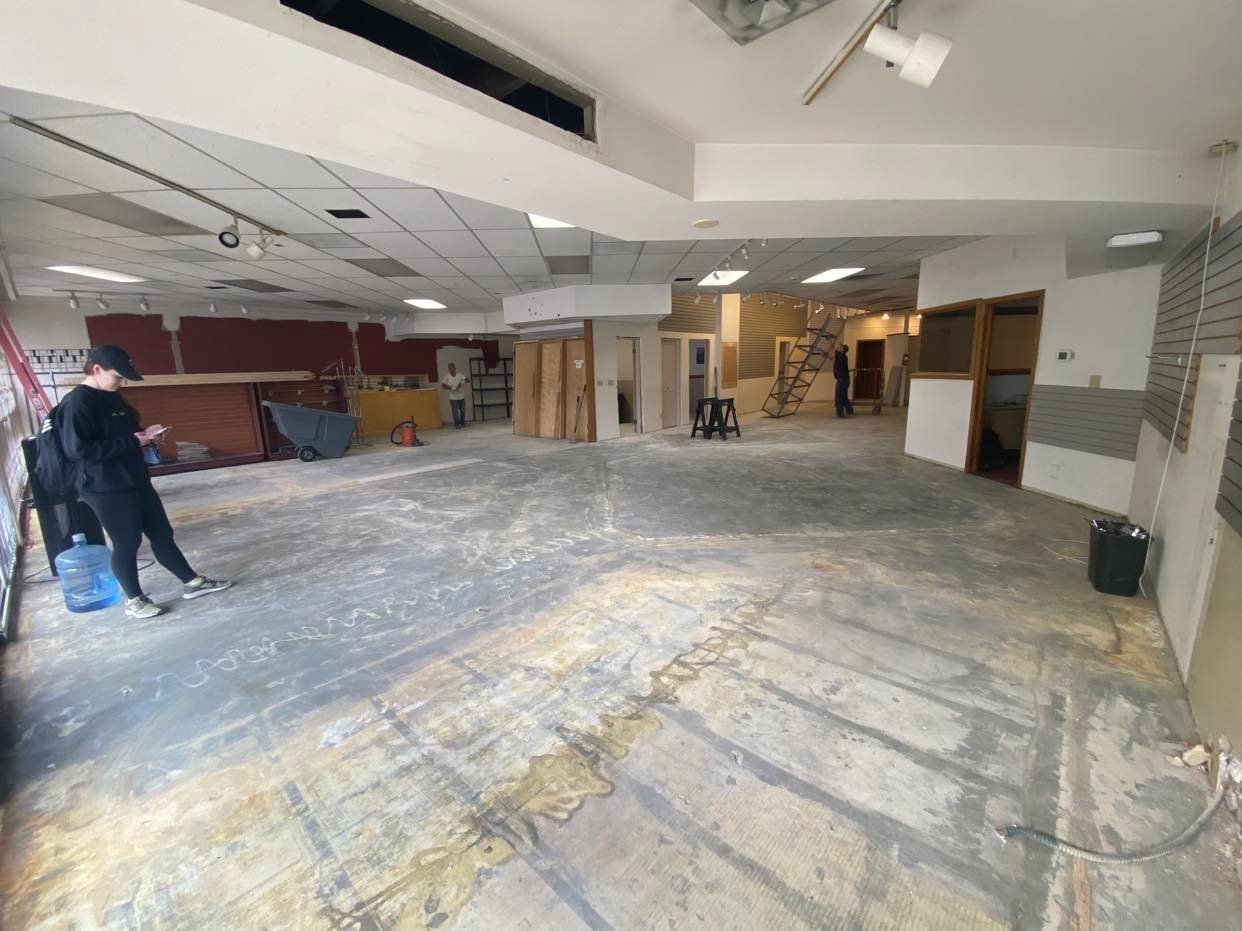
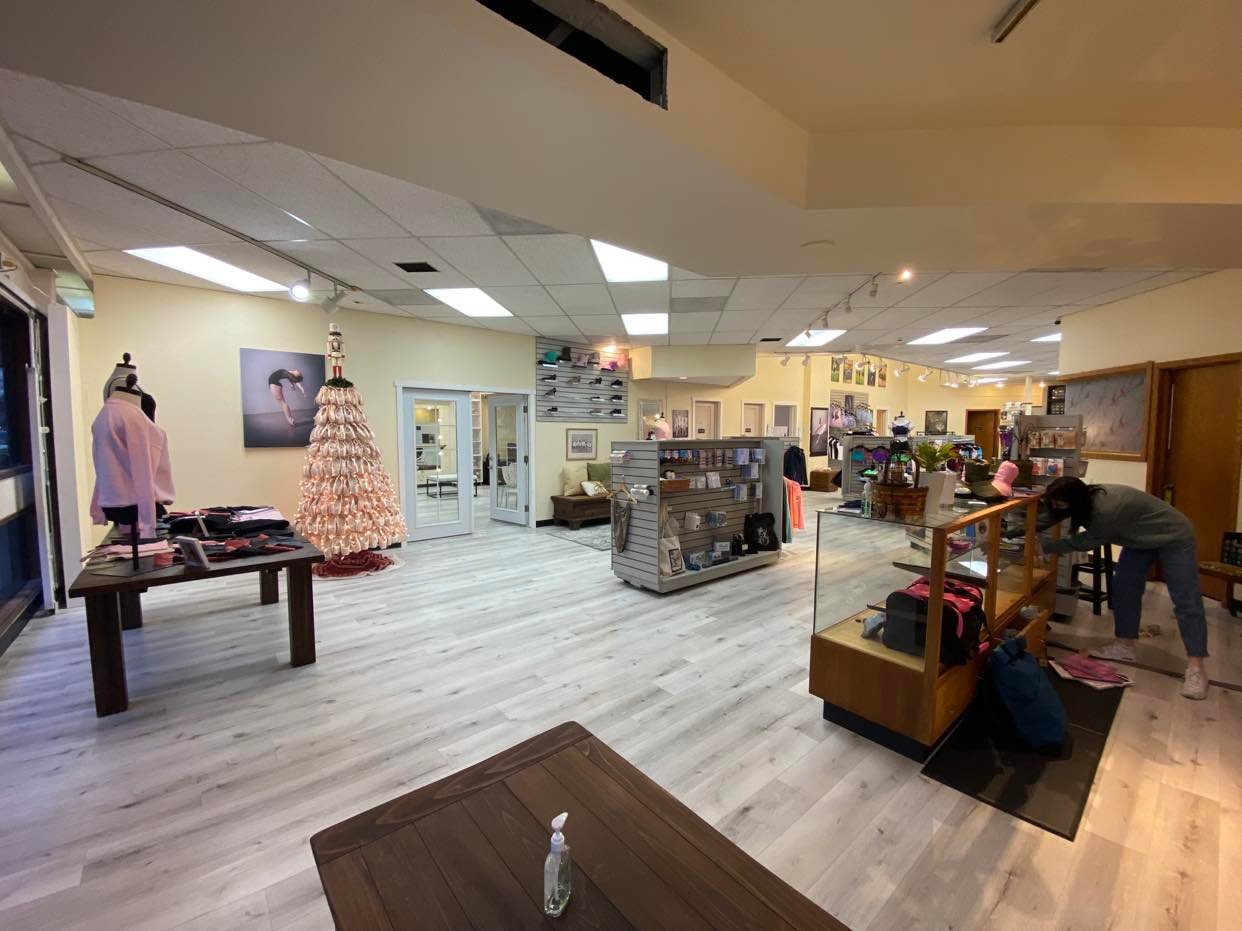
I was feeling dejected and hopeless and by May of 2020, like most businesses, I was seriously considering closing our doors for good. Our sales were in the toilet (we now have a good chuckle when we look at our April 2020 sales - a whopping $103.29 for the entire month), we were locked into our Fall ordering* of over $100k in product (a conservative order) that was likely not going to sell, and the SBA loans we did receive simply weren’t going to cover even our most base level operating costs.
*In most retail, inventory orders are done in bulk, on a seasonal basis, oftentimes months in advance. It isn’t unusual to purchase for September in February, April in November, etc.
For those who know me, you know that while I hold a deep reverence for people and their beliefs, I personally do not subscribe to a specific religion. I do, however, believe in energy. I believe matter cannot be created nor destroyed and I believe that humans, as a species, are incredibly limited in what we are capable of perceiving. Call it an ill-advised business strategy, but in 2020 I was looking for a clear sign from The Universe on whether or not I should keep going.

Enter ThePointeShop (TPS) and their release of The Progressive Pointe Method curriculum. I vividly remember the day Josephine announced she was opening applications for the fitter certification course and retail partnerships. My heart started racing, and I immediately started sweating profusely (I’m a sweater. Cute, I know.) I could feel it in my bones that this was the sign I had been waiting for, and this was the opportunity for the mentorship and training I so desperately had been seeking out. I told my mom the day we applied that if we weren’t accepted into the program and as retail partners, that would be my sign that it was time for DWC to close its doors.
Fast forward to today, January 20th, 2022 as I write to you from the plane taking me to San Diego to take my final test to become a TPS certified pointe shoe fitter. By now it’s no secret that we’ve not closed our doors, and that I’ve had the great honor of spending the last year in training with Josephine herself. I will forever be grateful to Josephine and her entire team for caring so deeply about progressing the dance industry that they made the unpopular decision to train fitters outside of their organization with the larger goal of elevating the craft of pointe shoe fitting on an international level. This seemingly small action had a ripple effect and gave us the sign we needed to press forward in a time when I had lost hope.
As I look back on 2021, I know it’s going to be a year that marks a huge milestone in the history of our business. We grew our small team of 4 into a team of 14, became members of DanseMedica and retail partners with ThePointeShop, traveled to Juneau, AK to fit pointe shoes, and of course - opened our 2nd location in Renton, WA. Our blog (headed by our amazing editor Madison Huizinga) has published a total of 76 posts, highlighting local artists and dance specialists, and subjects such as dancer mental health, injury risk prevention, and epilepsy awareness. We’ve also begun hosting regular networking events and educational seminars out of the event space in our Renton location, and of course, we provided multiple internal and external training opportunities for our staff.
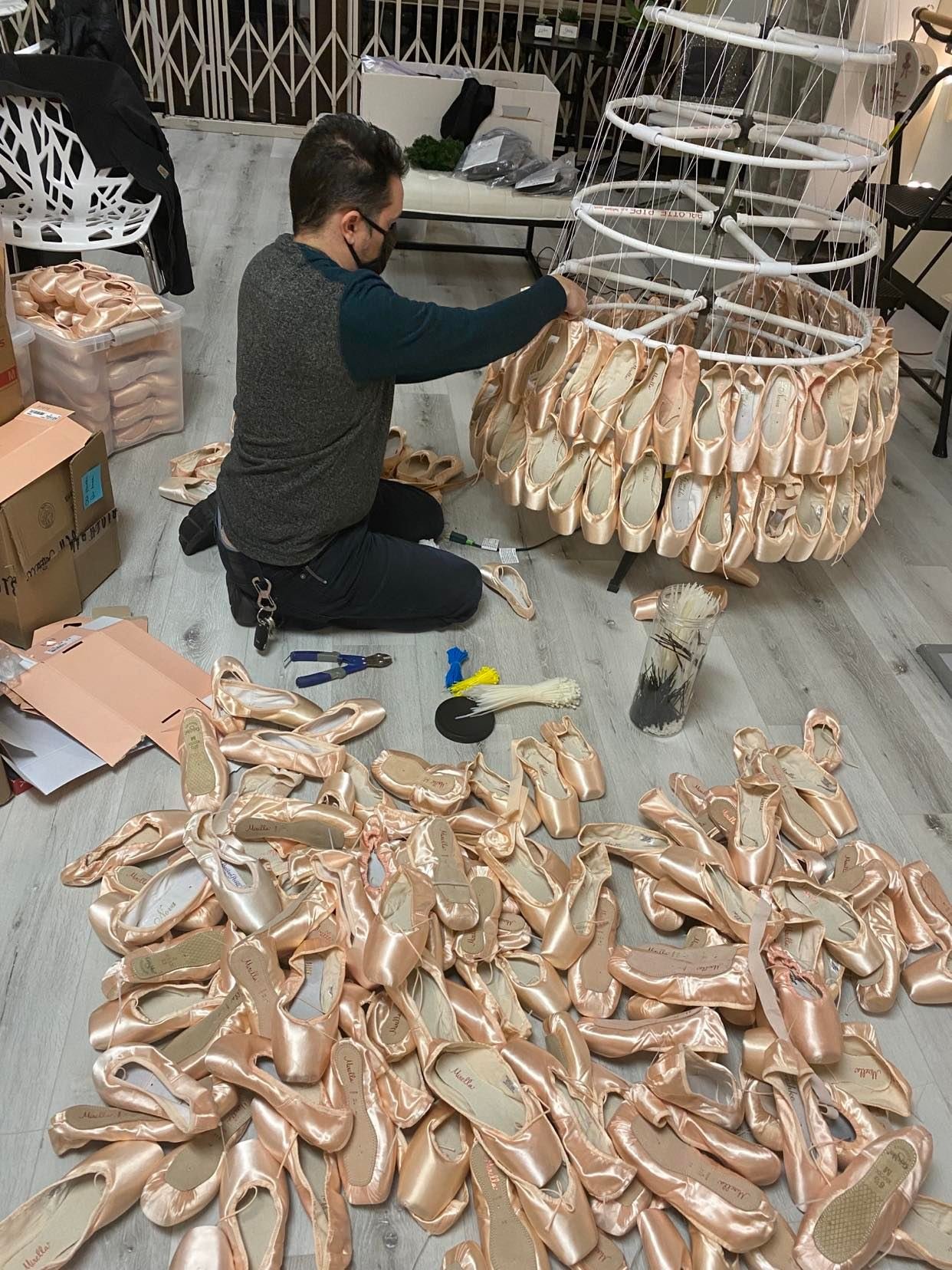

None of this would have been possible without mentorship from ThePointeShop, the continued support of our customers (y'all are ‘the real MVPs’), my husband (aka the DWC dad: he fixes and builds everything - including the beautiful pointe shoe tree at our Renton location) and especially: the extraordinary members of my team at DWC. You all inspire me, keep me in line when I’ve gone off the deep end (it’s a more frequent occurrence than you might think - just ask Riley), and infuse the DWC mission and culture with such authentic passion and care. Thank you for choosing to spend so much of your finite life energy with DWC - I truly could not and would not want to do this without each and every one of you by my side.
While we have far from recovered from the financial loss of 2020, I am confident that we have laid the groundwork for a legacy of building community in the Seattle dance scene that will hopefully carry on long after I’m gone. There is still a great amount of uncertainty and unease in the air; however, I am certain of this: when a community rallies together, so much is possible. Here’s to all of us, 2022, and the joy and love still to come!

Sources:
Breaking the Mold to Cement a Place for Oneself
Operating in an industry with rigidly defined expectations and boundaries can take a toll on a person, particularly during an impressionable period in one’s life like childhood. Local dancer and choreographer Robbi Moore opens up on defying the status quo in the dance industry and providing transparency to performers.
Robbi Moore on Defying the Status Quo
By Madison Huizinga, DWC Blog Editor

Photo by Michael Stadler
Operating in an industry with rigidly defined expectations and boundaries can take a toll on a person, particularly during an impressionable period in one’s life, like childhood. Local dancer and choreographer Robbi Moore opens up on defying the status quo in the dance industry and providing transparency to performers.
Growing up in Hamden, Connecticut, Robbi recalls watching their older brother act onstage and feeling inspired to begin dance classes themself. After learning of Robbi’s desire to perform on stage, their mom enrolled them in classes at New England Ballet, where Robbi trained for two years and performed in The Nutcracker as a mouse. Robbi took classes in Ballet, Jazz, and Tap before moving to Dee Dee’s Dance Center in New Haven, Connecticut. The main reason for Robbi switching studios was because the New England Ballet was predominantly white. “My mom wanted me to be around people that looked like me so I could [experience] the other side of the dance world,” Robbi says, as Dee Dee’s is a predominantly Black dance studio.
At Dee Dee’s, Robbi continued taking classes in Ballet, Jazz, and Tap and was also introduced to West African Dance, Gymnastics, and Hip Hop. By the time they hit 11 or 12, Robbi was certain they wanted to be a professional dancer. Desiring to increase their Ballet training, Robbi returned to New England Ballet and later New Haven Ballet in addition to training at Dee Dee’s to up the caliber.
Around 12, Robbi began attending summer intensives, mainly at Earl Mosley’s Institute of the Arts. Robbi witnessed many people they trained with go on to perform with prestigious companies like Alvin Ailey American Dance Theater. Robbi attended EMIA’s summer intensive nearly every year, getting the opportunity to meet dancers training and choreographing in New York. A big perk of the intensive was Robbi getting the chance to perform on a weekly basis. “It was a very important experience for me to have,” they share.
Robbi graduated from the Ailey/Fordham BFA Program in 2015 and spent a year freelancing in New York, dancing with Amanda Selwyn Dance Theatre, The Steps Repertory Ensemble, and AATMA Performing Arts. A year after graduating, Robbi auditioned for Spectrum Dance Theater and moved to Seattle, WA to join the company as a paid apprentice.
Robbi shares that they learned so much from their fellow company members at Spectrum Dance Theater, as the dancers largely worked in collaboration with one another and Artistic Director Donald Byrd. Robbi became a full company member at Spectrum the following year and later left the company a year after that. They began freelancing in the Seattle area, working with Khambatta Dance Company, Coriolis Dance, Karin Stevens Dance, Whidbey Island Dance Theatre, Tacoma Urban Performing Arts Center, Kinesis Project Dance Theatre, and other part-time companies.
“Know who you are even if others do not understand you. Do not put anyone on a pedestal and always put your well-being first.”
Robbi dabbled in various artistic mediums growing up, including piano, flute, choir, and theatre, but nothing stuck with them in the way dance did. Robbi has found satisfaction in the gratification that comes from physically experiencing the practice of dance. “I just liked moving my body more than sitting down,” Robbi says, sharing that musicality and rhythm have come naturally to them after participating in a choir as a child. Whereas singing in front of an audience can feel a bit scary to Robbi, dancing is a happy medium that’s vulnerable and visual, while still being an internal and self-fulfilling endeavor.

Photo by Michael B. Maine
Robbi shares that growing up they experienced a lot of physical and social limitations in the sphere of dance. “It really ties into how people view your body and how your body gets viewed within the parameters of a certain genre of dance,” they say, as there are specific types of bodies and individuals that have been expected to be on display and excel within various genres. Being confronted with this type of challenge as a child, in particular, can greatly contribute to the formation of one’s identity.
“I went to a predominantly Black studio and that’s where I definitely learned about being Black,” Robbi says of identity and expectations. “That was very important, I’m very grateful for that, but it also came with a lot of baggage,” they say, sharing the challenge of having to conform to what a “masculine, Black man was supposed to dance like.”
Exploring self-image and gender identity within the sphere of dance has been a challenge for Robbi. “Gender norms are very binary, especially in dance. And it comes out in physicality as well,” they say, pointing to the expectations that are set for children of all genders regarding how to present themselves on stage. “If you’re a child and you’re discovering your identity and you are confronted with that, it can be very alienating,” Robbi says. Being alienated by an art form that you love can cause a lot of internal turmoil. “This thing that you love is being weaponized against you,” they voice.
Robbi says that dancing is not about becoming exactly like the people they look up to. “They look like them, and I look like me,” they say. “What makes people happy when they talk about their careers is that they can look back and say that they did what they wanted to do,” Robbi says, even if it means breaking the status quo without getting rewarded for it at the time. It’s satisfying to look back on one’s career and think nobody else could have done what I did or have the path that I had.
Robbi is excited to see more and more dancers openly identifying as genderqueer, non-binary, and trans, as a decade ago, that certainly wasn’t the case. “Ten years ago, you understood what your identity was, [but] had to understand the game you had to play in order to make it,” they say. “There’s change coming. There’s somebody that looks like you somewhere.” Robbi also believes that gender roles in dance should be more fluid for everyone and that needing to identify with any of the labels mentioned above should not be a requirement.
In the coming year, Robbi is preparing to perform with Khambatta Dance Company at the Seattle International Dance Festival Mini-Fest on March 4-5 and 11-12, 2022. The company is performing a piece choreographed by Artistic Director Cyrus Khambatta, another piece by Boston Dance Theater, and a piece by Mumbai-based choreographer Sumeet Nagdev. Robbi is also working with Kinesis Project, planning to have a gala in May 2022.
In addition, Robbi is teaching many dance classes and choreographing for Kaleidoscope Dance Company for their June recital and Noir Black Noir at the Tacoma Urban Performing Arts Center, an event featuring all Black composers and choreographers. Robbi has also signed up to take part in takePAUSE 2022, an adult performance opportunity at eXit SPACE. Robbi also got the opportunity to choreograph and film a piece called “Dryad” with Devin Muñoz for Men in Dance. In general, Robbi has enjoyed being able to stretch themself as a choreographer, particularly when it comes to choreographing for students.


Photo by Marcia Davis
Robbi believes that it’s important right now for dance organizations to have a clear intention behind what they’re offering to employees, dancers, and students and what their larger goals are. They share that it’s important for directors to be held accountable, particularly when it comes to providing dancers with contracts and allotting enough time for them to look them over and amend them if necessary. Considering that dancers are eager to get back to moving amid the pandemic, Robbi sees now as an opportunity for the Seattle dance scene to make expectations and processes more transparent and better for the community. During a time when many dancers are risking their health to do what they love and make a living, being able to give them peace of mind, in whatever capacity possible, is extremely significant.
For those interested, Robbi is teaching a Horton-based contemporary dance class on Saturdays at 10 AM at the Tacoma Urban Performing Arts Center, and a ballet class immediately after at 11:30 AM. “I would love to see you!” Robbi says.
In closing, Robbi’s biggest piece of advice for dancers is: “know who you are even if others do not understand you. Do not put anyone on a pedestal and always put your well-being first.”
Interested in writing for the DWC Blog? Click below to fill out the DWC Contributor application!