
Building the Community You Wish to See
After relocating from Santa Fe, New Mexico to Bellingham, Washington, Brooke Evans noticed that her newfound home was lacking something near and dear to her: high-quality dance. Through copious research and collaboration with local parents and dancers, Brooke and her fellow community members were able to build Opus Performing Arts: a robust dance school composed of experienced faculty and tasked with the mission of “fostering a lifelong love of dance.”
Brooke Evans on the Formation of Opus Performing Arts
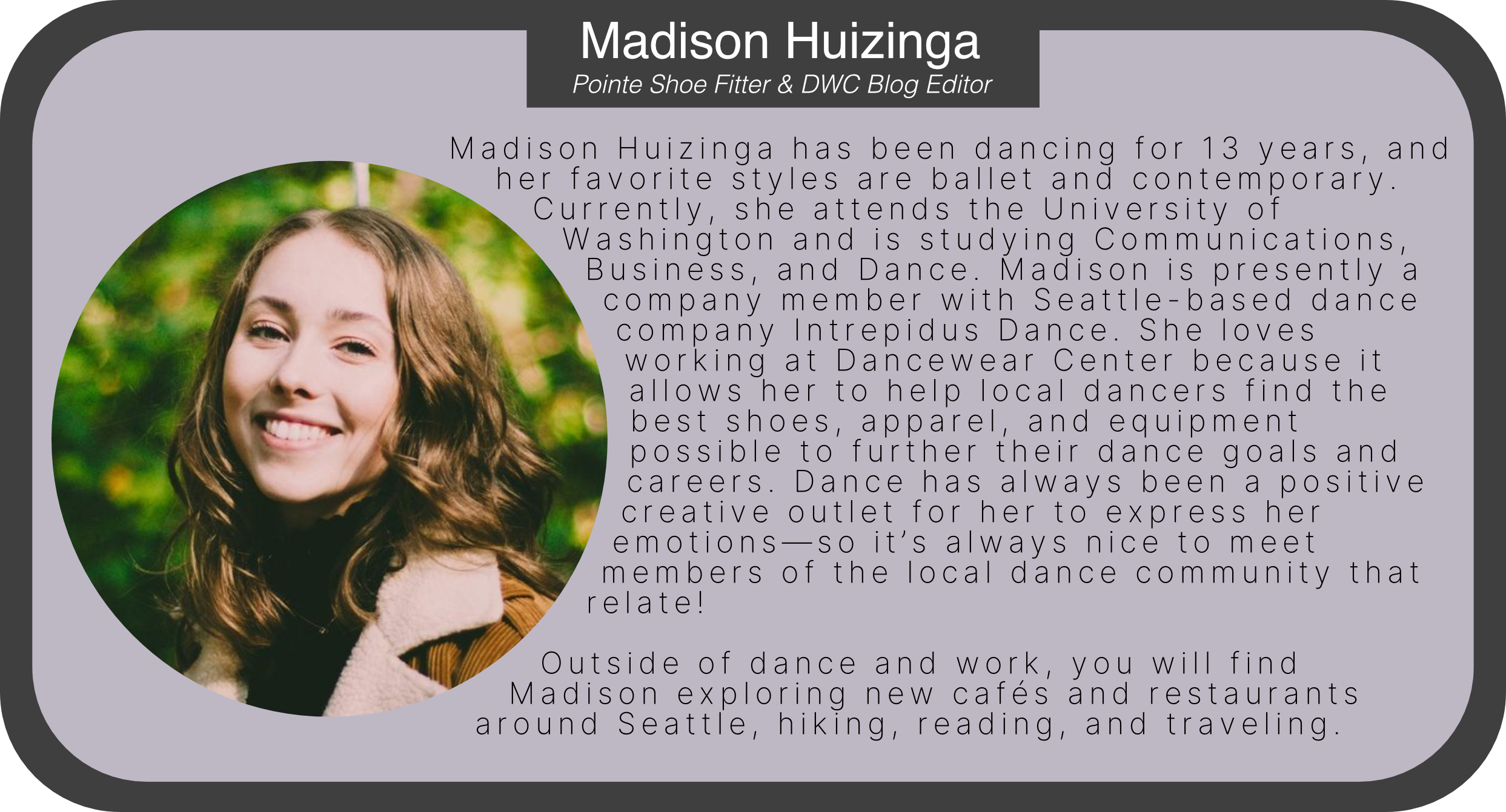
By Madison Huizinga, DWC Blog Editor


Photo by: Michelle Smith Lewis
After relocating from Santa Fe, New Mexico to Bellingham, Washington, Brooke Evans noticed that her newfound home was lacking something near and dear to her: high-quality dance. Through copious research and collaboration with local parents and dancers, Brooke and her fellow community members were able to build Opus Performing Arts: a robust dance school composed of experienced faculty and tasked with the mission of “fostering a lifelong love of dance.”
Like many youngsters, Brooke got involved with dance because her older sibling did it. She began her training at age three in her hometown of Santa Fe at the Santa Fe Dance Foundation, now known as the Aspen Santa Fe Ballet. At age 23, Brooke got pregnant which required her to shift her life focus. She ended up moving to Bellingham, Washington, where she has been ever since.
“When I got up to Bellingham, I didn’t really know much about the dance community and had just had a baby and I didn’t go the traditional college route,” Brooke shares. “So I just started exploring the dance community a little bit and I found that there wasn’t as much dance here...I was expecting more and I was expecting a higher quality of dance.” Brooke realized that if she wanted to see a more expanded, potent dance community in Bellingham, she needed to be a part of building it.

Photo by:Juliette Machado
Brooke became a co-founder of Bellingham Repertory Dance, a professional contemporary dance collective full of local dancers who are eager to challenge themselves and work in the industry. Brooke was a part of the founding member team, along with other local dancers who were looking for a professional level experience. Through Bellingham Repertory Dance, dancers have gotten the opportunity to work with renowned regional, national, and international choreographers like Mary Shelton Scott, Eva Stone, and Joshua Beamish. Bellingham Repertory Dance is currently going on its sixteenth season. Brooke left the dance collective after eleven seasons, but is gratified to see “this new generation really carrying it forward.”
Eventually, one of her sons expressed interest in beginning dance classes himself. She started looking in town for classes she saw fit for him, and wasn’t coming up with much. There were other parents in the Bellingham community who were feeling similarly, namely Opus owners Allan and Marie Redsone, who struggled to find a local dance school offering high-quality instruction for their own daughter. Allan and Marie networked out into the community, found a space and conducted research to bring their vision of Opus to fruition, finding Brooke in the process. After her first year of teaching at Opus, Brooke became the school’s artistic director to help sculpt and shape the school’s direction, again having the opportunity to build a stronger dance community in Bellingham.
Opus Performing Arts offers tap, contemporary, jazz, lyrical, hip hop, pointe, and ballet classes for both kids and adults. “I have just an incredible team of teachers,” Brooke gushes. Throughout the past year, Opus was also offering seminars on topics relating to mental health and self-compassion with ballet teacher and licensed mental health professional Rachel Coats as a way to provide more holistic services. Rachel will continue her self-compassion work with students this fall as Opus’ wellness consultant.

Photo by: Juliette Machado
“We really put an emphasis on instruction at Opus and making sure that dancers are being really safe,” Brooke says. For instance, the school administers “pointe readiness” evaluations that students must pass before earning their pointe shoes. “It’s not something that you get, it’s something that you earn over time. It’s a step in your progress.”
Opus is excited to be returning to in-person classes in the fall, after nearly 14 months of online learning. Throughout the COVID-19 pandemic, Brooke and the rest of the staff at Opus worked hard to communicate to students the importance of making dance feel like home regardless of where they are. She shares that the lack of community engagement, specifically due to canceling live performances, was a challenge for the Opus dancers. “I think the students are just so hungry to be not only getting in-person instruction again but also just to be with their friends and be in their community,” Brooke says. “There’s something so energizing about being with each other that we can’t feel over a computer screen.”
Another exciting update at Opus is that the school is moving to a bigger location with more studio space in 2022. “The space we’re looking at has the potential for five studios, three big ones and two small ones,” Brooke says. “It’s going to be really exciting when we get to move and then we get to offer more classes and provide more for the community as well.”
Ultimately, through her work with Opus Performing Arts and throughout the dance world, Brooke hopes to see dance professionals draw greater attention towards the self-compassion and mental health aspects of dance. “That’s something that I think is a missing part of the dancer’s health puzzle that we’re not quite up to par on,” she says. “‘Perfect’ doesn’t exist and it’s important to be able to have that positive self-talk, acknowledge your growth, and realize your wins.”
If it weren’t for the community building efforts of Brooke Evans and many others, Bellingham wouldn’t have the energetic dance scene that it has today. Since its founding, it’s clear that providing access to safe, high-quality dance instruction that can benefit a dancer for a lifetime will continue to be a top priority at Opus. “We want to instill a love of dance that [students] can carry forward through their lives,” Brooke says.
Confidence in a Cowboy Hat
As many dancers can confirm, there are few things worse than showing up to ballet class in a leotard that makes you feel self-conscious. Donning an uncomfortable, ill-fitting leotard can affect a person’s confidence, which can translate into their movement quality. Suddenly, dancers forgo extending through their fullest lines and focus on making themselves smaller. Throughout every dance class, there’s a laundry list of things dancers need to be focusing on. Fixating on the fit of their dancewear shouldn’t be a priority. Local dance educator Hayley Maddox is passionate about creating custom, eco-friendly leotards in a comfortable fit for dancers of all shapes and sizes. Her retro, cowboy-themed dancewear brand Lasso Leos centers on providing dancers access to affordable and sustainable leotards while creating favorable fits designed to make dancers feel confident.
Hayley Maddox on the Inspiration Behind Lasso Leos
By Madison Huizinga, DWC Blog Editor

As many dancers can confirm, there are few things worse than showing up to ballet class in a leotard that makes you feel self-conscious. Donning an uncomfortable, ill-fitting leotard can affect a person’s confidence, which can translate into their movement quality. Suddenly, dancers forgo extending through their fullest lines and focus on making themselves smaller. Throughout every dance class, there’s a laundry list of things dancers need to be focusing on. Fixating on the fit of their dancewear shouldn’t be a priority. Local dance educator Hayley Maddox is passionate about creating custom, eco-friendly leotards in a comfortable fit for dancers of all shapes and sizes. Her retro, cowboy-themed dancewear brand Lasso Leos centers on providing dancers access to affordable and sustainable leotards while creating favorable fits designed to make dancers feel confident.
Hayley’s dance journey began at age five at Bremerton Dance Center in Bremerton, WA. She joined BDC’s performing arts company Peninsula Dance Theatre around age 11 and continued dancing there until 2017. During her time in Bremerton, Hayley’s training specialized in ballet and modern and she taught for about five to six years. In 2017, Hayley moved to Seattle and worked as the program director and a ballet teacher at DASSdance. She also worked with Daniel Wilkins on staging DASSdance’s 2019 production of The Nutcracker.
Hayley continued teaching until the end of the 2019-2020 school year and was suddenly left with copious free time as the COVID-19 pandemic raged on. “I always kind of liked the idea of creating my own leotards so...that’s when I started playing around with making [them],” Hayley shares.
Hayley has a decade’s worth of sewing experience, as her mom taught her the basic mechanics of a sewing machine and her grandmother worked as a professional seamstress. “It’s kind of been passed down through the generations,” she says, although she admits most of her skills are self-taught. Hayley also enjoys thrifting and upcycling materials to make herself custom pieces. “So I was like ‘well, no brainer. I should just try to make some custom [leotards] for myself,’” she recalls.
Her idea snowballed into a bigger plan to create a business centered on custom leotards in inclusive sizes. “I know I’m not the only one struggling with a leotard that doesn’t fit quite right,” Hayley shares. “[When you have] any type of body that’s not prepubescent, it’s kind of hard to find leotards that fit you exactly how you like.”

click below to shop the look:
“I thought it would be a cool idea to have a brand that is eco-friendly by using upcycled materials, [and focused] on having inclusive sizing and being affordable...Those are all of the things I feel like are really important,” Hayley says. “Not only is it hard to find the right fit but to find an affordable, custom leotard is also really hard.”
Hayley has a specific fit she incorporates into her leotard designs, in which the leg line is higher on the hip while still possessing full coverage on the backside. “When you have a mature body, the run-of-the-mill cuts just don’t fit,” she says of the inspiration behind her designs. “I’m really just inspired by anyone who has a mature body who is still dancing and wants to feel confident.”
Lasso Leos currently sells three different styles of leotards, “Round Up” skirts, and scrunchies called “Lasso Loops.” Later this year and going into 2022, Hayley plans to roll out some new leotard styles and unique warm-ups that resemble knitted chaps.
When deciding on a name and theme for her brand, Hayley was playing around with a random name generator and came up with “Lasso Leos.” The name quickly stuck. “I’m like a low-key horse girl. I always loved horses growing up,” she claims. Many of Lasso Leos’ leotard names are inspired by old and new country singers and songs, such as “Patsy” for Patsy Cline, “Orville” for Orville Peck, “Velvet Elvis,” and “Show Pony.”
For others interested in starting their own business, Hayley encourages them to “just do it” as there are many great resources online to help people get started. She found an article that broke down starting a business into 12 steps and simply went through step by step. “I just started from the top and worked my way down so I wasn’t too overwhelmed,” Hayley shares. She also says it’s important for aspiring entrepreneurs to go easy on themselves and take things at their own pace. “Just really being true to yourself and being able to balance your time and your energy is going to set you up for longevity.”

Through Lasso Leos, Hayley strives to help promote inclusivity in the dance world, specifically with body types. “It’s totally fine to embrace our curves and to have mature bodies because we’re mature people,” she says. However, her goal of encouraging acceptance extends past body sizes, as she hopes to see the dance industry be more welcoming of all gender identities and expressions. In the following year, she plans to work on designing biketards for Lasso Leos as yet another dancewear option to help dancers feel as comfortable and confident as they can be.
Lasso Leos offers fresh, playful, and considerate dancewear that’s greatly needed in the industry today. For those interested in buying a custom leotard, skirt, or scrunchie, you can reach out to Hayley Maddox directly, through the Lasso Leos Instagram page, or keep an eye out for products coming to Dancewear Center soon!
Karl Watson on Finding Balance and Seeking Transparency
As dancers, we’re encouraged to push ourselves as far as we can, often until our breaking point. Finding the harmony between challenging ourselves and staying within our boundaries can be a tough balancing act. Karl Watson of Whim W’him gives insight into this challenge, his dance journey, and what he hopes to see moving forward in the dance industry.
By Madison Huizinga, DWC Blog Editor

Photos: Stefano Altamura & Bamberg Fine Art Courtesy of whimwhim.org
As dancers, we’re encouraged to push ourselves as far as we can, often until our breaking point. Finding the harmony between challenging ourselves and staying within our boundaries can be a tough balancing act. Karl Watson of Whim W’him gives insight into this challenge, his dance journey, and what he hopes to see moving forward in the dance industry.
Karl first fell in love with dance because his mom took him to see A Christmas Carol around the holiday season. “I freaked out within the first 10 minutes,” Karl laughs. His mom took him out of the theater and into the lobby of Playhouse Square in Cleveland, Ohio. She asked the employees if any other shows were happening that night, and they suggested she take her son to see The Nutcracker. As soon as he set his eyes on the show, Karl was mesmerized. Eager to learn dance himself, his mother enrolled him in a creative movement class. He continued dancing at The School of Cleveland Ballet, later floating between a couple of different studios. Karl later got more involved with competition dance, falling in love with jazz and musical theatre.
Towards the end of high school, Karl realized he wanted to pursue a career in dance and thus wanted as much training as possible. He soon began dancing seven days a week with a focus on ballet, jazz, and musical theatre. Around the time when Karl began his freshman year at Butler University, YouTube began taking off. He recalls coming across videos about Crystal Pite, as well as William Forsythe’s improvisation techniques. These online resources and the resources on his campus opened him to the range of dance that was happening outside his bubble.
During his time in college, Karl did two summer intensives summer intensive with Hubbard Street Dance in Chicago and a winter workshop with Doug Varone. At Butler, he also got the chance to take master classes from Gustavo Ramírez Sansano who was the artistic director of Luna Negra Dance Theater at the time. After graduating, Karl ended up landing an apprenticeship with Luna Negra and moved to Chicago. Karl ended up becoming a performing apprentice and toured with the company before it folded in 2013. He ended up staying in Chicago and performing with Visceral Dance Chicago as a founding member. Later on, while in New York, Karl ended up auditioning for Whim W’Him, as they were having a workshop and audition over there. He got the job with Whim W’Him in 2016 and relocated to Seattle where he’s been ever since.
Ever since Karl discovered dance, it’s been his most effective tool for self-expression and storytelling. He shares that as a child, he was fairly quiet. “I was the kid who liked to sit at the grown-up table and just listen...I was just a little more internal,” he says. Thus, he loves that dance can be a “very internal practice,” allowing him to be within his body and self-discover.
However, nowadays, Karl shares that he is most moved by experiences that take him out of his body and allow him to connect with his own or other people’s physicalities. “I think it’s just the physicality of [dance] in a world that feels increasingly less physical,” Karl says of what draws him to dance. He loves how qualitative the art form is, the meanings of dances are up for interpretation, making it even more compelling for audiences to watch. Karl also marvels at how technology and social media have given dancers new platforms to gain traction and share their work with the world.
While classical ballet training has been invaluable for his training, Karl shares that dance challenges he’s faced have come from the ballet world, specifically from ballet’s strict physical standards, as well as imposter syndrome. Karl is interested in the “decolonization of contemporary dance,” involving the decentering of European or Western standards. He’s eager to see different dance approaches being utilized, specifically those that center on the individualities of dancers through standardized modes of training. For too long, creating, training, and rehearsing has involved fitting his body into a rigidly pre-determined shape. Now, Karl feels as though he can pull movement out of his body in a way that challenges him but also works within the bounds of what’s possible for him. “I think it’s just about being in your body and finding what your body can do,” he says.
In the dance world, Karl hopes to see more transparency within dance education and more productive discussion about personal development and the realities of being a working dancer. While pre-professional and BFA programs have a multitude of benefits, Karl points out that they can be quite insular. Having holistic opportunities for networking outside of institutions would be helpful for dancers’ careers.
In terms of professional companies, Karl wishes to see more transparency and equity across the dancing hiring process. For example, he shares that the Dance Artists’ National Collective is furthering this agenda by “advocating for safe, equitable, and sustainable working conditions for dancers in the U.S,” as a way to empower dancers who are often underpaid and mistreated within the industry.
While Whim W’him is on its break, Karl is working on an outside project with the choreographer Emily Schoen Branch and fellow Whim W’Him member Liane Aung. The group is planning on making a dance film and hopefully performing at festivals later this season when more in-person events begin happening. He is also teaching in-person Dance Church classes in Seattle. Whim W’him released two new dance films with Mark Caserta and Rena Butler, available for viewing online. Stay tuned as Karl and the rest of Whim W’him continue phasing back into in-person performances this winter after a long-awaited break.
Jule Dancewear’s Julia Cinquemani
Many people are drawn to dance because it is a means of self-expression, allowing individuals to share their emotions with others and have a creative outlet to relieve stress. In many ways, clothing operates similarly to dance for many people, as it communicates a lot about a person’s identity and can invoke specific emotions in viewers and wearers alike. Founder of Jule Dancewear Julia Cinquemani knows all too well that wearing clothes that don’t fit right can make a significant impact on people, particularly with dancewear. Combatting this phenomenon was the inspiration behind Jule Dancewear, as well as creating dancewear products that cater to dancers with a variety of body types. Read on to learn more about Julia’s journey to Jule Dancewear.
By Madison Huizinga, DWC Blog Editor

Click below to shop the look:
Many people are drawn to dance because it is a means of self-expression, allowing individuals to share their emotions with others and have a creative outlet to relieve stress. In many ways, clothing operates similarly to dance for many people, as it communicates a lot about a person’s identity and can invoke specific emotions in viewers and wearers alike. Founder of Jule Dancewear Julia Cinquemani knows all too well that wearing clothes that don’t fit right can make a significant impact on people, particularly with dancewear. Combatting this phenomenon was the inspiration behind Jule Dancewear, as well as creating dancewear products that cater to dancers with a variety of body types. Read on to learn more about Julia’s journey to Jule Dancewear.
Julia grew up in Dallas, Texas where she began dancing at age four. “I was very passionate about ballet and left home at age 16 to train year-round at the Pacific Northwest Ballet in Seattle,” she shares. Later on, Julia ended up signing her first professional contract at Los Angeles Ballet, where she danced for seven years, even earning a promotion to Soloist in 2014 and Principal Dancer in 2016. “I then joined Miami City Ballet in 2017 where I danced for four seasons,” she shares. Highlights from her time at Miami City Ballet include Aria 1 in Stravinsky’s “Violin Concerto,” Hippolyta in A Midsummer Night’s Dream, and War Girl in “Symphonic Dances.”

Click below to shop the look:
One of Julia’s favorite parts of ballet was the discipline involved with it and being able to express herself within the studio. “Part of expressing myself was how I presented myself; how I did my hair and what I wore to class,” she shares. At age 14, Julia began designing and sewing her own ballet skirts to wear to class. Eventually, she began creating and selling these skirts to her friends. Shortly after this, as the skirts gained more popularity, Julia was approached by her local dancewear store asking if she wanted to start carrying her own line of wrap skirts in the store. What started as her individual outlet of expression soon became a product for others to enjoy as well.
Jule Dancewear was established in 2011 to “reshape dancewear.” Julia’s mission is to “design and produce dancewear that offers support, conforms to all body types, is high quality, and incorporates the latest in fashion with a commitment to ‘made in the USA.’” “Support” is a crucial aspect of the products Jule Dancewear offers. Julia shares that during her teenage years, when her body began changing, she realized she needed a leotard that provided more optimal coverage and support for herself. “I hated that my ill-fitting leotards were making me self-conscious in a profession where confidence is key,” she says. This is what inspired her to incorporate the support of a sports bra in her leotards in her leotards. “As a result, we are known for reshaping the dancewear mold to support all body types,” she shares.

Click below to shop the look:
In addition to stunning leotards and wrap skirts that flatter an array of body types, Jule Dancewear has become well-known for its “meshie” tights and crop tops. Intended to flatter and accentuate muscle definition, these high-quality mesh tights and crop tops make for unique, colorful, and comfortable outerwear to wear over the top of leotards. Julia shares that Jule Dancewear has “many new products” coming soon, so stay tuned for more!
Julia shares that she’s always loved the way a good outfit makes her feel. This feeling was one of the main sources of inspiration for her products. “My goal in the design process is to bridge fashion and function,” she says. Julia points out that it helps that she spends most of her days in a leotard and tights, as it allows her to seek inspiration for designing products that make her look and feel her best.
For those who are interested in starting their own business, Julia advises them “to have patience and commit to creating in a field that [they] are passionate about.” Once you realize that you can be the solution to the problems you’re facing, many doors are opened.
DWC Ambassador Coco Liu on Beginning Dance as an Adult
Have you ever wanted to try something new, but felt like you weren’t welcome to or as though your time to begin had passed? If so, you aren’t alone. There’s an unspoken assumption that as adults, we somehow know exactly what we enjoy doing and have all of our passions clearly defined. However, DWC Ambassador Coco Liu is here to tell you that it’s never too late to try something new, specifically with dance.

click below to shop the look:
Have you ever wanted to try something new, but felt like you weren’t welcome to or as though your time to begin had passed? If so, you aren’t alone. There’s an unspoken assumption that as adults, we somehow know exactly what we enjoy doing and have all of our passions clearly defined. However, DWC Ambassador Coco Liu is here to tell you that it’s never too late to try something new, specifically with dance.
Coco began taking dance classes as an adult, but her admiration for the art form began as a child. Growing up in China, Coco’s mother would take her to see Russian ballet performances. She remembers being thoroughly engaged with the shows and learning to appreciate dance through being an audience member. Coco shares that she was an active kid, but didn’t enroll in dance classes because there weren’t many high-quality studios in her area. At age 15, after moving to the United States, Coco recalls constantly playing the game Just Dance on her host family’s Wii, continuing it into college with friends. “I remember playing for hours on that thing!” she says, as it helped cultivate her love for dance.
After graduating college, Coco was inspired to take her first ballet class after watching her best friend dance. She visited her friend in Utah and watched her perform the “Waltz of the Snowflakes” in The Nutcracker. Coco remembers being amazed by the performance, and immediately thinking she should try to dance herself. She researched studios in the Seattle area and decided to enroll in a class at The Ballet Studio in U District. “Slowly, it just stuck,” Coco says, sharing that she’s been dancing for about three years now. She mainly focuses on ballet training but has also started taking classes in contemporary, modern, and hip hop styles. Dabbling in other styles has made Coco realize how fundamental ballet skills can be for other genres of dance.
Coco says that one of her favorite things about dance is the community. “Some of my very close friends nowadays, I met through dance,” she says. Coco points out that the dance community feels both big and small at the same time, mentioning the connections she can make with all types of people, from different areas of her life, through their shared love of dance.

click below to shop the look:
On a personal level, Coco enjoys seeing the self-improvement that comes with ballet training. “The amount of effort you put in, you get back,” she says. “You see that improvement within yourself. That really kept me going.” Within the dance world, particularly ballet, it always feels like there is more to learn and improve upon, preventing most dancers from feeling stagnant within their practice.
When Coco first began dancing, she struggled with feeling like she was “good enough.” She remembers going on Instagram and seeing dancers post photos and videos of their high extensions, fast turns, and other impressive feats. As a beginner, exposure to these posts made her feel a bit frustrated at first. However, after some more practice, this feeling went away. She recognized that most of these dancers had started training as young as age three, it was unrealistic for her to expect herself to be at the same level as them.
“To get out of that mindset, it was about having a competition with myself,” Coco shares. Each week, she would shift her focus on a specific technical element she could improve upon, whether it was her turnout or engaging specific muscle groups correctly. From there, she could gradually build her muscle memory and advance at her own rate. By channeling her energy into improving her own skills rather than comparing herself to others, she was able to truly appreciate other dancers and herself fully.

click below to shop the look:
Carmen Wrap Sweater by Wear Moi | Quilted Warmup Booties by Russian Pointe
Coco first learned about Dancewear Center when she bought pointe shoes. She learned about the ambassador program through a mutual friend and thought it would be a good opportunity for her to share her story and show people that it’s never too late to start dancing. That is the message she strives to promote as a DWC ambassador.
In addition to being a DWC ambassador, Coco’s dance group has a performance planned for December for friends and family at Dance Underground in Capitol Hill. Coco also began teaching beginning ballet to adults at Second Act Dance, an adult ballet studio. She shares that teaching has been an exciting and challenging new endeavor for her, as the experience is quite different from being a student.
Ultimately, Coco hopes that more opportunities come about for adult dancers, specifically beginners. While researching for her first class, Coco found that most studios in the area solely cater to adults with prior dance experience. She recalls being placed in intermediate classes at some studios, likely due to her age, and feeling intimidated and unconfident. Thus, she hopes more classes can center on teaching beginner adults. “If you love ballet, if you want to try it, you should try it. It’s never too late to do something that you’ve always had a desire to do,” Coco says.

DWC Ambassador Kristina Koumaeva on Putting the Human Before the Dancer
From competitive commercial dance to ballet academies, there has historically been a laser focus on technique in various dance realms, even at the expense of dancers' mental health. DWC Ambassador Kristina Koumaeva speaks on prioritizing the human over the dancer, cultivating self-confidence and self-care, and what she looks forward to doing as a DWC Ambassador.

click below to shop the look:
Luster Leotard with Black Pop Mesh by Jule Dancewear | Seamless Rib Short by Capezio | Performance Shock by Apolla
From competitive commercial dance to ballet academies, there has historically been a laser focus on technique in various dance realms, even at the expense of dancers' mental health. DWC Ambassador Kristina Koumaeva speaks on prioritizing the human over the dancer, cultivating self-confidence and self-care, and what she looks forward to doing as a DWC Ambassador.
Kristina began dancing at age four at Turning Pointe Dance Centre in Washington. From then on, dance became a significant part of Kristina’s world, cementing itself into every part of her life. “I don’t think I have memories without dance in them,” she shares. Throughout her childhood, she danced at studios, attended conventions and intensives, and participated in competitions. A program that stands out to her was called “Camp”, in which she flew out to rural Massachusetts and trained with “beautiful movers and artists” like Jason Parsons and Stacey Tookey. “That was really transformative and gave us a chance to choreograph and work on improvisation,” Kristina recalls.
After graduating high school, Kristina danced with the UW Cheer & Dance Squad, which was a completely different world of dance than what she had been a part of previously. However, she enjoyed the versatility she gained training in pom. She has also worked with Veronica Lee-Baik’s modern dance company, The Three Yells.
Following college, Kristina greatly drew inspiration from her brother to move to Los Angeles and pursue a career in commercial dance. Kristina’s older brother is an “incredibly inspiring professional dancer” who moved to LA when he was 16 to achieve his career goals. Similarly, Kristina spent four years in LA, diving into the commercial world of dance and working with luxury brands and a number of musical artists. Upon returning to Seattle, Kristina took up teaching again, and participated in various performances.
When Kristina thinks about what has kept her connected to dance all these years, music is one of the first things that comes to mind. “I have always been obsessed with music,” she says. “I think that’s just one of the greatest gifts that was given to this world. I’m super inspired by music of all kinds.” For Kristina, being able to dance to live music and feel a connection to real instruments is a fully immersive experience.
In addition, Kristina loves how dance enables her to connect her mind and her body. She shares that more conventional modes of expression, like public speaking, make her nervous. Yet, dance is “the complete opposite.” When dancing, Kristina feels like she can express anything she wants to efficiently.

click below to shop the look:
Throughout her dance career, handling self-confidence and self-care have been the biggest challenges for Kristina. She shares that even after all her years of dancing, she still experiences some nervousness when she performs in front of others. However, she says that building a toolkit of coping strategies and practicing self-care have been the most helpful tips for bolstering her confidence. Kristina emphasizes that self-care wasn’t deeply discussed in the dance realm when she was younger, especially in the competition dance world. Nevertheless, it’s important to understand that dancers need to take care of themselves, as their bodies are their “whole art.” “Having the time to slow down for yourself and prioritize your needs is really important,” Kristina stresses.
Kristina also shares that the pursuit of perfection, particularly in ballet, can serve as another challenge. Recently, Kristina has looked into studying holistic approaches to dance training, drawing inspiration from her beloved ballet teacher Rachel Tudor. Rachel taught Kristina that pursuing perfection often leads to prioritizing the dancer over the human. “I think the person should always come first,” Kristina says. Balancing teaching technical skills with supporting dancers’ needs is a step in the right direction. "Dance wasn't meant to be this intense thing…it's freedom of expression, and I think we lost that at some point when we got really deep into technique," Kristina voices.
This school year, Kristina is teaching at three different studios and choreographing competition pieces for various students. "That's been super exciting!" she shares. Additionally, Kristina has started collaborating with some local dance artists, including Daniel Wilkins from DASSdance. They're aiming to release some work, either in the form of a live performance or virtual experience, sometime in January 2021. The two are seeking inspiration from the various stories of individuals grappling with the COVID-19 pandemic in 2020, and are interested in "telling different perspectives of what people went through during that time." Kristina shares that during the creation process, she got the opportunity to create a work to live jazz music and "it was just magical."
Kristina has also been connecting and creating contemporary videos and phrases with artist Stephanie Golden, and was featured in an Amazon commercial. Next summer, Kristina will perform in a jazz, burlesque show at the Can Can Culinary Cabaret in Seattle. "I love exploring different realms," she says of performing burlesque.

click below to shop the look:
Kristina has always been hesitant about partnering with a company, as she is nervous about promoting products and services she isn't actually proud of. However, Dancewear Center is not only a brand Kristina can strongly stand behind, but she also has a special connection to it. "I got my first pair of pointe shoes here!" she shares. "I grew up going [to Dancewear Center]." She really appreciates what the brand stands for and how it has made advances to connect people and create a more intimate dance community. She is looking forward to sharing her perspectives, particularly as an adult dancer, with others.
Looking ahead, Kristina hopes to help "create a safe, welcoming, and nurturing dance space" for everyone. Even if students don't plan to pursue dance professionally, she hopes they can gain assets from their amazing experiences within dance communities. "I just want to make sure that they have space to be themselves," Kristina says.
DWC Ambassador Ava Budish on Self-Expression and Breaking the Mold
In nearly every industry, expectations are set regarding what a professional individual should look and act like, and dance is no exception. However, these standards are arbitrary. The dance world is a much better place when dancers have the freedom to break the mold and express themselves freely. DWC Ambassador Ava Budish shares her thoughts on expressing herself through dance, creating connections, and breaking the mold.

click below to shop the look:
Carmen Wrap Sweater in Sky by Wear Moi | High Waisted Active Leggings by Capezio | Infinite Shock by Apolla Performance
In nearly every industry, expectations are set regarding what a professional individual should look and act like, and dance is no exception. However, these standards are arbitrary. The dance world is a much better place when dancers have the freedom to break the mold and express themselves freely. DWC Ambassador Ava Budish shares her thoughts on expressing herself through dance, creating connections, and breaking the mold.
Ava began dancing around age three in her hometown in northern California. She focused solely on ballet for around ten years. After moving to Washington and starting high school, she ventured into new styles at Glass House Dance, including lyrical, modern, jazz, and contemporary. Ava also joined a competition team, where she’s been competing for about three years. Recently, Ava has also started teaching dance to little kids, which she greatly enjoys. She loves witnessing children explore dance for the first time, and getting the chance to “help shape their first experiences.”
What’s kept Ava connected to dance for so long is it being an effective source of expression for herself. She shares that for a long time, especially as a child, she danced more for the performance aspects. But, as she’s gotten older, tried new styles, and connected more to herself as a dancer, she feels like she’s gotten more opportunities for self-expression. Rather than solely performing to entertain an audience, dance has become a vessel for Ava to come in closer contact with her inner feelings and share them with others. “This is my outlet in that way,” she shares.

click below to shop the look:
A challenge that Ava faced after moving to Washintgon was trying out new styles of dance and feeling comfortable outside of a hyper-focused, competitive ballet atmosphere. “To me, ballet was what tied me back to California. And for a while, that was the reason I kept dancing,” she says. “I really tied it to my identity.” She felt like if she wasn’t training in a competitive ballet environment as she did before, she wouldn’t be the same person. However, once she got out of that mindset, she found herself enjoying dance even more. Soon after, Ava was able to take some steps in a healthier direction, towards a more balanced lifestyle with more dance genres under her belt.
For others struggling to try new classes, Ava shares that trying out the first class is the hardest step, but it’s also often the most impactful. She suggests that people just try one new class, “give it a shot,” and go from there.
After a long break from dancing on stage due to COVID-19, Ava is thrilled to return to performing and competing this season. “I’m super excited for this company/competition season,” Ava says, sharing that she’ll be competing in a duet with former DWC Ambassador Niki Kothari. She’s also looking forward to attending some dance conventions this year to learn from some of the best professional dancers and choreographers in the industry.
As a DWC Ambassador, Ava is excited to bridge gaps between different dance communities. She points out that there is a lot of separation in the dance world, so she is eager to help cultivate a space that values connection and collaboration. Ava also looks forward to being a voice for those in various dance realms, from those who have trained strictly in ballet to those who dance more recreationally.

click below to shop the look:
Seamless Rib Racerback Leotard by Capezio | Bullet Pointe Skirt by Bullet Pointe | Infinite Shock by Apolla Performance
Looking ahead, Ava hopes that the dance world moves towards being more inclusive, with fewer barriers and expectations regarding what a dancer is supposed to look like. While the dance community, in general, has been moving in a positive direction, she says that more work can be done in amplifying the voices to people who don’t fit the typical “mold” of what a dancer is expected to be like. “You don’t have to fit that mold to do great things in dance and make a difference,” Ava says.
Inspiring a Lifelong Love of Dance Through Accessibility
Youngsters eager to learn dance in the greater Seattle area are always in luck, as the Pacific Northwest abounds with high-quality dance studios eager to take on more students. However, adults with the same enthusiasm aren’t often as fortunate. Most dance studios across the region offer dance classes up until the age of 18, after which students are expected to move on to more professional training or get a non-dance-related job and move on with their lives. Luckily, Karena Birk and the rest of the team at Dance Fremont are providing high-quality, affordable dance education to youth and adults to foster the passion for dance in people of all ages and identities.
Dance Fremont’s Karena Birk
By Madison Huizinga, DWC Blog Editor

Youngsters eager to learn dance in the greater Seattle area are always in luck, as the Pacific Northwest abounds with high-quality dance studios eager to take on more students. However, adults with the same enthusiasm aren’t often as fortunate. Most dance studios across the region offer dance classes up until the age of 18, after which students are expected to move on to more professional training or get a non-dance-related job and move on with their lives. Luckily, Karena Birk and the rest of the team at Dance Fremont are providing high-quality, affordable dance education to youth and adults to foster the passion for dance in people of all ages and identities.
Karena began dancing at Spectrum Dance Theater at age three, eventually moving over to Cornish where she did the bulk of her training. She danced with the Colorado Ballet before wrapping up her college degree. Karena later danced with the ARC Dance Company in Seattle, predominantly focusing on ballet, modern, and jazz. Around the same time, she also began teaching. “Teaching fed me as a dancer, and vice versa” Karena says, explaining how teaching and performing held co-benefits for each other. After dancing with several other local companies, Karena decided to dedicate more of her time to teaching. She got her MFA in dance from Ohio State University, came back to Seattle, and continued teaching. Karena enjoyed being able to teach a wide range of individuals, from kids at dance studios to young adults in higher education. She prides herself in adopting an education model in which students get to understand their abilities and limits rather than imposing unrealistic expectations onto them, as traditional teaching models often do.
After nearly 20 years of running Dance Fremont, co-owners Vivian Little and Mary Reardon retired in 2015 and were considering closing the studio. Eager to keep the dance community alive, Steve Casteel bought the business and hired Karena as the dance school’s director, where she’s been ever since. After a few years as director, Dance Fremont was turned into a nonprofit organization, which has enabled the studio to have more unique opportunities to support the community.
Dance Fremont’s mission is to “inspire a lifelong love of dance in each student in a nurturing atmosphere full of joy and creativity.” Karena shares that the studio strives to “provide quality ballet and modern dance education to all who are interested.” It’s important to Karena and the rest of the Dance Fremont staff to provide dance education to all regardless of economic status, race, gender expression, and more. Classes range from youth programs for three-year-old students, all the way up to pre-professional training for students who want to dance in college or become professionals.

Something rather unique about Dance Fremont’s programming is its robust adult programming. “For adults, we offer beginning classes in ballet and modern, and drop-in intermediate/advanced ballet classes,” Karena shares. “We have everyone in there from professional dancers to people who start dancing as adults...It’s a wonderful community. I love working with them because they’re just there because they love to dance. As a dance teacher, there’s nothing better.” The adult open classes are held Monday through Saturday, with a Zoom option on Wednesday mornings.
The in-person open classes are taught by a different instructor every day of the week, so dancers get a variety of perspectives and get to find out what instructor fits best for them. Karena shares that the instructors for the open classes care immensely about their students. “I feel like one of the things that really distinguishes our open class teachers is that they really want to be here teaching these people,” Karena says.
Many dance studios in the Seattle area don’t offer classes for adults, as most are centered on providing rigorous training for youth. However, the benefits that children can reap from dance classes, including stress relief, creative expression, and community, are just as important for adults. “Everybody deserves to have dance classes,” Karena says. “There should be a space for people to continue dancing and continue dancing in an environment that really values what [they] have to say.”

An exciting development at Dance Fremont is it offering its Zoom adult open ballet classes as “pay if you can, pay what you can.” Dance Fremont made this change to provide more access to classes for adult dancers, as many lost their jobs during the COVID-19 pandemic. “A lot of people in the dance world were hit really hard,” Karena points out. Additionally, for in-person open ballet classes Dance Fremont is offering its pay-what-you-can Community Class Card, a donation-funded card in which dancers can choose the amount they pay for classes. “The donation support that we receive as an organization will cover the rest of the cost of [the classes],” Karena shares. “That’s something that we hope to be able to continue long-term and not just while the pandemic is still going on.”
Accessibility to classes is of the utmost importance to Karena, sharing that she “would rather be here for people” and have them take classes at the rate they can afford than feel like access is shut off to them. “There are a lot of issues in the dance world, especially the ballet world about accessibility, [particularly] with race, gender identity, and body type. Another big component is economic accessibility...I feel like this is at least one way we can start chipping down some of those barriers,” she says.
Karena points out that the world of ballet and modern dance is predominantly Eurocentric, and that moving forward “the beauty of the diversity of the world around us” ought to be embraced. “I would like to see dance made more economically available to people and for people to feel welcomed in their identities,” Karena shares of her vision in the dance world. Through providing affordable access to high-quality dance education to students of all ages, it’s clear that Karena and the rest of the team at Dance Fremont are taking a step in that direction.
Where Reading and Dancing Meet
For many young students, dance education consists of verbal instruction and demonstration from a teacher. While that has proven to be an effective means of teaching, having alternative methods, such as using visual aids and storytelling, can immensely benefit students. Thus, Terrel Lefferts and her daughter Kaelyn or “Ballerina Konora” have created Once Upon a Dance, a business that creates interactive movement and dance books for children of a wide array of ages.
Terrel Lefferts on Once Upon a Dance
By Madison Huizinga, DWC Blog Editor

For many young students, dance education consists of verbal instruction and demonstration from a teacher. While that has proven to be an effective means of teaching, having alternative methods, such as using visual aids and storytelling, can immensely benefit students. Thus, Terrel Lefferts and her daughter Kaelyn or “Ballerina Konora” have created Once Upon a Dance, a business that creates interactive movement and dance books for children of a wide array of ages.
Growing up, Terrel trained pre-professionally at Louisville Ballet and BalletMET, dancing up to 40 hours each week. Around her freshman year of high school, she ended up dropping out of dance after concluding that she likely wouldn’t become a professional. However, she ended up returning to dance in college while majoring in engineering. “I joined ballet and modern dance classes in college and was a founding member of the dance performance group there. I rediscovered dance during grad school, as well as during my time as a Peace Corps volunteer in Africa,” she shares. “Dance kept coming back all the time.” As Terrell fell back in love with dance, she decided to start teaching during the evenings and on the weekends and eventually quit her main job to devote her full time to teaching. Terrel has taught all over the Eastside, including building a dance program at Redmond Parks and Recreation.
When the COVID-19 pandemic hit Washington state, Terrel’s daughter had been in town dancing as a professional division student at Pacific Northwest Ballet. The two decided to make some dance videos to keep kids dancing at home engaged in their learning; however, many of the videos got copyright blocked and others didn’t receive many views. Eager to reach a larger audience, the two decided they would try their hand at making books instead of videos. “There was a lot to learn - many areas outside a dance teacher’s wheelhouse,” Terrel says of creating her books.
“My advice would be to have patience, keep making small steps, and try to enjoy the journey.”

When the idea to create books struck Terrel, she says that it felt “like exactly what [she] was meant to do.” She had been teaching dance for years, was a board member for PNB, had taught English during her time with the Peace Corps, worked as a family advocate for an early learning center, and much more. “I was just like ‘Oh my gosh! All of these things I've done are totally book-related.’”
Terrel essentially taught herself everything she needed to know about creating and distributing books, such as software like Adobe InDesign, uploading books on Amazon, and more. She even found illustrators from all over the world to create the artwork in her books. The process was full of trial and error and she came up against roadblocks time and time again, like losing her Word document with the book’s story, InDesign crashing several times, and Amazon removing her books from its platform. But she pushed through it all and managed to create Once Upon a Dance.
“We created the books I wished I’d had as [a] mother to a little girl and dance teacher of young kids. My daughter would have adored these stories had they been available when she was young,” Terrel shares. She points out that when her daughter was growing up, there was a lack of movement books available that offered creative ways to teach dance steps. Terrel describes printing out images she found online of ballerinas to use as visual aids when teaching her students.

During the COVID-19 lockdown, Once Upon a Dance produced 16 books and currently have more on the way. The series Dance-It-Out! Creative Movement Stories for Young Movers is designed for ages 4+ and includes stand-alone stories that feature movement suggestions and photos of Terrel’s daughter as “Ballerina Konora.” “We think of each book as a dance performance, with different formatting, layout, and illustrators, just as a different show would have new sets, costumes, and choreography.”
The series Dancing Shapes: Ballet and Body Awareness for Young Dancers for ages 6+ gives a glimpse into Ballerina Konora’s journey to becoming a professional dancer, while she leads readers through a warm-up, mini ballet lesson, and an in-depth look into the details and shapes involved in dance. “We were honored that the first Dancing Shapes book won several awards including a 2021 Independent Press Award,” Terrel shares.
The final main series, coming out in 2022, is Ballet Inspiration and Choreography Concepts for Young Dancers, which is designed for ages 8+. This series includes tips on technique and dives into more advanced dance concepts, such as choreography, posture, and even “falling” on stage.
In addition to its three main series, Once Upon a Dance carries a couple of journals, as well as Konora’s Shapes Series, which is a card collection of poses intended to be cut out from the book. Additionally, people are encouraged to look out for Once Upon a Dance audiobooks coming soon, as free companions with the books.
If Terrel were to give one piece of advice for people who want to start their own business, it would be to “celebrate the small successes.” The phrase has become Terrel’s mantra through this whole process. “Being part of Dancewear Center was cause for celebration. We are thrilled and appreciative to have a local seller, so folks have an option beyond Amazon, Target, etc.” Terrel says. “My advice would be to have patience, keep making small steps, and try to enjoy the journey.”
Promoting Versatility in the Studio and Community
In many professional industries, but particularly in dance, versatility can be a vital asset to an individual’s career. Having the ability to be light on your feet, expert across numerous genres, and adaptable to rapid changes can help elevate a dancer both on and off the stage. That is why versatility is an important part of Allegro Performing Arts Academy’s goal. By providing dancers with robust dance training in a variety of styles and offering programs to an assortment of ages and levels, Owner Tonya Goodwillie and the rest of Allegro’s staff strive to bring something to the table for everyone.
Allegro Performing Arts Academy’s Tonya Goodwillie
By Madison Huizinga, DWC Blog Editor

In many professional industries, but particularly in dance, versatility can be a vital asset to an individual’s career. Having the ability to be light on your feet, expert across numerous genres, and adaptable to rapid changes can help elevate a dancer both on and off the stage. That is why versatility is an important part of Allegro Performing Arts Academy’s goal. By providing dancers with robust dance training in a variety of styles and offering programs to an assortment of ages and levels, Owner Tonya Goodwillie and the rest of Allegro’s staff strive to bring something to the table for everyone.
Tonya was inspired to dance at age two after watching her uncle, a ballroom dancer, practice with his partner. “My mom just noticed me sitting for hours on end watching, being still. So she was like ‘I need to get this kid into dance!’” she recalls. “I [have been] involved in dance ever since.” Tonya initially had dreams of having a career as an architect. But one day in her high school ceramics class, she was looking through college brochures and Cornish College of the Arts stood out to her. It was at that moment that Tonya realized she wanted to pursue dance as a career. “It’s one of those moments you never forget,” she says.
While attending Cornish, Allegro opened. “I had an opportunity that I couldn’t say no to,” Tonya says, in regards to helping build the business. She ended up taking a hiatus from school to focus on her work with Allegro, before returning years later to complete her degree. The years Tonya took off of college were crucial to bolstering Allegro’s business.
Today, Allegro has grown to be a dynamic performing arts academy in the Pacific Northwest. Tonya shares that Allegro has always made an effort to be “pretty bold about offering something for everybody.” “I feel very strongly about versatility for dancers,” she says. Tonya firmly believes that those who want to be professional dancers benefit from being well versed in a variety of genres and having numerous experiences under their belts. Thus, Allegro offers classes in an array of styles, including lyrical, contemporary, ballet, jazz, hip hop, tap, tumbling, musical theatre, drama, and more.

In addition to the various genres offered, Allegro prides itself in providing classes and programs for dancers of all ages and levels. “It’s really important to me that we try to offer something for everybody,” Tonya shares. The Allegro Precision Dance Company offers dancers the ability to “commit extra time to training, performing, and competing” at local and national events and competitions. The P.U.R.E. Hip Hop program similarly provides rigorous training and competition opportunities with a focus on hip hop. And The Allegro Players consists of “young performers interested in training and performing in drama and musical theater.” Allegro also offers copious classes for young ones, including a “Tiny Tots” creative movement class and a “Me & My Shadow” class, intended for young dancers and their parents.
Allegro has a lot to look forward to in the coming school year. “Just like every other studio, we’re really hoping to have a holiday showcase,” Tonya says. The studio’s annual holiday showcase is set for December 17-19, 2021. In January, Allegro plans to put on its “Burnin’ the Floor” showcase in January of 2022, which acts as a fundraiser for Allegro’s performing arts team. “This past year [the dancers] didn’t get to do that, so to be able to be at a theater would be amazing,” Tonya says.
During the COVID-19 pandemic, Allegro was able to pivot its offerings to an online platform quite swiftly. “We were only closed for a week in March 2020,” Tonya shares. Within a week, the studio was able to create an entirely virtual class schedule on Zoom. Upon returning to in-person classes later into the pandemic, Allegro was fully prepared, equipping every room with cameras and microphones for dancers tuning in through Zoom and instating mask requirements and sanitation protocol for those dancing in the studio. “Technically we’re still doing hybrid,” Tonya says of Allegro’s fall classes. She gives kudos to all of Allegro’s teachers for their adaptability and constant compassion for their students.

Moving through the COVID-19 pandemic and beyond, Tonya hopes to see more “cohesiveness” among local dance studios. She believes that the community has already taken a step in that direction by being a part of the Washington State Dance Studio Owners Coalition. The coalition started as a weekly Zoom meeting of studio owners, listening to one another and exchanging ideas on how to better handle teaching during the pandemic. The group later became an official organization to better communicate their needs to the governor’s office. “The meetings are still focused around COVID and helping each other out, but we have a long wish list of how to improve our dance industry,” Tonya says. “We’re talking about best business practices, how to educate studios about injury prevention, [and more].”
Tonya says that the WSDSOC is helping boost camaraderie among studio owners. “It’s just a really great environment,” Tonya shares. “There’s room for all of us. Business is business, of course...but there is room for all of us to succeed. So I really hope that we can help to make the dance community better by educating more and getting more dance studio owners on board.” Whether it’s through diversifying Allegro’s class offerings or collaborating with other industry professionals in the greater Seattle area, it’s clear that Tonya values helping ensure that everyone in the dance community gets what they need.
Interested in writing for the DWC Blog? Click below to fill out the DWC Contributor application!