
An Interview with April Giangeruso of Chameleon Activewear
For as long as April Giangeruso can remember, she’s been drawn to fashion. Whether it’s everyday, streetwear, or fun, printed dancewear, she’s never associated with one particular aesthetic over another, but describes her wardrobe as a “mix and match of all kinds of clothes.”

By Madison Huizinga
Madison Huizinga has been dancing for 13 years, and her favorite styles are ballet and contemporary. Currently, she attends the University of Washington and is studying Communications, Business, and Dance. Madison is presently a company member with Seattle-based dance company Intrepidus Dance. She loves working at Dancewear Center because it allows her to help local dancers find the best shoes, apparel, and equipment possible to further their dance goals and careers. Dance has always been a positive creative outlet for her to express her emotions—so it’s always nice to meet members of the local dance community that relate!
Outside of dance and work, you will find Madison exploring new cafés and restaurants around Seattle, hiking, reading, and traveling.
PICTURED: April Giangeruso, ABT Ballerina & Creator of Chameleon Activewear
Click Below to Shop the Look:

CLICK BELOW TO SHOP THE LOOK:
For as long as April Giangeruso can remember, she’s been drawn to fashion. Whether it’s everyday, streetwear, or fun, printed dancewear, she’s never associated with one particular aesthetic over another, but describes her wardrobe as a “mix and match of all kinds of clothes.” When she and her mother began a simple sewing project, creating unique printed leotards for her fellow American Ballet Theatre dancers, it was a mere extension of her infatuation for fashion. But, over time, this ABT-exclusive line of leos transformed into the inventive activewear brand, Chameleon by April Giangeruso, featuring a one-of-a-kind, patented line of leotards with interchangeable sleeves.
April began her dance career early in her life in Maryland at a local studio, where her instructors indicated to her parents that she may have a future in professional dancing. At age 10, April got more serious about dance. She trained at The Kirov Academy of Ballet in Washington, D.C. for four years before continuing her training in New York. At 16 years old, she joined the ABT Studio Company (formerly known as ABT II), a junior company at American Ballet Theatre, one of the most distinguished dance companies in the world. Just two years later, she joined ABT’s main company, where she’s been ever since.
A few years back, April and her mother, Kathy, an award-winning seamstress, decided to work together to create a handmade leotard. Kathy was nervous, she had sewed plenty of everyday streetwear and worked with conventional materials before, but had never experimented with a leotard fabric. However, over the following six months, the pair worked tirelessly to perfect a simple, but flattering leotard cut that is now a Chameleon staple.
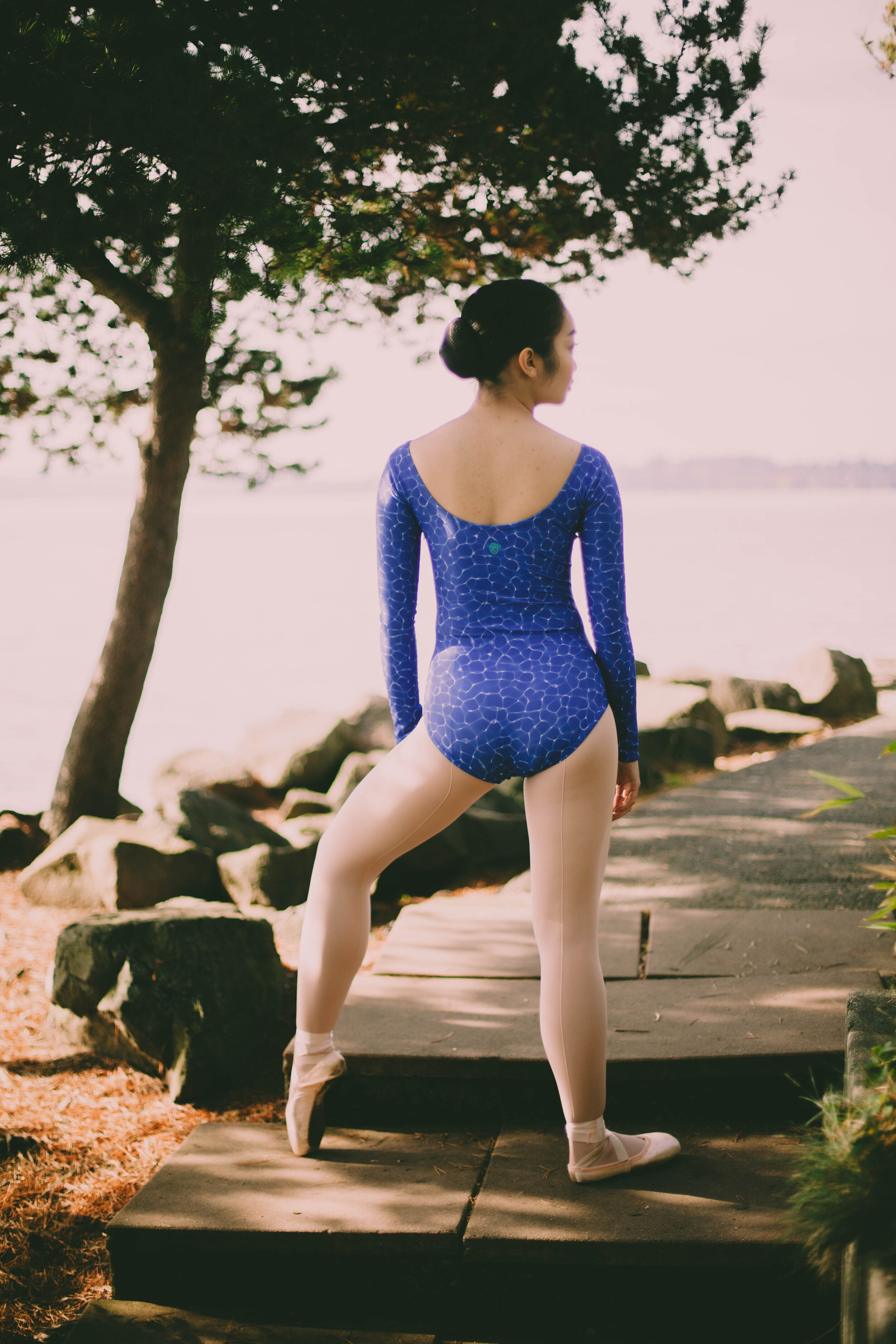
CLICK BELOW TO SHOP THE LOOK:
Kathy began making leotards for April and as she wore them to rehearsals, more and more ABT dancers began asking where she got them from. April informed her mother of how much the ABT dancers loved her leotards and suggested she make some more for the dancers in her free time. Kathy ended up creating 30 leotards, which April planned to sell in the ABT lounge. To her surprise, the leos sold out in just two minutes. The next week, hordes of dancers showed up to classes and rehearsals donning their “mom-tards,” a term the ABT girls coined to reference April’s mother creating the leos. The dancers were infatuated with the bold, vibrant prints that Kathy used, as well as the complimentary cut of each garment.
In May of 2019, April officially launched the activewear brand Chameleon by April Giangeruso, where she began selling classic, camisole-style leotards in the bright, colorful patterns that the ABT dancers fell in love with. The name “Chameleon” comes directly from the dance world, referencing a dancer who can transform through different styles of dance. “It’s a label a dancer wants,” April insists.
April seeks inspiration for her Chameleon creations from an abundance of sources, but her fellow ABT colleagues certainly play a big role. Many of the leotards are even named after ABT dancers themselves, such as Principal Dancer Isabella Boylston for “Bella’s Holy Meow” leotard. April follows popular fashion trends to help inform her new designs, but ideas also strike her in unlikely places, such as when she’s lying awake in the middle of the night. Ultimately, what Chameleon has become is a love letter to April’s dual passions for bold fashion and dancewear.
When the COVID-19 virus hit the U.S. in early 2020, April was naturally worried about how the pandemic would affect her small business. With dance studios closing, she feared people would be less eager to purchase Chameleon leotards. But fortunately, Chameleon was able to not only survive but thrive throughout 2020. “People wanted leos to brighten their moods,” April recounts. During such a tumultuous time of dismay and stress, it isn’t hard to see why dancers would want to reach for lively and vibrant leotards to bring them some joy.
Recently, Chameleon has introduced an ingenious patented line of interchangeable sleeve leotards. Each of these leotards features long sleeves that can easily zip off when dancers get too hot or simply when they want to change up the look of their leos. Moving forward, April sees the brand delving more into different types of activewear that carry the same colorful Chameleon spirit.
If April were to choose one word to describe her work with Chameleon, it’s “fun,” and that certainly comes across. In an industry that often values uniformity and sameness, Chameleon provides an opportunity for dancers to step out of the crowd and celebrate their individuality. The uniqueness of these leotards isn’t just on the surface, as April explains that numerous dancers have written to her saying Chameleon’s leos help them feel more confident when dancing. Her greatest wish is that Chameleon products help dancers feel more beautiful and enhance their confidence in the studio.

CLICK BELOW TO SHOP THE LOOK:
At the start of April’s journey, questions and “what ifs” constantly rolled through her head. She kept convincing herself that her dream of creating Chameleon was impossible to make a reality. But a simple sentiment that her husband voiced to her pushed her to try to make it happen: “what do you have to lose?” She explains that the road that’s taken her to where she is today wasn’t smooth, there were challenges and not everything was perfect. But if she hadn’t taken a chance, she wouldn’t have been able to create Chameleon and share her awe-inspiring designs with anyone outside of the ABT lobby. So her advice for anyone with a big dream is the same simple sentiment: “if you have an idea, try it, you don’t have much to lose.”
Shop leotards from Chameleon by April Giangeruso at Dancewear Center today!
Getting to Know the Creator of Girl Power Sport: Lisa Fairman
Earlier this month, I had the amazing opportunity to sit down and chat with Lisa Fairman, founder of Girl Power Sport. They are a local gymnastics, dance, and activewear brand based in Vancouver, Washington with most of their materials sourced from Portland, Oregon. When asked about how her brand started, it was clear Lisa has been surrounded by the arts and sports community for a very long time.

By Emma Neilson
Emma Neilson is a pre-professional dancer from Seattle, WA. She started dancing at the “late” age of 13, and decided to pursue a possible professional career at age 19. She is currently a Professional Division student at International Ballet Academy in Bellevue, WA. She is a registered Barre fitness and Flexistretcher instructor, as well as a current ambassador for To The Pointe Nutrition.
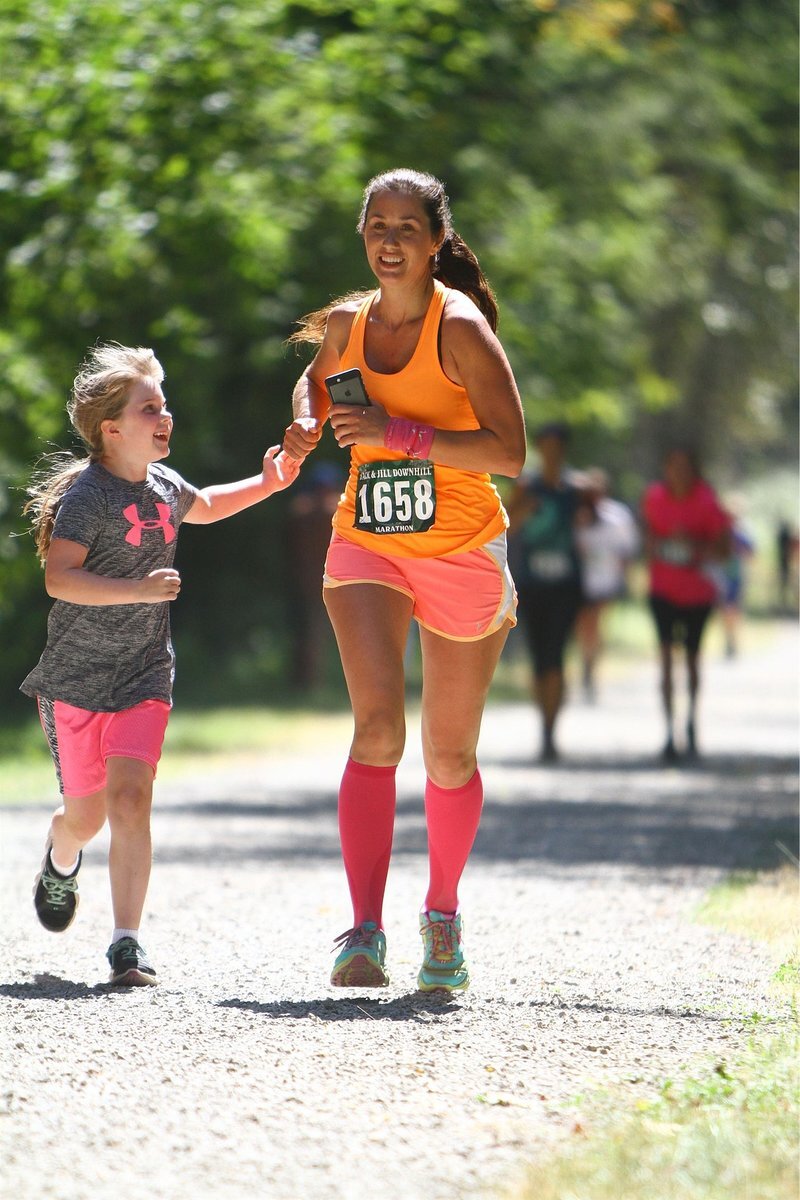
Earlier this month, I had the amazing opportunity to sit down and chat with Lisa Fairman, founder of Girl Power Sport. They are a local gymnastics, dance, and activewear brand based in Vancouver, Washington with most of their materials sourced from Portland, Oregon. When asked about how her brand started, it was clear Lisa has been surrounded by the arts and sports community for a very long time. From participating in ballet, soccer, and theatre herself, to having two daughters in dance and gymnastics, Lisa has first hand experience with what one would want out of this type of apparel. In addition to this, Lisa previously worked for Nordstrom and Zulily, and while there, recognized the demand for and lack of vendors and products on the market. After parting ways with the corporate world, Girl Power Sport was born!
When asked about her transition from buying to manufacturing, Lisa was candid about how difficult it was at first. Though she had years of experience in the fashion industry, she said it was a shock and an eye-opener to see how different things were on the other side. She mentioned how humbling it has been to go through rejection from buyers and retailers and gave some guidance to those who are looking to start their own business:
“So I would say first of all, just whenever you jump into something new, especially with manufacturing and retail, I would say just be open, you know, be open to learning from other people.”
Her biggest piece of advice is being able to pivot and change your business and plans, especially now with COVID-19 making an impact on everyone.
I personally think part of navigating entrepreneurialism includes making sure you have aspects of your brand that will set you apart from the rest, and there are several ways Girl Power Sport achieves this to bring gymnastics wear to the next level. Currently, most of their prints are custom, and Lisa is hoping as time goes on that all of their prints will be custom. The prints are lighthearted, fun, and fresh. They take into account what customers like and try to incorporate humor and encouragement into that, to create something that you will not only feel good in, but might make you smile along the way. They also have coordinating activewear sets to pair along with some of the dance and gymnastics wear.
It doesn’t stop there- Girl Power Sport is very involved with the local community and is committed to donating $1 to charity with each purchase. Lisa was born with a heart condition which resulted in years of health problems and several surgeries. She is an “unusual” case, as she is now healthy, active, and a seasoned runner. Because of this, Girl Power Sport routinely donates to the cardiology fund at Seattle Children’s Hospital. Lisa is truly an inspiration having successfully integrated her personal life experiences and passions into something that is ultimately impacting others as well.

We are so proud to be working with Girl Power Sport, and are greatly aligned in our morals and missions. We want to empower girls and women, serve the local community, and above else believe that movement is for everyone! Lisa said “We strive to be an all around fit… I just felt like dance and gymnastics should be accessible to everybody… No matter what your size. [We] want people to feel like anybody can do dance… you can be any age and be a dancer.” And as some of you readers may know, one of our mantras here at Dancewear Center is “Every body is a dancing body.” Sadly, this sentiment is not shared by the dance and gymnastics world at large, and together we are working to change that and spread this message.
When asked about what other changes she would like to see, Lisa replied saying “I would love for dance and gymnastics to be more accessible [to] ... inner cities and… people who can't pay and lower income families.” She went on to talk about the importance of afterschool programs and recognizing that dance and gymnastics is “...such a healing thing for communities…” She also briefly talked about how much she loves “...the mentorship that goes on with dance and gymnastics with the coaches and the kids… because you spend so much time together. They're just these crazy bonds and I just love that sense of community...” We couldn’t agree more, and along with Girl Power Sport, are here to support these athletes and artists, their parents, teachers, and everyone else in between.
Because it is Mental Health Awareness Month, it was only fitting that Lisa and I chatted about her struggle with anxiety as well. I asked her about her experience and how she manages it, and she had many helpful things to say. She said that a large part of her journey has been “learning how to be living in the present and not… fixate on the past and not stress too much on the future.” She also said she has been learning to be still with herself and how to “reset”. Some coping skills that have helped her include journaling, meditation, and reframing your anxious thoughts. She says she is working on being able to show up in terms of work and business management and at the same time staying centered. This is the art of balance and we both agreed that it is so important to remember that it’s a journey and there is no such thing as perfection!
You may be asking, what is coming next for Girl Power Sport? Lisa said they are currently working on putting together a second production team based in Seattle, WA. Lisa also emphasized how much she values staying local, at least for right now. She prioritizes good working conditions, fair wages, high quality, made in the US, handmade products- all of which is achieved by her hands-on management style. Because of their locality, custom orders are easily produced as well! Lisa and the whole Girl Power Sport team take pride in what they produce, and they love being able to “...share our love with you.” And now, we are able to share it with you too!

“All of us get creative in all different ways to make our dream a reality.”- Lisa Fairman
Click here to listen to a more in-depth interview with Lisa about her personal and professional life story!-
Girl Power Podcast
Available to purchase now in-store and online at https://www.dancewearcenter.net/ and https://girlpowersport.com/
Getting to Know DWC Staff Member Melissa Koh Krienke
Melissa Koh Krienke is a dancer, teacher, and artist here in the Pacific Northwest. She started dancing ballet at the age of 3 and her passion grew from there. Melissa trained through high school with Ballet Chelsea and got her BFA in dance from Cornish College of the Arts. She has performed with

By Samantha Weissbach
Samantha Weissbach is a dancer, choreographer, and business professional born & raised in the Pacific Northwest. She has been dancing since the age of 2, and continues to dance and teach ballet and pointe professionally in the Greater Seattle Area. Samantha has trained at numerous establishments and programs; however, her primary training was received at Cornerstone Studio, Ballet Bellevue, and Emerald Ballet Theatre.
Currently, she serves as Executive Director of Intrepidus Dance, and is a company member with Intrepidus Dance and Forthun+Rome Dance Theater.
PICTURED: Melissa Koh Krienke, DWC Staff Member
Photo By:
Melissa Koh Krienke is a dancer, teacher, and artist here in the Pacific Northwest. She started dancing ballet at the age of 3 and her passion grew from there. Melissa trained through high school with Ballet Chelsea and got her BFA in dance from Cornish College of the Arts. She has performed with Beth Terwilliger, Converge Dance Festival, the Chihuly Garden and Glass, Dance This, Bridge Project, Tint, PRICEarts N.E.W., Forthun+Rome Dance Theater, Intrepidus Dance, Seattle International Dance Festival, and Carnegie Hall.
Melissa is now dancing professionally; teaching Ballet, Pointe, and Contemporary; and is a co-founder of Trillium Dance Collective in Seattle.
In her free time Melissa enjoys board games, reading, and snuggling with her black cat, Mochi.

Photo by Catlyn Griswell
What excites you the most about joining the DWC team?
I'm excited to join this wonderful group of people supporting the dance community in the PNW! DWC's dedication to inclusivity is important and a huge part of why I wanted to join the team. (Plus Samantha is, like, super cool) ;)
Why & when did you begin dancing?
I started dancing when I was three. My dad took me to see a production of the Nutcracker and apparently I was so entranced I wanted to start Ballet immediately!

Click Below to Shop the Look:
Flexistretcher in Black by FLX | She's Tenacious Leotard by Russian Pointe
What styles of dance do you specialize in?
I've trained in Ballet and Pointe my whole life, but grew to love contemporary/modern dance in college. Contemporary is how I like moving the most now, but I still teach and have a special place in my heart for ballet.
Who is your dance icon and why?
Honestly, right now I don't necessarily have one. I'm feeling very inspired by the little things lately--dancers who I see supporting each other and giving themselves grace during this crazy time--by making art, or taking a break!
If you could give advice to your younger self, what would you say?
Take a second and breathe. You don't have to have everything figured out right this second. Try to be comfortable not knowing everything!
To read more about Melissa, check out the links below!
Getting to Know DWC Ambassador Emma Spencer
Emma’s favorite thing about dance is that it provides a healthy emotional outlet. She has found that her personal struggles with mental health cause her anxiety to physically manifest in her body. Dance for Emma helps to release the tension and allow it to flow through and out of her. “[Dance is] a bit more emotional with your entire body; not just your voice or your hands or your brain. I think it lets go of a lot of bodily tension and not just mental tension.”
By Samantha Weissbach
Samantha Weissbach is a dancer, choreographer, and business professional born & raised in the Pacific Northwest. She has been dancing since the age of 2, and continues to dance and teach ballet and pointe professionally in the Greater Seattle Area. Samantha has trained at numerous establishments and programs; however, her primary training was received at Cornerstone Studio, Ballet Bellevue, and Emerald Ballet Theatre.
Currently, she serves as Executive Director of Intrepidus Dance, and is a company member with Intrepidus Dance and Forthun+Rome Dance Theater.
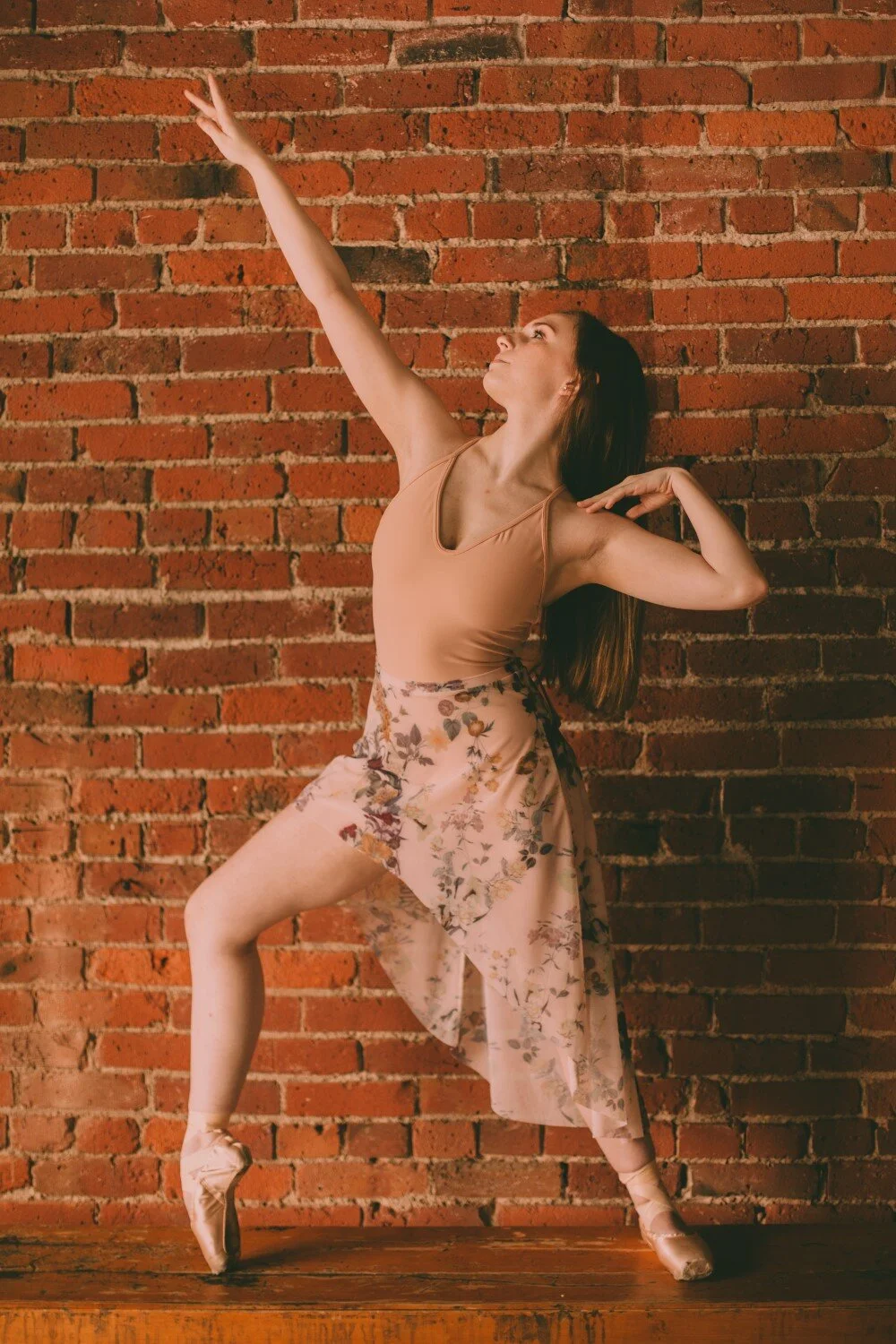
PICTURED: Emma Spencer, DWC Ambassador
Click Below to Shop the Look:
Iris Petal Pink Leotard by Eleve Dancewear and Peacock Skirt Enchanting Mesh by Elevé Dancewear
By Samantha Weissbach
Dancewear Center Ambassador (DWCA) Emma Spencer started dancing in kindergarten, and like so many dance students, grew more involved and moved up through the levels as her years of experience multiplied. She began competing at age 7, began her pointe journey around 11 years old, became a teacher’s assistant at age 14, and now teaches her own classes at the Academy of Dance in Port Orchard. Emma has especially fond memories of the pointe roles she’s since had the opportunity to perform such as Clara and Sugar Plum in The Nutcracker, Tinkerbell in Peter Pan, and Chip in Beauty & the Beast. For only being 17 years old, DWCA Emma Spencer has a lot of dance experience to show for it. In addition to regular dance training, competing, and teaching, Emma is also a member of her studio’s pre-professional program: all while maintaining a full-time school schedule!

Click Below to Shop the Look:
Emma’s favorite thing about dance is that it provides a healthy emotional outlet. She has found that her personal struggles with mental health cause her anxiety to physically manifest in her body. Dance for Emma helps to release the tension and allow it to flow through and out of her. “[Dance is] a bit more emotional with your entire body; not just your voice or your hands or your brain. I think it lets go of a lot of bodily tension and not just mental tension.”
When asked what her biggest challenge within dance is, Emma responds, “I’m very much in my head. I am a huge perfectionist,” and goes on to share that she struggles not to compare herself and her progress to her peers’. “Whenever someone else is given a compliment, I tend to think, ‘oh, I didn’t do well,’ and it’s not that I’m upset I didn’t get a compliment, it’s just that I don’t know if I did well or not and I crave that feedback.”
Her advice for dancers who may be working to overcome these same internal battles? “As someone who struggles with [comparison] myself, it’s a lot of mental blocking. It’s incredibly hard to just stop comparing yourself. It’s easier said than done. It’s a lot of taking the time to focus on yourself and what you should be working on rather than what others are working on.” Emma goes on to share that taking others’ corrections and applying them to herself helps keep her focused on her training rather than on comparing herself to others.
Some other practices Emma has employed are journaling and mindful improvisation movement. “I like to improv at my home studio, and then take time to reflect on that improv, which allows me to stay present and within myself. In class, Emma writes down in her journal both corrections and compliments she receives in class from her teachers and peers. It’s a practice she also instills in her students. “It helps me keep my confidence up.”

Click Below to Shop the Look:
Adult Carmen Wrap Sweater by Wear Moi | Perfect Fit Shorts by Cloud & Victory | K-WARMER Shock by Apolla Performance
What would Emma like to see change in the dance world? “I am incredibly passionate about educating the public on epilepsy and other invisible disabilities.” Emma goes on to share that her own sibling was diagnosed with epilepsy at the age of 7, and with that diagnosis came a lot of fear surrounding how little they knew about the disorder. “Epilepsy is the most common neurological disorder in the United States, and one in every 100 people will have a seizure in their lifetime. With such a common disorder, one would think there would be quite a bit more awareness, but I’ve met people my age or even older who stigmatize or know next to nothing about epilepsy.”
The solution? Education. Emma herself is certified in epilepsy First Aid, and encourages all dance studios (and workplaces in general) to facilitate mandatory CPR, First Aid, and epilepsy training to their staff. Posting visual instructions (i.e. posters) on steps to take when someone is experiencing a seizure could literally save a life. “1 in every 25 people has epilepsy. It’s important for all of us to know what to do during a seizure event.”
Another powerful tool to influence change? Talking. What a lot of people don’t realize is that people with epilepsy oftentimes choose not to disclose their diagnosis for fear of ridicule. “ I spoke with my sibling about why they were previously so adamant about keeping [their] epilepsy a secret, and they told me it was embarrassing. People would joke about seizures or judge a person because of their epilepsy.” Once Emma’s sibling began opening up about their condition; however, they found other people within their own school who also had seizure disorders who were afraid to share their condition: for the same reasons. “Since then, my sibling has been very open about their experiences with living with epilepsy and has made many friends because of it, and it’s inspired me to push myself to eradicate stigmas and misinformation surrounding seizure disorders. Opening up conversations about epilepsy is one of the things we can do to destigmatize it.”
To read more about Emma, check out the links below!
Getting to Know DWC Ambassador Brittni Bryan
While dance has always been an important part of who she is, Brittni’s relationship with dance has been anything but easy. “I stopped dancing around 16 years old for a good year because I was having such a tough time with mental health.” Where dance had previously been an emotional outlet for Brittni, she began to find that it didn’t feel good anymore. “It wasn’t the same,” she recounts, “and it even [physically] hurt sometimes to dance.”

By Samantha Weissbach
Samantha Weissbach is a dancer, choreographer, and business professional born & raised in the Pacific Northwest. She has been dancing since the age of 2, and continues to dance and teach ballet and pointe professionally in the Greater Seattle Area. Samantha has trained at numerous establishments and programs; however, her primary training was received at Cornerstone Studio, Ballet Bellevue, and Emerald Ballet Theatre.
Currently, she serves as Executive Director of Intrepidus Dance, and is a company member with Intrepidus Dance and Forthun+Rome Dance Theater.
PICTURED: Brittni Bryan, DWC Ambassador
Click Below to Shop the Look:
By Samantha Weissbach
“I have a semi-distinct memory of driving past the studio that I first went to. It was nighttime, and I remember my mom pulling into the parking lot and going in to talk to the owner,” Brittni shares with a smile. Around 4 years old at the time, this is one of her earliest memories of starting dance at Debbi’s Dance in Lacey, Washington where she studied Ballet, Tap, Jazz, Acro, Lyrical, and Hip-Hop, and competed all the way through high school. For a time, she also supplemented her dance training with drop-in Contemporary classes at Westlake Dance Center in Seattle. While dance has always been an important part of who she is, Brittni’s relationship with dance has been anything but easy.

Click Below to Shop the Look:
“I stopped dancing around 16 years old for a good year because I was having such a tough time with mental health.” Where dance had previously been an emotional outlet for Brittni, she began to find that it didn’t feel good anymore. “It wasn’t the same,” she recounts, “and it even [physically] hurt sometimes to dance.” During her year away, Brittni did not have a consistent movement practice. At this point, her mom stepped in, hoping to guide Brittni in a different direction. “Hey, there’s this high school across the highway, they have a really good dance team, you hate your school, you don’t want to go to school, most days you don’t go to school… so let’s try this other school,” Brittni laughs as she recalls her mom’s proposition. Taking her mom’s advice, Brittni tried out for the dance team, made the team, and her senior year of high school, she made the unorthodox decision to transfer to a new school.
“I had never danced so fast in my life,” Brittni shares with a laugh. “I remember doing the pom routine and being like, ‘there’s no way. You’re insane.” When asked “but did you do it?” Brittni responded with a grin, “there was no other choice.”
Post high school, Brittni faced the choice of whether or not she wanted to pursue a career in dance. She grappled with many challenges, including self-doubt, and worries about not having a financial fallback should a dance degree not yield a fiscally stable career. She recalls feeling like she didn’t have the type of body for any kind of a career in dancing. After applying for a variety of different dance programs, she decided to go to school for academics.
Brittni continued to take at least one dance class a week throughout the course of her schooling, simply because she still loved to dance. “I never thought I would ever ‘do anything with it.’” Brittni shares. Her senior year, however, a chance meeting in a coffee shop in Seattle changed everything.

Click Below to Shop the Look:
Celine Tea Time Leotard by Eleve Dancewear | Lilac Skirt by Bullet Pointe
“A friend of mine and I were at a coffee shop after taking a class at Westlake and we were chatting about life, and this girl next to us leaned over and asked, ‘are you guys dancers?!’” That “girl” was none other than Brittany Mattox, who at the time was a dancer at Julia’s on Broadway and now is the Founder and Artistic Director of Seattle-based Jazz and Contemporary dance company Coalescence Dance. Brittany encouraged Brittni and her friend to audition at Julia’s, and so Brittni found herself a part of the thriving professional dance community in Seattle. Brittni went on to dance with Julia’s (on and off) for about 5 years, and during that time also became a company member of local Contemporary Jazz dance company 3rd Shift Dance. “Dancing with 3rd Shift got me back into dancing shape through their intensive training and very physical choreography. It brought me back to dance.”
Now, this 30-year-old is a High School English Teacher and Special Education Case Manager by day, and continues to choreograph, train, and dance professionally in the Seattle area on nights and weekends. In addition to choreographing competition pieces with Glass House Dance in Sammamish, Brittni is a company member with Seattle-based dance company Intrepidus Dance. “I’m so happy I’ve found this community of women. It feels healthy, and it feels good.”
When asked what her favorite thing is about dance now, Brittni shares with us that she loves choreographing, and has aspirations to continue to further her choreographic explorations in the Seattle dance community. “I love that right now I’m in a space now where I only choreograph; I just love creating so much.”
As far as challenges within the sphere of dance, Brittni shares a struggle that unfortunately is familiar to so many fellow dancers. “For such a long time it was my body. I knew from a really young age that I didn’t have a ‘dancer build.’” In her middle school and high school years, Brittni struggled with two separate eating disorders. While she still struggles with her body image from time to time, it comes up more now in the context of how her body is viewed by artistic directors and casting agents in the context of costuming. Overall she says, “I would love to see more and more diversity in the dance world.”
Looking back at her dancing journey, Brittni’s biggest piece of advice is actually for parents of dancers who may be struggling with their mental health. “If you notice that your kid is changing, and you’re concerned about it. Don’t just let it happen.” She encourages parents to actively step in and support their dancers. “If you feel at a loss or don’t know where to start, find someone who can help.” Check out DWC’s local dance specialists page for a list of medical professionals who specialize in dance and performing arts!
To read more about Brittni, check out the links below!
Getting to Know DWC Ambassador Niki Kothari
DWC Ambassador Niki Kothari’s dancing journey might sound familiar to a lot of fellow dancers. “I started dancing when I was 3,” Niki tells us. “I was in Tap, Ballet, and Bollywood, and…

By Samantha Weissbach
Samantha Weissbach is a dancer, choreographer, and business professional born & raised in the Pacific Northwest. She has been dancing since the age of 2, and continues to dance and teach ballet and pointe professionally in the Greater Seattle Area. Samantha has trained at numerous establishments and programs; however, her primary training was received at Cornerstone Studio, Ballet Bellevue, and Emerald Ballet Theatre.
Currently, she serves as Executive Director of Intrepidus Dance, and is a company member with Intrepidus Dance and Forthun+Rome Dance Theater.
PICTURED: Niki Kothari, DWC Ambassador
Click Below to Shop the Look:
By Samantha Weissbach
DWC Ambassador Niki Kothari’s dancing journey might sound familiar to a lot of fellow dancers. “I started dancing when I was 3,” Niki tells us. “I was in Tap, Ballet, and Bollywood, and I was a little tomboy and I decided that I hated it. I hated the hair, the makeup…” Niki hated every single part of it. Shortly after expressing her great distaste for dance, Niki’s family signed her up for every sport imaginable. “I did Soccer, Basketball, Softball, Badminton, Tennis… I did everything!” says Niki with a smile.

Click Below to Shop the Look:
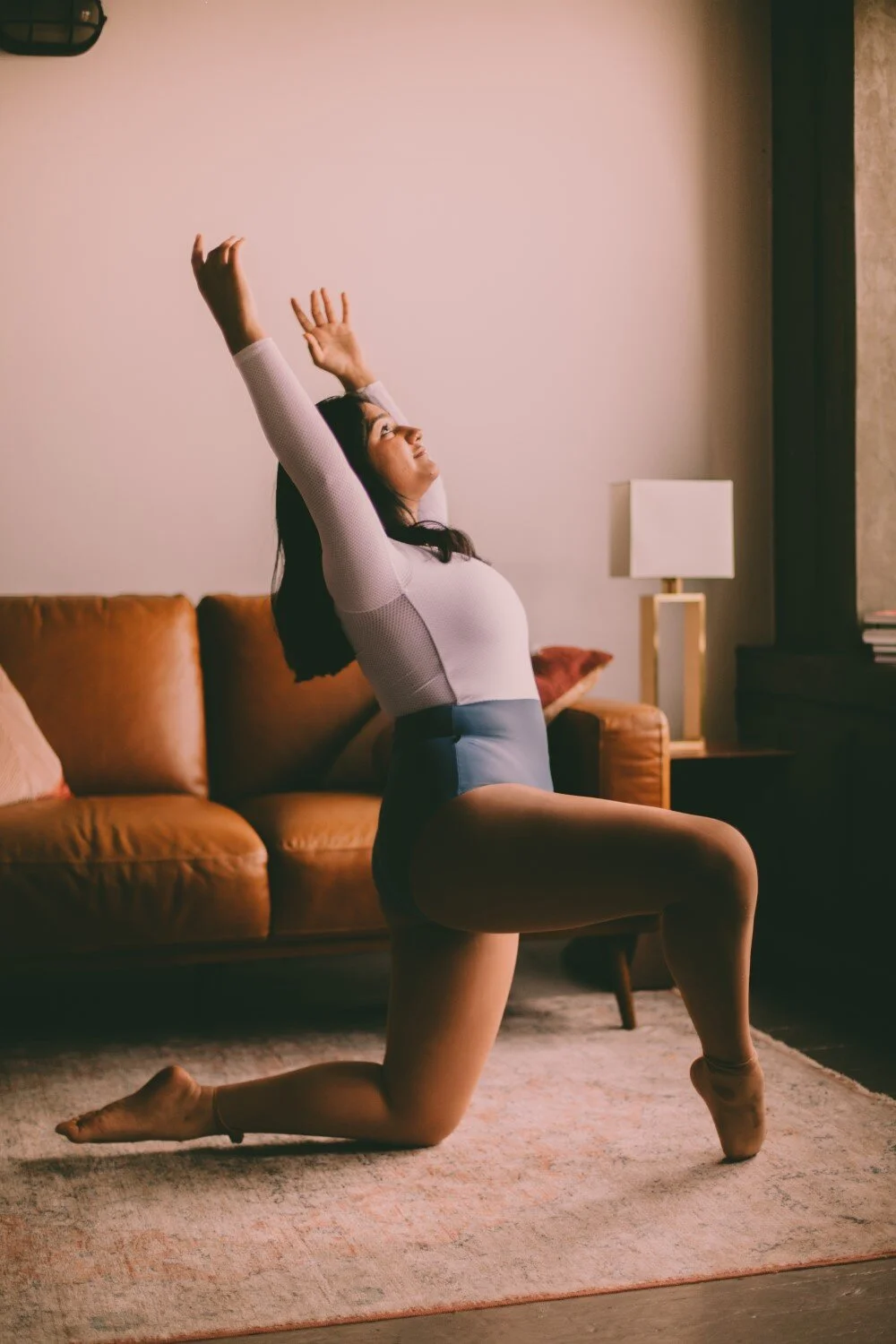
Allison Misty Blue Leotard by Eleve Dancewear | Delia Skirt in White by WearMoi | Joule Shock in Nude 1 by Apolla Performance
However, in 3rd grade, Niki became enraptured with hip-hop. “I thought hip-hop was the coolest thing in the world, and the very next year started taking every single class I could take.” At her old studio (which is no longer) Niki found herself in Musical Theater, Jazz, Acro, Ballet, and also as a part of the competition team. While she learned a lot, she unfortunately did not enjoy herself socially, but stuck it out for a few years. Finally, in 7th grade, Niki moved to Glass House Dance, where “she’s the most happy.”
At Glass House, Niki has become a part of a thriving community of dancers. She takes as many classes as she can, competes, and is a teacher’s assistant. One of her favorite things about dance (and dancing at Glass House specifically) is the friends and general connections she’s made. Last year, Niki sustained an injury to her feet, and the support she felt from her ballet teacher was overwhelmingly positive. She feels that the community she is a part of is truly invaluable.
When asked what her biggest challenge has been in the sphere of dance, Niki shared that even though she’s in advanced classes, has a competition solo, duo, and 2 group numbers, she can’t accept that people think she’s a good dancer. “[It’s] the one thing I can’t tell myself. If we’re doing improv or a new combination across the floor and my teacher says ‘wow that was awesome, go again’ I just think it’s all from pity.” So what helps Niki break through the quagmire of negative self-talk? “Remember that you’re doing it for you. You’re not dancing for every other person. You’re not dancing for the judge, you’re not dancing for the teacher, you’re dancing for yourself because you like it.” This is something all of her teachers have said to her in the past, and she hopes to pass this on to other dancers who may be struggling with their self-worth.
Click Below to Shop the Look:
What’s something Niki would like to see change in the dance world? “I don’t have a generic ‘perfect ballet body’, and it always stressed me out when it came around to costume time.” At previously attended studios, Niki recalls all of the dancers in her class putting on their costumes when they arrived, being lined up, and then evaluated one by one based on the fit of the costume. She was told often that her costume was too tight or didn’t look good on her arms. “It was never something super bad or outright mean, but it still hurt.” Niki feels that being mindful of the language we use surrounding how an article of clothing fits ensures that we are prioritizing the dancer as a sovereign human being over a piece of clothing which is inanimate and holds no bearing on our self-worth.
Another thing that Niki has found isn’t always considered is how a costume’s color is going to pair with her complexion, being of Indian heritage. “There are just certain colors that don’t look good with my skin tone.” She feels that there is a huge opportunity for teachers and studio owners alike to consider their costume choices in the context of all bodies being represented in their classroom, including size and skin tone.
She also wants to encourage dancers of all different sizes, colors, and abilities to bravely and boldly show up. “Be brave and step out of your comfort zone. Literally anyone can dance. I don’t care what you say, anybody can dance. Anybody who wants to and is putting in all their best effort can.”
To read more about Niki, check out the links below!
Getting to Know DWC Ambassador Kelsey Wickman
The way DWC Ambassador Kelsey Wickman found dance is truly like a fairytale. One day, Kelsey recounts, “my mom, my sister, and I took an adventure walk,” which magically led them to the doorstep…

By Samantha Weissbach
Samantha Weissbach is a dancer, choreographer, and business professional born & raised in the Pacific Northwest. She has been dancing since the age of 2, and continues to dance and teach ballet and pointe professionally in the Greater Seattle Area. Samantha has trained at numerous establishments and programs; however, her primary training was received at Cornerstone Studio, Ballet Bellevue, and Emerald Ballet Theatre.
Currently, she serves as Executive Director of Intrepidus Dance, and is a company member with Intrepidus Dance and Forthun+Rome Dance Theater.
PICTURED: Kelsey Wickman, DWC Ambassador
Click Below to Shop the Look:
By Samantha Weissbach
The way DWC Ambassador Kelsey Wickman found dance is truly like a fairytale. One day, Kelsey recounts, “my mom, my sister, and I took an adventure walk,” which magically led them to the doorstep of their local dance studio. Like many dancers, she started around age 4 in combo tap/ballet, and eventually when her family moved to Colorado, found herself enrolled at the resident competition studio. In her early years of high school, Kelsey found herself caught in a game many dancers are familiar with: trying to balance dance and school, while squeezing in other social activities.

Click Below to Shop the Look:
The Luster Leotard by Jule Dancewear | Lilac Skirt by Bullet Pointe
Looking for an opportunity to find some breathing room, Kelsey backed off from competing midway through high school. This allowed her the opportunity to participate in one of her high school’s musicals, refocus on her studies, and participate in the local community Nutcracker.
After high school, Kelsey attended Gonzaga University, intending to focus her efforts entirely on earning her B.A. in Public Relations while taking some dance classes on the side to fulfill her elective requirements. However, by the time her senior year rolled around, Kelsey was anything but a stranger within the dance department. One night, when at a gathering at Gonzaga dance director Suzanne Ostersmith’s house, one of her peers asked, “Kelsey, you’re already taking all of the dance classes… why aren’t you a minor?” Kelsey recounts with a laugh, “I didn’t really have a good answer!” It was then that she decided to bravely and rather ambitiously add the minor in her final year of college.
After college Kelsey moved to Salt Lake City, where she was blown away by the warm and welcoming art scene. Kelsey smiles broadly as she recalls, “the dance community in Salt Lake City is incredible.” It was because of relationships built there that Kelsey found her way to the artÉmotion Summer Intensive led by BalletWest Company Dancers Alison DeBona and Rex Tilton, who are passionate about fostering a dance environment dedicated to operating diversely, equitably, and inclusively.
Since then, Kelsey has moved back to Seattle, and continues to participate in artÉmotion intensives (albeit virtually for the time being) and also dances with local dance company Syncopation Dance Project led by Artistic Director Elbert Lubas.
When asked what her favorite thing about dance is, Kelsey says, “right now what really stands out is being able to show up at a ballet barre and it’s routine, yet also there are always more ways to challenge yourself.” As a young dancer, Kelsey definitely used the art form as an outlet; however, as an adult she has grown to appreciate being able to refine, work, and stay challenged physically in a way that she doesn’t get sitting at a desk each day.
On a more personal note, we asked Kelsey to share what her biggest challenge has been in the sphere of dance. “Growing up, I was definitely a part of the era still where we didn’t fully accept people of all shapes and sizes.” While she doesn’t hold a grudge, she felt during the course of her training she was not identified by her instructors as a dancer who would have opportunities post high-school. Standing at only 5 foot, with an athletic build, Kelsey didn’t believe there would be opportunity for her in the realm of dance. That voice in her head would often creep up, ““Am I good enough? Am I skinny enough? If I don’t fit in here… where do I fit in?” This was especially hard to process, as Kelsey shares that she “loves ballet.” As she has gotten older, and her body and ability has continued to change, and that voice sometimes gets a little bit stronger which can be really hard.

Click Below to Shop the Look:
Support the Arts Hoodie by Sunday Outfitters | The Performance Shock by Apolla Performance
Kelsey’s advice for other dancers who are struggling with the same thing? “Find what you really love, and find that community that supports you doing what you love.” For her, artÉmotion and Syncopation Dance Project have been safe havens for her to continue her dance training in a supportive environment, where she is continually challenged and encouraged to push herself to the next level. “I want to be that 90 year old woman on a poster with my leg up to my ear! Even if I have some metal hips going on.”
Something Kelsey wants to see change in the dance world is the breadth of opportunity for dancers of varying body shapes and backgrounds. She feels that there is a lot of focus on two primary buckets: commercial work and company contracts. “Having a more diverse variety of people to look up to would have helped me believe in my own opportunity more as a young dancer.” She remembers thinking that her final performances in high school or college would be her last.
She believes a huge opportunity in changing the narrative lies within the classroom: specifically, with our teachers. “The reason I didn’t believe I had opportunities was because I wasn’t being identified as someone who would have a change to perform and go beyond. Putting the emphasis less on fitting this historical mold and [instead on] finding your path is so, so powerful. I think that means healthier dancers all around.”
Kelsey goes on to share that another possibility to influence change is for leaders (like Alison DeBona, Rex Tilton, and Elbert Lubas) in our community to create opportunities where there previously were none. She’s been encouraged and invigorated by the change that has already taken hold, and is excited for the growth that she’s seen blossoming in the last few years to continue to multiply.
To read more about Kelsey, check out the links below!
Getting to Know the Creator of Sunday Outfitters: Juliet Prine
For professional ballet dancer Juliet Prine, creating stylish and comfortable loungewear was a way to use up her increased spare time. But what started as a simple way to take up free time transformed into Sunday Outfitters, a popular online business that sells cute and cozy clothes while supporting important social causes. How exactly did this transition happen?

By Madison Huizinga
Madison Huizinga has been dancing for 13 years, and her favorite styles are ballet and contemporary. Currently, she attends the University of Washington and is studying Communications. Madison is presently a company member with Seattle-based dance company Intrepidus Dance.
PICTURED: Juliet Prine, Founder of Sunday Outfitters
By Madison Huizinga
When the COVID-19 pandemic intensified in the United States during March 2020, the majority of dancers across the country were ordered to stay home, as schools, workplaces, stores, and dance studios shut down to prevent the spread of the virus. While quarantining, many people adopted hobbies to help pass the time. On social media, people shared pictures of the banana bread they were baking, the TV shows they were binge-watching, and the countless DIY home projects they decided to begin. For professional ballet dancer Juliet Prine, creating stylish and comfortable loungewear was a way to use up her increased spare time. But what started as a simple way to take up free time transformed into Sunday Outfitters, a popular online business that sells cute and cozy clothes while supporting important social causes. How exactly did this transition happen?
The creator of Sunday Outfitters is Juliet Prine, a professional ballet dancer at Pacific Northwest Ballet in Seattle, WA. Juliet grew up in Minneapolis, Minnesota as an all-around competitive dancer. While Juliet danced in a variety of genres, she seemed to have a particular knack for ballet, as teachers repeatedly reached out to her mother and encouraged her to send Juliet to a ballet school. Juliet decided to narrow her focus on ballet and began dancing at a strictly ballet-focused school. She trained rigorously throughout her adolescent years, even traveling to Los Angeles to study at Colburn Dance Academy. Juliet participated in a variety of summer intensives at the School of American Ballet, San Francisco Ballet, Chautauqua Institution, and Pacific Northwest Ballet School. Eventually, Juliet joined PNB as an apprentice in 2019 and was promoted to the corps de ballet that same year.
However, when COVID-19 hit the United States and intensified in Seattle, PNB shut down quickly the day before an opening night. Juliet was disappointed, as she was planning on performing “one of the biggest roles in her career and couldn’t do it.” Like the rest of the dance community, Juliet sat at home for months on end, eagerly anticipating the dance world to re-open.
A few months into this isolation period, Juliet was doing some online shopping, searching for a cute loungewear set to wear in the fall. She looked all over the Internet and couldn’t come across anything that she liked that was under $150. So, in her spare time, she decided she would try to make her own!
The first loungewear set that Juliet created was the “star set,” a sweatshirt and matching bottoms covered in big white stars. She sent the set to her sister in college, and she was obsessed. Her friends in her sorority begged Juliet to send over more and build a website. Juliet began making sets for her friends and family and before she knew it, she was building a website, something she hadn’t ever done before.
Initially, Juliet figured that she would make her loungewear sets through the end of the year and then call it quits after the holidays. She assumed she would return to dancing at PNB soon and wouldn’t have as much time to create her sets. But it quickly became clear that she wouldn’t be dancing at PNB as frequently, as the pandemic stretched into the new year. And to her surprise, her brand began taking off! Juliet was excited to see how many people wanted her products.
One of the most unique features of Sunday Outfitters is its incorporation of philanthropy. A variety of Sunday Outfitter’s loungewear sets connect to specific causes, with a portion of proceeds going to organizations that are helping advance different causes and alleviate social problems. For example, Sunday Outfitter’s “support the arts” crewneck is an adorable, minimalistic piece that features the Yoko Ono quote “art is a way of survival.” 50% of the profits made from the “support the arts” crewneck go to Pacific Northwest Ballet’s Future Fund. The “suicide awareness” line features sweatshirts that say the phrase “take it one day at a time” in a wavy font, an expression that’s especially comforting amid of a global pandemic. 50% of the proceeds from the “suicide awareness” hoodies go towards raising suicide awareness and preventing teen suicide.

Moving forward, Juliet hopes to continue bringing awareness to important causes and stories through her work at Sunday Outfitters. She is excited to continue creating new products and connecting with new causes. Her advice for aspiring entrepreneurs is simple: “just start, don’t put it off, just start it.” Juliet shares that “if you want to be an entrepreneur, you need to have that drive, and be inspired and committed.” One of the most important parts of starting your own business or creative endeavor is to make sure you love what you’re doing.
“Whatever you are going to do, don’t do it because other people are going to love it,” Juliet says. “Make sure you’re in love with it”
Sunday Outfitter’s products will be available through Dancewear Center on Sunday, March 7, so don’t forget to purchase your own cozy loungewear set then!
A Place of My Own: A Conversation with Ashton Edwards
Earlier this month, Director of Marketing Cherie Rendón sat down with DWC Ambassador Ashton Edwards to discuss his journey and experiences surrounding starting pointe training as a gender fluid dancer. Ashton is currently a Professional Division student with Pacific Northwest Ballet, and is one of the first dancers to be allowed to train in both male and female classes: breaking down barriers in an industry that

A Place of My Own: A Conversation with Ashton Edwards
Ashton Edwards, originally from Flint, Michigan, has studied dance since the age of four years old at the Flint School of Performing Arts. Ashton has attended summer ballet intensives on full scholarships at The Joffrey Academy of Dance in Chicago, Houston Ballet School, and Pacific Northwest Ballet. In 2018, Ashton represented Flint in the NAACP’s National Afro-Academic, Cultural, Technological and Scientific Olympics (ACT-SO) competition in San Antonio, Texas, against over 250 students of all high school grades all over the country. In the Performing Arts, Ballet dance category, Ashton came in 3rd place, winning a bronze medal. Ashton is currently a Professional Division student at Pacific Northwest Ballet.
Earlier this month, Director of Marketing Cherie Rendón sat down with DWC Ambassador Ashton Edwards to discuss his journey and experiences surrounding starting pointe training as a gender fluid dancer. Ashton is currently a Professional Division student with Pacific Northwest Ballet, and is one of the first dancers to be allowed to train in both male and female classes: breaking down barriers in an industry that has historically been divided into uncompromising female/male binary categories.
CR: What led you to start training en pointe?
AE: It was a desire I had as a child. It’s always been something I wanted to do, to just… be a pretty ballerina. So I guess it was just natural, it was just a desire as a kid. It wasn’t until I was brave enough to come out and say it that I did.
CR: Since starting your training, what challenges have you run into?
AE: One of the biggest challenges has been exhaustion. Getting back up every day, and taking ample time to rest after the long day. That’s been the hardest part: pushing, and then recovering, pushing, and then recovering - every day. We have pretty long schedules at PNB, so we are dancing all day. For me, it’s going back and forth from pointe to flat, from pointe to flat. At the end of the day, my body in so many different ways is just… worn. It’s not just your normal stretch routine, it’s my stretching, and then my icing, and then my bath. I have a new routine now--it’s just… adapting.
CR: Speaking on recovery, what have you found really works for you as far as recovery practices? What does that look like for you?
AE: I come home, and I start with a long stretch [routine]. Usually my stretch takes about 10-15 minutes. I stretch, and then I roll out. I roll out all the muscles, so I start with a tennis ball and my feet, then with my roller I go: calves, quads, IT band, hip flexors, and back. I usually go then into an ice bath--just for my feet up to my knees. Next, epsom salt bath, shower, and then a heating pad for my back--then I go to bed! Then in the morning, I have a pre-class workout I have to do because of my back. I have a really flexible back, but also that leaves me in a vulnerable position. I went through a really bad injury last December, so now I have pilates exercises that I use to prepare for my day, and then I do all of these [recovery routines] after my day.
CR: Has anything surprised you about starting dancing en pointe?
AE: I think the most surprising part… is to know how different it is. Not to say that one is harder or one is easier, but they are just so different. It’s been mind boggling switching back and forth. Just the approach of a movement or a variation has to be so different, because the work requires so many different things. At the end of the day, my entire body is just worn because I’ve been switching back and forth, from muscle to muscle. I’m just exhausted by the end. It’s been very surprising to see how different the women work. [Even the] setup of the class--the energy of the class--how competitive (it’s a lot more competitive for the women), [and] just how hardworking and determined they have to be. It’s been really surprising and interesting to see.
CR: What sort of successes have you experienced since starting your training?
AE: [Most recently] PNB has nominated me for the Princess Grace [Awards]! But also, just general day-to-day successes… it’s been really fun completing variations in both male and female work now, and just feeling--still exhausted--but more at ease. I feel like a big success generally has been how strong my technique has become, and how I feel more mature in all of my dancing now, because I’ve dabbled in so many different things and created my own type of movement. That’s been a big success I feel for me, when I dance I feel good about what I’m doing.
CR: Since you have become an ambassador with [DWC] and we’ve all followed your progress throughout the last 6 months, we’ve gotten a lot of dancers from all over the country commenting about your progress and your story, and being really inspired by what you’re doing pioneering this normalization of more men dancing en pointe in a very serious fashion. What do you have to say to those people who may want to start training like you are? Any tips, words, advice, wisdom for those people?
AE: First, theraband, theraband, theraband! Get those feet as strong as possible! After that, don’t stop. Don’t stop emailing, don’t stop contacting whoever you have to contact. You have to push yourself through, because no one is going to invite you into the room: you have to put yourself there. So I guess my biggest advice--even for moms of these children--[is] to be the biggest advocate you can for yourself. Make your own place. Reach out to me, because I love to hear it, and I also love to help! Show people what I did and what PNB is doing: what it could be! You have to keep pushing for yourself. Make sure your technique is also up to where you’re saying it is, and be realistic in what you can do! My biggest thing is, I’m not asking to be Sugar Plum--but I’m asking to be back of the line corps de ballet: and I know I can do that. So I should have the opportunity. Know what you can do, and know what should be available to you, and make it available to you.
I’ve been getting a lot of those messages, and it’s just so cool. Especially the moms who [tell me], “I have a 4-year-old son, who heard about you!” I just well up every time. I was that person! I’ve gotten that before just as a black dancer, “oh, you’re so good!” But it means a little something different now, because this is something I never would have imagined being possible, and somehow I did it. I had a lot of help along the way, but also a lot of it was just down to me. I’ve cried so many times already, I don’t know how to describe it. I can not wait to be on the other side of my career, and bring so many people with me. Things are just falling into place--it’s so exciting.
CR: I’m so thankful for social media. If this were happening 10 years ago, it would take so much more to get in front of people and to get your story told. Just the way our culture communicates now online it’s so amazing to see more peoples’ stories just being out there and available so so many more people can see others like them and realize “yeah, I can do this too!” It’s great. I think what you’re doing is very inspiring. We’ve talked before, and you know that I think of you very highly, but I'm very happy that more people are able to see people like you.
AE: I love that I get to connect with these people, I love that there is a community of people that just are so strong together. I see the same people a lot in the comments of different posts, and it just feels like we are together. We are all in one mind and one body and just pushing through this together. It’s so nice to feel so supported.
To read more about Ashton Edwards and follow his journey, click any of the links below. To help support Ashton in his training, you can donate to his GoFundMe here.
Interested in writing for the DWC Blog? Click below to fill out the DWC Contributor application!