
Tracing the Origins of Hip Hop
From small house parties in New York City to loudspeakers across the world, hip hop has become a global sensation over the last handful of decades. Emerging from a prolific Black community in The Bronx, hip hop culture continues to develop and expand in unique ways, from musical innovations to developments in the B-boy and B-girl landscape. But where exactly did it all begin?
A Chronicle of Hip Hop Through the Years
By Madison Huizinga, DWC Blog Editor
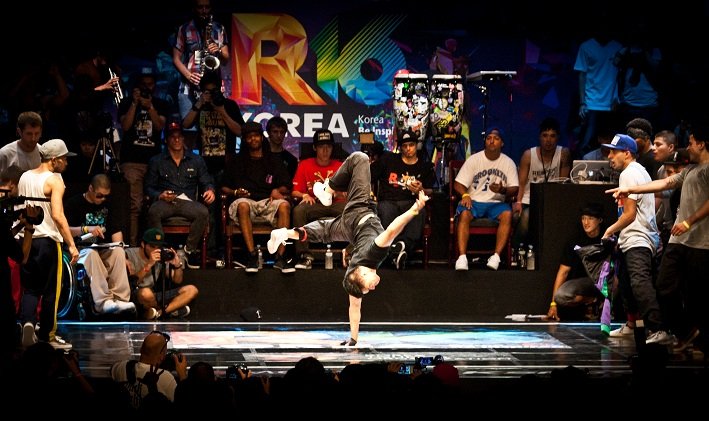
From small house parties in New York City to loudspeakers across the world, hip hop has become a global sensation over the last handful of decades. Emerging from a prolific Black community in The Bronx, hip hop culture continues to develop and expand in unique ways, from musical innovations to developments in the B-boy and B-girl landscape. But where exactly did it all begin?
According to "The Birth of Hip Hop" by Black History in Two Minutes or so, hip hop emerged from house party culture within The Bronx neighborhood in New York City in the 1970s. Easing out of the disco era, hip hop offered an electrifying and enticing new sound.
Hip hop pioneer Grandmaster Caz shares that there are four foundational pillars to hip hop culture: DJing, MCing or rapping, graffiti, and breakdancing. A turntable was at the center of the hip hop movement, which was comprised of a circular rotating platform on a phonograph. Those without access to instruments could use a turntable to play and mix sound recordings that they had on hand. For example, using two copies of a record, if there was a portion of a song a DJ liked, such as a drum break, the DJ could play that portion on loop, remixing the song into their own creation. Seattle-based professor, writer, and historian Dr. Daudi Abe points out that in this way, hip hop was one of the first genres of music to create music out of already existing music.
At house parties in the 70s, during "breaks" in a DJ set, MCs would hop on the mic and start rhyming and singing to keep the energy of the party alive. Similarly, B-boys and B-girls would dance on the breaks, thus the label "break dancing" or "breaking" was coined.
The hip hop movement in The Bronx began as an underground one with a homemade music distribution system. Since hip hop albums to be sold in stores weren't being produced yet, creators would distribute their music via cassette tapes, which would circulate throughout NYC. Eventually, this underground movement was brought more mainstream, with the advent of classic records like The Sugar Hill Gang's 1979 hit "Rapper's Delight.

Photo by Joel Muniz from Unsplash
According to Dr. Daudi Abe, hip hop was born out of the African American experience. Marcyliena Morgan, professor of African & African American Studies at Harvard University concurs, shares that hip hop emerged out of The Bronx because it contained a thriving African American community and an abundance of immigrants, who would all bump into each other as they walked on the street, exposing themselves to each other's unique ideas and experiences. Importantly, the lyrics of many hip hop songs reflected the social and economic conditions of inner cities according to folks that lived in those communities. Dr. Morgan stresses the importance of authenticity in representation within the genre, as hip hop artists looked at the history of their community, schools, city, and world to represent their culture in accurate and creative ways. Songs like "The Message" by Grandmaster Flash & The Furious Five and "Fight the Power" by Public Enemy in the 1980s reflect this idea well.
Dr. Daudi Abe has dedicated much of his work to educating others on the hip hop landscape of Seattle. The Garfield High School and University of Washington alum grew up in the Central District of Seattle and recalls falling in love with hip hop when he set foot in a record store with his father. Growing up, Abe listened to much of what his parents listened to, an eclectic mix of artists from the United States, Africa, and more. When he and his father stepped into a record store on the corner of 22nd and Union St, Abe was told that he could select any record he wanted. He was quickly drawn to a vinyl record with a multi-colored, swirly design, and selected that as his pick. Little did Daudi Abe know that the record was “Rapper’s Delight” by The Sugar Hill Gang. Drawn in by the familiar bassline and the unique lyrics, Abe was immediately hooked. “I consider myself and people of my generation so fortunate to have been born when we were,” he shares. “I really feel like I grew up into adolescence as hip hop was doing the same.”
“The [breaking] community has been so strong around here because the best and the brightest have always made it their business to turn around and offer mentoring”
Dr. Abe “fell into teaching in the early 1990s” and managed to include many popular hip-hop cultural references into his lessons to better connect with his students. After eight years of teaching kindergarten through eighth grade, Abe earned his Ph.D. in education at the University of Washington, later teaching at Seattle Central College where he felt he possessed more intellectual freedom in terms of creating his own curriculums.
In his work, Abe shares that hip hop is the “ultimate do-it-yourself culture.” He says that hip hop managed to become a “phenomenon that has broken down barriers, both geographic and social” and created a lasting impact arguably greater than any other cultural movement post-Civil Rights era.
His book Emerald Street: A History of Hip Hop in Seattle, featuring a foreword by Sir Mix-A-Lot, chronicles how hip hop has shaped urban life and the music scene in Seattle, a city he considers the cultural capital of the Pacific Northwest. Considering that Seattle is relatively geographically isolated from other major American cities, it had the chance to create a distinct hip-hop culture and not conform to dominant trends. The emergence of the song and music video for “Posse on Broadway” by Sir Mix-a-Lot is a great example of Seattle cementing its unique voice in the national hip hop landscape.

Seattle hip hop culture largely emerged out the Central District, where artists like Sir Mix-a-Lot frequented house parties to perform. Abe stresses that beyond rapping, DJing, breaking, and graffiti, the Seattle hip hop culture has influenced politics, relationships between communities of people of color and law enforcement, youth outreach and educational programs, and more.
In regards to B-boy culture, the theme of youth empowerment carries through. Fever One of the iconic Rock Steady Crew has dedicated much of his career to mentoring young people in the Seattle area, specifically at Jefferson Community Center, a space that became a mecca for breaking in Seattle. Crews who were formerly rivals were able to converge on common ground, including Massive and Untouchable Style Monkees, who eventually morphed into the crew Massive Monkees. Founding members of the crew, like Jerome “Skee” Aparis, have carried on Fever One’s tradition of community outreach, continuing to provide breaking opportunities and education to subsequent generations, specifically with the Massive Monkees Studio: The Beacon.
“The [breaking] community has been so strong around here because the best and the brightest have always made it their business to turn around and offer mentoring,” Dr. Abe stresses.
He stresses that although the view of hip hop culture in Seattle hasn't always been flattering, many hip hop cultural touchstones have been born out of this region. This includes FreshTracks, the first rap radio show west of the Mississippi, and The Emerald Street Boys who were known for combining rap music and dance and became the first Seattle artist to record a rap record in the 1980s. Contemporary artists like Macklemore and Laura "Piece" Kelly continue to add vibrancy and dynamism to the Seattle hip hop legacy.
Over 50 years after its conception, hip hop is still one of the most popular music genres out there, connecting people across the globe. With the rise of the Internet and the emergence of unique rap personalities adding their own spin on the genre, hip hop continues to remix and expand into more nuanced interpretations. It’ll be exciting to see where hip hop goes in the years to come.

A Brief History of Jazz
In June 2021, the hashtag #BlackTikTokStrike went viral on TikTok. Many Black creators decided to refrain from creating new TikTok dances until they received credit where it's due. Since TikTok’s conception, Black creators have been paving the way for the popular dance trends that become instantaneously viral online. For example, the viral “Savage” dance to the popular Megan Thee Stallion song was created by then-teenager Keara Wilson and has received tens of millions of views and even a recreation by Megan Thee Stallion herself. One of the most popular dances of all time on the app is the “Renagade” dance, performed to K Camp’s “Lottery.” This dance was created by 14-year-old Jalaiah Harmon and made popular by TikTok superstar Charli D’Amelio. However, as Natachi Onwuamaegbu of The Washington Post points out, D’Amelio, a white creator, “gained millions of followers before she acknowledged the dance’s Black creator.” Similarly, white TikTok star Addison Rae Easterling was invited on The Tonight Show to perform eight viral TikTok dances, none of which she choreographed. Credit to the original creators was not given.
“The foundation of the jazz technique we practice today comes from traditional African dances. ”
By Madison Huizinga, DWC Blog Editor

White’s Lindy Hoppers (Left to Right) Frankie Manning, Naomi Waller, Jerome Williams, Lucille Middleton, Billie Williams, Mildred Cruse, photo from Pointe People
In June 2021, the hashtag #BlackTikTokStrike went viral on TikTok. Many Black creators decided to refrain from creating new TikTok dances until they received credit where it's due. Since TikTok’s conception, Black creators have been paving the way for the popular dance trends that become instantaneously viral online. For example, the viral “Savage” dance to the popular Megan Thee Stallion song was created by then-teenager Keara Wilson and has received tens of millions of views and even a recreation by Megan Thee Stallion herself. One of the most popular dances of all time on the app is the “Renagade” dance, performed to K Camp’s “Lottery.” This dance was created by 14-year-old Jalaiah Harmon and made popular by TikTok superstar Charli D’Amelio. However, as Natachi Onwuamaegbu of The Washington Post points out, D’Amelio, a white creator, “gained millions of followers before she acknowledged the dance’s Black creator.” Similarly, white TikTok star Addison Rae Easterling was invited on The Tonight Show to perform eight viral TikTok dances, none of which she choreographed. Credit to the original creators was not given.
While the #BlackTikTokStrike may seem like a contemporary issue, there is a long history of white people stealing, appropriating, and making viral the art of Black artists without giving credit in America. Jazz dance, one of the cornerstone genres of dance in America, has deep roots in African and African American culture. However, throughout the 20th century, white dancers and choreographers claimed jazz dance as their own without acknowledging its salient history.

Frankie Manning, photo from Harlem World Magazine
The foundation of the jazz technique we practice today comes from traditional African dances. When enslaved Africans were kidnapped and forcefully moved to the American colonies in the 16th and 17th centuries, they brought with them traditional African styles of dance. Journalist Benna Crawford writes that “African dance was woven through religious ceremon[ies] and social assemblies and served to preserve the sense of identity and personal history [among enslaved people].” In Steppin’ on the Blues: The Visible Rhythms of African American Dance, Jacqui Malone writes that “music and dance gave African Americans a sense of power and control - it had a direct impact on their psychic and emotional states and allowed them to drop their masks and articulate their inner feelings.”
Enslaved Africans created new, unique dances, such as the “cakewalk,” which served as mimicry of ballroom-style dances often performed by white elites and plantation owners at the time, as well as continued styles of dance from their native countries. The “Juba” was a form of dance many enslaved people performed during the 18th century, involving the slapping of hands, legs, and body to make music. This act of making music to accompany their dancing often came about out of necessity, as enslaved people were denied rhythmic instruments.
The hallmarks of African dance involve “accentuat[ing] the rhythm of the music into isolations and movements of the body,” which can be seen in jazz dance today. Professor N. Cayou of Laney College shares that “there are some main characteristics of jazz dance that can be seen in traditional African dance” including “the use of bent knees, keeping the body close to the earth...the isolation of body parts in movement….the use of syncopated movements….carrying as many as two or three rhythms in the body at once, combining music and dance as a single expression…[and] individualism of style within a group style.” According to Malone, while most Europeans would traditionally separate music and dance as art genres, traditional African conceptions “couple music with one or more other art forms, including dance.”
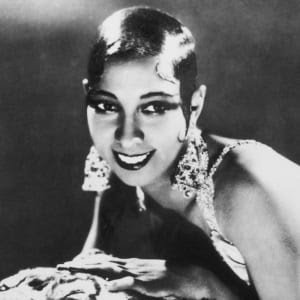
Josephine Baker, photo by Hulton Archive/Getty Images
Eventually, white minstrels began copying the choreography they witnessed enslaved Africans performing and appropriated it in their shows, using blackface to create offensive parodies. African American minstrel companies were eventually established and found success but not until after the Civil War. The choreography performed at these shows eventually traveled to the stages of vaudeville and Broadway. Malone shares that by 1910, “5,606 black musicians and 1,279 black actors and actresses” resided in the United States, revolutionizing the entertainment industry as we know it.
During the end of the 19th and beginning of the 20th century, traditionally African styles of movement inspired dance trends like the Charleston and the Lindy Hop. After the Juba dance acquired musical accompaniment, it greatly influenced the Charleston, which peaked in popularity in the 1920s. The dance begins with the dancers’ feet flat on the ground with their palms facing down. The dancer moves their left foot forward, then their right, before giving the left foot a tap with the heel of their right foot. The sequence is then reversed, with the right foot moving back, then the left, before the heel of the right foot is tapped with the left foot.
The Lindy Hop originated in the 1920s and 30s in Harlem, New York, during the Black cultural revolution known as the Harlem Renaissance. It’s a partner dance consisting of 8 count and 6 count steps with some footwork reminiscent of tap dance and the Charleston. The dance can be incredibly fast, with energetic kicks and lifts. Swing dance legend Frankie Manning is credited for transforming the Lindy Hop with moves like the “Lindy air step and synchronized ensemble Lindy routine.”

Katherine Dunham, photo by Dennis Stock/Magnum Photos
During the 1930s, jazz pioneer Jack Cole also began adding elements of East Indian and African dance to his jazz choreography. This created a great influence on the jazz masters of the 20th century, including Bob Fosse. From the 1920s and onwards, a collective of prolific Black jazz innovators came onto the scene, including Josephine Baker and Katherine Dunham.
However, in my dance education, I haven’t learned much about these Black jazz masters or the history of dance in African and African American culture. My jazz history knowledge has largely been limited to Bob Fosse’s contributions to Broadway, as well as the contemporary commercial jazz dance scene we see on competition stages today. As is the case with an abundance of art, Black creators’ contributions have been glossed over, ignored, or downright censored. Similar to the dance crazes circulating on TikTok at the moment, we would not have jazz dance if it weren’t for Black artists.
We’re doing students a disservice by not fully disclosing the rich history of jazz dance. Not only is it preventing students from fully immersing themselves in the style to help master it, but it’s wrongly denying credit to the major creators and innovators of the art form. By learning the full history of jazz dance in America, dancers can have a more nuanced understanding of its technicalities and more appropriately honor the Black creators who created the beloved genre.
For more information, check out Jazz Dance Direct created by the Jazz Is...Dance Project.
Resources:
https://www.tiktok.com/@keke.janajah/video/6802722722389576965?is_from_webapp=v1&is_copy_url=1
https://www.instagram.com/p/B22za3xD1Fh/?utm_source=ig_web_copy_link
https://www.washingtonpost.com/lifestyle/2021/06/25/black-tiktok-strike/
https://www.goodreads.com/book/show/1060169.Steppin_on_the_Blues
http://www.yehoodi.com/blog/2020/6/14/the-cakewalk-a-dance-of-black-resistance-and-celebration
https://www.slso.org/globalassets/education/learning-lab/learnlab-juba-dance_students.pdf
https://secretsofsolo.com/2020/08/the-history-of-the-charleston-dance/
https://www.history.com/topics/roaring-twenties/harlem-renaissance
https://www.womenshistory.org/education-resources/biographies/josephine-baker
Seeing Color in the Dance Industry
It’s safe to say that most of us didn’t anticipate the first half of 2020 to go the way it has. Our lives have changed drastically in the past few months, some more than others. Not only has the COVID-19 pandemic modified nearly all aspects of our daily routines, but a national movement supporting black lives and opposing police brutality has ignited. The heartbreaking murder of George Floyd in Minneapolis has stirred global attention towards police brutality and racial inequity in America. There have been protests in solidarity with George Floyd in all 50 states and at least 40 additional countries on nearly every continent. Anger towards this grueling act of police brutality has transformed into a larger revolution against systemic racism that’s gone on for too long in the United States.
This piece was originally written in 2020 and has been reposted in February 2023.
By Madison Huizinga, DWC Blog Editor
It’s safe to say that most of us didn’t anticipate the first half of 2020 to go the way it has. Our lives have changed drastically in the past few months, some more than others. Not only has the COVID-19 pandemic modified nearly all aspects of our daily routines, but a national movement supporting black lives and opposing police brutality has ignited. The heartbreaking murder of George Floyd in Minneapolis has stirred global attention towards police brutality and racial inequity in America. There have been protests in solidarity with George Floyd in all 50 states and at least 40 additional countries on nearly every continent. Anger towards this grueling act of police brutality has transformed into a larger revolution against systemic racism that’s gone on for too long in the United States.
As we partake in protests, sign petitions, and watch riots unfold on television, many of us are contemplative of our position in this movement and greater society. And in light of social distancing, many of us are in close quarters with family members and roommates who may disagree with the demonstrations developing throughout the country. This can result in some uncomfortable conversations that some people may have never had before, especially among white people.
As a white person who grew up in a white family, race is an aspect of my identity I have never needed to consciously consider. I expect to see people who look like me on my favorite TV shows. I expect to purchase a foundation that matches my skin tone at the mall. I expect to learn how historical figures with my racial identity founded America in history class. I can walk around my community confidently knowing that nothing adverse will happen to me solely because of my race. I feel seen and heard wherever I go because I have learned that being white means being the default. And I have been taught to think that this is valid.
When it comes to discussions about race at my family dinner table and within the walls of my classrooms, I am often told that all people are the same regardless of their skin color. I am told that to push for justice, we must simply view all people equally to achieve equality within social systems and institutions. Throughout my education and upbringing, I have been taught to be “color blind,” which may sound beneficial in theory. But being blind to racial difference means ignoring white privilege and the disadvantages others have because of it. Choosing to be “color blind,” means choosing to ignore the flawed systems that white people benefit from at the expense of people of color’s rights. It means choosing to be blind to systemic oppression, and thus indifferent and complacent to the suffering of black people. It’s time that I, and white people everywhere, open their eyes.

Niyah Pratt, DWC Ambassador
Now is a more important time than ever to listen and learn about the systemic racism that’s embedded in the world we live in. It’s time that we identify how racism not only withholds power from people of color but actively contributes to white people’s success. This does not mean denying the existence of white privilege but utilizing privilege to amplify anti-racist sentiment. This does not just involve taking a stand during a moment of tragedy but constantly analyzing the systems we are a part of and understanding how prejudice is woven into their fabrics. For many of us, this means turning to the dance industry.
As a white woman, I see dancers who look like me strewn throughout the dance community. I constantly see my identity presented through the types of stories told on stage, as well as through the types of dancers telling those stories. In the United States, about 67% of dancers and choreographers are white, while only 16.6% are black. Like all art, dance is meant to express emotions, transport audiences to different worlds, and explore unique narratives. However, when the majority of these narratives are choreographed and performed by white people, it can be difficult for people of color to feel as represented on stage. When white people make up two-thirds of the American dance industry, we cannot expect dance to be a comprehensive art form that communicates widely shared anecdotes. We cannot expect people of color to feel as accepted in the dance community if they aren’t represented across every area of the industry.
Niyah Pratt is a black dancer who has trained in the greater Seattle area since she was six years old. She’s performed at numerous showcases, attended conventions across the west coast, and has even spent a summer dancing at Debbie Allen Dance Academy. Today she studies dance at the University of Nevada, Las Vegas. While dance currently plays a paramount role in Niyah’s life, she hasn’t always felt embraced by the dance community throughout her childhood. Niyah says that “it has always been hard being an African American pursuing dance,” largely because she rarely saw people within her classes and acclaimed companies that looked like her. Niyah recalls that she “didn’t fully know that there were companies other than Alvin Ailey that were started and ran by African Americans until [she] was sixteen.” It wasn’t until she attended a summer intensive at the Debbie Allen Dance Academy that she began learning about the history of African Americans in dance. Before that, her view of the dance world was skewed towards white dancers and their contributions.
Niyah notes that growing up she was “one of four African American dancers” at her studio, and often felt singled out as a result. She has attended ballet auditions in which she is the “only person of color in the whole building.” Niyah “never forgets walking into a room and every girl looking exactly the same except for [her].” She says that from her own experiences “having a darker complexion while dancing is mentally challenging.” Being surrounded by solely white dancers can instill imposter syndrome in many black dancers, otherwise known as a lack of belonging. Not feeling seen, accepted, and represented within the dance industry can easily deter many people of color from pursuing a career in dance, as they may feel that they aren’t talented or qualified enough to belong in the industry because of their race.
According to Niyah, being a black dancer is not only mentally challenging but “it’s physical as well” due to the lack of costuming options for black dancers. Niyah says that “anything skin-toned or with mesh” often makes black dancers “feel uncomfortable” because “they are made for someone ‘fair toned.’” Especially when it comes to shopping for tights, black dancers often struggle to find anything close to matching their skin tone. Niyah recounts a vivid memory of a faculty show in college, in which her ballet teacher requested to speak with her in the hallway and asked “why [she] didn’t have skin-colored tights or pointe shoes.” Niyah was extremely confused because she was wearing tights and shoes that were marketed and labeled as “skin tone,” even though they were much lighter than her complexion. Niyah’s teacher told her that “when you have darker skin, you are supposed to wear your tone of tights and shoes when you perform.” Niyah was surprised that no one had ever told her that. This a conversation that a white dancer would never need to have. As a white dancer myself, I can purchase “skin toned” tights and shoes at any store and expect them to resemble my skin tone. But for black dancers, this simply isn’t the case because “skin tone” is synonymous with “white” across the dance industry and society.
Despite the challenges Niyah has faced in the dance industry, she notes that there “has been significant progress” and she is “ecstatic seeing [the industry] evolve.” She has noticed that in recent years more dancers of color and dancers of different shapes and sizes have gained attention. While it’s certainly inspiring to see individual performers like Misty Copeland gain recognition for their talents, a large-level change is needed so that seeing black dancers in the spotlight becomes a standard and not an anomaly. What Niyah wishes to see across dance communities is “inclusion” and dance that “is taught for anyone and everyone.” This means telling stories through dance that are relevant to people of color. This means seeing black dancers in lead roles that are complex and powerful, rather than vilified, racialized, or minimized. This means creating nude leotards, tights, and pointe shoes that don’t just match a pale skin tone, but compliment dancers of all races. It’s about a complete metamorphosis of the dance industry on every level. In the words of Niyah Pratt, dance “is already so beautiful, diversity is the only thing keeping it from being stunning.”
The past few months have presented challenges that many of us may have never foreseen. But we have the opportunity to move forward with a more compassionate and critical outlook on the world. We have the chance to not let this movement be a moment in time, but a catalyst for change. It is never too late to break the silence to provide support for black lives today and forever. Here are some ways to get started:
Educate yourself:
Learn more about the history of racism in America, and more about how black identity is widely perceived in institutions. This is an essential way to understand the meaning behind the large injustices that take place throughout the United States.
Here are some books to read to learn more about the experiences of black people and how to have productive conversations about racial identity:
The New Jim Crowe: Mass Incarceration in the Age of Colorblindness by Michelle Alexander
We Were Eight Years in Power: An American Tragedy by Ta-Nehisi Coates
Here are some documentaries, films, and series that incapsulate the experiences of black people in the United States:
13th on Netflix and YouTube
When They See Us on Netflix
Moonlight
Dear White People on Netflix
The African Americans: Many Rivers to Cross
Consume and support art from black artists
There is a plethora of beautiful art produced and performed by black artists across the Internet. Here are some that are dance-related:
“SHOT” by Donald Byrd
DTH On Demand Presents: VESSELS by Dance Theatre of Harlem
“ink” by Camille A. Brown and dancers
Alvin Ailey American Dance Theater: Chroma, Grace, Takademe, Revelations (2015)
Sign petitions
On change.org, there are a variety of petitions relating to racial justice for people to sign. Learn about different causes that need support and share them with your friends and family.
Donate
A donation of any size is welcome to nearly every cause. If you are capable of donating, consider doing so. Here are some organizations to consider:
Interested in writing for the DWC Blog? Click below to fill out the DWC Contributor application!