
Dance, My Eating Disorder, and Me: Part 4
The majority of my story up until this point was spent not being taken seriously because I was “medically stable” while I was in treatment from 2017-2018. I was lucky enough to have made it this far without any major health scares, and that was no longer true following this new development in my eating disorder. I will spare you the nitty gritty details of the symptoms I was experiencing at this time, but my health deteriorated to a point that I finally confessed to my nutritionist what was actually going on in the spring of 2021. I had not, until that point, divulged to anyone what I was actually doing.
By Emma Neilson, DWC Staff Member
Medical Disclosure: Dancewear Center does not claim to have any medical expertise on any circumstances or diseases discussed. This is Emma’s personal experience and opinions. If you need help or are in a medical emergency, see the resources listed at the bottom of this post.
Trigger Warning: Eating disorders, trauma, self-harming behaviors, and sexual harassment.

The majority of my time up until this point was spent not being taken seriously because I was “medically stable” while I was in treatment from 2017-2018. I was lucky enough to have made it this far without any major physical health complications or scares. That was no longer true following this new development in my eating disorder. I will spare you the nitty gritty details of the symptoms I was experiencing at this time, but my health deteriorated to a point that I finally confessed to my nutritionist what was actually going on in the spring of 2021. I had not, until that point, divulged to anyone what I was actually doing. My nutritionist ended up giving me an ultimatum, and although I can’t remember exactly what she said to me, I distinctly remember throwing out the last bottle of laxatives I had in the parking lot of the place I was working at the time. And although I’ve thought about it since, I have not touched any laxatives since that day.
It was also during the springtime that other ED behaviors started showing up, and it took me several months to realize that I was experiencing what many in the ED community refer to as “Extreme Hunger”, which eventually led me to discover the concept of “All In” recovery. The end of the school year of 2021 was fast approaching, and I was struggling. I refused to go to treatment voluntarily, and because I was no longer a minor, no one could force me to. No one knew the severity of what was actually going on. I told myself that after my last show of the year, I would go “All In”. And that’s exactly what I did.
I ate what I wanted, when I wanted. The problem with doing this unsupervised, and after such a prolonged period of being underweight, is that you can give yourself refeeding syndrome (also see here for more information). At the time, I had no idea what this was, let alone that this was a thing that happened, so I was terribly unprepared for what I was about to go through. Typically if you enter an eating disorder treatment facility underweight, they are very careful with how and by how much they increase your intake of food and nutrients. I was not. After I quit using laxatives, my body started to feel a lot better, however, as I started the process of going “All In” many of the same health symptoms I experienced while abusing laxatives popped up again, including new ones. In the period of 1-2 months, I gained back that 21% of weight that I lost, plus an additional 7%. I had gained over a quarter of my body weight, in a span of 4-8 weeks. I felt terrible, and finally decided to see a doctor. I went into that appointment and came out diagnosed with Anorexia Nervosa. Throughout all of this, I was still dancing full-time.
The next few months consisted of lots of doctors, therapy, and nutritionist appointments. I got rid of clothes that no longer fit my new body. I spent months, and months, and months still experiencing extreme hunger, and was struggling to manage and cope with it. I just wanted to be free of my illness. Finally, after a bout with COVID that was accompanied by lots of nausea, my appetite finally started to regulate itself in January 2022. Seven months after I had started my recovery process. However, it took much longer than that to become okay with the way my new body looked and felt. The changes I put my body through were so drastic in such short amounts of time, and going from such a low weight to over my “normal” weight was extremely difficult to come to terms with, both physically and mentally. My body dysmorphia was severe, and my dancing was greatly affected as well. Just like how sometimes when you switch to a new pointe shoe it can take time to get used to, it took an adjustment period to get used to how to dance in my new body.
As I continued through the rest of 2022, I started to feel more at home in my life, my body, and my dancing. I graduated from my dance program. I started working with DWC full-time. And although not everything in my life was rainbows and butterflies, the difficult things no longer triggered me to a point where I wanted to turn to my eating disorder. It was no longer worth it to me. And it still is not. Although disordered thoughts and body dysmorphia can still sometimes be a daily struggle for me, I have not engaged in any active ED behaviors since 2021. Reaching my “goal weight”, and getting the diagnosis I had always wanted, meant nothing to me if I was going to die at the hands of this disease. At the end of it all, the body I achieved and goal weights I hit never made me happy. And it was never enough. No matter the lengths you go to to please your eating disorder, it will never be enough. EDs will suck everything out of you until you have nothing left to give, including your life. I am lucky enough to still have mine.
The purpose of me sharing this story with you is not to receive any pity or comments like “You’re so strong and brave!”. Although it took me time to be able to tell this chapter of my story, it is not difficult for me to talk about. If anyone knows anything about me, they know I LOVE to talk. I want to share my experience and my story. Ultimately, my goal is this: If I have made you feel less alone or more seen, my job here is done. If I have made you realize that you or a loved one is struggling, my job here is done. If I have helped you take the first steps to reaching out for help, or even just gotten you thinking about it, my job here is done.
As long as there is breath in my lungs, I will continue to openly talk about my experiences. I strongly believe that there should be no stigma around eating disorders, especially in a field (re: DANCE), where they are so prevalent. And the first step to end the stigma, is to talk about it. Educate yourself. Learn and see without judgment. Realize that people of all shapes and sizes can be silently struggling with eating disorders. Mentally, I always struggle more internally when I look “healthy”. Weight is not indicative of struggle. Know that there are many more eating disorders besides Anorexia Nervosa and Bulimia Nervosa. Eating disorders are sneaky and manipulative. EDs can completely change the person that they are plaguing. If you have a loved one in your life who struggles, think about having a conversation with them about differentiating between them, the person, and their eating disorder.
Eating disorders have an extremely high mortality rate, and anorexia has the highest mortality rate of any mental illness. There are resources. There is help. You don’t have to go through this on your own. It is scary, but the freedom on the other side of the tunnel is so, so, worth it. I got my life back, and so can you.

If you or someone you know needs help please visit https://www.nationaleatingdisorders.org.
For emergencies please call 911.
And for more resources you can visit our page listing local and specialized help options.
Disclaimer
All content found on the Dancewear Center Website, Instagram, Facebook, Pinterest, and all other relevant social media platforms including: text, images, audio, or other formats were created for informational purposes only. Offerings for continuing education credits are clearly identified and the appropriate target audience is identified. The Content is not intended to be a substitute for professional medical advice, diagnosis, or treatment. Always seek the advice of your physician or other qualified health provider with any questions you may have regarding a medical condition. Never disregard professional medical advice or delay in seeking it because of something you have read on this Website.
If you think you may have a medical emergency, call your doctor, go to the emergency department, or call 911 immediately. Dancewear Center does not recommend or endorse any specific tests, physicians, products, procedures, opinions, or other information that may be mentioned on dancewearcenter.net. Reliance on any information provided by dancewearcenter.net, Dancewear Center employees, contracted writers, or medical professionals presenting content for publication to Dancewear Center is solely at your own risk.
Links to educational content not created by Dancewear Center are taken at your own risk. Dancewear Center is not responsible for the claims of external websites and education companies.
Dance, My Eating Disorder, and Me: Part 3
If you read my previous blog post (originally written in 2019, and re-released in 2022 and 2024), Dance, My Eating Disorder, and Me, you have a pretty good understanding of my story up until March of 2020. My thoughts and feelings on this particularly touchy subject have developed over time, and with the many different things I have experienced as I have lived through the world in the last 5 years. I hope my story can help you if you are currently struggling.
By Emma Neilson, DWC Staff Member
Medical Disclosure: Dancewear Center does not claim to have any medical expertise on any circumstances or diseases discussed. This is Emma’s personal experience and opinions. If you need help or are in a medical emergency, see the resources listed at the bottom of this post.
Trigger Warning: Eating disorders, trauma, self-harming behaviors, and sexual harassment.
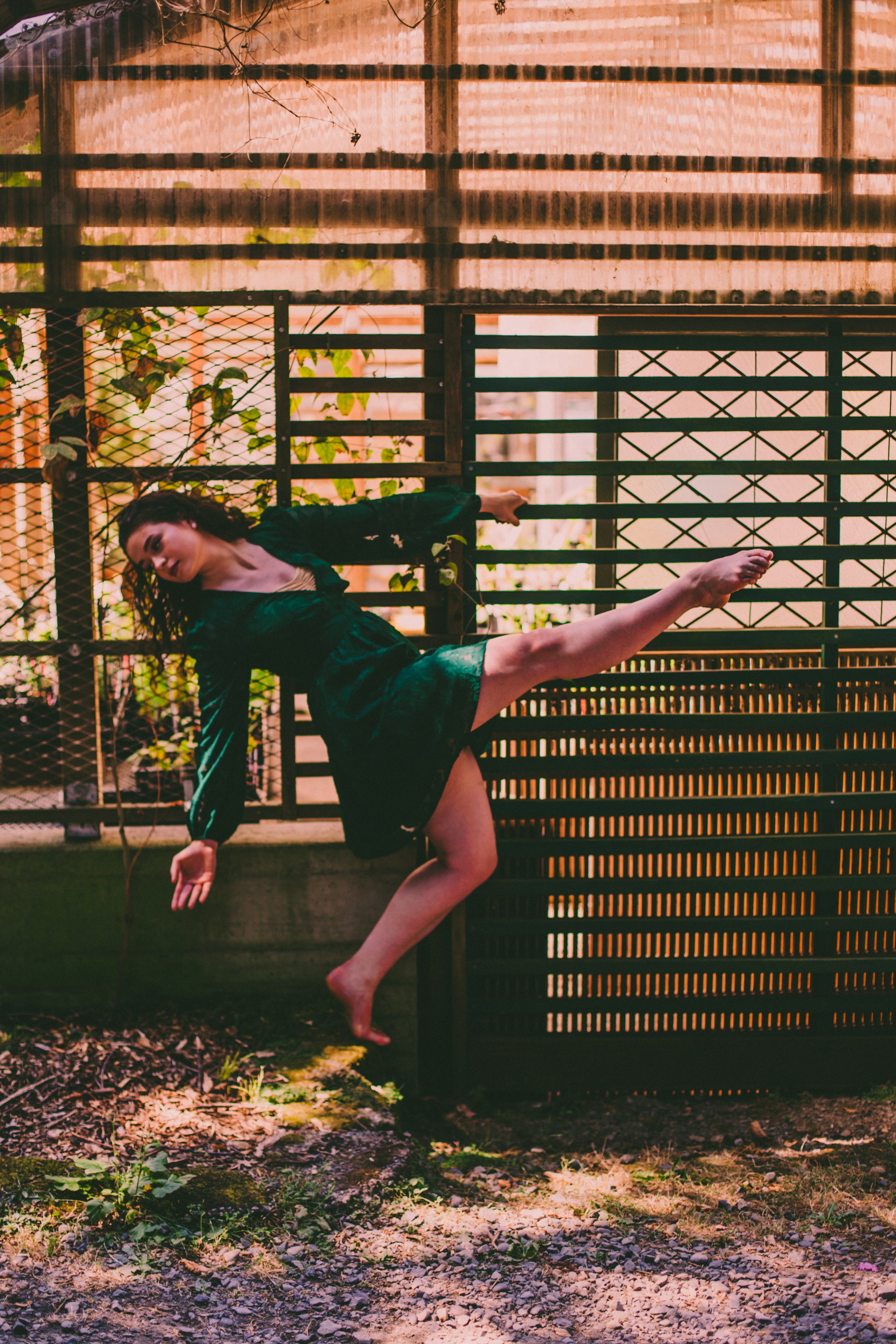
If you read my previous blog posts (originally written in 2019, released in 2020, and re-released in 2022 and 2024), Dance, My Eating Disorder, and Me, Part 1 and Part 2, you have a pretty good understanding of my story up until March of 2020. My thoughts and feelings on this particularly touchy subject have developed over time with the many different things I have experienced as I have lived through the world in the last 5 years since I wrote that piece. I hope my story can help you if you are currently struggling.
Like so many others during COVID-19, I experienced a relapse with my eating disorder. My experience from 2020 through 2022 was so incredibly traumatic and scary that for many, this will be their first time hearing about my experience during this particular relapse. It has taken lots of work in therapy and in the way I carry myself in the world to be able to get to this point. If you have experienced an eating disorder, and you are not in a place to share your experiences- know that that is okay. Everybody has a different timeline, and many choose to never publicly share their story. Your story is yours and yours alone. This is mine.
In 2020, as the world was shutting down due to COVID-19, so was I. My eating disorder usually shows up during times in my life where I feel I have little to no control. At first however, this was not my experience during lockdown. At the time, having a few weeks off was a gift. I was able to cross off items on my to-do list, get some much needed rest and sleep, and engage in hobbies that I normally did not have the time for.
As my dance training switched over to virtual classes, I realized that this was my opportunity to play catch up. I was a “late starter” to ballet, only having taken my first class at 13. For my age and the path I wanted to take for my career, I was far behind dancers who were many years younger than me. Dance was the one thing that gave me structure during the months of lockdown and isolation, and I made it a priority. Throughout the 4 months I was at home, I only ever missed one day of virtual classes. As time went on, I decided to take matters into my own hands. I decided to give myself a summer intensive of my own design, and wrote out a schedule to keep myself accountable. This included dance classes of all genres, cross-training and strength training, stretching, and Physical Therapy exercises I had been given for pre-existing injuries. I also decided to complete several physical fitness and education certifications at this time. After 4 months of this, I made a HUGE leap in my strength, stamina, technique, and overall dancing ability and level. The caveat to this was because of my extreme over exercising, my appetite was being suppressed. I had lost 21% of my original body weight.
Although I felt exceptionally strong and healthy, this level of exercise and this weight was not naturally sustainable for me in the long term. I returned to the studio in the summer of 2020 and was placed in a higher level at my studio, and as I was starting to ramp up to my full-time dancing schedule, I severely injured my back. This injury was acute, and so severe that I could barely bend either forward or backwards for several months. I still am dealing with the repercussions of this particular injury now. I ended up dancing through this injury, refusing to stop taking classes and working out, because I was terrified of my body changing back to the way it was before I lost weight. As it was, many people were praising me for the way my body looked now, and my dancing had never been better, so why would I want to go back to the way I was before? It wasn’t until nearly a year later, after I finally had an MRI, that I discovered that I had several bulging discs in my back, and because of my weight loss, was showing signs of degenerative joint disease in my spine. I strongly feel that if I had not lost all that weight, and then proceeded to continue to push myself to the extreme in terms of my level of activity and diet, I would not have sustained this injury.

After a few months of dancing through it, I gradually had to reduce my activity level because of the pain that I was experiencing on a daily basis. Along with this came extreme feelings of guilt (i.e. “I should be working out/doing more”), and distress (“I will gain weight if I don’t xyz”). Still, I was convinced that this was just my new body, and my body had only changed because I was dancing so much now. I was in denial. It wasn’t until winter break of 2020, at the end of December, that I realized I was in the middle of a vicious relapse with my eating disorder. Those two weeks marked the start of my struggle with laxative abuse.
If you missed the other parts in Emma’s series you can find them here:
If you or someone you know needs help please visit https://www.nationaleatingdisorders.org.
For emergencies please call 911.
And for more resources you can visit our page listing local and specialized help options.
Disclaimer
All content found on the Dancewear Center Website, Instagram, Facebook, Pinterest, and all other relevant social media platforms including: text, images, audio, or other formats were created for informational purposes only. Offerings for continuing education credits are clearly identified and the appropriate target audience is identified. The Content is not intended to be a substitute for professional medical advice, diagnosis, or treatment. Always seek the advice of your physician or other qualified health provider with any questions you may have regarding a medical condition. Never disregard professional medical advice or delay in seeking it because of something you have read on this Website.
If you think you may have a medical emergency, call your doctor, go to the emergency department, or call 911 immediately. Dancewear Center does not recommend or endorse any specific tests, physicians, products, procedures, opinions, or other information that may be mentioned on dancewearcenter.net. Reliance on any information provided by dancewearcenter.net, Dancewear Center employees, contracted writers, or medical professionals presenting content for publication to Dancewear Center is solely at your own risk.
Links to educational content not created by Dancewear Center are taken at your own risk. Dancewear Center is not responsible for the claims of external websites and education companies.
Self-Image: Maintaining a Healthy Relationship with Yourself and Dance
Mental health and self-image have been a struggle for nearly every dancer I have met. The dance industry, along with many others, wasn’t built with the health of the dancers in mind. I have witnessed dancers battle with body dysmorphia, negative self-talk, and especially maintaining a healthy amount of self-care. I have been dancing for the last fifteen years of my life. I have watched so much talent and passion washed out of my peers simply because they burnt out. Kids who could have had a professional dance career, or at the very least maintained a love for the art, didn’t because it came down to choosing between their health and well-being, or dance.
By Brea Rittel, DWC Blog Contributor

Mental health and self-image have been a struggle for nearly every dancer I have met. The dance industry, along with many others, wasn’t built with the health of the dancers in mind. I have witnessed dancers battle with body dysmorphia, negative self-talk, and especially maintaining a healthy amount of self-care. I have been dancing for the last fifteen years of my life. I have watched so much talent and passion washed out of my peers simply because they burnt out. Kids who could have had a professional dance career, or at the very least maintained a love for the art, didn’t because it came down to choosing between their health and well-being, or dance. Most styles of dance actively encourage a perfectionist mindset, but especially ballet. Ballet is such a beautiful style, but it can be so stifling, and stuck in outdated traditions. Ballerinas were one skin color, one body type, and forced into a mold almost no one realistically fit inside. While there has been some improvement, there is still so much to address. Even now, as a dancer studying in the modern world, these pressures still have a profound impact on me and my health. When I was younger I was told “Don’t show your lunch,” and “Your legs are too big to be a dancer”, at one point I was even told that I would never be able to make it as a dancer because I just wasn’t “made for the ballet”, so I should just give up on any professional aspirations. Now, I find myself constantly unsatisfied with, not just my dancing, but everything I do in a day. My grades are never high enough, I am never happy with my sketches, and even my relationships suffer from my micromanaging tendencies, all of which stem from dance deeply implementing a belief that I will never be good enough into my brain from a young age. I want to pursue dance after high school, but I constantly battle with myself in deciding if it is even possible for me, since I don’t fit the standard. And I’m not alone in this battle, so many struggle with negative self-image as a result of growing up in dance.
Growing up in the age of the internet added a whole new element to this problem that is rarely addressed. I recently had a conversation with a dance teacher only 10 years older than me, and she pointed out that even when she was a kid there wasn’t the same widespread use of technology as there was when I was growing up. And it is only increasing for younger generations. My teacher believes that, for instructors, this changes what the students need from them in a class. I know as a student currently, I find it much easier to work with teachers who still treat me like a person beyond being their student. This can be as simple as not making derogatory comments about my intelligence when giving a correction, or asking before giving any tactile feedback. We now have constant access to other dancers on the internet, she pointed out. From professionals to child prodigies, all we see are these filtered versions of amazing dancers. Seemingly perfect in every way. While this can be a wonderful tool, it is impossible not to compare yourself. Social media algorithms make a profit off of our comparisons. The more time spent on the app, spiraling, the more engagement they're getting. So, they shove as much content in our faces as possible at all times. Because dancers tend to see the worst in themselves, and the best in others, we see them at their best and instinctually compare it to ourselves at our worst. It can be incredibly discouraging to constantly feel like you aren’t measuring up to that level of perfection. It is helpful to remember that dance, like almost everything else on the internet, isn’t always real. What we see posted is likely not the first time they attempted that video or picture, in the same way that we don’t always nail our turns or leaps immediately. It can be incredibly hard to pull yourself out of the mindset that you are worth less as a dancer than the people you see on social media, but it is important to remember that they are real people too. They have bad days too. They fall out of single pirouettes, miss a step in a dance, or catch themselves sickling their feet too. No matter how much social media gives us a false idea of perfection in the world, it will never be the case for anyone, including dancers.
The struggle with self-talk is so much more complex than most people give it credit for. Striking a balance between self-correcting and still maintaining a generally confident mindset. Having the ability to recognize your own mistakes without the thoughts becoming unproductively negative is a learned skill. For years I was told to just be positive as if it is that simple. I would express my frustrations with my dancing only to be greeted with comments like “We only do self-positivity here” from my peers, which never actually helped me not be negative, it just furthered my frustration because being positive about myself seemed impossible in the moment, and harmed my relationships with the people around me. It constantly made me feel like there was something wrong with me for not being able to be content with myself, the result being the worsening of my already poor self-talk. One of the best bits of advice I have ever received was to live in a neutral state of self-talk. For the longest time, I almost always lived in a state of self-resentment because I could never be as good of a dancer as I wanted, and the idea of trying to completely shut that down and move to a place of constant self-love was too overwhelming for me to even make an effort towards improvement at all. To me, it was a losing battle, so what was the point? When a teacher suggested shifting to a neutral place it seemed much like a more manageable leap (pun intended). This means instead of saying I am a terrible dancer every time I have a bad day, acknowledging that it was just that, a bad day. Instead of saying things like “I will never be a good enough dancer”, make goals about it. The key is recognizing the improvement. This has helped me get to a place where, while I still see my flaws and want them to go away, I can address them in a much healthier way more frequently.

click below to shop the look:
One last thing many dancers, including myself, have struggled with, is taking care of ourselves. I have spent the last 6 years of my life nursing an achilles injury that wouldn’t be nearly as much of a problem as it is if I had just taken care of it initially… or the second time… or this time… or any of the times in between. The reason I haven’t is something I’m sure many people relate to, I just don’t want to “waste my time” taking a break. I don’t want to fall behind my peers. Most people I know say things along the lines of “Oh well, I’ll just suck it up, it’ll go away eventually”, which hardly ever happens. Problems need to be addressed, whether mental or physical. The topic of mental health days is often a subject of debate for people, but taking care of your mental state can’t be ignored. Not just for the dancer's state, but their peers, coworkers, instructors, and choreographers are all impacted as well. Don’t get me wrong, dance classroom attendance is NOT optional. If you are simply not having the best day, or something is a little off, showing up and not being one hundred percent for one day is absolutely fine. Nobody is completely on it all the time. Showing up in a state that is so negative that it is detrimental to yourself and others is not, though. If you need a rest day because you are too overwhelmed, burnt out, anxious, or a host of other reasons it is okay to take a day off. What matters most is how you spend it. You could spend it eating chips and binge-watching random shows (though an occasional lazy day won't kill you, that can be saved for weekends and days off, it wouldn’t be effective for a mental health day), or you could spend it refueling your body. Spending time in nature, drinking lots of water, eating foods with nutritional value, sleeping, and of course doing things you enjoy, whatever you find works for you will leave you feeling more prepared for the next day than the first option. It won't make the feelings go away, but you will find yourself more refreshed and capable. The key to this is a healthy, honest relationship with your peers and coworkers in which you can communicate your needs without judgment or ridicule.

Along with that, generally eating enough, sleeping enough, and drinking enough water are so important to being a healthy dancer. It only hurts you more to not meet your body’s needs. You won't dance at your best, you won't be in your best mental state, and you won't feel good at all. Also, finding time for you to maintain relationships inside and outside of dance is not optional. Humans biologically need communication, so healthy relationships are a necessity to continue moving your health in a positive direction. It is so hard to maintain positive relationships with yourself and dance at the same time, but having a healthier mindset will help so drastically. Your dancing will improve and you will just feel so much better generally. I know taking baby steps towards everything I have talked about has helped me so much in the last year alone. Now, I am going into a summer of intensives, my senior year next year, and then adulthood feeling better about my dancing, healthier, and more self-aware than I ever have before. I encourage you to take a small step towards self-care, nothing major, just having snacks in your car or being intentional about spending time outdoors more. Even if the change isn’t major it opens the door for growth.
Disclaimer
All content found on the Dancewear Center Website, Instagram, Facebook, Pinterest, and all other relevant social media platforms including: text, images, audio, or other formats were created for informational purposes only. Offerings for continuing education credits are clearly identified and the appropriate target audience is identified. The Content is not intended to be a substitute for professional medical advice, diagnosis, or treatment. Always seek the advice of your physician or other qualified health provider with any questions you may have regarding a medical condition. Never disregard professional medical advice or delay in seeking it because of something you have read on this Website.
If you think you may have a medical emergency, call your doctor, go to the emergency department, or call 911 immediately. Dancewear Center does not recommend or endorse any specific tests, physicians, products, procedures, opinions, or other information that may be mentioned on dancewearcenter.net. Reliance on any information provided by dancewearcenter.net, Dancewear Center employees, contracted writers, or medical professionals presenting content for publication to Dancewear Center is solely at your own risk.
Links to educational content not created by Dancewear Center are taken at your own risk. Dancewear Center is not responsible for the claims of external websites and education companies.
Dance, My Eating Disorder, and Me: Part 2
One thing that you have to know- recovery is not linear.
By Emma Neilson, DWC Staff Member
Medical Disclosure: Dancewear Center does not claim to have any medical expertise on any circumstances or diseases discussed. This is Emma’s personal experience and opinions. If you need help or are in a medical emergency, see the resources listed at the bottom of this post.
Trigger Warning: Eating disorders, trauma, self-harming behaviors, and sexual harassment.
This post was originally written by Emma in 2019, shared in 2020, and re-released in 2022 and 2024. Edits have been made for clarity.

Relapse
One thing that you have to know- recovery is not linear.
After 6 months back in the community, I decided I wanted to pursue dance more seriously. I was a “late starter”, had danced purely recreationally up until now, and had taken a year off. I was far behind where I should have been considering my age. In 2019, I started auditioning for summer intensives to kickstart the next phase of my training. I applied to colleges, and was also working and dancing. The combination of this stress, the inadequacy I felt when it came to dance, and my worsening body dysmorphia built up and in the spring of 2019, I experienced my first relapse. My behaviors were worse and more extreme than they had ever been, along with some new ones thrown in the mix. I lost a shocking amount of weight over the course of 2 months.
People who were close to me all started to notice, but I played it off as just an increase in my dancing. The health care professionals I was seeing at the time informed me that something would have to change or else we would need to consider treatment again. Treatment wasn’t even an option I was considering, and I knew that if it was put on the table again, I would refuse to go voluntarily. However, deep down I knew that I needed help again. I started seeing my therapist and nutritionist more regularly. At this point in time, I was set to attend a summer intensive in two months and needed medical clearance to attend. I knew that my doctor would not clear me to go unless she was convinced that I was healthy and doing well. I did not want to go back to the hospital or to treatment, so again, I had to make a conscious decision to recover.
Dance
When my eating disorder first developed, dance played a very big role. I struggled with body dysmorphia and terrible body image. I found that I would use dance to fuel my negative thoughts and behaviors. Even so, it was very difficult for me to take a break from dance. I was scared to take a break from exercising to commit to healing my body. I was terrified of my body changing in a way that I would perceive as negative.
While my body did inevitably change, you have to heal the body first before you can heal the mind. When you are not fueling your body correctly, your brain isn’t getting the nutrients it needs to function properly. The mental aspects of this disease are easier to work through after the physical issues have been addressed.
When I returned to dance, it felt as though everything had changed. I had previously looked at it as motivation- “I have to look like XYZ because of dance”, “I can’t eat XYZ because I’m a dancer”, “I need to exercise XYZ amount of time because of dance”. In recovery, I now look at this as motivation to stay recovered. I know I have to fuel my body in order to dance to the best of my abilities. I have better coping skills, a support system, and a wealth of knowledge up my sleeve to help me on tough days.
Sometimes I think about if I were to go back in time- would I still take a year off of dance? The answer is always the same- yes. If I could go back, would I still go to treatment? Yes. If I could change my past, would I choose to let my past self go through her eating disorder? Still- yes. Even though the present me may not love where I am in my life right now, everything in my past and that I have gone through has ultimately made me into the person that I am today. And for that I am eternally grateful. I have a very unique perception of society, diet culture, and self-love that not many people have, and if I am able to influence just one person even a little bit with my story, then it has been worth it.
A Call to Action
Dance has existed for centuries, and as such, we’ve carried on outdated traditions into modern times. The perpetuation of the stereotypical “ballet” body, the excessive use of mirrors, and teachers and directors policing dancer’s bodies and food just to name a few. Just because something has existed one way for so long doesn’t mean that it can’t change. The question is, how?
First and foremost, we have to start the discussion. I feel that by avoiding the topic of food and bodies out of fear, instructors and other authoritative figures in the dance community actually cause more harm than good. By not talking about it, many young dancers remain uneducated and uninformed. With a plethora of diets and unhealthy eating information at their fingertips, it is extremely easy to start developing disordered behaviors at increasingly younger and younger ages. However, this topic does need to be approached with sensitivity. Here are some major points that I think are important to remember:
All bodies are good bodies.
Your size and your weight don’t define you or your worth as a person.
Your size and your weight don’t define you as a dancer.
People can be healthy at every size.
Eat what you want, when you want.
There is no such thing as “good” or “bad” foods. Society has just pushed this narrative onto us. Many “bad” foods when compared to “good” foods end up having the same nutrients.
Everything in moderation. This includes exercise as well!
Even at rest, you still need to fuel your body. Your brain and your organs need food to function properly, even at rest.
Everyone’s body is different and has different needs. And that’s okay!
Secondly, if you are an instructor or a studio director, I would say one of the best things you can do is to bring in experts to educate your students. Because of the way the media works, false information is everywhere and spreads like wildfire, making it nearly impossible for youths to sift out the reliable information and facts.
Thirdly, I think it is about time we as a community change the way we use mirrors in our art form. I believe that mirrors are an essential training tool, and can benefit any dancer at any level if used correctly. However, in my experience, mirrors are often used for unhealthy comparisons and to pick out flaws to the extreme. Additionally, every student at some point has heard the phrase “Stop looking at yourself in the mirror!”, and unless used as a prop, we don’t perform with mirrors. So, what would it be like if we started using mirrors less? Covered mirrors? Were taught from a young age that our reflection does not define us? If you are a teacher or a director, ask yourself what you can do to shift the focus of your students from comparisons and relying on a mirror, to dancing for themselves and tuning into their body- how their body feels when dancing, and how movement feels in their bodies.

Lastly, I want to say this to anyone who needs to hear it- there is no shame in taking a break from dance. There are so many reasons you might need to take an extended leave of absence. I know it can feel scary and you might be afraid of what will happen, but I’ll leave you with this- if you feel the need to do it, it will probably be a decision you won’t regret in the future.
If you missed the other parts in Emma’s series you can find them here:
“It can be so hard to stop or pause what we love to do, but any investment in yourself as a human is in turn an investment in yourself as a dancer.”
~Caitlin Schafte (a dear friend of mine)
If you or someone you know needs help please visit https://www.nationaleatingdisorders.org.
For emergencies please call 911.
And for more resources you can visit our page listing local and specialized help options.
Disclaimer
All content found on the Dancewear Center Website, Instagram, Facebook, Pinterest, and all other relevant social media platforms including: text, images, audio, or other formats were created for informational purposes only. Offerings for continuing education credits are clearly identified and the appropriate target audience is identified. The Content is not intended to be a substitute for professional medical advice, diagnosis, or treatment. Always seek the advice of your physician or other qualified health provider with any questions you may have regarding a medical condition. Never disregard professional medical advice or delay in seeking it because of something you have read on this Website.
If you think you may have a medical emergency, call your doctor, go to the emergency department, or call 911 immediately. Dancewear Center does not recommend or endorse any specific tests, physicians, products, procedures, opinions, or other information that may be mentioned on dancewearcenter.net. Reliance on any information provided by dancewearcenter.net, Dancewear Center employees, contracted writers, or medical professionals presenting content for publication to Dancewear Center is solely at your own risk.
Links to educational content not created by Dancewear Center are taken at your own risk. Dancewear Center is not responsible for the claims of external websites and education companies.
Dance, My Eating Disorder, and Me: Part 1
I have such a crystal clear memory of the first time my ED reared its ugly head. I was at lunch with a group of my friends, and I happened to look down at the nutrition facts on the package of chips. Within the hour, I had counted all the calories I had eaten so far that day, and had a calorie goal set for myself for the next week. From that moment on, I was fighting a downhill battle.
By Emma Neilson, DWC Staff Member
Medical Disclosure: Dancewear Center does not claim to have any medical expertise on any circumstances or diseases discussed. This is Emma’s personal experience and opinions. If you need help or are in a medical emergency, see the resources listed at the bottom of this post.
Trigger Warning: Eating disorders, trauma, self-harming behaviors, and sexual harassment.
This post was originally written by Emma in 2019, shared in 2020, and re-released in 2022 and 2024. Edits have been made for clarity.

Development
As a child, I remember comparing myself to others my age in the dance studio.
I remember family members talking about how they didn’t like their bodies.
In middle school and high school, I remember being surrounded by diet culture in my family.
I remember my friends talking about what they would eat in a day, how they had eating disorders, and how they would hurt themselves.
I remember when I first started dance and thought to myself, “I don’t look like anyone else here,” and hating myself for it.
I would say that I’ve had disordered eating habits since I was 13 , but my actual eating disorder (ED) didn’t develop until my senior year of high school. There’s a saying that your eating disorder develops after a perfect storm of “little t” traumas that over time culminate into your eating disorder. For me, there’s almost too many to list. I was a perfectionistic 4.0 student with no idea what she wanted to pursue after graduating high school, a dancer who had been surrounded by diet culture her whole life, and a teenager who was sexually harassed in her junior year of high school.
I have such a crystal clear memory of the first time my ED reared its ugly head. I was at lunch with a group of my friends, and I happened to look down at the nutrition facts on the package of chips I was eating. Within the hour, I had counted all the calories I had eaten so far that day, and had a calorie goal set for myself for each day of the next week. From that moment on, I was fighting a downhill battle.
Everyday consisted of strict rules including calorie limits, foods I could and couldn’t eat, weight goals, and how I would “punish” myself if I didn't adhere to these requirements. I was totally obsessed and my whole life became consumed by this mindset. I couldn’t focus on my academic classes, and I was depressed and anxious. I tried to keep it a secret as long as I could.
My body eventually took over in order to keep me alive, and I wound up in the cycle of restricting and bingeing. I started therapy, and it was at this time I was diagnosed as Bulimic. Things were not going well, and I was hospitalized for suicidal ideation for the first time 3 months before I graduated high school.
After I was released, I was determined to graduate with a 4.0 GPA, while my family was trying to encourage me to go into treatment and temporarily drop out of school. Eventually I graduated, finished all my end of year recitals and concerts, and not even a week later was hospitalized again. While I was there the second time, my doctors recommended I go into intensive treatment for my eating disorder.
Treatment
What It’s Like and My Experience
From June 2017 until March 2018, the majority of my time was devoted to attending treatment, working through my thoughts and ED behaviors, and recovering.
The first half of this year, I was in a Partial Hospitalization Program (PHP), which was 10 hours a day, 5 days a week. It was during this time that I was diagnosed with OSFED (previously known as EDNOS). A typical day in treatment looked like this:
I would get there in the morning, and as a group, we would do a check-in: how we were feeling, anything that we were struggling with, etc. Then we headed to breakfast. I would say that hands down, the hardest part of treatment was meal times. Each person had a personalized meal plan, and if you didn’t finish the food you were required to eat, you were given a meal supplement you had to finish. If you didn’t finish it, you were sent home for the day, and then other treatment options were discussed with you and your team. We ate in groups as well, so being surrounded by everyone having their own battles often made it harder. Before eating we would do check-ins which included talking about our hunger levels. Typically with EDs, you ignore your body’s hunger cues, and can even lose them altogether, so this was an exercise in body awareness. We would play games during meals to help distract ourselves and try to get through it. After breakfast, we had intuitive groups. Our groups ranged from therapy, to discussing certain topics, nutrition & cooking, outings, and art & yoga. You could also have individual therapy or nutrition appointments throughout the day, as well as medical appointments to monitor your heart, blood levels, and weight. We had snack times between each meal, lunch, groups/appointments, snack, break, dinner, and the last group of the day. Wash, lather, rinse, repeat. The only time you had at home was between 7pm-7am the next morning before you got there for breakfast. I personally found nights the hardest, trying my best to sleep and not engage in ED behaviors during the night time.
After a few months of this, and a third hospitalization, I ended up at a different treatment facility by January of 2018. Here, I was in an Intensive Outpatient Program, or IOP. I spent breakfast through lunchtime there, with 2 groups per day. This allowed for a lot more freedom and responsibility on my end to meet my meal plan and prove to my care team that I was getting better. After about 6 months of not being allowed to engage in any exercise, I was finally cleared to, and I decided to return to figure skating for a few months after I had taken a break from this sport for 4 years. This level of care was the hardest for me. I wasn’t in treatment for as long each day, and it was up to me to eat everything I was supposed to and not engage in ED behaviors. However, towards the end of that spring, I started quickly declining. My team wanted me to go up to the PHP level of care again, but since I had been in treatment for so long and was deemed “medically stable”, my health insurance denied this request. This was not the first time my insurance had done this. Within my first two months of treatment, I was supposed to go to an inpatient clinic for 24/7 care, but as I was “medically stable”, my insurance would not cover it. Insurances tend to look at the medical aspect of things when it comes to treatment for eating disorders- which is completely backwards because they are mental illnesses. I was not dangerously underweight and my blood work was normal after the first few months of treatment, and at this point my insurance would not cover higher level of care. The entire time I was in treatment facilities myself, my family, and my care team were fighting to keep me there so I could get the help I needed.

That spring, my insurance was no longer wanting to cover any of my treatment costs, and I was 18 and was reluctant to go to a PHP program again. I was now an adult, and could now decide to voluntarily leave any program I was in, so I did. Right after I stopped my treatment, I ended up spending two weeks with my sister and her family. This ended up being a very healing time period in my life. My mindset completely changed and I decided that I was sick of being sick. I never understood when doctors, therapists, nutritionists, and those who were recovered said that recovery is up to you. I felt like I didn’t have a choice, and that my ED was controlling all of it. But that’s not true. I had to make a conscious decision to recover, and realized that no one could do it for me. No amount of treatment was going to magically heal me if I wasn’t actively trying to get better. And I realized that I hadn’t been trying.
I started to recover, and I finally returned to dance after over a whole year off.
“Remember, even if you can’t see someone’s struggle doesn’t mean it’s not real.”
If you or someone you know needs help please visit https://www.nationaleatingdisorders.org.
For emergencies please call 911.
And for more resources you can visit our page listing local and specialized help options.
Disclaimer
All content found on the Dancewear Center Website, Instagram, Facebook, Pinterest, and all other relevant social media platforms including: text, images, audio, or other formats were created for informational purposes only. Offerings for continuing education credits are clearly identified and the appropriate target audience is identified. The Content is not intended to be a substitute for professional medical advice, diagnosis, or treatment. Always seek the advice of your physician or other qualified health provider with any questions you may have regarding a medical condition. Never disregard professional medical advice or delay in seeking it because of something you have read on this Website.
If you think you may have a medical emergency, call your doctor, go to the emergency department, or call 911 immediately. Dancewear Center does not recommend or endorse any specific tests, physicians, products, procedures, opinions, or other information that may be mentioned on dancewearcenter.net. Reliance on any information provided by dancewearcenter.net, Dancewear Center employees, contracted writers, or medical professionals presenting content for publication to Dancewear Center is solely at your own risk.
Links to educational content not created by Dancewear Center are taken at your own risk. Dancewear Center is not responsible for the claims of external websites and education companies.
Caring for Ourselves as Dancers of Color
As a chunky Asian baby in a leotard, I had no idea yet how precious or valuable I was when I started in ballet. Instead, I only saw that I was clearly not cut from the same cloth as elegant princesses and swans whose dancing I admired. The chance to don yellowface in the Chinese variation during "The Nutcracker," or to be a kowtowing, shuffling child in "The King and I" in the school play felt like places I was welcome to exist—to shine—as a child who dreamed of being onstage.
By Gabrielle Nomura Gainor
Gabrielle Kazuko Nomura Gainor (she/her) is an artist, writer, and Asian American community activist. In addition to working in communications/public engagement at Seattle Opera, she's received grants from Seattle's Office of Arts & Culture and the Washington State Arts Commission. In 2021, Gabrielle has been proud to serve as a mentor and Teaching Artist with TeenTix.
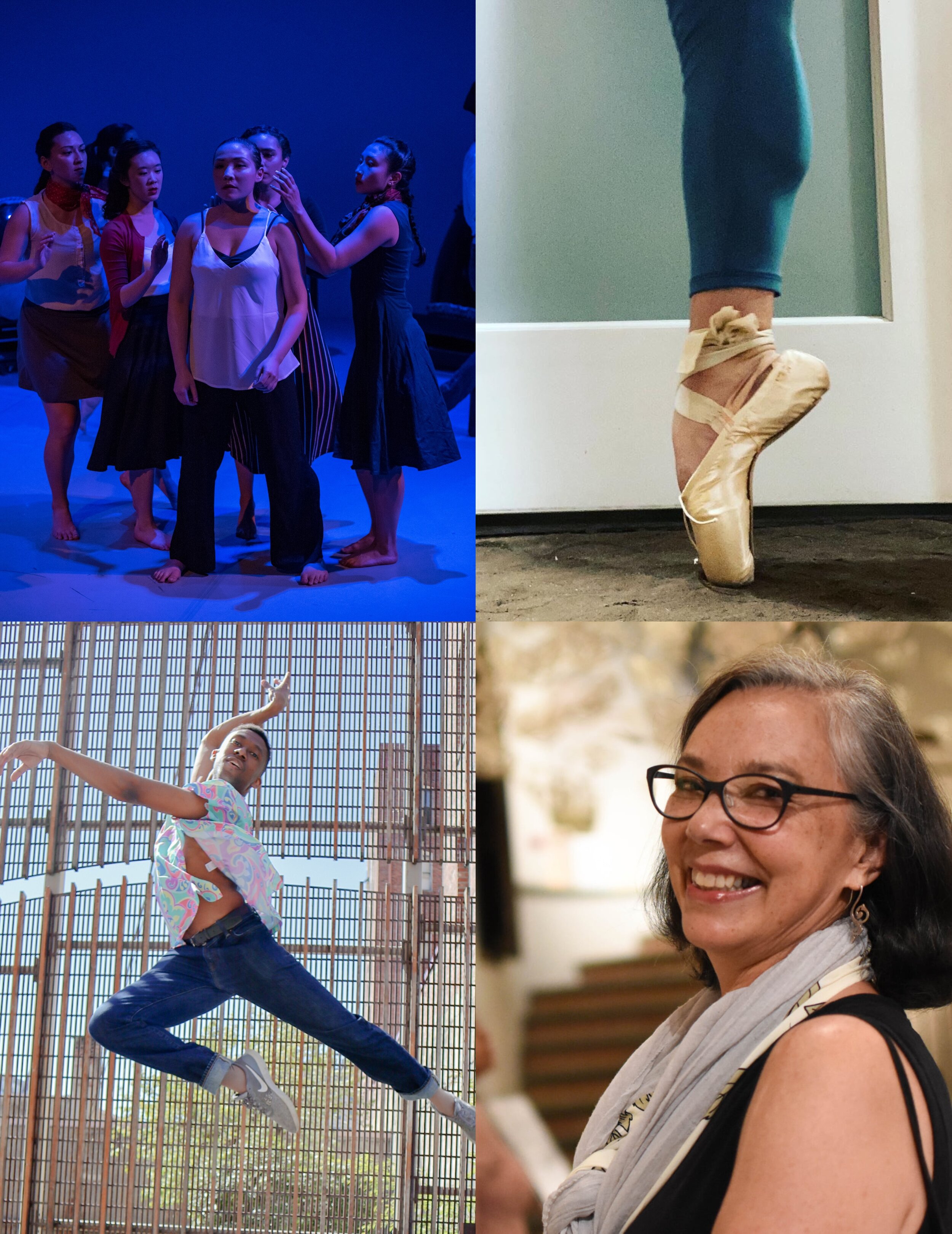
Counterclockwise from top left: Gabrielle Nomura Gainor, surrounded by Dominique See, Alyssa Fung, Siena Dumas, and Hailey Burt in Farewell Shikata ga nai; Joseph Lambert photo. Christopher Montoya en pointe. Vivian Little smiles. Robert Moore jumps; Tracey Wong photo.
May was both Mental Health Awareness Month and Asian Pacific Islander Heritage Month. But as we move into summer, remember that our wellbeing as dancers of color is something to prioritize all year round.
As a chunky Asian baby in a leotard, I had no idea yet how precious or valuable I was when I started in ballet. Instead, I only saw that I was clearly not cut from the same cloth as elegant princesses and swans whose dancing I admired. The chance to don yellowface in the Chinese variation during "The Nutcracker," or to be a kowtowing, shuffling child in "The King and I" in the school play felt like places I was welcome to exist—to shine—as a child who dreamed of being onstage.
Many years later, I see that I deserved so much more than to beg for scraps in the form of sidekicks and ethnic stereotypes. Black, Indigenous, and all People of Color deserve so much more. We need not silence the parts of us that are “too much” for white norms, be it too ethnic, too dark, too curvy, too loud. White people do not own dance—not even ballet. As former Dance Theater of Harlem ballerina Theresa Ruth Howard taught me, these precious art forms belong to all of us, as well.
Now, at the end of Mental Health Awareness Month and Asian Pacific Islander Heritage Month, remember that prioritizing our mental health—our wholeness, joy, and humanity are year-round activities. Every month is for our “history” or our “heritage.” With that in mind, I bring you five personal reflections on what it means to care for ourselves mentally and emotionally as People of Color in dance. Hear from Christopher Montoya (formerly of Ballet Trockadero, Dance Fremont Managing Director), Dr. Sue Ann Huang (co-director of The Tint Dance Festival), Alicia Allen (former dancer with Janet Jackson, Mary J. Blige, and Shakira to name a few), Robert Moore (formerly of Spectrum Dance Theater), and Vivian Little (retired ballerina and Dance Fremont founder).

Photo courtesy of Christopher Montoya
Find an environment where you can thrive
For Christopher Montoya (he/they), not having the right body type was a stressor that only compounded on top of being brown, gay, and working-class. Eventually, Montoya discovered their truth as being gender-non-conforming, and would often feel pressure to pass as straight in order to be hired for dance jobs. Finding an encouraging ballet teacher who embraced Montoya’s authentic self, and then discovering a community in Ballet Trockadero were defining moments.
“Going into Trockadero is really where I found myself,” Montoya said. “The dancers were Australian, Venezuelan, Spanish, Mexican, Black, Asian. We all felt like misfits because we didn’t fit into this binary mold of ballet. Trying to pass as a straight man always felt so fake and defeating. But here, I got to be me.”
From Montoya’s experience, taking time to situate oneself in a supportive dance environment is crucial. (For some, this could mean choosing a Black-led dance school or a class taught by a teacher of color). If the environment is unsupportive, it could be time to leave or look elsewhere.
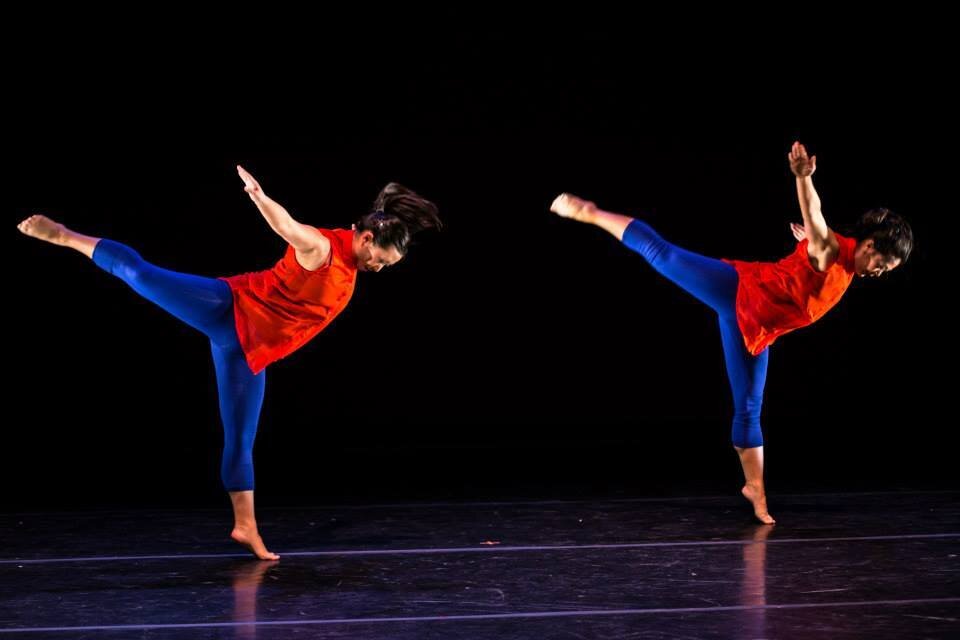
Sue Ann Huang and Arlene Martin. Joseph Lambert photo
Divest from that which does not serve you
Dr. Sue Ann Huang (she/her) not only co-founded an event centering BIPOC, Tint Dance Festival, her dissertation focused on choreographers of color in the Pacific Northwest. Most recently, she’s been thinking deeply about what liberation is possible through concert dance, which still possesses an intimate, even symbiotic relationship, with white supremacy.
While white supremacy once referred to overt hate as seen through groups such as the KKK, white supremacy today refers to an ideology that acts in both overt and subtle or unspoken ways. In western society, for example, white culture, white norms, and white people are valued more highly, and above other cultures. A cursory glance at the majority of ballet and modern dance companies show this favoring of whiteness, as seen through artistic leaders, company rosters, and choreographers whose work is presented.
In Huang’s view, dancers of color must strive to create space between what’s true and what’s cultural default. Today she does this by resisting the pressure to see certain “it” choreographers or companies, and instead asks herself what will bring joy.
“What kind of dance do I visually want to see? What kind of movement do I want to do? I am mostly only seeing shows produced by People of Color I care about, and that’s OK.”

Alicia Allen, photo courtesy of the artist
Hold them accountable
As a Black woman in a predominantly white dance department, Alicia Allen (she/her) felt invisible. From the professor who asked if she was in the right place, to the bathrooms littered with posters of white dancers, and how-to instructions for the perfect ballet bun, the message was subtle, but loud:
“My Blackness and street styles did not ‘make’ the walls.”
It wasn’t until Allen connected with other students who had experienced similar events that she gained the courage to fight. During her senior year, the majority of her efforts were focused on holding her dance department accountable. She served on committees, planned town-hall events, and lobbied to get a racist class canceled. And she’d do it again in a heartbeat.
“Don’t be afraid to speak your truth and share your experiences. You should always hold your teachers and professors accountable for your education. Hold them accountable for respecting dance cultures and communities.”
When Allen teaches hip-hop today, she never skips over the fact that this dance style was birthed from the joy and pain of Black people. Instead, she encourages her students to face their own discomfort as they reckon with history—a necessary part of respecting where the art comes from.
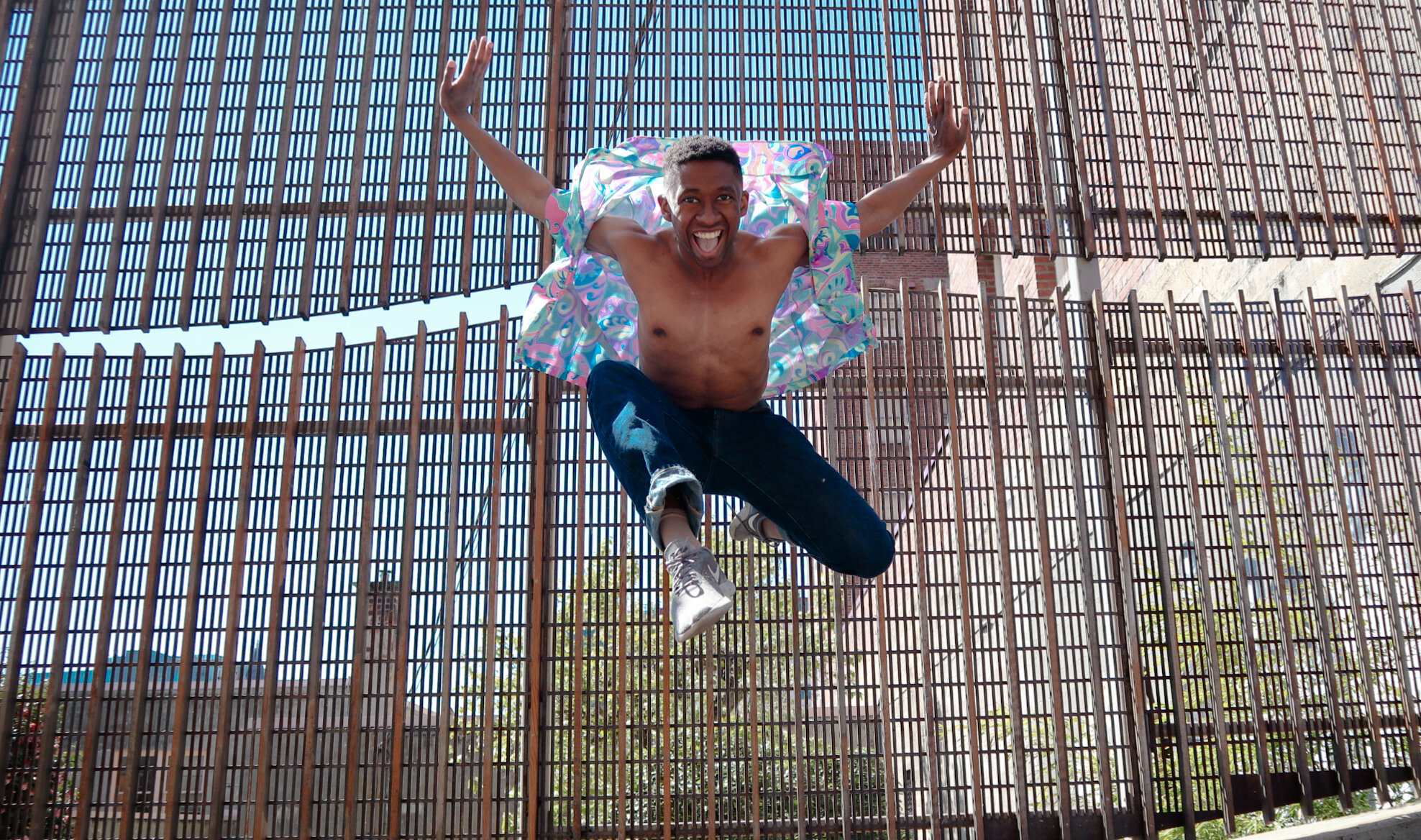
Roberty Moore jumps; Tracey Wong photo
Reorient your organization toward justice
In the past, Robert Moore (he/they) has seen dance organizations think that anti-Blackness, the increase in Asian American attacks, or what it means to live on occupied Coast Salish land, are not relevant to ballet or modern dance. But Moore does not stop being Black when he comes into the studio.
“What puts a nice little grin on my face is seeing organizations step up for the first time, seeing them stumbling over themselves, and actually learn something from pulling some weight, rather than just being passive,” he said.
Moore has found rest this past year by being in community with other Black artists: getting to discuss life—including topics that have nothing to do with race—has brought them joy.
Remember, Moore said, People of Color do not owe anyone a conversation or explanation about race, ever: “Honor the quiet revolution of a dancer of color just going to class, rehearsing, and taking moments to exist freely.”
Re-think ballet and dance education
Vivian Little (she/her) never connected race to body type when she was dancing with Pacific Northwest Ballet and San Francisco Ballet in the 1980s. Years later, she was teaching at a university and her colleagues of color recounted the discrimination that they had faced. Only then was she able to connect the dots between racism and the “defectiveness” of certain bodies. Through this lens, the concerns of her colleagues made sense: a Filipina whose short legs prevented her from earning short-tutu roles, a Columbian danseur with who never had the right “look” for a prince. Being of Irish and Japanese ancestry, Little thought about how she herself was often cast as the sensual or Latina role because of her “exotic look.”
Today, Little pushes back on the uniformity and preferred Eurocentric ballet aesthetics. One way to do this has been learning more about the human body and movement mechanics related to ballet technique. Little sees the potential in every student, whether their first position is a delicious little slice, or a whole half, of pie; whether their leg reaches up toward the heavens in arabesque, or points down toward the earth; whether they look like generations of European ballerinas, or they are helping to illuminate the multifaceted, multicultural beauty alive in ballet.
“Ballet teachers must teach to the person, not to an ideal,” Little said. “It takes much more thought, care and intentionality to be inclusive because of the waters of white supremacy we've been swimming in and the air of racism we've breathed for centuries.”
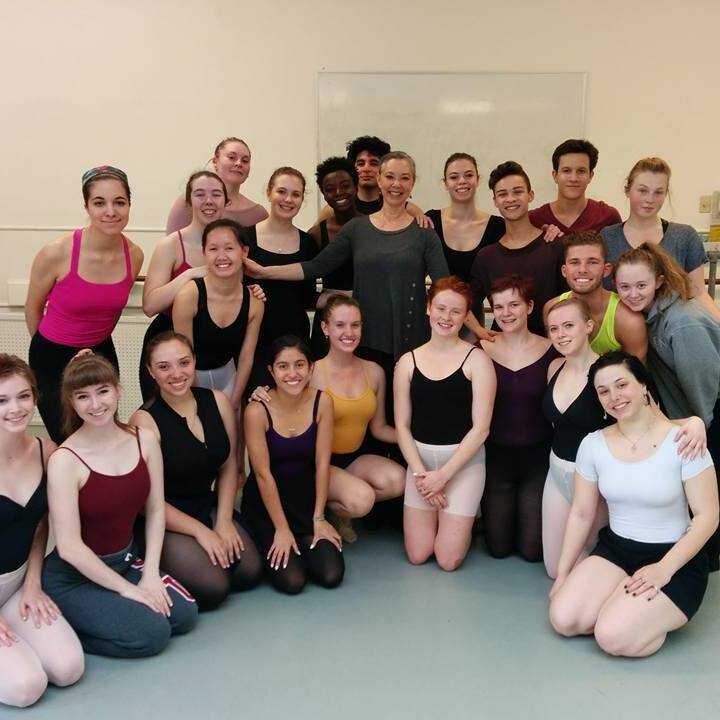
Photo courtesy of Vivian Little
Resources
Additionally, please check out the work of the following Seattle-based artists: Alicia Mulikin, Dani Tirell, Noelle Price, Randy Ford, Imana Gunawan, Cheryl Delostrinos, Amanda Morgan, Sarah-Gabrielle Ryan, Donald Byrd/Spectrum Dance Theater, among many, many others.
A Conversation About Mental Health and Non-Judgment in the Dance Sphere
While some folks have taken steps to destigmatize mental health discussions in the dance industry, there is still an overwhelming pressure to compete against your peers within the studio environment, which can lead to adverse mental health issues. DWC staff member and pointe shoe fitter Tija Dupont opens up about her dance journey, goals for the future, and destigmatizing mental health in the dance industry.
Getting to Know DWC Staff Member Tija Dupont
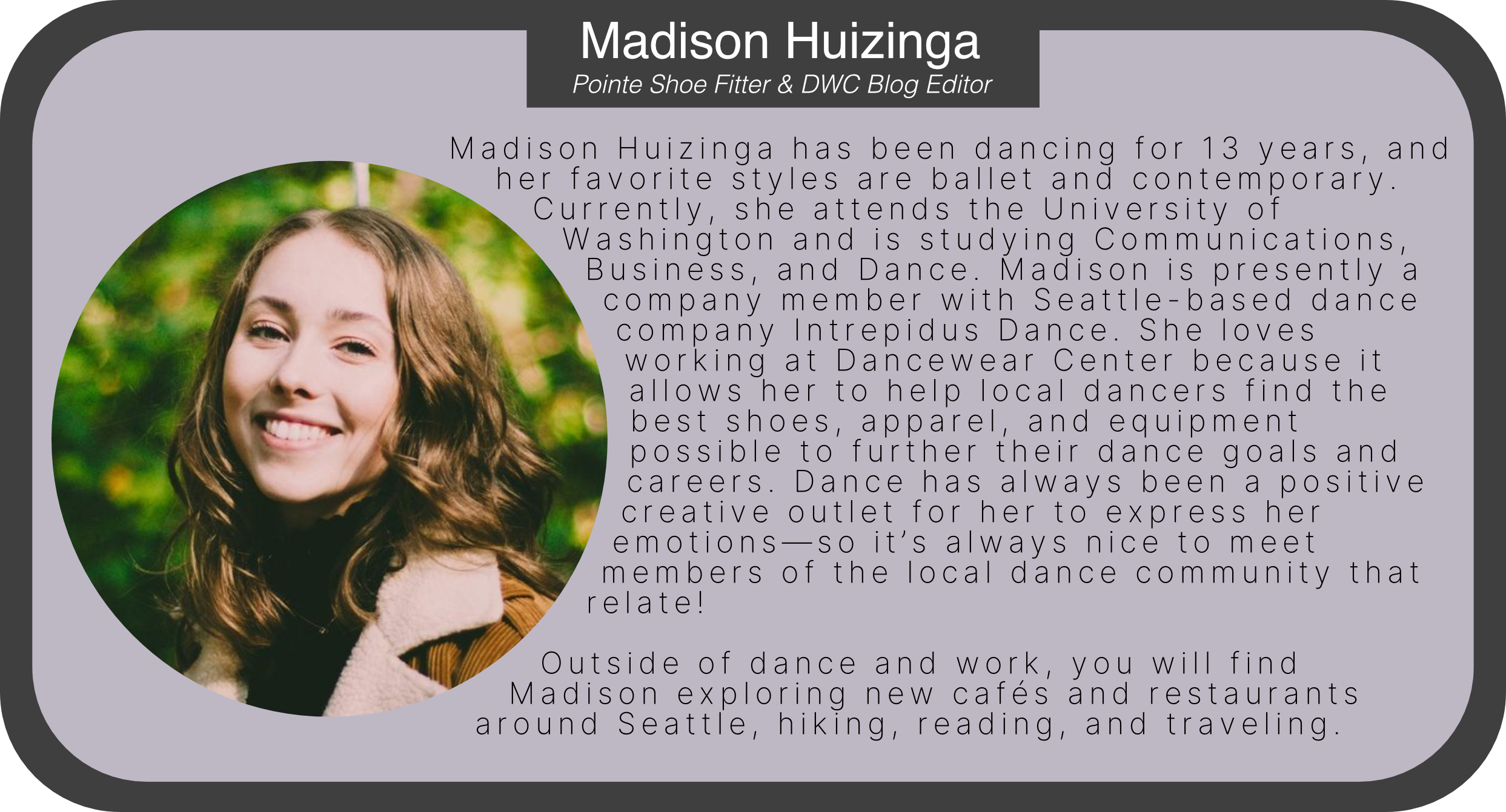
By Madison Huizinga, DWC Blog Editor

Photo by Rex Tiffany Gunderson
While some folks have taken steps to destigmatize mental health discussions in the dance industry, there is still an overwhelming pressure to compete against your peers within the studio environment, which can lead to adverse mental health issues. DWC staff member and pointe shoe fitter Tija Dupont opens up about her dance journey, goals for the future, and destigmatizing mental health in the dance industry.
Tija began dancing around age two in a ballet/tap/jazz combo class in her small hometown in Montana. She danced at the same performing arts academy until she was about ten years old. During that time, Tija took a break from dance for about a year and a half because she was dealing with “horrible anxiety.” Even during her break, she was still drawn to movement in her daily life, so it became clear to her parents that she would benefit from getting back into it. She auditioned for her studio’s company, which traveled a lot for performances and competitions. After being a part of the team for about three months, Tija’s parents told her they were moving to Seattle.
After moving to Seattle, Tija got more into ballet after seeing the Pacific Northwest Ballet’s production of Swan Lake. She tried out a handful of studios, searching for an environment that wasn’t hyper-competitive and that offered a welcoming community. Tija also attended a summer intensive at The Joffrey Ballet in Chicago, Illinois. “Going to Chicago is probably the best thing that’s ever happened to me,” Tija says of her experience dancing at Joffrey. She shares that her instructors and roommates were incredible, and the environment allowed her to learn and soar as a dancer. Today, she dances with Ensemble Ballet Theatre in the Maple Valley area.
Before she began working with Dancewear Center, Tija had been working at a larger retail corporation in the area. Feeling a bit discouraged in her position, her mom encouraged her to apply for Dancewear Center, as it’s an area where she could offer some expertise. Soon after interviewing with Owner & General Manager Samantha Weissbach, she landed the job!
Tija started as a retail associate and later a shift lead at DWC, but recently she’s become a pointe shoe fitter. Tija didn’t see herself learning anything about pointe shoes when she started her job but soon became fascinated with pointe shoes through the fitting training sessions at DWC. She shares that she loves fitting pointe shoes, especially because she learns something new every time she does a fitting. She looks forward to now having the freedom to run fittings solo.
Tija loves working at a local business that is so well-received by the local community. She also enjoys the uplifting store environment. “The second I walk into the store, I’m instantly greeted. I just feel such a good energy,” she says. Tija appreciates how positive and reassuring the whole DWC team is.
One of her favorite parts of the job is being able to provide people with the products they need to be successful in dance. She finds satisfaction from seeing customers’ faces light up when she’s able to give them something they’ve been looking for. Tija also loves being able to fill the role of a “personal shopper” for some customers who are unsure about what they want to purchase. Being able to point them in the right direction brings her so much joy.
Outside of work, Tija enjoys hiking, sharing that her family members are big “outdoors people” and love to do activities that connect them with the beauty of the Pacific Northwest. She also loves coffee religiously. “Personally, I call that a hobby,” she laughs, sharing that she always has a coffee on her. She also enjoys doing yoga and conditioning in her home studio, a make-shift dance studio she made in her garage. Tija enjoys traveling as well and looks forward to getting back into it with her family following the major COVID-19 lockdowns.

Photo by Ken Fox
Tija recently finished high school and is considering taking some classes at a local community college before hopefully transferring to the University of Idaho.
In the larger dance world, Tija hopes to see people in the dance industry talk more about mental health and foster a less competitive environment so dancers can feel less judged. “I think studios need to encourage a non-judgmental community,” she says. This paired with studio owners discussing mental health with their students will help the industry move towards being more welcoming to all.
Keep an eye out for Tija in DWC, particularly if you’re getting a pointe shoe fitting anytime soon!
Building the Community You Wish to See
After relocating from Santa Fe, New Mexico to Bellingham, Washington, Brooke Evans noticed that her newfound home was lacking something near and dear to her: high-quality dance. Through copious research and collaboration with local parents and dancers, Brooke and her fellow community members were able to build Opus Performing Arts: a robust dance school composed of experienced faculty and tasked with the mission of “fostering a lifelong love of dance.”
Brooke Evans on the Formation of Opus Performing Arts
By Madison Huizinga, DWC Blog Editor


Photo by: Michelle Smith Lewis
After relocating from Santa Fe, New Mexico to Bellingham, Washington, Brooke Evans noticed that her newfound home was lacking something near and dear to her: high-quality dance. Through copious research and collaboration with local parents and dancers, Brooke and her fellow community members were able to build Opus Performing Arts: a robust dance school composed of experienced faculty and tasked with the mission of “fostering a lifelong love of dance.”
Like many youngsters, Brooke got involved with dance because her older sibling did it. She began her training at age three in her hometown of Santa Fe at the Santa Fe Dance Foundation, now known as the Aspen Santa Fe Ballet. At age 23, Brooke got pregnant which required her to shift her life focus. She ended up moving to Bellingham, Washington, where she has been ever since.
“When I got up to Bellingham, I didn’t really know much about the dance community and had just had a baby and I didn’t go the traditional college route,” Brooke shares. “So I just started exploring the dance community a little bit and I found that there wasn’t as much dance here...I was expecting more and I was expecting a higher quality of dance.” Brooke realized that if she wanted to see a more expanded, potent dance community in Bellingham, she needed to be a part of building it.

Photo by:Juliette Machado
Brooke became a co-founder of Bellingham Repertory Dance, a professional contemporary dance collective full of local dancers who are eager to challenge themselves and work in the industry. Brooke was a part of the founding member team, along with other local dancers who were looking for a professional level experience. Through Bellingham Repertory Dance, dancers have gotten the opportunity to work with renowned regional, national, and international choreographers like Mary Shelton Scott, Eva Stone, and Joshua Beamish. Bellingham Repertory Dance is currently going on its sixteenth season. Brooke left the dance collective after eleven seasons, but is gratified to see “this new generation really carrying it forward.”
Eventually, one of her sons expressed interest in beginning dance classes himself. She started looking in town for classes she saw fit for him, and wasn’t coming up with much. There were other parents in the Bellingham community who were feeling similarly, namely Opus owners Allan and Marie Redsone, who struggled to find a local dance school offering high-quality instruction for their own daughter. Allan and Marie networked out into the community, found a space and conducted research to bring their vision of Opus to fruition, finding Brooke in the process. After her first year of teaching at Opus, Brooke became the school’s artistic director to help sculpt and shape the school’s direction, again having the opportunity to build a stronger dance community in Bellingham.
Opus Performing Arts offers tap, contemporary, jazz, lyrical, hip hop, pointe, and ballet classes for both kids and adults. “I have just an incredible team of teachers,” Brooke gushes. Throughout the past year, Opus was also offering seminars on topics relating to mental health and self-compassion with ballet teacher and licensed mental health professional Rachel Coats as a way to provide more holistic services. Rachel will continue her self-compassion work with students this fall as Opus’ wellness consultant.

Photo by: Juliette Machado
“We really put an emphasis on instruction at Opus and making sure that dancers are being really safe,” Brooke says. For instance, the school administers “pointe readiness” evaluations that students must pass before earning their pointe shoes. “It’s not something that you get, it’s something that you earn over time. It’s a step in your progress.”
Opus is excited to be returning to in-person classes in the fall, after nearly 14 months of online learning. Throughout the COVID-19 pandemic, Brooke and the rest of the staff at Opus worked hard to communicate to students the importance of making dance feel like home regardless of where they are. She shares that the lack of community engagement, specifically due to canceling live performances, was a challenge for the Opus dancers. “I think the students are just so hungry to be not only getting in-person instruction again but also just to be with their friends and be in their community,” Brooke says. “There’s something so energizing about being with each other that we can’t feel over a computer screen.”
Another exciting update at Opus is that the school is moving to a bigger location with more studio space in 2022. “The space we’re looking at has the potential for five studios, three big ones and two small ones,” Brooke says. “It’s going to be really exciting when we get to move and then we get to offer more classes and provide more for the community as well.”
Ultimately, through her work with Opus Performing Arts and throughout the dance world, Brooke hopes to see dance professionals draw greater attention towards the self-compassion and mental health aspects of dance. “That’s something that I think is a missing part of the dancer’s health puzzle that we’re not quite up to par on,” she says. “‘Perfect’ doesn’t exist and it’s important to be able to have that positive self-talk, acknowledge your growth, and realize your wins.”
If it weren’t for the community building efforts of Brooke Evans and many others, Bellingham wouldn’t have the energetic dance scene that it has today. Since its founding, it’s clear that providing access to safe, high-quality dance instruction that can benefit a dancer for a lifetime will continue to be a top priority at Opus. “We want to instill a love of dance that [students] can carry forward through their lives,” Brooke says.
Interested in writing for the DWC Blog? Click below to fill out the DWC Contributor application!