
The Khambatta Dance Company Director Shares Desires for Cross-Cultural Connectivity
Cyrus shares that the experience of two cultures coming together is important to him, as his father is Indian and his mother is white, making him a product of cross-cultural connection himself. Throughout their personal lives and careers, Cyrus’ parents have experienced and fought against racial discrimination. From witnessing his parents’ own experiences, as well as navigating the societal challenges of having a biracial identity, Cyrus has been inspired to elevate and celebrate diversity through dance as a means to heal the damages that injustices like racism have caused. “[It] inspires me when I see different cultures coming together,” Cyrus expresses, sharing that his primary desire is to bring unity through understanding in his work at Khambatta Dance Company and beyond.
Cyrus Khambatta On His Vision for a Networked Future
Name pronunciation: Sai-russ Kahm-baht-ta | Pronouns: he/him
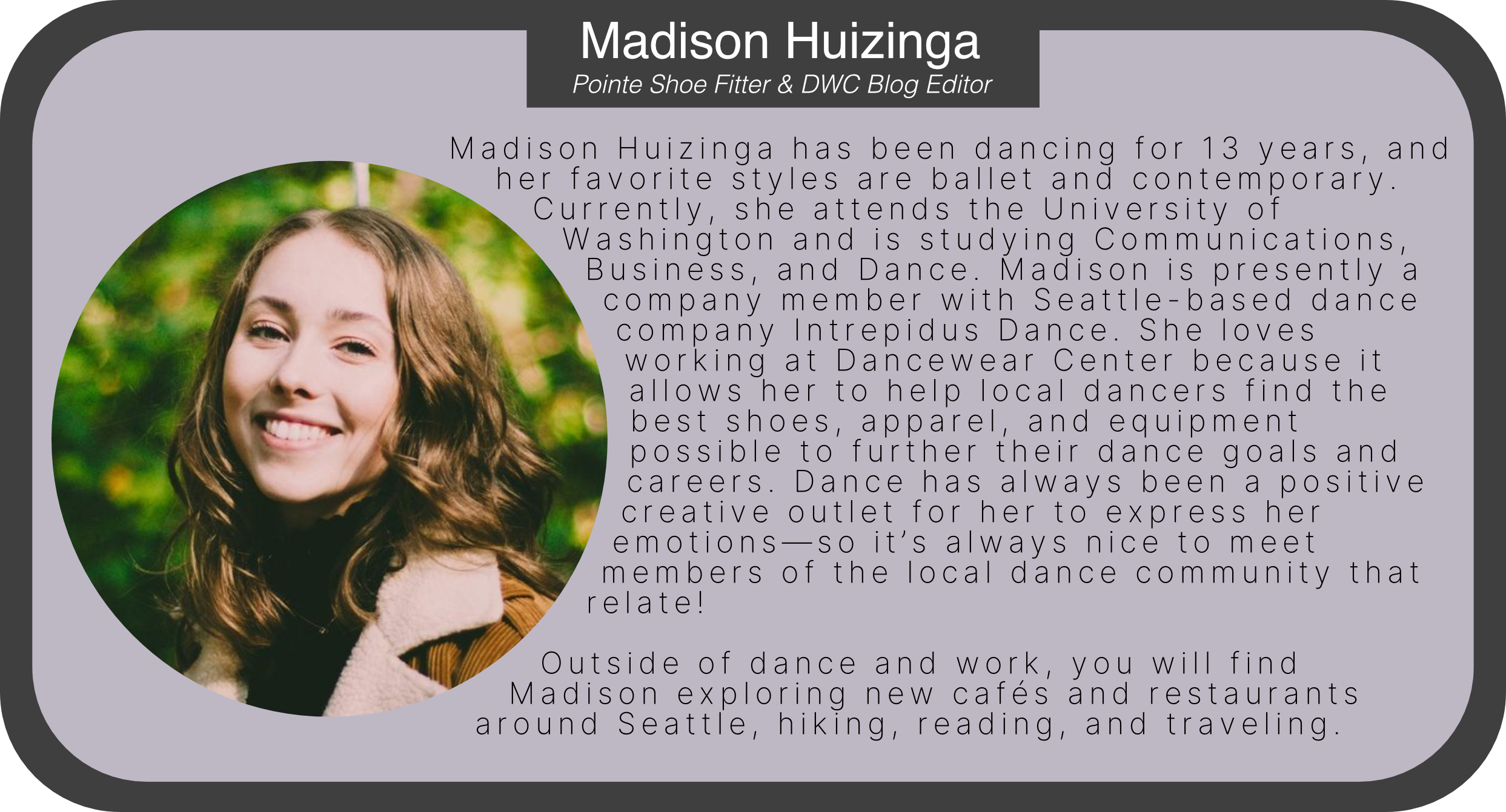
By Madison Huizinga, DWC Blog Contributor

When encapsulated in their communities, with their noses to the grindstone, it can be easy for artists to silo themselves off. While bolstering artistry in one’s community is beneficial, many benefits can also be reaped from looking outside oneself and forming cross-cultural connections. This inclusivity- and community-oriented mindset is one that Cyrus Khambatta carries with him in his work as Executive Artistic Director of Khambatta Dance Company and the Seattle International Dance Festival.
Cyrus was introduced to art and movement at a young age, as his mother worked in theatre education. He took classes at Capitol Hill Arts Workshop in Washington, DC, where he trained early on in acrobatics, tap, and creative movement, among other styles. Cyrus developed a deep interest in physical theatre, specifically the intersection of dance and theatre, which he fostered while attending an alternative school. During his time at New York University, he participated in the Experimental Theater Wing, specifically the dance track, which featured a curriculum largely focused on physicality and self-creation.
With fellow students and peers on the dance track at NYU, Cyrus formed Phffft! Dance Theatre Company, which would later become Khambatta Dance Company. Having participated in largely self-directed educational programs throughout his schooling, Cyrus was confident that starting a company right after college was something he wanted to do. After graduating, the company mainly toured and performed around Europe and the east coast of the United States, including Spoleto Festival USA in Charleston, South Carolina. KDC also took part in a long-term residency in Venezuela for about three years.
After KDC moved to Seattle in 2001, Cyrus realized that dance was not being presented in a lot of venues like it was on the east coast and across Europe. “If [KDC] was going to be here, we would have to create our own environment,” he shares. Cyrus felt deeply inspired by the cross-cultural and cross-organizational connections made at the dance and arts festivals he participated in across different regions; this type of connection is ultimately what inspired the creation of the Seattle International Dance Festival.
Seattle International Dance Festival is a program born out of Khambatta Dance Company, aimed at hosting and inviting domestic and international dance companies to Seattle to present work. Cyrus is a board member and the main curator for SIDF but invites curators for various portions of the festival, such as Gonzaga University Dance Director Suzanne Ostersmith for the Spotlight on Seattle program of SIDF in 2022.
“As an artist, artist presenter, administrator, and company that oversees the festival, we have a great interest in seeing that dance is served in our community,” Cyrus says, speaking on the value of providing the geographically isolated Seattle dance community with a view into different dance scenes around the world.
Cyrus shares that the experience of two cultures coming together is important to him, as his father is Asian Indian and his mother is white, making him a product of cross-cultural connection himself. Throughout their personal lives and careers, Cyrus’ parents have experienced and fought against racial discrimination. From witnessing his parents’ own experiences, as well as navigating the societal challenges of having a biracial identity, Cyrus has been inspired to elevate and celebrate diversity through dance as a means to heal the damage racism has caused. “[It] inspires me when I see different cultures coming together,” Cyrus expresses, sharing that his primary desire is to bring unity through understanding in his work at Khambatta Dance Company and beyond.
Cyrus describes the leadership and creation process within Khambatta Dance Company as “collaborative” across the organization, including its artistic and administrative positions. The dancers all work together to create an abundance of material in a short period of time and the administrative staff comes together to identify areas of need to improve KDC and SIDF. This horizontal leadership format falls in tandem with the values the organization was founded on.
In addition, Cyrus takes pride in KDC’s presentation of split bill performances, as the organization finds value in presenting “a pluralistic view of art” as a way for creators and audiences to reflect on their life experiences and see broader worldviews.
Over the summer, Khambatta Dance Company performed at Blois Dance Festival in Blois, France, and did a two-week residency at Newport Dance Festival with Island Moving Company in Newport, Rhode Island. Along with Khambatta performing its own independent pieces, dancers from KDC and Island Moving Company got the opportunity to dance together in a piece choreographed by Cyrus for both companies.
In October 2022, Khambatta Dance Company is headed to Busan and Iksan, South Korea to perform. KDC has a partnership with a dance festival in South Korea and plans on working to bring artists back and forth between South Korea and the United States.

“We are looking at creating an international and national network where Seattle artists could tour some of the places that we have created relationships,” Cyrus says of the future of SIDF. He’s greatly interested in creating mechanisms that encourage the global exchange of dancers to better support Seattle artists’ touring funds, allow artists opportunities to expand their own audiences, as well as see art presented across different cultures. In his work, Cyrus appreciates utilizing a model that doesn’t just consider what will benefit one’s own community, but also neighboring communities.
“I’d like to see that artists become the ambassadors for culture, particularly in the United States,” Cyrus says. In addition, he encourages artists to foster their own community-oriented curiosity and turn their eyes toward art that they may think is pushing the envelope. In addition, he believes dancers should embolden themselves to “think a little bigger,” pushing themselves to stop considering how they must fit a pre-existing mold, in spite of the challenges that come along with that.
“I think dance artists really need to think about changing the mold,” Cyrus says.
Breaking the Mold to Cement a Place for Oneself
Operating in an industry with rigidly defined expectations and boundaries can take a toll on a person, particularly during an impressionable period in one’s life like childhood. Local dancer and choreographer Robbi Moore opens up on defying the status quo in the dance industry and providing transparency to performers.
Robbi Moore on Defying the Status Quo
By Madison Huizinga, DWC Blog Editor

Photo by Michael Stadler
Operating in an industry with rigidly defined expectations and boundaries can take a toll on a person, particularly during an impressionable period in one’s life, like childhood. Local dancer and choreographer Robbi Moore opens up on defying the status quo in the dance industry and providing transparency to performers.
Growing up in Hamden, Connecticut, Robbi recalls watching their older brother act onstage and feeling inspired to begin dance classes themself. After learning of Robbi’s desire to perform on stage, their mom enrolled them in classes at New England Ballet, where Robbi trained for two years and performed in The Nutcracker as a mouse. Robbi took classes in Ballet, Jazz, and Tap before moving to Dee Dee’s Dance Center in New Haven, Connecticut. The main reason for Robbi switching studios was because the New England Ballet was predominantly white. “My mom wanted me to be around people that looked like me so I could [experience] the other side of the dance world,” Robbi says, as Dee Dee’s is a predominantly Black dance studio.
At Dee Dee’s, Robbi continued taking classes in Ballet, Jazz, and Tap and was also introduced to West African Dance, Gymnastics, and Hip Hop. By the time they hit 11 or 12, Robbi was certain they wanted to be a professional dancer. Desiring to increase their Ballet training, Robbi returned to New England Ballet and later New Haven Ballet in addition to training at Dee Dee’s to up the caliber.
Around 12, Robbi began attending summer intensives, mainly at Earl Mosley’s Institute of the Arts. Robbi witnessed many people they trained with go on to perform with prestigious companies like Alvin Ailey American Dance Theater. Robbi attended EMIA’s summer intensive nearly every year, getting the opportunity to meet dancers training and choreographing in New York. A big perk of the intensive was Robbi getting the chance to perform on a weekly basis. “It was a very important experience for me to have,” they share.
Robbi graduated from the Ailey/Fordham BFA Program in 2015 and spent a year freelancing in New York, dancing with Amanda Selwyn Dance Theatre, The Steps Repertory Ensemble, and AATMA Performing Arts. A year after graduating, Robbi auditioned for Spectrum Dance Theater and moved to Seattle, WA to join the company as a paid apprentice.
Robbi shares that they learned so much from their fellow company members at Spectrum Dance Theater, as the dancers largely worked in collaboration with one another and Artistic Director Donald Byrd. Robbi became a full company member at Spectrum the following year and later left the company a year after that. They began freelancing in the Seattle area, working with Khambatta Dance Company, Coriolis Dance, Karin Stevens Dance, Whidbey Island Dance Theatre, Tacoma Urban Performing Arts Center, Kinesis Project Dance Theatre, and other part-time companies.
“Know who you are even if others do not understand you. Do not put anyone on a pedestal and always put your well-being first.”
Robbi dabbled in various artistic mediums growing up, including piano, flute, choir, and theatre, but nothing stuck with them in the way dance did. Robbi has found satisfaction in the gratification that comes from physically experiencing the practice of dance. “I just liked moving my body more than sitting down,” Robbi says, sharing that musicality and rhythm have come naturally to them after participating in a choir as a child. Whereas singing in front of an audience can feel a bit scary to Robbi, dancing is a happy medium that’s vulnerable and visual, while still being an internal and self-fulfilling endeavor.

Photo by Michael B. Maine
Robbi shares that growing up they experienced a lot of physical and social limitations in the sphere of dance. “It really ties into how people view your body and how your body gets viewed within the parameters of a certain genre of dance,” they say, as there are specific types of bodies and individuals that have been expected to be on display and excel within various genres. Being confronted with this type of challenge as a child, in particular, can greatly contribute to the formation of one’s identity.
“I went to a predominantly Black studio and that’s where I definitely learned about being Black,” Robbi says of identity and expectations. “That was very important, I’m very grateful for that, but it also came with a lot of baggage,” they say, sharing the challenge of having to conform to what a “masculine, Black man was supposed to dance like.”
Exploring self-image and gender identity within the sphere of dance has been a challenge for Robbi. “Gender norms are very binary, especially in dance. And it comes out in physicality as well,” they say, pointing to the expectations that are set for children of all genders regarding how to present themselves on stage. “If you’re a child and you’re discovering your identity and you are confronted with that, it can be very alienating,” Robbi says. Being alienated by an art form that you love can cause a lot of internal turmoil. “This thing that you love is being weaponized against you,” they voice.
Robbi says that dancing is not about becoming exactly like the people they look up to. “They look like them, and I look like me,” they say. “What makes people happy when they talk about their careers is that they can look back and say that they did what they wanted to do,” Robbi says, even if it means breaking the status quo without getting rewarded for it at the time. It’s satisfying to look back on one’s career and think nobody else could have done what I did or have the path that I had.
Robbi is excited to see more and more dancers openly identifying as genderqueer, non-binary, and trans, as a decade ago, that certainly wasn’t the case. “Ten years ago, you understood what your identity was, [but] had to understand the game you had to play in order to make it,” they say. “There’s change coming. There’s somebody that looks like you somewhere.” Robbi also believes that gender roles in dance should be more fluid for everyone and that needing to identify with any of the labels mentioned above should not be a requirement.
In the coming year, Robbi is preparing to perform with Khambatta Dance Company at the Seattle International Dance Festival Mini-Fest on March 4-5 and 11-12, 2022. The company is performing a piece choreographed by Artistic Director Cyrus Khambatta, another piece by Boston Dance Theater, and a piece by Mumbai-based choreographer Sumeet Nagdev. Robbi is also working with Kinesis Project, planning to have a gala in May 2022.
In addition, Robbi is teaching many dance classes and choreographing for Kaleidoscope Dance Company for their June recital and Noir Black Noir at the Tacoma Urban Performing Arts Center, an event featuring all Black composers and choreographers. Robbi has also signed up to take part in takePAUSE 2022, an adult performance opportunity at eXit SPACE. Robbi also got the opportunity to choreograph and film a piece called “Dryad” with Devin Muñoz for Men in Dance. In general, Robbi has enjoyed being able to stretch themself as a choreographer, particularly when it comes to choreographing for students.

Photo by Marcia Davis
Robbi believes that it’s important right now for dance organizations to have a clear intention behind what they’re offering to employees, dancers, and students and what their larger goals are. They share that it’s important for directors to be held accountable, particularly when it comes to providing dancers with contracts and allotting enough time for them to look them over and amend them if necessary. Considering that dancers are eager to get back to moving amid the pandemic, Robbi sees now as an opportunity for the Seattle dance scene to make expectations and processes more transparent and better for the community. During a time when many dancers are risking their health to do what they love and make a living, being able to give them peace of mind, in whatever capacity possible, is extremely significant.
For those interested, Robbi is teaching a Horton-based contemporary dance class on Saturdays at 10 AM at the Tacoma Urban Performing Arts Center, and a ballet class immediately after at 11:30 AM. “I would love to see you!” Robbi says.
In closing, Robbi’s biggest piece of advice for dancers is: “know who you are even if others do not understand you. Do not put anyone on a pedestal and always put your well-being first.”
Getting to Know DWC Staff Member Ethan Rome
If you would have told Ethan Rome before college that he would have a career in dance, he likely would have been a bit confused. What started as dabbling in his college’s breakdancing club has become an integral part of the dancer, choreographer, and DWC Director of Marketing’s life. From performing around the world to co-founding his own dance companies to overseeing Dancewear Center’s image, Ethan has acquired rich experience in the dance industry and plays a crucial role on the DWC team. Read on to learn more about how he got here.

Photo by Catlyn Griswell
Ethan Rome is a dancer, teacher, and choreographer in Seattle, Washington. He graduated from the University of Iowa with degrees in Dance, Psychology, and Entrepreneurial Management. From there he trained at Jacob’s Pillow Dance Festival and then relocated to Seattle.
He has danced professionally for the Khambatta Dance Company, the Seattle Opera, and his own companies: Forthun+Rome Dance Theater and Trillium Dance Collective. Ethan has performed and taught around the world including in Puerto Rico, Lithuania, India, Mexico, and Brazil.
Ethan has choreographed original works for the Seattle International Dance Festival, the University of Iowa, Gonzaga University, Ballet Chelsea, the Khambatta Dance Company, Price Arts N.E.W., Intrepidus Dance, and multiple pieces for his own companies. He has also received the Bridge Project residency and the James Ray Residency.
His choreography often explores psychological and philosophical concepts, as well as his Korean heritage. Ethan uses his background in hip-hop and martial arts to influence his contemporary movement.
If you would have told Ethan Rome before college that he would have a career in dance, he likely would have been a bit confused. What started as dabbling in his college’s breakdancing club has become an integral part of the dancer, choreographer, and DWC Director of Marketing’s life. From performing around the world to co-founding his own dance companies to overseeing Dancewear Center’s image, Ethan has acquired rich experience in the dance industry and plays a crucial role on the DWC team. Read on to learn more about how he got here.
When Ethan first began college in Iowa, he was intending on studying psychology to become a therapist. Nevertheless, he decided to explore some other areas of interest and ended up walking into his school’s breakdancing club. He started dancing with the club members and made some friends. During his second semester, some of Ethan’s breaking friends wanted to take a modern class for fun and Ethan decided to join them. “I thought, ‘Oh wow, this is pretty cool’ and so I decided to take the next class, and the next class after that…” he recalls, until finally he decided to pursue a double major in psychology and dance. He also achieved a Certificate in Entrepreneurial Management during his time in school.
After college, Ethan went to Jacob’s Pillow, home of one of the most prestigious dance festivals in the nation, for the summer in Massachusetts. “It was really awesome to be able to see all of the different professional companies that came in,” Ethan says. Attending the festival helped him redefine what he considered “contemporary dance” to be.
During his time at The Pillow, Ethan began sending out dance reels, which is how he got connected with Cyrus Khambatta of Khambatta Dance Company in Seattle, WA. Ethan moved to Seattle to dance with Cyrus and got the opportunity to tour all around the world, including India, Lithuania, Mexico, and Brazil. “It was really amazing to be able to travel to different places and see the differences in dance as well as the similarities,” Ethan reminisces.
Ethan eventually left Khambatta Dance Company to begin his own company with CarliAnn Forthun known as Forthun+Rome Dance Theater. The company performed throughout Seattle at various festivals and even traveled to Gonzaga University for a choreographic and performance residency.
Before the pandemic, Forthun+Rome Dance Theater disbanded and the chaos of COVID-19 quickly followed. However, through the pandemic, Ethan joined local dancers Catlyn Griswell and Melissa Krienke to dance together and make videos for fun. Soon, they realized that not only were they enjoying dancing together, but what they were producing was interesting to all of them. Trillium Dance Collective, a dance organization founded by the three dancers, was born. Trillium Dance Collective has performed at the Seattle International Dance Festival, makes various videos and films, and focuses on bringing unique outside elements into its dance and art creations, such as stainless steel cubes made by artist De Carbón Azul.

Photo by Catlyn Griswell
Ethan first began doing graphic design projects for Dancewear Center, such as creating the store logo, but recently he’s become the store’s director of marketing. “Essentially, that means that I am in charge of the image overall and how we can connect with people. I look at marketing as a tool for us to bring positivity to the people that want our stuff, our connection, our services, [and] our products,” he shares.
Ethan enjoys the flexibility that his role offers, as it allows him to pursue a lot of different avenues within the art world. He loves working on graphic design projects, planning out the big picture of the store, and getting to work in a positive environment. “The store, everything about Dancewear Center, [is] true to its values,” says Ethan. “It’s really good knowing that this is a place with integrity.”
As a dancer and choreographer, a change that Ethan hopes to see happen in the larger dance world is more funding for smaller companies. He believes that the insufficient funds allocated to the arts can “hinder a lot of people” and “stop a lot of dancers from even the thought of pursuing dance [professionally].” “If you are someone that likes to donate and has the capacity to do that, consider donating to smaller local companies and dancers...and if you are someone who just enjoys the art or enjoys dance, go and see a show,” he encourages.
From the wealth of knowledge he’s obtained from his dance experiences to his commitment to creating sincere art in various forms, Dancewear Center is thrilled to have the dynamic Ethan Rome as a part of the DWC staff!

New Beginnings in the Midst of COVID-19 2 of 2
The past year and a half has been undoubtedly replete with hurdles, as much of the local dance community was left jobless due to COVID-19. Yet, through the hardships that unfolded throughout the pandemic, many were able to find unique ways to fill the gaps they were witnessing in the dance world. Dwelling in isolation served as a time for reflection and deep contemplation about how to emerge back into the dance realm. From private coaching to cross-training, from rebranding to expanding, and bridging the divide between dance and theatre, these organizations and individuals have created new beginnings for themselves amid adversity, leaving the local dance community better than they found it. Read on to learn more about these local artists and their latest endeavors.
By Madison Huizinga, DWC Blog Editor
The past year and a half has been undoubtedly replete with hurdles, as much of the local dance community was left jobless due to COVID-19. Yet, through the hardships that unfolded throughout the pandemic, many were able to find unique ways to fill the gaps they were witnessing in the dance world. Dwelling in isolation served as a time for reflection and deep contemplation about how to emerge back into the dance realm. From private coaching to cross-training, from rebranding to expanding, and bridging the divide between dance and theatre, these organizations and individuals have created new beginnings for themselves amid adversity, leaving the local dance community better than they found it. Read on to learn more about these local artists and their latest endeavors. We are continuing our feature of three more studios!
Creation Dance Studio

In April 2021, Creation Dance Studio moved to a new location with two new studio spaces. Additionally, the studio is expanding its adult/teen program to include classes like tap and hip hop and is now offering a complete youth program too. The youth program will offer jazz, hip hop, tap, lyrical fusion, ballet, and conditioning classes, as well as cheer and tumbling classes. “So much has led up to this brand new chapter for Creation Dance Studio and I am deeply grateful for the opportunity to provide classes for dancers of all ages on Mercer Island,” Owner Stevie Hagen shares.
For the past five years, Creation Dance Studio has offered adult ballet and pointe classes to dancers of all ages and backgrounds. The dancers have performed at retirement communities in Mercer Island and fundraisers, “with the goal of giving back and spreading the joy of dance to everyone around [them].” “We all have one huge thing in common - we absolutely love to dance,” Stevie says.

“If you had asked me if I wanted to be a dance teacher at the start of my senior year of college, I would have said no,” Stevie admits. She assumed that she would audition to join a ballet company after graduating from Cornish College of the Arts with a BFA in dance. She had no clue that a life of teaching and studio owning was in store for her. Stevie remembers the moment she figured it out. “I was taking [Cornish’s] required teaching methods class and began teaching a mock class in front of my peers and in that moment I knew that I wanted to be a dance teacher,” she recalls.
Deena Dunning was one of Stevie’s biggest teaching inspirations, as she assisted with Deena’s adult ballet program “Ballet With Deena.” Deena had stage 4 breast cancer at the time and would show up to teach dance regardless of how she was feeling. “Subbing for her was the greatest honor and getting to know the adult dancers that had followed her from location to location was truly special,” Stevie says. She recalls meeting with Deena at a Starbucks one afternoon and her passing the program onto Stevie. Deena passed away a week later. “I embraced the opportunity to continue Deena’s beautiful legacy and soon after Creation Dance Studio was founded in 2016,” Stevie shares.
Throughout the COVID-19 pandemic, safety was a top priority for Stevie when teaching dancers at CDS. The CDS adult program and many of Stevie’s private lessons were able to meet over Zoom for 15 months before returning to Creation’s brand new studio space in person. “We will continue to do everything that we can to be creative and flexible as we keep our dance community healthy and strong.”
Stevie expresses that she knows she has succeeded as a teacher when each student leaves her classes feeling “encouraged, capable, and knowing that they are enough exactly as they are.” She shares that it breaks her heart to see passionate dancers slowly beginning to believe that they aren’t enough because they don’t fit a certain mold. Excessive criticism and pressure can diminish a dancer’s true love for the art form. “Dance is so much more than a body type or reaching perfection,” Stevie stresses. Thus, she channels her energy into encouraging her students, focusing on movement rather than physique, and instilling confidence in each dancer she teaches. “If we, as a dance community, could return to that foundation of why we dance, that moment when we stepped into a class for the very first time and fell in love, I truly believe that the dance world would be a better place,” Stevie says.
Elevated Forms dance+fitness

Elevated Forms Dance + Fitness provides dance and fitness programs that teach dancers valuable cross-training exercises and techniques to prepare them for the professional realm. Founder Alexandra Roumanis offers in-studio or in-home classes designed to help build strong pre-professional dancers. These classes feature Progressing Ballet Technique (PBT) exercises, ballet technique training, as well as “contemporary, jazz, and acrobatic movements.” Alexandra stresses that her programs are designed to be adaptable and attainable for dancers to meet their “individual needs and goals.” She provides a variety of different class formats, including “weekly technique training,” “weekly cross-training for injury prevention, strength and flexibility,” and even one-week intensives. There are one-on-one or private group sessions available, in addition to in-studio or virtual workshops. Alexandra also offers more general personal training with an emphasis on pilates and barre-style exercises, and Elevated Barre classes, which are “dance-inspired” and designed for movers of all levels. Free workouts are even available on the Elevated Forms YouTube channel.

Photo by: Nicole Firestone
Alexandra began dancing around age three and began pursuing it more seriously around age 10. Throughout her teenage years, she focused more specifically on ballet. However, throughout high school, she also developed a deeper interest in contemporary dance, attending summer programs at Alonzo King LINES Ballet and the San Francisco Conservatory of Dance. While pursuing her BFA in Dance Performance and Choreography at Texas State University, she further cultivated her love for modern and contemporary ballet styles. After graduating college, Alexandra moved to Seattle and began interning with Velocity Dance Center and dancing with Khambatta Dance Company. She also worked as the operations and marketing manager of SQUID MGMT, an artist management company. Later realizing she was more interested in being in the studio, Alexandra took on more teaching, something she had always done throughout college.
Amid dance studios closing in 2020 due to COVID-19, Alexandra had several students ask her if she would teach private lessons, which she agreed to do. Unsure of what the landscape of dance would look like in the following year, Alexandra created Elevated Forms as a way to formalize the lessons she was providing. She specifically works with students who are serious about dance, wish to pursue it professionally, and are interested in improving their technique. Certified in a variety of dance teaching and cross-training methods, such as Progressing Ballet Technique and Sugarfoot Therapy, Alexandra’s everchanging vision is to provide her clients with a program that they can eventually practice independently to supplement their dance training. “Ideally...I want to let them go and fly on their own,” she says.
Alexandra stresses the importance of cross-training in dance as a way to make dancers stronger and prevent injuries. It upsets her to see such young dancers suffering through horrible injuries that stick with them for life. Thus, her practice is aimed at finding ways to implement cross-training into dancers’ routines and finding unique ways to make it interesting and enjoyable.
Glass House Dance

Glass House Dance is excited to announce its partnership with the City of Maple Valley’s Parks & Recreation Department. Starting this September, Glass House Dance will be expanding into the Maple Valley, Covington & Black Diamond communities by offering a variety of dance classes at Lake Wilderness Lodge. Registration for these classes begins this August through the City of Maple Valley’s Parks & Recreation registration page. In addition, Glass House is expanding its Sammamish location by adding a fifth dance room. Coming out of the COVID-19 pandemic, Glass House has secured the suite next to its usual studio space in light of growing classes & programming
Glass House Dance is going on its sixth year of offering the Sammamish, Issaquah, and Redmond communities year-round classes in ballet, hip hop, jazz, acro, lyrical, and contemporary. The studio also possesses a plethora of competitive and performance teams.
Co-Owner Larisa Eronemo grew up training as a competitive studio dancer and later earned her BFA in Dance from Arizona State University and MFA in Dance Choreography from the University of Arizona on a full-ride scholarship. After working at a university, she returned to studio life as a dance teacher. She has choreographed for the concerts of artists like Brett Michaels, George Thorogood, Third Eye Blind, Joan Jett & The Blackhearts, and many others. Larisa is also a nationally and internationally recognized judge and “guest master teacher”.
Co-Owner Ryan Eronemo’s dance journey began in high school. After breaking his hand left him unable to continue playing football, Ryan took a girl’s PE dance class, and his dance career built from there. He has performed, taught, and judged across the country and around the world, including venues in Asia and Europe. Ryan has appeared in music videos that have premiered on SkyTv in Canada and MTV Europe and is an “international master teacher” that’s taught across three continents.

Throughout the COVID-19 pandemic, Glass House Dance was able to meet state occupancy requirements and keep its classes running outdoors and by renting out spaces next to the studio. Glass House Dance is actively searching for a permanent location in the Maple Valley/Black Diamond community, but in the meantime, the studio is partnering with the City of Maple Valley to offer weekly classes with Glass House instructors & pedagogies. Glass House is beginning with 10 weekly classes through this partnership, but is looking forward to offering more classes as they fill up.
Larisa and Ryan live near Maple Valley and decided to spread their operations south when they were searching for dance classes for their daughter in the area. “There are not very many [dance] providers in this area and [South King County is] one of the fastest growing areas in King County,” Ryan says. “We thought we could have a unique voice and offer something valuable to the community.”
Glass House Dance’s programs are centered around inclusion. “If you want to dance, no matter what your body type is, what your skill level is, what you're able to commit in terms of time: we have a place for you no matter where you’re at in your dance journey,” Ryan says about Glass House Dance’s offerings.
From the rubble of the COVID-19 pandemic, the dance community of the greater Seattle area is coming together in inspired ways. These private coaching sessions, cross training endeavors, rebranding and expansion efforts, and more signal that the dance realm in our little corner of the world is only getting stronger following adversity.

Interested in writing for the DWC Blog? Click below to fill out the DWC Contributor application!