
Starting Ballet in Adulthood
Starting ballet as an adult can be a terrifying and nerve-racking experience. But it should not limit you from giving ballet a chance because when you look back, it will be worth it.
Coco’s Tips and Tricks for Your First Class!
By Coco Liu, DWC Ambassador

click below to shop the look:
Carmen Wrap Sweater Wear Moi | Hanami Stretch Canvas Ballet Shoe Capezio
Starting ballet as an adult can be a terrifying and nerve-racking experience. But it should not limit you from giving ballet a chance because when you look back, it will be worth it.
My Very First Ballet Class
At a young age, I was able to see quite a few well-known ballets, such as Swan Lake and The Nutcracker. I was just mesmerized by the dance form itself, I never truly understood how difficult and technical ballet was. It took several months of taking ballet classes that I truly grasped the difficulty. To this day, I still remember stepping into my very first ballet class. It was winter of 2018, I found a beginner ballet class at The Ballet Studio in University District. The moment I stepped into the classroom, I felt like I didn’t belong. The studio was wooden-floored, the barre and mirrors were a bit outdated, a pianist was sitting in the corner of the studio, and several students were already stretching by the barre. The teacher, Renzo, came up to me and introduced himself: “Is it your first-time doing ballet? Just follow along!” Renzo asked me to stand in between some experienced students so I had someone to refer to on both sides. We then started the class. Throughout the class, Renzo used ballet terminology in French and my brain just went, “sorry Tendu what?” I tried to copy whatever Renzo was demonstrating, but was not able to focus on my form. I didn’t know what I was doing. At the end of the class, I honestly felt a little bored and did not think ballet was physically challenging, simply due to my lack of knowledge in ballet technique and lack of preparation for my first class. Since I was determined to dance ballet in the center, I wanted to give ballet a shot for at least a month. After gaining more understanding of the technical aspects of ballet a month later, I realized how difficult it is.

click below to shop the look:
V-Back Pink Tank Leotard by Capezio | Bullet Pointe Skirt by Bullet Pointe | Hanami Stretch Canvas Ballet Shoe by Capezio
How to Prep and What to Expect For Your First Class
Here are some tips I wish I would have known before attending my first ballet class.
Learn basic terminology, for example:
Turnout: feet are pointed more to the sides of the body than the front and legs are rotated outwards
Tendu: working leg is extended along the floor until only the tip of the toe remains touching the floor
Plie: knee bending; used in jumps and turns to absorb shock
Eleve: lifted up; rise to stand on the balls of your feet
Watch some Youtube videos from the comfort of your home
Be patient!
I went back home and reflected on my first class then decided to do some research on my own about basic ballet techniques. I watched hours and hours of YouTube videos on basic techniques like tendus, plies, arm positions, etc. I wish I had some of these basic terms in my back pocket before going into my first class. Ever since then, I would watch a couple of new technique videos before attending ballet classes.
Here are three Youtubers I watched:

click below to shop the look:
I started truly loving ballet after learning the basic vocabulary and having some understanding of how to use my muscles correctly. Then, when I attended classes, all the basic movements became so much more interesting and challenging because I was able to focus more on muscle movement.
Introduction to ballet can also be quite boring because all the movements are slower and smaller. But these basic movements are crucial for building the correct muscle for all the big jumps, turns, and fancy movements you will get to do down the line. So being patient at the beginning is key!
How to Make Progress
One of the main practices that helped me was to set a weekly or biweekly goal. For example, I wanted to have a better second position arm placement at the barre and in center. Then, for the next week or two, I would constantly make mental checks on my arms at the barre and in center to make sure I was engaging the correct muscles and training my body to remember this position. By repeating this, my body would eventually build the correct muscle memory so it can hold the position without me giving it too much thought. Then, I would focus on something else. I have been using this technique for the past 3 years and have been very happy with the progress.
Set Your Expectations and Goals
Imposter syndrome in the dance community hits me quite hard. Whenever I browse Instagram or watch a professional ballet performance, I always wish I could be more like the professional ballerinas. But realistically speaking, I was not able to train at a young age, I am not able to dance every single day due to my full-time job, and the list goes on and on. As someone who began dancing as an adult, it would be very difficult for me to have super-high extensions, out-of-this-world flexibility, or do thirty fouetté turns, so it is important to set our own goals and create our own challenges. Ballet has become an important aspect of my life and a passion I would never give up. Dance can still bring us so many benefits in our life, such as providing us with a safe space to express ourselves, becoming healthier, stronger, and more confident, and building a supportive community that shares the same passion as us.
If you are reading this blog post and have some desire to try ballet, please don’t hesitate to try a class! I would strongly encourage anyone to step out of their comfort zone and give dance/ballet a chance. I currently dance at Dance Underground with 2ndActDance and also teach a beginner class that focuses on fundamental movements and muscle usage so dancers can move to the next level with a strong foundation. Feel free to reach out to me on Instagram @x.co.x.co.x or visit our website at https://www.2ndactdance.com/

Panelists from DWC Adult Ballet Q&A Give Advice for Adults Starting Dance
Being able to try new things and explore new hobbies is part of what makes life exciting. Nevertheless, it can be difficult to know where to begin. Lacking viable assistance with starting a new endeavor can deter people from beginning altogether. That’s why on October 31, 2021, Dancewear Center hosted its first-ever Adult Ballet Q&A. Sierra Keith of The Dance Conservatory, former DWC Ambassador Cynthia Randriamanohisoa, local adult dancer with Northwest Dance Cooperative Kim Lucy, and current DWC Ambassador and teacher with Second Act Dance Coco Liu answered questions all about starting ballet as an adult and the things they wish they had known.
By Madison Huizinga, DWC Blog Editor
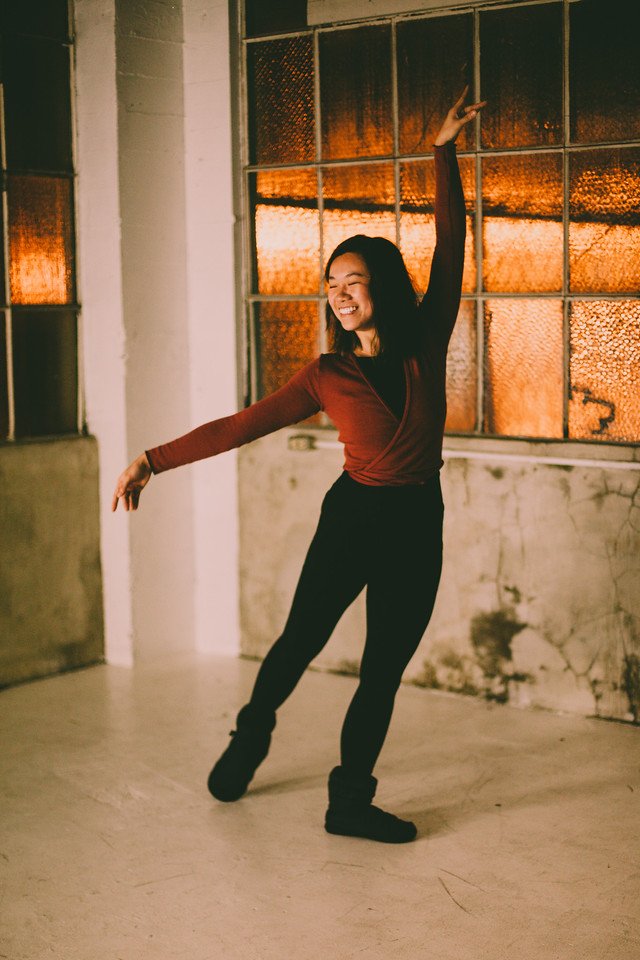
click below to shop the look:
Carmen Wrap Sweater Wear Moi | Hanami Stretch Canvas Ballet Shoe Capezio | Quilted Warmup Booties in Black Russian Pointe
Being able to try new things and explore new hobbies is part of what makes life exciting. Nevertheless, it can be difficult to know where to begin. Lacking viable assistance with starting a new endeavor can deter people from beginning altogether. That’s why on October 31, 2021, Dancewear Center hosted its first-ever Adult Ballet Q&A. Sierra Keith of Dance Conservatory Seattle, former DWC Ambassador Cynthia Randriamanohisoa, local adult dancer with Northwest Dance Cooperative Kim Lucy, and current DWC Ambassador and teacher with Second Act Dance Coco Liu answered questions all about starting ballet as an adult and the things they wish they had known.
All of these dancers have had different levels of exposure to dance throughout their lives and have it in different capacities within their lives. Additionally, they all have different reasons why they decided to start ballet as adults. “I have always wanted to do ballet, ever since I was a child” Cynthia shares. “[But] I didn’t get the opportunity until I went to college.” She began ballet at a school club, later attending open classes after moving to the United States.
Similarly, Kim loved to play dress-up and dance as a child, eventually joining a dance drill team in high school. “I’ve just always loved ballet as an art form,” Kim says, beginning her ballet practice in college. She shares that there are many supportive options for adults within the Seattle area, more than many may realize. Adults do not have to resort to being in classes with people years younger than them. “You can wear what you’re comfortable in, there are all sizes of bodies,” she says of the ballet classes she’s taken. Kim also points out that most dancers are so focused on their own training that they don’t pay attention to others in the class, there is little judgment. As opposed to other forms of exercise, Kim says that ballet allows her to engage her mind too, making it both physically and mentally engaging.

click below to shop the look:
Coco was exposed to dance at a young age, but truly fell in love with the art form when she watched her friend perform in Utah. After returning to Seattle, Coco began taking ballet classes and found herself deeply enjoying how her body and mind felt after class, describing it as a meditative experience.
Sierra says that growing up she was a mover, she loved to dance freely around her house. However, growing up in a family with a low income and in a small town lacking a dance studio, she had little opportunity to join a dance community and take classes. In college, she saw a professional ballet dancer perform and “fell in love” with the art form. After several years of working, Sierra injured her arm and lacked sufficient help from her doctors. She decided she would try to work through the problem on her own, taking ballet classes and gradually integrating movement back into her body. After a couple of months, she was able to move her arm again. “I was hooked at that point,” Sierra says. “I found that through the movement I was able to rehabilitate myself...ballet turned into something important for me.”
There were many surprises for the dancers as they began ballet. Sierra describes feeling surprised that she even liked dance, as she never imagined enjoying physical activity. Kim was surprised at how much she’s progressed in the practice, explaining how excited her five-year-old self would be to learn that her 41-year-old self would be dancing in pointe shoes. “I didn’t realize how much detail there was to ballet,” Coco says. Cynthia shares this thought, she was surprised with how complex the practice is and how there is always room for improvement.
The panelists cleared up some misconceptions and answered some common questions adults have about starting ballet. For example, they shared that it’s acceptable to wear whatever you feel comfortable in, not just tights and a leotard. “You should definitely pick an outfit that you feel comfortable in,” Sierra says. “A lot of adult ballet dancers find their own unique style and I always think that’s cool... it’s always a combination of a little bit of dance clothes and a little bit of street clothes.” Leotards, skirts, pants, T-shirts, socks, ballet slippers, and more are all welcome! Kim recommends going to a dancewear store to get fitted for ballet slippers, as they often have weird sizing, but that’s all that is specialized. Nonetheless, Cynthia recommends double-checking with the studio to ensure there is no dress code; however, most open classes do not require them.

click below to shop the look:
Seamless Rib Racerback Leotard by Capezio | Bullet Pointe Skirt by Bullet Pointe | Infinite Shock by Apolla Performance
Many adult dancers take ballet for the training, others take it for the performance opportunities or both. Cynthia says that many performance opportunities at studios are optional and have varying degrees of formality. For instance, not all performances take place in an auditorium or theatre setting, others are smaller with solely family and friends in the audience. She recommends researching and reaching out to different studios to see what opportunities they have. Sierra points out that ARC Dance, eXit Space, and Westlake Dance Center all have adult performance opportunities, also sharing that adult dancers should feel empowered to create their own performance opportunities.
Coco shares that dance has changed her life, she hasn’t had a passion that’s persisted this long. Kim says that dance has been a form of therapy for her. As a wife, mother, and full-time employee, dance has served as something that’s solely for her, making it even more special. Cynthia has been impressed with how she’s been able to make her dreams come true through dance, achieving things she didn’t imagine possible 20 years ago. Sierra shares that it’s the best part of each of her days.
Sierra points out that many people in her life tell her that they want to try dance, but have something holding them back, whether that be their age, current activity level, or any other factor. Sierra encourages them to not wait and give it a try!
Tips For Setting Dance Resolutions For the New Year
Before the start of a new year, it’s commonplace for people to set goals they hope to achieve following 11:59 PM on December 31. People set goals of all shapes and sizes, some small and realistic and others large and out of proportion.
By Madison Huizinga, DWC Blog Editor

Before the start of a new year, it’s commonplace for people to set goals they hope to achieve following 11:59 PM on December 31. People set goals of all shapes and sizes, some small and realistic and others large and out of proportion.
As dancers, we’re well-aware of what it’s like to work towards goals we set for ourselves and goals that others set for us. In dance class, it often feels like there is always something we are working to improve upon. Sometimes within our dance training, setting goals can feel futile, particularly when we start comparing ourselves to others. It can also be challenging to know where to begin. For instance, a consistent goal I have for myself within my dance training is improving my turn-out. But what exactly do I mean by that? How will I measure my progress towards achieving this goal? Is there a deadline I want to achieve this goal by? And how on Earth do I begin? Rather than having questions like these swirling around your head, it’s much more effective to make a plan. Fortunately, utilizing strategies like the SMART goals acronym and planner tools like Whimsy & Rhyme’s “Pirouette Planner” can help you out.
The SMART goals concept is widely discussed in academic and professional settings. The acronym was first written about in the November 1981 issue of Management Review by George T. Doran, and since then has received wide praise in a variety of industries. Each letter in the SMART acronym stands for a specific attribute you should make your goals, to ensure they are clearly defined and achievable.
The S stands for specific. The goal you set for yourself should refer to a particular objective you hope to achieve. The more details, the better. For instance, if your New Year’s resolution is that you want to “improve your extension,” that doesn’t provide enough information to help you work towards achieving that goal. However, if you reframe the resolution as wanting to be able to “hold your extension at a 90-degree angle,” that provides a clearer target to aim for.
The M stands for measurable. How will you track your progress towards achieving that goal? Once you outline the specific details of your goal, you will have greater clarity on how exactly you can measure your progress. Let’s say you hope to “eat more vegetables” in 2022. A way to measure progress towards that goal would be to set a target quantity of vegetables to purchase at the grocery store each week. That way, you can have an actual, quantifiable metric to determine whether or not you are working towards that objective.

Photo by Alexandre Dinaut from Unsplash
The A stands for achievable. Is the goal you’re setting for yourself doable? Do you have the time, energy, and resources to be able to accomplish it? If you are a perfectionist, it can be common to set a goal that’s out of the scope of what you can actually accomplish. However, it’s much more effective to set a goal for yourself that is challenging, but still attainable, and then set increasingly challenging goals from there. If I’m working on landing a double pirouette, setting a goal for myself to nail a quad pirouette is probably unattainable. Once I land that double though, I can up the challenge for myself!
The R stands for relevant. Is this goal necessary to achieve your larger mission? In the age of social media, it can feel like we’re constantly being bombarded by pictures and videos of advanced and professional dancers showing off their extreme strength and flexibility. While such feats may look cool in photos and short-form videos, we shouldn’t necessarily work towards them if they’re not relevant to our actual dance training goals. Being able to perform a “needle” stretch successfully can look exciting, but what’s more important is ensuring that we’re setting goals for ourselves that advance our technique in safe and healthy ways.
Finally, the T stands for time-bound. Another useful way to ensure that you actually accomplish the goal you set for yourself is to set deadlines to mark your progress. Some goals may take a few weeks or months to accomplish and others may take the entire year. Whatever time frame you have in mind, set some realistic markers along the way to ensure that you’re making the progress you want to.

A particularly helpful tool for marking your goal progress is a planner. The Pirouette Planner by Whimsy and Rhyme available at Dancewear Center is an especially useful planner for dancers, as it was designed for dancers by dancers. The Pirouette Planner is designed to help dancers maintain an organized schedule to help them reach their goals. Each month contains a coaching page on a different, specialized topic, including nutrition, audition preparation, team building, and more. There are also guided journaling prompts and areas to track stretching and strengthening activities, class corrections, and observations, as well as daily expressions of gratitude.
By following the SMART goals acronym and utilizing tools like the Pirouette Planner, we dancers can be on our way to achieving our goals. Let’s set ourselves up for success in 2022!
Interested in writing for the DWC Blog? Click below to fill out the DWC Contributor application!