
A Place of My Own: A Conversation with Ashton Edwards
Earlier this month, Director of Marketing Cherie Rendón sat down with DWC Ambassador Ashton Edwards to discuss his journey and experiences surrounding starting pointe training as a gender fluid dancer. Ashton is currently a Professional Division student with Pacific Northwest Ballet, and is one of the first dancers to be allowed to train in both male and female classes: breaking down barriers in an industry that

A Place of My Own: A Conversation with Ashton Edwards
Ashton Edwards, originally from Flint, Michigan, has studied dance since the age of four years old at the Flint School of Performing Arts. Ashton has attended summer ballet intensives on full scholarships at The Joffrey Academy of Dance in Chicago, Houston Ballet School, and Pacific Northwest Ballet. In 2018, Ashton represented Flint in the NAACP’s National Afro-Academic, Cultural, Technological and Scientific Olympics (ACT-SO) competition in San Antonio, Texas, against over 250 students of all high school grades all over the country. In the Performing Arts, Ballet dance category, Ashton came in 3rd place, winning a bronze medal. Ashton is currently a Professional Division student at Pacific Northwest Ballet.
Earlier this month, Director of Marketing Cherie Rendón sat down with DWC Ambassador Ashton Edwards to discuss his journey and experiences surrounding starting pointe training as a gender fluid dancer. Ashton is currently a Professional Division student with Pacific Northwest Ballet, and is one of the first dancers to be allowed to train in both male and female classes: breaking down barriers in an industry that has historically been divided into uncompromising female/male binary categories.
CR: What led you to start training en pointe?
AE: It was a desire I had as a child. It’s always been something I wanted to do, to just… be a pretty ballerina. So I guess it was just natural, it was just a desire as a kid. It wasn’t until I was brave enough to come out and say it that I did.
CR: Since starting your training, what challenges have you run into?
AE: One of the biggest challenges has been exhaustion. Getting back up every day, and taking ample time to rest after the long day. That’s been the hardest part: pushing, and then recovering, pushing, and then recovering - every day. We have pretty long schedules at PNB, so we are dancing all day. For me, it’s going back and forth from pointe to flat, from pointe to flat. At the end of the day, my body in so many different ways is just… worn. It’s not just your normal stretch routine, it’s my stretching, and then my icing, and then my bath. I have a new routine now--it’s just… adapting.
CR: Speaking on recovery, what have you found really works for you as far as recovery practices? What does that look like for you?
AE: I come home, and I start with a long stretch [routine]. Usually my stretch takes about 10-15 minutes. I stretch, and then I roll out. I roll out all the muscles, so I start with a tennis ball and my feet, then with my roller I go: calves, quads, IT band, hip flexors, and back. I usually go then into an ice bath--just for my feet up to my knees. Next, epsom salt bath, shower, and then a heating pad for my back--then I go to bed! Then in the morning, I have a pre-class workout I have to do because of my back. I have a really flexible back, but also that leaves me in a vulnerable position. I went through a really bad injury last December, so now I have pilates exercises that I use to prepare for my day, and then I do all of these [recovery routines] after my day.
CR: Has anything surprised you about starting dancing en pointe?
AE: I think the most surprising part… is to know how different it is. Not to say that one is harder or one is easier, but they are just so different. It’s been mind boggling switching back and forth. Just the approach of a movement or a variation has to be so different, because the work requires so many different things. At the end of the day, my entire body is just worn because I’ve been switching back and forth, from muscle to muscle. I’m just exhausted by the end. It’s been very surprising to see how different the women work. [Even the] setup of the class--the energy of the class--how competitive (it’s a lot more competitive for the women), [and] just how hardworking and determined they have to be. It’s been really surprising and interesting to see.
CR: What sort of successes have you experienced since starting your training?
AE: [Most recently] PNB has nominated me for the Princess Grace [Awards]! But also, just general day-to-day successes… it’s been really fun completing variations in both male and female work now, and just feeling--still exhausted--but more at ease. I feel like a big success generally has been how strong my technique has become, and how I feel more mature in all of my dancing now, because I’ve dabbled in so many different things and created my own type of movement. That’s been a big success I feel for me, when I dance I feel good about what I’m doing.
CR: Since you have become an ambassador with [DWC] and we’ve all followed your progress throughout the last 6 months, we’ve gotten a lot of dancers from all over the country commenting about your progress and your story, and being really inspired by what you’re doing pioneering this normalization of more men dancing en pointe in a very serious fashion. What do you have to say to those people who may want to start training like you are? Any tips, words, advice, wisdom for those people?
AE: First, theraband, theraband, theraband! Get those feet as strong as possible! After that, don’t stop. Don’t stop emailing, don’t stop contacting whoever you have to contact. You have to push yourself through, because no one is going to invite you into the room: you have to put yourself there. So I guess my biggest advice--even for moms of these children--[is] to be the biggest advocate you can for yourself. Make your own place. Reach out to me, because I love to hear it, and I also love to help! Show people what I did and what PNB is doing: what it could be! You have to keep pushing for yourself. Make sure your technique is also up to where you’re saying it is, and be realistic in what you can do! My biggest thing is, I’m not asking to be Sugar Plum--but I’m asking to be back of the line corps de ballet: and I know I can do that. So I should have the opportunity. Know what you can do, and know what should be available to you, and make it available to you.
I’ve been getting a lot of those messages, and it’s just so cool. Especially the moms who [tell me], “I have a 4-year-old son, who heard about you!” I just well up every time. I was that person! I’ve gotten that before just as a black dancer, “oh, you’re so good!” But it means a little something different now, because this is something I never would have imagined being possible, and somehow I did it. I had a lot of help along the way, but also a lot of it was just down to me. I’ve cried so many times already, I don’t know how to describe it. I can not wait to be on the other side of my career, and bring so many people with me. Things are just falling into place--it’s so exciting.
CR: I’m so thankful for social media. If this were happening 10 years ago, it would take so much more to get in front of people and to get your story told. Just the way our culture communicates now online it’s so amazing to see more peoples’ stories just being out there and available so so many more people can see others like them and realize “yeah, I can do this too!” It’s great. I think what you’re doing is very inspiring. We’ve talked before, and you know that I think of you very highly, but I'm very happy that more people are able to see people like you.
AE: I love that I get to connect with these people, I love that there is a community of people that just are so strong together. I see the same people a lot in the comments of different posts, and it just feels like we are together. We are all in one mind and one body and just pushing through this together. It’s so nice to feel so supported.
To read more about Ashton Edwards and follow his journey, click any of the links below. To help support Ashton in his training, you can donate to his GoFundMe here.
Anna's Dance Bag Reveal!
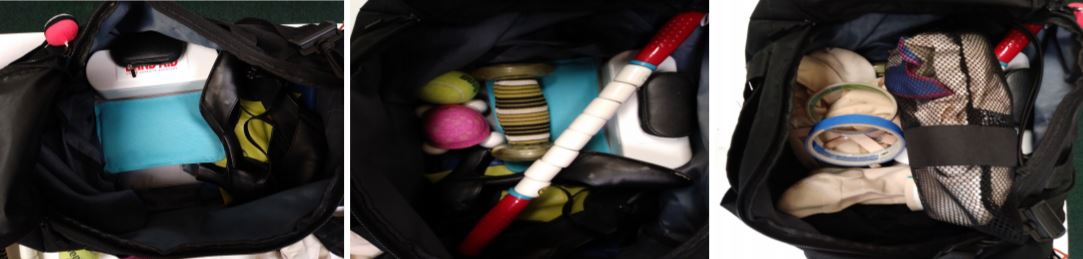
Hello everyone! Today, I am going to share some of the things that I keep in my dance bag, as well as some tips and tricks for organization, and prolonging the life of your dance gear!

I keep all of the pointe shoes that I am currently using at home in a large mesh bag, but in my dance bag I keep one pair in a smaller mesh bag so there is more space for other items. It's great to keep your pointe shoes (as well as their accessories) in mesh because it allows them to cool off and dry out after being danced in so that they don’t get smelly and gross.

I always keep ballet slippers and half soles in my bag no matter the occasion because they are fairly versatile in terms of dance shoes. To keep the pairs from getting separated in the black hole that is my dance bag, I like to pull them through each other’s elastics.

I currently have character shoes in my bag right now because I’ve been rehearsing a piece in heels. If I’m doing a musical they are also in my bag, but normally I leave them at home in a little basket I have in my room for extra dance shoes so they don’t end up being dead weight in my dance bag.

My Apolla Shocks are also a current must have in my bag! I use them for contemporary and teaching mostly, but they are great for almost any style of dance. To keep them from getting lost, I tuck the end of one into the other.

I also always keep a store of myofascial release tools in my bag in case I ever have sore muscles that need rolling out. I find that I mainly need to roll out my feet, back, hip flexors, calves, and Achilles, so the stuff I keep in my bag is mainly for that!

Naturally, I also keep some emergency supplies in my bag: band aids, Neosporin, nail clippers and more!

Lastly, to stay organized I like to put my things in layers: the bottom being stuff I don't need right away and the top being things I have to grab at a moments notice. I also like to keep my pointe shoes at the very top so that they can get as much air as possible!
Thanks for reading! I’d love to hear from you—what’s in your dance bag, and how do you like to stay organized? Comment below, or share via Facebook or Instagram!
Love,

DWC's Top 5 Summer Essentials
Today, Anna Peters and Madison Huizinga share some of our favorite products, tips, and tricks for making this summer the best one yet!
1. Zarély Compression Tights
Zarély Professional Recovery compression tights are an essential for summer intensives, and all year round! Researchers from the University of Connecticut have concluded from extensive studies that compression tights help reduce muscle soreness, swelling, fatigue, and other side-effects of intense exercising. Thus, the Zarély Professional Recovery compression tights are perfect to wear after long hours of classes and rehearsals at summer intensives.


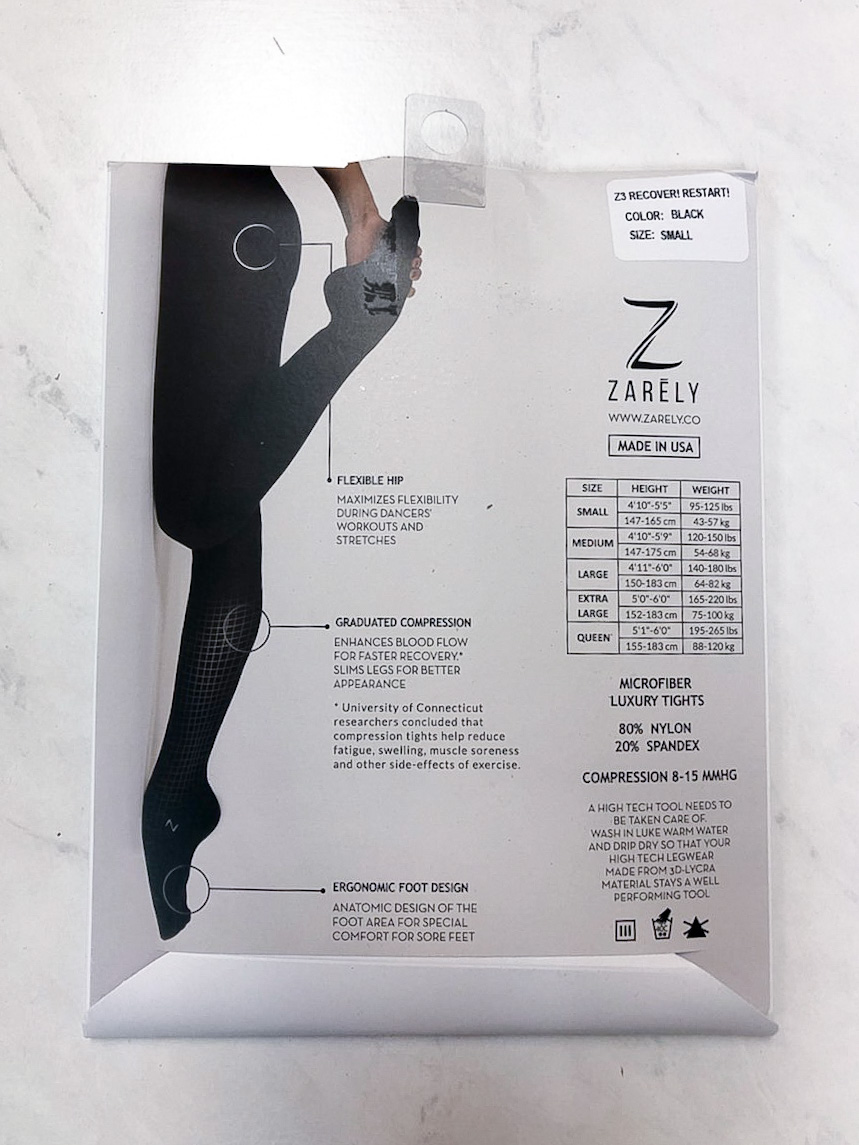
The graduated compression technology featured in these tights is designed to enhance blood flow to aching and sore muscles so that dancers can aptly recover from fatigue and soreness. The foot area features an ergonomic design that is specialized for feet that are swollen and sore, especially from dancing en pointe all day. The tights also feature a flexible hip design which allows ultimate flexibility for workouts and stretching, as well as a soft waistband for maximized comfort. In addition to the amazing functionality of the tights, the compression features and black color also creates a sleek and flattering leg line.
2. Apolla Shocks: The Joule, Performance, and K-Warmer
It’s no secret that here at Dancewear Center, we LOVE Apolla Shocks. Apolla Shocks are compression socks made for dancers by dancers that aid in both performance and recovery! As dancers, we exercise for long hours in non supportive footwear that causes inflammation by overuse and strain, a huge precursor to injuries. Apolla Shocks combat this by providing specific, targeted support through several areas of high quality compression and extra cushion.
The Joule: Great for wearing alone or under a pair of your dance shoes, the Joule will support your ankle, the arch of your foot, and the plantar fascia across the top with its open heel, open toe design. They help ensure that your feet are getting the love and care they need during a long day of dancing, whether you are in a barefoot contemporary class or learning variations en pointe.

The Performance: This low profile compression sock will create a seamless appearance in the classroom and on the stage. With multiple anatomically targeted compression zones, the Performance will enhance circulation and stability, making them a must-use for both dancing and recovery.

The K-Warmer: The K-Warmer provides support for the calves, shins, thighs, and knees and is the perfect tool to have for a long day of classes. They provide compression, ventilation, and a no slip property that makes them the perfect warm up partner!

3. Myofascial Release Tools
Between hours of intense dance training, it's a welcome relief to loosen up and roll out your stiff, sore muscles. Intensives test your endurance and recovery, and what better way to prolong both than by taking care of your muscles?
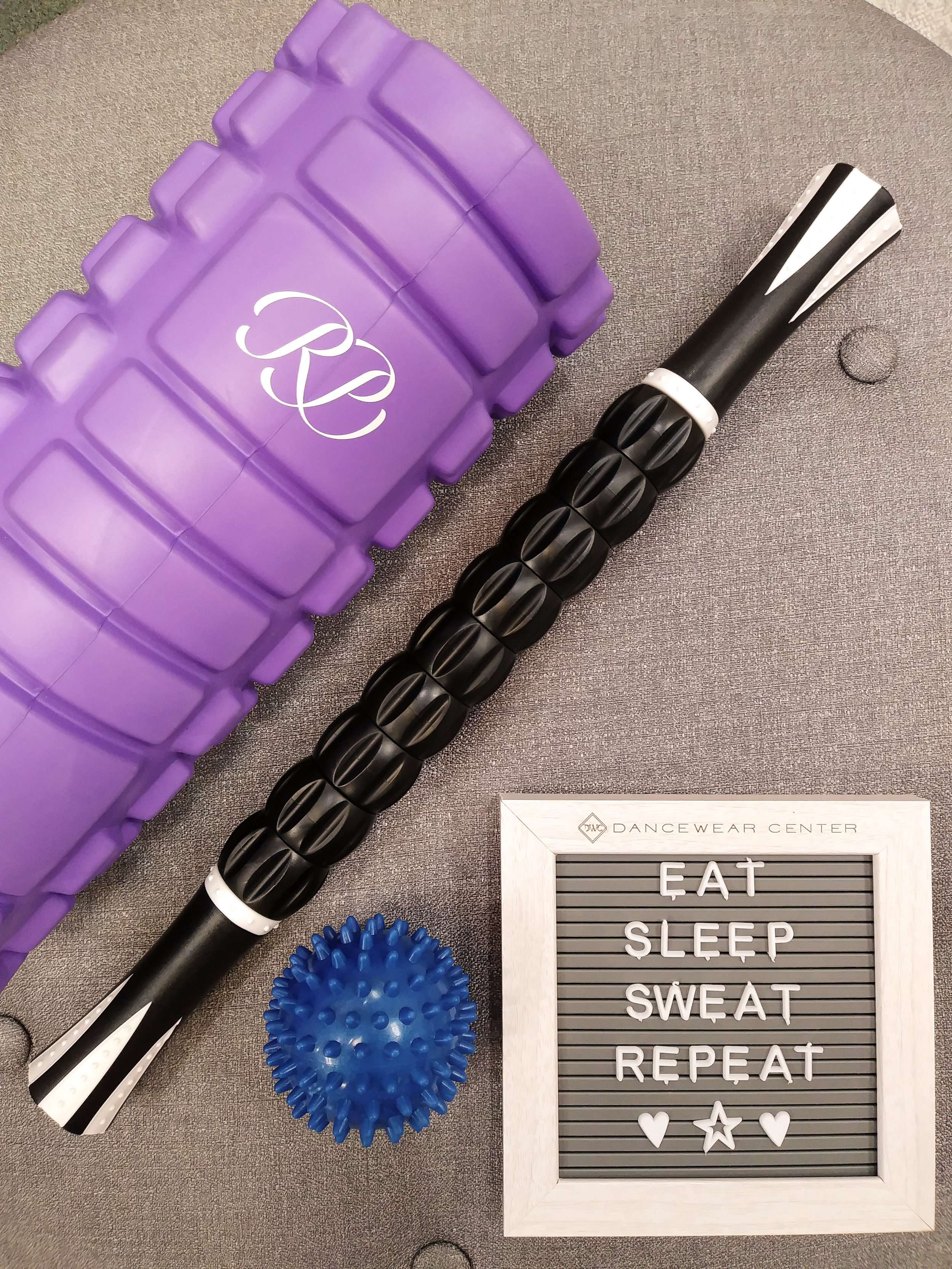
Russian Pointe Foam Roller, Bunheads Ultimate Roller, and Bunheads Massage Ball

Bunheads Ultimate Roller

Russian Pointe Foam Roller, and Bunheads Massage Ball
The fascia are strips and bands of connective tissue that attach, stabilize, enclose, and separate muscles and other internal organs. Though exercise, our muscle cells contract and relax, pulling on the fascia around them and causing them to tire and seize up. This causes the tightness that is experienced after an intense workout.
The Russian Pointe Foam Roller, Bunhead’s Massage Ball, and Bunheads Ultimate Roller are designed to help lessen the fascial tightness though the application of pressure in specified target areas, much like a massage would.
The Russian Pointe Foam Roller is designed to be lightweight, but strong; a great portable roller to take on the go in your dance bag.
The Bunheads Ultimate Roller is perfect to get out the kinks in your quads and relax the gripping Achilles after a long day en pointe.
The Bunheads Massage Ball has spines that work to dig deeper into your muscles and work to extend and relax your fascia.
4. Pointe Shoe Preservers
If you are going to be dancing long hours en pointe at your summer intensives, pointe shoe preservers are a must! Preserving the life of your pointe shoes is a great way to prolong the strength and stability of the shoe’s shank and box. This way, your shoes can last longer and your feet can receive maximal support while dancing.

Mesh Bags: Storing your pointe shoes in a mesh bag is a great way to air out the shoes to prevent sweat and moisture from breaking down the shoe’s structure and material. Additionally, the aeration provided from the mesh bags prevents the pointe shoes from becoming too smelly after long hours of dance. At Dancewear Center, we have a variety of mesh bags in different colors, designs, and sizes, including this stunning Ainsliewear one featured in the photo above.
Bunheads Deodorizing Pouches: Another strategy to avoid an unpleasant odor in your shoes is to place the Bunheads Deodorizing Pouches inside them. These pouches contain carbon activated, bamboo charcoal that absorbs odor rather than simply masking it. The pouches also absorb excess moisture to prevent bacteria growth inside the shoes.
Jet Glue: Jet Glue is a tried and true staple for nearly every dancer en pointe. Jet Glue is a strong, professional grade adhesive that can be used to strengthen the shank of a pointe shoe. Dabbing some along the outside of the shank can add time to the life of your pointe shoes.
5. Emergency Supplies
As we all know from personal experience… there are certain dance supplies that you simply can’t have enough of! Come on in Dancewear Center to stock up on these essential items that you may need in case of an emergency.

Extra Hair Supplies: You never know when you’re going to need extra hair supplies. Bobby pins, in particular, are so easy to misplace that sometimes it feels like they wander off on their own! Stocking up on extra hair supplies is essential; you never know when a hair tie or hair net might break, or bobby pins might go missing. Dancewear Center carries all kinds of hair supplies in a variety of shades, including Bloch Hair Kits which carry all your hair essentials in a neat, pastel tin.
Sewing Kit: If you’re dancing en pointe at your summer intensives, we strongly suggest carrying a sewing kit in your dance bag. If a ribbon or elastic snaps or begins to tear, it’s best to have these compact Bunheads and Russian Pointe sewing kits easily at your disposal.
Tights & Straps: Carrying around extra tights is also important, in case any spontaneous stains or tears occur. Storing an unopened package of tights in your dance bag is great, just in case! Also, extra clear straps for leotards and nude camisoles is beneficial in case they are misplaced or damaged.
Thanks for reading! We hope you learned something; and remember—we are always here to help answer questions and find the best products to fit your needs! Feel free to call, email, or just drop in to say hello!
Love,

Interested in writing for the DWC Blog? Click below to fill out the DWC Contributor application!