
Dancing Beyond the Binary: A Conversation with Ashton Edwards
Ashton Edwards, originally from Flint, Michigan, has studied dance since the age of four years old at the Flint School of Performing Arts. Ashton has attended summer ballet intensives on full scholarships at The Joffrey Academy of Dance in Chicago, Houston Ballet School, and Pacific Northwest Ballet. In 2018, Ashton represented Flint in the NAACP’s National Afro-Academic, Cultural, Technological and Scientific Olympics (ACT-SO) competition in San Antonio, Texas, against over 250 students of all high school grades all over the country. In the Performing Arts, Ballet dance category, Ashton came in 3rd place, winning a bronze medal. Ashton is currently a Professional Division student at Pacific Northwest Ballet.
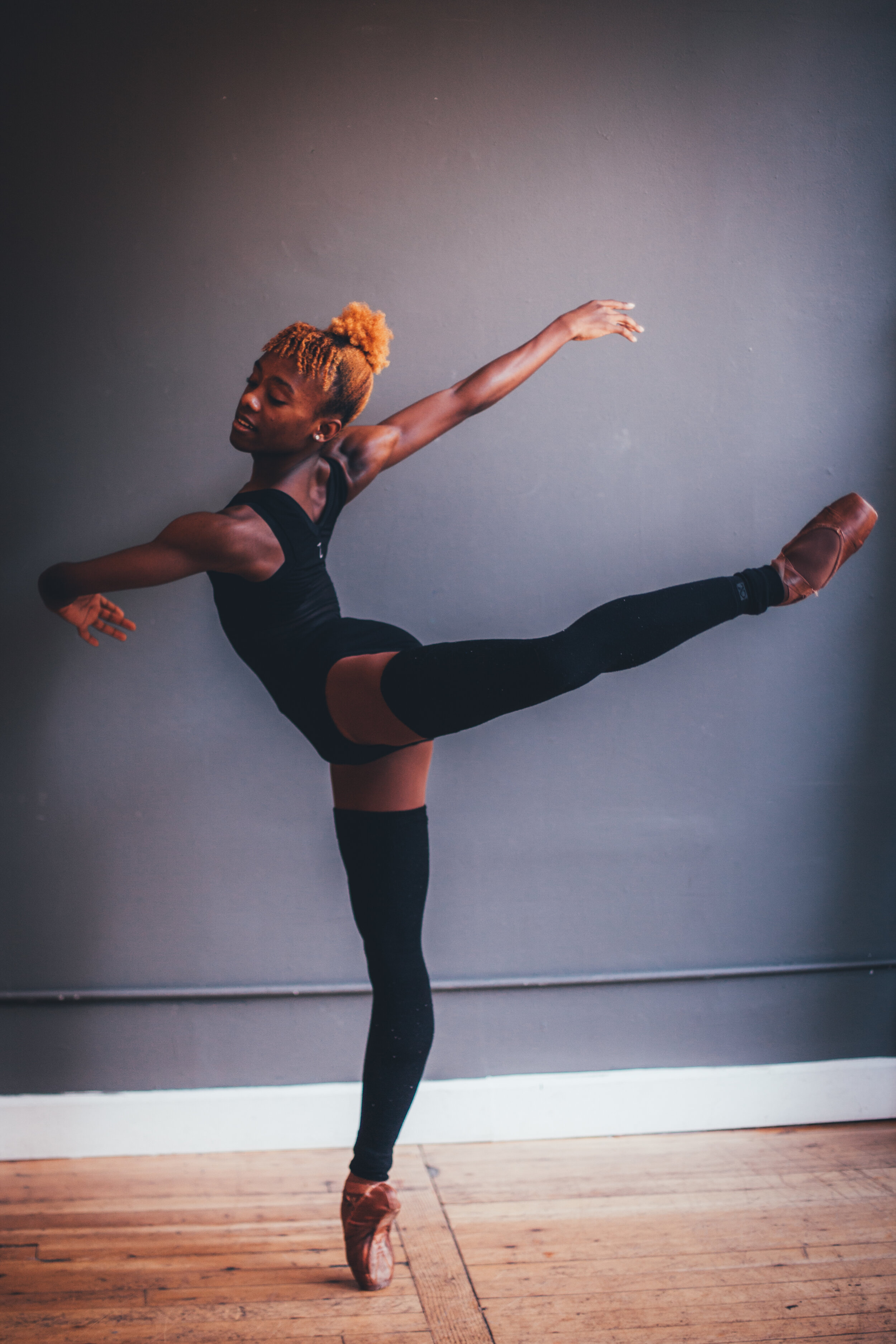
Dancing Beyond the Binary: A Conversation with Ashton Edwards
Ashton Edwards, originally from Flint, Michigan, has studied dance since the age of four years old at the Flint School of Performing Arts. Ashton has attended summer ballet intensives on full scholarships at The Joffrey Academy of Dance in Chicago, Houston Ballet School, and Pacific Northwest Ballet. In 2018, Ashton represented Flint in the NAACP’s National Afro-Academic, Cultural, Technological and Scientific Olympics (ACT-SO) competition in San Antonio, Texas, against over 250 students of all high school grades all over the country. In the Performing Arts, Ballet dance category, Ashton came in 3rd place, winning a bronze medal. Ashton is currently a Professional Division student at Pacific Northwest Ballet.
Why do you love to dance?
I love to dance because I can’t survive without it. I love to dance, because I make people happy, and that makes me happier than I could ever be. I like to dance, because it feels natural. The uncomfortable feels right. It’s indescribable the feeling I have when I’m dancing.
It’s a connection to the depths of our soul. I grew up religious, and in church we talked about our soul and how it’s connected to heaven… but I didn’t really understand until I started dancing and getting lost in the movement. What you are as a being, and not just as skin and bones--that’s why I like to dance, because I feel the most myself. It’s a gift I give to myself.
Why do you think dance is necessary? For yourself, but also for our community and our culture?
Because, not everything can be said with words. I can tell you I’m sad, but I think there’s deeper communication, just as humans as we connect soul to soul. Dance is one of the few languages that we all do, with natural body language.
That is dance, that is movement, that is art, and it’s so necessary, because we take our natural humanity and we put it on the stage, to observe, and reflect, and take a moment and connect as humans again. And I think that’s really special. We need to take time and reflect and look back and experience humanity on the stage as REALness, and like real people, real time.
We all can make a face, and frown, and you know, release our shoulders and just sit there--but, we never take time to appreciate it or declare “this art”, declare “this” as art. But we put it on the stage, and we take time, and we appreciate it, and I think that’s why dance is necessary--because we take the time to reflect on life and natural human processes and emotions… on a deeper level. Because we take this natural slouch and frown and we take it deeper. That’s why I think it’s necessary for us as humans.
What do you think is missing from the dance world as a whole right now?
Oh, *laughing* we’re so far behind. I talk about how it’s reflecting humanity, but especially specifically in ballet we’re so far behind in how equal we all are. I think specifically in ballet companies there is this fantasy of perfection. Everything is binary, everything looks a certain way--but that’s not real, that’s not realistic. That’s not art or humanity. That’s a constructed idea of what “perfect” is.
I think ballet could go so much deeper than that. It could explore gender roles, and race and so much more. Like the Agon pas de deux traditionally is always cast with a black man and a white woman… and I’m just like “No! There’s so much more that could happen there!” We need to stop making it about tradition. Art isn’t controlled. We need to take the control off of art and dance, and make it human.
Ballet is like a fantasy! We have Sugar Plum and Dew Drop, and they’re magical beings. Why isn’t a magical being also a man sometimes? Or why isn’t she black? Who’s fantasy is it? Why is it this one white man’s fantasy; that Sugar Plum is this beautiful white lady the only version being represented? That’s not humanity’s fantasy.
When I was growing up and I saw a black Clara, I wanted to be the black Clara. That was my fantasy. For all the Latinx girls in the audience, all the Trans women in the audience--when is their fantasy represented on the stage? I think that’s what it’s missing. Everyone’s life, everyone’s representation.
What are you hoping to bring into the dance world as you are stepping into the professional world?
Hopefully some representation for someone--for people like me, who don’t really know where they fit in - who just exist as a human. Hopefully I can be the representation that I didn’t see, that I fantasized about. The guy who did the work just as good as the girls, and who had the opportunity to perform it.
I wish I saw an incredible man en pointe, doing a [traditionally female] role, and it feels normal. Hopefully I can teach people and tell people and show people that it should be--and it is.
Hopefully, I’m not just helping younger kids and audiences, but also the directors. [I want] directors to see me, and see what’s possible. I hope it opens their mind for the next person. Hopefully it’s not just the young minds, but ballet’s current audience. Hopefully we can change those minds too.
How has your queer identity influenced your dancing/training?
I was 4 years old when my mom told me not to be gay. I realized, “oh wait, everyone thinks this. Everyone around me homophobic.” Especially in my small town.
Who are these people to just steal someone’s innocence and someone’s joy in life? I feel like that’s the deepest evil, to take someone’s happiness, someone’s innocence, someone’s carelessness. I feel like someone stole a chunk of my life from me, and now I just can’t waste any more time, and I need to make sure that doesn’t happen to anyone else.
And that’s what I hope I can do with dancing. Hopefully I can show all the little girls and boys and little people that anything is possible and you don’t have to limit yourself. Because why? For who? Why am I not happy--for what person? I think not.
It’s hard--training en pointe, taking extra classes at the end of my day. I’m doing more than everyone else. It’s really tough--but who else is going to do it? Who else is going to make it easier for someone else?
Human expression on the most natural level is non-binary. It’s just life, and people are different. My Agon shouldn’t look like anyone else’s because we are different humans with different experiences and different lives. Why am I so crazy to want to do those roles? I’m good at them *laughing* I’m not going to lie! I can do the work. So it’s a little different, a little more masculine, I look a little “new” and unfamiliar--but so does everyone else! We’re all different humans. Not only do we need to accept the work, we need to accept the body and the person.
Living Your Best Life at Dance Conservatory Seattle
Whether its codified technique, body expectations, or gendered stereotypes, the dance industry has disseminated rigid values for many years. Such expectations can limit and harm talented dancers who don’t fit such cookie-cutter molds. Joshua Grant and Christopher E. Montoya are striving to knock down these barriers and foster a supportive and all-inclusive dance environment at Dance Conservatory Seattle. Under the tutelage of local talent, DCS is teaching Seattle dancers how to “live [their] best li[ves].”
A Conversation About Inclusivity with Co-Artistic Director Joshua Grant
By Madison Huizinga, DWC Blog Editor

Photo by Marcia Davis and Angela Sterling
Whether its codified technique, body expectations, or gendered stereotypes, the dance industry has disseminated rigid values for many years. Such expectations can limit and harm talented dancers who don’t fit such cookie-cutter molds. Joshua Grant and Christopher E. Montoya are striving to knock down these barriers and foster a supportive and all-inclusive dance environment at Dance Conservatory Seattle. Under the tutelage of local talent, DCS is teaching Seattle dancers how to “live [their] best li[ves].”
Growing up in a military family, Josh spent much of his childhood moving to different states. His dance journey first began at age three in Alabama and he later trained in South Carolina and California. Eventually, Josh’s family landed in the panhandle of Florida where he received the bulk of his dance training at Northwest Florida Ballet. He also trained at The HARID Conservatory in Boca Raton, Florida before graduating high school and moving to Seattle to train at the Pacific Northwest Ballet School. After one year in the Professional Division, Josh was offered a job with PNB, dancing professionally with the company for about four years. He later decided to spend some time traveling, relocating to Toronto to dance with the National Ballet of Canada for a while.
Desiring to explore a different form of dance, Josh joined Les Ballets Trockadero de Monte Carlo, an all-male comic ballet company that tours globally performing parodies of classical ballets. Josh toured the world with the company, traveling to Japan, Russia, Greece, France, Australia, and more, performing in male and female roles and dancing en pointe. He later returned to PNB where he dances today as a soloist.
Chris’ dance journey took a much different form than Josh’s. Chris studied at the University of Arizona before entering the professional world, dancing with companies like David Taylor Dance Theatre, Scorpius Dance Theatre, and Center Dance Ensemble, before joining Les Ballets Trockadero de Monte Carlo where he and Josh met. Josh points out how amazing it was that he and Chris were both able to find a home at Trockadero given they’re quite different dancers, both physically and emotionally.
When Josh and Chris relocated to Seattle together, Chris completed his undergraduate degree at Cornish College of the Arts and got his MFA at the University of Washington. He worked as the ballet division head and later the school director of Spectrum Dance Theater and has taught open classes and worked as the managing director for Dance Fremont. Aside from teaching, Chris has also danced with local companies like Seattle Dance Project, Men in Dance, and Jeroba Dance.
At the start of the pandemic, when the dance scene across Seattle shut down, Josh describes feeling quickly depressed and bored. Like most all people across the city, Josh recalls spending many days walking around his house wondering what to do. After some time, Sierra Keith reached out to Chris, sharing that she was considering renting a studio space and wanted to know if he was interested in teaching private lessons to some adults she knew. While Chris was busy with other work at the time, he and Sierra passed the message along to Josh who agreed to teach, holding a class of about ten people that eventually became a class of one to two as the pandemic worsened.
Eventually, the classes cultivated some buzz, as local dancers began to compete to get one of the few spots available. Having dreamt about opening their own dance school for a long time, Josh and Chris thought that this might be the opportunity to bring their dream to fruition.
Josh and Chris have both experienced struggles in the dance world throughout their careers, particularly with ballet. “We understand nobody fits into that perfect mold,” Josh points out. “And so we try to approach education and dance from that lens…perfection is unattainable.”
Chris specifically grappled with the challenges of fulfilling a rigid traditionally “masculine” role in the ballet world, as well standing out as a 5’2” Hispanic man in a predominantly white, Eurocentric realm. He also struggled with eating disorders as a way to combat weight loss to fit the mold he thought he needed to.
Growing up, Josh not only faced challenges as a gay person living in the South, but recalls training under toxic teachers who would often make hurtful remarks, and even throw things at him when he would make a mistake. “I was told I wouldn’t have a career. I was told I was a terrible dancer,” Josh remembers. “I was told that I was ‘too flowery.’ I was told that I needed to be more masculine.” For a while, he carried strict teaching traditions into the classes he taught, before Chris later pointed out that it wasn’t exactly helpful. Josh looks back on his training and wishes that his teachers could have helped him become the dancer and person he was supposed to be, instead of trying to make him become something he wasn’t.
Drawing from Chris’ graduate school research and he and Josh’s experience dancing with Trockadero, the two had also become interested in why the pointe shoe was genderized in ballet. Why is it that every time a pointe shoe is put on a man, it’s for slapstick or comedy? Such thoughts are what helped spur the creation of Dance Conservatory Seattle.
Dance Conservatory Seattle strives to knock down societal barriers by working to “encourage and empower” students “to explore their individual bodies and find their unique expressive voices.” A large emphasis is placed on welcoming dancers of all backgrounds and identities to present and perform how they desire to, particularly when it comes to defying gender stereotypes. Local performers like non-binary PNB Apprentice Ashton Edwards has credited DCS, and Josh specifically, for helping them grow more and more into themself as a performer.
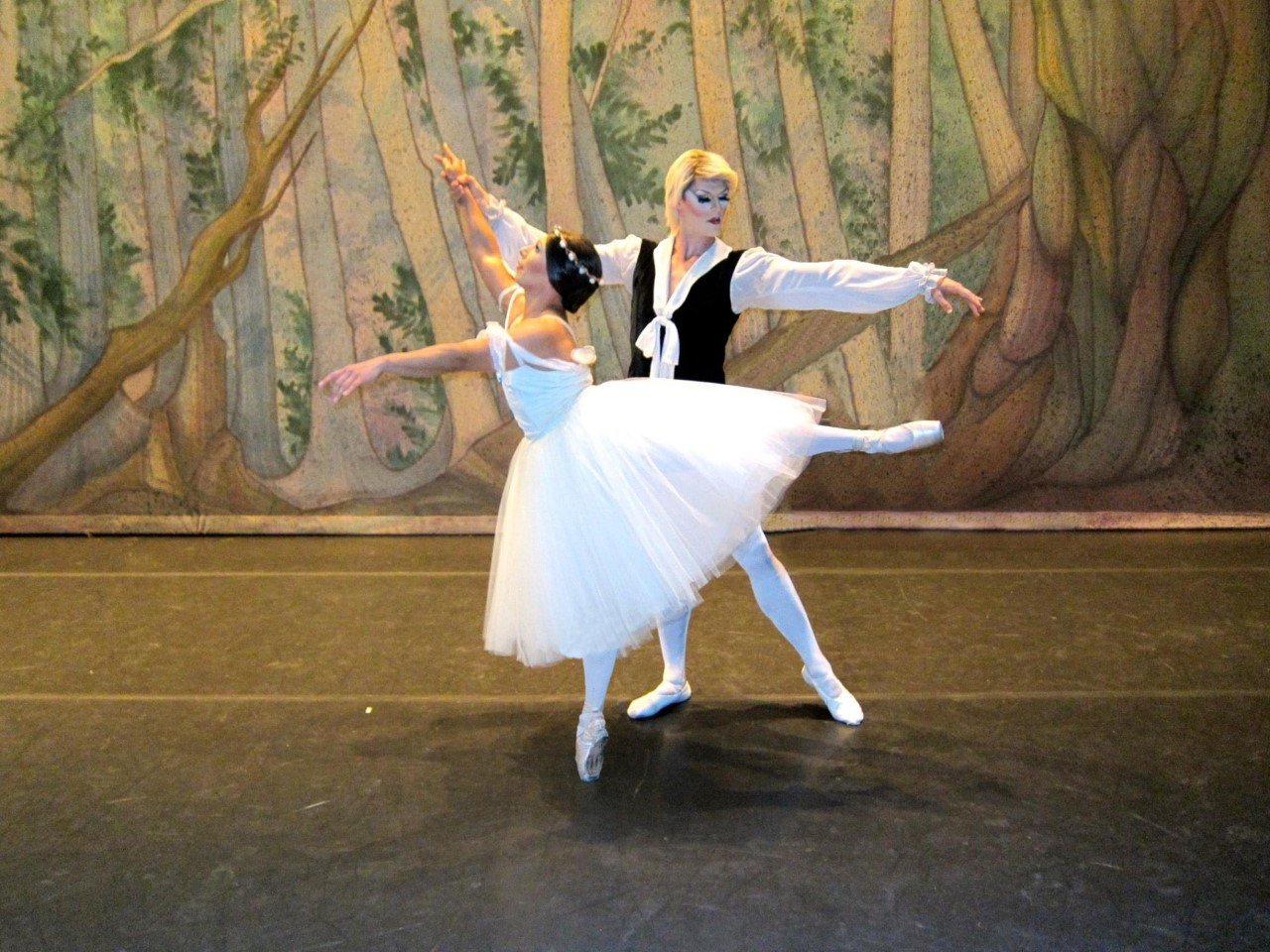
Photo by Marcia Davis and Angela Sterling
Josh says that DCS aims to teach people based on who they are and not who anyone else thinks they should be. While dance nearly always has a fairly rigid means of measuring technique, DCS approaches technical skills with a more open-minded outlook. Josh shares that there’s a way to provide dancers with corrections and feedback in a way that isn’t aggressive and hurtful, but that allows a person to grow. “I think that’s where we’re going to get the best dancers of the next generation,” Josh shares of this approach to teaching.
At the moment, Dance Conservatory Seattle is chiefly concerned with getting more attendees in its classes, particularly its intermediate and advanced classes for middle and high school-aged students. DCS is also holding summer camps for ages 5 through 18. Eventually, Josh hopes for Dance Conservatory Seattle to have its own unique production of The Nutcracker, featuring a balanced representation of Seattle artists and featuring roles that defy traditional gender stereotypes. “Everything that DCS represents would be in our Nutcracker,” Josh shares. DCS’ 2700 square foot studio space is also available to rent and can transform into a performance space, where its future productions will likely be held.
Moving forward, Dance Conservatory Seattle strives to continue encouraging local dancers to live their best lives by acting fearlessly and being the kind of representation dancers across the region need. “Dance is an art form and the best way to get the truest and most successful art out of somebody is to allow them to be themself,” Josh says.
Jule Dancewear’s Julia Cinquemani
Many people are drawn to dance because it is a means of self-expression, allowing individuals to share their emotions with others and have a creative outlet to relieve stress. In many ways, clothing operates similarly to dance for many people, as it communicates a lot about a person’s identity and can invoke specific emotions in viewers and wearers alike. Founder of Jule Dancewear Julia Cinquemani knows all too well that wearing clothes that don’t fit right can make a significant impact on people, particularly with dancewear. Combatting this phenomenon was the inspiration behind Jule Dancewear, as well as creating dancewear products that cater to dancers with a variety of body types. Read on to learn more about Julia’s journey to Jule Dancewear.
By Madison Huizinga, DWC Blog Editor

Click below to shop the look:
Many people are drawn to dance because it is a means of self-expression, allowing individuals to share their emotions with others and have a creative outlet to relieve stress. In many ways, clothing operates similarly to dance for many people, as it communicates a lot about a person’s identity and can invoke specific emotions in viewers and wearers alike. Founder of Jule Dancewear Julia Cinquemani knows all too well that wearing clothes that don’t fit right can make a significant impact on people, particularly with dancewear. Combatting this phenomenon was the inspiration behind Jule Dancewear, as well as creating dancewear products that cater to dancers with a variety of body types. Read on to learn more about Julia’s journey to Jule Dancewear.
Julia grew up in Dallas, Texas where she began dancing at age four. “I was very passionate about ballet and left home at age 16 to train year-round at the Pacific Northwest Ballet in Seattle,” she shares. Later on, Julia ended up signing her first professional contract at Los Angeles Ballet, where she danced for seven years, even earning a promotion to Soloist in 2014 and Principal Dancer in 2016. “I then joined Miami City Ballet in 2017 where I danced for four seasons,” she shares. Highlights from her time at Miami City Ballet include Aria 1 in Stravinsky’s “Violin Concerto,” Hippolyta in A Midsummer Night’s Dream, and War Girl in “Symphonic Dances.”

Click below to shop the look:
One of Julia’s favorite parts of ballet was the discipline involved with it and being able to express herself within the studio. “Part of expressing myself was how I presented myself; how I did my hair and what I wore to class,” she shares. At age 14, Julia began designing and sewing her own ballet skirts to wear to class. Eventually, she began creating and selling these skirts to her friends. Shortly after this, as the skirts gained more popularity, Julia was approached by her local dancewear store asking if she wanted to start carrying her own line of wrap skirts in the store. What started as her individual outlet of expression soon became a product for others to enjoy as well.
Jule Dancewear was established in 2011 to “reshape dancewear.” Julia’s mission is to “design and produce dancewear that offers support, conforms to all body types, is high quality, and incorporates the latest in fashion with a commitment to ‘made in the USA.’” “Support” is a crucial aspect of the products Jule Dancewear offers. Julia shares that during her teenage years, when her body began changing, she realized she needed a leotard that provided more optimal coverage and support for herself. “I hated that my ill-fitting leotards were making me self-conscious in a profession where confidence is key,” she says. This is what inspired her to incorporate the support of a sports bra in her leotards in her leotards. “As a result, we are known for reshaping the dancewear mold to support all body types,” she shares.

Click below to shop the look:
In addition to stunning leotards and wrap skirts that flatter an array of body types, Jule Dancewear has become well-known for its “meshie” tights and crop tops. Intended to flatter and accentuate muscle definition, these high-quality mesh tights and crop tops make for unique, colorful, and comfortable outerwear to wear over the top of leotards. Julia shares that Jule Dancewear has “many new products” coming soon, so stay tuned for more!
Julia shares that she’s always loved the way a good outfit makes her feel. This feeling was one of the main sources of inspiration for her products. “My goal in the design process is to bridge fashion and function,” she says. Julia points out that it helps that she spends most of her days in a leotard and tights, as it allows her to seek inspiration for designing products that make her look and feel her best.
For those who are interested in starting their own business, Julia advises them “to have patience and commit to creating in a field that [they] are passionate about.” Once you realize that you can be the solution to the problems you’re facing, many doors are opened.
Filling the Connection Gap: How Dancer for Dancer is Linking “Pals Around the World”
The COVID-19 pandemic isn’t the only phenomenon that’s caused the dance community to be a bit disjointed. A culture of competition and perfectionism has permeated the dance world, causing many dancers to see others as rivals rather than peers. To help alleviate the challenges that this type of environment can bring about, 17-year-old Samantha Parr has created the organization Dancer for Dancer to unite the dance community through open discussions, mental health support, and mentorship. Through Dancer for Dancer’s Pal Program and with the help of Pal Program coordinators like DWC staff member Emma Neilson, the organization is providing connection and support to dancers worldwide.
By Madison Huizinga, DWC Blog Editor

Samantha Parr, founder of Dancer for Dancer
The COVID-19 pandemic isn’t the only phenomenon that’s caused the dance community to be a bit disjointed. A culture of competition and perfectionism has permeated the dance world, causing many dancers to see others as rivals rather than peers. To help alleviate the challenges that this type of environment can bring about, 17-year-old Samantha Parr has created the organization Dancer for Dancer to unite the dance community through open discussions, mental health support, and mentorship. Through Dancer for Dancer’s Pal Program and with the help of Pal Program coordinators like DWC staff member Emma Neilson, the organization is providing connection and support to dancers worldwide.
Samantha began dancing when she was three years old and started to get involved more seriously with intensives and competitions around age 12. She’s attended intensives with Joffrey Ballet School, Pacific Northwest Ballet, and Ballet West and competed at the Youth America Grand Prix several times. At her studio in the Bay Area, Samantha has performed several lead roles in original ballets, as well as Clara in The Nutcracker. “I think the thing that keeps me dancing is my ability to express myself. At the end of long days, it’s nice to have something that I can work hard at. It keeps me grounded in a way and helps me focus a little bit,” Samantha shares. “I hope to continue to dance throughout college and beyond because I love it so much.”
The idea for Dancer for Dancer first came to Samantha in May of 2020, months into the COVID-19 pandemic. “I felt very disconnected from my ballet community in my studio,” she recalls. She remembers struggling to stay mentally healthy and falling out of love with dance a bit, due to the difficulty of learning at home. Samantha figured she must not be alone in these hardships she was facing, so she decided to schedule a Zoom call to connect with some dancers.
Samantha’s first Zoom call, with around 14 dancers, was towards the end of June. During the first several meetings, the dancers held discussions about racial inequality in the dance industry and later began talking about mental health among dancers. The Zoom calls began with dancers in Samantha’s area, but soon grew as others heard about them and as she informed friends from dance intensives she had attended. Little did she know one upcoming Zoom call would make her idea take extreme flight.

Samantha Parr, founder of Dancer for Dancer
Around January 2021, Samantha’s friend and Dancer for Dancer Ambassador Eleanor Green reached out to Casimere Jollette of the Netflix series “Tiny Pretty Things” to attend one of the Zoom calls. She said yes! Samantha and her cohorts organized a giant Q&A with Casimere and about 300 dancers from all over the world attended. “That’s kind of where it began to take off,” Samantha says.
Currently, Dancer for Dancer is extending its programming beyond Zoom calls through the Pal Program. “In ballet, there’s this unhealthy competition that I had experienced a lot when I was younger and it always left me feeling weird,” Samantha says. “I could have benefited from having an older dancer being my support system...That’s the inspiration for the Pal Program.”
Dancer for Dancer’s Pal Program contains two subsets: the D4D Mentorship Program and Pals Around the World. The D4D Mentorship Program consists of seven mentors from around the world aged 16-19. The mentors have been trained in giving mental health support by a professional and connect with younger dancers to give advice and provide guidance for wherever they are in their dance journey. The D4D Mentorship Program is open to younger dancers of all backgrounds who are interested in connecting with an older dancer, click here to sign up.
The Pals Around the World program is a global, virtual program in which any dancer of any age and from any dance background is paired with another dancer to correspond virtually for four weeks. Dancers can connect through Zoom, FaceTime, social media, texting, or any other medium they see fit. People are welcome to reapply for the program once the four weeks are up to connect with a new dancer. Samantha shares that Pals Around the World is a “chill” and “laid back” program where dancers have the opportunity to make friends with other dancers around the world. Participants also get “special access to D4D Pal Program workshops on mental health, self-improvement, and peer support.”
Pointe Shoe Fitter and DWC Blog Contributor Emma Neilson has recently gotten involved with Dancer for Dancer as a Pal Program Coordinator. Emma began dancing around age 13 to supplement her figure skating training. After training in ballet, jazz, modern, lyrical, and contemporary throughout high school, Emma graduated with her AA in Psychology from Shoreline Community College and then decided to take a gap year. Starting in 2019, she began training year-round at the International Ballet Academy in Bellevue, Washington where she is today.

Samantha Parr, founder of Dancer for Dancer
Emma came across Dancer for Dancer while scrolling through her Instagram feed. The organization’s account popped up as a recommended account for her to follow. After looking more into Dancer for Dancer and its offerings, Emma was amazed by its mission. She noticed that Dancer for Dancer was looking for coordinators and decided to apply. Shortly after that, Emma was interviewed and joined the team. As one of the Pal Program Coordinators, Emma’s role with Dancer for Dancer involves her collaborating with local studios in the greater Seattle area to see if they’re interested in participating in the Pal Program. There are numerous positions open at Dancer for Dancer, such as a Tik Tok Coordinator, Discord Moderator, and more, click here for more information.
Moving forward, the biggest change Samantha hopes to see in the dance world is for all body types to be accepted. She hopes that the “ballet body” ideal is eliminated and that companies start catering to dancers of all body sizes. “How your body looks doesn’t determine how your body dances and I feel like if the dance community is accepting of all body types, it would put less pressure on girls and boys to feel as if they have to fit into a certain mold that maybe they weren’t born like,” Samantha shares.
Additionally, Emma says that she hopes to see dance become more accessible to a wider range of people in the near future, specifically people of all ages, abilities, and socioeconomic classes. “Your age and what you think your physical capabilities are shouldn’t impact your ability to participate in something that gives you joy,” Emma states.
Dancer for Dancer was born to fill a gap that Samantha was witnessing in the dance realm. She was able to create a vessel to connect dancers in meaningful ways, something that was sorely missing and needed in the dance industry. For others who are interested in creating their own organizations, Samantha’s biggest piece of advice is for people to give themselves time to let their ideas sit with them. “Think about what the people are wanting or what you feel like they need more of,” she says. Once you figure out what your community is lacking, you can start finding ways to provide what is needed and build from there.

Sources:
https://www.dancerfordancer.com/
https://www.dancewearcenter.net/e-neilson
https://www.dancerfordancer.com/mentorship
https://www.dancerfordancer.com/pals-around-the-world
https://www.dancerfordancer.com/pal-meetings
https://www.dancerfordancer.com/team-1
https://docs.google.com/forms/d/e/1FAIpQLSehUadFIwLc4-suEWfAwVkgDUuXsgqD6BYKsMW1fYjQv_7GYw/viewform
A Place of My Own: A Conversation with Ashton Edwards
Earlier this month, Director of Marketing Cherie Rendón sat down with DWC Ambassador Ashton Edwards to discuss his journey and experiences surrounding starting pointe training as a gender fluid dancer. Ashton is currently a Professional Division student with Pacific Northwest Ballet, and is one of the first dancers to be allowed to train in both male and female classes: breaking down barriers in an industry that

A Place of My Own: A Conversation with Ashton Edwards
Ashton Edwards, originally from Flint, Michigan, has studied dance since the age of four years old at the Flint School of Performing Arts. Ashton has attended summer ballet intensives on full scholarships at The Joffrey Academy of Dance in Chicago, Houston Ballet School, and Pacific Northwest Ballet. In 2018, Ashton represented Flint in the NAACP’s National Afro-Academic, Cultural, Technological and Scientific Olympics (ACT-SO) competition in San Antonio, Texas, against over 250 students of all high school grades all over the country. In the Performing Arts, Ballet dance category, Ashton came in 3rd place, winning a bronze medal. Ashton is currently a Professional Division student at Pacific Northwest Ballet.
Earlier this month, Director of Marketing Cherie Rendón sat down with DWC Ambassador Ashton Edwards to discuss his journey and experiences surrounding starting pointe training as a gender fluid dancer. Ashton is currently a Professional Division student with Pacific Northwest Ballet, and is one of the first dancers to be allowed to train in both male and female classes: breaking down barriers in an industry that has historically been divided into uncompromising female/male binary categories.
CR: What led you to start training en pointe?
AE: It was a desire I had as a child. It’s always been something I wanted to do, to just… be a pretty ballerina. So I guess it was just natural, it was just a desire as a kid. It wasn’t until I was brave enough to come out and say it that I did.
CR: Since starting your training, what challenges have you run into?
AE: One of the biggest challenges has been exhaustion. Getting back up every day, and taking ample time to rest after the long day. That’s been the hardest part: pushing, and then recovering, pushing, and then recovering - every day. We have pretty long schedules at PNB, so we are dancing all day. For me, it’s going back and forth from pointe to flat, from pointe to flat. At the end of the day, my body in so many different ways is just… worn. It’s not just your normal stretch routine, it’s my stretching, and then my icing, and then my bath. I have a new routine now--it’s just… adapting.
CR: Speaking on recovery, what have you found really works for you as far as recovery practices? What does that look like for you?
AE: I come home, and I start with a long stretch [routine]. Usually my stretch takes about 10-15 minutes. I stretch, and then I roll out. I roll out all the muscles, so I start with a tennis ball and my feet, then with my roller I go: calves, quads, IT band, hip flexors, and back. I usually go then into an ice bath--just for my feet up to my knees. Next, epsom salt bath, shower, and then a heating pad for my back--then I go to bed! Then in the morning, I have a pre-class workout I have to do because of my back. I have a really flexible back, but also that leaves me in a vulnerable position. I went through a really bad injury last December, so now I have pilates exercises that I use to prepare for my day, and then I do all of these [recovery routines] after my day.
CR: Has anything surprised you about starting dancing en pointe?
AE: I think the most surprising part… is to know how different it is. Not to say that one is harder or one is easier, but they are just so different. It’s been mind boggling switching back and forth. Just the approach of a movement or a variation has to be so different, because the work requires so many different things. At the end of the day, my entire body is just worn because I’ve been switching back and forth, from muscle to muscle. I’m just exhausted by the end. It’s been very surprising to see how different the women work. [Even the] setup of the class--the energy of the class--how competitive (it’s a lot more competitive for the women), [and] just how hardworking and determined they have to be. It’s been really surprising and interesting to see.
CR: What sort of successes have you experienced since starting your training?
AE: [Most recently] PNB has nominated me for the Princess Grace [Awards]! But also, just general day-to-day successes… it’s been really fun completing variations in both male and female work now, and just feeling--still exhausted--but more at ease. I feel like a big success generally has been how strong my technique has become, and how I feel more mature in all of my dancing now, because I’ve dabbled in so many different things and created my own type of movement. That’s been a big success I feel for me, when I dance I feel good about what I’m doing.
CR: Since you have become an ambassador with [DWC] and we’ve all followed your progress throughout the last 6 months, we’ve gotten a lot of dancers from all over the country commenting about your progress and your story, and being really inspired by what you’re doing pioneering this normalization of more men dancing en pointe in a very serious fashion. What do you have to say to those people who may want to start training like you are? Any tips, words, advice, wisdom for those people?
AE: First, theraband, theraband, theraband! Get those feet as strong as possible! After that, don’t stop. Don’t stop emailing, don’t stop contacting whoever you have to contact. You have to push yourself through, because no one is going to invite you into the room: you have to put yourself there. So I guess my biggest advice--even for moms of these children--[is] to be the biggest advocate you can for yourself. Make your own place. Reach out to me, because I love to hear it, and I also love to help! Show people what I did and what PNB is doing: what it could be! You have to keep pushing for yourself. Make sure your technique is also up to where you’re saying it is, and be realistic in what you can do! My biggest thing is, I’m not asking to be Sugar Plum--but I’m asking to be back of the line corps de ballet: and I know I can do that. So I should have the opportunity. Know what you can do, and know what should be available to you, and make it available to you.
I’ve been getting a lot of those messages, and it’s just so cool. Especially the moms who [tell me], “I have a 4-year-old son, who heard about you!” I just well up every time. I was that person! I’ve gotten that before just as a black dancer, “oh, you’re so good!” But it means a little something different now, because this is something I never would have imagined being possible, and somehow I did it. I had a lot of help along the way, but also a lot of it was just down to me. I’ve cried so many times already, I don’t know how to describe it. I can not wait to be on the other side of my career, and bring so many people with me. Things are just falling into place--it’s so exciting.
CR: I’m so thankful for social media. If this were happening 10 years ago, it would take so much more to get in front of people and to get your story told. Just the way our culture communicates now online it’s so amazing to see more peoples’ stories just being out there and available so so many more people can see others like them and realize “yeah, I can do this too!” It’s great. I think what you’re doing is very inspiring. We’ve talked before, and you know that I think of you very highly, but I'm very happy that more people are able to see people like you.
AE: I love that I get to connect with these people, I love that there is a community of people that just are so strong together. I see the same people a lot in the comments of different posts, and it just feels like we are together. We are all in one mind and one body and just pushing through this together. It’s so nice to feel so supported.
To read more about Ashton Edwards and follow his journey, click any of the links below. To help support Ashton in his training, you can donate to his GoFundMe here.
Interested in writing for the DWC Blog? Click below to fill out the DWC Contributor application!