
Dancing Beyond the Binary: A Conversation with Ashton Edwards
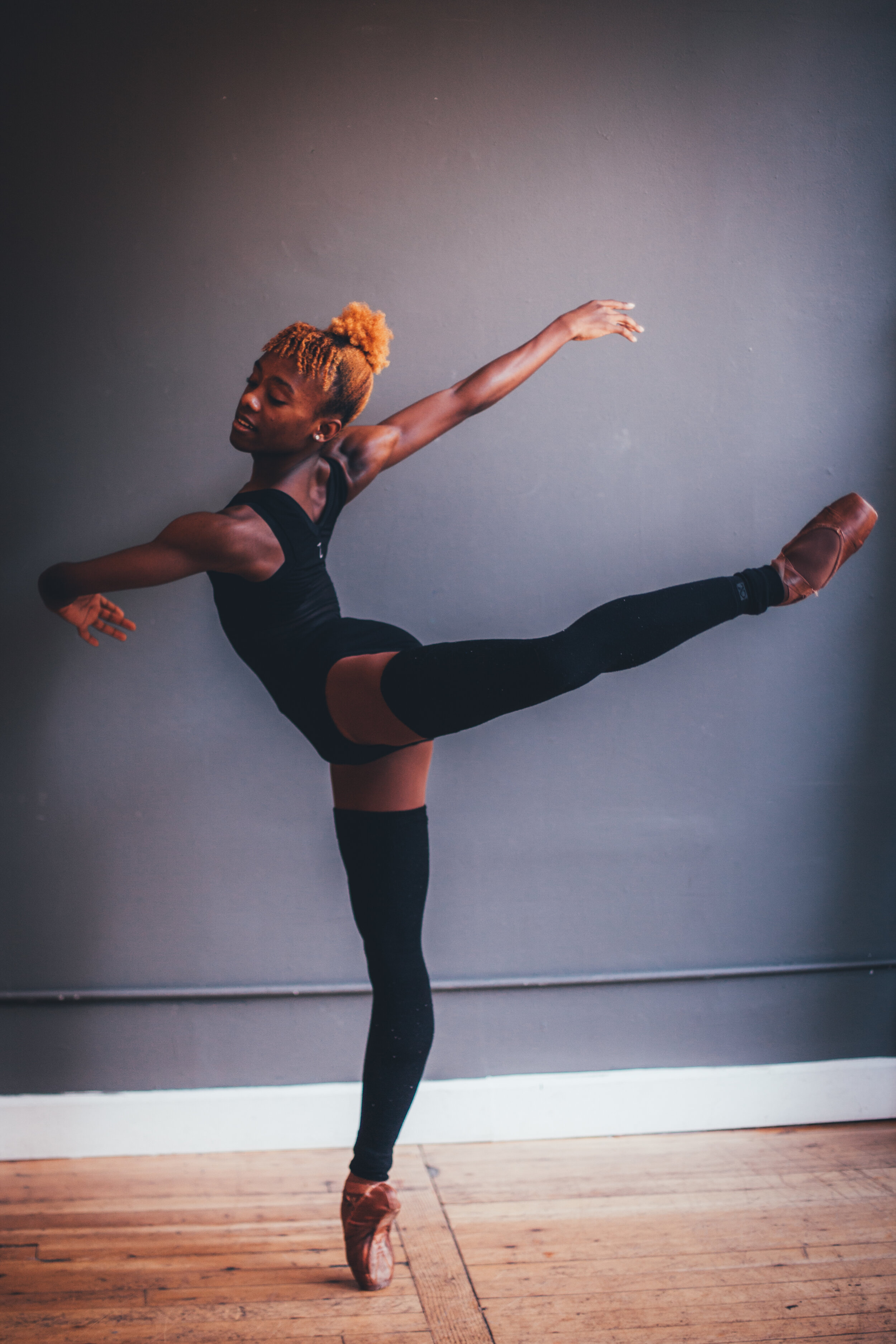
Ashton Edwards, originally from Flint, Michigan, has studied dance since the age of four years old at the Flint School of Performing Arts. Ashton has attended summer ballet intensives on full scholarships at The Joffrey Academy of Dance in Chicago, Houston Ballet School, and Pacific Northwest Ballet. In 2018, Ashton represented Flint in the NAACP’s National Afro-Academic, Cultural, Technological and Scientific Olympics (ACT-SO) competition in San Antonio, Texas, against over 250 students of all high school grades all over the country. In the Performing Arts, Ballet dance category, Ashton came in 3rd place, winning a bronze medal. Ashton is currently a Professional Division student at Pacific Northwest Ballet.
Dancing Beyond the Binary: A Conversation with Ashton Edwards
Ashton Edwards, originally from Flint, Michigan, has studied dance since the age of four years old at the Flint School of Performing Arts. Ashton has attended summer ballet intensives on full scholarships at The Joffrey Academy of Dance in Chicago, Houston Ballet School, and Pacific Northwest Ballet. In 2018, Ashton represented Flint in the NAACP’s National Afro-Academic, Cultural, Technological and Scientific Olympics (ACT-SO) competition in San Antonio, Texas, against over 250 students of all high school grades all over the country. In the Performing Arts, Ballet dance category, Ashton came in 3rd place, winning a bronze medal. Ashton is currently a Professional Division student at Pacific Northwest Ballet.
Why do you love to dance?
I love to dance because I can’t survive without it. I love to dance, because I make people happy, and that makes me happier than I could ever be. I like to dance, because it feels natural. The uncomfortable feels right. It’s indescribable the feeling I have when I’m dancing.
It’s a connection to the depths of our soul. I grew up religious, and in church we talked about our soul and how it’s connected to heaven… but I didn’t really understand until I started dancing and getting lost in the movement. What you are as a being, and not just as skin and bones--that’s why I like to dance, because I feel the most myself. It’s a gift I give to myself.
Why do you think dance is necessary? For yourself, but also for our community and our culture?
Because, not everything can be said with words. I can tell you I’m sad, but I think there’s deeper communication, just as humans as we connect soul to soul. Dance is one of the few languages that we all do, with natural body language.
That is dance, that is movement, that is art, and it’s so necessary, because we take our natural humanity and we put it on the stage, to observe, and reflect, and take a moment and connect as humans again. And I think that’s really special. We need to take time and reflect and look back and experience humanity on the stage as REALness, and like real people, real time.
We all can make a face, and frown, and you know, release our shoulders and just sit there--but, we never take time to appreciate it or declare “this art”, declare “this” as art. But we put it on the stage, and we take time, and we appreciate it, and I think that’s why dance is necessary--because we take the time to reflect on life and natural human processes and emotions… on a deeper level. Because we take this natural slouch and frown and we take it deeper. That’s why I think it’s necessary for us as humans.
What do you think is missing from the dance world as a whole right now?
Oh, *laughing* we’re so far behind. I talk about how it’s reflecting humanity, but especially specifically in ballet we’re so far behind in how equal we all are. I think specifically in ballet companies there is this fantasy of perfection. Everything is binary, everything looks a certain way--but that’s not real, that’s not realistic. That’s not art or humanity. That’s a constructed idea of what “perfect” is.
I think ballet could go so much deeper than that. It could explore gender roles, and race and so much more. Like the Agon pas de deux traditionally is always cast with a black man and a white woman… and I’m just like “No! There’s so much more that could happen there!” We need to stop making it about tradition. Art isn’t controlled. We need to take the control off of art and dance, and make it human.
Ballet is like a fantasy! We have Sugar Plum and Dew Drop, and they’re magical beings. Why isn’t a magical being also a man sometimes? Or why isn’t she black? Who’s fantasy is it? Why is it this one white man’s fantasy; that Sugar Plum is this beautiful white lady the only version being represented? That’s not humanity’s fantasy.
When I was growing up and I saw a black Clara, I wanted to be the black Clara. That was my fantasy. For all the Latinx girls in the audience, all the Trans women in the audience--when is their fantasy represented on the stage? I think that’s what it’s missing. Everyone’s life, everyone’s representation.
What are you hoping to bring into the dance world as you are stepping into the professional world?
Hopefully some representation for someone--for people like me, who don’t really know where they fit in - who just exist as a human. Hopefully I can be the representation that I didn’t see, that I fantasized about. The guy who did the work just as good as the girls, and who had the opportunity to perform it.
I wish I saw an incredible man en pointe, doing a [traditionally female] role, and it feels normal. Hopefully I can teach people and tell people and show people that it should be--and it is.
Hopefully, I’m not just helping younger kids and audiences, but also the directors. [I want] directors to see me, and see what’s possible. I hope it opens their mind for the next person. Hopefully it’s not just the young minds, but ballet’s current audience. Hopefully we can change those minds too.
How has your queer identity influenced your dancing/training?
I was 4 years old when my mom told me not to be gay. I realized, “oh wait, everyone thinks this. Everyone around me homophobic.” Especially in my small town.
Who are these people to just steal someone’s innocence and someone’s joy in life? I feel like that’s the deepest evil, to take someone’s happiness, someone’s innocence, someone’s carelessness. I feel like someone stole a chunk of my life from me, and now I just can’t waste any more time, and I need to make sure that doesn’t happen to anyone else.
And that’s what I hope I can do with dancing. Hopefully I can show all the little girls and boys and little people that anything is possible and you don’t have to limit yourself. Because why? For who? Why am I not happy--for what person? I think not.
It’s hard--training en pointe, taking extra classes at the end of my day. I’m doing more than everyone else. It’s really tough--but who else is going to do it? Who else is going to make it easier for someone else?
Human expression on the most natural level is non-binary. It’s just life, and people are different. My Agon shouldn’t look like anyone else’s because we are different humans with different experiences and different lives. Why am I so crazy to want to do those roles? I’m good at them *laughing* I’m not going to lie! I can do the work. So it’s a little different, a little more masculine, I look a little “new” and unfamiliar--but so does everyone else! We’re all different humans. Not only do we need to accept the work, we need to accept the body and the person.
A Place of My Own: A Conversation with Ashton Edwards
Earlier this month, Director of Marketing Cherie Rendón sat down with DWC Ambassador Ashton Edwards to discuss his journey and experiences surrounding starting pointe training as a gender fluid dancer. Ashton is currently a Professional Division student with Pacific Northwest Ballet, and is one of the first dancers to be allowed to train in both male and female classes: breaking down barriers in an industry that

A Place of My Own: A Conversation with Ashton Edwards
Ashton Edwards, originally from Flint, Michigan, has studied dance since the age of four years old at the Flint School of Performing Arts. Ashton has attended summer ballet intensives on full scholarships at The Joffrey Academy of Dance in Chicago, Houston Ballet School, and Pacific Northwest Ballet. In 2018, Ashton represented Flint in the NAACP’s National Afro-Academic, Cultural, Technological and Scientific Olympics (ACT-SO) competition in San Antonio, Texas, against over 250 students of all high school grades all over the country. In the Performing Arts, Ballet dance category, Ashton came in 3rd place, winning a bronze medal. Ashton is currently a Professional Division student at Pacific Northwest Ballet.
Earlier this month, Director of Marketing Cherie Rendón sat down with DWC Ambassador Ashton Edwards to discuss his journey and experiences surrounding starting pointe training as a gender fluid dancer. Ashton is currently a Professional Division student with Pacific Northwest Ballet, and is one of the first dancers to be allowed to train in both male and female classes: breaking down barriers in an industry that has historically been divided into uncompromising female/male binary categories.
CR: What led you to start training en pointe?
AE: It was a desire I had as a child. It’s always been something I wanted to do, to just… be a pretty ballerina. So I guess it was just natural, it was just a desire as a kid. It wasn’t until I was brave enough to come out and say it that I did.
CR: Since starting your training, what challenges have you run into?
AE: One of the biggest challenges has been exhaustion. Getting back up every day, and taking ample time to rest after the long day. That’s been the hardest part: pushing, and then recovering, pushing, and then recovering - every day. We have pretty long schedules at PNB, so we are dancing all day. For me, it’s going back and forth from pointe to flat, from pointe to flat. At the end of the day, my body in so many different ways is just… worn. It’s not just your normal stretch routine, it’s my stretching, and then my icing, and then my bath. I have a new routine now--it’s just… adapting.
CR: Speaking on recovery, what have you found really works for you as far as recovery practices? What does that look like for you?
AE: I come home, and I start with a long stretch [routine]. Usually my stretch takes about 10-15 minutes. I stretch, and then I roll out. I roll out all the muscles, so I start with a tennis ball and my feet, then with my roller I go: calves, quads, IT band, hip flexors, and back. I usually go then into an ice bath--just for my feet up to my knees. Next, epsom salt bath, shower, and then a heating pad for my back--then I go to bed! Then in the morning, I have a pre-class workout I have to do because of my back. I have a really flexible back, but also that leaves me in a vulnerable position. I went through a really bad injury last December, so now I have pilates exercises that I use to prepare for my day, and then I do all of these [recovery routines] after my day.
CR: Has anything surprised you about starting dancing en pointe?
AE: I think the most surprising part… is to know how different it is. Not to say that one is harder or one is easier, but they are just so different. It’s been mind boggling switching back and forth. Just the approach of a movement or a variation has to be so different, because the work requires so many different things. At the end of the day, my entire body is just worn because I’ve been switching back and forth, from muscle to muscle. I’m just exhausted by the end. It’s been very surprising to see how different the women work. [Even the] setup of the class--the energy of the class--how competitive (it’s a lot more competitive for the women), [and] just how hardworking and determined they have to be. It’s been really surprising and interesting to see.
CR: What sort of successes have you experienced since starting your training?
AE: [Most recently] PNB has nominated me for the Princess Grace [Awards]! But also, just general day-to-day successes… it’s been really fun completing variations in both male and female work now, and just feeling--still exhausted--but more at ease. I feel like a big success generally has been how strong my technique has become, and how I feel more mature in all of my dancing now, because I’ve dabbled in so many different things and created my own type of movement. That’s been a big success I feel for me, when I dance I feel good about what I’m doing.
CR: Since you have become an ambassador with [DWC] and we’ve all followed your progress throughout the last 6 months, we’ve gotten a lot of dancers from all over the country commenting about your progress and your story, and being really inspired by what you’re doing pioneering this normalization of more men dancing en pointe in a very serious fashion. What do you have to say to those people who may want to start training like you are? Any tips, words, advice, wisdom for those people?
AE: First, theraband, theraband, theraband! Get those feet as strong as possible! After that, don’t stop. Don’t stop emailing, don’t stop contacting whoever you have to contact. You have to push yourself through, because no one is going to invite you into the room: you have to put yourself there. So I guess my biggest advice--even for moms of these children--[is] to be the biggest advocate you can for yourself. Make your own place. Reach out to me, because I love to hear it, and I also love to help! Show people what I did and what PNB is doing: what it could be! You have to keep pushing for yourself. Make sure your technique is also up to where you’re saying it is, and be realistic in what you can do! My biggest thing is, I’m not asking to be Sugar Plum--but I’m asking to be back of the line corps de ballet: and I know I can do that. So I should have the opportunity. Know what you can do, and know what should be available to you, and make it available to you.
I’ve been getting a lot of those messages, and it’s just so cool. Especially the moms who [tell me], “I have a 4-year-old son, who heard about you!” I just well up every time. I was that person! I’ve gotten that before just as a black dancer, “oh, you’re so good!” But it means a little something different now, because this is something I never would have imagined being possible, and somehow I did it. I had a lot of help along the way, but also a lot of it was just down to me. I’ve cried so many times already, I don’t know how to describe it. I can not wait to be on the other side of my career, and bring so many people with me. Things are just falling into place--it’s so exciting.
CR: I’m so thankful for social media. If this were happening 10 years ago, it would take so much more to get in front of people and to get your story told. Just the way our culture communicates now online it’s so amazing to see more peoples’ stories just being out there and available so so many more people can see others like them and realize “yeah, I can do this too!” It’s great. I think what you’re doing is very inspiring. We’ve talked before, and you know that I think of you very highly, but I'm very happy that more people are able to see people like you.
AE: I love that I get to connect with these people, I love that there is a community of people that just are so strong together. I see the same people a lot in the comments of different posts, and it just feels like we are together. We are all in one mind and one body and just pushing through this together. It’s so nice to feel so supported.
To read more about Ashton Edwards and follow his journey, click any of the links below. To help support Ashton in his training, you can donate to his GoFundMe here.
Interested in writing for the DWC Blog? Click below to fill out the DWC Contributor application!