
Queer History in Dance
LGBTQIA+ communities go underappreciated and unrepresented in spaces where recognition is necessary. Without these communities striving for inclusivity and freedom of expression, the styles that we know and love today would be completely different. In LGBTQIA+ culture, dance is a very important part of expressing joy and expressing themselves anytime they can. Attend any Pride event or gay club and you will see the joy and expression that dance can bring to such a big community. Here are just some of the ways that LGBTQIA+ communities have paved the way for dance!
By Nicole Barrett, DWC Blog Contributor

LGBTQIA+ communities go underappreciated and unrepresented in spaces where recognition is necessary. Without these communities striving for inclusivity and freedom of expression, the styles that we know and love today would be completely different. In LGBTQIA+ culture, dance is a very important part of expressing joy and expressing themselves anytime they can. Attend any Pride event or gay club and you will see the joy and expression that dance can bring to such a big community. Here are just some of the ways that LGBTQIA+ communities have paved the way for dance!
Voguing
The term “voguing” comes from Vogue Magazine as the movements that define this style are inspired by the poses of the models in the magazine. Willi Ninja is called the godfather of voguing who helped create this art form and took inspiration from ballet, martial arts, gymnastics, and pantomimes. Voguing has been used to present gender as a performance and was taken over by drag queens in their performances to pretend to apply makeup or other extravagant movements.
The Ballroom Scene
The Ballroom Scene, also known as ball culture or ballroom culture, was founded by African-American and Latino youth that has a subculture in the LGBTQIA+ originated in New York City. This started in the late 20th century when drag queens would hold their own pageants in opposition to the racism experienced in professional drag queen circuits. The inclusion of gay men and trans women is what made the ballroom scene what it is today. Various categories allow for all LGBTQIA+ members to participate and express themselves as they see fit for cash prizes and trophies.
Stereotypes in Ballet
Ballet has always been a style in which gender stereotypes have played a big role in its production. These notions are seen to be outdated and stuck in the past, but LGBTQIA+ innovation has created a new look for ballet. New ways of performing your favorite variations are pushing the dance industry into a new realm where people of all gender identities can be whichever role they are most comfortable with. Queer ballerinas such as Ashton Edwards,
Chase Johnsey, and many others are helping pave the way for a new ballet industry that accepts all dancers' identities, not just cis presenting individuals.

Waacking
Waacking is a specific element of street dance that was created in gay clubs in the Los Angeles area during the 1970s disco era. This specific style of dance is typically done to disco music and has a very distinctive look to it. Rotational arm movements and emphasis on posing and expressiveness can distinguish this style from others. Like voguing, waacking has some of the same influences like gymnastics, jazz and martial arts. This style of dance is in effect because of the LGBTQIA+ community and has caught the attention in modern day media as well.
The LGBTQIA+ community has helped pave the way for various dance styles and new cultures in dance to enhance inclusivity and acceptance. These queer artists go unrecognized for their hard work and passion to create a form of expression where they make themselves and others feel accepted. By learning the history of some of our favorite dance styles, we can honor and acknowledge the accomplishments and sacrifices these artists made for the dance world we love today.
Sources:
https://en.wikipedia.org/wiki/Ball_culture
https://www.lgbtculturalheritage.com/dance
https://en.wikipedia.org/wiki/Vogue_(dance)
https://www.youtube.com/watch?v=XJ6fqQX_e9U&t=87s
https://www.nytimes.com/2022/04/19/arts/dance/nonbinary-ballet-dancers-swan-lake.html
https://en.wikipedia.org/wiki/Chase_Johnsey
Disclaimer
All content found on the Dancewear Center Website, Instagram, Facebook, Pinterest, and all other relevant social media platforms including: text, images, audio, or other formats were created for informational purposes only. Offerings for continuing education credits are clearly identified and the appropriate target audience is identified. The Content is not intended to be a substitute for professional medical advice, diagnosis, or treatment. Always seek the advice of your physician or other qualified health provider with any questions you may have regarding a medical condition. Never disregard professional medical advice or delay in seeking it because of something you have read on this Website.
If you think you may have a medical emergency, call your doctor, go to the emergency department, or call 911 immediately. Dancewear Center does not recommend or endorse any specific tests, physicians, products, procedures, opinions, or other information that may be mentioned on dancewearcenter.net. Reliance on any information provided by dancewearcenter.net, Dancewear Center employees, contracted writers, or medical professionals presenting content for publication to Dancewear Center is solely at your own risk.
Links to educational content not created by Dancewear Center are taken at your own risk. Dancewear Center is not responsible for the claims of external websites and education companies.
Women Pioneers in Ballet
It’s officially March! Women’s History Month is upon us which calls for highlighting some amazing women in the dance community. The ballet world has come a long way through the years, but none of those achievements would be possible without the accomplishments of these amazing women. From Françoise Prévost to Misty Copeland, women have paved the way for the ballet industry for centuries. Here are a few women that influenced the ballet world to make it what it is today:
By Nicole Barrett, DWC Blog Editor

It’s officially March! Women’s History Month is upon us which calls for highlighting some amazing women in the dance community. The ballet world has come a long way through the years, but none of those achievements would be possible without the accomplishments of these amazing women. From Françoise Prévost to Misty Copeland, women have paved the way for the ballet industry for centuries. Here are a few women that influenced the ballet world to make it what it is today:
Françoise Prevost (1680-1741)
Francoise Prevost was a French ballerina that helped establish dramatic dance in the classical ballet era. She was known for her expressive, light, and dramatic way of dancing onstage, allowing her to grow in the dance world. Francoise debuted at the Academie d’Opera in 1699 replacing Marie-Therese de Subligny which gave her her start in the dance world. She performed with Jean Balon in Les Horaces in 1708 which caused the audience to weep. Francoise taught some of her famous solos to her dancers and she helped train two of her most successful students Marie Camargo and Marie Salle. In 1730 she retired from dancing as premiere danseuse to be replaced by her students.
Marie Taglioni (1804-1888)
Marie Taglioni was a Swedish ballerina of the romantic ballet era who was a central figure in the history of European dance. Marie grew to fame while she was dancing at the Paris Opera, but also when she was dancing at the Saint Petersburg's Mariinsky Ballet. She is credited through her dance years to be the first ballerina to be truly en pointe. While introducing the phenomena of dancing en pointe, she also introduced new fashion trends and hairstyles throughout her years in the dance world that became very popular in Europe. In 1847 she retired from performing and was known as a guiding spirit for the Paris Opera.
Anna Pavlova (1881-1931)
Anna Pavlova was a Russian prima ballerina in the late 19th and early 20th centuries. Through her early stages of ballet she trained with the Imperial Ballet School where she performed many principal roles with the company and graduated at 18. Anna then made her debut at the Mariinsky Ballet and with her first performance grew great praise from critics. Later in her career, she became a part of the Imperial Russian Ballet and was most recognized for her role The Dying Swan. With her own company she became the first ballerina to tour around the world. In 1931 on her way to a performance, she was diagnosed with pneumonia and later died from pleurisy. In traditional ballet fashion they honored her with a single spotlight on the stage where she would’ve danced next.

Maria Tallchief in a 1955 promotion for the Ballet Russe de Monte Carlo
Maria Tallchief (1925-2013)
Maria Tallchief was an American ballerina who was considered the first major prima ballerina in America. She is well-known for her roles as Sugar Plum Fairy in George Balanchine’s Nutcracker and the lead role in The Firebird. Her role in the Nutcracker transformed the ballet itself from obscure to one of America’s most famous, and her role in The Firebird made Maria become one of the world’s most famous ballet dancers. She was the first star of The New York City Ballet and became the first American to perform in Moscow’s Bolshoi Theater. In 1966, she retired from dance and began promoting ballet in Chicago where she debuted the Chicago City Ballet.
Misty Copeland (1982 - )
Misty Copeland is an American ballet dancer for the American Ballet Theater. She made history in 2015 by becoming the first African American woman to be promoted to principal dancer in the company's 75-year history, and for paving the way for minority dancers all around the country. Misty is considered to be a ballet prodigy after not starting ballet until she was 13 years old. She has written books, starred in documentaries, won spotlight awards for her dancing and charity works and was on Time magazine's 100 most influential people in the world in 2015. Misty still dances today and strives for more inclusivity in the dance community.
Learning about the women pioneers in the ballet world should not just be for Women’s History Month, it should be celebrated all year round. Without the breakthroughs that these women have been through, the ballet world would be very different than it is today. By learning the history of some of our favorite ballerinas, we can honor and acknowledge the accomplishments that these women have made for this beloved dance genre.
About the Author

Sources:
http://marietaglioni.orchesis-portal.org/index.php/texts/detailed-biography
https://www.womenshistory.org/education-resources/biographies/maria-tallchief
https://simple.wikipedia.org/wiki/Dance_of_the_Sugar_Plum_Fairy
https://www.nycballet.com/discover/our-history/george-balanchine/
https://www.nycballet.com/discover/ballet-repertory/george-balanchines-the-nutcracker/
Disclaimer
All content found on the Dancewear Center Website, Instagram, Facebook, Pinterest, and all other relevant social media platforms including: text, images, audio, or other formats were created for informational purposes only. Offerings for continuing education credits are clearly identified and the appropriate target audience is identified. The Content is not intended to be a substitute for professional medical advice, diagnosis, or treatment. Always seek the advice of your physician or other qualified health provider with any questions you may have regarding a medical condition. Never disregard professional medical advice or delay in seeking it because of something you have read on this Website.
If you think you may have a medical emergency, call your doctor, go to the emergency department, or call 911 immediately. Dancewear Center does not recommend or endorse any specific tests, physicians, products, procedures, opinions, or other information that may be mentioned on dancewearcenter.net. Reliance on any information provided by dancewearcenter.net, Dancewear Center employees, contracted writers, or medical professionals presenting content for publication to Dancewear Center is solely at your own risk.
Links to educational content not created by Dancewear Center are taken at your own risk. Dancewear Center is not responsible for the claims of external websites and education companies.
Tracing the Origins of Hip Hop
From small house parties in New York City to loudspeakers across the world, hip hop has become a global sensation over the last handful of decades. Emerging from a prolific Black community in The Bronx, hip hop culture continues to develop and expand in unique ways, from musical innovations to developments in the B-boy and B-girl landscape. But where exactly did it all begin?
A Chronicle of Hip Hop Through the Years
By Madison Huizinga, DWC Blog Editor
From small house parties in New York City to loudspeakers across the world, hip hop has become a global sensation over the last handful of decades. Emerging from a prolific Black community in The Bronx, hip hop culture continues to develop and expand in unique ways, from musical innovations to developments in the B-boy and B-girl landscape. But where exactly did it all begin?
According to "The Birth of Hip Hop" by Black History in Two Minutes or so, hip hop emerged from house party culture within The Bronx neighborhood in New York City in the 1970s. Easing out of the disco era, hip hop offered an electrifying and enticing new sound.
Hip hop pioneer Grandmaster Caz shares that there are four foundational pillars to hip hop culture: DJing, MCing or rapping, graffiti, and breakdancing. A turntable was at the center of the hip hop movement, which was comprised of a circular rotating platform on a phonograph. Those without access to instruments could use a turntable to play and mix sound recordings that they had on hand. For example, using two copies of a record, if there was a portion of a song a DJ liked, such as a drum break, the DJ could play that portion on loop, remixing the song into their own creation. Seattle-based professor, writer, and historian Dr. Daudi Abe points out that in this way, hip hop was one of the first genres of music to create music out of already existing music.
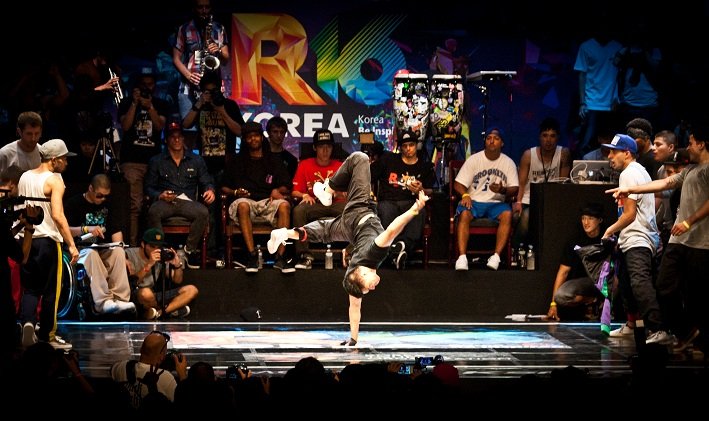
At house parties in the 70s, during "breaks" in a DJ set, MCs would hop on the mic and start rhyming and singing to keep the energy of the party alive. Similarly, B-boys and B-girls would dance on the breaks, thus the label "break dancing" or "breaking" was coined.
The hip hop movement in The Bronx began as an underground one with a homemade music distribution system. Since hip hop albums to be sold in stores weren't being produced yet, creators would distribute their music via cassette tapes, which would circulate throughout NYC. Eventually, this underground movement was brought more mainstream, with the advent of classic records like The Sugar Hill Gang's 1979 hit "Rapper's Delight.

Photo by Joel Muniz from Unsplash
According to Dr. Daudi Abe, hip hop was born out of the African American experience. Marcyliena Morgan, professor of African & African American Studies at Harvard University concurs, shares that hip hop emerged out of The Bronx because it contained a thriving African American community and an abundance of immigrants, who would all bump into each other as they walked on the street, exposing themselves to each other's unique ideas and experiences. Importantly, the lyrics of many hip hop songs reflected the social and economic conditions of inner cities according to folks that lived in those communities. Dr. Morgan stresses the importance of authenticity in representation within the genre, as hip hop artists looked at the history of their community, schools, city, and world to represent their culture in accurate and creative ways. Songs like "The Message" by Grandmaster Flash & The Furious Five and "Fight the Power" by Public Enemy in the 1980s reflect this idea well.
Dr. Daudi Abe has dedicated much of his work to educating others on the hip hop landscape of Seattle. The Garfield High School and University of Washington alum grew up in the Central District of Seattle and recalls falling in love with hip hop when he set foot in a record store with his father. Growing up, Abe listened to much of what his parents listened to, an eclectic mix of artists from the United States, Africa, and more. When he and his father stepped into a record store on the corner of 22nd and Union St, Abe was told that he could select any record he wanted. He was quickly drawn to a vinyl record with a multi-colored, swirly design, and selected that as his pick. Little did Daudi Abe know that the record was “Rapper’s Delight” by The Sugar Hill Gang. Drawn in by the familiar bassline and the unique lyrics, Abe was immediately hooked. “I consider myself and people of my generation so fortunate to have been born when we were,” he shares. “I really feel like I grew up into adolescence as hip hop was doing the same.”
“The [breaking] community has been so strong around here because the best and the brightest have always made it their business to turn around and offer mentoring”
Dr. Abe “fell into teaching in the early 1990s” and managed to include many popular hip-hop cultural references into his lessons to better connect with his students. After eight years of teaching kindergarten through eighth grade, Abe earned his Ph.D. in education at the University of Washington, later teaching at Seattle Central College where he felt he possessed more intellectual freedom in terms of creating his own curriculums.
In his work, Abe shares that hip hop is the “ultimate do-it-yourself culture.” He says that hip hop managed to become a “phenomenon that has broken down barriers, both geographic and social” and created a lasting impact arguably greater than any other cultural movement post-Civil Rights era.
His book Emerald Street: A History of Hip Hop in Seattle, featuring a foreword by Sir Mix-A-Lot, chronicles how hip hop has shaped urban life and the music scene in Seattle, a city he considers the cultural capital of the Pacific Northwest. Considering that Seattle is relatively geographically isolated from other major American cities, it had the chance to create a distinct hip-hop culture and not conform to dominant trends. The emergence of the song and music video for “Posse on Broadway” by Sir Mix-a-Lot is a great example of Seattle cementing its unique voice in the national hip hop landscape.

Seattle hip hop culture largely emerged out the Central District, where artists like Sir Mix-a-Lot frequented house parties to perform. Abe stresses that beyond rapping, DJing, breaking, and graffiti, the Seattle hip hop culture has influenced politics, relationships between communities of people of color and law enforcement, youth outreach and educational programs, and more.
In regards to B-boy culture, the theme of youth empowerment carries through. Fever One of the iconic Rock Steady Crew has dedicated much of his career to mentoring young people in the Seattle area, specifically at Jefferson Community Center, a space that became a mecca for breaking in Seattle. Crews who were formerly rivals were able to converge on common ground, including Massive and Untouchable Style Monkees, who eventually morphed into the crew Massive Monkees. Founding members of the crew, like Jerome “Skee” Aparis, have carried on Fever One’s tradition of community outreach, continuing to provide breaking opportunities and education to subsequent generations, specifically with the Massive Monkees Studio: The Beacon.
“The [breaking] community has been so strong around here because the best and the brightest have always made it their business to turn around and offer mentoring,” Dr. Abe stresses.
He stresses that although the view of hip hop culture in Seattle hasn't always been flattering, many hip hop cultural touchstones have been born out of this region. This includes FreshTracks, the first rap radio show west of the Mississippi, and The Emerald Street Boys who were known for combining rap music and dance and became the first Seattle artist to record a rap record in the 1980s. Contemporary artists like Macklemore and Laura "Piece" Kelly continue to add vibrancy and dynamism to the Seattle hip hop legacy.
Over 50 years after its conception, hip hop is still one of the most popular music genres out there, connecting people across the globe. With the rise of the Internet and the emergence of unique rap personalities adding their own spin on the genre, hip hop continues to remix and expand into more nuanced interpretations. It’ll be exciting to see where hip hop goes in the years to come.
A Brief History of Jazz
In June 2021, the hashtag #BlackTikTokStrike went viral on TikTok. Many Black creators decided to refrain from creating new TikTok dances until they received credit where it's due. Since TikTok’s conception, Black creators have been paving the way for the popular dance trends that become instantaneously viral online. For example, the viral “Savage” dance to the popular Megan Thee Stallion song was created by then-teenager Keara Wilson and has received tens of millions of views and even a recreation by Megan Thee Stallion herself. One of the most popular dances of all time on the app is the “Renagade” dance, performed to K Camp’s “Lottery.” This dance was created by 14-year-old Jalaiah Harmon and made popular by TikTok superstar Charli D’Amelio. However, as Natachi Onwuamaegbu of The Washington Post points out, D’Amelio, a white creator, “gained millions of followers before she acknowledged the dance’s Black creator.” Similarly, white TikTok star Addison Rae Easterling was invited on The Tonight Show to perform eight viral TikTok dances, none of which she choreographed. Credit to the original creators was not given.
“The foundation of the jazz technique we practice today comes from traditional African dances. ”
By Madison Huizinga, DWC Blog Editor

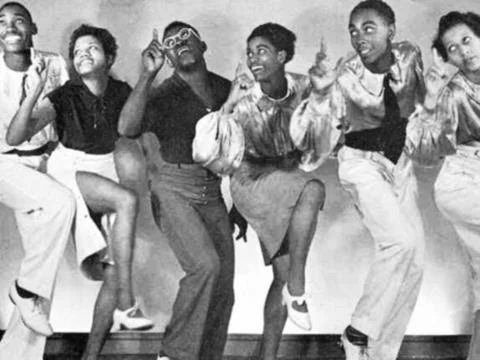
White’s Lindy Hoppers (Left to Right) Frankie Manning, Naomi Waller, Jerome Williams, Lucille Middleton, Billie Williams, Mildred Cruse, photo from Pointe People
In June 2021, the hashtag #BlackTikTokStrike went viral on TikTok. Many Black creators decided to refrain from creating new TikTok dances until they received credit where it's due. Since TikTok’s conception, Black creators have been paving the way for the popular dance trends that become instantaneously viral online. For example, the viral “Savage” dance to the popular Megan Thee Stallion song was created by then-teenager Keara Wilson and has received tens of millions of views and even a recreation by Megan Thee Stallion herself. One of the most popular dances of all time on the app is the “Renagade” dance, performed to K Camp’s “Lottery.” This dance was created by 14-year-old Jalaiah Harmon and made popular by TikTok superstar Charli D’Amelio. However, as Natachi Onwuamaegbu of The Washington Post points out, D’Amelio, a white creator, “gained millions of followers before she acknowledged the dance’s Black creator.” Similarly, white TikTok star Addison Rae Easterling was invited on The Tonight Show to perform eight viral TikTok dances, none of which she choreographed. Credit to the original creators was not given.
While the #BlackTikTokStrike may seem like a contemporary issue, there is a long history of white people stealing, appropriating, and making viral the art of Black artists without giving credit in America. Jazz dance, one of the cornerstone genres of dance in America, has deep roots in African and African American culture. However, throughout the 20th century, white dancers and choreographers claimed jazz dance as their own without acknowledging its salient history.

Frankie Manning, photo from Harlem World Magazine
The foundation of the jazz technique we practice today comes from traditional African dances. When enslaved Africans were kidnapped and forcefully moved to the American colonies in the 16th and 17th centuries, they brought with them traditional African styles of dance. Journalist Benna Crawford writes that “African dance was woven through religious ceremon[ies] and social assemblies and served to preserve the sense of identity and personal history [among enslaved people].” In Steppin’ on the Blues: The Visible Rhythms of African American Dance, Jacqui Malone writes that “music and dance gave African Americans a sense of power and control - it had a direct impact on their psychic and emotional states and allowed them to drop their masks and articulate their inner feelings.”
Enslaved Africans created new, unique dances, such as the “cakewalk,” which served as mimicry of ballroom-style dances often performed by white elites and plantation owners at the time, as well as continued styles of dance from their native countries. The “Juba” was a form of dance many enslaved people performed during the 18th century, involving the slapping of hands, legs, and body to make music. This act of making music to accompany their dancing often came about out of necessity, as enslaved people were denied rhythmic instruments.
The hallmarks of African dance involve “accentuat[ing] the rhythm of the music into isolations and movements of the body,” which can be seen in jazz dance today. Professor N. Cayou of Laney College shares that “there are some main characteristics of jazz dance that can be seen in traditional African dance” including “the use of bent knees, keeping the body close to the earth...the isolation of body parts in movement….the use of syncopated movements….carrying as many as two or three rhythms in the body at once, combining music and dance as a single expression…[and] individualism of style within a group style.” According to Malone, while most Europeans would traditionally separate music and dance as art genres, traditional African conceptions “couple music with one or more other art forms, including dance.”
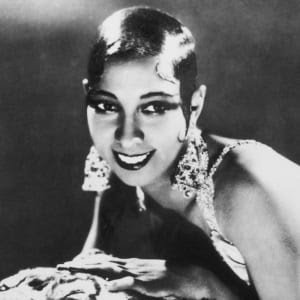
Josephine Baker, photo by Hulton Archive/Getty Images
Eventually, white minstrels began copying the choreography they witnessed enslaved Africans performing and appropriated it in their shows, using blackface to create offensive parodies. African American minstrel companies were eventually established and found success but not until after the Civil War. The choreography performed at these shows eventually traveled to the stages of vaudeville and Broadway. Malone shares that by 1910, “5,606 black musicians and 1,279 black actors and actresses” resided in the United States, revolutionizing the entertainment industry as we know it.
During the end of the 19th and beginning of the 20th century, traditionally African styles of movement inspired dance trends like the Charleston and the Lindy Hop. After the Juba dance acquired musical accompaniment, it greatly influenced the Charleston, which peaked in popularity in the 1920s. The dance begins with the dancers’ feet flat on the ground with their palms facing down. The dancer moves their left foot forward, then their right, before giving the left foot a tap with the heel of their right foot. The sequence is then reversed, with the right foot moving back, then the left, before the heel of the right foot is tapped with the left foot.
The Lindy Hop originated in the 1920s and 30s in Harlem, New York, during the Black cultural revolution known as the Harlem Renaissance. It’s a partner dance consisting of 8 count and 6 count steps with some footwork reminiscent of tap dance and the Charleston. The dance can be incredibly fast, with energetic kicks and lifts. Swing dance legend Frankie Manning is credited for transforming the Lindy Hop with moves like the “Lindy air step and synchronized ensemble Lindy routine.”

Katherine Dunham, photo by Dennis Stock/Magnum Photos
During the 1930s, jazz pioneer Jack Cole also began adding elements of East Indian and African dance to his jazz choreography. This created a great influence on the jazz masters of the 20th century, including Bob Fosse. From the 1920s and onwards, a collective of prolific Black jazz innovators came onto the scene, including Josephine Baker and Katherine Dunham.
However, in my dance education, I haven’t learned much about these Black jazz masters or the history of dance in African and African American culture. My jazz history knowledge has largely been limited to Bob Fosse’s contributions to Broadway, as well as the contemporary commercial jazz dance scene we see on competition stages today. As is the case with an abundance of art, Black creators’ contributions have been glossed over, ignored, or downright censored. Similar to the dance crazes circulating on TikTok at the moment, we would not have jazz dance if it weren’t for Black artists.
We’re doing students a disservice by not fully disclosing the rich history of jazz dance. Not only is it preventing students from fully immersing themselves in the style to help master it, but it’s wrongly denying credit to the major creators and innovators of the art form. By learning the full history of jazz dance in America, dancers can have a more nuanced understanding of its technicalities and more appropriately honor the Black creators who created the beloved genre.
For more information, check out Jazz Dance Direct created by the Jazz Is...Dance Project.
Resources:
https://www.tiktok.com/@keke.janajah/video/6802722722389576965?is_from_webapp=v1&is_copy_url=1
https://www.instagram.com/p/B22za3xD1Fh/?utm_source=ig_web_copy_link
https://www.washingtonpost.com/lifestyle/2021/06/25/black-tiktok-strike/
https://www.goodreads.com/book/show/1060169.Steppin_on_the_Blues
http://www.yehoodi.com/blog/2020/6/14/the-cakewalk-a-dance-of-black-resistance-and-celebration
https://www.slso.org/globalassets/education/learning-lab/learnlab-juba-dance_students.pdf
https://secretsofsolo.com/2020/08/the-history-of-the-charleston-dance/
https://www.history.com/topics/roaring-twenties/harlem-renaissance
https://www.womenshistory.org/education-resources/biographies/josephine-baker
"Calling" with Ambassador Vania Bynum
Check out ambassador Vania Bynum in DWC latest dance film!
Check out ambassador Vania Bynum in DWC latest dance film!

Disclaimer
All content found on the Dancewear Center Website, Instagram, Facebook, Pinterest, and all other relevant social media platforms including: text, images, audio, or other formats were created for informational purposes only. Offerings for continuing education credits are clearly identified and the appropriate target audience is identified. The Content is not intended to be a substitute for professional medical advice, diagnosis, or treatment. Always seek the advice of your physician or other qualified health provider with any questions you may have regarding a medical condition. Never disregard professional medical advice or delay in seeking it because of something you have read on this Website.
If you think you may have a medical emergency, call your doctor, go to the emergency department, or call 911 immediately. Dancewear Center does not recommend or endorse any specific tests, physicians, products, procedures, opinions, or other information that may be mentioned on dancewearcenter.net. Reliance on any information provided by dancewearcenter.net, Dancewear Center employees, contracted writers, or medical professionals presenting content for publication to Dancewear Center is solely at your own risk.
Links to educational content not created by Dancewear Center are taken at your own risk. Dancewear Center is not responsible for the claims of external websites and education companies.
Elise Beers on Healing Community and Acknowledging Land Through Dance
In the age of commercialized dance, it can be easy for many to lose sight of the true origins of dance in many communities. Before the era of dance competitions, dance mainly served as a source of expression and community building. Whether it’s to express celebration or grief, movement has the power to unite and heal people in ways that other modes of communication can’t. Indigenous dance artist Elise Beers is harnessing this idea of using dance to connect to the land and community and alleviate pain in her latest project Earth Works Dance.
By Madison Huizinga, DWC Blog Editor

In the age of commercialized dance, it can be easy for many to lose sight of the true origins of dance in many communities. Before the era of dance competitions, dance mainly served as a source of expression and community building. Whether it’s to express celebration or grief, movement has the power to unite and heal people in ways that other modes of communication can’t. Indigenous dance artist Elise Beers is harnessing this idea of using dance to connect to the land and community and alleviate pain in her latest project Earth Works Dance.
Growing up with a father in the United States Air Force, Elise’s family moved around quite a bit. This prevented her from having a consistent routine for a while as a child. However, once her family landed in Washington, Elise began taking gymnastics classes at the YMCA in Tacoma and later branched out into ballet and jazz. As she began training at other studios, dance stuck with Elise tremendously and she was able to train under influential instructors, such as Miss Ally from Dance Ally in Gig Harbor, WA.
When she got older, Elise started dancing in Seattle more often, frequenting Westlake Dance Center and Velocity Dance Center. She ended up getting accepted into the dance program at Brigham Young University, where she studied contemporary dance, choreography, and performing. “While I was there, I was able to choreograph a lot and really just hone in on my skills and everything,” Elise says of her time studying dance in college. She ended up getting her BFA with a double major in filmmaking and dance. After graduating, Elise worked and danced in Utah for a while, before returning to Seattle around 2018.
Dance is an important art form for Elise because it has given her a means of expression, something she felt that she lacked as a child. “Growing up, I was a pretty shy kid, so I didn’t really have a voice,” Elise shares. “When I was able to dance, I could express myself.” Community is another major reason why she has stayed connected to dance for so long. Finding other dancers that Elise was able to mesh with was transformative.
Physically, the feeling of “building up momentum within [her] body” is a satisfying part of dancing to Elise. “Momentum building up in your body and feeling that almost ‘falling’ moment...that’s like an addicting feeling,” she stresses.
“Art is a spiritual and emotional provider that other people need to see the value in and then support...so their communities can grow and thrive, and in a sense, heal, mourn, and celebrate,”
Nevertheless, as with most dancers, Elise’s dance journey hasn’t been completely smooth sailing. “I feel like the biggest challenge I’ve had for a long time [is] my body type. I don’t have that skinny, tall, European body,” she says. She spent much of her training trying to show others that she could hold her own as a dancer, regardless of what she looks like. For others feeling overlooked because of their bodies, Elise advises them to find their niche as a dancer and lean into it. Finding what you’re good at and learning how to capitalize on it throughout your dancing can be incredibly useful.

Throughout the COVID-19 pandemic, Elise was deeply saddened by the hardships occurring around the world, especially within Indigenous communities. “It’s just really hard to [feel] like you’re on the sidelines,” Elise says in regards to her capacity to make positive change. Growing up, Elise’s family favored outdoor activities, constantly camping and “roughing it” in the wilderness, so nature has a special place in her heart. “Seeing all these pipelines and oil protests just really breaks my heart,” she shares. For Elise, the tipping point was the heightened news coverage about the Canadian government discovering hundreds of Indigenous children’s bodies buried beneath residential schools. This was information that Elise’s family had known about through passed down family stories, and knowledge that the public was no longer able to ignore. At this point, she knew she needed to contribute to activism in a way of her own.
“I want to do something. I want to create something in my own expression,” she states.
Earth Works Dance is primarily inspired by the concept of giving and receiving from the earth. “We give to the earth, the earth provides, and eventually we provide for the earth when we die,” Elise shares. In a similar vein, land acknowledgment is an act that Elise values greatly. Land acknowledgment doesn’t involve knowing who the “owner” of the land is or was, but who its keeper and caretaker was. This is ultimately what got the ball rolling on Elise’s project.
“With Earth Works Dance, I want to focus on the original land caretakers and be honest about land acknowledgment and focus on ceremonial healing in dance workshops,” Elise shares. Healing the “body, spirit, emotion, and mind” is a significant goal of the project. “That’s something that I feel like, as Indigenous people, we’ve held back from because of colonization and literal genocide. [There’s] a lot of healing that needs to happen,” she says. “Finding the expression from that and then taking it to a show or dance film” will be the ultimate progression from these workshops. “As an Indigenous person, I feel very drawn to this and feel like this is what I need to do,” Elise states.

While the specific details of its format are still in the works, utilizing dance as a means of healing, community building, and connection to the land will be a predominant focus of Earth Works Dance. In tandem with this objective, Elise hopes to see funding for the arts improve moving forward. “[Art] is a spiritual and emotional provider that other people need to see the value in and then support...so their communities can grow and thrive, and in a sense, heal, mourn, and celebrate,” Elise says.
You can learn more about Elise and her work on her website and Instagram. Look out for her choreography in the next Seattle International Dance Festival, Tint Dance Festival, and Full Tilt, and see her performance in EL SUEÑO’s upcoming dance film.
Celebrating Indigenous Dancers Past & Present
Many people in western culture generally feel comfortable with a binary kind of thinking because it's a way of processing information that we’ve grown up with. Things are either black or white, day or night, right or wrong. But when we make binary statements about people and art, we can create a rather limiting perspective for ourselves. I’ve found that such generalizations are often made about certain genres of dance or dance unique to specific cultural communities or regions.
A Look at the Contributions of Indigenous Performers Nationwide
By Madison Huizinga, DWC Blog Editor
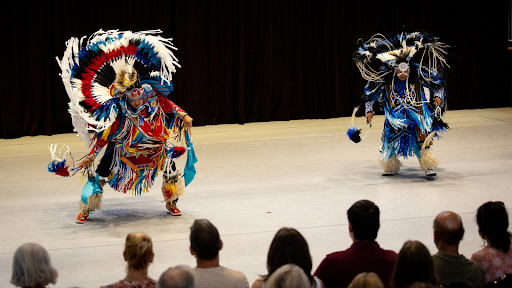
Photo of Indigenous Enterprise performers Kenneth Shirley and Dominic Pablo at Jacob’s Pillow in August 2022. Photo by Danica Paulos.
Many people in western culture generally feel comfortable with a binary kind of thinking because it's a way of processing information that we’ve grown up with. Things are either black or white, day or night, right or wrong. But when we make binary statements about people and art, we can create a rather limiting perspective for ourselves. I’ve found that such generalizations are often made about certain genres of dance or dance unique to specific cultural communities or regions.
For example, many are quick to assume that indigenous dancers and dance within indigenous communities must look a certain way. However, within indigenous communities across the globe, dance has played a variety of roles, including making cross-cultural connections in the case of “The Five Moons,” as well as telling stories, healing from trauma, and exercising imagination. Let’s take a look at just a few of the many talented former and active indigenous dancers contributing to the rich dance landscape across the country.
“The Five Moons”
Myra Yvonne Chouteau, Rosella Hightower, Moscelyne Larkin, Maria Tallchief, and Marjorie Tallchief, otherwise known as “The Five Moons,” are five Native American ballerinas from the U.S. state of Oklahoma known for achieving international recognition in ballet during the twentieth century.
“Of course, my parents were not about to let ballet take me away from my Indian dancing,” says Chouteau in American Indian Ballerinas. After touring globally with the Ballet Russe de Monte Carlo, Chouteau, a Shawnee-Cherokee, returned to Oklahoma and helped found the dance program at the University of Oklahoma in the early 1960s and the Oklahoma City Civic Ballet. On the other hand, Hightower, of the Choctaw Nation, found great success abroad, particularly in France where she earned the Chevalier de la Légion d’Honneur, a high marker of civil distinction in France, in 1975. Nonetheless, some jokingly argue that Hightower’s greatest accomplishment was famously learning the lead for Giselle in less than five hours!
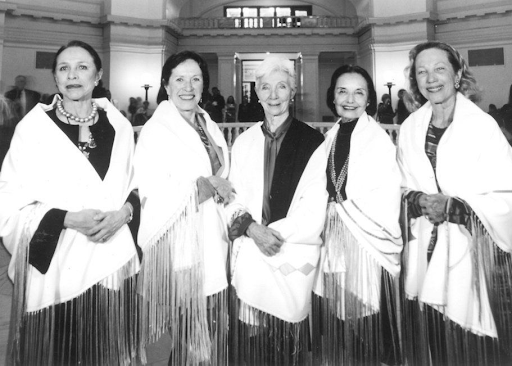
The Five Moons. From left: Maria Tallchief, Marjorie Tallchief, Rosella Hightower, Moscelyne Larkin and Yvonne Chouteau. Photo courtesy the University of Oklahoma School of Dance.
Among Larkin’s accomplishments, one particularly notable is helping found the renowned Tulsa Ballet. Larkin, an Eastern Shawnee-Peoria, was inducted into the Oklahoma Hall of Fame in 1979. A descendant of a Russian mother and a Native American father, Larkin famously said that ballet gave her the freedom to express all parts of her identity.
Marjorie Tallchief, of the Osage Nation, performed with the Paris Opéra Ballet from 1957 to 1962, as well as the Chicago Opera Ballet, Grand Ballet du Marquis de Cuevas, and many other large-scale companies. Her older sister Maria Tallchief was the first American dancer to achieve the title of “prima ballerina.” When George Balanchine co-founded what would become New York City Ballet in 1946, she was the company’s first major star. Tallchief showcased her talents across the globe, becoming the first American to perform in Moscow, Russia’s Bolshoi Theater.
“These are American Indian people that have made this impact on ballet,” says Russ Tall Chief, a relative of Marjorie and Maria, and a co-planner of the 2021 Five Moons Dance Festival at the University of Oklahoma. “And that they consider themselves American Indian before they consider themselves ballerinas, I think that’s important. That is part of their vocabulary as dancers. They bring that history of American Indian culture to their dance, and to their interpretation of the way that they see ballet.”
“The Five Moons” overcame preconceived, limiting notions of what a ballerina should look like, particularly during a time when American ballet was viewed as inferior to European ballet. Writer Meryl Cates points out that these women not only grappled with finding their place in the culture of their companies as Oklahomans but as Native women in a white-dominated field. These women have come to represent much of what people think of when they envision successful indigenous dancers of the twentieth century. But the story has certainly not stopped with them. Today, and for thousands of years before today, indigenous dancers have been using movement as a way to tell stories, heal, connect with their own culture and the world around them, and much more.
Dancing Earth
Dancing Earth is a company striving to create contemporary dance and related arts through global-Indigenous and intercultural relationships. The company is based in Ogaa Po Ogeh and Ohlone occupied territory, otherwise known as Santa Fe, New Mexico, and San Francisco, California. It specifically centers its mission on ecological and cultural diversity for creativity, health, and wellness. Founding Artistic Director Rulan Tangen descends, in part, from the Kampampangan people of Luzon in the Philippines. A cancer survivor and recipient of Kennedy Center’s 2018-19 Citizen Artist fellowship, her work interprets dance as a functional ritual for transformation and healing, using movement to foster a connection with all life forms on Earth.
Elise Beers of Earth Works Dance
Earth Works Dance
Formerly based in occupied Duwamish territory, otherwise known as Seattle, WA, Earth Works Dance is a nomadic dance company focused on earth healing and land acknowledgment. Using dance as a means to help heal the “body, spirit, emotion, and mind” is a driver of the company’s mission. “[Art] is a spiritual and emotional provider that other people need to see the value in and then support…so their communities can grow and thrive, and in a sense, heal, mourn, and celebrate,” says Earth Works Dance founder and artist Elise Beers. Click here to read more about Elise’s work with the company.
Indigenous Enterprise
Indigenous Enterprise centers its art on what it refers to as “the three Ps”: Preservation, Performance, and Progression. Through its teaching efforts, the company strives to help preserve a strong Native American identity while welcoming many different kinds of performances and continuing to “progress” amid cultural and global changes. The dance group has been featured at Lincoln Center’s Summer For the City, Jacob’s Pillow, and lauded in Dance Magazine for their imaginative fusion of hip hop and Native American dance on season four of World of Dance.
The Jingle Dress Project
The idea of the Jingle Dress Project came to Navajo photographer Eugene Tapahe in a dream. Amid one of the heights of the COVID-19 pandemic, Eugene dreamt of jingle dress dancers appearing as he sat, watching bison graze. Seeing the dancers perform the traditional Ojibwe healing dance gave Tapahe a sense of peace, a feeling he knew the world was craving during such a grave global crisis. Jingle dresses are traditionally adorned with beadwork, ribbon work, as well as triangular metal cones around the skirt that shake and create a distinctive sound with each movement. The Jingle Dress Project has traveled across the United States during the COVID-19 pandemic as a way to help uplift communities. “The jingle dress is really important for Native people, and the purposes of healing,” says Eugene, illustrating yet another way that dance can be used to heal in and out of indigenous communities.
While this article is certainly not exhaustive of all the Native American dancers creating art across the United States, it provides a peak into some of the exciting, multifaceted artists contributing to a long-standing, vibrant dance landscape. To explore some of these artists in greater depth, click the links below!
Resources:
American Indian Ballerinas (1997) by Lili Cockerille Livingston - https://www.goodreads.com/en/book/show/1654202.American_Indian_Ballerinas
“How Five American Indian Dancers Transformed Ballet in the 20th Century” by Allison Meier - https://hyperallergic.com/271205/how-five-american-indian-dancers-transformed-ballet-in-the-20th-century/
An entry on Rosella Hightower in The Encyclopedia of Oklahoma History and Culture - https://www.okhistory.org/publications/enc/entry.php?entry=HI003
“Moscelyne Larkin, a Founder of Tulsa Ballet, Is Dead at 87” by Jack Anderson - https://www.nytimes.com/2012/04/30/arts/dance/moscelyne-larkin-a-founder-of-tulsa-ballet-dies-at-87.html
An entry on Moscelyne Larkin in the Oklahoma Hall of Fame - https://oklahomahof.com/member-archives/j/jasinski-moscelyne-larkin-1979
“Marjorie Tallchief, Trailblazing Native American Ballerina, Dies at 95” by April Deocariza - https://www.dancemagazine.com/marjorie-tallchief/
An entry on Maria Tallchief in the National Women’s Hall of Fame - https://www.womenofthehall.org/inductee/maria-tallchief/#:~:text=At%20the%20ballet%2C%20Tallchief%20became,Swan%20Lake%20and%20The%20Nutcracker.
“Oklahoma’s Gift to Ballet: The Five Moons Ballerinas” by Meryl Cates - https://www.nytimes.com/2021/08/19/arts/dance/native-american-ballerinas-oklahoma.html
Dancing Earth - https://dancingearth.org/home/
Dancing Earth Founding Artistic Director and Choreographer Rulan Tangen - https://dancingearth.org/rulan
“Meet the Artists: Dancing Earth Indigenous Contemporary Dance Creations” from Kennedy Center Education Digital Learning - https://www.youtube.com/watch?v=Dv5cfgu49sQ
Earth Works Dance on Instagram - https://www.instagram.com/earthworksdance/
“Elise Beers on Healing Community and Acknowledging Land Through Dance” by Madison Huizinga - https://www.dancewearcenter.net/blog/2021/12/1/elise-beers
Indigenous Enterprise at Lincoln Center - https://www.lincolncenter.org/series/summer-for-the-city/indigenous-enterprise-564
Indigenous Enterprise at Jacobs Pillow - https://www.jacobspillow.org/events/indigenous-enterprise-2022/
“Evolving Tradition With the Fusion of Hip Hop and Native American Dance” by Bridgit Lujan - https://www.dancemagazine.com/hip-hop-and-native-american-dance/
Indigenous Enterprise on World of Dance - https://www.youtube.com/watch?v=uYa0tSXGIRs
The Jingle Dress Project on Instagram - https://www.instagram.com/jingledressproject/?hl=en
“How Jingle Dresses Are Being Used to Heal Communities” by Christian Allaire - https://www.vogue.com/article/jingle-dress-project-indigenous-design
How has your identity affected you in the dance world?
I am Anna Ricketts, a sixteen-year-old dancer at Fidalgo Dance Works. I currently identify as a cisgender, omnisexual woman. If you don’t know what that means, it means that I am attracted to people of all genders and orientations. Fortunately, my dance studio is very accepting of people in the LGBTQ+ community. Overall, I feel very loved and accepted there. Although I feel accepted at my studio, the journey to feeling careless about what others think about my orientation took a long time.
By Anna Ricketts (she/they), DWC Blog Contributor

I am Anna Ricketts, a sixteen-year-old dancer at Fidalgo Dance Works. I currently identify as a cisgender, omnisexual woman. If you don’t know what that means, it means that I am attracted to people of all genders and orientations. Fortunately, my dance studio is very accepting of people in the LGBTQ+ community. Overall, I feel very loved and accepted there. Although I feel accepted at my studio, the journey to feeling careless about what others think about my orientation took a long time.
I never knew a lot about the LGBTQ+ community until middle school. I started attending GSA meetings and thinking to myself “Who am I?”. Figuring out my sexuality was not an easy task and it was extremely challenging mentally. I felt scared, alone, worthless, confused, and stressed. These mental challenges with exploring my identity and the troubles with everything else in life critically affected my dance life. This affected my dance life especially since I never really saw professional dancers on social media who were a part of the community. I felt that I was never going to be able to dance professionally in the future, which had been my only dream in life since I was very young. The mental turmoil made me want to quit dancing. It made me want to quit trying in life. However, as I grew older, figured out my sexuality, and found a place of peace in my mind, those thoughts and feelings went away. I stopped caring what other people thought about me and started thinking more about how I can start loving myself and giving back to myself.
Seeing more and more queer dancers on social media has also helped me gain confidence in my dancing. These dancers inspire me to continue growing and learning the art of dance. One important dancer to mention is Ashton Edwards. Ever since I read that they started dancing with PNB, I have been inspired. Seeing them dance onstage a few times has also been extremely inspiring. Another inspiration is Merce Cunningham. Merce Cunningham was a dancer and choreographer who helped shape modern dance into what it is today. He was a part of the LGBTQ+ community and was very inspiring to hundreds of people around the world. Having these inspirational dancers to look up to and having friends and family to support me helped with my journey extraordinarily. Growing up not knowing about many LGBTQ+ dancers made me feel alone. I want to change this for the future generations of dancers to come. I want to show them that it is okay to identify with the LGBTQ+ community. You can become a professional dancer and be a part of the community. You are worthy of acceptance and happiness.

If you are struggling with your identity just understand that you are not alone. There are so many other people around the world who struggle with figuring out their orientations. Having people who inspire you and help support you will make your journey less stressful and challenging. It is normal to feel confused, sad, and scared. Growing up not knowing about many LGBTQ+ dancers made me feel alone and frightened. I wanted to give up on everything including dance. Now that I have gotten through that really long path, I want to help change the future generations of queer dancers to come. I want to show them that it is okay to identify with the LGBTQ+ community. You can work in the dance/performing arts industry and be a part of the community. You are worthy of acceptance and happiness. The journey may be difficult, but I believe in you. There are people around you that believe in you and love you.
Disclaimer
All content found on the Dancewear Center Website, Instagram, Facebook, Pinterest, and all other relevant social media platforms including: text, images, audio, or other formats were created for informational purposes only. Offerings for continuing education credits are clearly identified and the appropriate target audience is identified. The Content is not intended to be a substitute for professional medical advice, diagnosis, or treatment. Always seek the advice of your physician or other qualified health provider with any questions you may have regarding a medical condition. Never disregard professional medical advice or delay in seeking it because of something you have read on this Website.
If you think you may have a medical emergency, call your doctor, go to the emergency department, or call 911 immediately. Dancewear Center does not recommend or endorse any specific tests, physicians, products, procedures, opinions, or other information that may be mentioned on dancewearcenter.net. Reliance on any information provided by dancewearcenter.net, Dancewear Center employees, contracted writers, or medical professionals presenting content for publication to Dancewear Center is solely at your own risk.
Links to educational content not created by Dancewear Center are taken at your own risk. Dancewear Center is not responsible for the claims of external websites and education companies.

Self Discovery in Life & Dance
When Birgitte was 6 years old, she started taking a ballet class. She shares that she took the classes, had the recital and she shares that that experience woke the little ballerina in her. After that class she kept begging with her parents to take more classes, but they didn’t allow her to. She ended up taking some ballet classes for her P.E. credit in college and she shares that she loved it but it was absolutely terrifying. At 53 years old was when Birgitte finally fulfilled her dream to become a ballerina. Birgitte started with one to two classes per week and within 6 months she was taking fourteen classes and was en pointe. Since then, she hasn’t stopped dancing and loves what she does.
An Interview with Dancer & Teacher Birgitte Necessary
Pronunciation: Bi-gee-ta Ne-ses-aerie | Pronouns: she/they
By Samantha Weissbach, DWC Owner & General Manager and Nicole Barrett, DWC Blog Editor
Here at Dancewear Center, we love to highlight local dancers and teachers that relate to our message. We got the opportunity to speak with one of them, Birgitte Necessary who is a local dancer! Read on to learn more about Birgitte’s dancing journey and how her identity affects them in the dance world!
When Birgitte was 6 years old, she started taking a ballet class. She shares that she took the classes, had the recital and she shares that that experience woke the little ballerina in her. After that class she kept begging with her parents to take more classes, but they didn’t allow her to. She ended up taking some ballet classes for her P.E. credit in college and she shares that she loved it but it was absolutely terrifying. At 53 years old was when Birgitte finally fulfilled her dream to become a ballerina. Birgitte started with one to two classes per week and within 6 months she was taking fourteen classes and was en pointe. Since then, she hasn’t stopped dancing and loves what she does.
Birgitte came out as non-binary during the pandemic and shares that all she really thought about was training and dancing and didn’t associate her new identity with dance yet. She shares that she was just doing what she was taught before which was existing in the binary of dance. Coming out as non-binary made her feel a little rough around the edges and made her think of how she was going to represent and be herself in this world that she loves. Now thinking about it more, she worries about how much she is represented in the studio and struggles with how much she should really worry about this.
We loved getting a chance to speak with Birgitte! Be sure to check out the rest of their interview down below!
Disclaimer
All content found on the Dancewear Center Website, Instagram, Facebook, Pinterest, and all other relevant social media platforms including: text, images, audio, or other formats were created for informational purposes only. Offerings for continuing education credits are clearly identified and the appropriate target audience is identified. The Content is not intended to be a substitute for professional medical advice, diagnosis, or treatment. Always seek the advice of your physician or other qualified health provider with any questions you may have regarding a medical condition. Never disregard professional medical advice or delay in seeking it because of something you have read on this Website.
If you think you may have a medical emergency, call your doctor, go to the emergency department, or call 911 immediately. Dancewear Center does not recommend or endorse any specific tests, physicians, products, procedures, opinions, or other information that may be mentioned on dancewearcenter.net. Reliance on any information provided by dancewearcenter.net, Dancewear Center employees, contracted writers, or medical professionals presenting content for publication to Dancewear Center is solely at your own risk.
Links to educational content not created by Dancewear Center are taken at your own risk. Dancewear Center is not responsible for the claims of external websites and education companies.

Journey & Identity Through Dance
Pride month is upon us and what better way to celebrate pride than to highlight queer dancers in the Seattle community! We got the opportunity to speak with local teacher and dancer Annie St. Marie about their experience with the dance and LGBTQIA+ community. Read on to learn more about Annie’s dancing journey and their identity in the dance world!
An Interview with Dancer & Teacher Annie St. Marie
By Samantha Weissbach, DWC Owner & General Manager and Nicole Barrett, DWC Blog Editor
Pride month is upon us and what better way to celebrate pride than to highlight queer dancers in the Seattle community! We got the opportunity to speak with local teacher and dancer Annie St. Marie about their experience with the dance and LGBTQIA+ community. Read on to learn more about Annie’s dancing journey and their identity in the dance world!
Annie started dancing when they were 4 years old. Their first experience with dance was at a local community center in Seattle and then moved to the American Dance Institute in Greenwood. They share that their neighbor across the street also danced there and went on to audition for Pacific Northwest Ballet. Annie says that they thought to themself “If they can, why can’t I!” and auditioned there as well. They initially got into PNB and danced there from ages 8 to 17. Annie trained very extensively in various different styles of ballet and Horton technique and shares that it was a great experience.
After consideration from their family, they decided to stop training at PNB when they were 17 and continued doing musical theater that they had done all throughout high school. Then when Annie was a senior they decided that they wanted to keep dancing and applied to Cornish College of the Arts. After not attending initially after their senior year, they did Cornish’s three year program and graduated in 2018. Since graduating, Annie has been teaching at various studios, performing and taking classes as much as they can.
Annie uses he/she/they pronouns and shares that they identify as non-binary which can affect the way they are seen in the dance world. They share that people can assume their gender or pronouns being she/her or that they present feminine which they share isn’t great. Now that they have found places where they are accepted they share that it is better, but growing up in the ballet world, there are lots of specific gender roles. Females are supposed to curtsey and males are supposed to bow and Annie tries in their classes to eliminate those gender roles as much as they can.
Annie shares that they have lots of things coming up for them in the next few months! Annie currently teaches a ballet/contemporary class at Westlake Dance Center in Shoreline every Saturday. They will also be teaching some master classes throughout the summer and just performed at the Seattle International Dance festival with Coalescence Dance Company. In September they are performing in a show called A Night In Paris which is taking place in Leavenworth. Lastly, in the fall they will be teaching some adult intermediate ballet classes and modern classes at eXit Space.
We are so happy that we had the opportunity to speak with Annie! Be sure to follow them on Instagram here and check out the rest of their interview on YouTube!
Sources:
Disclaimer
All content found on the Dancewear Center Website, Instagram, Facebook, Pinterest, and all other relevant social media platforms including: text, images, audio, or other formats were created for informational purposes only. Offerings for continuing education credits are clearly identified and the appropriate target audience is identified. The Content is not intended to be a substitute for professional medical advice, diagnosis, or treatment. Always seek the advice of your physician or other qualified health provider with any questions you may have regarding a medical condition. Never disregard professional medical advice or delay in seeking it because of something you have read on this Website.
If you think you may have a medical emergency, call your doctor, go to the emergency department, or call 911 immediately. Dancewear Center does not recommend or endorse any specific tests, physicians, products, procedures, opinions, or other information that may be mentioned on dancewearcenter.net. Reliance on any information provided by dancewearcenter.net, Dancewear Center employees, contracted writers, or medical professionals presenting content for publication to Dancewear Center is solely at your own risk.
Links to educational content not created by Dancewear Center are taken at your own risk. Dancewear Center is not responsible for the claims of external websites and education companies.
Interested in writing for the DWC Blog? Click below to fill out the DWC Contributor application!