
Starting Ballet in Adulthood
Starting ballet as an adult can be a terrifying and nerve-racking experience. But it should not limit you from giving ballet a chance because when you look back, it will be worth it.
Coco’s Tips and Tricks for Your First Class!
By Coco Liu, DWC Ambassador

click below to shop the look:
Carmen Wrap Sweater Wear Moi | Hanami Stretch Canvas Ballet Shoe Capezio
Starting ballet as an adult can be a terrifying and nerve-racking experience. But it should not limit you from giving ballet a chance because when you look back, it will be worth it.
My Very First Ballet Class
At a young age, I was able to see quite a few well-known ballets, such as Swan Lake and The Nutcracker. I was just mesmerized by the dance form itself, I never truly understood how difficult and technical ballet was. It took several months of taking ballet classes that I truly grasped the difficulty. To this day, I still remember stepping into my very first ballet class. It was winter of 2018, I found a beginner ballet class at The Ballet Studio in University District. The moment I stepped into the classroom, I felt like I didn’t belong. The studio was wooden-floored, the barre and mirrors were a bit outdated, a pianist was sitting in the corner of the studio, and several students were already stretching by the barre. The teacher, Renzo, came up to me and introduced himself: “Is it your first-time doing ballet? Just follow along!” Renzo asked me to stand in between some experienced students so I had someone to refer to on both sides. We then started the class. Throughout the class, Renzo used ballet terminology in French and my brain just went, “sorry Tendu what?” I tried to copy whatever Renzo was demonstrating, but was not able to focus on my form. I didn’t know what I was doing. At the end of the class, I honestly felt a little bored and did not think ballet was physically challenging, simply due to my lack of knowledge in ballet technique and lack of preparation for my first class. Since I was determined to dance ballet in the center, I wanted to give ballet a shot for at least a month. After gaining more understanding of the technical aspects of ballet a month later, I realized how difficult it is.

click below to shop the look:
V-Back Pink Tank Leotard by Capezio | Bullet Pointe Skirt by Bullet Pointe | Hanami Stretch Canvas Ballet Shoe by Capezio
How to Prep and What to Expect For Your First Class
Here are some tips I wish I would have known before attending my first ballet class.
Learn basic terminology, for example:
Turnout: feet are pointed more to the sides of the body than the front and legs are rotated outwards
Tendu: working leg is extended along the floor until only the tip of the toe remains touching the floor
Plie: knee bending; used in jumps and turns to absorb shock
Eleve: lifted up; rise to stand on the balls of your feet
Watch some Youtube videos from the comfort of your home
Be patient!
I went back home and reflected on my first class then decided to do some research on my own about basic ballet techniques. I watched hours and hours of YouTube videos on basic techniques like tendus, plies, arm positions, etc. I wish I had some of these basic terms in my back pocket before going into my first class. Ever since then, I would watch a couple of new technique videos before attending ballet classes.
Here are three Youtubers I watched:

click below to shop the look:
I started truly loving ballet after learning the basic vocabulary and having some understanding of how to use my muscles correctly. Then, when I attended classes, all the basic movements became so much more interesting and challenging because I was able to focus more on muscle movement.
Introduction to ballet can also be quite boring because all the movements are slower and smaller. But these basic movements are crucial for building the correct muscle for all the big jumps, turns, and fancy movements you will get to do down the line. So being patient at the beginning is key!
How to Make Progress
One of the main practices that helped me was to set a weekly or biweekly goal. For example, I wanted to have a better second position arm placement at the barre and in center. Then, for the next week or two, I would constantly make mental checks on my arms at the barre and in center to make sure I was engaging the correct muscles and training my body to remember this position. By repeating this, my body would eventually build the correct muscle memory so it can hold the position without me giving it too much thought. Then, I would focus on something else. I have been using this technique for the past 3 years and have been very happy with the progress.
Set Your Expectations and Goals
Imposter syndrome in the dance community hits me quite hard. Whenever I browse Instagram or watch a professional ballet performance, I always wish I could be more like the professional ballerinas. But realistically speaking, I was not able to train at a young age, I am not able to dance every single day due to my full-time job, and the list goes on and on. As someone who began dancing as an adult, it would be very difficult for me to have super-high extensions, out-of-this-world flexibility, or do thirty fouetté turns, so it is important to set our own goals and create our own challenges. Ballet has become an important aspect of my life and a passion I would never give up. Dance can still bring us so many benefits in our life, such as providing us with a safe space to express ourselves, becoming healthier, stronger, and more confident, and building a supportive community that shares the same passion as us.
If you are reading this blog post and have some desire to try ballet, please don’t hesitate to try a class! I would strongly encourage anyone to step out of their comfort zone and give dance/ballet a chance. I currently dance at Dance Underground with 2ndActDance and also teach a beginner class that focuses on fundamental movements and muscle usage so dancers can move to the next level with a strong foundation. Feel free to reach out to me on Instagram @x.co.x.co.x or visit our website at https://www.2ndactdance.com/

Panelists from DWC Adult Ballet Q&A Give Advice for Adults Starting Dance
Being able to try new things and explore new hobbies is part of what makes life exciting. Nevertheless, it can be difficult to know where to begin. Lacking viable assistance with starting a new endeavor can deter people from beginning altogether. That’s why on October 31, 2021, Dancewear Center hosted its first-ever Adult Ballet Q&A. Sierra Keith of The Dance Conservatory, former DWC Ambassador Cynthia Randriamanohisoa, local adult dancer with Northwest Dance Cooperative Kim Lucy, and current DWC Ambassador and teacher with Second Act Dance Coco Liu answered questions all about starting ballet as an adult and the things they wish they had known.
By Madison Huizinga, DWC Blog Editor
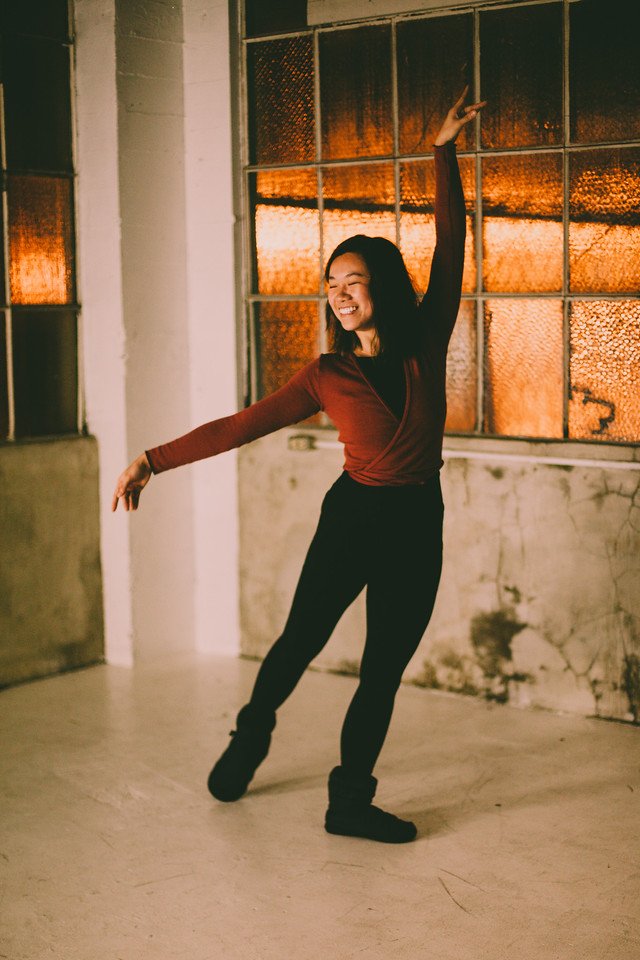
click below to shop the look:
Carmen Wrap Sweater Wear Moi | Hanami Stretch Canvas Ballet Shoe Capezio | Quilted Warmup Booties in Black Russian Pointe
Being able to try new things and explore new hobbies is part of what makes life exciting. Nevertheless, it can be difficult to know where to begin. Lacking viable assistance with starting a new endeavor can deter people from beginning altogether. That’s why on October 31, 2021, Dancewear Center hosted its first-ever Adult Ballet Q&A. Sierra Keith of Dance Conservatory Seattle, former DWC Ambassador Cynthia Randriamanohisoa, local adult dancer with Northwest Dance Cooperative Kim Lucy, and current DWC Ambassador and teacher with Second Act Dance Coco Liu answered questions all about starting ballet as an adult and the things they wish they had known.
All of these dancers have had different levels of exposure to dance throughout their lives and have it in different capacities within their lives. Additionally, they all have different reasons why they decided to start ballet as adults. “I have always wanted to do ballet, ever since I was a child” Cynthia shares. “[But] I didn’t get the opportunity until I went to college.” She began ballet at a school club, later attending open classes after moving to the United States.
Similarly, Kim loved to play dress-up and dance as a child, eventually joining a dance drill team in high school. “I’ve just always loved ballet as an art form,” Kim says, beginning her ballet practice in college. She shares that there are many supportive options for adults within the Seattle area, more than many may realize. Adults do not have to resort to being in classes with people years younger than them. “You can wear what you’re comfortable in, there are all sizes of bodies,” she says of the ballet classes she’s taken. Kim also points out that most dancers are so focused on their own training that they don’t pay attention to others in the class, there is little judgment. As opposed to other forms of exercise, Kim says that ballet allows her to engage her mind too, making it both physically and mentally engaging.

click below to shop the look:
Coco was exposed to dance at a young age, but truly fell in love with the art form when she watched her friend perform in Utah. After returning to Seattle, Coco began taking ballet classes and found herself deeply enjoying how her body and mind felt after class, describing it as a meditative experience.
Sierra says that growing up she was a mover, she loved to dance freely around her house. However, growing up in a family with a low income and in a small town lacking a dance studio, she had little opportunity to join a dance community and take classes. In college, she saw a professional ballet dancer perform and “fell in love” with the art form. After several years of working, Sierra injured her arm and lacked sufficient help from her doctors. She decided she would try to work through the problem on her own, taking ballet classes and gradually integrating movement back into her body. After a couple of months, she was able to move her arm again. “I was hooked at that point,” Sierra says. “I found that through the movement I was able to rehabilitate myself...ballet turned into something important for me.”
There were many surprises for the dancers as they began ballet. Sierra describes feeling surprised that she even liked dance, as she never imagined enjoying physical activity. Kim was surprised at how much she’s progressed in the practice, explaining how excited her five-year-old self would be to learn that her 41-year-old self would be dancing in pointe shoes. “I didn’t realize how much detail there was to ballet,” Coco says. Cynthia shares this thought, she was surprised with how complex the practice is and how there is always room for improvement.
The panelists cleared up some misconceptions and answered some common questions adults have about starting ballet. For example, they shared that it’s acceptable to wear whatever you feel comfortable in, not just tights and a leotard. “You should definitely pick an outfit that you feel comfortable in,” Sierra says. “A lot of adult ballet dancers find their own unique style and I always think that’s cool... it’s always a combination of a little bit of dance clothes and a little bit of street clothes.” Leotards, skirts, pants, T-shirts, socks, ballet slippers, and more are all welcome! Kim recommends going to a dancewear store to get fitted for ballet slippers, as they often have weird sizing, but that’s all that is specialized. Nonetheless, Cynthia recommends double-checking with the studio to ensure there is no dress code; however, most open classes do not require them.

click below to shop the look:
Seamless Rib Racerback Leotard by Capezio | Bullet Pointe Skirt by Bullet Pointe | Infinite Shock by Apolla Performance
Many adult dancers take ballet for the training, others take it for the performance opportunities or both. Cynthia says that many performance opportunities at studios are optional and have varying degrees of formality. For instance, not all performances take place in an auditorium or theatre setting, others are smaller with solely family and friends in the audience. She recommends researching and reaching out to different studios to see what opportunities they have. Sierra points out that ARC Dance, eXit Space, and Westlake Dance Center all have adult performance opportunities, also sharing that adult dancers should feel empowered to create their own performance opportunities.
Coco shares that dance has changed her life, she hasn’t had a passion that’s persisted this long. Kim says that dance has been a form of therapy for her. As a wife, mother, and full-time employee, dance has served as something that’s solely for her, making it even more special. Cynthia has been impressed with how she’s been able to make her dreams come true through dance, achieving things she didn’t imagine possible 20 years ago. Sierra shares that it’s the best part of each of her days.
Sierra points out that many people in her life tell her that they want to try dance, but have something holding them back, whether that be their age, current activity level, or any other factor. Sierra encourages them to not wait and give it a try!
Tips For Setting Dance Resolutions For the New Year
Before the start of a new year, it’s commonplace for people to set goals they hope to achieve following 11:59 PM on December 31. People set goals of all shapes and sizes, some small and realistic and others large and out of proportion.
By Madison Huizinga, DWC Blog Editor

Before the start of a new year, it’s commonplace for people to set goals they hope to achieve following 11:59 PM on December 31. People set goals of all shapes and sizes, some small and realistic and others large and out of proportion.
As dancers, we’re well-aware of what it’s like to work towards goals we set for ourselves and goals that others set for us. In dance class, it often feels like there is always something we are working to improve upon. Sometimes within our dance training, setting goals can feel futile, particularly when we start comparing ourselves to others. It can also be challenging to know where to begin. For instance, a consistent goal I have for myself within my dance training is improving my turn-out. But what exactly do I mean by that? How will I measure my progress towards achieving this goal? Is there a deadline I want to achieve this goal by? And how on Earth do I begin? Rather than having questions like these swirling around your head, it’s much more effective to make a plan. Fortunately, utilizing strategies like the SMART goals acronym and planner tools like Whimsy & Rhyme’s “Pirouette Planner” can help you out.
The SMART goals concept is widely discussed in academic and professional settings. The acronym was first written about in the November 1981 issue of Management Review by George T. Doran, and since then has received wide praise in a variety of industries. Each letter in the SMART acronym stands for a specific attribute you should make your goals, to ensure they are clearly defined and achievable.
The S stands for specific. The goal you set for yourself should refer to a particular objective you hope to achieve. The more details, the better. For instance, if your New Year’s resolution is that you want to “improve your extension,” that doesn’t provide enough information to help you work towards achieving that goal. However, if you reframe the resolution as wanting to be able to “hold your extension at a 90-degree angle,” that provides a clearer target to aim for.
The M stands for measurable. How will you track your progress towards achieving that goal? Once you outline the specific details of your goal, you will have greater clarity on how exactly you can measure your progress. Let’s say you hope to “eat more vegetables” in 2022. A way to measure progress towards that goal would be to set a target quantity of vegetables to purchase at the grocery store each week. That way, you can have an actual, quantifiable metric to determine whether or not you are working towards that objective.

Photo by Alexandre Dinaut from Unsplash
The A stands for achievable. Is the goal you’re setting for yourself doable? Do you have the time, energy, and resources to be able to accomplish it? If you are a perfectionist, it can be common to set a goal that’s out of the scope of what you can actually accomplish. However, it’s much more effective to set a goal for yourself that is challenging, but still attainable, and then set increasingly challenging goals from there. If I’m working on landing a double pirouette, setting a goal for myself to nail a quad pirouette is probably unattainable. Once I land that double though, I can up the challenge for myself!
The R stands for relevant. Is this goal necessary to achieve your larger mission? In the age of social media, it can feel like we’re constantly being bombarded by pictures and videos of advanced and professional dancers showing off their extreme strength and flexibility. While such feats may look cool in photos and short-form videos, we shouldn’t necessarily work towards them if they’re not relevant to our actual dance training goals. Being able to perform a “needle” stretch successfully can look exciting, but what’s more important is ensuring that we’re setting goals for ourselves that advance our technique in safe and healthy ways.
Finally, the T stands for time-bound. Another useful way to ensure that you actually accomplish the goal you set for yourself is to set deadlines to mark your progress. Some goals may take a few weeks or months to accomplish and others may take the entire year. Whatever time frame you have in mind, set some realistic markers along the way to ensure that you’re making the progress you want to.

A particularly helpful tool for marking your goal progress is a planner. The Pirouette Planner by Whimsy and Rhyme available at Dancewear Center is an especially useful planner for dancers, as it was designed for dancers by dancers. The Pirouette Planner is designed to help dancers maintain an organized schedule to help them reach their goals. Each month contains a coaching page on a different, specialized topic, including nutrition, audition preparation, team building, and more. There are also guided journaling prompts and areas to track stretching and strengthening activities, class corrections, and observations, as well as daily expressions of gratitude.
By following the SMART goals acronym and utilizing tools like the Pirouette Planner, we dancers can be on our way to achieving our goals. Let’s set ourselves up for success in 2022!
Mental Recovery in the Dance Realm
For many, dance is a means of mental escape from the day-to-day stressors of life. Having a creative outlet that allows for self-expression, laughter, and challenge can be extremely valuable to live a balanced life. Nevertheless, there are times when dance can go from being a stress reliever to the source of stress itself. Local dancer and DWC Ambassador Niki Kothari speaks on perfectionism, the fear of being judged when going “full out” in dance, and how having social support and stress-relieving activities can help reignite the passion for dance that can sometimes feel lost.
with Niki Kothari, DWC Ambassador
By Madison Huizinga, DWC Blog Editor

click below to shop the look:
For many, dance is a means of mental escape from the day-to-day stressors of life. Having a creative outlet that allows for self-expression, laughter, and challenge can be extremely valuable to live a balanced life. Nevertheless, there are times when dance can go from being a stress reliever to the source of stress itself. Local dancer and DWC Ambassador Niki Kothari speaks on perfectionism, the fear of being judged when going “full out” in dance, and how having social support and stress-relieving activities can help reignite the passion for dance that can sometimes feel lost.
Like many young kids, Niki began dancing early in life around the age of three. She took classes in tap, ballet, and Bollywood styles of dance. Niki stopped dancing for a while in elementary school to try other sports but returned to it around the end of third grade. “I started with just hip hop because I thought it was so cool,” she explains. Eventually, she added back ballet, jazz, and contemporary before joining the competition team at her studio.
While dance can be a great way to connect with yourself and an external audience, there are undoubtedly some elements of the practice that can be mentally taxing. Niki shares how it can be stressful to feel everyone’s eyes on you, particularly the eyes of critical dance instructors. “I always feel like I’m being stared at,” she shares. Niki points out that always feeling like she’s being watched can cause her to put her guard up and not dance “full out.”
Niki recalls feeling this way when she was practicing a competition solo last year. She explains not being eager to show her solo to others at the studio unless she was rehearsing, and even then, “still kind of mark[ing] it” rather than performing full out. At her first competition, she asked her dance teacher to not watch her solo due to her nerves. “I had all my friends backstage with her, making sure she wasn’t out there, watching me,” Niki describes.
Another mental obstacle Niki faces in dance is encouraging her brain to allow her body to heal when recovering from an injury. It can be hard to wrap her brain around the fact that the body often needs rest to heal and can’t constantly push itself. Many dancers grapple with the added challenge of perfectionism and the pressure to push through discomfort, which can compound with this issue to make taking needed rest a tough mental predicament.
Dealing with complex mental sensations and emotions about dance can be difficult. There isn’t a foolproof way to rid yourself of them. However, it’s certainly useful to remind yourself that you aren’t alone in the way you’re feeling. Niki explains that it’s often helpful to talk with her friends about the mental challenges she’s facing in dance, such as her uneasiness about constantly being watched and scrutinized by dance teachers. Even reaching out to your dance teachers or studio director and communicating the emotions you’re feeling can be effective, as they can collaborate with you to find out how to best support you in class.

click below to shop the look:
Marquise Leo by Jule Dancewear | Perfect Fit Shorts by Cloud & Victory
Niki also shares that writing in a journal can help her take care of her mental health. Journaling is a useful tool for many people to work through their challenges and practice mindfulness, all of which are important for the dance realm. Niki says that it often helps her mentally to write “letters” to the people or things that are making her particularly happy or upset, but not sending them. This strategy can be a great way to gain some sense of her emotions.
Further, capitalizing on time outside of the studio can be just as significant as the time you spend in the studio. Taking time to do activities that fill you with confidence and allow you to be mindful of uncomfortable emotions can translate to more assurance and mindfulness in the studio and on stage.
Since physicality is such a crucial aspect of dance, many industry professionals take care to preserve the physical health of performers. However, across the dance industry, taking strides to maintain and improve the mental health of students is just as important. Niki says that teaching students that it’s okay to “laugh at yourself” is useful, as “we’re going to mess up and that’s okay.” As hard as they may try, dancers are infallible people and can’t be expected to do everything perfectly. Cultivating a safe space in the studio where dancers can feel comfortable making mistakes can lead to them feeling confident and dancing more fully out.
In addition, promoting genuine, holistic dance training that covers mental health maintenance can be invaluable for dancers. Niki recognizes that many studios are offering mental health workshops, but that they can often come off as performative, as the principles promoted aren’t translated across the rest of the training experience. Shifting this attitude to valuing mental health comprehensively would be more effective.
It’s possible to love dance and also face mental challenges from time to time when training and performing. These two phenomenons can happen together, not always separately. Through using individual coping tools like talking with trusted loved ones and journaling, and advocating for holistic, mental health-focused training industry wide, there is a way to help lessen the discomfort that can arise in our brains when dancing.
Building the Community You Wish to See
After relocating from Santa Fe, New Mexico to Bellingham, Washington, Brooke Evans noticed that her newfound home was lacking something near and dear to her: high-quality dance. Through copious research and collaboration with local parents and dancers, Brooke and her fellow community members were able to build Opus Performing Arts: a robust dance school composed of experienced faculty and tasked with the mission of “fostering a lifelong love of dance.”
Brooke Evans on the Formation of Opus Performing Arts
By Madison Huizinga, DWC Blog Editor


Photo by: Michelle Smith Lewis
After relocating from Santa Fe, New Mexico to Bellingham, Washington, Brooke Evans noticed that her newfound home was lacking something near and dear to her: high-quality dance. Through copious research and collaboration with local parents and dancers, Brooke and her fellow community members were able to build Opus Performing Arts: a robust dance school composed of experienced faculty and tasked with the mission of “fostering a lifelong love of dance.”
Like many youngsters, Brooke got involved with dance because her older sibling did it. She began her training at age three in her hometown of Santa Fe at the Santa Fe Dance Foundation, now known as the Aspen Santa Fe Ballet. At age 23, Brooke got pregnant which required her to shift her life focus. She ended up moving to Bellingham, Washington, where she has been ever since.
“When I got up to Bellingham, I didn’t really know much about the dance community and had just had a baby and I didn’t go the traditional college route,” Brooke shares. “So I just started exploring the dance community a little bit and I found that there wasn’t as much dance here...I was expecting more and I was expecting a higher quality of dance.” Brooke realized that if she wanted to see a more expanded, potent dance community in Bellingham, she needed to be a part of building it.

Photo by:Juliette Machado
Brooke became a co-founder of Bellingham Repertory Dance, a professional contemporary dance collective full of local dancers who are eager to challenge themselves and work in the industry. Brooke was a part of the founding member team, along with other local dancers who were looking for a professional level experience. Through Bellingham Repertory Dance, dancers have gotten the opportunity to work with renowned regional, national, and international choreographers like Mary Shelton Scott, Eva Stone, and Joshua Beamish. Bellingham Repertory Dance is currently going on its sixteenth season. Brooke left the dance collective after eleven seasons, but is gratified to see “this new generation really carrying it forward.”
Eventually, one of her sons expressed interest in beginning dance classes himself. She started looking in town for classes she saw fit for him, and wasn’t coming up with much. There were other parents in the Bellingham community who were feeling similarly, namely Opus owners Allan and Marie Redsone, who struggled to find a local dance school offering high-quality instruction for their own daughter. Allan and Marie networked out into the community, found a space and conducted research to bring their vision of Opus to fruition, finding Brooke in the process. After her first year of teaching at Opus, Brooke became the school’s artistic director to help sculpt and shape the school’s direction, again having the opportunity to build a stronger dance community in Bellingham.
Opus Performing Arts offers tap, contemporary, jazz, lyrical, hip hop, pointe, and ballet classes for both kids and adults. “I have just an incredible team of teachers,” Brooke gushes. Throughout the past year, Opus was also offering seminars on topics relating to mental health and self-compassion with ballet teacher and licensed mental health professional Rachel Coats as a way to provide more holistic services. Rachel will continue her self-compassion work with students this fall as Opus’ wellness consultant.

Photo by: Juliette Machado
“We really put an emphasis on instruction at Opus and making sure that dancers are being really safe,” Brooke says. For instance, the school administers “pointe readiness” evaluations that students must pass before earning their pointe shoes. “It’s not something that you get, it’s something that you earn over time. It’s a step in your progress.”
Opus is excited to be returning to in-person classes in the fall, after nearly 14 months of online learning. Throughout the COVID-19 pandemic, Brooke and the rest of the staff at Opus worked hard to communicate to students the importance of making dance feel like home regardless of where they are. She shares that the lack of community engagement, specifically due to canceling live performances, was a challenge for the Opus dancers. “I think the students are just so hungry to be not only getting in-person instruction again but also just to be with their friends and be in their community,” Brooke says. “There’s something so energizing about being with each other that we can’t feel over a computer screen.”
Another exciting update at Opus is that the school is moving to a bigger location with more studio space in 2022. “The space we’re looking at has the potential for five studios, three big ones and two small ones,” Brooke says. “It’s going to be really exciting when we get to move and then we get to offer more classes and provide more for the community as well.”
Ultimately, through her work with Opus Performing Arts and throughout the dance world, Brooke hopes to see dance professionals draw greater attention towards the self-compassion and mental health aspects of dance. “That’s something that I think is a missing part of the dancer’s health puzzle that we’re not quite up to par on,” she says. “‘Perfect’ doesn’t exist and it’s important to be able to have that positive self-talk, acknowledge your growth, and realize your wins.”
If it weren’t for the community building efforts of Brooke Evans and many others, Bellingham wouldn’t have the energetic dance scene that it has today. Since its founding, it’s clear that providing access to safe, high-quality dance instruction that can benefit a dancer for a lifetime will continue to be a top priority at Opus. “We want to instill a love of dance that [students] can carry forward through their lives,” Brooke says.
Teaching the Fundamentals
In Veronica Peters' life, dance has always been a family affair. Since she took over the British Dancing Academy from her mother in 2014, Veronica has continued carrying out her mother’s legacy and providing students with a thorough dance education that encourages them to be the best dancers they can be and learn life lessons along the way.
Veronica Peters on the Philosophy of the British Dancing Academy
By Madison Huizinga, DWC Blog Editor


Photo by: Mandy McMahon
In Veronica Peters' life, dance has always been a family affair. Since she took over the British Dancing Academy from her mother in 2014, Veronica has continued carrying out her mother’s legacy and providing students with a thorough dance education that encourages them to be the best dancers they can be and learn life lessons along the way.
Veronica’s mother, Sandi Baca, moved from England to the United States in 1967. After meeting Veronica’s father, the couple moved around quite a bit before eventually landing in Washington in 1973. Following the move, Sandi started the British Dancing Academy where three-year-old Veronica began taking classes herself. She stuck with her dance training, eventually dancing ballet professionally throughout the country. Veronica worked for Sandi at the British Dancing Academy for around 25 years before her mother retired and she bought the school from her.
Since its origin, the British Dancing Academy has strived to “not only instill the love of dance in each and every student but teach the fundamentals as well.” The main focus of the school is to teach the technical aspects of ballet, tap, jazz, and modern dance and have dancers compete with themselves to improve, rather than seek competition with others.
BDA typically begins teaching students as young as four years old in creative movement dance classes. After a few years, when students are in second grade, they start BDA’s exam program in which students learn directly from a syllabus and perform combinations in front of an examiner. However, Veronica shares that when it comes to examinations, “it’s not just about the feet and the technical stuff.” The students get graded on their technique, but also their performance ability, musicality, ability to follow directions and put steps together, and more. Sandi is typically the examiner for the British Dancing Academy, as she is an examiner for the Imperial Society of Teachers of Dancing and Teacher Trainer for The Royal Academy of Dance. “She goes all over the world to educate other schools and students, and she trains other teachers as well,” Veronica shares.

Photo by: Mandy McMahon
Veronica points out that a benefit of BDA’s exam program is that it allows students to have a goal to work towards throughout their training. Further, students gain practical skills that are transferable to life outside of the dance realm, such as working quickly under pressure and being able to communicate with new people. “This past year we probably had about 13graduates of kids that have been with us all the way through [the program],” Veronica says. “It’s always kind of fun because...you watch them grow. It’s kind of like a family.”
In addition to classes in a variety of genres, the Academy also offers students the opportunity to perform in a large dance production every June. Past productions have included Alice in Wonderland, Aladdin, and The Little Mermaid. Senior dancers also perform in an annual Holiday Showcase each December, in which they show off some of their original choreography. BDA also uses the Holiday Showcase as an opportunity for attendees to donate to Northwest Harvest and give back to the community.
The experience of teaching dance during COVID-19 was an exhausting process for Veronica and many other studio owners and dance instructors alike. After taking a break from classes for a while, Veronica describes cleaning out the entire studio and setting up big monitors to teach online classes. She collaborated with the instructors to work out hybrid schedules and made sure students wore masks and were physically distanced so everyone’s comfort needs were considered. “I think we did pretty good,” Veronica says of BDA’s COVID-19 protocol. She also says it was nice to bond with other studio owners over the confusion and strain that the pandemic caused on all of their work.

Photo by: Mandy McMahon
In the larger dance world, Veronica hopes that the general population becomes more appreciative of the ballet art form. “My true passion is ballet. Everything about it,” Veronica says. “The original [purpose] of ballet was to tell a story, and I feel sometimes that’s missed...There’s a simplicity to ballet that is so underrated...I wish that there was more of an appreciation for the artistry.” Through her attentive work of teaching students the fundamentals of dance at the British Dancing Academy, Veronica will continue to pass this love of artistry down to future generations, just as her mother did with her.
Confidence in a Cowboy Hat
As many dancers can confirm, there are few things worse than showing up to ballet class in a leotard that makes you feel self-conscious. Donning an uncomfortable, ill-fitting leotard can affect a person’s confidence, which can translate into their movement quality. Suddenly, dancers forgo extending through their fullest lines and focus on making themselves smaller. Throughout every dance class, there’s a laundry list of things dancers need to be focusing on. Fixating on the fit of their dancewear shouldn’t be a priority. Local dance educator Hayley Maddox is passionate about creating custom, eco-friendly leotards in a comfortable fit for dancers of all shapes and sizes. Her retro, cowboy-themed dancewear brand Lasso Leos centers on providing dancers access to affordable and sustainable leotards while creating favorable fits designed to make dancers feel confident.
Hayley Maddox on the Inspiration Behind Lasso Leos
By Madison Huizinga, DWC Blog Editor

As many dancers can confirm, there are few things worse than showing up to ballet class in a leotard that makes you feel self-conscious. Donning an uncomfortable, ill-fitting leotard can affect a person’s confidence, which can translate into their movement quality. Suddenly, dancers forgo extending through their fullest lines and focus on making themselves smaller. Throughout every dance class, there’s a laundry list of things dancers need to be focusing on. Fixating on the fit of their dancewear shouldn’t be a priority. Local dance educator Hayley Maddox is passionate about creating custom, eco-friendly leotards in a comfortable fit for dancers of all shapes and sizes. Her retro, cowboy-themed dancewear brand Lasso Leos centers on providing dancers access to affordable and sustainable leotards while creating favorable fits designed to make dancers feel confident.
Hayley’s dance journey began at age five at Bremerton Dance Center in Bremerton, WA. She joined BDC’s performing arts company Peninsula Dance Theatre around age 11 and continued dancing there until 2017. During her time in Bremerton, Hayley’s training specialized in ballet and modern and she taught for about five to six years. In 2017, Hayley moved to Seattle and worked as the program director and a ballet teacher at DASSdance. She also worked with Daniel Wilkins on staging DASSdance’s 2019 production of The Nutcracker.
Hayley continued teaching until the end of the 2019-2020 school year and was suddenly left with copious free time as the COVID-19 pandemic raged on. “I always kind of liked the idea of creating my own leotards so...that’s when I started playing around with making [them],” Hayley shares.
Hayley has a decade’s worth of sewing experience, as her mom taught her the basic mechanics of a sewing machine and her grandmother worked as a professional seamstress. “It’s kind of been passed down through the generations,” she says, although she admits most of her skills are self-taught. Hayley also enjoys thrifting and upcycling materials to make herself custom pieces. “So I was like ‘well, no brainer. I should just try to make some custom [leotards] for myself,’” she recalls.
Her idea snowballed into a bigger plan to create a business centered on custom leotards in inclusive sizes. “I know I’m not the only one struggling with a leotard that doesn’t fit quite right,” Hayley shares. “[When you have] any type of body that’s not prepubescent, it’s kind of hard to find leotards that fit you exactly how you like.”

click below to shop the look:
“I thought it would be a cool idea to have a brand that is eco-friendly by using upcycled materials, [and focused] on having inclusive sizing and being affordable...Those are all of the things I feel like are really important,” Hayley says. “Not only is it hard to find the right fit but to find an affordable, custom leotard is also really hard.”
Hayley has a specific fit she incorporates into her leotard designs, in which the leg line is higher on the hip while still possessing full coverage on the backside. “When you have a mature body, the run-of-the-mill cuts just don’t fit,” she says of the inspiration behind her designs. “I’m really just inspired by anyone who has a mature body who is still dancing and wants to feel confident.”
Lasso Leos currently sells three different styles of leotards, “Round Up” skirts, and scrunchies called “Lasso Loops.” Later this year and going into 2022, Hayley plans to roll out some new leotard styles and unique warm-ups that resemble knitted chaps.
When deciding on a name and theme for her brand, Hayley was playing around with a random name generator and came up with “Lasso Leos.” The name quickly stuck. “I’m like a low-key horse girl. I always loved horses growing up,” she claims. Many of Lasso Leos’ leotard names are inspired by old and new country singers and songs, such as “Patsy” for Patsy Cline, “Orville” for Orville Peck, “Velvet Elvis,” and “Show Pony.”
For others interested in starting their own business, Hayley encourages them to “just do it” as there are many great resources online to help people get started. She found an article that broke down starting a business into 12 steps and simply went through step by step. “I just started from the top and worked my way down so I wasn’t too overwhelmed,” Hayley shares. She also says it’s important for aspiring entrepreneurs to go easy on themselves and take things at their own pace. “Just really being true to yourself and being able to balance your time and your energy is going to set you up for longevity.”

Through Lasso Leos, Hayley strives to help promote inclusivity in the dance world, specifically with body types. “It’s totally fine to embrace our curves and to have mature bodies because we’re mature people,” she says. However, her goal of encouraging acceptance extends past body sizes, as she hopes to see the dance industry be more welcoming of all gender identities and expressions. In the following year, she plans to work on designing biketards for Lasso Leos as yet another dancewear option to help dancers feel as comfortable and confident as they can be.
Lasso Leos offers fresh, playful, and considerate dancewear that’s greatly needed in the industry today. For those interested in buying a custom leotard, skirt, or scrunchie, you can reach out to Hayley Maddox directly, through the Lasso Leos Instagram page, or keep an eye out for products coming to Dancewear Center soon!
“Anyone Can Dance”: The Dance School
It’s no secret that when studios are creating their classes for the school year, people with disabilities are more often than not left out of the equation. Within the mainstream industry, dance has a troubling history of exclusivity, often creating strict requirements and standards that prevent marginalized individuals from succeeding. Fortunately, to help rectify these problematic circumstances, Emmy Fansler has created the Best of My Abilities (BOMA) program as a way to introduce students with disabilities to dance…
Emmy Fansler’s BOMA Classes
By Madison Huizinga, DWC Blog Editor


It’s no secret that when studios are creating their classes for the school year, people with disabilities are more often than not left out of the equation. Within the mainstream industry, dance has a troubling history of exclusivity, often creating strict requirements and standards that prevent marginalized individuals from succeeding. Fortunately, to help rectify these problematic circumstances, Emmy Fansler has created the Best of My Abilities (BOMA) program as a way to introduce students with disabilities to dance and provide a space for dancers of all abilities to learn and build relationships. Her program has been implemented at Issaquah Dance Theater and is now being added at The Dance School in Everett.
Founded in 2006, The Dance School is a non-profit organization that strives to provide individuals of all abilities with a space to dance, sing, and perform. The school offers classes in ballet, tap, jazz, hip hop, and contemporary, as well as classes on storytelling, partnering, “Broadway Stage,” and more. “Anyone can dance” is The Dance School’s motto, and with its latest addition of the BOMA classes, it’s clear that the school is living up to the slogan.
The BOMA program was created by dance educator Emmy Fansler. Emmy fell in love with dance around age 15, as it was a safe space for her to seek refuge from childhood trauma. She was able to cultivate a strong community that made her feel secure with herself. She danced at the Midwest Regional Ballet in Joplin, Missouri before getting a dance scholarship at the University of Central Oklahoma. She eventually moved back to Missouri and danced two more seasons at the Midwest Regional Ballet. During her return to Missouri, Emmy found her passion for working with “populations that don’t usually access the dance world.”
As a para-educator in Oklahoma, Emmy ended up developing a dance-based after-school program. She was asked by a parent if her daughter with cerebral palsy could join. Emmy said yes. “I was greatly inspired by her in general,” she shares, discussing how she adapted the program to make it more accessible for the student with cerebral palsy. Not long after that experience, Emmy moved to Lawrence, Kansas to work as an adapted PE educator, where she helped modify activities in PE classes to make them inclusive. In 2008, Emmy describes “accidentally” creating a dance studio when she rented out the back of a warehouse to provide a dance space for a group of girls who couldn’t afford typical classes. That studio would later become Dance Hues Studio.

“At some point, there was an ‘ah ha’ moment,” Emmy says. From then on, Emmy knew that she wanted to dedicate her time to making dance accessible. She began teaching some specialized BOMA classes, one for dancers with physical disabilities and another for students with mental disabilities. Emmy expanded her thinking, asking herself what kept certain kids out of dance class and how she could create a class that caters to their needs. “I was really lucky that I had a beautiful community of people who wanted to try it too because they shaped it as much as I did,” she says.
The BOMA program at The Dance School is intended for dancers with a wide range of ability levels, including those with an array of intellectual, physical, and sensory disabilities. This includes students with autism, ADHD, Down syndrome, cerebral palsy, muscular dystrophy, traumatic brain injury, and more. The dance community that helped shape Emmy’s first BOMA classes was composed of peers, including students without disabilities. These dancers didn’t see BOMA as a class solely for “other” dancers with disabilities, but wanted to be a part of it themselves too. This is how the program became designated for all dancers of all ability levels, as well as peer-supported and centered on relationship building.
“What attracted me to this program was, first off, Emmy’s experience with youth and offering this class previously,” says Marika Jaffe, executive director of The Dance School. “What I like about this class is that Emmy adapts it to the students.” Emmy shares that the BOMA classes are relationship-based and centered around the students that show up.
“I think my goal is to have a few classes like this every week. Maybe with different age groups, maybe one is more [based on] floor work, maybe one [that] is more prop-related,” Marika shares of her objective with the BOMA program. “I just want those to experience something fun and maybe find a new skill that they’ve never had.”

The President of The Dance School’s Board of Directors Megen Nachreiner shares that one of the most valuable lessons that Emmy teaches students is to embrace who they are. She describes how Emmy discovers what each student needs and finds out how best to support each one. “I’m very excited about this program and giving more kids opportunities to feel connected.”
“Emmy is nothing short of a miracle worker,” Treasurer of the Board of Directors Julie Kafkalidis says. “She’s just an amazing human and she’s able to draw out creativity and earn the trust of all kinds of kids...I know that she’s just the right kind of person to teach this class.”
The sheer existence of the BOMA program is already making immense waves of impact. Having a class that makes dance accessible to people with disabilities is a resource that was unfathomable just a few years ago. Julie shares that she grew up dancing, but there weren’t any classes available to her late sister Tara who had Down syndrome. “She loved music. She loved listening to the radio...she’d sing along to the songs and she liked dancing,” Julie explains. She shares that about a year before Tara passed away at age 54, she received a video taken by one of her caretakers of her sitting in a chair and moving her hands to music that was playing. She was dancing. “I know Tara would have loved dance classes if there were some available for her when she was younger,” Julie says, tears in her eyes.
Marika hopes to see more accessibility in the dance world. Whether it’s making dance more available to those from lower socioeconomic backgrounds, those of varying ages, or those with disabilities, doing so can be life-changing. This is a vision that Emmy has as well, which is evident in her other projects, providing dance to people in foster care, homeless shelters, juvenile detention centers, and other spaces where it may otherwise not be.
“One of my biggest goals is building community and showing people that meaningful relationships can happen with people that don’t look like you,” Emmy shares. “I want it to be understood that dance is a universal thing, all you need is a body in space...I would like for wellexpression and connection and creation to be just as valued as technique.
“No matter who you are or where you are at in your life, it is never too late to start dancing. Get out there, and give it a try!” Marika says.
Karl Watson on Finding Balance and Seeking Transparency
As dancers, we’re encouraged to push ourselves as far as we can, often until our breaking point. Finding the harmony between challenging ourselves and staying within our boundaries can be a tough balancing act. Karl Watson of Whim W’him gives insight into this challenge, his dance journey, and what he hopes to see moving forward in the dance industry.
By Madison Huizinga, DWC Blog Editor

Photos: Stefano Altamura & Bamberg Fine Art Courtesy of whimwhim.org
As dancers, we’re encouraged to push ourselves as far as we can, often until our breaking point. Finding the harmony between challenging ourselves and staying within our boundaries can be a tough balancing act. Karl Watson of Whim W’him gives insight into this challenge, his dance journey, and what he hopes to see moving forward in the dance industry.
Karl first fell in love with dance because his mom took him to see A Christmas Carol around the holiday season. “I freaked out within the first 10 minutes,” Karl laughs. His mom took him out of the theater and into the lobby of Playhouse Square in Cleveland, Ohio. She asked the employees if any other shows were happening that night, and they suggested she take her son to see The Nutcracker. As soon as he set his eyes on the show, Karl was mesmerized. Eager to learn dance himself, his mother enrolled him in a creative movement class. He continued dancing at The School of Cleveland Ballet, later floating between a couple of different studios. Karl later got more involved with competition dance, falling in love with jazz and musical theatre.
Towards the end of high school, Karl realized he wanted to pursue a career in dance and thus wanted as much training as possible. He soon began dancing seven days a week with a focus on ballet, jazz, and musical theatre. Around the time when Karl began his freshman year at Butler University, YouTube began taking off. He recalls coming across videos about Crystal Pite, as well as William Forsythe’s improvisation techniques. These online resources and the resources on his campus opened him to the range of dance that was happening outside his bubble.
During his time in college, Karl did two summer intensives summer intensive with Hubbard Street Dance in Chicago and a winter workshop with Doug Varone. At Butler, he also got the chance to take master classes from Gustavo Ramírez Sansano who was the artistic director of Luna Negra Dance Theater at the time. After graduating, Karl ended up landing an apprenticeship with Luna Negra and moved to Chicago. Karl ended up becoming a performing apprentice and toured with the company before it folded in 2013. He ended up staying in Chicago and performing with Visceral Dance Chicago as a founding member. Later on, while in New York, Karl ended up auditioning for Whim W’Him, as they were having a workshop and audition over there. He got the job with Whim W’Him in 2016 and relocated to Seattle where he’s been ever since.
Ever since Karl discovered dance, it’s been his most effective tool for self-expression and storytelling. He shares that as a child, he was fairly quiet. “I was the kid who liked to sit at the grown-up table and just listen...I was just a little more internal,” he says. Thus, he loves that dance can be a “very internal practice,” allowing him to be within his body and self-discover.
However, nowadays, Karl shares that he is most moved by experiences that take him out of his body and allow him to connect with his own or other people’s physicalities. “I think it’s just the physicality of [dance] in a world that feels increasingly less physical,” Karl says of what draws him to dance. He loves how qualitative the art form is, the meanings of dances are up for interpretation, making it even more compelling for audiences to watch. Karl also marvels at how technology and social media have given dancers new platforms to gain traction and share their work with the world.
While classical ballet training has been invaluable for his training, Karl shares that dance challenges he’s faced have come from the ballet world, specifically from ballet’s strict physical standards, as well as imposter syndrome. Karl is interested in the “decolonization of contemporary dance,” involving the decentering of European or Western standards. He’s eager to see different dance approaches being utilized, specifically those that center on the individualities of dancers through standardized modes of training. For too long, creating, training, and rehearsing has involved fitting his body into a rigidly pre-determined shape. Now, Karl feels as though he can pull movement out of his body in a way that challenges him but also works within the bounds of what’s possible for him. “I think it’s just about being in your body and finding what your body can do,” he says.
In the dance world, Karl hopes to see more transparency within dance education and more productive discussion about personal development and the realities of being a working dancer. While pre-professional and BFA programs have a multitude of benefits, Karl points out that they can be quite insular. Having holistic opportunities for networking outside of institutions would be helpful for dancers’ careers.
In terms of professional companies, Karl wishes to see more transparency and equity across the dancing hiring process. For example, he shares that the Dance Artists’ National Collective is furthering this agenda by “advocating for safe, equitable, and sustainable working conditions for dancers in the U.S,” as a way to empower dancers who are often underpaid and mistreated within the industry.
While Whim W’him is on its break, Karl is working on an outside project with the choreographer Emily Schoen Branch and fellow Whim W’Him member Liane Aung. The group is planning on making a dance film and hopefully performing at festivals later this season when more in-person events begin happening. He is also teaching in-person Dance Church classes in Seattle. Whim W’him released two new dance films with Mark Caserta and Rena Butler, available for viewing online. Stay tuned as Karl and the rest of Whim W’him continue phasing back into in-person performances this winter after a long-awaited break.
Is Ballet Really the Foundation of All Dance?
Anyone who has danced for an extended number of years has heard the age-old mantra about ballet: that it is the “foundation of all dance.” Youngsters that have complained to their dance teachers about their disinterest in ballet have had this drilled into them. The idea that ballet is crucially supplemental to other dance genres is common knowledge to dancers around the world. It is information that is rarely questioned or scrutinized. But if we study the origins of ballet, we can see that it perhaps isn’t as universalized as it’s thought to be. The benefits of ballet technique cannot and should not be divorced from its problematic founding ideals that still influence dancers today.
A Discussion of Racism, Sizeism, and Classism in the Industry
By Madison Huizinga, DWC Blog Editor

Anyone who has danced for an extended number of years has heard the age-old mantra about ballet: that it is the “foundation of all dance.” Youngsters that have complained to their dance teachers about their disinterest in ballet have had this drilled into them. The idea that ballet is crucially supplemental to other dance genres is common knowledge to dancers around the world. It is information that is rarely questioned or scrutinized. But if we study the origins of ballet, we can see that it perhaps isn’t as universalized as it’s thought to be. The benefits of ballet technique cannot and should not be divorced from its problematic founding ideals that still influence dancers today.
Ballet was born during the Italian Renaissance of the 15th century and became intensely saturated and codified in France over the following hundred years. It was a coveted source of entertainment for elite aristocrats and King Louis XIV performed many popular dances himself before professional dancers were hired to perform at court functions. Storytelling ballets like Swan Lake, The Sleeping Beauty, and The Nutcracker developed through the 19th century and quickly gained traction. In the years that followed its conception, ballet spread throughout the globe, gaining popularity and prestige in Russia and later in the United States. In the 20th century, pioneers in neo-classical ballet, like George Balanchine, experimented with the medium by merging styles and creating contemporary works that warped ballet’s traditional rules. Though its style and aesthetics have been tweaked throughout time, ballerinas have remained a constant symbol of beauty, grace, fragility, and strength. And the concept of what type of woman should be allowed to symbolize these ideals has stayed relatively the same.
The visual standard of what a ballerina is supposed to look like has continued to be narrow and exclusive. There is an expectation that ballerinas are tall, thin, and white. This standard was arguably cemented and perpetuated by prominent choreographers like George Balanchine, who was famously critiqued for only hiring women who were tall and thin. This is the same expectation present on fashion runways, in magazines, TV shows, and just about any other form of popular media in Western culture. This adverse ideal immediately excludes an abundance of individuals, including dancers of color and plus-sized dancers, and swiftly praises dancers with flat-chests, pale skin, and Eurocentric features. Around the world, young girls are being spoon-fed an ideal that most of them cannot achieve, leading to body shame and insecurity (read more here).
A variety of entertainment enterprises have made attempts to showcase a wider range of individuals and tell eclectic stories. But ballet is not one of them. Yes, some ballet companies have taken small steps. For example, in 2015, when Misty Copeland became the first African American principal dancer at American Ballet Theatre, people were rightfully ecstatic. Many marked that as a huge leap forward for the ballet world, in terms of promoting diversity and altering the whitewashed ballet standards. But it would be ignorant to praise Copeland’s individual achievements and think ballet has achieved equity and appropriate representation on a systemic level.
For example, in the United States, about 62% of dancers and choreographers identify as white, 11.3% identify as Hispanic, 11.7% as Black, and 6.11% as Asian. Like all art, dance is meant to express emotions, transport audiences to different worlds, and explore unique narratives. However, when white people make up two-thirds of the American dance industry, we cannot expect dance to be a comprehensive art form that communicates widely shared anecdotes.
“Challenge the idea that “ballet is the foundation of all dance,” by offering other styles and training elements that can support dancers’ growth in nuanced ways. This could include offering mental health workshops, cross-training classes, or master classes in different cultural folk dances. Give your students exposure to every corner of the dance world.”
It is universally implied that the lead roles in nearly every ballet belong to white women. And if any roles depict people of color, they are often extremely racialized and sometimes still played by white dancers. This is evident in the extreme case of blackface in the Bolshoi Ballet in 2019, but also characters routinely depicted by ballet companies around the world in the holiday classic The Nutcracker. The “Chinese Tea” role is often played by white girls in black wigs, often with eyeliner drawn to represent an offensive caricature of Chinese people. The “Arabian Coffee” is often depicted as sultry, exoticized, and wearing little clothing, sometimes even carried onto the stage in a cage or basket, like an animal. Meanwhile, the sparkly, often Anglo “Sugar Plum Fairy” floats around the stage like a princess. Yet, The Nutcracker is the most successful and long-running show each year at most ballet companies, usually showcased from Thanksgiving to New Year’s Eve. Each year, thousands of upper-class families splurge hundreds of dollars to see these stereotypes play out on the big stage with impressionable kids in tow.
Along with the blatant sizeism and racism that ballet perpetuates is clear classism. Since its origin, ballet has been a medium for the wealthy to enjoy. Today, not much has changed. Not only is ballet often extremely expensive to view, but it is also expensive to learn and practice. Dancers can begin wearing pointe shoes as early as ten years old and often start burning through them weekly. Pointe shoes alone (not including necessary accessories such as ribbon, elastic, sewing materials, padding, etc.) cost anywhere from $80-140 and when young dancers start practicing more frequently and intensely, their pointe shoe expenditures add up. This combined with ballet academy tuition, costume and performance fees, and supplemental physical therapy and cross-training creates a financial strain on many families.
Despite this perverse history and these persistent stereotypes and barriers, many dance teachers still preach the significance of ballet to their students without acknowledging any of the harmful values it perpetuates. As a dancer who experienced rigorous ballet training, I admit that ballet has allowed me to achieve excellent posture, ankle strength, and stamina. However, there are other genres of dance I have been unable to master due to my ballet technique hindering me. My intense ankle strength and rigidity have kept me from having the loose ankles essential for tap. My tendency to hold stiff ballet positions has caused me to struggle to “sit in the pocket” while dancing hip hop choreography.
This is likely because there are aspects of many dance genres that have roots in styles that aren’t ballet. For instance, tap involves elements of “African-influenced shuffle dances, English clog dancing, and Irish jigs.” Hip hop and breaking have roots in the hip hop culture born in New York City in the 1970s and 80s, specifically the Bronx, and is directly influenced by African American culture. A variety of cultural folk dances have roots that expand past the United States and Europe, such as Indian folk dances and Japanese folk dances.

The origins of jazz dance are traced back to African and African American dance styles. White entertainers stole and falsely claimed elements of the jazz style after years of parodying African American styles of dance and music, often using mediums like blackface. African American performers like Pepsi Bethel, JoJo Smith, Fred Benjamin, and Frankie Manning have often been denied credit for their contributions to the jazz style, while white performers are widely recognized and celebrated instead.
Thus, saying that ballet is the “foundation of all dance” is entirely inaccurate. All movement didn’t begin in 15th century Europe and claiming that it did is dismissive of many different styles of dance. Moving forward, dance teachers must be thoughtful when educating their students on ballet and its significance in their dance training. It’s time to start taking strides to change this antiquated art form for the better. Here’s some ways we can get started:
Educate students on problematic ballet history
As more studios and ballet schools add dance history lessons to their curriculum, we must offer critical context to students about the racism, sizeism, and classism that’s prevalent in the ballet industry. Making sure that students have an awareness of the systemic problems that have existed in the dance industry for centuries is the first step for them to become agents of change. Here are some helpful books to gain education on the problematic aspects of ballet and how to move forward teaching dance at large:
Turning Pointe: How a New Generation of Dancers is Saving Ballet From Itself by Chloe Angyal
Final Bow for Yellowface: Dancing Between Intention and Impact by Phil Chan
Steppin’ on the Blues: The Visible Rhythms of African American Dance by Jacqui Malone
Revise offensive and archaic ballets
As I mentioned earlier, many iconic ballets like The Nutcracker have portrayed marginalized groups, particularly people of color, offensively since their conception. However, many choreographers like Donald Byrd, have revised these works so that they center the perspectives of non-white individuals, whose stories have rarely been brought to the forefront in ballet. Eliminate the racist caricatures in your studio’s annual production of The Nutcracker and other works, and collaborate with fellow community members to create shows that uplift all dancers.
Create a more well-rounded curriculum
Challenge the idea that “ballet is the foundation of all dance,” by offering other styles and training elements that can support dancers’ growth in nuanced ways. This could include offering mental health workshops, cross-training classes, or master classes in different cultural folk dances. Give your students exposure to every corner of the dance world.
Support creators who are challenging harmful ideals in ballet
Seek out choreographers and dancers who actively challenge racism, sizeism, and classism in the dance industry and support them in any way you can. Buy tickets to their shows, hire them to teach a master class at your studio, collaborate with them on a piece, and more. These are the types of creators we need to see more of in the dance industry.
This isn’t a matter of loving or hating ballet. I have taken ballet classes since I was five years old and have fallen deeper in love with the art form throughout my life. That’s why I want to see changes made in the industry. It’s a matter of challenging this dance genre that we’ve all grown to cherish and creating needed systemic change.
Resources:
https://www.pbt.org/learn-and-engage/resources-audience-members/ballet-101/brief-history-ballet/
https://www.atlantaballet.com/resources/brief-history-of-ballet
https://www.dancemagazine.com/body-shaming-in-ballet-2650143278.html?rebelltitem=3#rebelltitem3
https://www.dancewearcenter.net/blog/2021/1/22/body-shaming-in-ballet?rq=body%20shaming
https://www.thestudiodirector.com/blog/dance-studio-industry-stats/
https://aaregistry.org/story/african-american-dance-a-brief-history/
https://artsintegration.com/wp-content/uploads/2015/05/History-of-Jazz.pdf
https://artsintegration.com/wp-content/uploads/2015/05/History-of-Jazz.pdf
https://bookshop.org/books/the-black-dancing-body-a-geography-from-coon-to-cool/9781403971210
https://spectrumdance.org/company/2020-21-season/the-harlem-nutcracker/
Interested in writing for the DWC Blog? Click below to fill out the DWC Contributor application!