
Disability Stereotypes and the Dance World: An Introduction
I was invited to write blog articles for Dancewear Center earlier this year because I wanted to share with the dance community as a whole what the words disability and mental illness really mean, and why they’re important to me. I want to break down stereotypes around disability and mental illness piece by piece and give my perspective about disability in relation to the dance world.

By Jade Fraser
Hello dance community!
My name is Jade, and this is my first article for the Dancewear Center blog! I’ll be writing for Dancewear Center this year, so you should be seeing more of me in the coming months. For now, I’ll explain who I am and what I’m doing here.
I’m sixteen years old and a junior in high school. I’ve been dancing for at least nine years, six of those at Cornerstone Studio. I began at Cornerstone when I was eleven years old and in sixth grade. I did classical ballet that year, then switched to contemporary and hip hop dance the next year. I’ve done those two styles ever since.
I did pre-level dance at several different places when I was very young, and then I stopped so I could focus on other things. I’d wanted to go back for several years before I actually did; that was after trying artistic gymnastics and finding that it wasn’t my thing. I know I’m not the only one who went through an American Girl phase, and their 2014 Girl of the Year, Isabelle, was a dancer. I watched that movie and was reminded of how much I loved to dance, and then and there I decided I wanted to go back.
I started dancing later than most people I dance with, and I’ve also always had trouble picking up certain techniques. I’ve always needed to work harder and longer than a lot of other people to be able to do even the most basic skills. I also have a habit of comparing myself to other people, and this leads to discouragement. I’ve always been far too hard on myself, and when I feel like everybody is better than me, I beat myself up about it. Even so, I continue to dance because I love it and it brings me joy. I have found a community at Cornerstone Studio – it’s a community of people who love to dance as much as I do. These are the people who help me when I’m having trouble with a skill or with choreography, who encourage and support me, and who understand my obsession for dance (and BTS, in some cases).
I was invited to write blog articles for Dancewear Center earlier this year because I wanted to share with the dance community as a whole what the words disability and mental illness really mean, and why they’re important to me. I want to break down stereotypes around disability and mental illness piece by piece and give my perspective about disability in relation to the dance world. As somebody who is legally disabled and mentally ill myself, I want to be a voice for the disabled community, a community often unheard and underrepresented. I want to be an advocate for the people who are disabled and mentally ill that are unable to advocate for themselves. I want to educate the nondisabled community on the reality of disability, as well as shed some light on why somebody like me with “invisible” disabilities is in fact disabled. In addition, I want to help everybody understand what ableism is and why it is hurtful, not only to people who are disabled themselves, but to the nondisabled community as well as the society that we live in.
Finally, I want to show how stereotypes around disability and mental illness are relevant to the dance world, and what needs to be done so that people with disabilities can have the opportunity to show their full potential, not only in the dance world but in every aspect of life. I want to bring focus and discussion to important and uncomfortable topics like these, because I think a lot of the crucial understanding is missing. My ultimate goal is to bring awareness to this topic, as well as promote education on disability.
Now that you’ve read everything I’ve written so far, you have some background information of who I am and what I’m doing here. I’ll be back in the near future elaborating on the last bit, and I look forward to sharing with you all!
Corpus Callosum: Embracing Artistry and Logic as a Dancer
Ballet class expanded from watching someone perform a proper plie and trying to mirror it, to understanding the muscles involved, the physics, the balance and strength. It built depth to seemingly simple movements, transforming them from mere exercises to art. When a dancer becomes an artist, they learn to not only use the vocabulary that has been ingrained in their mind for years, but also use the emotions, experience, and grace they have developed from life. The process of building technique in any dance form requires a methodical logic, but without the creativity and intuition of an artist, dance becomes just a form of exercise.

Isabel Reck
has been dancing for 5 years; the majority of her training being at Cornerstone Studio. She has trained in ballet, contemporary, lyrical, jazz, hip-hop, tap, break dancing, and aerial silks, although contemporary has always been her go-to. Her favorite thing about being a Dancewear Center Ambassador is being able to explore a side of being a dancer she never thought she would be a part of.
By Isabel Reck
In AP Psychology, we learned about this small section of tissue in the brain called the corpus callosum; the only neurons that integrate our two hemispheres. This place of convergence and connection is where I live.
Growing up, I remember seeing an image of the brain said to represent how people who are dominant in each hemisphere think. The left was always black and white, filled with graphs and charts, cogs and circuits, and numbers upon numbers; all comforting me in their predictability. The right, on the other hand, always seemed to be splattered with vibrant colors, curving and twisting, forming the gyri and sulci of the brain. Branching out into musical notes, brushstrokes, landscapes, and thought bubbles, dizzying but energizing in all their stimulation. Many of us, confronted by this image, feel the pressure to categorize ourselves into one of the two sides.
In elementary school, I saw myself in the colors of the right hemisphere. Music flowed through my veins and it couldn’t help but come out. My off-key belting was heard so often that my parents were driven to sign me up for voice lessons, so my constant need to vocalize would, at least, be nice to listen to. Constantly playing what my friends and I would call imagination games, we pretended to be anything or anyone. My abuela, a painter, nurtured my artist’s mind, reinforcing that my right hemisphere defined my capabilities. When adults would ask me “What do you want to be when you grow up?” grinning, I would reply, “a pop star!”
In middle school, academics started to get hard. Suddenly, my ability to thrive in math and science made me stand out against my peers. I won awards in math competitions. In love with microscopes and learning about genetics, I was part of a select few to get invited to the National Junior Honor Society. I stood out, not because of my flair, but because of my brains. Instead of coming home to tell my family all about music class, I would gush over my latest discovery in science class. The answer to “What do you want to be when you grow up?” shifted to “a biochemist,” or “a neurologist,” both professions appearing to be grounded in science and reason.
I remember these two seemingly different phases of my life with great love. I was able to fit myself perfectly in society’s expectations to be one of two distinct types of thinkers, and that was easy. In high school, I grew into an advanced thinker, and I felt confined by these two separate hemispheres. In anatomy and biology, I wanted to learn every detail on how bodies function. Because of this, the next time my dance teacher explained the proper placement of my leg in a “devéloppé”, I understood that it was so my femur head wouldn’t get blocked by the iliac crest of my pelvic girdle. Having this knowledge, allowed me to learn and understand concepts in dance more effectively. It opened my eyes to how dance is also deeply mathematical.
“When a dancer becomes an artist, they learn to not only use the vocabulary that has been ingrained in their mind for years, but also use the emotions, experience, and grace they have developed from life. ”
Ballet class expanded from watching someone perform a proper plie and trying to mirror it, to understanding the muscles involved, the physics, the balance and strength. It built depth to seemingly simple movements, transforming them from mere exercises to art. When a dancer becomes an artist, they learn to not only use the vocabulary that has been ingrained in their mind for years, but also use the emotions, experience, and grace they have developed from life. The process of building technique in any dance form requires a methodical logic, but without the creativity and intuition of an artist, dance becomes just a form of exercise.
I now realize the limits of the earlier image. There is art in science and logic in creativity, so I no longer need to choose one or the other hemisphere. Now when I’m asked, “What do you want to be when you grow up?” I explain that I want to explore a space guided by intuition and reason. I want to delve into the vast network of neurons that emit signals for both logic and creativity. I choose the corpus callosum.
Adaptability in the Dance World: Getting Out of Your Head and Onto the Dance Floor
As dancers, we encounter many different dancing environments. Some are adaptable and favored and others are not. In these unfavored environments, it can be easy to fall into a rut and create mental challenges that can slow your progress. Each person has their own reasoning as to why they are preventing themselves from growing. Our environments and the people we surround ourselves with play a part in this, but sometimes we are simply just overthinking. Dancers are infamous for adapting at a rapid rate and those changes come with high expectations. This change overload often requires dancers to uproot their entire lives to pursue our passion. This is what we sign up for, but sometimes our adjustment to these changes do not happen as rapidly as we like.

by niyah pratt
Niyah Pratt was born in raised in Renton, Washington. She began dancing at age six, at the British Dancing Academy where she trained in ballet, jazz, tap, and modern. She is currently attending the University of Nevada Las Vegas where she is double majoring in Dance Performance and Urban Affairs. She hopes to continue her dance career for as long as she possibly can, and make an impact not only in the dance community, but on the youth as well. She wants to be the role model she never had when she started dancing for someone else, and “thinks it is important to start implementing this in dance.”
As dancers, we encounter many different dancing environments. Some are adaptable and favored and others are not. In these unfavored environments, it can be easy to fall into a rut and create mental challenges that can slow your progress. Each person has their own reasoning as to why they are preventing themselves from growing. Our environments and the people we surround ourselves with play a part in this, but sometimes we are simply just overthinking. Dancers are infamous for adapting at a rapid rate and those changes come with high expectations. This change overload often requires dancers to uproot their entire lives to pursue our passion. This is what we sign up for, but sometimes our adjustment to these changes do not happen as rapidly as we like.
The dance industry is constantly changing and so are we. We switch jobs, cities, and companies and these changes can take a toll that we may not immediately acknowledge. It is normal for us dancers to not always feel comfortable in a new dancing environment, as this is not always easy to do. Moreover, our minds can hold us back when we are already uncomfortable. Dancers are known for being adaptable, because you have to be to work in this industry, but there are times when you just need to return to your home studio until you are ready to take on a new stage. These feelings are valid as well.
My first year as an undergrad studying dance at the University of Nevada, Las Vegas was a prime example of this. I was so excited to attend, and felt like it was a dream come true to study and dance all day. However, as time went on, I simply could not get acclimated in Vegas. Growing up in Seattle, I had a much different life than I had there, and it was indeed a bit of a culture shock. I felt like the only dancer that had something holding them back, I felt invisible in the department, and that everyone was just dancing past me.
I was physically there, but my mind was not. This disconnect took me mentally out of the department, my classes, and countless rehearsals. My brain was blocked by my insecurities and the comparisons I was making between myself and other people. No matter what I did, I could not get myself to feel comfortable dancing there. Now why was I feeling this? I have danced since I was six years old, this was not new to me! I have danced in many different states and scenarios--so why suddenly could I not find myself here? I felt so lost as a dancer, I did not feel like an artist at all.
It was not until my second semester that I realized something very important: where I stood in the dance department and what I was going to change. I came back from the holidays feeling refreshed from being home, and despite the rough first semester, I found that I had missed dancing much more than I thought I would. Somehow, leaving and coming back had allowed me to finally feel comfortable. I knew what to expect (for the most part) and returned with a completely new outlook on how I wanted to dance. I found myself pushing my boundaries in classes, building better connections with my teachers, and overall taking the plunge and throwing myself in. I was still holding back in some areas, but it was definitely a step forward.
In February 2020, I had the opportunity to dance in a beautiful modern piece from a wonderful professorI have at UNLV, Cathy Allen. The piece brought something out of me that I did not know I had. I had never thought of myself as being a modern dancer, and yet here I was surrounded by other modern dancers--including me! It was scary in the beginning because I had never performed a piece like that--but so exhilarating at the same time. I loved the way I was able to move in that dance.
I learned a lot from what was initially a very uncomfortable environment. I was certainly pushed to adapt and at times--thought I had ended up in the wrong place. With time, I eventually was able to step back and see everything positive that the change was bringing into my life. Not only was I able to get through the challenges that were thrown at me, I learned to handle them in a way that fit within my own mental capacity. My progress, although tough, brought me to a better position than I had started in.
Am I ashamed of the struggles I experienced in my first year? Not at all, because it has helped build me into who I am today. Without the struggle, I would not work or act the way I do now. Mental challenges can seem impossible to overcome, but I find that looking back on the choices you have made, and just how far you have come is clear proof of your growth. It is okay to feel uncomfortable in new environments, despite the expectation for us dancers to adapt! Allow those mental challenges to be recognized and think about how you want to overcome them. Remember, your mind is just as important as the body--take care of it too.
The Importance of Cross Training for Dancers
A few facts about dancers:
Dancers are athletes.
Dancers have seasons of overtraining and seasons of no proper dance training at all.
Dancers are extremely susceptible to injury due to hypermobility.
A dancers goal is to be able to perform any physical movement that is asked of them.
Dancers must be able to hear a correction and implement it into their body immediately.
Now after reading those statements consider the fact that very few dancers cross train. *enter jaw dropping emoji here*
No? Still didn’t get you —— read it like this:
I am an athlete. No, I do not cross train.
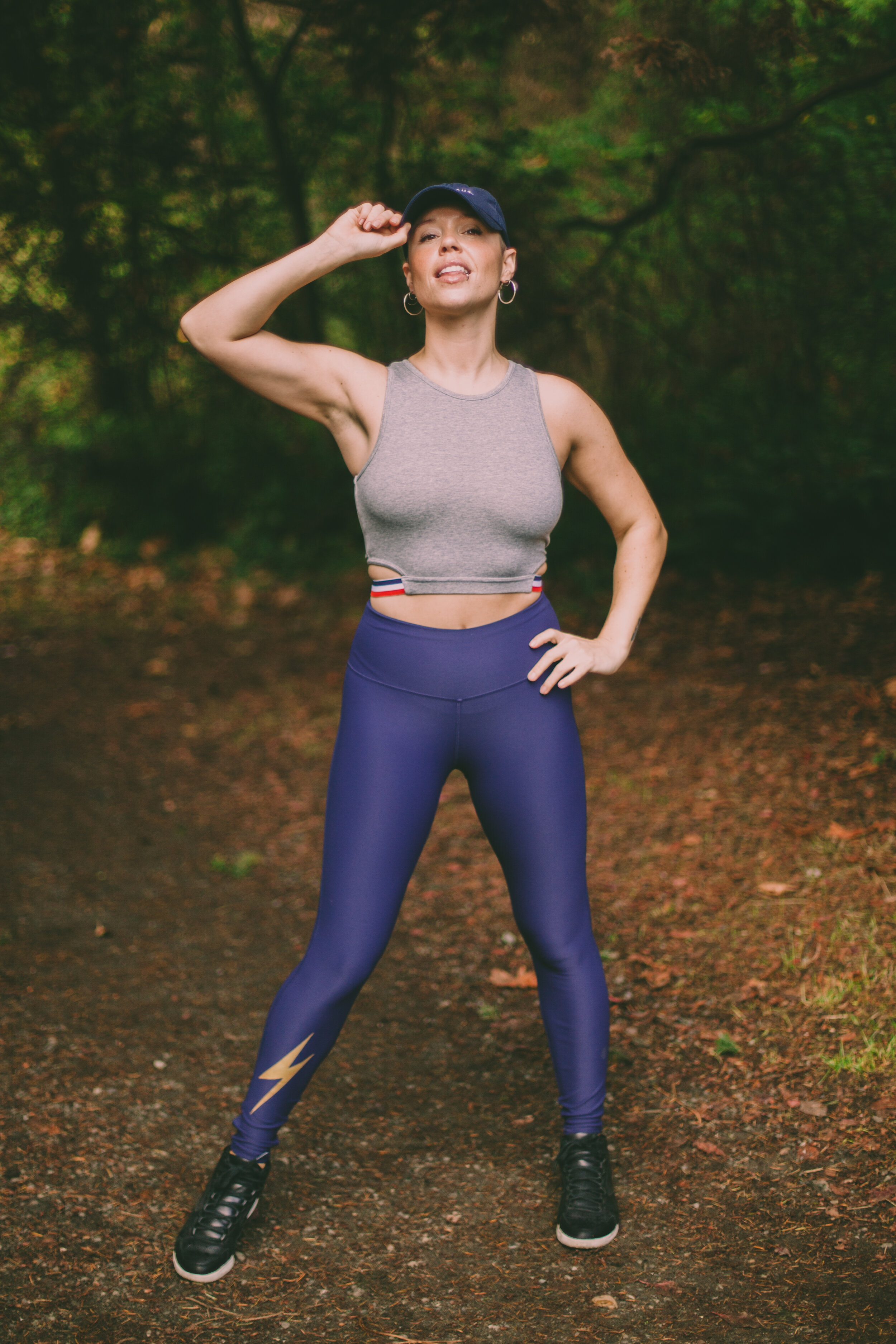
Dancers are athletes.
Heather Smith is a fitness coach, pilates instructor, and professional dancer in the Seattle/Tacoma area.
A few facts about dancers:
Dancers are athletes.
Dancers have seasons of overtraining and seasons of no proper dance training at all.
Dancers are extremely susceptible to injury due to hypermobility.
A dancers goal is to be able to perform any physical movement that is asked of them.
Dancers must be able to hear a correction and implement it into their body immediately.
Now after reading those statements consider the fact that very few dancers cross train. *enter jaw dropping emoji here*
No? Still didn’t get you —— read it like this:
I am an athlete. No, I do not cross train.
- Are there any other athletes you can think of that DON’T CROSS TRAIN? No – right? Cross Training is imperative for bodies that perform repetitive movements. Repetitive movements cause wear and tear through overuse. This wear and tear causes inflammation and injury. To support the endless hours of pliés and jumps we need to strengthen the muscles around the joints that are vulnerable to excessive overload. For dancers, this means feet, ankles, knees and hips. “Oh, well I’ll just take more ballet,” is not always the answer because once again we’re playing with the balance of increasing strength vs. over use and injury. It can be a very fine line to walk. Therefore, we need to spread the cumulative level of orthopedic stress over additional muscles and joints by training them in a different manner. Doing the leg extension or leg press machines at the gym will help you get higher jumps without having to constantly put your body through the stress of landing the jump!
I don’t train during my off season, I just get REALLY sore when I head back in for training.
- We all know what it’s like to head back into your first week of classes and be huffing and puffing so loud you can’t even hear what the teacher is saying. This is a rookie athlete mistake. This puts you in danger of a pre-season injury. One that could knock you out of the running for that piece you wanted to audition for, or that solo you were hoping to land. Dancers MUST cross train in their off-season! Don’t let your cardiovascular system take the summer off! Get outside, go hiking, bike that trail, your body will thank you!
I never have an off-season!
- The body needs downtime to recover and heal. But if you’re a dancer hustling from gig to gig and tour to tour, downtime just isn’t an option. Cross training is the answer! You need to make sure your body is strong and trained to recover quickly. I recommend including “active recovery” in your fitness regime. That means – after a strenuous dance class or workout don’t just plop yourself in a café or jump in your car if you have a long drive home. Make sure you participate in some low-intensity activity. This could be a walk, yoga, swimming, etc. This will reduce the lactic acid buildup, reduce soreness, increase blood flow and keep your muscles flexible!
I am hypermobile
- Research has shown that proprioception is not always as good in hypermobile individuals. This perhaps explains why they are sometimes more clumsy and at increased risk of injury. This lack of awareness and increased joint laxity and flexibility increases the likelihood of a ligament or joint sprain. Dancers need cross training to strengthen the muscles around the joints so they can become more aware of how to control their flexibility. Yoga is the perfect tool to strengthen the body in lengthened positions while increasing body awareness.
Yesterday I had ballet, tap and jazz, today my choreographer asked if I could do a front walk over.
- Dancers need to have the capacity to perform any task asked of them. One day you need controlled external rotation during Fouettés and shoulder stability for handstands the next. We are all so eager to please and will jump in to any choreography asked of us, so we need to be ready! Don’t neglect your upper body strength! Take some weight training classes, use bands, do pushups! You’ll get stronger for the floor work in modern class and have a bit of flex to show for your hard work!
I keep getting the same correction about my rib cage, I don’t feel it happening!
- Body awareness is of utmost importance for dancers. Teachers praise us for implementing the correction the first time and Choreographers trust us to perform their art with precision. WE NEED TO STUDY AND SPEND TIME WITH OUR BODIES! We need to take the time to slowly explore what it feels like to be in and out of alignment. Being in the classroom isn’t always the best place for a dancer to feel open with experimenting and exploring because we are being asked to already know our corrections. Go take Pilates! The instructors are keen on alignment and the movements are slow and controlled. This allows you to create deeper connections to your sensory and motor neurons and have deeper awareness of your body and the way it moves!
So there - you’re convinced – you need to cross train! Now where to start? If you don’t feel comfortable walking into your nearest Yoga or Pilates studio, start at home! I have a whole library of home workouts on my YouTube channel @TheObnoxiousOyster
Feel free to reach out to me online if you have any specific questions or are interested in further guidance by clicking the links below.


Cultivating Positivity
It can be hard to hold onto happiness and positivity in the midst of everything happening in our world. I know that I have been struggling a lot with maintaining a bright attitude lately. The negativity and depressing truth of what is going on around us is suffocating, and I feel that needs to be recognized. I had a teacher in high school who once had us all yell “this sucks!” right after they dropped a pop quiz on us. On the count of three we all yelled. I feel like we need that right now. Ready? One, two, three: This sucks! It's important to get that out, and to acknowledge that everything is not always great. And that’s ok. Everything doesn’t have to be amazing, but with what is going on in the world it’s important to look for what is good around us or risked getting dragged down by that looming force of depression and negativity that may be spreading faster than the virus.
In this article, Anna is talking about cultivating positivity.
PREFACE: I wrote this post at the end of April for mental health awareness month. Mental health isn’t something we should only think about for one month, however. This post was written in the thick of quarantine, which was one of my main reasons for writing it, but I believe that it is still incredibly relevant today as well. We will continue to experience low points in our lives, so it is important to take the good with the bad and find the small moments of happiness to keep us going. Enjoy!

It can be hard to hold onto happiness and positivity in the midst of everything happening in our world. I know that I have been struggling a lot with maintaining a bright attitude lately. The negativity and depressing truth of what is going on around us is suffocating, and I feel that needs to be recognized. I had a teacher in high school who once had us all yell “this sucks!” right after they dropped a pop quiz on us. On the count of three we all yelled. I feel like we need that right now. Ready? One, two, three: This sucks! It's important to get that out, and to acknowledge that everything is not always great. And that’s ok. Everything doesn’t have to be amazing, but with what is going on in the world it’s important to look for what is good around us or risked getting dragged down by that looming force of depression and negativity that may be spreading faster than the virus.
A few weeks ago, it was pouring down rain. Grey clouds blanketed the sky in every direction. Then, out of nowhere, the setting sun broke through the clouds, bathing the world in a golden light. Raindrops fell like a thousand glittering diamonds to the silver that coated the concrete. It was beautiful, and it happened during the gloomiest, rainiest day.
One thing that has helped me tremendously through this trying time is looking for these little moments. Positivity and happiness aren’t created by large, monumental experiences. Sure, those are the ones that might stand out to you, but they aren’t the whole story. A dance isn’t a dance because there is a perfectly executed turn combo or a complicated and death-defying trick. There are also the smaller parts to consider: the transition steps, the slight tilt of the head, the pas de bourrée before a pirouette. Combined, all of these parts make up the incredible thing that is a dance. I believe the same can be said about happiness and positivity.
We might not be having the times of our lives right now, but that does not mean there aren’t little kernels of happiness just waiting to be discovered. A blooming flower outside of your window, a walk around the block, a steaming cup of tea and a good book, movie night with the fam, that one song that has been on repeat the whole time I’ve been writing this blog post. All of these moments are here for us, we only need to open our eyes and see them for what they are.
Sometimes it can seem that you don’t even have those little moments in our lives. But, hey, maybe you put on clothes today that weren’t pajamas or maybe you finally decided to cook something other than Kraft mac and cheese. Those are small happy moments!
That isn’t to say that everything will be sunshine and rainbows. Reality has an annoying way of reminding us that, but we can look for small moments of happiness that help us to condition our minds to find the positive side of things. We can give precedence to the small happy moments instead of the large depressing one. If you think about it, there are way more small moments than big moments. If we can find all the small happy moments in our lives, they can outweigh the big depressing moment that is looming over us, lending us their positivity to carry on.
I challenge you all to keep a journal. I didn’t used to think journaling was my thing, but I was prompted to start journaling during my first quarter of college. The transition was super difficult for me emotionally, and I found myself dwelling on everything that I deemed bad in my life. To counteract that, every night I’ve been writing down at least one good thing, one small happy moment, and using those combined moments to lift my spirits. Sometimes the moments are very small, like finishing my homework and having time to relax or sleeping in an extra hour on the weekend.
These moments are still there though, and they can have just as much influence over your mood as spotting does over your turns. An audience member doesn’t typically look at a dancer who just performed eight pirouettes and think, “wow, they were just spotting”. Their reaction is going to be more along the lines of “Oh my gosh they just did a million pirouettes!”. Spotting might be overlooked by others, but it's incredibly important to the pirouette, just like the small moments are incredibly important to your mood.
The sky might be dark, and we might be soaking wet and sick of standing out in the pouring rain waiting for the storm to pass. We can make the most of this rain, though. We can take each small happy moment we find, each glimmer of the sun through a break in the clouds, and use it to find the strength to continue.
And if I made just one person smile on the inside while reading this, that is my happy moment.
Practicing Self-Compassion: The Ultimate Gift For Ourselves #mentalhealthawareness
May is Mental Health Awareness Month! In this series, we are giving the staff here at DWC a platform to talk about their personal mental health journeys. We believe in supporting the wellbeing of the whole dancer; both body and mind. We want you to know that you are not alone. We believe in the importance of talking about mental health openly, especially within the dance world. So let’s talk about it! Madison, Senior Pointe Shoe Fitter here at DWC is sharing her words of wisdom regarding positive self image and practicing self compassion.
May is Mental Health Awareness Month! In this series, we are giving the staff here at DWC a platform to talk about their personal mental health journeys. We believe in supporting the wellbeing of the whole dancer; both body and mind. We want you to know that you are not alone. We believe in the importance of talking about mental health openly, especially within the dance world. So let’s talk about it!
In this article, Madison shares her words of wisdom regarding positive self image and practicing self compassion.

This global pandemic has instilled confusion, worry, and anxiety in people around the globe. From being separated from our loved ones, to breaking our comfortable daily routines, this transition to a “new normal” is unsettling to say the least. And while it may be temporary, it’s worth addressing that it can feel distressing: and that is okay. Although we all have school, work, and familial obligations, it is important to find time for ourselves to engage in healthful activities that bring us more in touch with our emotions. In other words, there hasn’t been a more important time for many of us to practice self- compassion.
Self-compassion doesn’t mean attempting to modify our surroundings or actively trying to control what is out of our hands. Self-compassion means paying attention to our internal emotions and welcoming them as they are. We live in a world that places value on those who can effortlessly push through their negative emotions and output as much productive work as possible, which is a difficult standard to live up to. In order to live the most productive and happy lives that we can, slowing down to give ourselves compassion is necessary. But learning to do this takes time, patience, and practice, especially if you are a self-proclaimed perfectionist. Samantha Weissbach Williams, director of operations at Dancewear Center, says that “ever since [she] can remember, [she has] been at war with [her] very harsh and strongly-opinionated inner-critic.” Like many of us, Samantha had “developed an incredibly high (borderline impossible) set of standards for herself,” and any failure she experienced “would absolutely consume” her. Anything from things she “said in conversation” to “flubs in class combinations” would keep her up at night. She had undergone decades of classical ballet training and had a burning desire to “please, impress, and care for people and their desires.”
However, a big shift occurred for Samantha when she began “changing the tone of [her] self-talk.” On one occasion, Samantha’s good friend and dancing peer CarliAnn Forthun Bruner said in response to one of their dancers putting themselves down, “Hey! Don’t talk to my friend like that! She’s awesome!” It was a simple comment, but powerful. Samantha thought to herself “what if we gave the same amount of grace to ourselves that we gave to our closest friends?” After years of practice, Samantha is finally able to “exercise self-compassion and enjoy the process of personal growth in dance (and life in general).” Nowadays, when she makes a choice that results in an unfavorable outcome, she is able to “analyze without judgement” and “make note of what needs to be different moving forward.”
Self-compassion for many of us is an ongoing process that can never truly reach perfection. We can all constantly improve how we take care of our minds and bodies, but this can begin with having positive self-talk. Whether we notice it or not, the way we think and speak about ourselves largely affects how we perceive ourselves. Actively giving yourself positive affirmations is a great way to practice this healthily. Whether you think them in your head, speak them aloud, or writie them down, stimulating enough positive thoughts about yourself will allow you to believe in them yourself. Another big key to self-compassion is simply self-awareness. Effective self- awareness involves recognizing how you’re feeling and accepting those emotions as they are without judgement. Dancewear Center’s social media director Cherie Rendon says that for her, “self-compassion starts with observation.” She likes to do a “journaling exercise in the morning” each day, in which she observes how she is feeling “mentally, physically, and spiritually.” When Cherie journals, it’s important that she’s honest with herself and does not place judgement on how she’s feeling, because “self-compassion is about meeting yourself in the moment and allowing your body and mind to ride the wave.” Whether it’s in the morning, evening, or throughout the day, journaling is a great tool you can use to identify the source of your emotions and learn to respect them. It’s often helpful to imagine emotions as waves passing by. As emotions pass through you, they can often feel intense, but like a wave they are merely temporary. Eventually, waves will dissipate as they hit the shore; and similarly, your emotions won’t last forever. Whether you imagine them as waves, clouds, or cars passing by, imagining your intense emotions as objects or experiences in motion can make them feel a lot more manageable and momentary.
But when you are feeling overwhelmed with strenuous emotions and finding it difficult to cope with them in the moment, a self-compassion strategy that can be extremely helpful is mindfulness. When life starts to feel overly hectic or stressful, it is useful to take a break from what you are doing to focus on your breathing and tap into your senses. It helps to close your eyes and take deep, slow breaths, inhaling for four seconds and exhaling for four seconds. As you breathe, you may even pay attention to what you can see, hear, touch, smell, and taste around you. This can allow you to feel more grounded after feeling overwhelmed with anxiety and stress. We live in an extremely fast-paced world, and it can be tempting to want to push through all of the tasks on our to-do list and get as much completed as we can as quickly as possible. However, sometimes the most productive thing we can do for our body and mind is simply take a break. Through practicing mindfulness, intentional breathing, and positive visualization, you can quickly take a break from your work to pay attention to your own mental and physical presence. Afterwards, you will feel mentally and physically refreshed and likely able to perform daily tasks more effectively.
Taking breaks to practice mindfulness is not the only way to exercise self- compassion, it’s also important to take breaks from your routine to do other activities that bring you joy. Whether it’s temporarily stopping your homework to take an online ballet class, cooking yourself a nice meal, or calling your friends to catch up, find the activities that make you happiest and find ways to sprinkle them throughout your weekly routines. We are living through an unprecedented period, which can obviously place an abundance of stress and uncertainty on our lives. All of this stress is made more complicated when we create unrealistic standards for ourselves to live up to. But just because you may have more free time, doesn’t mean you need to channel it all into your school, dance, or work obligations. Take time to fill yourself up with the self- compassion you need, through positive self-talk, journaling, mindfulness, and more. Soon enough, self-compassion will be a habitual part of your daily routine, and your mind and body will thank you.
Coping with Quarantine
Madison, Senior Pointe Shoe Fitter at DWC is sharing her experience and tips during this time of isolation. We hope to give a little inspiration and a few tools for dealing with this hard time. We’re all in this together.
Madison, Senior Pointe Shoe Fitter at DWC is sharing her experience and tips during this time of isolation. We hope to give a little inspiration and a few tools for dealing with this hard time. We’re all in this together.

It’s fair to say that the COVID-19 pandemic is changing our lives in drastic ways. Many people are losing their jobs, moving to different homes, and transitioning to online platforms for school and dance classes. People around the globe are experiencing varying shifts in their daily routines which can be difficult to process.
In my own life, my college classes have moved to online formats and upcoming dance concerts I am performing in have been postponed. I have moved out of my college dorm and back into my family home for the rest of the school year. Not being able to see my friends and other loved ones during this cumbersome time was difficult for me to grapple with at first. However, by re-instating some basic structure into my life and finding some excitement in each day, I am gradually constructing a routine that is making me feel comfortable, healthy, and productive during this temporary time of calamity. Here are some of the tips I have to offer:
Planning:
Keeping a daily planner is something I have been doing for several months, but planning is especially crucial for me as of lately. It’s easy to get sucked into scrolling through social media for copious hours each day when you do not have much on your agenda: we have all been there. That’s why creating an agenda for myself is so important.
I prefer keeping a physical planner, but there are many digital versions that can be tailored to anyone’s needs. As soon as I wake up in the morning, I write down the tasks that I want to accomplish for that day. These tasks could be as simple as “calling my best friend” or “doing my laundry,” or more complex like “creating a ballet barre routine” or “rearranging the furniture in my room.” Regardless of how mundane the task seems, being able to cross it off of my to-do list at the end of the day makes me feel productive and satisfied with how I spent my time.
Creating your own routine:
I am the type of person who thrives off of having a daily routine. I enjoy having the same thing for breakfast each day and having a predictable work schedule. As a student, these routines are usually put in place for me; however, during this quarantine, I have been granted a lot more freedom to rearrange my routine how I please. Due to this enhanced leeway, I have created a nice balance of dancing, working, reading, and socializing that makes my days feel balanced and complete. Finding the routine that works for you can take some time, but once you settle into a comfortable groove, life can begin to feel a little closer to normal.
Utilizing online dance classes:
Most dance studios and companies across the country have cancelled classes and performances due to the pandemic. This has left millions of dancers scrambling to find ways to keep up their technique and continue dancing as a positive outlet during this stressful time.
Perhaps a silver lining to come out of this is the influx of online classes available to the public. Many professional dancers from renowned companies like ABT and NYC Ballet are offering free classes through Instagram Live. These are classes that many dancers would otherwise be unable to take due to time, distance, expenses, or discomfort. Now, thousands of dancers around the world can take the same class in the privacy of their own homes without fear of being judged. Personally, I have been enjoying taking Tiler Peck’s daily ballet class on Instagram Live, it’s always a part of my day I look forward to.
Many local studios and companies in the greater Seattle area are also offering classes through Instagram Live and Zoom, so check out their social media and websites to see what they are offering and how you can take part!
Picking up new skills:
While quarantining has closed off a significant amount of opportunities, it has also opened up a lot of free time. The daily obligations we usually have from school, work, and dance can leave little time to explore new interests. But now, many of us have the chance to try things we have always wanted to. I have used this free time to pick up some new hobbies and practice honing some different skills, like painting and cooking new recipes. I have also been able to read some books that I didn’t have time to read in the past. Since I am in the process of moving back into my family home, I have used my free time to rearrange aspects of my room to make it a space suited for working and relaxing. Think about the hobbies and projects that you have been itching to take up and start trying them out with your newfound free time!
Connecting with family and friends
Many people are lucky to be experiencing quarantine surrounded by their loved ones, but many others are far from the comfort of their family and friends. I was personally looking forward to connecting with friends I hadn’t seen in months over spring break, but due to the pandemic, I likely won’t be able to see them for even longer. Finding ways to still feel connected with my friends and family has been crucial for me. FaceTiming with groups of friends and creating Zoom chats can sometimes even feel like I am seeing my loved ones in person. Carve out time in your day to reach out to the important people in your life!
Uncertainty about the future can instill a lot of stress in people. It’s difficult right now to picture what the next couple months will look like, but that gives us a great opportunity to focus on living in the present. Indulging in your hobbies, picking up new skills, and connecting with loved ones are great ways to focus on living in the moment. Through implementing these tips and practicing self-care we can all move closer to lives that feel a little more normal.
Thanks,
Madison
Coronavirus in the Dance World
It’s easy to become panicked about COVID-19, the virus that has spread globally and is impacting Washington State. In the midst of this major health scare, we want to provide some tips for the dancers and their families in our community to keep us healthy and give some peace of mind.
The first step to a healthy community starts with ourselves! Below are practices that should be in practice all year round, but should be especially remembered now:
~Get rest
~Light exercise daily
~Drink water
~Eat clean, nutrient-dense foods
~Stay home if sick
~Wash hands for no less than 20 seconds with soap
~Use hand sanitizer as a supplement when hand washing is not an option
~Keep lotion on hand as all the hand washing strips skin of its naturally occurring oils
~Encourage others to do the same!
As schools and companies are being closed, conventions and competitions being rescheduled, and dance classes being canceled, it’s still important for dancers to stay active in their training-even if it’s in your living room. We’ve collected a few of our favorite at-home conditioning exercises for you to try!
Lazy Dancer Tips
https://www.youtube.com/channel/UCbUN4EOchmBbZ9ZjKi9IRVQ/featured
Claudia Dean- Beginner Barre follow along
https://www.youtube.com/watch?v=I8HUA_r5tWY
Train like a ballerina- Cardio and strength workout
https://www.youtube.com/watch?v=eCe-a7eN9YE
Stay healthy, train smart.
DWC
Products We Have a Crush On
This Valentine’s Day we want to share with you some products we are absolutely in love with. All products mentioned are tried and true staff favorites that we simply can’t stop talking about!

Apolla K Warmers $42
These leg warmers are truly revolutionary for me. Over the last year I have been dealing with a strained left hamstring, so long rehearsals, extensions, and leaps have been things that tend to anger those muscles. I tried the K Warmers to help with the muscle fatigue I’ve been feeling and wow have they helped! From the moment I put them on I was impressed. My knees immediately felt more stable and I could feel the compression helping my circulation. After dancing in them I was shocked how good my legs felt. They help me keep that hamstring warm and supported and reduces swelling so I’m not as sore the next day. -Cherie
Capezio Trash Bag Pants $24.50
These pants are a staple in my warm up attire. My body takes a while to warm up enough where it’s safe to dance full out and these have really helped speed up that process. They also retain heat so I don’t have to worry as much about my muscles going cold during breaks. One of the best features of these pants is how thin they are. I don’t feel like they inhibit my movement at all! They’re lightweight and feel like tights. Just be sure to wear a layer underneath! Because they keep all the heat in, you’ll need an absorbent layer inside; tights or leggings work perfectly! -Samantha
Flexi Stretcher $58
The Flexi Stretcher is such a good product to have handy simply because it can function for so many things. I personally really like it to help with my hip and back alignment when stretching my extensions. You can use it like a Theraband to work your feet and it’s perfect for resistance training for your arms and legs! Seriously this all-in-one product is so nice to have on hand! -Olivia
Competition & Convention Essentials
The time is upon us; it is officially competition and convention season! Ahead are intense weekends of dancing, incredible learning experiences, team bonding, and routine coffee stops. We all want to be putting our best foot forward as the season begins, so keep reading for some of my “must-haves” !

Apolla Shocks
Conventions mean dancing on carpeted concrete. Flooring like that is so hard on your body, especially while turning and jumping and doing all the crazy floorwork you’re likely to encounter. Now more than ever we encourage dancers to wear Apolla Shocks. They have padded soles on high impact areas of the foot and graduated compression technology that encourages blood flow as well as support. Less swelling, less pain, these socks are a must.

Tiger Balm
Oh the holy grail of muscle salves! Sometimes past injuries flare up, or muscles get strained or fatigued. You can find me in the corner slathering this stuff on my back and shoulders when they’re particularly inflamed. Although products like these are only a bandaid for the pain, they certainly help in the moment.

Sleep mask
Sleep affects us much more than we realize. It’s so important to make sure our brain is just as prepared as our body when going into a long weekend. I like to bring my sleep mask with me to make sure I get the most out of my Z’s.

Reusable Water Bottle
This one’s a no brainer. There is nothing quite like taking a swig of cold water after a challenging class. Better yet, throw some electrolytes in there to account for the sweat!

Lavender Essential Oil
It’s really easy for me to get overwhelmed in big groups of people. Especially in a convention setting that’s a bit crowded and loud, it can sometimes make me feel a little uneasy. I like to dab a little bit of lavender essential oil behind my ears and on my neck as a scent reminder to take a deep breath, relax, and enjoy dancing.

A Flattering Leotard
Sometimes the right outfit can really boost my mood. I love this Ballet Rosa leotard. It’s simple and elegant and perfect for every occasion.
Take care of your bodies as you compete or go to conventions, and most of all HAVE FUN! We are dancers because our heart gives us no other choice, so embrace it fully.
With love,Cherie
Interested in writing for the DWC Blog? Click below to fill out the DWC Contributor application!