
The New Kid, Again (Pt. II)
I found a moment of relief as an artist in the 2nd iteration of Dani Tirrell’s “Black Bois”. We sold out The Moore Theatre on Valentine’s Day 2020; One Night Only. In a cast of only black people, I could just represent myself. It was truly a legendary community celebration. Even in this moment of happiness, I was still very physically and emotionally burnt out. I performed in the Seattle International Dance Festival Mini-Fest with Khambatta Dance Company, and the next performance on my calendar with The Tint Festival, which I had choreographed for.
Part 2
By Robbi Moore, DWC Ambassador
Pronunciation: Rob-bee More| Pronouns: they/them
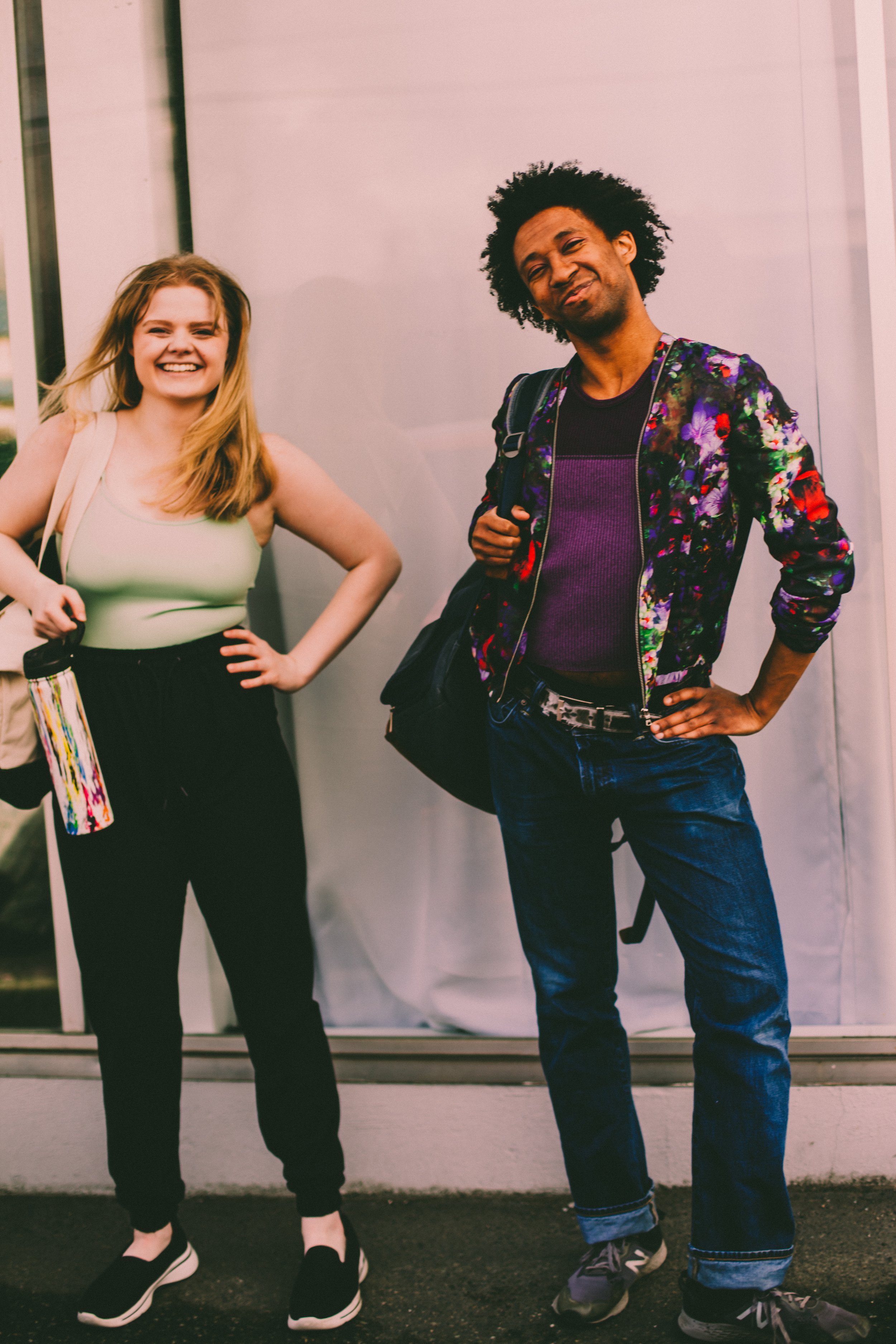
I found a moment of relief as an artist in the 2nd iteration of Dani Tirrell’s “Black Bois”. We sold out The Moore Theatre on Valentine’s Day 2020; One Night Only. In a cast of only black people, I could just represent myself. It was truly a legendary community celebration. Even in this moment of happiness, I was still very physically and emotionally burnt out. I performed in the Seattle International Dance Festival Mini-Fest with Khambatta Dance Company, and the next performance on my calendar with The Tint Festival, which I had choreographed for.
And then the whole world shut down.
There is so much grief that I, all of you reading this, and countless other people have not even begun to sort through from the last three years alone. I know so many artists in Seattle who moved here right before the pandemic who feel like they are “The New Kid” the same way I did, because they spent their first years here indoors, unable to interact with or meet people. Some people did not get to have an in-person graduation.
I had the privilege of being able to dance all throughout the pandemic, just not in the same capacity as I was doing before. There were a lot of beautiful discoveries that came out of the pandemic, many of them personal. Not only did I have the space and time to really be honest with myself, but I finally had the space to work out things I had been avoiding. I went to therapy which helped me organize and clarify a lot of situations that had happened in my personal life. I started to be more honest with my community about who I was, what I stood for, and what I did not. The fact that I am a Dancewear Center Ambassador, writing all of this to you is a testament to the self-work and re-evaluating that I have been doing over the past three years.
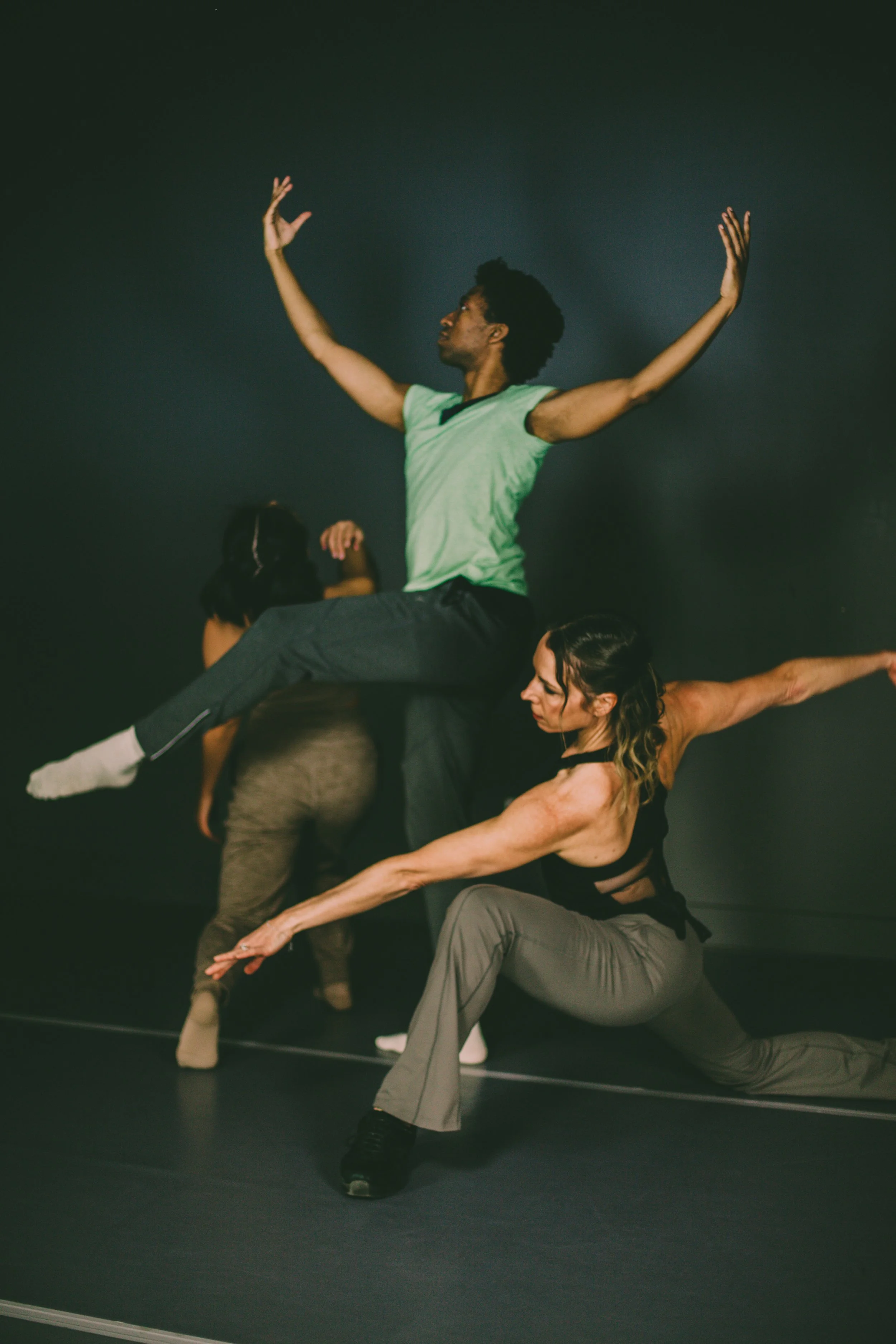
Being truer to myself has drastically changed my personal relationships and career. Throughout the pandemic, and especially in the past 6 months alone, I have ended a lot of personal and professional relationships. I have also started many new ones. I started putting my values first and asserted them, which is bound to shake things up when people who met me in 2018-2019 were meeting a very different version of me. It had been painful, but also necessary. Like removing a splinter or getting an adjustment at the chiropractor. I consider myself a TRUE freelancer now, meaning, I am not dancing with any company at all. I am currently only presenting solo work and teaching. It is not as much as I want to be doing, but it is mentally and emotionally necessary for now. I still worry about falling on my face without the safety net of being from here, but I recently had the epiphany that one of the main reasons I did not feel like I was truly supported here was because I was not really opening up about what my needs were. I was just leaving what people thought of me up to chance. I was not lying about who I was or what I wanted, but I found that I needed to do more to connect the dots of my life for people so that this community understands who I am and what I have been through in my own words, so that expectations are crystal clear.
I am “The New Kid” once again, only this time, instead of aimlessly floating in the ocean letting the waves of opportunity take me places that may not always be in my best interest, I am surfing the waves I want to be on and making proactive decisions.
Disclaimer
All content found on the Dancewear Center Website, Instagram, Facebook, Pinterest, and all other relevant social media platforms including: text, images, audio, or other formats were created for informational purposes only. Offerings for continuing education credits are clearly identified and the appropriate target audience is identified. The Content is not intended to be a substitute for professional medical advice, diagnosis, or treatment. Always seek the advice of your physician or other qualified health provider with any questions you may have regarding a medical condition. Never disregard professional medical advice or delay in seeking it because of something you have read on this Website.
If you think you may have a medical emergency, call your doctor, go to the emergency department, or call 911 immediately. Dancewear Center does not recommend or endorse any specific tests, physicians, products, procedures, opinions, or other information that may be mentioned on dancewearcenter.net. Reliance on any information provided by dancewearcenter.net, Dancewear Center employees, contracted writers, or medical professionals presenting content for publication to Dancewear Center is solely at your own risk.
Links to educational content not created by Dancewear Center are taken at your own risk. Dancewear Center is not responsible for the claims of external websites and education companies.
Dancing Beyond the Binary: A Conversation with Ashton Edwards
Ashton Edwards, originally from Flint, Michigan, has studied dance since the age of four years old at the Flint School of Performing Arts. Ashton has attended summer ballet intensives on full scholarships at The Joffrey Academy of Dance in Chicago, Houston Ballet School, and Pacific Northwest Ballet. In 2018, Ashton represented Flint in the NAACP’s National Afro-Academic, Cultural, Technological and Scientific Olympics (ACT-SO) competition in San Antonio, Texas, against over 250 students of all high school grades all over the country. In the Performing Arts, Ballet dance category, Ashton came in 3rd place, winning a bronze medal. Ashton is currently a Professional Division student at Pacific Northwest Ballet.
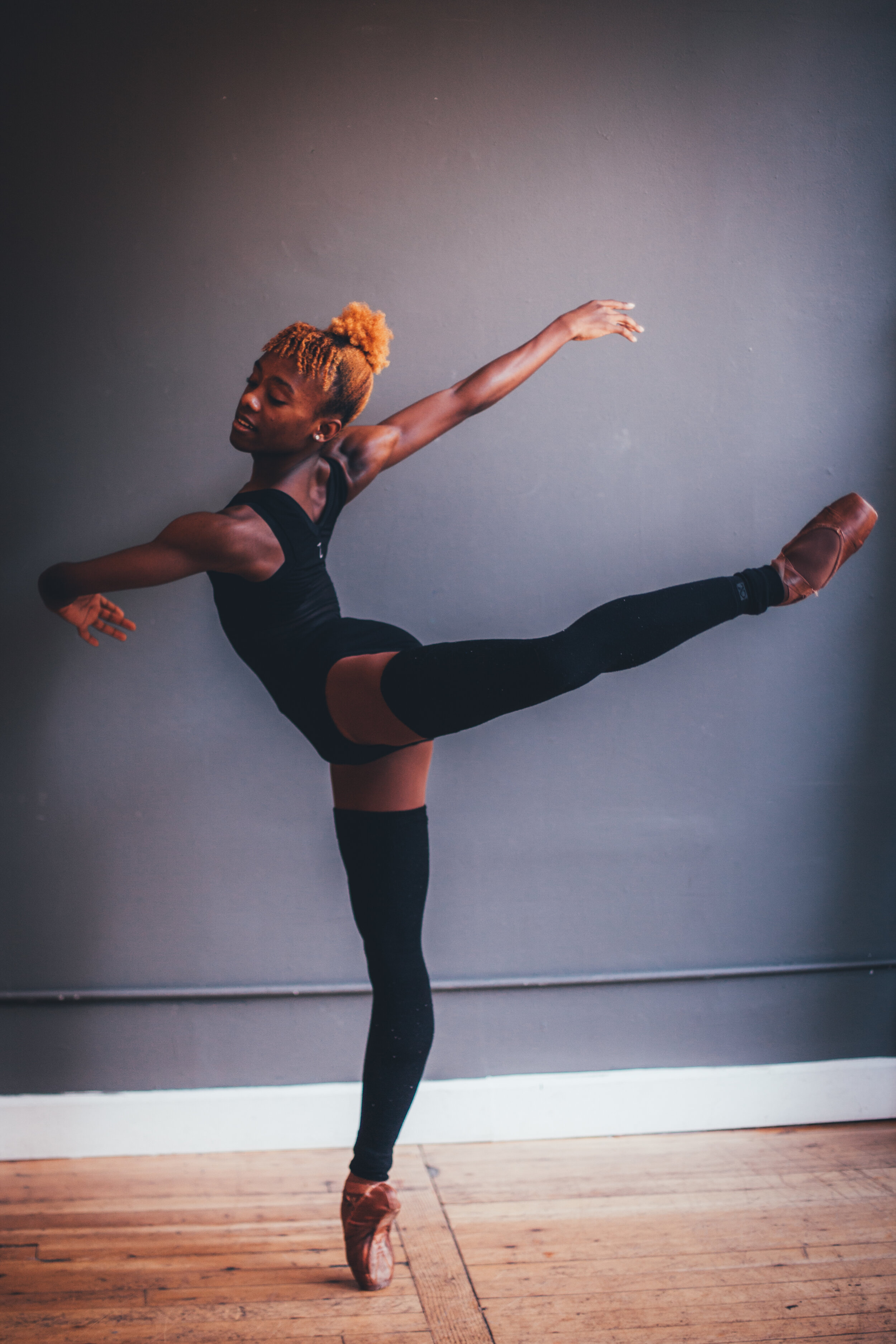
Dancing Beyond the Binary: A Conversation with Ashton Edwards
Ashton Edwards, originally from Flint, Michigan, has studied dance since the age of four years old at the Flint School of Performing Arts. Ashton has attended summer ballet intensives on full scholarships at The Joffrey Academy of Dance in Chicago, Houston Ballet School, and Pacific Northwest Ballet. In 2018, Ashton represented Flint in the NAACP’s National Afro-Academic, Cultural, Technological and Scientific Olympics (ACT-SO) competition in San Antonio, Texas, against over 250 students of all high school grades all over the country. In the Performing Arts, Ballet dance category, Ashton came in 3rd place, winning a bronze medal. Ashton is currently a Professional Division student at Pacific Northwest Ballet.
Why do you love to dance?
I love to dance because I can’t survive without it. I love to dance, because I make people happy, and that makes me happier than I could ever be. I like to dance, because it feels natural. The uncomfortable feels right. It’s indescribable the feeling I have when I’m dancing.
It’s a connection to the depths of our soul. I grew up religious, and in church we talked about our soul and how it’s connected to heaven… but I didn’t really understand until I started dancing and getting lost in the movement. What you are as a being, and not just as skin and bones--that’s why I like to dance, because I feel the most myself. It’s a gift I give to myself.
Why do you think dance is necessary? For yourself, but also for our community and our culture?
Because, not everything can be said with words. I can tell you I’m sad, but I think there’s deeper communication, just as humans as we connect soul to soul. Dance is one of the few languages that we all do, with natural body language.
That is dance, that is movement, that is art, and it’s so necessary, because we take our natural humanity and we put it on the stage, to observe, and reflect, and take a moment and connect as humans again. And I think that’s really special. We need to take time and reflect and look back and experience humanity on the stage as REALness, and like real people, real time.
We all can make a face, and frown, and you know, release our shoulders and just sit there--but, we never take time to appreciate it or declare “this art”, declare “this” as art. But we put it on the stage, and we take time, and we appreciate it, and I think that’s why dance is necessary--because we take the time to reflect on life and natural human processes and emotions… on a deeper level. Because we take this natural slouch and frown and we take it deeper. That’s why I think it’s necessary for us as humans.
What do you think is missing from the dance world as a whole right now?
Oh, *laughing* we’re so far behind. I talk about how it’s reflecting humanity, but especially specifically in ballet we’re so far behind in how equal we all are. I think specifically in ballet companies there is this fantasy of perfection. Everything is binary, everything looks a certain way--but that’s not real, that’s not realistic. That’s not art or humanity. That’s a constructed idea of what “perfect” is.
I think ballet could go so much deeper than that. It could explore gender roles, and race and so much more. Like the Agon pas de deux traditionally is always cast with a black man and a white woman… and I’m just like “No! There’s so much more that could happen there!” We need to stop making it about tradition. Art isn’t controlled. We need to take the control off of art and dance, and make it human.
Ballet is like a fantasy! We have Sugar Plum and Dew Drop, and they’re magical beings. Why isn’t a magical being also a man sometimes? Or why isn’t she black? Who’s fantasy is it? Why is it this one white man’s fantasy; that Sugar Plum is this beautiful white lady the only version being represented? That’s not humanity’s fantasy.
When I was growing up and I saw a black Clara, I wanted to be the black Clara. That was my fantasy. For all the Latinx girls in the audience, all the Trans women in the audience--when is their fantasy represented on the stage? I think that’s what it’s missing. Everyone’s life, everyone’s representation.
What are you hoping to bring into the dance world as you are stepping into the professional world?
Hopefully some representation for someone--for people like me, who don’t really know where they fit in - who just exist as a human. Hopefully I can be the representation that I didn’t see, that I fantasized about. The guy who did the work just as good as the girls, and who had the opportunity to perform it.
I wish I saw an incredible man en pointe, doing a [traditionally female] role, and it feels normal. Hopefully I can teach people and tell people and show people that it should be--and it is.
Hopefully, I’m not just helping younger kids and audiences, but also the directors. [I want] directors to see me, and see what’s possible. I hope it opens their mind for the next person. Hopefully it’s not just the young minds, but ballet’s current audience. Hopefully we can change those minds too.
How has your queer identity influenced your dancing/training?
I was 4 years old when my mom told me not to be gay. I realized, “oh wait, everyone thinks this. Everyone around me homophobic.” Especially in my small town.
Who are these people to just steal someone’s innocence and someone’s joy in life? I feel like that’s the deepest evil, to take someone’s happiness, someone’s innocence, someone’s carelessness. I feel like someone stole a chunk of my life from me, and now I just can’t waste any more time, and I need to make sure that doesn’t happen to anyone else.
And that’s what I hope I can do with dancing. Hopefully I can show all the little girls and boys and little people that anything is possible and you don’t have to limit yourself. Because why? For who? Why am I not happy--for what person? I think not.
It’s hard--training en pointe, taking extra classes at the end of my day. I’m doing more than everyone else. It’s really tough--but who else is going to do it? Who else is going to make it easier for someone else?
Human expression on the most natural level is non-binary. It’s just life, and people are different. My Agon shouldn’t look like anyone else’s because we are different humans with different experiences and different lives. Why am I so crazy to want to do those roles? I’m good at them *laughing* I’m not going to lie! I can do the work. So it’s a little different, a little more masculine, I look a little “new” and unfamiliar--but so does everyone else! We’re all different humans. Not only do we need to accept the work, we need to accept the body and the person.
Living My Truth Out Loud: Embracing Human Expression
“Human expression on the most natural level is non-binary,” said Ashton Edwards, former Dancewear Center (DWC) Ambassador, in an interview for the DWC Blog. Ashton is a dancer with Pacific Northwest Ballet, and an exquisite one. I’ve been following them on Instagram since they partnered with the DWC ambassador program in 2020. They inspire me and give me hope because when I was growing up, queer dancers were invisible.
By Brittni Bryan, Former DWC Ambassador
“Human expression on the most natural level is non-binary”

Click below to shop the look:
“Human expression on the most natural level is non-binary,” said Ashton Edwards, former Dancewear Center (DWC) Ambassador, in an interview for the DWC Blog. Ashton is a dancer with Pacific Northwest Ballet, and an exquisite one. I’ve been following them on Instagram since they partnered with the DWC Ambassador program in 2020. They inspire me and give me hope because when I was growing up, queer dancers were invisible.
In 2009, the year I graduated high school, Nigel Lythgoe of So You Think You Can Dance infamously and harshly critiqued a pair of same-sex ballroom auditionees saying, “I think you’d probably alienate a lot of our audience. We’ve always had the guys dance together on the show, but they’ve never really done it in each other’s arm’s before. I’m certainly one of those people that really like to see guys be guys and girls be girls on stage,” Nigel said. I watched the episode when it originally aired, sitting in my first girlfriend’s basement bedroom. We weren’t dating yet. Neither of us were out yet, and in fact, I hadn’t even realized I was in love with her yet. But, I remember watching that episode with her and I remember being upset. That was the representation I got: a pair of ballroom dancers condemned for their sexuality on national television— their technique and talent mostly ignored. The focus was on the binary of traditional partnering pairs and how this pairing was abnormal in comparison.
In December of 2012, Washington state became one of the first three states in the US to legally recognize gay marriage through popular vote. I was living in Seattle’s Capitol Hill neighborhood at the time, finishing up my bachelor’s degree at Seattle University. I still wasn’t fully out, but my roommate and I walked to the Pike/Pine corridor where people celebrated this long fought for human right on the streets, the excitement frenzied and palpable. The next year, I started dancing for a local production company on Capitol Hill. It was a queer-run dinner theater that primarily found success in hosting 21st birthdays and bachelorette parties. I danced there on and off for four years. During that time, gay marriage was federally legalized in the United States. At some point, I choreographed a “romantic” lyrical/contemporary routine for myself and one of our male dancers. We needed an understudy but none of our other male dancers could execute the technique, so I suggested one of the other girls should understudy. Our owner and director, a gay man, agreed, saying it would be okay for a female to understudy the male part because it would be artistic, not sexual or romantic. But what if it was sexual and romantic, and why couldn’t it be? Just a few years later, the male-presenting dancer I originally partnered with began her transition from a male-presenting body to a female-presenting body. The whole time, I had been dancing with a woman anyway.

Click below to shop the look:
It was not until 2019 that I saw anything in the dance world that validated my sexuality. Kiara Felder, 29, of Les Grands Ballet and formerly a principal with Atlanta Ballet, was interviewed by Dance Magazine for an article on Pride and dance. In a section called, “Could I Be a Ballet Dancer and Be a Lesbian”, Felder discusses the fractured relationship between her sexuality and her professional dance career. She describes how she stayed in the closet at the beginning of her career, “worried that she'd lose her scholarship at PNB [our very own Pacific Northwest Ballet] if the administration found out she was gay”. As she continued her career and moved to Atlanta, she found her community amongst some of the gay male dancers. However, she still struggled to find other queer women in dance. Her struggle, my struggle, and probably the struggle of many young, queer, female dancers, revolved around representation. Felder said, “Without representation, I started to feel this pressure and fear. "Could I be a ballet dancer and be lesbian?". Lesbian stereotypes focus on the masculinity of gay women: softball players, basketball players, soccer players, etc. Athletic gay women are stereotypically found in male-dominated sports, not in the feminine world of ballet. Except that we are. We’re here, and the outdated, binaried beliefs in dance are keeping us in the closet.
This brings us full circle back to Ashton in 2021. Ashton is breaking gender boundaries in the very same ballet company that Felder was afraid to come out in. They are the first biologically male dancer to study en pointe with Pacific Northwest Ballet and train in traditionally female roles. And they are only eighteen! Ashton is just at the beginning of their career, and I cannot wait to see how the dance community evolves as queer dancers continue to find themselves mirrored in dancers like Ashton or Kiara Felder or Alonso Guzman or Travis Wall or Ashley Yergens or Emma Portner or Nick Lazzarini or James Whiteside or Kyle Abraham or Mollee Gray and her partner Jeka Jane.
I finally came out in 2016, but sometimes I still feel uncomfortable being openly queer today. But then I see Ashton, living their truth out loud in one of the best ballet companies on the West Coast, and I see how much things have changed since I was eighteen. I’m excited to continue to see dance embrace non-binaried castings and non-binaried expressions because Ashton is right, human expression is not inherently binaried. We’ve just made it that way.
So, what can we do to help society accept dance as a non-binaried art form?
One way we can help is by normalizing same-sex partnering and supporting artists who choreograph duets between partners of the same sex, particularly ones with themes of intimacy or romance. Examples include Lauren Lovette’s pas de deux between Preston Chamberlee and Taylor Stanley in the ballet “Not Our Fate,” Justin Peck’s same sex pairing in “The Times Are Racing,” and Joshua Beamish’s work in “Saudade”. When audiences only see romantic duets performed between a man and a woman, it perpetuates the dominant idea that heterosexual love is the only kind of love acceptable to see onstage and offstage. Additionally, when queer dancers only see heterosexuality portrayed onstage, it can make them feel underrepresented and like their experiences aren’t worth depicting. But artists have the opportunity to help change this by creating work that challenges the norm. Choreographers in particular, can help by actively choreographing duets that aren’t performed by man-woman pairings to challenge the norm of heterosexual romance in dance.

Click below to shop the look:
In dance classes, we can aid in normalizing the use of non-binaried language in our teaching. Oftentimes, teachers use language that defaults to heterosexuality as the “norm”. However, this is damaging because when people assume the sexuality of someone they are denying the existence of other identities, reinforcing the normalized identity as the “correct” way to identify, and erasing the ability for young people to see alternate identities as valid. People often assume someone is straight until they “come out”, but this is not the case. We can challenge ourselves to not assume the sexuality of others by being more inclusive with our language. For example, in 2014, I started saying “guy or girl” to describe the idea of being flirtatious in jazz styling instead of just “guy”. Seemingly small changes like this can help many of us start to retrain our brains to think in ways that aren’t dominated by heterosexuality.
So, when you see artists in your community creating works that confront heteronormativity, support them in any way you can, whether that be buying tickets to their shows, sharing their work with others, or finding ways to collaborate. If you are an artist, particularly a heterosexual artist, challenge yourself to create work that promotes diverse identities in an effort to continue to break down the barriers of society’s obsession with the gender binary and allow for a deeper exploration into the human experience through art.

Get To Know Ambassador Robbi Moore
DWC Ambassador Robbi Moore has always loved the dance community. Their extensive resume of works spans traveling all around the world with various companies and sharing stories to people in any way they can. We got the chance to speak with one of our DWC Ambassadors about what dance means to them and what inspired them to become an Ambassador! Read on to learn more about Robbi’s dancing journey and what they are looking forward to most about becoming an Ambassador!
By Nicole Barrett, DWC Blog Editor
Pronunciation: Rob-bee More| Pronouns: they/them
DWC Ambassador Robbi Moore has always loved the dance community. Their extensive resume of works spans traveling all around the world with various companies and sharing stories to people in any way they can. We got the chance to speak with one of our DWC Ambassadors about what dance means to them and what inspired them to become an Ambassador! Read on to learn more about Robbi’s dancing journey and what they are looking forward to most about becoming an Ambassador!
Robbi started dancing when they were five years old and was inspired to start dance by their older brother who was an actor. Robbi just wanted to be onstage, so their mom signed them up for ballet classes at New England Ballet because they were looking for dancers for their Nutcracker. When Robbi was seven, they moved onto Dee Dee’s Dance Center where they remained until they graduated high school. After graduation, Robbi participated in some summer intensives where they say they made lots of connections that they would later dance with in New York City. Before auditioning for the Alvin Ailey Fordham BFA Program, Robbi attended New Haven Ballet to further expand their ballet training.
After graduating the BFA program in 2015, Robbie danced in New York City with the STEPS Repertory Ensemble and during their senior year of college, they were involved with the Amanda Selwyn Dance Theater. They also danced with a bollywood company called AATMA Performing Arts and traveled with some of their shows. Robbi auditioned for Spectrum Dance Theater back in New York City and then moved to Seattle in 2016. Since then, Robbi has created an extensive resume with artists in Seattle from Khambatta Dance Company to Tacoma Urban Performing Arts.

click below to shop the look:
One thing that Robbi is looking forward to most about being an Ambassador is the Instagram takeovers. Robbi also is looking forward to the blog posts that they will be writing. They share that they really admire the people that are really good at writing about dance and hope that they can dive into that to become a responsible reporter.
We are so happy to have Robbi as one of our DWC Ambassadors! Be sure to check out the full interview on our YouTube channel to hear more about Robbi’s dancing journey!
Disclaimer
All content found on the Dancewear Center Website, Instagram, Facebook, Pinterest, and all other relevant social media platforms including: text, images, audio, or other formats were created for informational purposes only. Offerings for continuing education credits are clearly identified and the appropriate target audience is identified. The Content is not intended to be a substitute for professional medical advice, diagnosis, or treatment. Always seek the advice of your physician or other qualified health provider with any questions you may have regarding a medical condition. Never disregard professional medical advice or delay in seeking it because of something you have read on this Website.
If you think you may have a medical emergency, call your doctor, go to the emergency department, or call 911 immediately. Dancewear Center does not recommend or endorse any specific tests, physicians, products, procedures, opinions, or other information that may be mentioned on dancewearcenter.net. Reliance on any information provided by dancewearcenter.net, Dancewear Center employees, contracted writers, or medical professionals presenting content for publication to Dancewear Center is solely at your own risk.
Links to educational content not created by Dancewear Center are taken at your own risk. Dancewear Center is not responsible for the claims of external websites and education companies.
Encouragement for Dancers with Anxiety Disorders
One of the most common misconceptions about anxiety is that all people experience it in the same way. For those who do not have an anxiety disorder or do not believe anxiety disorders are legitimate health concerns, the assumption reigns that anxiety is a temporary and fixable cluster of symptoms brought on by isolated circumstances.
Trigger Warning: Anxiety, Mental Health
By Hannah Emory, DWC Blog Contributor
Photo from Shutterstock
My story with anxiety.
One of the most common misconceptions about anxiety is that all people experience it in the same way. For those who do not have an anxiety disorder or do not believe anxiety disorders are legitimate health concerns, the assumption reigns that anxiety is a temporary and fixable cluster of symptoms brought on by isolated circumstances.
I’m a dancer who copes with a chronically disordered form of anxiety called Generalized Anxiety Disorder, or GAD. It means that I have anxiety at all times and can experience severe symptoms, even without an immediately evident or conventionally logical cause. I am grateful that I was diagnosed about five years ago and continue to learn about how my anxiety affects my everyday life.
My symptoms can vary from being deeply emotional to viscerally physical - from a background sense of coming doom or imminent failure to shaking, shortness of breath, digestive troubles, and mental fog. The severity and frequency of my anxiety symptoms can be reduced by self-care and the input of my support network, but the disorder itself never completely goes away.
Having an anxious body as a dancer provides an interesting challenge when it comes to performance time. There is this feeling of excited anticipation that works up once you’ve committed your blood, sweat, and tears to a creative endeavor and you’re about to present it to the world. Yet, an anxious body sometimes can’t tell the difference between joyful energy and anxiety-inducing stimuli, and the two can become muddled together or transform into each other.
When I was a child and teenager, I would experience these muddied waters all the time at performances. The number of people around me, rigorous schedules, interrupted self-care, and the anticipation of putting my heart and soul in front of audience members created an environment where I could thrive off the intensity, but sometimes struggled to stay grounded. That could put a damper on the joy of performing because I didn’t know how to deal with the stressors I was encountering effectively.
Throughout my university dance career, I’ve had many opportunities to learn about what helps me be successful amid my anxiety. Below are the top three things that have proven essential for me on a holistic level - these tips are important for any person, but can be easily forgotten in an athletic field like dancing. We need to intentionally make space in our lives for the internal and personal. As dancers, we use our minds, bodies, and hearts, and all three parts of ourselves require care so we can bring the best of ourselves to the studio and the stage.
Even in the off-season, have a routine.
After experiencing a year-long off-season in 2020, I realized that having a routine is key to avoiding anxiety flare-ups in the day-to-day as well as during performances. As an artistic person, routines can seem like the anchor weighing me down, but they can ultimately make or break navigating mental health struggles and a dancing career. I know that if I don’t stick to a routine, I quickly feel unmoored in my everyday life and have a greater sense of unpreparedness for performances.
Routines are best when they are individualized, realistic, holistic, and consistent. Your routine is the framework for having joy and maintaining movement forward in life - from nutrition to mundane tasks, from what barre exercises you need to do to what makes you feel ready for a performance night. Establishing a meaningful and effective routine will take troubleshooting and will shift over time as your needs change, but it’s a process that will be invaluable to your growth as a dancer.
A few warnings from my personal experience: don’t overload your off-days and don’t feel the need to run your life the way others do. Anxiety disorders can come with a robust perfectionism streak, but this is no competition and you are doing this for yourself and your craft. Your routine is about setting yourself up for success so that you are consistently improving as a dancer and avoiding anxiety spirals. Productivity and perfection are not the goals, consistency and stability are.
Find your own mindfulness practice.
Living life with GAD for me means that I don’t enjoy traditional silent meditation. I think many folks believe that to have a “real” mindfulness practice you must be skilled at silent meditation or try to be. I was in that boat and went on a journey to find a mindfulness practice that works for me consistently. I would say that if you are an anxious-bodied dancer, a mindfulness practice can be helpful, especially to ward off performance stress.
My mindfulness routine includes…
Using a set of meditation beads I made to center my mind on a power phrase or two
Journaling consistently to process my emotions and visualize my future
Improv dancing to a playlist of empowering tunes so I can connect my body, mind, and heart
Taking a walk outside where there is some green space and I can hear the birds singing
I like having a list of different activities that I know will center me and focus my attention, so that no matter where I am, I will be able to do some form of self-soothing when I’m having a flare-up or when the pressure is on. Some other forms of mindfulness and self-relaxation can include guided whole-body relaxation, scripted bodily tension-and-release exercises, utilizing your barre warm-up as meditation, and listening to some ASMR. While there is some trial and error to this suggestion, the time invested in being able to routinely quiet your mind and center your energy will pay back dividends your whole life long.
Seek out community.
Even though anxiety is a deeply personal experience, it does not mean that we have to go through it alone. According to the Anxiety and Depression Association of America, about 20% of adults in the United States are affected by anxiety disorders. Sadly, most of those suffering do not receive the support they need, either from professional resources or from interpersonal support systems.
From my personal experience, anxiety results in a vicious cycle of convincing myself that I have to do it all on my own. I fear appearing annoying and needy and that if I reach out for help, others won’t understand how much GAD affects my life.
Yet, we are coming into a time where mental health is being destigmatized. Though there is still a lot of work to be done in normalizing and integrating mental health struggles into our societal conversations, there are a lot more doors open than there used to be. More people acknowledge mental health struggles as legitimate compared to a few decades ago. So the fear I feel is assuaged by the fact that people are struggling around me and would also like to have space held for them. Reaching out is easier when I remember that I am not the only one.
Lastly, some encouragement.
Ironically, it is anxiety-inducing to think of being vulnerable with others and doing the challenging personal work to grow when anxiety can feel like a constant uphill climb. As dancers, our bread and butter is using our whole selves to tell honest, moving, and human stories. There is little that’s more honest, life-changing, and human than learning how to live with intention in our mental health realities. There is a place to carve out in the dance world for telling the truth about mental health, demystifying it, and loving each other in the midst of it.
Ultimately, you have permission to start breaking the vicious cycles of loneliness and perfectionism that can come with having an anxiety disorder. I hope you know it is a sign of your power and strength to reach out to a mutually supportive community. I hope you know that you can move mountains with baby steps; that you are not alone. I hope you know your strength is shown through your struggle; your heart and your art are always worth the time of being loved, acknowledged, and cared for.
Much love to you, dear dancer.

The New Kid, Again
I arrived in Seattle, WA on September 2, 2016. I was supposed to get here on the 1st, but that is a story for another day. There were a lot of firsts that year. It was my first, and so far only, major full time dance company. My first time ever being on the West Coast at all. My first time living in a state where access to immediate family was physically inaccessible without a plane ticket. I was truly on my own.
Part 1
By Robbi Moore, DWC Ambassador
Pronunciation: Rob-bee More| Pronouns: they/them

I arrived in Seattle, WA on September 2, 2016. I was supposed to get here on the 1st, but that is a story for another day. There were a lot of firsts that year. It was my first, and so far only, major full time dance company. My first time ever being on the West Coast at all. My first time living in a state where access to immediate family was physically inaccessible without a plane ticket. I was truly on my own.
During my two years with Spectrum Dance Theater, most of the other dancers were like me in the sense that they had moved to Seattle for that specific job. Only a couple of people were from Washington. It was not until I left the company in 2018 and started freelancing that I began to interact with a wider range of local choreographers and dancers, many of whom were born and raised in Washington, and others like me who had moved from other places. There were artists who were more seasoned who were not from Seattle, but had been here so long that they had earned the right to say they were from here. In 2018, with most of my experiences in the first two years of living in Seattle being with one company, I felt like “The New Kid” all over again while navigating the freelance scene and the newfound interests of people who were meeting me for the first time.
I had auditioned for 3 other companies on the West Coast in Seattle, San Francisco, and L.A. respectively, as well as West Side Story at the 5th Avenue Theatre, after leaving Spectrum Dance Theater, and did not make it into any of them. I decided to stay in Seattle, with only one teaching position still at Spectrum Dance Theater and a plan to audition as a dancer for the Tint Festival. I had a day job working at the front desk at a fitness center, and I did not think there would be much else to my life outside of that going forward.
Luckily, I would be wrong.
The two pieces that I got into for the Tint Festival would turn into three after being invited to join PRICEarts as a guest artist. Whidbey Island Dance Theatre would reach out to me to play two demanding roles in their Nutcracker. It would be the first of a total of five times. Tacoma Urban Performing Arts Center would reach out to me to play The Nutcracker in their first ever production of The Urban Nutcracker. This would be the first of four times. Cyrus Khambatta would reach out to me via email asking me to come to a rehearsal for an audition and the rest was history. I ended up dancing with Khambatta Dance Company for nearly four years, traveling to Germany, India, France, and Rhode Island, as well as working with International Artists.
In early 2019, Alex Ung, director of The Guild Dance Company would reach out to me to perform in “Immigration Stories'', a show I would do a second time that Fall, and choreograph on fellow dancers in the company, as well as a couple of essential pandemic dance videos. Four years later, I can call Alex a friend, and I am a supporter of The Guild. I auditioned for Karin Steven’s “Sea Change Within Us,” which would lead to four other dances with her company. I attended the Coriolis audition for their full-length version of “Danses des Cygnes” out of curiosity for the work, not thinking I would get into the piece. Not only would I be cast in the work, but I would go on to do a couple more performances with the company and as of recently, become a curator for one of their shows featuring Seattle based artists, Wielding Forms.

click below to shop the look:
I would attend a workshop for The Gray, not knowing if I would be selected for any projects. I would later be asked to perform twice that year. I filled an emergency role in International Ballet Theatre’s excerpt of “Sleeping Beauty” as Puss in Boots. I would be recommended to perform with Kinesis Project Dance Theatre, a New York based company that had recently become bi-coastal, a format that helped the company do very well during the pandemic when we were on Zoom. I would perform with Kinesis several times throughout the next 2 years.
This still does not sum up everything I have done as a freelance artist. Working for all of these companies created a game of Tetris that freelancers know all too well. It is a good problem to have, but that does not mean it did not come with some sacrifices and heartache. In January of 2019, I quit my job at the fitness center after it was highly suggested that I find other work after having to miss so much work to do two Nutcrackers during the holiday season at the end of 2018. In March of 2019, I was offered a regular dance teaching job that I thought would last through June, but I was abruptly let go after just one month. I invested in applying to two other teaching jobs, not knowing if I would get either. Those two schools were Exit Space School of Dance and Rainier Dance Center. I still teach at Rainier, four years later, and while my teaching position at Exit Space was cut short by the pandemic, I have maintained a relationship with the studio as a substitute, open class student, supporter, and performer in festivals curated and hosted there. Pacific Northwest Ballet’s Discover Dance program had also reached out to me, offering me a position as a Teaching Artist Apprentice. Add in another studio that I had substituted at who desperately needed a teacher that year, and I found myself in the Fall of 2019 teaching at four different studios, in two pieces for the Men in Dance Festival, rehearsing for two Nutcrackers, teaching for Discover Dance, and preparing for my second tour with Khambatta Dance Company to India.
It was the busiest I had ever been. I must admit that I really did not know how to take care of my mental health at the time. I had a lot of anxiety about not letting people down, and it did not help that I still had to prove myself to a whole bunch of new people who did not know me as an artist or as a person. My appeal relied on me adapting to what everyone wanted from me while seeming cool, calm, and collected, which is the complete opposite of what I was actually feeling. I was grateful for all these opportunities, but it was hard to keep imposter syndrome from creeping in. I had moved to Seattle in 2016 for Spectrum Dance Theater, and in 2019 I found myself doing work that I never planned on doing and had no clue where these new relationships would take me. I was truly winging it and had no plan whatsoever.
I am grateful for everything I was offered, but at that time, I was experiencing a lot of personal grief. The first was leaving Spectrum Dance Theater, and thus leaving a community of people that I had gotten to know and had seen every day for two years. I had invested so much in that job and it was the reason why I moved out here in the first place. It ended sooner than I had initially intended, but looking back, I cannot imagine it going any other way. A fresh twenty-three-year-old making the decision to move across the country for a famous dance company with no backup plan seems like an accurately young-minded thing to do.
I was also grieving the recent loss of my Nana after her long, difficult battle with dementia, and with it, the security and connection to the part of my childhood that included her, a part of my life that none of my new colleagues had ever witnessed. Those that knew were definitely supportive and sympathetic, but because no one out here really knows my family, my personal struggles with the fact that the entire structure of my personal life had shifted drastically in the background of my dance career were not factored into how people saw me. I knew so many people, but I did not know anyone well enough to feel comfortable confiding such personal feelings in people who I had just met professionally. I put a lot of pressure on myself to act like I was fine when I really was not. I was in high demand as a dancer and there were a lot of eyes on me. It made sense. I was and still am one of the few black male dancers in the concert dance scene in Seattle. I know I am a commodity in this community and I vow to never lose sight of that awareness.
Disclaimer
All content found on the Dancewear Center Website, Instagram, Facebook, Pinterest, and all other relevant social media platforms including: text, images, audio, or other formats were created for informational purposes only. Offerings for continuing education credits are clearly identified and the appropriate target audience is identified. The Content is not intended to be a substitute for professional medical advice, diagnosis, or treatment. Always seek the advice of your physician or other qualified health provider with any questions you may have regarding a medical condition. Never disregard professional medical advice or delay in seeking it because of something you have read on this Website.
If you think you may have a medical emergency, call your doctor, go to the emergency department, or call 911 immediately. Dancewear Center does not recommend or endorse any specific tests, physicians, products, procedures, opinions, or other information that may be mentioned on dancewearcenter.net. Reliance on any information provided by dancewearcenter.net, Dancewear Center employees, contracted writers, or medical professionals presenting content for publication to Dancewear Center is solely at your own risk.
Links to educational content not created by Dancewear Center are taken at your own risk. Dancewear Center is not responsible for the claims of external websites and education companies.
Envisioning Intersectional Feminism in the Dance Industry
What do you think of when you heard the word “feminism”? Perhaps you envision women protesting in the streets and outside government buildings. Maybe you picture historic milestones, like women…

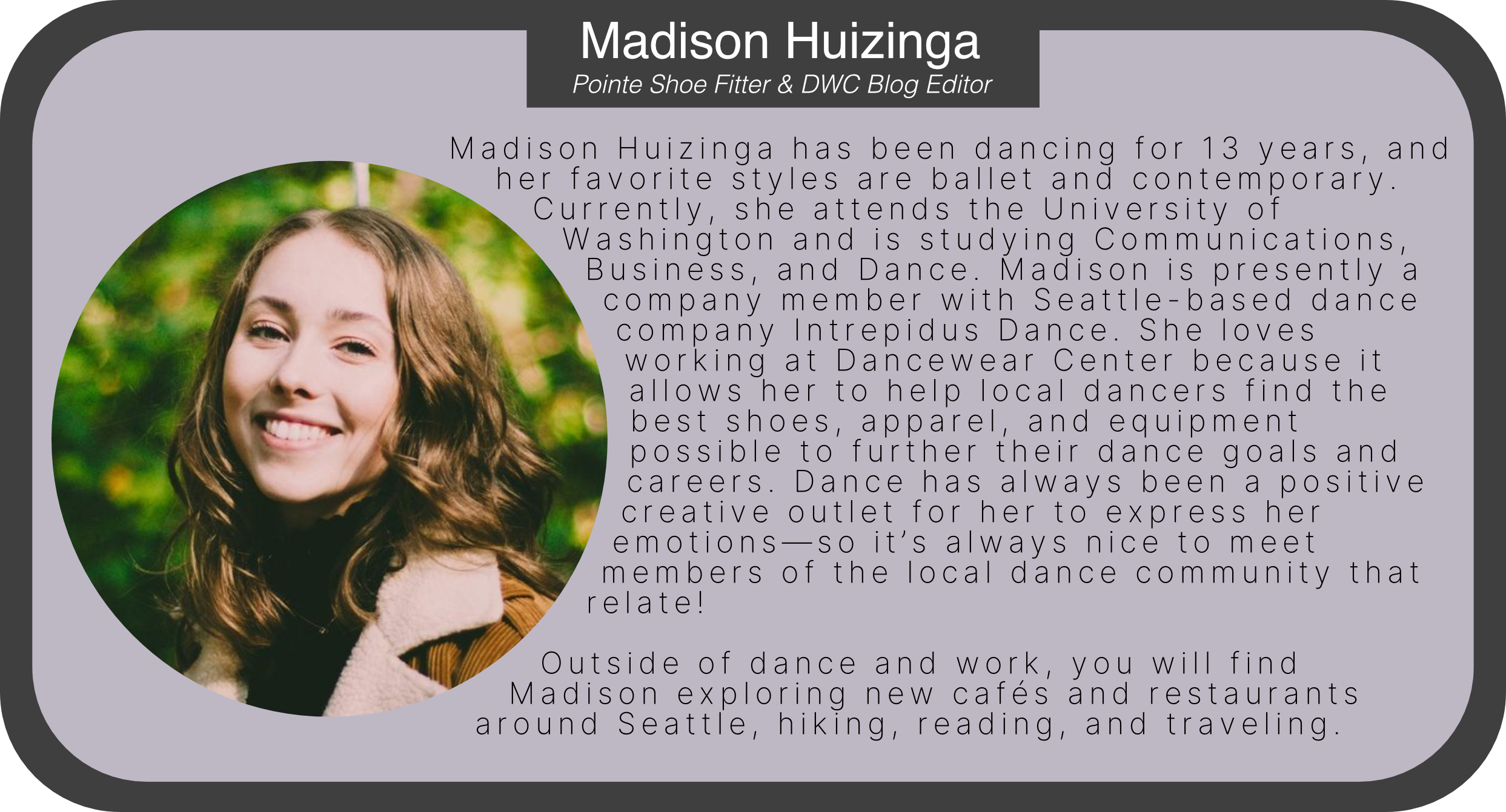
Madison Huizinga has been dancing for 13 years, and her favorite styles are ballet and contemporary. Currently, she attends the University of Washington and is studying Communications, Business, and Dance. Madison is presently a company member with Seattle-based dance company Intrepidus Dance. Dance has always been a positive creative outlet for her to express her emotions—so it’s always nice to meet members of the local dance community that relate!
Outside of dance and work, you will find Madison exploring new cafés and restaurants around Seattle, hiking, reading, and traveling.
By Madison Huizinga
What do you think of when you heard the word “feminism”? Perhaps you envision women protesting in the streets and outside government buildings. Maybe you picture historic milestones, like women receiving the right to vote with the ratification of the 19th amendment or Kamala Harris becoming the first female vice president of the United States. Some of you may even think of all of those promotional products companies produce for Women’s History Month, like form-fitting t-shirts that say “this is what a feminist looks like” in rhinestone letters. These different pictures of feminism proliferate throughout our culture and serve as models for what feminists should look like and stand for.
That being said, our general view of feminism in the U.S. tends to be pretty unitary. Most people assume that “doing feminism” requires breaking the “glass ceiling,” increasing female participation in male-dominated workspaces, and making women feel safer walking home at night. These are all admirable goals that feminists should strive to achieve. But while we work to achieve these aspirations, it’s important to consider whether all women’s lives are being advanced. For example, a major goal of the mainstream Western feminist movement is closing the gender pay gap. As of 2019, senior executive women earn approximately 84.6 cents for every dollar a man earns. However, this gap isn’t the same for all women. While white women earn around 82 cents for every dollar earned by a white man, Black women only earn about 65 cents for every dollar earned by a white man. For Latina women, the gap is even wider, as they on average earn about 58 cents for every dollar earned by a white man. In addition to considering what must be done to bring about gender equality, we should also ask if our efforts are serving all women.
These disparities are not just visible when analyzing the gender pay gap. When looking at nearly every industry, in every sector, there are disparities in discrimination based on women’s race, sexual orientation, ability, and every other facet of their social identities. While it can be useful to view the feminist movement as a completely unified campaign against sexist oppression, it can also cause disillusionment. When embarking on the journey to end patriarchal injustice, not all women are starting at the same place. Assuming that all women experience the same maltreatment is misguided. Rather, we must re-envision how we view and enact feminism in every space in our lives so that all women’s lives are progressed, not just a select, privileged few. To accomplish this, we must adopt intersectional feminism.
Intersectional feminism was coined by lawyer and civil rights advocate Kimberlé Crenshaw in 1989. Crenshaw introduced this term as a way to examine “overlapping, concurrent forms of oppression” to better understand the depths of inequalities in given contexts. Intersectional feminism acknowledges that the impact of various crises or inequities isn’t always the same, as our different marginalized identities interlock with one another to create unique challenges. In this way, “all inequality is not created equal,” according to Crenshaw. The impact of hardships like sexism won’t be the same for women of all ethnicities, ages, sexual orientations, religions, and nationalities.
Using an intersectional lens does not just apply to specific social justice movements. Such a framework can and should be applied to all areas of our lives, especially the dance industry. Many people assume that the dance industry is a female-dominated space, which is fairly accurate. However, while about 65.9% of ballerinas in the U.S. are white females, only about 2.27% of ballerinas are African American females. In professional companies around the world, white females dominate, while women of color hold far fewer spots. When women of color are depicted on stage, they are often presented in roles that are extremely racialized and stereotyped, such as the “Chinese Tea” or “Arabian Coffee” roles in The Nutcracker. Sometimes white women will even pretend to play women of color on stage, such as in the more extreme case of blackface in Bolshoi Ballet’s 2019 production of La Bayadère. Also, when women portray lead roles in ballets like The Sleeping Beauty and Swan Lake, their characters tend to be involved in romantic relationships with heterosexual men. Same-sex pairings are absent in nearly every popular ballet. And when we look at the body types that are presented on stage, they are almost always tall, thin bodies, as those are the only types of bodies that have been historically celebrated in the dance industry.
Sure, large strides have been made for diversity in the dance industry. Misty Copeland becoming the first female African American principal dancer at American Ballet Theatre is a huge milestone, as well as Charlotte Nebres becoming the first Black dancer to be cast as Marie in NYC Ballet’s The Nutcracker. Across the country, choreographers are re-imagining the traditional depictions of women in ballets and creating new works that uplift a wider array of girls and women. But the work can’t stop now. It’s not enough to look at a women-dominated industry and think that it’s somehow “achieved feminism” by simply having female participants. For this Women’s History Month and onwards, consider the ways your studio is depicting women of all races, sexual orientations, ages, and body types and hold your instructors accountable. We won’t truly eradicate sexist oppression until all women are treated with respect.
Here are some ways we can all practice intersectional feminism in the dance world:
Educate yourself and others
Conduct research on the ballets and other dance works you’re participating in. Consider who created the original choreography and how their biases may impact how different groups of women are portrayed on stage. Communicate the information you learn with those around you, whether that be through face-to-face communication or social media posts.
Be a good listener
Listen to the stories of those around you, particularly groups of dancers that possess social identities that are marginalized in American society. Do not dismiss or minimize their experiences and understand that you shouldn’t always do all of the talking.
Make a deliberate effort to not be isolated
Actively seek out the perspectives of dancers who possess different social identities than you and who dance in different communities than you. Find ways to interact and collaborate with them, either through viewing their dance works, co-choreographing a dance, or simply exchanging contact information and discussing your experiences in the dance world.
Be critical of the dances you view
When watching various dances, think critically about what you are watching and how it may be perceived by different individuals. Consider the changes you would make if you were a choreographer and how you will avoid reifying negative representations in your creations.
Provide constructive criticism to people in your dance community
If you are a dancer, talk with your studio owners and dance instructors about changes you would like to see in the curriculum, studio policies, and choreography. Point out the ways in which certain groups of women may be hurt by certain aspects of your studio’s culture and co-create solutions. If you are a studio owner or dance instructor, be open to feedback from your dancers on how to make your studio an equitable environment for all individuals.
Create your own work!
If there are stories out there that aren’t being told, find ways to tell them through dance! This could involve choreographing a new work on your own, revising an older production in a more appropriate way, or collaborating with other members of the dance community to bring important, untold stories to light.
Seeing Color in the Dance Industry
It’s safe to say that most of us didn’t anticipate the first half of 2020 to go the way it has. Our lives have changed drastically in the past few months, some more than others. Not only has the COVID-19 pandemic modified nearly all aspects of our daily routines, but a national movement supporting black lives and opposing police brutality has ignited. The heartbreaking murder of George Floyd in Minneapolis has stirred global attention towards police brutality and racial inequity in America. There have been protests in solidarity with George Floyd in all 50 states and at least 40 additional countries on nearly every continent. Anger towards this grueling act of police brutality has transformed into a larger revolution against systemic racism that’s gone on for too long in the United States.
This piece was originally written in 2020 and has been reposted in February 2023.
By Madison Huizinga, DWC Blog Editor
It’s safe to say that most of us didn’t anticipate the first half of 2020 to go the way it has. Our lives have changed drastically in the past few months, some more than others. Not only has the COVID-19 pandemic modified nearly all aspects of our daily routines, but a national movement supporting black lives and opposing police brutality has ignited. The heartbreaking murder of George Floyd in Minneapolis has stirred global attention towards police brutality and racial inequity in America. There have been protests in solidarity with George Floyd in all 50 states and at least 40 additional countries on nearly every continent. Anger towards this grueling act of police brutality has transformed into a larger revolution against systemic racism that’s gone on for too long in the United States.
As we partake in protests, sign petitions, and watch riots unfold on television, many of us are contemplative of our position in this movement and greater society. And in light of social distancing, many of us are in close quarters with family members and roommates who may disagree with the demonstrations developing throughout the country. This can result in some uncomfortable conversations that some people may have never had before, especially among white people.
As a white person who grew up in a white family, race is an aspect of my identity I have never needed to consciously consider. I expect to see people who look like me on my favorite TV shows. I expect to purchase a foundation that matches my skin tone at the mall. I expect to learn how historical figures with my racial identity founded America in history class. I can walk around my community confidently knowing that nothing adverse will happen to me solely because of my race. I feel seen and heard wherever I go because I have learned that being white means being the default. And I have been taught to think that this is valid.
When it comes to discussions about race at my family dinner table and within the walls of my classrooms, I am often told that all people are the same regardless of their skin color. I am told that to push for justice, we must simply view all people equally to achieve equality within social systems and institutions. Throughout my education and upbringing, I have been taught to be “color blind,” which may sound beneficial in theory. But being blind to racial difference means ignoring white privilege and the disadvantages others have because of it. Choosing to be “color blind,” means choosing to ignore the flawed systems that white people benefit from at the expense of people of color’s rights. It means choosing to be blind to systemic oppression, and thus indifferent and complacent to the suffering of black people. It’s time that I, and white people everywhere, open their eyes.

Niyah Pratt, DWC Ambassador
Now is a more important time than ever to listen and learn about the systemic racism that’s embedded in the world we live in. It’s time that we identify how racism not only withholds power from people of color but actively contributes to white people’s success. This does not mean denying the existence of white privilege but utilizing privilege to amplify anti-racist sentiment. This does not just involve taking a stand during a moment of tragedy but constantly analyzing the systems we are a part of and understanding how prejudice is woven into their fabrics. For many of us, this means turning to the dance industry.
As a white woman, I see dancers who look like me strewn throughout the dance community. I constantly see my identity presented through the types of stories told on stage, as well as through the types of dancers telling those stories. In the United States, about 67% of dancers and choreographers are white, while only 16.6% are black. Like all art, dance is meant to express emotions, transport audiences to different worlds, and explore unique narratives. However, when the majority of these narratives are choreographed and performed by white people, it can be difficult for people of color to feel as represented on stage. When white people make up two-thirds of the American dance industry, we cannot expect dance to be a comprehensive art form that communicates widely shared anecdotes. We cannot expect people of color to feel as accepted in the dance community if they aren’t represented across every area of the industry.
Niyah Pratt is a black dancer who has trained in the greater Seattle area since she was six years old. She’s performed at numerous showcases, attended conventions across the west coast, and has even spent a summer dancing at Debbie Allen Dance Academy. Today she studies dance at the University of Nevada, Las Vegas. While dance currently plays a paramount role in Niyah’s life, she hasn’t always felt embraced by the dance community throughout her childhood. Niyah says that “it has always been hard being an African American pursuing dance,” largely because she rarely saw people within her classes and acclaimed companies that looked like her. Niyah recalls that she “didn’t fully know that there were companies other than Alvin Ailey that were started and ran by African Americans until [she] was sixteen.” It wasn’t until she attended a summer intensive at the Debbie Allen Dance Academy that she began learning about the history of African Americans in dance. Before that, her view of the dance world was skewed towards white dancers and their contributions.
Niyah notes that growing up she was “one of four African American dancers” at her studio, and often felt singled out as a result. She has attended ballet auditions in which she is the “only person of color in the whole building.” Niyah “never forgets walking into a room and every girl looking exactly the same except for [her].” She says that from her own experiences “having a darker complexion while dancing is mentally challenging.” Being surrounded by solely white dancers can instill imposter syndrome in many black dancers, otherwise known as a lack of belonging. Not feeling seen, accepted, and represented within the dance industry can easily deter many people of color from pursuing a career in dance, as they may feel that they aren’t talented or qualified enough to belong in the industry because of their race.
According to Niyah, being a black dancer is not only mentally challenging but “it’s physical as well” due to the lack of costuming options for black dancers. Niyah says that “anything skin-toned or with mesh” often makes black dancers “feel uncomfortable” because “they are made for someone ‘fair toned.’” Especially when it comes to shopping for tights, black dancers often struggle to find anything close to matching their skin tone. Niyah recounts a vivid memory of a faculty show in college, in which her ballet teacher requested to speak with her in the hallway and asked “why [she] didn’t have skin-colored tights or pointe shoes.” Niyah was extremely confused because she was wearing tights and shoes that were marketed and labeled as “skin tone,” even though they were much lighter than her complexion. Niyah’s teacher told her that “when you have darker skin, you are supposed to wear your tone of tights and shoes when you perform.” Niyah was surprised that no one had ever told her that. This a conversation that a white dancer would never need to have. As a white dancer myself, I can purchase “skin toned” tights and shoes at any store and expect them to resemble my skin tone. But for black dancers, this simply isn’t the case because “skin tone” is synonymous with “white” across the dance industry and society.
Despite the challenges Niyah has faced in the dance industry, she notes that there “has been significant progress” and she is “ecstatic seeing [the industry] evolve.” She has noticed that in recent years more dancers of color and dancers of different shapes and sizes have gained attention. While it’s certainly inspiring to see individual performers like Misty Copeland gain recognition for their talents, a large-level change is needed so that seeing black dancers in the spotlight becomes a standard and not an anomaly. What Niyah wishes to see across dance communities is “inclusion” and dance that “is taught for anyone and everyone.” This means telling stories through dance that are relevant to people of color. This means seeing black dancers in lead roles that are complex and powerful, rather than vilified, racialized, or minimized. This means creating nude leotards, tights, and pointe shoes that don’t just match a pale skin tone, but compliment dancers of all races. It’s about a complete metamorphosis of the dance industry on every level. In the words of Niyah Pratt, dance “is already so beautiful, diversity is the only thing keeping it from being stunning.”
The past few months have presented challenges that many of us may have never foreseen. But we have the opportunity to move forward with a more compassionate and critical outlook on the world. We have the chance to not let this movement be a moment in time, but a catalyst for change. It is never too late to break the silence to provide support for black lives today and forever. Here are some ways to get started:
Educate yourself:
Learn more about the history of racism in America, and more about how black identity is widely perceived in institutions. This is an essential way to understand the meaning behind the large injustices that take place throughout the United States.
Here are some books to read to learn more about the experiences of black people and how to have productive conversations about racial identity:
The New Jim Crowe: Mass Incarceration in the Age of Colorblindness by Michelle Alexander
We Were Eight Years in Power: An American Tragedy by Ta-Nehisi Coates
Here are some documentaries, films, and series that incapsulate the experiences of black people in the United States:
13th on Netflix and YouTube
When They See Us on Netflix
Moonlight
Dear White People on Netflix
The African Americans: Many Rivers to Cross
Consume and support art from black artists
There is a plethora of beautiful art produced and performed by black artists across the Internet. Here are some that are dance-related:
“SHOT” by Donald Byrd
DTH On Demand Presents: VESSELS by Dance Theatre of Harlem
“ink” by Camille A. Brown and dancers
Alvin Ailey American Dance Theater: Chroma, Grace, Takademe, Revelations (2015)
Sign petitions
On change.org, there are a variety of petitions relating to racial justice for people to sign. Learn about different causes that need support and share them with your friends and family.
Donate
A donation of any size is welcome to nearly every cause. If you are capable of donating, consider doing so. Here are some organizations to consider:
Representation and Acceptance in the Dance World
It wasn’t until age 10 that Jamia Ramsey learned that tights are supposed to match the skin tone of the dancer that wears them. After auditioning, Jamia had earned a scholarship to dance at the Dance Theatre of Harlem in New York City. “It was there that I first learned that flesh-toned tights were supposed to match your skin tone,” she shares. Jamia learned about the process of dying tights and using makeup to “pancake” ballet and pointe shoes. Previously, she had only danced in pink and tan-colored tights, which are readily available at any dancewear retailer but don’t match her skin tone. “It was all about uniformity,” Jamia explains. It’s safe to say that this experience planted the seed for Jamia to create her visionary dancewear company Blendz Apparel: a brand that offers high-quality, flesh-toned dance apparel that all dancers can wear.
Blendz Apparel’s Jamia Ramsey
By Madison Huizinga, DWC Blog Editor
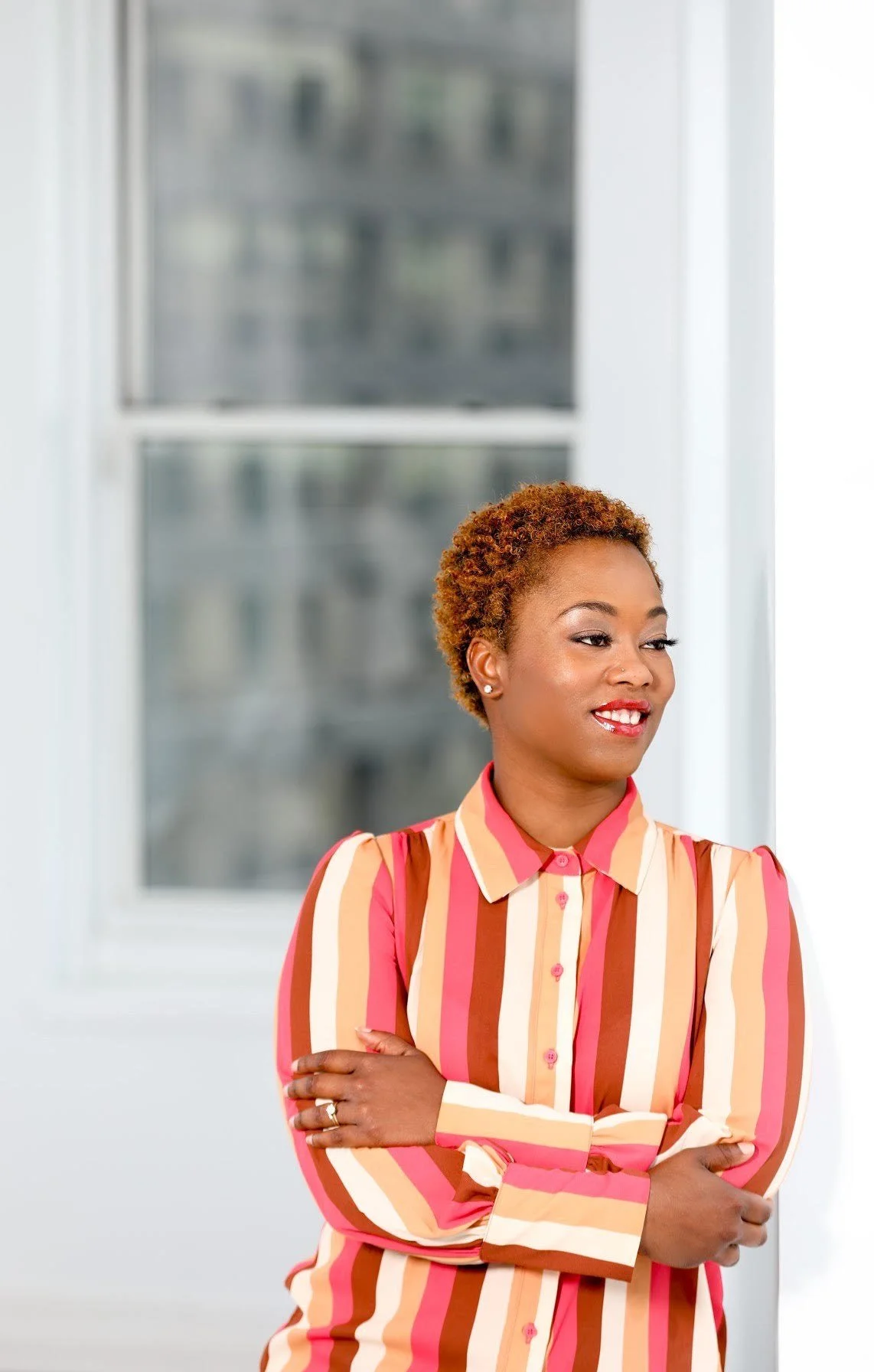
It wasn’t until age 10 that Jamia Ramsey learned that tights are supposed to match the skin tone of the dancer that wears them. After auditioning, Jamia had earned a scholarship to dance at the Dance Theatre of Harlem in New York City. “It was there that I first learned that flesh-toned tights were supposed to match your skin tone,” she shares. Jamia learned about the process of dying tights and using makeup to “pancake” ballet and pointe shoes. Previously, she had only danced in pink and tan-colored tights, which are readily available at any dancewear retailer but don’t match her skin tone. “It was all about uniformity,” Jamia explains. It’s safe to say that this experience planted the seed for Jamia to create her visionary dancewear company Blendz Apparel: a brand that offers high-quality, flesh-toned dance apparel that all dancers can wear.
Jamia began dancing at age two when her mom put her in ballet and tap class. The art form had always played a big role in Jamia’s family, as her mother, sisters, and brother all danced. “It was something that was always near and dear to my heart,” Jamia shares. She continued dancing through middle school, high school, and college, participating in her studio’s company, winning various awards, attending summer intensives, and “fully immers[ing] into the dance world.”
After graduating college, Jamia dreamed of moving to New York to perform. However, due to expenses, she ultimately moved home to Atlanta and got a desk job at a logistics company. Jamia had always envisioned herself opening up a dance studio, but not until much later in life. Realizing that she was going to be in Atlanta for a long time, she figured now was a better time than ever to start.
Jamia started DanceMoves, a dance academy at a recreation center in Atlanta that served “underprivileged youth.” As Jamia did throughout her own dance journey, the dancers and their parents at DanceMoves went through “the grueling time and money consuming process of finding, spraying, and dyeing dancewear to match their complexions.” She found herself frustrated by the end products, as the tights and shoes never fully matched the dancers’ skin tones after all of the work they put into them. “It was just a headache,” Jamia says.
After doing some research online, Jamia found that other dancers and dance teachers were struggling with tights and shoes not matching their skin tones as well. Jamia also learned that after being asked to make wider shade ranges in their dance apparel, many large dancewear companies refused, claiming that there wasn’t a market for it.

Jamia realized that she had a “now or never opportunity.” “There was a void in the market...everyone deserves to be represented,” she says. “I just decided that...if no one’s going to do it… I can do it myself.” In 2017, Jamia officially started working on Blendz Apparel full-time.
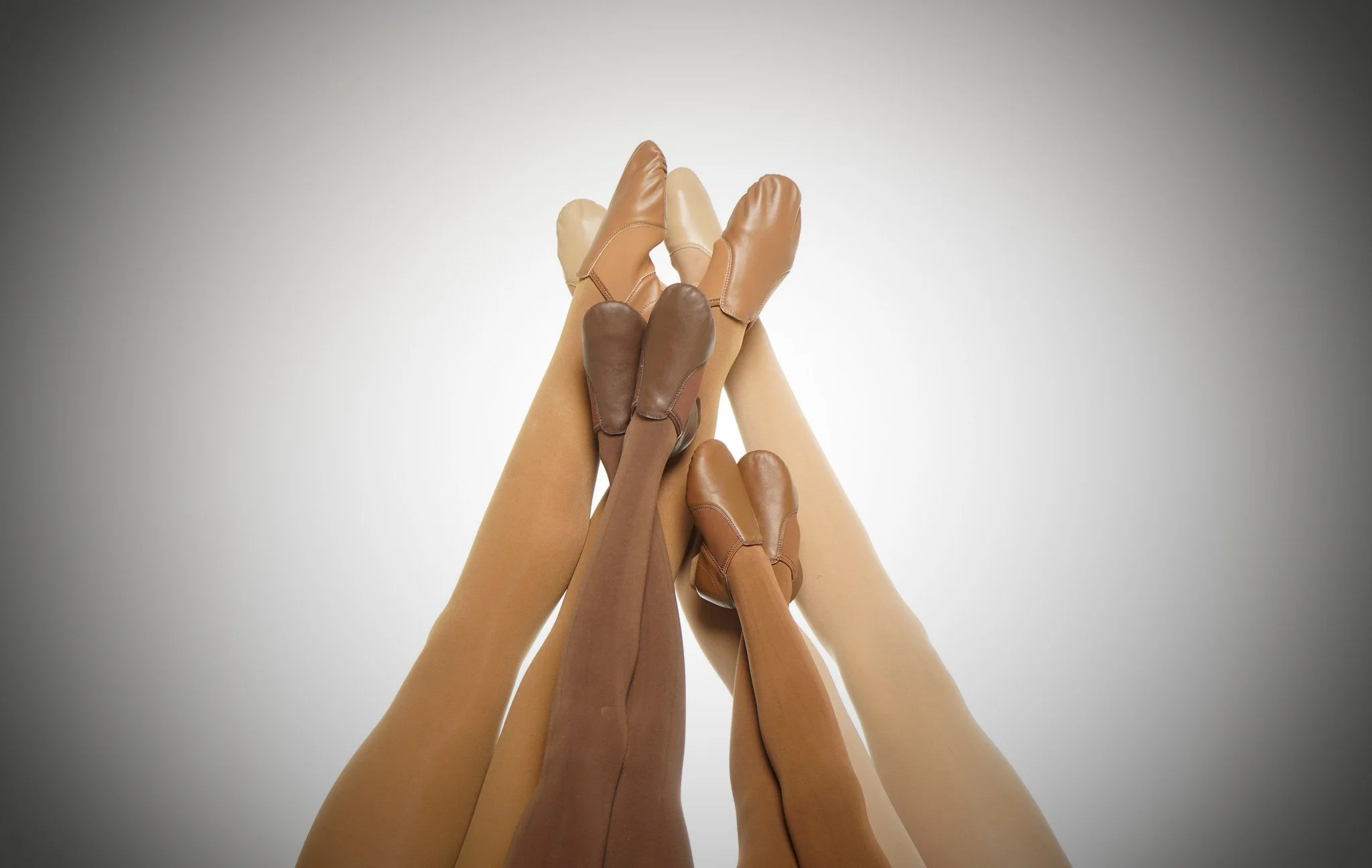
Blendz Apparel offers stretch canvas and leather ballet shoes, jazz shoes, contemporary half-soles, and convertible tights in different flesh tones, including “Tenacious Tan,” “Maven Mahogany,” “Brazen Brown,” and “Confident Cocoa.” A percentage of each purchase at Blendz Apparel goes towards “The Valerie Grace Scholarship Fund” which assists young dancers with furthering their dance education at summer intensives and attending college. The scholarship is named after Jamia’s mother, as she and Jamia’s aunt helped fund her dance journey and supported her throughout her career. “They had a big love for dance and big hearts and I want to give back as well,” Jamia says. There will be an application process for people to apply for the scholarship.
For those looking to start their own business, Jamia advises them to “go ahead and get started… don’t wait.” “You’re not going to have every piece of the puzzle available and ready, but just put one foot in front of the other and you’ll figure it out along the way.”
Jamia hopes to see more inclusivity in the dance world, especially in ballet. She wants diverse dancers with different backgrounds to be embraced for their cultural differences so they aren’t forced to fit in a certain mold. Jamia wants dancers to be allowed to be unique and own their individualism. “I would like for more dance companies to embrace dancers of all hues and allow them to wear dancewear that matches their skin tone and best reflects them as a person,” she states. By working towards this, more dancers will be seen for their character and talent, rather than their skin color fitting a certain aesthetic.
Jamia believes that the “people at the top,” including artistic directors and dance teachers, must create policies that allow dancers to wear apparel that matches their skin tones and embrace their natural hair while dancing. She believes that after these changes are made by powerful decision-makers in the dance world, more and more dancers will begin to accept them. In addition, on an individual level, dancers need to voice to upper-level dance directors and teachers the changes they wish to see in the dance world to make them known.
“Having the [flesh-toned] dancewear already manufactured and pre-made [promotes] the idea that dance is for everyone and not just for a certain subset group,” Jamia shares about Blendz Apparel. “That’s how Blendz is going about trying to make our change in the world: by starting with the shades that are not represented in the market and expanding from there.” In doing so, Blendz strives to create a dance realm that welcomes “inclusion and comfort for every dancer everywhere.”
The Inclusive Eye: The Importance of Representation, Mentorship, and Comprehensive Education
For the longest time at the beginning of my dance career, I didn’t see many dancers that looked like me. I did ballet, jazz, tap, and modern growing up in my little Kent, Washington studio--and I thought this was normal. My dance classes didn’t look any different from my school classes, I was one of the only people of color in my classes there too. For years and years I went without knowing anything about the success of dancers like me in the dance industry and simply thought they didn’t exist.

by niyah pratt
Niyah Pratt was born in raised in Renton, Washington. She began dancing at age six, at the British Dancing Academy where she trained in ballet, jazz, tap, and modern. She is currently attending the University of Nevada Las Vegas where she is double majoring in Dance Performance and Urban Affairs. She hopes to continue her dance career for as long as she possibly can, and make an impact not only in the dance community, but on the youth as well. She wants to be the role model she never had when she started dancing for someone else, and “thinks it is important to start implementing this in dance.”
click to shop the look: Holly Leo with Mod Dot by Ainsley Wear
By Niyah Pratt
For the longest time at the beginning of my dance career, I didn’t see many dancers that looked like me. I did ballet, jazz, tap, and modern growing up in my little Kent, Washington studio--and I thought this was normal. My dance classes didn’t look any different from my school classes, I was one of the only people of color in my classes there too. For years and years I went without knowing anything about the success of dancers like me in the dance industry and simply thought they didn’t exist.
When I was very little, there was one dancer older than me at my studio who looked like just me and I absolutely loved watching her dance. When I saw her I was mesmerized! I thought she was the most beautiful dancer in the world because I saw myself in her. Just seeing her made me feel like I could do it; and I know there are a lot of young dancers of color who have felt this way before in the dance world. Because of this, I want to reach as many young people as I can by teaching technique and giving them someone to look up to.
When I was 16 years old, I was accepted into the Debbie Allen Dance Academy summer intensive. Before this, I honestly did not know there were dance establishments built by African Americans. That summer, I experienced a profound transformation. I was surrounded by dancers and teachers that shared the same passion as I did--and looked just like me. I had never experienced this before. This not only changed how I danced but also expanded my view of the dance world.

click below to shop the look:
Debbie Allen started her own school to give her daughter a higher caliber of dance that she needed in order to succeed. Places like Debbie Allen Dance Academy and The Ailey School aren’t just dance institutions for black dancers. This was a large misconception held by the general populace--especially in the early years of their establishment. These institutions are sanctuaries for dancers of color where we can finally dance somewhere we feel acknowledged and celebrated.
My experience at Debbie Allen Dance Academy then led me to attend the Ailey Experience in New York the summer after where I had the greatest week of dancing in my life. I have never felt so seen and accepted dancing somewhere in such a short amount of time. Each teacher was beyond thrilled to teach us and share their knowledge of the dance world. Many of them were previous and current company members while others came from different parts of the dance world. It was exhilarating dancing with the staff and not having our strong technique be met with shock and surprise.
I say this because I feel like in certain situations when a dancer of color has good technique it's met by the community with shock. There is this preconceived notion of what a ballerina looks like and I think many don't expect us to be interested in ballet. It’s definitely not been viewed within my family as typical, and when I was super young my cousins and extended family were surprised when I started ballet. They were always very excited for me, but I wasn't playing basketball or running track like all the rest of my family members and that was surprising to them.
One summer, I auditioned for Joffrey Chicago just for exposure. Ballet is not my strong suit, and it has definitely been a journey to get my technique where it is today, but I wanted to try. Every girl who auditioned with me looked exactly the same, and I found myself the sole person of color in the building that day auditioning. This made me question at the beginning of the audition what I was doing there, but I also remember looking in the mirror by the end and getting choked up at just how proud of myself I was for choosing to be there and for fighting through being so uncomfortable.
I am forever grateful for the experiences I’ve had; I know that I am blessed to have parents that support me and to have had access to these opportunities. However, without being able to travel and fund these experiences, I don’t know that I would have become the dancer I am today.
So how can we make an impact on young people of color who want to become dancers but don’t have the resources and mentorship to fulfill their dreams? The answer: prioritizing our young dancers of color and their dance education.
Teaching dance from a more inclusive eye and making sure young dancers of color are well supported and seen makes all the difference in their training. If you are teaching students of color, guide them in learning about proper attire, their history of dance, finding a supportive community, and seeking out mentors.

click below to shop the look:
Educate dancers of color on proper attire for their complexion: this helps set dancers up for success. Personally, I didn’t know that ballerinas of color should (or could) wear skin color tights for ballet until I was 18. I was performing in a ballet piece in my first faculty show at UNLV (University of Nevada, Las Vegas) and the teacher pulled me aside baffled that I didn’t know I was technically wearing improper tights for the performance. It was an experience that left me feeling embarrassed and a little sad that I had never been taught this.
Encourage dancers and support them in the application and audition process for institutions such as Alvin Ailey, Debbie Allen Dance Academy, and Alonzo King LINES Ballet: where they will feel seen in a business that often does not.
Teach dancers of color their history. Dancers like Lauren Anderson, Syncopated Ladies, Katherine Dunham, and Robert Battle (to name a few) have all made large impacts on the dance world and students should know early on about these pioneers so that they can look up to successful dancers that look just like them.
We all know that having representation and someone to look up to reinforces the idea that you can do it too! It's motivating to see people like us in a profession that historically has not catered to our skin tone. If dancers don’t have a role model in dance, help support them in finding one.
We must set dancers of color up for success and teach them to their individual needs. I feel the largest job I can do to support my community is share how I've overcome these challenges and guide as many as I can to achieving their goals. I want all young dancers of color to feel inspired and prepared to conquer and succeed in the dance world!
RESOURCES
Brown Girls Do Ballet: Scholarships
LINES Vermont: Diversity in Dance Scholarship Fund
The Ballet Clinic’s Scholarship Fund
Memoirs of Blacks in Ballet (MoBBallet): An Ever Expanding and Historic Timeline of Blacks in Ballet
Interested in writing for the DWC Blog? Click below to fill out the DWC Contributor application!