
Is Ballet Really the Foundation of All Dance?
Anyone who has danced for an extended number of years has heard the age-old mantra about ballet: that it is the “foundation of all dance.” Youngsters that have complained to their dance teachers about their disinterest in ballet have had this drilled into them. The idea that ballet is crucially supplemental to other dance genres is common knowledge to dancers around the world. It is information that is rarely questioned or scrutinized. But if we study the origins of ballet, we can see that it perhaps isn’t as universalized as it’s thought to be. The benefits of ballet technique cannot and should not be divorced from its problematic founding ideals that still influence dancers today.
A Discussion of Racism, Sizeism, and Classism in the Industry
By Madison Huizinga, DWC Blog Editor

Anyone who has danced for an extended number of years has heard the age-old mantra about ballet: that it is the “foundation of all dance.” Youngsters that have complained to their dance teachers about their disinterest in ballet have had this drilled into them. The idea that ballet is crucially supplemental to other dance genres is common knowledge to dancers around the world. It is information that is rarely questioned or scrutinized. But if we study the origins of ballet, we can see that it perhaps isn’t as universalized as it’s thought to be. The benefits of ballet technique cannot and should not be divorced from its problematic founding ideals that still influence dancers today.
Ballet was born during the Italian Renaissance of the 15th century and became intensely saturated and codified in France over the following hundred years. It was a coveted source of entertainment for elite aristocrats and King Louis XIV performed many popular dances himself before professional dancers were hired to perform at court functions. Storytelling ballets like Swan Lake, The Sleeping Beauty, and The Nutcracker developed through the 19th century and quickly gained traction. In the years that followed its conception, ballet spread throughout the globe, gaining popularity and prestige in Russia and later in the United States. In the 20th century, pioneers in neo-classical ballet, like George Balanchine, experimented with the medium by merging styles and creating contemporary works that warped ballet’s traditional rules. Though its style and aesthetics have been tweaked throughout time, ballerinas have remained a constant symbol of beauty, grace, fragility, and strength. And the concept of what type of woman should be allowed to symbolize these ideals has stayed relatively the same.
The visual standard of what a ballerina is supposed to look like has continued to be narrow and exclusive. There is an expectation that ballerinas are tall, thin, and white. This standard was arguably cemented and perpetuated by prominent choreographers like George Balanchine, who was famously critiqued for only hiring women who were tall and thin. This is the same expectation present on fashion runways, in magazines, TV shows, and just about any other form of popular media in Western culture. This adverse ideal immediately excludes an abundance of individuals, including dancers of color and plus-sized dancers, and swiftly praises dancers with flat-chests, pale skin, and Eurocentric features. Around the world, young girls are being spoon-fed an ideal that most of them cannot achieve, leading to body shame and insecurity (read more here).
A variety of entertainment enterprises have made attempts to showcase a wider range of individuals and tell eclectic stories. But ballet is not one of them. Yes, some ballet companies have taken small steps. For example, in 2015, when Misty Copeland became the first African American principal dancer at American Ballet Theatre, people were rightfully ecstatic. Many marked that as a huge leap forward for the ballet world, in terms of promoting diversity and altering the whitewashed ballet standards. But it would be ignorant to praise Copeland’s individual achievements and think ballet has achieved equity and appropriate representation on a systemic level.
For example, in the United States, about 62% of dancers and choreographers identify as white, 11.3% identify as Hispanic, 11.7% as Black, and 6.11% as Asian. Like all art, dance is meant to express emotions, transport audiences to different worlds, and explore unique narratives. However, when white people make up two-thirds of the American dance industry, we cannot expect dance to be a comprehensive art form that communicates widely shared anecdotes.
“Challenge the idea that “ballet is the foundation of all dance,” by offering other styles and training elements that can support dancers’ growth in nuanced ways. This could include offering mental health workshops, cross-training classes, or master classes in different cultural folk dances. Give your students exposure to every corner of the dance world.”
It is universally implied that the lead roles in nearly every ballet belong to white women. And if any roles depict people of color, they are often extremely racialized and sometimes still played by white dancers. This is evident in the extreme case of blackface in the Bolshoi Ballet in 2019, but also characters routinely depicted by ballet companies around the world in the holiday classic The Nutcracker. The “Chinese Tea” role is often played by white girls in black wigs, often with eyeliner drawn to represent an offensive caricature of Chinese people. The “Arabian Coffee” is often depicted as sultry, exoticized, and wearing little clothing, sometimes even carried onto the stage in a cage or basket, like an animal. Meanwhile, the sparkly, often Anglo “Sugar Plum Fairy” floats around the stage like a princess. Yet, The Nutcracker is the most successful and long-running show each year at most ballet companies, usually showcased from Thanksgiving to New Year’s Eve. Each year, thousands of upper-class families splurge hundreds of dollars to see these stereotypes play out on the big stage with impressionable kids in tow.
Along with the blatant sizeism and racism that ballet perpetuates is clear classism. Since its origin, ballet has been a medium for the wealthy to enjoy. Today, not much has changed. Not only is ballet often extremely expensive to view, but it is also expensive to learn and practice. Dancers can begin wearing pointe shoes as early as ten years old and often start burning through them weekly. Pointe shoes alone (not including necessary accessories such as ribbon, elastic, sewing materials, padding, etc.) cost anywhere from $80-140 and when young dancers start practicing more frequently and intensely, their pointe shoe expenditures add up. This combined with ballet academy tuition, costume and performance fees, and supplemental physical therapy and cross-training creates a financial strain on many families.
Despite this perverse history and these persistent stereotypes and barriers, many dance teachers still preach the significance of ballet to their students without acknowledging any of the harmful values it perpetuates. As a dancer who experienced rigorous ballet training, I admit that ballet has allowed me to achieve excellent posture, ankle strength, and stamina. However, there are other genres of dance I have been unable to master due to my ballet technique hindering me. My intense ankle strength and rigidity have kept me from having the loose ankles essential for tap. My tendency to hold stiff ballet positions has caused me to struggle to “sit in the pocket” while dancing hip hop choreography.
This is likely because there are aspects of many dance genres that have roots in styles that aren’t ballet. For instance, tap involves elements of “African-influenced shuffle dances, English clog dancing, and Irish jigs.” Hip hop and breaking have roots in the hip hop culture born in New York City in the 1970s and 80s, specifically the Bronx, and is directly influenced by African American culture. A variety of cultural folk dances have roots that expand past the United States and Europe, such as Indian folk dances and Japanese folk dances.

The origins of jazz dance are traced back to African and African American dance styles. White entertainers stole and falsely claimed elements of the jazz style after years of parodying African American styles of dance and music, often using mediums like blackface. African American performers like Pepsi Bethel, JoJo Smith, Fred Benjamin, and Frankie Manning have often been denied credit for their contributions to the jazz style, while white performers are widely recognized and celebrated instead.
Thus, saying that ballet is the “foundation of all dance” is entirely inaccurate. All movement didn’t begin in 15th century Europe and claiming that it did is dismissive of many different styles of dance. Moving forward, dance teachers must be thoughtful when educating their students on ballet and its significance in their dance training. It’s time to start taking strides to change this antiquated art form for the better. Here’s some ways we can get started:
Educate students on problematic ballet history
As more studios and ballet schools add dance history lessons to their curriculum, we must offer critical context to students about the racism, sizeism, and classism that’s prevalent in the ballet industry. Making sure that students have an awareness of the systemic problems that have existed in the dance industry for centuries is the first step for them to become agents of change. Here are some helpful books to gain education on the problematic aspects of ballet and how to move forward teaching dance at large:
Turning Pointe: How a New Generation of Dancers is Saving Ballet From Itself by Chloe Angyal
Final Bow for Yellowface: Dancing Between Intention and Impact by Phil Chan
Steppin’ on the Blues: The Visible Rhythms of African American Dance by Jacqui Malone
Revise offensive and archaic ballets
As I mentioned earlier, many iconic ballets like The Nutcracker have portrayed marginalized groups, particularly people of color, offensively since their conception. However, many choreographers like Donald Byrd, have revised these works so that they center the perspectives of non-white individuals, whose stories have rarely been brought to the forefront in ballet. Eliminate the racist caricatures in your studio’s annual production of The Nutcracker and other works, and collaborate with fellow community members to create shows that uplift all dancers.
Create a more well-rounded curriculum
Challenge the idea that “ballet is the foundation of all dance,” by offering other styles and training elements that can support dancers’ growth in nuanced ways. This could include offering mental health workshops, cross-training classes, or master classes in different cultural folk dances. Give your students exposure to every corner of the dance world.
Support creators who are challenging harmful ideals in ballet
Seek out choreographers and dancers who actively challenge racism, sizeism, and classism in the dance industry and support them in any way you can. Buy tickets to their shows, hire them to teach a master class at your studio, collaborate with them on a piece, and more. These are the types of creators we need to see more of in the dance industry.
This isn’t a matter of loving or hating ballet. I have taken ballet classes since I was five years old and have fallen deeper in love with the art form throughout my life. That’s why I want to see changes made in the industry. It’s a matter of challenging this dance genre that we’ve all grown to cherish and creating needed systemic change.
Resources:
https://www.pbt.org/learn-and-engage/resources-audience-members/ballet-101/brief-history-ballet/
https://www.atlantaballet.com/resources/brief-history-of-ballet
https://www.dancemagazine.com/body-shaming-in-ballet-2650143278.html?rebelltitem=3#rebelltitem3
https://www.dancewearcenter.net/blog/2021/1/22/body-shaming-in-ballet?rq=body%20shaming
https://www.thestudiodirector.com/blog/dance-studio-industry-stats/
https://aaregistry.org/story/african-american-dance-a-brief-history/
https://artsintegration.com/wp-content/uploads/2015/05/History-of-Jazz.pdf
https://artsintegration.com/wp-content/uploads/2015/05/History-of-Jazz.pdf
https://bookshop.org/books/the-black-dancing-body-a-geography-from-coon-to-cool/9781403971210
https://spectrumdance.org/company/2020-21-season/the-harlem-nutcracker/
Dance for All Abilities
For an artform with a long history of exclusivity, accessibility can be a difficult topic for many dance studios. Counter to traditions of gatekeeping, elitist training, and a hyper fixation on perfection, local studio Issaquah Dance Theater (IDT) offers a dance class tailored for neurodivergent and physically disabled students. The Best of My Abilities (BOMA) is an inclusive dance program founded by dancer and paraeducator, Emmy Fansler.
By Ella Kim, DWC Blog Contributor
For an artform with a long history of exclusivity, accessibility can be a difficult topic for many dance studios. Counter to traditions of gatekeeping, elitist training, and a hyper fixation on perfection, local studio Issaquah Dance Theater (IDT) offers a dance class tailored for neurodivergent and physically disabled students. The Best of My Abilities (BOMA) is an inclusive dance program founded by dancer and paraeducator, Emmy Fansler.
IDT has provided these dance classes since 2016. Fansler describes the class as being open to any and every one regardless of their mobility. When discussing over FaceTime who can be a BOMA dancer, she warmly recalled working with students in wheelchairs and explained, “if I can’t figure out a way to make it work for everybody, that’s on me.”

Photo by Hailey Waters
BOMA introduces students to a variety of dance styles, focusing primarily on encouraging movement and relationship building. Dance becomes a setting from which students can learn to help each other, trust each other, and trust themselves. By making the joy of dance accessible, the class also spreads the life skills dance teaches to students. Movements become obstacles the dancers learn to approach together.
The classes normally have a very flexible structure, often tailored to the particular group of dancers in each class. Building relationships between dancers is a large focus of the program. Fansler often pairs dancers who can physically support another person with dancers who need support. They move across the studio holding hands or helping guide each other around in turns.
The COVID-19 virus created huge challenges for dance studios, and IDT is no exception. On March 13th, Washington state governor, Jay Inslee, closed all schools, prompting the studio to move classes to a virtual format. Washington has continued to have strict restrictions surrounding COVID-19 safety. The state is currently working towards reopening, allowing for heavily regulated gatherings, so IDT hosts some of its classes in a hybrid in person and online format. BOMA classes have remained completely virtual since March 2020 for the safety of its participants.
For BOMA, this means a more consistent structure for each class. They begin with a guided warm up based within dance movements, move into a stretch sequence, and finish with putting together a dance routine. Instead of using touch to support each other through movements, dancers are modifying movements individually (for example changing a choreographed turn into a sway of the body and arms). The dancers are currently exploring salsa, using salsa footwork to inspire the warm up and listening to salsa music throughout the class.
“A lot of times dance is seen as this ridiculously exclusive world, really what you need is a body and a space.”
The benefits of BOMA are closely related to the successes seen in Dance Movement Therapy (DMT), and recent research points to dance having a positive impact on people with Autism. A study led by Malin Hildebrandt (professor at the University of Heidelberg in Germany), published in 2016, explains how dance can support the embodiment approach to managing negative symptoms caused by Autism.
The embodiment approach is a new thought process guiding some research on Autism. It breaks from the traditional focus on the mind’s impact on the body. Hildebrandt explains embodiment as the belief that “our perception of the world, and thus also our interaction with it, is entirely mediated by our bodies”. This approach assumes the mind and body have a fundamentally reciprocal relationship. Dance is rooted in the cooperation of body and mind, making it a great activity to strengthen that relationship.

Emmy Fansler, BOMA Program Founder
Hildebrandt’s study recorded a reduction of negative symptoms in people with Autism after ten weekly sessions of manualized DMT. The sessions consisted of encouraging individuals to manipulate the quality of their movements, mirroring exercises (copying each other’s dancing) in pairs and groups, and verbal processing about how the dancing made participants feel. IDT’s BOMA classes are not certified DMT sessions; however, they contain many of the same elements, focusing on encouraging dancers to expand or manipulate their natural movements and facilitating dancing together in pairs and groups.
Hildebrandt found that the 2 symptoms most alleviated by dance therapy were anhedonia (inability to feel pleasure) and blunted affect (difficulty expressing emotions). This fits with the embodiment theory, “because the subtypes most affected by the intervention… are more closely related to diminished self-perception as the connection of bodily states to emotions.”
BOMA began as an independent project of Fansler when she lived in Kansas. She worked as an adaptive PE paraeducator, where she would invite her students from PE to her after school dance classes. When asked about the origin of BOMA, Fansler remarked with a laugh that she created an accidental dance studio.
Eventually, Fansler moved to Washington, bringing BOMA with her. “I keep the name wherever I’ve gone because it makes sense for your abilities in all ways”.
IDT’s Artistic Director and owner, Kevin Kaiser, also works to make dance education more accessible. When asked how the program came to IDT, Kaiser stated in an email that he had been seeking to create a program like BOMA, so “when I learned that Emmy has a passion and a very clear vision for this type of program it was an easy decision for me”.
BOMA welcomes other IDT students to volunteer in its classes. Current student at IDT, Hannah Jacobson, helped with some classes two years ago. When interviewed over FaceTime, Jacobson described her experience, “it wasn’t like I was giving directions… I would do the combo with them and it was like I was a part of the class”. In the couple of classes she assisted, Jacobson noticed, “a very family environment”.
One thing that really stuck with Jacobson from her time with BOMA is how the class worked on challenges together. Instead of pulling a dancer aside if a problem arises, Fansler brings the class together in a circle and they help the dancer through it. Jacobson remembered one class when a dancer’s vocal ticks were winding up another dancer. Jacobson recalled that, “we worked together to help them calm down. It was as a group. We collectively came back to a circle and talked for a couple minutes”. Her lasting impression of BOMA is that, “everyone works through everything together”.
A foundational goal of this program is to build relationships between students. By assisting each other to learn more challenging movements, the dancers learn to trust each other. Fansler works to facilitate a safe atmosphere where the dancers can trust, experiment, and grow. Fansler warmly recounted a former student who had an aversion to authority figures but was receptive to help from peers. The student would not let Fansler touch her but would hold hands with other dancers as she moved across the floor. Proud of the dancer’s growth throughout the program, Fansler shared that the dancer was even comfortable being lifted by other students by the end of the year.
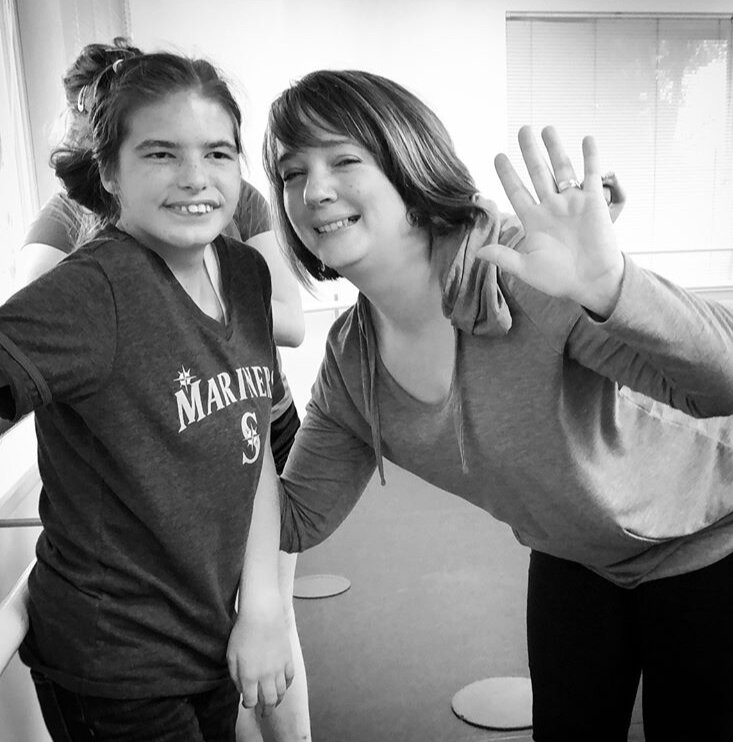
Photo by Hailey Waters
Fansler’s accepting and creative approach to each dancer's challenges is a hallmark of the program. BOMA focuses on what the students are able to do, not their limitations. Fansler’s voice was full of care as she responded to being asked what the goal of BOMA was for the participants. “I want them to feel safe and like they belong, and I want them to celebrate the things they can do instead of [being] boxed in by what they are told they cannot”.
The BOMA class is included in the IDT’s annual recitals. The dancers work on their own piece throughout the year and perform it on stage in the spring.
This month, BOMA’s current class of six dancers will perform in IDT’s recital. Changing COVID-19 restrictions make the exact format of the show uncertain, but the class is already working on creating their piece.
By offering a dance class tailored to students with disabilities, IDT is opening the gate to dance education and breaking down the traditional barriers of who is considered a dancer. Fansler notes, “a lot of times dance is seen as this ridiculously exclusive world, really what you need is a body and a space.”

Ella Kim began dancing at 4 years old. She focused primarily in ballet until finding a love of modern and contemporary dance in high school. She is currently pursuing a BFA in Dance at George Mason University. On breaks from school, she's had the opportunity to dance as a guest artist for Trillium Dance Collective. Ella enjoys investigating different aspects of the dance world and is thankful to DWC for giving her a platform.
Getting to Know the Creator of Girl Power Sport: Lisa Fairman
Earlier this month, I had the amazing opportunity to sit down and chat with Lisa Fairman, founder of Girl Power Sport. They are a local gymnastics, dance, and activewear brand based in Vancouver, Washington with most of their materials sourced from Portland, Oregon. When asked about how her brand started, it was clear Lisa has been surrounded by the arts and sports community for a very long time.

By Emma Neilson
Emma Neilson is a pre-professional dancer from Seattle, WA. She started dancing at the “late” age of 13, and decided to pursue a possible professional career at age 19. She is currently a Professional Division student at International Ballet Academy in Bellevue, WA. She is a registered Barre fitness and Flexistretcher instructor, as well as a current ambassador for To The Pointe Nutrition.
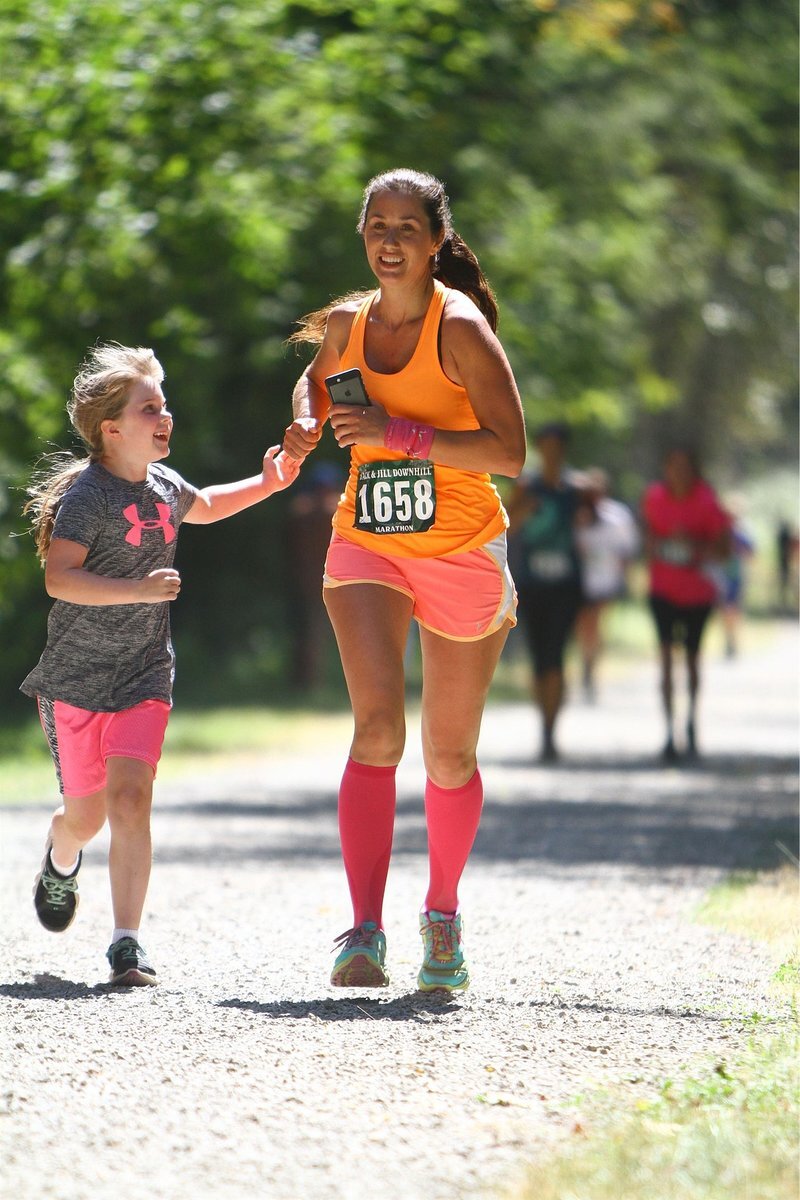
Earlier this month, I had the amazing opportunity to sit down and chat with Lisa Fairman, founder of Girl Power Sport. They are a local gymnastics, dance, and activewear brand based in Vancouver, Washington with most of their materials sourced from Portland, Oregon. When asked about how her brand started, it was clear Lisa has been surrounded by the arts and sports community for a very long time. From participating in ballet, soccer, and theatre herself, to having two daughters in dance and gymnastics, Lisa has first hand experience with what one would want out of this type of apparel. In addition to this, Lisa previously worked for Nordstrom and Zulily, and while there, recognized the demand for and lack of vendors and products on the market. After parting ways with the corporate world, Girl Power Sport was born!
When asked about her transition from buying to manufacturing, Lisa was candid about how difficult it was at first. Though she had years of experience in the fashion industry, she said it was a shock and an eye-opener to see how different things were on the other side. She mentioned how humbling it has been to go through rejection from buyers and retailers and gave some guidance to those who are looking to start their own business:
“So I would say first of all, just whenever you jump into something new, especially with manufacturing and retail, I would say just be open, you know, be open to learning from other people.”
Her biggest piece of advice is being able to pivot and change your business and plans, especially now with COVID-19 making an impact on everyone.
I personally think part of navigating entrepreneurialism includes making sure you have aspects of your brand that will set you apart from the rest, and there are several ways Girl Power Sport achieves this to bring gymnastics wear to the next level. Currently, most of their prints are custom, and Lisa is hoping as time goes on that all of their prints will be custom. The prints are lighthearted, fun, and fresh. They take into account what customers like and try to incorporate humor and encouragement into that, to create something that you will not only feel good in, but might make you smile along the way. They also have coordinating activewear sets to pair along with some of the dance and gymnastics wear.
It doesn’t stop there- Girl Power Sport is very involved with the local community and is committed to donating $1 to charity with each purchase. Lisa was born with a heart condition which resulted in years of health problems and several surgeries. She is an “unusual” case, as she is now healthy, active, and a seasoned runner. Because of this, Girl Power Sport routinely donates to the cardiology fund at Seattle Children’s Hospital. Lisa is truly an inspiration having successfully integrated her personal life experiences and passions into something that is ultimately impacting others as well.

We are so proud to be working with Girl Power Sport, and are greatly aligned in our morals and missions. We want to empower girls and women, serve the local community, and above else believe that movement is for everyone! Lisa said “We strive to be an all around fit… I just felt like dance and gymnastics should be accessible to everybody… No matter what your size. [We] want people to feel like anybody can do dance… you can be any age and be a dancer.” And as some of you readers may know, one of our mantras here at Dancewear Center is “Every body is a dancing body.” Sadly, this sentiment is not shared by the dance and gymnastics world at large, and together we are working to change that and spread this message.
When asked about what other changes she would like to see, Lisa replied saying “I would love for dance and gymnastics to be more accessible [to] ... inner cities and… people who can't pay and lower income families.” She went on to talk about the importance of afterschool programs and recognizing that dance and gymnastics is “...such a healing thing for communities…” She also briefly talked about how much she loves “...the mentorship that goes on with dance and gymnastics with the coaches and the kids… because you spend so much time together. They're just these crazy bonds and I just love that sense of community...” We couldn’t agree more, and along with Girl Power Sport, are here to support these athletes and artists, their parents, teachers, and everyone else in between.
Because it is Mental Health Awareness Month, it was only fitting that Lisa and I chatted about her struggle with anxiety as well. I asked her about her experience and how she manages it, and she had many helpful things to say. She said that a large part of her journey has been “learning how to be living in the present and not… fixate on the past and not stress too much on the future.” She also said she has been learning to be still with herself and how to “reset”. Some coping skills that have helped her include journaling, meditation, and reframing your anxious thoughts. She says she is working on being able to show up in terms of work and business management and at the same time staying centered. This is the art of balance and we both agreed that it is so important to remember that it’s a journey and there is no such thing as perfection!
You may be asking, what is coming next for Girl Power Sport? Lisa said they are currently working on putting together a second production team based in Seattle, WA. Lisa also emphasized how much she values staying local, at least for right now. She prioritizes good working conditions, fair wages, high quality, made in the US, handmade products- all of which is achieved by her hands-on management style. Because of their locality, custom orders are easily produced as well! Lisa and the whole Girl Power Sport team take pride in what they produce, and they love being able to “...share our love with you.” And now, we are able to share it with you too!

“All of us get creative in all different ways to make our dream a reality.”- Lisa Fairman
Click here to listen to a more in-depth interview with Lisa about her personal and professional life story!-
Girl Power Podcast
Available to purchase now in-store and online at https://www.dancewearcenter.net/ and https://girlpowersport.com/
Body Shaming in Ballet

Olivia Floyd is DWC’s Operations Manager and one of our highly skilled pointe shoe fitters! She has been dancing in the Pacific Northwest for 16 years. She has trained in various styles including ballet, tap, jazz, contemporary, and hip-hop. Post graduation, Olivia opted to continue her training in ballet and pointe, and teaches creative movement, ballet, tap, jazz and hip-hop in the Greater Seattle Area. One of her favorite things about working at Dancewear Center is meeting new dancers from all over!
Shop the look:
*DWC recognizes and acknowledges that this perspective on body shaming is written from and with a eurocentric, female-identifying focus in mind, and does not address the unique struggles that dancers of color, differently abled, and other marginalized groups experience, and that this is just a small part of a much more complicated web of problems to be found within the ballet community. To read more on these subjects, please refer to “Disability Stereotypes in the Dance World: An Introduction” and “Seeing Color in the Dance Industry”, and sign up for our newsletter to receive more articles that are currently in the works!
I want to share with you all a story not of myself, but of a professional ballet dancer that many of my fellow dancers know and love: Kathryn Morgan. To be more specific, this story belongs to a friend of Kathryn Morgan who has chosen to remain anonymous. Kathryn shared this story in her YouTube video titled “REAL TALK: “My Today Show” Appearance | Body Image & Mental Health in Ballet.”
Kathryn’s anonymous friend was signed to a professional company. Despite her natural talent and passion, this dancer was told by the artistic director of her company that she would not be thin enough until every bone in her chest was visible. When this dancer told the artistic director that was impossible for her, he responded, “Well, have you thought about cocaine?”
As many of us dancers know, ballerinas have a long history of being admired for their slender figures and athletic abilities. This reputation however has created a culture of body shaming that has shaped the ballet community for hundreds of years.
To start, let’s explore the history of body shaming in ballet in order to determine how it started.
If you ask any dancer involved in the ballet world (young or old), we will tell you that body shaming is a huge issue. The reality of the situation is it is rarely spoken about due to the scandalous nature that society has assigned the subject. According to an article by Kaityln Pierce in The Daily Campus, the issue of body shaming and eating disorders in ballet was not well known until 1997 when 22-year-old ballerina, Heidi Guenther died on a family vacation due to cardiac arrest caused by her eating disorder. She was 5’6 and 96 pounds.
According to an article in SFGate, media outlets found Heidi had been told by her artistic director at Boston Ballet that she needed to lose 5 pounds. After Heidi’s death, the artistic director was questioned about this recommendation. In response she defended herself saying, “[Heidi] was looking a little pudgy.” At the time she was 115 pounds.
Horror stories of body shaming in ballet date back decades with some of my own teachers (currently in their 30s or 40s) having stories to share about pressures put on them to stay thin. The first public outcry regarding the subject though was after Heidi’s death. Her passing opened the floodgates to a world of pushing eating disorders on dancers and body shaming in hopes of forcing ballerinas to slim down to the “ideal” dancer weight.
Some people outside the dance community might be thinking “okay but how widespread is body shaming in ballet really?”
It is difficult to say how many professional companies employ body shaming tactics to keep their dancers thin--because it would most definitely lead to huge backlash from the media and the public.
From Heidi and Kathryn’s personal stories, we know at the very least that body shaming was prevalent at Boston Ballet and Miami City Ballet, two major ballet companies in the industry. As an involved member of the dance community, this is enough to tell me that the issue is much bigger than I even originally thought.
So now that we know that body shaming is an issue, let’s talk about what some of the causes may be.
There are several causes of body shaming and eating disorders in ballet. According to Kaitlyn Pierce’s article, companies often have costumes for their performances that fit one size of dancer. If the dancer does not fit the costume, they do not get the role regardless of their talent. This essentially means that if a dancer wants to be a lead, they have to fit the artistic director’s ideal body type.
Kaitlyn Pierce also mentions that eight of the major ballet companies today are run by men. This means that men are choreographing roles, choosing parts, and in some cases encouraging their dancers to adopt an eating disorder. Pierce notes that hearing those words from a man often makes it sting more for dancers. In other words, having a man in power tell a dancer they need to lose weight makes them more willing to listen to his advice.
In most cases, it should also be noted that men are not fully aware of what is really required of a woman in order to lose weight. Women’s bodies are built to maintain a certain amount of fat, thus in order to get rid of that fat, women must resort to drastic measures.
The issue of body shaming extends beyond professional companies as well.
Oftentimes, young dancers will look up to signed members of companies as inspiration. If the dancers these young people look up to are suffering from an eating disorder encouraged by their company, many of their young fans can develop the idea that their bodies should look like that as well, causing younger and younger dancers to consider their weight for the first time ever.
The history of body shaming in dance is long and turbulent, but there are major steps being taken to change the way we see beauty in dance. Let’s talk about how the current ballet community sees body image.
The current outlook of body image in ballet is finally starting to move away from glorifying rigid, standardized aesthetics that encourage eating disorders and towards embracing and celebrating dancers of all sizes.
YouTubers Kathryn Morgan and Luna Montana have spoken about their experiences with poor body image throughout their ballet careers. Before 1997, people rarely talked about body image in ballet. With the help of these YouTubers, the community has grown to accept different body images and discourage body shaming practices.
According to an article in Swaay, there has been a recent shift in the ballet community in which dancers are now emphasizing the importance of a positive body image. Social media has helped reinforce this new narrative quite a bit with plus size dancers like Lizzy Howell, Iliana Vera, and Colleen Werner sharing their passion for dance on Instagram and in turn encouraging young plus size girls to embrace their shape and follow their dreams.
There are also many new companies that offer plus size dancewear for larger dancers like Jule Dancewear and Luckyleo. These small steps towards inclusion emphasize the growing trend of embracing plus size dancers and encouraging a positive body image.
As we can see, the ballet community has come a long way from body shaming girls to their deaths. Body shaming has an extensive presence among the ballet community; however, those ways are slowly being replaced with a more inclusive outlook. Whatever body you reside in, take pride in the fact that THIS BODY DANCES.
For more reading on eating disorders within the dance industry, read “Dance, My Eating Disorder, and Me” By Emma Neilson. If this is something you or someone you know struggle with, click HERE for a list of resources.
References
Baker, K (1999, April 4). Heidi Guenther’s Short Tragic Life – And Death. SFGate.
Grasso, N. (2018, April 5). Instilling Body Confidence Through the Art of Dance. Swaay.
Pierce, K. (2018, January 18). Body Shaming in the Dance Industry. The Daily Campus.
Disability Stereotypes and the Dance World: An Introduction
I was invited to write blog articles for Dancewear Center earlier this year because I wanted to share with the dance community as a whole what the words disability and mental illness really mean, and why they’re important to me. I want to break down stereotypes around disability and mental illness piece by piece and give my perspective about disability in relation to the dance world.

By Jade Fraser
Hello dance community!
My name is Jade, and this is my first article for the Dancewear Center blog! I’ll be writing for Dancewear Center this year, so you should be seeing more of me in the coming months. For now, I’ll explain who I am and what I’m doing here.
I’m sixteen years old and a junior in high school. I’ve been dancing for at least nine years, six of those at Cornerstone Studio. I began at Cornerstone when I was eleven years old and in sixth grade. I did classical ballet that year, then switched to contemporary and hip hop dance the next year. I’ve done those two styles ever since.
I did pre-level dance at several different places when I was very young, and then I stopped so I could focus on other things. I’d wanted to go back for several years before I actually did; that was after trying artistic gymnastics and finding that it wasn’t my thing. I know I’m not the only one who went through an American Girl phase, and their 2014 Girl of the Year, Isabelle, was a dancer. I watched that movie and was reminded of how much I loved to dance, and then and there I decided I wanted to go back.
I started dancing later than most people I dance with, and I’ve also always had trouble picking up certain techniques. I’ve always needed to work harder and longer than a lot of other people to be able to do even the most basic skills. I also have a habit of comparing myself to other people, and this leads to discouragement. I’ve always been far too hard on myself, and when I feel like everybody is better than me, I beat myself up about it. Even so, I continue to dance because I love it and it brings me joy. I have found a community at Cornerstone Studio – it’s a community of people who love to dance as much as I do. These are the people who help me when I’m having trouble with a skill or with choreography, who encourage and support me, and who understand my obsession for dance (and BTS, in some cases).
I was invited to write blog articles for Dancewear Center earlier this year because I wanted to share with the dance community as a whole what the words disability and mental illness really mean, and why they’re important to me. I want to break down stereotypes around disability and mental illness piece by piece and give my perspective about disability in relation to the dance world. As somebody who is legally disabled and mentally ill myself, I want to be a voice for the disabled community, a community often unheard and underrepresented. I want to be an advocate for the people who are disabled and mentally ill that are unable to advocate for themselves. I want to educate the nondisabled community on the reality of disability, as well as shed some light on why somebody like me with “invisible” disabilities is in fact disabled. In addition, I want to help everybody understand what ableism is and why it is hurtful, not only to people who are disabled themselves, but to the nondisabled community as well as the society that we live in.
Finally, I want to show how stereotypes around disability and mental illness are relevant to the dance world, and what needs to be done so that people with disabilities can have the opportunity to show their full potential, not only in the dance world but in every aspect of life. I want to bring focus and discussion to important and uncomfortable topics like these, because I think a lot of the crucial understanding is missing. My ultimate goal is to bring awareness to this topic, as well as promote education on disability.
Now that you’ve read everything I’ve written so far, you have some background information of who I am and what I’m doing here. I’ll be back in the near future elaborating on the last bit, and I look forward to sharing with you all!
Interested in writing for the DWC Blog? Click below to fill out the DWC Contributor application!