
Advice For Students From a Local Dance Teacher
Be empathetic and respectful to your teacher. We also have bad days, we also experience pain, and we have a non-work life that affects our jobs.
My Dos and Dont’s for Studio Life
By Alberto Gaspar, DWC Ambassador

Photo by Staria Belle | click below to shop the look:
When it comes to professions that I respect the most in this world, nurses, volunteers, and teachers are some of the first that come to mind. Those working in these helping professions and more deserve awards and appreciation from everyone. As a dance teacher myself, I never knew that working in this profession would be such a complex task. Being a dance teacher not only requires extensive dance knowledge, but also multitasking, leadership, room management, communication, adaptability, creativity, patience, a sense of humor, confidence, commitment, “approachableness,” time management, and discipline - yes, all of that!
Teachers are also constantly trying to come up with solutions to common problems they face in the studio, always with their students in mind. And sometimes, we mess up! Teachers and students alike are imperfect beings who are bound to make mistakes and have their feelings hurt. If teachers and students work together to be considerate to one another, the studio dynamic can shift significantly in a positive direction.
From my perspective as a teacher, here is some advice that I have for dance students:
When the teacher is speaking, please give them your attention. For example, if the teacher is speaking, please look at them, as looking elsewhere, hanging on the barre, marking your choreography, or speaking to others may indicate that you aren’t listening. For a teacher, being able to tell that your students are understanding the information given is important for delivering information about dance skills.
Communicate. I understand that some dancers feel shy and uncomfortable expressing themselves verbally. Nonetheless, if you are late to class, struggling to understand class material, or just generally not feeling good, it’s important to communicate this to your teacher so they know how to help you. Allowing the teacher the opportunity to practice empathy comes a long way and can help you solve your problems more effectively.
Speak up for yourself. In the vein of practicing good communication, if you have a problem, suggestion, or don’t feel comfortable with a comment or an action from your teacher or peer, speak up about it. If something in class occurs that makes you uncomfortable, don’t be afraid to communicate it to your teacher, as a misunderstanding may have occurred that can be sorted out.
Try to be on time with all the materials you need for class. This includes having clean, proper dance attire and shoes and wearing your hair appropriately for class. I also encourage students to practice good hygiene by coming to class with deodorant on.
If a teacher gives you a personal correction, pay extra attention to that. I always tell this to my students. Most of my students receive over 40 corrections, but if I have been mentioning two or three specific ones constantly, this means that those corrections are the ones that need the most attention.
Be empathetic and respectful to your teacher. We also have bad days, we also experience pain, and we have a non-work life that affects our jobs. Always be respectful to your teachers, which includes addressing them in a more formal tone if that’s what they prefer. Understand that we, as teachers, are here to help you improve your skills, support you in difficult times, and celebrate your wins.
Respect your bodies. This is particularly important when you’re experiencing an injury. I know it can be hard to stop dancing, but if you are injured, you don’t want to push yourself. There are ways to stay engaged with dance when you’re injured, like observing class, listening to corrections, receiving physical therapy, or simply taking a mental and physical break for yourself. On the other hand, being sore or tired should not stop you from approaching class at your maximum capacity that day. Find that middle point where you can challenge yourself without injuring yourself, always respecting your body.
Reach out to staff for support and advice. For example, ask faculty members for a second or third opinion when it comes to taking on responsibilities. Staff members may be able to provide perspectives you haven’t considered.
Find your happy place and enjoy rehearsals and classes. Remember that your time in the studio is finite, so enjoy your time there while listening to your dance teachers and parents. And don’t be afraid to follow your heart and your intuition in dance, your inner self will always be right.
These are just a few tips that I have for students. I hope you all found this list helpful, feel free to contact me through social media if you have any questions!

Photo by Staria Belle | click below to shop the look:
Hidalgo Black Tights | Wear Moi
About the author:

Disclaimer
All content found on the Dancewear Center Website, Instagram, Facebook, Pinterest, and all other relevant social media platforms including: text, images, audio, or other formats were created for informational purposes only. Offerings for continuing education credits are clearly identified and the appropriate target audience is identified. The Content is not intended to be a substitute for professional medical advice, diagnosis, or treatment. Always seek the advice of your physician or other qualified health provider with any questions you may have regarding a medical condition. Never disregard professional medical advice or delay in seeking it because of something you have read on this Website.
If you think you may have a medical emergency, call your doctor, go to the emergency department, or call 911 immediately. Dancewear Center does not recommend or endorse any specific tests, physicians, products, procedures, opinions, or other information that may be mentioned on dancewearcenter.net. Reliance on any information provided by dancewearcenter.net, Dancewear Center employees, contracted writers, or medical professionals presenting content for publication to Dancewear Center is solely at your own risk.
Links to educational content not created by Dancewear Center are taken at your own risk. Dancewear Center is not responsible for the claims of external websites and education companies.
What “Love Your Body Week” Means to Me
In talking with the older dancers, they all say that LYBW has really shaped their perspective of themselves and dance. It’s also found its way into their life outside dance. They’ve been quick to point out when a friend at school was being unkind to their body, and look at social media with less self-judgment. I’m so excited and proud that I’m able to work at a studio that holds this week with high regard. And we continue the ideas of LYBW throughout the year. It’s become so embedded in ATD’s culture, there’s a different feeling just walking into the building.
Promoting Self-Love in the Studio
By Dominique See DWC Ambassador

click below to shop the look:
Summit Track Pant | Dylan Tank Bra | by Girlfriend Collective
We use our bodies for our art. Our bodies are our medium. We strive to make the most interesting/beautiful/unique art with our bodies, sometimes forcing them into harmful situations. However, most of the time, we don’t take a moment to appreciate our bodies for what they are and can do. At All That Dance, there is a week dedicated to loving our bodies. It’s now become a national event, and the National Honor Society for Dance Arts has brought it to many studios around the country.
Love Your Body Week (LYBW) started in 2005, with Rachel Stewart. Rachel was teaching at All That Dance (ATD) and was concerned with the negative body image talk she would overhear students saying. The main idea is to take time out of each class during this week, and have discussions with the students about dance and self-love.
This program has grown over the years, and now makes use of student leadership to facilitate some class activities, overseen by Mary Pisegna Gorder. There is now a curriculum that Mary and Rachel develop each year, with different topics of discussion and activities for different classes. Each of these prompts culminates with each dancer writing or drawing a positive statement about their body. All the dancers then tape their artwork and words of love on the mirrors in the studios till the mirrors are completely covered with heartwarming messages.
As a new teacher at ATD, I experienced my first in-person LYBW in 2021. It was my first full year of teaching a full teaching track load. I was over the moon ecstatic to be a part of this incredible program and week long event. When I grew up, there wasn’t any such thing as LYBW. Looking back, I often ask myself if I could have avoided many nights of tears and frustration that my body wasn’t the perfect “ballet body” if I would have had this program. I struggled with my identity as a dancer since it was a dream to do ballet professionally. I didn’t know what else to do and I felt betrayed by my body. This was all when I was just 12 years old. It was horrible. The pressure I put on myself and the disappointment that I kept feeling left me so uncomfortable in my skin.
I started getting into modern more, and that is where I found my stride. I believed that in modern, it would be ok that I have a much more muscular frame, and shorter legs with a long torso. I believed that I could potentially be a professional modern dancer because of these physical traits.
Thinking about how I leaned into modern dance because I thought it would be more forgiving to different body shapes makes me sad. Don’t get me wrong, I do love modern dance. I love rolling around on the floor, and minimalistic hand gestures (not that that is all that modern dance is). But the fact that I fell in love with modern dance because I was “let down” by my non-ballet body, is not the healthy love story I’d like for my students to hear.

click below to shop the look:
Long story short, I still never got over how my body wasn’t “perfect” for dance. This led to me developing an eating disorder in my early 20’s out of anxiety and fear. This was a dark time for me, and it was during what was supposed to be a highlight of my dance career as well.
I met with Mary pre-LYBW to discuss what I would have to do as their teacher. The National Honor Society for Dance Arts runs LYBW, but the teachers are in the room still for support. I was concerned that my state of mental health and my eating disorder issues were going to get in the way of me holding space for my students. We looked over the curriculum and I felt pretty safe about all the topics besides one. Compliments. The students were going to discuss compliments and how giving compliments to others is easy, but giving a compliment to yourself is much more challenging, if not impossible. The thought of trying to give myself a compliment turned my stomach inside out. I was very concerned that I wouldn’t be able to keep steady in the room with this discussion. We came up with a game plan for me to keep my mental health safe during this day, and I’m so thankful that Mary was understanding.
LYBW kicked off with my Teen Ballet dancers. It was so much fun seeing them excited for LYBW since they’ve been a part of ATD and have experienced it for many years already. They were stoked. The mirrors started filling up with sweet messages. Lots of spelling errors from the little dancers, and big hearts from the older dancers. One said “Taylor Swift loves you just the way you are!” Another said “I love my tummy because it helps me eat.” It was heartwarming reading these messages and then watching my students read them as well. Some dancers had some trouble thinking about what they loved about their bodies. It made me sad for a second, but once I started pointing out the amazing things our bodies do for us, they were able to pick up one of those and run with it.
In talking with the older dancers, they all say that LYBW has really shaped their perspective of themselves and dance. It’s also found its way into their life outside dance. They’ve been quick to point out when a friend at school was being unkind to their body, and look at social media with less self-judgment. I’m so excited and proud that I’m able to work at a studio that holds this week with high regard. And we continue the ideas of LYBW throughout the year. It’s become so embedded in ATD’s culture, there’s a different feeling just walking into the building.

click below to shop the look:
By the end of the week, I was mentally exhausted. My brain was on overdrive trying to protect itself while also holding space and being a supportive teacher to my students. I took all the discussions to my personal therapy sessions and have been slowly picking away at the iceberg that is my mental health and body image. It’s a bummer that I didn’t grow up with LYBW to potentially save some of these issues from existing, but as a dance educator I’m so excited to see what LYBW does to the future of dance. It’s a promising future, and an idea that should never be overlooked. Dancers need the support and reminders that our bodies are amazing. No matter what shape, size, color, or ability. Our bodies are our medium for our art. And if we don’t treat our medium with love and respect, our mediums won’t be there to support us for long.

Disclaimer
All content found on the Dancewear Center Website, Instagram, Facebook, Pinterest, and all other relevant social media platforms including: text, images, audio, or other formats were created for informational purposes only. Offerings for continuing education credits are clearly identified and the appropriate target audience is identified. The Content is not intended to be a substitute for professional medical advice, diagnosis, or treatment. Always seek the advice of your physician or other qualified health provider with any questions you may have regarding a medical condition. Never disregard professional medical advice or delay in seeking it because of something you have read on this Website.
If you think you may have a medical emergency, call your doctor, go to the emergency department, or call 911 immediately. Dancewear Center does not recommend or endorse any specific tests, physicians, products, procedures, opinions, or other information that may be mentioned on dancewearcenter.net. Reliance on any information provided by dancewearcenter.net, Dancewear Center employees, contracted writers, or medical professionals presenting content for publication to Dancewear Center is solely at your own risk.
Links to educational content not created by Dancewear Center are taken at your own risk. Dancewear Center is not responsible for the claims of external websites and education companies.
A PNB Soloist on Mentorship and Being a Ballet Life Coach
When asked about what steps can be done to help alleviate these often harmful expectations, she shares that normalizing the concept of an everyday person dancing is something that needs to be more globally understood. She expresses that it can be hard for trained dancers to look at others’ dancing and not critique them in certain ways. Therefore, Santina believes that the mindset of seeing everyone as a dancer is something that needs to be adopted by dancers all around the world.
Cecilia Iliesiu on Tackling Tough Conversations in the Dance World
By Nicole Barrett, DWC Blog Co-Editor


Diving into the tough conversations about mental health and preparing for jobs that are engulfed in the dance world is something that Pacific Northwest Ballet Soloist Cecilia Iliesiu is very passionate about. Having danced professionally for thirteen years, she knows that the ups and downs in a dancer’s career can be very tough. By creating and running the Mentorship Program at PNB School (PNBS), she is tackling those issues head-on and providing pre-professional dancers with career support through Ballet Life Coach. Read on to learn more about Cecilia’s dance journey and the steps she’s taking to create a more open and supportive space for dancers.
Cecilia was born and raised in New York City, New York, and trained at the School of American Ballet from the ages of eight to eighteen. After her training, she landed a company job at the Carolina Ballet. She danced there for six seasons and became a soloist, but after dancing there for years she knew that she wanted to be on another path. Cecilia auditioned internationally and domestically for numerous ballet companies and Pacific Northwest Ballet offered her a job. She has now been dancing with the company for seven seasons and became a soloist in 2020. “I plan on dancing until I stop learning or my body tells me not to,” Cecilia shares.
Outside of dance, Cecilia loves to go swimming, kayaking, do yoga, and make pottery. She bikes to work every day and has many other hobbies that give her a perspective outside of dance. Cecilia also graduated from Fordham University with a Bachelor’s degree in Communications and Media Studies while dancing full time at Carolina Ballet and PNB.
Cecilia runs PNBS’s Mentorship Program with fellow PNB dancer Amanda Morgan. Starting in March 2020, this program was founded by Morgan and aimed to help with the mental health challenges dancers were facing during the pandemic. This program has evolved to work with dancers in the highest six levels of the PNBS and includes PNB company dancers as the student’s mentors. Cecilia and the mentors work very closely with PNBS consulting therapist Josh Spell to ensure that all the sessions meet the needs of the students. Each level of the Mentorship Program has two sessions per month, one with a company mentor and one with a therapist. The meetings discuss topics like body image, goal setting, work ethic, grappling with self-doubt, and much more. "I can see the students' confidence blossoming in each mentorship chat. The student's vulnerability to talk about their struggles in dance is incredible. The safe space allows them to verbilize, process, and connect with their classmates in a really meaningful way.” Cecilia says about the mentorship program.
During the pandemic in particular, Cecilia noticed a plethora of needs expressed by the pre-professional dancers she worked with in the PNBS Mentorship Program. In particular, dancers needed assistance with company auditions, including help with resumes and cover letters, which led her to give advice and create resources. Helping dancers with a business-side baseline to start their careers was something that motivated her to create Ballet Life Coach, an online resource to help dancers achieve their professional goals and guide them towards a successful career.
Ballet Life Coach currently offers a free 8-Step Audition Checklist with suggested timelines and to-do lists, a resume template, and audition template package that covers the important audition materials. Dancers can also now book one-on-one coaching sessions with Cecilia herself to review and fine-tune audition materials. Click here for more information! In the future, she hopes to see this kind of administrative and holistic support integrated into dance school education
Coming up, Cecilia is offering workshops for year-round schools and summer courses on pre-audition preparations. She was involved in workshops for the summer course at PNB in 2021 and is planning to expand to more schools this summer. One of her big goals is to not only do these workshops for PNB but include other companies in different areas and create more in-depth audition preparation programs.

One of Cecilia’s favorite things about dance is performing. She shares that when the pandemic started, it was very hard for her to switch over from a real audience to a screen. “I just love expressing myself on stage and creating different storylines and characters,” Cecilia shares about performing live. She also shares her love of seeing her coworkers dance along with her and just enjoying the presence of everyone onstage.
When asked about her biggest struggle in the dance world, Cecilia expresses that the mental blocks that dancers face can pose huge challenges. She shares that throughout a dancer’s training process, the physical aspects of learning how to do certain movements often come before the mental challenges that are endured when attempting such things. Cecilia ties this topic back to her work with the Mentorship Program, sharing that she wants to make these conversations about mental health more accessible for dancers. “To me, ballet is physically demanding, but the mental part of it isn’t talked about, and honestly is often the hardest part of dancing,” Cecilia shares.
Cecilia wants dancers that are struggling with similar mental health issues to know that they are not alone, and that they should not be afraid to ask for guidance. She expresses the importance of talking to your peers about any issues. Everyone is going through something, so having these open discussions, and not suppressing your feelings is something that is very important.
Moving forward into the dance world, Cecilia would like to see more normalization of tough conversations within the dance community. She shares that the transitions between what ballet is now versus what it has always been can be very hard for companies and dancers to grasp, so making that transition is something that Cecilia finds very important. “The next generation of dancers need to be the change that they want to see in the ballet world,” she shares.

Disclaimer
All content found on the Dancewear Center Website, Instagram, Facebook, Pinterest, and all other relevant social media platforms including: text, images, audio, or other formats were created for informational purposes only. Offerings for continuing education credits are clearly identified and the appropriate target audience is identified. The Content is not intended to be a substitute for professional medical advice, diagnosis, or treatment. Always seek the advice of your physician or other qualified health provider with any questions you may have regarding a medical condition. Never disregard professional medical advice or delay in seeking it because of something you have read on this Website.
If you think you may have a medical emergency, call your doctor, go to the emergency department, or call 911 immediately. Dancewear Center does not recommend or endorse any specific tests, physicians, products, procedures, opinions, or other information that may be mentioned on dancewearcenter.net. Reliance on any information provided by dancewearcenter.net, Dancewear Center employees, contracted writers, or medical professionals presenting content for publication to Dancewear Center is solely at your own risk.
Links to educational content not created by Dancewear Center are taken at your own risk. Dancewear Center is not responsible for the claims of external websites and education companies.
The Benefits of Nurturing Passions Besides Dance
In ballet, I have struggled with confidence. I always felt unworthy and inferior to everyone. Being considered a late starter, I always had the feeling that I was constantly playing “catch-up” when it came to my peers. I spent too many years at my first ballet studio, receiving bad training and abuse from my teacher who always made me feel like I would never amount to anything as a dancer. These feelings of inadequacy negatively impacted my attitude towards dance and also contributed to my low self-esteem. I always felt something was holding me back from dancing my best. It wasn’t until I underwent a major surgery that I came back to professional ballet with a newfound confidence and a greater passion for the art form.
A Story of a Dancer’s Road to Recover
By Anna Nelson, DWC Ambassador

click below to shop the look:
In ballet, I have struggled with confidence. I always felt unworthy and inferior to everyone. Being considered a late starter, I always had the feeling that I was constantly playing “catch-up” when it came to my peers. I spent too many years at my first ballet studio, receiving bad training and abuse from my teacher who always made me feel like I would never amount to anything as a dancer. These feelings of inadequacy negatively impacted my attitude towards dance and also contributed to my low self-esteem. I always felt something was holding me back from dancing my best. It wasn’t until I underwent a major surgery that I came back to professional ballet with a newfound confidence and a greater passion for the art form.
In 2018, during a guest performance of the Sugar Plum Fairy in The Nutcracker. I felt a sharp pain in my hip while doing a developpe a la seconde into a fouette arabesque on stage. Thanks to that fateful moment on stage, I realized I needed to go to the doctor. Years prior, I had brought up that I had some hip pain and constant clicking in my hip to my doctor, but was told that it was arthritis, and the only thing that could be done was to make sure I keep my hip warm before dancing. I accepted that diagnosis and made sure to wear extra warm-ups while taking class for years, until my hip pain progressed to the point of me not being able to walk after waking up in the morning.
Fast forward to the fall of 2020. I had been diagnosed with bilateral hip dysplasia by a hip specialist and was told the only surgery that would help my pain long-term, as well as prevent me from having to get a hip replacement by the age of 35 would be to undergo a procedure known as a Periacetabular Osteotomy, or PAO for short. This would be a major surgery that would require five days in the hospital and six to eight months of physical therapy. I was told that I would most likely be able to dance again, but at a “modified” level. This horrified me, but the amount of pain I was in daily and the fear of having an artificial hip joint so young in life, led me to my decision to undergo the operation.
The recovery process was definitely the hardest physical struggle I have endured in my life. I was on crutches for 2 months, which led me to be completely dependent on my husband who, at the time, was working 14 hour days as an infantry reconnaissance platoon leader in the Army. I remember feeling frustrated many times because I was unable to do simple tasks, like washing the dishes, because putting all my weight on one leg for more than a few minutes was unbearable. The most difficult aspect of recovery for me, was that I was completely banned from doing any physical activities to allow my hip bone to heal without bending the screws. Even though during this time I had put professional dancing on the back burner and was focused on completing my degree, I would try to make it to as many ballet and fitness classes that my busy academic schedule would allow. Moving my body and exercising made me feel great and relieved a lot of the daily stressors in life. That was all taken away from me and I needed to divert my energy into something else that would allow me to feel fulfilled. It was during this time I was grateful that I was currently in school and had grown so many interests outside of dance. I had to remind myself of the difficult things I had already accomplished in my life, and I also needed to accept the reality that I may not ever be able to dance at the level I was dancing at before again. I placed all my passion and energy into studying at my final year of University, I rediscovered my love of reading, I grew my faith in God and I also learned how to give myself grace and be patient with my healing journey.

I remembered when I was a pre-professional ballet student, my entire identity was rooted in the fact that I was a ballet dancer. I had put all my energy into dance. I never took the time to develop friendships, I never attended homecoming or prom, I switched to online high school my junior year, all so that I could focus on my ballet training. If I had this surgery back then, I don’t think I could have handled it.
After six months of physical therapy, I began taking a ballet class for my last elective credits over zoom at the University of Washington. As the months progressed, I began taking ballet classes at local studios and gaining my physical strength back. Upon graduation from UW, I increased my ballet training significantly. I began to feel like I had control of my body again. The confidence I gained from receiving my degree in a difficult, competitive major at a top university gave me the confidence to “test out” my new hip in a professional ballet setting. I took a company class at Olympic Ballet Theatre and was offered a position. Immediately, I began rehearsals for the Nutcracker and went on to perform 13 shows about one month later. Although a major injury or surgery seems like a negative setback, I challenge you to reconsider. Perhaps just what you need to improve your dancing is to step away completely and nurture other passions or interests. The confidence you may gain from excelling in other areas in life or learning a new skill could be just what you need to improve and increase your confidence in dance.
Sources:
https://www.hss.edu/conditions_Periacetabular-Osteotomy-PAO.asp
Disclaimer
All content found on the Dancewear Center Website, Instagram, Facebook, Pinterest, and all other relevant social media platforms including: text, images, audio, or other formats were created for informational purposes only. Offerings for continuing education credits are clearly identified and the appropriate target audience is identified. The Content is not intended to be a substitute for professional medical advice, diagnosis, or treatment. Always seek the advice of your physician or other qualified health provider with any questions you may have regarding a medical condition. Never disregard professional medical advice or delay in seeking it because of something you have read on this Website.
If you think you may have a medical emergency, call your doctor, go to the emergency department, or call 911 immediately. Dancewear Center does not recommend or endorse any specific tests, physicians, products, procedures, opinions, or other information that may be mentioned on dancewearcenter.net. Reliance on any information provided by dancewearcenter.net, Dancewear Center employees, contracted writers, or medical professionals presenting content for publication to Dancewear Center is solely at your own risk.
Links to educational content not created by Dancewear Center are taken at your own risk. Dancewear Center is not responsible for the claims of external websites and education companies.
Educating Dancers One Pointe Shoe at a Time: A Conversation with Josephine Lee
All aspiring ballerinas know that dancing in pointe shoes is the hallmark of being a professional ballet dancer. Yet, misinformation about fitting pointe shoes circulates across the country, leading many dancers to endure poor fittings and, in the worst cases, injuries. Entrepreneur, international award-winning speaker, and pointe shoe fitter extraordinaire Josephine Lee has made it her goal to offer educated and personalized pointe shoe fittings that leave dancers feeling empowered with information. Through her work at ThePointeShop, and her recent partnership with Dancewear Center, Josephine strives to promote education and inclusivity in all she does.
By Madison Huizinga, DWC Blog Editor

Photo Credit: Jazley Faith and Amy Howton
All aspiring ballerinas know that dancing in pointe shoes is the hallmark of being a professional ballet dancer. Yet, misinformation about fitting pointe shoes circulates across the country, leading many dancers to endure poor fittings and, in the worst cases, injuries. Entrepreneur, international award-winning speaker, and pointe shoe fitter extraordinaire Josephine Lee has made it her goal to offer educated and personalized pointe shoe fittings that leave dancers feeling empowered with information. Through her work at ThePointeShop, and her recent partnership with Dancewear Center, Josephine strives to promote education and inclusivity in all she does.
Josephine’s dance journey begins at age three when she was enrolled in a ballet class. Two years later, Josephine and her family moved to Korea. She explains that, at the time, ballet training in Korea was quite rigorous and people only began if they were seriously considering a career as a professional dancer. Thus, Josephine’s training became more intense and she also picked up Korean folk dancing as an additional focus in her dance studies. Her training persisted as she and her family moved to Southern California when she was 10 years old. Soon after the move, Josephine’s mother, a former dancer, started her own dance store. “She became known as a really good [pointe shoe] fitter in that region,” Josephine says of her mother. Josephine learned how to fit pointe shoes herself at her mother’s store as a teenager. After graduating from USC, Josephine followed in her mom’s footsteps and started her own retail dance store.
“It was very difficult to find [pointe shoe] fitters who were knowledgeable and fitters who had a well-stocked inventory. So we decided to focus on that,” Josephine says of the inspiration behind ThePointeShop. “A few years later, I closed the retail portion...and just switched to pointe shoes.” Ten years after the store was created, ThePointeShop is the only dance store in the country that solely carries pointe shoes and focuses on pointe shoe fittings.

Photo Credit: Amy Howton
Pointe shoes are undoubtedly one of the most challenging items to carry at a dance store, as they can be difficult to stock thoroughly and fit correctly. For that reason, Josephine has made it her mission to educate the public on how to fit pointe shoes properly. “We have a very similar mission as [Dancewear Center]. We want to help the public get a little bit more educated [about pointe shoes] and hopefully bridge the gap between dance and science,” Josephine says of ThePointeShop’s goal as a business.
While Josephine has years of fitting experience from working with her mother, she is still constantly learning new information about pointe shoes through her work. “Every day I meet a dancer who stumps me or I see something interesting that I haven’t seen before,” she says. “I love that challenge and that continual education. Even though it seems like such a small thing...the education that comes along with it is endless.”
In tandem with its individualized pointe shoe fittings, ThePointeShop has created a prolific name for itself on social media, amassing over 35,000 followers on Instagram and 71,000 subscribers on YouTube “If the Internet or social media didn’t exist, our company wouldn’t exist,” Josephine says. ThePointeShop mainly focused on Facebook promotion when it first began, before migrating to Instagram, and later to YouTube. “The reason why we went so social heavy at the beginning was because we didn’t have a marketing budget...social media was a key component in how to spread the word. And instead of focusing on advertisements and sales, we decided to focus more on education and giving back to the public.”
With her background in broadcast journalism and public speaking, Josephine found that her prior life experiences helped her create a prominent social media presence for ThePointeShop. She believes that the best form of advertisement is “giving enough value to the audience [so] they gain your trust.” From her informative pointe shoe fittings with a wide array of dancers to her entertaining “reaction” videos to ballet TikToks, Josephine offers audiences “value” in a variety of capacities.
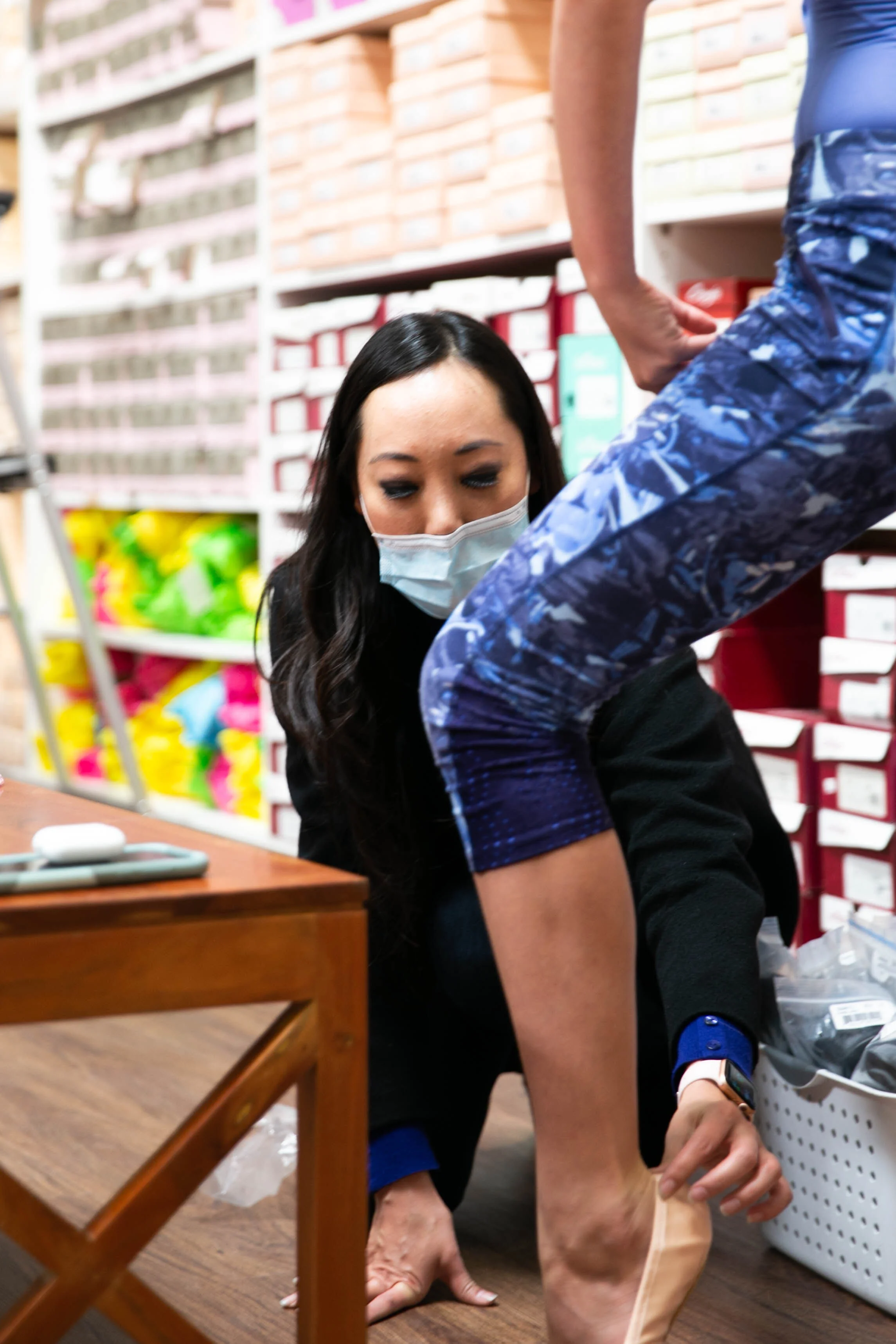
Photo Credit: Jazley Faith and Amy Howton
Dancewear Center recently announced that it will be employing the Progressive Pointe Method when fitting pointe shoes with the support of ThePointeShop. “I’m a big believer that you can teach any skill to anybody if you are committed to teaching somebody something. But I think what is more important to me is integrity and the type of message and the kindness that Dancewear Center has always been committed to,” Josephine says of the partnership. “[Dancewear Center has] always been a big advocate for spreading awareness and helping the dance community as a whole...and I really love that collaborative spirit. I really love that inclusivity.”
In the spirit of collaboration and inclusivity, Josephine hopes to see more empathy and understanding in the dance world. “I think a lot of problems stem from not being able to communicate how you’re feeling, what you’re going through, how to get through things, your different options, etc.” She points out that after years of suppressing their issues, many dancers aren’t fully capable of articulating the problems they’re experiencing. “Having a little bit more empathy towards dancers and a little bit more awareness...is very necessary in the dance world and I think it will solve a lot of problems.”
Josephine is a founding member of DanseMedica, and will be at DWC Renton on Saturday, July 30th during the Dance Teacher Conference. Josephine will be speaking along with a panel of other dance educators. Click here to register now!

How to Recover From a Tough Class: A Guide for Students and Teachers
We have all been there as dancers. We’ve all had that class where nothing seems to be going our way. We mess up every combination, we can’t balance longer than a couple of seconds, we fall out of every turn, or completely botch a petite allegro. It’s so easy to let self doubt and negativity completely destroy us. It’s easy to let those feelings of failure take over. Sometimes it feels like every combination gets worse and worse to the point you want to give up and run out crying. As teachers, we’ve also been there when we can see students starting to struggle and then it causes us to doubt ourselves as valuable educators.
By Austin Sexton, DWC Ambassador
Medical Disclosure: Dancewear Center does not claim to have any medical expertise on any circumstances or diseases discussed. This is Austin’s personal experience and opinions. If you need help see the resources listed at the bottom of this post. If you or someone you know needs immediate medical attention, call 911.

click below to shop the look:
We have all been there as dancers. We’ve all had that class where nothing seems to be going our way. We mess up every combination, we can’t balance longer than a couple of seconds, we fall out of every turn, or completely botch a petite allegro. It’s so easy to let self doubt and negativity completely destroy us. It’s easy to let those feelings of failure take over. Sometimes it feels like every combination gets worse and worse to the point you want to give up and run out crying. As teachers, we’ve also been there when we can see students starting to struggle and then it causes us to doubt ourselves as valuable educators.
Most of the time, the reasons for having a hard class have nothing to do with our technical ability or worthiness as educators and everything to do with outside factors. Maybe you had a tough day at school, maybe your body is processing some trauma, maybe your body needed more nourishment that day, and you didn’t realize it until you were halfway through a tendu combination. But sometimes, maybe the class is harder than you expected and you weren’t prepared for the challenge because of those outside factors.
As a teacher, I have also had classes where I go into it with good intentions, but I’ve let my outside factors take over and things start to spiral. I can see that I’m not connecting with the students in the way I intended, and I can see their self doubt kicking in, which then in turn, causes my own self doubt to kick in. I start to question if I’m a good teacher, if they trust me, and imposter syndrome tries to take hold of the truth.
It’s important to not let one rough class define your worth as a dancer or teacher and more importantly your worth as a human.

click below to shop the look:
Officially En Pointe Tee by DWC | This body dances beanie by DWC
Here are some ways to recover when you’ve had a class that makes you want to quit:
CRY. I mean it. It is okay to cry. Crying releases so much tension and emotion out of the body, that I promise you will feel better afterwards. Crying is not weak (this is something I’ve really had to work on for myself). Crying is the body's natural way of releasing negative emotions so that it doesn’t hold it in and manifest in the body through pain or injury. As a teacher, sometimes it can be very scary to see a student crying, because it feels like a personal attack on our teaching ability, or our worth as a teacher. But I have been trying to understand that maybe sometimes the student can’t control it and that it's genuinely the body doing what it’s supposed to do. However, if it is a result of my inability to meet a student’s needs, I try to hold accountability and take action to reconcile through communication and redirection. I recommend finding a safe space and/or a safe person and crying as much as you need to.
Take a break. If you’re in the middle of class and you feel tension rising in your body and self-doubt kicking in. Attempt to communicate to your teacher that you need a moment. As a teacher, I try to be in tune with my students and notice if they’re struggling, but not every teacher does. So, try to find an appropriate moment to say something like, “I need a moment to collect myself” or “I’m having some anxiety, may I please be excused for a moment?” The most obvious moment is between barre and center or warm up and progressions, but we can’t control when we reach our limit, so in extreme cases, if you just need to step out without saying anything, that’s okay too. Your mental health is more important than five minutes of class. As long as there is communication with your teacher either before or afterwards, then it is okay to take a break.
Do some grounding exercises after class. It’s easy to let yourself spiral into all of the negative moments in class and to fixate on every missed tendu or stumbled glissade. Breathing helps so much. Take some deep breaths and try to de-center your thoughts of negativity and tell yourself that you are safe and that you are worthy. As you’re breathing, try to recall three positive moments in the class and let those be the light that carries you through. Choosing to recall the good moments over the bad can help you realize that the class was not completely terrible and that although sometimes class is hard, you are still strong and powerful. Pick a color and identify items in the room of that color. This activity helps to bring your consciousness out of your head and into the room so you can begin to think logically about the class and identify what went well and what didn’t. For more grounding techniques visit: https://www.healthline.com/health/grounding-techniques#physical-techniques
Self-affirm. Remind yourself that you matter and that you are worthy of having access to the joy of dance. Remind yourself that you are doing your best with the tools that you have in your box that day, and that the goal is not to be perfect. The goal is to do your best and give 100% of what you have to offer that day. That might change from day to day, depending on your stress levels and outside factors and that’s okay. Tell yourself that you did your best. But also, have a conversation with yourself about what you could have done differently. It’s good to hold yourself accountable, while also reminding yourself that it’s okay to make mistakes, because mistakes are where you learn the valuable lessons in life.
Lastly, as teachers, we hold the power and therefore, we are responsible for taking accountability for the outcome of the class. After a tough class, talk to your students. Have a moment with them to not only take accountability for how you could have improved in the moment and also tell them what your intentions were. Show students that they deserve respect and that you are capable of apologizing and reconciling after tough moments. Assure them that you want to see them doing their best and that you are also doing your best. Tell them you don’t ever expect perfection from them, but you expect intention and for them to simply try, even if they make mistakes. Showing students your own vulnerability can create a safe space for them to be able to take risks and not give up on themselves, because you won’t give up on them.

click below to shop the look:
Not every dance class you take is going to be perfect. Not every pirouette you do is going to be flawless. Sometimes, class is going to be hard-and that’s okay. Sometimes, you’re going to completely screw up a combo-and that’s okay. It is 100% okay to have a “bad class.” But when you let that one pirouette, or missed pas de bourre completely ruin the rest of class for you, that’s when you’re letting yourself down. Don’t let one tough moment in time define your worth as a dancer. You are still worthy, you are still strong, and most importantly the work that you’re doing matters. When you give up on yourself, you give up on the possibility of a successful moment and give the one flaw too much power. No one is perfect, but what you can do is decide to do your best, every day. Even if that looks different from day-to-day. Your best is best.
RESOURCES
https://www.healthline.com/health/grounding-techniques#physical-techniques
Students, please talk to your parents or an adult you trust if you need help. They can connect you with a doctor. If you need immediate help, here are some resources:
Getting to Know DWC Ambassador Dominique See
One of the things that Dominique is looking forward to about being an ambassador is that it can allow her to become more of an advocate for mental health in the dance world. Having gone through these experiences herself, she wants to be able to raise awareness for these issues that are very common in the dance world. At All That Dance where Dominique teaches, there is Love Your Body Week that has been picked up by numerous other studios around the country where time is taken out of dance classes during the week to discuss loving your body. Dominique shares that this week is something that has helped her want to lift up the voices of people struggling with these issues and advocate for more awareness.
By Nicole Barrett, DWC Blog Writer

Photo by Catlyn Griswell | click below to shop the look!
Advocating for mental health around the dance community is something very important to one of our new DWC ambassadors, Dominique See. Starting at the age of three, Dominique has always been involved in the dance world and has strived to achieve the acceptance everyone deserves. Read on to learn more about Dominique’s dance journey and work at All That Dance and Genki Pilates!
Dominique is from a small town in southern Washington State called White Salmon where she started dancing at the age of three. She signed up for dance classes with her friend and ultimately, she just never stopped dancing. She was involved in the performance companies at her studio where she shared that she learned she wanted to dance forever. She majored in dance at the University of Washington and graduated in 2017. While dancing at UW, she was the President of the Dance Student Association and worked with the Chamber Dance Company. Dominique wanted to be as involved as she could in the dance community at UW and that is what she did.
Post-graduation, Dominique went into the pilates teacher training program to become a pilates instructor and was dancing here and there in different places around the Seattle area. While dancing in Seattle, she was involved in the Tint Dance Festival and danced with Pat Graney for about two and half years during this time. Dominique then began performing with MALACARNE and did a virtual zoom performance in 2021. She then began teaching at All That Dance in Seattle and has been involved in the dance company there.
Growing up, Dominique was always drawn to ballet more than any other style. “I was very much drawn to ballet with the structure and the precision and the thought that ‘this is what you do when you do it,’” Dominique shares. She describes a sense of comfort when dancing in a style like this where she can tell her body exactly what she wants to do and how to do it and she felt that it was a grounding point for her.

Photo by Catlyn Griswell | click below to shop the look!
As she got older, she started shifting over to more modern dance instead of ballet. Dominique mentions that the physical aspects of the dance world and the stereotypical body types that were required for ballet dance as an adult were something that made her switch over to modern dance instead. “What I love most about dance is you have all the control in it, but you also have control in how much you let go,” Dominique shares.
When asked about her biggest challenge in the dance world, Dominique shares that it was her inability to say no. She mentions that this realization occurred for her when she became more aware that you don’t have to do the things that hurt. She also mentions this need to please the choreographer and feel appreciated when they show attention to you, which is something very common in the dance world. Because of this, she wants other dancers to know that no matter what “you are your own body, your own dancer, your own artist, and you are your own person.” She wants dancers to be mindful of their own health and safety and know when to say no.
One of the things that Dominique is looking forward to about being an ambassador is that it can allow her to become more of an advocate for mental health in the dance world. Having gone through mental health challenges herself, she wants to be able to raise awareness for similar issues that are very common in the dance world. At All That Dance where Dominique teaches, there is a “Love Your Body Week” that has been picked up by numerous other studios around the country where time is taken out of dance classes during the week to discuss loving your body. Dominique shares that this week is something that has helped her want to lift up the voices of people struggling with these issues and advocate for more awareness.
Dominique just got finished with a five-hour duration show at the Georgetown Steam Plant that she did with Malacarne. “[This performance] was epic, it was amazing and so fulfilling,” Dominique shares about the show. She is looking forward to the end-of-year recital for All That Dance where she gets to watch all the kids that she teaches perform.

Photo by Catlyn Griswell | click below to shop the look!
Outside of teaching at All That Dance, Dominique is a pilates instructor. She was trained by Lori Coleman Brown in downtown Seattle through a very intensive training process that is very deeply integrated with how to look into the body. She mentions that dancers could utilize pilates greatly to help feel safe and secure in their muscles when performing. Because of this, Dominique opened up her own pilates studio Genki Pilates for more artists to have access to these utilities. This summer, Dominique hopes to put in more time to Genki Pilates to help serve the whole dance community.
Moving forward in the dance world, Dominique would like to see more studios pick up the ideas of Love Your Body Week as they have at All That Dance. She wants everyone in the dance community to feel that they are enough and that their body doesn’t limit what they can and can’t do. Seeing that incorporated into the dance world makes Dominique very hopeful for the future of dancers and she hopes to see these changes happen in more places.
We are so excited to have Dominique as one of our new ambassadors!

Sources:
Disclaimer
All content found on the Dancewear Center Website, Instagram, Facebook, Pinterest, and all other relevant social media platforms including: text, images, audio, or other formats were created for informational purposes only. Offerings for continuing education credits are clearly identified and the appropriate target audience is identified. The Content is not intended to be a substitute for professional medical advice, diagnosis, or treatment. Always seek the advice of your physician or other qualified health provider with any questions you may have regarding a medical condition. Never disregard professional medical advice or delay in seeking it because of something you have read on this Website.
If you think you may have a medical emergency, call your doctor, go to the emergency department, or call 911 immediately. Dancewear Center does not recommend or endorse any specific tests, physicians, products, procedures, opinions, or other information that may be mentioned on dancewearcenter.net. Reliance on any information provided by dancewearcenter.net, Dancewear Center employees, contracted writers, or medical professionals presenting content for publication to Dancewear Center is solely at your own risk.
Links to educational content not created by Dancewear Center are taken at your own risk. Dancewear Center is not responsible for the claims of external websites and education companies.
Dr. Miguel Almario on Holistic Teaching and PT Care
“I would like to see a lot more empathy towards the culture and the people that created the dance,” Miguel says of a change he hopes to see made in the larger dance industry. He shares that many of the people who created dance genres like hip hop and breaking are still alive and accessible to dancers, yet their contributions can get drowned out. More focused on physicality, Miguel also hopes to see more dancers treating and training their bodies like the athletes that they are so that they can keep dancing for as long as they can. “You’ve got to put that work in so that you can keep going,” he shares.
On Offering Cultural Competency and Wellness Services
By Madison Huizinga, DWC Blog Editor
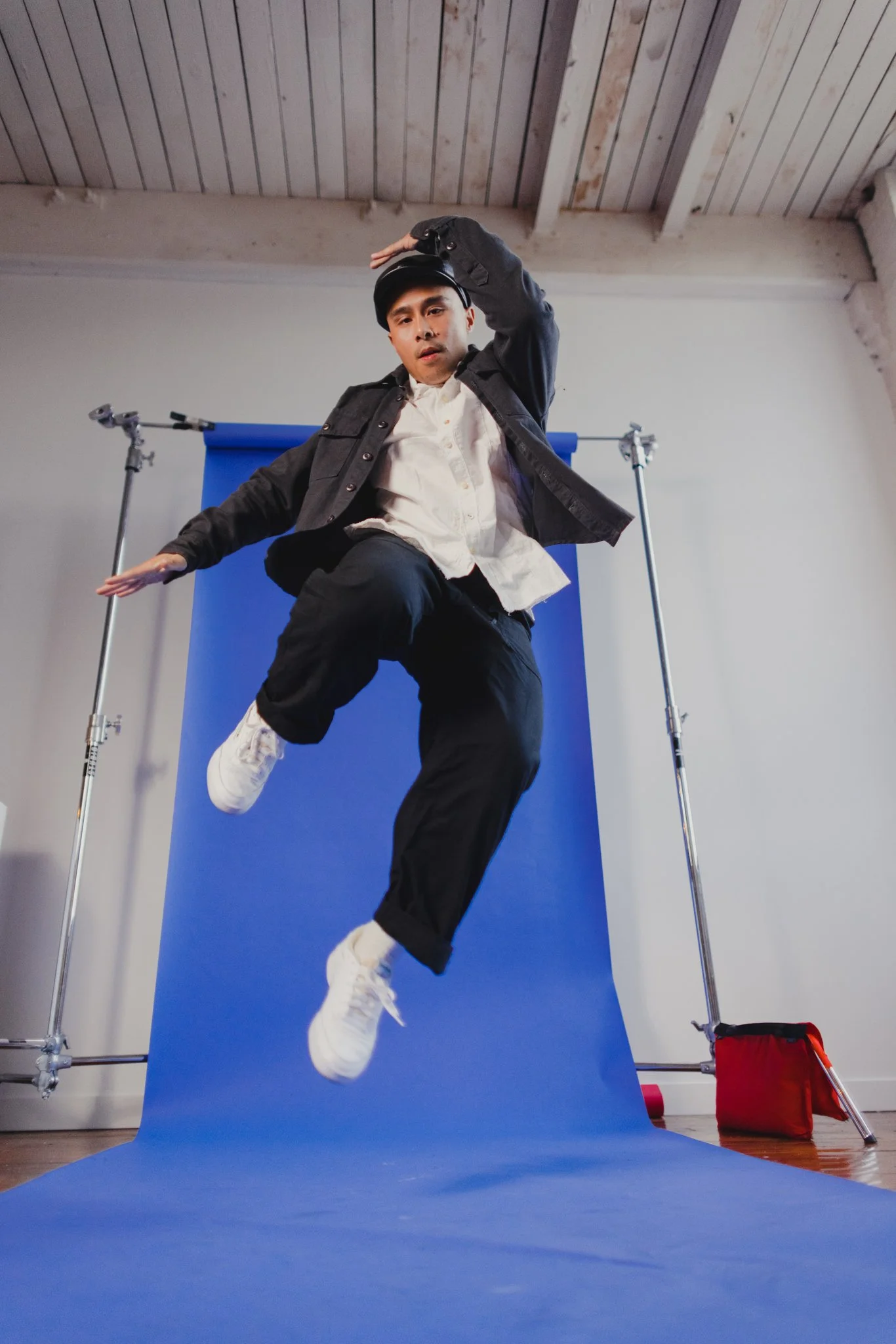
Photo by Adam Gatdula
Having a full appreciation and understanding of the history and mechanics of dance requires more than just time in the studio. Dancers like Dr. Miguel Almario are providing community members with the cultural context behind their movements and access to compassionate and individualized physical therapy services. Read on to learn more about Miguel’s dance journey in the freestyle and commercial space, teaching programs at The Arete Project, and PT services at MovementX.
Miguel started exploring breaking his junior year of high school when his younger brother encouraged him to give it a try. He joined a local dance troupe called Culture Shock DC, a non-profit dance organization in the Washington DC area aimed at community outreach. Miguel’s passion for dance grew immensely. He says that one of the things he loves most about dance is that one person’s artistic expression can differ so much from another’s. “I have the freedom to find my voice and my style of movement,” Miguel shares.
He later ended up competing on the TV show America’s Best Dance Crew on MTV in Los Angeles, California. “That was a time where I was like ‘I can make something of this,’” Miguel says of the turning point in his career. After competing on TV, Miguel shares he started focusing on dance in a more professional capacity, as prior to the show, he hadn’t experienced any “formal” training. Growing up, outside of Culture Shock DC, Miguel practiced dance in his friends’ basement and in his school’s cafeteria, often ordering VHS tapes of competitions to study and draw inspiration from.
After some time, Miguel decided to take a break from dance and returned home to DC from LA. He shares that this was a time in his life when he deeply pondered what kind of life he was going to lead. “I always knew I wanted to be working with people,” Miguel says. Eventually, he landed on pursuing physical therapy, sharing that both of his parents were physicians which greatly influenced him. He thought PT could provide him with the opportunity to bridge the worlds of dance and physical medicine.
While in PT school, Miguel danced with a dance team in Boston, Massachusetts, where he underwent rigorous training. After graduating from PT school, he moved back to Los Angeles to work as a physical therapist and dancer.
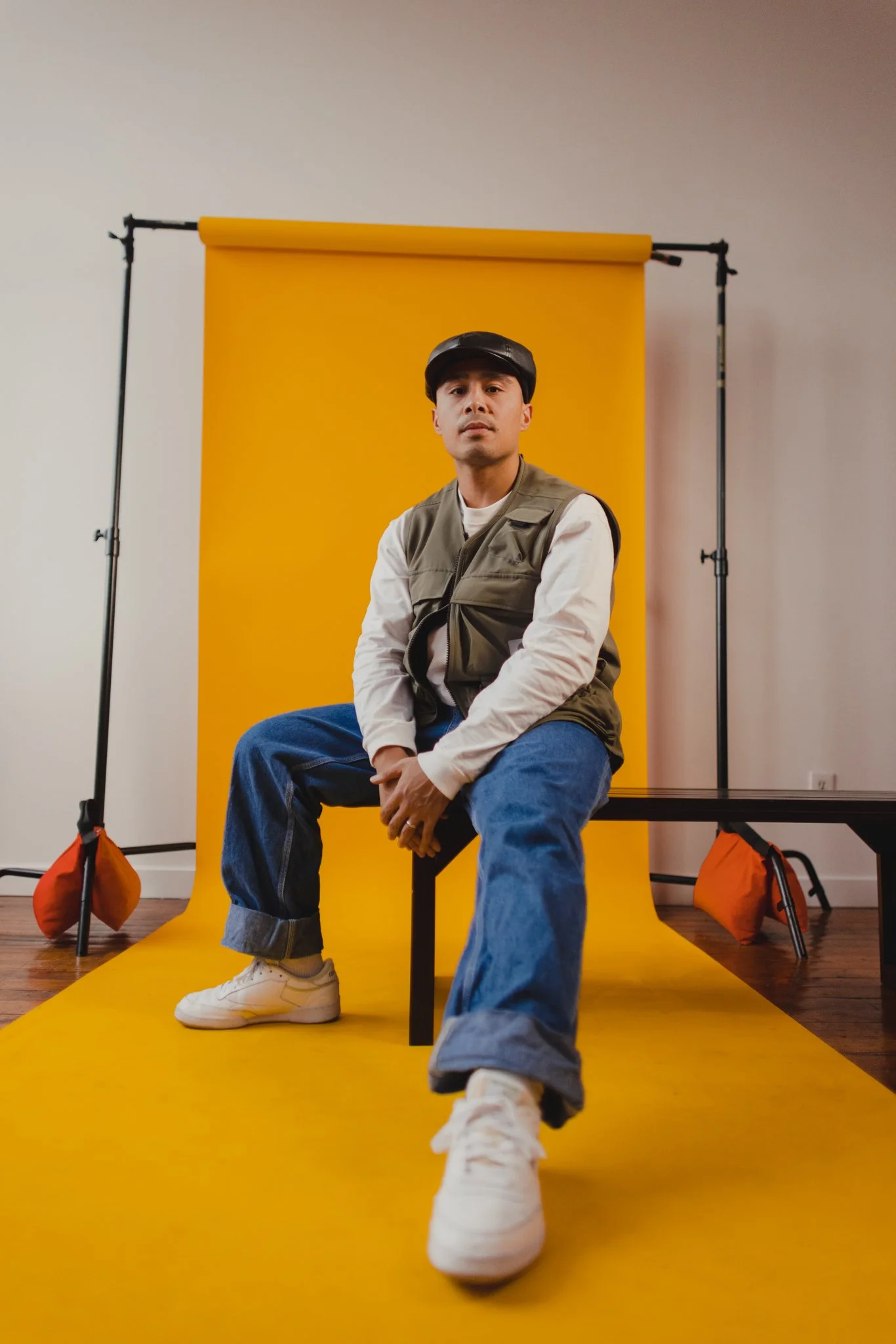
Photo by Adam Gatdula
Following his experience in the traditional physical therapy clinic setting, Miguel realized he was interested in working in a role that allowed him to make stronger, more intimate connections with his clients. That’s when he got connected with MovementX, a physical therapy provider that offers in-person and virtual treatment that is adaptable to clients’ varied lifestyles.
“I work with a lot of dancers,” Miguel says of his PT work at MovementX, sharing that he serves all kinds of clients, including those recovering from minor or major injuries, those looking to improve their ability to move or perform, or those who feel generally physically limited in one way or another.
Miguel shares that his dance experience has been unique, as he has trained in more community-oriented, freestyle, breaking spaces, and has had heavy exposure to the more commercial world as well. Miguel’s wife Niecey Almario is also a dancer, teacher, and choreographer. Today, Niecey and Miguel Almario teach a variety of courses together in Seattle through The Arete Project. Miguel shares that he and his wife collectively offer a holistic dance experience, informing people of the cultural context behind movements and how certain techniques can apply to different professional settings, like on a dance team or in a music video.
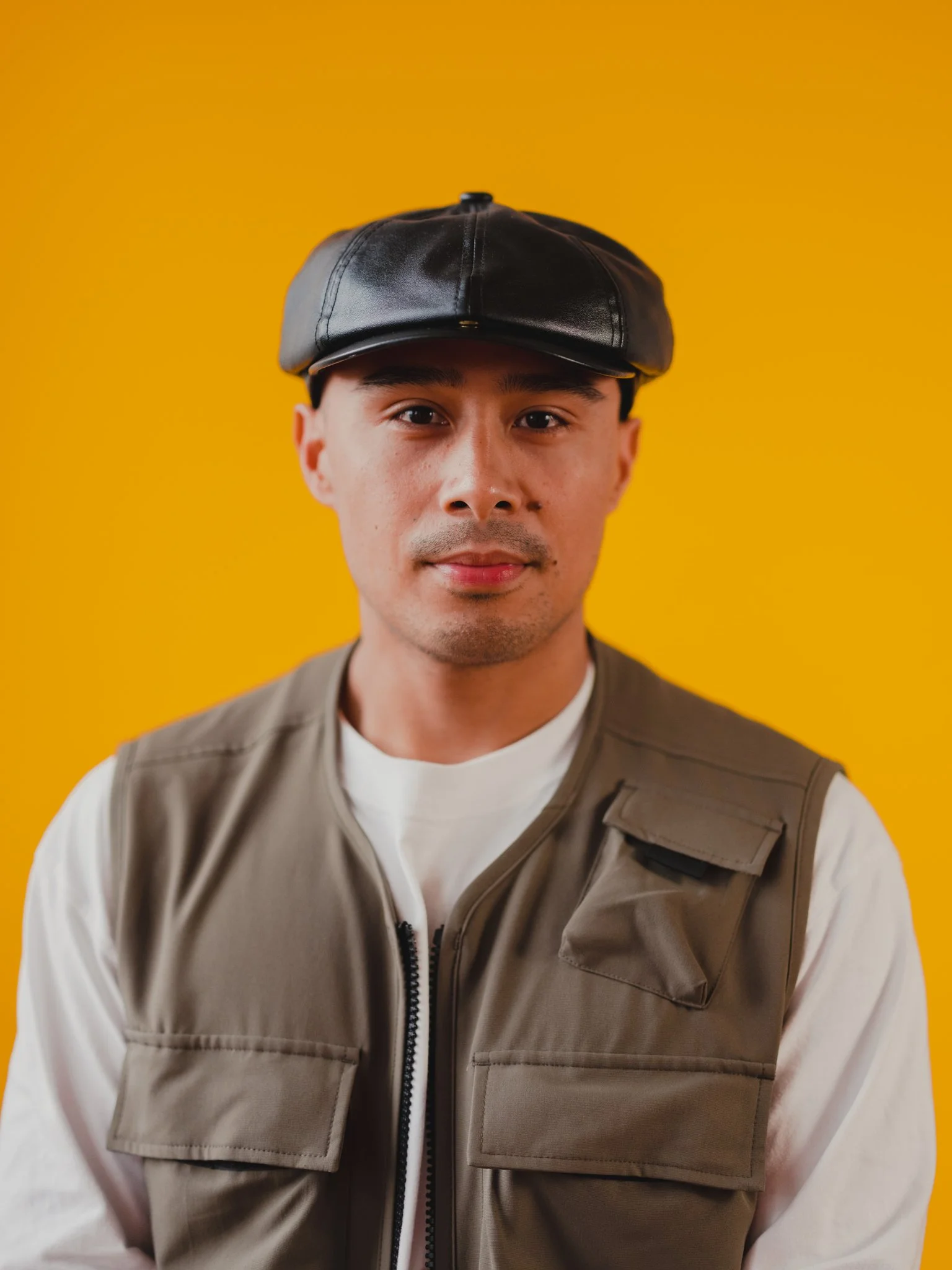
Photo by Adam Gatdula
Honoring the cultural roots of different styles of movement is of the utmost importance to Miguel. For example, he shares that hip hop and street dance have roots in Black American communities and that it’s important for people to know this to understand and appreciate the art form more fully. Miguel shares that learning the history behind dance styles like hip hop has made him realize that this art form he partakes in is much bigger than him as an individual.
“I would like to see a lot more empathy towards the culture and the people that created the dance,” Miguel says of a change he hopes to see made in the larger dance industry. He shares that many of the people who created dance genres like hip hop and breaking are still alive and accessible to dancers, yet their contributions can get drowned out. More focused on physicality, Miguel also hopes to see more dancers treating and training their bodies like the athletes that they are so that they can keep dancing for as long as they can. “You’ve got to put that work in so that you can keep going,” he shares.
Disclaimer
All content found on the Dancewear Center Website, Instagram, Facebook, Pinterest, and all other relevant social media platforms including: text, images, audio, or other formats were created for informational purposes only. Offerings for continuing education credits are clearly identified and the appropriate target audience is identified. The Content is not intended to be a substitute for professional medical advice, diagnosis, or treatment. Always seek the advice of your physician or other qualified health provider with any questions you may have regarding a medical condition. Never disregard professional medical advice or delay in seeking it because of something you have read on this Website.
If you think you may have a medical emergency, call your doctor, go to the emergency department, or call 911 immediately. Dancewear Center does not recommend or endorse any specific tests, physicians, products, procedures, opinions, or other information that may be mentioned on dancewearcenter.net. Reliance on any information provided by dancewearcenter.net, Dancewear Center employees, contracted writers, or medical professionals presenting content for publication to Dancewear Center is solely at your own risk.
Links to educational content not created by Dancewear Center are taken at your own risk. Dancewear Center is not responsible for the claims of external websites and education companies.
Megan Margaret Moore on Healing the “Disembodied Dancer” Through SALTSHAKE
On May 28, 2022, Megan will be holding “INTRODUCING SALTSHAKE” at the Nod Theater in Seattle, WA. At this workshop, Megan will be introducing “saltshake,” a movement form designed to help relieve trauma in the body. The movement form involves choreographed somatic healing techniques and Yoga Asana poses that have specific intentions behind them, such as regulating the nervous system.
A Local Artist on Trauma-Informed Movement and Education
Trigger Warning: Trauma
By Madison Huizinga, DWC Blog Editor

Photo by Muñoz Motions
Over time, certain teaching and communication behaviors in the dance world don’t only become normalized, they become expected. This is the case even when these kinds of behaviors result in trauma that causes dancers to become “disembodied” from their practice. That’s why local artist and teacher Megan Margaret Moore created SALTSHAKE, a brand dedicated to sharing Trauma-Informed dance and education with the arts community, specifically aimed at helping those that may identify as a “disembodied dancer.” Read on to learn about Megan’s journey and SALTSHAKE’s INTRODUCING SALTSHAKE event at Nod Theater on March 28, 2022.
Megan was inspired to dance after watching her older sister dancing growing up. She recalls trying to mimic her sister’s dance moves on her own as a little one. Around age three, Megan enrolled in her first class, sharing that she was immediately overwhelmed with passion for dance from an early age. “It was just my whole heart. Everything I thought about had to do with dancing every single day,” Megan says. She continued training under the Cecchetti ballet method until about ninth grade.
Megan says that she is grateful for the support she received as a young artist growing up in Huntington Beach, California, sharing that she participated in the Academy of Performing Arts (APA) magnet program at Huntington Beach High School. She shares that she was granted amazing opportunities through the program, including the ability to choreograph nearly ten pieces before she graduated high school. In addition, Megan traveled to the New Prague Dance Festival with APA to dance as an apprentice under the choreographer Marie Hoffman. It was through these experiences that she realized choreography was the path she wanted to go down.
Megan attended Cornish College of the Arts, which is what brought her up to Seattle. She is grateful for all the mentors and choreographers she got to meet and work with at Cornish. And Megan also shares that her college years were some of the hardest times of her life, as many of the unhealthy, yet normalized, teaching and communication practices in the dance industry began to accumulate and take their toll on her. Always being expected to put a smile on one’s face and dance through the pain can take a lot out of a performer.
After graduating in 2019, Megan had been hired to choreograph for an opera at Whidbey Island Center of the Arts, which unfortunately got shut down as a result of the COVID-19 pandemic. She says that during the widespread lockdown, many of the uncomfortable feelings Megan had been suppressing began to bubble to the surface. Megan moved back in with her family, eventually landing on Whidbey Island where she is today.

Photo by Muñoz Motions
Megan developed SALTSHAKE largely for the “disembodied dancer,” an artist who wishes to pursue their passions but feels “they must stifle the sensitivity that attracts them to the arts in order to cope with the intensity of their artistic training.” Megan landed on this label to describe what she was experiencing coming out of the COVID-19 lockdown, a disconnect from her body and identity as a dancer. In the midst of the pandemic, when Megan felt as though she was unable to dance, she found herself going through unique, self-made movements that allowed her to feel a sense of groundedness in a way that was quite healing. This was where the seed for SALTSHAKE was planted.
Through SALTSHAKE, Megan strives to gently provide dancers who may be “walking the path of trauma recovery” with somatic expressions and exercises to aid in their “reconnection to embodiment.” SALTSHAKE describes itself as “trauma-informed,” as it has an eye toward the trauma that is inherent in mainstream dance practices. Megan strives to help dancers who feel disembodied know that they’re not alone, as well as provide tools to help deconstruct the harmful narratives the industry perpetuates, and help dancers re-center and self-regulate and find a love for dance again.
Megan says that growing up she received subliminal messages that being “sensitive” was a bad thing, especially in the dance world. She recalls feeling so much shame about how emotional she felt about things, but today she’s learned that sensitivity is a superpower, as it helps her better understand her students’ experiences and give them the support she would have wanted. Being sensitive is also extremely helpful as a dancer, as it helps performers better understand and tell physical and emotional narratives. “It should be celebrated to be a sensitive being in this art form, in all art forms, [and] in life,” Megan says.

Photo by Muñoz Motions
Throughout May 2022, Megan has been offering introductory classes, including trauma-informed yoga on Saturday mornings virtually and in-person in Langely, Washington. Those in the Seattle area simply have to jump on a ferry to Whidbey Island to experience this slow flow embodiment process. SALTSHAKE also offers a contemporary class that is focused on exploring narrative, without a “right” or “wrong” way to perform.
On May 28, 2022, Megan will be holding “INTRODUCING SALTSHAKE” at the Nod Theater in Seattle, WA. At this workshop, Megan will be introducing “saltshake,” a movement form designed to help relieve trauma in the body. The movement form involves choreographed somatic healing techniques and Yoga Asana poses that have specific intentions behind them, such as regulating the nervous system. Megan will be offering weekly saltshake classes in Seattle throughout June. In August, SALTSHAKE will be partnering with Season + Cycle, founded by Nicole Frederiksen, a menstrual health specialist and former professional dancer in the Seattle area. The two organizations will be holding a one-day workshop relating to reconnecting disembodied dancers to their bodies. Keep an eye out for more information in the coming months.
Disclaimer
All content found on the Dancewear Center Website, Instagram, Facebook, Pinterest, and all other relevant social media platforms including: text, images, audio, or other formats were created for informational purposes only. Offerings for continuing education credits are clearly identified and the appropriate target audience is identified. The Content is not intended to be a substitute for professional medical advice, diagnosis, or treatment. Always seek the advice of your physician or other qualified health provider with any questions you may have regarding a medical condition. Never disregard professional medical advice or delay in seeking it because of something you have read on this Website.
If you think you may have a medical emergency, call your doctor, go to the emergency department, or call 911 immediately. Dancewear Center does not recommend or endorse any specific tests, physicians, products, procedures, opinions, or other information that may be mentioned on dancewearcenter.net. Reliance on any information provided by dancewearcenter.net, Dancewear Center employees, contracted writers, or medical professionals presenting content for publication to Dancewear Center is solely at your own risk.
Links to educational content not created by Dancewear Center are taken at your own risk. Dancewear Center is not responsible for the claims of external websites and education companies.
The Division of Self, the Division of Identity
How we are defined is important. It helps tell the world our values, our morals, and our interests. But who makes that definition? Do we set the parameters ourselves by means that we dictate? Or is it determined by our background, heritage, and childhood?
As with most things in life, I suspect it’s a little of everything. There are factors we cannot control that play insurmountably in how we are viewed, including skin color, eye shape, and our parent’s socio-economic status. But there are other things that ebb and flow with our own desires like our morals, our interests, and the places we go. And then there are things that just happen, random events that you may not even realize are significant until ten years later when you look back at your life and realize that one seemingly meaningless decision, event, or person, changes the trajectory of your whole life.
Trigger Warning: Racial Slurs Used in Context, Mental Health
By Ethan Rome, DWC Director of Marketing

How we are defined is important. It helps tell the world our values, our morals, and our interests. But who makes that definition? Do we set the parameters ourselves by means that we dictate? Or is it determined by our background, heritage, and childhood?
As with most things in life, I suspect it’s a little of everything. There are factors we cannot control that play insurmountably in how we are viewed, including skin color, eye shape, and our parent’s socio-economic status. But there are other things that ebb and flow with our own desires like our morals, our interests, and the places we go. And then there are things that just happen, random events that you may not even realize are significant until ten years later when you look back at your life and realize that one seemingly meaningless decision, event, or person, changes the trajectory of your whole life.
Looking back at these things in my own life, it’s easy to point out why I made certain decisions. However, in those moments, there is no way I could have known why. As most people do, I make decisions in the present based on factors that I think I have set. But ten years from now, I’m certain I will realize that it could not have been any other way. We could go on for days dissecting every detail, but today I want to focus on a particular one. In light of Asian American and Pacific Islander Heritage Month, I want to speak about one of the most prominent factors that has created a division in my own self.
I am half Korean and half Scandinavian. Which in my life has meant I am not enough of anything to anyone. Everyone sees me as an “other.” I cannot count the number of times a White person has asked me, “so are you Chinese or something?” Or the number of times an Asian person simply won’t speak to me until I’m able to gently assert my own Asian-ness (by somehow slipping it into the dead conversation, or saying “thank you” in Korean). Or the number of times someone of any race has said “so what are you?” I have been called both “chink-eyes” and “the white boy.” Growing up, I can only remember having one mixed-race friend and recall often wishing I could “just be normal.” There was a period of my life when I tried to pass (as singularly White). People would ask me, “So what are you?” I would reply “I’m normal, you know White.” I can confidently say now that White does not equal “normal.” There is nothing wrong with being White, but we can’t allow it to be the standard to which all other races must be compared. You are not irregular or weird because of your skin tone, culture, or ethnicity.
Everywhere I go, I feel left out or pushed aside by the people that I feel look like me or think like me. Feelings of dismissal and ostracization can lead to serious disorders. Studies have shown that people of mixed race “were the most likely to screen positive or at-risk for alcohol/substance use disorders, anxiety, depression, eating disorders, and psychosis” (Imposter Syndrome in Multiracial Individuals). Because of this, I have always longed for a community that I felt I belonged to, but that also one that wanted me.

Due to this longing for community I have always tried new clubs, sports and activities. When I went to college, I was still searching for that sense of belonging. Therefore, I searched through the college club directory and decided to try breaking (or breakdancing). The intensity and uniqueness of breaking was reminiscent of watching Bruce Lee, one of the few male Asian icons in American culture. I saw something of myself in those bboys. Thus began my dance journey.
The breakers, and breaking in general, were very welcoming. They themselves came from all kinds of backgrounds, some grew up breaking, some only started a year ago, most were self-taught, all of them were glad to teach what they knew and have a conversation. This was likely aided by the fact that they were all so different from each other, dancers were Asian, Pacific Islander, Middle Eastern, White, Black, and Hispanic. It was possibly the most diverse group on campus in terms of race/ethnicity. During this time, my feelings of unease or dismissal subsided, it does not matter what you look like when everyone looks different from the person standing next to them. However, being mixed raced is a unique beast that may slumber, but never dies.
During my time as a bboy, I also started to take classes in the Dance Department, ballet and modern specifically. Entering into the Dance Department came with the shock of the technical details of classical dance, as well as the fact that I was pretty much the only Asian person in the department, and one of the few people of color. I was suddenly back to being an “other.” Dancers are largely open-minded and accepting people. But even well-intentioned people might not notice their microaggressions, or don’t understand why calling me a “ninja” is maybe not the compliment they think it is (ninja are Japanese, I’m Korean, ninja were also often viewed as individuals without honor, assassins sent to do the dirty work and were shunned for completing the tasks given to them). My newfound passion in modern created the next division of my identity. Was I a breaker, or was I a modern dancer? For many reasons I chose to finish my degree in dance, and attempt a career as a “modern dancer.”
Moving to Seattle was a significant change in many ways, and it too was just a random event that happened to happen. Living in Seattle opened the door of contemporary dance. Contemporary has its own confusing and mixed background. Did it come from the lyrical/contemporary world? Did it come from the contemporary ballet world? Is it neither? Is it both? Perhaps it's because of this ambiguity that I became so enamored with it. It is almost a blank canvas, to be determined and designed by me. It is a place where I can express myself fully. I can utilize my classical training, I can incorporate my breaking origin. There is no one to tell me what I am or can do as a contemporary artist. I can use my art to express any idea I want such as my Korean heritage.
This piece was created in response to the recent outbreak of anti-Asian hatred
After moving here I also started to feel that I wasn’t quite as much of an outsider. They are still relatively few, but I have met more Hapa (a Hawaiian word meaning “half,” it has been co-opted by the half/mixed-Asian community and has its own controversy behind it) here than in the rest of my life combined. It has been wonderful to connect with others like me and to learn that I was not alone. I do not think the answer to solving this problem is simply to have more mixed raced babies, in fact, that too can be problematic; “We could have such beautiful babies'' is a terrible thing to say, reduces someone to their race, a singular part of their identity, and tokenizes certain races. It’s another example of a micro-aggression and how people often don’t understand that their “compliment” is actually quite demeaning.
So what can we do?
You can help by taking a moment to put yourself in someone else’s shoes. Your compliment may be an insult to someone else (one man’s trash…). Do they understand that you meant to compliment them? Do you understand the cultural context you might be implying? Allow others to be themselves, accept them for who they are and let them demonstrate to you how they wish to be treated. Authentic representation also tells people they matter and shows them they are not alone. If you are multi-racial, then be yourself! If it is a part of you, don’t try to hide it, it very likely won’t work anyway.
If you feel you are an “other” I encourage you to take a deep breath, you are not alone. It may take time, it may be painful, but you can find ways to connect if you keep pushing yourself. Remove yourself from your ego, from notions of who you or other people think you need to be or should accomplish. Do not be afraid to enjoy something simply because other people look down on you for it, they probably just don’t understand it well enough. Your community might not look the way you envision it now, in fact, it is very likely to look entirely different, but it is out there. Alan Watts once said, “So don't worry too much, somebody's interested in everything. And anything you can be interested in, you'll find others will.”

Looking back at it now I see that there was really no other way, I was never going to fully be a bboy, I was never going to fully be a modern dancer; I will never be fully Asian nor fully White, I always have and always will be split. But that is not necessarily a bad thing. I am more empathic, more understanding, and more accepting because of it. And I am a significantly more unique artist because of it. I learned to see the strengths of my divisions. My only regret was how long I tried to hide and failed to see how my uniqueness can define my positive attributes as well as the negatives.
Looking back at it now I am grateful for my own confusing and mixed background.
Interested in writing for the DWC Blog? Click below to fill out the DWC Contributor application!