
Caring for Ourselves as Dancers of Color
As a chunky Asian baby in a leotard, I had no idea yet how precious or valuable I was when I started in ballet. Instead, I only saw that I was clearly not cut from the same cloth as elegant princesses and swans whose dancing I admired. The chance to don yellowface in the Chinese variation during "The Nutcracker," or to be a kowtowing, shuffling child in "The King and I" in the school play felt like places I was welcome to exist—to shine—as a child who dreamed of being onstage.
By Gabrielle Nomura Gainor
Gabrielle Kazuko Nomura Gainor (she/her) is an artist, writer, and Asian American community activist. In addition to working in communications/public engagement at Seattle Opera, she's received grants from Seattle's Office of Arts & Culture and the Washington State Arts Commission. In 2021, Gabrielle has been proud to serve as a mentor and Teaching Artist with TeenTix.
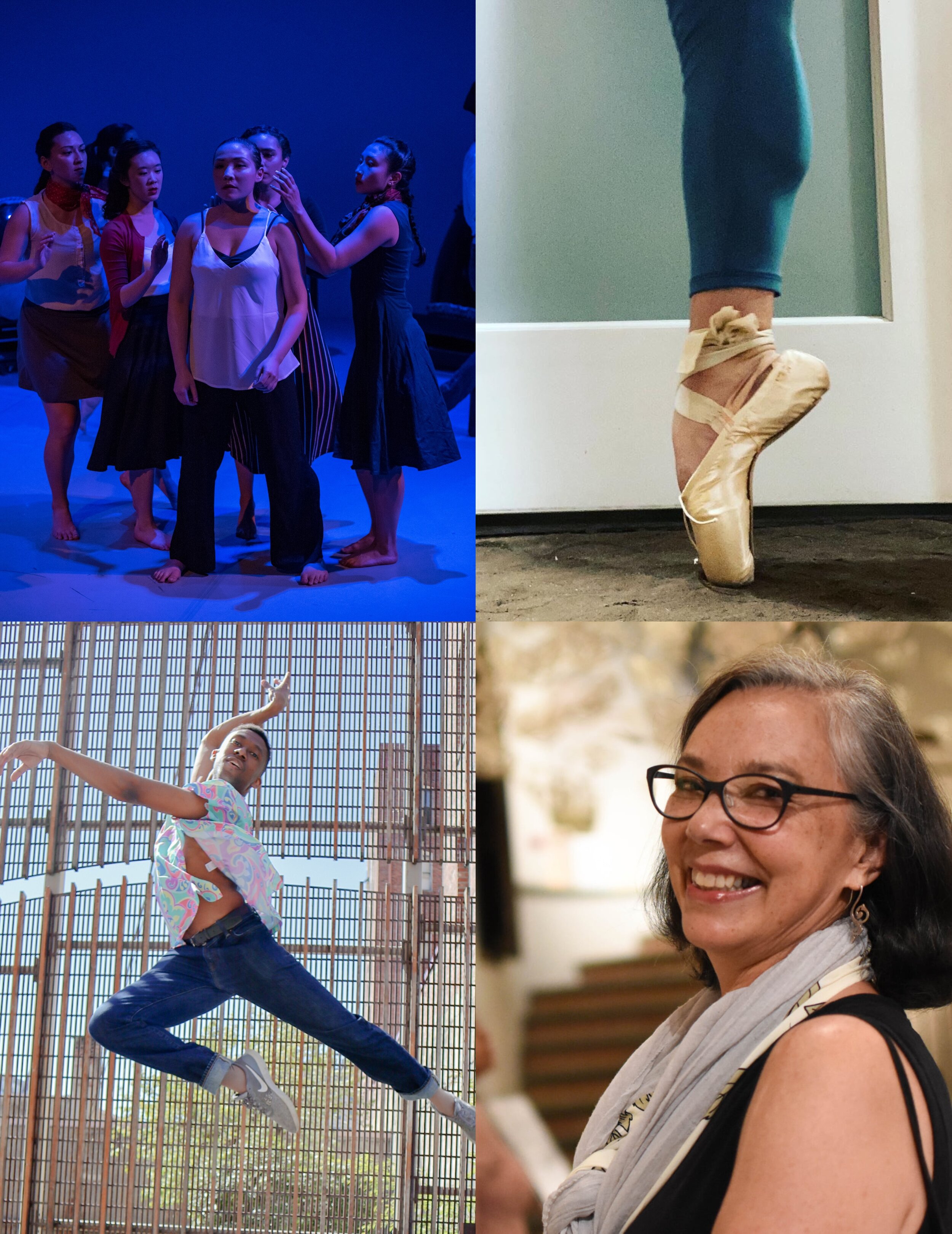
Counterclockwise from top left: Gabrielle Nomura Gainor, surrounded by Dominique See, Alyssa Fung, Siena Dumas, and Hailey Burt in Farewell Shikata ga nai; Joseph Lambert photo. Christopher Montoya en pointe. Vivian Little smiles. Robert Moore jumps; Tracey Wong photo.
May was both Mental Health Awareness Month and Asian Pacific Islander Heritage Month. But as we move into summer, remember that our wellbeing as dancers of color is something to prioritize all year round.
As a chunky Asian baby in a leotard, I had no idea yet how precious or valuable I was when I started in ballet. Instead, I only saw that I was clearly not cut from the same cloth as elegant princesses and swans whose dancing I admired. The chance to don yellowface in the Chinese variation during "The Nutcracker," or to be a kowtowing, shuffling child in "The King and I" in the school play felt like places I was welcome to exist—to shine—as a child who dreamed of being onstage.
Many years later, I see that I deserved so much more than to beg for scraps in the form of sidekicks and ethnic stereotypes. Black, Indigenous, and all People of Color deserve so much more. We need not silence the parts of us that are “too much” for white norms, be it too ethnic, too dark, too curvy, too loud. White people do not own dance—not even ballet. As former Dance Theater of Harlem ballerina Theresa Ruth Howard taught me, these precious art forms belong to all of us, as well.
Now, at the end of Mental Health Awareness Month and Asian Pacific Islander Heritage Month, remember that prioritizing our mental health—our wholeness, joy, and humanity are year-round activities. Every month is for our “history” or our “heritage.” With that in mind, I bring you five personal reflections on what it means to care for ourselves mentally and emotionally as People of Color in dance. Hear from Christopher Montoya (formerly of Ballet Trockadero, Dance Fremont Managing Director), Dr. Sue Ann Huang (co-director of The Tint Dance Festival), Alicia Allen (former dancer with Janet Jackson, Mary J. Blige, and Shakira to name a few), Robert Moore (formerly of Spectrum Dance Theater), and Vivian Little (retired ballerina and Dance Fremont founder).

Photo courtesy of Christopher Montoya
Find an environment where you can thrive
For Christopher Montoya (he/they), not having the right body type was a stressor that only compounded on top of being brown, gay, and working-class. Eventually, Montoya discovered their truth as being gender-non-conforming, and would often feel pressure to pass as straight in order to be hired for dance jobs. Finding an encouraging ballet teacher who embraced Montoya’s authentic self, and then discovering a community in Ballet Trockadero were defining moments.
“Going into Trockadero is really where I found myself,” Montoya said. “The dancers were Australian, Venezuelan, Spanish, Mexican, Black, Asian. We all felt like misfits because we didn’t fit into this binary mold of ballet. Trying to pass as a straight man always felt so fake and defeating. But here, I got to be me.”
From Montoya’s experience, taking time to situate oneself in a supportive dance environment is crucial. (For some, this could mean choosing a Black-led dance school or a class taught by a teacher of color). If the environment is unsupportive, it could be time to leave or look elsewhere.
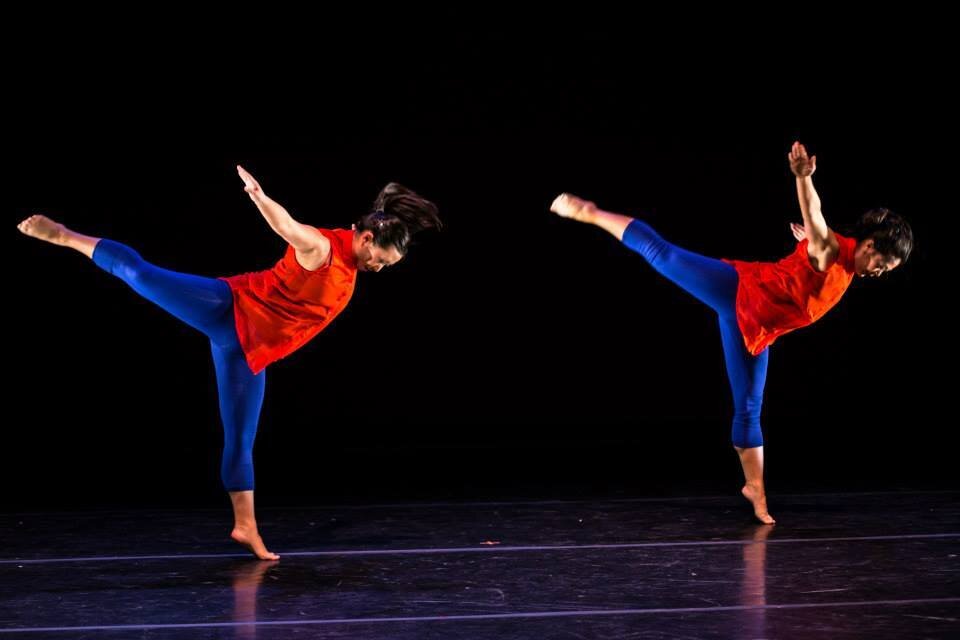
Sue Ann Huang and Arlene Martin. Joseph Lambert photo
Divest from that which does not serve you
Dr. Sue Ann Huang (she/her) not only co-founded an event centering BIPOC, Tint Dance Festival, her dissertation focused on choreographers of color in the Pacific Northwest. Most recently, she’s been thinking deeply about what liberation is possible through concert dance, which still possesses an intimate, even symbiotic relationship, with white supremacy.
While white supremacy once referred to overt hate as seen through groups such as the KKK, white supremacy today refers to an ideology that acts in both overt and subtle or unspoken ways. In western society, for example, white culture, white norms, and white people are valued more highly, and above other cultures. A cursory glance at the majority of ballet and modern dance companies show this favoring of whiteness, as seen through artistic leaders, company rosters, and choreographers whose work is presented.
In Huang’s view, dancers of color must strive to create space between what’s true and what’s cultural default. Today she does this by resisting the pressure to see certain “it” choreographers or companies, and instead asks herself what will bring joy.
“What kind of dance do I visually want to see? What kind of movement do I want to do? I am mostly only seeing shows produced by People of Color I care about, and that’s OK.”

Alicia Allen, photo courtesy of the artist
Hold them accountable
As a Black woman in a predominantly white dance department, Alicia Allen (she/her) felt invisible. From the professor who asked if she was in the right place, to the bathrooms littered with posters of white dancers, and how-to instructions for the perfect ballet bun, the message was subtle, but loud:
“My Blackness and street styles did not ‘make’ the walls.”
It wasn’t until Allen connected with other students who had experienced similar events that she gained the courage to fight. During her senior year, the majority of her efforts were focused on holding her dance department accountable. She served on committees, planned town-hall events, and lobbied to get a racist class canceled. And she’d do it again in a heartbeat.
“Don’t be afraid to speak your truth and share your experiences. You should always hold your teachers and professors accountable for your education. Hold them accountable for respecting dance cultures and communities.”
When Allen teaches hip-hop today, she never skips over the fact that this dance style was birthed from the joy and pain of Black people. Instead, she encourages her students to face their own discomfort as they reckon with history—a necessary part of respecting where the art comes from.

Roberty Moore jumps; Tracey Wong photo
Reorient your organization toward justice
In the past, Robert Moore (he/they) has seen dance organizations think that anti-Blackness, the increase in Asian American attacks, or what it means to live on occupied Coast Salish land, are not relevant to ballet or modern dance. But Moore does not stop being Black when he comes into the studio.
“What puts a nice little grin on my face is seeing organizations step up for the first time, seeing them stumbling over themselves, and actually learn something from pulling some weight, rather than just being passive,” he said.
Moore has found rest this past year by being in community with other Black artists: getting to discuss life—including topics that have nothing to do with race—has brought them joy.
Remember, Moore said, People of Color do not owe anyone a conversation or explanation about race, ever: “Honor the quiet revolution of a dancer of color just going to class, rehearsing, and taking moments to exist freely.”
Re-think ballet and dance education
Vivian Little (she/her) never connected race to body type when she was dancing with Pacific Northwest Ballet and San Francisco Ballet in the 1980s. Years later, she was teaching at a university and her colleagues of color recounted the discrimination that they had faced. Only then was she able to connect the dots between racism and the “defectiveness” of certain bodies. Through this lens, the concerns of her colleagues made sense: a Filipina whose short legs prevented her from earning short-tutu roles, a Columbian danseur with who never had the right “look” for a prince. Being of Irish and Japanese ancestry, Little thought about how she herself was often cast as the sensual or Latina role because of her “exotic look.”
Today, Little pushes back on the uniformity and preferred Eurocentric ballet aesthetics. One way to do this has been learning more about the human body and movement mechanics related to ballet technique. Little sees the potential in every student, whether their first position is a delicious little slice, or a whole half, of pie; whether their leg reaches up toward the heavens in arabesque, or points down toward the earth; whether they look like generations of European ballerinas, or they are helping to illuminate the multifaceted, multicultural beauty alive in ballet.
“Ballet teachers must teach to the person, not to an ideal,” Little said. “It takes much more thought, care and intentionality to be inclusive because of the waters of white supremacy we've been swimming in and the air of racism we've breathed for centuries.”
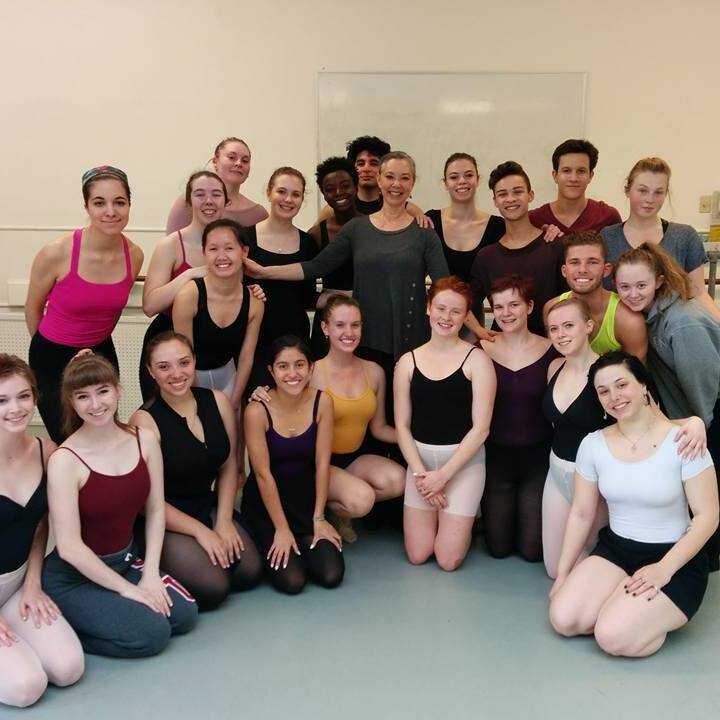
Photo courtesy of Vivian Little
Resources
Additionally, please check out the work of the following Seattle-based artists: Alicia Mulikin, Dani Tirell, Noelle Price, Randy Ford, Imana Gunawan, Cheryl Delostrinos, Amanda Morgan, Sarah-Gabrielle Ryan, Donald Byrd/Spectrum Dance Theater, among many, many others.
Living Your Best Life at Dance Conservatory Seattle
Whether its codified technique, body expectations, or gendered stereotypes, the dance industry has disseminated rigid values for many years. Such expectations can limit and harm talented dancers who don’t fit such cookie-cutter molds. Joshua Grant and Christopher E. Montoya are striving to knock down these barriers and foster a supportive and all-inclusive dance environment at Dance Conservatory Seattle. Under the tutelage of local talent, DCS is teaching Seattle dancers how to “live [their] best li[ves].”
A Conversation About Inclusivity with Co-Artistic Director Joshua Grant
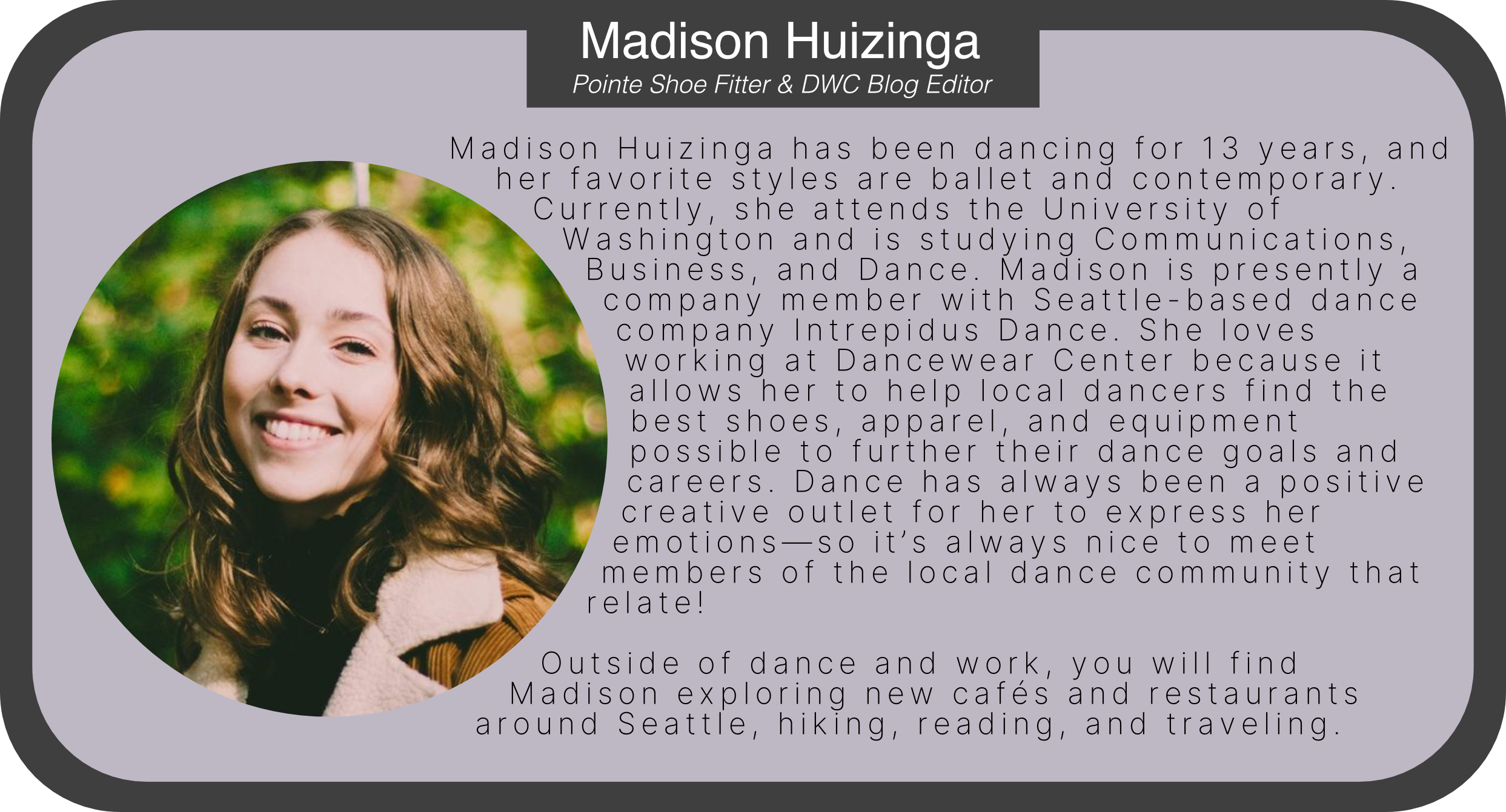
By Madison Huizinga, DWC Blog Editor

Photo by Marcia Davis and Angela Sterling
Whether its codified technique, body expectations, or gendered stereotypes, the dance industry has disseminated rigid values for many years. Such expectations can limit and harm talented dancers who don’t fit such cookie-cutter molds. Joshua Grant and Christopher E. Montoya are striving to knock down these barriers and foster a supportive and all-inclusive dance environment at Dance Conservatory Seattle. Under the tutelage of local talent, DCS is teaching Seattle dancers how to “live [their] best li[ves].”
Growing up in a military family, Josh spent much of his childhood moving to different states. His dance journey first began at age three in Alabama and he later trained in South Carolina and California. Eventually, Josh’s family landed in the panhandle of Florida where he received the bulk of his dance training at Northwest Florida Ballet. He also trained at The HARID Conservatory in Boca Raton, Florida before graduating high school and moving to Seattle to train at the Pacific Northwest Ballet School. After one year in the Professional Division, Josh was offered a job with PNB, dancing professionally with the company for about four years. He later decided to spend some time traveling, relocating to Toronto to dance with the National Ballet of Canada for a while.
Desiring to explore a different form of dance, Josh joined Les Ballets Trockadero de Monte Carlo, an all-male comic ballet company that tours globally performing parodies of classical ballets. Josh toured the world with the company, traveling to Japan, Russia, Greece, France, Australia, and more, performing in male and female roles and dancing en pointe. He later returned to PNB where he dances today as a soloist.
Chris’ dance journey took a much different form than Josh’s. Chris studied at the University of Arizona before entering the professional world, dancing with companies like David Taylor Dance Theatre, Scorpius Dance Theatre, and Center Dance Ensemble, before joining Les Ballets Trockadero de Monte Carlo where he and Josh met. Josh points out how amazing it was that he and Chris were both able to find a home at Trockadero given they’re quite different dancers, both physically and emotionally.
When Josh and Chris relocated to Seattle together, Chris completed his undergraduate degree at Cornish College of the Arts and got his MFA at the University of Washington. He worked as the ballet division head and later the school director of Spectrum Dance Theater and has taught open classes and worked as the managing director for Dance Fremont. Aside from teaching, Chris has also danced with local companies like Seattle Dance Project, Men in Dance, and Jeroba Dance.
At the start of the pandemic, when the dance scene across Seattle shut down, Josh describes feeling quickly depressed and bored. Like most all people across the city, Josh recalls spending many days walking around his house wondering what to do. After some time, Sierra Keith reached out to Chris, sharing that she was considering renting a studio space and wanted to know if he was interested in teaching private lessons to some adults she knew. While Chris was busy with other work at the time, he and Sierra passed the message along to Josh who agreed to teach, holding a class of about ten people that eventually became a class of one to two as the pandemic worsened.
Eventually, the classes cultivated some buzz, as local dancers began to compete to get one of the few spots available. Having dreamt about opening their own dance school for a long time, Josh and Chris thought that this might be the opportunity to bring their dream to fruition.
Josh and Chris have both experienced struggles in the dance world throughout their careers, particularly with ballet. “We understand nobody fits into that perfect mold,” Josh points out. “And so we try to approach education and dance from that lens…perfection is unattainable.”
Chris specifically grappled with the challenges of fulfilling a rigid traditionally “masculine” role in the ballet world, as well standing out as a 5’2” Hispanic man in a predominantly white, Eurocentric realm. He also struggled with eating disorders as a way to combat weight loss to fit the mold he thought he needed to.
Growing up, Josh not only faced challenges as a gay person living in the South, but recalls training under toxic teachers who would often make hurtful remarks, and even throw things at him when he would make a mistake. “I was told I wouldn’t have a career. I was told I was a terrible dancer,” Josh remembers. “I was told that I was ‘too flowery.’ I was told that I needed to be more masculine.” For a while, he carried strict teaching traditions into the classes he taught, before Chris later pointed out that it wasn’t exactly helpful. Josh looks back on his training and wishes that his teachers could have helped him become the dancer and person he was supposed to be, instead of trying to make him become something he wasn’t.
Drawing from Chris’ graduate school research and he and Josh’s experience dancing with Trockadero, the two had also become interested in why the pointe shoe was genderized in ballet. Why is it that every time a pointe shoe is put on a man, it’s for slapstick or comedy? Such thoughts are what helped spur the creation of Dance Conservatory Seattle.
Dance Conservatory Seattle strives to knock down societal barriers by working to “encourage and empower” students “to explore their individual bodies and find their unique expressive voices.” A large emphasis is placed on welcoming dancers of all backgrounds and identities to present and perform how they desire to, particularly when it comes to defying gender stereotypes. Local performers like non-binary PNB Apprentice Ashton Edwards has credited DCS, and Josh specifically, for helping them grow more and more into themself as a performer.
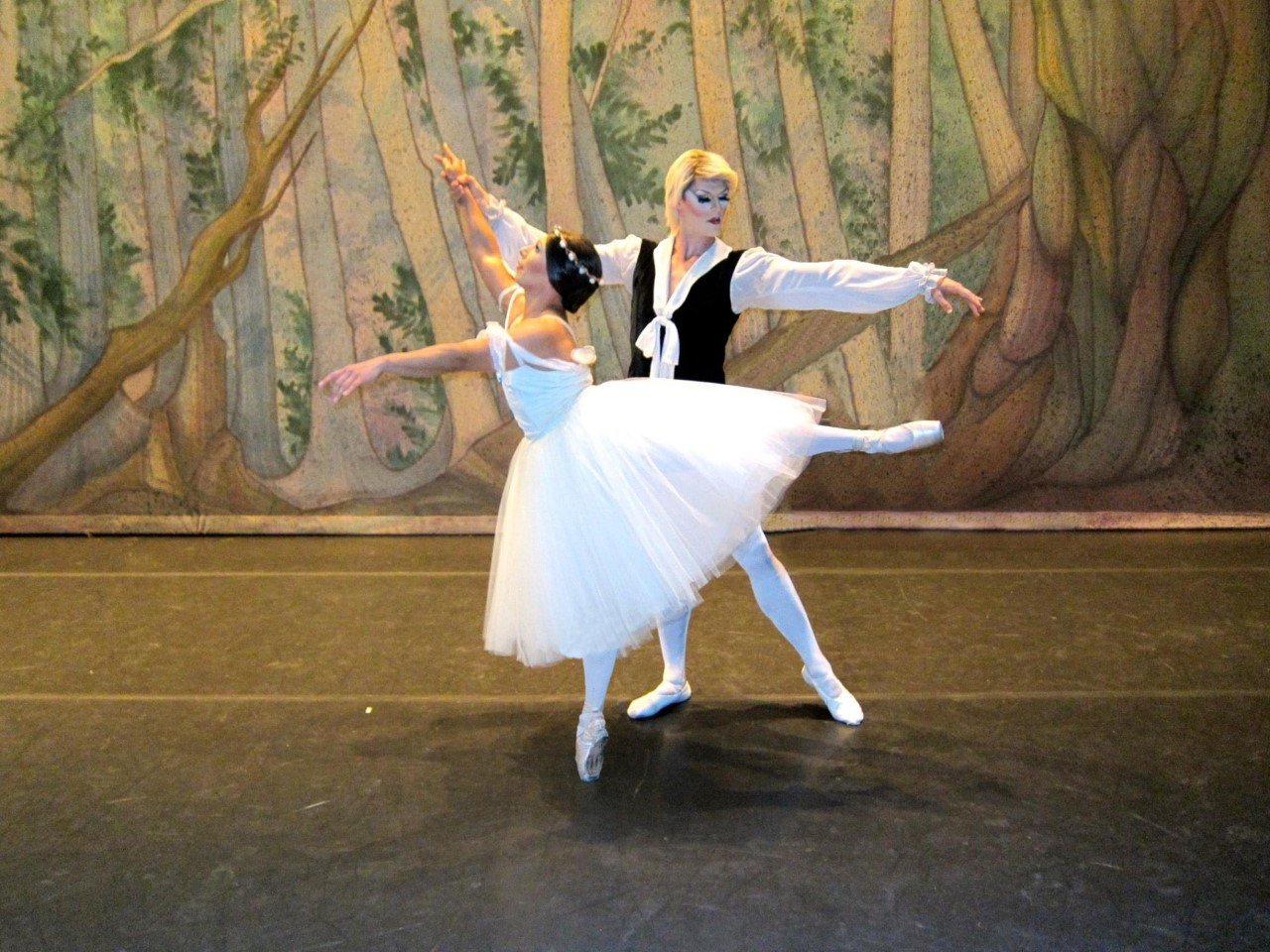
Photo by Marcia Davis and Angela Sterling
Josh says that DCS aims to teach people based on who they are and not who anyone else thinks they should be. While dance nearly always has a fairly rigid means of measuring technique, DCS approaches technical skills with a more open-minded outlook. Josh shares that there’s a way to provide dancers with corrections and feedback in a way that isn’t aggressive and hurtful, but that allows a person to grow. “I think that’s where we’re going to get the best dancers of the next generation,” Josh shares of this approach to teaching.
At the moment, Dance Conservatory Seattle is chiefly concerned with getting more attendees in its classes, particularly its intermediate and advanced classes for middle and high school-aged students. DCS is also holding summer camps for ages 5 through 18. Eventually, Josh hopes for Dance Conservatory Seattle to have its own unique production of The Nutcracker, featuring a balanced representation of Seattle artists and featuring roles that defy traditional gender stereotypes. “Everything that DCS represents would be in our Nutcracker,” Josh shares. DCS’ 2700 square foot studio space is also available to rent and can transform into a performance space, where its future productions will likely be held.
Moving forward, Dance Conservatory Seattle strives to continue encouraging local dancers to live their best lives by acting fearlessly and being the kind of representation dancers across the region need. “Dance is an art form and the best way to get the truest and most successful art out of somebody is to allow them to be themself,” Josh says.
Insights From Luis Guimaraes and Filipa Cunha
In a market where consumers can be overwhelmed with options: details matter. Paying attention to who is making the products, who the products are designed for, and who is presenting them are key elements to center on for a dancewear brand to carry out an impactful vision. Ballet Rosa Co-Founder Luis Guimaraes and Marketing Communications Specialist Filipa Cunha go through their efforts with a fine-tooth comb, striving to provide customers with quality, artistic dancewear made with care.
Ballet Rosa’s Eye Towards Sustainability and Inclusivity
By Madison Huizinga, DWC Blog Editor

Photo courtesy of balletrosa.com
In a market where consumers can be overwhelmed with options: details matter. Paying attention to who is making the products, who the products are designed for, and who is presenting them are key elements to center on for a dancewear brand to carry out an impactful vision. Ballet Rosa Co-Founder Luis Guimaraes and Marketing Communications Specialist Filipa Cunha go through their efforts with a fine-tooth comb, striving to provide customers with quality, artistic dancewear made with care.
The true backbone of Ballet Rosa is a team with an infatuation with dance. For example, Filipa danced from ages 6 to 18 before attending college to study Communication. “I always knew I wanted to do something later with dance,” she shares about her career aspirations. After earning her master’s degree in fashion and communication, Filipa got the chance to work with Ballet Rosa. Thrilled to combine her interests of dance, communication, and fashion, Filipa jumped on the opportunity.
Luis was born and raised in Portugal, where the company is based. His wife is a dancer, which is part of how he got exposed to dance, to begin with. “I started dancing socially,” he shares. Given his exposure to dance and background as a material technician, Luis saw an opportunity to tap into the dancewear market, beginning with producing private labels for some dancewear companies. While working for private labels, Luis started designing products in addition to utilizing his understanding of the materials.
After some time, in 2010, Luis and his partner chose to venture into making their own collection. “For that purpose, we decided to bring aboard certain personalities,” Luis shares, including Isabelle Ciaravola of the Paris Opera Ballet. “We take a lot of pride in having her with us,” Luis says.
Ballet Rosa’s first fashion collection was largely inspired by the artistry of the fashion world and the rigor of the dance world combined. The creators sought to produce products that satisfied dancers’ needs, thus they took care to take dancers’ views into consideration. Luis explains how the team created a close dialogue with dancers. “I found that I could translate that [dance] language into materials,” Luis proudly shares.
After the 2010 launch, Luis describes feeling slightly fearful, as the brand wasn’t gaining many customers at first. What later helped Ballet Rosa take off was attending trade shows and allowing customers to get to know the team. However, Luis explains that when Ballet Rosa had its first interviews for a TV channel around 2013, the team really thought “oh, we’re doing something here.” Up until then, Luis and the rest of the Ballet Rosa team were driven by a desire to create new things, it wasn’t as clear what kind of impact the company could have.
Filipa believes that part of what sets Ballet Rosa apart as a dancewear company is the feedback that it considers from dancers, as well as the authentic artistry the brand possesses. “Everything is very carefully made by our seamstresses and the production team at our factory,” she shares of Ballet Rosa’s handmade dancewear.
Filipa says that it comes across that the products are made with love, as the seamstresses on the team have a clear and communicated passion for what they do. From his prior experience in the textile industry, Luis has grown to dislike the model of an assembly line. He shares that at Ballet Rosa, the team “cuts each garment by hand.”
In addition, under the leadership of Luis, Filipa says that Ballet Rosa is always looking for ways to innovate and break barriers as a company with its products. “I think that’s what makes our brand and our products unique,” she shares.
“The team that we have is incredible,” Luis stresses. “The people are at the core of how unique the product[s] [are].” One of the first team-bonding activities the Ballet Rosa staff did as a group was to dance together to cultivate a deeper understanding of and connection to the products they were creating. “We worked with a group of choreographers,” Luis says, stressing how large-scale the event was. “I think this was a huge moment for the company,” Luis says proudly. “The people who were a part of that are still working with us.”
Luis explains that extensive research often goes into creating Ballet Rosa’s lines. He draws much of his inspiration from classic art pieces in museums, holding an appreciation for art made during the Renaissance period in particular. When collaborating with designers, Luis incorporates these, and other inspirations, into the leotard designs.
“I try to incorporate the modern features of fashion [with] those classic values [of art],” Luis shares, particularly because “romanticism is something which you find throughout dance.”

click below to shop the look!
Nature has also played a big role in the conception of Ballet Rosa, as the word “rosa” means “rose” in Portuguese. Luis appreciates incorporating that “national touch” into the brand, a recognizable reminder of where home is for him and the company.
Ballet Rosa’s latest 2022 collection was released in January. Luis says that the hallmarks of the collection are fluidity in design and durability in wear. The company is excited to share that it’s introducing a sustainable material to its line, made from recycled fibers. Luis shares that Ballet Rosa plans to add even more sustainable practices to its repertoire moving forward.
A change that Luis hopes to see and help make in the dance industry is more diversity and inclusivity showcased across dancewear brands. He shares that Ballet Rosa is proud to have dancers of many different backgrounds, nationalities, races, and ethnicities showcased across its dancewear catalogs. Luis also shares that it’s important that dancewear brands make an effort to cater to men, sharing that Ballet Rosa is proud to have a whole catalog dedicated exclusively to male dancers. “I put a lot of trust in this new generation that speaks out and communicates about things that are happening. Before we were more silent,” Filipa says of how forward young dancers are about pushing for change in the industry.
“Everybody belongs,” Luis stresses.
A Conversation About Mental Health and Non-Judgment in the Dance Sphere
While some folks have taken steps to destigmatize mental health discussions in the dance industry, there is still an overwhelming pressure to compete against your peers within the studio environment, which can lead to adverse mental health issues. DWC staff member and pointe shoe fitter Tija Dupont opens up about her dance journey, goals for the future, and destigmatizing mental health in the dance industry.
Getting to Know DWC Staff Member Tija Dupont
By Madison Huizinga, DWC Blog Editor

Photo by Rex Tiffany Gunderson
While some folks have taken steps to destigmatize mental health discussions in the dance industry, there is still an overwhelming pressure to compete against your peers within the studio environment, which can lead to adverse mental health issues. DWC staff member and pointe shoe fitter Tija Dupont opens up about her dance journey, goals for the future, and destigmatizing mental health in the dance industry.
Tija began dancing around age two in a ballet/tap/jazz combo class in her small hometown in Montana. She danced at the same performing arts academy until she was about ten years old. During that time, Tija took a break from dance for about a year and a half because she was dealing with “horrible anxiety.” Even during her break, she was still drawn to movement in her daily life, so it became clear to her parents that she would benefit from getting back into it. She auditioned for her studio’s company, which traveled a lot for performances and competitions. After being a part of the team for about three months, Tija’s parents told her they were moving to Seattle.
After moving to Seattle, Tija got more into ballet after seeing the Pacific Northwest Ballet’s production of Swan Lake. She tried out a handful of studios, searching for an environment that wasn’t hyper-competitive and that offered a welcoming community. Tija also attended a summer intensive at The Joffrey Ballet in Chicago, Illinois. “Going to Chicago is probably the best thing that’s ever happened to me,” Tija says of her experience dancing at Joffrey. She shares that her instructors and roommates were incredible, and the environment allowed her to learn and soar as a dancer. Today, she dances with Ensemble Ballet Theatre in the Maple Valley area.
Before she began working with Dancewear Center, Tija had been working at a larger retail corporation in the area. Feeling a bit discouraged in her position, her mom encouraged her to apply for Dancewear Center, as it’s an area where she could offer some expertise. Soon after interviewing with Owner & General Manager Samantha Weissbach, she landed the job!
Tija started as a retail associate and later a shift lead at DWC, but recently she’s become a pointe shoe fitter. Tija didn’t see herself learning anything about pointe shoes when she started her job but soon became fascinated with pointe shoes through the fitting training sessions at DWC. She shares that she loves fitting pointe shoes, especially because she learns something new every time she does a fitting. She looks forward to now having the freedom to run fittings solo.
Tija loves working at a local business that is so well-received by the local community. She also enjoys the uplifting store environment. “The second I walk into the store, I’m instantly greeted. I just feel such a good energy,” she says. Tija appreciates how positive and reassuring the whole DWC team is.
One of her favorite parts of the job is being able to provide people with the products they need to be successful in dance. She finds satisfaction from seeing customers’ faces light up when she’s able to give them something they’ve been looking for. Tija also loves being able to fill the role of a “personal shopper” for some customers who are unsure about what they want to purchase. Being able to point them in the right direction brings her so much joy.
Outside of work, Tija enjoys hiking, sharing that her family members are big “outdoors people” and love to do activities that connect them with the beauty of the Pacific Northwest. She also loves coffee religiously. “Personally, I call that a hobby,” she laughs, sharing that she always has a coffee on her. She also enjoys doing yoga and conditioning in her home studio, a make-shift dance studio she made in her garage. Tija enjoys traveling as well and looks forward to getting back into it with her family following the major COVID-19 lockdowns.

Photo by Ken Fox
Tija recently finished high school and is considering taking some classes at a local community college before hopefully transferring to the University of Idaho.
In the larger dance world, Tija hopes to see people in the dance industry talk more about mental health and foster a less competitive environment so dancers can feel less judged. “I think studios need to encourage a non-judgmental community,” she says. This paired with studio owners discussing mental health with their students will help the industry move towards being more welcoming to all.
Keep an eye out for Tija in DWC, particularly if you’re getting a pointe shoe fitting anytime soon!
A Conversation About Starting Dance at Any Age
There is an unspoken assumption in society that once you reach adulthood, your time has passed to try something new. However, DWC Pointe Shoe Fitter and DWC Blog Contributor Emma Neilson shares that it’s never too late to try dance. Read on to learn about her dance journey, goals for the future, and desire for more professional development support for young adult dancers.
Getting to Know Pointe Shoe Fitter Emma Neilson
By Madison Huizinga, DWC Blog Editor

Photo by Robb Webb Photography
There is an unspoken assumption in society that once you reach adulthood, your time has passed to try something new. However, DWC Pointe Shoe Fitter and DWC Blog Contributor Emma Neilson shares that it’s never too late to try dance. Read on to learn about her dance journey, goals for the future, and desire for more professional development support for young adult dancers.
Emma’s first experience with dance was Scottish Highland dancing around ages four to eight, as it was an activity that ran in her family. In her childhood, she also took up equestrian horseback riding for a while. But her whole life changed when she watched figure skating in the Winter Olympics for the first time. Emma declared to her mom that she would be an Olympic figure skater, and after two years of begging, her mom signed her up for public group lessons. Eventually, Emma began training with a private coach and becoming more advanced in her technique. She began taking ballet classes as well to improve her ice skating abilities. Her ballet technique also began improving with practice and around age 13 Emma’s teacher suggested her class begin dancing in demi-pointe shoes.
When Emma started high school, her parents encouraged her to choose one activity to focus on. After landing her axel jump, a long-time figure skating goal of hers, Emma decided to devote her extracurricular time fully to ballet. After continuing ballet through high school, Emma took a gap year following her graduation. She applied to some colleges but recalls her heart not being fully in the process. She remembers having a conversation with the artistic director of her dance studio at the time to help her weigh her options. Emma’s artistic director advised her to audition for some summer intensives and pointed her in the direction of International Ballet Academy in Bellevue, WA. After auditioning, Emma was accepted at IBA, where she’s been dancing ever since. She’s currently a part of IBA’s Professional Program.

Photo by Rex Tranter Photography
In addition to training at IBA and working at DWC, Emma is a Certified American Barre Technique Instructor, a Certified Flexistretcher Instructor, and a Pal Program Coordinator for the organization Dancer for Dancer. She’s also currently in the midst of audition season and is auditioning for dance companies to be a part of.
Emma is currently a retail associate and pointe shoe fitter at Dancewear Center’s Kirkland location. In addition to working as a retail associate and pointe shoe fitter, Emma has copious experience working inventory at DWC, ensuring that products are labeled correctly and organized. She is also excited to be a part of The Pointe Shop Progressive Pointe Method training program to help build upon her pointe shoe fitting knowledge. Emma began working at DWC in 2019, as she had begun training with IBA and was in search of a job to help supplement her time outside of the studio. She reached out to Owner and General Manager Samantha Weissbach through the contact form on DWC’s website. After being interviewed by Samantha and another staff member, she was offered a job!
Emma loves that Dancewear Center strives to be much more than just a business, but also foster a community by connecting with other artists and businesses across the region. She is also such a big fan of Samantha, sharing that she considers her a “forever mentor.” She says that it’s been amazing, as a young woman, to be brought under another woman’s wing to assist with professional development.
Pointe shoe fitting is one of Emma’s favorite things to do at Dancewear Center, sharing that she knows what it’s like to be in physical pain and struggle to find a functional pair of shoes. “I really enjoy being able to bond with basically anybody who walks through the door,” Emma says, speaking to the common bond she can share with customers through a love of dance.
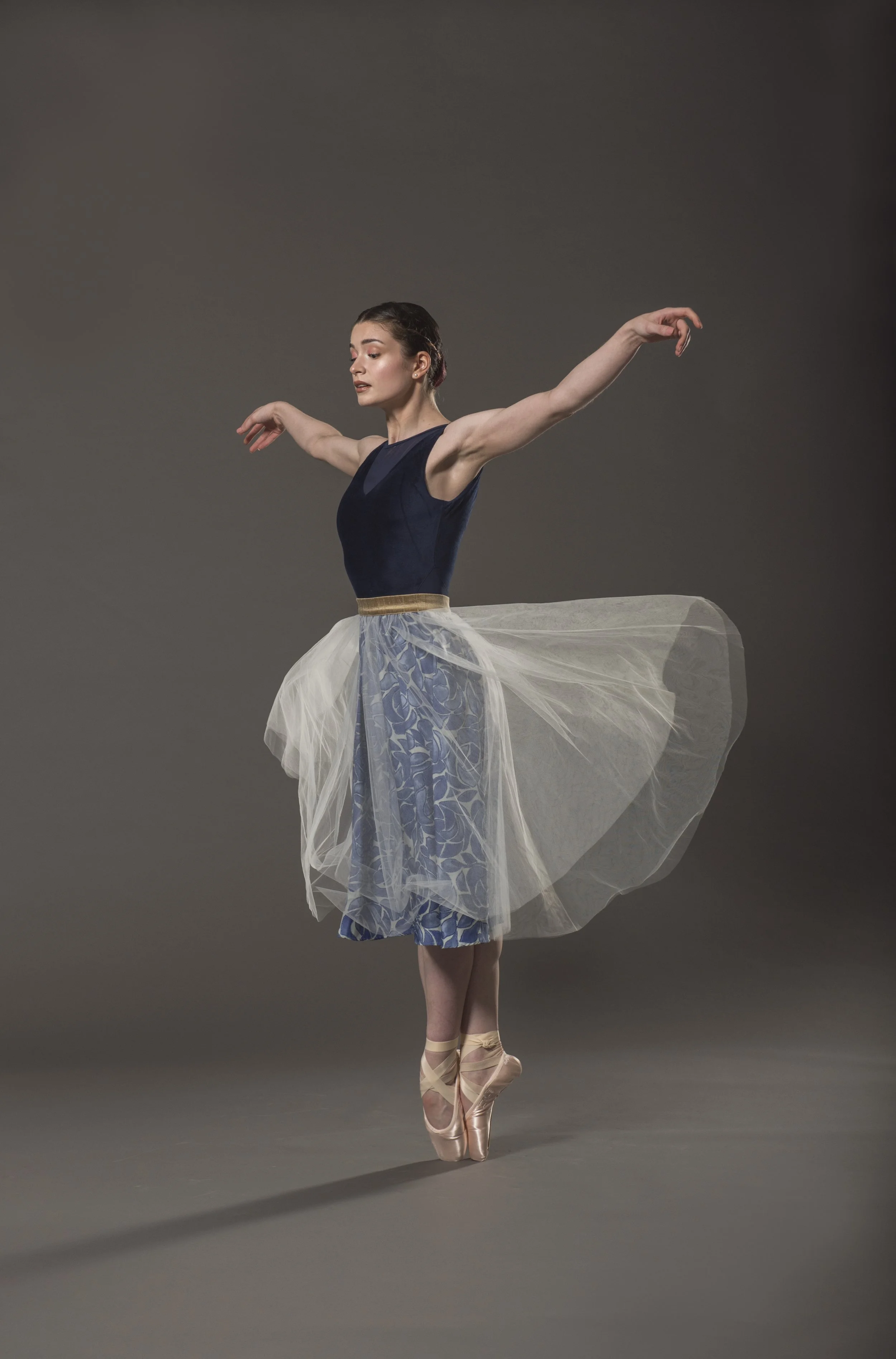
Photo by Rex Tranter Photography
Outside of dancing and working, Emma enjoys spending her free time outside with her family. “I really love going on walks and hikes,” she says. She also enjoys baking, cooking, writing, reading, and going to the movies. “I also love a good self-care session,” Emma shares, sharing that she likes to take care of her body and mind by taking a bath and using a muscle gun on sore muscles.
In the future, Emma hopes to be able to dance with a company and have the opportunity to continue taking classes, performing, and growing as a dancer. She would also love the opportunity to work on some choreography and continue educating herself on pointe shoe fitting.
A change that Emma wishes to see made in the dance industry is studios and academies become more welcoming to beginner dancers of all ages. “Not everybody starts at age three,” she points out. She would also like more professional development opportunities to become available to young adult dancers, pointing out that many dancers do not have their life trajectory figured out at age 18. She shares that she has many conversations with friends who aren’t dancers who express their desire to dance, but fear their time has passed. “You can do it!” Emma says to those who want to try dance at any age.
Be sure to say hi to Emma if you see her at DWC Kirkland!
A Conversation on Navigating Challenges in the Dance Realm
No two dancers’ journeys are completely the same or even linear for that matter. When physical, mental, and societal obstacles are thrown in their way, dancers often take paths that they don’t expect. This was certainly the case for DWC Ambassador Anna Nelson. Read on to hear about her choosing to pause professional dance to pursue a college education, come back from an injury, and learn how to cope with anxiety throughout her dance career.
DWC Ambassador Anna Nelson on Bouncing Back Physically and Mentally
By Madison Huizinga, DWC Blog Editor

Click below to shop the look!
No two dancers’ journeys are completely the same or even linear for that matter. When physical, mental, and societal obstacles are thrown in their way, dancers often take paths that they don’t expect. This was certainly the case for DWC Ambassador Anna Nelson. Read on to hear about her choosing to pause professional dance to pursue a college education, come back from an injury, and learn how to cope with anxiety throughout her dance career.
Anna began dancing around age 13 at a small studio in her hometown of Oak Harbor on Whidbey Island, Washington. After training there for years, she decided to attend Cornish Preparatory Dance to up the intensity of her ballet training. She later attended Kirov Academy of Washington D.C., continuing to pursue rigorous ballet training. Following her graduation, Anna decided to take a break from professional dancing. She had a professional job lined up in California but ultimately decided to pass on it to follow another passion. “I decided I wanted to pursue education,” Anna shares. While attending a community college, Anna continued dancing recreationally to keep her passion alive. She later earned her BS in microbiology from the University of Washington, Seattle, with the intention of later attending PA school.
In 2020, Anna underwent a major hip surgery. “I couldn’t dance for six months,” she says, during recovery she had to learn how to walk and dance again. She took her first dance class following the surgery over Zoom at UW, sharing that it was nice to be able to get back to moving in her own space, free from the perceived judgment of others. Today, she’s dancing with Olympic Ballet Threatre in Edmonds, Washington.
Anna has performances on the horizon with Olympic Ballet Theatre for its 2021-2022 performance season. She danced in The Nutcracker in December 2021. In February 2022, Olympic Ballet showcased “Debuts,” a more contemporary-focused show, and plans to put on Don Quixote in May at Edmonds Center for the Arts.

Click below to shop the look!
Anna has been a patron of Dancewear Center for about a decade. Following Samantha Weissbach taking over ownership of the store in 2018, Anna followed DWC on Instagram and realized that it was no longer “just a store,” but rather “a community.” This realization is what inspired her to become a DWC Ambassador. “I am really excited to get back into the dance world and just connect with all these local dancers and talented people,” she says. At age 26, having pivoted away from professional dance to pursue a college education and later came back following a major injury, Anna believes that her experiences will help her provide unique insights in her role as a DWC Ambassador.
“Growing up I only had Pointe magazine,” Anna laughs, reflecting on how few opportunities there were for community and connection outside the studio when she was younger. She points out how useful it is for dancers of all backgrounds to be able to share different perspectives on social media platforms today.
What’s kept Anna returning to dance is the physicality of the practice. She recalls studying for hours on end in college and longing to dance and move her body. “As long as my body can still do it, I still would like to dance,” Anna says about continuing the practice into the future.
Anna shares that the majority of the challenges she’s experienced in the sphere of dance have related to mental health. “I struggled with a lot of anxiety throughout my life, especially performance anxiety,” she says. “It’s been a lifelong journey trying to learn ways to cope with it.” Anna says that feeling grounded in her religious faith is part of what’s helped her persevere through moments of anxiety when she feels overwhelmed. Additionally, reminding herself that dance doesn’t comprise her entire identity is a helpful strategy when coping with dance challenges like performance anxiety. “I am where I should be,” she affirms.

Click below to shop the look!
Anna shares that therapy has been extremely helpful for her with coping with anxiety and recommends dancers seek it out, if possible, to help them handle their own mental health challenges in dance. Speaking with a therapist has helped Anna identify the roots of her anxiety and learn specific coping mechanisms to challenge anxious thoughts.
Moving forward in the dance world, Anna hopes to see teachers and directors have more awareness and training on how to be more nurturing and understanding of students’ nuanced needs and challenges, particularly in terms of mental health. She reflects on what the dance industry was like when she was a young student, pointing out that many authority figures exacerbated problems related to mental health and body image. With a greater eye towards how to communicate to children and be supportive of obstacles they’re facing, teachers and directors can create an even more positive impact on the dancers in their lives.
Stay tuned for more from Anna Nelson in the coming weeks!
Insight on Creating an Inclusive Dance Community
Within a culture and industry that often promotes conformity, being the one to stand out can be an uncomfortable, and sometimes even traumatizing experience. DWC Ambassador Austin Sexton knows what it’s like to experience discomfort for straying from the norm. But through adopting inclusive teaching practices, community members like Austin are helping make our local dance community more welcoming one step at a time.
DWC Ambassador Austin Sexton on Promoting Body Positivity
By Madison Huizinga, DWC Blog Editor

Click below to shop the look!
Within a culture and industry that often promotes conformity, being the one to stand out can be an uncomfortable, and sometimes even traumatizing experience. DWC Ambassador Austin Sexton knows what it’s like to experience discomfort for straying from the norm. But through adopting inclusive teaching practices, community members like Austin are helping make our local dance community more welcoming one step at a time.
Austin was born and raised in the Seattle area by parents who are dancers themselves. Her father is a dancer and her mother is one of the founding members of Spectrum Dance Theater. Austin jokes that dance, in a way, is “in her blood.” Growing up, she trained at Spectrum and later Dance Fremont throughout high school. At Dance Fremont, she was introduced to modern techniques that she fell in love with.
Following high school, Austin quit dance for a while, as having a body that doesn’t fit the “traditional” dancer mold was a source of trauma for her. She dedicated her time to pursuing vocal performance, as that was another passion of hers. During her break from dancing and training herself, she also took up teaching.
“I wanted to change the training,” Austin says of her desire to begin teaching. She desired to help change common rhetoric in the dance industry that promotes body image issues like body dysmorphia, as well as disordered eating. “I wanted to break that cycle,” Austin says.
In addition to teaching all around the Seattle area, Austin eventually co-founded a local dance company called Relay Dance Collective. The company performed seven seasons, collaborating with other local dance companies like Intrepidus Dance. After Austin got pregnant, Relay Dance Collective disbanded. Today, she works full-time at Momentum Dance Academy in Burien, Washington, where she wears various hats as a teacher, production manager, costume manager, rehearsal director, and more.

Austin has been drawn to dance time and time again because it’s a creative and emotional outlet like no other. Due to her traumatic experiences with dance early on, pursuing it as an adult and as a teacher feels as if she is “healing her inner child.” She enjoys being able to help the next generation of dancers not suffer from the same challenges she did. Austin hopes that the students she impacts through her teaching can carry on the lessons they learn throughout their life and to subsequent generations, creating waves of impact to improve the industry as a whole.
Austin's biggest challenge in dance has been comparing herself to other people. She explains that it was difficult navigating training as a dancer with a body that doesn't fit the "norm." "I had a dance teacher who refused to train me en pointe because she said I was too large," she shares. "At 12 years old, to hear something like that was super damaging."
Today, Austin makes it clear to her students that one's size does not determine one's worth or ability. "You can be a strong dancer at any size," Austin says. "You can be as strong and healthy and powerful as you want to be." There's no point comparing oneself to others when the way humans look is largely a pre-determined formula, engrained in their genetics.
"I loved seeing that there was a place for dancers that was promoting health and strength in every size because that is so foreign in the dance world," Austin says of Dancewear Center. She appreciates the efforts DWC makes to create an inclusive culture that bolsters body positivity and mental health awareness. She was inspired to become a DWC ambassador after having numerous conversations with Owner and Director of Operations Samantha Weissbach about what limited dancewear options there are for larger-bodied dancers. Feeling inspired by the work DWC was doing, Austin knew she wanted to be a part of it in some way.

Click below to shop the look!
In addition to being a DWC ambassador, in the coming year, Austin is looking forward to channeling her "heart, time, and energy" into teaching students at Momentum Dance Academy. The various performing groups at Momentum are planning on performing at several festivals, including the Olympic Dance Festival, BOOSTmeUP, All 4 1 Dancepalooza, and Dance Festival Northwest. Momentum will also host its own festival this spring called Merge NW, featuring members of the Momentum Dance Ensemble Company and youth dance companies across the Pacific Northwest. The dance academy has also begun rehearsals for its production of Coppelia this spring.
Overall, what Austin hopes to see change in the larger dance industry is a greater celebration of body positivity and a dismantling of systems of oppression, with an eye towards promoting equity. She hopes to see more teachers and directors show students and dancers that size doesn’t determine health and strength. Austin also wishes to see more opportunities become available for dancers who don’t “necessarily fit the mold.” Her desire is for these principles of body inclusivity to ripple out to other identity facets, causing instructors to teach with a greater eye towards gender inclusivity as well. Austin points out that a big part of making this change will be instructors being more intentional about the language they use in class, including not making comments about dancers’ weights and utilizing gender-inclusive words and phrases. With individuals like Austin helping train the next generation of dancers, there is ample hope for change.

Maintaining Body Positivity and Self-Discovery in Dance
During the last year, I’ve been on an intentional fitness journey, spurred along by the privilege of getting back into a dance studio to train consistently, even amid the ongoing pandemic. All through lockdown, I was in remote university courses for dance, yet I saw a significant decrease in my desire to maintain my fitness and nutrition goals. This was because I did not have a dancing community physically around me and had very little space at home to maintain a usual training rhythm. I feel excited and so thankful to be once again moving toward my goals in a way that feels challenging and freeing.
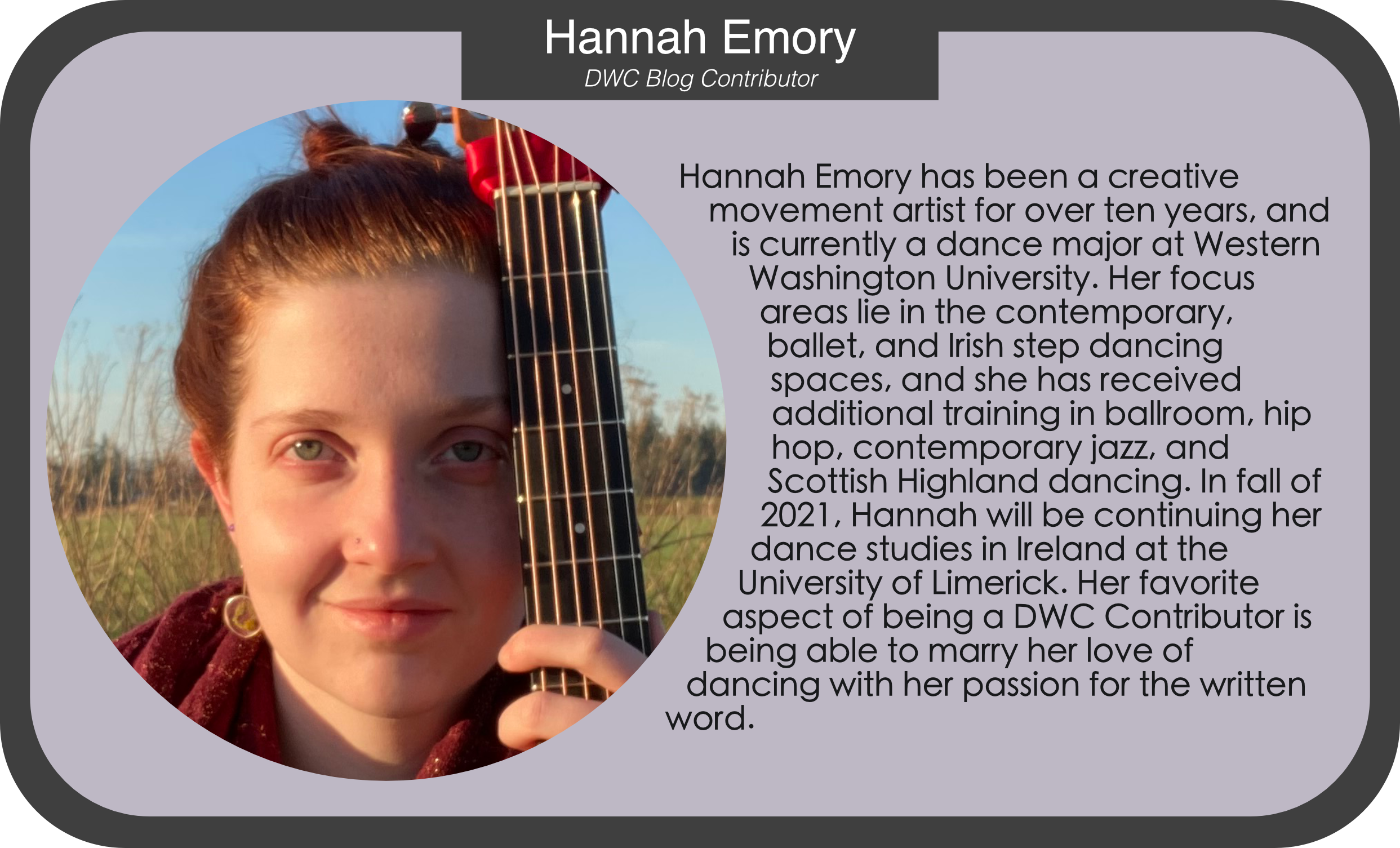
By Hannah Emory, DWC Blog Contributor

Photo by Nikola Evora Zonenberg
During the last year, I’ve been on an intentional fitness journey, spurred along by the privilege of getting back into a dance studio to train consistently, even amid the ongoing pandemic. All through lockdown, I was in remote university courses for dance, yet I saw a significant decrease in my desire to maintain my fitness and nutrition goals. This was because I did not have a dancing community physically around me and had very little space at home to maintain a usual training rhythm. I feel excited and so thankful to be once again moving toward my goals in a way that feels challenging and freeing.
Yet, the time I spent away from the studio, and quite far away from my personal fitness goals, caused me to think a lot about how I can maintain my sense of body positivity and self-love in the midst of changing life circumstances. I would not trade what I learned during this time, because life will always throw unexpected circumstances at us, but our need for self-love and self-respect is unchanging and requires maintaining.
In any case, during a pandemic or not, when dance spaces are made into goal-driven environments that focus overmuch on what the body looks like, a high level of self-criticism can develop and turn into a lifelong struggle if not kept in check. For example, I have struggled with issues of body dysmorphia and disordered eating, and have watched my dancer friends go through some of the same struggles. One can start to feel like they are not a true dancer if the goal post of self-acceptance is constantly moving and, unfortunately, there are aspects of the dance world that can make self-acceptance very difficult to achieve. Add on a global pandemic and the consequent stagnation/interruption in training goals, and that feeling of illegitimacy, at least for me, definitely increased. For this year, I know it has taken a lot of mindfulness and having the right people around me to heal, refocus, and keep my perspective on myself and my body positive.
Self-acceptance, self-celebration even, is not easily fought for and won. In our dance journeys, there will be a lot of maintaining, unlearning, relearning, and self-connection that needs to happen if we have negative messaging from our past or have experienced a discouraging setback in our progress. Community is a huge piece of that relearning and healing, and I hope everyone reading this can connect with others through dance in some form. An uplifting dance community is invaluable and makes the load lighter while we’re moving toward a stronger relationship with the self.
I cannot bang the drum about community enough. But, in addition to that, here are a couple of personal practices that have helped me so much this year and can be done with and without others:

Gratitude-based movement. Often dancing requires a lot of mental concentration on learning form and content. Though being in class and learning new material is exhilarating, it’s akin to reading a textbook or working away at a craft until it’s honed. In my experience, the work of learning dance is very mentally taxing and requires the body to function more like a tool. This can cause a bit of a feeling of disconnection between the body and mind/heart. So, I believe that every dancer would benefit from some sort of moving mindfulness/gratitude practice outside rehearsal spaces that focuses on thanking the body and self for all the work being achieved. For me, I have been taking tai chi classes as part of my degree program and it has been so helpful in guiding me into feeling empowered, connected to myself, and grateful for the body I have right now. One of the focus phrases we use frequently is to always have an inner smile if something feels difficult or if the mind wanders; and at the end of every class, we think of something to be grateful for and bow in thanksgiving for the goodness in our lives. It’s a beautiful way to start the dance day and one that reminds me of how capable my body is and how grateful I am to exist as myself. Some other examples of moving gratitude practices that come to mind would be walking, meditation, yoga, pilates, and Feldenkrais. There are so many options available and anything that brings you into a state of gratitude for yourself and your life is well worth the time!
Studying my body + personalizing nutrition. I find myself having a lot more respect and love for my body when I know how it functions and when I’m intentional about getting it the fuel it needs. Our bodies are unique, and there isn’t a one-size-fits-all approach to dancing our best. The most empowering thing I’ve done for my dancing journey is paying attention to the specific questions and feelings that come up for me during my training days and then pursuing answers for those questions. This personal focus was new to me until just recently and paying attention to my way of being a dancer revolutionized my practice. I have learned a lot about myself; some personal examples of discoveries I made would be…
I’ve always struggled with joint pain/fatigue while turning out at the barre, and my teacher let me know when I asked her about it that activating my core muscles will help create a feeling of more space in my body and make turning out much easier on my joints.
Stomach cramps and chronic physical fatigue are pretty big issues for me. Yet, I started paying attention to my diet and noticed over time that eating lighter, protein-focused meals eased my digestive issues and helped with endurance throughout the day.
I find a lot of choreographic inspiration and bodily relaxation through improv work. If I’m feeling mentally fatigued during a long dance day, there’s nothing like going to an empty space and moving without goals or expectations. Integrating active stretching and meditative breathing into my improv movements adds extra benefits to the practice.
These are just some of the personal discoveries that have helped me take more ownership over my dancing and my health, and have led me to feel more connected to and positive about my body. Problem-solving discoveries are a beautiful way to quickly move one from feeling discouraged and incapable to feeling proud and excited about our unique dance expression. If you have questions about yourself, take the leap and pursue those inquiries with teachers and your dance community. Study your body and find out what works for your personal journey. You’ll be so amazed at what you find out! (A bonus suggestion would be to keep track of your questions and discoveries in a notebook or voice memos so you can look back on your progress.)
I wish you the best on continuing toward self-celebration, radical body positivity, and joy-filled
Behind the Scenes with Elizabeth Bonar
Putting together a dance production can be a stressful experience for a choreographer and director. When putting the final touches on choreography, managing dancers, and carrying out other tasks, lighting design and stage management can slip to the back of choreographers’ and directors’ brains. Nonetheless, lighting design, stage, and house management are important parts of a production to consider, as they can greatly benefit the experience of a production for audience members and dancers alike when considered in detail. Elizabeth Bonar wears many hats as a local dancer, choreographer, teacher, lighting designer, and stage manager. Tune into Tea & Tendus at DWC Renton on March 13 at 5:30 PM to hear more about Elizabeth’s expertise and ask questions about all things “behind the scenes.”
A Conversation with Local Lighting Director and Stage Manager
By Madison Huizinga, DWC Blog Editor

Photo by Evan Bonar
Putting together a dance production can be a stressful experience for a choreographer and director. When putting the final touches on choreography, managing dancers, and carrying out other tasks, lighting design and stage management can slip to the back of choreographers’ and directors’ brains. Nonetheless, lighting design, stage, and house management are important parts of a production to consider, as they can greatly benefit the experience of a production for audience members and dancers alike when considered in detail. Elizabeth Bonar wears many hats as a local dancer, choreographer, teacher, lighting designer, and stage manager. Tune into Tea & Tendus at DWC Renton on March 13 at 5:30 PM to hear more about Elizabeth’s expertise and ask questions about all things “behind the scenes.”
Elizabeth started dancing at age four. Her parents put her in classes because she couldn’t stop dancing around the house, an experience many dancers are familiar with. She stuck with it throughout high school and college, ending up getting her Bachelor of Science degree in dance at the University of Idaho in 2017.
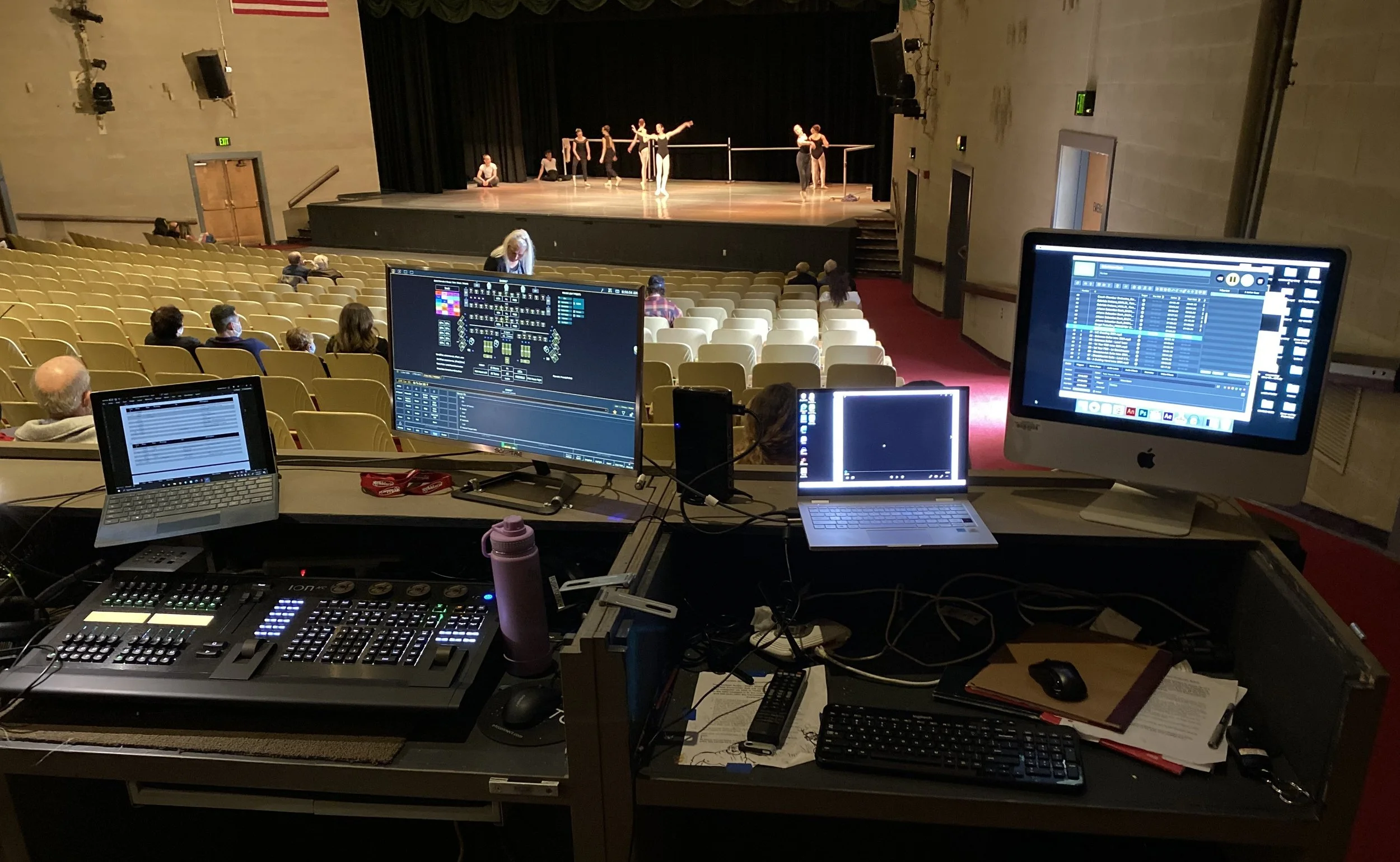
Growing up, Elizabeth was also frequently exposed to the stage management side of performing, as her mother worked as a stage manager at many of her shows. In high school, Elizabeth’s leadership class was putting on a talent show and needed someone to run the light board. She decided to volunteer. Over the next few years of high school, Elizabeth helped work behind the scenes of other productions here and there. In college, Elizabeth got much more involved with working the light board, taking it upon herself to pull out the manuel and educate herself more on the technicalities of it. She even dedicated her senior year project to lighting design in dance. Following graduation, Elizabeth’s professors asked her to come back to campus and stage manage their pre-professional faculty-choreographed show in the fall, which she has been doing ever since.
“I love helping the dance productions shine the best that they can,” Elizabeth says of lighting design and stage management. She believes that her background as a dancer and choreographer gives her some helpful insight when helping design the lighting of a show and help manage a production. She’s able to better put herself in the shoes of a dancer and choreographer than a manager who may not have experience with performing and choreographing.
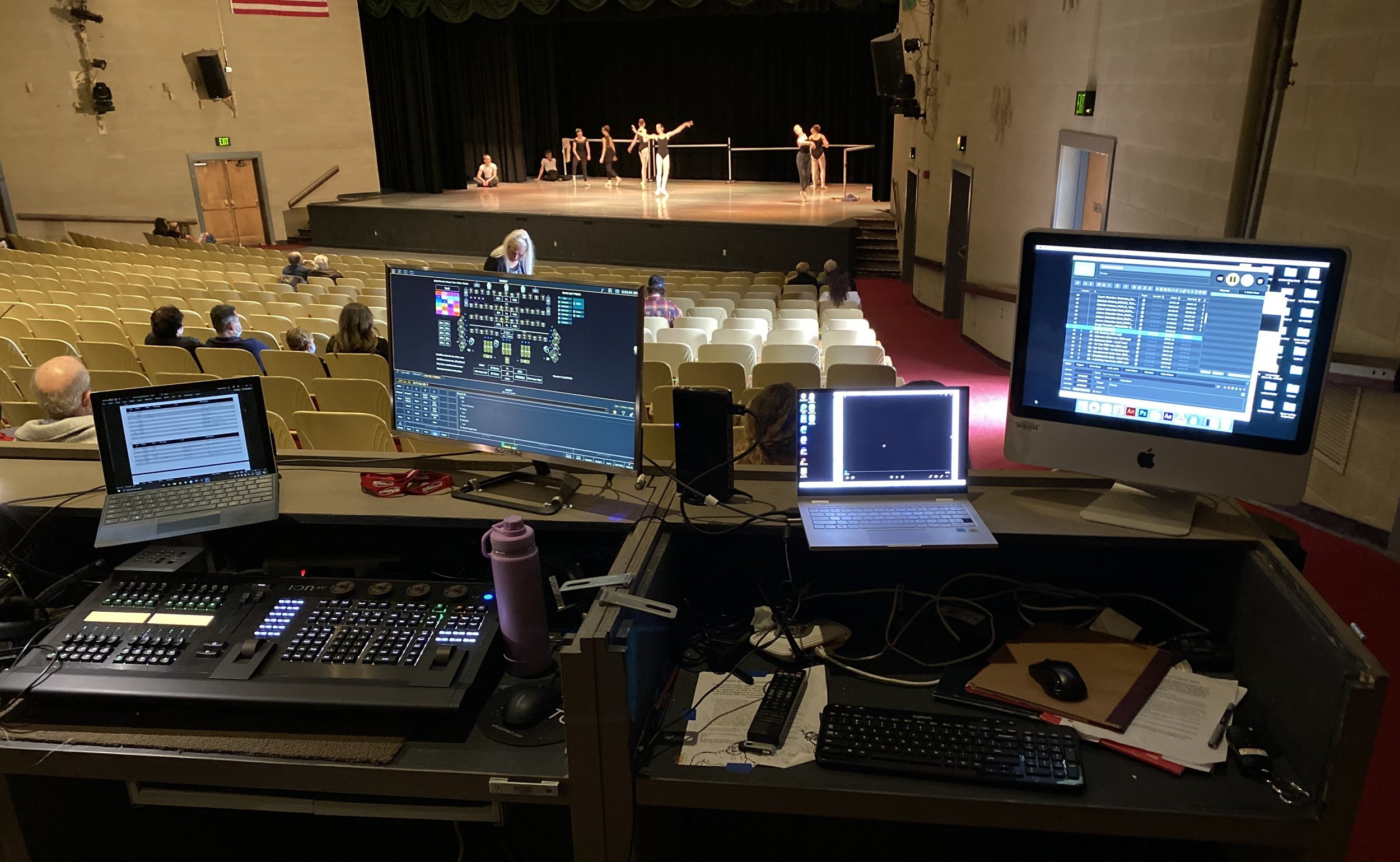
The biggest challenge that Elizabeth has seen in her line of work is a lack of communication between dancers and stage managers. For example, a stage manager may not understand what it means when a choreographer points out the way the lighting changes when dancers do “pirouettes.” It can be easy for team members to lose sight of the fact that they’re all working towards the same goal, despite any communication barriers. She also points out that many choreographers and directors put off considering production elements like lighting design until the last minute, without considering how they can help or harm their show. Being able to communicate with stage managers early on about such elements can save choreographers and directors a lot of last-minute stress.
Elizabeth says that it’s helpful for directors and choreographers to find lighting designers and stage managers that they work well with. It’s important for both parties to be open to the suggestions that the other may have because they can offer a unique perspective that may not have been considered before. She also points out that when the choreographer trusts the stage manager to do their part without micro-management, it frees up much more time and energy for them to focus on their choreography and other tasks. Everyone benefits from mutual trust.
Overall, Elizabeth believes that the dance and stage management worlds will benefit from learning more about what the other side does. Dancers working tech on shows, no matter how small, and having an appreciation for what technical workers do and how hard they work is important. “Until you’ve done it, you don’t really understand what [the other side] is doing,” Elizabeth points out. Getting more stage managers with dance backgrounds involved will also benefit the industry, as they already have an understanding of what that other side does.
Elizabeth is stage managing the University of Idaho’s spring production of DancersDrummersDreamers, which runs March 24-26, 2022. She’s thrilled to be working on this production, as it’s the first time it will be on stage in two years. She’s also doing lighting design and technical direction for Ballet Workshop’s production of The Sleeping Beauty, which runs April 23-24, 2022 at the Port Angeles Performing Arts Center. She will also be doing lighting designs for some of Ballet Workshop’s video pieces for the Juan de Fuca Festival of the Arts.

Photo by Melanie Meenan
Elizabeth will also be a special guest at the March Tea & Tendus event at Dancewear Center Renton on March 13th at 5:30 PM. Elizabeth will guide attendees through the basics of lighting, stage, and house management, as well as the best ways for tech crew and choreographers, and directors to collaborate. You can register for the free event here, we hope to see you all there!
Bringing People Together at All-4-1 Dancepalooza
It’s no secret that the dance world today is riddled with competition. Whether it’s the stages of dance competitions or within the crowded studio of an audition, dancers are often encouraged to pull out their best skills to win over the hearts and minds of judges, casting directors, and audiences across the globe. Within a competitive world, it’s easy to lose sight of the supportive communities that dance can foster. Daniel Wilkins of DASSdance strives to promote an inclusive and celebratory environment at All-4-1 Dancepalooza, a dance festival showcasing over a hundred young artists in the greater Seattle dance community March 12-13, 2022.
A Conversation With Festival Producer Daniel Wilkins
By Madison Huizinga, DWC Blog Editor
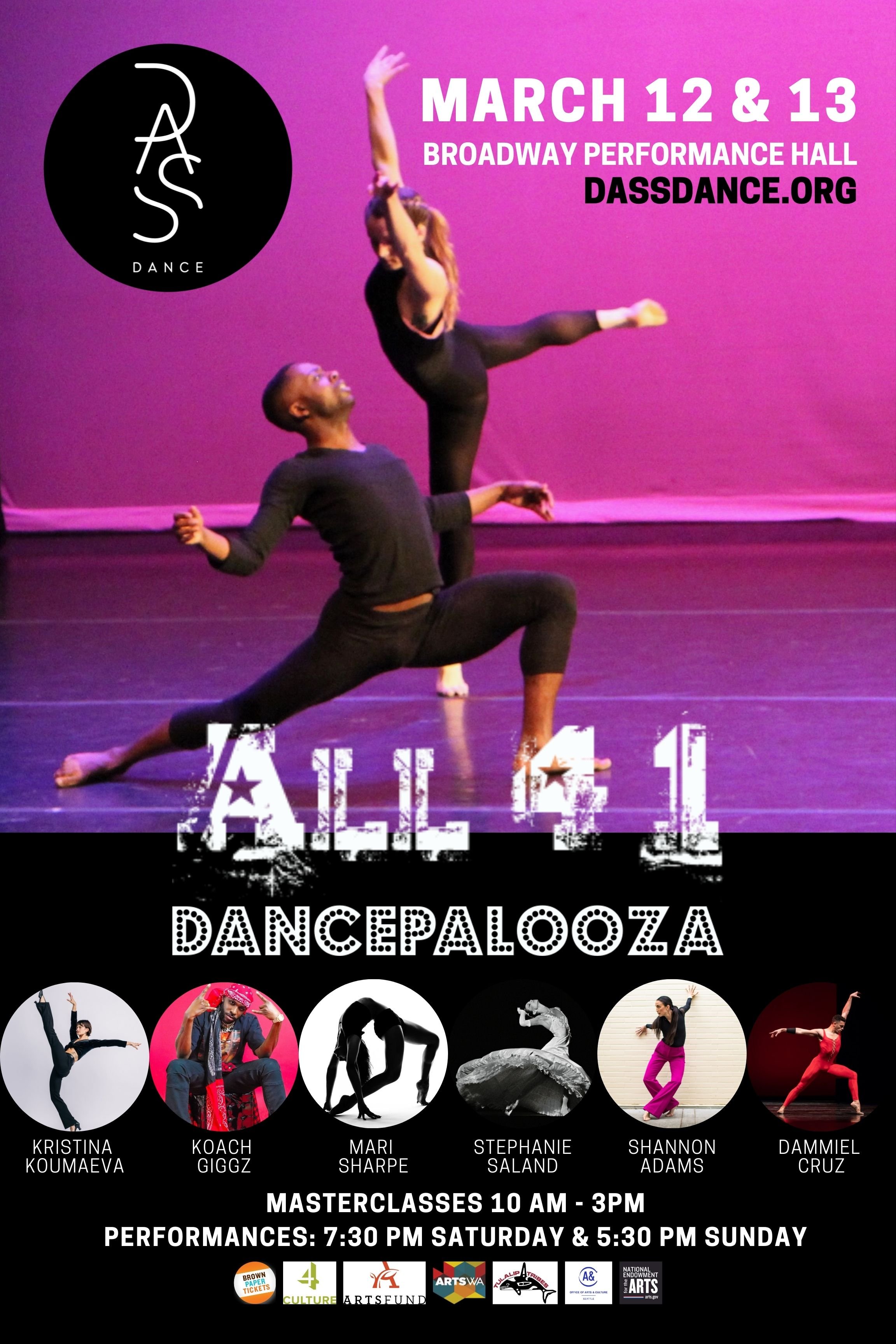
It’s no secret that the dance world today is riddled with competition. Whether it’s the stages of dance competitions or within the crowded studio of an audition, dancers are often encouraged to pull out their best skills to win over the hearts and minds of judges, casting directors, and audiences across the globe. Within a competitive world, it’s easy to lose sight of the supportive communities that dance can foster. Daniel Wilkins of DASSdance strives to promote an inclusive and celebratory environment at All-4-1 Dancepalooza, a dance festival showcasing over a hundred young artists in the greater Seattle dance community March 12-13, 2022.
Daniel describes his upbringing as “atypical,” as his parents held roles as dance teachers, choreographers, and directors at various dance schools and companies. While Daniel found success with baseball as a child, his father encouraged him to give dance a try. In high school, Daniel dove into the arts, taking up acting and modeling. With the support of his family, he began training in dance as well, ending up earning a scholarship at the San Francisco Ballet and later attending the School of American Ballet after several tries of auditioning. At the School of American Ballet, Daniel was fortunate enough to train under the likes of iconic instructors like Richard Rapp and Stanley Williams.
“I would love to see more mechanisms in place that give opportunities to young artists and young companies”
After graduating, Daniel danced with Pittsburgh Ballet Theatre under his first company contract. Upon his returns to New York and Seattle, Daniel drew inspiration from the emerging grunge music scenes at the time, asking himself how tradition-dense dance genres like ballet could be made more current. After leaving Pittsburgh Ballet Theatre, Daniel returned to New York and worked with companies like Daniel Byrd - The Group, Complexions Contemporary Ballet, and Suzanne Farrell Ballet, before moving on to choreographing himself. He later founded DASSdance in New York and Seattle “after seeing a need for daring and innovative movement in the dance community.”
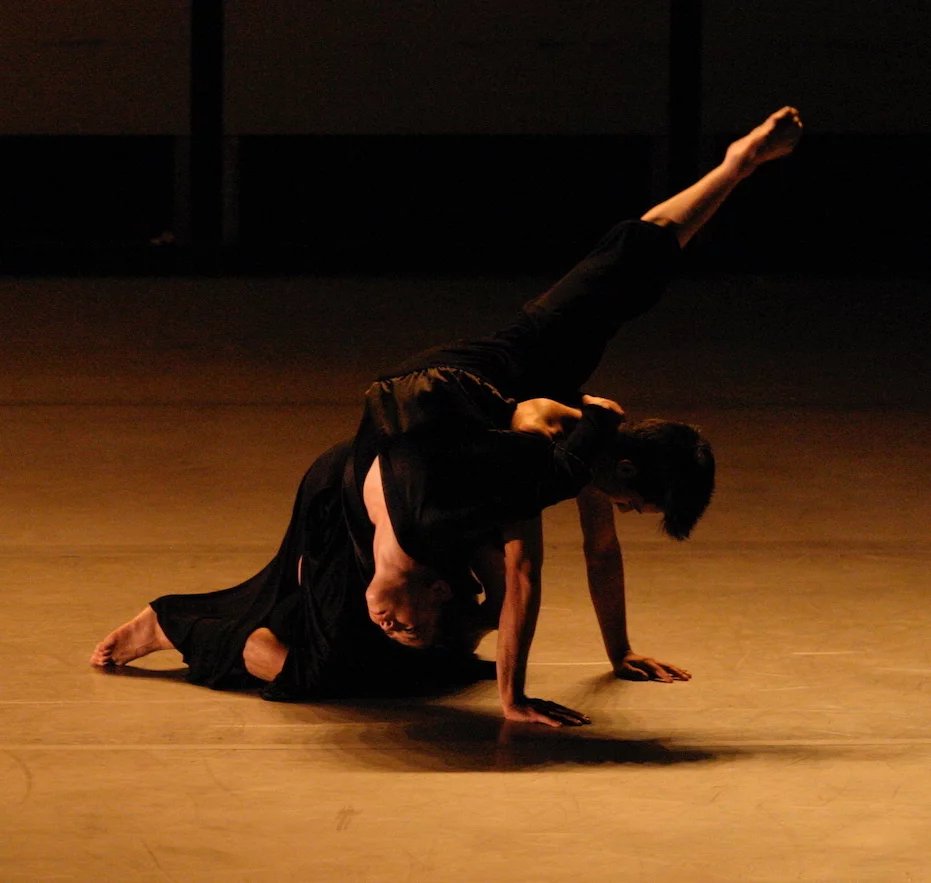
Photo curtesy of dassdance.org
Daniel says he was inspired to create the All-4-1 Dancepalooza after moving to Seattle and witnessing a lack of diversity in the local dance scene. “I wanted to do something that brought communities together somehow,” Daniel shares, desiring to break apart silos of dancers and foster a greater sense of inclusivity and community. He also points out the significance of bringing dancers in conversation with one another to create nuanced styles and progress techniques. When dancers of different backgrounds are exposed to one another, opportunities for cross-cultural understanding and creativity can emerge.
Daniel says that one of the pivoting factors for All-4-1 Dancepalooza was meeting Tyrone Crosby of N the Kutt Dance Studio in the greater Seattle area. The two came in conversation with one another and thought of different dance companies and studios to invite to the festival. All-4-1 Dancepalooza was able to draw in dance makers from all across Washington State year after year.
All-4-1 Dancepalooza offers dance classes and performance opportunities aimed towards young dancers ages nine years old and older. Attendees are exposed to experienced master class teachers in an array of genres, including ballet, hip hop, contemporary, jazz, and acro partnering. In addition, professional dance companies are invited to perform, including the DASSdance professional company.
“I really enjoy seeing the kids enjoying themselves and having all these great master teachers excite them with their amazing abilities,” Daniel says of All-4-1 Dancepalooza. He thinks it’s important for dancers to be able to feel confident in the classes they take but also challenged.


Photo curtesy of dassdance.org
In Daniel’s eyes, what sets All-4-1 Dancepalooza apart as a festival is its initial mission to open dancers’ arms and eyes and have conversations with different performers across the region. Daniel feels strongly about All-4-1 Dancepalooza being a non-competitive environment, and rather a place for people to come together, showcase their work, and meet new friends. While participating in other sports growing up, Daniel felt a strong competitive drive, but not as much when dancing. “It’s an art form, that’s what it is first and foremost,” Daniel says of dance. “I don’t want that to be lost.”
Daniel doesn’t subscribe to the idea that a dancer must fit a certain mold to be talented, as trying to force dancers into a pre-determined form can be incredibly limiting, especially for young aspiring artists. “I would love to see more mechanisms in place that give opportunities to young artists and young companies,” he says.
All in all, Daniel appreciates the diversity of artists that are showcased at the festival, particularly amid the youth companies, which are the core of the festival. Ballet companies, hip hop companies, contemporary companies, tap groups, and more can be expected to grace the stages of Broadway Performance Hall on March 12 and 13, 2022. “We have a great group of amazing dancers, master teachers, and choreographers. It’s going to be an exciting lineup,” Daniel shares.
Interested in writing for the DWC Blog? Click below to fill out the DWC Contributor application!