
Teaching with Intentional Positivity
As I grow in my role as an instructor and choreographer, I have reflected on my dance journey and the people who influenced me through teaching. Most of my free time growing up was spent in the dance studio under the instruction of Jennifer Picart Branner, or as I know her, Ms. Jen. When I consider the kind of teacher I am today and the teacher I hope to be, I often draw from my experiences as a student. Under the instruction of Ms. Jen, I felt a sense of accountability and support that allowed me to develop self-discipline positively. Through the intentional teaching methods modeled for me growing up, I grew as a dancer and a person. I attempt to inspire my classroom in the same way I felt inspired as a young dancer through modeling the importance of self-worth and resilience while creating a positive learning environment.
By Madison Walker. DWC Ambassador

Click Below to Shop the Look:
As I grow in my role as an instructor and choreographer, I have reflected on my dance journey and the people who influenced me through teaching. Most of my free time growing up was spent in the dance studio under the instruction of Jennifer Picart Branner, or as I know her, Ms. Jen. When I consider the kind of teacher I am today and the teacher I hope to be, I often draw from my experiences as a student. Under the instruction of Ms. Jen, I felt a sense of accountability and support that allowed me to develop self-discipline positively. Through the intentional teaching methods modeled for me growing up, I grew as a dancer and a person. I attempt to inspire my classroom in the same way I felt inspired as a young dancer through modeling the importance of self-worth and resilience while creating a positive learning environment.
Studies show that students who have positive and trusting relationships with their teachers, show more engagement in learning and achieve their learning goals at higher rates (Rimm-Kaufman, S., 2010, April 19). When students are positively engaged in the process of learning, they grow to enjoy learning in general. By positively engaging with my dance class, I am creating an environment in which my students can become more self-directed and resilient in their dance education. While technique is a crucial aspect of growth in a person’s dance journey, dance is also an art that requires vulnerability and creativity. I have great respect for the emotion that goes into a dancer’s execution of choreography. I also have great respect for my students as they grow into their own as artists and begin creating their own work. Since it requires so much vulnerability to improv and perform choreography, it is imperative that students feel comfortable and supported enough to explore the performance aspect of their dancing.
Providing critiques is a crucial part of teaching and something I have always valued. As Ms. Jen would often tell my class, “The day I stop critiquing you is the day I stop caring”. When I was a student, I learned to appreciate the individualized attention and the expectation that I could do better. Knowing that someone else believed I could achieve more, allowed me to have the confidence to push myself there. Teaching in my classroom today, I echo this motto and work diligently to acknowledge each of my students for the work they are putting into my class. I often say that ballet, while an art form, is a strict discipline that teaches us respect in addition to many other life lessons. It is out of respect that I address each of my students and critique them in a way that builds them up rather than tears them down.
“By encouraging my students to compete with themselves rather than comparing themselves to the person next to them, they learn to set and achieve realistic goals while appreciating their skills and ability level. ”

Click Below to Shop the Look:
In dance, there is a constant drive for perfection. Although we as dancers and as humans know that perfection is almost unobtainable, we push our minds and our bodies in the pursuit of being as close to perfection as we can be. As an instructor and choreographer working with young dancers, I strive to foster a love for the process of learning and put an emphasis on resilience. Through dance and specifically ballet, I learned the meaning of work ethic. My students know that when they come into my classroom, there is an expectation that they are working their hardest. I aim to hold my students accountable in a positive way by challenging them to développé higher than the time before, jump higher than the day prior, and push for more rotations in every turn. By encouraging my students to compete with themselves rather than comparing themselves to the person next to them, they learn to set and achieve realistic goals while appreciating their skills and ability level.
Working in mental health with youth by day, I am always engaging in training and with resources that translate to my dance classroom. Although as dance instructors we are responsible for our student’s technical growth, we are also playing a role in our students’ social and emotional development. I believe that all dance instructors should aim to educate themselves on the development of youth and how we as instructors can improve our teaching methods to best serve our students.
Below I have comprised a list of my main teaching tips that have helped me develop a positive dance environment. For more information on how you can create a better learning environment for your students and why it is important, check out the links listed under “Resources/Articles”.

Click Below to Shop the Look:
Claudia Dean World Bike Short | Claudia Dean World Sport Bra
My Tips for Teaching with Intentional Positivity:
My number one rule for myself when teaching is setting expectations. When your students know what is expected of them from day one, it is easier to hold them accountable in a constructive way.
Positively acknowledge each student during class. When students feel like they have been acknowledged in a positive light, they are more receptive to criticism.
Create structure. Having a routine in the classroom assists in keeping your students on task and leaves less room for shenanigans, allowing you to focus on the positives!
Give space for creative exploration. I love to incorporate improv into my classes to allow my students to apply the technique they learn in class while also pushing themselves to grow as artists. When students find a personal connection to their movement, they remain motivated in their dance education.
Give meaningful feedback. When students are given meaningful feedback, they can improve at a faster rate but it also builds a sense of self-worth to be acknowledged. Every dancer goes to class to improve so it is important as an instructor to ensure that each of my students walks away from each class with valuable feedback.
Know your students. There is great importance in knowing your students as people and dancers. I want to be able to help my students set and achieve goals by holding them accountable. When I know where my students are skill-wise, I am better able to recognize progress and regression.

Resources/Articles:
https://www.danceinforma.com/2012/09/03/guiding-students-towards-positive-thinking/
https://us.humankinetics.com/blogs/excerpt/creating-a-positive-learning-atmosphere
http://www.citraining.com/Teaching-the-Dance-Class-Strategies.html
Promoting Versatility in the Studio and Community
In many professional industries, but particularly in dance, versatility can be a vital asset to an individual’s career. Having the ability to be light on your feet, expert across numerous genres, and adaptable to rapid changes can help elevate a dancer both on and off the stage. That is why versatility is an important part of Allegro Performing Arts Academy’s goal. By providing dancers with robust dance training in a variety of styles and offering programs to an assortment of ages and levels, Owner Tonya Goodwillie and the rest of Allegro’s staff strive to bring something to the table for everyone.
Allegro Performing Arts Academy’s Tonya Goodwillie
By Madison Huizinga, DWC Blog Editor

In many professional industries, but particularly in dance, versatility can be a vital asset to an individual’s career. Having the ability to be light on your feet, expert across numerous genres, and adaptable to rapid changes can help elevate a dancer both on and off the stage. That is why versatility is an important part of Allegro Performing Arts Academy’s goal. By providing dancers with robust dance training in a variety of styles and offering programs to an assortment of ages and levels, Owner Tonya Goodwillie and the rest of Allegro’s staff strive to bring something to the table for everyone.
Tonya was inspired to dance at age two after watching her uncle, a ballroom dancer, practice with his partner. “My mom just noticed me sitting for hours on end watching, being still. So she was like ‘I need to get this kid into dance!’” she recalls. “I [have been] involved in dance ever since.” Tonya initially had dreams of having a career as an architect. But one day in her high school ceramics class, she was looking through college brochures and Cornish College of the Arts stood out to her. It was at that moment that Tonya realized she wanted to pursue dance as a career. “It’s one of those moments you never forget,” she says.
While attending Cornish, Allegro opened. “I had an opportunity that I couldn’t say no to,” Tonya says, in regards to helping build the business. She ended up taking a hiatus from school to focus on her work with Allegro, before returning years later to complete her degree. The years Tonya took off of college were crucial to bolstering Allegro’s business.
Today, Allegro has grown to be a dynamic performing arts academy in the Pacific Northwest. Tonya shares that Allegro has always made an effort to be “pretty bold about offering something for everybody.” “I feel very strongly about versatility for dancers,” she says. Tonya firmly believes that those who want to be professional dancers benefit from being well versed in a variety of genres and having numerous experiences under their belts. Thus, Allegro offers classes in an array of styles, including lyrical, contemporary, ballet, jazz, hip hop, tap, tumbling, musical theatre, drama, and more.

In addition to the various genres offered, Allegro prides itself in providing classes and programs for dancers of all ages and levels. “It’s really important to me that we try to offer something for everybody,” Tonya shares. The Allegro Precision Dance Company offers dancers the ability to “commit extra time to training, performing, and competing” at local and national events and competitions. The P.U.R.E. Hip Hop program similarly provides rigorous training and competition opportunities with a focus on hip hop. And The Allegro Players consists of “young performers interested in training and performing in drama and musical theater.” Allegro also offers copious classes for young ones, including a “Tiny Tots” creative movement class and a “Me & My Shadow” class, intended for young dancers and their parents.
Allegro has a lot to look forward to in the coming school year. “Just like every other studio, we’re really hoping to have a holiday showcase,” Tonya says. The studio’s annual holiday showcase is set for December 17-19, 2021. In January, Allegro plans to put on its “Burnin’ the Floor” showcase in January of 2022, which acts as a fundraiser for Allegro’s performing arts team. “This past year [the dancers] didn’t get to do that, so to be able to be at a theater would be amazing,” Tonya says.
During the COVID-19 pandemic, Allegro was able to pivot its offerings to an online platform quite swiftly. “We were only closed for a week in March 2020,” Tonya shares. Within a week, the studio was able to create an entirely virtual class schedule on Zoom. Upon returning to in-person classes later into the pandemic, Allegro was fully prepared, equipping every room with cameras and microphones for dancers tuning in through Zoom and instating mask requirements and sanitation protocol for those dancing in the studio. “Technically we’re still doing hybrid,” Tonya says of Allegro’s fall classes. She gives kudos to all of Allegro’s teachers for their adaptability and constant compassion for their students.

Moving through the COVID-19 pandemic and beyond, Tonya hopes to see more “cohesiveness” among local dance studios. She believes that the community has already taken a step in that direction by being a part of the Washington State Dance Studio Owners Coalition. The coalition started as a weekly Zoom meeting of studio owners, listening to one another and exchanging ideas on how to better handle teaching during the pandemic. The group later became an official organization to better communicate their needs to the governor’s office. “The meetings are still focused around COVID and helping each other out, but we have a long wish list of how to improve our dance industry,” Tonya says. “We’re talking about best business practices, how to educate studios about injury prevention, [and more].”
Tonya says that the WSDSOC is helping boost camaraderie among studio owners. “It’s just a really great environment,” Tonya shares. “There’s room for all of us. Business is business, of course...but there is room for all of us to succeed. So I really hope that we can help to make the dance community better by educating more and getting more dance studio owners on board.” Whether it’s through diversifying Allegro’s class offerings or collaborating with other industry professionals in the greater Seattle area, it’s clear that Tonya values helping ensure that everyone in the dance community gets what they need.
Partnering as a Larger-Bodied Dancer
Partnering in dance is a beautiful thing. The agility, strength, and trust shown between two dancers is a breathtaking connection to watch. The grace of the dancer being lifted blended with the power of the dancer doing the lifting can make a piece mesmerizing. I love watching it, I love choreographing it, and I especially love exploring new ways to create unique, organic movement between two people.
By Austin Sexton, DWC Blog Contributor

Partnering in dance is a beautiful thing. The agility, strength, and trust shown between two dancers is a breathtaking connection to watch. The grace of the dancer being lifted blended with the power of the dancer doing the lifting can make a piece mesmerizing. I love watching it, I love choreographing it, and I especially love exploring new ways to create unique, organic movement between two people.
Partnering takes trust. Dancers need to be able to rely on each other to create a safe and meaningful connection. They need to be vulnerable enough to trust that the other one will catch them as they fly. As a larger-bodied dancer, I was never chosen to do any kind of partnering other than lifting the thin-bodied dancers. I am very good at it. I can lift, throw, catch, and guarantee that the person I’m lifting will look beautiful.
But I have never learned how to have the trust and vulnerability that dancers who get lifted get to have. In my adult life, I have worked with choreographers who have wanted me to be lifted by other dancers and I have never been able to break through the mental block that years of fat-shaming in dance programmed in my brain. I am not comfortable being lifted. I bail. I freeze. I do not have trust because I was never taught how to have it.
After I had a baby, I was cast in a piece with Continuum Dance Collective. The choreographer I was working with, Amber Jackson, asked us to do a partnering exercise where each person took a turn standing in the middle of a circle with dancers around them. The objective was for the person in the middle to fall in multiple directions, and it was the people on the outside's responsibility to catch them. That person was supposed to trust in giving the others their weight. When it was my turn to be in the middle, I could not do it. I would fall, and catch myself, right when it was time for someone to catch me. Every time I’ve tried to be lifted, my brain says “no, they can not catch you.” Even if I know that they are capable of catching me, I do not have the trust in myself to give them my weight.

My brain just freezes and won’t let me give myself to another person when I dance with them unless I am the person doing the lifting. I think that I have conditioned myself to not trust others unless I am the one in control. I was never taught to be vulnerable with another person unless I was the one maintaining the safety of the situation, so I think that I missed out on an integral part of dance training. It’s so important to learn how to trust others, in the dance setting, but also outside of the studio. I think that to an extent, I took some of that lack of trust into my relationships with people. I think that I have built many walls to protect myself because being vulnerable was too difficult to face. I also think that I developed a sort of “do it myself” attitude with things, which can lead to resentment and being overwhelmed.
It’s important to note that I understand that historically, it makes sense to have a larger-bodied person lift a smaller-bodied person. But I think that partnering can be so much more than just impressive tricks and lifts. I think that teaching dancers how to weight share and counter each other’s weight can be a beautiful thing too. I would love to see the dance world start to explore new ways of partnering that don’t further the idea that only small-bodied people can ever be lifted.

Now, as an educator, I teach every dancer that important part of training. Every student in my class gets a chance to learn how to be lifted by another person. I teach trust and the proper way to weight share and counterbalance.
Counterbalance is an incredible way to teach dancers to trust each other because they’re not only responsible for holding the other person's weight, but their own as well. An exercise that I’ve done with my students is to pair them up and have them begin by just looking into each other's eyes. It opens them up to being vulnerable with their partner from the start. I have them start breathing together and try to match breaths. Then, I have them link wrists and begin exploring giving each other their weight. I have them lean away from each other and see how far they can hold each other. We build on that once they’re comfortable, by trying it with only one hand, or different parts of the body, like their backs, thighs, or feet.
At first, many students are skeptical and I see them reacting the same way I’ve seen myself react, with fear, doubt, and embarrassment. But I always reassure them that no matter their size or shape, everyone is capable of being partnered, as long as a foundation of trust is built with their partner. And usually, by the end of the exercise, I see beautiful demonstrations of weight sharing and counterbalance.
Lastly, in my classes and choreography, nobody is chosen to be lifted solely based on size, but rather what works best for the choreography and dancers. I never want to instill the mindset in my students that only the smaller-bodied dancers get to be lifted, and only the larger dancers get to lift. I want to create a space in my class that allows everyone to learn what I deeply feel I missed out on: equal trust and vulnerability.
I hope that the dance community can continue to grow to be more body-positive and allow all dancers to learn all elements of training and partnering.

Filling the Connection Gap: How Dancer for Dancer is Linking “Pals Around the World”
The COVID-19 pandemic isn’t the only phenomenon that’s caused the dance community to be a bit disjointed. A culture of competition and perfectionism has permeated the dance world, causing many dancers to see others as rivals rather than peers. To help alleviate the challenges that this type of environment can bring about, 17-year-old Samantha Parr has created the organization Dancer for Dancer to unite the dance community through open discussions, mental health support, and mentorship. Through Dancer for Dancer’s Pal Program and with the help of Pal Program coordinators like DWC staff member Emma Neilson, the organization is providing connection and support to dancers worldwide.
By Madison Huizinga, DWC Blog Editor

Samantha Parr, founder of Dancer for Dancer
The COVID-19 pandemic isn’t the only phenomenon that’s caused the dance community to be a bit disjointed. A culture of competition and perfectionism has permeated the dance world, causing many dancers to see others as rivals rather than peers. To help alleviate the challenges that this type of environment can bring about, 17-year-old Samantha Parr has created the organization Dancer for Dancer to unite the dance community through open discussions, mental health support, and mentorship. Through Dancer for Dancer’s Pal Program and with the help of Pal Program coordinators like DWC staff member Emma Neilson, the organization is providing connection and support to dancers worldwide.
Samantha began dancing when she was three years old and started to get involved more seriously with intensives and competitions around age 12. She’s attended intensives with Joffrey Ballet School, Pacific Northwest Ballet, and Ballet West and competed at the Youth America Grand Prix several times. At her studio in the Bay Area, Samantha has performed several lead roles in original ballets, as well as Clara in The Nutcracker. “I think the thing that keeps me dancing is my ability to express myself. At the end of long days, it’s nice to have something that I can work hard at. It keeps me grounded in a way and helps me focus a little bit,” Samantha shares. “I hope to continue to dance throughout college and beyond because I love it so much.”
The idea for Dancer for Dancer first came to Samantha in May of 2020, months into the COVID-19 pandemic. “I felt very disconnected from my ballet community in my studio,” she recalls. She remembers struggling to stay mentally healthy and falling out of love with dance a bit, due to the difficulty of learning at home. Samantha figured she must not be alone in these hardships she was facing, so she decided to schedule a Zoom call to connect with some dancers.
Samantha’s first Zoom call, with around 14 dancers, was towards the end of June. During the first several meetings, the dancers held discussions about racial inequality in the dance industry and later began talking about mental health among dancers. The Zoom calls began with dancers in Samantha’s area, but soon grew as others heard about them and as she informed friends from dance intensives she had attended. Little did she know one upcoming Zoom call would make her idea take extreme flight.

Samantha Parr, founder of Dancer for Dancer
Around January 2021, Samantha’s friend and Dancer for Dancer Ambassador Eleanor Green reached out to Casimere Jollette of the Netflix series “Tiny Pretty Things” to attend one of the Zoom calls. She said yes! Samantha and her cohorts organized a giant Q&A with Casimere and about 300 dancers from all over the world attended. “That’s kind of where it began to take off,” Samantha says.
Currently, Dancer for Dancer is extending its programming beyond Zoom calls through the Pal Program. “In ballet, there’s this unhealthy competition that I had experienced a lot when I was younger and it always left me feeling weird,” Samantha says. “I could have benefited from having an older dancer being my support system...That’s the inspiration for the Pal Program.”
Dancer for Dancer’s Pal Program contains two subsets: the D4D Mentorship Program and Pals Around the World. The D4D Mentorship Program consists of seven mentors from around the world aged 16-19. The mentors have been trained in giving mental health support by a professional and connect with younger dancers to give advice and provide guidance for wherever they are in their dance journey. The D4D Mentorship Program is open to younger dancers of all backgrounds who are interested in connecting with an older dancer, click here to sign up.
The Pals Around the World program is a global, virtual program in which any dancer of any age and from any dance background is paired with another dancer to correspond virtually for four weeks. Dancers can connect through Zoom, FaceTime, social media, texting, or any other medium they see fit. People are welcome to reapply for the program once the four weeks are up to connect with a new dancer. Samantha shares that Pals Around the World is a “chill” and “laid back” program where dancers have the opportunity to make friends with other dancers around the world. Participants also get “special access to D4D Pal Program workshops on mental health, self-improvement, and peer support.”
Pointe Shoe Fitter and DWC Blog Contributor Emma Neilson has recently gotten involved with Dancer for Dancer as a Pal Program Coordinator. Emma began dancing around age 13 to supplement her figure skating training. After training in ballet, jazz, modern, lyrical, and contemporary throughout high school, Emma graduated with her AA in Psychology from Shoreline Community College and then decided to take a gap year. Starting in 2019, she began training year-round at the International Ballet Academy in Bellevue, Washington where she is today.

Samantha Parr, founder of Dancer for Dancer
Emma came across Dancer for Dancer while scrolling through her Instagram feed. The organization’s account popped up as a recommended account for her to follow. After looking more into Dancer for Dancer and its offerings, Emma was amazed by its mission. She noticed that Dancer for Dancer was looking for coordinators and decided to apply. Shortly after that, Emma was interviewed and joined the team. As one of the Pal Program Coordinators, Emma’s role with Dancer for Dancer involves her collaborating with local studios in the greater Seattle area to see if they’re interested in participating in the Pal Program. There are numerous positions open at Dancer for Dancer, such as a Tik Tok Coordinator, Discord Moderator, and more, click here for more information.
Moving forward, the biggest change Samantha hopes to see in the dance world is for all body types to be accepted. She hopes that the “ballet body” ideal is eliminated and that companies start catering to dancers of all body sizes. “How your body looks doesn’t determine how your body dances and I feel like if the dance community is accepting of all body types, it would put less pressure on girls and boys to feel as if they have to fit into a certain mold that maybe they weren’t born like,” Samantha shares.
Additionally, Emma says that she hopes to see dance become more accessible to a wider range of people in the near future, specifically people of all ages, abilities, and socioeconomic classes. “Your age and what you think your physical capabilities are shouldn’t impact your ability to participate in something that gives you joy,” Emma states.
Dancer for Dancer was born to fill a gap that Samantha was witnessing in the dance realm. She was able to create a vessel to connect dancers in meaningful ways, something that was sorely missing and needed in the dance industry. For others who are interested in creating their own organizations, Samantha’s biggest piece of advice is for people to give themselves time to let their ideas sit with them. “Think about what the people are wanting or what you feel like they need more of,” she says. Once you figure out what your community is lacking, you can start finding ways to provide what is needed and build from there.

Sources:
https://www.dancerfordancer.com/
https://www.dancewearcenter.net/e-neilson
https://www.dancerfordancer.com/mentorship
https://www.dancerfordancer.com/pals-around-the-world
https://www.dancerfordancer.com/pal-meetings
https://www.dancerfordancer.com/team-1
https://docs.google.com/forms/d/e/1FAIpQLSehUadFIwLc4-suEWfAwVkgDUuXsgqD6BYKsMW1fYjQv_7GYw/viewform
Spreading Epilepsy Awareness in the Studio
If you are a friend of mine or have even been following me on social media, you'll know that epilepsy is a topic I care very passionately about. It's something that has affected my family for a little over seven years now. More specifically, my sibling, Hanna was diagnosed with epilepsy when they were seven years old, and I like to think that I’m well educated on the topic. I'm a major advocate for spreading awareness about different types of seizures and seizure first aid and debunking misinformation. I find great importance in educating others on seizures and epilepsy.
By Emma Spencer, DWC Ambassador
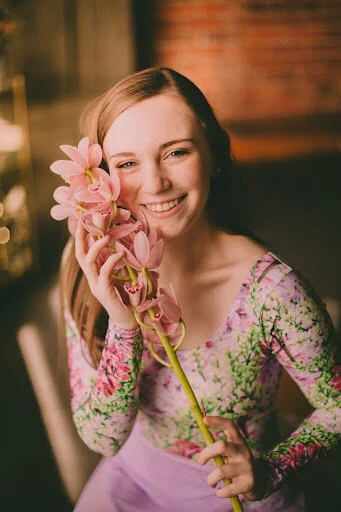
Click below to shop the look:
If you are a friend of mine or have even been following me on social media, you'll know that epilepsy is a topic I care very passionately about. It's something that has affected my family for a little over seven years now. More specifically, my sibling, Hanna was diagnosed with epilepsy when they were seven years old, and I like to think that I’m well educated on the topic. I'm a major advocate for spreading awareness about different types of seizures and seizure first aid and debunking misinformation. I find great importance in educating others on seizures and epilepsy.
Epilepsy is one of the most common neurological disorders in the world. It affects all ages and a seizure can happen to anyone at any time. Some seizures are triggered by certain actions, stress, strobing lights, dehydration, hitting your head, and even certain sounds. Some seizures don’t have a specific trigger, such as Hanna’s seizures. An estimated five million people around the world are diagnosed with epilepsy each year according to the World Health Organization. Epilepsy is not contagious in any way. You cannot swallow or choke on your tongue if you’re having a seizure. It’s also important to note that having a seizure does not necessarily mean that you have epilepsy. Your seizure may have been situational or caused by another underlying medical condition. There are different types of seizures and not all of them involve falling to the ground and violently contracting. Hanna, for example, has partial focal seizures in their left temporal lobe. They are completely lucid and can go about their day normally while having a seizure. They actually did a whole petit allegro combination while having a seizure one time!
Something I appreciate that my studio has done is provide our dance instructors with seizure first aid instructions in the back of our attendance books, as well as require any newly registered dancers to list if they have any seizure disorders upon registration. After a former dance instructor at my studio was diagnosed with epilepsy about a year ago, she had a conversation with my competition group on what to do if she had a seizure, since hers were “grand mal seizures” (a type of seizure that includes a loss of consciousness and violent muscle contractions. They are also known as tonic-clonic seizures). She even had Hanna share some of their experiences with epilepsy. Myself and our office manager are even certified to perform seizure first aid!
I’m so grateful that I attend a studio where staff members educate themselves based on the needs of their dancers. However, we have to raise awareness that seizures can happen to anyone at any time, and that training staff on epilepsy first aid only when you know you have a student or teacher with epilepsy can be very dangerous. Last year in November, I was doing a combination in my contemporary class, and I hit my head really hard on the floor when transitioning to the ground. I ended up with a concussion, but if I had hit my head just right, I could have had a seizure. I do not have a history of seizures. My point is, some seizures are situational. There could be an incident where a student hits their head in the right spot while doing a combination, or someone could have their first seizure during class. If you don’t have the proper training or education on seizures, you might not know what to do, and that could lead to some very dangerous consequences.
Studio owners, please take the time to have a conversation with your staff and students about epilepsy and seizure first aid. I’m including students in the mix because they will need to know what to do if a teacher has a seizure or if a fellow student has a seizure and a teacher is not present. Having epilepsy first aid sheets or posters hung up in your studio can spread awareness to parents as well! It would even be a good idea to have your staff complete CPR training as well. The safety of your staff and students is incredibly important.

On the topic of seizure first aid, I would like to go over some information on performing first aid on someone who is having a seizure:
Despite how scary a seizure can be, they actually only need emergency medical attention under certain circumstances, such as:
The person has never had a seizure before
They have difficulty breathing or walking after a seizure
The seizure lasts more than 5 minutes
The person hits their head or is overall injured
The seizure happens in water
The person is pregnant, had diabetes, heart disease, or another health condition
The person has another seizure soon after the first one
There are many different types of seizures: Absent, Focal Aware, and Grand Mal are the most commonly identified. The steps you’ll want to take for general seizure first aid are as follows:
Stay with the person until the seizure ends and when they completely regain consciousness.
Direct them to a safe area, or move any objects that may cause harm to the person out of the way if they’re having a grand mal seizure
After regaining consciousness, communicate calmly to the person what happened and comfort them
Grand Mal/Tonic-Clonic Seizure First Aid
Grand Mal or Tonic-Clonic Seizures come with a slightly different and more detailed protocol since there are a lot of parts to a grand mal. Here are the steps you should follow:
If you can, ease the person gently to the ground
Move the person to their side. This position actually allows the person having a seizure to breathe much easier!
Make sure any hard or sharp objects are out of the way
Check for a medical ID or bracelet and time the seizure. !f it lasts longer than 5 minutes, call 911
Do not stick any objects or your fingers in their mouth, do not give any water, pills, or food until the person is completely conscious and the seizure is over
Do not hold the person down or restrain them
Put something soft and flat under their head (a folded jacket or blanket will work)
Remove their glasses if they are wearing any
Make sure clothing is loosened around the neck and remove any ties or necklaces if they are present
Stay with the person until the seizure is over and they regain consciousness
For more information on seizures and what you can do to spread awareness, I have listed multiple sources I used to write this blog and even a couple of articles on dancers who have epilepsy and their experiences. I highly recommend checking out these sources, as they contain multitudes of information that I didn’t even graze upon in this blog post that is super important to know. I also recommend browsing around the Epilepsy Foundation’s website. The majority of their staff and volunteers have epilepsy themselves and the website contains a plethora of useful and fascinating information. You can also become seizure first aid certified after taking a webinar and test with them!
Sources and Information
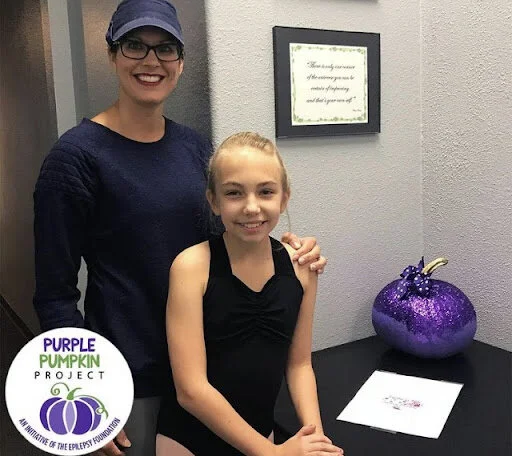
Photo of 11 year old Hanna and my studio’s administrator Alicia Peerson. Hanna had participated in the Epilepsy Foundation Kids Club’s “Purple Pumpkin Project” to spread awareness about epilepsy.

From Individual Coaching to Global Reach: Claudia Dean on Bolstering Positivity Worldwide
If you’ve ever searched “how to get a higher extension,” “how to break in pointe shoes,” or any other ballet-related question on YouTube, chances are you’ve come across a video by the incomparable Claudia Dean. Claudia Dean is undeniably a household name in the realm of online dance content. From private coaching to luxury dancewear to viral video tutorials, there seems to be nothing that the founder of Claudia Dean World can’t tackle. Claudia Dean World strives to “welcome dancers at any stage of their journey” and foster a positive community through global connection. But how exactly did the former Royal Ballet company member get here?
Claudia began dancing at age four because her best friend wanted her to join her class. She decided to stick with it and continue her training, eventually getting accepted into the Australian Ballet School’s Intra/Interstate & International Training Programme (ITP). After getting accepted into such a rigorous program, it occurred to Claudia that she might have a shot at making a career for herself in classical ballet. She continued dancing at her local studio, but around 14-15 years old she started training full-time on the Gold Coast of Australia, about two hours away from her home in Brisbane. “I was actually living away from home, which is a really good experience,” Claudia explains, as she learned how to cook, do laundry, and more all by herself at a young age.
By Madison Huizinga, DWC Blog Editor

Click below to shop the look:
Tracksuit Pants by Claudia Dean World | Cropped Hoodie by Claudia Dean World
If you’ve ever searched “how to get a higher extension,” “how to break in pointe shoes,” or any other ballet-related question on YouTube, chances are you’ve come across a video by the incomparable Claudia Dean. Claudia Dean is undeniably a household name in the realm of online dance content. From private coaching to luxury dancewear to viral video tutorials, there seems to be nothing that the founder of Claudia Dean World can’t tackle. Claudia Dean World strives to “welcome dancers at any stage of their journey” and foster a positive community through global connection. But how exactly did the former Royal Ballet company member get here?
Claudia began dancing at age four because her best friend wanted her to join her class. She decided to stick with it and continue her training, eventually getting accepted into the Australian Ballet School’s Intra/Interstate & International Training Programme (ITP). After getting accepted into such a rigorous program, it occurred to Claudia that she might have a shot at making a career for herself in classical ballet. She continued dancing at her local studio, but around 14-15 years old she started training full-time on the Gold Coast of Australia, about two hours away from her home in Brisbane. “I was actually living away from home, which is a really good experience,” Claudia explains, as she learned how to cook, do laundry, and more all by herself at a young age.
After a year and a half of training and competing at competitions like the Prix de Lausanne and the Alana Haines Australasian Awards, Claudia was accepted into the Royal Ballet School in London. She ended up graduating a year early and joining the Royal Ballet Company at age 17, where she got the opportunity to dance in coveted roles on the Royal Opera House stage. “It was sort of like a dream come true,” Claudia describes.
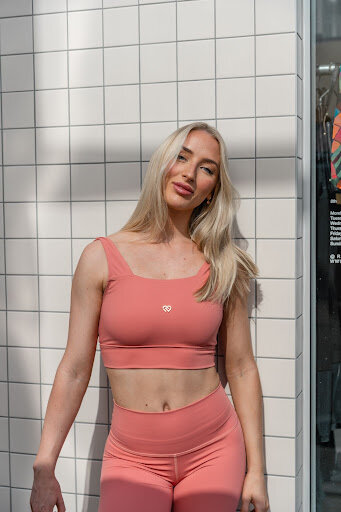
Click below to shop the look:
Sports Bra by Claudia Dean World | Bike Shorts by Claudia Dean World
And then Claudia had what she describes as a “light bulb moment.” “I’d been away for about six and a half years at this point,” she recalls. “I was missing home a fair bit and I found, as I was getting older, that homesickness for me was actually getting worse.” When she first joined the Royal Ballet School, she thought it was “the most exciting thing ever,” but later began contemplating what she was missing back home in Australia.
“I worked so hard and I’d done so many amazing roles at the Royal Ballet, I think I got to a point where I was a little bit burned out,” Claudia admits. “I got to this point where I was like ‘you know what, I feel like I’m destined to do something else now.’” Claudia retired from the Royal Ballet in 2014 and moved back to Australia.
Upon returning home, Claudia began working with her dad and brother in their real estate business where she got the opportunity to learn a lot about the inner workings of a company. “I kind of had a chance to get on my feet and be with my family,” she remembers. Then one day, an old ballet teacher called her up and asked if she was interested in teaching some of her students. Claudia was reluctant to accept, as she didn’t know if she would enjoy teaching, but decided to give it a try. After working with her first student, Claudia was hooked.
“I love passing on my knowledge and experience from the Royal Ballet but also…[providing] exercises and improving dancers,” Claudia says. “I didn’t have a natural facility for ballet so I was really passionate about dancers that also didn’t have a natural facility [and] making sure they know how to get better feet, get higher extensions, and all that stuff.”
Eager to add more personal coaching into her life, Claudia threw together a website and posted it on her Facebook page to see if anyone was interested in her coaching services. “My emails just blew up,” Claudia says. Eventually, she transitioned out of real estate work and shifted into personal coaching full-time in 2015, which is when Claudia Dean World launched.
“I’m really passionate about trying to help as many people as possible,” Claudia says. “Although I was coaching people one-on-one in the studio, I was like ‘how can I help other people that are in America or South Africa or Brazil.’” She recalls one of her coaching students, Talia Fidra, suggesting she make a YouTube channel to showcase dance tutorials and give tips that she gives in her one-on-one lessons. Claudia thought that this was a great idea, as she hadn’t seen many YouTube videos like that before.
Claudia’s first YouTube video was about how to master triple pirouettes. After 48 hours, the video amassed nearly 200,000 views. Claudia quickly realized that the information she could offer in these videos was incredibly valuable to so many people around the globe who were lacking it. She began posting weekly YouTube videos on a wide variety of technical topics and since then has gained over 250,000 subscribers and 133,000 followers on Instagram.

Click below to shop the look:
Tracksuit Pants by Claudia Dean World | Cropped Hoodie by Claudia Dean World
In addition to her coaching and video content on social media, Claudia Dean has lines of dancewear and activewear. A few years ago, Claudia was asking her followers what more they wanted to see from Claudia Dean World and many dancers said they would love for Claudia to try to make the “perfect leotard.” Intrigued, Claudia approached a bigger dancewear brand and inquired about a collaboration, but was rejected. “But I was still really passionate about doing it,” she shares. “So I went and sourced all my own fabrics, I found manufacturers, I found all the little silicon logos,” and more. Her first dancewear products came out in November 2017 and immediately took off. “They literally sold out in four minutes!” Claudia recalls. Today, Claudia Dean World’s dancewear is bigger than ever, selling thousands and thousands of garments each year. Keep an eye out for new releases coming soon, such as a new bag and four or five additional collections this year.
Through all the work Claudia does, but particularly through her coaching and video tutorials, she hopes to cultivate “a more positive approach to how children and even professionals are treated in the studio.” “I feel like there’s so many different ways you can say things to a child and [they] can be received so well [but can be] so damaging if they hear it in the wrong context,” Claudia says. She wants dancers to walk out of their studios feeling inspired and empowered, rather than discouraged.
Having access to the educational resources that Claudia Dean provides isn’t just useful; it has the potential to be transformative. Since its conception, Claudia Dean World has been geared towards helping individual dancers be the best they can be. Today, that sentiment still comes through, just on a global scale.
About the Author:
Dancing Into Adulthood
As children, partaking in extracurricular activities outside of school isn’t just an option, it’s downright encouraged. Our parents sign us up for anything they can to keep our bodies active and our minds engaged: soccer teams, chess clubs, dance classes, you name it. When we transition into high school, we’re encouraged to volunteer, join sports teams, and get involved in our community to bolster our college applications. We channel our time, energy, blood, sweat, and tears into these activities. In many cases, they transform from being mere hobbies to intense passions that help us persevere through our awkward adolescent years.
By Madison Huizinga, DWC Blog Editor

Photo Credit: En Avant Photography
As children, partaking in extracurricular activities outside of school isn’t just an option, it’s downright encouraged. For many of us, our parents register us for anything they can to keep our bodies active and our minds engaged: soccer teams, chess clubs, dance classes, you name it. When we transition into high school, we’re encouraged to volunteer, join sports teams, and get involved in our community to bolster our college applications. We channel our time, energy, blood, sweat, and tears into these activities. In many cases, they transform from being mere hobbies to intense passions that help us persevere through our awkward adolescent years. But then, when we graduate high school, something changes. Suddenly, we’re attending our last ballet class, performing in our last recital, and taking our last bow on stage. We’re given our diplomas and then clumsily thrust into college and careers to take on the “real world.” For most of us, our priorities shift to finding a job and taking care of our families. Our competition medals and pointe shoes are shoved to the back of our closets.
The transition from high school to college was incredibly challenging for me. I had been dancing at the same dance studio for 13 years, from when I was a kindergartener to an 18-year-old. The instructors and students had become a second family to me. Dancing and performing were the main parts of my life that brought me joy. And then, quickly, it was all over. My final curtain closed and before I knew it, I was in a dorm room isolated from the community that made me feel my best.
The idea that we must abandon our passions as we transition into adulthood is a harmful norm. There’s an unspoken expectation that people should just discard their hobbies and passions and channel all their energy into their “careers.” But life doesn’t have to be that way. Not all of us have the ability or capacity to pursue dance full-time and professionally, but that doesn’t mean we need to shut dance off from our lives for good.
One way that I began integrating dance into my life post-high school was taking open classes in my community. I started attending open ballet classes at PNB and Dance Fremont and was surprised at how much they challenged me. Many studios offer open classes every day of the week, allowing people to pick and choose the dates that work best for them. Also, most of these classes don’t have an age limit, so they’re open to everyone to attend for as long as they desire.
However, when the COVID-19 pandemic hit, the open classes I was taking were canceled and I was left feeling a bit hopeless about how I would keep up my technique. I was already dancing far fewer hours than I was in high school, and now I was studio-less and confined to dance in my small basement. How could I possibly practice and improve upon my technique? I pondered. But to my surprise, a variety of free online classes began popping up. I began taking Tiler Peck’s ballet classes on Instagram Live and they quickly became a part of my everyday routine. Many of her classes are still available online today.
On days when I couldn’t find any virtual classes to take, I took myself through my own ballet routine. I came up with a ballet barre routine and exercises to do in the center and executed them as if I was the teacher and the student. Doing this not only allowed me to act creatively, but I had control over how much I challenged myself.
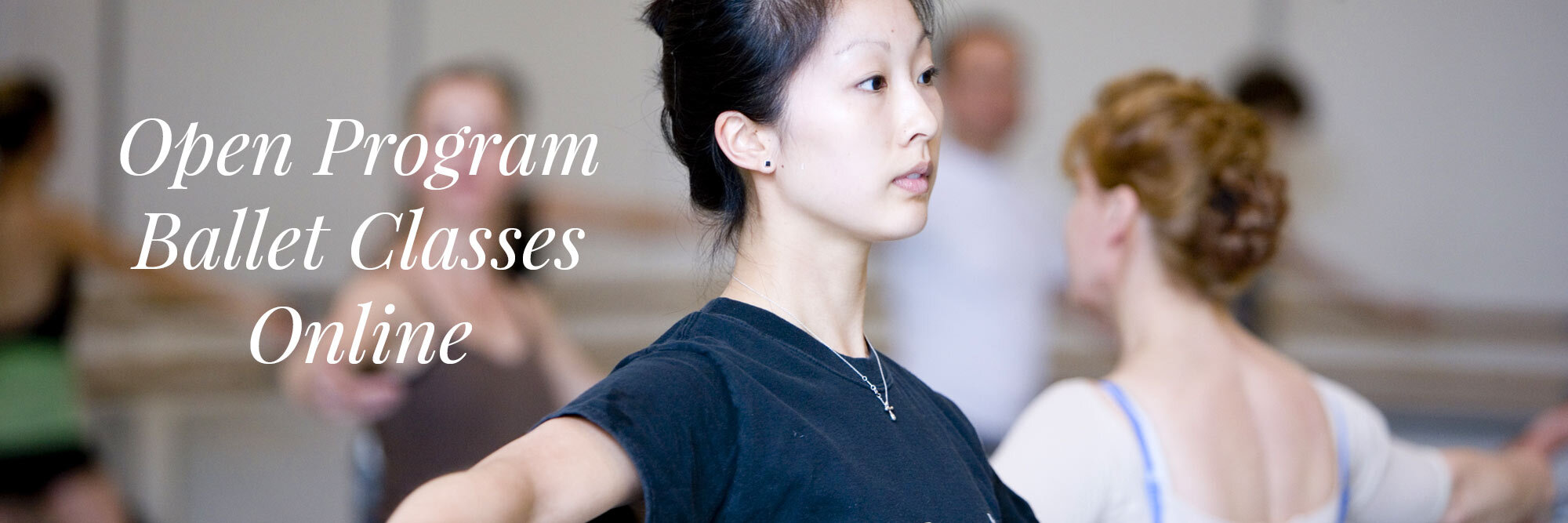
Photo Credit: Pacific Northwest Ballet
Also, since I didn’t have a lot of space to dance at home, I shifted my focus to forms of exercise that could supplement my dance training but didn’t take up much space, such as yoga and pilates. Focusing more of my attention on cross-training and strengthening important dance muscles improved my technique in ways I never imagined possible. In high school, cross-training was something I had trouble fitting into my busy schedule. However, as an adult with more control over my schedule, I was able to carve out time to cross-train and witness my technique improve in ways that were once unfathomable.
It’s safe to say that there are ways to help maintain our strength and technique when dancing as adults, due to open classes, online resources, and cross-training, but what about performing? Performing on stage was one of the parts of dancing that was most enjoyable to me. The sheer adrenaline rush, thrill, and pride that comes with dancing in front of a live audience is simply unmatched. Eager to keep this aspect of dancing in my life, I auditioned for a small, local dance company and was fortunate enough to get in! Auditioning for a professional company is understandably daunting to many folks; however, there is a plethora of dance in Seattle, and many artists who are looking for bodies to choreograph on. There is no harm in putting yourself out there and seeing what you get in return, it might surprise you.
Aside from performing on stage, there are also many peripheral ways to get involved with the dance community. Whether it’s graphic design, costuming, artist management, or music production, the possibilities are endless.
This myth that we must abandon our passions when we turn 18 is invasive and toxic. We are the architects of our own lives, so there’s no reason why we shouldn’t continue doing the things that bring us happiness into adulthood. Being joyful and having fun shouldn’t just be relegated to our youth. As adults, we have so much to contribute to our dance community and so much we can learn. Whether it’s pursuing a full-time position in a dance-related career or simply taking on a weekly open class, why not take the leap and see what’s possible.

The Power Behind Breath in Dance
'Suck in' 'Engage your core'. Two phrases that seemed synonymous to me in dance. I remember learning proper ballet technique with the image of a corset. During barre, my instructor would inhale sharply, shrinking her waist while pointing at me to do the same. A silent reminder that good posture included a sucked-in stomach.
By Ella Kim, DWC Blog Contributor
“‘Suck in’ ‘Engage your core’”

Photo Credit: National Institute of Health
Two phrases that seemed synonymous to me in dance. I remember learning proper ballet technique with the image of a corset. During barre, my instructor would inhale sharply, shrinking her waist while pointing at me to do the same. A silent reminder that good posture included a sucked-in stomach.
As the focus of my dancing shifted from learning specific body placements to developing dynamic movement qualities, restricted breathing held me back. I’ve recognized a pattern in my dancing of breathing shallowly in my chest instead of taking fuller breaths from my diaphragm. This shallow breathing lifts my shoulders and tightens my neck, stiffening my dancing. I get corrections for high shoulders, but I feel like I cannot drop them.
What if we taught a more complete understanding of the mechanism of “engaging your core”? A technique I learned through aesthetic indicators could be equally, if not more successfully, taught with breath and motion in mind.
To bring a sense of ease to my dancing, I’ve been trying to re-train myself to breathe from my diaphragm. Sometimes referred to as belly breathing, this shift frees up my upper body and gives me back control of my shoulders. When dancing, I focus on the space below my rib cage, making sure to expand into my sides and back with each inhale.
This shift to belly breathing has helped more than my port de bra. Sports medicine research has shown that intra-abdominal pressure (IAP) coordination is key to accurately using core strength.
In 2013, a research team published “Dynamic Neuromuscular Stabilization & Sports Rehabilitation,” a report investigating IAP’s role in stabilizing the spine. They found that belly breathing plays an essential role in core stability, which “is not achieved purely by adequate strength of abdominals, spinal extensors, gluteals or any other musculature; rather, core stabilization is accomplished through precise coordination of these muscles and intra‐abdominal pressure regulation by the central nervous system.”
What does all that mean for dancers? Don’t hold your breath at the barre! It is important to have good coordination of stabilizing muscles (not just strength), and good coordination comes from deep breaths. IAP regulation comes from the central nervous system. This system consists of the diaphragm, pelvic floor, and transverse abdominis, which work together to create internal pressure. Increasing IAP helps unload the spine in specific postures.

Photo Credit: National Institute of Health
As I break my shallow breathing habit, I have found it helpful to time my inhales and exhales with my dancing. Knowing that my IAP is what helps me stabilize, I try to exhale through tough movements. Before, my instinct was to inhale and hold my breath in these moments, but by releasing the breath I can engage more of my core stability.
In a challenging move like an Italian fouetté, core stability and IAP are very important in helping me balance on my supporting leg while my working leg moves to initiate the rotation of my body. To avoid injury (like rolling an ankle or tweaking my back) and provide maximum stability in the move, I’ve found it helpful to exhale as my working leg brushes upwards and my body flips from fouetté to back attitude. That is when I need the most stability and neural control.
By being more intentional with my breathing while dancing, I have begun to use breath as a strengthening tool. Harnessing the body’s natural rhythms is freeing up my movement quality and making me a steadier dancer.

By Ella Kim
Ella Kim began dancing at 4 years old. She focused primarily in ballet until finding a love of modern and contemporary dance in high school. She is currently pursuing a BFA in Dance at George Mason University. On breaks from school, she's had the opportunity to dance as a guest artist for Trillium Dance Collective. Ella enjoys investigating different aspects of the dance world and is thankful to DWC for giving her a platform.
Disability and Ableism: What Are They?
In this article, I will dive deeper into the topics of disability and ableism. I understand that these topics can be sensitive and triggering to some folks. However, I think that these subjects need to be brought to more people’s attention because I don’t hear nearly enough said about them. I also hear a lot of incorrect information around these issues, so my goal is to advocate and educate.
Trigger Warning: Mental disability and anxiety
By Jade Fraser DWC Blog Contributor
Disclaimer: In this article, I chose to use the word “people” before “disability” because some people prefer “person with disability” rather than “disabled person” to show that they are a person before their disability. I generally don’t do this when writing or speaking because, being disabled, I am a person before my disability. That should be obvious, regardless of what language I use. Many people with disabilities use “disabled” before “person” for those reasons, and also for grammar issues. However, individuals may have their own preferences for how they wish to be referred to, and those should be respected. I chose to use “person” before “disability” here only because I want to avoid feedback and questions about my word choice.
In this article, I will dive deeper into the topics of disability and ableism. I understand that these topics can be sensitive and triggering to some folks. However, I think that these subjects need to be brought to more people’s attention because I don’t hear nearly enough said about them. I also hear a lot of incorrect information around these issues, so my goal is to advocate and educate.
I’ll start by explaining what the words disability and ableism mean, and then dive deeper into the complex realm of ability versus disability. I want to share my perspective as a person who spends their life trying to navigate their way through this seemingly endless maze. Additionally, I will discuss ableism and why it is damaging to society, as well as what people without disabilities can do to help break the cycle of misinformation, frustration, embarrassment, fear, and hurt. Finally, I will show how this information relates to the dance world.
You may be wondering, “what is a disability?” That’s a good question. Often, the word “disability” makes someone think of a person in a wheelchair or missing a limb. Others may think of anxiety disorders or developmental conditions. Chronic conditions like diabetes, POTS, or epilepsy might also come to mind. All of these thoughts and views are valid; however, it pays to seek perspectives from other people.
Humans define things differently depending on their distinct life experiences. For example, if you ask ten different people what the definition of education is, you’ll get ten different answers. “Education is when you go to school to learn things.” “Education is when you sit on the couch with a bowl of popcorn and binge-watch The Bachelor for the tenth time this week.” “Education is ‘Hell on Earth.’” I could go on and on.

I personally can see some amount of truth in any of those definitions. If you go to school, you are bound to learn something, whether it be how to solve algebraic equations or what the best (or worst) lunch option is. Binge-watching reality television could make you realize that you like plain butter better than butter and salt on your popcorn. Maybe you’re dreading your next educational opportunity. You could look at any of these explanations and find them valid, in a way. However, you can always gain new insight from listening to the perspectives that differ from your own. (This nugget of wisdom is adapted from the ingeniously hysterical book by Hilary Smith, Welcome to the Jungle: Facing Bipolar Without Freaking Out.)
It’s the same with disability: every person you ask will give a different answer. Nevertheless, the definition of disability outlined by the Americans with Disabilities Act of 1990 (ADA) is “a physical or mental impairment that substantially limits one or more major life activities, a person who has a history or record of such an impairment, or a person who is perceived by others as having such an impairment.”
The ADA’s definition of disability appears complete and thorough, but it can also be confusing to think about what it means to be impaired in a way that fits the definition of the law. What does that mean, exactly? Do I fit that definition? If I do, what do I do now?
I have asked myself all of these questions and have always been confused about them! There are many long and fancy words in these definitions and explanations, which can make them daunting to look at. That’s why I like to describe “disability” more simply, as it can make it easier to understand, not only for myself but, hopefully, for other people as well.
I think of disability as a difference with somebody’s brain or physical body that makes it harder to live their life. This description puts it into simple terms so that it doesn’t sound as daunting and clinical. When I think about the ADA’s definition of disability, I feel separated and tainted with the feeling that I’m “abnormal” or “wrong.” It might make someone appear more limited than they actually are. When I think of it as just a difference that makes life harder, I know that my brain and body function differently, but I don’t feel like I am completely different from those around me.
“Disability” is a frustratingly broad term, which makes it challenging to think about more specifically. Disability is also a spectrum, meaning that a person living with one condition will experience it completely differently than another person living with the same condition. This occurs due to differences in severity, symptoms, etc. An example is an easily manageable OCD that isn’t disruptive, versus OCD that needs to be mitigated with medication.
Further, some disabilities affect the brain’s functioning rather than the physical body. Often called mental disorders or mental illnesses, these impairments can be more common and extensive than many may think.
Take anxiety, for example. I experience multiple anxiety disorders, but mainly Generalized Anxiety Disorder (GAD). For me, experiencing this chronic condition means enduring frequent anxiety episodes, usually without a reasonable or known cause. I might have an episode when watching a funny animal video, or even when I’m just relaxing on the couch. Anxiety is considered a disability when it disrupts a person’s daily life. My anxiety disorders are debilitating every single day – it’s not just situational anxiety – which is why I am considered a person with a disability.
Now that we’ve tackled the definition of a disability, what is ableism?
To me, ableism involves having certain beliefs or doing certain actions that deprive people with disabilities of opportunities. A viewpoint that could be considered ableist is believing that people with disabilities aren’t intelligent people and aren’t capable of living successful, independent lives. Actions that could be considered ableist are talking to a person with a mental illness like you’d talk to a five-year-old or pushing someone’s wheelchair when they don’t need or want you to push it. Judging a person by their disability alone is an ableist thing to do, no matter what. There is so much more to a person than their disability, and you certainly do not know their whole story and therefore are not in any place to judge them.
For example, I have a friend who has Down’s syndrome. She is in her twenties but hasn’t developed as quickly as others her age in certain areas of her life. She goes to a school for people with similar conditions to her’s and has a habit of giving her Barbie dolls extremely short pixie cuts. I will never know the full extent of what it’s like to live with her condition, but, as her friend, I know that I don’t need to treat her differently than I would anybody else just because of her Down’s syndrome. I treat her the way I would treat any of my other friends, meaning I don’t talk to her differently and I don’t treat her like a baby, because she isn’t one. Her condition does not define who she is. I see her just as I would see any of my other friends. She is not “my friend with Down’s syndrome;” she is “my friend.”
Many things can be considered ableist by people with disabilities, and we might be hurt by something a person says or does even if they mean well. You might not think completing a simple task for us or trying to make life easier for us in some way could be hurtful. But, we might get confused as to why you’re doing something for us that isn’t difficult to do ourselves. You might think you’re helping us, but often what you’re doing is frustrating and confusing at best, and communicating that we can’t be independent and must always rely on others at worst. It would be a different story if we actually needed help with something when we’re unable to complete a task without support.
Due to ableism, people with disabilities can experience discrimination from educators, potential employers, and others judging them based on their disabilities and not their skills. People who would be fantastic in a certain position could get overlooked or fired based on them having a disability. Additionally, people with disabilities have historically been paid less than others that don’t possess disabilities.
Further, there are many misconceptions about disabilities out there. For example, some misconceptions include that everybody who uses a wheelchair is unable to walk or everybody who uses a service animal is blind. People with mental illnesses may be considered unintelligent and incapable of being independent or successful.
If these misconceptions are spread widely, then they will be widely believed. If they are widely believed, an entire society can become misinformed. These false beliefs then become the foundation of how our society thinks and operates, and it will become much more difficult to re-educate people.
“One misconception that bothers me a lot is the belief that people with mental illnesses are not intelligent and capable people. That is about as far from the truth as you can get.”
One misconception that bothers me a lot is the belief that people with mental illnesses are not intelligent and capable people. That is about as far from the truth as you can get. I have multiple mental illnesses, and I am capable of excelling in a difficult and high-powered career if I chose to go that route. It's no wonder that many people with mental conditions become talented visual artists, musicians, dancers, actors, and more. Here are just a few examples of celebrities with mental illnesses:
Park Jimin (Jimin of BTS) has struggled with disordered eating and has become a crucial part of the Korean pop band BTS with his vocals, dance skills, and his ability to show empathy and love.
Min Yoongi (SUGA of BTS) has dealt with debilitating anxiety disorders and depression, and he uses his personal experiences and extreme pain in his work as a beatmaker and songwriter, aside from being a phenomenal pianist.
Carrie Fisher struggled with addiction, which is hereditary in her mother’s family. She became one of the most celebrated actresses out there with her work as Princess Leia in the Star Wars movies.
Ludwig van Beethoven is thought to have had a mood disorder, likely bipolar depression. This caused him to create much of his music to reflect his mood, which is one of the reasons his music speaks to so many people.
It’s not only intelligence and success though. People with mental illnesses are not the unstable, crazy people that much of society sees us as, and how we are often portrayed by the media. Some of the most sensitive and in-tune people I know have mental disorders. Some people with mental illnesses may be so in touch with the emotions of others that they seem psychic, or extremely sensitive to nature. Others might be loved so much by animals that they will bypass everyone else just to approach them. For me specifically, I have always had a gift with horses. I can bond and communicate with them in a way that’s different from everybody else.
These unique parts of myself and others are true strengths and gifts. However, they pose potential challenges. For example, somebody attuned to nature might feel most at peace in natural settings, but could be driven to depression – or even suicide – by the fact that the earth is being harmed by humans, potentially beyond repair. As someone who is attuned to horses, I didn’t know what to do with myself when the horse I learned to ride on and who taught me so much was put to sleep. Her loss was devastating for me. (That’s another nugget of wisdom adapted from Welcome to the Jungle: Facing Bipolar Without Freaking Out by Hilary Smith.)
Part of why debunking misconceptions is so important to me is that youth with disabilities are at a “high risk” for self-harming and suicide. When I was in 8th grade, I was almost driven to suicide because of what was happening in my life. What saved me was the knowledge that I have people around me that need me, love me, and care so much for me that losing me would destroy their lives. Through all my self-hatred, I still knew that people cared. And they cared for me. If I died, so many people would die too, emotionally if not physically. That is what kept me going in the darkest point of my life.
I choose to publicly share personal details of my struggles so that I can raise awareness of the reality that I was living. There was so much more going on beneath the surface than you ever would have known by just talking to me on a daily basis. I laughed, I socialized, and I went away from home, but I was truly suffering. I am living proof of why it is hurtful to judge and make assumptions about people with disabilities when you don’t have all the information. People not believing my struggles and gaslighting me almost caused me to end my life.
At this point, you may be wondering “how does this all relate to the dance world?” Earlier, I mentioned how people with disabilities are affected by discrimination in education and employment. The same issues happen in the dance world - people with disabilities can miss out on dance-related education and employment opportunities. We also need to re-consider the accessibility of dance programs and facilities. If a person with a disability is denied an opportunity to participate in a program because of an accessibility issue, there are problems on multiple levels. For example, if a dance convention is being held at a location that is inaccessible to a wheelchair user, the facility is liable for being inaccessible, but the convention is responsible for not choosing an accessible location. If a dance camp or intensive program refuses to admit a dancer based on their disability rather than their dancing, that’s also ableist.
Situations like these can be classified as legal issues, ethical issues, or both. In a school setting, a student might be denied based on accommodation issues on campus, which is mainly a legal issue and can be fixed with structural modifications. But if the student is denied based on the staff’s unwillingness to support a student with a disability, that’s mainly an ethical issue. In the case of a dance convention, intensive, or even just a class, it’s both a legal and ethical issue. Therefore, in the dance world, there’s a need to solve all of these issues by implementing both structural changes in facilities that need them, as well as shifting attitudes with re-education.
I really hope everyone enjoyed reading this article and learned something new. The world might become a little less biased with people becoming more aware of the realities people with disabilities live with every day.
Finding My Version of Success in Dance
If you had a chance to read my “get to know me” blog, you know I have been dancing since I was 5 and now at almost 30 dance is still a huge passion I continue to pursue. Growing up I participated in competitions, I auditioned for and attended a ballet intensive as a sophomore in high school , went the route of adding on dance team in high school and college, sprinkled in some musical theatre experience
By Kelsey Wickman
Kelsey Wickman began dancing at the age of four starting with ballet and tap, then expanding to include jazz, contemporary, lyrical and modern. She refined her ballet training while attending State Street Ballet's summer intensive. Kelsey then continued her dancing while enrolled at Gonzaga University. During college, she participated in academic dance classes, the student-led dance club Boundless, oversaw the dance program's master class program, danced and choreographed for Student Choreography Concerts, performed with the Gonzaga University Dance Team, attended ACDFA and earned a minor in Dance.
Post-college, Kelsey relocated to Salt Lake City where she was able to continue her training at Millennium Dance Complex SLC from a multitude of talented teachers in a variety of styles. In 2015, Kelsey relocated back to Seattle and joined modern company, Version Excursion Dance, who she danced with for 2.5 years. Kelsey is now in her second season with Syncopation Dance Project, a group of passionate adult-age dancers who come together to share their talents. She also participates in the annual artÉmotion adult ballet intensive under the direction of Allison DeBona where each summer she is inspired by dancers of all levels who continue to keep dance a part of their lives even with life, family, work and other obligations. Kelsey's ultimate goal is to still be dancing way into old age.
Outside of dance, Kelsey is the Media Relations Manager at Rad Power Bikes.
Shop the Look: Royal Leotard by Jule Dancewear
If you had a chance to read my “get to know me” blog, you know I have been dancing since I was 5 and now at almost 30 dance is still a huge passion I continue to pursue. Growing up I participated in competitions, I auditioned for and attended a ballet intensive as a sophomore in high school , went the route of adding on dance team in high school and college, sprinkled in some musical theatre experience in productions of A Scarlet Pimpernel and A Chorus Line, minored in dance at Gonzaga University and more. Basically, when I wasn’t doing school work, I was dancing. Yet, at a fairly young age I understood my time dancing to be limited. This understanding went so far that I clearly remember my last Spring Dance Concert in college wrapping up and I started sobbing, like full on stage makeup running down my face sobbing, because I thought I would never perform again. Sure, I might be able continue to take class as I moved my way into the “real world,” but a future that included dance in any serious form was always out of the picture. But, why?
Now, as someone who has managed to keep dance such a pillar of my life despite the challenges of a career, family, and other responsibilities, I have often asked myself what drove that limited view of dance success and how can I be an example for others in a different view of what I learned as success.
As a young dancer the version of success that was shown to me included full time, professional dancers who were taller, leaner and more talented than me. I started playing that comparison game, the one you can’t actually win at, early on and counted myself out before I even tried. I really had no idea there was a world out there with dancers who were of a broad range in ages, body types, skill levels and more who found their own versions of dance accomplishments worth celebrating.
As someone just now figuring this out, I figured I’d share a few ways I’ve redefined success in dance for myself.
1. You don’t have to make dance your career to keep it up. The range of classes, performance opportunities, companies, and continuing education for dancers as adults is only growing. At one point I remember the only adult class at my studio was a beginning tap class that some of the dance moms took while their kids were in competition company rehearsals. Now, there are studios and programs dedicated to building adult dancers as artists, taking them seriously at all levels, which I personally think is so beautiful!
2. Be open to dance finding its way into your life in unexpected ways. Even though you may choose a path that isn’t 9-5 dancing, it doesn’t mean dance might not find you. When I was in my second year post-college working at a public relations agency in Salt Lake City I got pulled into one of the partners’ offices because they wanted me on a new client. The client was a multichannel YouTube network dedicated to dance and they knew I could speak the same language as the client who was partnering with Nigel Lythgoe at the time (yes, I nerded out a lot when I landed this interview for Nigel, our client and the LA Times and got to be on the call). It was such a fun way for career and dance to cross paths in a totally unexpected way and I got to see career and dance success combined.
3. Start finding ways to support a broad spectrum of dance. This can look like a lot of different things and there is not a right (or wrong) way to do this. Watching more dance was one thing that really opened up my eyes to the amount of opportunities that do exist. I started seeing a broader spectrum of successful dancers in a wider variety of styles. I also think this is one way social media is so powerful, it gives us easier access to discovering dance and dancers that make us feel like doing a little more dancing ourselves. That’s how I discovered my current dance family, Syncopation Dance Project. After watching and talking to people involved, I knew it was a dance space for me. You never know what’s out there until you do some looking.

Click Below to Shop the Look:
Luster Leotard by Jule Dancewear | Bullet Pointe Skirt in Lilac

Click Below to Shop the Look:
Support the Arts Hoodie by Sunday Outfitters | Performance Shocks by Apolla Performance
There are more opportunities than ever to take our common love for dance and continue it in so many really rewarding ways. Dance doesn’t have to be your professional career or something you get paid to do to be an important part of your life or to feel like you have found success with it. Showing up, continuing to put in work and loving the movement is success enough, but there are also so many other ways to achieve some really great things when it comes to your dancing. If you love it, keep on working at it.
Interested in writing for the DWC Blog? Click below to fill out the DWC Contributor application!