
How to Bend Without Breaking
My mission is to support dancers and their personal growth inside and outside of the studio to produce better performance outcomes and a more sustainable dancer long-term,” Josh says of his goal behind Flexible Mind Counseling. Through individual and group therapy sessions, Flexible Mind Counseling provides clients with “a bridge back to understanding [their] authentic needs.
Josh Spell on Normalizing Mental Health Discussions in Dance
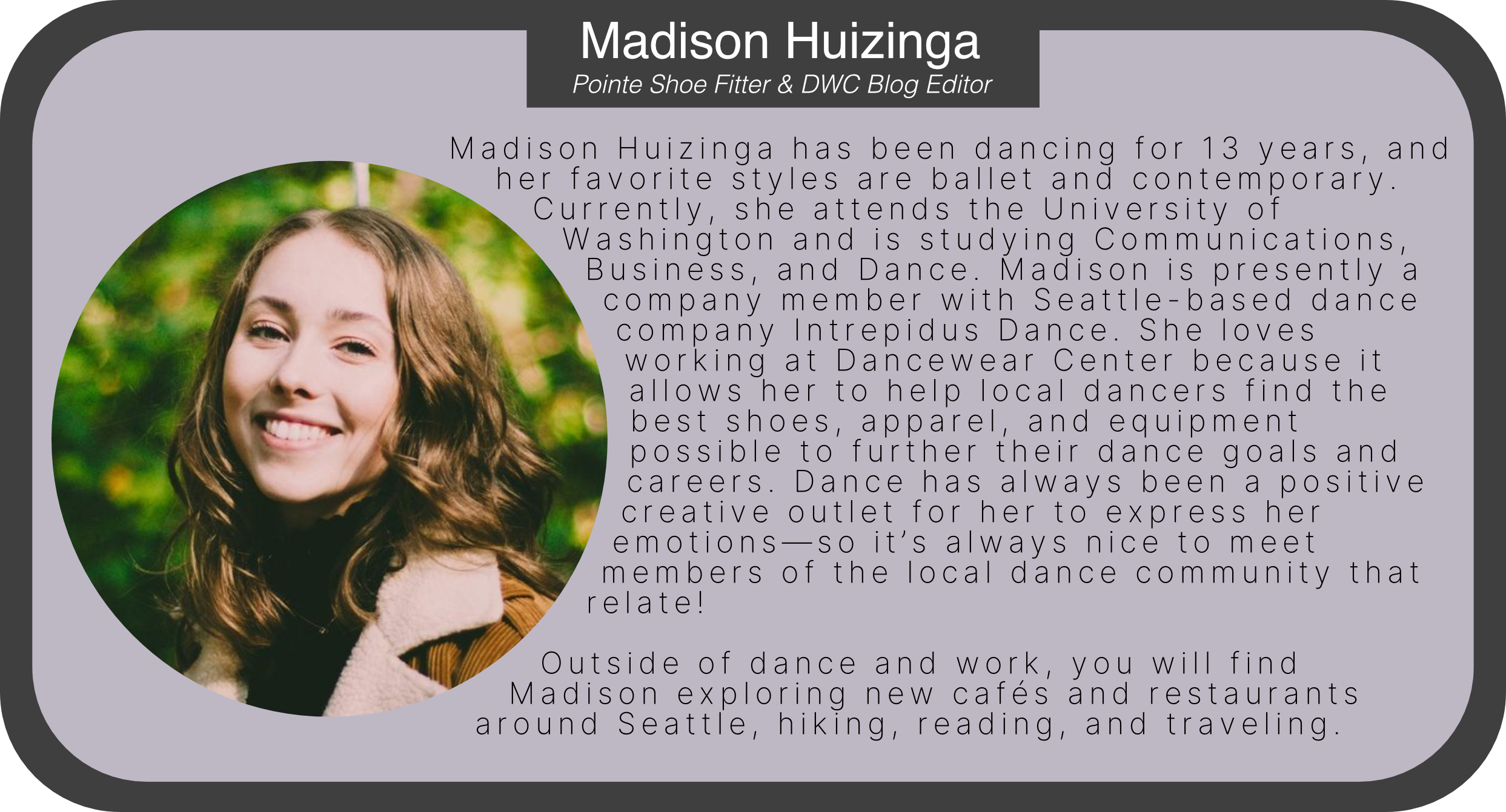
By Madison Huizinga, DWC Blog Editor

Photo by AJ Ragasa
When people envision dancers, they often think of physically strong individuals who are capable of pushing their personal limits to create beautiful art. There is an assumption that they can propel through the physical and mental challenges they experience to be the best dancers they can be. While these assumptions can help instill discipline and drive in dancers, they can also help create an environment that’s unconducive to productive conversations about mental health. Through Flexible Mind Counseling, Josh Spell strives to help dancers become vulnerable about the challenges they’re facing, speak up for themselves, and cultivate a curious mind that can bend without breaking.
Josh was first exposed to dance through his grandmother’s senior dance group, the “Happy Steppers,” in which he would fill in for dancers when they were absent as a child. It was clear that Josh had a natural talent for picking up choreography and musicality so he enrolled in tap and later ballet. After a few years, it was clear to Josh that this is what he wanted to pursue. At age 16, he trained at the School of American Ballet in New York City before getting hired by Pacific Northwest Ballet in Seattle at 19 years old.
After a decade of dancing with PNB, Josh took a brief break and later did some freelance work, including Oklahoma! at The Fifth Avenue Theatre with Donald Byrd, while also studying interior design. He later danced with Kansas City Ballet for a couple of years as well.
Within the ballet world, Josh found himself placing restrictive rules on his mind and body to be what he thought was the best dancer he could be. This eventually manifested itself into a struggle with his body image. “I was equating my worth as a dancer [with] what my body aesthetically could present,” Josh reflects. That’s when Josh realized he needed some space from the professional dance scene for a while.
“I noticed that there were a lot of differences in the ways I viewed myself,” Josh says of his break from dance, noting that he experienced a newfound sense of self. Upon returning to dance at Kansas City Ballet, Josh noticed his perfectionism start to intensify again. He decided to speak with a therapist about some of the body image and disordered eating challenges he was facing.
It was around this time that Josh began to realize that mental health is deeply connected to how dancers show up for their performances, their relationships, and themselves. However, few mental health resources were available for dancers and their specific needs. Josh earned his Master of Social Work degree from the University of Washington, with a heavy focus on studying eating disorders, later working at an eating disorder clinic. During the pandemic, he also stepped in as a consulting therapist at the PNB School before starting his own practice, Flexible Mind Counseling.
“We are people first and dancers second”
“My mission is to support dancers and their personal growth inside and outside of the studio to produce better performance outcomes and a more sustainable dancer long-term,” Josh says of his goal behind Flexible Mind Counseling. Through individual and group therapy sessions, Flexible Mind Counseling provides clients with “a bridge back to understanding [their] authentic needs.”
Josh shares that individual sessions are nuanced, but he generally works with dancers on being more vulnerable, releasing control, and using direct communication to voice their needs and set boundaries. He helps dancers develop a mindful attitude and identify beliefs that may prevent them from being their most authentic selves. Josh’s group sessions follow similar themes, usually centering on one topic, such as self-compassion, internal vs. external motivation, body image, self-care, or perfectionism. After a topic is presented, a group discussion emerges, in which Josh helps provide dancers with tools and knowledge to handle challenges relating to the session’s main theme. “You get to learn from other folks in the space,” Josh says of the benefits of group sessions. Group sessions can also help cultivate a studio space that feels safer and more open to sharing vulnerable thoughts and emotions.
A mental health misconception that Josh has witnessed in the dance world is the idea that mental and physical health are separate. He points out that mental and physical health can influence one another, neither exists in a vacuum. “It’s really difficult to care for your body without caring for your mind and vice versa,” he shares.

Josh also shares that there is a pervasive stigma surrounding mental health. Many people assume that if you’re struggling with your mental health, that’s a sign of weakness, which prevents people from opening up about their challenges. As with physical health, there is an assumption that dancers must push through their mental health challenges on their own. “You don’t have to do everything on your own,” Josh stresses.
Through his efforts, Josh hopes to see mental health discussions become normalized in the dance sphere, in the same way that conversations about physical health have. He thinks the road to mental health normalization will require greater visibility of mental health professionals with dance experience. It’s also important to expose dancers to preventative and regular mental health care, not just when a crisis strikes.
“We are people first and dancers second,” Josh declares.
Josh will be our special guest speaker at the next DWC Teacher’s Seminar June 26th 10:30am-11:30am at the Green Room, DWC Renton, spaces are limited so register today!
Disclaimer
All content found on the Dancewear Center Website, Instagram, Facebook, Pinterest, and all other relevant social media platforms including: text, images, audio, or other formats were created for informational purposes only. Offerings for continuing education credits are clearly identified and the appropriate target audience is identified. The Content is not intended to be a substitute for professional medical advice, diagnosis, or treatment. Always seek the advice of your physician or other qualified health provider with any questions you may have regarding a medical condition. Never disregard professional medical advice or delay in seeking it because of something you have read on this Website.
If you think you may have a medical emergency, call your doctor, go to the emergency department, or call 911 immediately. Dancewear Center does not recommend or endorse any specific tests, physicians, products, procedures, opinions, or other information that may be mentioned on dancewearcenter.net. Reliance on any information provided by dancewearcenter.net, Dancewear Center employees, contracted writers, or medical professionals presenting content for publication to Dancewear Center is solely at your own risk.
Links to educational content not created by Dancewear Center are taken at your own risk. Dancewear Center is not responsible for the claims of external websites and education companies.
Megan Margaret Moore on Healing the “Disembodied Dancer” Through SALTSHAKE
On May 28, 2022, Megan will be holding “INTRODUCING SALTSHAKE” at the Nod Theater in Seattle, WA. At this workshop, Megan will be introducing “saltshake,” a movement form designed to help relieve trauma in the body. The movement form involves choreographed somatic healing techniques and Yoga Asana poses that have specific intentions behind them, such as regulating the nervous system.
A Local Artist on Trauma-Informed Movement and Education
Trigger Warning: Trauma
By Madison Huizinga, DWC Blog Editor

Photo by Muñoz Motions
Over time, certain teaching and communication behaviors in the dance world don’t only become normalized, they become expected. This is the case even when these kinds of behaviors result in trauma that causes dancers to become “disembodied” from their practice. That’s why local artist and teacher Megan Margaret Moore created SALTSHAKE, a brand dedicated to sharing Trauma-Informed dance and education with the arts community, specifically aimed at helping those that may identify as a “disembodied dancer.” Read on to learn about Megan’s journey and SALTSHAKE’s INTRODUCING SALTSHAKE event at Nod Theater on March 28, 2022.
Megan was inspired to dance after watching her older sister dancing growing up. She recalls trying to mimic her sister’s dance moves on her own as a little one. Around age three, Megan enrolled in her first class, sharing that she was immediately overwhelmed with passion for dance from an early age. “It was just my whole heart. Everything I thought about had to do with dancing every single day,” Megan says. She continued training under the Cecchetti ballet method until about ninth grade.
Megan says that she is grateful for the support she received as a young artist growing up in Huntington Beach, California, sharing that she participated in the Academy of Performing Arts (APA) magnet program at Huntington Beach High School. She shares that she was granted amazing opportunities through the program, including the ability to choreograph nearly ten pieces before she graduated high school. In addition, Megan traveled to the New Prague Dance Festival with APA to dance as an apprentice under the choreographer Marie Hoffman. It was through these experiences that she realized choreography was the path she wanted to go down.
Megan attended Cornish College of the Arts, which is what brought her up to Seattle. She is grateful for all the mentors and choreographers she got to meet and work with at Cornish. And Megan also shares that her college years were some of the hardest times of her life, as many of the unhealthy, yet normalized, teaching and communication practices in the dance industry began to accumulate and take their toll on her. Always being expected to put a smile on one’s face and dance through the pain can take a lot out of a performer.
After graduating in 2019, Megan had been hired to choreograph for an opera at Whidbey Island Center of the Arts, which unfortunately got shut down as a result of the COVID-19 pandemic. She says that during the widespread lockdown, many of the uncomfortable feelings Megan had been suppressing began to bubble to the surface. Megan moved back in with her family, eventually landing on Whidbey Island where she is today.

Photo by Muñoz Motions
Megan developed SALTSHAKE largely for the “disembodied dancer,” an artist who wishes to pursue their passions but feels “they must stifle the sensitivity that attracts them to the arts in order to cope with the intensity of their artistic training.” Megan landed on this label to describe what she was experiencing coming out of the COVID-19 lockdown, a disconnect from her body and identity as a dancer. In the midst of the pandemic, when Megan felt as though she was unable to dance, she found herself going through unique, self-made movements that allowed her to feel a sense of groundedness in a way that was quite healing. This was where the seed for SALTSHAKE was planted.
Through SALTSHAKE, Megan strives to gently provide dancers who may be “walking the path of trauma recovery” with somatic expressions and exercises to aid in their “reconnection to embodiment.” SALTSHAKE describes itself as “trauma-informed,” as it has an eye toward the trauma that is inherent in mainstream dance practices. Megan strives to help dancers who feel disembodied know that they’re not alone, as well as provide tools to help deconstruct the harmful narratives the industry perpetuates, and help dancers re-center and self-regulate and find a love for dance again.
Megan says that growing up she received subliminal messages that being “sensitive” was a bad thing, especially in the dance world. She recalls feeling so much shame about how emotional she felt about things, but today she’s learned that sensitivity is a superpower, as it helps her better understand her students’ experiences and give them the support she would have wanted. Being sensitive is also extremely helpful as a dancer, as it helps performers better understand and tell physical and emotional narratives. “It should be celebrated to be a sensitive being in this art form, in all art forms, [and] in life,” Megan says.

Photo by Muñoz Motions
Throughout May 2022, Megan has been offering introductory classes, including trauma-informed yoga on Saturday mornings virtually and in-person in Langely, Washington. Those in the Seattle area simply have to jump on a ferry to Whidbey Island to experience this slow flow embodiment process. SALTSHAKE also offers a contemporary class that is focused on exploring narrative, without a “right” or “wrong” way to perform.
On May 28, 2022, Megan will be holding “INTRODUCING SALTSHAKE” at the Nod Theater in Seattle, WA. At this workshop, Megan will be introducing “saltshake,” a movement form designed to help relieve trauma in the body. The movement form involves choreographed somatic healing techniques and Yoga Asana poses that have specific intentions behind them, such as regulating the nervous system. Megan will be offering weekly saltshake classes in Seattle throughout June. In August, SALTSHAKE will be partnering with Season + Cycle, founded by Nicole Frederiksen, a menstrual health specialist and former professional dancer in the Seattle area. The two organizations will be holding a one-day workshop relating to reconnecting disembodied dancers to their bodies. Keep an eye out for more information in the coming months.
Disclaimer
All content found on the Dancewear Center Website, Instagram, Facebook, Pinterest, and all other relevant social media platforms including: text, images, audio, or other formats were created for informational purposes only. Offerings for continuing education credits are clearly identified and the appropriate target audience is identified. The Content is not intended to be a substitute for professional medical advice, diagnosis, or treatment. Always seek the advice of your physician or other qualified health provider with any questions you may have regarding a medical condition. Never disregard professional medical advice or delay in seeking it because of something you have read on this Website.
If you think you may have a medical emergency, call your doctor, go to the emergency department, or call 911 immediately. Dancewear Center does not recommend or endorse any specific tests, physicians, products, procedures, opinions, or other information that may be mentioned on dancewearcenter.net. Reliance on any information provided by dancewearcenter.net, Dancewear Center employees, contracted writers, or medical professionals presenting content for publication to Dancewear Center is solely at your own risk.
Links to educational content not created by Dancewear Center are taken at your own risk. Dancewear Center is not responsible for the claims of external websites and education companies.
Educating Others to Foster an All-Encompassing Environment
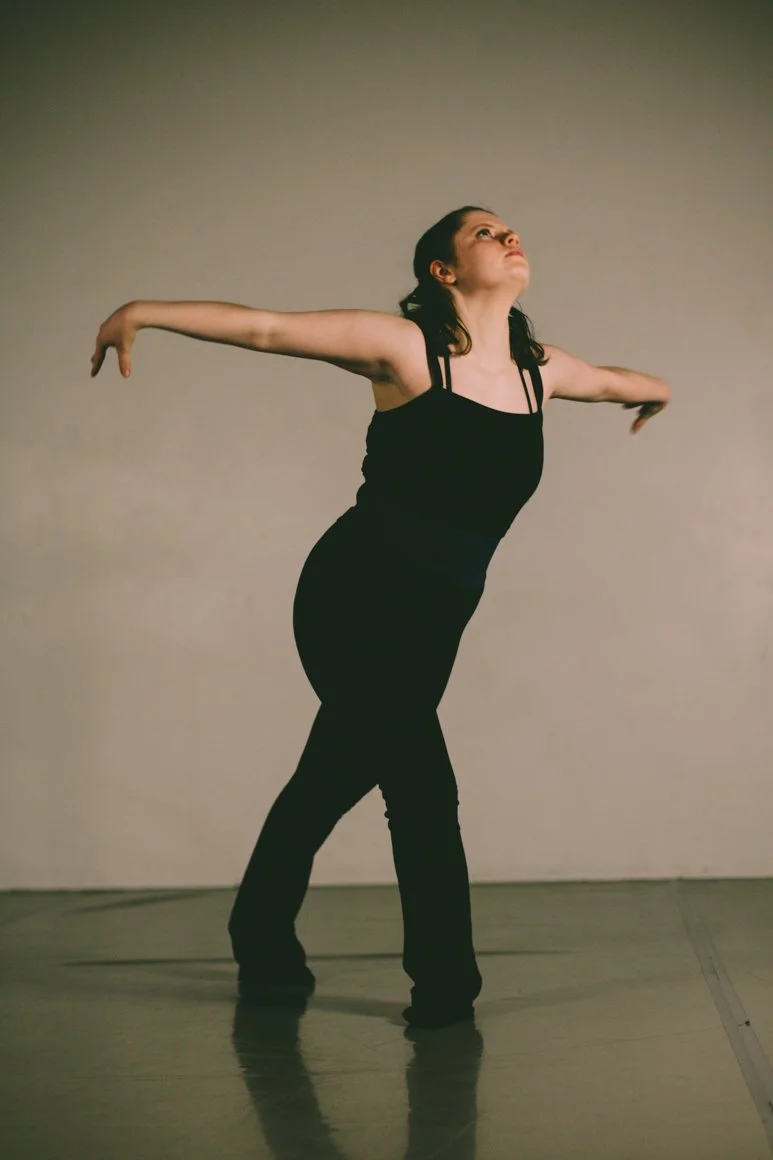
Within any industry, narrow definitions and expectations are often formed regarding what the “typical” individual should look like. Such definitions and expectations can not only breed bland conformity but also lead to the creation of exclusive communities that leave certain people feeling like they do not belong. The dance industry is no exception. Through using her platform as a DWC ambassador, local dancer Jade Fraser strives to debunk myths about disabled dancers and share her unique experiences as a way to help make the community a better place.
DWC Ambassador Jade Fraser on Advocation for Disabled Dancers
By Madison Huizinga, DWC Blog Editor

Click below to shop the look!
Aurora in Diane Lace in Aqua | AK Dancewear
Within any industry, narrow definitions and expectations are often formed regarding what the “typical” individual should look like. Such definitions and expectations can not only breed bland conformity but also lead to the creation of exclusive communities that leave certain people feeling like they do not belong. The dance industry is no exception. Through using her platform as a DWC ambassador, local dancer Jade Fraser strives to debunk myths about disabled dancers and share her unique experiences as a way to help make the community a better place.
Jade’s first exposure to dance was taking “pre-level” classes, including pre-ballet, tap, and jazz at various studios around the greater Seattle area. She took a break from dance to explore other activities, but eventually returned to it in the sixth grade at Body Language Studio (formerly known as Cornerstone Studio), where she has been training ever since. At Body Langauge Studio, Jade has mainly taken classes in contemporary and hip hop styles, as well as conditioning classes. She’s also a member of BLS Select, a performing arts and competition team at Body Language Studio.
Jade explains that she loved dancing so much as a child that she would often find herself randomly dancing in the hallway at school, not caring about what anyone else thought but herself. “Being autistic, sometimes I have trouble expressing in words what I’m thinking and feeling. Sometimes I don’t even understand what I’m thinking and feeling” Jade says. She shares that one of the reasons why she loves to dance is because it helps her express and understand things in ways that words cannot.
Click below to shop the look!
In addition, Jade says that the gratification she experiences from performing on stage is unlike anything else. She feels powerful when she’s able to command the attention of an audience, being able to make them feel a range of emotions using her movement. Having that kind of agency as a performer is a validating feeling.
There are certain genres of dance that have come more naturally to Jade than others. For example, she says that it’s taken her a while to figure out how to dance hip hop, sharing that she’s worked hard on improving her technique to advance.
Another dance-related challenge that Jade has faced is the stereotypes that people place on dancers. She explains that many people in her life have underestimated the strength and discipline required of dancers. “People don’t understand that dance is more than just something that looks pretty,” Jade stresses.
Jade is looking forward to participating in her first dance competition this year, planning to compete in a contemporary solo. “I’m nervous but also I’m really excited to start competing,” she shares. Jade also hopes to be able to attend a dance convention at some point this year.

Click below to shop the look!
As a DWC ambassador, Jade is looking forward to being able to speak to a wider audience about topics she’s passionate about. Specifically, Jade plans to discuss and write about the discrimination that disabled dancers experience. She’s interested in pushing the definition of what it means to offer “disabled dance,” asking who is included within this definition and whether or not there is a place for people with disabilities that are less visible. “I just want to break stereotypes and advocate and educate as much as I can,” Jade says.
“One of the changes that we need to see in dance [relates to] how disability is seen and how it is thought of,” Jade says. For example, she points out that some people assume there is some kind of “look” a person must have to be considered disabled; however, those kinds of definitions can be harmful and limiting to the larger community of disabled dancers. “That kind of thinking can be really damaging,” Jade shares.
“We need to know what disability is and what the disabled community wants and needs from the non-disabled community,” Jade shares. “Those little things can make dance a whole lot more accessible.” Through using her platform as a DWC ambassador, Jade strives to help make the dance community a better place, specifically for disabled community members.
Maintaining Body Positivity and Self-Discovery in Dance
During the last year, I’ve been on an intentional fitness journey, spurred along by the privilege of getting back into a dance studio to train consistently, even amid the ongoing pandemic. All through lockdown, I was in remote university courses for dance, yet I saw a significant decrease in my desire to maintain my fitness and nutrition goals. This was because I did not have a dancing community physically around me and had very little space at home to maintain a usual training rhythm. I feel excited and so thankful to be once again moving toward my goals in a way that feels challenging and freeing.
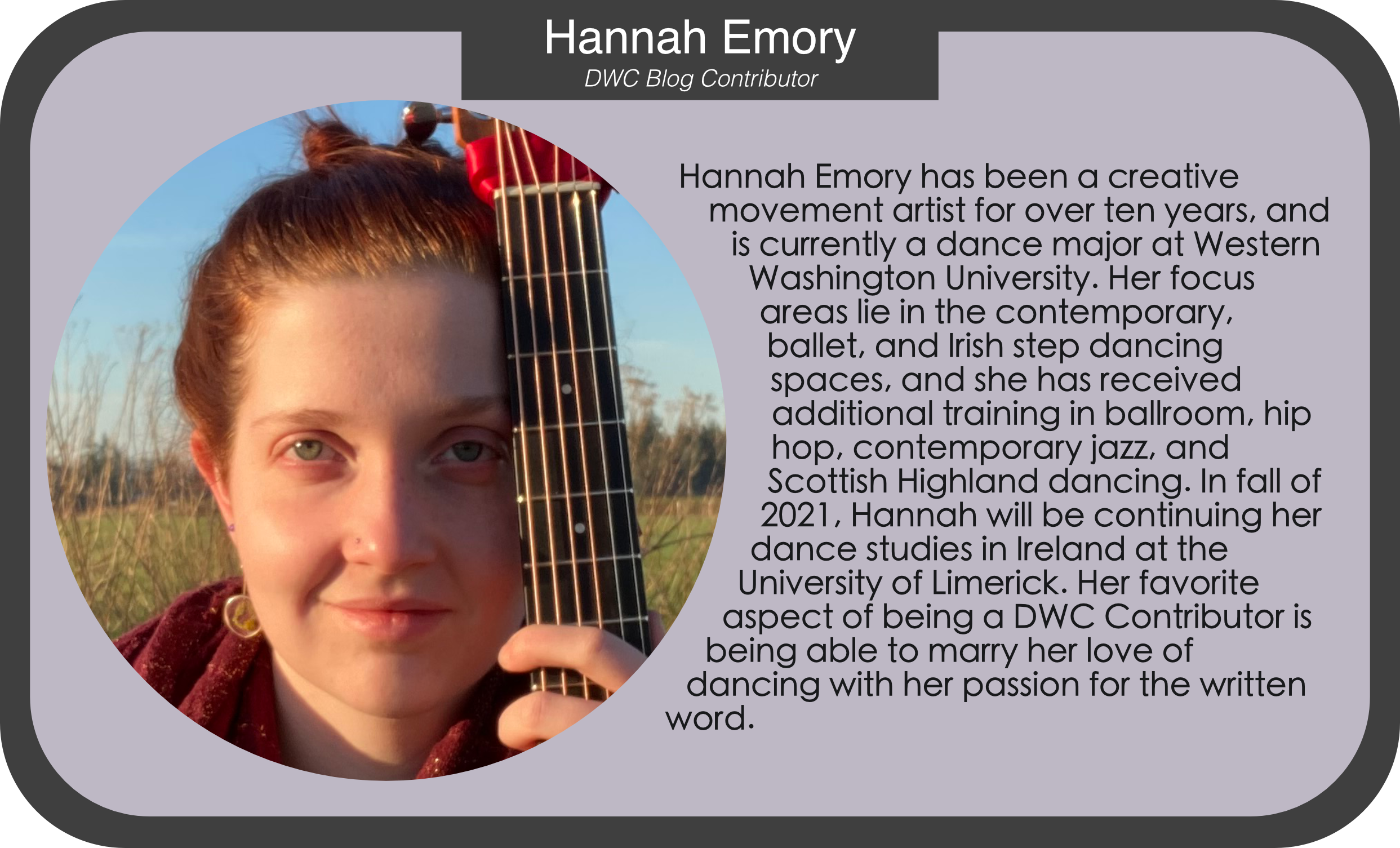
By Hannah Emory, DWC Blog Contributor

Photo by Nikola Evora Zonenberg
During the last year, I’ve been on an intentional fitness journey, spurred along by the privilege of getting back into a dance studio to train consistently, even amid the ongoing pandemic. All through lockdown, I was in remote university courses for dance, yet I saw a significant decrease in my desire to maintain my fitness and nutrition goals. This was because I did not have a dancing community physically around me and had very little space at home to maintain a usual training rhythm. I feel excited and so thankful to be once again moving toward my goals in a way that feels challenging and freeing.
Yet, the time I spent away from the studio, and quite far away from my personal fitness goals, caused me to think a lot about how I can maintain my sense of body positivity and self-love in the midst of changing life circumstances. I would not trade what I learned during this time, because life will always throw unexpected circumstances at us, but our need for self-love and self-respect is unchanging and requires maintaining.
In any case, during a pandemic or not, when dance spaces are made into goal-driven environments that focus overmuch on what the body looks like, a high level of self-criticism can develop and turn into a lifelong struggle if not kept in check. For example, I have struggled with issues of body dysmorphia and disordered eating, and have watched my dancer friends go through some of the same struggles. One can start to feel like they are not a true dancer if the goal post of self-acceptance is constantly moving and, unfortunately, there are aspects of the dance world that can make self-acceptance very difficult to achieve. Add on a global pandemic and the consequent stagnation/interruption in training goals, and that feeling of illegitimacy, at least for me, definitely increased. For this year, I know it has taken a lot of mindfulness and having the right people around me to heal, refocus, and keep my perspective on myself and my body positive.
Self-acceptance, self-celebration even, is not easily fought for and won. In our dance journeys, there will be a lot of maintaining, unlearning, relearning, and self-connection that needs to happen if we have negative messaging from our past or have experienced a discouraging setback in our progress. Community is a huge piece of that relearning and healing, and I hope everyone reading this can connect with others through dance in some form. An uplifting dance community is invaluable and makes the load lighter while we’re moving toward a stronger relationship with the self.
I cannot bang the drum about community enough. But, in addition to that, here are a couple of personal practices that have helped me so much this year and can be done with and without others:

Gratitude-based movement. Often dancing requires a lot of mental concentration on learning form and content. Though being in class and learning new material is exhilarating, it’s akin to reading a textbook or working away at a craft until it’s honed. In my experience, the work of learning dance is very mentally taxing and requires the body to function more like a tool. This can cause a bit of a feeling of disconnection between the body and mind/heart. So, I believe that every dancer would benefit from some sort of moving mindfulness/gratitude practice outside rehearsal spaces that focuses on thanking the body and self for all the work being achieved. For me, I have been taking tai chi classes as part of my degree program and it has been so helpful in guiding me into feeling empowered, connected to myself, and grateful for the body I have right now. One of the focus phrases we use frequently is to always have an inner smile if something feels difficult or if the mind wanders; and at the end of every class, we think of something to be grateful for and bow in thanksgiving for the goodness in our lives. It’s a beautiful way to start the dance day and one that reminds me of how capable my body is and how grateful I am to exist as myself. Some other examples of moving gratitude practices that come to mind would be walking, meditation, yoga, pilates, and Feldenkrais. There are so many options available and anything that brings you into a state of gratitude for yourself and your life is well worth the time!
Studying my body + personalizing nutrition. I find myself having a lot more respect and love for my body when I know how it functions and when I’m intentional about getting it the fuel it needs. Our bodies are unique, and there isn’t a one-size-fits-all approach to dancing our best. The most empowering thing I’ve done for my dancing journey is paying attention to the specific questions and feelings that come up for me during my training days and then pursuing answers for those questions. This personal focus was new to me until just recently and paying attention to my way of being a dancer revolutionized my practice. I have learned a lot about myself; some personal examples of discoveries I made would be…
I’ve always struggled with joint pain/fatigue while turning out at the barre, and my teacher let me know when I asked her about it that activating my core muscles will help create a feeling of more space in my body and make turning out much easier on my joints.
Stomach cramps and chronic physical fatigue are pretty big issues for me. Yet, I started paying attention to my diet and noticed over time that eating lighter, protein-focused meals eased my digestive issues and helped with endurance throughout the day.
I find a lot of choreographic inspiration and bodily relaxation through improv work. If I’m feeling mentally fatigued during a long dance day, there’s nothing like going to an empty space and moving without goals or expectations. Integrating active stretching and meditative breathing into my improv movements adds extra benefits to the practice.
These are just some of the personal discoveries that have helped me take more ownership over my dancing and my health, and have led me to feel more connected to and positive about my body. Problem-solving discoveries are a beautiful way to quickly move one from feeling discouraged and incapable to feeling proud and excited about our unique dance expression. If you have questions about yourself, take the leap and pursue those inquiries with teachers and your dance community. Study your body and find out what works for your personal journey. You’ll be so amazed at what you find out! (A bonus suggestion would be to keep track of your questions and discoveries in a notebook or voice memos so you can look back on your progress.)
I wish you the best on continuing toward self-celebration, radical body positivity, and joy-filled
Mental Health and the Importance of Cultural Competency
From as early as I can remember I wanted to move. I felt a connection to music and energy through the floor that I couldn’t explain. When I look back on the things that shaped me, dance has been a constant. Through dance I found a voice and a method of expression that I couldn’t recreate

By Maddie Walker
Madison Walker started her dance journey at a young age. Growing up in New Orleans as a young mixed woman, she always felt a deep emotional connection to dance that allowed her to express who she was. At 12 years old she was selected to be a part of a small ballet conservatory, JPB Le Petit Ballet (now Northwest School of Dance), where she learned to utilize the backbone of classical technique. For many years Madison studied the Vaganova technique of ballet under Jennifer Picart Branner. Madison studied abroad in the beautiful country of Norway where she danced with Extend, a small dance company.
Since high school, Madison has danced and taught throughout the Pacific Northwest, currently acting as the Assistant Artistic Director of Academy of Dance Port Orchard. In addition to teaching and choreographing, Madison spent the 2019-20 season dancing with PRICEarts N.E.W. as a company member.
Her passions include traveling the world and working as a Certified Peer Counselor by day. Mental health is an educational passion and personal passion for Madison and has led her to serve on a board of directors for United Peers of Washington where she has been able to find avenues to blend her work in art and mental health.
Click Below to Shop the Look:
“Be Nice” Crew by Sunday Outfitters | K-Warmer by Apolla Performance | Metallic Warm Up Booties by Bloch
From as early as I can remember I wanted to move. I felt a connection to music and energy through the floor that I couldn’t explain. When I look back on the things that shaped me, dance has been a constant. Through dance I found a voice and a method of expression that I couldn’t recreate through speaking. Growing up in New Orleans, I had an early appreciation for art and flare as a means of communication. The culture of New Orleans is vibrant― from cajun food to Mardi Gras. When I was young, I rode in parades on giant floats made of papier-mâché and watched as dancers did their choreography to live marching bands down the street; inspiring me with every step.
At the age of 4, my father and biological mother separated. For 6 years I was under the primary care of my biological mother who unfortunately, was living with an active addiction. In the time I lived with my biological mother, I experienced trauma, neglect, and abuse. I found my escape in being able to dance, being able to create with my body, and feeling a physical release through creative movement. At the age of 10 my father married my step-mom who I refer to as my Mom. My mom has been an integral part of me learning to love myself and how to be loved.
At the age of 10, my mom, dad, sister, and I moved to Gig Harbor, Washington after our family had been displaced due to Hurricane Katrina. When I moved to Washington I struggled in a different way. The environment I had lived in before was far different from the suburb neighborhoods that I moved to. I felt isolated because of my culture, my skin tone, and the kinks in my hair, but also because I felt broken amongst what seemed like perfect families. Growing up as a mixed woman I often felt out of place, and still struggle at times to feel I belong in certain spaces. Coupled with my trauma, I often found I didn’t identify with many of my peers.

Click Below to Shop the Look:
Lola Forest Leo by Elevé Dancewear | Mesh Socks by Elevé Dancewear
The reality of being a woman and person of color or a member of a marginalized community is that mental health is often not seen from our perspective. Part of my drive to work in mental health is to be the representation I did not have in my community. I often felt like I did not have the space to talk about certain topics and that my feelings were offensive to others. Even while writing this, I find myself looking for “polite” ways to say I dealt with racial trauma and felt awkward talking to anyone for fear of offending white people.
Being a woman of color who provides mental health services to peers of color means I can identify and relate to their unique version of recovery. Through my work as a Peer Counselor and board member of United Peers of Washington, I am able to advocate passionately for the importance of cultural competency and tolerance. I personally struggled internally for a long time because I came from a background where people go through hard things; this was not “trauma”, this was life. Accepting that bad things don’t have to happen to you is a journey all on its own.
Accepting that it is okay to feel and to be hurt is another hurdle, a hurdle that for many people of color can mean being perceived as weak when society expects us to be strong. For a long time, I thought that acknowledging and talking about my trauma was shameful; but in time I learned that confronting your barriers and growing takes far more strength.
My daily goal is to act as a support to all who feel lost or alone, but especially to communities of marginalized people. Normalizing the feelings of trauma and how we process things is a monumental first step. Allowing ourselves to find outlets and coping mechanisms is the next.
Through sharing my story, my work, and art, I hope to show others that they are not alone and that there is power in your individual and unique story. Today, I recognize and celebrate that my experiences are my superpower. My ability to identify with diverse communities is invaluable, and my past does not define me: I do. But most of all? I found my therapeutic outlet through the dance floor.
“Something about being able to dance has always allowed me to feel a sense of belonging; even if for just the moments I was moving.”
Something about being able to dance has always allowed me to feel a sense of belonging; even if for just the moments I was moving. My parents bent over backwards to allow me to dance when we moved to Washington. I remember driving an hour one way to go to class and sitting in traffic while doing my homework. What I don’t think my parents ever realized is that they saved my life by allowing me to have that outlet. I was able to find myself through creative expression and that is a gift I want to share with the world in every way I can―especially through my work as a peer counselor.
For those of you reading who may not know what a “peer” is in the context of mental health, it is anyone who shares lived experience and makes an effort to share their lived experience in a way that will inspire others to find their own path. Amazing humans all over the world work as peer counselors; but more importantly, there are grassroots organizations and groups in every region of Washington State consisting of peers who offer support to their communities.

Click Below to Shop the Look:
I am always working on ways to merge my peer work with my art and one way I hope to do that is by providing psychoeducation to communities through the art of peers in my community. Throughout my journey of recovery―from depression to living with anxiety―I have learned that recovery is not linear, and expression is imperative. Finding my community and bridging art and my work has been one of the greatest joys in my life and has inspired me to realize my fullest potential. I encourage you to find your community and to discover your inspiration.
For more information on United Peers of Washington and other Peer related resources, check out the UP of WA Facebook page: https://www.facebook.com/UPofWA
Mental Recovery in the Dance Realm
For many, dance is a means of mental escape from the day-to-day stressors of life. Having a creative outlet that allows for self-expression, laughter, and challenge can be extremely valuable to live a balanced life. Nevertheless, there are times when dance can go from being a stress reliever to the source of stress itself. Local dancer and DWC Ambassador Niki Kothari speaks on perfectionism, the fear of being judged when going “full out” in dance, and how having social support and stress-relieving activities can help reignite the passion for dance that can sometimes feel lost.
with Niki Kothari, DWC Ambassador
By Madison Huizinga, DWC Blog Editor

click below to shop the look:
For many, dance is a means of mental escape from the day-to-day stressors of life. Having a creative outlet that allows for self-expression, laughter, and challenge can be extremely valuable to live a balanced life. Nevertheless, there are times when dance can go from being a stress reliever to the source of stress itself. Local dancer and DWC Ambassador Niki Kothari speaks on perfectionism, the fear of being judged when going “full out” in dance, and how having social support and stress-relieving activities can help reignite the passion for dance that can sometimes feel lost.
Like many young kids, Niki began dancing early in life around the age of three. She took classes in tap, ballet, and Bollywood styles of dance. Niki stopped dancing for a while in elementary school to try other sports but returned to it around the end of third grade. “I started with just hip hop because I thought it was so cool,” she explains. Eventually, she added back ballet, jazz, and contemporary before joining the competition team at her studio.
While dance can be a great way to connect with yourself and an external audience, there are undoubtedly some elements of the practice that can be mentally taxing. Niki shares how it can be stressful to feel everyone’s eyes on you, particularly the eyes of critical dance instructors. “I always feel like I’m being stared at,” she shares. Niki points out that always feeling like she’s being watched can cause her to put her guard up and not dance “full out.”
Niki recalls feeling this way when she was practicing a competition solo last year. She explains not being eager to show her solo to others at the studio unless she was rehearsing, and even then, “still kind of mark[ing] it” rather than performing full out. At her first competition, she asked her dance teacher to not watch her solo due to her nerves. “I had all my friends backstage with her, making sure she wasn’t out there, watching me,” Niki describes.
Another mental obstacle Niki faces in dance is encouraging her brain to allow her body to heal when recovering from an injury. It can be hard to wrap her brain around the fact that the body often needs rest to heal and can’t constantly push itself. Many dancers grapple with the added challenge of perfectionism and the pressure to push through discomfort, which can compound with this issue to make taking needed rest a tough mental predicament.
Dealing with complex mental sensations and emotions about dance can be difficult. There isn’t a foolproof way to rid yourself of them. However, it’s certainly useful to remind yourself that you aren’t alone in the way you’re feeling. Niki explains that it’s often helpful to talk with her friends about the mental challenges she’s facing in dance, such as her uneasiness about constantly being watched and scrutinized by dance teachers. Even reaching out to your dance teachers or studio director and communicating the emotions you’re feeling can be effective, as they can collaborate with you to find out how to best support you in class.

click below to shop the look:
Marquise Leo by Jule Dancewear | Perfect Fit Shorts by Cloud & Victory
Niki also shares that writing in a journal can help her take care of her mental health. Journaling is a useful tool for many people to work through their challenges and practice mindfulness, all of which are important for the dance realm. Niki says that it often helps her mentally to write “letters” to the people or things that are making her particularly happy or upset, but not sending them. This strategy can be a great way to gain some sense of her emotions.
Further, capitalizing on time outside of the studio can be just as significant as the time you spend in the studio. Taking time to do activities that fill you with confidence and allow you to be mindful of uncomfortable emotions can translate to more assurance and mindfulness in the studio and on stage.
Since physicality is such a crucial aspect of dance, many industry professionals take care to preserve the physical health of performers. However, across the dance industry, taking strides to maintain and improve the mental health of students is just as important. Niki says that teaching students that it’s okay to “laugh at yourself” is useful, as “we’re going to mess up and that’s okay.” As hard as they may try, dancers are infallible people and can’t be expected to do everything perfectly. Cultivating a safe space in the studio where dancers can feel comfortable making mistakes can lead to them feeling confident and dancing more fully out.
In addition, promoting genuine, holistic dance training that covers mental health maintenance can be invaluable for dancers. Niki recognizes that many studios are offering mental health workshops, but that they can often come off as performative, as the principles promoted aren’t translated across the rest of the training experience. Shifting this attitude to valuing mental health comprehensively would be more effective.
It’s possible to love dance and also face mental challenges from time to time when training and performing. These two phenomenons can happen together, not always separately. Through using individual coping tools like talking with trusted loved ones and journaling, and advocating for holistic, mental health-focused training industry wide, there is a way to help lessen the discomfort that can arise in our brains when dancing.
Teaching with Intentional Positivity
As I grow in my role as an instructor and choreographer, I have reflected on my dance journey and the people who influenced me through teaching. Most of my free time growing up was spent in the dance studio under the instruction of Jennifer Picart Branner, or as I know her, Ms. Jen. When I consider the kind of teacher I am today and the teacher I hope to be, I often draw from my experiences as a student. Under the instruction of Ms. Jen, I felt a sense of accountability and support that allowed me to develop self-discipline positively. Through the intentional teaching methods modeled for me growing up, I grew as a dancer and a person. I attempt to inspire my classroom in the same way I felt inspired as a young dancer through modeling the importance of self-worth and resilience while creating a positive learning environment.
By Madison Walker. DWC Ambassador

Click Below to Shop the Look:
As I grow in my role as an instructor and choreographer, I have reflected on my dance journey and the people who influenced me through teaching. Most of my free time growing up was spent in the dance studio under the instruction of Jennifer Picart Branner, or as I know her, Ms. Jen. When I consider the kind of teacher I am today and the teacher I hope to be, I often draw from my experiences as a student. Under the instruction of Ms. Jen, I felt a sense of accountability and support that allowed me to develop self-discipline positively. Through the intentional teaching methods modeled for me growing up, I grew as a dancer and a person. I attempt to inspire my classroom in the same way I felt inspired as a young dancer through modeling the importance of self-worth and resilience while creating a positive learning environment.
Studies show that students who have positive and trusting relationships with their teachers, show more engagement in learning and achieve their learning goals at higher rates (Rimm-Kaufman, S., 2010, April 19). When students are positively engaged in the process of learning, they grow to enjoy learning in general. By positively engaging with my dance class, I am creating an environment in which my students can become more self-directed and resilient in their dance education. While technique is a crucial aspect of growth in a person’s dance journey, dance is also an art that requires vulnerability and creativity. I have great respect for the emotion that goes into a dancer’s execution of choreography. I also have great respect for my students as they grow into their own as artists and begin creating their own work. Since it requires so much vulnerability to improv and perform choreography, it is imperative that students feel comfortable and supported enough to explore the performance aspect of their dancing.
Providing critiques is a crucial part of teaching and something I have always valued. As Ms. Jen would often tell my class, “The day I stop critiquing you is the day I stop caring”. When I was a student, I learned to appreciate the individualized attention and the expectation that I could do better. Knowing that someone else believed I could achieve more, allowed me to have the confidence to push myself there. Teaching in my classroom today, I echo this motto and work diligently to acknowledge each of my students for the work they are putting into my class. I often say that ballet, while an art form, is a strict discipline that teaches us respect in addition to many other life lessons. It is out of respect that I address each of my students and critique them in a way that builds them up rather than tears them down.
“By encouraging my students to compete with themselves rather than comparing themselves to the person next to them, they learn to set and achieve realistic goals while appreciating their skills and ability level. ”

Click Below to Shop the Look:
In dance, there is a constant drive for perfection. Although we as dancers and as humans know that perfection is almost unobtainable, we push our minds and our bodies in the pursuit of being as close to perfection as we can be. As an instructor and choreographer working with young dancers, I strive to foster a love for the process of learning and put an emphasis on resilience. Through dance and specifically ballet, I learned the meaning of work ethic. My students know that when they come into my classroom, there is an expectation that they are working their hardest. I aim to hold my students accountable in a positive way by challenging them to développé higher than the time before, jump higher than the day prior, and push for more rotations in every turn. By encouraging my students to compete with themselves rather than comparing themselves to the person next to them, they learn to set and achieve realistic goals while appreciating their skills and ability level.
Working in mental health with youth by day, I am always engaging in training and with resources that translate to my dance classroom. Although as dance instructors we are responsible for our student’s technical growth, we are also playing a role in our students’ social and emotional development. I believe that all dance instructors should aim to educate themselves on the development of youth and how we as instructors can improve our teaching methods to best serve our students.
Below I have comprised a list of my main teaching tips that have helped me develop a positive dance environment. For more information on how you can create a better learning environment for your students and why it is important, check out the links listed under “Resources/Articles”.

Click Below to Shop the Look:
Claudia Dean World Bike Short | Claudia Dean World Sport Bra
My Tips for Teaching with Intentional Positivity:
My number one rule for myself when teaching is setting expectations. When your students know what is expected of them from day one, it is easier to hold them accountable in a constructive way.
Positively acknowledge each student during class. When students feel like they have been acknowledged in a positive light, they are more receptive to criticism.
Create structure. Having a routine in the classroom assists in keeping your students on task and leaves less room for shenanigans, allowing you to focus on the positives!
Give space for creative exploration. I love to incorporate improv into my classes to allow my students to apply the technique they learn in class while also pushing themselves to grow as artists. When students find a personal connection to their movement, they remain motivated in their dance education.
Give meaningful feedback. When students are given meaningful feedback, they can improve at a faster rate but it also builds a sense of self-worth to be acknowledged. Every dancer goes to class to improve so it is important as an instructor to ensure that each of my students walks away from each class with valuable feedback.
Know your students. There is great importance in knowing your students as people and dancers. I want to be able to help my students set and achieve goals by holding them accountable. When I know where my students are skill-wise, I am better able to recognize progress and regression.

Resources/Articles:
https://www.danceinforma.com/2012/09/03/guiding-students-towards-positive-thinking/
https://us.humankinetics.com/blogs/excerpt/creating-a-positive-learning-atmosphere
http://www.citraining.com/Teaching-the-Dance-Class-Strategies.html
Filling the Connection Gap: How Dancer for Dancer is Linking “Pals Around the World”
The COVID-19 pandemic isn’t the only phenomenon that’s caused the dance community to be a bit disjointed. A culture of competition and perfectionism has permeated the dance world, causing many dancers to see others as rivals rather than peers. To help alleviate the challenges that this type of environment can bring about, 17-year-old Samantha Parr has created the organization Dancer for Dancer to unite the dance community through open discussions, mental health support, and mentorship. Through Dancer for Dancer’s Pal Program and with the help of Pal Program coordinators like DWC staff member Emma Neilson, the organization is providing connection and support to dancers worldwide.
By Madison Huizinga, DWC Blog Editor

Samantha Parr, founder of Dancer for Dancer
The COVID-19 pandemic isn’t the only phenomenon that’s caused the dance community to be a bit disjointed. A culture of competition and perfectionism has permeated the dance world, causing many dancers to see others as rivals rather than peers. To help alleviate the challenges that this type of environment can bring about, 17-year-old Samantha Parr has created the organization Dancer for Dancer to unite the dance community through open discussions, mental health support, and mentorship. Through Dancer for Dancer’s Pal Program and with the help of Pal Program coordinators like DWC staff member Emma Neilson, the organization is providing connection and support to dancers worldwide.
Samantha began dancing when she was three years old and started to get involved more seriously with intensives and competitions around age 12. She’s attended intensives with Joffrey Ballet School, Pacific Northwest Ballet, and Ballet West and competed at the Youth America Grand Prix several times. At her studio in the Bay Area, Samantha has performed several lead roles in original ballets, as well as Clara in The Nutcracker. “I think the thing that keeps me dancing is my ability to express myself. At the end of long days, it’s nice to have something that I can work hard at. It keeps me grounded in a way and helps me focus a little bit,” Samantha shares. “I hope to continue to dance throughout college and beyond because I love it so much.”
The idea for Dancer for Dancer first came to Samantha in May of 2020, months into the COVID-19 pandemic. “I felt very disconnected from my ballet community in my studio,” she recalls. She remembers struggling to stay mentally healthy and falling out of love with dance a bit, due to the difficulty of learning at home. Samantha figured she must not be alone in these hardships she was facing, so she decided to schedule a Zoom call to connect with some dancers.
Samantha’s first Zoom call, with around 14 dancers, was towards the end of June. During the first several meetings, the dancers held discussions about racial inequality in the dance industry and later began talking about mental health among dancers. The Zoom calls began with dancers in Samantha’s area, but soon grew as others heard about them and as she informed friends from dance intensives she had attended. Little did she know one upcoming Zoom call would make her idea take extreme flight.

Samantha Parr, founder of Dancer for Dancer
Around January 2021, Samantha’s friend and Dancer for Dancer Ambassador Eleanor Green reached out to Casimere Jollette of the Netflix series “Tiny Pretty Things” to attend one of the Zoom calls. She said yes! Samantha and her cohorts organized a giant Q&A with Casimere and about 300 dancers from all over the world attended. “That’s kind of where it began to take off,” Samantha says.
Currently, Dancer for Dancer is extending its programming beyond Zoom calls through the Pal Program. “In ballet, there’s this unhealthy competition that I had experienced a lot when I was younger and it always left me feeling weird,” Samantha says. “I could have benefited from having an older dancer being my support system...That’s the inspiration for the Pal Program.”
Dancer for Dancer’s Pal Program contains two subsets: the D4D Mentorship Program and Pals Around the World. The D4D Mentorship Program consists of seven mentors from around the world aged 16-19. The mentors have been trained in giving mental health support by a professional and connect with younger dancers to give advice and provide guidance for wherever they are in their dance journey. The D4D Mentorship Program is open to younger dancers of all backgrounds who are interested in connecting with an older dancer, click here to sign up.
The Pals Around the World program is a global, virtual program in which any dancer of any age and from any dance background is paired with another dancer to correspond virtually for four weeks. Dancers can connect through Zoom, FaceTime, social media, texting, or any other medium they see fit. People are welcome to reapply for the program once the four weeks are up to connect with a new dancer. Samantha shares that Pals Around the World is a “chill” and “laid back” program where dancers have the opportunity to make friends with other dancers around the world. Participants also get “special access to D4D Pal Program workshops on mental health, self-improvement, and peer support.”
Pointe Shoe Fitter and DWC Blog Contributor Emma Neilson has recently gotten involved with Dancer for Dancer as a Pal Program Coordinator. Emma began dancing around age 13 to supplement her figure skating training. After training in ballet, jazz, modern, lyrical, and contemporary throughout high school, Emma graduated with her AA in Psychology from Shoreline Community College and then decided to take a gap year. Starting in 2019, she began training year-round at the International Ballet Academy in Bellevue, Washington where she is today.

Samantha Parr, founder of Dancer for Dancer
Emma came across Dancer for Dancer while scrolling through her Instagram feed. The organization’s account popped up as a recommended account for her to follow. After looking more into Dancer for Dancer and its offerings, Emma was amazed by its mission. She noticed that Dancer for Dancer was looking for coordinators and decided to apply. Shortly after that, Emma was interviewed and joined the team. As one of the Pal Program Coordinators, Emma’s role with Dancer for Dancer involves her collaborating with local studios in the greater Seattle area to see if they’re interested in participating in the Pal Program. There are numerous positions open at Dancer for Dancer, such as a Tik Tok Coordinator, Discord Moderator, and more, click here for more information.
Moving forward, the biggest change Samantha hopes to see in the dance world is for all body types to be accepted. She hopes that the “ballet body” ideal is eliminated and that companies start catering to dancers of all body sizes. “How your body looks doesn’t determine how your body dances and I feel like if the dance community is accepting of all body types, it would put less pressure on girls and boys to feel as if they have to fit into a certain mold that maybe they weren’t born like,” Samantha shares.
Additionally, Emma says that she hopes to see dance become more accessible to a wider range of people in the near future, specifically people of all ages, abilities, and socioeconomic classes. “Your age and what you think your physical capabilities are shouldn’t impact your ability to participate in something that gives you joy,” Emma states.
Dancer for Dancer was born to fill a gap that Samantha was witnessing in the dance realm. She was able to create a vessel to connect dancers in meaningful ways, something that was sorely missing and needed in the dance industry. For others who are interested in creating their own organizations, Samantha’s biggest piece of advice is for people to give themselves time to let their ideas sit with them. “Think about what the people are wanting or what you feel like they need more of,” she says. Once you figure out what your community is lacking, you can start finding ways to provide what is needed and build from there.

Sources:
https://www.dancerfordancer.com/
https://www.dancewearcenter.net/e-neilson
https://www.dancerfordancer.com/mentorship
https://www.dancerfordancer.com/pals-around-the-world
https://www.dancerfordancer.com/pal-meetings
https://www.dancerfordancer.com/team-1
https://docs.google.com/forms/d/e/1FAIpQLSehUadFIwLc4-suEWfAwVkgDUuXsgqD6BYKsMW1fYjQv_7GYw/viewform
Disability and Ableism: What Are They?
In this article, I will dive deeper into the topics of disability and ableism. I understand that these topics can be sensitive and triggering to some folks. However, I think that these subjects need to be brought to more people’s attention because I don’t hear nearly enough said about them. I also hear a lot of incorrect information around these issues, so my goal is to advocate and educate.
Trigger Warning: Mental disability and anxiety
By Jade Fraser DWC Blog Contributor
Disclaimer: In this article, I chose to use the word “people” before “disability” because some people prefer “person with disability” rather than “disabled person” to show that they are a person before their disability. I generally don’t do this when writing or speaking because, being disabled, I am a person before my disability. That should be obvious, regardless of what language I use. Many people with disabilities use “disabled” before “person” for those reasons, and also for grammar issues. However, individuals may have their own preferences for how they wish to be referred to, and those should be respected. I chose to use “person” before “disability” here only because I want to avoid feedback and questions about my word choice.
In this article, I will dive deeper into the topics of disability and ableism. I understand that these topics can be sensitive and triggering to some folks. However, I think that these subjects need to be brought to more people’s attention because I don’t hear nearly enough said about them. I also hear a lot of incorrect information around these issues, so my goal is to advocate and educate.
I’ll start by explaining what the words disability and ableism mean, and then dive deeper into the complex realm of ability versus disability. I want to share my perspective as a person who spends their life trying to navigate their way through this seemingly endless maze. Additionally, I will discuss ableism and why it is damaging to society, as well as what people without disabilities can do to help break the cycle of misinformation, frustration, embarrassment, fear, and hurt. Finally, I will show how this information relates to the dance world.
You may be wondering, “what is a disability?” That’s a good question. Often, the word “disability” makes someone think of a person in a wheelchair or missing a limb. Others may think of anxiety disorders or developmental conditions. Chronic conditions like diabetes, POTS, or epilepsy might also come to mind. All of these thoughts and views are valid; however, it pays to seek perspectives from other people.
Humans define things differently depending on their distinct life experiences. For example, if you ask ten different people what the definition of education is, you’ll get ten different answers. “Education is when you go to school to learn things.” “Education is when you sit on the couch with a bowl of popcorn and binge-watch The Bachelor for the tenth time this week.” “Education is ‘Hell on Earth.’” I could go on and on.

I personally can see some amount of truth in any of those definitions. If you go to school, you are bound to learn something, whether it be how to solve algebraic equations or what the best (or worst) lunch option is. Binge-watching reality television could make you realize that you like plain butter better than butter and salt on your popcorn. Maybe you’re dreading your next educational opportunity. You could look at any of these explanations and find them valid, in a way. However, you can always gain new insight from listening to the perspectives that differ from your own. (This nugget of wisdom is adapted from the ingeniously hysterical book by Hilary Smith, Welcome to the Jungle: Facing Bipolar Without Freaking Out.)
It’s the same with disability: every person you ask will give a different answer. Nevertheless, the definition of disability outlined by the Americans with Disabilities Act of 1990 (ADA) is “a physical or mental impairment that substantially limits one or more major life activities, a person who has a history or record of such an impairment, or a person who is perceived by others as having such an impairment.”
The ADA’s definition of disability appears complete and thorough, but it can also be confusing to think about what it means to be impaired in a way that fits the definition of the law. What does that mean, exactly? Do I fit that definition? If I do, what do I do now?
I have asked myself all of these questions and have always been confused about them! There are many long and fancy words in these definitions and explanations, which can make them daunting to look at. That’s why I like to describe “disability” more simply, as it can make it easier to understand, not only for myself but, hopefully, for other people as well.
I think of disability as a difference with somebody’s brain or physical body that makes it harder to live their life. This description puts it into simple terms so that it doesn’t sound as daunting and clinical. When I think about the ADA’s definition of disability, I feel separated and tainted with the feeling that I’m “abnormal” or “wrong.” It might make someone appear more limited than they actually are. When I think of it as just a difference that makes life harder, I know that my brain and body function differently, but I don’t feel like I am completely different from those around me.
“Disability” is a frustratingly broad term, which makes it challenging to think about more specifically. Disability is also a spectrum, meaning that a person living with one condition will experience it completely differently than another person living with the same condition. This occurs due to differences in severity, symptoms, etc. An example is an easily manageable OCD that isn’t disruptive, versus OCD that needs to be mitigated with medication.
Further, some disabilities affect the brain’s functioning rather than the physical body. Often called mental disorders or mental illnesses, these impairments can be more common and extensive than many may think.
Take anxiety, for example. I experience multiple anxiety disorders, but mainly Generalized Anxiety Disorder (GAD). For me, experiencing this chronic condition means enduring frequent anxiety episodes, usually without a reasonable or known cause. I might have an episode when watching a funny animal video, or even when I’m just relaxing on the couch. Anxiety is considered a disability when it disrupts a person’s daily life. My anxiety disorders are debilitating every single day – it’s not just situational anxiety – which is why I am considered a person with a disability.
Now that we’ve tackled the definition of a disability, what is ableism?
To me, ableism involves having certain beliefs or doing certain actions that deprive people with disabilities of opportunities. A viewpoint that could be considered ableist is believing that people with disabilities aren’t intelligent people and aren’t capable of living successful, independent lives. Actions that could be considered ableist are talking to a person with a mental illness like you’d talk to a five-year-old or pushing someone’s wheelchair when they don’t need or want you to push it. Judging a person by their disability alone is an ableist thing to do, no matter what. There is so much more to a person than their disability, and you certainly do not know their whole story and therefore are not in any place to judge them.
For example, I have a friend who has Down’s syndrome. She is in her twenties but hasn’t developed as quickly as others her age in certain areas of her life. She goes to a school for people with similar conditions to her’s and has a habit of giving her Barbie dolls extremely short pixie cuts. I will never know the full extent of what it’s like to live with her condition, but, as her friend, I know that I don’t need to treat her differently than I would anybody else just because of her Down’s syndrome. I treat her the way I would treat any of my other friends, meaning I don’t talk to her differently and I don’t treat her like a baby, because she isn’t one. Her condition does not define who she is. I see her just as I would see any of my other friends. She is not “my friend with Down’s syndrome;” she is “my friend.”
Many things can be considered ableist by people with disabilities, and we might be hurt by something a person says or does even if they mean well. You might not think completing a simple task for us or trying to make life easier for us in some way could be hurtful. But, we might get confused as to why you’re doing something for us that isn’t difficult to do ourselves. You might think you’re helping us, but often what you’re doing is frustrating and confusing at best, and communicating that we can’t be independent and must always rely on others at worst. It would be a different story if we actually needed help with something when we’re unable to complete a task without support.
Due to ableism, people with disabilities can experience discrimination from educators, potential employers, and others judging them based on their disabilities and not their skills. People who would be fantastic in a certain position could get overlooked or fired based on them having a disability. Additionally, people with disabilities have historically been paid less than others that don’t possess disabilities.
Further, there are many misconceptions about disabilities out there. For example, some misconceptions include that everybody who uses a wheelchair is unable to walk or everybody who uses a service animal is blind. People with mental illnesses may be considered unintelligent and incapable of being independent or successful.
If these misconceptions are spread widely, then they will be widely believed. If they are widely believed, an entire society can become misinformed. These false beliefs then become the foundation of how our society thinks and operates, and it will become much more difficult to re-educate people.
“One misconception that bothers me a lot is the belief that people with mental illnesses are not intelligent and capable people. That is about as far from the truth as you can get.”
One misconception that bothers me a lot is the belief that people with mental illnesses are not intelligent and capable people. That is about as far from the truth as you can get. I have multiple mental illnesses, and I am capable of excelling in a difficult and high-powered career if I chose to go that route. It's no wonder that many people with mental conditions become talented visual artists, musicians, dancers, actors, and more. Here are just a few examples of celebrities with mental illnesses:
Park Jimin (Jimin of BTS) has struggled with disordered eating and has become a crucial part of the Korean pop band BTS with his vocals, dance skills, and his ability to show empathy and love.
Min Yoongi (SUGA of BTS) has dealt with debilitating anxiety disorders and depression, and he uses his personal experiences and extreme pain in his work as a beatmaker and songwriter, aside from being a phenomenal pianist.
Carrie Fisher struggled with addiction, which is hereditary in her mother’s family. She became one of the most celebrated actresses out there with her work as Princess Leia in the Star Wars movies.
Ludwig van Beethoven is thought to have had a mood disorder, likely bipolar depression. This caused him to create much of his music to reflect his mood, which is one of the reasons his music speaks to so many people.
It’s not only intelligence and success though. People with mental illnesses are not the unstable, crazy people that much of society sees us as, and how we are often portrayed by the media. Some of the most sensitive and in-tune people I know have mental disorders. Some people with mental illnesses may be so in touch with the emotions of others that they seem psychic, or extremely sensitive to nature. Others might be loved so much by animals that they will bypass everyone else just to approach them. For me specifically, I have always had a gift with horses. I can bond and communicate with them in a way that’s different from everybody else.
These unique parts of myself and others are true strengths and gifts. However, they pose potential challenges. For example, somebody attuned to nature might feel most at peace in natural settings, but could be driven to depression – or even suicide – by the fact that the earth is being harmed by humans, potentially beyond repair. As someone who is attuned to horses, I didn’t know what to do with myself when the horse I learned to ride on and who taught me so much was put to sleep. Her loss was devastating for me. (That’s another nugget of wisdom adapted from Welcome to the Jungle: Facing Bipolar Without Freaking Out by Hilary Smith.)
Part of why debunking misconceptions is so important to me is that youth with disabilities are at a “high risk” for self-harming and suicide. When I was in 8th grade, I was almost driven to suicide because of what was happening in my life. What saved me was the knowledge that I have people around me that need me, love me, and care so much for me that losing me would destroy their lives. Through all my self-hatred, I still knew that people cared. And they cared for me. If I died, so many people would die too, emotionally if not physically. That is what kept me going in the darkest point of my life.
I choose to publicly share personal details of my struggles so that I can raise awareness of the reality that I was living. There was so much more going on beneath the surface than you ever would have known by just talking to me on a daily basis. I laughed, I socialized, and I went away from home, but I was truly suffering. I am living proof of why it is hurtful to judge and make assumptions about people with disabilities when you don’t have all the information. People not believing my struggles and gaslighting me almost caused me to end my life.
At this point, you may be wondering “how does this all relate to the dance world?” Earlier, I mentioned how people with disabilities are affected by discrimination in education and employment. The same issues happen in the dance world - people with disabilities can miss out on dance-related education and employment opportunities. We also need to re-consider the accessibility of dance programs and facilities. If a person with a disability is denied an opportunity to participate in a program because of an accessibility issue, there are problems on multiple levels. For example, if a dance convention is being held at a location that is inaccessible to a wheelchair user, the facility is liable for being inaccessible, but the convention is responsible for not choosing an accessible location. If a dance camp or intensive program refuses to admit a dancer based on their disability rather than their dancing, that’s also ableist.
Situations like these can be classified as legal issues, ethical issues, or both. In a school setting, a student might be denied based on accommodation issues on campus, which is mainly a legal issue and can be fixed with structural modifications. But if the student is denied based on the staff’s unwillingness to support a student with a disability, that’s mainly an ethical issue. In the case of a dance convention, intensive, or even just a class, it’s both a legal and ethical issue. Therefore, in the dance world, there’s a need to solve all of these issues by implementing both structural changes in facilities that need them, as well as shifting attitudes with re-education.
I really hope everyone enjoyed reading this article and learned something new. The world might become a little less biased with people becoming more aware of the realities people with disabilities live with every day.
Dance for All Abilities
For an artform with a long history of exclusivity, accessibility can be a difficult topic for many dance studios. Counter to traditions of gatekeeping, elitist training, and a hyper fixation on perfection, local studio Issaquah Dance Theater (IDT) offers a dance class tailored for neurodivergent and physically disabled students. The Best of My Abilities (BOMA) is an inclusive dance program founded by dancer and paraeducator, Emmy Fansler.
By Ella Kim, DWC Blog Contributor
For an artform with a long history of exclusivity, accessibility can be a difficult topic for many dance studios. Counter to traditions of gatekeeping, elitist training, and a hyper fixation on perfection, local studio Issaquah Dance Theater (IDT) offers a dance class tailored for neurodivergent and physically disabled students. The Best of My Abilities (BOMA) is an inclusive dance program founded by dancer and paraeducator, Emmy Fansler.
IDT has provided these dance classes since 2016. Fansler describes the class as being open to any and every one regardless of their mobility. When discussing over FaceTime who can be a BOMA dancer, she warmly recalled working with students in wheelchairs and explained, “if I can’t figure out a way to make it work for everybody, that’s on me.”

Photo by Hailey Waters
BOMA introduces students to a variety of dance styles, focusing primarily on encouraging movement and relationship building. Dance becomes a setting from which students can learn to help each other, trust each other, and trust themselves. By making the joy of dance accessible, the class also spreads the life skills dance teaches to students. Movements become obstacles the dancers learn to approach together.
The classes normally have a very flexible structure, often tailored to the particular group of dancers in each class. Building relationships between dancers is a large focus of the program. Fansler often pairs dancers who can physically support another person with dancers who need support. They move across the studio holding hands or helping guide each other around in turns.
The COVID-19 virus created huge challenges for dance studios, and IDT is no exception. On March 13th, Washington state governor, Jay Inslee, closed all schools, prompting the studio to move classes to a virtual format. Washington has continued to have strict restrictions surrounding COVID-19 safety. The state is currently working towards reopening, allowing for heavily regulated gatherings, so IDT hosts some of its classes in a hybrid in person and online format. BOMA classes have remained completely virtual since March 2020 for the safety of its participants.
For BOMA, this means a more consistent structure for each class. They begin with a guided warm up based within dance movements, move into a stretch sequence, and finish with putting together a dance routine. Instead of using touch to support each other through movements, dancers are modifying movements individually (for example changing a choreographed turn into a sway of the body and arms). The dancers are currently exploring salsa, using salsa footwork to inspire the warm up and listening to salsa music throughout the class.
“A lot of times dance is seen as this ridiculously exclusive world, really what you need is a body and a space.”
The benefits of BOMA are closely related to the successes seen in Dance Movement Therapy (DMT), and recent research points to dance having a positive impact on people with Autism. A study led by Malin Hildebrandt (professor at the University of Heidelberg in Germany), published in 2016, explains how dance can support the embodiment approach to managing negative symptoms caused by Autism.
The embodiment approach is a new thought process guiding some research on Autism. It breaks from the traditional focus on the mind’s impact on the body. Hildebrandt explains embodiment as the belief that “our perception of the world, and thus also our interaction with it, is entirely mediated by our bodies”. This approach assumes the mind and body have a fundamentally reciprocal relationship. Dance is rooted in the cooperation of body and mind, making it a great activity to strengthen that relationship.

Emmy Fansler, BOMA Program Founder
Hildebrandt’s study recorded a reduction of negative symptoms in people with Autism after ten weekly sessions of manualized DMT. The sessions consisted of encouraging individuals to manipulate the quality of their movements, mirroring exercises (copying each other’s dancing) in pairs and groups, and verbal processing about how the dancing made participants feel. IDT’s BOMA classes are not certified DMT sessions; however, they contain many of the same elements, focusing on encouraging dancers to expand or manipulate their natural movements and facilitating dancing together in pairs and groups.
Hildebrandt found that the 2 symptoms most alleviated by dance therapy were anhedonia (inability to feel pleasure) and blunted affect (difficulty expressing emotions). This fits with the embodiment theory, “because the subtypes most affected by the intervention… are more closely related to diminished self-perception as the connection of bodily states to emotions.”
BOMA began as an independent project of Fansler when she lived in Kansas. She worked as an adaptive PE paraeducator, where she would invite her students from PE to her after school dance classes. When asked about the origin of BOMA, Fansler remarked with a laugh that she created an accidental dance studio.
Eventually, Fansler moved to Washington, bringing BOMA with her. “I keep the name wherever I’ve gone because it makes sense for your abilities in all ways”.
IDT’s Artistic Director and owner, Kevin Kaiser, also works to make dance education more accessible. When asked how the program came to IDT, Kaiser stated in an email that he had been seeking to create a program like BOMA, so “when I learned that Emmy has a passion and a very clear vision for this type of program it was an easy decision for me”.
BOMA welcomes other IDT students to volunteer in its classes. Current student at IDT, Hannah Jacobson, helped with some classes two years ago. When interviewed over FaceTime, Jacobson described her experience, “it wasn’t like I was giving directions… I would do the combo with them and it was like I was a part of the class”. In the couple of classes she assisted, Jacobson noticed, “a very family environment”.
One thing that really stuck with Jacobson from her time with BOMA is how the class worked on challenges together. Instead of pulling a dancer aside if a problem arises, Fansler brings the class together in a circle and they help the dancer through it. Jacobson remembered one class when a dancer’s vocal ticks were winding up another dancer. Jacobson recalled that, “we worked together to help them calm down. It was as a group. We collectively came back to a circle and talked for a couple minutes”. Her lasting impression of BOMA is that, “everyone works through everything together”.
A foundational goal of this program is to build relationships between students. By assisting each other to learn more challenging movements, the dancers learn to trust each other. Fansler works to facilitate a safe atmosphere where the dancers can trust, experiment, and grow. Fansler warmly recounted a former student who had an aversion to authority figures but was receptive to help from peers. The student would not let Fansler touch her but would hold hands with other dancers as she moved across the floor. Proud of the dancer’s growth throughout the program, Fansler shared that the dancer was even comfortable being lifted by other students by the end of the year.
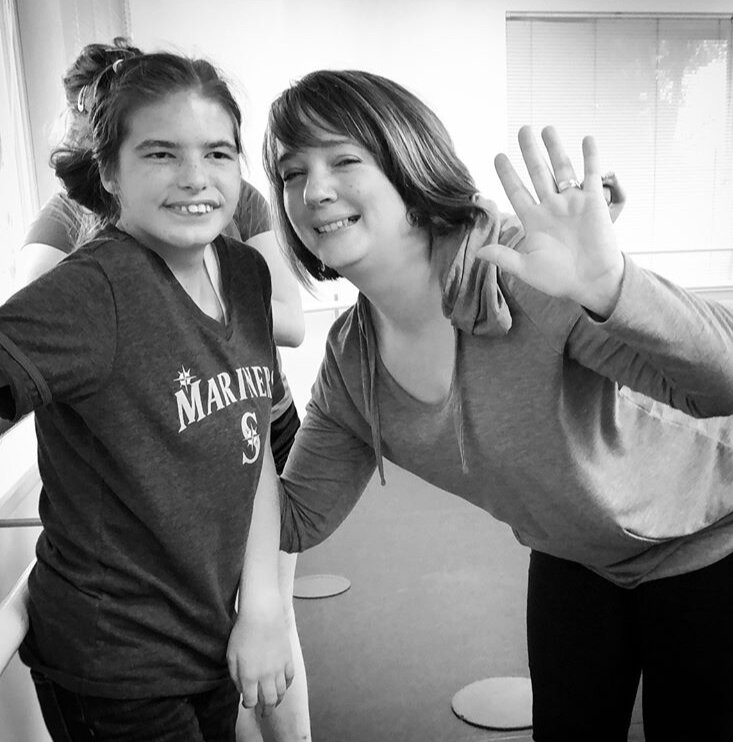
Photo by Hailey Waters
Fansler’s accepting and creative approach to each dancer's challenges is a hallmark of the program. BOMA focuses on what the students are able to do, not their limitations. Fansler’s voice was full of care as she responded to being asked what the goal of BOMA was for the participants. “I want them to feel safe and like they belong, and I want them to celebrate the things they can do instead of [being] boxed in by what they are told they cannot”.
The BOMA class is included in the IDT’s annual recitals. The dancers work on their own piece throughout the year and perform it on stage in the spring.
This month, BOMA’s current class of six dancers will perform in IDT’s recital. Changing COVID-19 restrictions make the exact format of the show uncertain, but the class is already working on creating their piece.
By offering a dance class tailored to students with disabilities, IDT is opening the gate to dance education and breaking down the traditional barriers of who is considered a dancer. Fansler notes, “a lot of times dance is seen as this ridiculously exclusive world, really what you need is a body and a space.”

Ella Kim began dancing at 4 years old. She focused primarily in ballet until finding a love of modern and contemporary dance in high school. She is currently pursuing a BFA in Dance at George Mason University. On breaks from school, she's had the opportunity to dance as a guest artist for Trillium Dance Collective. Ella enjoys investigating different aspects of the dance world and is thankful to DWC for giving her a platform.
Interested in writing for the DWC Blog? Click below to fill out the DWC Contributor application!