
Body Positivity In Dance
For all of my life, my body has been what most people would think is not a conventional “dancer body.” While there is no shade intended to be thrown to those who are of a different physique, I was never a naturally thin person and yet constantly felt like my life would be easier if I were, that the thin dancers at my childhood studio got the most attention and respect paid to their work. I knew there were certain roles I would not likely be considered for because of the aesthetic desired versus the one I represented. In another space, I was told that I am “the nerdy, girl-next-door type,” but “not the leading lady type,” and I felt that held true for how I was perceived in the dance space as well.
Trigger Warning: Eating disorders, Mental Health Concerns
By Hannah Emory. DWC Blog Contributor
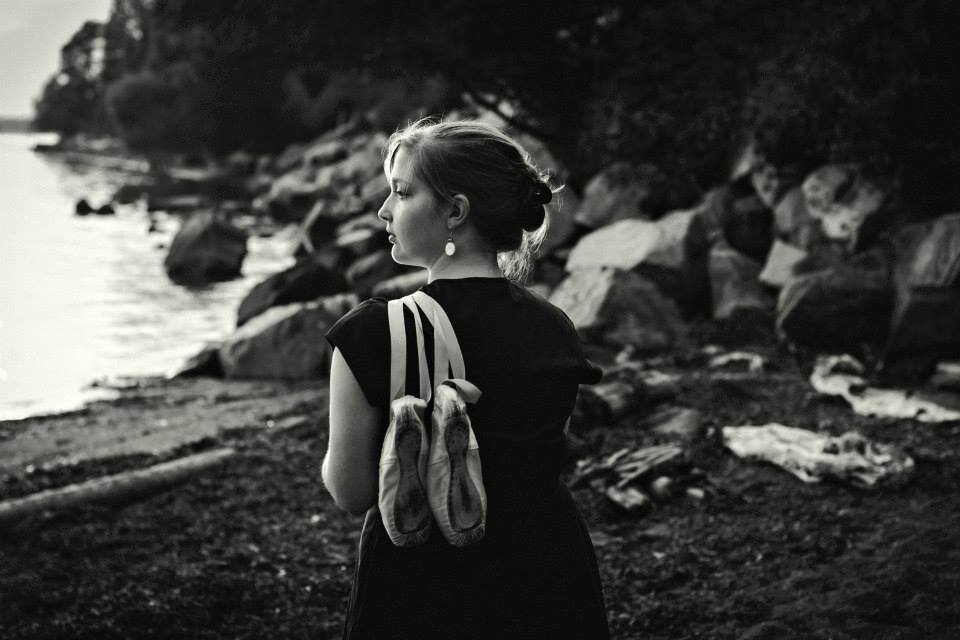
Photo by: Kelsey Michelle Photography
Childhood body-negative studio experiences:
For all of my life, my body has been what most people would think is not a conventional “dancer body.” While there is no shade intended to be thrown to those who are of a different physique, I was never a naturally thin person and yet constantly felt like my life would be easier if I were, that the thin dancers at my childhood studio got the most attention and respect paid to their work. I knew there were certain roles I would not likely be considered for because of the aesthetic desired versus the one I represented. In another space, I was told that I am “the nerdy, girl-next-door type,” but “not the leading lady type,” and I felt that held true for how I was perceived in the dance space as well.
Growing up in what I felt to be a body-negative/body-shaming dance space for me was almost like the old analogy of a frog being slowly boiled. You’re in the midst of the heat, yet being slowly desensitized to it until it’s too late to save yourself. From my personal experience, body negativity can be so ingrained in dance education spaces that it’s hard to even recognize it happening. Especially when body-negative messaging and practices are covert rather than overt. I became so used to feeling poorly about myself and receiving nonchalant messages about how my body was not quite acceptable, that I thought it was normal, even deserved.
Throughout my young dancing years, I took hiatuses from dancing many times when the pressure and pain of not living up to expectations became too much. Then upon my return, I would see folks I was dancing with a couple years before were now a few levels ahead of me and being cast in principal roles in the dance company. So the vicious cycle would continue when I realized I was nowhere near as conditioned, technical, or artistically expressive as them, because time had gone by.
My confidence would waiver again, the body image issues from my wee years would rise to the surface, and I would either severely cut back my class schedule or leave dancing for a season altogether. Yet, there was little time made for investing in the emotional wellbeing of dancers either in technique classes or in the member-exclusive company, and so there was no one there to notice that I and other dancers were slipping through the cracks.
These turbulent years certainly contributed to the zeal I have for diversity in the dance world now, because I became exhausted with the old hat expectations of the dance world yester-years. For years, I dreamed of a more just and body-inclusive dance world… then I realized that it was up to me to make that world a reality, in whatever way I can.
Choosing body positivity:
Through mental health counseling, I have had an opportunity to explore how deeply negative thoughts about myself and my dancing have burrowed into my self-image as a result of the conditioning I’ve received since I was young. I’ve begun unpacking how those thought patterns have affected my life and thoughts, have led me to treat myself and my work with disrespect, and to self-harm through intense exercising and disordered eating. Yet, all the while, I know I just wanted to live in the simplicity of loving my art and self-expression. That is the evil at the root of body negativity; it robs everyone of self-love.
I realized that the difference between body positivity and body negativity can be subtle yet pervasive. The difference between wanting to be strong or wanting to be a small leotard size. The difference between genuine happiness for someone else and toxic comparison. The difference between loving dance for itself and wanting to be admired. A subtle shift is enough to make what should be a joy into an obligation, or a mental prison.
“That is the evil at the root of body negativity; it robs everyone of self-love.”
These patterns of pervasive self-harming thoughts and habits started shifting for me ever so slightly once I got to university. I could certainly feel myself holding onto the desire to meet superficial aesthetic standards for a while, even though I had hoped that at the university level such expectations would be a thing of the past. As I grew in confidence as a young adult navigating the world, I got tired of being evaluated on aesthetic standards alone. Since day one, I have worked hard in my university program and wanted to be evaluated primarily on my work ethic and attention to detail. For me, realizing that body positivity was the key to unlocking the rest of my dancing career came because of a breaking point. It came because I was exhausted with being counted out time and again, and seeing others struggle to stand out in the midst of a popularity contest. It came with growing up and realizing that dance can be (and has to be) many things to many people or it loses its joy. It came with a desire to help people of all body modalities to find the indescribable joy in dance that I found. It came with heartbreak but also hope: to be a cycle breaker, so that no other dancers will be made to feel less-than because of their body.
Most of all, it came with solidifying my own philosophy. The way you show up on earth in your physical form is the most deeply personal and powerful thing we have available to us. I believe that we are spiritual beings having a physical experience, that our experience of being human is one and the same with our bodily experience. So, to me, devaluation of the body is devaluation of the spirit, a disregard for the core of humanness. Not everyone approaches it with that set of beliefs, but from a pragmatic standpoint, our identities are intrinsically tied to our physical bodies, while at the same time transcending the physical. We perceive each other physically, as well as emotionally and intellectually, simultaneously. There are levels to being human, and each one of them counts. I believe for that reason, there should be awe when encountering a human with a body; there should be respect and love. There should be joy and acceptance. This is especially critical in dance spaces.
When I realized that some part of my dance career would include being a teacher, I recognized that I had to unpick my own body-negative thought patterns. I had to heal myself from my internalized self-reproach, I had to get healthy, or any teaching I do would be heavy with judgement toward myself, and most likely toward others as well. My aesthetic judgments toward myself and toward other dancers had been taken over by the body-negative language and practices I received as a child and young adult. The next generation of teachers need tools for making body positivity an inherent part of their curricula, and unteaching body negativity in the dance world has to be intentional for us to make any progress.
Body positivity in the studio:
On my journey of deconstructing my own body-negativity, I have had to employ curiosity and become very uncomfortable, and ask questions to form new patterns of thought. Some key questions I ask myself regularly are:
Do I still cling to negative thoughts and expectations of myself? Why?
How do I practically deconstruct my body-negative thought patterns today?
What amount of ownership am I letting others have over my narrative?
Does another dancer’s physical appearance alter my opinion of their dance work, and why?
To what extent do I automatically judge other dancers before I’ve really taken in and paid respect to their work?
How can I lovingly participate in my own wellness and healing?
How can I encourage the wellness and healing of others today?
Asking myself these questions has already led to really positive results. I have found freedom in working with my body on a daily basis, wherever I find her at and without judgement. I find that I see the beauty in other dancers more readily because I am working to shut off voices of judgement about their work and mine, because I believe that setting yourself free also sets others free. I have found work by other dancers that is truly comforting, inspiring, and refreshing because it breaks down barriers and creates new possibilities.
If I were to give a short list of suggestions to studios and universities about how to train with body-positive frameworks, it would be:
Meet your dancers where they are at, then give them tools to become more of themselves. Give them lots of opportunities to discover their creative voices and movement languages in a non-judgemental space. Please, don’t apply limiting labels. (hard-and-fast categorizations of dancers about technique or performance qualities that limit the dancer’s sense of possibility and growth for the future, like “you’re good at turns but bad at barre” or “you’re a comedic performer, but not lead/principal material,” the implication of those comments being that there is no possibility for those dancers to develop those things, or that their body type makes them suited to some kinds of movement/performance, but not all kinds of movement/performance)
Seek out diverse educational imagery and performance footage, and invite in guest teachers and artists from many different backgrounds, including those who know how to artistically and technically work with a lot of different bodies.
Educate yourselves and your dancers in embodiment/grounding practices, accessible nutrition, and injury prevention, with the acknowledgement that every body is unique and deserves personalized wellness attention. A well dancer is an excellent dancer.
Keep interrogating your own body image practices and assumptions, for your teaching and yourself. Continually seek out media and information that opens your perspective. Know that body positivity and self-love in the dance world have to be intentionally exemplified, not merely assumed to be a reality.
I offer these suggestions as one who has not yet been a dance educator, but has been a student for many years. I acknowledge that there are unique challenges to educators within different dance spaces, but since dance is a physical art, I believe it to be imperative that we work to get the body positivity issue right. I offer these suggestions as a student who knows what it feels like to have had a few very encouraging and life-giving teachers, and unfortunately, a few teachers who added to my pain in this area. I offer these suggestions with the hope that more dancers will receive from their teachers what I ultimately had to learn for myself.
Self-love and body positivity in dance spaces must be intentional, and educators are the first line of offering dancers a healthier way to see themselves and a brighter way of looking at the world. So that dancers everywhere will know their body (and every body) is a dancing body.

By Hannah Emory
Hannah Emory has been a creative movement artist for over ten years, and is currently a dance major at Western Washington University. Her focus areas lie in the contemporary, ballet, and Irish step dancing spaces, and she has received additional training in ballroom, hip hop, contemporary jazz, and Scottish Highland dancing. In fall of 2021, Hannah will be continuing her dance studies in Ireland at the University of Limerick. Her favorite aspect of being a DWC Contributor is being able to marry her love of dancing with her passion for the written word.
Neurodiversity in Dance
I sat down with every intent to write this piece about neurodiversity in dance. However, the topic quickly became too academic and theoretical. You see, neurodiversity and dance are two topics not often heard in conjunction. Neurodiversity is, simply put, brain differences. Human brains vary. This is natural. This term is often used to describe conditions like Autism or ADHD, which are variations…
By Brittni Bryan. DWC Blog Contributor
I sat down with every intent to write this piece about neurodiversity in dance. However, the topic quickly became too academic and theoretical. You see, neurodiversity and dance are two topics not often heard in conjunction. Neurodiversity is, simply put, brain differences. Human brains vary. This is natural. This term is often used to describe conditions like Autism or ADHD, which are variations in the neurocognitive functioning of the human brain. ‘Neurodiversity’ covers a range of variations in the human brain as they relate to sociability, mood, learning, and attention (Griffen, n.d., para 1).
In my work as a Special Education teacher and case manager, I work with neurodiverse brains on a daily basis. I love this work. I love finding tools and strategies to help students maximize their potential. The educational opportunities for students with disabilities today is vastly different than it was even when I was in school. More and more students are identified year after year as students who need specially designed instruction in order to be appropriately served in public schools. This is a great thing! I, personally, would love an education system that is able to reach every student with an individualized plan— those with and without disabilities. Yet, while an understanding of neurodiversity is growing in schools and workplaces, neurodiversity is not well explored in the dance community because of a pervasive culture of exclusivity within professional dance spaces, and, potentially, dance educators’ lack of experience working with neurodiverse individuals.
Historically, European professional or technical dance (aka Ballet) was for the upper class. Ballet started as court entertainment in Italy and France during the Renaissance (Kant, n.d., paras 1-10). There is still a class divide in dance today. Elitism in ballet is not new news. However, we don’t often talk about the ability divide in dance. While physical disabilities have become more prominently accepted than in the past (see dancers like Alice Sheppard, Jeron Herman, and Evan Guinet), there isn’t currently a space for neurodivergent dancers in local studios or in the broader dance community. Case in point: I searched for neurodiversity on dancemagazine.com and received the following message, “Ooops! No results found!”

Studios continue to focus on scouting natural talent, instilling dedication and self-discipline, teaching proper etiquette, fostering professionalism, and infusing their dancers with technical skills, flexibility, and artistry— all good things! To be clear, these are not inherently bad missions. Where we go wrong is in implementation. I think back on my dance training: I remember dance being a place where I was held to strict standards, where people were always watching and assessing me, where my effort and behavior were constantly on trial. Every year we auditioned for our competition castings. I remember being singled out in an audition for kicking on the wrong counts as I completed across the floor progressions during the audition. I remember being told to go to the dressing room with two of my friends to stretch our splits until we got all the way down in them— only then could we return to the audition. I remember being so scared of doing a back handspring but doing it anyway so I would get cast in the upper level group. I remember speaking up for myself once, telling the teacher that she was being mean, which resulted in my “special partnering part” being given to a quieter girl. I didn’t speak my mind again. The first time I loved dance was not until I was thirteen or fourteen. I took a lyrical class at Westlake Dance Center with Kirsten Cooper, and I fell in love. Kirsten made the class more about intention and emotion rather than about technical skill or effort (though her dancers are also beautifully skilled technical artists). For the first time, I felt like I was dancing for me, like I was getting to explore parts of myself that I hadn’t had the opportunity to explore before. My mental health felt seen in Kirsten’s classes, and this was so important for me.
All of this is to say, maybe inclusivity in dance is more about how we teach than about who is in our classes. There is this idea in academic teaching that the strategies used to teach students in Special Education programs are just good teaching strategies period. The structure and accommodations we create for our neurodiverse students are helpful for all our students. Maybe it is the same with dance? The knowledge and teaching pedagogy I have developed as a special education teacher helps me as a dance teacher. Tiny brains love repetition whether it is academic concepts or movement. Teaching younger dancers to connect movement to song lyrics is another helpful memorization strategy because it taps into our brain’s natural desire to find patterns and predict sequences; it’s like a matching game. If you can connect the lyric “heart” to a movement that also suggests the idea of “heart”, the brain is more apt to remember that movement sequence because it becomes a pattern. An executive functioning skill called “chunking” is applicable in dance as well. Breaking things down into small, manageable pieces is an effective strategy whether you are guiding students through a project or teaching a dance routine.

As neurodivergence continues to be acknowledged in schools, I see more neurodivergence in my dance students. Admittedly, this can make teaching challenging; but, I’ve learned to adapt my practices. For instance, I have a student who thrives when given lists. So, every solo practice, we make a list of the parts of her routine we need to work on. Another student needs frequent breaks, so we do lots of short water breaks so that she can reset every 10-15 minutes. These are small strategies that make huge differences for the health and well-being of my dancers. As we continue to educate this next generation of dancers, let us focus on seeing our dancers as humans, educating the “whole” dancer, actively listening to our dancers and engaging them in dialogues, and supporting and encouraging dancers to grow to their full potential without pressuring them to perform past their comfort.
If dance educators can make this shift, there can be a place for neurodiverse students in dance studios, and there should be. With teachers who are actively aware of the neurodiversity paradigm, studios can become more inclusive of dancers whose operating systems are different from the ‘norm’. Dance should be about bringing people together in a space where they can share the joy of movement and performance. Performing movement is powerful and neurodivergent dancers can (and should) get to feel that too!
References:
Griffen, Mark J, Understood Team. (n.d.). Neurodiversity: What You Need to Know. understood.org. https://www.google.com/amp/s/www.understood.org/en/friends-feelings/empowering-your-child/building-on-strengths/neurodiversity-what-you-need-to-know
By Brittni Bryan
Brittni Bryan grew up dancing in the Pacific Northwest, training in jazz, lyrical, tap, ballet, and acrobatics. Professionally, Brittni has performed as a member of 3rd Shift Dance company, Le Faux at Julia’s on Broadway, and currently is a member of Intrepidus Dance Company.
Brittni graduated from Seattle University in 2013 with her Bachelor's of Arts in English Literature, and in 2018 she graduated from Seattle Pacific University with her Master of Arts in Teaching and endorsements in Special Education and English Language Arts. By day, Brittni teaches high schoolers for Seattle Public Schools, and by night, she works with dancers at Glass House Dance!
In her free time, Brittni enjoys binging Netflix shows with her wife, cuddling with her cats, writing (she submitted her first poetry collection to be considered for publication in early 2021!), and reading. She is really excited to join the 2021 DWC Ambassador Cohort to connect with other dancers and contribute to the growth of the PNW dance community.
Getting to Know the Creator of Girl Power Sport: Lisa Fairman
Earlier this month, I had the amazing opportunity to sit down and chat with Lisa Fairman, founder of Girl Power Sport. They are a local gymnastics, dance, and activewear brand based in Vancouver, Washington with most of their materials sourced from Portland, Oregon. When asked about how her brand started, it was clear Lisa has been surrounded by the arts and sports community for a very long time.

By Emma Neilson
Emma Neilson is a pre-professional dancer from Seattle, WA. She started dancing at the “late” age of 13, and decided to pursue a possible professional career at age 19. She is currently a Professional Division student at International Ballet Academy in Bellevue, WA. She is a registered Barre fitness and Flexistretcher instructor, as well as a current ambassador for To The Pointe Nutrition.
Earlier this month, I had the amazing opportunity to sit down and chat with Lisa Fairman, founder of Girl Power Sport. They are a local gymnastics, dance, and activewear brand based in Vancouver, Washington with most of their materials sourced from Portland, Oregon. When asked about how her brand started, it was clear Lisa has been surrounded by the arts and sports community for a very long time. From participating in ballet, soccer, and theatre herself, to having two daughters in dance and gymnastics, Lisa has first hand experience with what one would want out of this type of apparel. In addition to this, Lisa previously worked for Nordstrom and Zulily, and while there, recognized the demand for and lack of vendors and products on the market. After parting ways with the corporate world, Girl Power Sport was born!
When asked about her transition from buying to manufacturing, Lisa was candid about how difficult it was at first. Though she had years of experience in the fashion industry, she said it was a shock and an eye-opener to see how different things were on the other side. She mentioned how humbling it has been to go through rejection from buyers and retailers and gave some guidance to those who are looking to start their own business:
“So I would say first of all, just whenever you jump into something new, especially with manufacturing and retail, I would say just be open, you know, be open to learning from other people.”
Her biggest piece of advice is being able to pivot and change your business and plans, especially now with COVID-19 making an impact on everyone.
I personally think part of navigating entrepreneurialism includes making sure you have aspects of your brand that will set you apart from the rest, and there are several ways Girl Power Sport achieves this to bring gymnastics wear to the next level. Currently, most of their prints are custom, and Lisa is hoping as time goes on that all of their prints will be custom. The prints are lighthearted, fun, and fresh. They take into account what customers like and try to incorporate humor and encouragement into that, to create something that you will not only feel good in, but might make you smile along the way. They also have coordinating activewear sets to pair along with some of the dance and gymnastics wear.
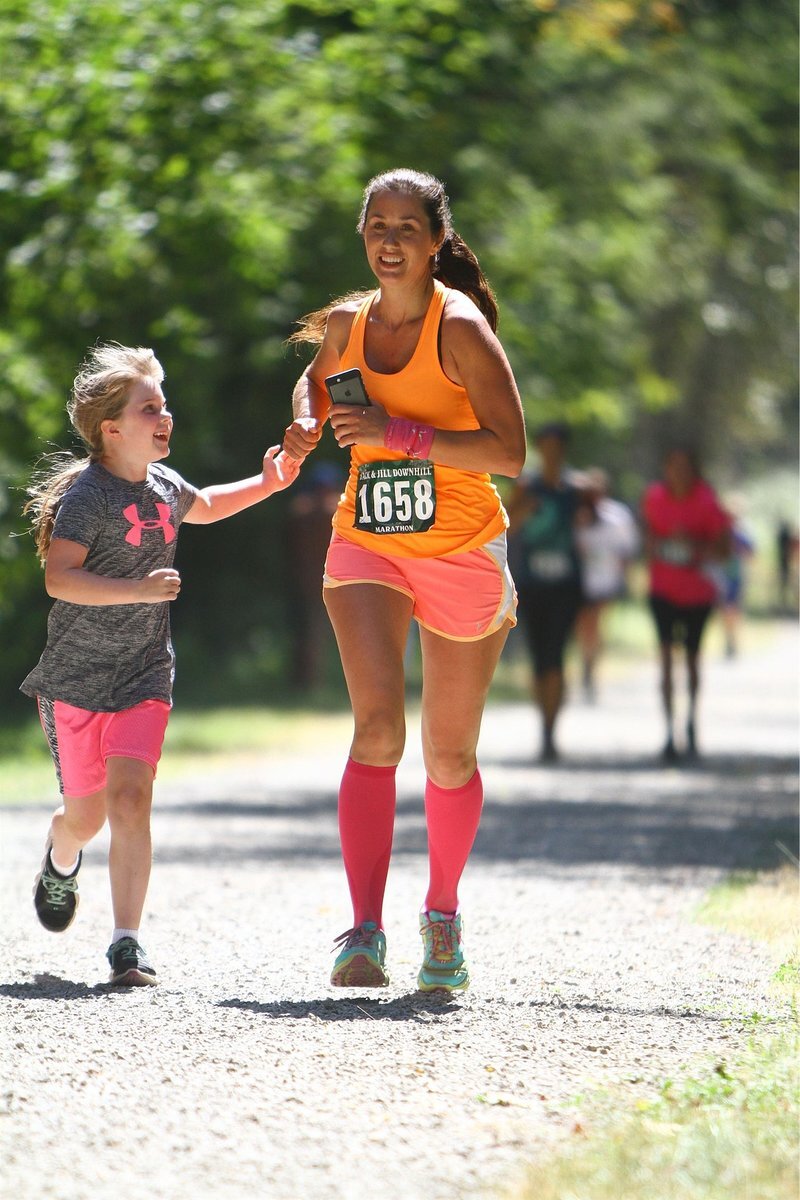
It doesn’t stop there- Girl Power Sport is very involved with the local community and is committed to donating $1 to charity with each purchase. Lisa was born with a heart condition which resulted in years of health problems and several surgeries. She is an “unusual” case, as she is now healthy, active, and a seasoned runner. Because of this, Girl Power Sport routinely donates to the cardiology fund at Seattle Children’s Hospital. Lisa is truly an inspiration having successfully integrated her personal life experiences and passions into something that is ultimately impacting others as well.

We are so proud to be working with Girl Power Sport, and are greatly aligned in our morals and missions. We want to empower girls and women, serve the local community, and above else believe that movement is for everyone! Lisa said “We strive to be an all around fit… I just felt like dance and gymnastics should be accessible to everybody… No matter what your size. [We] want people to feel like anybody can do dance… you can be any age and be a dancer.” And as some of you readers may know, one of our mantras here at Dancewear Center is “Every body is a dancing body.” Sadly, this sentiment is not shared by the dance and gymnastics world at large, and together we are working to change that and spread this message.
When asked about what other changes she would like to see, Lisa replied saying “I would love for dance and gymnastics to be more accessible [to] ... inner cities and… people who can't pay and lower income families.” She went on to talk about the importance of afterschool programs and recognizing that dance and gymnastics is “...such a healing thing for communities…” She also briefly talked about how much she loves “...the mentorship that goes on with dance and gymnastics with the coaches and the kids… because you spend so much time together. They're just these crazy bonds and I just love that sense of community...” We couldn’t agree more, and along with Girl Power Sport, are here to support these athletes and artists, their parents, teachers, and everyone else in between.
Because it is Mental Health Awareness Month, it was only fitting that Lisa and I chatted about her struggle with anxiety as well. I asked her about her experience and how she manages it, and she had many helpful things to say. She said that a large part of her journey has been “learning how to be living in the present and not… fixate on the past and not stress too much on the future.” She also said she has been learning to be still with herself and how to “reset”. Some coping skills that have helped her include journaling, meditation, and reframing your anxious thoughts. She says she is working on being able to show up in terms of work and business management and at the same time staying centered. This is the art of balance and we both agreed that it is so important to remember that it’s a journey and there is no such thing as perfection!
You may be asking, what is coming next for Girl Power Sport? Lisa said they are currently working on putting together a second production team based in Seattle, WA. Lisa also emphasized how much she values staying local, at least for right now. She prioritizes good working conditions, fair wages, high quality, made in the US, handmade products- all of which is achieved by her hands-on management style. Because of their locality, custom orders are easily produced as well! Lisa and the whole Girl Power Sport team take pride in what they produce, and they love being able to “...share our love with you.” And now, we are able to share it with you too!

“All of us get creative in all different ways to make our dream a reality.”- Lisa Fairman
Click here to listen to a more in-depth interview with Lisa about her personal and professional life story!-
Girl Power Podcast
Available to purchase now in-store and online at https://www.dancewearcenter.net/ and https://girlpowersport.com/
Mental Health in Dance
Mental health in dance is a phrase I never heard growing up. I grew up in a time where there was a huge stigma on mental health. If you needed counseling or help, there was “something wrong with you”. So, every time I was struggling, I pushed it down. I could build a mountain with all the struggle stones I’ve shoved deep down inside.

By Austin Sexton
A singer, dancer and actress, Austin has been honing her triple-threat ability since childhood. She grew up among the Lake Washington studios of Spectrum Dance Theater, the company her mother, Jenny Hillock, co-founded. And, with two parents as dancers, Austin developed a passion for the performing arts at a young age. After training at Spectrum for many years, as well as Seattle Children's Theater, Austin studied at Dance Fremont! during her teen years.
Throughout her stage career, she has performed leading roles in "The Wiz," (Glinda),"Cabaret," (Sally Bowles) and "Anything Goes" (Reno Sweeney) with Summit Youth Theater Company. As a concert performer, she has danced the works of Eva Stone, Kabby Mitchell III, Jenny Hillock, Jason Olhberg and Dance Fremont! co-founders Mary Reardon and Vivian Little and many more.
After graduating from high school, the mezzo soprano went on to pursue her degree in music, where she studied music theory, piano, choir and vocal performance, During her college years, she pursued an opera workshop, performing scenes from "Falstaff" and Gloria Swisher's one-act opera, "Poker Alice."
As a co-founder of Relay Dance Collective, a formerly well known dance company in Seattle, she was inspired by the vision that allowed her mother, and other great dance artists such as Dale Merrell, to create a company based on inclusiveness and recognition that talent comes in many colors, shapes, forms, and sometimes, from unexpected sources.
Today, Austin remains active in music and dance, and enjoys teaching at Momentum Dance Academy, where she is the Rehearsal Director for their Performance Division. She has choreographed and set works for The Nutcracker, Sleeping Beauty, Alice In Wonderland, Cinderella and Swan Lake. At Momentum, she promotes inclusivity, body positivity, and mental health awareness in addition to the high quality training she gives dancers. She remains a positive impact on the youth of her community by creating a healthy safe environment for students to thrive in.
Medical Disclosure: Dancewear Center does not claim to have any medical expertise on any circumstances or diseases discussed. This is Austin’s personal experience and opinions. If you need help see the resources listed at the bottom of this post. If you or someone you know needs immediate medical attention, call 911.
Mental health in dance is a phrase I never heard growing up. I grew up in a time where there was a huge stigma on mental health. If you needed counseling or help, there was “something wrong with you”. So, every time I was struggling, I pushed it down. I could build a mountain with all the struggle stones I’ve shoved deep down inside.

Growing up as a larger bodied dancer came with so many extra hurdles and it deeply affected my mental health. I have been ignored, looked at with dissatisfaction, and even been refused training because of the way my body was just naturally built. In addition to that, my mother, who is built in a petite and thin frame, was one of my teachers and I compared myself to her every day. (Despite this, she was so incredibly supportive of my training).
I was struggling with body dysmorphia, depression, and anxiety and despite all the dance training, I was never taught how to ask for help. So instead, I built stones and pushed them down. I suffered. I self harmed, I developed an eating disorder, I was resentful and destructive. I needed help, but I didn’t know how to ask how.
Now, as a dance educator, I have made it a mission of mine to teach dancers how important it is to know how to ask for help. I think mental health awareness should be part of dancers training. The dance world puts so much pressure on dancers to be technically perfect, thin, and fit, but it can take a toll on our mental health. Long term, it can cause dancers to either be destructive or burn out and quit.
One of the ways I try to train mental health awareness and body positivity In my classes is by discussing strength and anatomy: but never size or weight. I advocate for all my dancers--no matter their shape--to have equal access to roles and opportunities. If I see one of my students struggling, I immediately reach out to them. Because I was experiencing my own series of mental health crises during my youth, I now recognize the signs. I talk to their families and help them access the tools and resources to get help.

Most importantly, I make my students feel seen. I wish that just one of my teachers would have taken the time to make me feel seen. How much that would have changed my life. I make sure that in every class, every student gets not only a correction, but also praise for something they’re doing well. Building their self confidence in each class motivates them from within to feel that they are safe to make mistakes with me. I preach to them that they are never wrong for making a mistake, because that is where they can learn and grow.
About once a month, I take 5 minutes at the beginning of class (no matter the genre) as a mental health check in/affirmation and goal setting time. We close our eyes and breathe together, and set goals to achieve in the month. We identify where we’re struggling and what we think we can do to improve together. We acknowledge where we’re thriving and honor that together. If I had had a teacher doing this with me as a young dancer, I absolutely believe I would have not resorted to destructive behavior to feel seen. It would have completely changed my life.
Lastly, I take accountability if I have unintentionally hurt their feelings. I show them that I am not perfect and that even adults can make mistakes. I never had an adult apologize to me in my youth for hurting me. If I ever expressed that I was hurt, it was always spun around to what I did to make them do or say whatever it was that hurt me. In taking responsibility for my actions, even if I know that I wasn’t intentionally trying to hurt them, I teach them that their feelings are valid, that they are visible to me and that they are safe.
Now, instead of struggle stones, I am working on building stones of strength and compassion, in hopes of building a generation of healthy, strong and happy dancers. Will there always be struggle stones? Yes, but I’m hoping that there will be enough supportive ones to hold up the struggle ones when they need it.
RESOURCES
Students, please talk to your parents or an adult you trust if you need help. They can connect you with a doctor. If you need immediate help, here are some resources:
The Importance of Recognizing Burnout in Dance
It’s that time of the year when many studios are starting or well into their preparations for competition and performance season. Especially with the major setbacks the pandemic has put us in when it comes to being on stage, it makes it all the more exciting to be back on stage and dancing again. However, with the pandemic comes another crisis many dancers have overlooked.

By Emma Spencer
Emma Spencer trains and teaches at Academy of Dance in Port Orchard, Washington, and has been dancing for 12 years. She studies multiple styles such as ballet, contemporary/lyrical, jazz, and musical theatre, as well as gets involved in her competition team and Pre-Professional curriculum.
Emma teaches primarily between the ages of 5 and 10, and is very involved with her competition team, Synergy Dance Company, competing at local competitions and performing at local venues such as nursing homes and festivals. Emma has also been featured in her studio’s rendition of “The Nutcracker” as many lead roles such as, but not limited to: the Sugar Plum Fairy, Clara, and the Snow Queen.
When not dancing, Emma enjoys playing video games, digital art, advocating for epilepsy and mental health, collecting rocks, drinking coffee, and photography. Emma is honored to have been accepted as a Dancewear Center Ambassador and is excited to share her passions with the dance community.
Medical Disclosure: Dancewear Center does not claim to have any medical expertise on any circumstances or diseases discussed. This is Emma’s personal experience and opinions. If you need help see the resources listed at the bottom of this post. If you or someone you know needs immediate medical attention, call 911.
It’s that time of the year when many studios are starting or well into their preparations for competition and performance season. Especially with the major setbacks the pandemic has put us in when it comes to being on stage, it makes it all the more exciting to be back on stage and dancing again. However, with the pandemic comes another crisis many dancers have overlooked. Teenagers have been the most affected by the pandemic in terms of mental health, stress, and burnout. Between this last year and our current year, we have witnessed and participated in a plethora of historical events that took away opportunities that we took for granted, such as school, prom, hanging out with our friends, and those of us who are dancers: performing in person in front of a large audience. With the pandemic starting to (hopefully) fade out and scientists grasp more of an understanding of COVID-19, I’m not sure we’re ready for our next world-wide crisis: mental health and burnout.
Being a dancer, you see a lot of stigma against mental health and burnout in general within the community. As someone who deals with mental health related issues myself and spreads information about it more than I regularly complete my homework assignments, it’s disappointing to see that the dance community hasn’t quite caught up with the rest of the world in that regard. You see comments like “you just aren’t trying hard enough” or “you probably shouldn’t be dancing if you aren’t taking this seriously.” It’s comments like these that invalidate the struggles of dancers and make them feel unheard. Because the truth of the matter is that dancers are pushing themselves so far that they're getting burnt out and fatigued, and the pandemic and daily struggles of life are doing nothing to help them either.
What is Burnout and What Causes It?
Burnout is, simply put, your mind and body telling you to take a break (bet you haven’t heard that from your parents 100 times). It’s the consequence of doing too much and is often seen in dancers who’s schedules don’t give them an adequate amount of time to rest and recover after training, although dancers aren’t normally in control of their own schedules. Burnout can also be caused by poor nutrition and physical and emotional stress. Dancers affected by burnout are also more susceptible to injuries.
Burnout Warning Signs
Just like physical illnesses, your body begins to show signs that you need to slow down and that what you’re doing is too much before you experience burnout. Those precursor burnout signs should be a signal for you to take a break and recalibrate your mind and body. Those signs include but aren’t limited to:
Poor concentration
Fatigue
Loss of appetite
Decrease in enthusiasm or desire to dance
Increase in irritability, anxiety, and depression-like symptoms
Inability to “bounce back” completely after intense training
Prevention
The biggest thing you can do to prevent burnout is to educate yourself as to what burnout is. It’s important for teachers, students, and parents to recognize the risks and warning signs of burnout to stop it ahead of time. Burnout isn’t completely avoidable due to its complexity, and the signs and effects of burnout are going to be different for every dancer. However, there are steps you can take to prevent the worst of it.
Adequate Rest
After a long day at dance, it’s important that you give your mind and body the time it needs to relax. Whether that’s active stretching, yoga, or even taking a nap. Resting is important so you feel energized for your next day of classes. Making sure you get a good night’s sleep is also important. You want to wake up well rested and ready for the day.
Eat Well
Note: In this section I briefly talk about eating disorders. It isn’t in depth, but if the topic makes you uncomfortable, please read at your own comfort. I’ll also be leaving resources at the end.
It’s no secret that dancers struggle when it comes to eating well, or at all at times. Eating disorders are common within the dance community unfortunately. As I stated earlier, poor nutrition is a major cause of burnout, so it is all the more important to eat well before and after your classes. I’m not necessarily saying to make yourself a large meal, just a fueling snack before and after classes at least. Your body needs that fuel to create the energy you need to dance all day. If you aren’t eating, your body doesn’t get the fuel it needs to give you energy, and you’ll be left tired and nauseous all day. Give yourself permission to eat.
Know Your Limits
Don’t push yourself harder than is necessary. Set realistic goals for yourself. Being a perfectionist myself, I understand the struggles of feeling that I’m not doing good enough and need to keep pushing myself towards unrealistic goals to the point of causing unnecessary stress.

Click Below to Shop the Look
Find Other Hobbies
Find things to do at home that aren’t related to dance. Being dedicated to dance is great and highly encouraged, but if that’s all you’re doing at home, that’s going to speed up the process of burnout. Take up some different activities such as painting, or music. Not only will it give your brain a break from thinking about dance, but picking up multiple hobbies makes you a more well-rounded person. Finding other things to do doesn’t make you any less interested or dedicated to dance. Make sure there is a life outside of the studio.
Acknowledge Your Students’ Struggles
This section pertains more towards teachers and parents. Give your dancers a chance to recover. Don’t make them push through it, that will only worsen burnout and will take longer to recover. Be there for your students, listen to their concerns, and help them through their struggles. They look up to you as a mentor.
Stigma
The dance world is definitely growing in terms of inclusivity, progressivism, and removing stigmas and stereotypes, but there is still work to be done, especially in the mental health department. “Stigma is a powerful social force that has the potential to prevent treatment seeking and exacerbate the stigmatized challenges” according to a study on burnout written by the World Health Organization that you can read here.
Within that same study, the participants, all of which were either undergraduate students or workers, were asked to rate the degree of which most people would agree with statements stigmatizing burnout. The leading statements were the ones that describe people with burnout as lazy, weak, and undeserving of achievement and praise. It was interesting to see the parallels between the stigmas for the dance world and the work/school environments.
Conclusion
Dance is a sport where you’re constantly on your toes (pun somewhat intended) and you’re constantly grinding to the next goal. It takes a lot of mental and physical energy to be a dancer, and it’s important to take care of yourselves if you’re going to participate in such a demanding art. You’re not lazy or weak for taking a break. You recognized your burnout and decided to do something about it, which is one of the strongest things you can do.
Parents and teachers, please check in with your dancers. Allow them to take breaks when needed. Offer them love and support and listen to them when they are struggling. Your dancers rely on you the most, so it’s up to you to give them the support they need.

Click Below to Shop the Look:
Garden of Snapdragons Leo - Chameleon Activewear|Bullet Pointe Skirt
The Power of Movement in Healing Trauma
As a part of my recovery process, I continuously turned to dance improvisation, which has always been movement I find incredibly healing. Many times, my body has felt weak, dirty, used, and not my own. The only thing I have found to mend this damage is the power of proving these feelings wrong. Feeling the strength and control I have over my frame during times when I feel that this body is not my own. When I am able to hold myself in a mind-space of healing and patience, dance is able to release and teach myself what an infinite amount of words simply cannot.
Isabel Reck
has been dancing for 5 years; the majority of her training being at Cornerstone Studio. She has trained in ballet, contemporary, lyrical, jazz, hip-hop, tap, break dancing, and aerial silks, although contemporary has always been her go-to. Her favorite thing about being a Dancewear Center Ambassador is being able to explore a side of being a dancer she never thought she would be a part of.
By Isabel Reck
Medical Disclosure: Dancewear Center does not claim to have any medical expertise on any circumstances or illnesses discussed. This writing speaks to Isabel’s personal experience and opinions. If you or someone you know needs help please refer to the resources listed at the bottom of this post. If you or someone you know needs immediate medical attention, call 911.
Trigger Warning: Trauma, Sexual Assault, Rape, Suicide, Depression, and Anxiety.
Many of us have been through trauma. I have read so many inspiring articles from amazing women saying “#metoo,” “TimesUp,” or “I am not a victim, I am a survivor.” They all have something to say, some good to come from this betrayal of humanity. It is gruesomely common and, at times, the trauma sustained can feel irreparable and impossibly taxing. I would know. At 17, I became a victim of statutory rape.
The Rape, Abuse, & Incest National Network (RAINN) states that 1 in 6 women have been raped--and that’s just the bare minimum; because how can we get accurate statistics when this is an issue that goes mostly unreported? This heinous crime has seeped into every industry, every neighborhood, every community.
Only five months later, I feel more like a victim than a survivor. No matter how hard I try--and I have been trying really hard--I haven’t been able to find that empowering spin other people have about being sexually assaulted and raped. I am someone who has always been a hard-core optimist. Maybe that's why my inability to find the silver lining is so crushing? I feel this drive to share my story in the hopes it will empower others—but what do I have to say that those before me haven’t already said? Some close to me are scared of me sharing this story because they worry about the consequences; but my gut tells me it’s something I need to do - and I’m done not listening to my gut.
Over my life, and especially recently, I have experienced some considerable lows. I have been in therapy since I was 12, when I landed myself in the ER for suicidal ideations. Since the night I was raped I have developed PTSD (Post Traumatic Stress Disorder) in addition to my pre-existing anxiety and depression. As my lovely therapist can tell you, I have talked a lot. I have talked about my feelings, dredged up my past, and attempted to heal my soul for 5 years in talk therapy. Despite this, there has always been a need for more than words to heal.
As a part of my recovery process, I continuously turned to dance improvisation, which has always been movement I find incredibly healing. Many times, my body has felt weak, dirty, used, and not my own. The only thing I have found to mend this damage is the power of proving these feelings wrong. Feeling the strength and control I have over my frame during times when I feel that this body is not my own. When I am able to hold myself in a mind-space of healing and patience, dance is able to release and teach myself what an infinite amount of words simply cannot.
I won't sit here and lie, saying that even on my worst days, dance is my cure-all. That said, I truly believe that my body is, and always has been, trying to look out for me. Dance taught me this, and it is knowledge I wish I could pass along to everyone hurting. Every time I dance, I feel like I am taking back one more piece of myself that I lost that summer night.
In my mission to help others through their own trauma, I am hosting a series of online (for now) movement workshops facilitated by Heather Smith of ObnoxiouslyFit. These workshops are for anybody who has experienced trauma, but will be specifically tailored towards those recovering from rape and/or sexual assault. All are welcome: our first few workshops will be “pay-what-you-can,” and no formal dance training is required. Click here for more information and to register!
In closing, I leave you with this:
Lift up your foot and look at the calloused sole. Think of the thousands of steps, both pedestrian and in dance, your feet have taken with you. Now hold your thighs. Remember every time they have helped you rise up off the floor again. Feel your heart, still beating even when you thought you were going to collapse, puke, and die.
I challenge you to do one simple thing. Next time you dance, be it in a crowded master class or alone in your bedroom, dance for you. Find that gut feeling within you, and go where it leads you. Witness the power of your biology. Know it's ok to feel sad, and anxious, and angry, and grief: but never forget the beauty of you.
RESOURCES
If you or someone you know is struggling with a sexual assault: (RAINN) Call 800.656.HOPE (4673) to be connected with a trained staff member from a sexual assault service provider in your area.
If you have suicidal thoughts, click HERE.
Call 1-800-273-TALK in the US, or visit suicide.org to find a helpline in your country.
Text “HOME” to 741741 Crisis Text Line serves anyone, in any type of crisis, providing access to free, 24/7 support via a medium people already use and trust.
If you are a parent who is wanting to help their children with COVID-19 related depression and anxiety, read this.
Click HERE for Mental health resources for Washington State.
READ: The Body Keeps the Score by Bessel van der Kolk, M.D.
Click HERE for resources from the American Psychological Association (APA) on trauma in children and youth.
Disability Stereotypes and the Dance World: An Introduction
I was invited to write blog articles for Dancewear Center earlier this year because I wanted to share with the dance community as a whole what the words disability and mental illness really mean, and why they’re important to me. I want to break down stereotypes around disability and mental illness piece by piece and give my perspective about disability in relation to the dance world.

By Jade Fraser
Hello dance community!
My name is Jade, and this is my first article for the Dancewear Center blog! I’ll be writing for Dancewear Center this year, so you should be seeing more of me in the coming months. For now, I’ll explain who I am and what I’m doing here.
I’m sixteen years old and a junior in high school. I’ve been dancing for at least nine years, six of those at Cornerstone Studio. I began at Cornerstone when I was eleven years old and in sixth grade. I did classical ballet that year, then switched to contemporary and hip hop dance the next year. I’ve done those two styles ever since.
I did pre-level dance at several different places when I was very young, and then I stopped so I could focus on other things. I’d wanted to go back for several years before I actually did; that was after trying artistic gymnastics and finding that it wasn’t my thing. I know I’m not the only one who went through an American Girl phase, and their 2014 Girl of the Year, Isabelle, was a dancer. I watched that movie and was reminded of how much I loved to dance, and then and there I decided I wanted to go back.
I started dancing later than most people I dance with, and I’ve also always had trouble picking up certain techniques. I’ve always needed to work harder and longer than a lot of other people to be able to do even the most basic skills. I also have a habit of comparing myself to other people, and this leads to discouragement. I’ve always been far too hard on myself, and when I feel like everybody is better than me, I beat myself up about it. Even so, I continue to dance because I love it and it brings me joy. I have found a community at Cornerstone Studio – it’s a community of people who love to dance as much as I do. These are the people who help me when I’m having trouble with a skill or with choreography, who encourage and support me, and who understand my obsession for dance (and BTS, in some cases).
I was invited to write blog articles for Dancewear Center earlier this year because I wanted to share with the dance community as a whole what the words disability and mental illness really mean, and why they’re important to me. I want to break down stereotypes around disability and mental illness piece by piece and give my perspective about disability in relation to the dance world. As somebody who is legally disabled and mentally ill myself, I want to be a voice for the disabled community, a community often unheard and underrepresented. I want to be an advocate for the people who are disabled and mentally ill that are unable to advocate for themselves. I want to educate the nondisabled community on the reality of disability, as well as shed some light on why somebody like me with “invisible” disabilities is in fact disabled. In addition, I want to help everybody understand what ableism is and why it is hurtful, not only to people who are disabled themselves, but to the nondisabled community as well as the society that we live in.
Finally, I want to show how stereotypes around disability and mental illness are relevant to the dance world, and what needs to be done so that people with disabilities can have the opportunity to show their full potential, not only in the dance world but in every aspect of life. I want to bring focus and discussion to important and uncomfortable topics like these, because I think a lot of the crucial understanding is missing. My ultimate goal is to bring awareness to this topic, as well as promote education on disability.
Now that you’ve read everything I’ve written so far, you have some background information of who I am and what I’m doing here. I’ll be back in the near future elaborating on the last bit, and I look forward to sharing with you all!
Cultivating Positivity
It can be hard to hold onto happiness and positivity in the midst of everything happening in our world. I know that I have been struggling a lot with maintaining a bright attitude lately. The negativity and depressing truth of what is going on around us is suffocating, and I feel that needs to be recognized. I had a teacher in high school who once had us all yell “this sucks!” right after they dropped a pop quiz on us. On the count of three we all yelled. I feel like we need that right now. Ready? One, two, three: This sucks! It's important to get that out, and to acknowledge that everything is not always great. And that’s ok. Everything doesn’t have to be amazing, but with what is going on in the world it’s important to look for what is good around us or risked getting dragged down by that looming force of depression and negativity that may be spreading faster than the virus.
In this article, Anna is talking about cultivating positivity.
PREFACE: I wrote this post at the end of April for mental health awareness month. Mental health isn’t something we should only think about for one month, however. This post was written in the thick of quarantine, which was one of my main reasons for writing it, but I believe that it is still incredibly relevant today as well. We will continue to experience low points in our lives, so it is important to take the good with the bad and find the small moments of happiness to keep us going. Enjoy!

It can be hard to hold onto happiness and positivity in the midst of everything happening in our world. I know that I have been struggling a lot with maintaining a bright attitude lately. The negativity and depressing truth of what is going on around us is suffocating, and I feel that needs to be recognized. I had a teacher in high school who once had us all yell “this sucks!” right after they dropped a pop quiz on us. On the count of three we all yelled. I feel like we need that right now. Ready? One, two, three: This sucks! It's important to get that out, and to acknowledge that everything is not always great. And that’s ok. Everything doesn’t have to be amazing, but with what is going on in the world it’s important to look for what is good around us or risked getting dragged down by that looming force of depression and negativity that may be spreading faster than the virus.
A few weeks ago, it was pouring down rain. Grey clouds blanketed the sky in every direction. Then, out of nowhere, the setting sun broke through the clouds, bathing the world in a golden light. Raindrops fell like a thousand glittering diamonds to the silver that coated the concrete. It was beautiful, and it happened during the gloomiest, rainiest day.
One thing that has helped me tremendously through this trying time is looking for these little moments. Positivity and happiness aren’t created by large, monumental experiences. Sure, those are the ones that might stand out to you, but they aren’t the whole story. A dance isn’t a dance because there is a perfectly executed turn combo or a complicated and death-defying trick. There are also the smaller parts to consider: the transition steps, the slight tilt of the head, the pas de bourrée before a pirouette. Combined, all of these parts make up the incredible thing that is a dance. I believe the same can be said about happiness and positivity.
We might not be having the times of our lives right now, but that does not mean there aren’t little kernels of happiness just waiting to be discovered. A blooming flower outside of your window, a walk around the block, a steaming cup of tea and a good book, movie night with the fam, that one song that has been on repeat the whole time I’ve been writing this blog post. All of these moments are here for us, we only need to open our eyes and see them for what they are.
Sometimes it can seem that you don’t even have those little moments in our lives. But, hey, maybe you put on clothes today that weren’t pajamas or maybe you finally decided to cook something other than Kraft mac and cheese. Those are small happy moments!
That isn’t to say that everything will be sunshine and rainbows. Reality has an annoying way of reminding us that, but we can look for small moments of happiness that help us to condition our minds to find the positive side of things. We can give precedence to the small happy moments instead of the large depressing one. If you think about it, there are way more small moments than big moments. If we can find all the small happy moments in our lives, they can outweigh the big depressing moment that is looming over us, lending us their positivity to carry on.
I challenge you all to keep a journal. I didn’t used to think journaling was my thing, but I was prompted to start journaling during my first quarter of college. The transition was super difficult for me emotionally, and I found myself dwelling on everything that I deemed bad in my life. To counteract that, every night I’ve been writing down at least one good thing, one small happy moment, and using those combined moments to lift my spirits. Sometimes the moments are very small, like finishing my homework and having time to relax or sleeping in an extra hour on the weekend.
These moments are still there though, and they can have just as much influence over your mood as spotting does over your turns. An audience member doesn’t typically look at a dancer who just performed eight pirouettes and think, “wow, they were just spotting”. Their reaction is going to be more along the lines of “Oh my gosh they just did a million pirouettes!”. Spotting might be overlooked by others, but it's incredibly important to the pirouette, just like the small moments are incredibly important to your mood.
The sky might be dark, and we might be soaking wet and sick of standing out in the pouring rain waiting for the storm to pass. We can make the most of this rain, though. We can take each small happy moment we find, each glimmer of the sun through a break in the clouds, and use it to find the strength to continue.
And if I made just one person smile on the inside while reading this, that is my happy moment.
Practicing Self-Compassion: The Ultimate Gift For Ourselves #mentalhealthawareness
May is Mental Health Awareness Month! In this series, we are giving the staff here at DWC a platform to talk about their personal mental health journeys. We believe in supporting the wellbeing of the whole dancer; both body and mind. We want you to know that you are not alone. We believe in the importance of talking about mental health openly, especially within the dance world. So let’s talk about it! Madison, Senior Pointe Shoe Fitter here at DWC is sharing her words of wisdom regarding positive self image and practicing self compassion.
May is Mental Health Awareness Month! In this series, we are giving the staff here at DWC a platform to talk about their personal mental health journeys. We believe in supporting the wellbeing of the whole dancer; both body and mind. We want you to know that you are not alone. We believe in the importance of talking about mental health openly, especially within the dance world. So let’s talk about it!
In this article, Madison shares her words of wisdom regarding positive self image and practicing self compassion.

This global pandemic has instilled confusion, worry, and anxiety in people around the globe. From being separated from our loved ones, to breaking our comfortable daily routines, this transition to a “new normal” is unsettling to say the least. And while it may be temporary, it’s worth addressing that it can feel distressing: and that is okay. Although we all have school, work, and familial obligations, it is important to find time for ourselves to engage in healthful activities that bring us more in touch with our emotions. In other words, there hasn’t been a more important time for many of us to practice self- compassion.
Self-compassion doesn’t mean attempting to modify our surroundings or actively trying to control what is out of our hands. Self-compassion means paying attention to our internal emotions and welcoming them as they are. We live in a world that places value on those who can effortlessly push through their negative emotions and output as much productive work as possible, which is a difficult standard to live up to. In order to live the most productive and happy lives that we can, slowing down to give ourselves compassion is necessary. But learning to do this takes time, patience, and practice, especially if you are a self-proclaimed perfectionist. Samantha Weissbach Williams, director of operations at Dancewear Center, says that “ever since [she] can remember, [she has] been at war with [her] very harsh and strongly-opinionated inner-critic.” Like many of us, Samantha had “developed an incredibly high (borderline impossible) set of standards for herself,” and any failure she experienced “would absolutely consume” her. Anything from things she “said in conversation” to “flubs in class combinations” would keep her up at night. She had undergone decades of classical ballet training and had a burning desire to “please, impress, and care for people and their desires.”
However, a big shift occurred for Samantha when she began “changing the tone of [her] self-talk.” On one occasion, Samantha’s good friend and dancing peer CarliAnn Forthun Bruner said in response to one of their dancers putting themselves down, “Hey! Don’t talk to my friend like that! She’s awesome!” It was a simple comment, but powerful. Samantha thought to herself “what if we gave the same amount of grace to ourselves that we gave to our closest friends?” After years of practice, Samantha is finally able to “exercise self-compassion and enjoy the process of personal growth in dance (and life in general).” Nowadays, when she makes a choice that results in an unfavorable outcome, she is able to “analyze without judgement” and “make note of what needs to be different moving forward.”
Self-compassion for many of us is an ongoing process that can never truly reach perfection. We can all constantly improve how we take care of our minds and bodies, but this can begin with having positive self-talk. Whether we notice it or not, the way we think and speak about ourselves largely affects how we perceive ourselves. Actively giving yourself positive affirmations is a great way to practice this healthily. Whether you think them in your head, speak them aloud, or writie them down, stimulating enough positive thoughts about yourself will allow you to believe in them yourself. Another big key to self-compassion is simply self-awareness. Effective self- awareness involves recognizing how you’re feeling and accepting those emotions as they are without judgement. Dancewear Center’s social media director Cherie Rendon says that for her, “self-compassion starts with observation.” She likes to do a “journaling exercise in the morning” each day, in which she observes how she is feeling “mentally, physically, and spiritually.” When Cherie journals, it’s important that she’s honest with herself and does not place judgement on how she’s feeling, because “self-compassion is about meeting yourself in the moment and allowing your body and mind to ride the wave.” Whether it’s in the morning, evening, or throughout the day, journaling is a great tool you can use to identify the source of your emotions and learn to respect them. It’s often helpful to imagine emotions as waves passing by. As emotions pass through you, they can often feel intense, but like a wave they are merely temporary. Eventually, waves will dissipate as they hit the shore; and similarly, your emotions won’t last forever. Whether you imagine them as waves, clouds, or cars passing by, imagining your intense emotions as objects or experiences in motion can make them feel a lot more manageable and momentary.
But when you are feeling overwhelmed with strenuous emotions and finding it difficult to cope with them in the moment, a self-compassion strategy that can be extremely helpful is mindfulness. When life starts to feel overly hectic or stressful, it is useful to take a break from what you are doing to focus on your breathing and tap into your senses. It helps to close your eyes and take deep, slow breaths, inhaling for four seconds and exhaling for four seconds. As you breathe, you may even pay attention to what you can see, hear, touch, smell, and taste around you. This can allow you to feel more grounded after feeling overwhelmed with anxiety and stress. We live in an extremely fast-paced world, and it can be tempting to want to push through all of the tasks on our to-do list and get as much completed as we can as quickly as possible. However, sometimes the most productive thing we can do for our body and mind is simply take a break. Through practicing mindfulness, intentional breathing, and positive visualization, you can quickly take a break from your work to pay attention to your own mental and physical presence. Afterwards, you will feel mentally and physically refreshed and likely able to perform daily tasks more effectively.
Taking breaks to practice mindfulness is not the only way to exercise self- compassion, it’s also important to take breaks from your routine to do other activities that bring you joy. Whether it’s temporarily stopping your homework to take an online ballet class, cooking yourself a nice meal, or calling your friends to catch up, find the activities that make you happiest and find ways to sprinkle them throughout your weekly routines. We are living through an unprecedented period, which can obviously place an abundance of stress and uncertainty on our lives. All of this stress is made more complicated when we create unrealistic standards for ourselves to live up to. But just because you may have more free time, doesn’t mean you need to channel it all into your school, dance, or work obligations. Take time to fill yourself up with the self- compassion you need, through positive self-talk, journaling, mindfulness, and more. Soon enough, self-compassion will be a habitual part of your daily routine, and your mind and body will thank you.
Coping with Quarantine
Madison, Senior Pointe Shoe Fitter at DWC is sharing her experience and tips during this time of isolation. We hope to give a little inspiration and a few tools for dealing with this hard time. We’re all in this together.
Madison, Senior Pointe Shoe Fitter at DWC is sharing her experience and tips during this time of isolation. We hope to give a little inspiration and a few tools for dealing with this hard time. We’re all in this together.

It’s fair to say that the COVID-19 pandemic is changing our lives in drastic ways. Many people are losing their jobs, moving to different homes, and transitioning to online platforms for school and dance classes. People around the globe are experiencing varying shifts in their daily routines which can be difficult to process.
In my own life, my college classes have moved to online formats and upcoming dance concerts I am performing in have been postponed. I have moved out of my college dorm and back into my family home for the rest of the school year. Not being able to see my friends and other loved ones during this cumbersome time was difficult for me to grapple with at first. However, by re-instating some basic structure into my life and finding some excitement in each day, I am gradually constructing a routine that is making me feel comfortable, healthy, and productive during this temporary time of calamity. Here are some of the tips I have to offer:
Planning:
Keeping a daily planner is something I have been doing for several months, but planning is especially crucial for me as of lately. It’s easy to get sucked into scrolling through social media for copious hours each day when you do not have much on your agenda: we have all been there. That’s why creating an agenda for myself is so important.
I prefer keeping a physical planner, but there are many digital versions that can be tailored to anyone’s needs. As soon as I wake up in the morning, I write down the tasks that I want to accomplish for that day. These tasks could be as simple as “calling my best friend” or “doing my laundry,” or more complex like “creating a ballet barre routine” or “rearranging the furniture in my room.” Regardless of how mundane the task seems, being able to cross it off of my to-do list at the end of the day makes me feel productive and satisfied with how I spent my time.
Creating your own routine:
I am the type of person who thrives off of having a daily routine. I enjoy having the same thing for breakfast each day and having a predictable work schedule. As a student, these routines are usually put in place for me; however, during this quarantine, I have been granted a lot more freedom to rearrange my routine how I please. Due to this enhanced leeway, I have created a nice balance of dancing, working, reading, and socializing that makes my days feel balanced and complete. Finding the routine that works for you can take some time, but once you settle into a comfortable groove, life can begin to feel a little closer to normal.
Utilizing online dance classes:
Most dance studios and companies across the country have cancelled classes and performances due to the pandemic. This has left millions of dancers scrambling to find ways to keep up their technique and continue dancing as a positive outlet during this stressful time.
Perhaps a silver lining to come out of this is the influx of online classes available to the public. Many professional dancers from renowned companies like ABT and NYC Ballet are offering free classes through Instagram Live. These are classes that many dancers would otherwise be unable to take due to time, distance, expenses, or discomfort. Now, thousands of dancers around the world can take the same class in the privacy of their own homes without fear of being judged. Personally, I have been enjoying taking Tiler Peck’s daily ballet class on Instagram Live, it’s always a part of my day I look forward to.
Many local studios and companies in the greater Seattle area are also offering classes through Instagram Live and Zoom, so check out their social media and websites to see what they are offering and how you can take part!
Picking up new skills:
While quarantining has closed off a significant amount of opportunities, it has also opened up a lot of free time. The daily obligations we usually have from school, work, and dance can leave little time to explore new interests. But now, many of us have the chance to try things we have always wanted to. I have used this free time to pick up some new hobbies and practice honing some different skills, like painting and cooking new recipes. I have also been able to read some books that I didn’t have time to read in the past. Since I am in the process of moving back into my family home, I have used my free time to rearrange aspects of my room to make it a space suited for working and relaxing. Think about the hobbies and projects that you have been itching to take up and start trying them out with your newfound free time!
Connecting with family and friends
Many people are lucky to be experiencing quarantine surrounded by their loved ones, but many others are far from the comfort of their family and friends. I was personally looking forward to connecting with friends I hadn’t seen in months over spring break, but due to the pandemic, I likely won’t be able to see them for even longer. Finding ways to still feel connected with my friends and family has been crucial for me. FaceTiming with groups of friends and creating Zoom chats can sometimes even feel like I am seeing my loved ones in person. Carve out time in your day to reach out to the important people in your life!
Uncertainty about the future can instill a lot of stress in people. It’s difficult right now to picture what the next couple months will look like, but that gives us a great opportunity to focus on living in the present. Indulging in your hobbies, picking up new skills, and connecting with loved ones are great ways to focus on living in the moment. Through implementing these tips and practicing self-care we can all move closer to lives that feel a little more normal.
Thanks,
Madison
Interested in writing for the DWC Blog? Click below to fill out the DWC Contributor application!