
Dancing Into Adulthood
As children, partaking in extracurricular activities outside of school isn’t just an option, it’s downright encouraged. Our parents sign us up for anything they can to keep our bodies active and our minds engaged: soccer teams, chess clubs, dance classes, you name it. When we transition into high school, we’re encouraged to volunteer, join sports teams, and get involved in our community to bolster our college applications. We channel our time, energy, blood, sweat, and tears into these activities. In many cases, they transform from being mere hobbies to intense passions that help us persevere through our awkward adolescent years.
By Madison Huizinga, DWC Blog Editor

Photo Credit: En Avant Photography
As children, partaking in extracurricular activities outside of school isn’t just an option, it’s downright encouraged. For many of us, our parents register us for anything they can to keep our bodies active and our minds engaged: soccer teams, chess clubs, dance classes, you name it. When we transition into high school, we’re encouraged to volunteer, join sports teams, and get involved in our community to bolster our college applications. We channel our time, energy, blood, sweat, and tears into these activities. In many cases, they transform from being mere hobbies to intense passions that help us persevere through our awkward adolescent years. But then, when we graduate high school, something changes. Suddenly, we’re attending our last ballet class, performing in our last recital, and taking our last bow on stage. We’re given our diplomas and then clumsily thrust into college and careers to take on the “real world.” For most of us, our priorities shift to finding a job and taking care of our families. Our competition medals and pointe shoes are shoved to the back of our closets.
The transition from high school to college was incredibly challenging for me. I had been dancing at the same dance studio for 13 years, from when I was a kindergartener to an 18-year-old. The instructors and students had become a second family to me. Dancing and performing were the main parts of my life that brought me joy. And then, quickly, it was all over. My final curtain closed and before I knew it, I was in a dorm room isolated from the community that made me feel my best.
The idea that we must abandon our passions as we transition into adulthood is a harmful norm. There’s an unspoken expectation that people should just discard their hobbies and passions and channel all their energy into their “careers.” But life doesn’t have to be that way. Not all of us have the ability or capacity to pursue dance full-time and professionally, but that doesn’t mean we need to shut dance off from our lives for good.
One way that I began integrating dance into my life post-high school was taking open classes in my community. I started attending open ballet classes at PNB and Dance Fremont and was surprised at how much they challenged me. Many studios offer open classes every day of the week, allowing people to pick and choose the dates that work best for them. Also, most of these classes don’t have an age limit, so they’re open to everyone to attend for as long as they desire.
However, when the COVID-19 pandemic hit, the open classes I was taking were canceled and I was left feeling a bit hopeless about how I would keep up my technique. I was already dancing far fewer hours than I was in high school, and now I was studio-less and confined to dance in my small basement. How could I possibly practice and improve upon my technique? I pondered. But to my surprise, a variety of free online classes began popping up. I began taking Tiler Peck’s ballet classes on Instagram Live and they quickly became a part of my everyday routine. Many of her classes are still available online today.
On days when I couldn’t find any virtual classes to take, I took myself through my own ballet routine. I came up with a ballet barre routine and exercises to do in the center and executed them as if I was the teacher and the student. Doing this not only allowed me to act creatively, but I had control over how much I challenged myself.
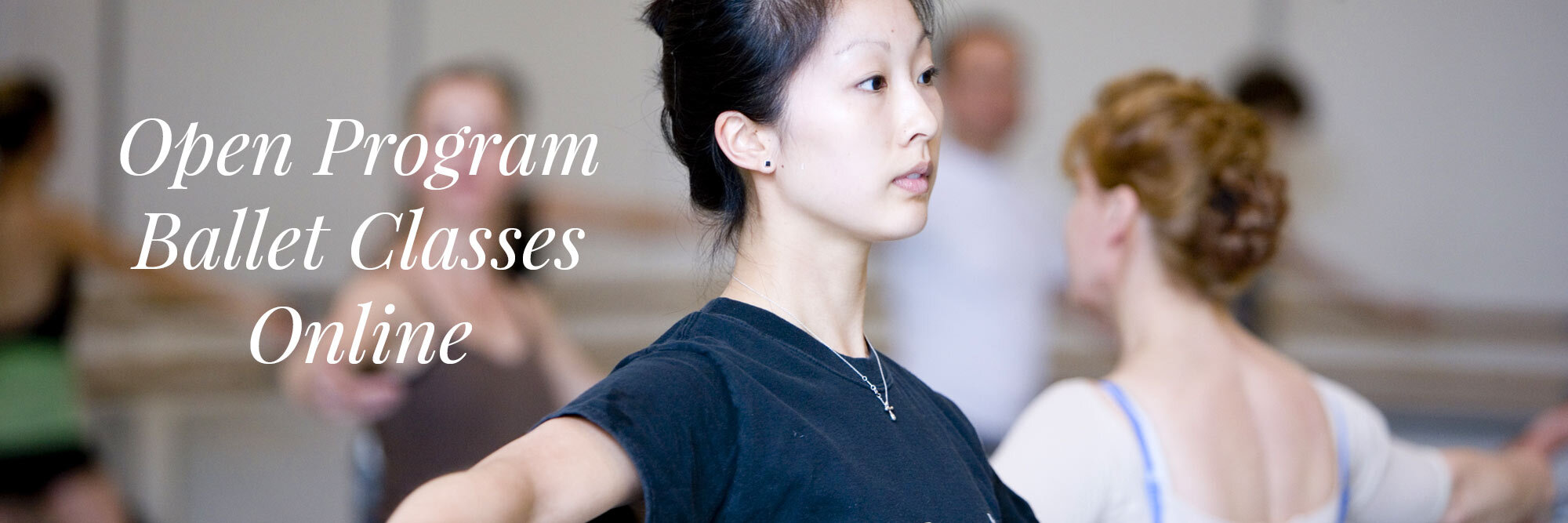
Photo Credit: Pacific Northwest Ballet
Also, since I didn’t have a lot of space to dance at home, I shifted my focus to forms of exercise that could supplement my dance training but didn’t take up much space, such as yoga and pilates. Focusing more of my attention on cross-training and strengthening important dance muscles improved my technique in ways I never imagined possible. In high school, cross-training was something I had trouble fitting into my busy schedule. However, as an adult with more control over my schedule, I was able to carve out time to cross-train and witness my technique improve in ways that were once unfathomable.
It’s safe to say that there are ways to help maintain our strength and technique when dancing as adults, due to open classes, online resources, and cross-training, but what about performing? Performing on stage was one of the parts of dancing that was most enjoyable to me. The sheer adrenaline rush, thrill, and pride that comes with dancing in front of a live audience is simply unmatched. Eager to keep this aspect of dancing in my life, I auditioned for a small, local dance company and was fortunate enough to get in! Auditioning for a professional company is understandably daunting to many folks; however, there is a plethora of dance in Seattle, and many artists who are looking for bodies to choreograph on. There is no harm in putting yourself out there and seeing what you get in return, it might surprise you.
Aside from performing on stage, there are also many peripheral ways to get involved with the dance community. Whether it’s graphic design, costuming, artist management, or music production, the possibilities are endless.
This myth that we must abandon our passions when we turn 18 is invasive and toxic. We are the architects of our own lives, so there’s no reason why we shouldn’t continue doing the things that bring us happiness into adulthood. Being joyful and having fun shouldn’t just be relegated to our youth. As adults, we have so much to contribute to our dance community and so much we can learn. Whether it’s pursuing a full-time position in a dance-related career or simply taking on a weekly open class, why not take the leap and see what’s possible.

Envisioning Representation: Julius Juju Flores Shares His Vision for Artistry in Motion
Artistry in Motion (AIMco.) is an up-and-coming local dance company, founded in 2020 during the COVID-19 pandemic by Julius Juju Flores. AIMco. features mostly commercial dance, focusing on athletics and a showcase feel. As Julius likes to say: “it's a dance company but we're so much more than that.” On July 25th, AIMco. is having its live show “Artistry in Motion Collective: FROM THE TOP!” which will be a celebration of many dances and art forms, including wacking, voguing, and drag. Tickets are available here.
By Emma Neilson DWC Blog Contributor

Photo Credit: Sean E. Nyberg
Artistry in Motion (AIMco.) is an up-and-coming local dance company, founded in 2020 during the COVID-19 pandemic by Julius Juju Flores. AIMco. features mostly commercial dance, focusing on athletics and a showcase feel. As Julius likes to say: “it's a dance company but we're so much more than that.” On July 25th, AIMco. is having its live show “Artistry in Motion Collective: FROM THE TOP!” which will be a celebration of many dances and art forms, including wacking, voguing, and drag. Tickets are available here.
Julius began dancing at the age of 15 at an after-school program. Julius had a hard childhood, and dance served as a coping mechanism and an escape from reality. He mentions that his early dance path was made easier because he was exposed to many male dancers his age and color.
After a while, Julius joined the Honolulu Dance Performing Company that offered him a full-ride scholarship whilst in high school. The following year he traveled to Los Angeles, California where he participated in an intensive and competition. In 2008, Julius was accepted to and began attending California Pacific College of Performing Arts. It was here that Julius received his BFA after training for two years and touring for two more. When speaking about the touring aspect of the program, Julius says “we would travel all over the world and do outreach programs to youth… It was a [really] great experience. We got to work with unfortunate kids who didn't have much, we got to work with kids in juvie… we were just trying to change perspective[s] for all these kids through dance and music…”
“I think I found myself. That’s my biggest gain. You know, we all go through that path of just not knowing who [we] are, and I think I definitely found myself and found who I am and what I can really do. ”
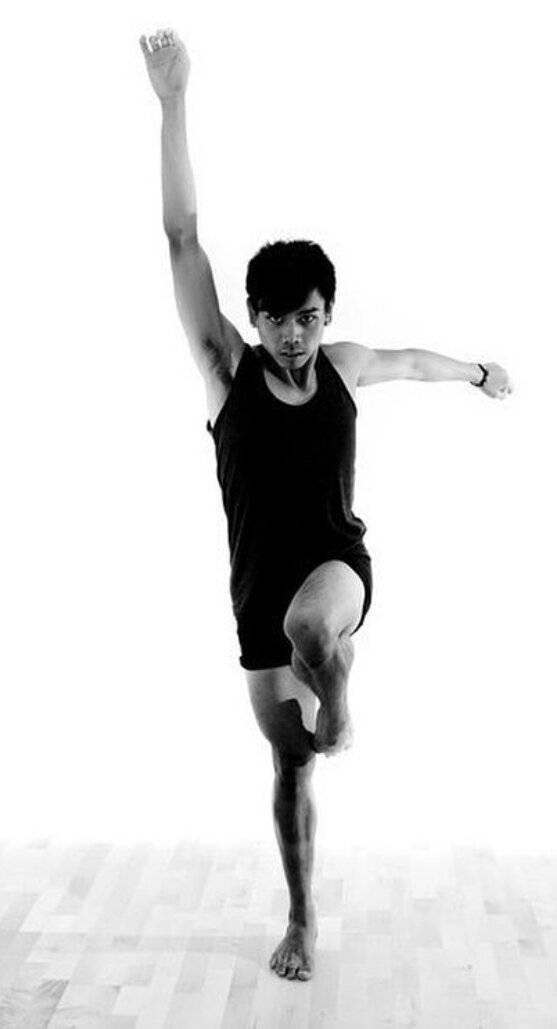
Photo credit: Sean E. Nyberg
Julius later moved back to Hawaii to work as a co-director at his old dance studio, where he also took on the competition team. He eventually moved to San Francisco, where he participated in Alonzo King LINE’s professional training program for a year. After this “pretty amazing” experience, Julius relocated to Seattle, WA, where he has been based ever since.
When asked what he has gained and what the biggest takeaways from his extensive years of training are, Julius replies “I think I found myself. That's my biggest gain. You know, we all go through that path of just not knowing who [we] are, and I think I definitely found myself and found who I am and what I can really do.”
Julius says that he found his passion for choreography while he was based in California. He mentions that he often had the opportunity to assist instructors. When talking about his tour experience, Julius says “I think that's when I fell in love with just creating and teaching… and then [that] eventually evolved [in]to doing workshops and traveling and doing competition pieces.”
Upon being asked about the origins of Artistry in Motion, Julius says “I've always honestly wanted something for my own… I was always ambitious and I always wanted to be my own boss.” He continued on saying, “…quarantine definitely was eye-opening for me because I had a lot of time for myself and it made me really realize what I wanted to do with the rest of my life and what I know I could accomplish.”
Julius describes starting Artistry in Motion as “the biggest obstacle [he’s] ever had to [take on].” Starting and operating the company was and is a huge challenge for Julius, especially because of the time he decided to start it. The arts world was going through a crisis because of the pandemic, with many companies shutting down, arts funding being cut or non-existent, performances being canceled, and more. However, Julius lists many reasons why starting a company has been worth it. From giving him a purpose to giving the underrepresented a voice, Julius wants to reach out to the community.
In addition, Julius spoke about another challenge he’s had: “finding the right support, especially during this time.” “I know everyone has their own obstacles and challenges that they all have to go through, but just finding the right community [has been difficult],” he shares. While finding support can be a challenge, especially in realms like the dance world where not everyone is accepting of all genders, sexual orientations, races, and more, Julius speaks on how open Seattle is and how supportive the arts community here is.
Towards the end of our conversation, I asked Julius to give our readers advice on starting their own company and taking creative risks. He gave a true gem of advice: “there's never [going to] be a perfect time. So you just really have to go for it.”
When asked what he wants to see change in the larger dance industry, Julius says he “want[s] the BIPOC and the LGBTQ+ [communities] to be... more highlighted… I want to highlight the individuals and the underserved communit[ies].” He shares that the hardest part of his dance training was hiding his sexuality. In the dance world, there typically isn’t male-to-male partnering and Julius wants to change that, in part by having an all-male company.
AIMco. has an upcoming show on July 25th that will heavily feature the LGBTQ+ and BIPOC communities. There will be wacking, voguing, drag queens, and a viola player, just to name a few acts. Julius is so excited to bring all forms of art to the stage, not just dance. “Dance is a universal language,” and Julius is looking forward to giving a voice to marginalized communities.

“There’s never [going to] be a perfect time. So you just really have to go for it.”
AIMco.’s Mission and Vision Statement-
WE TRAIN WITH PASSION, DANCE WITH HEART AND AIM FOR SUCCESS.

By Emma Neilson
Emma Neilson is a pre-professional dancer from Seattle, WA. She started dancing at the “late” age of 13, and decided to pursue a possible professional career at age 19. She is currently a Professional Division student at International Ballet Academy in Bellevue, WA. She is a registered Barre fitness and Flexistretcher instructor, as well as a current ambassador for To The Pointe Nutrition.
What It’s Like Being a Part of the DWC Team
Since Samantha Weissbach took ownership of Dancewear Center in 2018, our vision as a staff has been geared towards empowering local dancers through “continuous support and product education.” Whether it’s through knowledgeable pointe shoe fittings or spotlighting artists on the DWC Blog, the DWC team utilizes integrity, laughter, and grit to serve our local dance community. Being a member of the DWC staff involves much more than conducting simple retail tasks. Our staff of dancers and dance educators gains invaluable product knowledge, fundamental life skills, and joins a warm community, all while advancing the local dance realm that we know and love.
By Madison Huizinga, DWC Blog Contributor

Samantha Weissbach, Owner & Director of Operations
Since Samantha Weissbach took ownership of Dancewear Center in 2018, our vision as a staff has been geared towards empowering local dancers through “continuous support and product education.” Whether it’s through knowledgeable pointe shoe fittings or spotlighting artists on the DWC Blog, the DWC team utilizes integrity, laughter, and grit to serve our local dance community. Being a member of the DWC staff involves much more than conducting simple retail tasks. Our staff of dancers and dance educators gains invaluable product knowledge, fundamental life skills, and joins a warm community, all while advancing the local dance realm that we know and love.
Store Manager and Pointe Shoe Fitter Melissa Koh Krienke shares that what drew her to Dancewear Center was the fact that the employees all share a “common goal” to “support the dance community in this area.” She shares that through spotlighting “social justice and [physical] and mental health,” particularly on the blog and social media, Dancewear Center aims to “cultivate a dance world that is always getting better and looking forward.”
Pointe Shoe Fitter and DWC Blog Contributor Anna Peters points out that a unique aspect of the DWC staff is that we all have “pre-made connections and ties to the dance world,” which allows us to have a “connection with our customers.”
“There is a common language among the employees here, as it’s a store run by dancers, for dancers, making work a personable experience”
Melissa Krienke, Store Manager
Melissa stresses that Dancewear Center is a place where employees can learn to work through their mistakes, in part due to the support of Owner and Director of Operations Samantha Weissbach. Samantha explains that open and honest communication, grace, and empathy are values that she holds important when managing and collaborating with the DWC staff. “I am nothing without my team and vice versa, that’s how we work best,” Samantha shares.
“Sam is really supportive and helps people learn,” Melissa says. “She helps cultivate the best qualities [in you].” Staff members can hold themselves to a high standard of professionalism, yet not take themselves too seriously.
“I love Samantha,” Store Manager and Pointe Shoe Fitter Riley Hendrickson says. She appreciates how her “mental health” and “well-being” are always at the forefront of Samantha’s mind. “She’s always there for us… she’s a listening ear, even if it’s not work-related… she really just wants to help us grow,” Riley adds.
“We have the freedom to do [things] the best ways for us,” Operations Manager and Pointe Shoe Fitter Olivia Floyd says about working under Samantha. She shares that Samantha is “very fun” and “very appreciative all of the time,” and often allows the staff to “pick what [they’re] most interested in” to do.
“We’re all a family, all the staff and a lot of the customers,” Olivia says about the dynamic among DWC employees. She explains that at Dancewear Center “the work still gets done and it gets done well, but we can also...listen to a song and have a dance party in the store.” There is a great deal of comfortability among the team, like a “warm embrace.”
“We have a good balance where we can hold each other accountable in our work but still know we’re not being harsh on each other,” Riley says. “We still have lots of fun and laughter with each other.”
“There is still a lot of room to explore different interests that arise”

Anna Peters, Pointe Shoe Fitter & DWC Blog Contributor
The list of tools employees learn while working at Dancewear Center is countless. Melissa shares that getting advanced product education, particularly about pointe shoes, as a dance teacher is incredibly helpful.
“As a team, we’ve had to learn communication, which has gotten really good. We’re like a machine now,” Olivia points out. She cites time management, managing expectations, and asking for help as skills she’s developed during her time at Dancewear Center.
Riley shares that she has learned how to be a part of a team which has gotten her out of her comfort zone. In terms of technical skills, learning to work with customers, manage inventory, and utilize retail software has been incredibly useful.
Anna shares that pointe shoe fitting is “her favorite part of working at Dancewear Center.” Since she’s studying to become a physical therapist that specializes in dancers, learning how to
“properly fit pointe shoes, so that a dancer’s body stays healthy and can dance without pain for as long as possible” has been useful. She’s also grateful that she’s learned how to balance accommodation with assertiveness when interacting with customers. “Being kind and courteous and always making customers feel welcome...that’s going to be a skill I will absolutely take with me...anywhere in life,” she shares.

Riley Hendrickson, Store Manager
“Everyone has had their unique wins and growth,” Samantha says. She notes how the staff has “grown exponentially in confidence and is more comfortable making mistakes and being honest... because of the way [DWC] operates.” Samantha argues that “you don’t grow and you don’t take risks if you’re afraid of making mistakes,” so she seeks to give employees agency and compassion when it comes to decision-making. Employees become creative and curious because of the freedom they’re given to try new things and falter along the way. “People are...thinking much more outside of the box within [our] environment,” Samantha says.
All in all, Samantha strives for DWC employees to obtain skill sets that they can take anywhere with them in life. “I’m here to support every individual person’s growth,” Samantha states. She doesn’t just direct her energy on workplace goals, but assists employees in achieving their personal goals. “It’s important to me that each individual team member gets what they need out of the job,” she emphasizes.
When you join the team at DWC, you’re not just taking on a job, but becoming a part of a supportive community that can last a lifetime. “The family will stay forever,” Olivia says. “Not everything has to be serious, you can come to work and laugh. You should go to work and laugh.”
“Not everything has to be serious, you can come to work and laugh. You should go to work and laugh.”

Olivia Floyd, Operations Manager

Madison Huizinga has been dancing for 13 years, and her favorite styles are ballet and contemporary. Currently, she attends the University of Washington and is studying Communications, Business, and Dance. Madison is presently a company member with Seattle-based dance company Intrepidus Dance. She loves working at Dancewear Center because it allows her to help local dancers find the best shoes, apparel, and equipment possible to further their dance goals and careers. Dance has always been a positive creative outlet for her to express her emotions—so it’s always nice to meet members of the local dance community that relate!
Outside of dance and work, you will find Madison exploring new cafés and restaurants around Seattle, hiking, reading, and traveling.
Entering the “Conversation Lab”: Karyn Tobin and Ian Howe Share Their Dance Company Apropos Motus
Amid the COVID-19 pandemic, dancers, choreographers, and dance viewers were all separated from one another, isolated to the confines of their homes, and stripped of the opportunity to perform and do what they love. Thus, in 2021, Karyn Tobin and Ian Howe decided to launch Apropos Motus
By Madison Huizinga
Madison Huizinga has been dancing for 13 years, and her favorite styles are ballet and contemporary. Currently, she attends the University of Washington and is studying Communications, Business, and Dance. Madison is presently a company member with Seattle-based dance company Intrepidus Dance. She loves working at Dancewear Center because it allows her to help local dancers find the best shoes, apparel, and equipment possible to further their dance goals and careers. Dance has always been a positive creative outlet for her to express her emotions—so it’s always nice to meet members of the local dance community that relate!
Outside of dance and work, you will find Madison exploring new cafés and restaurants around Seattle, hiking, reading, and traveling.
Photo credit: Devin Marie Muñoz | @munozmotions (left) HMMM Productions (right)
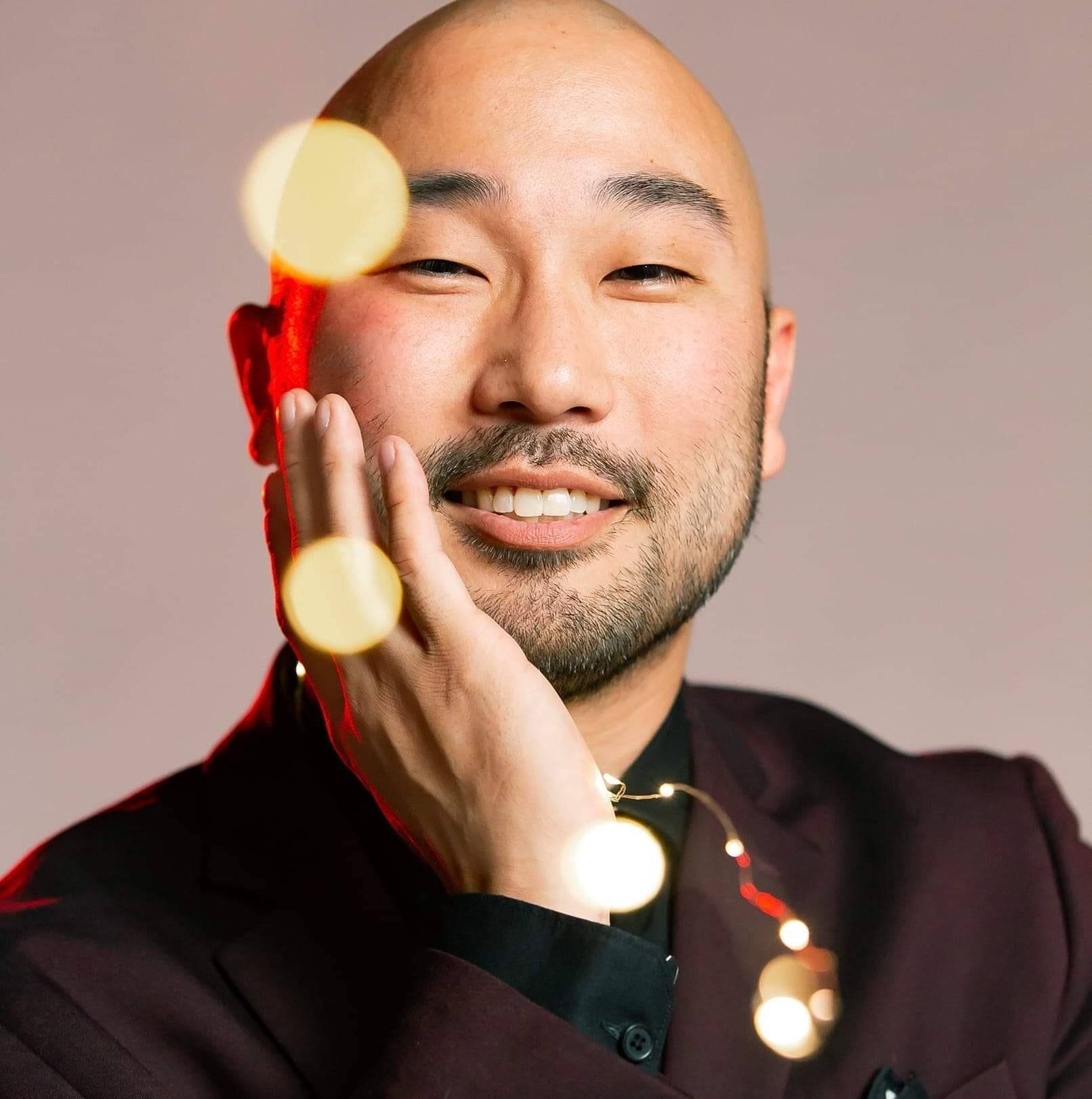
Photo Credit: Lars Myren
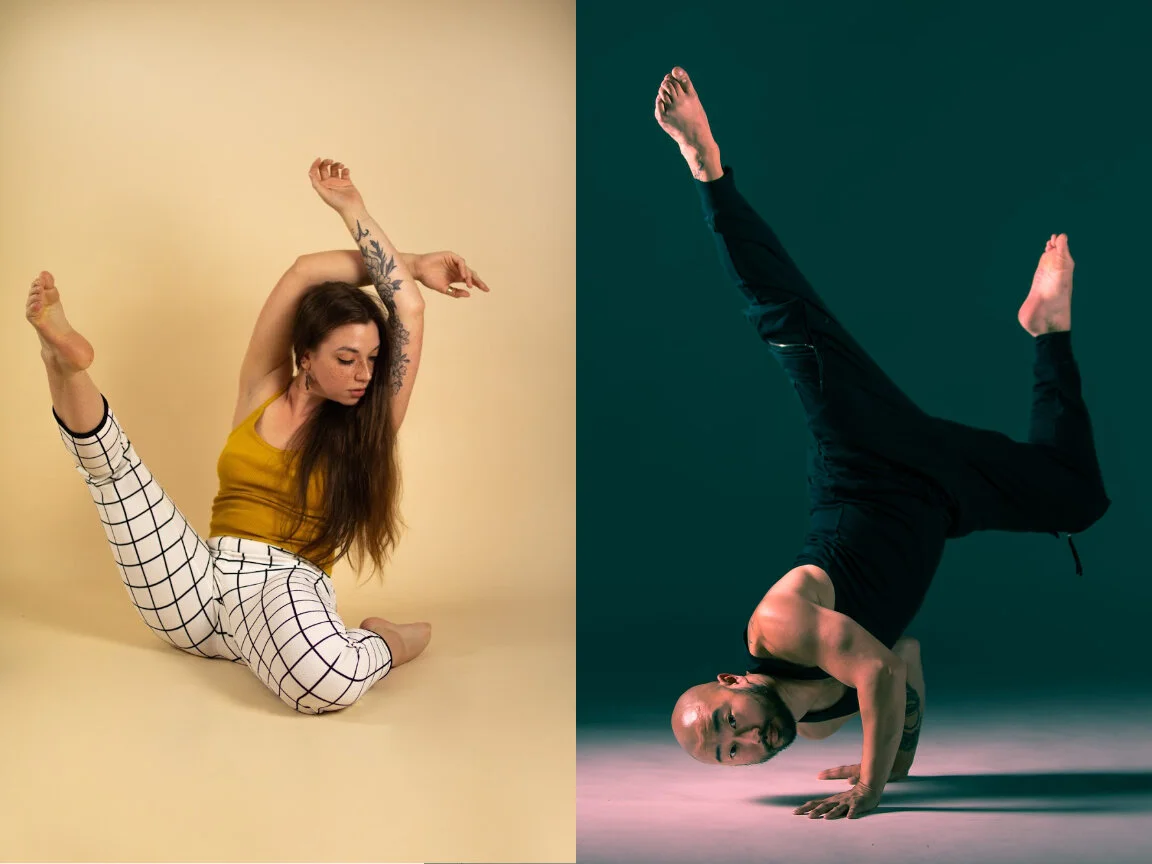
Amid the COVID-19 pandemic, dancers, choreographers, and dance viewers were all separated from one another, isolated to the confines of their homes, and stripped of the opportunity to perform and do what they love. Thus, in 2021, Karyn Tobin and Ian Howe decided to launch Apropos Motus, a dance company in the Seattle area aimed at creating work that fosters fluid, open-ended conversations among dancers and audience members. While the idea for Apropos Motus has been in the works for a couple of years, Karyn and Ian thought that the unfolding aftermath of the pandemic would be the perfect time to start a company that works to bridge gaps between individuals.
Karyn began dancing at age four with a primary focus on classical ballet training at Johansen Olympia Dance Center in Olympia, WA. She later joined the studio’s pre-professional company Ballet Northwest at around age 12, where she performed many classical and contemporary works. Following high school, she attended Cornish College of the Arts where she earned her BFA in dance. Since she’s graduated, Karyn has danced professionally with a variety of artists and companies, including 3rd Shift Dance, Hypernova Contemporary Dance Company, and The Guild Dance Company.

Photo credit: Devin Marie Muñoz | @munozmotions
Ian recalls his love for dance beginning at age five when he saw Savion Glover tap dance on Sesame Street. He began dancing at a small studio in Woodinville, WA, and later moved to Backstage Dance Studio where he was heavily involved with competition dance. While he began his training in tap, he soon began training in every style Backstage had to offer. After he graduated from high school, Ian worked as a dancer and singer on the cruise line Holland America Line for about eight years. In 2011, Ian moved back to Washington and began teaching, choreographing, and performing. In 2018, he became the owner and artistic director of Pacific West Performing Arts, a dance studio located in Snohomish and Lake Stevens.
Both dancers felt a strong pull to the art of dance as young adolescents. Karyn explains being drawn to dance due to its potential to express and “communicate deeper things that [she] wouldn’t in just a verbal conversation.”

Photo credit: Brett Love | @eruditorum.co.uk | https://www.eruditorum.co.uk/
The pair met around 2017 when they were both working with the same dance company. The two soon became familiar with the other’s movement style, got used to performing with one another, and a friendship blossomed. About two years ago, the duo met for dinner and began throwing around the idea of putting together some sort of dance project. Karyn and Ian went back and forth about what a dance company would like for them, how they would organize it, and more. Since then, their brainstormed ideas have evolved into a concrete company: Apropos Motus.

Photo Credit: HMMM Productions
The name of the company itself holds a particular significance to Karyn and Ian. The duo didn’t want their company’s name to just function as a label, but rather carry meaning itself. “Apropos” refers to being “both relevant and opportune,” while “motus” derives from the Latin movere meaning “to move” or “set in motion.” Fittingly, Karyn and Ian saw 2021 as an “apropos” time to create a company that disseminates the art they want to see in the world, specifically in the aftermath of COVID-19.
Apropos Motus is currently working on solos, and perhaps duets and trios, as well as simply workshopping choreography on one another. With various COVID-19 restrictions lifted, the company plans to eventually shift to producing large-scale live shows. However, in the meantime, Apropos Motus will film their dance works.
Apropos Motus’ focus will be “ever-evolving”; Karyn and Ian reject the idea of fitting the company into a rigid, predefined box, as that can feel limiting. During the pandemic, Karyn points out how conversations among artists were largely limited. She identifies how we’ve all understandably “retreated into ourselves more than ever.” Through Apropos Motus, Karyn and Ian hope to bring people back together and stimulate conversations that have been limited. They wish for their company to function as a “conversation lab” to “bridge the gap between people right now.”
Ian shares that Apropos Motus wants to be “fluid with what [they] present, how [they] present it, and who [they] present it to.” The pair wants the themes people take away from their works to be varied, open-ended, and largely up to the viewers’ perceptions. Removing control of what the audience takes away from its art will allow Apropos Motus to function as an “open-ended experiment” that rejects singularity and embraces complexity.
An Interview with April Giangeruso of Chameleon Activewear
For as long as April Giangeruso can remember, she’s been drawn to fashion. Whether it’s everyday, streetwear, or fun, printed dancewear, she’s never associated with one particular aesthetic over another, but describes her wardrobe as a “mix and match of all kinds of clothes.”

By Madison Huizinga
Madison Huizinga has been dancing for 13 years, and her favorite styles are ballet and contemporary. Currently, she attends the University of Washington and is studying Communications, Business, and Dance. Madison is presently a company member with Seattle-based dance company Intrepidus Dance. She loves working at Dancewear Center because it allows her to help local dancers find the best shoes, apparel, and equipment possible to further their dance goals and careers. Dance has always been a positive creative outlet for her to express her emotions—so it’s always nice to meet members of the local dance community that relate!
Outside of dance and work, you will find Madison exploring new cafés and restaurants around Seattle, hiking, reading, and traveling.
PICTURED: April Giangeruso, ABT Ballerina & Creator of Chameleon Activewear
Click Below to Shop the Look:

CLICK BELOW TO SHOP THE LOOK:
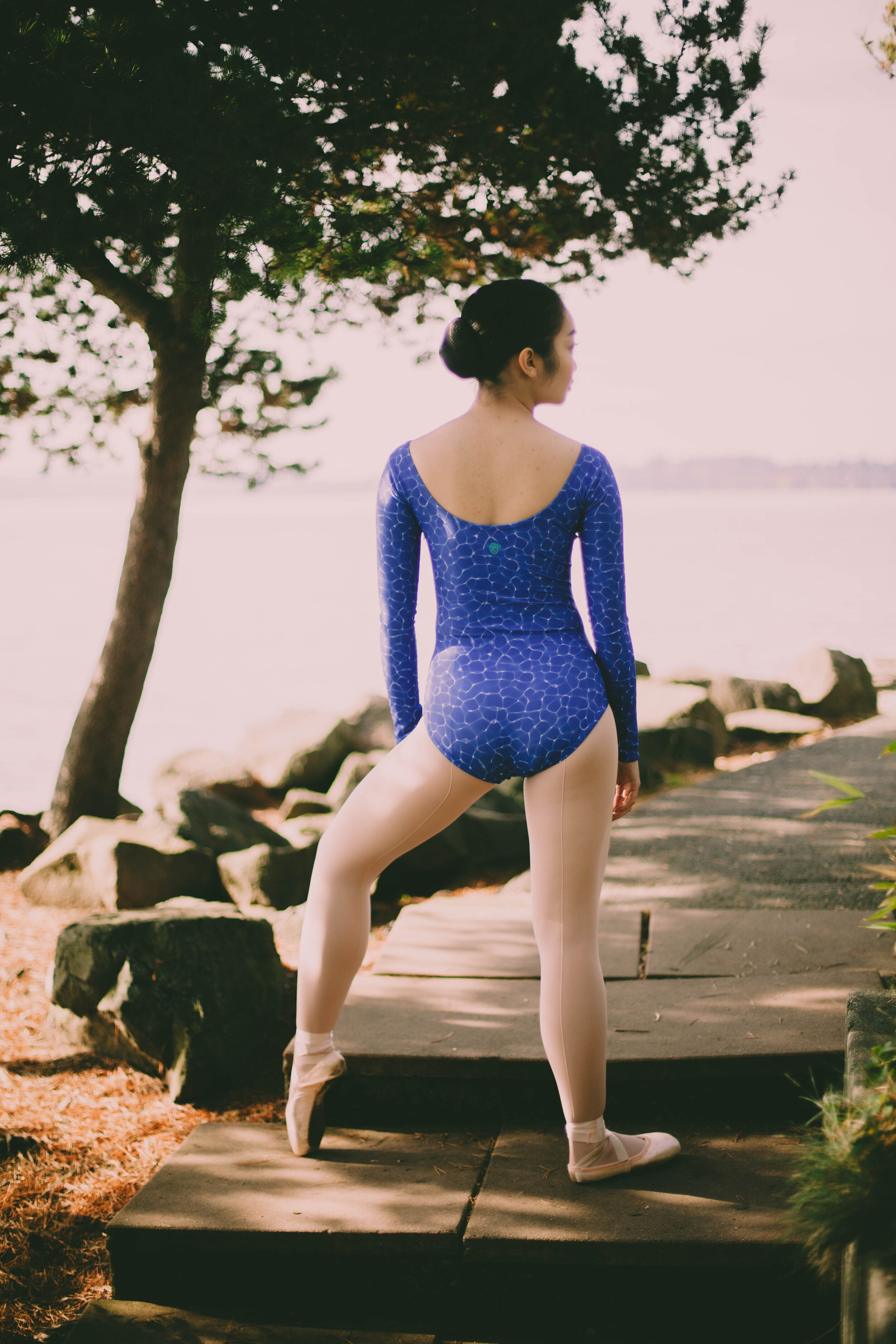
For as long as April Giangeruso can remember, she’s been drawn to fashion. Whether it’s everyday, streetwear, or fun, printed dancewear, she’s never associated with one particular aesthetic over another, but describes her wardrobe as a “mix and match of all kinds of clothes.” When she and her mother began a simple sewing project, creating unique printed leotards for her fellow American Ballet Theatre dancers, it was a mere extension of her infatuation for fashion. But, over time, this ABT-exclusive line of leos transformed into the inventive activewear brand, Chameleon by April Giangeruso, featuring a one-of-a-kind, patented line of leotards with interchangeable sleeves.
April began her dance career early in her life in Maryland at a local studio, where her instructors indicated to her parents that she may have a future in professional dancing. At age 10, April got more serious about dance. She trained at The Kirov Academy of Ballet in Washington, D.C. for four years before continuing her training in New York. At 16 years old, she joined the ABT Studio Company (formerly known as ABT II), a junior company at American Ballet Theatre, one of the most distinguished dance companies in the world. Just two years later, she joined ABT’s main company, where she’s been ever since.
A few years back, April and her mother, Kathy, an award-winning seamstress, decided to work together to create a handmade leotard. Kathy was nervous, she had sewed plenty of everyday streetwear and worked with conventional materials before, but had never experimented with a leotard fabric. However, over the following six months, the pair worked tirelessly to perfect a simple, but flattering leotard cut that is now a Chameleon staple.
CLICK BELOW TO SHOP THE LOOK:
Kathy began making leotards for April and as she wore them to rehearsals, more and more ABT dancers began asking where she got them from. April informed her mother of how much the ABT dancers loved her leotards and suggested she make some more for the dancers in her free time. Kathy ended up creating 30 leotards, which April planned to sell in the ABT lounge. To her surprise, the leos sold out in just two minutes. The next week, hordes of dancers showed up to classes and rehearsals donning their “mom-tards,” a term the ABT girls coined to reference April’s mother creating the leos. The dancers were infatuated with the bold, vibrant prints that Kathy used, as well as the complimentary cut of each garment.
In May of 2019, April officially launched the activewear brand Chameleon by April Giangeruso, where she began selling classic, camisole-style leotards in the bright, colorful patterns that the ABT dancers fell in love with. The name “Chameleon” comes directly from the dance world, referencing a dancer who can transform through different styles of dance. “It’s a label a dancer wants,” April insists.
April seeks inspiration for her Chameleon creations from an abundance of sources, but her fellow ABT colleagues certainly play a big role. Many of the leotards are even named after ABT dancers themselves, such as Principal Dancer Isabella Boylston for “Bella’s Holy Meow” leotard. April follows popular fashion trends to help inform her new designs, but ideas also strike her in unlikely places, such as when she’s lying awake in the middle of the night. Ultimately, what Chameleon has become is a love letter to April’s dual passions for bold fashion and dancewear.
When the COVID-19 virus hit the U.S. in early 2020, April was naturally worried about how the pandemic would affect her small business. With dance studios closing, she feared people would be less eager to purchase Chameleon leotards. But fortunately, Chameleon was able to not only survive but thrive throughout 2020. “People wanted leos to brighten their moods,” April recounts. During such a tumultuous time of dismay and stress, it isn’t hard to see why dancers would want to reach for lively and vibrant leotards to bring them some joy.
Recently, Chameleon has introduced an ingenious patented line of interchangeable sleeve leotards. Each of these leotards features long sleeves that can easily zip off when dancers get too hot or simply when they want to change up the look of their leos. Moving forward, April sees the brand delving more into different types of activewear that carry the same colorful Chameleon spirit.
If April were to choose one word to describe her work with Chameleon, it’s “fun,” and that certainly comes across. In an industry that often values uniformity and sameness, Chameleon provides an opportunity for dancers to step out of the crowd and celebrate their individuality. The uniqueness of these leotards isn’t just on the surface, as April explains that numerous dancers have written to her saying Chameleon’s leos help them feel more confident when dancing. Her greatest wish is that Chameleon products help dancers feel more beautiful and enhance their confidence in the studio.

CLICK BELOW TO SHOP THE LOOK:
At the start of April’s journey, questions and “what ifs” constantly rolled through her head. She kept convincing herself that her dream of creating Chameleon was impossible to make a reality. But a simple sentiment that her husband voiced to her pushed her to try to make it happen: “what do you have to lose?” She explains that the road that’s taken her to where she is today wasn’t smooth, there were challenges and not everything was perfect. But if she hadn’t taken a chance, she wouldn’t have been able to create Chameleon and share her awe-inspiring designs with anyone outside of the ABT lobby. So her advice for anyone with a big dream is the same simple sentiment: “if you have an idea, try it, you don’t have much to lose.”
Shop leotards from Chameleon by April Giangeruso at Dancewear Center today!
Dancing With Anxiety
I was diagnosed with anxiety in 4th grade but, honestly, I know I experienced it before then. All my life I have tried to control situations and be very prepared so last-minute situations wouldn’t rattle me. It was hard for me to be spontaneous, and I worried about not living up to other people's expectations.

By Emily Los
Emily Los has been dancing for 7 years, primarily at Cornerstone Studio in Bellevue. She has studied Jazz, Contemporary/Lyrical and Ballet/Pointe. She has participated in Cornerstone Company (captain 2018-19), compete team and the pre-professional program. In her free time she enjoys cooking, painting and spending time with her dog, Bailey.
Medical Disclosure: Dancewear Center does not claim to have any medical expertise on any circumstances or diseases discussed. This is Emily’s personal experience and opinions. If you need help see the resources listed at the bottom of this post. If you or someone you know needs immediate medical attention, call 911.
Trigger Warning: Anxiety

Dancing with Anxiety
I was diagnosed with anxiety in 4th grade but, honestly, I know I experienced it before then. All my life I have tried to control situations and be very prepared so last-minute situations wouldn’t rattle me. It was hard for me to be spontaneous, and I worried about not living up to other people's expectations. Before I was diagnosed, I did not have the words to communicate my feelings, but now, I am learning to identify situations that cause my anxiety, and I have been given “tools” to be able to manage them. All that being said, I am still a work in progress.
At 10 years old, I signed up for a dance class at Cornerstone Studio in Bellevue. I didn’t know much about dance at the time, but I wanted a new experience. Fast forward a year, being at the studio with friends and teachers felt like a safe place. This was the start of my passion for dance. I joined the performing company, which helped me learn how to dance in front of different audiences, work in a group setting, and build relationships and life skills. It is a commitment that requires responsibility, collaboration, and accountability. This team makes me feel supported and not alone with my anxiety.
This was also my first year of Nutcracker. We started rehearsing in September and my mom and I were doing our best to manage the rehearsal calendar along with the regular class schedule. Any parent would understand, whether it is sports, school, or dancing, managing schedules can be hard and unintentional mistakes happen. Picture this: we had a performance earlier that day then a Nutcracker rehearsal that evening. It was the “in-studio dress rehearsal'' but my mom forgot to make a note on our calendar to remind us it was a dress rehearsal. We arrived 10 minutes before rehearsal started and as we pulled up to the studio, everyone was in costume with hair done up. I turned to my mom and immediately started tearing up, “Mom, it’s dress rehearsal and they are going to be so mad at me.” I felt my stomach drop and I started getting anxious and agitated. I had to go into that studio, as the only one not in costume. I was so embarrassed and stressed out because I was the only one who messed up. When I walked in the door, everyone knew how horrible I felt and they were very understanding and comforted me and told me it was okay. It took a while to get over that moment, but I will never forget the feeling I had when I knew I messed up and felt the fear and anxiety. I vowed that I would never let that happen again, so I started being over-prepared for everything. I have discovered this has its pros and cons, and I am still learning how to manage my way through situations.
Dealing with Criticism & Comparison
Like any learning environment, in dance there will be corrections, observations, and criticism directed at the dancer. This can be hard to manage, and some days are harder than others. For me, every day is different, depending on what happens before I step into the studio. Even though I tell myself to “leave it at the door”, sometimes the criticisms pile up in my head alongside thoughts about outside situations and become overwhelming. When stress and tension build up, I tend to get very quiet and try to recover from the panic and anxiety without showing any expression. It can be hard to get through class, but I don’t want to be rude and interrupt or draw attention to myself. Even though I know my teachers and classmates would understand, in the moment I feel alone and paralyzed. When I feel overwhelmed, I tend to compare myself to other dancers, thinking, “I am not good enough and I will never figure out this skill”. When there is a buildup of emotions like this, sometimes I can continue on with the class and overcome the negative thoughts, but other times my only goal is to just get through the class.
So how do I cope? I practice some of the techniques that my therapist and I work on. We discuss potential scenarios, real and/or anticipated. We walk through “worst case scenarios” and tools to handle stressful situations. Here are some examples:
Positive Intent - Imagine your dance class going well, and remember feedback comes from a place of improvement rather than criticism. I visualize myself changing the movement and executing it well, this helps me remove the feeling of judgement from the feedback.
Lock it Away - After a stressful day at school, I need a way to step into the studio with a clear and positive mindset. One of the tools I use is to imagine a container with a lock (mine is a dark wooden chest). The container can be any size, shape or color, and only you can open the lock. I put things inside when I don't want to think or worry about them for a while. I can then deal with the contents of the container when I am ready (for instance, after dance class).
“I always feel as if a weight is off my shoulders when I communicate to see if there might be a problem or miscommunication.”
Triggers within Collaboration
Being part of the Company, Compete Team, and P3 (our pre-professional program) has been an amazing life experience. The mix of responsibility, community, friendship, dependability, and fun gives me a sense of belonging and acceptance for who I am. My anxiety usually lowers when our team collaborates while rehearsing and performing. On the flip side, it can heighten when rehearsals get out of control or go in the wrong direction. It can be frustrating and nerve wracking when there’s a deadline for completing dances and cleaning up choreography. At times like this, I have to remind myself it is not my responsibility to manage the entire team, just to do my very best to manage myself and keep my anxious feelings at a lower level.
As an example, when our team is making a dance that we choreograph ourselves, it can be exciting to share our visions and bounce ideas off each other; however, it can also be difficult not to talk over one another or shoot down another person's idea. Normally, I like to help resolve misunderstandings; but my anxiety heightens when I feel I am not heard or I don't want to be rude and talk over someone else. After rehearsals like this, I tend to feel frustrated and second guess myself. Should I have taken a step back and let other people take control? Did I come off as controlling or irritating? I am still working on developing the skills to be a better teammate and collaborate productively; however, here are some examples of what I currently practice:
Practicing Self-Awareness - Being able to have a sense of where you stand in the group, how you can participate while allowing room for suggestions from others. After some rehearsals (depending on how they go) I will reflect on how I engaged with the group and if I made a negative impact towards someone specific or the whole group. I usually reach out to see if I came off in a certain way from a comment or question to clear the air and allow an open conversation. I always feel as if a weight is off my shoulders when I communicate to see if there might be a problem or miscommunication.
Encouraging Conversation & Open Communication - To bring others into the conversation and including everyone is a critical piece to open communication and collaboration. One technique I like to use to bring others into the conversation is asking, “what was your idea?” or “were you going to add something?”. This encourages more than one person to talk and keep the environment collaborative.

The Benefits of Dance in the Context of My Anxiety
Every day, I try to be intentional in my thoughts and actions. The majority of the time I am balanced and in control, but my anxiety can return quickly. I refuse to let it get in the way of something I love and want to continue throughout my life.
As I progress through my dance journey, I continue to remind myself that I am learning. I can now identify (most of) my anxiety triggers and I can use movement to cope with my anxious feelings. My dance teachers, mom, friends and the dance community give me space to be creative without judgement, which fills me up with positivity and encouragement.
Resources
Therapy has been very beneficial for me. Seeking help from a trained professional is not something to be ashamed of, and you don’t have to be diagnosed with any mental health struggles to go to therapy. I also encourage you to reach out to teachers, friends and family for help with any situations.
Mental health resources for Washington State :
Getting to Know the Creator of Girl Power Sport: Lisa Fairman
Earlier this month, I had the amazing opportunity to sit down and chat with Lisa Fairman, founder of Girl Power Sport. They are a local gymnastics, dance, and activewear brand based in Vancouver, Washington with most of their materials sourced from Portland, Oregon. When asked about how her brand started, it was clear Lisa has been surrounded by the arts and sports community for a very long time.

By Emma Neilson
Emma Neilson is a pre-professional dancer from Seattle, WA. She started dancing at the “late” age of 13, and decided to pursue a possible professional career at age 19. She is currently a Professional Division student at International Ballet Academy in Bellevue, WA. She is a registered Barre fitness and Flexistretcher instructor, as well as a current ambassador for To The Pointe Nutrition.

Earlier this month, I had the amazing opportunity to sit down and chat with Lisa Fairman, founder of Girl Power Sport. They are a local gymnastics, dance, and activewear brand based in Vancouver, Washington with most of their materials sourced from Portland, Oregon. When asked about how her brand started, it was clear Lisa has been surrounded by the arts and sports community for a very long time. From participating in ballet, soccer, and theatre herself, to having two daughters in dance and gymnastics, Lisa has first hand experience with what one would want out of this type of apparel. In addition to this, Lisa previously worked for Nordstrom and Zulily, and while there, recognized the demand for and lack of vendors and products on the market. After parting ways with the corporate world, Girl Power Sport was born!
When asked about her transition from buying to manufacturing, Lisa was candid about how difficult it was at first. Though she had years of experience in the fashion industry, she said it was a shock and an eye-opener to see how different things were on the other side. She mentioned how humbling it has been to go through rejection from buyers and retailers and gave some guidance to those who are looking to start their own business:
“So I would say first of all, just whenever you jump into something new, especially with manufacturing and retail, I would say just be open, you know, be open to learning from other people.”
Her biggest piece of advice is being able to pivot and change your business and plans, especially now with COVID-19 making an impact on everyone.
I personally think part of navigating entrepreneurialism includes making sure you have aspects of your brand that will set you apart from the rest, and there are several ways Girl Power Sport achieves this to bring gymnastics wear to the next level. Currently, most of their prints are custom, and Lisa is hoping as time goes on that all of their prints will be custom. The prints are lighthearted, fun, and fresh. They take into account what customers like and try to incorporate humor and encouragement into that, to create something that you will not only feel good in, but might make you smile along the way. They also have coordinating activewear sets to pair along with some of the dance and gymnastics wear.
It doesn’t stop there- Girl Power Sport is very involved with the local community and is committed to donating $1 to charity with each purchase. Lisa was born with a heart condition which resulted in years of health problems and several surgeries. She is an “unusual” case, as she is now healthy, active, and a seasoned runner. Because of this, Girl Power Sport routinely donates to the cardiology fund at Seattle Children’s Hospital. Lisa is truly an inspiration having successfully integrated her personal life experiences and passions into something that is ultimately impacting others as well.

We are so proud to be working with Girl Power Sport, and are greatly aligned in our morals and missions. We want to empower girls and women, serve the local community, and above else believe that movement is for everyone! Lisa said “We strive to be an all around fit… I just felt like dance and gymnastics should be accessible to everybody… No matter what your size. [We] want people to feel like anybody can do dance… you can be any age and be a dancer.” And as some of you readers may know, one of our mantras here at Dancewear Center is “Every body is a dancing body.” Sadly, this sentiment is not shared by the dance and gymnastics world at large, and together we are working to change that and spread this message.
When asked about what other changes she would like to see, Lisa replied saying “I would love for dance and gymnastics to be more accessible [to] ... inner cities and… people who can't pay and lower income families.” She went on to talk about the importance of afterschool programs and recognizing that dance and gymnastics is “...such a healing thing for communities…” She also briefly talked about how much she loves “...the mentorship that goes on with dance and gymnastics with the coaches and the kids… because you spend so much time together. They're just these crazy bonds and I just love that sense of community...” We couldn’t agree more, and along with Girl Power Sport, are here to support these athletes and artists, their parents, teachers, and everyone else in between.
Because it is Mental Health Awareness Month, it was only fitting that Lisa and I chatted about her struggle with anxiety as well. I asked her about her experience and how she manages it, and she had many helpful things to say. She said that a large part of her journey has been “learning how to be living in the present and not… fixate on the past and not stress too much on the future.” She also said she has been learning to be still with herself and how to “reset”. Some coping skills that have helped her include journaling, meditation, and reframing your anxious thoughts. She says she is working on being able to show up in terms of work and business management and at the same time staying centered. This is the art of balance and we both agreed that it is so important to remember that it’s a journey and there is no such thing as perfection!
You may be asking, what is coming next for Girl Power Sport? Lisa said they are currently working on putting together a second production team based in Seattle, WA. Lisa also emphasized how much she values staying local, at least for right now. She prioritizes good working conditions, fair wages, high quality, made in the US, handmade products- all of which is achieved by her hands-on management style. Because of their locality, custom orders are easily produced as well! Lisa and the whole Girl Power Sport team take pride in what they produce, and they love being able to “...share our love with you.” And now, we are able to share it with you too!

“All of us get creative in all different ways to make our dream a reality.”- Lisa Fairman
Click here to listen to a more in-depth interview with Lisa about her personal and professional life story!-
Girl Power Podcast
Available to purchase now in-store and online at https://www.dancewearcenter.net/ and https://girlpowersport.com/
Getting to Know DWC Staff Member Melissa Koh Krienke
Melissa Koh Krienke is a dancer, teacher, and artist here in the Pacific Northwest. She started dancing ballet at the age of 3 and her passion grew from there. Melissa trained through high school with Ballet Chelsea and got her BFA in dance from Cornish College of the Arts. She has performed with

By Samantha Weissbach
Samantha Weissbach is a dancer, choreographer, and business professional born & raised in the Pacific Northwest. She has been dancing since the age of 2, and continues to dance and teach ballet and pointe professionally in the Greater Seattle Area. Samantha has trained at numerous establishments and programs; however, her primary training was received at Cornerstone Studio, Ballet Bellevue, and Emerald Ballet Theatre.
Currently, she serves as Executive Director of Intrepidus Dance, and is a company member with Intrepidus Dance and Forthun+Rome Dance Theater.
PICTURED: Melissa Koh Krienke, DWC Staff Member
Photo By:
Melissa Koh Krienke is a dancer, teacher, and artist here in the Pacific Northwest. She started dancing ballet at the age of 3 and her passion grew from there. Melissa trained through high school with Ballet Chelsea and got her BFA in dance from Cornish College of the Arts. She has performed with Beth Terwilliger, Converge Dance Festival, the Chihuly Garden and Glass, Dance This, Bridge Project, Tint, PRICEarts N.E.W., Forthun+Rome Dance Theater, Intrepidus Dance, Seattle International Dance Festival, and Carnegie Hall.
Melissa is now dancing professionally; teaching Ballet, Pointe, and Contemporary; and is a co-founder of Trillium Dance Collective in Seattle.
In her free time Melissa enjoys board games, reading, and snuggling with her black cat, Mochi.

Photo by Catlyn Griswell
What excites you the most about joining the DWC team?
I'm excited to join this wonderful group of people supporting the dance community in the PNW! DWC's dedication to inclusivity is important and a huge part of why I wanted to join the team. (Plus Samantha is, like, super cool) ;)
Why & when did you begin dancing?
I started dancing when I was three. My dad took me to see a production of the Nutcracker and apparently I was so entranced I wanted to start Ballet immediately!

Click Below to Shop the Look:
Flexistretcher in Black by FLX | She's Tenacious Leotard by Russian Pointe
What styles of dance do you specialize in?
I've trained in Ballet and Pointe my whole life, but grew to love contemporary/modern dance in college. Contemporary is how I like moving the most now, but I still teach and have a special place in my heart for ballet.
Who is your dance icon and why?
Honestly, right now I don't necessarily have one. I'm feeling very inspired by the little things lately--dancers who I see supporting each other and giving themselves grace during this crazy time--by making art, or taking a break!
If you could give advice to your younger self, what would you say?
Take a second and breathe. You don't have to have everything figured out right this second. Try to be comfortable not knowing everything!
To read more about Melissa, check out the links below!
Refilling the Creative Well and Excavating Creativity: How to Hold on to Inspiration and the Motivation to Dance
I have two terms for you: Refilling the creative well and excavating creativity. Two concepts in the ever-frustrating realm of inspiration, motivation, and creativity…

ANNA PETERS HAS BEEN DANCING FOR 10 YEARS, AND IS CURRENTLY A STUDENT AT THE UNIVERSITY OF WASHINGTON WHERE SHE IS STUDYING BIOLOGY AND DANCE. IN ADDITION TO GOING TO SCHOOL, ANNA PLANS TO CONTINUE TEACHING BALLET IN THE GREATER SEATTLE AREA. IN HER SPARE TIME, ANNA ENJOYS RE-READING HARRY POTTER (FOR THE BILLIONTH TIME), BINGE-WATCHING ALL OF THE SPIDERMAN MOVES, SINGING LOUDLY TO HAMILTON, AND PAINTING AND PHOTOGRAPHING DANCERS.
By Anna Peters
I have two terms for you: Refilling the creative well and excavating creativity. Two concepts in the ever-frustrating realm of inspiration, motivation, and creativity.
Refilling the Creative Well: This is a term that is used a lot in writing, especially for fiction, but it works in all realms of creativity. This is the act of finding inspiration. Of going outside of yourself and drawing in new ideas. Of filling that corner of your mind that is dedicated to nurturing these ideas.
Excavating Creativity: This is a term that I picked up from one of my dance professors. Excavate. To unearth. To dig out. To reveal. Excavation implies force. It is something you have to work for. In terms of excavating creativity, it is forcefully pulling it out of the recesses of your mind, digging for it until you find it, and then bringing it to the surface so that it can be used.
I would argue that one cannot exist without the other. What use is excavating if there is nothing to be found? You can sit and think all you want, but if you are suffering from a creative block, I find that looking elsewhere for creativity tends to have faster results. You must first refill your creative well with a multitude of ideas, feelings, and concepts. Vague implications of creativity. A raw diamond. From there, you excavate. You uncover. You take your raw diamond, and you polish and cut it until it is the glittering jewel you desire.
But what happens when the creative well runs dry? When there seems to be nothing left for you to draw out of its depths? This is when you have to start refilling, which can sometimes be exhausting; because guess what? That also requires creativity.
Especially now, with perceived limits placed around our creativity due to COVID-19, refilling this creative well and excavating creativity can be difficult tasks. I’m sure I speak for all of us when I say that we are tired of being at home. We are sick of taking classes over zoom. With the vaccine slowly rolling out, there is an end on the horizon, but for now, we must do our part to keep ourselves and others safe. For many dancers, that means staying at home. We simply cannot do all that we want to do when we’re dancing in our living rooms over zoom, and this puts a huge damper on creativity and inspiration.
For me especially, I have been struggling with holding on to my inspiration and motivation to dance. My creative well feels empty. I’m not sure if there is anything for me to excavate. Yes, that is incredibly depressing, but worry not! There are things that we can do as dancers to rekindle our inspiration and find the motivation to move.
It can be hard to think of ways to find inspiration, so I have compiled a list of different activities and ideas to help refill creative wells. Some are things that I do regularly. Some are things I picked up from my dance instructors in high school and some are what I have been learning in my dance major. All are meant to be fun and freeing! So, take a look, see what calls to you. Try a few out. Replenish your motivation to dance! Refill your creative wells!
First some tips and tricks:
Watch dance:
A lot. We live in an age where we can watch dance for free on platforms like Instagram and YouTube. Take advantage of that! Watch all sorts of dance in all sorts of styles. Let yourself be inspired by them! Watch them for enjoyment, but also for learning. When writing, we talk about how if you want to get better at writing, you have to read. A lot. I think that can be applied to dancing as well. Consume exorbitant amounts of dance media. Learn by osmosis. What did you like about that last dance you watched? Is there a way to incorporate that into your own dancing? Let it motivate you to become a better dancer! And above all, let it be enjoyable!
Dance to a different type of music:
I have been having a lot of fun with this one lately. Of course, this wouldn’t really work in a class you are taking, but if you are dancing on your own it’s a fun way to shake things up. Who says you have to do a ballet class to classical music? I did the most epic waltz ever to Total Eclipse of the Heart, and not to toot my own horn, but it was glorious. Throw some rap into your contemporary improv. Try something more lyrical sounding for hip hop or breaking. Does the music still work? Is it causing you to move in different ways? All dance styles are intricately connected to a corresponding music style, but sometimes changing the music is a good way to rekindle some passion. Anything you can do that will make your typical routine different might just be the thing that helps you remember why you love to dance. Don’t allow yourself to stagnate in your dancing. Routine is important, but so is being dynamic. So is being spontaneous.
Try a new style:
This one can be tricky, especially for people who take a lot of different styles of dance. I challenge you though to look for a dance form that you know very little about and use YouTube to check out a few tutorials. You might find that you enjoy it, and you can incorporate it into your individual style for whatever your primary dance form is. For example, these past few months I have been watching a lot of lindy hop videos and learning a few moves that I can dance on my own without a partner (think Charleston/swing sort of moves). It has been a lot of fun!
Look outside of dance:
Maybe dancing isn’t doing it for you right now. That is alright. As is the case with any art, there will be times when it feels like the easiest thing in the world and times when it is a struggle to get yourself to practice. Sometimes, looking outside the field of dance can help you be inspired to dance more. Paint a mini watercolor. Do some coloring pages or a sketch. Read a book. Listen to music. Allow yourself to rest and recuperate. Give yourself time. While there is a lot we can do to surpass a creative block, sometimes, all you need is some self-care. Sometimes the best thing you can do for yourself is take a break, knowing that when you come back, you will be inspired and healthy again.
Alright, now that we have looked outside ourselves for our raw, uncut diamonds of inspiration, it’s time to excavate them. Here are some fun activities you can channel your inspiration into. I have broken down the activities into two categories: Improvisation and Choreography. Sometimes, taking a break from technique and doing some other fun dance prompts is just the thing to get you back into your creative groove and fill that well!
Improv prompts and ideas:
Prompts can range anywhere from quality of movement to giving yourself confines to work in. Here are a few that I enjoy:
Have someone else pick your music. Sometimes, you can get bogged down by your own tastes and interests. Have a friend send you a song. Ask a family member for a suggestion. And stick with it, even if it isn’t your cup of tea. This will pull you out of your comfort zone and generate new movement, thus refilling your creative well.
Pick a part of your body. Any part. You are not allowed to move that part. Now improv.
Pick another part of your body. That body part is now the initiation point behind all your movement. Feel free to try with several different body parts!
Randomly pick an animal and an adjective. You must embody this animal and adjective in your improv.
Pick four textures. Switch between embodying these textures while you improv.
Look around your dancing space. What does it look like? What objects are in your space? What is the shape of your space? Are there any windows? Doors? Kitchen appliances? As you improv, keep an eye on the space around you and try to embody what you are seeing. Also, feel free to use the space for more than just inspiration. If there is a couch, lie on it! If there is an open wall, lean against it! There are so many ways we can use our at home spaces to dance. I challenge you to think about it less as a confinement and more as an opportunity for new types of movement.
Choose an area or object in your space. It could be a couch, a corner, a water bottle, anything! While you improv, make your way to this object or area. All you want in the world is to get to that object/area, but things keep getting in the way. Try to resolve this problem by the end of your improv.
Choreography prompts and activities:
A lot of these are prompts and activities that I picked up from classes that I have taken for my dance major that I had a lot of fun doing. They are great ways to generate movement ideas, so hopefully they inspire you to do some more dancing.
Playing with space:
What is something that you can do in your at home dance space that you can’t do at the studio? What movements, if you were to take them out of your at-home space, would no longer work or no longer make sense? I think we can get stagnant when we dance in one small space for too long, so try something new in it. Do you have a porch or a backyard? Patio? Stairs? What kinds of movement can you do there that you cannot do in your at home dance space or your studio? Shake things up a bit. Find a new space to dance and see if it sparks your creativity.
Love Solos:
This was one of my favorite projects I did for my choreography class. It requires the use of a partner, so find a dance friend and meet up (socially distanced or over zoom of course). Each partner picks three to four songs that all sound very different. The goal is to generate a variety of movement qualities. Then, watch your partner improv to these songs and get a feeling for the way they like to move. After that, take a few minutes to create a short piece of choreography for your partner, a solo tailored specifically for them. Teach each other the solos you both created and have fun watching each other dance!
Playing with Music:
There are so many different ways to play with music while you dance. So. Many. Ways. Here is one that can be fun to work with. Once again, this activity works best if you have a friend to do it with. Start by listening to a random piece of music, preferably one that you have never heard before. Listen to it once, then set it aside. You will not need it again. Think about this music. What did it make you see in your mind’s eye? How did it make you feel? How did it make you want to move? Sometimes, it can help to generate a short narrative to go with it. For example, I did this exercise once and the song I listened to made me think of driving at night after it had rained, the pavement glistening in the glow of the streetlights. After you have figured something out, make a short phrase of choreography to go with the mood/feeling/narrative you picked up from the music, but without listening to the original music. It doesn’t have to be more than a couple eight counts. Perform your dance for your partner, without any music. Then, your partner will meticulously dig through their own music and find something that they think matches the choreography. Then dance your choreography one more time with the music your partner picked out. Switch roles.
These activities aren’t meant to add stress to your life. They aren’t meant to be one more assignment you have to complete or one more job you have to finish or one more exercise you have to do. They’re purely meant to be fun, because that is one of the reasons we dance, right? We dance because we love it. Otherwise, why would we put ourselves through the grueling process of creating art?
So, try some of these tricks and activities out, not because you need them, not because you cannot become a better dancer without them, but because they are fun! Because you love to dance.
Fun and enjoyment are at the heart of inspiration. You are inspired because you like something, or because you want to make something better. You are inspired because you are passionate. So next time you have a creative block, or you can’t summon the resolve to go to dance class, or you can’t seem to motivate yourself to dance on your own, think about what you love about dance. Think about why you are passionate about it. Then do what you love and what you are passionate about. Maybe that’s improv. Maybe that choreography. Maybe that’s working on a specific technical move. Whatever it is, do it because you love it. Refill the creative well because you intend to excavate.
Getting to Know the Creator of Sunday Outfitters: Juliet Prine
For professional ballet dancer Juliet Prine, creating stylish and comfortable loungewear was a way to use up her increased spare time. But what started as a simple way to take up free time transformed into Sunday Outfitters, a popular online business that sells cute and cozy clothes while supporting important social causes. How exactly did this transition happen?

By Madison Huizinga
Madison Huizinga has been dancing for 13 years, and her favorite styles are ballet and contemporary. Currently, she attends the University of Washington and is studying Communications. Madison is presently a company member with Seattle-based dance company Intrepidus Dance.
PICTURED: Juliet Prine, Founder of Sunday Outfitters
By Madison Huizinga
When the COVID-19 pandemic intensified in the United States during March 2020, the majority of dancers across the country were ordered to stay home, as schools, workplaces, stores, and dance studios shut down to prevent the spread of the virus. While quarantining, many people adopted hobbies to help pass the time. On social media, people shared pictures of the banana bread they were baking, the TV shows they were binge-watching, and the countless DIY home projects they decided to begin. For professional ballet dancer Juliet Prine, creating stylish and comfortable loungewear was a way to use up her increased spare time. But what started as a simple way to take up free time transformed into Sunday Outfitters, a popular online business that sells cute and cozy clothes while supporting important social causes. How exactly did this transition happen?
The creator of Sunday Outfitters is Juliet Prine, a professional ballet dancer at Pacific Northwest Ballet in Seattle, WA. Juliet grew up in Minneapolis, Minnesota as an all-around competitive dancer. While Juliet danced in a variety of genres, she seemed to have a particular knack for ballet, as teachers repeatedly reached out to her mother and encouraged her to send Juliet to a ballet school. Juliet decided to narrow her focus on ballet and began dancing at a strictly ballet-focused school. She trained rigorously throughout her adolescent years, even traveling to Los Angeles to study at Colburn Dance Academy. Juliet participated in a variety of summer intensives at the School of American Ballet, San Francisco Ballet, Chautauqua Institution, and Pacific Northwest Ballet School. Eventually, Juliet joined PNB as an apprentice in 2019 and was promoted to the corps de ballet that same year.
However, when COVID-19 hit the United States and intensified in Seattle, PNB shut down quickly the day before an opening night. Juliet was disappointed, as she was planning on performing “one of the biggest roles in her career and couldn’t do it.” Like the rest of the dance community, Juliet sat at home for months on end, eagerly anticipating the dance world to re-open.
A few months into this isolation period, Juliet was doing some online shopping, searching for a cute loungewear set to wear in the fall. She looked all over the Internet and couldn’t come across anything that she liked that was under $150. So, in her spare time, she decided she would try to make her own!
The first loungewear set that Juliet created was the “star set,” a sweatshirt and matching bottoms covered in big white stars. She sent the set to her sister in college, and she was obsessed. Her friends in her sorority begged Juliet to send over more and build a website. Juliet began making sets for her friends and family and before she knew it, she was building a website, something she hadn’t ever done before.
Initially, Juliet figured that she would make her loungewear sets through the end of the year and then call it quits after the holidays. She assumed she would return to dancing at PNB soon and wouldn’t have as much time to create her sets. But it quickly became clear that she wouldn’t be dancing at PNB as frequently, as the pandemic stretched into the new year. And to her surprise, her brand began taking off! Juliet was excited to see how many people wanted her products.
One of the most unique features of Sunday Outfitters is its incorporation of philanthropy. A variety of Sunday Outfitter’s loungewear sets connect to specific causes, with a portion of proceeds going to organizations that are helping advance different causes and alleviate social problems. For example, Sunday Outfitter’s “support the arts” crewneck is an adorable, minimalistic piece that features the Yoko Ono quote “art is a way of survival.” 50% of the profits made from the “support the arts” crewneck go to Pacific Northwest Ballet’s Future Fund. The “suicide awareness” line features sweatshirts that say the phrase “take it one day at a time” in a wavy font, an expression that’s especially comforting amid of a global pandemic. 50% of the proceeds from the “suicide awareness” hoodies go towards raising suicide awareness and preventing teen suicide.

Moving forward, Juliet hopes to continue bringing awareness to important causes and stories through her work at Sunday Outfitters. She is excited to continue creating new products and connecting with new causes. Her advice for aspiring entrepreneurs is simple: “just start, don’t put it off, just start it.” Juliet shares that “if you want to be an entrepreneur, you need to have that drive, and be inspired and committed.” One of the most important parts of starting your own business or creative endeavor is to make sure you love what you’re doing.
“Whatever you are going to do, don’t do it because other people are going to love it,” Juliet says. “Make sure you’re in love with it”
Sunday Outfitter’s products will be available through Dancewear Center on Sunday, March 7, so don’t forget to purchase your own cozy loungewear set then!
Interested in writing for the DWC Blog? Click below to fill out the DWC Contributor application!