
A Place of My Own: A Conversation with Ashton Edwards
Earlier this month, Director of Marketing Cherie Rendón sat down with DWC Ambassador Ashton Edwards to discuss his journey and experiences surrounding starting pointe training as a gender fluid dancer. Ashton is currently a Professional Division student with Pacific Northwest Ballet, and is one of the first dancers to be allowed to train in both male and female classes: breaking down barriers in an industry that

A Place of My Own: A Conversation with Ashton Edwards
Ashton Edwards, originally from Flint, Michigan, has studied dance since the age of four years old at the Flint School of Performing Arts. Ashton has attended summer ballet intensives on full scholarships at The Joffrey Academy of Dance in Chicago, Houston Ballet School, and Pacific Northwest Ballet. In 2018, Ashton represented Flint in the NAACP’s National Afro-Academic, Cultural, Technological and Scientific Olympics (ACT-SO) competition in San Antonio, Texas, against over 250 students of all high school grades all over the country. In the Performing Arts, Ballet dance category, Ashton came in 3rd place, winning a bronze medal. Ashton is currently a Professional Division student at Pacific Northwest Ballet.
Earlier this month, Director of Marketing Cherie Rendón sat down with DWC Ambassador Ashton Edwards to discuss his journey and experiences surrounding starting pointe training as a gender fluid dancer. Ashton is currently a Professional Division student with Pacific Northwest Ballet, and is one of the first dancers to be allowed to train in both male and female classes: breaking down barriers in an industry that has historically been divided into uncompromising female/male binary categories.
CR: What led you to start training en pointe?
AE: It was a desire I had as a child. It’s always been something I wanted to do, to just… be a pretty ballerina. So I guess it was just natural, it was just a desire as a kid. It wasn’t until I was brave enough to come out and say it that I did.
CR: Since starting your training, what challenges have you run into?
AE: One of the biggest challenges has been exhaustion. Getting back up every day, and taking ample time to rest after the long day. That’s been the hardest part: pushing, and then recovering, pushing, and then recovering - every day. We have pretty long schedules at PNB, so we are dancing all day. For me, it’s going back and forth from pointe to flat, from pointe to flat. At the end of the day, my body in so many different ways is just… worn. It’s not just your normal stretch routine, it’s my stretching, and then my icing, and then my bath. I have a new routine now--it’s just… adapting.
CR: Speaking on recovery, what have you found really works for you as far as recovery practices? What does that look like for you?
AE: I come home, and I start with a long stretch [routine]. Usually my stretch takes about 10-15 minutes. I stretch, and then I roll out. I roll out all the muscles, so I start with a tennis ball and my feet, then with my roller I go: calves, quads, IT band, hip flexors, and back. I usually go then into an ice bath--just for my feet up to my knees. Next, epsom salt bath, shower, and then a heating pad for my back--then I go to bed! Then in the morning, I have a pre-class workout I have to do because of my back. I have a really flexible back, but also that leaves me in a vulnerable position. I went through a really bad injury last December, so now I have pilates exercises that I use to prepare for my day, and then I do all of these [recovery routines] after my day.
CR: Has anything surprised you about starting dancing en pointe?
AE: I think the most surprising part… is to know how different it is. Not to say that one is harder or one is easier, but they are just so different. It’s been mind boggling switching back and forth. Just the approach of a movement or a variation has to be so different, because the work requires so many different things. At the end of the day, my entire body is just worn because I’ve been switching back and forth, from muscle to muscle. I’m just exhausted by the end. It’s been very surprising to see how different the women work. [Even the] setup of the class--the energy of the class--how competitive (it’s a lot more competitive for the women), [and] just how hardworking and determined they have to be. It’s been really surprising and interesting to see.
CR: What sort of successes have you experienced since starting your training?
AE: [Most recently] PNB has nominated me for the Princess Grace [Awards]! But also, just general day-to-day successes… it’s been really fun completing variations in both male and female work now, and just feeling--still exhausted--but more at ease. I feel like a big success generally has been how strong my technique has become, and how I feel more mature in all of my dancing now, because I’ve dabbled in so many different things and created my own type of movement. That’s been a big success I feel for me, when I dance I feel good about what I’m doing.
CR: Since you have become an ambassador with [DWC] and we’ve all followed your progress throughout the last 6 months, we’ve gotten a lot of dancers from all over the country commenting about your progress and your story, and being really inspired by what you’re doing pioneering this normalization of more men dancing en pointe in a very serious fashion. What do you have to say to those people who may want to start training like you are? Any tips, words, advice, wisdom for those people?
AE: First, theraband, theraband, theraband! Get those feet as strong as possible! After that, don’t stop. Don’t stop emailing, don’t stop contacting whoever you have to contact. You have to push yourself through, because no one is going to invite you into the room: you have to put yourself there. So I guess my biggest advice--even for moms of these children--[is] to be the biggest advocate you can for yourself. Make your own place. Reach out to me, because I love to hear it, and I also love to help! Show people what I did and what PNB is doing: what it could be! You have to keep pushing for yourself. Make sure your technique is also up to where you’re saying it is, and be realistic in what you can do! My biggest thing is, I’m not asking to be Sugar Plum--but I’m asking to be back of the line corps de ballet: and I know I can do that. So I should have the opportunity. Know what you can do, and know what should be available to you, and make it available to you.
I’ve been getting a lot of those messages, and it’s just so cool. Especially the moms who [tell me], “I have a 4-year-old son, who heard about you!” I just well up every time. I was that person! I’ve gotten that before just as a black dancer, “oh, you’re so good!” But it means a little something different now, because this is something I never would have imagined being possible, and somehow I did it. I had a lot of help along the way, but also a lot of it was just down to me. I’ve cried so many times already, I don’t know how to describe it. I can not wait to be on the other side of my career, and bring so many people with me. Things are just falling into place--it’s so exciting.
CR: I’m so thankful for social media. If this were happening 10 years ago, it would take so much more to get in front of people and to get your story told. Just the way our culture communicates now online it’s so amazing to see more peoples’ stories just being out there and available so so many more people can see others like them and realize “yeah, I can do this too!” It’s great. I think what you’re doing is very inspiring. We’ve talked before, and you know that I think of you very highly, but I'm very happy that more people are able to see people like you.
AE: I love that I get to connect with these people, I love that there is a community of people that just are so strong together. I see the same people a lot in the comments of different posts, and it just feels like we are together. We are all in one mind and one body and just pushing through this together. It’s so nice to feel so supported.
To read more about Ashton Edwards and follow his journey, click any of the links below. To help support Ashton in his training, you can donate to his GoFundMe here.
Body Shaming in Ballet

Olivia Floyd is DWC’s Operations Manager and one of our highly skilled pointe shoe fitters! She has been dancing in the Pacific Northwest for 16 years. She has trained in various styles including ballet, tap, jazz, contemporary, and hip-hop. Post graduation, Olivia opted to continue her training in ballet and pointe, and teaches creative movement, ballet, tap, jazz and hip-hop in the Greater Seattle Area. One of her favorite things about working at Dancewear Center is meeting new dancers from all over!
Shop the look:
*DWC recognizes and acknowledges that this perspective on body shaming is written from and with a eurocentric, female-identifying focus in mind, and does not address the unique struggles that dancers of color, differently abled, and other marginalized groups experience, and that this is just a small part of a much more complicated web of problems to be found within the ballet community. To read more on these subjects, please refer to “Disability Stereotypes in the Dance World: An Introduction” and “Seeing Color in the Dance Industry”, and sign up for our newsletter to receive more articles that are currently in the works!
I want to share with you all a story not of myself, but of a professional ballet dancer that many of my fellow dancers know and love: Kathryn Morgan. To be more specific, this story belongs to a friend of Kathryn Morgan who has chosen to remain anonymous. Kathryn shared this story in her YouTube video titled “REAL TALK: “My Today Show” Appearance | Body Image & Mental Health in Ballet.”
Kathryn’s anonymous friend was signed to a professional company. Despite her natural talent and passion, this dancer was told by the artistic director of her company that she would not be thin enough until every bone in her chest was visible. When this dancer told the artistic director that was impossible for her, he responded, “Well, have you thought about cocaine?”
As many of us dancers know, ballerinas have a long history of being admired for their slender figures and athletic abilities. This reputation however has created a culture of body shaming that has shaped the ballet community for hundreds of years.
To start, let’s explore the history of body shaming in ballet in order to determine how it started.
If you ask any dancer involved in the ballet world (young or old), we will tell you that body shaming is a huge issue. The reality of the situation is it is rarely spoken about due to the scandalous nature that society has assigned the subject. According to an article by Kaityln Pierce in The Daily Campus, the issue of body shaming and eating disorders in ballet was not well known until 1997 when 22-year-old ballerina, Heidi Guenther died on a family vacation due to cardiac arrest caused by her eating disorder. She was 5’6 and 96 pounds.
According to an article in SFGate, media outlets found Heidi had been told by her artistic director at Boston Ballet that she needed to lose 5 pounds. After Heidi’s death, the artistic director was questioned about this recommendation. In response she defended herself saying, “[Heidi] was looking a little pudgy.” At the time she was 115 pounds.
Horror stories of body shaming in ballet date back decades with some of my own teachers (currently in their 30s or 40s) having stories to share about pressures put on them to stay thin. The first public outcry regarding the subject though was after Heidi’s death. Her passing opened the floodgates to a world of pushing eating disorders on dancers and body shaming in hopes of forcing ballerinas to slim down to the “ideal” dancer weight.
Some people outside the dance community might be thinking “okay but how widespread is body shaming in ballet really?”
It is difficult to say how many professional companies employ body shaming tactics to keep their dancers thin--because it would most definitely lead to huge backlash from the media and the public.
From Heidi and Kathryn’s personal stories, we know at the very least that body shaming was prevalent at Boston Ballet and Miami City Ballet, two major ballet companies in the industry. As an involved member of the dance community, this is enough to tell me that the issue is much bigger than I even originally thought.
So now that we know that body shaming is an issue, let’s talk about what some of the causes may be.
There are several causes of body shaming and eating disorders in ballet. According to Kaitlyn Pierce’s article, companies often have costumes for their performances that fit one size of dancer. If the dancer does not fit the costume, they do not get the role regardless of their talent. This essentially means that if a dancer wants to be a lead, they have to fit the artistic director’s ideal body type.
Kaitlyn Pierce also mentions that eight of the major ballet companies today are run by men. This means that men are choreographing roles, choosing parts, and in some cases encouraging their dancers to adopt an eating disorder. Pierce notes that hearing those words from a man often makes it sting more for dancers. In other words, having a man in power tell a dancer they need to lose weight makes them more willing to listen to his advice.
In most cases, it should also be noted that men are not fully aware of what is really required of a woman in order to lose weight. Women’s bodies are built to maintain a certain amount of fat, thus in order to get rid of that fat, women must resort to drastic measures.
The issue of body shaming extends beyond professional companies as well.
Oftentimes, young dancers will look up to signed members of companies as inspiration. If the dancers these young people look up to are suffering from an eating disorder encouraged by their company, many of their young fans can develop the idea that their bodies should look like that as well, causing younger and younger dancers to consider their weight for the first time ever.
The history of body shaming in dance is long and turbulent, but there are major steps being taken to change the way we see beauty in dance. Let’s talk about how the current ballet community sees body image.
The current outlook of body image in ballet is finally starting to move away from glorifying rigid, standardized aesthetics that encourage eating disorders and towards embracing and celebrating dancers of all sizes.
YouTubers Kathryn Morgan and Luna Montana have spoken about their experiences with poor body image throughout their ballet careers. Before 1997, people rarely talked about body image in ballet. With the help of these YouTubers, the community has grown to accept different body images and discourage body shaming practices.
According to an article in Swaay, there has been a recent shift in the ballet community in which dancers are now emphasizing the importance of a positive body image. Social media has helped reinforce this new narrative quite a bit with plus size dancers like Lizzy Howell, Iliana Vera, and Colleen Werner sharing their passion for dance on Instagram and in turn encouraging young plus size girls to embrace their shape and follow their dreams.
There are also many new companies that offer plus size dancewear for larger dancers like Jule Dancewear and Luckyleo. These small steps towards inclusion emphasize the growing trend of embracing plus size dancers and encouraging a positive body image.
As we can see, the ballet community has come a long way from body shaming girls to their deaths. Body shaming has an extensive presence among the ballet community; however, those ways are slowly being replaced with a more inclusive outlook. Whatever body you reside in, take pride in the fact that THIS BODY DANCES.
For more reading on eating disorders within the dance industry, read “Dance, My Eating Disorder, and Me” By Emma Neilson. If this is something you or someone you know struggle with, click HERE for a list of resources.
References
Baker, K (1999, April 4). Heidi Guenther’s Short Tragic Life – And Death. SFGate.
Grasso, N. (2018, April 5). Instilling Body Confidence Through the Art of Dance. Swaay.
Pierce, K. (2018, January 18). Body Shaming in the Dance Industry. The Daily Campus.
Choosing Joy: 2020 in Review
At the end of this tunnel, when the arts are able to return in full force, and we are able to gather together in packed theatres, travel for intensives, dance packed together with other sweaty, passionate beings in a hotel ballroom for the latest convention in town, and laugh, cry, dance, and sing, together once again… we will be here for you.

Choosing Joy: 2020 in Review
by Samantha Weissbach, DWC Director of Operations
“Dad is probably rolling over in his grave right now.”
These were the words I nervously chuckled to my mother Carla in late November 2018, while we sat together outside Dancewear Center awaiting one final call from the landlord to ensure we would be able to assume the current lease on the space at 8425 122nd Ave NE.
Earlier that November, when I learned that Marv & Patrice (the former owners of Dancewear Center) had decided to close their doors and enter into retirement, I was deeply saddened. It was heartbreaking to think that the first place I was ever expertly fit for a pair of pointe shoes would simply cease to exist in our dancing community.
Over the next few days, I shared the sad news with my ballet students. “Dancewear Center is closing at the end of the month!” That was when Madison, one of my students at the time, floated this wild idea: “Miss Samantha, you should buy the store!”
I laughed. “No way. Absolutely not. I have a full-time sales job that requires me to travel frequently, a husband and two step-kids, am dancing and serving as Executive Director for Intrepidus Dance, and am teaching three days a week… to name a few things! There’s no way.”
But it was too late. The seed had been planted… and over the next few days that wild idea took flight. Fast forward to late November, as my mom and I sat in the parking lot, ready to walk in and sign the final sale documents to assume ownership of Dancewear Center.
So why would my father be rolling in his grave at the thought of my mother and me partnering to take over an established, specialty dance retail store that hosts one of the largest inventories of pointe shoes in the PNW (not to mention one run by owners with decades of fitting knowledge that they were joyfully passing on to us?)
“Sam, I’d be dead before I’d start a retail business. Think about all those dollars tied up in inventory. What a huge liability!” This was the sentiment of my father, a very successful businessman with decades of experience. Read: lots of failure + key successes = experience. This man knew what he was talking about.
Technically, when listing inventory in your books it isn’t listed as a liability… since a liability in accounting terms is considered something you owe (i.e. a business loan, outstanding invoices owed to you, etc.) However, tied up capital is simply this: money that isn’t available for other expenditures. The more inventory you have that you can’t sell, the higher the chance that you will find yourself short on cash for more immediate needs such as rent, payroll, utilities, etc.
Enter 2020: “The New Normal”
Between studio closures, classes moving virtual, summer programs and live performances cancelled, and studio enrollment for ages 11 and below in the toilet, etc… the dance industry as a whole is absolutely not okay. Revenue loss for NYC dance organizations, groups, and projects alone was estimated at nearly $24 million in August 2020--and has since grown. 63% of professional dancers have reported cash flow issues, only 8% of responding dance organizations have insurance coverage to help offset the effects of the pandemic, and the median hourly wage for dancers is $19.96--so things really weren’t looking all too great to begin with (read more here).
Again, In the accounting sense, inventory is technically not listed as a liability. But many times as we’ve counted said inventory that was intended to carry us and our dancing families through competition, summer program, and Nutcracker seasons, I have found myself lamenting, “I beg to differ!” However, one could argue that this is simply a matter of perspective.
Here at Dancewear Center, our core values are Integrity, Laughter, and Grit.
Integrity - Because I believe in doing what is right, not easy--especially when times are hard.
Laughter - Because there is truly no greater inspiration or balm for the soul.
Grit - Because I believe that any meaningful change we wish to affect requires us to persevere and be passionate--even especially in the face of great difficulty or failure. (Thank you Angela Duckworth!)
At the end of this tunnel, when the arts are able to return in full force, and we are able to gather together in packed theatres, travel for intensives, dance packed together with other sweaty, passionate beings in a hotel ballroom for the latest convention in town, and laugh, cry, dance, and sing, together once again… we will be here for you.
Despite my father’s warnings, I still have no regrets. When I look back at the incredible relationships we’ve built in 2020 within our dance community here in the PNW, I can’t put a dollar amount on this feeling in my gut… the feeling that we are a part of something so much bigger.
“As we collectively enter into 2021 amid great uncertainty, I invite you all to join me as I choose these certain things: I choose joy. I choose love. I choose to smile in the face of great adversity. “
To our customers, our local dance teachers and studio owners, and to my cherished DWC team (I could not have endured this year without these incredible women by my side!): thank you for inspiring me to keep on going, do better, and hold steady through some very dark and difficult times. As we collectively enter into 2021 amid great uncertainty, I invite you all to join me as I choose these certain things: I choose joy. I choose love. I choose to smile in the face of great adversity. I choose to honor our core values at every turn: integrity, laughter, and grit.

Cultivating Positivity
It can be hard to hold onto happiness and positivity in the midst of everything happening in our world. I know that I have been struggling a lot with maintaining a bright attitude lately. The negativity and depressing truth of what is going on around us is suffocating, and I feel that needs to be recognized. I had a teacher in high school who once had us all yell “this sucks!” right after they dropped a pop quiz on us. On the count of three we all yelled. I feel like we need that right now. Ready? One, two, three: This sucks! It's important to get that out, and to acknowledge that everything is not always great. And that’s ok. Everything doesn’t have to be amazing, but with what is going on in the world it’s important to look for what is good around us or risked getting dragged down by that looming force of depression and negativity that may be spreading faster than the virus.
In this article, Anna is talking about cultivating positivity.
PREFACE: I wrote this post at the end of April for mental health awareness month. Mental health isn’t something we should only think about for one month, however. This post was written in the thick of quarantine, which was one of my main reasons for writing it, but I believe that it is still incredibly relevant today as well. We will continue to experience low points in our lives, so it is important to take the good with the bad and find the small moments of happiness to keep us going. Enjoy!

It can be hard to hold onto happiness and positivity in the midst of everything happening in our world. I know that I have been struggling a lot with maintaining a bright attitude lately. The negativity and depressing truth of what is going on around us is suffocating, and I feel that needs to be recognized. I had a teacher in high school who once had us all yell “this sucks!” right after they dropped a pop quiz on us. On the count of three we all yelled. I feel like we need that right now. Ready? One, two, three: This sucks! It's important to get that out, and to acknowledge that everything is not always great. And that’s ok. Everything doesn’t have to be amazing, but with what is going on in the world it’s important to look for what is good around us or risked getting dragged down by that looming force of depression and negativity that may be spreading faster than the virus.
A few weeks ago, it was pouring down rain. Grey clouds blanketed the sky in every direction. Then, out of nowhere, the setting sun broke through the clouds, bathing the world in a golden light. Raindrops fell like a thousand glittering diamonds to the silver that coated the concrete. It was beautiful, and it happened during the gloomiest, rainiest day.
One thing that has helped me tremendously through this trying time is looking for these little moments. Positivity and happiness aren’t created by large, monumental experiences. Sure, those are the ones that might stand out to you, but they aren’t the whole story. A dance isn’t a dance because there is a perfectly executed turn combo or a complicated and death-defying trick. There are also the smaller parts to consider: the transition steps, the slight tilt of the head, the pas de bourrée before a pirouette. Combined, all of these parts make up the incredible thing that is a dance. I believe the same can be said about happiness and positivity.
We might not be having the times of our lives right now, but that does not mean there aren’t little kernels of happiness just waiting to be discovered. A blooming flower outside of your window, a walk around the block, a steaming cup of tea and a good book, movie night with the fam, that one song that has been on repeat the whole time I’ve been writing this blog post. All of these moments are here for us, we only need to open our eyes and see them for what they are.
Sometimes it can seem that you don’t even have those little moments in our lives. But, hey, maybe you put on clothes today that weren’t pajamas or maybe you finally decided to cook something other than Kraft mac and cheese. Those are small happy moments!
That isn’t to say that everything will be sunshine and rainbows. Reality has an annoying way of reminding us that, but we can look for small moments of happiness that help us to condition our minds to find the positive side of things. We can give precedence to the small happy moments instead of the large depressing one. If you think about it, there are way more small moments than big moments. If we can find all the small happy moments in our lives, they can outweigh the big depressing moment that is looming over us, lending us their positivity to carry on.
I challenge you all to keep a journal. I didn’t used to think journaling was my thing, but I was prompted to start journaling during my first quarter of college. The transition was super difficult for me emotionally, and I found myself dwelling on everything that I deemed bad in my life. To counteract that, every night I’ve been writing down at least one good thing, one small happy moment, and using those combined moments to lift my spirits. Sometimes the moments are very small, like finishing my homework and having time to relax or sleeping in an extra hour on the weekend.
These moments are still there though, and they can have just as much influence over your mood as spotting does over your turns. An audience member doesn’t typically look at a dancer who just performed eight pirouettes and think, “wow, they were just spotting”. Their reaction is going to be more along the lines of “Oh my gosh they just did a million pirouettes!”. Spotting might be overlooked by others, but it's incredibly important to the pirouette, just like the small moments are incredibly important to your mood.
The sky might be dark, and we might be soaking wet and sick of standing out in the pouring rain waiting for the storm to pass. We can make the most of this rain, though. We can take each small happy moment we find, each glimmer of the sun through a break in the clouds, and use it to find the strength to continue.
And if I made just one person smile on the inside while reading this, that is my happy moment.
Practicing Self-Compassion: The Ultimate Gift For Ourselves #mentalhealthawareness
May is Mental Health Awareness Month! In this series, we are giving the staff here at DWC a platform to talk about their personal mental health journeys. We believe in supporting the wellbeing of the whole dancer; both body and mind. We want you to know that you are not alone. We believe in the importance of talking about mental health openly, especially within the dance world. So let’s talk about it! Madison, Senior Pointe Shoe Fitter here at DWC is sharing her words of wisdom regarding positive self image and practicing self compassion.
May is Mental Health Awareness Month! In this series, we are giving the staff here at DWC a platform to talk about their personal mental health journeys. We believe in supporting the wellbeing of the whole dancer; both body and mind. We want you to know that you are not alone. We believe in the importance of talking about mental health openly, especially within the dance world. So let’s talk about it!
In this article, Madison shares her words of wisdom regarding positive self image and practicing self compassion.

This global pandemic has instilled confusion, worry, and anxiety in people around the globe. From being separated from our loved ones, to breaking our comfortable daily routines, this transition to a “new normal” is unsettling to say the least. And while it may be temporary, it’s worth addressing that it can feel distressing: and that is okay. Although we all have school, work, and familial obligations, it is important to find time for ourselves to engage in healthful activities that bring us more in touch with our emotions. In other words, there hasn’t been a more important time for many of us to practice self- compassion.
Self-compassion doesn’t mean attempting to modify our surroundings or actively trying to control what is out of our hands. Self-compassion means paying attention to our internal emotions and welcoming them as they are. We live in a world that places value on those who can effortlessly push through their negative emotions and output as much productive work as possible, which is a difficult standard to live up to. In order to live the most productive and happy lives that we can, slowing down to give ourselves compassion is necessary. But learning to do this takes time, patience, and practice, especially if you are a self-proclaimed perfectionist. Samantha Weissbach Williams, director of operations at Dancewear Center, says that “ever since [she] can remember, [she has] been at war with [her] very harsh and strongly-opinionated inner-critic.” Like many of us, Samantha had “developed an incredibly high (borderline impossible) set of standards for herself,” and any failure she experienced “would absolutely consume” her. Anything from things she “said in conversation” to “flubs in class combinations” would keep her up at night. She had undergone decades of classical ballet training and had a burning desire to “please, impress, and care for people and their desires.”
However, a big shift occurred for Samantha when she began “changing the tone of [her] self-talk.” On one occasion, Samantha’s good friend and dancing peer CarliAnn Forthun Bruner said in response to one of their dancers putting themselves down, “Hey! Don’t talk to my friend like that! She’s awesome!” It was a simple comment, but powerful. Samantha thought to herself “what if we gave the same amount of grace to ourselves that we gave to our closest friends?” After years of practice, Samantha is finally able to “exercise self-compassion and enjoy the process of personal growth in dance (and life in general).” Nowadays, when she makes a choice that results in an unfavorable outcome, she is able to “analyze without judgement” and “make note of what needs to be different moving forward.”
Self-compassion for many of us is an ongoing process that can never truly reach perfection. We can all constantly improve how we take care of our minds and bodies, but this can begin with having positive self-talk. Whether we notice it or not, the way we think and speak about ourselves largely affects how we perceive ourselves. Actively giving yourself positive affirmations is a great way to practice this healthily. Whether you think them in your head, speak them aloud, or writie them down, stimulating enough positive thoughts about yourself will allow you to believe in them yourself. Another big key to self-compassion is simply self-awareness. Effective self- awareness involves recognizing how you’re feeling and accepting those emotions as they are without judgement. Dancewear Center’s social media director Cherie Rendon says that for her, “self-compassion starts with observation.” She likes to do a “journaling exercise in the morning” each day, in which she observes how she is feeling “mentally, physically, and spiritually.” When Cherie journals, it’s important that she’s honest with herself and does not place judgement on how she’s feeling, because “self-compassion is about meeting yourself in the moment and allowing your body and mind to ride the wave.” Whether it’s in the morning, evening, or throughout the day, journaling is a great tool you can use to identify the source of your emotions and learn to respect them. It’s often helpful to imagine emotions as waves passing by. As emotions pass through you, they can often feel intense, but like a wave they are merely temporary. Eventually, waves will dissipate as they hit the shore; and similarly, your emotions won’t last forever. Whether you imagine them as waves, clouds, or cars passing by, imagining your intense emotions as objects or experiences in motion can make them feel a lot more manageable and momentary.
But when you are feeling overwhelmed with strenuous emotions and finding it difficult to cope with them in the moment, a self-compassion strategy that can be extremely helpful is mindfulness. When life starts to feel overly hectic or stressful, it is useful to take a break from what you are doing to focus on your breathing and tap into your senses. It helps to close your eyes and take deep, slow breaths, inhaling for four seconds and exhaling for four seconds. As you breathe, you may even pay attention to what you can see, hear, touch, smell, and taste around you. This can allow you to feel more grounded after feeling overwhelmed with anxiety and stress. We live in an extremely fast-paced world, and it can be tempting to want to push through all of the tasks on our to-do list and get as much completed as we can as quickly as possible. However, sometimes the most productive thing we can do for our body and mind is simply take a break. Through practicing mindfulness, intentional breathing, and positive visualization, you can quickly take a break from your work to pay attention to your own mental and physical presence. Afterwards, you will feel mentally and physically refreshed and likely able to perform daily tasks more effectively.
Taking breaks to practice mindfulness is not the only way to exercise self- compassion, it’s also important to take breaks from your routine to do other activities that bring you joy. Whether it’s temporarily stopping your homework to take an online ballet class, cooking yourself a nice meal, or calling your friends to catch up, find the activities that make you happiest and find ways to sprinkle them throughout your weekly routines. We are living through an unprecedented period, which can obviously place an abundance of stress and uncertainty on our lives. All of this stress is made more complicated when we create unrealistic standards for ourselves to live up to. But just because you may have more free time, doesn’t mean you need to channel it all into your school, dance, or work obligations. Take time to fill yourself up with the self- compassion you need, through positive self-talk, journaling, mindfulness, and more. Soon enough, self-compassion will be a habitual part of your daily routine, and your mind and body will thank you.
Coping with Quarantine
Madison, Senior Pointe Shoe Fitter at DWC is sharing her experience and tips during this time of isolation. We hope to give a little inspiration and a few tools for dealing with this hard time. We’re all in this together.
Madison, Senior Pointe Shoe Fitter at DWC is sharing her experience and tips during this time of isolation. We hope to give a little inspiration and a few tools for dealing with this hard time. We’re all in this together.

It’s fair to say that the COVID-19 pandemic is changing our lives in drastic ways. Many people are losing their jobs, moving to different homes, and transitioning to online platforms for school and dance classes. People around the globe are experiencing varying shifts in their daily routines which can be difficult to process.
In my own life, my college classes have moved to online formats and upcoming dance concerts I am performing in have been postponed. I have moved out of my college dorm and back into my family home for the rest of the school year. Not being able to see my friends and other loved ones during this cumbersome time was difficult for me to grapple with at first. However, by re-instating some basic structure into my life and finding some excitement in each day, I am gradually constructing a routine that is making me feel comfortable, healthy, and productive during this temporary time of calamity. Here are some of the tips I have to offer:
Planning:
Keeping a daily planner is something I have been doing for several months, but planning is especially crucial for me as of lately. It’s easy to get sucked into scrolling through social media for copious hours each day when you do not have much on your agenda: we have all been there. That’s why creating an agenda for myself is so important.
I prefer keeping a physical planner, but there are many digital versions that can be tailored to anyone’s needs. As soon as I wake up in the morning, I write down the tasks that I want to accomplish for that day. These tasks could be as simple as “calling my best friend” or “doing my laundry,” or more complex like “creating a ballet barre routine” or “rearranging the furniture in my room.” Regardless of how mundane the task seems, being able to cross it off of my to-do list at the end of the day makes me feel productive and satisfied with how I spent my time.
Creating your own routine:
I am the type of person who thrives off of having a daily routine. I enjoy having the same thing for breakfast each day and having a predictable work schedule. As a student, these routines are usually put in place for me; however, during this quarantine, I have been granted a lot more freedom to rearrange my routine how I please. Due to this enhanced leeway, I have created a nice balance of dancing, working, reading, and socializing that makes my days feel balanced and complete. Finding the routine that works for you can take some time, but once you settle into a comfortable groove, life can begin to feel a little closer to normal.
Utilizing online dance classes:
Most dance studios and companies across the country have cancelled classes and performances due to the pandemic. This has left millions of dancers scrambling to find ways to keep up their technique and continue dancing as a positive outlet during this stressful time.
Perhaps a silver lining to come out of this is the influx of online classes available to the public. Many professional dancers from renowned companies like ABT and NYC Ballet are offering free classes through Instagram Live. These are classes that many dancers would otherwise be unable to take due to time, distance, expenses, or discomfort. Now, thousands of dancers around the world can take the same class in the privacy of their own homes without fear of being judged. Personally, I have been enjoying taking Tiler Peck’s daily ballet class on Instagram Live, it’s always a part of my day I look forward to.
Many local studios and companies in the greater Seattle area are also offering classes through Instagram Live and Zoom, so check out their social media and websites to see what they are offering and how you can take part!
Picking up new skills:
While quarantining has closed off a significant amount of opportunities, it has also opened up a lot of free time. The daily obligations we usually have from school, work, and dance can leave little time to explore new interests. But now, many of us have the chance to try things we have always wanted to. I have used this free time to pick up some new hobbies and practice honing some different skills, like painting and cooking new recipes. I have also been able to read some books that I didn’t have time to read in the past. Since I am in the process of moving back into my family home, I have used my free time to rearrange aspects of my room to make it a space suited for working and relaxing. Think about the hobbies and projects that you have been itching to take up and start trying them out with your newfound free time!
Connecting with family and friends
Many people are lucky to be experiencing quarantine surrounded by their loved ones, but many others are far from the comfort of their family and friends. I was personally looking forward to connecting with friends I hadn’t seen in months over spring break, but due to the pandemic, I likely won’t be able to see them for even longer. Finding ways to still feel connected with my friends and family has been crucial for me. FaceTiming with groups of friends and creating Zoom chats can sometimes even feel like I am seeing my loved ones in person. Carve out time in your day to reach out to the important people in your life!
Uncertainty about the future can instill a lot of stress in people. It’s difficult right now to picture what the next couple months will look like, but that gives us a great opportunity to focus on living in the present. Indulging in your hobbies, picking up new skills, and connecting with loved ones are great ways to focus on living in the moment. Through implementing these tips and practicing self-care we can all move closer to lives that feel a little more normal.
Thanks,
Madison
Coronavirus in the Dance World
It’s easy to become panicked about COVID-19, the virus that has spread globally and is impacting Washington State. In the midst of this major health scare, we want to provide some tips for the dancers and their families in our community to keep us healthy and give some peace of mind.
The first step to a healthy community starts with ourselves! Below are practices that should be in practice all year round, but should be especially remembered now:
~Get rest
~Light exercise daily
~Drink water
~Eat clean, nutrient-dense foods
~Stay home if sick
~Wash hands for no less than 20 seconds with soap
~Use hand sanitizer as a supplement when hand washing is not an option
~Keep lotion on hand as all the hand washing strips skin of its naturally occurring oils
~Encourage others to do the same!
As schools and companies are being closed, conventions and competitions being rescheduled, and dance classes being canceled, it’s still important for dancers to stay active in their training-even if it’s in your living room. We’ve collected a few of our favorite at-home conditioning exercises for you to try!
Lazy Dancer Tips
https://www.youtube.com/channel/UCbUN4EOchmBbZ9ZjKi9IRVQ/featured
Claudia Dean- Beginner Barre follow along
https://www.youtube.com/watch?v=I8HUA_r5tWY
Train like a ballerina- Cardio and strength workout
https://www.youtube.com/watch?v=eCe-a7eN9YE
Stay healthy, train smart.
DWC
Products We Have a Crush On
This Valentine’s Day we want to share with you some products we are absolutely in love with. All products mentioned are tried and true staff favorites that we simply can’t stop talking about!

Apolla K Warmers $42
These leg warmers are truly revolutionary for me. Over the last year I have been dealing with a strained left hamstring, so long rehearsals, extensions, and leaps have been things that tend to anger those muscles. I tried the K Warmers to help with the muscle fatigue I’ve been feeling and wow have they helped! From the moment I put them on I was impressed. My knees immediately felt more stable and I could feel the compression helping my circulation. After dancing in them I was shocked how good my legs felt. They help me keep that hamstring warm and supported and reduces swelling so I’m not as sore the next day. -Cherie
Capezio Trash Bag Pants $24.50
These pants are a staple in my warm up attire. My body takes a while to warm up enough where it’s safe to dance full out and these have really helped speed up that process. They also retain heat so I don’t have to worry as much about my muscles going cold during breaks. One of the best features of these pants is how thin they are. I don’t feel like they inhibit my movement at all! They’re lightweight and feel like tights. Just be sure to wear a layer underneath! Because they keep all the heat in, you’ll need an absorbent layer inside; tights or leggings work perfectly! -Samantha
Flexi Stretcher $58
The Flexi Stretcher is such a good product to have handy simply because it can function for so many things. I personally really like it to help with my hip and back alignment when stretching my extensions. You can use it like a Theraband to work your feet and it’s perfect for resistance training for your arms and legs! Seriously this all-in-one product is so nice to have on hand! -Olivia
Competition & Convention Essentials
The time is upon us; it is officially competition and convention season! Ahead are intense weekends of dancing, incredible learning experiences, team bonding, and routine coffee stops. We all want to be putting our best foot forward as the season begins, so keep reading for some of my “must-haves” !

Apolla Shocks
Conventions mean dancing on carpeted concrete. Flooring like that is so hard on your body, especially while turning and jumping and doing all the crazy floorwork you’re likely to encounter. Now more than ever we encourage dancers to wear Apolla Shocks. They have padded soles on high impact areas of the foot and graduated compression technology that encourages blood flow as well as support. Less swelling, less pain, these socks are a must.

Tiger Balm
Oh the holy grail of muscle salves! Sometimes past injuries flare up, or muscles get strained or fatigued. You can find me in the corner slathering this stuff on my back and shoulders when they’re particularly inflamed. Although products like these are only a bandaid for the pain, they certainly help in the moment.

Sleep mask
Sleep affects us much more than we realize. It’s so important to make sure our brain is just as prepared as our body when going into a long weekend. I like to bring my sleep mask with me to make sure I get the most out of my Z’s.

Reusable Water Bottle
This one’s a no brainer. There is nothing quite like taking a swig of cold water after a challenging class. Better yet, throw some electrolytes in there to account for the sweat!

Lavender Essential Oil
It’s really easy for me to get overwhelmed in big groups of people. Especially in a convention setting that’s a bit crowded and loud, it can sometimes make me feel a little uneasy. I like to dab a little bit of lavender essential oil behind my ears and on my neck as a scent reminder to take a deep breath, relax, and enjoy dancing.

A Flattering Leotard
Sometimes the right outfit can really boost my mood. I love this Ballet Rosa leotard. It’s simple and elegant and perfect for every occasion.
Take care of your bodies as you compete or go to conventions, and most of all HAVE FUN! We are dancers because our heart gives us no other choice, so embrace it fully.
With love,Cherie
Madison's Summer Favorites!
Hi guys! I’m so excited to be sharing some of my favorite summer products with you today! Let’s dive right in…
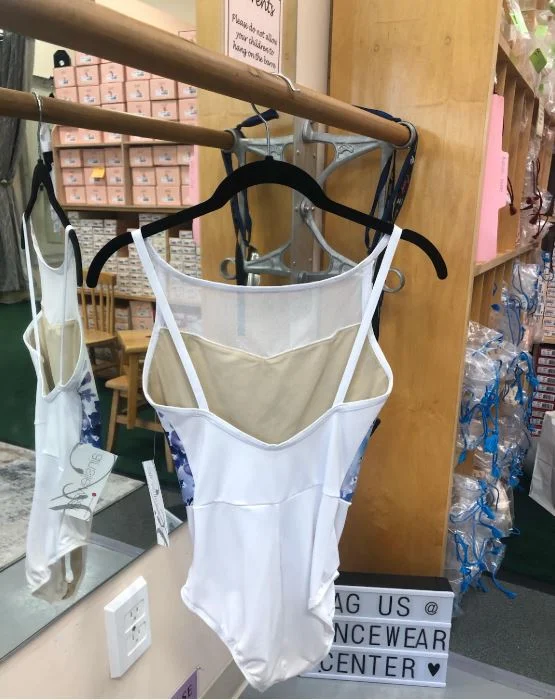
1. Ainsliewear’s White “Jade” Leotard
I am obsessed with the beautiful blue floral watercolor design on this leotard! I also love the mesh detail near the collar, as well as the flattering open back. The design of this leotard is unique, light and fresh, and perfect for summertime. Also, this leo is made out of high-quality, thick, but breathable material and is lined on the interior for maximum comfort and security. It’s the perfect leotard to wear for a summer class!

2. Eurotard’s Burgundy Warm-Up Shorts
These shorts are perfect for dancing in warmer weather. They are made out of a super light fabric that is breathable, but still insulated to keep muscles warm. The waistband is thick, comfortable, and has a high rise for a more flattering aesthetic. I think the burgundy color is super unique, but still muted enough to pair with different colored leotards and tops. …and get this: they have pockets!

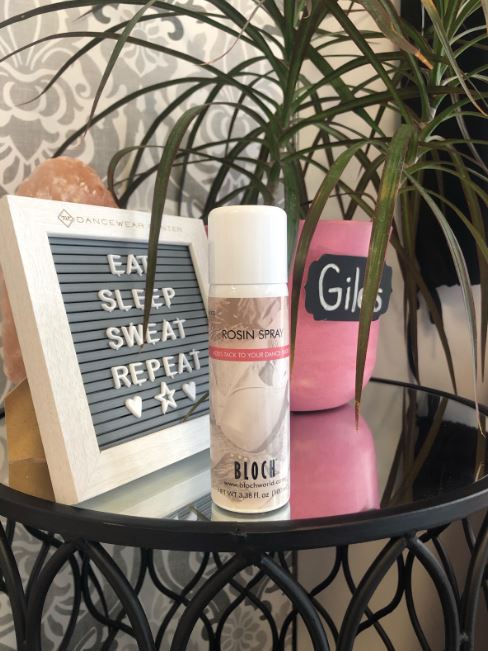
3. Bloch’s Rosin Spray
I like using rosin on my pointe shoes, ballet slippers, and socks to increase traction and prevent slipping; however, traditional rock rosin is messy and hard to transport. That’s why I love this rosin spray by Bloch! The packaging is super compact and so it’s great to keep in your dance bag when you’re on the go. The rosin itself also works really well on nearly any type of dance shoe or sock.
Thanks for reading! I always love hearing from all of you… what are your favorite summer products? Comment below, or share with us on Instagram or Facebook!
Love,

Interested in writing for the DWC Blog? Click below to fill out the DWC Contributor application!