
Get To Know DWC Ambassador Abby Jayne DeAngelo
Join us for an inspiring interview with our esteemed DWC Ambassador, Abby Jayne DeAngelo! 💫 Abby Jayne's journey in the world of ballet began under the guidance of the renowned Marcia Dale Weary at Central Pennsylvania Youth Ballet (CPYB) in her hometown of Carlisle, PA. With a passion for sharing her love of ballet with the next generation of dancers, Abby Jayne founded Adage Ballet Academy in Seattle, WA in March 2021.
pronunciation: Ab-bee Jay-n Dee-An-jello | pronouns: she/her
By Samantha Weissbach, DWC Owner & General Manager

Join us for an inspiring interview with our esteemed DWC Ambassador, Abby Jayne DeAngelo! 💫 Abby Jayne's journey in the world of ballet began under the guidance of the renowned Marcia Dale Weary at Central Pennsylvania Youth Ballet (CPYB) in her hometown of Carlisle, PA. With a passion for sharing her love of ballet with the next generation of dancers, Abby Jayne founded Adage Ballet Academy in Seattle, WA in March 2021. Her extensive teaching experience includes instructing Levels 1-7 at CPYB, leading virtual classes with Ballet Together, and guest teaching at Ballet Academy of Pittsburgh. Abby Jayne's professional ballet career has taken her from Carlisle to the stage of Pacific Northwest Ballet (PNB), where she began as a Professional Division Student and was later promoted to Apprentice and Corps de Ballet member. Her favorite roles with PNB include Marzipan and Columbine in George Balanchine’s The Nutcracker, Step Sister in Kent Stowell’s Cinderella, and Eva Stone's F O I L. As a choreographer, Abby Jayne has premiered original works for CPYB’s First Steps Program and PNB’s virtual Next Step, showcasing her artistic versatility. Join us as Abby Jayne shares her personal mission of balanced, joy-filled ballet technique and training both on and off the stage. Don't miss this opportunity to be inspired by her passion and dedication to the art of dance! #DWC #DanceAmbassador #AbbyJayneDeAngelo #BalletJourney #BalletEducation
Disclaimer
All content found on the Dancewear Center Website, Instagram, Facebook, Pinterest, and all other relevant social media platforms including: text, images, audio, or other formats were created for informational purposes only. Offerings for continuing education credits are clearly identified and the appropriate target audience is identified. The Content is not intended to be a substitute for professional medical advice, diagnosis, or treatment. Always seek the advice of your physician or other qualified health provider with any questions you may have regarding a medical condition. Never disregard professional medical advice or delay in seeking it because of something you have read on this Website.
If you think you may have a medical emergency, call your doctor, go to the emergency department, or call 911 immediately. Dancewear Center does not recommend or endorse any specific tests, physicians, products, procedures, opinions, or other information that may be mentioned on dancewearcenter.net. Reliance on any information provided by dancewearcenter.net, Dancewear Center employees, contracted writers, or medical professionals presenting content for publication to Dancewear Center is solely at your own risk.
Links to educational content not created by Dancewear Center are taken at your own risk. Dancewear Center is not responsible for the claims of external websites and education companies.

The Return of Seattle Dances
Seattle Dances is one of Seattle’s top dance journalism pages that features upcoming performances and various interviews with local dancers in the area. We got the chance to speak with Kaitlin McCarthy who is the current editor and director of operations of Seattle Dances! Read on the learn more about what Seattle Dances is all about and their mission for the Seattle Dances on the dance community!
A Conversation with Kaitlin McCarthy
By Samantha Weissbach, DWC Owner & General Manager and Nicole Barrett, DWC Blog Editor
Seattle Dances is one of Seattle’s top dance journalism pages that features upcoming performances and various interviews with local dancers in the area. We got the chance to speak with Kaitlin McCarthy who is the current editor and director of operations of Seattle Dances! Read on the learn more about what Seattle Dances is all about and their mission for the Seattle Dances on the dance community!
Seattle Dances was established in 2009 as a blog for Pacific Northwest Ballet. Later on, the organization expanded its converage and focused on including a wider range of dance performances in the area. Seattle Dances was passed around throughout the years to numerous different mangements and eventually landed on two local dancers Anna Waller and Mariko Nagashima from 2011-2016. Kaitlin became a writer for the organization in 2016 and then took over the managment position in 2016 with local dancer Megan Stevenson. At this stage, the orgianization was more of a formal jouranalistic entity with a staff of writers and more frequent posts on local shows in the area.
During the pandemic, many shows were cancelled so Seattle Dances decided to keep their site and staff to low capacity to adhere to the lack of movement from the Seattle dance community. The organization just had a large relaunch in January of this year that included a new look for their webpage and tried to continue focusing on local dance performances and supplying resources.
Kaitlin shares that what Seattle Dances wants most for the community to know is that everyone is open to submit anything dance related to the site! The organization was built to spread the word about local performances in the area and allow a common space for artists to share their work. There can be many misconceptions about journalism websites that only take a specifc range of content, but Seattle Dances is non-discriminating to the types of performances that they produce content about. Please use this resource to support local artists and spread the word about your upcoming performances!
We are so happy to be able to speak with Kaitlin abot Seattle Dances! This amazing webpage and resource is open for all dancers to use here! Be sure to check out the full interview with Kaitlin down below!

Disclaimer
All content found on the Dancewear Center Website, Instagram, Facebook, Pinterest, and all other relevant social media platforms including: text, images, audio, or other formats were created for informational purposes only. Offerings for continuing education credits are clearly identified and the appropriate target audience is identified. The Content is not intended to be a substitute for professional medical advice, diagnosis, or treatment. Always seek the advice of your physician or other qualified health provider with any questions you may have regarding a medical condition. Never disregard professional medical advice or delay in seeking it because of something you have read on this Website.
If you think you may have a medical emergency, call your doctor, go to the emergency department, or call 911 immediately. Dancewear Center does not recommend or endorse any specific tests, physicians, products, procedures, opinions, or other information that may be mentioned on dancewearcenter.net. Reliance on any information provided by dancewearcenter.net, Dancewear Center employees, contracted writers, or medical professionals presenting content for publication to Dancewear Center is solely at your own risk.
Links to educational content not created by Dancewear Center are taken at your own risk. Dancewear Center is not responsible for the claims of external websites and education companies.
Teaching Artist Kirsten Cooper On Tackling Technical Dance Challenges
Kirsten’s favorite thing about dance, she shares, is the connections people make through this art form are something that she finds to be the best thing about the dance world. “Through my teaching, I’ve seen people from different economical lives come and dance together and I think that that is just amazing,” she shares. She also shares that the connection through an emotional basis and a common love of dance is something that is very important to keep going. The relationships that she has made through people that she has taught are something that is very important to her and sets an example for the connection that dance can make through people.
A Conversation About Opening Dance for All Ages
Phonetic pronunciation: Kir-sten Coo-per | Pronouns: she/her
By Nicole Barrett, DWC Blog Editor

Photo by Nigel Cooper Photography
Freelance teacher Kirsten Cooper is no stranger to the dance world. From dancing in her hometown in Spokane, Washington to dancing professionally in Los Angeles, California, there is no doubt about the amount of experience that she holds. Read on to learn more about Kirsten’s dance journey and her work with Westlake Dance Center!
Kirsten Cooper has always been a freelance teacher. She has been teaching in the Pacific Northwest for many years now after moving to Seattle following being a professional in Los Angeles. She shares that she mostly teaches jazz, contemporary, lyrical, and theater dance. Kirsten has taught at numerous different suburban studios, but she does the majority of her teaching at Westlake Dance Center where she runs the pre-professional program. She also teaches at the summer intensive at Pacific Northwest Ballet focusing on jazz, and she expresses how much she loves teaching ballerinas. She also shares that she loves to travel as much as she can, sharing that she’s journeyed to Texas, Montana, California, and Bulgaria to teach dance. Kirsten also just finished her Barre Eclipse License where she can now teach barre during her conditioning classes.
When asked about what sparked her passion for teaching, Kirsten shares that growing up in Spokane, she always loved dance. She expresses that she never got serious about it until she reached high school when her dance teacher opened her own studio. “She opened her own studio when I was a senior in high school, so then I was just there all the time” Kirsten shares. When she was at her studio, there was a variety of mixed-age groups that were in her classes. She shares that that is something that made her feel comfortable in the suburban environment and showed her that classes with different age groups were possible.
Going into college, Kirsten attended Pacific Lutheran University for about a year and a half and realized that she wanted to dance in Los Angeles. Once she arrived, she started taking dance classes for about a year and finally landed an agent. She began assisting Rhonda Miller with teaching, helping out in different jobs, and teaching at L.A. DanceForce. She shares that this experience taught her how to teach and run effective rehearsals and sparked her passion for teaching. Assisting also allowed her to create more art in the dance world which is something that she loves.

Photo by Nigel Cooper Photography
Moving on to Kirsten’s favorite thing about dance, she shares that the connections people make through this art form are something that she finds to be the best thing about the dance world. “Through my teaching, I’ve seen people from different social-economic backgrounds come and dance together and I think that that is just amazing,” she shares. She also shares that the connection through an emotional basis and a common love of dance is something that is very important to capitalize on in the dance community. The relationships that she has made through people that she has taught are something that is very important to her and sets an example for the connection that dance can make through people.
“My former dancers are some of my closest friends,” Kirsten shares.
One of the biggest struggles that Kirsten experienced when starting to dance is that she simply started training later. While Kirsten excelled at performing onstage, she struggled with more technical elements of dance, such as lacking turnout in her hips. She expresses that getting over the hump of needing to look and be a certain way was a big struggle for her. She conveys that some advice she would give dancers is simply to ensure that they are taking care of themselves. Physical therapy and nourishment are something that she believes are very important in the dance world. Kirsten also says that the aspect of social media in dance can be harmful to dancers but also have some good impacts too. Therefore, she thinks that recognizing the technical challenges of dancing and using social media can put dancers in the right direction to dance safely.
When asked about what she wants to see change in the dance world, Kirsten shares that talking about dance competitions in a healthy way is something that could potentially make a positive impact. There are many unhealthy ways that competitions and conventions are thrown onto dancers at younger ages, and Kirsten acknowledges that aspect. She believes that introducing conventions and competitions in healthy ways is something that needs to happen so dancers can reap their benefits. A way that she thinks the industry could move towards this change is emphasizing improvement instead of constant recognition. “It is nice to be recognized but [that] cannot be the only focus,” Kirsten says of class feedback, sharing that she likes asking her students how they feel about a skill they’ve learned before any kind of outcome from her, as the teacher, is revealed.

Photo by Nigel Cooper Photography
Coming up this summer, Kirsten is still teaching open classes at Westlake Dance Center and she will be doing all five weeks of the summer intensive program at Pacific Northwest Ballet. For Kirsten’s pre-professional program, she is taking auditions this summer for slots in classes and more information will be up with posters soon. She is also doing a workshop with Broadway dancer Mary Ann Lamb at the end of summer/early fall and typically in the fall, she has workshops with Jaci Royal as well. She shares that anyone that wants to come to these workshops is more than welcome and that they are open to everyone!
For more information about upcoming events with Kirsten, be sure to check out her socials!
About the Author
Sources:
Disclaimer
All content found on the Dancewear Center Website, Instagram, Facebook, Pinterest, and all other relevant social media platforms including: text, images, audio, or other formats were created for informational purposes only. Offerings for continuing education credits are clearly identified and the appropriate target audience is identified. The Content is not intended to be a substitute for professional medical advice, diagnosis, or treatment. Always seek the advice of your physician or other qualified health provider with any questions you may have regarding a medical condition. Never disregard professional medical advice or delay in seeking it because of something you have read on this Website.
If you think you may have a medical emergency, call your doctor, go to the emergency department, or call 911 immediately. Dancewear Center does not recommend or endorse any specific tests, physicians, products, procedures, opinions, or other information that may be mentioned on dancewearcenter.net. Reliance on any information provided by dancewearcenter.net, Dancewear Center employees, contracted writers, or medical professionals presenting content for publication to Dancewear Center is solely at your own risk.
Links to educational content not created by Dancewear Center are taken at your own risk. Dancewear Center is not responsible for the claims of external websites and education companies.
Whim W’Him’s Olivier Wevers on Equitable Treatment in Dance
One of Whim W’Him’s most important values is putting “people first always,” something that is not always upheld in the dance world. That’s why Olivier shares that ensuring his dancers are well-paid has always been a priority of his. “They are artists…They are highly skilled professionals and they should be paid for that,” he stresses. He started Whim W’Him with the intention of “changing the landscape of how dancers are often abused and exploited,” particularly when it comes to being under-compensated for their work.
A Seattle-Based Director on Eliminating Exploitation in the Dance Scene
Name pronunciation: Ol-i-vee-eh W-eh-vers | Pronouns: he/him
By Madison Huizinga, DWC Blog Editor

Photo by Stefano Altamura
Artists are often left out of larger conversations about equitable treatment and fair pay for workers. Even so, artists are skilled professionals as other laborers are, deserving of comprehensive treatment from companies that are able to secure the funds they need to operate effectively. Whim W’Him Founder and Artistic Director Olivier Wevers is a strong advocate for eliminating exploitative practices in the dance scene, principles he is practicing at the Seattle-based dance company itself. Read on to learn more about Olivier’s dance journey and about Whim W’Him’s mission and plans for its 2022-2023 season. And when purchasing tickets for one of Whim W’Him’s 22-23 shows, use code DWC20 for 20% off your ticket purchase!
Olivier expressed interest in dancing around age six. He can recall arriving at his first dance class wearing thick red wool tights, and immediately feeling out of place. “I actually cried and sat on the piano,” Olivier recalls, laughing. His parents told him that if he cried again, he wouldn’t be coming back to dance class. “I guess I didn’t,” Olivier says.
Around age fourteen, Olivier transferred from a recreational studio to a more professionally-focused one in his hometown of Brussels, Belgium. When he reached about nineteen years old, he began looking for work, moving to the United States for a summer program in Pittsburgh, Pennsylvania. Olivier landed his first job dancing with Columbia City Ballet in South Carolina for a year. He later danced at Royal Winnipeg Ballet for five years, touring around the world for six months out of the year. Olivier finished his dancing career at Pacific Northwest Ballet, where he worked for fourteen years.

Photo by Stefano Altamura
It took a while for Olivier to realize that starting a dance company is what he wanted to do. He had been gaining more choreography opportunities, diving deeper into the creation side of dance. He knew that running a dance company required a lot of hustle - administrative work, fundraising, and more - and he also realized the life of touring and traveling so often became lonely. Olivier desired to not only work with his own dancers but begin developing a vocabulary of dance that was unique. After mulling it over and having some encouragement from friends, Olivier incorporated Whim W’Him in 2009.
Today, Olivier says that Whim W’Him is all about the “creation process,” sharing that the company doesn’t like to place limits on itself by fixating on one topic or genre of focus. “There are so many types of choreographies and ways of working with bodies and I think that’s what we want to embrace,” Olivier says. “It’s really about exploring our human condition.”
One of Whim W’Him’s most important values is putting “people first always,” something that is not always upheld in the dance world. That’s why Olivier shares that ensuring his dancers are well-paid has always been a priority of his. “They are artists…They are highly skilled professionals and they should be paid for that,” he stresses. He started Whim W’Him with the intention of “changing the landscape of how dancers are abused and exploited,” particularly when it comes to being under-compensated for their work.
“The idea behind the company is to re-create a culture that is fighting the [outdated system] that is now widely adopted in this country for contemporary dancers and re-build an environment that is safe, welcoming, and supportive for everyone,” Olivier says.
Fittingly, Whim W’Him dancers are also offered opportunities to exercise creative control when it comes to the work they perform. For example, choreographers featured in Whim W’Him’s upcoming fall program were selected by dancers of the company itself, as a part of the 8th Choreographic Shindig. In a longstanding tradition, after reviewing applications, the dancers themselves have the opportunity to curate the evening performance, exercising their own creative opinions as artists.
In its 2022-2023 season, Whim W’Him is excited to showcase about ten original works across its three live programs in fall, winter, and spring. In addition, in February 2023, Whim W’Him will be collaborating with Early Music Seattle to create a brand new piece.

Photo by Stefano Altamura
In the fall, audiences can expect new creations from Keerati Jinakunwiphat, Dolly Sfeir, and Nicole von Arx on September 9-17, 2022 at Erikson Theater and on September 14, 2022 at Vashon Center for the Arts. In the winter, Whim W’Him will show work by Mike Esperanza, Annabelle Lopez Ochoa, and Olivier Wevers from January 20-31, 2023 at the Cornish Playhouse, January 25, 2023 at Vashon Center for the Arts, and January 31, 2022 at Whidbey Island Center for the Arts. Finally, in the spring, audiences will see work by Emilie Leriche, Olivier Wevers, and Rauf Yasit on May 12-20, 2023 at the Cornish Playhouse, May 17, 2023 at Vashon Center for the Arts, and May 24, 2023 at Whidbey Island Center for the Arts.
All in all, in the next year, Olivier looks forward to seeing Whim W’Him continue to grow as a company and help create an environment for dancers that is “safe, diverse, [and] welcoming.” “We have a lot of change that needs to happen,” Olivier insists, citing more accessible dance education, greater support for BIPOC artists, comprehensive dance media and journalism, and of course, fair pay and eradicated exploitation as changes the dance industry needs to see. He also hopes to see more arts funding on a governmental level, particularly for smaller dance companies, where he believes much of the innovation in dance is occurring.
Become a member with Whim W’Him today or use code DWC20 for 20% off your tickets for one of Whim W’Him’s Season 22-23 shows.

Sources:
Disclaimer
All content found on the Dancewear Center Website, Instagram, Facebook, Pinterest, and all other relevant social media platforms including: text, images, audio, or other formats were created for informational purposes only. Offerings for continuing education credits are clearly identified and the appropriate target audience is identified. The Content is not intended to be a substitute for professional medical advice, diagnosis, or treatment. Always seek the advice of your physician or other qualified health provider with any questions you may have regarding a medical condition. Never disregard professional medical advice or delay in seeking it because of something you have read on this Website.
If you think you may have a medical emergency, call your doctor, go to the emergency department, or call 911 immediately. Dancewear Center does not recommend or endorse any specific tests, physicians, products, procedures, opinions, or other information that may be mentioned on dancewearcenter.net. Reliance on any information provided by dancewearcenter.net, Dancewear Center employees, contracted writers, or medical professionals presenting content for publication to Dancewear Center is solely at your own risk.
Links to educational content not created by Dancewear Center are taken at your own risk. Dancewear Center is not responsible for the claims of external websites and education companies.
How to Bend Without Breaking
My mission is to support dancers and their personal growth inside and outside of the studio to produce better performance outcomes and a more sustainable dancer long-term,” Josh says of his goal behind Flexible Mind Counseling. Through individual and group therapy sessions, Flexible Mind Counseling provides clients with “a bridge back to understanding [their] authentic needs.
Josh Spell on Normalizing Mental Health Discussions in Dance
By Madison Huizinga, DWC Blog Editor

Photo by AJ Ragasa
When people envision dancers, they often think of physically strong individuals who are capable of pushing their personal limits to create beautiful art. There is an assumption that they can propel through the physical and mental challenges they experience to be the best dancers they can be. While these assumptions can help instill discipline and drive in dancers, they can also help create an environment that’s unconducive to productive conversations about mental health. Through Flexible Mind Counseling, Josh Spell strives to help dancers become vulnerable about the challenges they’re facing, speak up for themselves, and cultivate a curious mind that can bend without breaking.
Josh was first exposed to dance through his grandmother’s senior dance group, the “Happy Steppers,” in which he would fill in for dancers when they were absent as a child. It was clear that Josh had a natural talent for picking up choreography and musicality so he enrolled in tap and later ballet. After a few years, it was clear to Josh that this is what he wanted to pursue. At age 16, he trained at the School of American Ballet in New York City before getting hired by Pacific Northwest Ballet in Seattle at 19 years old.
After a decade of dancing with PNB, Josh took a brief break and later did some freelance work, including Oklahoma! at The Fifth Avenue Theatre with Donald Byrd, while also studying interior design. He later danced with Kansas City Ballet for a couple of years as well.
Within the ballet world, Josh found himself placing restrictive rules on his mind and body to be what he thought was the best dancer he could be. This eventually manifested itself into a struggle with his body image. “I was equating my worth as a dancer [with] what my body aesthetically could present,” Josh reflects. That’s when Josh realized he needed some space from the professional dance scene for a while.
“I noticed that there were a lot of differences in the ways I viewed myself,” Josh says of his break from dance, noting that he experienced a newfound sense of self. Upon returning to dance at Kansas City Ballet, Josh noticed his perfectionism start to intensify again. He decided to speak with a therapist about some of the body image and disordered eating challenges he was facing.
It was around this time that Josh began to realize that mental health is deeply connected to how dancers show up for their performances, their relationships, and themselves. However, few mental health resources were available for dancers and their specific needs. Josh earned his Master of Social Work degree from the University of Washington, with a heavy focus on studying eating disorders, later working at an eating disorder clinic. During the pandemic, he also stepped in as a consulting therapist at the PNB School before starting his own practice, Flexible Mind Counseling.
“We are people first and dancers second”
“My mission is to support dancers and their personal growth inside and outside of the studio to produce better performance outcomes and a more sustainable dancer long-term,” Josh says of his goal behind Flexible Mind Counseling. Through individual and group therapy sessions, Flexible Mind Counseling provides clients with “a bridge back to understanding [their] authentic needs.”
Josh shares that individual sessions are nuanced, but he generally works with dancers on being more vulnerable, releasing control, and using direct communication to voice their needs and set boundaries. He helps dancers develop a mindful attitude and identify beliefs that may prevent them from being their most authentic selves. Josh’s group sessions follow similar themes, usually centering on one topic, such as self-compassion, internal vs. external motivation, body image, self-care, or perfectionism. After a topic is presented, a group discussion emerges, in which Josh helps provide dancers with tools and knowledge to handle challenges relating to the session’s main theme. “You get to learn from other folks in the space,” Josh says of the benefits of group sessions. Group sessions can also help cultivate a studio space that feels safer and more open to sharing vulnerable thoughts and emotions.
A mental health misconception that Josh has witnessed in the dance world is the idea that mental and physical health are separate. He points out that mental and physical health can influence one another, neither exists in a vacuum. “It’s really difficult to care for your body without caring for your mind and vice versa,” he shares.

Josh also shares that there is a pervasive stigma surrounding mental health. Many people assume that if you’re struggling with your mental health, that’s a sign of weakness, which prevents people from opening up about their challenges. As with physical health, there is an assumption that dancers must push through their mental health challenges on their own. “You don’t have to do everything on your own,” Josh stresses.
Through his efforts, Josh hopes to see mental health discussions become normalized in the dance sphere, in the same way that conversations about physical health have. He thinks the road to mental health normalization will require greater visibility of mental health professionals with dance experience. It’s also important to expose dancers to preventative and regular mental health care, not just when a crisis strikes.
“We are people first and dancers second,” Josh declares.
Josh will be our special guest speaker at the next DWC Teacher’s Seminar June 26th 10:30am-11:30am at the Green Room, DWC Renton, spaces are limited so register today!
Disclaimer
All content found on the Dancewear Center Website, Instagram, Facebook, Pinterest, and all other relevant social media platforms including: text, images, audio, or other formats were created for informational purposes only. Offerings for continuing education credits are clearly identified and the appropriate target audience is identified. The Content is not intended to be a substitute for professional medical advice, diagnosis, or treatment. Always seek the advice of your physician or other qualified health provider with any questions you may have regarding a medical condition. Never disregard professional medical advice or delay in seeking it because of something you have read on this Website.
If you think you may have a medical emergency, call your doctor, go to the emergency department, or call 911 immediately. Dancewear Center does not recommend or endorse any specific tests, physicians, products, procedures, opinions, or other information that may be mentioned on dancewearcenter.net. Reliance on any information provided by dancewearcenter.net, Dancewear Center employees, contracted writers, or medical professionals presenting content for publication to Dancewear Center is solely at your own risk.
Links to educational content not created by Dancewear Center are taken at your own risk. Dancewear Center is not responsible for the claims of external websites and education companies.
A Conversation About Mental Health and Non-Judgment in the Dance Sphere
While some folks have taken steps to destigmatize mental health discussions in the dance industry, there is still an overwhelming pressure to compete against your peers within the studio environment, which can lead to adverse mental health issues. DWC staff member and pointe shoe fitter Tija Dupont opens up about her dance journey, goals for the future, and destigmatizing mental health in the dance industry.
Getting to Know DWC Staff Member Tija Dupont
By Madison Huizinga, DWC Blog Editor

Photo by Rex Tiffany Gunderson
While some folks have taken steps to destigmatize mental health discussions in the dance industry, there is still an overwhelming pressure to compete against your peers within the studio environment, which can lead to adverse mental health issues. DWC staff member and pointe shoe fitter Tija Dupont opens up about her dance journey, goals for the future, and destigmatizing mental health in the dance industry.
Tija began dancing around age two in a ballet/tap/jazz combo class in her small hometown in Montana. She danced at the same performing arts academy until she was about ten years old. During that time, Tija took a break from dance for about a year and a half because she was dealing with “horrible anxiety.” Even during her break, she was still drawn to movement in her daily life, so it became clear to her parents that she would benefit from getting back into it. She auditioned for her studio’s company, which traveled a lot for performances and competitions. After being a part of the team for about three months, Tija’s parents told her they were moving to Seattle.
After moving to Seattle, Tija got more into ballet after seeing the Pacific Northwest Ballet’s production of Swan Lake. She tried out a handful of studios, searching for an environment that wasn’t hyper-competitive and that offered a welcoming community. Tija also attended a summer intensive at The Joffrey Ballet in Chicago, Illinois. “Going to Chicago is probably the best thing that’s ever happened to me,” Tija says of her experience dancing at Joffrey. She shares that her instructors and roommates were incredible, and the environment allowed her to learn and soar as a dancer. Today, she dances with Ensemble Ballet Theatre in the Maple Valley area.
Before she began working with Dancewear Center, Tija had been working at a larger retail corporation in the area. Feeling a bit discouraged in her position, her mom encouraged her to apply for Dancewear Center, as it’s an area where she could offer some expertise. Soon after interviewing with Owner & General Manager Samantha Weissbach, she landed the job!
Tija started as a retail associate and later a shift lead at DWC, but recently she’s become a pointe shoe fitter. Tija didn’t see herself learning anything about pointe shoes when she started her job but soon became fascinated with pointe shoes through the fitting training sessions at DWC. She shares that she loves fitting pointe shoes, especially because she learns something new every time she does a fitting. She looks forward to now having the freedom to run fittings solo.
Tija loves working at a local business that is so well-received by the local community. She also enjoys the uplifting store environment. “The second I walk into the store, I’m instantly greeted. I just feel such a good energy,” she says. Tija appreciates how positive and reassuring the whole DWC team is.
One of her favorite parts of the job is being able to provide people with the products they need to be successful in dance. She finds satisfaction from seeing customers’ faces light up when she’s able to give them something they’ve been looking for. Tija also loves being able to fill the role of a “personal shopper” for some customers who are unsure about what they want to purchase. Being able to point them in the right direction brings her so much joy.
Outside of work, Tija enjoys hiking, sharing that her family members are big “outdoors people” and love to do activities that connect them with the beauty of the Pacific Northwest. She also loves coffee religiously. “Personally, I call that a hobby,” she laughs, sharing that she always has a coffee on her. She also enjoys doing yoga and conditioning in her home studio, a make-shift dance studio she made in her garage. Tija enjoys traveling as well and looks forward to getting back into it with her family following the major COVID-19 lockdowns.

Photo by Ken Fox
Tija recently finished high school and is considering taking some classes at a local community college before hopefully transferring to the University of Idaho.
In the larger dance world, Tija hopes to see people in the dance industry talk more about mental health and foster a less competitive environment so dancers can feel less judged. “I think studios need to encourage a non-judgmental community,” she says. This paired with studio owners discussing mental health with their students will help the industry move towards being more welcoming to all.
Keep an eye out for Tija in DWC, particularly if you’re getting a pointe shoe fitting anytime soon!
Jule Dancewear’s Julia Cinquemani
Many people are drawn to dance because it is a means of self-expression, allowing individuals to share their emotions with others and have a creative outlet to relieve stress. In many ways, clothing operates similarly to dance for many people, as it communicates a lot about a person’s identity and can invoke specific emotions in viewers and wearers alike. Founder of Jule Dancewear Julia Cinquemani knows all too well that wearing clothes that don’t fit right can make a significant impact on people, particularly with dancewear. Combatting this phenomenon was the inspiration behind Jule Dancewear, as well as creating dancewear products that cater to dancers with a variety of body types. Read on to learn more about Julia’s journey to Jule Dancewear.
By Madison Huizinga, DWC Blog Editor

Click below to shop the look:
Many people are drawn to dance because it is a means of self-expression, allowing individuals to share their emotions with others and have a creative outlet to relieve stress. In many ways, clothing operates similarly to dance for many people, as it communicates a lot about a person’s identity and can invoke specific emotions in viewers and wearers alike. Founder of Jule Dancewear Julia Cinquemani knows all too well that wearing clothes that don’t fit right can make a significant impact on people, particularly with dancewear. Combatting this phenomenon was the inspiration behind Jule Dancewear, as well as creating dancewear products that cater to dancers with a variety of body types. Read on to learn more about Julia’s journey to Jule Dancewear.
Julia grew up in Dallas, Texas where she began dancing at age four. “I was very passionate about ballet and left home at age 16 to train year-round at the Pacific Northwest Ballet in Seattle,” she shares. Later on, Julia ended up signing her first professional contract at Los Angeles Ballet, where she danced for seven years, even earning a promotion to Soloist in 2014 and Principal Dancer in 2016. “I then joined Miami City Ballet in 2017 where I danced for four seasons,” she shares. Highlights from her time at Miami City Ballet include Aria 1 in Stravinsky’s “Violin Concerto,” Hippolyta in A Midsummer Night’s Dream, and War Girl in “Symphonic Dances.”

Click below to shop the look:
One of Julia’s favorite parts of ballet was the discipline involved with it and being able to express herself within the studio. “Part of expressing myself was how I presented myself; how I did my hair and what I wore to class,” she shares. At age 14, Julia began designing and sewing her own ballet skirts to wear to class. Eventually, she began creating and selling these skirts to her friends. Shortly after this, as the skirts gained more popularity, Julia was approached by her local dancewear store asking if she wanted to start carrying her own line of wrap skirts in the store. What started as her individual outlet of expression soon became a product for others to enjoy as well.
Jule Dancewear was established in 2011 to “reshape dancewear.” Julia’s mission is to “design and produce dancewear that offers support, conforms to all body types, is high quality, and incorporates the latest in fashion with a commitment to ‘made in the USA.’” “Support” is a crucial aspect of the products Jule Dancewear offers. Julia shares that during her teenage years, when her body began changing, she realized she needed a leotard that provided more optimal coverage and support for herself. “I hated that my ill-fitting leotards were making me self-conscious in a profession where confidence is key,” she says. This is what inspired her to incorporate the support of a sports bra in her leotards in her leotards. “As a result, we are known for reshaping the dancewear mold to support all body types,” she shares.

Click below to shop the look:
In addition to stunning leotards and wrap skirts that flatter an array of body types, Jule Dancewear has become well-known for its “meshie” tights and crop tops. Intended to flatter and accentuate muscle definition, these high-quality mesh tights and crop tops make for unique, colorful, and comfortable outerwear to wear over the top of leotards. Julia shares that Jule Dancewear has “many new products” coming soon, so stay tuned for more!
Julia shares that she’s always loved the way a good outfit makes her feel. This feeling was one of the main sources of inspiration for her products. “My goal in the design process is to bridge fashion and function,” she says. Julia points out that it helps that she spends most of her days in a leotard and tights, as it allows her to seek inspiration for designing products that make her look and feel her best.
For those who are interested in starting their own business, Julia advises them “to have patience and commit to creating in a field that [they] are passionate about.” Once you realize that you can be the solution to the problems you’re facing, many doors are opened.
Where Reading and Dancing Meet
For many young students, dance education consists of verbal instruction and demonstration from a teacher. While that has proven to be an effective means of teaching, having alternative methods, such as using visual aids and storytelling, can immensely benefit students. Thus, Terrel Lefferts and her daughter Kaelyn or “Ballerina Konora” have created Once Upon a Dance, a business that creates interactive movement and dance books for children of a wide array of ages.
Terrel Lefferts on Once Upon a Dance
By Madison Huizinga, DWC Blog Editor

For many young students, dance education consists of verbal instruction and demonstration from a teacher. While that has proven to be an effective means of teaching, having alternative methods, such as using visual aids and storytelling, can immensely benefit students. Thus, Terrel Lefferts and her daughter Kaelyn or “Ballerina Konora” have created Once Upon a Dance, a business that creates interactive movement and dance books for children of a wide array of ages.
Growing up, Terrel trained pre-professionally at Louisville Ballet and BalletMET, dancing up to 40 hours each week. Around her freshman year of high school, she ended up dropping out of dance after concluding that she likely wouldn’t become a professional. However, she ended up returning to dance in college while majoring in engineering. “I joined ballet and modern dance classes in college and was a founding member of the dance performance group there. I rediscovered dance during grad school, as well as during my time as a Peace Corps volunteer in Africa,” she shares. “Dance kept coming back all the time.” As Terrell fell back in love with dance, she decided to start teaching during the evenings and on the weekends and eventually quit her main job to devote her full time to teaching. Terrel has taught all over the Eastside, including building a dance program at Redmond Parks and Recreation.
When the COVID-19 pandemic hit Washington state, Terrel’s daughter had been in town dancing as a professional division student at Pacific Northwest Ballet. The two decided to make some dance videos to keep kids dancing at home engaged in their learning; however, many of the videos got copyright blocked and others didn’t receive many views. Eager to reach a larger audience, the two decided they would try their hand at making books instead of videos. “There was a lot to learn - many areas outside a dance teacher’s wheelhouse,” Terrel says of creating her books.
“My advice would be to have patience, keep making small steps, and try to enjoy the journey.”

When the idea to create books struck Terrel, she says that it felt “like exactly what [she] was meant to do.” She had been teaching dance for years, was a board member for PNB, had taught English during her time with the Peace Corps, worked as a family advocate for an early learning center, and much more. “I was just like ‘Oh my gosh! All of these things I've done are totally book-related.’”
Terrel essentially taught herself everything she needed to know about creating and distributing books, such as software like Adobe InDesign, uploading books on Amazon, and more. She even found illustrators from all over the world to create the artwork in her books. The process was full of trial and error and she came up against roadblocks time and time again, like losing her Word document with the book’s story, InDesign crashing several times, and Amazon removing her books from its platform. But she pushed through it all and managed to create Once Upon a Dance.
“We created the books I wished I’d had as [a] mother to a little girl and dance teacher of young kids. My daughter would have adored these stories had they been available when she was young,” Terrel shares. She points out that when her daughter was growing up, there was a lack of movement books available that offered creative ways to teach dance steps. Terrel describes printing out images she found online of ballerinas to use as visual aids when teaching her students.

During the COVID-19 lockdown, Once Upon a Dance produced 16 books and currently have more on the way. The series Dance-It-Out! Creative Movement Stories for Young Movers is designed for ages 4+ and includes stand-alone stories that feature movement suggestions and photos of Terrel’s daughter as “Ballerina Konora.” “We think of each book as a dance performance, with different formatting, layout, and illustrators, just as a different show would have new sets, costumes, and choreography.”
The series Dancing Shapes: Ballet and Body Awareness for Young Dancers for ages 6+ gives a glimpse into Ballerina Konora’s journey to becoming a professional dancer, while she leads readers through a warm-up, mini ballet lesson, and an in-depth look into the details and shapes involved in dance. “We were honored that the first Dancing Shapes book won several awards including a 2021 Independent Press Award,” Terrel shares.
The final main series, coming out in 2022, is Ballet Inspiration and Choreography Concepts for Young Dancers, which is designed for ages 8+. This series includes tips on technique and dives into more advanced dance concepts, such as choreography, posture, and even “falling” on stage.
In addition to its three main series, Once Upon a Dance carries a couple of journals, as well as Konora’s Shapes Series, which is a card collection of poses intended to be cut out from the book. Additionally, people are encouraged to look out for Once Upon a Dance audiobooks coming soon, as free companions with the books.
If Terrel were to give one piece of advice for people who want to start their own business, it would be to “celebrate the small successes.” The phrase has become Terrel’s mantra through this whole process. “Being part of Dancewear Center was cause for celebration. We are thrilled and appreciative to have a local seller, so folks have an option beyond Amazon, Target, etc.” Terrel says. “My advice would be to have patience, keep making small steps, and try to enjoy the journey.”
Dancing Into Adulthood
As children, partaking in extracurricular activities outside of school isn’t just an option, it’s downright encouraged. Our parents sign us up for anything they can to keep our bodies active and our minds engaged: soccer teams, chess clubs, dance classes, you name it. When we transition into high school, we’re encouraged to volunteer, join sports teams, and get involved in our community to bolster our college applications. We channel our time, energy, blood, sweat, and tears into these activities. In many cases, they transform from being mere hobbies to intense passions that help us persevere through our awkward adolescent years.
By Madison Huizinga, DWC Blog Editor

Photo Credit: En Avant Photography
As children, partaking in extracurricular activities outside of school isn’t just an option, it’s downright encouraged. For many of us, our parents register us for anything they can to keep our bodies active and our minds engaged: soccer teams, chess clubs, dance classes, you name it. When we transition into high school, we’re encouraged to volunteer, join sports teams, and get involved in our community to bolster our college applications. We channel our time, energy, blood, sweat, and tears into these activities. In many cases, they transform from being mere hobbies to intense passions that help us persevere through our awkward adolescent years. But then, when we graduate high school, something changes. Suddenly, we’re attending our last ballet class, performing in our last recital, and taking our last bow on stage. We’re given our diplomas and then clumsily thrust into college and careers to take on the “real world.” For most of us, our priorities shift to finding a job and taking care of our families. Our competition medals and pointe shoes are shoved to the back of our closets.
The transition from high school to college was incredibly challenging for me. I had been dancing at the same dance studio for 13 years, from when I was a kindergartener to an 18-year-old. The instructors and students had become a second family to me. Dancing and performing were the main parts of my life that brought me joy. And then, quickly, it was all over. My final curtain closed and before I knew it, I was in a dorm room isolated from the community that made me feel my best.
The idea that we must abandon our passions as we transition into adulthood is a harmful norm. There’s an unspoken expectation that people should just discard their hobbies and passions and channel all their energy into their “careers.” But life doesn’t have to be that way. Not all of us have the ability or capacity to pursue dance full-time and professionally, but that doesn’t mean we need to shut dance off from our lives for good.
One way that I began integrating dance into my life post-high school was taking open classes in my community. I started attending open ballet classes at PNB and Dance Fremont and was surprised at how much they challenged me. Many studios offer open classes every day of the week, allowing people to pick and choose the dates that work best for them. Also, most of these classes don’t have an age limit, so they’re open to everyone to attend for as long as they desire.
However, when the COVID-19 pandemic hit, the open classes I was taking were canceled and I was left feeling a bit hopeless about how I would keep up my technique. I was already dancing far fewer hours than I was in high school, and now I was studio-less and confined to dance in my small basement. How could I possibly practice and improve upon my technique? I pondered. But to my surprise, a variety of free online classes began popping up. I began taking Tiler Peck’s ballet classes on Instagram Live and they quickly became a part of my everyday routine. Many of her classes are still available online today.
On days when I couldn’t find any virtual classes to take, I took myself through my own ballet routine. I came up with a ballet barre routine and exercises to do in the center and executed them as if I was the teacher and the student. Doing this not only allowed me to act creatively, but I had control over how much I challenged myself.
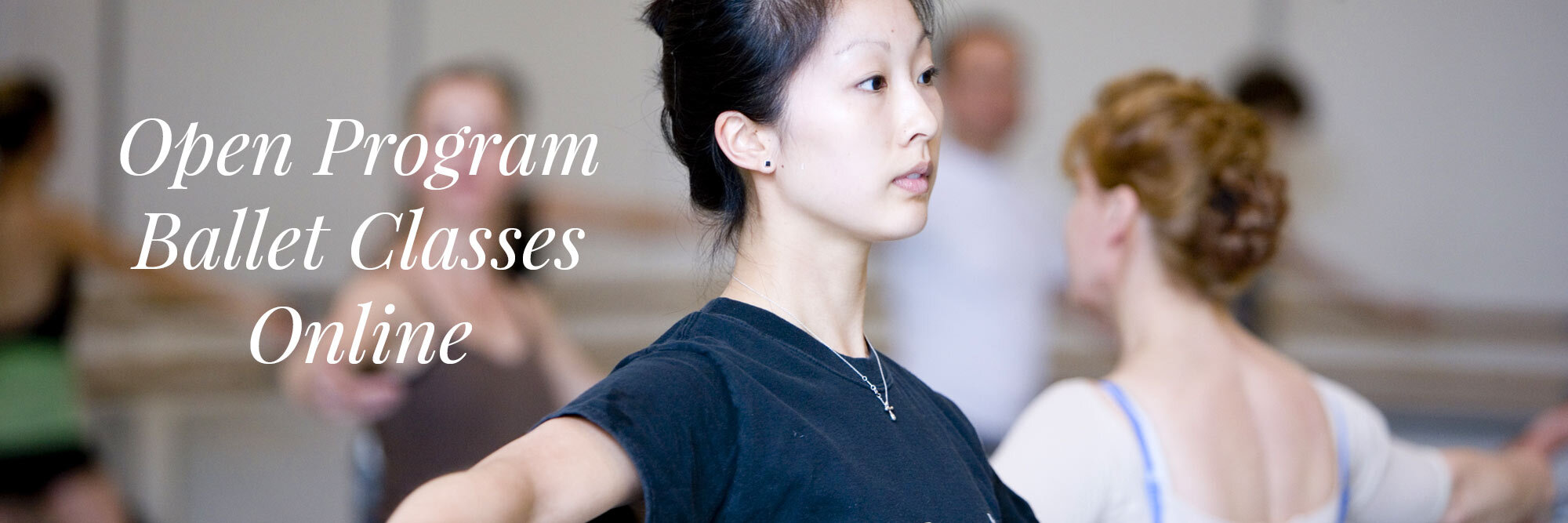
Photo Credit: Pacific Northwest Ballet
Also, since I didn’t have a lot of space to dance at home, I shifted my focus to forms of exercise that could supplement my dance training but didn’t take up much space, such as yoga and pilates. Focusing more of my attention on cross-training and strengthening important dance muscles improved my technique in ways I never imagined possible. In high school, cross-training was something I had trouble fitting into my busy schedule. However, as an adult with more control over my schedule, I was able to carve out time to cross-train and witness my technique improve in ways that were once unfathomable.
It’s safe to say that there are ways to help maintain our strength and technique when dancing as adults, due to open classes, online resources, and cross-training, but what about performing? Performing on stage was one of the parts of dancing that was most enjoyable to me. The sheer adrenaline rush, thrill, and pride that comes with dancing in front of a live audience is simply unmatched. Eager to keep this aspect of dancing in my life, I auditioned for a small, local dance company and was fortunate enough to get in! Auditioning for a professional company is understandably daunting to many folks; however, there is a plethora of dance in Seattle, and many artists who are looking for bodies to choreograph on. There is no harm in putting yourself out there and seeing what you get in return, it might surprise you.
Aside from performing on stage, there are also many peripheral ways to get involved with the dance community. Whether it’s graphic design, costuming, artist management, or music production, the possibilities are endless.
This myth that we must abandon our passions when we turn 18 is invasive and toxic. We are the architects of our own lives, so there’s no reason why we shouldn’t continue doing the things that bring us happiness into adulthood. Being joyful and having fun shouldn’t just be relegated to our youth. As adults, we have so much to contribute to our dance community and so much we can learn. Whether it’s pursuing a full-time position in a dance-related career or simply taking on a weekly open class, why not take the leap and see what’s possible.

Interested in writing for the DWC Blog? Click below to fill out the DWC Contributor application!